 Location :
Orlando, FL, USA
Location :
Orlando, FL, USA +1 (407) 714-1616
 info@biz4group.com

 AI Summary Powered by Biz4AI
- AI financial report generator development starts with understanding the advisor's reporting workflow, from gathering client information to preparing the final report.
- A strong platform brings together data integrations, report generation, personalization, advisor review, and flexible client-ready exports in one workflow.
- AI financial report generator development services can help fintech and wealthtech teams handle the technical complexity behind integrations, AI capabilities, security, and scalability.
- Financial information needs to stay organized, relevant, and traceable, giving advisors a reliable foundation for reviewing AI-assisted reports.
- Biz4Group built WorthOne Plan with Worth Advisors by shaping the product around real financial advisor reporting requirements and keeping advisors involved in the final output.
- AI financial reporting platform development works best when AI supports the reporting process while advisors retain control over personalization, review, and delivery.
Financial advisors already have plenty of financial information to work with. The tricky part is pulling that information together and turning it into a clear, personalized client report without spending hours preparing every document. That's where AI financial report generator development can make a real difference.
Biz4Group works on AI products that solve practical business problems, and WorthOne Plan brought that focus into financial reporting. Developed in collaboration with Worth Advisors, this AI platform was built around a simple question: How can AI take care of the repetitive parts of report preparation while advisors stay in control of the final report?
Answering that meant looking closely at the advisor's workflow, from bringing financial information together to structuring reports, personalizing content, reviewing the output, and preparing it for the client. Data handling, source accuracy, security, and scalability also became important parts of the development process.
WorthOne Plan gives fintech and wealthtech teams a useful real-world example of what goes into building an AI-powered financial reporting product for advisors.
What Does It Take to Develop an AI Financial Report Generator?
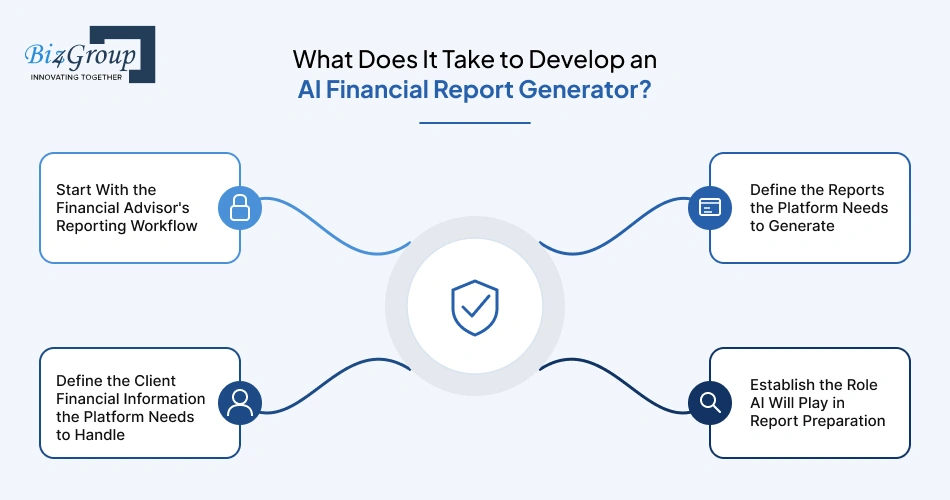
Developing an AI financial report generator starts with the reporting workflow. The platform needs to account for the information advisors work with, the reports they need to create, the tasks AI can support, and the points where advisor judgment is needed.
That was the starting point for WorthOne Plan, where Biz4Group and Worth Advisors looked closely at the advisor reporting process and shaped the product requirements around it.
If you're coming from the advisory side, that concern can be summed up naturally like this:
I run a financial advisory firm and spend too much time preparing client reports manually, so how can I build an AI financial report generator to reduce this workload?
Start by mapping the reporting workflow, identifying the information advisors need, defining the reports the platform should produce, and deciding where AI can take over repetitive preparation work. The result should fit into the advisor's existing process rather than create another workflow to manage.
Here's all you need to know:
Start With the Financial Advisor's Reporting Workflow
Map the reporting process first. Identify where financial information comes from, which tasks take the most manual effort, and where advisors review or customize the final report. This gives the development team a clearer idea of where automation can help.
Define the Reports the Platform Needs to Generate
Decide which report types the platform needs to support, such as performance reports, initial proposals, annual reviews, debt payment plans, or custom advisory reports. Each may require different sections, data, and formatting options.
Define the Client Financial Information the Platform Needs to Handle
A report may need information covering portfolios, planning, insurance, budgets, liabilities, and other client details. Defining these inputs early helps determine the integrations, formats, and data-handling capabilities the platform will need.
Establish the Role AI Will Play in Report Preparation
Once the workflow and requirements are clear, the next question is where AI can take work off the advisor's plate. It can help organize financial information, prepare report content, and create an initial draft while advisors review and shape the final output.
At this point, teams often start asking:
How do I build an AI financial report generator for financial advisors?
Start by mapping the advisor's workflow, defining the required data and report types, and deciding which preparation tasks AI should handle. Advisor review, customization, and final confirmation should remain part of the process.
That thinking carried into WorthOne Plan, where AI-assisted report preparation was developed around the broader advisor workflow rather than as a standalone content-generation feature.
What Are the Key Features Required to Build an AI Financial Report Generator?
A financial report can look simple once it reaches the client. Behind it, there may be multiple report types, different client details, firm-specific formatting, advisor edits, and several rounds of review. Those requirements need to be considered early when planning AI financial reporting platform development.
For WorthOne Plan, these needs helped shape the product around the way advisors prepare and deliver reports.
|
Capability |
What it should handle |
|---|---|
|
Multiple financial report types |
Performance reports, initial proposals, annual reviews, debt payment plans, and custom advisory reports |
|
Flexible sections and formatting |
Sections, charts, tables, layouts, colors, branding, and disclosures |
|
Client-level personalization |
Financial information, recommendations, and content relevant to each client's situation |
|
Advisor editing and review |
Content changes, recommendation refinement, information checks, and final confirmation |
|
Client-ready export |
PDF, Word, and PowerPoint for different client delivery needs |
For anyone looking to build an AI financial report generator, these capabilities provide a practical starting point. The exact mix will depend on the firm's reporting process, the types of clients it serves, and how much customization advisors need.
That naturally raises a question for teams planning AI report generator development for financial advisors:
What features should an AI financial report generator for advisors have?
It should cover the full reporting process: multiple report formats, flexible customization, client-specific content, advisor review, and straightforward delivery. AI can support the preparation work across these steps while the advisor remains involved in the final report.
WorthOne Plan follows this broader approach. Its reporting capabilities are built around creating a useful first draft, giving advisors room to personalize it, and preparing the finished report for client delivery.
What Data Sources and Integrations Are Needed for an AI Financial Reporting Platform?
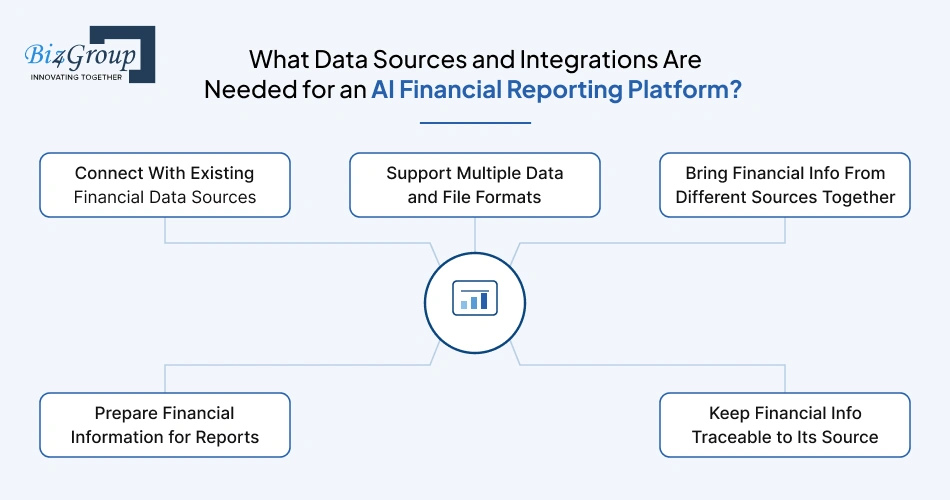
Financial advisors often work with information spread across planning systems, portfolio tools, files, and client records. An AI financial reporting platform needs to bring that information into the reporting workflow without adding another layer of manual work.
That was an important consideration while developing WorthOne Plan with Worth Advisors. The AI product was designed around the financial information advisors already have, along with additional client details that can help create a fuller report.
Connect With Existing Financial Data Sources
Start with the sources advisors already use. These may include financial planning and portfolio systems, cloud storage, spreadsheets, documents, and other business data sources.
For AI financial reporting platform development, the integration approach should fit the firm's existing data environment and reporting process.
Support Multiple Data and File Formats
Client information can come in spreadsheets, PDFs, structured data, and other documents. Supporting the formats relevant to the firm's workflow makes it easier to bring that information into report preparation.
Bring Financial Information From Different Sources Together
The bigger challenge is making separate pieces of information useful together. Portfolio details, insurance information, budgets, liabilities, and other client details can all contribute to the financial picture an advisor needs for a report.
WorthOne Plan was designed with this broader view in mind, allowing available financial information to be combined with additional client details during report preparation.
Prepare Financial Information for Report Generation
Information from different sources may need to be organized before it can be used effectively. The platform needs to identify relevant information and put it into the right context for the report being prepared.
This makes data preparation an important part of AI financial report generator development, alongside the AI capabilities themselves.
Keep Financial Information Traceable to Its Source
Financial figures need context, especially when advisors are reviewing an AI-assisted report. Keeping information connected to its underlying source makes it easier to check what went into the report.
Once the sources, formats, and data-handling requirements are clear, a practical question naturally follows:
How can financial data be integrated into an AI financial reporting platform?
Start with the sources already used by the advisory team, support the formats they work with, bring relevant information into a common reporting workflow, and preserve its source context throughout report preparation.
That approach gives WorthOne Plan a foundation for bringing scattered client information together and turning it into a personalized advisory report.
How Does an AI Financial Report Generator Process and Analyze Financial Data?
Once financial information reaches the platform, context becomes important. The system needs to understand the client, the purpose of the report, and which information is relevant to the reporting task before AI starts preparing the output.
|
Stage |
Purpose |
|---|---|
|
Retrieve |
Find relevant financial information |
|
Organize |
Put information into client and report context |
|
Identify |
Determine what the report requires |
|
Generate |
Prepare content from available information |
|
Ground |
Keep financial figures tied to their source |
For WorthOne Plan, keeping the report connected to the client's available financial information was an important product consideration. This becomes especially useful when information comes from different sources and the final report needs to give the advisor a coherent view for a client conversation.
If you're considering AI financial report generation platform development, know that the AI model is only one part of the equation. The surrounding product needs to provide the right context, work within defined boundaries, and give advisors a clear opportunity to assess the output before it becomes client-facing.
How Can AI-Generated Financial Reports Be Personalized for Individual Clients?
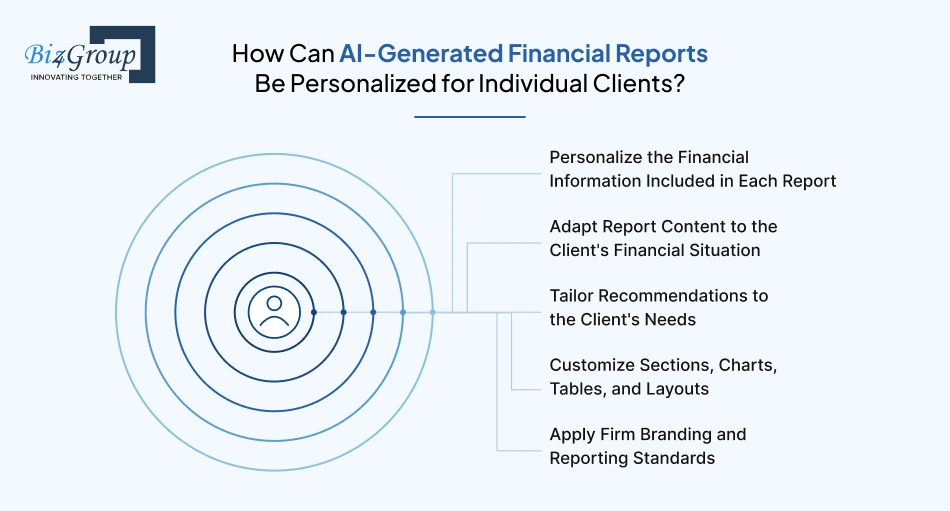
Personalized reporting starts with the client, not the template. The information included, the way it is explained, and even how the report is laid out can change from one client to another.
That was an important consideration when Biz4Group developed WorthOne Plan with Worth Advisors. Advisors needed a way to bring relevant financial information into the report and then shape the output around the client's situation and the purpose of the meeting.
Personalize the Financial Information Included in Each Report
A client's report should reflect their actual financial picture. Depending on the client, that could mean portfolio information alongside life insurance, budget, liabilities, or other relevant details.
This is an important consideration in AI report generation for financial advisors because the system needs enough client context to prepare something useful.
Adapt Report Content to the Client's Financial Situation
A client reviewing investment performance may need a very different report from someone discussing broader financial planning. The content should be able to follow that context, including the areas the advisor wants to focus on during the conversation.
Tailor Recommendations to the Client's Needs
Recommendations need the same flexibility. AI can help prepare the initial content using the information available, while the advisor can review it, adjust it, and make sure it fits the client's circumstances.
Customize Sections, Charts, Tables, and Layouts
Personalization also happens in the final presentation. Advisors may want different sections, charts, tables, layouts, or levels of detail depending on the client and the discussion.
Apply Firm Branding and Reporting Standards
Every client report still needs to look like it came from the same firm. Branding, colors, templates, disclosures, and preferred reporting styles can provide that consistency while the actual content remains personalized.
When planning AI financial report generator development, these layers need to be considered together. A personalized report comes from combining the right client information with flexible content and presentation controls.
That naturally raises a question:
How can I develop an AI tool that creates personalized financial reports?
Start by defining the client information the platform needs, the parts of the report that should adapt, and the controls advisors need. AI can then be designed around those requirements.
For WorthOne Plan, this meant making personalization part of the reporting workflow itself. Advisors can work from available financial information, shape the report around the client, and remain involved in the final output.
How Should Human Review and Approval Be Incorporated Into an AI Financial Reporting Workflow?
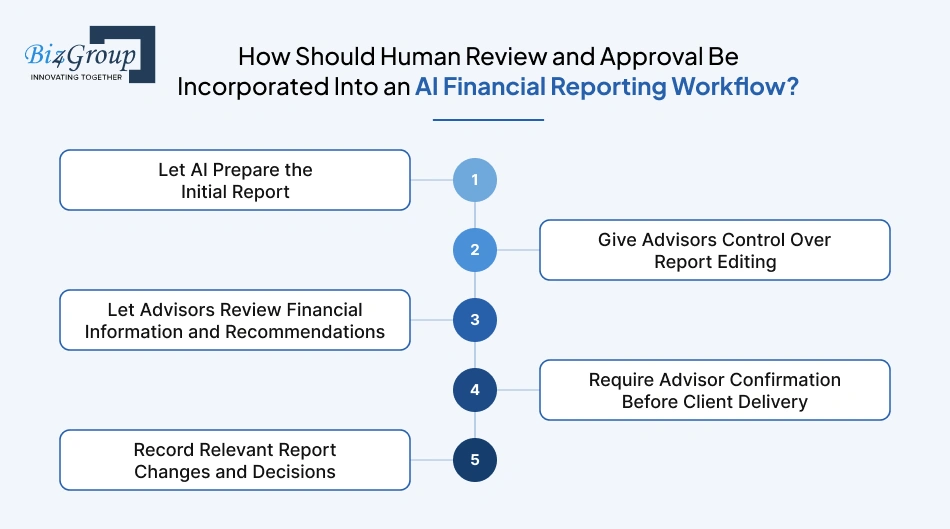
Human review should sit between AI-assisted report preparation and final client delivery. The platform can prepare a useful first draft, while the advisor reviews the information, makes changes, and confirms that the report is ready to share.
Let AI Prepare the Initial Report
AI can take care of the first round of report preparation using the financial information and reporting requirements provided to the platform. The aim is to give advisors a workable draft they can build on.
Example: An advisor selects an annual review, and the platform prepares a draft using the client's available financial information and relevant report sections.
Give Advisors Control Over Report Editing
Once the draft is ready, advisors should be able to make changes directly. They may want to rewrite content, adjust recommendations, remove sections, or change how information is presented.
Example: An advisor changes the wording around a portfolio observation and removes a section that isn't relevant to the upcoming client discussion.
Let Advisors Review Financial Information and Recommendations
The advisor still needs to look at the substance of the report. Financial figures, observations, and recommendations should be reviewed in the context of the client's situation before they are included in the final version.
Example: An advisor checks a recommendation against the client's current financial information and revises it before approving the report.
Require Advisor Confirmation Before Client Delivery
There should be a clear final checkpoint before the report reaches the client. Once the advisor has reviewed and made the necessary changes, they can confirm the version that is ready for delivery.
Example: An advisor completes the review, confirms the report, and exports the approved version for a client meeting.
Record Relevant Report Changes and Decisions
Keeping track of meaningful changes can give firms better visibility into the reporting process. The record can show what was changed during review and when the report was approved.
Example: A report record shows that an advisor revised a recommendation during review and subsequently approved the updated version.
This advisor-led workflow was an important consideration in the development of WorthOne Plan. Biz4Group and Worth Advisors wanted AI-assisted preparation to fit into the advisor's existing reporting process, with the advisor continuing to shape and approve the final client-facing report.
|
Review Stage |
Advisor's Role |
|---|---|
|
Initial draft |
Review the AI-prepared report |
|
Content & data |
Check information and recommendations |
|
Customization |
Edit content and presentation |
|
Final approval |
Confirm the client-ready version |
|
Record |
Capture relevant changes and decisions |
For an AI financial reporting platform, that makes human review part of the product workflow itself. The technology handles preparation work while advisors retain control over the information and decisions that go into the final report.
Have an AI Financial Reporting Idea?
Let's explore what it would take to turn your reporting process into a scalable, advisor-focused product.
Talk to Our AI ExpertsWhat Security and Compliance Considerations Matter When Developing AI Financial Reporting Tools?
The key considerations are data protection, role-based access, secure handling of financial information, activity tracking, and applicable regulatory requirements. These should be built into the reporting workflow from the start so the platform can handle sensitive client information responsibly.
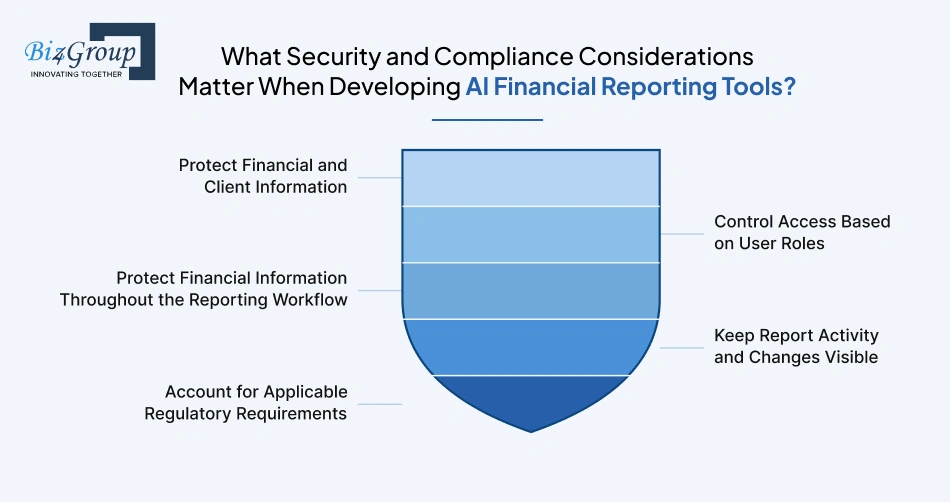
|
Security & Compliance Area |
What to Consider During Development |
|---|---|
|
Protect Financial and Client Information |
Keep sensitive financial and personal information protected through encryption, secure data handling, and proper credential management. |
|
Control Access Based on User Roles |
Give different users appropriate permissions for viewing, editing, reviewing, and approving reports. |
|
Protect Financial Information Throughout the Reporting Workflow |
Keep client information protected as it moves through data intake, report preparation, customization, review, and delivery. |
|
Keep Report Activity and Changes Visible |
Maintain a record of important report actions, such as edits, reviews, and approvals, so teams can see how a report changed. |
|
Account for Applicable Regulatory Requirements |
Identify the regulations and internal requirements that apply to the firm's data, reporting process, retention policies, and use of AI. |
For an AI financial reporting platform, these decisions also need to fit the way advisors actually work. Security shouldn't create unnecessary friction around everyday tasks such as preparing, reviewing, or approving a client report.
During the development of WorthOne Plan, Biz4Group and Worth Advisors considered security and governance alongside the reporting workflow itself. The product was designed around controlled financial report preparation and advisor involvement, while its specific security implementation remains proprietary.
How Does an AI Financial Reporting Platform Scale With Growing Reporting Demands?
An AI financial reporting platform scales by supporting higher report volumes, larger amounts of client data, more users, and heavier workloads without slowing down the reporting process or losing the ability to personalize each report.
Handle Increasing Client and Portfolio Volumes
A firm's reporting needs can change quickly as its client base grows. AI financial report generator development should account for that increase early so the workflow can handle substantially more reports without creating the same increase in manual work.
Example: A firm moves from preparing 100 client reports per quarter to several hundred while continuing to use the same core reporting workflow.
Maintain Report Generation Performance as Workloads Grow
Average usage doesn't tell the whole story. Reporting deadlines can create periods where many reports need to be prepared at once, so the platform needs enough capacity to handle those spikes.
Example: Several advisors submit annual review reports on the same day, and report generation continues without significant delays.
Support More Advisors and Concurrent Reporting Activity
Scaling also means supporting more people working at the same time. Advisors and reporting teams should be able to prepare, edit, and review their respective reports without creating bottlenecks for one another.
Example: A growing wealth management firm has multiple advisors preparing different client reports simultaneously during a busy review period.
Scale Data Handling as Client Information Increases
More clients usually bring more records, documents, and financial information into the system. The platform needs to keep working effectively as that information grows in volume and variety.
Example: A firm adds hundreds of clients along with years of supporting financial records, while advisors can still work with the information relevant to individual reports.
Maintain Personalization as Reporting Volume Grows
Scaling should preserve the individual nature of client reporting. AI wealth management reporting needs to give advisors enough flexibility to account for each client's financial situation even when they are preparing reports at high volume.
Example: During an annual review cycle, hundreds of clients receive reports built around their own financial information and advisory needs.
For AI financial reporting platform development, scalability also affects the advisor experience. A platform can handle a larger workload technically, yet still become difficult to use if review, editing, and customization become cumbersome.
That was an important consideration for Biz4Group in developing WorthOne Plan with Worth Advisors. The product needed to support growing reporting demands while keeping the advisor involved in shaping reports around individual clients.
Know What AI Can Do for Financial Reporting
Explore how an advisor-focused reporting workflow can bring together financial information, personalization, and human review.
See WorthOne Plan in ActionHow Biz4Group Built WorthOne Plan Around the Financial Advisor's Reporting Workflow
Biz4Group built WorthOne Plan by looking at how financial advisors actually prepare client reports and then shaping the product around that workflow. The process brings together client information, report preparation, personalization, and advisor review.
Designing Around the Advisor Reporting Workflow
The starting point was simple: understand what advisors actually do when they prepare a report.
- Where does the information come from?
- Which parts take the most time?
- Where does the advisor need to step in?
Those questions helped shape the product around the reporting process instead of adding AI without a clear job to do.
Bringing Client Financial Information Into the Reporting Process
Advisors can have financial information sitting across different sources, along with other details they collect about the client. Getting all of that into the reporting process was an important part of building WorthOne Plan.
The aim was to give advisors a fuller set of information to work with when preparing a client report.
Building Personalization Into Report Preparation
The report then needs to fit the client. Different financial situations call for different information, recommendations, sections, and levels of detail.
WorthOne Plan was designed with that flexibility in mind, giving advisors room to shape the report around the client and the conversation they are preparing for.
Keeping Advisors Involved in the Final Output
AI can help get the report started, but the advisor still needs to have the final say. The workflow allows the advisor to review the report, make changes, and confirm what is ready to share with the client.
That brings the development approach together: financial information → report preparation → personalization → advisor review → final report.
Looking at WorthOne Plan as a whole, one thing becomes clear about AI financial report generator development: the AI is only one part of the product. The data, reporting workflow, personalization, and advisor controls all need to work together for the technology to be useful in a real advisory setting.
What Building WorthOne Plan Taught Us About AI Financial Reporting
Building WorthOne Plan showed that AI financial report generator development starts with understanding the reporting process itself. Client information, report requirements, personalization, advisor review, and delivery all need to work together for AI-assisted reporting to be useful in practice.
For fintech and wealthtech teams, that means the biggest development decisions often happen around the AI rather than inside it. The WorthOne Plan experience points to a practical approach: define the advisor workflow first, then build the data, reporting, personalization, and AI capabilities needed to support it.
FAQ's
1. How much does it cost to build an AI financial report generator?
The AI financial report generator development cost depends on the reporting features, data integrations, personalization, security requirements, AI capabilities, and ongoing infrastructure.
2. How long does it take to develop an AI financial reporting platform?
Development can take several months for a production-ready platform, depending on the number of report types, integrations, customization options, review workflows, and security requirements.
3. What features should an AI financial report generator for advisors have?
Core features include multiple report types, client-level personalization, financial data integration, flexible editing, advisor review and approval, firm branding, and client-ready exports.
4. What data sources can an AI financial reporting platform integrate with?
An AI financial reporting platform can be designed to work with financial systems, CRMs, cloud storage, spreadsheets, PDFs, APIs, and other supported sources used by the advisory firm.
5. Can an AI financial report generator work with existing financial planning software?
Yes. AI financial reporting tool development can focus on adding a reporting layer around existing planning, portfolio, CRM, and wealth-management systems rather than replacing them.
6. How can AI-generated financial reports stay accurate?
The platform should ground financial figures in reliable source information and give advisors a clear review stage before the report is finalized. This is especially important for AI report generation for financial advisors, where client-facing accuracy matters.
7. Can advisors customize AI-generated financial reports?
Yes. An AI client report generator can support changes to report content, recommendations, sections, charts, tables, layouts, branding, and disclosures.
8. How should human review work in an AI financial reporting platform?
AI can prepare the initial report, while advisors review the information, make changes, confirm recommendations, and approve the final version before client delivery.
9. What security controls are needed for AI financial reporting?
Common requirements include encryption, role-based access, secure data handling, audit trails, controlled AI workflows, and appropriate safeguards for sensitive financial and client information. The exact requirements depend on the firm's environment.
10. Can automated financial report generation handle thousands of clients?
Yes, provided scalability is planned across report volumes, data handling, concurrent users, processing capacity, and personalization. Automated financial report generation should continue to support individualized reporting as the client base grows.
11. Should a financial advisory firm build or buy an AI reporting platform?
Building makes sense when the firm needs specific integrations, reporting workflows, personalization, or controls that existing products cannot provide. An existing platform may be more suitable when standard reporting needs are already covered.
12. What does it take to develop an AI financial reporting platform?
It takes more than adding an AI model. AI financial reporting platform development typically involves defining the reporting workflow, handling financial data, building report-generation capabilities, adding personalization and advisor controls, and addressing security, scalability, and ongoing maintenance.
