Location :
Orlando, FL, USA
Location :
Orlando, FL, USA +1 (407) 714-1616
 info@biz4group.com


















Imagine a digital system that doesn’t wait for instructions but instead, understands your business goals, learns from real-time feedback, and takes independent actions to get the job done.
Read More

 AI Summary Powered by Biz4AI
A buyer saves a home, skips another with a similar price and layout, and tells their agent they'd rather live near parks, cafés, and a community that fits their lifestyle. If your platform keeps recommending homes that look right in a search filter but feel wrong to the buyer, it's missing what matters.
With AI property matching platform development, real estate businesses build systems that learn from saved searches, browsing activity, and buyer feedback to recommend homes that better match what people actually want. The tricky part is deciding what the AI should learn, how much weight to give each preference, and what to do when a buyer changes their mind or no property checks every box.
If you're losing buyer leads because your website shows generic listings instead of personalized recommendations, a machine learning property recommendation engine moves the experience beyond basic filters. It uses buyer preferences and activity to make search results more relevant to each person.
Biz4Group LLC is a U.S.-based AI product development company with experience in real estate platforms, including AI-powered recommendations, listing integrations, and property-visit scheduling. This work highlights a practical point: useful matching depends on more than the AI model. The quality of property and community data, CRM connections, and agent workflows all shape the buyer experience.
Turn your property matching idea into a practical plan with Biz4Group.
Plan Your PlatformBefore AI property matching platform development, define your target users, matching criteria, MVP features, and data requirements. These decisions shape the way to build property recommendation engine, integrations, budget, and launch plan.
Turn buyer needs into clear matching criteria. Separate must-haves from flexible preferences so the recommendation engine knows which requirements matter most.
For example:
Decide how buyers update their preferences and how agents review recommendations. For community matching, identify relevant neighborhood attributes and reliable data sources rather than relying on assumptions about residents before developing AI property matching platform.
Choose the primary users first. A brokerage, PropTech startup, and portfolio operator have different needs, so focus the MVP on the workflows that matter most to your business.
A practical first release includes:
Set measurable goals before AI-powered real estate community platform development, such as reducing manual listing-screening time, increasing engagement with recommended properties, or improving viewing-request rates. Record current performance to establish a baseline.
Identify the data and systems the matching engine depends on, along with their limitations.
|
Data source |
What to check |
|---|---|
|
Property listings |
Available fields, accuracy, update frequency, and usage rights |
|
Buyer profiles and activity |
Collected preferences, browsing events, consent, and data access |
|
Community data |
Coverage, reliability, relevance, and update schedules |
|
CRM and brokerage systems |
Integration methods, permissions, and existing workflows |
|
External APIs and feeds |
Licensing, usage limits, reliability, and ongoing costs |
Flag gaps such as incomplete listing details, inconsistent property formats, or limited buyer history early. These constraints affect the matching approach, development effort, and launch schedule.
The key deliverables are building custom MVP, documented matching criteria, a data inventory, and an integration plan.
AI property matching goes beyond price, bedrooms, and square footage. It considers what buyers want from their home and neighborhood, too. By combining property details with lifestyle preferences, real estate businesses help buyers find homes that fit their everyday needs.
AI-driven buyer preference tools turn details about neighborhoods and amenities into useful matching signals. These help connect buyers with places that reflect what they're looking for.
Relevant signals include:
For example, someone who enjoys walking might prioritize homes near parks and walking paths. The matching system uses those preferences to help narrow down suitable areas.
A home might meet a buyer's budget and space requirements but still be a poor fit because of its surroundings. That's why a real estate community-based homebuying experience needs to consider both the property and the neighborhood.
Imagine a buyer looking for a family home. Their match might depend on bedrooms and outdoor space, along with nearby parks, shops, and transport. Bringing these details together gives buyers a clearer picture of each option.
Not everyone wants the same kind of neighborhood. One buyer might value a short commute, while another prefers green spaces or nearby cafés. Personalized property search technology uses these priorities to suggest relevant locations instead of showing everyone the same areas.
When the preferred neighborhood has few suitable listings, the system can also suggest nearby alternatives that meet the buyer's other requirements.
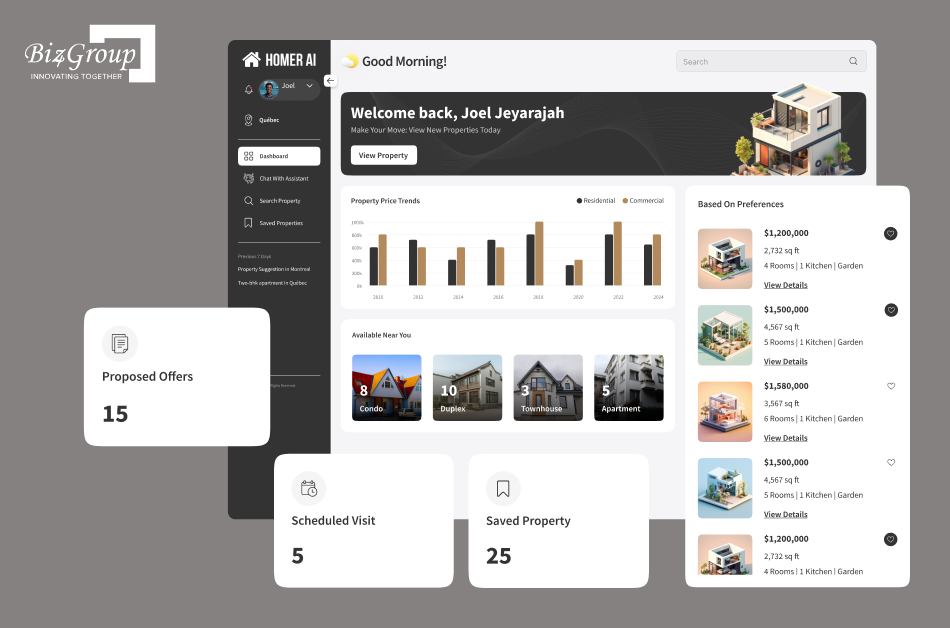
Biz4Group's work on Homer AI provides a relevant example of bringing buyer preferences into a real estate search experience. The application uses conversational interactions to gather requirements such as budget and location, presents matching listings, and supports property visit scheduling. These workflows offer a practical reference when planning how buyers move from describing their needs to exploring suitable homes.
Buyers need to know why a home appears in their results. Clear match explanations help them decide whether a suggestion is worth checking and give agents something useful to discuss.
For example, an AI-powered property matching app might explain that a home:
Showing both the matches and the trade-offs helps buyers make informed choices.
The goal is to match people with homes and communities that suit their priorities not simply return another list of properties. Lifestyle and neighborhood matching is one example of how to use AI for real estate beyond basic listing searches.
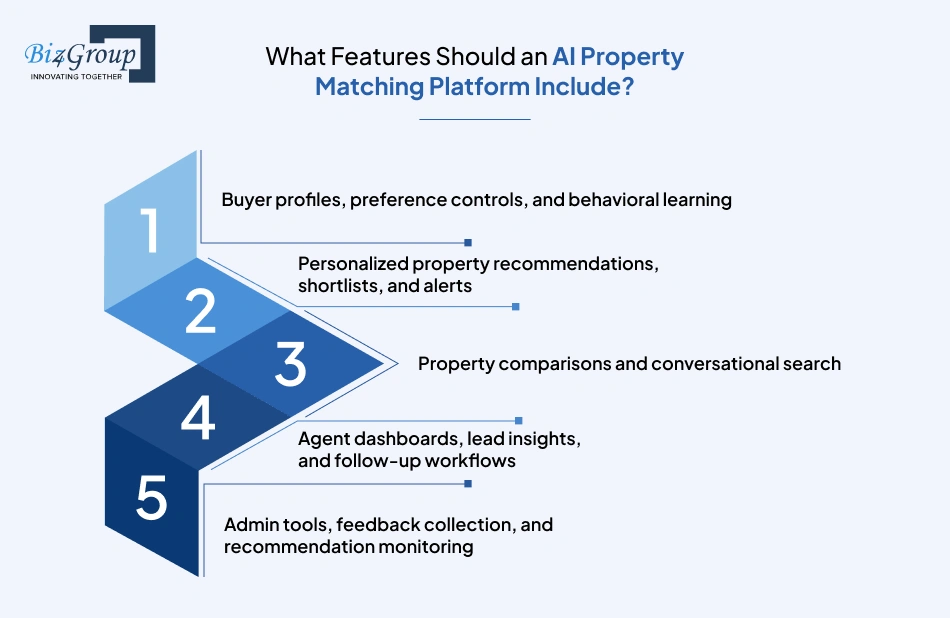
An AI property matching platform needs features that help buyers find suitable homes and help agents act on those matches. The core features include buyer profiles, personalized property search, comparisons, alerts, agent tools, and admin controls. Here's a look at what each feature does and why it matters.
Brokerages often ask:
"We keep losing buyer leads because our current website just shows generic listings instead of personalized recommendations based on what they actually want, so can you suggest companies that specialize in building AI powered property matching and recommendation platforms?"
Consider companies that build personalized search, buyer profiles, saved searches, alerts, and CRM-connected agent tools. Ask how the system uses buyer preferences and activity to improve matches.
|
Feature |
What to include |
Why it matters |
|---|---|---|
|
Buyer profiles, preference controls, and behavioral learning |
Budget, preferred locations, property type, must-haves, saved homes, searches, and feedback |
Helps AI-driven buyer preference tools understand what each person wants and refine matches as preferences change. |
|
Personalized property recommendations, shortlists, and alerts |
Tailored listings, saved favorites, new-match notifications, and updates when suitable homes become available |
Makes property searches more relevant and helps buyers keep track of options without starting over. |
|
Property comparisons and conversational search |
Side-by-side property comparisons and natural-language searches, such as "a two-bedroom home near a park" |
Lets buyers describe what they want in everyday language and compare homes more easily. |
|
Agent dashboards, lead insights, and follow-up workflows |
Buyer profiles, matching results, lead activity, follow-up reminders, and viewing coordination |
Helps agents understand buyer needs, spend less time screening listings, and keep conversations moving. Conversational search lets buyers describe their needs in everyday language, a feature explored in AI conversation app development. |
|
Admin tools, feedback collection, and recommendation monitoring |
Listing management, user permissions, feedback forms, match-quality reports, and system monitoring |
Helps teams maintain accurate data, spot poor matches, and improve the buyer experience. |
For the first release, focus on accurate buyer profiles, relevant matches, useful agent tools, and reliable listing data. Add more advanced features as you learn what buyers and agents actually use.
Connect your AI property matching platform to the listing systems and CRM your business already uses. This keeps buyer records and property details up to date, helps agents find suitable homes for new leads, and cuts down on manual data entry.
Start by identifying where your property listings come from. They might be stored in an internal database, a listing management system, or an external feed. Bring those sources together so matching uses current property information.
Focus on details like price, location, property type, features, and availability. When a home's price or status changes, make sure the update reaches the matching system promptly.
Your CRM already holds useful information about buyers. Connect it to the matching platform so agents don't have to enter the same details twice. Connecting listing feeds, CRM records, and matching features requires careful planning around AI integration services.
Keep buyer preferences, lead status, agent assignments, viewing requests, and follow-up activity accessible. This helps agents move from reviewing a match to contacting the buyer within their usual workflow.
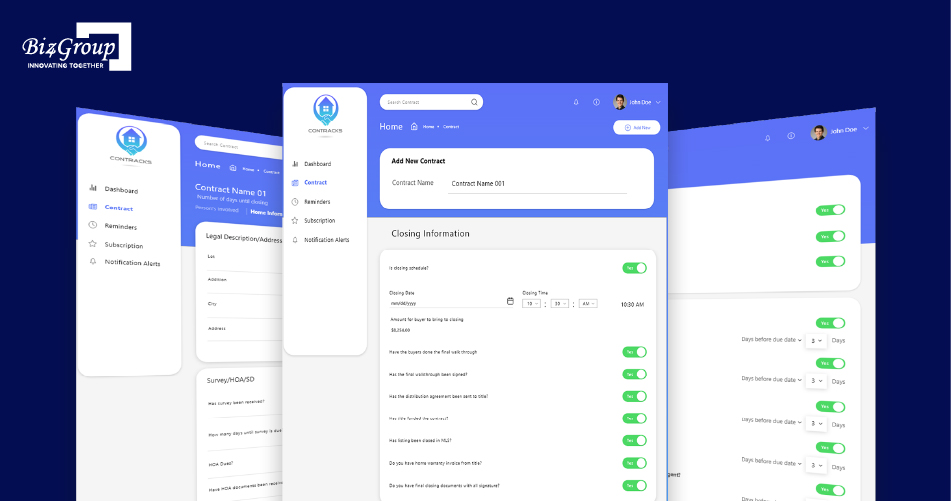
Real estate applications also need to support the work that happens after a buyer finds a property. Biz4Group's Contracks project addresses contract tracking, document summaries, deadlines, and multi-party workflows. It provides a related example to consider when planning how a property matching platform connects with agents' day-to-day processes.
When a new lead comes in, use their requirements to find relevant homes in your available listings.
For example, if a buyer wants a two-bedroom apartment within a set budget and near public transport, the system checks those preferences against current inventory. Agents can review suitable options and share them without searching through every listing manually.
Property details often arrive in different formats. Clean and standardize the data before using it for matching.
|
Data task |
What it involves |
|---|---|
|
Data normalization |
Standardize prices, measurements, locations, and property types. |
|
Deduplication |
Identify repeated listings so the same home doesn't appear multiple times. |
|
Listing freshness |
Keep prices, availability, and property status current. |
|
Data validation |
Flag missing or conflicting details for correction. |
Before connecting external systems, check their API requirements, usage limits, and data licensing terms. Decide how often information needs to sync and what happens when an update fails.
Make sure buyer information is shared only with authorized systems and users. This helps protect personal data while keeping the information agents rely on accurate.
The result is a connected workflow where current listings and buyer records work together, helping agents act on relevant matches with less manual effort.
Also Read: Artificial Intelligence in CRM
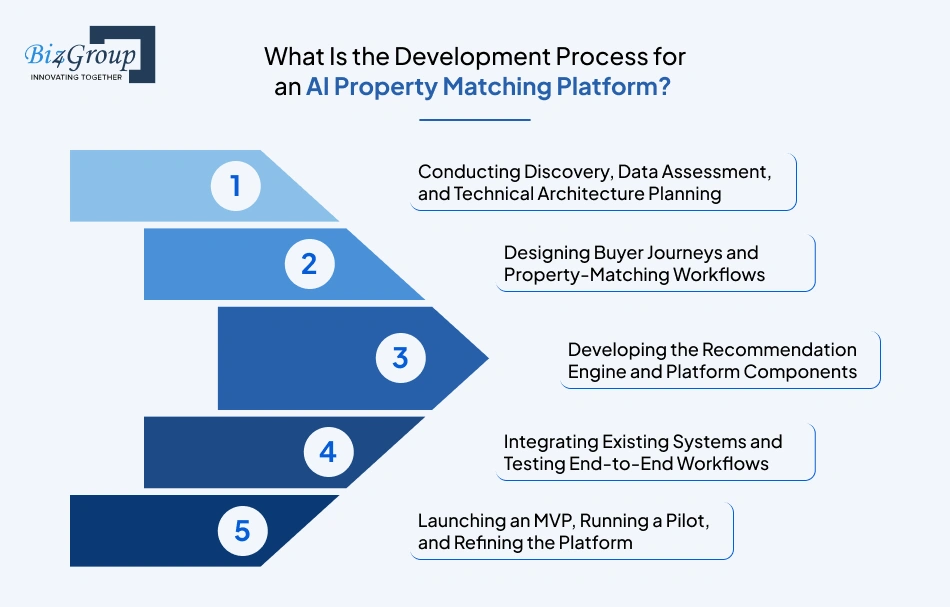
The development process starts with understanding your business needs, preparing buyer and property data, designing the user experience, and building the core features. From there, the team connects existing systems, tests the complete experience, and launches an MVP to gather feedback before expanding.
Start by getting clear on what the business needs the AI property matching platform to do. This early work helps the team choose the right features, technology, and data sources.
Map out how buyers and agents will use the platform from their first interaction to a property viewing. Keep each step simple, so users know what to do next.
Build a machine learning property recommendation engine that matches listings with buyer budgets, preferred locations, must-have features, and lifestyle needs. Add AI real estate personalization to refine results using buyer searches, saved homes, and feedback.
Connect the new application to the systems your business already relies on, then test how information moves through the full buyer journey.
Launch a focused MVP with the essential matching and user features. A pilot helps you see how buyers and agents use it in practice before you invest in a wider release.
A phased launch gives your team room to learn and improve without making the first release unnecessarily complex. Discovery, design, development, and testing all contribute to the wider AI product development services process.
AI Property Matching Platform Development typically costs $25,000 to $150,000, depending on the features, data complexity, integrations, and level of customization. A focused MVP sits toward the lower end, while a more advanced system with CRM connectivity, lifestyle matching, and personalized buyer experiences requires a larger budget.
|
Development scope |
Estimated cost (USD) |
|---|---|
|
Basic MVP with buyer profiles, listing search, and core matching |
$25,000-$50,000 |
|
Mid-level platform with personalized matches, alerts, and CRM integration |
$50,000-$100,000 |
|
Advanced platform with lifestyle and community matching, multiple integrations, and richer AI features |
$100,000-$150,000 |
These are indicative ranges, not fixed quotes. Final pricing depends on the project requirements and the condition of the available data. Team structure also affects the budget, so consider the skills and engagement model involved when you hire AI developers.
Also Read: AI Real Estate App Development Cost in 2026
Measure results across three areas: match quality, business outcomes, and user experience. Together, these show whether the platform helps buyers find suitable homes and enables agents to work more efficiently.
A match matters when it reflects what a buyer wants and encourages them to take the next step.
|
Metric |
What it tells you |
|---|---|
|
Match relevance |
How closely suggested properties fit buyer requirements |
|
Listing engagement |
Whether buyers click, save, or shortlist suggested homes |
|
Alert response |
Whether buyers interact with newly available matches |
|
Repeat visits |
Whether buyers return to continue their search |
Follow the journey from a new lead to a property viewing and, eventually, a client conversion. Compare these outcomes before and after introducing AI matching.
Pay particular attention to:
Use a two-stage evaluation process:
Offline testing
Test matching results against historical buyer activity, known preferences, and agent reviews before releasing changes.
Live experiments
Compare matching approaches with real users, then review engagement, viewing activity, and conversion results.
Model evaluation and ongoing refinement are important parts of AI model development, especially when matching quality changes over time.
Create a simple feedback loop. Buyers can explain why a property does or doesn't suit them, while agents can flag inaccurate details or unsuitable matches. Use these findings to update buyer preferences, correct listing data, and adjust matching rules.
The goal is continuous improvement: more relevant matches, better buyer engagement, and measurable progress through the property search journey.
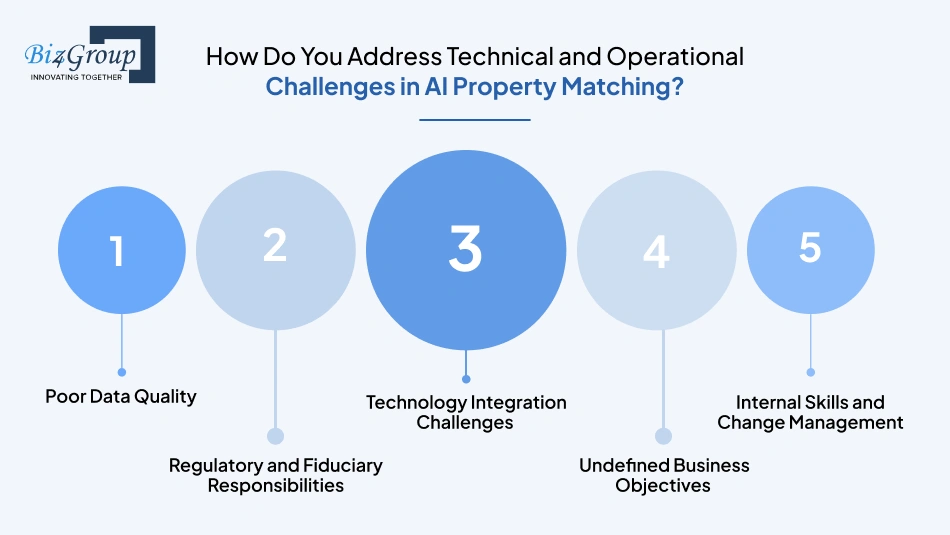
To keep an AI property matching platform working well, start with accurate listing details, understand what buyers are looking for, and check that matches stay useful over time. Protect buyer information and let agents review results so the system remains helpful and trustworthy.
Sometimes listings are missing important details, or buyers haven't shared enough about what they want. Ask simple questions to fill in the gaps, and don't treat unknown information as a confirmed property feature.
Example: If a listing doesn't mention parking, mark it as unknown instead of telling buyers that parking is available.
A property that gets lots of clicks isn't always the right match for everyone. Use more than browsing activity to decide which homes appear first, and check that the system isn't simply showing the same popular listings again and again.
Example: If a home gets extra clicks because it appears at the top of the page, don't automatically rank it higher for every buyer.
Buyer profiles and search activity contain personal information. Be clear about what you collect, why you use it, and who can see it. Give buyers control over how their information helps personalize their search.
Example: Ask buyers whether they want their saved searches and browsing activity used to improve future matches.
Listings change, homes get sold, and buyers update their plans. Keep property details current and refresh matches whenever important information changes.
Example: If a buyer increases their budget, update their search and include homes that now fit their price range.
Buyers should understand why a home appears in their results. Show which preferences it meets, point out important trade-offs, and let agents review matches. Make sure the matching process follows fair housing rules in each market.
Example: Explain that a home fits the buyer's budget and space needs but is farther from public transport than they requested.
Regularly reviewing how the platform works helps your team catch issues early and keep the home-search experience useful as the business grows.
Before launch, define the buyer data, integrations, target markets, and core features your business needs. These decisions help you build PropTech AI matchmaking solutions around real buyer and agent needs.
A focused first release gives your team a practical foundation and helps guide future improvements using real user feedback. If your roadmap includes broader property or development workflows, consider how AI in real estate development relates to your longer-term plans.
Choose a team with relevant real estate experience, strong data and integration skills, and a clear plan for delivery and support. Focus on evidence of its work and how that experience relates to your business needs.
Real estate businesses with growing portfolios often ask:
"We have a growing real estate portfolio but our team spends too much time manually screening buyer preferences before showing them properties, and I want to know which companies build reliable AI matching platforms for real estate businesses."
Choose a company that can assess your data, map matching workflows, integrate listing and CRM systems, and test the platform with agents before launch. Ask for clear milestones, testing plans, and ongoing support details.
Ask how the team handles repetitive tasks such as listing updates and lead routing, and whether AI automation services fit those workflows.
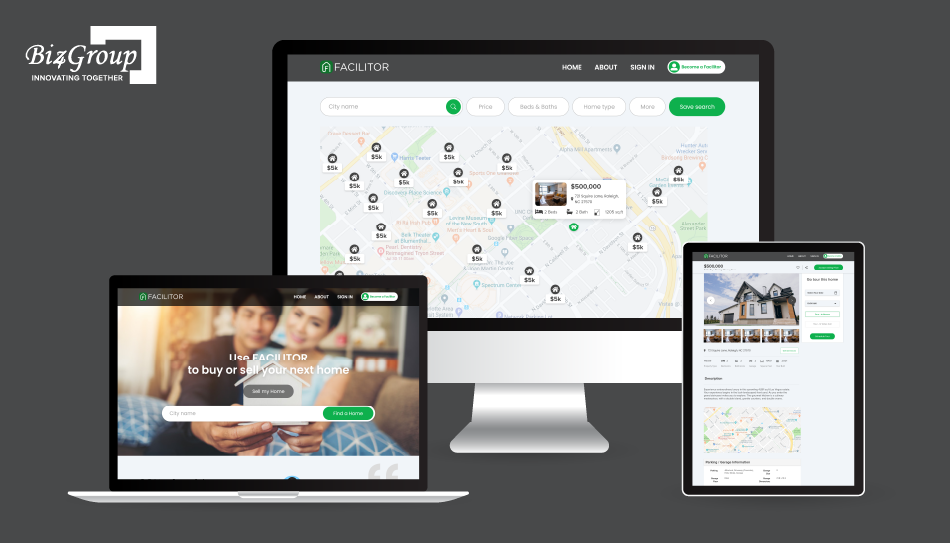
Review real estate projects that involve property search, buyer preferences, and listing data. Biz4Group's published work includes Facilitor. Use this example as a starting point to ask how similar features were designed and what lessons would apply to your project.
Ask how the team connects CRM records and listing feeds, protects buyer information, and checks matching results for accuracy and fairness. Look for clear answers about data access, consent, and agent oversight.
When comparing an AI development company, review its relevant project experience, integration approach, and support plan. Confirm ownership of custom code and matching logic and identify third-party services or data licenses that bring additional costs.
Discuss maintenance, response times, team responsibilities, and how the application will handle more listings, users, or markets. Make sure the support plan and ongoing costs are clear before signing.
Use a company's project history as evidence to investigate, not as a substitute for asking how it will meet your specific requirements.
AI property matching platform development helps real estate businesses move beyond generic listings and deliver property matches based on buyers' budgets, preferences, lifestyles, and community needs. With accurate listing data, personalized matching, and CRM integration, businesses create a more relevant home-search experience while helping agents spend less time manually filtering properties.
A well-planned platform brings together intelligent home search personalization technology, predictive analytics for real estate buyer matching, and real estate community-based homebuying features. Start with a focused MVP, then improve the matching experience as you learn more about buyer behavior and business needs.
When evaluating a best AI property matching platform development company, look beyond feature lists and consider real estate experience, data integration, scalability, and ongoing support. Biz4Group as an AI consulting services provider published real estate projects provide a reference point for discussing property search, listing integration, and AI-enabled user experiences.
Connect with Biz4Group to discuss your AI property matching platform requirements and explore a development approach tailored to your business.
Explore how AI-driven matching can help your team spend less time searching and more time serving buyers.
Talk to Our ExpertsStart with buyer profiles, reliable listing data, and CRM integration. Build an MVP around essential matching features, then improve it using buyer and agent feedback. Following AI property matching platform development best practices helps keep the first release focused on real business needs.
Yes. A machine learning property recommendation engine uses searches, saved homes, clicks, and feedback to refine matches over time. Buyers should also be able to update their preferences and control how their activity is used.
AI-powered real estate community platform development brings property details together with neighborhood information, such as parks, transport, local amenities, and lifestyle preferences. This helps buyers explore homes that suit their everyday needs, not just their budget and preferred location.
An AI property search and matching app for buyers can present the closest alternatives and explain where each property meets or misses the buyer's requirements. It should clearly identify trade-offs and avoid presenting homes that violate essential criteria as suitable matches.
Yes. With current listing feeds, AI real estate personalization helps refresh matches as new homes enter the inventory or existing listings change. Buyers can receive alerts when properties meet their updated requirements.
The system can separate must-have requirements from flexible preferences and adjust results when buyers change their minds. Intelligent home search personalization technology also helps keep matches relevant as buyers browse, save properties, and provide feedback.
Track lead conversion, time-to-match, viewing activity, buyer engagement, and agent productivity. Predictive analytics for real estate buyer matching can help teams identify patterns in buyer behavior and assess how matching activity relates to business outcomes.
Look for companies offering top AI real estate matching platform development services with experience in PropTech, property data integration, CRM connectivity, and personalized buyer experiences. Review project examples, technical proposals, ownership terms, and ongoing support before making a choice.

Our website require some cookies to function properly. Read our privacy policy to know more.