Location :
Orlando, FL, USA
Location :
Orlando, FL, USA +1 (407) 714-1616
 info@biz4group.com


















Imagine a digital system that doesn’t wait for instructions but instead, understands your business goals, learns from real-time feedback, and takes independent actions to get the job done.
Read More
TL; DR
✔️ Facial recognition software in 2026 delivers faster, more accurate, and AI-driven identification for security, authentication, and automation.
✔️ Businesses increasingly adopt AI facial recognition software to improve fraud prevention, streamline operations, and enable seamless user experiences.
✔️ The top facial recognition software of 2026 includes enterprise systems, cloud-based APIs, and open-source tools for developers and large-scale deployments.
✔️ Key features to evaluate include liveness detection, processing speed, multi-camera support, API integrations, scalability, and privacy compliance.
✔️ Industries such as banking, airports, retail, law enforcement, and smart cities widely rely on facial recognition systems for real-time monitoring and secure access.
✔️ This blog provides a complete list of the best facial recognition software, helping readers choose the right solution for photos, security, or enterprise use.
Looking for the best facial recognition software but not sure which platform is the right fit for your business? With dozens of facial recognition solutions promising unmatched accuracy, AI-powered security, and seamless integrations, choosing the right one isn't always straightforward.
Finding the right answer starts with evaluating software beyond marketing claims.
Modern facial recognition software combines artificial intelligence (AI), machine learning (ML), deep learning (DL), and computer vision to identify or verify individuals using their unique facial features. More than just a security tool, it enables businesses to automate biometric authentication, strengthen access control, reduce identity fraud, simplify customer verification, and improve employee and customer experiences across industries such as banking, healthcare, retail, manufacturing, education, and government.
The growing adoption of biometric authentication reflects its business value. In fact, the global facial recognition market is projected to reach USD 36.2 billion by 2035, growing at a CAGR of around 16.1%. As organizations continue investing in AI-powered identity verification and security, choosing the right facial recognition software has become less about finding the platform with the longest feature list and more about selecting a solution that aligns with your business goals, security requirements, compliance needs, and future growth.
Still relying on passwords, ID cards, or manual identity checks to verify employees, customers, or visitors? Facial recognition software replaces these traditional methods by identifying or verifying individuals through their unique facial features. Powered by artificial intelligence (AI), machine learning (ML), deep learning (DL), and computer vision, it analyzes facial patterns and matches them against stored data to enable fast, accurate, and secure identity verification.
Beyond recognizing faces, the right facial recognition software helps solve everyday business challenges. It can automate access control, streamline employee attendance, reduce identity fraud, simplify customer verification, and improve user experiences across industries like banking, healthcare, retail, manufacturing, education, and government. As biometric authentication becomes a business necessity rather than a competitive advantage, choosing the right facial recognition software is key to maximizing security, operational efficiency, and long-term ROI.
Facial recognition software is not just for law enforcement or high-security zones; it has numerous applications across different business sectors. Here’s how it benefits businesses:
One of the primary uses of facial recognition technology is in security and surveillance. Businesses, airports, government institutions, and financial institutions use it to:
Restrict unauthorized access to secure areas.
Monitor premises with real-time face detection and tracking.
Identify and flag known threats or suspicious individuals.
Improve security in public spaces, reducing crime and fraudulent activities.
Facial recognition simplifies identity verification in industries like banking, retail, and e-commerce. Instead of traditional passwords or PINs, businesses can offer:
Secure login systems with face-based authentication.
Contactless payments where customers verify transactions using their face.
Quick and secure access to personal accounts and services.
Retailers and businesses can leverage facial recognition for data-driven marketing and customer engagement by:
Identifying returning customers to provide a personalized shopping experience.
Analyzing customer demographics (age, gender, mood) for targeted promotions.
Using emotion recognition to gauge customer reactions and improve marketing strategies.
Businesses and educational institutions can eliminate manual attendance systems by implementing face-based attendance tracking. This helps in:
Automating employee check-ins and check-outs.
Preventing time fraud and buddy punching.
Keeping accurate records of attendance for payroll and HR management.
Facial recognition software significantly improves fraud detection and identity verification in banking, fintech, and e-commerce platforms. It helps:
Prevent identity theft by verifying customers before transactions.
Detect fraudulent activities by analyzing facial data against blacklists.
Strengthen KYC (Know Your Customer) processes in financial services.
Enhance security and streamline access with a custom AI-powered facial recognition system. Let’s build the perfect solution for you!
Connect with UsFacial recognition software operates through a series of steps powered by artificial intelligence (AI) and machine learning algorithms. It captures facial features from an image or video and compares them to a stored database of known faces to either verify or identify a person.
Let’s break down the step-by-step process of how facial recognition software works and understand the underlying AI-powered mechanisms.
The first step in facial recognition software is detecting a human face in an image, video, or real-time camera feed. AI algorithms scan the image and identify facial structures by recognizing distinct patterns like:
✅ The position of the eyes, nose, mouth, and chin
✅ The shape of the face (round, oval, square, etc.)
✅ Distance between facial landmarks
Technology Used:
Computer Vision: Helps locate and analyze the face in images/videos.
Edge Detection Algorithms: Identify contours and shapes of a face.
AI-Powered Cameras: Can detect multiple faces in real-time.
Once a face is detected, the software maps key facial landmarks and converts them into a mathematical model called a faceprint. This involves:
✅ Measuring the distance between eyes, nose, mouth, and jawline
✅ Identifying unique features like skin texture, cheekbone structure, and forehead size
✅ Assigning a numerical code to each facial characteristic
Technology Used:
Deep Learning Algorithms: Trained to recognize millions of faces by analyzing datasets.
Neural Networks: AI models that refine and improve recognition accuracy.
Example: Apple's Face ID technology uses 30,000 infrared dots to create a 3D depth map of a user’s face.
The extracted face features are then converted into a unique faceprint (mathematical vector). This faceprint is a biometric signature of the individual, ensuring highly secure authentication.
Each faceprint is:
✅ Encrypted to prevent hacking or data leaks
✅ Unique to the individual, similar to a fingerprint
✅ Stored in a secured database for future identification
Technology Used:
AI-Based Feature Encoding: Converts images into structured biometric templates.
Encryption Protocols: Protects stored data from unauthorized access.
The generated faceprint is compared to a pre-existing database to verify identity or identify unknown individuals.
Two Common Methods of Face Matching:
✅ 1:1 Matching (Verification) – Used in security applications, such as unlocking a smartphone or accessing an office building. Example: Face ID on iPhones.
✅ 1:N Matching (Identification) – Used in law enforcement and surveillance, where the system searches a database to find a matching identity. Example: Criminal tracking by the FBI.
Technology Used:
Machine Learning Algorithms: Compare faceprints against thousands/millions of stored records.
AI Face Recognition APIs: Cloud-based services that enable real-time identity matching.
Example: Amazon Rekognition compares live facial scans with millions of images stored in government or business databases.
Once the faceprint matches an identity in the database, the system grants or denies access based on predefined rules.
✅ If the match is successful: The individual is authenticated, and access is granted (e.g., unlocking a phone, allowing entry to a secure area).
✅ If no match is found: The system denies access and may trigger alerts in high-security areas.
Technology Used:
AI-Based Decision Systems: Evaluate if the recognized face meets authentication requirements.
Liveness Detection: Ensures the system isn’t being tricked by a photo, video, or deepfake attack.
Next, let’s explore the top 20 facial recognition software in 2026, their features, and how they compare.
Looking to add AI-driven facial recognition to your existing system? Our experts will help you design and integrate a seamless, secure, and scalable solution for your business.
Get in TouchFacial recognition software is transforming industries by enabling secure, contactless, and intelligent operations. From fraud prevention in banking to patient verification in healthcare, its applications are wide-ranging and impactful.
Facial recognition enhances digital identity verification, streamlines customer onboarding (KYC), and prevents fraud. Banks and fintech firms use it for:
It enables frictionless, password-free user experiences while complying with financial regulations like AML and PSD2.
In healthcare, facial recognition helps verify patient identities, protect medical records, and streamline access to services. Applications include:
It reduces medical errors and improves data privacy in compliance with HIPAA and GDPR.
Retailers use facial recognition for both security and personalized marketing. Key benefits include:
It creates a data-driven, secure shopping environment that enhances customer satisfaction.
Facial recognition optimizes passenger flow, boosts security, and reduces wait times in public transportation. It’s commonly used in:
It improves operational efficiency and enhances passenger convenience and safety.
Educational institutions adopt facial recognition for attendance, exam security, and campus safety. Common use cases include:
It reduces administrative workload and improves accountability.
Law enforcement agencies rely on facial recognition for real-time surveillance, suspect tracking, and criminal investigations:
It speeds up investigations and provides critical leads in high-risk scenarios.
Facial recognition is revolutionizing the guest experience in hotels and resorts by offering:
This not only enhances luxury and efficiency but also supports hygiene and safety, especially post-pandemic.
In manufacturing, facial recognition ensures workplace security and safety through:
It prevents unauthorized access and automates workforce management in high-risk environments.
Facial recognition plays a key role in the development of smart cities by:
Cities benefit from improved safety, better traffic flow, and more efficient emergency response systems.
Large-scale venues such as stadiums, concerts, and expos use facial recognition for:
It significantly improves security, minimizes wait times, and creates a seamless event experience.
In real estate and residential applications, facial recognition improves home security with:
It adds a layer of convenience and protection to modern smart living environments.
For corporations, facial recognition supports:
It automates HR processes and improves corporate security without invasive procedures.
Facial recognition software is transforming industries of all sizes by delivering secure, contactless, and intelligent solutions tailored to diverse operational needs.
The most important features to look for in facial recognition software include high recognition accuracy, liveness detection, API support, flexible deployment options, privacy controls, scalability, and seamless integrations. But don't stop there. Ask yourself: “Will the software integrate with your existing systems? Can it handle thousands of users as your business grows? Is it built to detect spoofing attempts like photos or deepfakes?” The answers to these questions will help you choose a facial recognition solution that's secure, scalable, and built for your specific use case.
|
Feature |
Why It Matters |
|---|---|
|
Liveness Detection |
Prevents spoofing attempts using photos, videos, masks, or deepfakes by confirming that a real person is present during authentication. |
|
High Recognition Accuracy |
Delivers reliable identity verification across varying lighting conditions, camera angles, facial expressions, and large user databases. |
|
Fast Processing Speed |
Enables real-time authentication and identification, making it suitable for high-traffic environments like airports, offices, and retail stores. |
|
Face Mask & Occlusion Recognition |
Maintains recognition accuracy even when faces are partially covered by masks, glasses, helmets, or other obstructions. |
|
API & SDK Support |
Simplifies integration with mobile apps, enterprise software, access control systems, websites, and custom business applications. |
|
Cloud and On-Premises Deployment |
Gives businesses the flexibility to choose between cloud scalability, on-premises control, or a hybrid deployment based on security and compliance needs. |
|
Privacy & Regulatory Compliance |
Helps protect biometric data with encryption, consent management, audit logs, and compliance with regulations like GDPR and CCPA. |
|
Scalability |
Supports growing numbers of users, cameras, locations, and authentication requests without compromising system performance. |
|
Multi-Camera & Real-Time Monitoring |
Allows simultaneous monitoring across multiple cameras, making it ideal for large campuses, smart cities, transportation hubs, and enterprise security. |
|
Integration with Existing Business Systems |
Connects seamlessly with HRMS, CRM, visitor management, attendance, security, and identity management platforms to automate business workflows. |
|
Detailed Analytics & Reporting |
Provides actionable insights into authentication activity, visitor trends, security events, and system performance to support informed decision-making. |
|
Role-Based Access Control (RBAC) |
Restricts access to sensitive data and system settings based on user roles, strengthening security and simplifying administrative control. |
No single feature determines whether a facial recognition software solution is the right fit for your business. Instead, focus on the combination of capabilities that align with your use case, whether it's biometric authentication, employee attendance, customer identity verification, or enterprise security. Evaluating these features upfront will make it easier to shortlist the best facial recognition software for your requirements before comparing vendors.
Facial recognition software continues to revolutionize security, authentication, surveillance, and automation. With AI and deep learning advancements, these solutions now offer higher accuracy, real-time processing, and privacy compliance. Below is a detailed breakdown of the top facial recognition software in 2025, including their features, pricing, and real-world applications.
⭐⭐⭐⭐☆ (4.2/5)
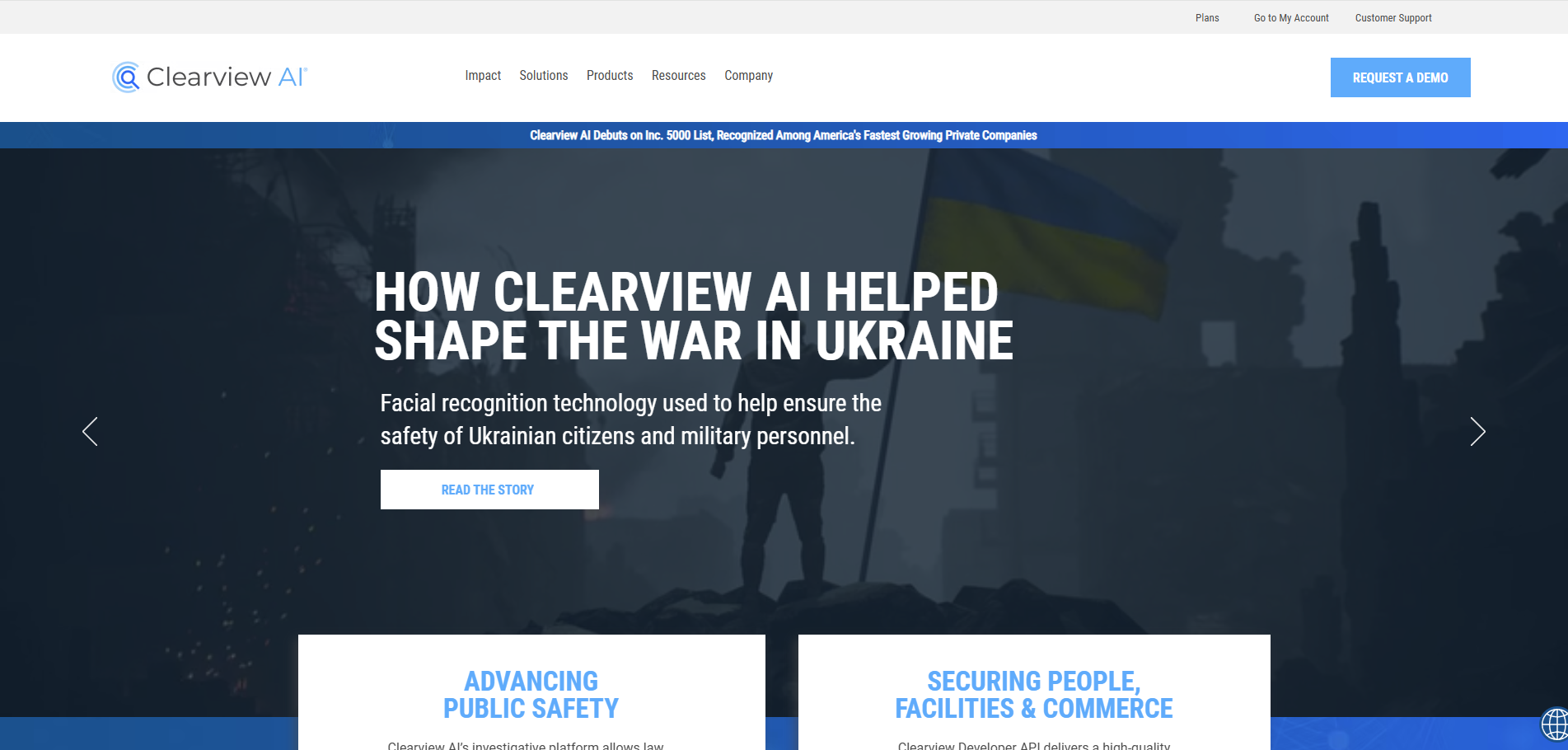
Clearview AI is a highly controversial yet powerful facial recognition system, primarily used by law enforcement agencies. It boasts one of the largest facial databases globally, enabling quick and accurate identification. The software is widely recognized for its ability to identify individuals from surveillance footage in real-time.
✅ Largest image database with 30+ billion images
✅ Real-time facial search for law enforcement
✅ Highly accurate matching using deep learning
✅ Cloud-based system for large-scale analysis
✅ Geolocation & metadata extraction for forensic use
🔹 Criminal investigations (FBI, police, and intelligence agencies)
🔹 Tracking missing persons
🔹 Border control & immigration monitoring
🔹 Anti-terrorism surveillance
🔹 Retail theft prevention
💰 Custom pricing (Only for law enforcement & government agencies)
✅ Unmatched accuracy for criminal investigations
✅ Massive dataset for comparisons
❌ Privacy & data collection concerns
❌ Not available for general businesses
⭐⭐⭐⭐☆ (4.4/5)
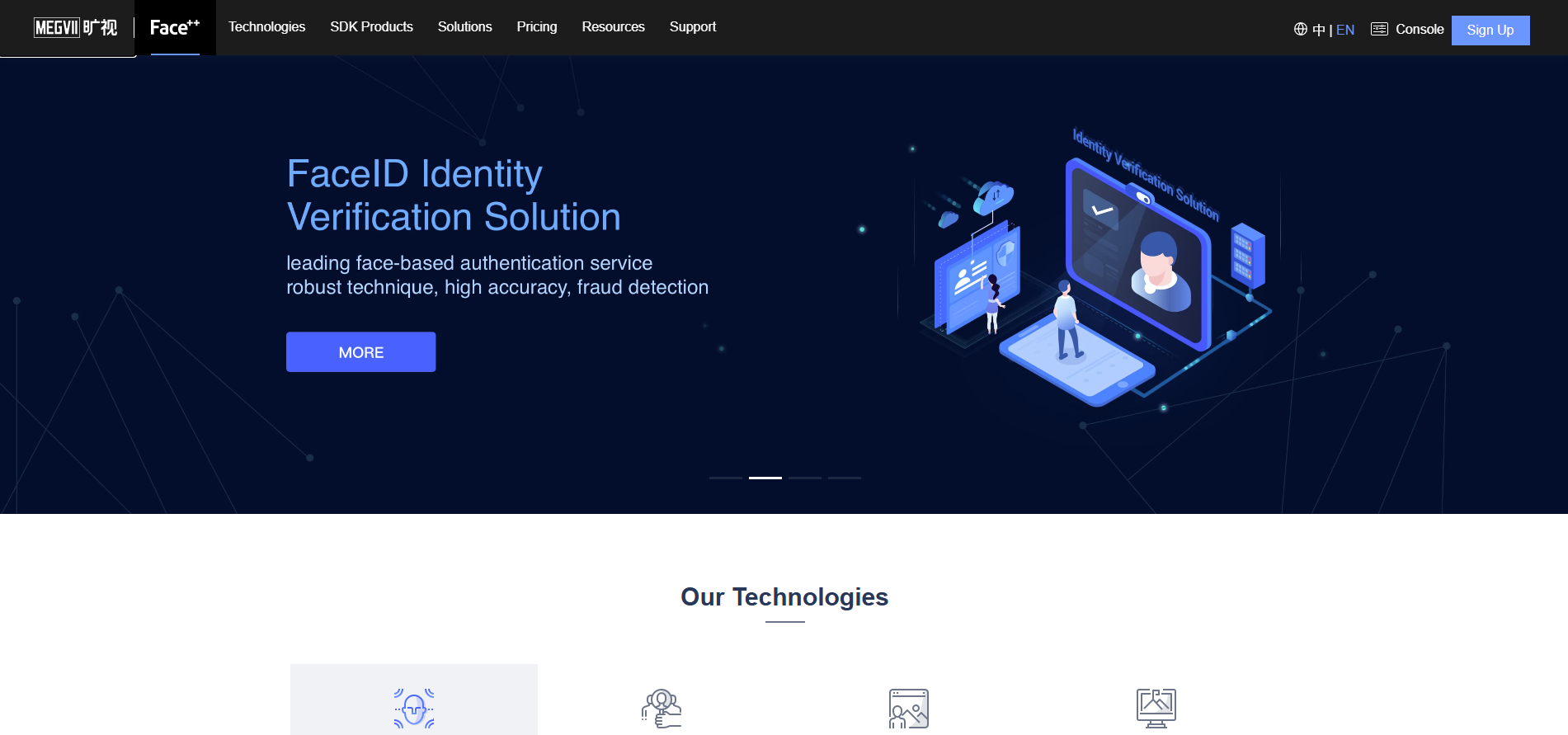
Face++ is a China-based AI facial recognition software known for its highly customizable APIs for developers and businesses. It provides emotion analysis, age estimation, and biometric authentication while supporting edge AI and IoT integrations.
✅ Cloud-based API for developers
✅ 3D face mapping & liveness detection
✅ Emotion & age detection
✅ Face tracking in video streams
✅ Highly scalable for enterprises
🔹 Financial authentication (KYC for banks & fintech)
🔹 Retail customer behavior analysis
🔹 Smart city security systems
🔹 Employee access control
🔹 Border control & identity verification
💰 API-based pricing (Custom)
✅ Highly accurate facial mapping
✅ Supports multi-face detection in videos
❌ Limited availability outside China
❌ Privacy concerns over data storage
⭐⭐⭐⭐⭐ (4.6/5)
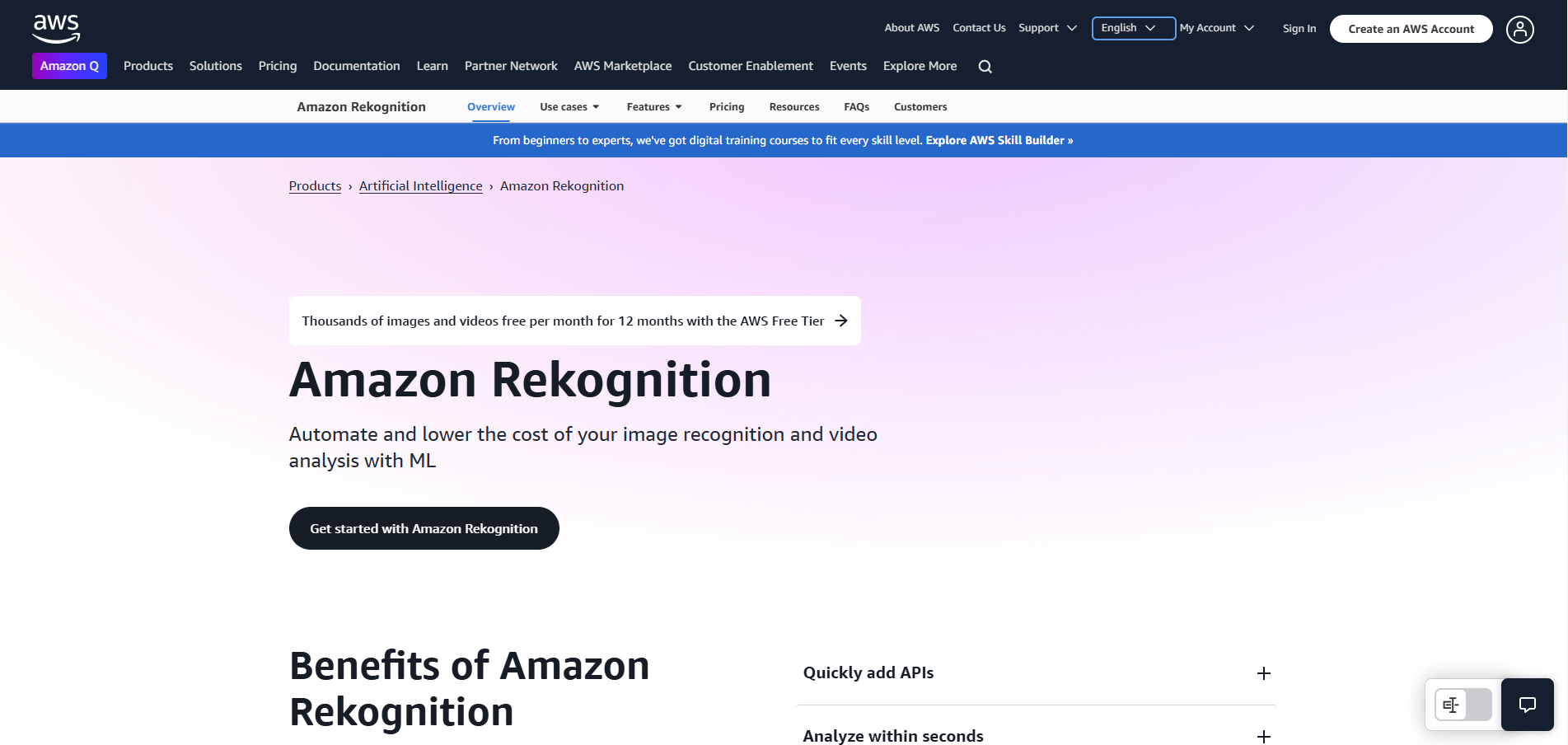
Amazon Rekognition is a cloud-based facial recognition service powered by AWS, designed for enterprises requiring scalable identity verification, security monitoring, and content analysis. It enables businesses to process large amounts of data with deep learning AI models.
✅ Deep-learning-based face recognition
✅ Emotion & sentiment detection
✅ Facial analysis & demographic estimation
✅ Integration with AWS security tools
✅ Real-time surveillance analytics
🔹 Smart retail & personalized ads
🔹 Law enforcement & crime detection
🔹 Identity verification for fintech & banking
🔹 Security access control for enterprises
🔹 Crowd monitoring & public safety
💰 Pay-as-you-go pricing model
✅ Easy integration with AWS infrastructure
✅ Highly scalable for businesses
❌ Expensive for large-scale projects
❌ Privacy concerns due to cloud storage
⭐⭐⭐⭐⭐ (4.7/5)
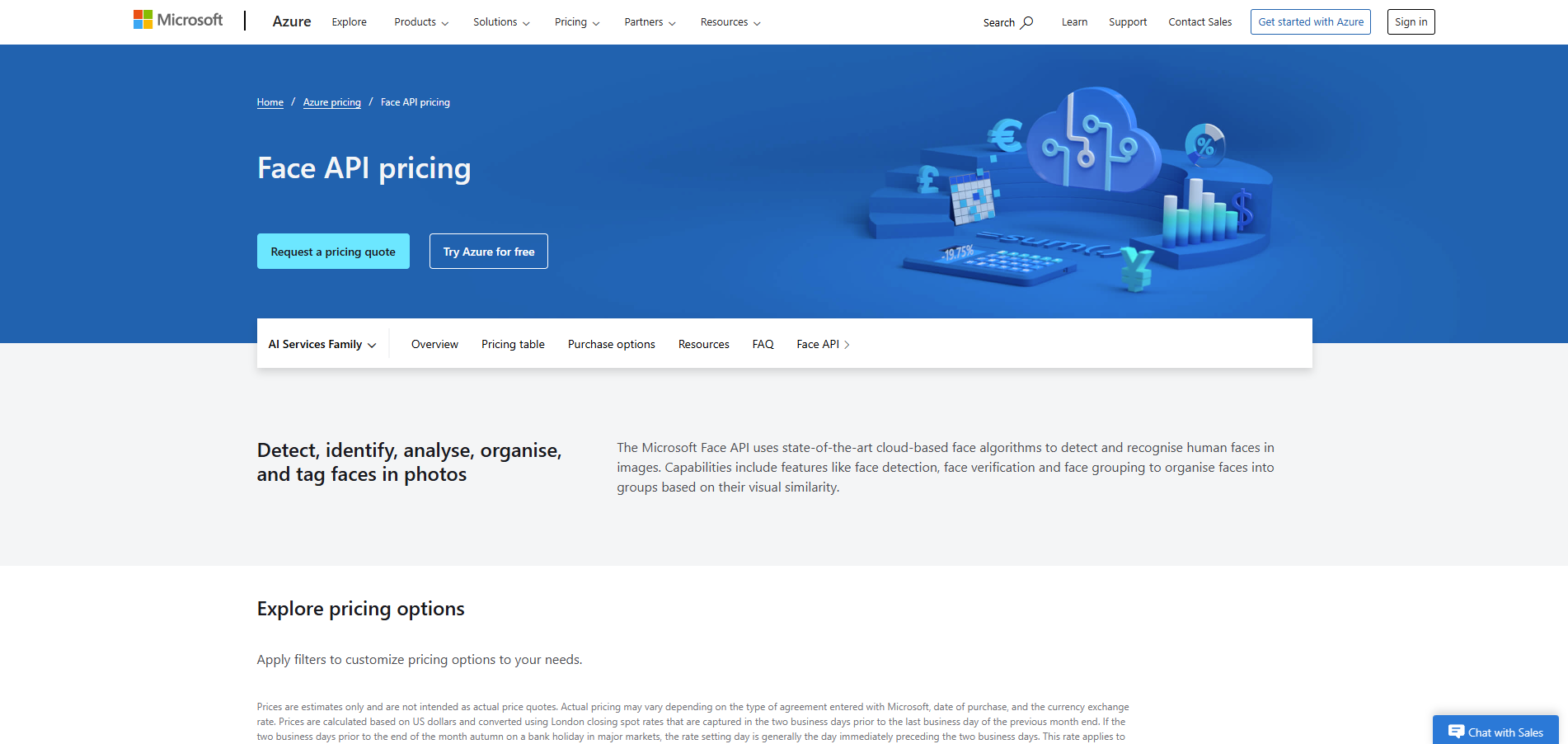
Microsoft Azure Face API is a cloud-based facial recognition solution that provides highly accurate face verification and analysis. Designed for enterprises and security-focused applications, it seamlessly integrates with Azure AI services and Microsoft’s cloud ecosystem.
✅ Face detection, verification, and grouping
✅ Multi-face tracking in videos
✅ Secure cloud authentication
✅ Emotion, gender, and age estimation
✅ Compliance with GDPR & security standards
🔹 Secure login authentication
🔹 Smart retail & personalized marketing
🔹 Banking fraud prevention
🔹 Enterprise employee verification
🔹 Access control for sensitive data
💰 Pay-per-use model
✅ Seamless integration with Azure Cloud
✅ High-level enterprise security compliance
❌ Requires Azure subscription
❌ Not ideal for small businesses
⭐⭐⭐⭐☆ (4.3/5)
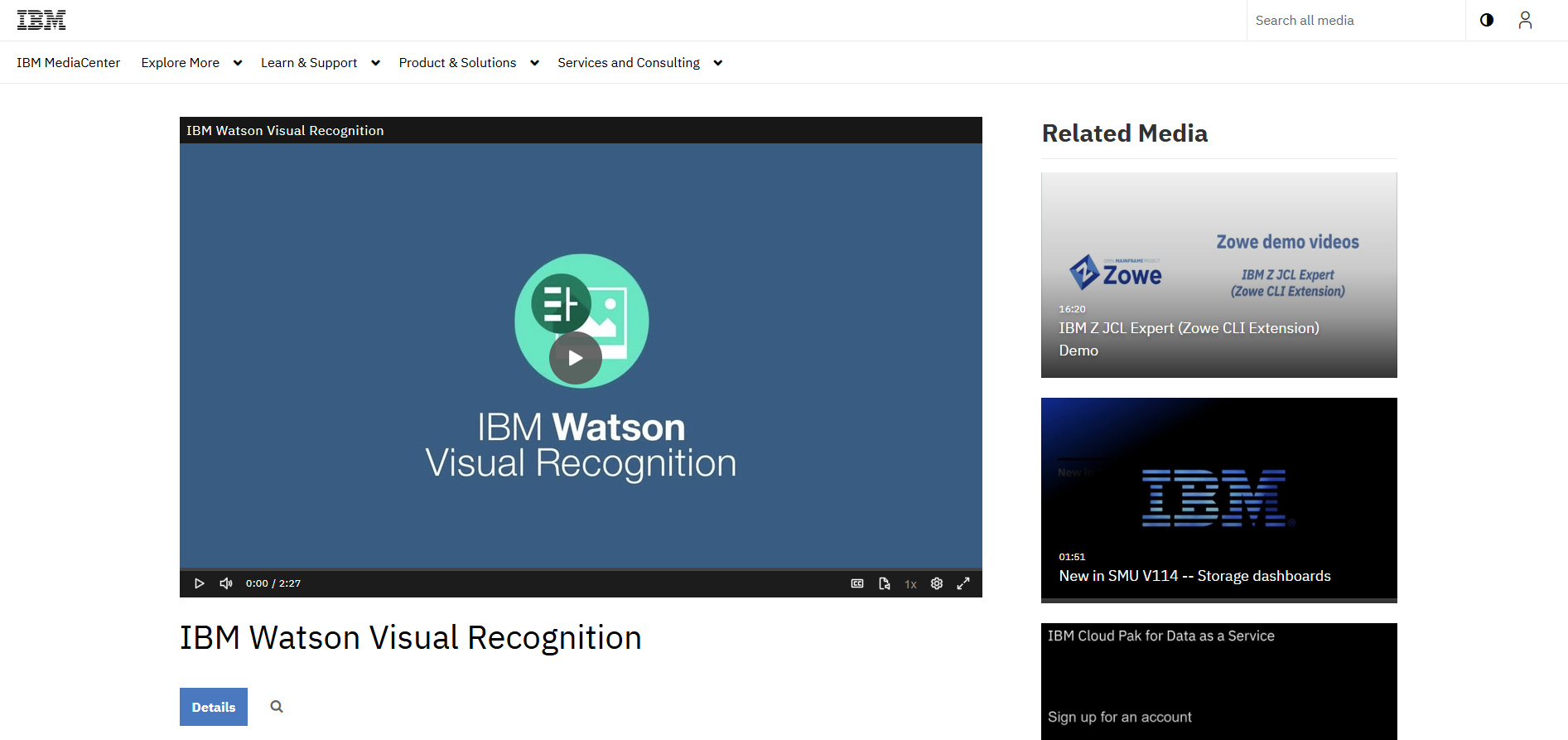
IBM Watson Visual Recognition is an AI-powered facial analysis tool used for security, identity verification, and advanced image recognition. It offers deep learning capabilities that allow businesses to train custom AI models for various applications.
✅ AI-driven image & face recognition
✅ Facial analysis with object detection
✅ Cloud-based API for scalable deployments
✅ Customizable deep learning models
✅ Supports GDPR-compliant security standards
🔹 Healthcare – Patient identification & medical records access
🔹 Government agencies – Secure identity verification
🔹 Retail & smart stores – AI-powered personalized shopping
🔹 AI-powered analytics – Image classification & object detection
🔹 Border control – Verifying identities in high-security areas
💰 Custom pricing based on API usage
✅ Highly customizable AI models
✅ Advanced deep learning algorithms
❌ Expensive for small businesses
❌ Requires IBM Cloud services for full functionality
⭐⭐⭐⭐⭐ (4.8/5)
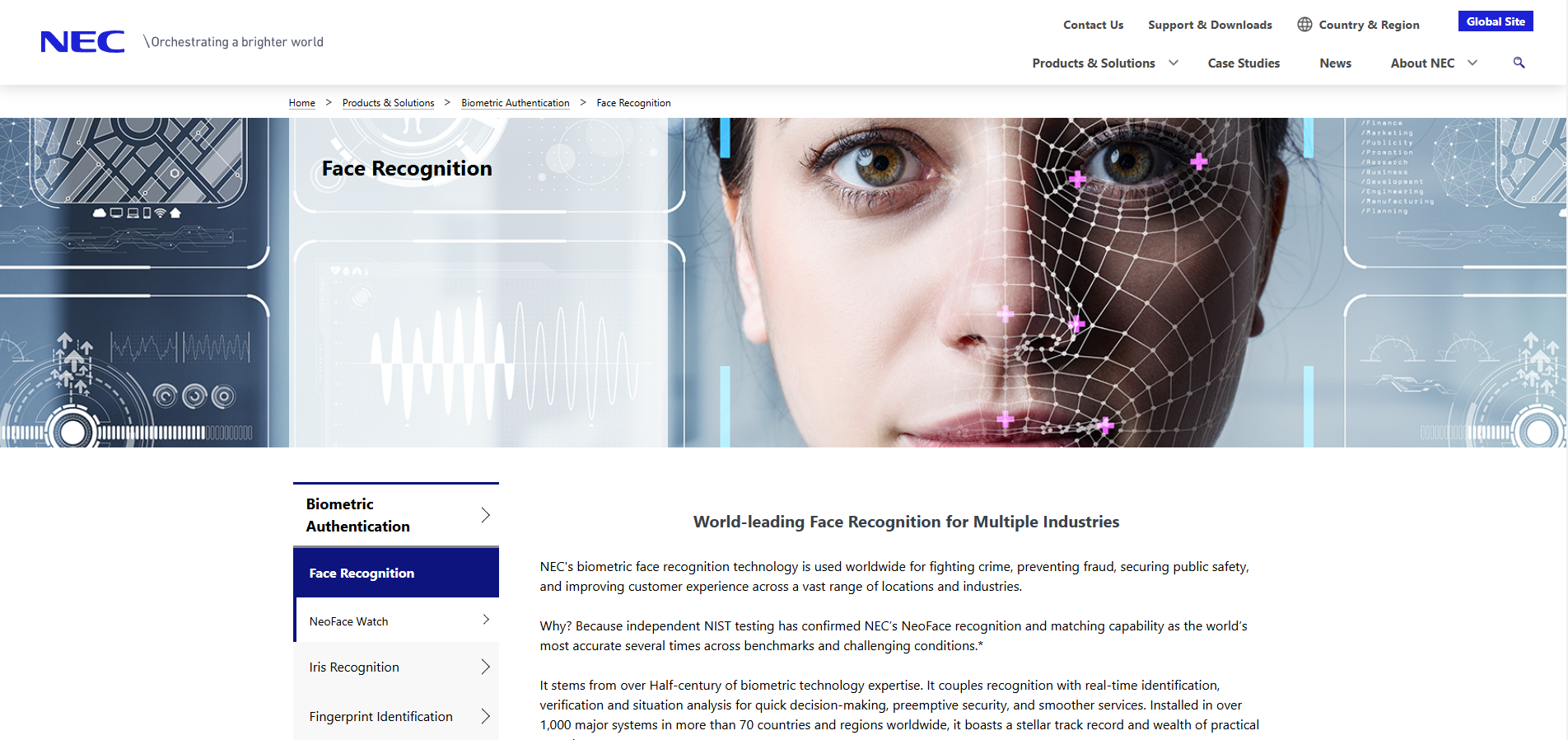
NEC NeoFace is a government and enterprise-grade facial recognition software, known for its high-speed, large-scale identity verification. It is widely used in public security, border control, and law enforcement to process thousands of faces in real-time with minimal error rates.
✅ Fast real-time facial identification for surveillance
✅ Works in low-resolution & long-distance scenarios
✅ Integration with large security systems
✅ AI-powered face tracking in crowded areas
✅ Advanced fraud detection for financial institutions
🔹 Border security & immigration control – Identity verification at airports
🔹 Smart cities & law enforcement – Public surveillance & criminal detection
🔹 Banking & finance – Preventing identity fraud in transactions
🔹 Retail & customer engagement – Personalized marketing & VIP tracking
🔹 Corporate security – Secure building access authentication
💰 Custom pricing for government agencies & enterprises
✅ Industry leader in high-speed recognition
✅ Highly effective in large-scale deployments
❌ High costs for setup & maintenance
❌ Not accessible for small businesses
⭐⭐⭐⭐⭐ (4.5/5)
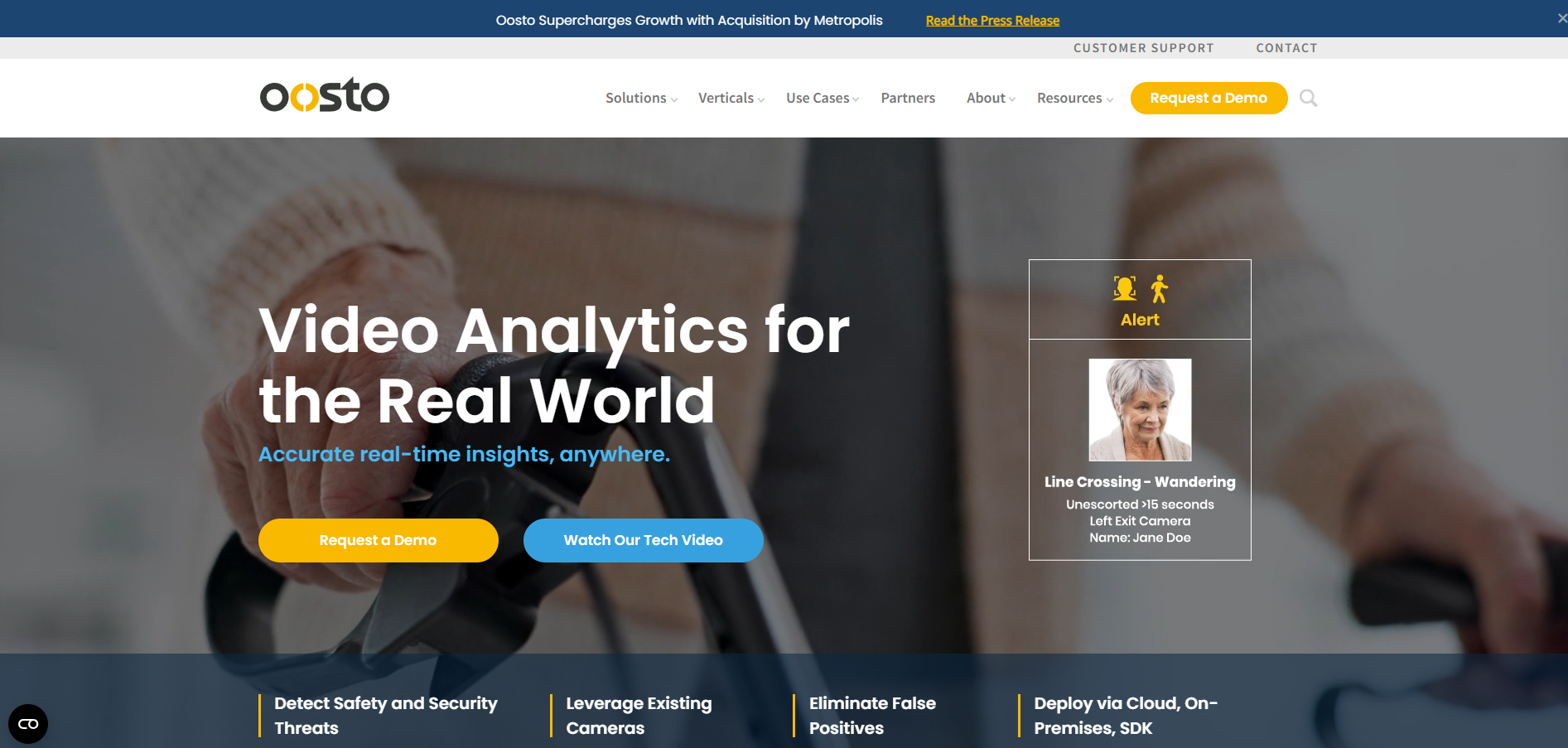
Oosto Vision AI is an AI-powered facial recognition system that provides real-time facial tracking and identity verification. It is designed for retail, financial services, and security industries, offering high accuracy and efficiency in crowded environments.
✅ Real-time face tracking across multiple cameras
✅ Works in various lighting & angle conditions
✅ Liveness detection to prevent spoofing
✅ AI-powered edge computing for rapid processing
✅ Data privacy compliance with GDPR & CCPA
🔹 Retail & shopping malls – Personalized customer interactions
🔹 Casino & gaming industries – VIP guest authentication & fraud detection
🔹 Financial sector – Preventing digital fraud & unauthorized access
🔹 Corporate security – Employee time tracking & access management
🔹 Law enforcement & surveillance – Detecting criminals & suspicious activity
💰 Custom enterprise pricing
✅ Strong AI-based anti-spoofing capabilities
✅ Highly effective for real-time applications
❌ Requires high-end hardware for optimal performance
❌ Limited availability for small-scale businesses
We develop advanced facial recognition technology, from biometric authentication to real-time identity verification. Let’s innovate together!
Schedule a Call⭐⭐⭐⭐☆ (4.2/5)
BioID is a privacy-focused facial recognition software specializing in secure authentication for financial institutions, enterprises, and online verification platforms. It offers liveness detection and fraud prevention, making it ideal for multi-factor authentication (MFA).
✅ AI-driven liveness detection for anti-spoofing
✅ Cloud-based face authentication & identity verification
✅ Supports password-free multi-factor authentication (MFA)
✅ Works with webcams & mobile cameras
✅ Biometric data encryption for security compliance
🔹 Online banking & fintech applications – Secure logins & fraud prevention
🔹 Corporate workforce authentication – Secure employee identity management
🔹 Border control & immigration – Verifying traveler identities
🔹 Healthcare systems – Secure access to patient records
🔹 Digital document verification – Identity validation for government applications
💰 Subscription-based pricing model
✅ Best-in-class privacy & GDPR compliance
✅ Excellent for fraud prevention & MFA
❌ Limited use in real-time surveillance scenarios
❌ Requires strong internet connectivity for cloud-based processing
⭐⭐⭐⭐☆ (4.3/5)
TrueFace is an AI-driven facial recognition software focused on defense, military, and critical infrastructure security. It specializes in on-premise AI deployments, making it highly suitable for high-security environments that require strict data control.
✅ Works offline with on-premise AI deployment
✅ Thermal face detection & mask compliance verification
✅ Designed for government & military-grade security
✅ Performs well in extreme weather conditions
✅ Highly secure biometric encryption for facial data
🔹 Defense & military applications – Securing classified zones
🔹 Airport & border control – Preventing identity fraud
🔹 Law enforcement – Suspect tracking & identification
🔹 Public safety & disaster response – Managing emergency access
🔹 Corporate security – High-security zone access control
💰 Enterprise pricing for government & security firms
✅ Designed for mission-critical applications
✅ Highly accurate in challenging environments
❌ Not available for small businesses or retail
❌ Requires extensive hardware infrastructure
⭐⭐⭐⭐⭐ (4.6/5)
Cognitec FaceVACS is an enterprise-grade facial recognition solution widely used for public security, forensics, and border control. It is trusted by government agencies worldwide for its high-precision identity verification capabilities.
✅ Real-time & forensic facial recognition
✅ Highly accurate image quality analysis
✅ Works with law enforcement databases for identification
✅ Biometric encryption & secure authentication
✅ Customizable solutions for large-scale security operations
🔹 Public safety surveillance – Tracking threats & crime prevention
🔹 Forensic criminal investigations – Identifying suspects & missing persons
🔹 Airport & immigration security – Verifying traveler identities
🔹 Corporate & data center security – Managing access control
🔹 Government & intelligence agencies – Preventing fraud & identity theft
💰 Enterprise pricing for security organizations
✅ Trusted by government agencies worldwide
✅ Extremely high accuracy in forensic analysis
❌ High costs for licensing & integration
❌ Requires trained personnel for management
⭐⭐⭐⭐☆ (4.1/5)
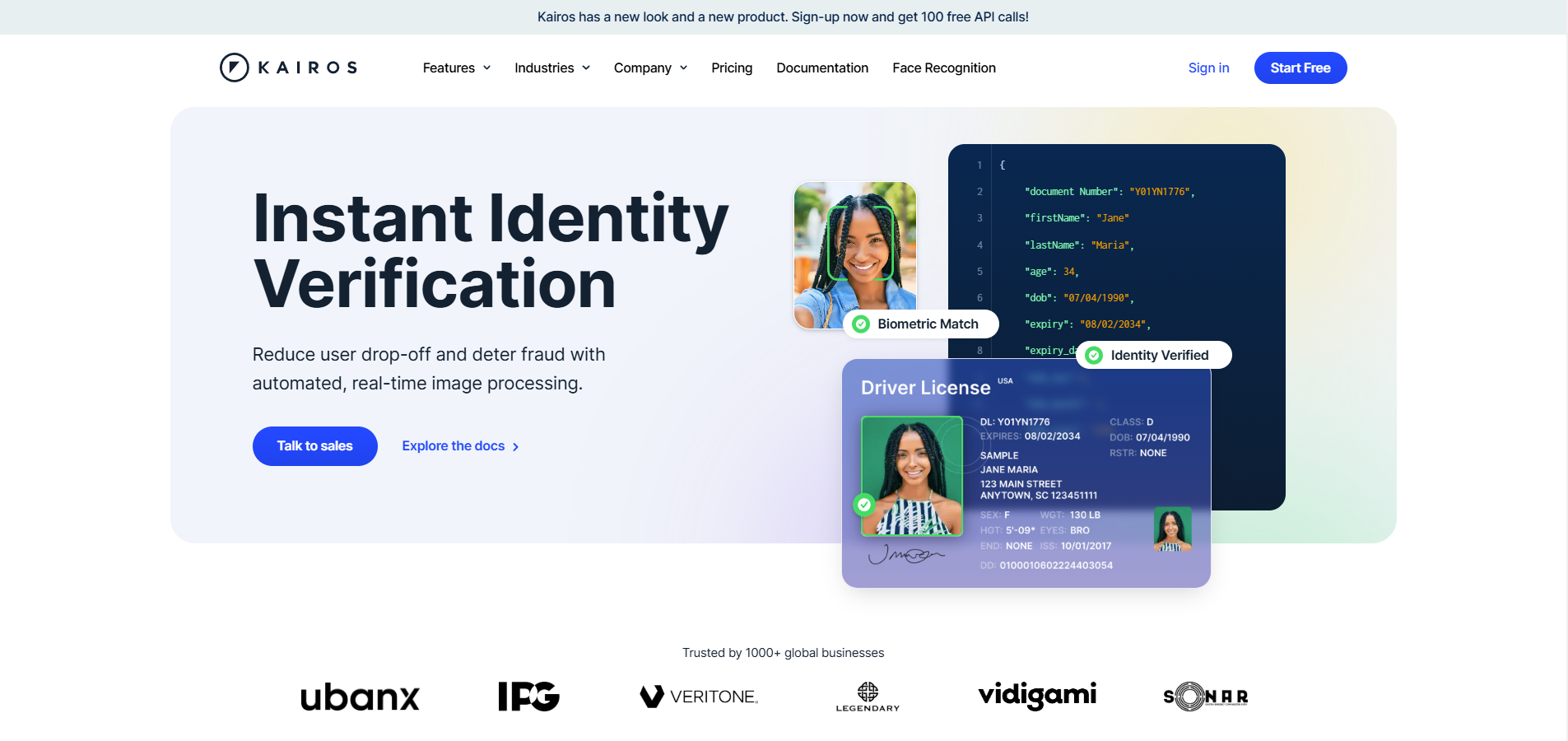
Kairos is a developer-friendly facial recognition API designed for businesses looking to integrate face detection into mobile apps, websites, and enterprise applications. It is best known for its multi-ethnic facial recognition training, ensuring reduced bias in AI models.
✅ Facial recognition API for mobile, web, and enterprise apps
✅ Emotion recognition & age estimation
✅ Multi-ethnic dataset for improved accuracy
✅ Supports on-premise & cloud-based deployment
✅ Secure data encryption for identity verification
🔹 Retail & customer analytics – Personalizing customer experiences
🔹 Digital marketing – AI-powered sentiment analysis
🔹 Workforce management – Employee attendance & verification
🔹 Smart home automation – Face authentication for secure access
🔹 E-learning & education – Student identity tracking in online exams
💰 API-based pricing with monthly subscription plans
✅ Highly customizable API for developers
✅ Diverse facial recognition dataset for accuracy
❌ Not suitable for high-security applications
❌ Requires cloud-based deployment for full functionality
⭐⭐⭐⭐⭐ (4.7/5)
Paravision is an AI-driven biometric security solution trusted by government agencies, financial institutions, and enterprise-level security systems. It is known for its advanced deep learning algorithms, offering real-time authentication and fraud detection.
✅ Advanced AI-driven biometric authentication
✅ 3D face scanning for enhanced accuracy
✅ Identity verification for high-security applications
✅ Cloud-based & on-premise deployment
✅ AI-powered liveness detection for fraud prevention
🔹 Financial institutions – Preventing identity fraud in banking
🔹 Law enforcement agencies – Criminal investigations & tracking
🔹 Border control – Airport & immigration security
🔹 Corporate security – High-risk access authentication
🔹 AI-driven surveillance – Smart city & public safety monitoring
💰 Enterprise-level pricing for government & large organizations
✅ Top-tier accuracy in fraud prevention
✅ Supports 3D biometric recognition
❌ Not available for small businesses
❌ High cost of implementation
⭐⭐⭐⭐☆ (4.4/5)
Sighthound Face Recognition is a smart AI-powered facial recognition tool with edge computing capabilities, making it ideal for real-time security applications, smart surveillance, and IoT integration.
✅ Real-time facial detection & tracking
✅ Edge AI processing for low-latency applications
✅ Works well in low-light & variable conditions
✅ On-premise & cloud deployment options
✅ Customizable API for easy integration
🔹 Smart cities – AI-powered video surveillance
🔹 Retail security – Shoplifting prevention & fraud detection
🔹 IoT integration – Face authentication for smart devices
🔹 Corporate access control – Secure office building entry
🔹 Automated border control – Fast immigration processing
💰 Pay-per-use pricing based on API calls
✅ Highly adaptable for IoT & real-time monitoring
✅ Performs well in challenging environments
❌ Requires high-end GPU processing for optimal performance
❌ Limited third-party integrations
Upgrade your business with AI-powered security. Prevent unauthorized access, enhance surveillance, and automate identity verification with advanced facial recognition.
Let’s Talk⭐⭐⭐⭐⭐ (4.5/5)
DeepVision AI specializes in crime prevention and public threat detection using deep learning-based facial recognition. It is widely used in government security, law enforcement, and border control for real-time public surveillance.
✅ Real-time facial recognition in public spaces
✅ AI-powered behavioral analytics for anomaly detection
✅ Works with CCTV, drones, and security cameras
✅ Deep learning models for criminal tracking
✅ Multi-face tracking in large crowds
🔹 Public safety & crime prevention – Detecting threats in real-time
🔹 AI-driven border security – Immigration & customs processing
🔹 Law enforcement – Monitoring high-risk individuals
🔹 Large venue security – Stadiums & concert event protection
🔹 Critical infrastructure security – Power plants, data centers, etc.
💰 Enterprise pricing based on deployment scale
✅ Best for public security & law enforcement
✅ Scalable for government & private security firms
❌ Not designed for consumer-level applications
❌ Requires high processing power for real-time analysis
⭐⭐⭐⭐☆ (4.3/5)
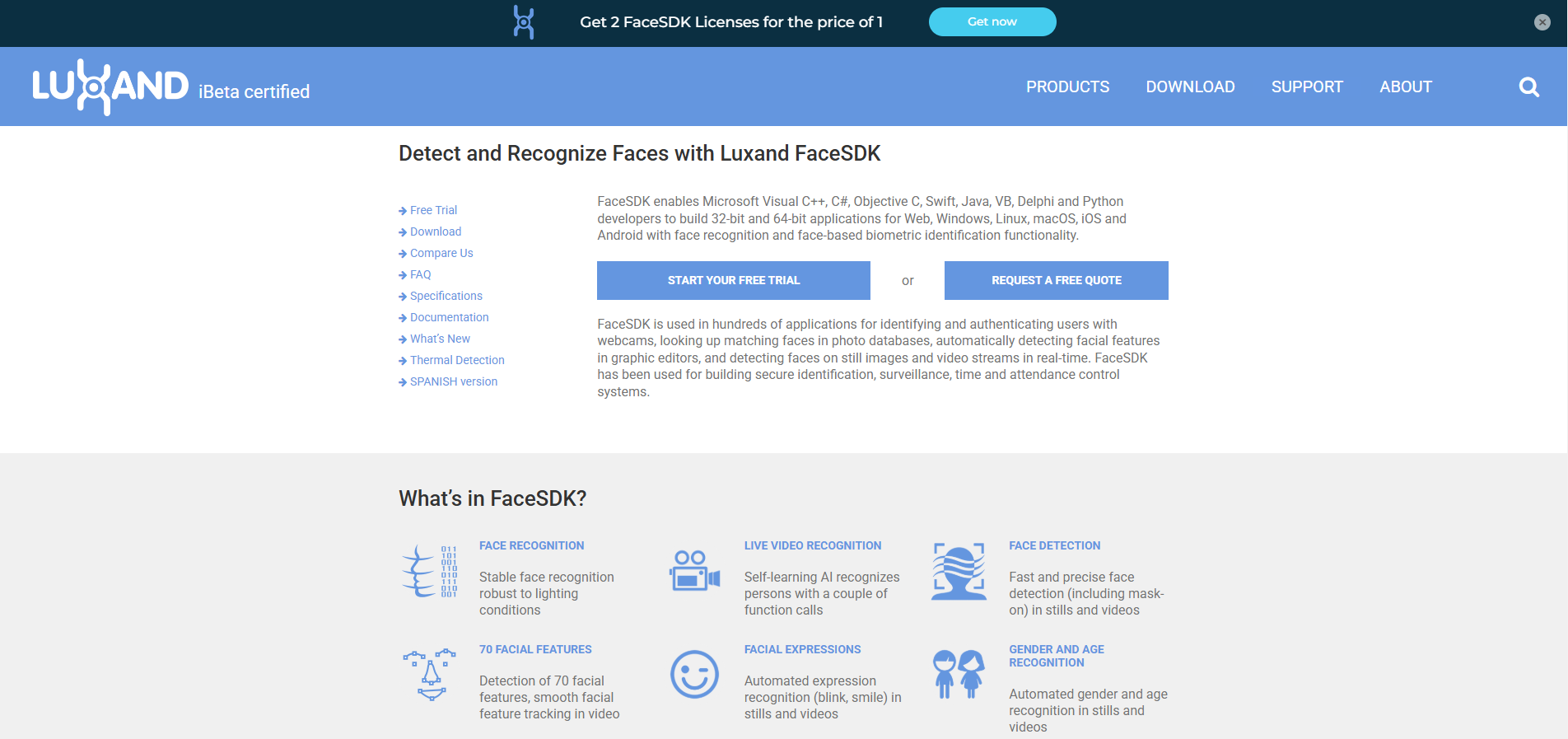
Luxand FaceSDK is a developer-focused facial recognition toolkit designed for mobile applications, gaming, and interactive AI applications. It enables face detection, tracking, and animated avatar creation for a wide range of industries.
✅ Facial recognition API for mobile & desktop apps
✅ 3D facial animation & face morphing capabilities
✅ Multi-platform support (Windows, iOS, Android, Linux, etc.)
✅ Face aging & prediction models
✅ Custom AI model training for unique use cases
🔹 Gaming & VR applications – Creating animated avatars
🔹 Entertainment & social media – Face filters & live effects
🔹 Smart home automation – Face authentication for security systems
🔹 E-learning platforms – AI-powered student engagement analysis
🔹 Retail & marketing – AI-driven customer engagement
💰 Subscription-based pricing for developers
✅ Highly customizable for developers & enterprises
✅ Supports gaming & animation industries
❌ Not optimized for security or law enforcement applications
❌ Limited real-time identity verification capabilities
⭐⭐⭐⭐☆ (4.3/5)
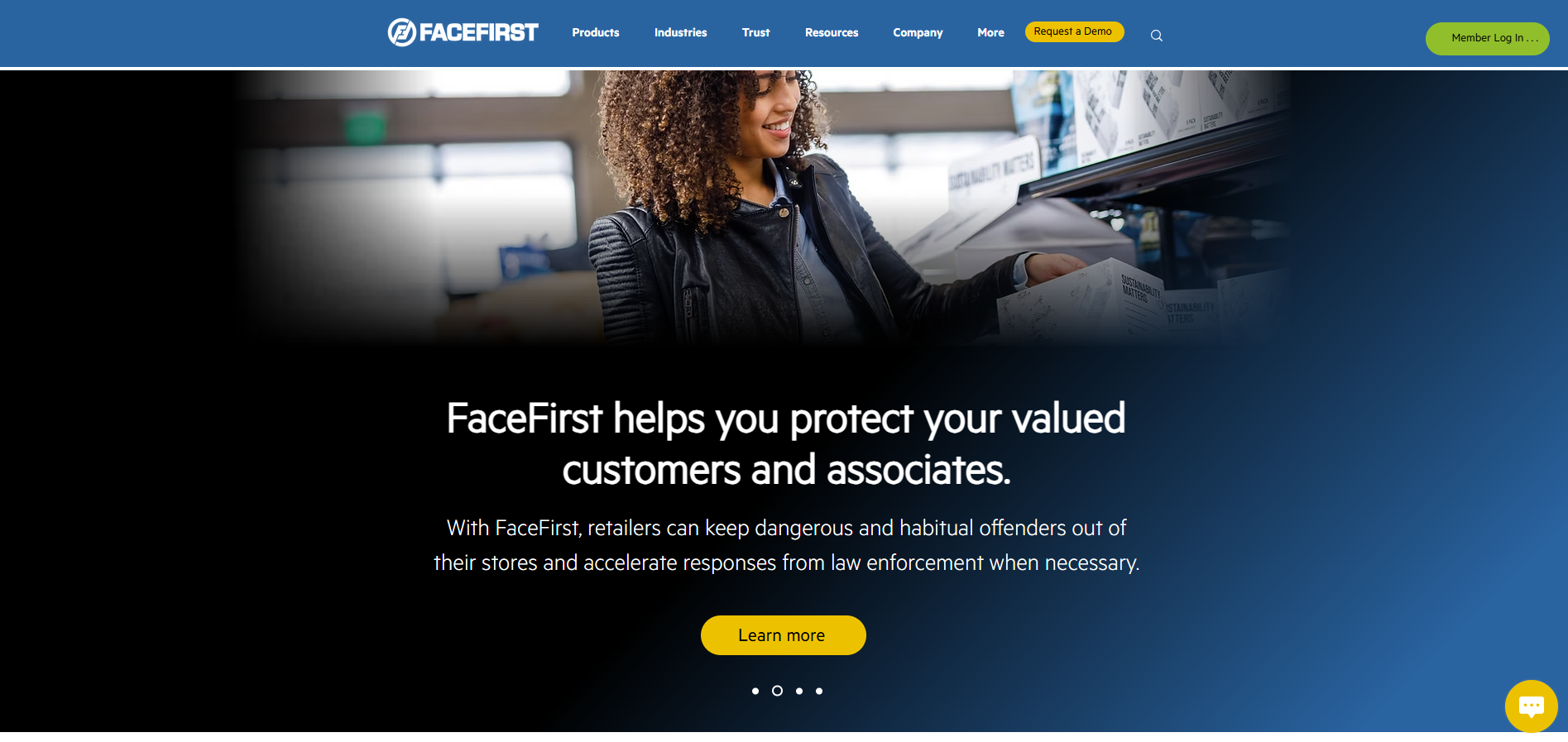
FaceFirst is a highly scalable AI facial recognition software, primarily designed for security, retail, and transportation industries. It specializes in preventing fraud, reducing theft, and enhancing public safety, making it a go-to solution for law enforcement and corporate security teams.
✅ Real-time facial recognition for large-scale deployments
✅ Cloud-based & on-premise installation options
✅ AI-powered theft prevention & security alerts
✅ Multi-camera tracking for crowd management
✅ Works in various environmental conditions (low-light, long-distance, etc.)
🔹 Retail loss prevention – Identifying shoplifters & banned customers
🔹 Law enforcement & public safety – Tracking individuals of interest
🔹 Airports & transit systems – Enhancing passenger security
🔹 Event security – Managing large-scale events & VIP tracking
🔹 Corporate security – Access control for high-risk buildings
💰 Custom pricing based on deployment scale
✅ Enterprise-ready scalability for large venues
✅ Best for fraud prevention & crime reduction
❌ High setup costs for full security infrastructure
❌ Privacy concerns in public spaces
⭐⭐⭐⭐⭐ (4.8/5)
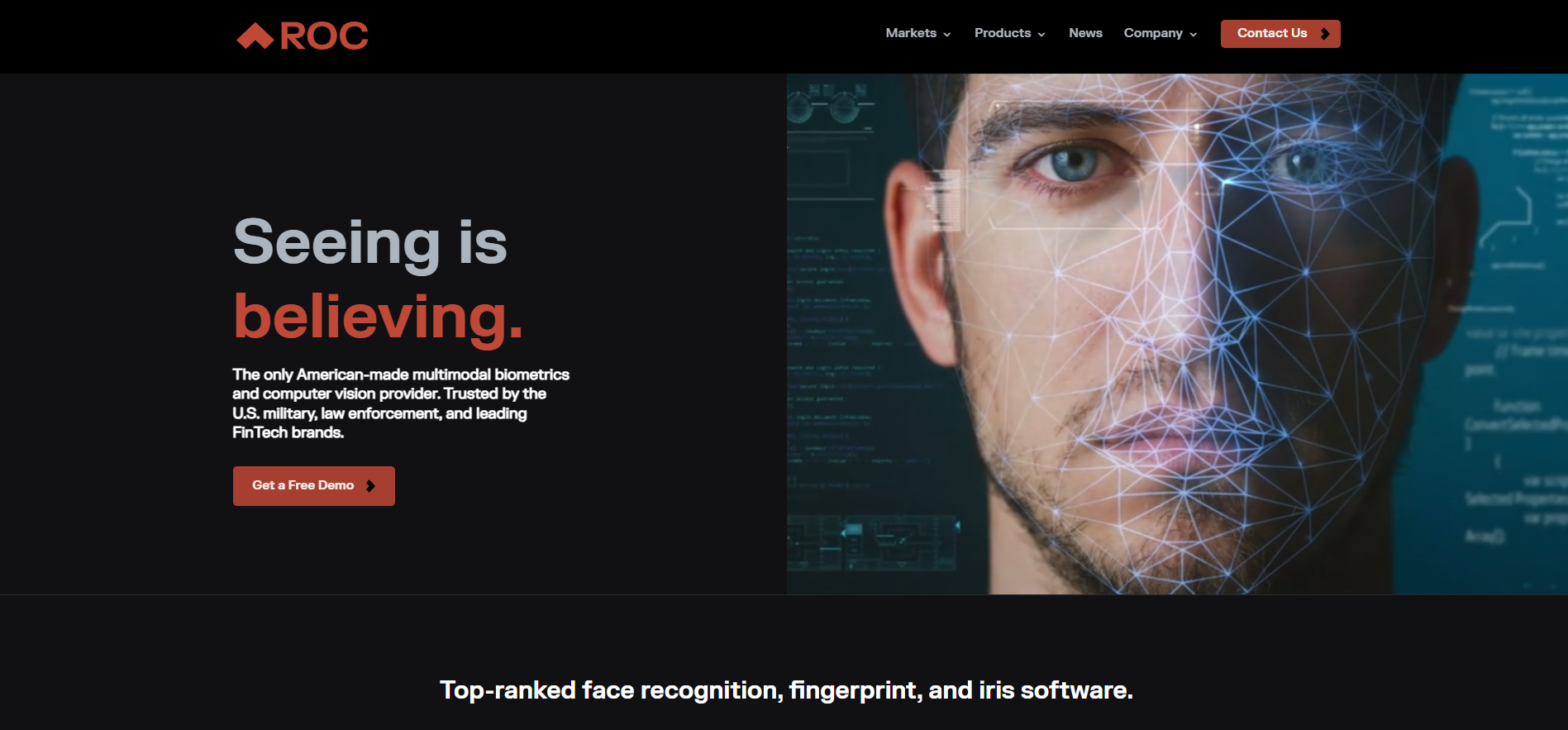
Rank One Computing (ROC) is a high-performance facial recognition software built for military, intelligence agencies, and critical infrastructure security. It provides on-device biometric matching for low-latency applications, ensuring fast and accurate identity verification.
✅ AI-powered facial recognition with edge computing
✅ Low-latency & high-speed identity verification
✅ Works offline for secure on-premise deployments
✅ Liveness detection & anti-spoofing technology
✅ Supports both 2D and 3D facial recognition models
🔹 Military & defense applications – Tracking high-risk individuals
🔹 Smart border control – Verifying travelers at customs
🔹 High-security zones – Managing access to restricted areas
🔹 Government intelligence agencies – Enhancing national security
🔹 Critical infrastructure protection – Securing power plants, data centers, and research labs
💰 Enterprise-level pricing for government & security applications
✅ Optimized for high-security industries
✅ Fast processing with offline capabilities
❌ Not available for commercial businesses
❌ Requires specialized hardware for maximum performance
⭐⭐⭐⭐⭐ (4.6/5)
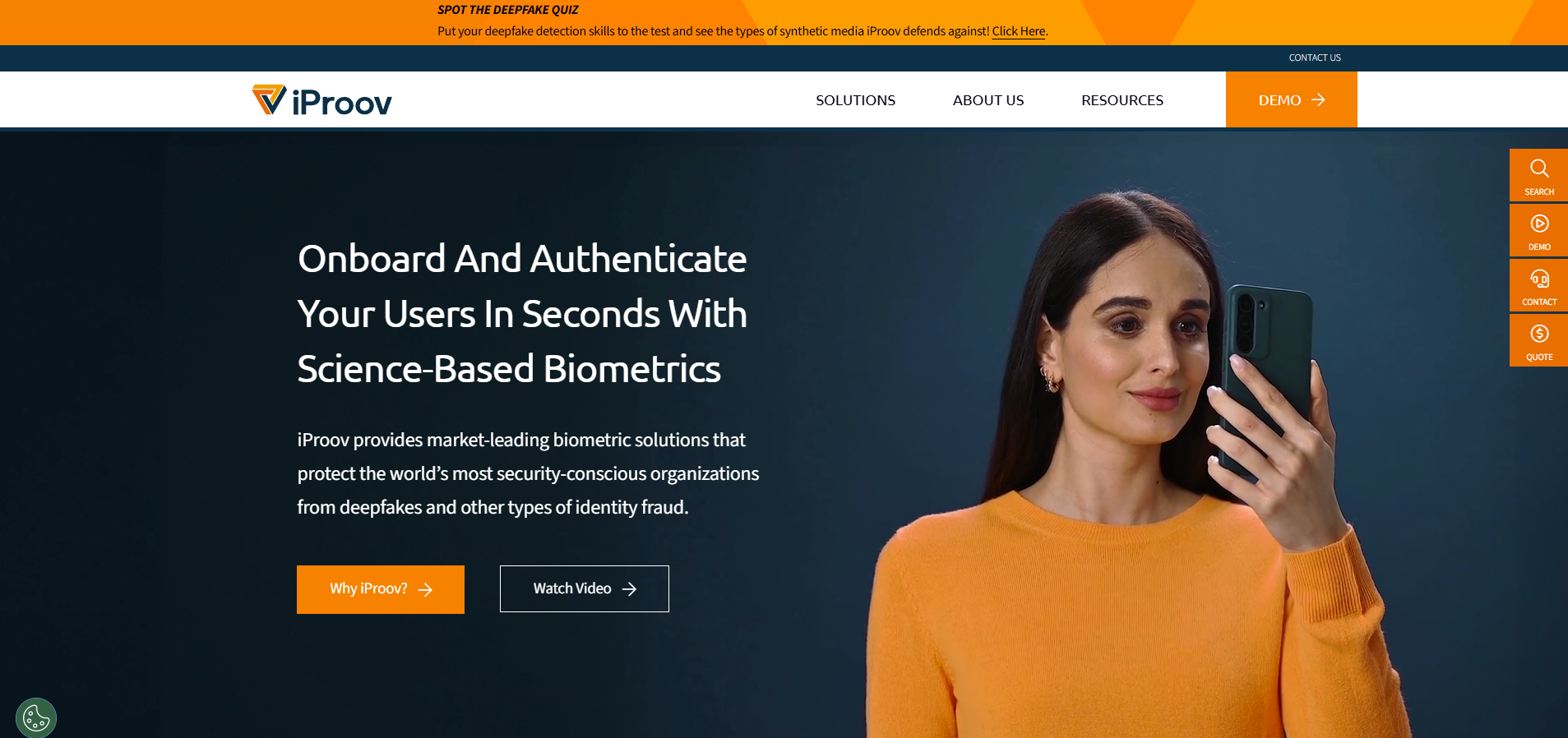
iProov is a privacy-first facial recognition software focused on secure authentication and fraud prevention. It is widely used in financial services, healthcare, and government ID verification systems to ensure secure and seamless identity verification.
✅ AI-driven biometric authentication & anti-spoofing
✅ Liveness detection for fraud prevention
✅ Cloud-based face verification for secure logins
✅ Supports mobile & desktop identity authentication
✅ GDPR & CCPA-compliant data privacy standards
🔹 Banking & fintech platforms – Secure customer authentication
🔹 E-commerce fraud prevention – Preventing unauthorized account access
🔹 Government ID verification – Passport & driver’s license authentication
🔹 Telemedicine & healthcare – Patient identity validation
🔹 Digital identity management – Securing personal online accounts
💰 Subscription-based pricing model
✅ Best-in-class fraud prevention & security compliance
✅ Highly scalable for fintech & digital businesses
❌ Limited use outside identity verification
❌ Not designed for real-time surveillance applications
⭐⭐⭐⭐☆ (4.3/5)
AnyVision is a high-performance facial recognition platform widely used in retail, transportation, and critical infrastructure. Known for its speed and accuracy, it excels in real-time identification and video analytics, even in highly crowded or low-light environments. Its AI-driven algorithms make it a trusted choice for large enterprises seeking secure and scalable solutions.
✅ Real-time facial recognition across live video streams
✅ High accuracy in low-light, occlusion, and fast-moving scenarios
✅ Edge-based processing for faster on-site analytics
✅ Smart alerts for suspicious behavior or watchlist matches
✅ Scalable deployment for large enterprises & public venues
🔹 Transportation security – Monitoring airports, railways, and bus stations
🔹 Retail loss prevention – Detecting repeat offenders & improving store security
🔹 Stadiums & event venues – Managing high-traffic access points
🔹 Corporate campuses – Automated identity verification for secure access
🔹 Critical infrastructure – Protecting power plants & restricted facilities
💰 Custom enterprise pricing based on number of cameras and deployment size
✅ Extremely accurate in real-world, complex environments
✅ Edge-based AI boosts speed and security
❌ Requires strong hardware for optimal performance
❌ Enterprise-focused, not suitable for small businesses
OpenFace (and its modern successor, InsightFace) is a leading open-source facial recognition framework built for developers, researchers, and innovative startups. It offers highly customizable models and delivers performance on par with several commercial solutions. Its flexibility and cost-effectiveness make it ideal for AI experimentation and building fully tailored facial recognition systems.
✅ Completely open-source and customizable
✅ State-of-the-art deep learning facial embeddings
✅ High accuracy comparable to commercial algorithms
✅ Compatible with Python, TensorFlow, PyTorch
✅ Lightweight models optimized for mobile and edge devices
🔹 Academic research – AI, biometrics, and facial analysis studies
🔹 Startups – Building custom facial recognition software for products
🔹 Photo management apps – Automated tagging & face grouping
🔹 Security systems – Custom-built access control solutions
🔹 Robotics & smart devices – On-device facial identification
💰 Free (open-source), with optional paid cloud or enterprise integrations
✅ Extremely flexible and cost-effective
✅ Ideal for developers and custom AI applications
❌ Requires technical expertise to deploy
❌ Not a plug-and-play solution for non-technical users
Comparison Table of Facial Recognition Software
| Software | Best For | Pricing | Key Feature |
|---|---|---|---|
|
Clearview AI |
Law Enforcement |
Custom |
Largest public image database |
|
Face++ |
Developers & Retail |
API-based |
Emotion & gender detection |
|
Amazon Rekognition |
Cloud Security |
Pay-as-you-go |
AWS Integration |
|
Microsoft Azure Face API |
Enterprise Security |
Pay-per-use |
AI-driven authentication |
|
IBM Watson Visual Recognition |
AI-based Security |
Custom |
High-precision ML models |
|
NEC NeoFace |
Smart Cities |
Custom |
High-speed large-scale ID verification |
|
AnyVision |
Retail & Security |
Custom |
Real-time tracking |
|
BioID |
Authentication |
Subscription |
Liveness detection |
|
TrueFace |
Airports & Border Control |
Custom |
AI-driven verification |
|
Cognitec FaceVACS |
Surveillance |
Custom |
Government-approved forensic analysis |
|
Kairos |
Small Businesses |
API-based |
Customizable face recognition API |
|
Paravision |
Government Security |
Enterprise |
3D biometric AI security |
|
Sighthound Face Recognition |
IoT & Smart Cities |
Pay-per-use |
AI-powered low-latency detection |
|
DeepVision AI |
Crime Prevention |
Enterprise |
AI-driven threat detection |
|
Luxand FaceSDK |
Developers & Gaming |
Subscription |
Facial animation & AI avatars |
|
FaceFirst |
Retail & Transportation |
Custom |
Multi-camera real-time tracking |
|
Rank One Computing (ROC) |
Military & Intelligence |
Enterprise |
High-speed biometric matching |
|
iProov |
Financial & Healthcare Authentication |
Subscription |
AI-driven fraud prevention |
|
AnyVision |
Retail & Security |
Custom |
Real-time tracking |
|
OpenFace / InsightFace |
Developers & Research |
Free / Open-source |
Customizable open-source facial recognition |
With numerous Facial Recognition Software options available in 2025, choosing the right one for your business or organization requires careful consideration. A high-quality Facial Recognition System should offer accuracy, security, scalability, and compliance with privacy laws. Whether you're implementing it for identity verification, fraud prevention, or security enhancement, selecting the right solution ensures efficiency and seamless integration.
Partnering with a reliable Software Development Company in USA can help businesses implement custom AI-driven facial recognition solutions tailored to their industry-specific needs. Below are the key criteria to consider when selecting the best AI Facial Recognition Software for your requirements.
The primary function of any AI Facial Recognition Software is to identify and verify faces accurately. The best systems offer near-perfect recognition rates, even in challenging conditions such as poor lighting, occlusions (masks, glasses), and various angles.
✅ Look for error rates below 0.1% for high accuracy
✅ Check real-time processing speed for instant recognition
✅ Ensure it supports multi-face recognition for tracking multiple individuals simultaneously
🔹 Example: NEC NeoFace and Microsoft Azure Face API are known for high-speed, large-scale identification.
A robust Facial Recognition System must have anti-spoofing mechanisms to prevent fraud and unauthorized access. This is especially crucial in banking, border control, and corporate security.
✅ Look for liveness detection to prevent fake photos/videos from being used
✅ Ensure multi-layer authentication, such as combining facial recognition with PINs or fingerprints
✅ Verify encryption standards for biometric data protection
🔹 Example: BioID and TrueFace specialize in liveness detection to prevent spoofing and deepfake attacks.
With growing concerns about data privacy and biometric security, it’s critical to choose AI Facial Recognition Software that adheres to global privacy laws.
✅ Ensure compliance with GDPR (Europe), CCPA (California), and other regional privacy laws
✅ Choose software that allows on-premise deployment for greater data control
✅ Look for user consent and opt-in options to maintain ethical AI practices
🔹 Example: Paravision and Cognitec FaceVACS offer high privacy standards and on-premise deployments to keep biometric data secure.
Different businesses have different needs—whether you need real-time surveillance, retail analytics, or employee verification, your Facial Recognition System should be scalable and easy to integrate with your existing platforms.
✅ Ensure API compatibility for easy integration with other enterprise applications
✅ Check if the software works with cloud, edge computing, and on-premise solutions
✅ Choose a solution that scales with your business growth
🔹 Example: Kairos and Luxand FaceSDK offer highly customizable APIs for developers integrating Facial Recognition Software into apps.
Different industries have different security and infrastructure requirements. Choosing between cloud-based, on-premise, or edge AI deployment depends on your business needs.
✅ Cloud-based solutions (Amazon Rekognition, Microsoft Azure Face API) offer scalability and easy access
✅ On-premise solutions (TrueFace, Paravision) ensure higher data security
✅ Edge AI solutions (AnyVision, Sighthound) allow real-time face recognition with low latency
🔹 Example: AnyVision’s Edge AI-based Facial Recognition Software ensures real-time processing for smart surveillance.
Some Facial Recognition Software solutions are designed for specific industries like retail, law enforcement, banking, and healthcare. Choosing software with industry-specific features ensures better efficiency.
✅ For law enforcement, look for real-time criminal identification (Clearview AI, DeepVision AI)
✅ For retail & customer analytics, choose emotion and demographic recognition (Face++)
✅ For banking & fraud prevention, opt for liveness detection & biometric authentication (BioID)
🔹 Example: NEC NeoFace is widely used for airport security & border control, ensuring fast and secure traveler authentication.
Facial recognition solutions come with different pricing structures depending on features, scalability, and deployment options. It’s essential to choose software that aligns with your budget without compromising security and performance.
✅ Pay-as-you-go pricing (Amazon Rekognition, Sighthound) is best for startups & small businesses
✅ Enterprise licenses (IBM Watson Visual Recognition, NEC NeoFace) are ideal for government & corporate security
✅ Subscription-based models (Kairos, Luxand FaceSDK) work best for developers & SaaS applications
🔹 Example: Microsoft Azure Face API follows a pay-per-use model, making it affordable for startups and enterprises alike.
As Facial Recognition Software continues to evolve, choosing a solution backed by AI research & regular updates is essential.
✅ Opt for companies with active AI research & regular software updates
✅ Check if the provider offers customer support & implementation assistance
✅ Choose solutions that offer continuous AI model training for better accuracy
🔹 Example: IBM Watson & Microsoft Azure Face API provide continuous AI model updates to improve accuracy & performance.
Facial recognition and IoT are converging to create intelligent, automated environments where identity verification happens seamlessly. This AI integration with IoT is enabling smarter homes, cities, vehicles, and retail systems with real-time face-based interactions.
In smart homes, facial recognition integrated with IoT devices enhances both convenience and security.
Example: A smart doorbell recognizes family members and grants access automatically while notifying homeowners of strangers.
Facial Recognition IoT Integration in smart cities improves public safety, urban planning, and emergency response.
Example: AI-powered surveillance systems in city centers track criminal activity and coordinate with law enforcement in real time.
Retailers are using facial recognition and IoT to personalize experiences and streamline operations.
Example: A smart kiosk identifies repeat customers, greets them by name, and suggests personalized product recommendations.
Automobiles are evolving into intelligent machines that use facial recognition and IoT to enhance safety and personalization.
Example: AI-driven in-cabin cameras monitor the driver’s eye movement and facial expressions to detect drowsiness.
As AI and IoT continue to converge, facial recognition software is becoming a cornerstone of smarter, safer, and more personalized connected ecosystems across homes, cities, retail, and mobility.
The most common mistakes when choosing facial recognition software include selecting a solution without a clear use case, relying only on accuracy claims, overlooking integration requirements, ignoring how biometric data is handled, focusing solely on upfront costs, and failing to plan for future growth. Avoiding these pitfalls will help you choose a facial recognition solution that delivers reliable performance and long-term value.
A long list of features can be impressive, but will you actually use most of them? If your goal is employee attendance, paying for advanced surveillance capabilities makes little sense. Start with your use case and shortlist facial recognition software built to solve that specific problem.
A vendor claims 99.9% accuracy, but under what conditions? Real-world environments rarely have perfect lighting, camera angles, or image quality. Look for software that performs consistently in the conditions your business deals with every day, not just in benchmark tests.
How much extra work will it take to connect the software with your existing systems? If the facial recognition solution doesn't integrate smoothly with your HR platform, access control system, mobile app, or security infrastructure, you'll spend more time building workarounds than using the product.
Where is facial data stored? Who can access it? Can you meet the privacy requirements in your industry? These questions often come up after implementation, when changing platforms becomes expensive. Evaluate data security and compliance before making your decision.
A lower price tag can be tempting, but what happens when you add API usage, cloud hosting, implementation, maintenance, and support costs? Compare the total cost of ownership instead of choosing the cheapest facial recognition software upfront.
Your current deployment might involve a single office or a few hundred users, but what happens when that doubles next year? Choose facial recognition software that can grow with your business instead of forcing you to migrate sooner than expected.
A little extra evaluation upfront can save months of frustration later. Ask the right questions, focus on your actual business needs, and compare facial recognition software beyond marketing claims to choose a solution that's built for long-term success.
While facial recognition software offers powerful capabilities, it also comes with significant challenges. From privacy concerns to technical limitations, understanding these drawbacks is essential before large-scale implementation.
Facial recognition often raises alarms over mass surveillance, data misuse, and consent violations. In many cases, individuals are scanned without their knowledge, which conflicts with data protection regulations like GDPR and CCPA.
Many facial recognition systems have shown higher error rates for people of color, women, and elderly individuals, especially when trained on limited or non-diverse datasets.
Despite advancements, facial recognition can still be fooled by photos, videos, or 3D masks if anti-spoofing technologies aren’t implemented.
Laws around facial recognition vary widely by region, creating uncertainty for businesses operating internationally.
Deploying a secure and accurate facial recognition system requires significant investment in:
This makes it less accessible for startups and small businesses.
Environmental factors such as poor lighting, extreme weather, or occlusions (masks, hats, glasses) can reduce accuracy.
Even if the technology is accurate, public acceptance remains a challenge. People are often skeptical about being tracked, profiled, or analyzed without clear benefits.
Despite its growing adoption, facial recognition software must overcome technical, ethical, and regulatory challenges to ensure responsible and trustworthy implementation.
As facial recognition continues to evolve, emerging technologies and stricter regulations are shaping a more secure, ethical, and intelligent future. Here are the key trends redefining how facial recognition will be used across industries.
Facial recognition is moving from the cloud to the edge, enabling faster, offline processing with reduced latency.
Next-gen systems are incorporating 3D facial mapping and infrared sensors to increase accuracy, especially in poor lighting or angled views.
With rising deepfake threats, liveness detection is becoming standard in modern systems.
To align with global regulations, vendors are embedding privacy-by-design principles into their systems.
Blockchain is being explored as a way to secure biometric records and offer user-controlled identity systems.
Advanced systems are now capable of analyzing emotional states and behavioral patterns in real-time.
Governments and institutions are setting ethical frameworks to guide responsible use of facial recognition.
Facial recognition is being combined with other biometric methods such as iris, voice, fingerprint, and gait recognition for multi-layered security.
These emerging trends are paving the way for facial recognition technology to become more secure, ethical, and intelligent—reshaping the future of identity and access management.
Want a fast, accurate AI-driven facial recognition solution? Our experts will build a state-of-the-art system tailored to your needs.
Start Your ProjectWe hope this guide has helped you understand the Top Facial Recognition Software of 2026 and how these next-generation facial recognition systems are transforming authentication, surveillance, and business operations across industries. With continuous advancements in AI, machine learning, and biometrics, facial recognition in 2026 is more accurate, faster, and highly adaptable for sectors like retail, banking, law enforcement, healthcare, and smart cities.
Selecting the right Facial Recognition System requires evaluating factors such as accuracy, liveness detection, privacy compliance, deployment flexibility, integration capabilities, and scalability. Whether your goal is fraud prevention, real-time identity verification, customer experience automation, or enterprise-level security, the right platform can significantly enhance operational efficiency and safety.
As regulatory standards and AI technologies rapidly evolve, organizations must invest in AI-powered facial recognition that matches their specific workflows and security demands. For businesses seeking specialized implementations, AI development for facial recognition offer the flexibility, precision, and adaptability needed to meet unique industry requirements.
Ready to integrate advanced Facial Recognition Software or build a fully custom AI solution? Book an appointment today and let our experts guide your next AI transformation.
Facial Recognition Software enhances security by using biometric authentication, ensuring only authorized individuals gain access. Advanced liveness detection prevents fraud by blocking fake images, videos, and deepfakes. Many systems also encrypt facial data, reducing the risk of identity theft.
Industries like law enforcement, banking, healthcare, retail, and smart cities benefit the most from Facial Recognition Systems. Law enforcement uses it for criminal tracking, while banks rely on AI Facial Recognition Software for secure transactions. Retailers use it for personalized customer experiences and fraud prevention.
Yes, modern AI-powered Facial Recognition Systems use deep learning algorithms that detect faces even in low-light conditions, different angles, and crowded areas. Many advanced solutions include infrared sensors and 3D face mapping, improving accuracy in challenging environments.
Leading Facial Recognition Systems comply with GDPR, CCPA, and other global privacy laws, ensuring user data protection. Many software providers offer on-premise deployment for added data security and require user consent-based authentication to enhance privacy and transparency.
Yes, most Top Facial Recognition Software solutions provide API-based integration, allowing businesses to integrate them with existing security cameras, biometric access systems, and mobile applications. They can also work alongside cloud, edge AI, and IoT-based security systems.
The future of Facial Recognition Software includes AI-powered edge computing, 3D biometric scanning, and blockchain-based facial data security. More businesses are adopting contactless authentication, and governments are focusing on stricter privacy regulations and ethical AI usage to balance innovation with security.

with Biz4Group today!
Our website require some cookies to function properly. Read our privacy policy to know more.