Artificial Intelligence: Trends, Technologies, and Business Applications
Explore how artificial intelligence is transforming industries through intelligent automation, predictive analytics, machine learning, and data-driven decision-making. Discover emerging AI trends, practical use cases, and strategies for integrating AI into business operations. Learn about Biz4Group’s AI Development Company to understand how AI-powered apps, platforms, and enterprise systems can improve efficiency and support business growth.
Agentic AI in healthcare goes beyond generative AI and traditional automation by planning tasks, using tools, and executing multi-step workflows within defined limits.
AI denial management turns a denied claim into a prioritized recovery case by combining the denial reason, claim data, payer context, supporting evidence, and historical outcomes.
A denial comes back with CARC 197, which means authorization, precertification, or notification was absent. Your AI agent reads the remittance and recommends a corrected claim. But the authorization was approved weeks ago, under a slightly different member ID, in a utilization management portal the agent cannot reach.
Getting an AI demo to look impressive is easy. Getting it to work with claims data, policy documents, underwriting rules, customer information, and your existing core systems? That’s the real test.
AI insurance claims automation uses specialized AI agents across FNOL, document processing, triage, evidence analysis, fraud investigation, settlement, and communication.
You can build a demo that way. But building a production-ready AI application is another matter.
The real work starts when the AI needs to understand context, trigger application actions, work
with external services, and remain reliable and cost-efficient as usage grows.
Got an AI SaaS product idea? The hard part isn't getting AI into the product. It's turning AI
into a product that delivers consistent results, retains users, controls inference costs, and
generates sustainable revenue.
A pet care app can already remind an owner that Luna's vaccination is due, show Max's latest
weight, store a prescription, or let someone book a veterinary consultation. The harder question
is what happens after the data is collected.
This is where the right AI strategy can make a difference. Stanford's 2026 AI Index reports that
88% of organizations used AI in at least one business function in 2025, while 70% used
generative AI in at least one business function.
There isn't one single winner among the top AI avatar development companies in USA; there's the
right one for what you're actually trying to build, whether that's fully customizable AI avatars
for businesses or a quick templated video presenter.
AI statistics and forecasts vary by source, methodology, and reporting period. Figures in this
report are presented with their original context and should not be treated as directly
comparable unless stated otherwise.
Have you ever wondered why someone downloads a mental health app, opens it once with real
intention, and then never comes back? You are not the only one asking. Most product teams ask it
too, usually after the analytics dashboard delivers bad news.
I am planning to create a custom AI avatar for my business but unsure how much investment it
will actually require. If this is what you are thinking, you are not alone. Many businesses
today are exploring AI avatars but want a clear understanding of the actual cost before getting
started.
AI mental health app development in 2026 sits at the intersection of real demand and real risk,
with 137 million Americans living in a mental health provider shortage area and a market
projected to hit $17.52 billion by 2030.
The top 10 use cases of AI in wealth management include portfolio optimization, advisor
copilots, compliance automation, investment research, client engagement, and AI agents.
How much does it cost to build an AI agent? For most custom business solutions, the investment
typically falls between $20,000 and $60,000, depending on the scope, features, integrations, and
level of customization involved.
Clients expect faster responses, tailored recommendations, and proactive guidance, while
advisors are expected to manage growing volumes of market data, research, compliance
requirements, and reporting.
AI meditation app development exists to close that exact gap, and it's why the space is moving
faster than almost any other corner of wellness tech right now.
If your answer isn't "100%," you're dealing with a business risk. Every day, businesses approve
images for insurance claims, customer onboarding, healthcare documents, eCommerce listings, and
compliance checks.
For many insurers, the challenge isn't selling pet insurance; it's delivering a fast, accurate,
and seamless claims experience without increasing operational costs or compliance risks.
Think about the last time you called customer support. How long did it take to reach the right
person? How many times did you repeat the same information?
If you are evaluating voice AI right now, you have probably noticed how quickly this space is
moving. What felt cutting edge a year ago already feels basic today.
AI women safety app development is the process of building mobile applications that use
artificial intelligence, like voice analysis, movement tracking, and behavioral pattern
recognition, to detect danger and respond automatically, without requiring the user to manually
press a button.
Artificial Intelligence is no longer just a buzzword in boardrooms—it's the engine driving a
full-blown insurance revolution. In fact, according to reports, the global AI in insurance
market—valued at $8.13 billion in 2024—is projected to skyrocket to $141.44 billion by 2034,
growing at a staggering CAGR of 33.06%.
For enterprise teams asking these questions, the answer usually isn't a language model. It's how
that model retrieves, verifies, and grounds information before generating a response.
That's not luck. Behavioral analytics platform development is the driving force behind these
intelligent experiences. In 2026, it has become a strategic investment for organizations that
want to understand user intent rather than just track user activity.
Why are insurers investing heavily in AI yet still struggling with slow claims, manual
underwriting, and rising operational costs? The problem isn't a lack of AI adoption. It's
knowing which AI use cases in insurance solve these challenges first and which ones simply add
another pilot project to the list.
The average finance app retains just 4.2% of users by day 30, according to Business of Apps'
2026 benchmark data. That means for every 100 people who download a budgeting app, roughly 96
are gone within four weeks.
Can AI systems independently plan tasks, make decisions, and execute workflows without constant
human input? That shift is now becoming reality through Agentic AI.
Where do AI voice agents actually make sense, and where do they fall short? That's the question
most businesses are trying to answer. There's plenty of excitement around voice AI
Every cannabis grower has been there. You send the same batch to two experienced inspectors and
somehow end up with two different grades. One calls it top-shelf, and another says it's
mid-tier. Sound familiar?
The answer often lies in disconnected insurance experiences that force customers into separate
journeys while businesses miss valuable revenue opportunities.
Looking for the best facial recognition software but not sure which platform is the right fit
for your business? With dozens of facial recognition solutions promising unmatched accuracy
If you're a startup at the ideation stage planning to build an AI-powered application, one of
the first questions you’ll likely ask is: “How much will it cost to develop a basic AI MVP
without overspending our budget?”
And it rarely happens on day one. It usually happens somewhere between the MVP and launch, when
cloud infrastructure starts scaling, AI API bills grow with every user interaction, and new
requirements like content licensing, moderation, or recommendation engines begin piling onto the
original estimate.
Let's begin with an uncomfortable truth. Users usually don't give second chances to
entertainment apps. The first minute or two often determine whether they'll keep exploring or
abandon your app altogether.
AI literacy coaching platform development is helping education providers create intelligent
systems that analyze classroom practices, deliver personalized coaching, and support educators
with data-backed insights.
The AI in video surveillance market is on track to hit $4.04 billion in 2026 alone, growing to
$10.88 billion by 2032, according to a report. That money isn't going toward more cameras. It's
going toward AI CCTV detection software development that catches the moment something goes
wrong, not the moment after.
Modern insurance carriers are under pressure to process claims faster, reduce FNOL costs, and
improve accuracy right from the first notice of loss (FNOL), the stage where a policyholder
first reports an incident
If you're not actively securing it, there's a good chance you can't answer that question with
confidence. AI is not just a productivity tool. It's becoming part of how businesses make
decisions, interact with customers, and automate operations. And as its role expands, so does
the number of ways it can be manipulated, abused, or exploited.
Every business depends on web-based workflows, yet a surprising amount of productive time
disappears into searching for information, monitoring websites, updating records, and completing
repetitive online tasks.
With thousands of AI tools launching every year, how do you identify the AI business ideas that
have real market demand and long-term growth potential?
The global language learning app market is projected to grow from $7.91 billion in 2025 to
$28.95 billion by 2033, and the window to build something meaningful in this space has never
been wider.
For many insurers, that's becoming one of the toughest questions to answer. That's one reason so
many carriers are trying to understand how AI detects and prevents insurance fraud in 2026.
Most organizations don't plan for these delays, yet they quietly consume countless hours, slow
decision-making, and create bottlenecks across the business. What if those bottlenecks could be
reduced dramatically?
You're not alone. In fact, many of today's most talked-about startup failures begin with the
same story. A founder uses tools like Bolt, Cursor, Lovable, or Replit to build an MVP in weeks,
gains early traction
Are project delays, missed change orders, disconnected subcontractor updates, and scattered
project data making it harder to keep construction projects on schedule and within budget?
Many organizations assume that once an AI solution achieves high accuracy then business value
will naturally start following. Yet leaders continue to face a frustrating reality
Travel is no longer about brochures, phone calls, or clunky booking portals. Travelers today
expect instant suggestions, personalized itineraries, and seamless support.
A few signups trickle in. Some people say the idea is interesting. But users aren't sticking
around, prospects aren't buying, and the excitement that fueled the project
An AI system does not need to break to create a business problem. A hiring model can quietly
filter out qualified candidates. A forecasting tool can produce reasonable-looking predictions
that lead
A quick search will surface dozens of vendors claiming expertise in artificial intelligence,
financial technology, digital banking, payments, lending, and wealth management.
We're managing 150 vacation rental properties across multiple cities. Pricing updates are
manual, guest inquiries never stop, and occupancy fluctuates every season.
If you are trying to estimate AI SaaS product development cost, you have probably already
discovered a frustrating pattern: one agency says $30,000, another quotes $300,000, and both
claim their estimate is realistic.
Why are workers compensation claims becoming harder to manage even after years of claims
automation investment? For many InsurTech companies, the challenge is no longer limited to
processing claim volume.
How many quote requests reach your 3D printing business when nobody is available to respond? For
many service bureaus, the challenge is not finding demand.
While comparing an AI development agency vs in-house AI team, most businesses are trying to
answer three critical questions: Which option is more cost-effective? Which delivers faster
results?
Why are some print businesses still losing orders even when demand is steady? The pressure
usually starts in the workflow. Jobs move too slowly, material gets wasted, and custom requests
take too long to turn into finished parts.
Hiring AI-driven fintech software developers is very different from hiring general software
engineers or even regular AI developers. Fintech AI systems work inside highly regulated
environments where KYC / AML compliance
The Cost to Develop a BNPL App Like Afterpay usually ranges between $50,000 and $250,000+,
depending on the product scope, feature set, compliance requirements, and backend
infrastructure.
Building a fintech assistant app development like Cleo AI is a real business opportunity. Cleo
shows that people want fast, personal financial guidance
What happens when a workers compensation carrier expands into new states, adds more claims
volume, and still depends on disconnected systems to manage reporting, billing
What does a workers compensation claim really cost when one file can take 8 to 20 hours of
administrative time before the carrier or TPA even gets fully involved?
What happens when a workers compensation system keeps the business running, yet slows every move
the business tries to make? In many insurance teams, that is the daily reality.
Have you ever wondered how artificial intelligence is transforming golf into a smarter,
data-driven sport for players, coaches, and sports businesses alike?
Workers’ compensation insurers, TPAs, and self-insured businesses are actively looking for AI
workers compensation insurance software development companies in USA
AI web app ideas are among the most profitable software opportunities in 2026 because businesses
across industries are actively investing in AI-powered automation,
Building an AI product is faster than ever. Building one that remains reliable, scalable, and
financially sustainable after launch is a different challenge entirely.
The race to build AI agents is no longer limited to Big Tech companies or AI-first startups. In
2026, businesses across healthcare, ecommerce, finance, logistics, SaaS, and customer service
That is the pressure point for many insurers, TPAs, and self-insured employers. Building AI
workers compensation claims management software starts with a real budget problem
The global printing industry is now worth over $868 billion, according to Smithers global
printing market report, yet even at this scale, print quality issues continue to drain margins
and damage client relationships.
Why are insurance companies still struggling with delayed claims, rising fraud losses, and
overloaded adjusters even after investing heavily in digital transformation initiatives?
Why does a single press stop still catch you off guard even when everything seems under control?
For many printing businesses, one unexpected breakdown quietly turns into a chain reaction:
Have you ever wondered why perfectly valid transactions sometimes get declined? Or how
fraudsters manage to slip through when current rules-based systems flag everything under the
sun?
Are you running a print shop where great work goes out every day, but new leads barely come in?
You are not alone. Recent data shows that nearly 80% of marketers using automation report an
increase in leads
According to Deloitte’s 2025 Smart Manufacturing Survey, manufacturers implementing smart
production initiatives reported a 10%-20% improvement in production output
Have you noticed how quickly the stock market reacts to news, earnings reports, or global
events? A single headline can move billions of dollars within seconds
For years, digital teams focused on user experience (UX) like smooth flows, clean visuals, and
intuitive interactions. But in 2026, that approach is shifting
Why do growing print brokerage businesses still struggle to scale when demand is already there?
Many teams reach a stage where more orders should mean more revenue, yet daily operations become
harder to control.
Selecting the right AI app development company is one of the most important decisions businesses
face when integrating AI solutions into their operations.
TPA claim rejections rarely begin at adjudication. They start much earlier, in the messy,
high-volume stage where documents are collected, reviewed, and passed forward.
Building an AI-powered social casino platform involves designing engaging games, integrating AI
for personalization, and ensuring scalable infrastructure.
Have you wondered why some trading systems react instantly while others hesitate when the market
shifts? Why certain firms consistently capture opportunities while others miss them by seconds?
Retail businesses handle a constant flow of transactions every day. Each sale records details
like products, prices, payment methods, and buying patterns.
Building an AI startup looks exciting from the outside, but founders know the reality is messy
decisions, tight runways, and constant pressure to prove value fast.
Insurance claims processing is one of the most resource-intensive operations in the industry.
Many insurers still rely on manual workflows for document review, data entry, and claim
validation.
Businesses are moving beyond basic automation toward systems that can think, plan, and take
actions across workflows. This shift is driven by better AI models,
Why are so many advisory teams still buried in portfolio reviews, compliance checks, and client
prep when investor expectations keep moving faster every quarter?
The cost to develop an AI healthcare app typically ranges from $40,000 to $300,000+, depending
on features, complexity, compliance requirements, and the development team you choose.
The banking industry is rapidly evolving with artificial intelligence at its core. Businesses
looking to build AI banking app solutions are no longer focused only on digital access
Customer experience leaders, CRM managers, and SaaS companies often struggle with one silent
problem: losing control over critical client signals as operations scale
Why do teams still struggle to find the right information even when their systems are full of
data? Enterprise knowledge today sits across tools, documents, and systems
What if your business could think faster, respond quicker, and get more done without increasing
headcount? That question is driving a major shift across industries.
AI agents are no longer limited to a single function inside a product. They now operate across
workflows, systems, and decision points at the same time.
Complete guide to building AI-powered fintech applications with machine learning, secure payment
processing, fraud detection, and intelligent customer experiences.
A single phone call can shape how a policyholder views an insurer. Someone may call to confirm
coverage details. Another may need a quick update about a claim.
What happens when a sales team receives ten RFPs in one week and how long does it take for your
team to prepare detailed proposals for each opportunity?
Building an AI music platform like Suno AI involves creating a system that can turn simple text
prompts into complete songs. These apps use generative AI models to write lyrics
Have you noticed how quickly enterprise conversations around AI are evolving? A few years ago,
most companies were experimenting with AI tools that could assist employees.
Artificial intelligence is becoming an important technology in modern financial services,
especially in wealth management. Firms use AI to analyze market data, understand investor
behavior, and support financial decision making.
Hospitals generate enormous amounts of visual data. X-rays, CT scans, MRI images, pathology
slides, retinal photos, and surgical videos are produced around the clock.
How are insurers planning to evaluate complex risk profiles while policy volumes continue to
grow each year? Underwriting teams are under constant pressure to review applications quickly
while maintaining consistent risk decisions.
Businesses today are not experimenting with computer vision anymore. They are budgeting for it.
Leaders want systems that can read visual data and support real operational decisions across
quality control,
Many startups are asking this question while shaping their next product idea. Visual data
surrounds every business today, from cameras and mobile devices to customer interactions
captured through images and videos.
Printing businesses today are under constant pressure to produce faster, waste less, and protect
margins. AI in printing industry is addressing that pressure by turning production data into
practical decisions.
AI use cases in the printing industry are practical applications of machine learning, computer
vision, and data analysis within print production and print management systems.
What if business decisions no longer depended only on reports but on systems that could
instantly understand what cameras see? Enterprises are already moving in this direction, using
visual intelligence to make faster operational decisions without adding manual effort.
The cost to integrate AI in printing business usually falls between $10,000 and $50,000 for
small to mid-sized projects. This range applies to focused implementations such as workflow
automation
What if your next product felt less like software and more like a trusted partner? What if users
did not just open your app, but returned because it understood their needs, habits, and intent?
Forex trading AI agent development means building autonomous systems that analyze currency
markets and place trades using machine learning models within fixed risk limits.
Before going further, let’s ground this. A CRM is the system businesses use to store customer
data, manage sales pipelines, track interactions, and coordinate marketing and support
activities across teams all in one centralized platform.
You adopted AI to move faster, reduce costs, and stay competitive; that part worked. What feels
harder is answering a simple question - Do you really know how your AI is performing today?
Startups are launching here. Enterprises are expanding their tech teams here. Investors are
paying attention. A major driver behind this growth is the rising demand for the top AI
development companies in Florida.
Every dollar lost to fraud is a dollar taken from growth, trust, and future opportunities. In
today’s digital era, payment fraud isn’t a distant threat, it’s happening right now and growing
fast.
“Have you ever wondered why some traders consistently make smarter, faster, and more accurate
decisions while others struggle to react to sudden market swings? “
Imagine if every piece of written content your business creates could instantly speak to your
audience in a human voice, that too without hiring voice talent or recording studios.
Recent data makes this impossible to ignore. A report stated that more than 95 percent of
enterprise AI initiatives fail to create measurable business value, largely because
organizations are not operationally prepared for AI at scale.
Healthcare leaders across the USA have been into different kinds of conversations lately. It is
no longer just about upgrading systems or digitizing records.
Is voice becoming the most influential channel through which customers judge your business
experience? Across industries such as healthcare, banking, retail,
Every entrepreneur reaches a moment where excitement meets uncertainty. The idea feels strong,
but the questions pile up fast. Is this business viable? Do the numbers make sense? Will
investors take it seriously?
Have you ever wondered why online fashion brands spend so much time and money trying to get the
perfect product image yet still struggle with conversions?
A late-night buyer opens a car app, tweaks the exterior color, switches trim levels, checks
pricing, then pauses. Not because they are confused, but because they expect guidance.
A fiscal revolution is happening right now, powered by smart, data-driven applications that put
financial clarity and control directly into users’ hands.
AI automation has shifted from pilot projects to real business impact, with enterprises now
using intelligent systems to streamline workflows and cut operational costs.
You have probably been in this situation before. There’s a shiny AI project budget approved,
teams are full of excitement, and the dashboards look fantastic.
How many hours does your team waste every week trying to settle vehicle damage claims? And how often do those disputes end up costing more in lost time, frustrated customers, and strained margins than the actual repair itself?
Have you ever paused to think about how much pressure today’s leaders are under? You are
expected to set direction, manage people, and deliver results, often all at once.
In the US market right now, AI is no longer a future bet. It shows up in board decks, hiring
plans, budget approvals, and quiet internal experiments that never make press releases.
Every growing business reaches a point where manual coordination starts slowing real progress.
Teams juggle tools, approvals take longer than expected, and routine tasks quietly consume time
meant for strategy.
You are likely not questioning whether AI belongs in your business anymore. That question has
already been answered. What you are weighing instead is how to move forward without wasting time
Training teams today feels like a constant race against time. Content gets outdated fast,
employees disengage, and leadership still expects measurable outcomes.
Have you ever noticed how patients stop engaging once a chatbot gives a few generic replies?
Speed helps, but in healthcare, speed without empathy feels incomplete.
Every IT leader knows the moment when support queues grow faster than teams can scale and
routine tickets start distracting skilled engineers from real problems.
Have you ever felt like you’re running at full speed but still missing calls? Or losing valuable
leads because your team can’t answer every phone inquiry? If so, you’re not alone.
Looking for Orlando based AI app development companies? Discover the top 10 AI app builders,
compare pricing, portfolios, and find the right development partner.
Have you ever tried exploring AI partners online only to feel overwhelmed in the first ten
minutes? You open a few tabs, every company claims to be the best, every site promises
innovation,
Have you noticed how guest expectations keep rising while front desk teams feel more stretched
every year? In 2025, this pressure is no longer anecdotal.
You’ve heard chatter about AI systems that can do more than just respond to prompts. These
technologies are starting to run parts of businesses on their own,
AI, now, is a force shaping market leaders. 78% of organizations now use AI in at least one
business function, with enterprise adoption surging across sectors and use cases.
Have you noticed how people are talking more and typing less? If you look around, voice
interactions are everywhere. Gamers use them to sound unique, creators use them to entertain
their audiences,
You know that moment when your website feels like it is doing its best but still behaves like it
missed the memo on how modern digital experiences actually work?
Most people still think high quality voiceovers take long timelines, studio setups and hefty
budgets. The reality is changing faster than anyone expected.
Have you ever wondered why so many firms are racing to build AI copilots in 2026? If over
three-quarters of organizations now use AI somewhere in their operations, can you afford to not
explore custom AI copilot development services companies in USA?
Financial markets operate at a pace that leaves little room for hesitation. Prices shift within
seconds, trends emerge and vanish quickly, and opportunities can be lost in the blink of an eye.
If you find yourself asking these exact questions, you are not alone. Every CTO, product lead,
and innovation owner exploring AI avatars hits the same wall at the very start.
it’s Monday morning and a new batch of hires is logging in from every time zone while you’re
juggling kickoff meetings, training decks and the usual onboarding chaos.
If your brand still relies on static logos, stock photos, or stock voices, you may already be
behind. Companies everywhere are racing to build an AI character because the path ahead belongs
to those who own the interaction layer.
In the age of ChatGPT and generative AI, forward-thinking businesses are looking to go a step
further and build custom AI assistants tailored to their needs.
Have you noticed how everyone seems to have their own AI avatar these days. Not influencers or
celebrities only, but everyday users across Instagram, TikTok, YouTube and even LinkedIn.
If you are trying to understand the AI text to speech app development cost like Speechify, you
are in the same situation as many founders and CTOs we work with.
Healthcare is evolving faster than ever. Hospitals, clinics, and telehealth providers across the
United States are moving from periodic checkups to continuous, data-driven care.
That’s the power of AI avatars. And in 2026, people aren’t asking if they should use them -
they’re asking how to create an AI avatar for business that actually sounds like them, looks
like them, and sometimes... works harder than them.
Everyone is talking about AI in education, but few truly understand what it costs to make it
work. While competitors are rolling out smart tutors, adaptive learning apps,
Imagine this: your restaurant is bustling, the weekend dinner rush looming, yet half the calls
go unanswered, the table-turn schedule feels like guesswork
You're in your office, coffee in hand, staring at your roadmap for the next big fintech play.
You’re thinking: What if we could build an app like OctaFX
The world has entered an era where intelligent agents are the frontline. Across boardrooms in
Toronto, labs in Montreal, and innovation hubs in Vancouver,
Remember when banks were simply vaults for money and paperwork? Those days are long gone. Today,
the real currency is data, and the institutions that move fastest with it are rewriting the
rules of finance.
You’ve just wrapped another leadership sync, and the HR dashboard looks… busy. Recruiting
pipelines are crawling, compliance tasks keep piling up, and someone just asked how AI can help
“fix” all of this.
You’ve probably noticed already that restaurants that once relied on phone calls and clunky web
forms are now taking orders through chatbots that feel almost human.
If you work in healthcare, you already know how fast radiology is evolving. Imaging volumes are
skyrocketing, and radiologists are under constant pressure to deliver accurate interpretations
faster than ever.
2026 is shaping up to be the year where even relationships get a little… algorithmic. Think of
it this way, while most people are still trying to decode texts from their partner,
You’ve probably noticed how fast digital health is evolving. People no longer settle for basic
step counters. They expect intelligent systems that understand their habits, monitor wellness in
real time,
Have you ever wondered why some relationships thrive while others quietly fade away? Whether
it’s a romantic connection, a client partnership, or a team dynamic
Have you ever wondered why some health insurance apps feel like clunky relics while others act
like your smartest colleague, quick, accurate, and always a step ahead?
Have you ever felt like parenting today comes with too many tabs open at once? Between school
updates, doctor visits, meal plans, and screen-time battles, parents barely get time to breathe.
Right now, AI-powered wellness apps are quietly becoming people’s therapists, fitness coaches,
nutritionists, and accountability partners—all before 7 a.m.
Are you tired of watching customer inquiries pile up while your competitors roll out smart
shopping assistants that handle hundreds of requests in seconds?
Remember the days when you had to stand in long pharmacy lines, clutching a crumpled
prescription, waiting endlessly for your turn? Fast forward to 2026, and no one has the patience
for that anymore.
Relationships influence how fulfilled you feel, how you perform at work, and how you connect
with others. But maintaining them can feel like walking on shifting ground.
Have you ever wondered why E*TRADE became the benchmark for retail brokerage platforms, and why
nearly every fintech founder dreams of replicating its success?
Ever watched a fitness app count your squats or track your movements and thought, how does it
know that? That quiet magic behind the screen is what’s turning ordinary software
If you are still thinking about whether to build an AI fitness app like Fitbod, the truth is
you're a bit late. AI-powered fitness platforms are fast becoming the go-to gym buddy for
millions,
Voice is one of the most valuable yet least fully leveraged assets in modern business. Every
sales call, support conversation, and meeting contains intelligence that can improve
decision-making.
You have probably noticed that AI assistants are no longer simple scripted bots. Businesses now
expect systems that can understand context, plan steps, and take action on their own.
Picture a car rental platform that predicts customer demand, adjusts prices in real time,
recommends the right vehicle for every trip, and runs operations with minimal human effort.
Dating apps are everywhere, but most still feel the same. Swipe left, swipe right, and hope the
algorithm understands what you want. For founders and tech leaders
Building a trading platform has become one of the most strategic moves for businesses and
fintech startups aiming to compete in today’s fast-evolving financial market.
It’s late, the kids are restless, and dinner still isn’t decided. A parent says, “Order our
usual from Bella’s Pizza.” Seconds later, the order is confirmed, paid for, and already on its
way to the restaurant kitchen.
This is where modern AI note-takers are quietly transforming how companies operate. Tools like
OtterAI show what is possible: live transcription, speaker recognition, and meeting summaries
that appear before the call even ends.
Everyone is talking about AI automation. Boardrooms whisper about cutting costs overnight.
Startup founders dream of replacing endless manual tasks with sleek, self-running systems.
Fashion moves fast. Really fast. One viral runway look today can feel outdated by the next
scroll. Yet most brands still gamble on instinct and trend reports that age like last season’s
prints.
Education technology is changing fast, and AI is reshaping how classrooms operate today.
Teachers need smarter tools to manage lessons, track student progress, and keep learners
engaged.
You're not alone. In today’s world where fintech and AI are basically the Beyoncé and Jay-Z of
innovation, the cost to develop an AI fintech app is often the biggest (and most stressful)
unknown.
Quick question: if you can book a last-minute dinner reservation, hail a ride, and pay your
electricity bill from your phone, why are some golfers still dialing in like it’s 1999 to
reserve a tee time?
Global spending on AI trading platforms is forecasted to jump from USD 13.52 billion in 2025 to
nearly USD 70 billion by 2034 and that’s not even counting the crypto‑specific wave.
That’s where AI golf eCommerce marketplace development comes into play. The golf industry is no
stranger to evolution, and digital transformation has become impossible to ignore.
That’s the reality enterprises are stepping into with customer service automation. According to
Gartner, by 2027 chatbots will become the primary customer service channel for roughly a quarter
of organizations worldwide
In 2025, the fitness game isn’t about logging reps, it’s about delivering personalized,
AI-powered coaching that keeps users coming back faster than they can say “rest day.”
The way we send and receive money is evolving, and AI is at the heart of this transformation. If
you're a fintech founder, startup leader, or digital innovation strategist
Every scroll, every click, every abandoned cart, it’s a heartbreak for businesses missing one
thing... relevance. In 2025, not showing personalized suggestions feels like leaving money on
the table.
Have you ever wondered why the cost of developing an app varies so much, especially when it
comes to AI Travel Planner Apps? With the rising popularity of AI in travel technology,
From AI-driven coaching to real-time fan analytics, what used to take hours of manual crunching
now happens in milliseconds, automatically, intelligently, and sometimes even while you’re still
lacing up your sneakers.
Someone laces up for their morning run, slips their phone in their pocket, and before the first
step, a voice says, “We’re going to push a little harder today but don’t worry, I’ve got you.”
Have you ever missed a shift in customer mood until it became a problem? Or struggled to make
sense of thousands of social media posts because what people feel isn’t always what they say?
Jumping into artificial intelligence without a clear direction is like buying a jet before you
have even built a runway. It might look impressive. But it is not going anywhere fast.
How do you deliver cutting-edge features without doubling your budget or slowing down your
roadmap? Or what happens when your competitors launch AI-powered apps before you have even
mapped out your integration strategy?
Truth be told, while most founders are busy chasing yet another food delivery app idea, the real
innovation is brewing in competitive gaming, powered by AI, fueled
Have you been wondering how much it costs to build an AI website? Many business owners are
asking the same question as AI tools become part of everyday business.
A place where AI expertise meets startup energy, bilingual culture, and regulation that actually
makes sense, that’s Canada. And it's quickly becoming the go-to destination for AI app
development in Canada.
Managing ADHD in today’s fast-paced, screen-saturated world is more than a challenge—it’s a
daily negotiation of attention, memory, and executive function.
What if the hottest face of your brand wasn’t even real? Picture an Instagram star who never
asks for freebies. A TikTok dancer who never misses a beat. A YouTube reviewer who never forgets
the script.
Imagine a client opens your AI salon beauty app and immediately sees hairstyle suggestions based
on their last visit, previews a new shade virtually, and books their next appointment before
stepping away from the counter.
Is your HR team drowning in resumes while struggling to keep employees engaged? Do recruitment
cycles and compliance tasks feel like they’re eating into the time your team should spend on
strategy?
Did you know the AI in tourism market is set to explode to USD 13.38 billion by 2030? If your
travel‐brand isn’t embracing AI, you may already be late to the party.
Habits shape everything from how teams collaborate to how customers engage with products. They
influence when people exercise, learn, save money, or even take medication
Imagine a world where finding a ride is as simple as opening an app, where vehicles are assigned
based on real-time demand, and routes are optimized automatically to save both time and money.
According to McKinsey, 78% of businesses already use AI in some part of their operations. The
real question is… will your company be among the leaders reaping the benefits, or the laggards
trying to catch up when it’s too late?
Have you ever wished your team had real-time insights to back their trading strategies? Or
wondered how much more confident your investment decisions could be if every move was supported
by intelligent guidance?
Every healthcare business today faces the same challenge: patients expect seamless digital
experiences, yet most medical websites are still clunky, outdated, and far from secure.
Did you know that chronic diseases are expected to cost the world 47 trillion dollars by 2030?
That is not just another stat for a report, it is a looming challenge for healthcare providers,
insurers, and startups across the globe.
Guess what? While you’re buried in emails and juggling FAQs, there’s someone with a chatbot of
their own. A chatbot that answers student questions at midnight
How often have you looked at your company’s travel expenses and thought there has to be a
smarter way to keep costs in check without frustrating travelers?
Did you know that 67% to 76% of healthcare practices are either fully using or actively
experimenting with AI across major use cases?
That’s majority of hospitals, insurers, and health startups racing to build smarter, faster,
safer systems.
If you’re leading a tech-driven business today, you have felt the pressure: ship faster, scale
smarter, and make better decisions with less room for error.
Choosing a bottle of wine or liquor can feel like wandering in a maze with endless labels,
confusing tasting notes, and the worry of whether it pairs well with dinner.
Do the candidates using your platform struggle to craft resumes that stand out? Or are they
abandoning applications because the process feels complicated and discouraging?
Guess what? More than ever, people are leaning on apps to guide what goes on their plate and the
industry is cashing in. The nutrition app market is forecasted to reach $4.56 billion by 2030.
What if your dental check-up started on your phone before you even stepped into the clinic? That
is the promise of AI dental health diagnosis app development, a space gaining real momentum in
2025.
What if you could launch a “digital teammate” tomorrow that handles repetitive tasks, drafts
responses, or assists your users — all without sinking months of dev effort?
How much does it cost to develop an AI healthcare app? Is it closer to $50,000 for a simple MVP
or does it reach $400,000 and beyond for enterprise-level AI healthcare solutions?
Press pause to your thoughts and imagine that the market is moving faster than your morning
coffee kicks in, and while you’re still opening up spreadsheets, your competitor’s
Don’t believe us? Well, brace yourself because the AI in insurance market is set to grow by a
staggering 33% annually, reaching over $140 billion by 2034.
In 2025, trading is no longer about who has the sharpest instinct. It’s about who can develop AI
trading software that sees the opportunity before anyone else and acts in milliseconds.
Artificial Intelligence has moved from experimentation to execution. Across industries,
companies are harnessing AI to accelerate decision-making, automate complex workflows
A custom AI agent can be built around your workflows, reflect your brand voice, safeguard
sensitive data, and scale as your company grows. Off-the-shelf solutions, on the other hand,
offer speed
Here’s a little data that might make you sit up straight. AI-powered claims automation is
reducing processing time by up to 70%, saving insurers an estimated $6.5 billion annually.
What if every employee in your company had a personal career coach available 24/7? How much
faster could your HR team fill critical roles if skills were mapped out automatically?
While you’re still drafting your AI roadmap, smart businesses are already scaling with top AI
app developers. The difference often comes down to hiring choices.
Markets are no longer just driven by caffeine-fueled traders and flashing tickers. In 2025, AI
trading agents are running the show with speed, adaptability
Remember when code autocomplete was the coolest trick in your IDE? Fast forward to today, entire
functions, refactoring, and even bug fixes can be generated in seconds.
While most businesses are still debating whether to adopt blockchain or experiment with
automation, a new wave is already here. Companies that build crypto AI agents are pulling ahead
with smarter trading
In boardrooms across the U.S., conversations about IT operations are no longer confined to
back-office efficiency. They’ve become central to enterprise strategy
Get it right, and your organization sees higher productivity, smarter automation, and stronger
customer experiences. Get it wrong, and you risk burning money, slowing down teams, and missing
market opportunities.
Imagine renting a car in just a few taps, where the app understands your preferences, recommends
the right vehicle for your trip, and even offers personalized discounts.
When was the last time you actually read the entire front page instead of just skimming through
headlines on your smartphone? News consumption has shifted beneath our fingertips.
Imagine starting your day with a personal assistant who already knows your meetings, has sorted
your emails, set your priorities, and even reminds you to hydrate — all before your first sip of
coffee. Sounds expensive, right?
What if athletes could train with an AI partner that never gets tired, tracks every movement,
and adapts their workout in real time? That is exactly what happens when you create sports AI
agent solutions.
Here's the reality: McKinsey stated that 78% of organizations have adopted AI in at least one
function. And Deloitte predicts a quarter of enterprises will use autonomous AI agents by 2025.
Ever had that moment when a brand’s AI assistant greets you by name, solves your problem in
under 10 seconds, and leaves you wondering… “Wait, why don’t we have one of these?”
What if we told you that somewhere out there, a coach just closed a client, sent a follow-up,
drafted next week’s lesson plan, and analyzed engagement metrics… all while sipping a latte and
scrolling Instagram?
Midnight panic over calculus is a thing of the past. Instead, students now rely on an app that
analyzes weak spots, delivers personalized explanations, and quizzes them instantly.
In 2025, clinics that fail to embrace AI physiotherapy apps are watching competitors treat more
patients, deliver faster recoveries, and capture a growing share of the $8.29 billion digital
rehab market.
Can a playbook be smarter than the playmaker? That’s not a fantasy, it’s happening right now in
2025. The global AI in sports market is valued at USD 10.82 billion and racing toward USD 60.78
billion by 2034
Imagine a customer calling your service line, and instead of a generic bot, they hear a warm,
familiar voice that feels genuinely human, maybe even yours.
Ever wished you could rehearse your trading strategies without sweating the losses? Welcome to
AI paper trading bots, they simulate trades so you don’t have to risk a dime.
And here's the real kicker: building an app like this is no longer out of reach. With proven AI
automation services and seasoned AI development companies supporting healthcare innovators
The world is undergoing a major demographic transformation. According to the World Health
Organization, the number of people aged 60 years and older will reach 2.1 billion by 2050,
almost double today’s figure.
The healthcare industry is undergoing a massive transformation, and AI adoption in healthcare is
at the center of this shift. From enhancing diagnostic accuracy to streamlining administrative
workflows,
Trading options has always been a high-stakes game. Timing, analysis, and strategy can make or
break a trade. But today, with the surge of algorithm-driven tools,
Imagine a digital system that doesn’t wait for instructions but instead, understands your
business goals, learns from real-time feedback, and takes independent actions to get the job
done.
That’s the edge we’re talking about. The kind that doesn’t just respond to market changes but
predicts them. Right now, in 2025, the firms leading the charge aren’t just trading smarter…
they’re building smarter.
While others are still debating if AI belongs in classrooms… you're about to own the space.
That’s not a plot twist. That’s 2025. And it’s exactly what educational AI app development is
making possible.
Welcome to the world of AI-powered esports apps, where algorithms coach players better than
humans, and automated systems run tournaments smoother than a LAN party with no lag.
Enterprise AI agent development isn’t just a shiny tech initiative—it’s quickly becoming core to
competitive survival. Companies are no longer asking “Should we build AI agent for enterprises?”
In today’s fast-moving financial markets, artificial intelligence (AI) isn’t just a trend—it’s
the new backbone of fintech innovation. From robo-advisors that rebalance portfolios in real
time to machine learning models
But here’s the kicker. Despite near-universal adoption—78% of organizations use AI in at least
one function—only 29% of companies have a working monetization strategy.
Whether you're a Web3 founder, a startup builder, or a business leader exploring crypto
opportunities—this is your go-to manual for launching a spot trading crypto exchange that’s
fast, secure, and profitable.
In today’s hybrid work environment, IT teams are under pressure to resolve more issues, across
more platforms, with fewer resources. End users expect real-time responses, around-the-clock
support.
In 2025, the hospitality game isn’t just about price or location—it’s about precision. Your
users want an app that understands their vibe, predicts their preferences, and delivers exactly
the kind of hotel.
Whether you're launching a startup MVP or scaling with an experienced AI app development
company, this is your blueprint to align artificial intelligence with real human intelligence.
When it comes to AI App Development, one pressing concern dominates boardrooms across Canada:
How much does it cost to build an AI app in Canadian market?
AI is no longer a futuristic fantasy or a tech team side hustle—it’s a boardroom agenda item.
Today, AI model development sits at the heart of how companies create competitive advantage,
optimize operations, and unlock entirely new business models.
First impressions happen fast, and nearly 94% of those impressions are based on design. In
today’s AI-saturated world, where new tools drop faster than Netflix originals, a clunky
experience isn’t just forgettable... it’s cancelled after one episode.
Is now the right time to build a Telemedicine App using AI? Absolutely. As digital health
solutions become mainstream, the integration of artificial intelligence (AI) in virtual care is
no longer optional
If you're a business owner, CEO, or innovation leader planning to invest in AI-driven product
development, understanding where the technology is headed in 2025 is essential.
Trading has gone mobile, and it's no longer reserved for finance geeks or Wall Street veterans.
In 2025, retail traders are making bold moves—right from their smartphones—and the numbers back
it up.
Do you know how many growth opportunities you’re leaving on the table while your competitors
automate, personalize, and scale—using AI tools you haven’t even explored yet?
Modern enterprises are swimming in data: emails, reports, project notes, client interactions,
research documents, and more. But having information isn’t the same as being able to use it.
Behind the memes and million-dollar monkey pictures lies a rapidly evolving digital economy
that’s reshaping how we buy, sell, and prove ownership of everything from art to real estate.
In fact, according to reports, 43% of people spend 3+ hours a week just scheduling meetings.
That’s nearly half your team burning time on back-and-forth emails instead of actually getting
work done.
In 2025, users expect their money apps to spot fraud before it happens, coach them through
budgeting, approve a loan in minutes, and maybe even throw in some life advice on the side
In 2025, over 70% of top-performing mobile apps now include AI-driven features such as
intelligent chatbots, voice assistants, and personalized recommendations.
Your office assistant isn’t named Karen anymore. It’s your digital sidekick. It runs on machine
learning, doesn’t take coffee breaks, and yes, you can name it whatever suits your office vibe.
If you’ve ever stared at Warrior Trading and thought, “How hard can it be to build something
like this?”—welcome, fellow fintech dreamer. You’re about to find out (and spoiler: it’s not as
scary as you think).
Imagine if golf coaching wasn’t limited to in-person sessions and weather-permitting tee
times—but was available 24/7, fueled by real-time data, and personalized to every swing. Welcome
to the future of golf training.
Imagine a wardrobe that talks back, knows your style better than your best friend, and doesn’t
judge your 3 a.m. impulse purchases. That’s not science fiction—that’s 2025.
Don’t believe us? Here this out... In 2025, the average traveler visits over 38 websites before
booking a trip (Statista). No, that’s not planning, that’s digital fatigue.
Implementing artificial intelligence (AI) agents in business operations is no longer just a tech
trend—it’s a competitive necessity. AI agents are intelligent software systems capable of making
decisions, taking actions, and learning
Imagine your app predicting what your users need before they even ask. It answers questions
instantly, analyzes behavior in real time, and adapts to individual preferences.
Integrating AI into manufacturing revolutionizes operations, enhancing efficiency and customer
interactions. In this tech-driven era, manufacturing chatbots emerge as pivotal tools,
redefining processes.
Are you looking for ways to streamline your business operations, boost productivity, and enhance
decision-making with AI? AI copilots could be the solution you're seeking.
Businesses today are under constant pressure to reduce costs, improve customer experiences, and
make faster, data-driven decisions—yet many struggle with outdated systems.
What if every student had a tutor that never slept, always knew what they struggled with, and
could adapt to their pace instantly — without the institution spending millions?
Let’s be honest — most of us have downloaded a self-care app at some point. Maybe to meditate.
Track our mood. Or manage stress after a long day. But how many of us actually stick with it?
Mental health is no longer a silent struggle. Today, more people are speaking up, seeking
support, and looking for tools that fit into their everyday lives.
Mental health care is evolving rapidly, and mobile technology plays a huge role in this
transformation. Among the most complex conditions to manage digitally is bipolar disorder.
Mental health isn't a niche concern anymore — it's a daily reality for millions. In fact, more
than one in five U.S. adults live with a mental illness. That’s over 23.1% of the U.S. adult
population.
In September 2023, the landscape of AI Conversation App Development transformed dramatically.
OpenAI’s update introduced voice and image capabilities to ChatGPT
That’s where AI steps in—not to replace the human touch, but to support it. In 2025, the urgency
to build AI scheduling assistants for therapists and counselors is higher than ever.
Building a new software product is exciting. But jumping into full-scale development without
validation can be risky—and expensive. That’s where a Proof of Concept (PoC) comes into play.
In today's high-pressure healthcare environment, rising operational costs, chronic staffing
shortages, and the imperative for digital transformation aren't just operational concerns.
There's this idea floating around that artificial intelligence is here to replace marketers.
Like, completely. That someday soon, a robot in a hoodie is going to brainstorm, post, and
analyze your brand's entire social strategy... while sipping cold brew.
The manufacturing industry is undergoing a significant transformation, driven by the integration
of advanced technologies. Among these, Manufacturing Chatbot Development stands out as a pivotal
innovation, streamlining operations, enhancing communication, and providing real-time support
There’s a lot of hype around AI in eCommerce right now — and let’s be honest, most of it is well
deserved. From personalized shopping experiences to robotic warehouse automation, AI is helping
online businesses punch way above their weight.
For entrepreneurs, music producers, and tech startups exploring new frontiers, AI music
generation is quickly becoming one of the most exciting opportunities in the digital space.
There’s a lot of buzz around AI in eCommerce right now — and not the kind that fades in a month
or two. We’re talking the kind of shift that reshapes industries. From smart chatbots to
personalized product recommendations that feel creepily accurate, AI solutions for eCommerce are
no longer a “nice to have.” They’re becoming the baseline.
Your MVP isn’t meant to compete with giants. It’s meant to validate your unique angle on this
rapidly growing market. It’s about proving that your idea has legs before you start hiring a
full-stack team.
The online gaming industry has evolved rapidly over the last decade and nowhere is that
transformation more exciting than in the world of social casinos.
AI agents aren’t just a futuristic concept anymore—they’re becoming a real part of how modern
businesses run. From resolving support queries at midnight to nudging leads down the sales
funnel
Let’s cut to it— the average cost to develop an AI Text-to-Image and Video Generator App in 2025
ranges from $90,000 to $140,000, depending on the scope, features, and whether you’re using
custom models or APIs.
AI isn’t just automating bookings. It’s redefining the entire culinary matchmaking game —
reading taste profiles, managing chef schedules, optimizing menus, handling feedback, and
creating dynamic pricing
“If you’re building anything with AI in it — especially something as niche as a Private Chef
Booking Platform — prepare to sell your house, your car, and maybe one kidney.”
AI agents are no longer experimental. They're already shaping how businesses operate across
industries like finance, healthcare, logistics, and retail.
AI agent builders are transforming how businesses automate tasks, make decisions, and engage
users. These powerful platforms enable you to create autonomous agents that can reason,
AI chatbots for travel planning apps aren’t just robotic popups living in the corner of your
applications. They’re intelligent, hard-working, always-on assistants that are quietly reshaping
Artificial Intelligence (AI) is rapidly reshaping industries across the globe and nowhere is its
impact more exciting than in the entertainment and media space. From how content is created to
how it's consumed and monetized,
Across industries, AI agents are emerging as a transformative force in 2025, driving the next
wave of intelligent automation. These autonomous software systems, powered by machine learning
(ML), natural language processing (NLP), and large language models (LLMs), are capable of
performing tasks, making decisions, and collaborating with users and tools with minimal manual
input.
AI agents are quickly moving from “cool lab experiment” to “real-world gamechanger.” They’re
booking appointments, handling support tickets, scanning resumes, and parsing data—all while
sipping virtual coffee and never asking for a raise.
Welcome to the AI-driven future—a world where businesses don’t just compete but thrive with the
power of Artificial Intelligence! From automating mundane tasks to making data-backed decisions
in seconds
AI-driven language processing has become a cornerstone of modern business operations, enabling
automation, enhancing customer interactions, and improving decision-making.
AI is no longer a futuristic fantasy—it’s knocking on the doors of classrooms, ready to assist
teachers in lesson planning, grading, and student engagement. And guess what? 50% of teachers
are expected to integrate AI into their workflow.
Since its launch in 2013, Robinhood has been a go-to stock trading app for everyone; not just
investors. As of January 2025, Robinhood had 24.3 million and 11 million monthly active users.
Fitness is no more confined to gyms and personal trainers. Tracking steps, measuring calories,
and receiving virtual coaching are now possible with - the fitness App.
Imagine a world where AI not only knows how your employees are feeling but even more, predicts
how they are going to feel tomorrow and helps you act today on it. This is the future of
employee engagement.
User experience is beyond making websites, and apps look good- it's about driving the business
success as well. A great UX design plays a role in boosting customer retention, improving
conversion rates, and establishing a strong brand reputation.
Reliance on manual tracking methods can lead to errors, be it managing a vast portfolio of
assets, manufacturing equipment, IT infrastructure, real ...
In United States, post-legalization, it has become essential to learn how to use AI for sports
betting, explore real-world tools, and strategies tailored for the US market.
AI is completely transforming the telecom industry, hence helping overcome obstacles on the
customer service side, such as waiting on hold, as well as network management, and other
relevant issues.
Transportation is no longer limited to moving people and goods from point A to point B; it has
become about developing smarter, safer and more efficient transportation systems.
In today’s digital landscape, business app development has become essential for organizations
looking to improve operational efficiency, enhance customer experiences, and drive growth.
Fintech apps have transformed the financial sector in recent years and now it has simplified
digital payments, lending, and financial management alike.
For businesses hoping to be competitive and keep users interested, redesigning an app is a
crucial process. In this context, with rapidly evolving technologies, use of the AI tools for
app redesign.
AI in logistics market is growing tremendously; in fact, the market is expected to grow from USD
12.24 billion in 2023 to USD 565.82 billion by 2033, at a CAGR of 46.72%.
Education is no exception when it comes to the quick rate of Artificial Intelligence (AI)
transformation. From personalized learning experience, to streamlined administration processes.
AI is revolutionizing architecture by increasing the efficiency of the design work, and being
data-driven. AI can generate large amounts of data analysis.
The AI real estate marketing sector is becoming increasingly innovative, with the use of
artificial intelligence and automation of conventional marketing approaches in the industry.
Artificial Intelligence (AI) is revolutionizing industries and real estate is one of them. The
global market has revealed that 72% of design firms or more will integrate AI by 2025
It is evident that AI is having a powerful influence across many sectors, including real estate.
Current market trends reveal that AI in real estate development
In the latest global survey among professionals, it was found out that 65 percent of them are
positive that the AI will help increase the productivity in construction industry.
AI real estate lead generation has improved real estate businesses significantly, with the
introduction of AI. Indeed, firms employing AI in selling real estate have recorded up to a 50%
lead boost.
Real estate, like other industries, is also influenced by artificial intelligence (AI). The real
estate industry can effectively generate between $110 billion to $180 billion in value from the
use of generative AI alone.
AI tools assist architects in swiftly generating concepts and visualizing designs while handling
tasks efficiently using generative AI technology advancements.
AI in house designing is the application of technology such as machine learning and automation
in the architectural and designing field, wherein real estate virtual staging is the part of AI.
Artificial Intelligence (AI) is already disrupting and re-shaping how we create infrastructure
for the world. In fact, AI is no longer a luxury but rather a necessity for any architect or
engineer in the architecture, engineering and construction industry.
Developing AI in mental health like Wysa can entail expenses ranging from $95,000 up to 200,000
dollars, depending on variables such as complexity of features offered as well as technology
employed
Tidio gained popularity as a tool for providing AI-powered customer support. However, there are
more options for those interested in improving customer support in their business.
Character AI has gained popularity as a tool for developing AI-powered conversational
experiences. However, there are other options available for those interested in enhancing AI
characters and virtual interactions.
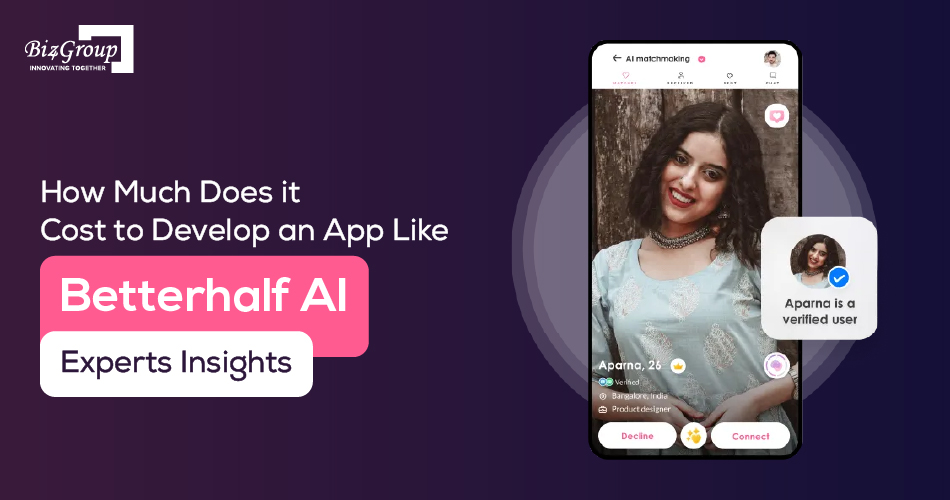
Betterhalf AI is a way of facilitating people to find their better half, by using artificial
intelligence. It offers the means to create highly individualized profiles, to have genuine
conversations
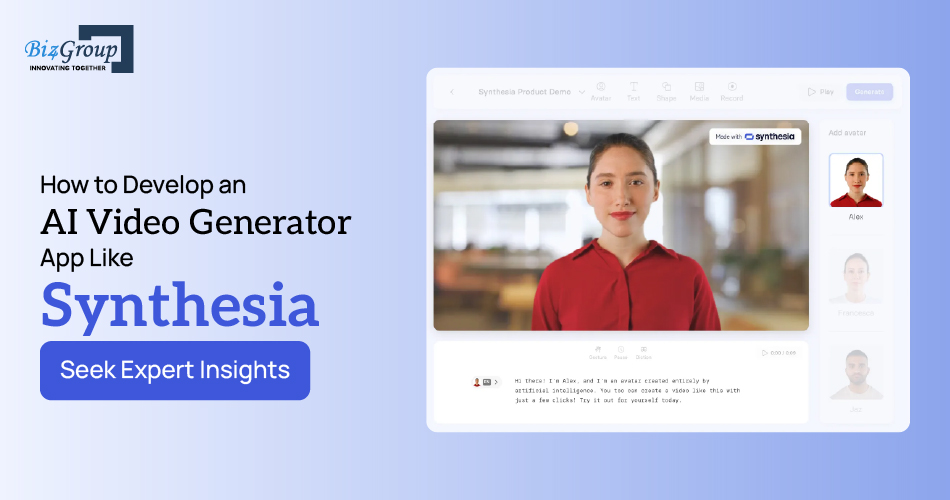
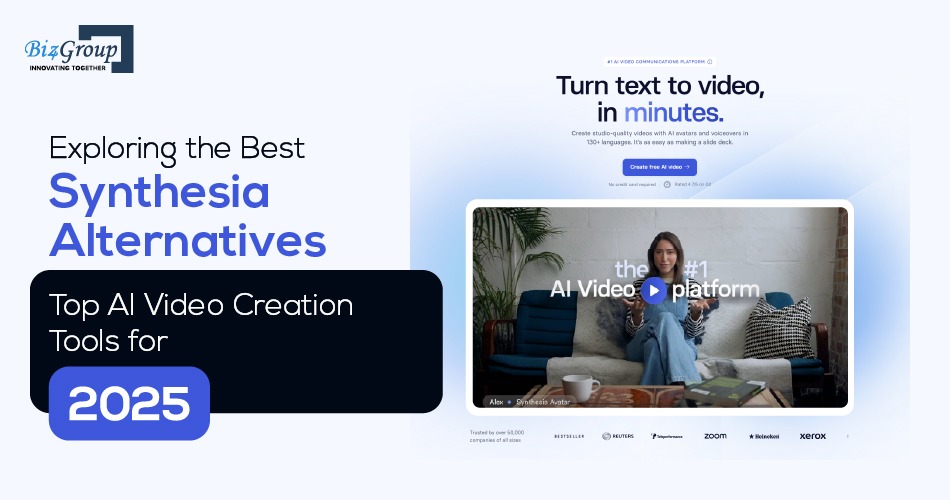
Synthesia AI app has been influential in this case as it assists users to create efficient and
appealing videos, using Artificial Intelligence Avatars.
We are recognized as Trusted Advisors by our international clients. Here, we are going to delve
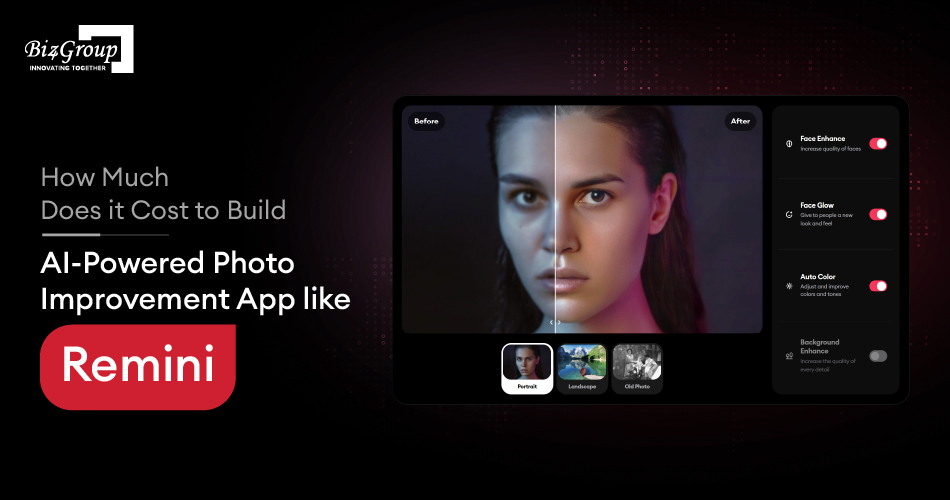
into the expert details of how to build an app like Remini.
 Location :
Orlando, FL, USA
 +1 (407) 714-1616
 info@biz4group.com