Location :
Orlando, FL, USA
Location :
Orlando, FL, USA +1 (407) 714-1616
 info@biz4group.com


















Imagine a digital system that doesn’t wait for instructions but instead, understands your business goals, learns from real-time feedback, and takes independent actions to get the job done.
Read More

 AI Summary Powered by Biz4AI
A tenant screening system can verify an ID and still miss a fraudulent application. Problems usually show up when the details do not match: the paystub shows one income, another source shows something different, the employer cannot be verified, or an address keeps appearing across applications. AI tenant screening system development needs to connect these details, spot unusual patterns, explain why something looks suspicious, and send unclear cases to a human reviewer.
The reported 67% of U.S. landlords encountering rental application fraud shows how serious the problem can be. Property managers need screening that can handle large application volumes without sacrificing verification quality, consistent screening criteria, clear reasoning, or the controls needed for housing-related decisions.
This raises some practical questions:
How many suspicious applications can a leasing team realistically check by hand? What should happen when two verification sources disagree? Can AI spot a forged document without wrongly labeling the applicant as fraudulent?
As a U.S.-based AI development company, Biz4Group LLC has come across a key challenge in screening: one verification result rarely tells the complete story. A practical platform needs to connect identity, income, employment, document, credit, and rental-history data so reviewers can quickly see what raised a concern and how strong the evidence is.
Turn your screening workflow into an AI-powered system built around your actual leasing process.
Build My Screening SystemAlso Read: AI Agent Development Cost
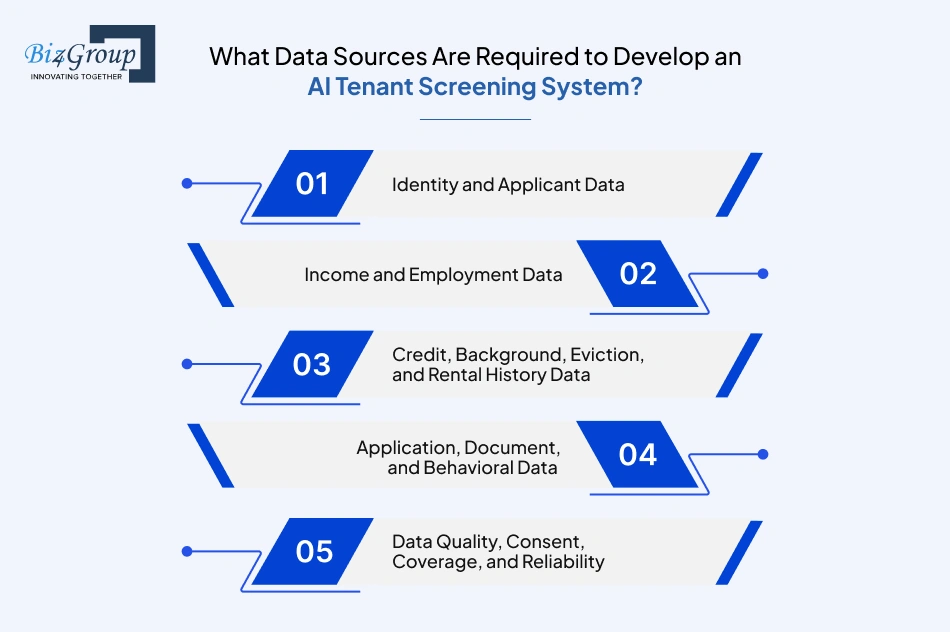
An AI tenant screening system typically uses identity, income, employment, credit, background, rental history, application, and document data. These sources help the platform verify applicant claims, identify inconsistencies, and generate the information needed for consistent screening.
Every source should be checked for accuracy, freshness, coverage, and reliability, with appropriate applicant consent and controls. This combination gives the AI screening system development enough context to compare what applicants report against independently verified information and identify cases that need closer review.
In Facilitor, a real-estate platform developed by Biz4Group, the workflow combined property data, financial verification, location information, and transaction-related communication.
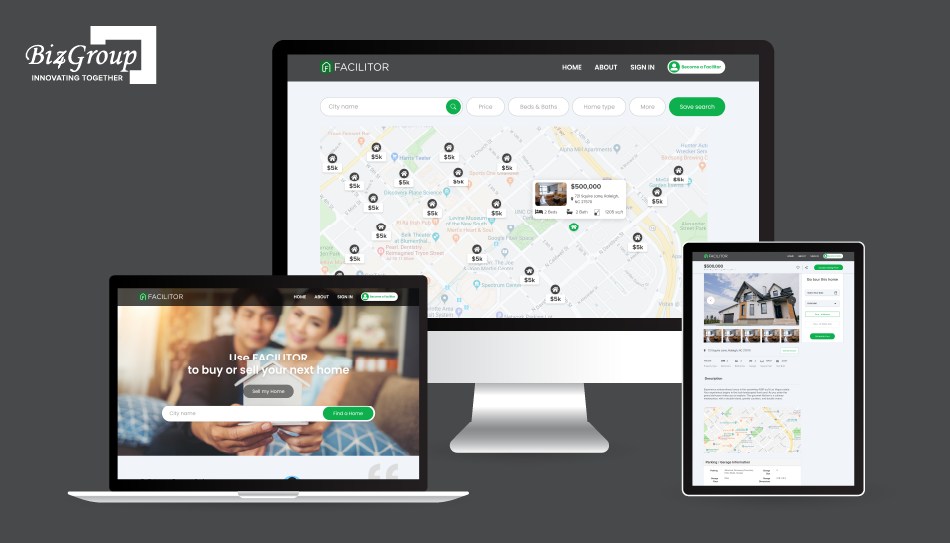
That experience is relevant to tenant screening because reliable decisions often depend on connecting multiple data sources rather than relying on a single verification result.
Effective AI-powered rental applicant screening development requires below given features:
|
Feature |
What It Should Do |
Key Capabilities |
|---|---|---|
|
Automated Rental Application Intake |
Streamline how applicants submit information and supporting documents while preparing the application for automated screening. |
Digital application forms; consent and disclosure capture; document uploads and field validation |
|
Identity and Applicant Verification |
Confirm that the applicant's identity and submitted information match trusted verification sources. |
Government ID verification; identity and address matching; duplicate or mismatched identity detection |
|
Income and Employment Verification |
Check whether reported income and employment details match information from reliable external sources. |
Payroll verification; employer verification; reported-versus-verified income analysis |
|
Document Intelligence and Fraud Detection |
Analyze uploaded documents for inconsistencies, manipulation, or other indicators that warrant investigation. |
OCR and data extraction; altered-document detection; cross-document consistency checks |
|
Credit, Background, and Rental History Screening |
Bring external screening information into one applicant profile for evaluation against established property criteria. |
Credit bureau integration; background checks; eviction and rental-history screening |
|
AI-Based Applicant Risk Assessment |
Combine screening signals to highlight applications that may require closer attention. |
AI risk scoring; anomaly detection; confidence levels and evidence-based risk indicators |
|
Configurable Screening Policies and Rules |
Let authorized teams apply property-specific screening criteria without changing the underlying AI models. |
Income and credit thresholds; eligibility rules; escalation and exception conditions |
|
Human Review and Exception Management |
Give leasing teams a structured way to investigate applications that AI or verification services flag. |
Review queues; supporting evidence; reviewer notes, escalations, and overrides |
|
Explainable Screening Results and Audit Trails |
Show reviewers how screening results were generated and preserve a record of important actions. |
Risk-factor explanations; source and timestamp tracking; automated and human action logs |
|
Applicant Communication and Adverse-Action Workflows |
Automate appropriate applicant communications throughout the screening process and support applicable adverse-action procedures. |
Missing-information requests; status notifications; adverse-action communications where required |
|
Property Manager Dashboards, Reporting, and Analytics |
Give leasing teams a central view of applications, screening progress, exceptions, and operational performance. |
Application pipelines; fraud and verification alerts; processing-time and portfolio-level analytics |
The strongest AI tenant screening platform development approach connects these features through one workflow rather than treating them as separate tools.
AI tenant screening systems detect rental fraud by checking whether applicant information, documents, and verification results agree with each other.
Fraudulent documents and inconsistent applicant information are common concerns like this:
"I am concerned about fraudulent documents and inaccurate applicant information, and I want to develop a system that can identify suspicious applications."
Use OCR, document analysis, entity matching, anomaly detection, and cross-source validation to identify altered documents, inconsistent income or employment information, duplicate applications, and suspicious identity patterns. Flag these cases for investigation rather than treating an AI risk signal as proof of fraud.
Document intelligence checks paystubs, IDs, bank statements, and employment letters for changes in text, formatting, images, or values. It also compares new uploads with previous applications to find reused documents. Similar techniques are used in an AI real estate fraud detection system development, where document analysis and cross-record validation help identify suspicious property-related activity.
AI-powered tenant verification compares applicant details across identity, income, employment, credit, and rental-history sources. When important details do not match, the application receives a fraud alert.
AI rental application screening connects reported income with employment and identity records. This helps identify cases where the applicant's information looks inconsistent across sources.
Rental application fraud detection also looks for patterns across applications. AI models check for repeated phone numbers, addresses, bank details, documents, or other information linked to different identities.
AI models look for unusual patterns, while rules handle specific fraud checks. Combining both gives the AI tenant screening platform more ways to flag suspicious applications.
A fraud alert still needs context. Human reviewers can see what triggered the alert, check the supporting information, and decide whether the application needs further action.
The result is a screening workflow where documents, verification data, AI signals, and human review work together. Property managers get specific reasons to investigate instead of having to sort through every application manually.
Classification models handle risk scoring, anomaly detection finds unusual applicant profiles, NLP processes text, computer vision analyzes document images, and entity matching connects records.
AI tenant screening systems use different models for different parts of applicant risk assessment.
Classification models assign applicants to predefined risk categories based on selected screening variables. Common inputs include verified income, credit history, rental history, employment information, and other approved screening factors.
Anomaly detection focuses on applicants whose overall data looks significantly different from patterns in the screening dataset. It is useful when suspicious behavior does not match a predefined fraud rule.
NLP processes unstructured text found in applications and supporting documents. It can extract entities, job information, addresses, dates, and other relevant details for use in applicant risk assessment.
Computer vision handles the visual side of document analysis. It examines document images for layout characteristics, image manipulation, altered regions, and other visual signals that support the overall screening assessment.
Entity matching connects records that belong to the same applicant across different data sources. The model considers names, addresses, dates of birth, and other identifiers to handle spelling differences, abbreviations, and incomplete matches.
A hybrid risk engine combines model outputs with fixed screening rules. This allows property managers to keep specific eligibility requirements while using AI for patterns that require more flexible analysis.
Biz4Group's Renters Book provides another example of decision-support software built around rental-specific information. The platform brought tenant, landlord, and property reviews into a searchable system to help users evaluate rental proposals.
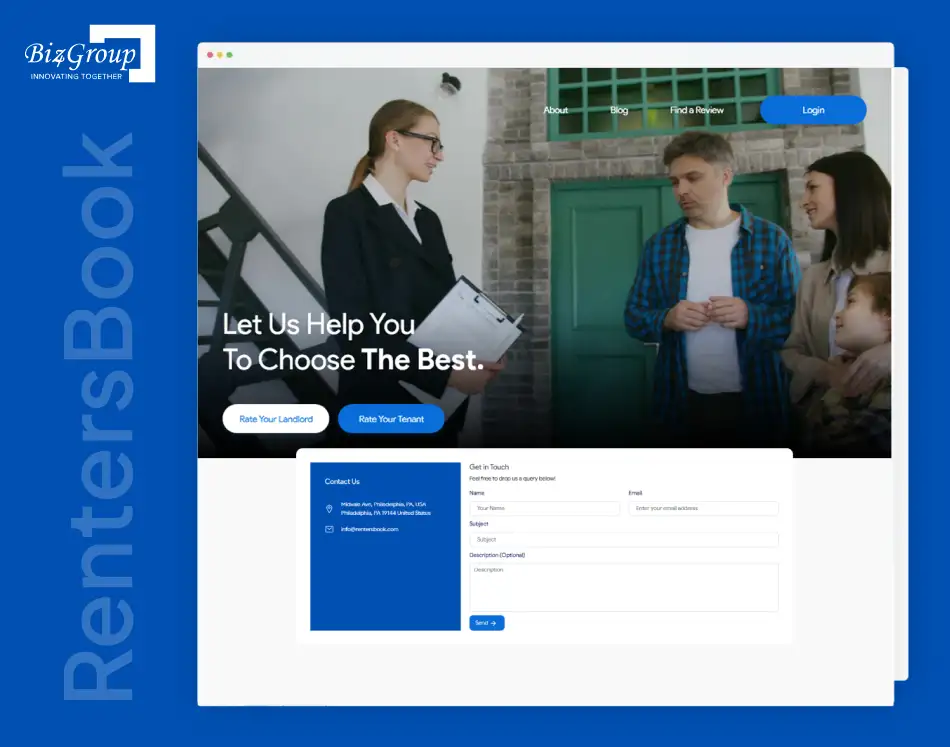
A modern AI screening platform extends this principle by combining verified records, application data, and model-generated risk signals within a defined screening policy.
Risk models need ongoing checks for accuracy, false positives, and changes in performance. Explainability methods also show which inputs contributed to a model's result, making the AI output easier to review and validate.
An AI tenant screening platform needs identity APIs that confirm who the applicant is. Credit and background APIs provide screening records; income APIs verify earnings and employment, and document APIs analyze submitted files. An orchestration layer then brings these responses into one screening workflow.
|
API Category |
What It Does |
Typical Data or Functions |
|---|---|---|
|
Identity and ID Verification APIs |
Verify the applicant's identity and submitted identification details. |
ID document verification, selfie or liveness checks, name and date-of-birth matching, address verification |
|
Credit and Background Screening APIs |
Pull credit and background information required for tenant screening. |
Credit reports, credit attributes, criminal background checks where legally permitted, eviction records, rental-history data |
|
Income and Employment Verification APIs |
Verify the applicant's reported earnings and employment details. |
Payroll data, income history, employer details, employment status, income-to-rent calculations |
|
Document Intelligence and Fraud Detection APIs |
Extract information from uploaded documents and identify potential manipulation. |
OCR, field extraction, document classification, tamper detection, duplicate-document detection |
|
API Orchestration and Data Normalization |
Connect multiple providers and turn different API responses into one applicant profile. |
Provider routing, data mapping, field normalization, response aggregation, verification status management |
|
Authentication, Webhooks, Error Handling, and Provider Failover |
Keep third-party integrations secure and reliable during screening. |
OAuth/API keys, encrypted requests, webhook processing, retries, timeout handling, fallback providers, API logging |
The API layer needs to be designed around the screening workflow rather than individual vendors. That makes it easier to add providers, replace unreliable services, and support different screening requirements across properties.
AI tenant screening speeds up leasing by automating applicant verification, screening checks, issue flagging, and status updates. Property managers get a clear view of each application without chasing documents or switching between multiple systems.
Property managers handling large application volumes often has requirements like:
"We receive a high volume of rental applications and need an AI system that can verify income, identity, employment, and rental history more efficiently."
An AI screening platform can automate data collection, document extraction, identity matching, income and employment verification, and rental-history checks. It can consolidate the results into one workflow and route exceptions or uncertain cases for human review.
AI tenant screening automation starts with identity, income, employment, credit, and rental-history checks from the submitted application. The system sends the required information to connected verification services and brings the results back into one applicant profile.
The same workflow approach used by Biz4Group in developing AI property management App, where screening, leasing, onboarding, and property operations are connected within a single platform.
Document intelligence reads paystubs, IDs, bank statements, and employment letters and extracts the relevant information. It also highlights missing fields, inconsistent values, and documents that require closer inspection.
This is a core part of building an AI automation system for property management companies, particularly when multiple workflow steps need to run without manual intervention.
AI applicant risk assessment ranks applications based on screening results, verification issues, fraud indicators, and configured review criteria. Leasing teams then focus first on applications with unresolved or higher-priority issues.
Automated API workflows run multiple verification checks in parallel and update their status as results arrive. This removes unnecessary waiting between individual screening steps.
The AI tenant screening platform connects screening results with property management and leasing software. Applicant status, verification results, review tasks, and screening outcomes move between systems without duplicate data entry.
Homer AI shows a similar workflow-design principle in real estate. The platform connected conversational AI, property data, user dashboards, filtering, and scheduling into one application.
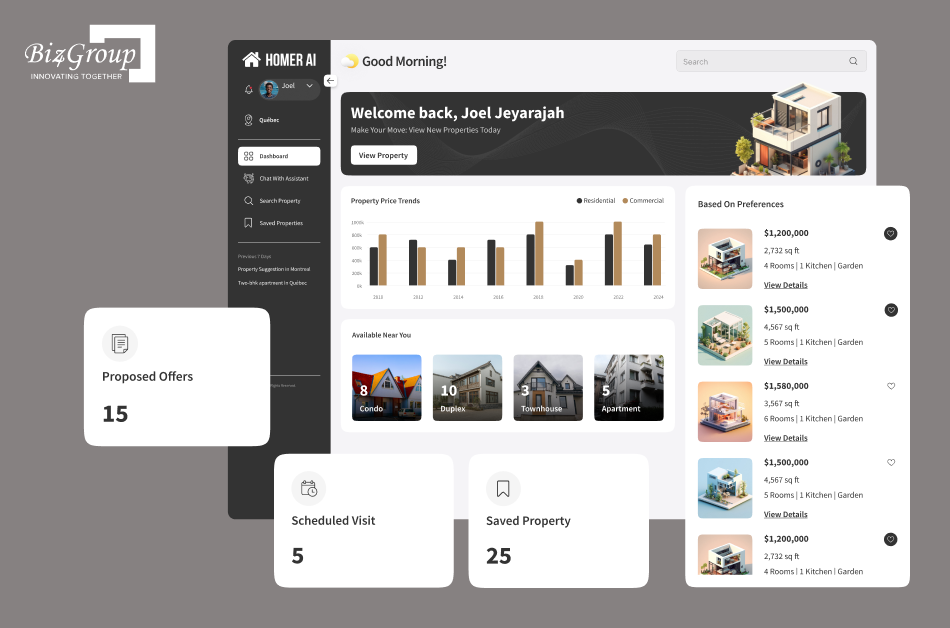
For tenant screening, the same architectural thinking applies when verification results need to move directly into the property's leasing workflow.
Screening analytics track application volume, verification time, review queues, fraud alerts, and completion rates. Property managers use these metrics to identify slow steps and improve the leasing workflow.
The result is a leasing process where routine screening moves automatically and staff attention goes toward applications that actually require investigation or a decision.
Building an AI tenant screening system starts with screening policies and the applicant workflow, then moves into data, APIs, AI architecture, development, integrations, testing, and deployment.
A common concern among property managers and PropTech teams is:
"I want to build an AI tenant screening system, but I am unsure how to automate applicant verification without compromising accuracy or compliance."
Build the workflow around verified data sources, deterministic screening rules, AI-based anomaly detection, and human review for uncertain cases. Maintain consent, audit trails, explainable risk signals, and configurable policies so automation improves efficiency without creating untraceable decisions.
A practical AI tenant screening system development process connects verification, fraud detection, risk assessment, and human review within the leasing workflow already used by property managers.
Before development starts, define what the AI tenant screening platform needs to verify and which conditions require review. Set property-level requirements for income, credit, rental history, identity verification, fraud checks, and escalation.
Map the complete applicant journey from application submission to screening completion. This gives the development team a clear structure for AI rental application automation development, including verification triggers, missing information, failed checks, and human review points.
List the data needed for identity, income, employment, credit, background, and rental-history screening. Then evaluate providers based on coverage, response times, pricing, data quality, and integration requirements for the AI-powered tenant screening system.
Design the architecture around how applicant data moves through verification and risk assessment. The AI layer handles fraud and risk signals, while rules manage fixed screening criteria and the workflow layer controls application status.
Develop the application interface, document uploads, consent capture, verification triggers, and screening status flow. This forms the core of AI tenant screening application development, where submitted information automatically moves into the required verification steps.
Develop risk models using relevant screening data and clearly defined outcomes. Classification models handle applicant risk categories, while anomaly detection identifies unusual patterns. These outputs support consistent review and decision-making within the screening workflow.
Build a review workspace for applications that need additional investigation. This part of AI applicant risk assessment system development gives reviewers access to alerts, verification results, supporting evidence, and previous actions before they resolve a case.
Connect the AI tenant screening platform with the property's existing management System, so applicant information and screening statuses move between systems automatically. This removes duplicate data entry and keeps leasing teams working from current information.
Test the screening workflow against incomplete applications, conflicting verification results, forged documents, provider failures, and high application volumes. AI tenant screening system development also requires accuracy testing to understand false positives, false negatives, and model performance.
Launch the platform in stages, starting with a controlled property group or user base. Track screening accuracy, processing times, API failures, review volumes, and model performance to guide future improvements.
The process of building AI app or system becomes much easier to manage when product requirements, AI models, verification APIs, and leasing workflows are planned together. That approach also gives property managers a clearer path from an initial screening MVP to a broader AI tenant screening platform development roadmap.
An AI tenant screening system connects with property management platforms through APIs and webhooks. Applicant details, property information, screening requests, results, and application statuses move between both systems automatically, keeping tenant screening within the existing leasing workflow.
The AI tenant screening platform keeps applicant names, application IDs, property details, unit numbers, and screening requirements in sync. Each screening request stays linked to the correct applicant and property throughout the process.
A new rental application triggers the required screening checks automatically. The system sends applicant information to identity, income, employment, credit, and background verification services based on the property's screening requirements.
As verification checks finish, their results and statuses return to the property management platform. Leasing teams see whether an application is pending, verified, flagged, failed, or completed without switching between different tools.
Screening results updates the applicant's leasing status or create a task for the property manager. Missing information, failed checks, and review flags can also trigger the appropriate follow-up action.
Reliable AI tenant screening system development requires proper handling of API failures, timeouts, retries, and webhook errors. Queues help hold screening requests when a verification provider goes offline, preventing applications from getting stuck.
A multi-property setup keeps applicant, unit, property, and organization data separated. Role-based access then controls which applications each property manager can view, while the same screening workflow supports different properties and portfolios.
A well-connected screening system lets property managers keep working in their existing system while verification runs in the background. This makes AI screening easier to adopt across everyday leasing operations.
Fair Housing compliance starts with consistent screening criteria, careful use of applicant data, human oversight, and clear decision records. An AI tenant screening platform also needs controls for FCRA-related processes, applicant data protection, and ongoing model checks to catch accuracy or fairness issues.
Define screening requirements before applications enter the workflow and apply the same criteria to applicants in similar situations. Keep policy versions recorded so the team knows which requirements were active when each application was screened.
Protected characteristics need to stay outside model inputs, while other variables need review for possible proxy effects. This data review belongs early in the AI tenant screening system development process.
Risk results need clear reasons that property managers can understand and review. The platform should show the verification findings, screening factors, and alerts behind an AI applicant risk assessment result.
Some applications require a closer look before further action. Reviewers need access to the evidence behind an alert, along with a simple way to record their findings and resolution.
When consumer reports are used for tenant screening, the workflow needs to support applicable FCRA requirements. This includes the required steps for adverse actions when consumer-report information contributes to an unfavorable housing decision.
Keep screening policies, verification results, alerts, reviewer actions, and timestamps tied to each application. These records create a clear history of how the screening process reached a particular outcome.
Screening platforms handle sensitive identity, financial, and background information, so security needs to cover the entire data lifecycle. Encryption, access controls, secure integrations, and retention rules all belong in the platform design.
Model monitoring continues after deployment. Track false positives, false negatives, accuracy, and outcome patterns across relevant applicant groups to identify unexpected changes in performance.
The strongest compliance setup makes policy, data, model output, and human action traceable from application to outcome. That gives property managers and compliance teams a practical way to review how screening operates over time.
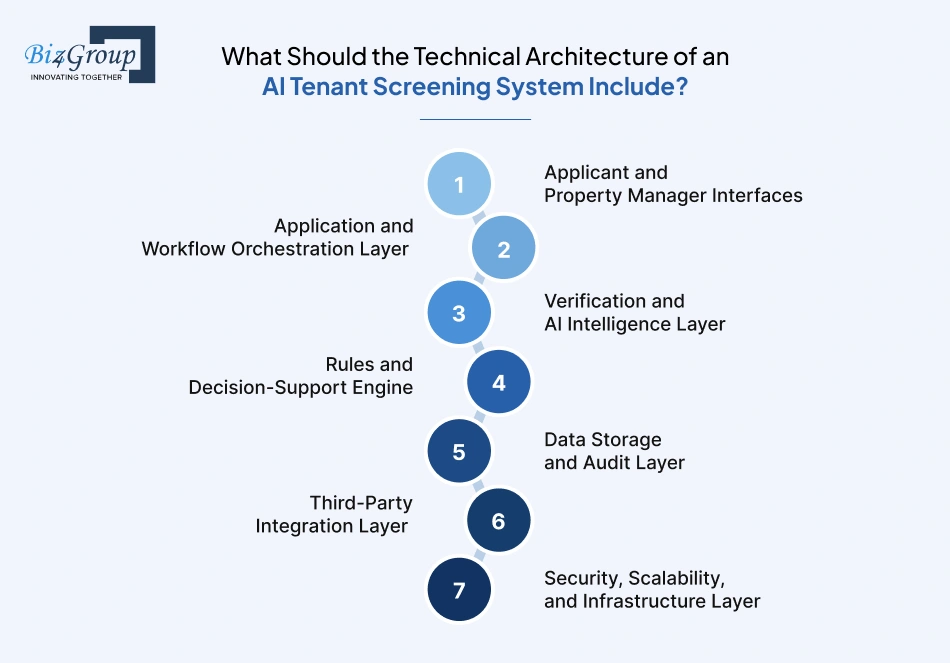
The technical architecture needs separate layers for user interfaces, application workflows, verification services, AI models, screening rules, data storage, third-party integrations, and infrastructure. Keeping these layers separate makes the AI tenant screening system easier to secure, scale, and integrate.
Property-management companies scaling across multiple properties often ask how to make an AI screening platform secure, scalable, and practical for day-to-day users.
"We are planning to develop an AI tenant screening platform for multiple properties, but we need to understand how to make it scalable, secure, and easy for property managers to use?"
Use a multi-tenant architecture with role-based access, property-level data isolation, scalable API and workflow services, encrypted storage, and centralized audit logging. Property managers should have configurable workflows and dashboards, while administrators maintain centralized control over policies, integrations, security, and monitoring.
|
Architecture Layer |
What It Handles |
Key Components |
|---|---|---|
|
Applicant and Property Manager Interfaces |
Captures applications and gives leasing teams a place to manage screening. |
Applicant portal, application forms, document upload, consent capture, property manager dashboard, review queue, screening status |
|
Application and Workflow Orchestration Layer |
Controls the sequence of application, verification, review, and screening tasks. |
Workflow engine, application service, task queue, status manager, notification service, event processing |
|
Verification and AI Intelligence Layer |
Runs the checks and models used to evaluate applicant information. |
Identity verification, income verification, employment checks, document OCR, fraud detection, anomaly detection, risk models |
|
Rules and Decision-Support Engine |
Applies property-specific screening requirements to verified data and AI outputs. |
Income-to-rent rules, credit thresholds, eligibility rules, fraud thresholds, escalation logic, policy versioning |
|
Data Storage and Audit Layer |
Stores applicant data, documents, screening results, and the history of system activity. |
Relational database, encrypted document storage, audit logs, model-output records, data retention controls |
|
Third-Party Integration Layer |
Connects external verification providers and property management platforms. |
REST APIs, webhooks, API gateway, credit providers, identity providers, income providers, PMS integrations |
|
Security, Scalability, and Infrastructure Layer |
Protects the platform and keeps it available as application volume increases. |
OAuth 2.0, RBAC, encryption, secrets management, monitoring, logging, containers, cloud infrastructure, backups, autoscaling |
The key architectural decision is to keep workflow logic, AI models, screening rules, and external integrations loosely coupled.
The cost to develop an AI tenant screening system typically ranges from $20,000 to $250,000+, depending on the product scope, AI complexity, verification integrations, security requirements, and deployment scale. A basic MVP sits at the lower end, while enterprise platforms with advanced fraud detection, multiple integrations, and continuous model monitoring move well beyond $250,000.
The cost to build an MVP with rental application intake, identity verification, document processing, basic screening rules, and a property manager dashboard typically falls to $20,000–$50,000.
A more complete platform with income and employment verification, credit and background APIs, fraud detection, AI risk scoring, workflow automation, and PMS integration typically costs $50,000–$120,000.
Enterprise AI tenant screening platform development with multi-property support, advanced fraud models, extensive integrations, granular access controls, auditability, analytics, and scalable cloud infrastructure typically starts around $120,000 and can exceed $250,000.
Verification providers add ongoing usage costs on top of development. Depending on the providers and screening volume, API and data expenses can range from $1,000 to $10,000+, with high-volume platforms potentially spending more.
Advanced AI models, cloud computing, secure data storage, monitoring, encryption, compliance controls, and security testing add another layer of expense. Depending on requirements, these costs can add roughly $10,000–$75,000+ to the initial build.
After launch, teams need to maintain integrations, fix issues, monitor models, update security controls, and improve screening workflows. Ongoing maintenance commonly falls around 15%–25% of the initial development cost per year, depending on platform complexity.
Also Read: AI Integration Cost in 2026
The final AI tenant screening platform development cost depends mainly on these factors:
For most property management businesses, the practical budget depends on how much screening automation they need at launch. Starting with a focused MVP and expanding verification, AI, and integration capabilities in stages provides more control over the overall investment.
Also Read: AI B2B Website Development Cost
Choose an AI tenant screening system development company that understands tenant screening workflows, AI-based fraud detection, verification APIs, data security, and property management software.
Review its relevant project experience, technical approach, integration capabilities, and ability to support the platform after launch.
Look for a development partner that understands rental applications, property management workflows, tenant verification, screening criteria, and leasing operations. PropTech experience helps the team design features around how property managers actually process applications.
Biz4Group's work across AI products and real estate AI highlights a useful point: domain experience matters most when it helps the team translate an operational workflow into the right product architecture.
Check whether the team has experience building classification models, anomaly detection, document analysis, and fraud detection workflows. Ask how they train, validate, explain, and monitor models after deployment.
Your developer needs experience integrating identity, credit, background, income, employment, and document verification services. During AI integration services, the team should also handle API errors, webhooks, data normalization, and provider changes.
Tenant screening involves sensitive personal and financial information. Evaluate the company's approach to encryption, role-based access, audit logs, data retention, consent management, and FCRA-related workflows.
If the platform will serve multiple property managers or portfolios, look for experience with multi-tenant architecture. The system needs separate tenant data, role-based permissions, property-level configurations, and infrastructure that scales as application volume grows.
Before choosing a development partner, ask practical questions that reveal how they will approach the project:
The right development partner should be able to explain the product, AI, integration, security, and compliance decisions in practical terms. A clear technical roadmap and realistic post-launch plan are strong indicators that the team understands the full product lifecycle.
For teams still defining the technical direction, Biz4Group's AI consulting services illustrate why strategy, architecture, governance, integration, and deployment need to be considered together.
Let's map the AI, integrations, fraud detection, and compliance requirements before development begins.
Talk to an AI ExpertAlso Read: AI SaaS Product Development Cost
AI tenant screening gives property managers a more practical way to handle growing application volumes, verification work, and rental fraud risks. The value comes from connecting reliable data, AI-driven screening, fraud detection, human review, and existing leasing workflows into one system.
Building this type of platform requires careful decisions around AI models, verification APIs, property management integrations, data security, compliance, and scalability. A phased approach also makes it easier to start with the core screening workflow and expand as requirements grow.
For businesses planning a custom platform, product development services can help turn the screening concept into a production-ready solution with the right technical foundation.
Book an appointment to discuss your AI tenant screening system idea, development requirements, and implementation roadmap.
Accuracy depends on the quality of verification data, model training, screening rules, and ongoing monitoring. A well-built AI tenant screening system combines multiple verified signals and measures false positives and false negatives regularly to improve screening reliability.
An MVP for AI tenant screening application development typically takes around 2-4 weeks. A larger platform with advanced fraud detection, multiple verification APIs, PMS integrations, custom AI models, and enterprise controls can take 6–8 weeks or longer.
An AI tenant screening platform can detect forged or altered documents, mismatched income and employment details, identity inconsistencies, reused documents, synthetic identities, and suspicious patterns across applications. Detection coverage depends on the available data and verification providers.
Yes. The same core AI tenant screening platform support different operating scales through configurable screening rules, user roles, property settings, and workflows. A small landlord may use basic verification, while a larger operator can add portfolio-level automation and integrations.
It depends on the identity, income, employment, credit, and background data available for the applicant's country. AI tenant screening system development for international use requires country-specific data providers, verification methods, privacy requirements, and screening rules.
The workflow identifies missing fields or documents and places the application into a pending state. Automated notifications can request the missing information, while the screening process resumes once the required data is received.
A reliable AI-powered tenant screening system uses retries, timeouts, request queues, error tracking, and fallback providers for critical verification services. The application remains marked as pending instead of receiving an incomplete screening result.
Applicant data is protected through encryption, role-based access, secure API connections, audit logs, controlled document storage, and defined retention policies. Access should also be limited according to the user's property and operational role.

Our website require some cookies to function properly. Read our privacy policy to know more.