Location :
Orlando, FL, USA
Location :
Orlando, FL, USA +1 (407) 714-1616
 info@biz4group.com


















Imagine a digital system that doesn’t wait for instructions but instead, understands your business goals, learns from real-time feedback, and takes independent actions to get the job done.
Read More

You’ve probably come across headline news in 2025 showing just how serious real estate fraud has become. For instance, the latest industry data reveals that roughly 1 in 116 mortgage applications now show indications of fraud risk up from 1 in 123 last year.
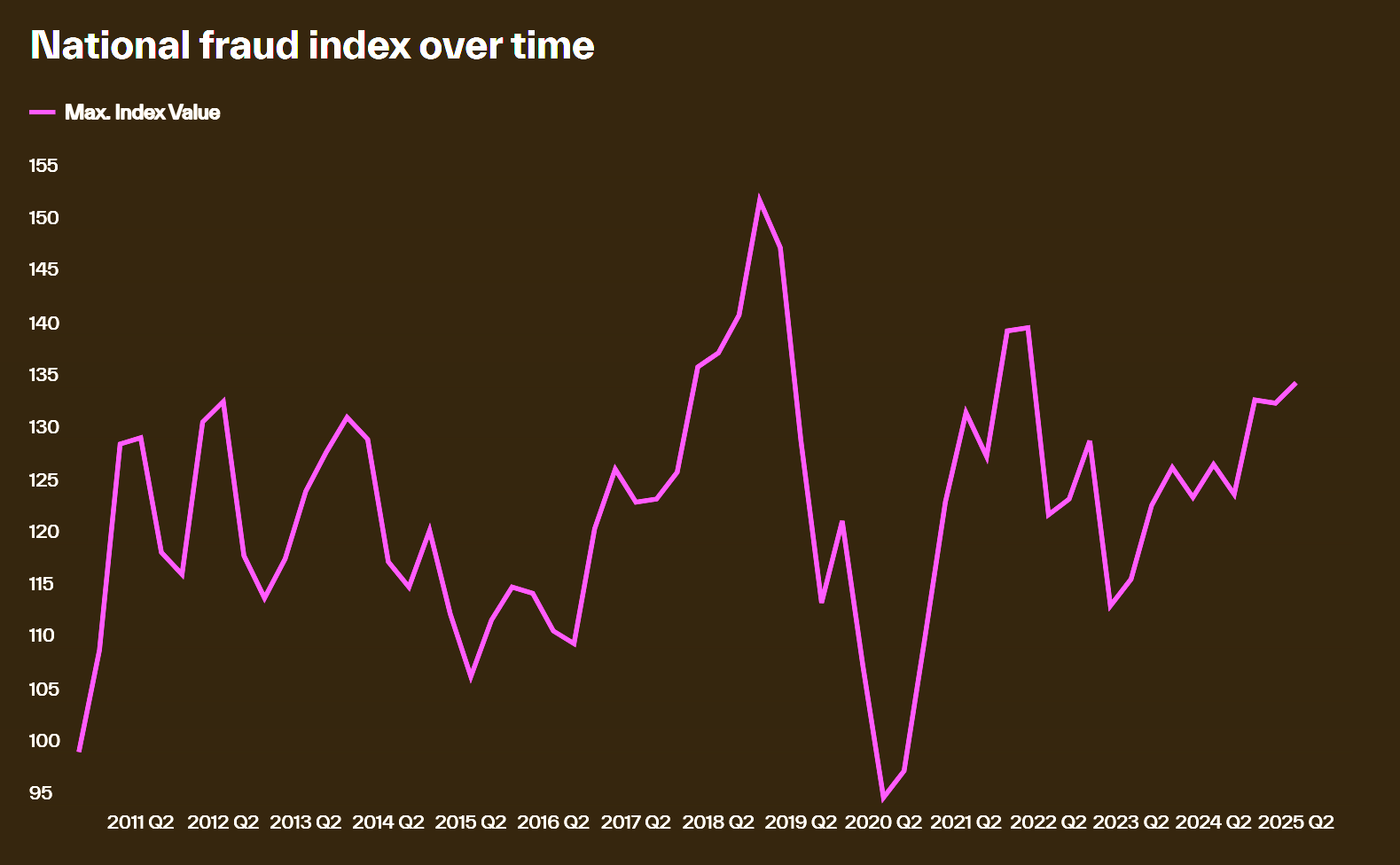
Elsewhere, a recent survey found that one in 10 Americans is targeted for real estate fraud, and about 1 in 20 becomes a victim with median losses exceeding $70,000 per incident.
These numbers highlight serious financial and reputational risks for real estate businesses.
Traditional methods like spreadsheets, phone calls, and manual verification simply cannot keep up. They are slow, error-prone, and easy for fraudsters to bypass.
That’s why many businesses are turning to solutions that help them build an AI real estate fraud detection system for listings and documents, allowing them to spot suspicious activity across listings, documents, and transactions before it escalates.
For solutions that scale reliably, partnering with a trusted AI development company can make a huge difference. If you need a system tailored to your workflows, a custom software development company can design one specifically for your operations. And for enterprise-scale operations, leveraging enterprise AI solutions ensures your system can handle large volumes of data, integrate across departments, and adapt to evolving threats.
In this guide, we’ll explain how to build an AI real estate fraud detection system for listings and documents, what fraud risks it can uncover, and a clear roadmap to protect your operations.
A real estate fraud detection system is designed to analyze listings, documents, and transaction data to identify suspicious patterns. Many businesses now develop real estate fraud detection AI systems to handle these tasks more efficiently and accurately.
Traditional verification methods, like spreadsheets, phone calls, and manual checks, are slow, error prone, and often miss subtle signs of fraud. Fraudsters are getting more sophisticated, using fake listings and forged documents that can easily slip past human reviewers.
Here’s a side-by-side comparison of traditional methods versus AI-powered systems:
|
Feature |
Traditional Methods |
AI-Powered System |
|
Speed |
Slow, manual checks |
Continuous real-time monitoring |
|
Accuracy |
Error prone |
High precision, reduces false positives |
|
Scalability |
Limited to small volumes |
Handles large-scale listings and documents |
|
Pattern Recognition |
Human intuition only |
Detects subtle anomalies automatically |
|
Integration |
Standalone processes |
Seamless with AI integration services |
|
Automation |
Minimal |
Automated workflows with AI automation services |
|
Fraud Types Detected |
Obvious fraud |
Fake listings, forged documents, suspicious transaction patterns |
By building an AI real estate fraud detection system for listings and documents, your team can streamline verification and spot inconsistencies across listings and documents automatically. This approach lets you create automated verification systems for real estate documents that save time and reduce errors. Over time, these systems effectively make automated real estate fraud detection tools that continuously monitor suspicious activity and keep your operations secure.
Overall, adopting AI improves speed, accuracy, and scale while freeing your team to focus on strategic tasks. This approach represents the next step in AI fraud detection system development for real estate, where automation and intelligent analysis work together to reduce risk.
In 2025, U.S. property fraud cases rose by 12%, costing businesses millions annually. Don’t let fake listings drain your revenue.
Protect Your Listings NowA modern AI real estate fraud detection system is not just a tool. It’s a complete workflow designed to analyze listings, documents, and transactions to spot suspicious activity in real time. By choosing to build an AI real estate fraud detection system for listings and documents, your business can reduce risks, streamline verification, and protect operations efficiently.
The first step is gathering data from multiple sources, such as MLS platforms, property portals, public records, and internal databases. A strong system ensures that it creates a secure AI workflow to detect fake real estate documents and listings, capturing all relevant information consistently.
Key tasks:
Once collected, the AI examines documents for inconsistencies or tampering. A system that can make an AI software that identifies fraudulent property listings for businesses flags forged documents and mismatched data, reducing manual errors.
Checks include:
|
Document Type |
Verification Steps |
|
Title Deeds |
Verify signatures and detect duplicates |
|
Sale Agreements |
Check notarization and cross-validate parties |
|
ID Proofs |
Confirm authenticity against government databases |
|
Listing Images |
Detect manipulated or stock photos |
The system evaluates listings for unusual patterns, duplicates, or unrealistic pricing. Using AI fraud detection system development for real estate, it assigns a fraud risk score to each listing to help prioritize investigations.
Workflow example:
Beyond checking individual listings, the system uses AI to analyze patterns across large datasets, which is a key feature when you build an AI real estate fraud detection system for listings and documents. It can spot unusual clusters of activity, repetitive behavior from the same users, or sudden changes in property pricing that may indicate fraud. By anticipating emerging threats, your team can act proactively, preventing larger-scale issues before they happen.
When suspicious activity is detected, the system triggers real-time alerts. An AI agent can automate responses, such as temporarily suspending questionable listings or requesting additional verification.
Automation features:
While AI catches most anomalies, complex or borderline cases require human judgment. High-risk alerts are escalated to compliance, legal, or risk management teams for verification. Integrating human review with AI is an essential part of AI fraud detection system development for real estate, ensuring accountability while the system handles the bulk of repetitive checks.
Every fraud case, verification outcome, and human feedback is fed back into the system. Using agentic AI development, the models continuously improve, which is critical when you create a secure AI workflow to detect fake real estate documents and listings. This allows the system to evolve with new fraud tactics, maintaining high detection accuracy over time.

Understanding the types of fraud is essential before you build an AI real estate fraud detection system for listings and documents. Fraud can occur at multiple stages (from property listings to documentation), so a smart system must address each type effectively. A strong system helps develop real estate fraud detection AI system capabilities that protect your business, clients, and transactions.
Fraudsters sometimes create completely fake listings to trick buyers or renters. They often use stolen photos, misleading details, or nonexistent addresses. By implementing AI that can make an AI software that identifies fraudulent property listings for businesses, your system can flag suspicious listings before they reach clients. Using an AI for real estate agents solution, agents can instantly verify listing authenticity and avoid showing fraudulent properties.
This type of fraud happens when someone forges or illegally transfers property ownership documents. Forged title deeds or duplicate records can lead to major financial loss. AI tools in AI fraud detection system development for real estate can automatically validate deeds, verify ownership, and detect anomalies in official records. This ensures buyers and sellers avoid fraudulent transactions.
Criminals may impersonate property owners or buyers to commit fraud, using fake IDs or stolen credentials. A robust real estate AI software can cross-check identities against official documents, historical transactions, and user patterns, preventing unauthorized sales or leases. Continuous verification strengthens trust between agents, clients, and platforms.
Fraudsters sometimes submit falsified income statements, appraisals, or property valuations to secure loans or mortgages illegally. These cases often involve inconsistencies in both listings and documents. By integrating a secure AI workflow to detect fake real estate documents and listings, your system can automatically flag discrepancies, alert lenders, and prevent financial loss.
Fraudulent landlords or brokers may list properties they don’t own or collect deposits for non-existent rentals. Detecting patterns like duplicate listings or unusual submission behavior helps prevent these scams. AI can develop AI solutions for real estate fraud prevention by continuously monitoring listings, analyzing suspicious activity, and alerting your team before renters fall victim.
Some individuals artificially inflate property values or misrepresent property conditions to make a profit. By using AI to build AI property listing fraud checker tool, your system can identify unrealistic price jumps, mismatched property details, or manipulated images, ensuring buyers receive accurate information.
Fraudsters may intercept or redirect payments during property transactions. Monitoring transactional data alongside listings and documents with AI ensures anomalies are detected, payments are secure, and both buyers and sellers are protected. A well-integrated system supports development guide for AI real estate listing and document fraud detection.
Criminals often target foreclosed or distressed properties, submitting fake claims or falsifying ownership. AI tools can verify all documentation, monitor listings, and detect suspicious activity to prevent losses. A combination of AI document fraud detection software and real-time listing analysis ensures all documentation is validated, and potential fraud is blocked before it escalates.
A comprehensive AI real estate fraud detection system must address all these types of fraud. Each type requires specialized validation, continuous monitoring, and pattern recognition. By understanding these fraud types and integrating AI-driven solutions, you can make automated real estate fraud detection tools that safeguard your business, clients, and transactions while maintaining trust and operational security.

When you build an AI real estate fraud detection system for listings and documents, ethics cannot be an afterthought. Your system handles sensitive property, identity, and financial data, so decisions must be fair, transparent, and secure. Ignoring ethics can lead to legal issues, reputational damage, and loss of client trust.
AI systems require access to personal and property data. You must ensure compliance with regulations like CCPA and GDPR, encrypt sensitive information, and limit access. Secure workflows protect client data while verifying listings and documents.
AI models can inadvertently favor certain property types, locations, or demographic profiles. When developing your system, it’s crucial to develop real estate fraud detection AI system with unbiased datasets and regular model audits. This ensures all listings and documents are evaluated fairly, protecting your business and clients from discriminatory outcomes.
Users must understand how AI reaches decisions, especially when transactions are flagged as fraudulent. Clear dashboards, audit trails, and explainable AI features help agents and compliance teams trust the system. Implementing UI/UX design ensures that flagged cases are displayed clearly, making it easy to see why a document or listing was flagged.
While AI can process large datasets faster than humans, high-risk decisions should involve human review. Policies should define who is responsible for verifying flagged cases and taking action. Using support from an AI chatbot development company can assist users by guiding them through verification workflows and providing instant clarification on flagged cases.
Fraud patterns evolve, and so should your system. Continuous model updates must include checks for ethical compliance, fairness, and accuracy. Enterprise-level AI tools ensure your system adapts without compromising ethics, maintaining trust over time.
Ethical considerations are central to designing a responsible AI fraud detection system. By prioritizing privacy, fairness, transparency, and human oversight, you can protect clients, comply with regulations, and build a system that is both effective and trustworthy.
When you build an AI real estate fraud detection system for listings and documents, including the right features is critical. The right functionality ensures your system is accurate, scalable, and user-friendly. Here’s a comprehensive breakdown in table format with keywords naturally integrated:
|
Feature |
Description |
|
Real-Time Listing Verification |
Automatically verifies listings against public records, historical trends, and internal databases to flag suspicious properties instantly. Integrating a multiple listing service (MLS) software ensures your system can build an AI real estate fraud detection system for listings and documents that detects fake listings efficiently. |
|
Document Authentication & Analysis |
Validates title deeds, sale agreements, IDs, and other critical documents. Using advanced AI in real estate AI software development company solutions helps create automated verification systems for real estate documents and ensures accuracy while reducing fraud risks. |
|
Predictive Risk Scoring |
Assigns risk levels to listings, transactions, and users based on anomalies and historical patterns. This helps develop real estate fraud detection AI system by identifying high-risk cases early, prioritizing review, and preventing financial losses. |
|
Pattern Recognition & Anomaly Detection |
Detects unusual activity such as multiple listings by the same user, duplicate photos, or sudden price changes. This allows you to build AI property listing fraud checker tool that proactively prevents fraudulent actions. |
|
Automated Alerts & Notifications |
Sends instant alerts to compliance teams, agents, or property managers when suspicious activity is detected. Integrating an intelligent real estate chatbot allows your system to make an AI software that identifies fraudulent property listings for businesses while guiding users through verification steps. |
|
Human Review & Workflow Integration |
High-risk cases are escalated to human reviewers for accountability while automation handles repetitive tasks. This ensures your AI fraud detection system development for real estate operates with precision and reliability. |
|
Scalable Data Management |
Handles large volumes of listings, documents, and transactional data efficiently. A scalable AI real estate SaaS product allows you to develop AI solutions for real estate fraud prevention that can scale with your business without compromising performance. |
|
User-Friendly Interface |
Intuitive dashboards and visualizations allow teams to monitor risks and take quick action. Focused UI/UX design ensures your team can easily interact with the system while managing fraud detection efficiently. |
|
Continuous Learning & Model Updates |
Fraud patterns evolve constantly. The system should learn from new cases and verification results to improve accuracy. Using agentic AI development helps your models adapt effectively to new threats. |
|
Automated Verification for Owners and Tenants |
Checks identity, ownership, and credentials automatically, helping your system create automated verification systems for real estate documents and reduce manual errors. |
|
Fraud Case Tracking & Audit Logs |
Maintains detailed records of flagged cases, decisions, and verification outcomes to support compliance and accountability. |
|
Mobile Access & App Integration |
Enables agents and property managers to monitor listings, verify documents, and receive alerts on the go. This ensures your AI fraud detection system development for real estate works seamlessly across devices. |
|
Reporting & Analytics Dashboard |
Provides visual reports on fraud trends, high-risk areas, and performance metrics, helping teams make data-driven decisions. |
|
API & Third-Party Integration |
Connects seamlessly with banks, mortgage platforms, title agencies, and other real estate tools. This ensures your system can develop AI solutions for real estate fraud prevention across multiple platforms. |
|
Alerts Customization |
Allows teams to define thresholds, notification channels, and escalation rules to suit business needs, improving the responsiveness of your AI fraud detection system development for real estate. |
|
Multi-Language & Regional Support |
Supports listings and documents from different regions or languages, essential for US-wide operations and large-scale deployments. |
|
Tenant & Buyer Screening Modules |
Automatically assesses risk for new renters or buyers, checking backgrounds, financial credibility, and document authenticity to strengthen AI fraud detection system development for real estate. |
Integrating all these features ensures your AI real estate fraud detection system is robust, scalable, and enterprise-ready. By combining real-time verification, human oversight, predictive analysis, and continuous learning, you can develop AI solutions for real estate fraud prevention that safeguard your business, clients, and transactions while streamlining operations.
Without automated verification, anomaly detection, and real-time alerts, your listings could be at risk. Are you fully equipped?
Upgrade Your Fraud Detection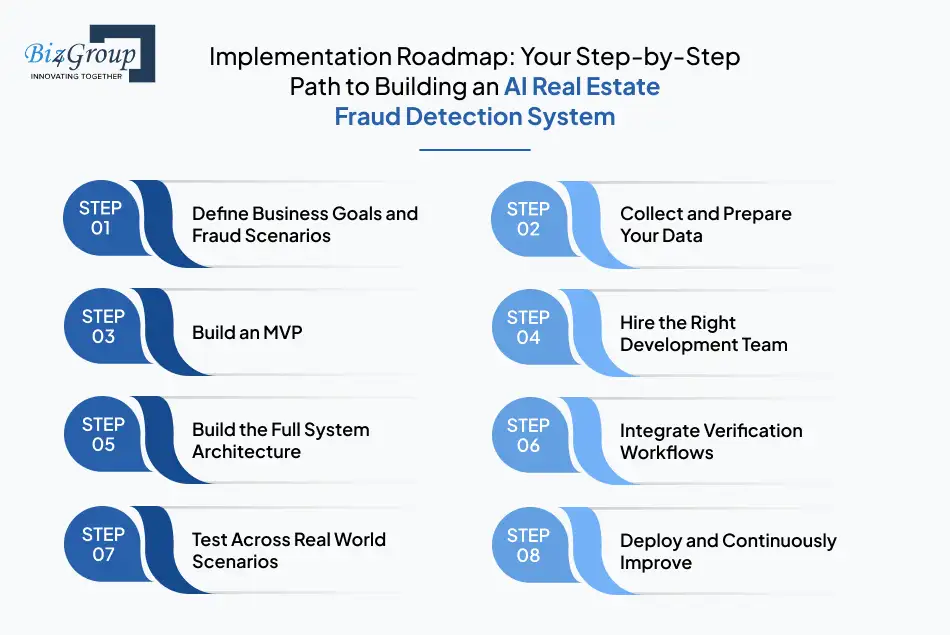
Creating a reliable AI solution that spots fake listings and fraudulent documents takes careful planning. Here’s a clear workflow you can follow if you want to build an AI real estate fraud detection system for listings and documents that actually perform well in real business environments.
Start by outlining the exact problems you want the system to solve. Every real estate business faces different risks, so clarity upfront prevents wasted time later.
This step sets a strong foundation for the entire development of AI real estate fraud detection system for listings and documents.
Your system is only as good as the data you feed it. Bring together past listings, approved documents, flagged fraud cases, and example false submissions.
High-quality data directly impacts how well you can develop AI solutions for real estate fraud prevention.
Rather than jumping into a full build, start with a Minimum Viable Product. This gives you something functional early on, helping you test if the system can catch forged documents or suspicious listings efficiently.
Working with a partner experienced in MVP development helps you save time, reduce risk, and reach your first working version faster.
Once the MVP works, you’ll need skilled engineers to scale it into a production-ready product. The right talent ensures your system is secure, accurate, and aligned with your internal tools.
If you don’t have an in-house team, you can easily hire AI developers who specialize in fraud detection and real estate workflows.
This is where your project becomes a real product. You architect how data flows, how models run, and how human reviewers interact with the system.
A strong architecture supports long term growth, especially as you develop real estate fraud detection AI system with more advanced capabilities.
Fraud detection isn’t only about AI. People still need to review suspicious cases, so you’ll build clear workflows around human and automated decision making.
These workflows create a seamless bridge between automation and human judgment, supporting your goal to make automated real estate fraud detection tools that still allow for oversight.
Testing must go beyond simple QA. Fraud evolves constantly, so your system should be evaluated across diverse and unpredictable cases.
This step ensures your system can consistently make an AI software that identifies fraudulent property listings for businesses under real world pressure.
Once tested, you can deploy the system into live environments. Monitoring is essential because fraud patterns change fast.
Continuous improvement keeps your system robust and future ready as you build AI property listing fraud checker tool capabilities over time.
Choosing the right tools is just as important as the workflows you follow. A well selected tech stack makes it easier to build an AI real estate fraud detection system for listings and documents that is accurate, secure, and scalable. Below is a practical breakdown of the components you’ll use across the entire development lifecycle.
|
Category |
Tools / Technologies |
Why It Matters |
|
Programming Languages |
Python, JavaScript, TypeScript |
Python is ideal for AI modeling while JS/TS supports modern dashboards and workflow automation. Both help with the development of AI real estate fraud detection system for listings and documents. |
|
AI & ML Frameworks |
TensorFlow, PyTorch, Scikit Learn |
Used to train your fraud detection models, from document verification to listing anomaly scoring. Crucial when you want to develop AI solutions for real estate fraud prevention. |
|
Document Processing & OCR |
Tesseract, AWS Textract, Google Document AI |
These tools help extract text, detect tampering, and analyze document structure, supporting your goal to create automated verification systems for real estate documents. |
|
NLP & Text Analysis |
spaCy, Hugging Face Transformers |
Need for reading descriptions, detecting keyword inconsistencies, and identifying unusual phrases or patterns in property listings. |
|
Database & Storage |
PostgreSQL, MongoDB, AWS S3 |
Stores listings, documents, verification logs, and model output securely. |
|
Cloud & Deployment Platforms |
AWS, Azure, Google Cloud |
Offers scalable infrastructure, GPU support, and secure environments to build AI property listing fraud checker tool solutions. |
|
Pipeline & MLOps |
MLflow, Kubeflow, Airflow |
Helps automate data pipelines, track experiments, manage model versions, and streamline deployments. |
|
Security & Compliance Tools |
Vault, IAM, SOC 2 aligned controls |
Ensure your AI system remains secure and compliant with governance and customer data protection standards. |
|
Frontend & Dashboard Frameworks |
React, Next.js |
Useful for creating user-friendly dashboards where teams can review alerts, risk scores, and verification workflows. |
|
Backend Frameworks & APIs |
Node.js, FastAPI, Express.js |
Supports API creation, integrations, and real time fraud scoring across listing and document workflows. |
|
Monitoring & Logging |
Prometheus, Grafana, ELK Stack |
Tracks model performance, false positives, server load, and security events, allowing constant refinement. |
This stack helps you:
Creating an AI real estate fraud detection system for listings and documents is a strategic investment that helps you cut verification delays, reduce fraud losses, and strengthen compliance. Most businesses spend $25,000 to $150,000+, depending on features, integrations, AI complexity, and scale. Your final cost will shift based on how many listing sources you connect, how many document types you verify, and how automated you want your workflows to be.
Below is a clear and practical breakdown to help you budget confidently.
|
Feature or Component |
Description |
Estimated Cost |
|
Data Pipeline and Ingestion Layer |
Listing ingestion, OCR document uploads, and structured pipelines for AI fraud detection system development for real estate |
$3,000 to $15,000 |
|
AI Model Development for Fraud Detection |
Training ML models to detect forged documents, fake listings, duplicate entries, and price anomalies for AI for fraud detection in property listings and documents |
$8,000 to $40,000 |
|
NLP and Document Intelligence |
Text extraction and verification workflows to create automated verification systems for real estate documents |
$5,000 to $30,000 |
|
Listing Pattern Intelligence Engine |
Identifies property misrepresentation and suspicious posting patterns for build AI property listing fraud checker tool |
$4,000 to $25,000 |
|
Dashboard and Reporting Module |
Real time alerts, fraud scoring, audit reports |
$3,000 to $15,000 |
|
Workflow Automation Layer |
Automated tagging, routing, and alerts for make automated real estate fraud detection tools |
$5,000 to $20,000 |
|
Integrations |
CRM, ERP, and MLS integrations such as a multiple listing service (MLS) software |
$2,000 to $10,000 |
|
Mobile Experience |
Extending detection features into an app similar to an AI real estate mobile app |
$6,000 to $25,000 |
|
Web Experience |
Fraud detection features added to your AI real estate website |
$3,000 to $20,000 |
|
Chatbot Verification Support |
Automated fraud-screening conversations powered by a real estate chatbot |
$2,000 to $10,000 |
|
Compliance Automation |
Secure workflows for lenders, title companies, brokers using AI-driven compliance software development and fraud detection in real estate |
$5,000 to $18,000 |
|
Testing and Quality Assurance |
Load testing, fraud scenario testing, model performance validation |
$2,000 to $12,000 |
|
Optional Rental & Housing App Integration |
Supporting tenant onboarding and rental listing verification similar to an AI house rental app |
$5,000 to $25,000 |
Your development of AI real estate fraud detection system for listings and documents depends on several variables:
More complex environments naturally require more engineering hours and higher training costs.
When you develop real estate fraud detection AI system, you should prepare for a few additional expenses that many teams overlook:
Planning these early helps avoid sudden budget jumps later.
You can still build a strong, scalable AI fraud detection software development for real estate without overspending. Here are smart ways to optimize your budget:
A smart, phased implementation can start small and scale, protecting your business while staying cost-effective. Why wait for losses to pile up?
Get Your Custom Quote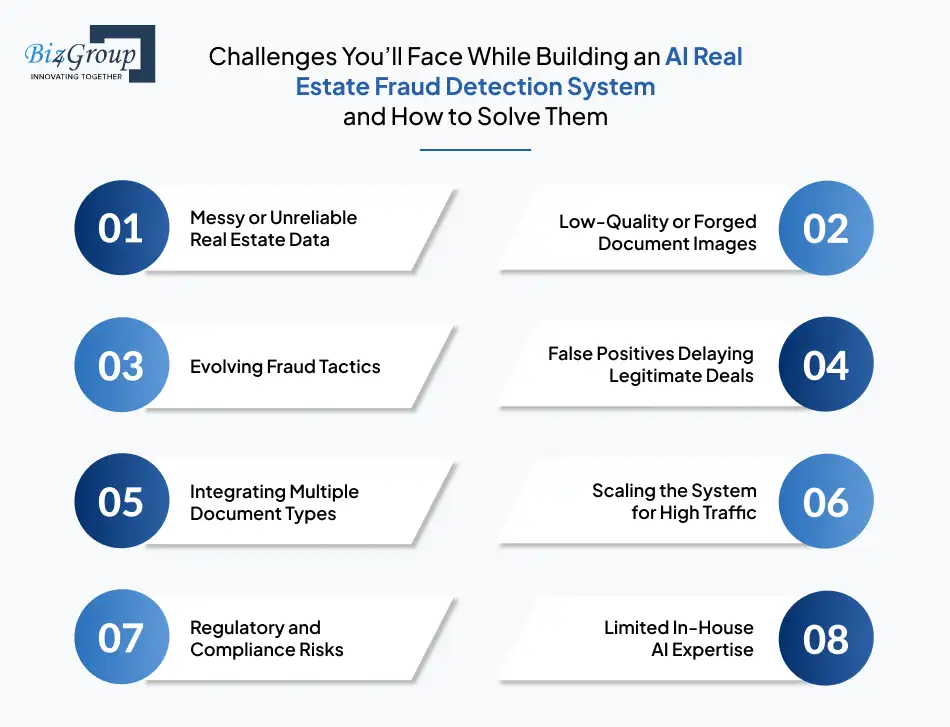
Even the strongest teams run into roadblocks when they build an AI real estate fraud detection system for listings and documents. Most challenges are predictable, and with the right approach, completely solvable. The table below breaks down each challenge and gives you practical solutions you can apply right away.
|
Challenge |
Why It Happens |
How to Solve It |
|
Messy or Unreliable Real Estate Data |
Listings come from multiple sources and often include inconsistencies, outdated details, or incomplete documents. This makes it harder for models to learn accurate fraud patterns. |
Build strong data cleaning pipelines and enforce standardized inputs. Use predictive insights similar to a real estate AI predictive analytics software to detect anomalies early. |
|
Low-Quality or Forged Document Images |
Blurry IDs, cropped documents, shadowed photos, or scanned copies reduce OCR accuracy. This leads to more false flags and poor verification rates. |
Use image enhancement, document classification, and OCR tuning. Introduce confidence scoring inside your AI fraud detection system development for real estate pipeline. |
|
Evolving Fraud Tactics |
Fraudsters constantly change strategies, from synthetic identities to AI-generated listings. Static rules become outdated quickly. |
Train models continuously and use active learning. Staying connected to market-level changes through tools similar to AI in real estate investment helps you track new risk patterns. |
|
False Positives Delaying Legitimate Deals |
Overly strict detection rules can block genuine sellers or renters, damaging user trust. |
Use multi-layer scoring rather than binary decisions. Add human review workflows for cases with borderline fraud probability. |
|
Integrating Multiple Document Types |
IDs, leases, deeds, disclosures, rental agreements, title papers, and ownership records all follow different formats. |
Create a modular verification engine that handles each document type independently. This allows your AI for fraud detection in property listings and documents workflow to stay flexible. |
|
Scaling the System for High Traffic |
Real estate platforms often see spikes in listing uploads, verification checks, and agent activity during peak seasons. |
Adopt microservices and autoscaling. Build cloud-native infrastructure so you make automated real estate fraud detection tools can handle demand effortlessly. |
|
Regulatory and Compliance Risks |
Fair Housing, data privacy, and consumer protection regulations require accuracy, explainability, and secure data handling. |
Add audit trails, role-based access, and encrypted storage. Compliance-focused design keeps AI solutions for real estate fraud prevention aligned with regulations. |
|
Limited In-House AI Expertise |
Many real estate firms rely on traditional workflows and may not have a data science team ready to operate an AI system. |
Bring in experienced partners or upskill your team with a structured development plan. Combining domain knowledge with technical expertise leads to better fraud detection outcomes. |
Building an AI-driven real estate fraud detection system comes with challenges, but each obstacle becomes manageable when you have the right technical approach, scalable architecture, and accurate data pipelines. With strategic planning and the right partners, you can create a reliable solution that protects buyers, sellers, agents, and platforms while improving transaction security across the entire property ecosystem. When these challenges are addressed early, your platform becomes stronger, faster, and more trustworthy, leading to safer real estate operations at every stage.
Biz4Group has built some of the most advanced and trusted digital products in the real estate sector, giving them deep domain expertise that directly strengthens their ability to develop real estate fraud detection AI system. Their portfolio reflects hands-on experience in handling property data, secure user verification, compliant document flows, and AI-driven automation, all essential for create automated verification systems for real estate documents and make automated real estate fraud detection tools.
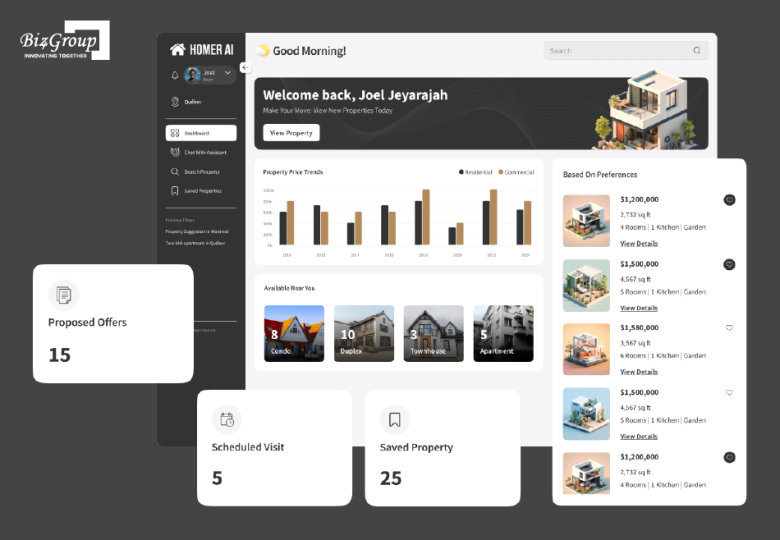
Homer AI is a smart property discovery and management platform featuring conversational search, advanced filters, automated recommendations, and guided user journeys. This project demonstrates Biz4Group’s capability to manage large volumes of listings and structured data, analyze property details, and streamline complex workflows, core components when you build an AI real estate fraud detection system for listings and documents.

Facilitor is a full-scale real estate buying ecosystem integrating MLS, GPS, and AI-powered property matching. It showcases the team’s experience in syncing large datasets, validating listing information, and ensuring accuracy across platforms. These same skills are critical when you build AI property listing fraud checker tool, ensuring that every listing on your platform is verified and trustworthy.

Renters Book focuses on secure rental experiences with verified reviews, rental history tracking, and document uploads for tenants and property owners. This highlights Biz4Group’s expertise in handling sensitive documents and identity verification, essential for creating automated verification systems for real estate documents and detecting fraudulent submissions.

Contracks is an AI-driven contract management platform that simplifies legal workflows and ensures compliance. Its advanced document processing capabilities show how Biz4Group can develop AI solutions for real estate fraud prevention, detect forged contracts, and maintain secure audit trails for real estate transactions.
Across these platforms, Biz4Group demonstrates consistent mastery in:
This experience directly translates into the ability to make an AI software that identifies fraudulent property listings for businesses, ensuring that every interaction inside a real estate ecosystem remains secure, compliant, and trustworthy.
Biz4Group has delivered projects like Homer AI and Facilitor that secure listings and documents. Want a solution tailored for your business?
Partner with Biz4GroupFraud in real estate is no longer just an occasional headache. It is a real risk that can cost businesses time, money, and reputation. Building a AI fraud detection system development for real estate allows you to stay ahead of threats, validate listings and documents in real time, and scale your operations securely. By combining advanced automated verification systems for real estate documents and automated workflows, you can protect your buyers, sellers, agents, and stakeholders from fraudulent activities.
With years of experience in real estate AI software development, Biz4Group has proven expertise in creating secure, intelligent platforms that handle listings, documents, and compliance workflows with precision. Our portfolio, including projects like Homer AI, Facilitor, Renters Book, and Contracks, demonstrates how we transform complex real estate processes into reliable, user-friendly, and fraud-proof solutions. By leveraging this domain knowledge, we ensure that every AI system we build is strategically aligned to make an AI software that identifies fraudulent property listings for businesses, develop AI solutions for real estate fraud prevention, and build AI property listing fraud checker tool.
Partner with Biz4Group and let’s make your real estate platform smarter, safer, and unstoppable.
A capable system can detect fake or duplicated property listings, forged deeds or ID documents, manipulated listing photos, suspicious price patterns, and mismatched property metadata. This helps you build an AI real estate fraud detection system for listings and documents that significantly reduces risk for buyers and sellers.
AI excels in processing large volumes of data quickly. It can analyze hundreds of listings or documents at once, identifying subtle inconsistencies and anomalies that manual review might miss. This kind of AI fraud detection system development for real estate greatly improves accuracy and lowers human error.
Yes. With techniques such as image forensics, metadata analysis, and document‑structure checks, AI systems can flag suspicious images or altered documents. As fraud methods evolve, AI remains capable of adapting and catching complex fraud attempts.
Not necessarily. You can begin with a moderate set of genuine and suspicious listings or documents. As your system flags and processes more data over time, the detection models improve. That makes building a fraud detection system feasible even for smaller property marketplaces.
If implemented correctly, no. Automated verification modules can process listings and documents rapidly, enabling fast turnarounds. The system assigns risk scores and only escalates uncertain cases for human review. This balances speed with security, a core benefit of real‑time AI fraud detection.
AI systems can cross‑check ownership records, validate IDs, verify signatures, and match document metadata. Such automation supports compliance requirements and reduces incidents of title or identity fraud. This approach is central to creating automated verification systems for real estate documents.
Absolutely. Because of scalable architecture and modular design, smaller firms can start with core detection features and expand gradually. With a well-designed suite, even modest platforms can tap into AI fraud detection system development for real estate and protect themselves against fraud without enormous upfront costs.

with Biz4Group today!
Our website require some cookies to function properly. Read our privacy policy to know more.