 Location :
Orlando, FL, USA
Location :
Orlando, FL, USA +1 (407) 714-1616
 info@biz4group.com

- The cost to build an MVP for an AI app typically ranges from $10,000 to $100,000, depending on features, architecture, and level of customization.
- The MVP cost of AI app development is mainly driven by five factors: product scope, AI model usage, data handling, infrastructure, and iteration cycles.
- Choosing the right architecture early has a major impact on the cost to develop MVP for AI app, especially when deciding between API-based and custom models.
- Start with a focused use case and limited features to validate quickly before investing in scale or complexity.
- Plan for ongoing costs after launch, including model usage and infrastructure, which can range from $100 to $5,000+ per month.
- Teams like Biz4Group LLC focus on building MVPs with clear scope, controlled cost, and a structured path from validation to scaling.
The cost to build an MVP for an AI app is one of the first questions founders and product leaders ask, and also one of the hardest to answer clearly. In most cases, it falls between $10,000 and $100,000, depending on scope, architecture, and how the system is used. Many estimates mention numbers like these, but few explain what actually drives them. Before setting a budget, it helps to understand what you are building, what makes it “AI,” and where the real costs come from.
In practice, the MVP cost of AI app development is not a fixed number. It changes based on a few key decisions: how intelligence is delivered, how much of the system is built from scratch, and how the product behaves under real usage. This is where many early-stage teams go wrong, especially when they treat AI like traditional software.
If you have been searching for answers using tools like ChatGPT or Perplexity AI, you have likely come across queries like:
- cost to build ai app mvp like chatgpt??
- ai mvp cost how much for basic version
- can i build ai mvp under 10k or no chance
- what features needed for ai app mvp cost
- cheapest way to build ai mvp use api or train model
- monthly cost to run ai mvp after launch approx
These questions are valid, but most answers skip the details that actually matter. A useful estimate comes from understanding how the system is designed, what features are included, and how it will perform once users start interacting with it. This is why working with an experienced AI development company often starts with breaking the idea into smaller, measurable parts instead of jumping to a total cost.
As you move forward, the cost to develop MVP for AI app becomes easier to estimate when you look at it as a set of decisions rather than a single number. This guide walks through those decisions step by step, so you can understand what to build, how to approach it, and how much to allocate at each stage. Well-structured MVP development services can then help turn that plan into a working product without unnecessary spend.
What Defines an MVP for an AI App in Cost and Scope Terms?
Many teams assume an MVP needs to be feature-rich or highly accurate. In reality, The cost to build an MVP for an AI app depends heavily on what you include in the first version, and that version only needs to do one thing well enough to test whether the idea works.
Before thinking about budgets, you need clarity on scope. What exactly are you building? What part of it is actually “AI”? And what can be left out for now?
What Makes an MVP “AI”?
An app becomes “AI” when it stops relying only on fixed rules and starts generating or predicting outputs. Here’s a simple distinction:
|
Aspect |
Traditional Software |
AI MVP |
|---|---|---|
|
Logic |
Predefined rules |
Data-driven behavior |
|
Output |
Same input → same output |
Output can vary |
|
Learning |
No learning |
Improves or adapts over time |
Even a single feature that generates or predicts outcomes is enough to qualify. This is why many early products start with generative AI to introduce intelligence without heavy setup.
The Minimum Intelligence Required for Validation
You only need enough intelligence to make the product usable and testable. A practical threshold:
- The system produces a meaningful output
- The output solves a small but real problem
- Users can interact with it and respond
If these conditions are met, the product is ready for validation. Going beyond this stage too early can increase the cost to develop MVP for AI application without improving what you learn from users.
What an AI Application MVP Must Prove Before Scaling
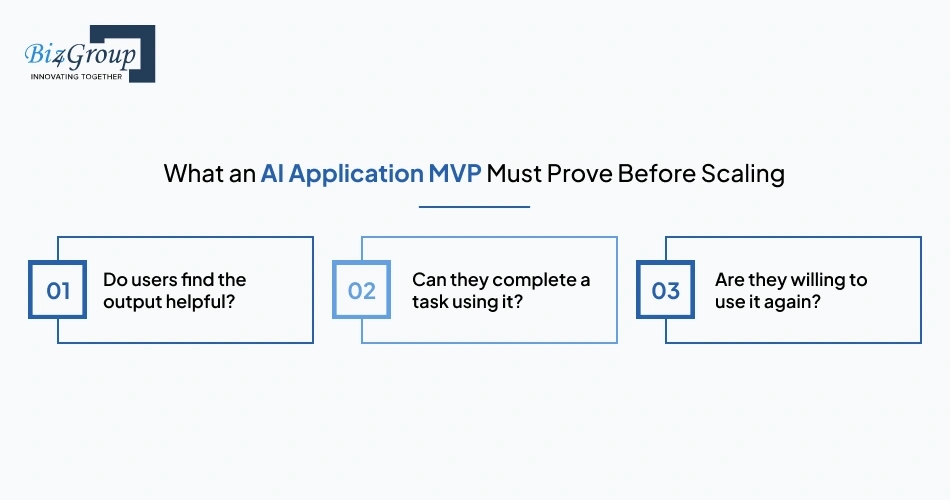
Once the basic functionality works, the focus shifts to validation. At this stage, the MVP should answer:
- Do users find the output helpful?
- Can they complete a task using it?
- Are they willing to use it again?
A quick checkpoint:
- One core use case works end-to-end
- The AI output is usable, even if not perfect
- Feedback can be collected consistently
If these are not achieved, expanding scope will only increase the pricing for building an MVP for AI application without adding clarity to your next steps.
Portfolio Spotlight
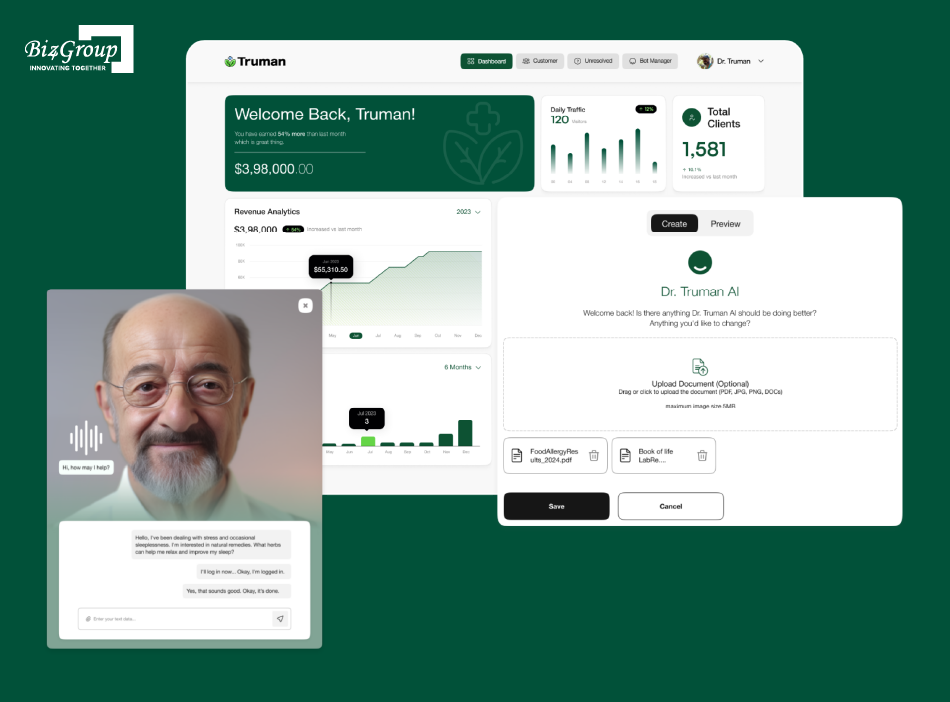
Truman is an AI-powered wellness platform that delivers personalized supplement recommendations and health insights based on user data and behavior. It reflects how an AI MVP can start with a focused use case, validate personalization logic early, and then expand into a full health ecosystem as accuracy and user engagement improve.
What Is the Cost to Build an MVP for an AI App?
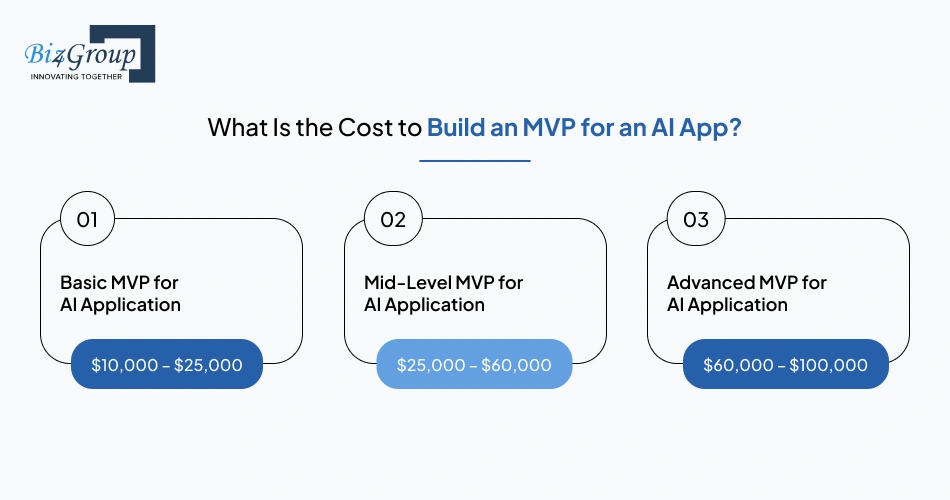
The cost to build an MVP for an AI app typically falls between $10,000 and $100,000, but that range only makes sense when you understand what sits behind it. The final number depends on how complex the product is, how intelligence is implemented, and how much of the system is built versus reused.
Instead of guessing a number, it helps to look at cost through structured ranges tied to scope.
Typical Cost Ranges by Complexity Level
Here’s a practical breakdown based on what is actually being built:
|
Complexity Level |
What It Usually Includes |
Estimated Cost |
|---|---|---|
|
Basic MVP for AI Application |
Simple UI, API-based AI feature, limited users |
$10,000 – $25,000 |
|
Mid-Level MVP for AI Application |
Multiple features, better UX, basic data handling |
$25,000 – $60,000 |
|
Advanced MVP for AI Application |
Custom workflows, integrations, higher usage handling |
$60,000 – $100,000 |
A few quick observations:
- Most early-stage products stay in the $15K–$40K range
- Costs rise quickly when you move beyond a single use case
Adding integrations or scaling capability pushes you toward the upper range
This is where teams often decide whether to integrate AI into an app using existing services or invest more upfront in deeper capabilities.
Why the Cost to Develop MVP for AI App Varies so Widely?
The variation is not random. It comes down to a few measurable decisions:
1. Type of AI used
- API-based → lower cost
- Custom models → higher cost
2. Number of features
- One core feature → controlled cost
- Multiple workflows → higher development time
3. Data requirements
- Minimal or existing data → lower cost
- Custom datasets → added expense
4. Team structure
- Small team or freelancers → lower cost
- Specialized team (AI engineers, backend, frontend) → higher cost
5. Speed of development
Faster timelines often require more resources
When teams choose to hire AI developers with specific expertise, costs increase, but so does execution speed and reliability. In simple terms, cost expands with complexity, not just effort.
What These Estimates Include and Exclude
Not all cost estimates mean the same thing. Understanding what is included helps avoid surprises.
Typically included in MVP cost:
- Core feature development
- Basic UI and backend setup
- API integration or model usage setup
- Initial testing and deployment
Often excluded (but critical):
- Ongoing AI usage costs (per request or token)
- Data acquisition or labeling at scale
- Post-launch improvements and iterations
- Monitoring, logging, and optimization
A quick way to think about it:
- Build cost = one-time investment
- Usage cost = ongoing expense
Ignoring this difference can distort the cost of developing an MVP for AI application, especially once real users start interacting with the system.
As you define your scope more clearly, the development budget of MVP for AI application becomes easier to control, because each decision directly maps to a cost instead of adding hidden complexity.
Key Factors Behind the MVP Development Cost of AI Application?
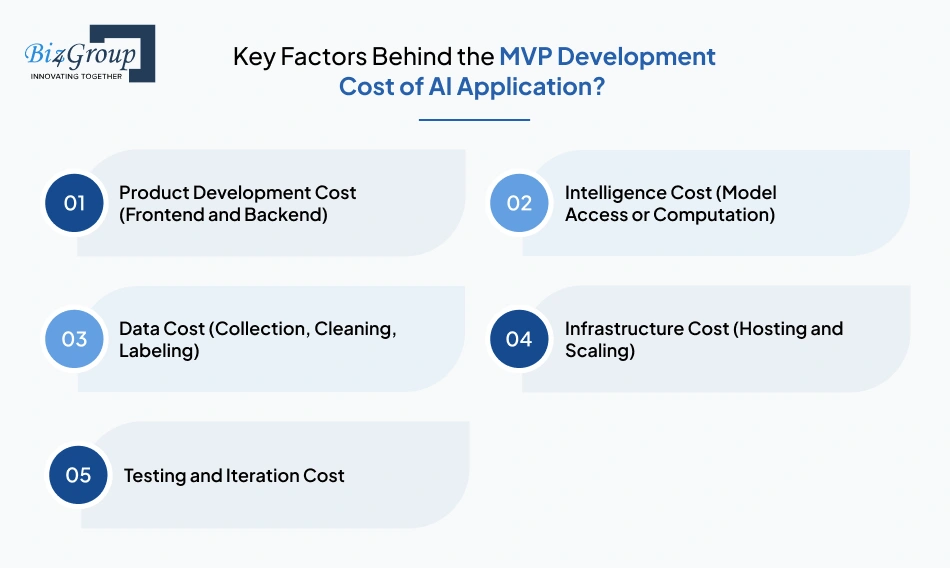
There are several factors that define the overall cost to build an MVP for an AI app. Your total cost is the sum of product development, AI usage, data work, infrastructure, and iteration. Understanding each part helps you control the budget instead of guessing it.
1. Product Development Cost (Frontend and Backend)
This usually takes 30% to 50% of the total budget, with costs ranging from $5,000 to $40,000. It includes frontend screens, backend systems, APIs, and user flows. Even a simple AI feature needs a working product around it to function properly.
2. Intelligence Cost (Model Access or Computation)
This is the cost of using AI models. API-based setups typically cost $500 to $5,000 upfront, while custom setups can go beyond $10,000 to $40,000+. Ongoing usage adds $50 to $2,000 per month, which makes this a major part of the building cost of MVP for an AI app. This is also where teams often decide whether to rely on APIs or invest in AI model development.
3. Data Cost (Collection, Cleaning, Labeling)
Data costs can range from $0 to $25,000+. Using existing datasets keeps costs low, while cleaning and preparation can cost $2,000 to $10,000. If your use case needs custom or domain-specific data, costs increase quickly.
4. Infrastructure Cost (Hosting and Scaling)
Infrastructure usually starts at $50 to $500 per month and can grow to $2,000+ per month as usage increases. This includes servers, storage, and handling user requests. It becomes more important once real users start interacting with the system.
5. Testing and Iteration Cost
Testing and improvements typically cost between $5,000 and $20,000. AI products need multiple rounds of tuning based on user feedback, so this is not a one-time cost.
Quick Cost Breakdown of an AI MVP
|
Cost Component |
What It Covers |
Typical Cost Range |
|---|---|---|
|
Product Development |
Frontend, backend, APIs, user flows |
$5,000 – $40,000 |
|
Intelligence (AI Models) |
API usage or custom model setup |
$500 – $40,000+ |
|
Data |
Collection, cleaning, labeling |
$0 – $25,000+ |
|
Infrastructure |
Hosting, servers, storage |
$50 – $2,000+/month |
|
Testing & Iteration |
QA, improvements, tuning |
$5,000 – $20,000 |
When you look at these components together, the total budget becomes easier to estimate and manage. This structured view helps answer how much does it cost to create AI app MVP based on actual product needs instead of rough assumptions.
Plan Your AI MVP With Cost Clarity
Understand the cost to build an MVP for an AI app and make informed decisions before development begins.
Get My MVP Cost EstimateHow Architecture Impacts the MVP Development Cost of AI Application?
Depending on how the system is designed, the cost to build an MVP for an AI app may vary. The same idea can cost $15,000 or $80,000+ based on whether you use existing AI services, build your own models, or combine both. This choice affects how much you spend at the start and how your costs grow later.
1. API-Based Architecture and Its Cost Structure
This is the most common way to build an AI MVP because it keeps things simple and affordable at the beginning.
Typical costs:
- Setup and integration → $2,000 to $10,000
- Early usage → $50 to $1,500 per month
You are paying to use existing AI models through APIs. There is no need to train models or manage complex infrastructure. This reduces both time and cost.
The main cost comes from usage. As more users interact with the product, the monthly cost increases. This works well when the goal is to launch quickly and test the idea with real users.
2. Custom Model Architecture and Its Cost Structure
This approach involves building your own AI models, which increases the upfront investment.
|
Area |
Cost Range |
|---|---|
|
Model development |
$15,000 to $50,000+ |
|
Data preparation |
$5,000 to $25,000+ |
|
Infrastructure setup |
$2,000 to $10,000 |
|
Monthly compute |
$500 to $5,000 |
Most of the cost comes from preparing data and training the model. This setup is used when the product needs more control or specific outputs.
This is also where teams start asking what is the cost of making MVP for AI application, because data and model decisions directly affect the total budget.
3. Hybrid Architecture and Where It Fits
A hybrid setup combines both approaches and is often used in real-world MVPs.
Typical costs:
- Initial setup → $10,000 to $40,000
- Ongoing usage → $200 to $3,000 per month
The system can start with APIs and then add custom logic over time. This allows the product to improve without a large upfront investment.
Teams that plan to build AI software in stages often use this approach because it supports gradual development while keeping early costs under control.
|
Architecture Type |
Upfront Cost |
Ongoing Cost |
Typical Use Case |
|---|---|---|---|
|
API-Based |
$2K–$10K |
Scales with usage |
Early validation |
|
Custom Model |
$20K–$80K+ |
Moderate to high |
Specialized needs |
|
Hybrid |
$10K–$40K |
Moderate |
Balanced growth |
Choosing the right architecture helps you manage both your initial budget and your future costs. A clear understanding of these options makes it easier to estimate the cost to build an MVP for AI app based on how you plan to build and grow the product.
Portfolio Spotlight
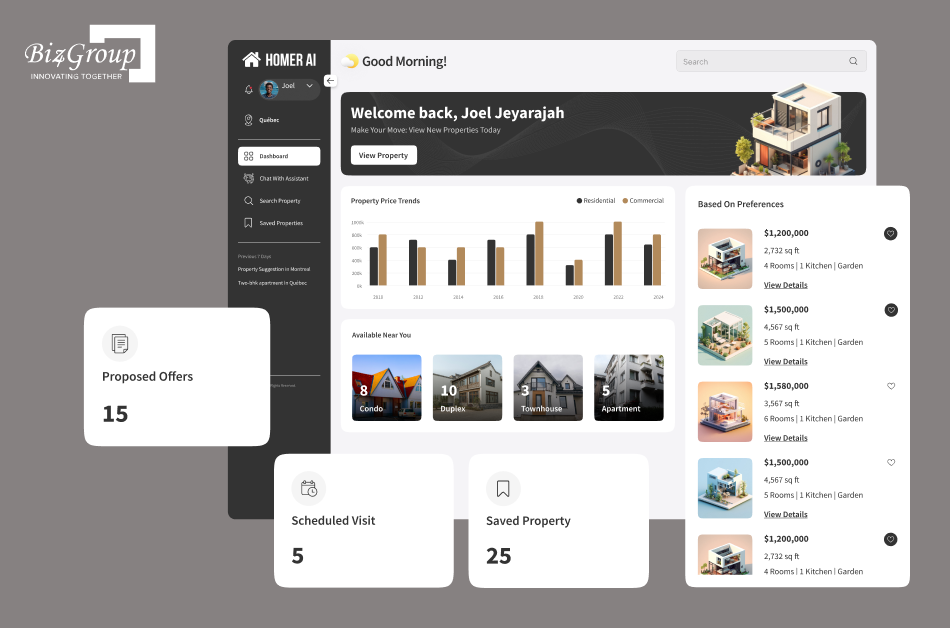
Homer AI connects buyers and sellers through a conversational AI interface, simplifying property discovery and transactions. It demonstrates how an AI MVP can begin with a core interaction layer and gradually scale into a broader platform as user demand and usage patterns become clearer.
Turn Your Idea Into a Working AI MVP
Control the mvp cost of AI app development by starting with the right scope and architecture.
Build My AI MVPHow Features Influence the Cost to Build an MVP for AI App?
The cost to build an MVP for an AI app increases with the type and number of features included. In most cases, each feature adds between $3,000 and $40,000+ to the total cost, depending on complexity, data needs, and usage. This is why feature selection directly shapes the overall budget.
1. Conversational Features and Interaction Cost
Conversational features typically cost between $3,000 and $15,000 to build, depending on interface design and backend setup. Ongoing usage can add $100 to $2,000 per month, as each user interaction requires model processing. Products built as an AI conversation app often see higher recurring costs due to frequent user input.
2. Recommendation and Prediction Systems
Recommendation and prediction features usually cost $5,000 to $25,000 for initial development. Costs stay lower when using existing models but increase with custom logic and data handling. These features contribute directly to the MVP development cost of AI application, especially when they require regular updates and tuning.
3. Image and Video Processing Features
Image and video features generally cost $10,000 to $40,000+ to build, depending on processing requirements. Ongoing costs can range from $200 to $3,000 per month, driven by compute usage. Video-related features tend to increase costs faster due to higher processing demand.
4. Automation and Decision-Making Features
Automation features usually cost between $5,000 and $20,000, depending on the number of workflows and the level of logic involved. When decisions depend on AI outputs, additional validation layers increase both development time and cost.
5. Features That Scale Cost With Usage
Some features create one-time costs, while others continue to generate expenses as usage grows. Features with ongoing AI interactions can add $100 to $3,000+ per month, depending on user activity. This is one of the main reasons the estimated MVP development cost of AI app increases after launch.
Each feature adds either a one-time build cost or a recurring usage cost. Features with frequent interaction increase monthly expenses, which directly affects the estimated MVP development cost of AI app over time. Keeping the feature set focused helps control both initial and ongoing costs while still allowing effective validation.
Portfolio Spotlight
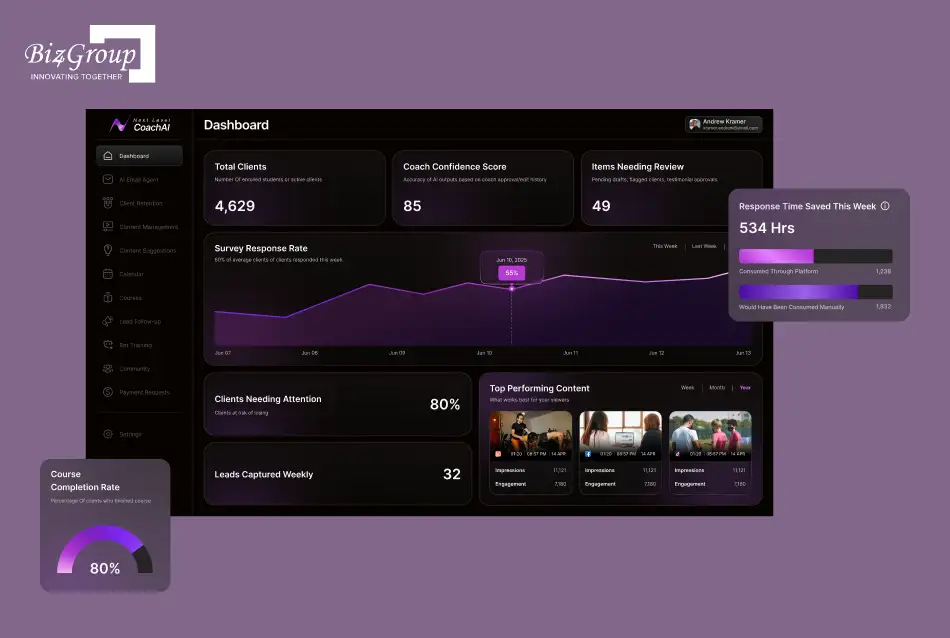
Coach AI is designed to automate coaching workflows, improve client engagement, and streamline communication using AI-driven interactions. It shows how an MVP can focus on a single outcome, such as workflow automation, while keeping development lean before expanding into a more feature-rich platform.
Can the Estimated MVP Development Cost of AI App Fit Within $10K?
Yes, the cost to build an MVP for an AI app can fit within $10,000, but only under strict conditions. At this budget level, the product must stay extremely focused, with limited features and controlled usage. Most MVPs in this range are built to validate a single idea rather than deliver a complete product experience.
What Is Realistically Achievable Within a Budget of 10K$ for AI Application MVP?
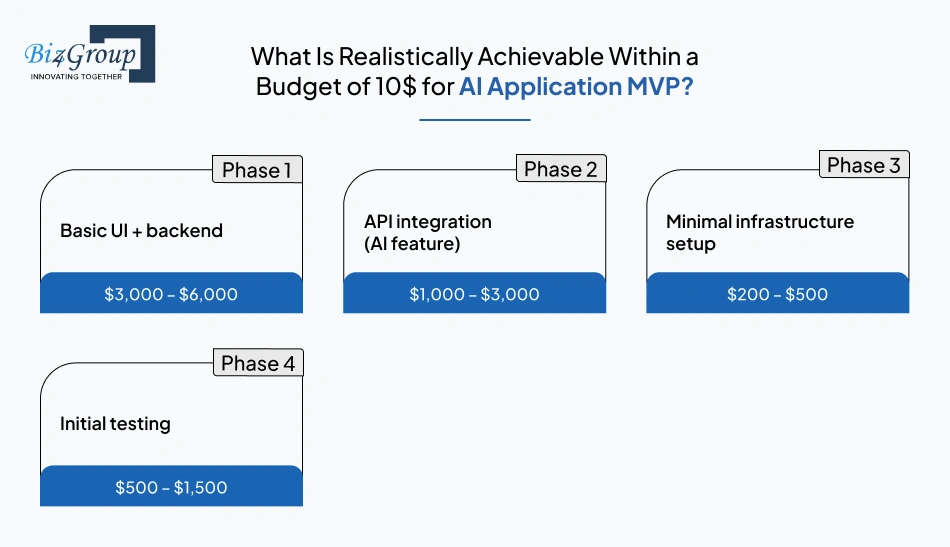
At a $10K budget, the scope is narrow but workable if planned carefully:
|
Component |
Typical Cost |
|---|---|
|
Basic UI + backend |
$3,000 – $6,000 |
|
API integration (AI feature) |
$1,000 – $3,000 |
|
Minimal infrastructure setup |
$200 – $500 |
|
Initial testing |
$500 – $1,500 |
What you can build:
- One core feature (for example, a simple chat or prediction flow)
- Basic user interface with limited screens
- API-based AI functionality with capped usage
This is often where MVP software development focuses on speed and minimal scope to stay within budget.
Constraints You Cannot Avoid when Building AI Application MVP
A $10K budget comes with clear limitations:
- No custom model development (usually starts at $15,000+)
- Limited design and user experience polish
- Restricted AI usage due to cost (often capped at $100–$300/month)
- Minimal scalability and performance optimization
Most of the budget is spent on making the product functional, not refined.
When a 10K$ Budget for AI Application MVP Development Breaks Down
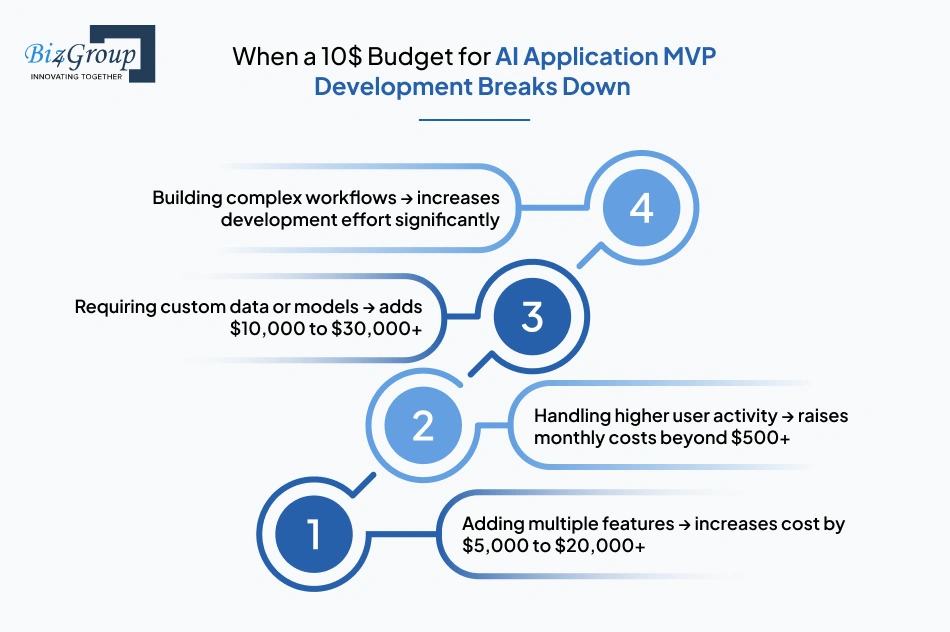
The budget starts to fail when the scope expands beyond a single use case.
Common triggers:
- Adding multiple features → increases cost by $5,000 to $20,000+
- Handling higher user activity → raises monthly costs beyond $500+
- Requiring custom data or models → adds $10,000 to $30,000+
- Building complex workflows → increases development effort significantly
At this point, the MVP prototype cost of AI Application moves beyond $10K and typically shifts into the $15,000 to $50,000 range.
A $10K MVP works when the goal is quick validation with minimal scope. It is not suitable for products that require multiple features, high accuracy, or scale from day one. Keeping expectations aligned with budget helps avoid rework and unnecessary cost increases.
Reduce Development Waste by Up to 40%
Optimize the cost to develop MVP for AI app with focused features and smarter architecture choices.
Optimize My MVP BudgetWhat Is the Cheapest Way to Build an AI MVP?
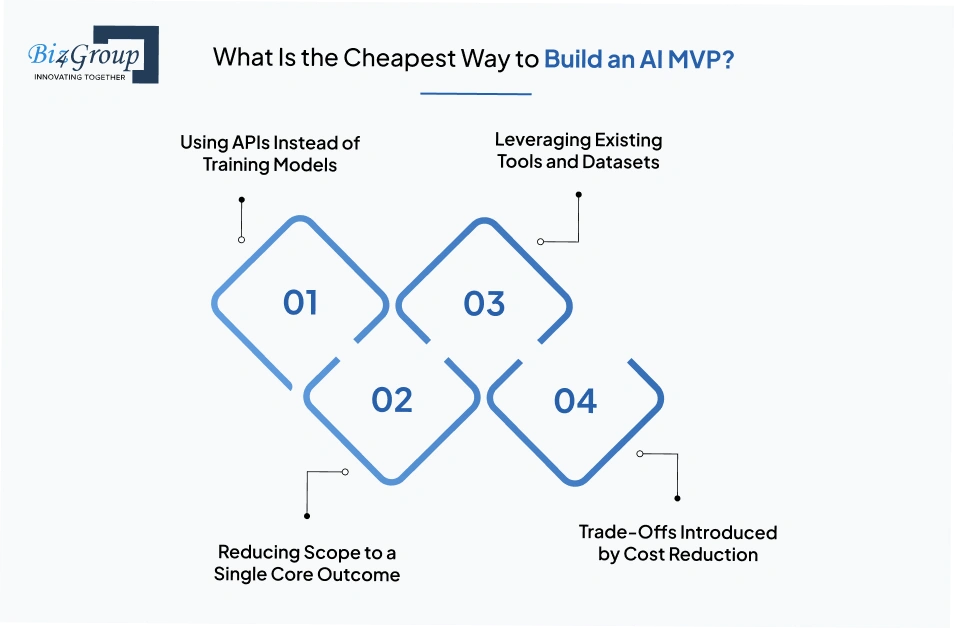
By using existing AI services, limiting features, and avoiding custom development, the cost to build an MVP for an AI app can be reduced to about $8,000 to $25,000. The focus at this stage is to minimize build effort and keep ongoing usage predictable.
1. Using APIs Instead of Training Models
Using APIs removes the need for model training and infrastructure. Setup usually costs $1,000 to $5,000, and early usage adds $50 to $1,500 per month. Costs remain low as long as usage is limited, but can increase quickly if user interactions grow or if responses become more complex.
2. Reducing Scope to a Single Core Outcome
Building one core feature keeps development between $5,000 and $15,000. Each additional feature can increase cost by $5,000 to $20,000+. Keeping scope tight helps control both build time and testing effort, which is why it has a direct impact on the MVP cost of AI app development.
3. Leveraging Existing Tools and Datasets
Using ready tools and available datasets can save $2,000 to $10,000 in development and data preparation. Many teams rely on product development services to combine existing components and reduce both time and cost.
4. Trade-Offs Introduced by Cost Reduction
Lower cost usually means limited customization, basic user experience, and reliance on third-party tools. Improving these areas later can add $5,000 to $30,000+, especially if parts of the system need to be rebuilt or replaced.
Keeping the system simple and focused helps control both upfront and ongoing expenses. The cheapest approach works best for validation, where the goal is to test a single idea before scaling the cost to develop MVP for AI app further.
Portfolio Spotlight
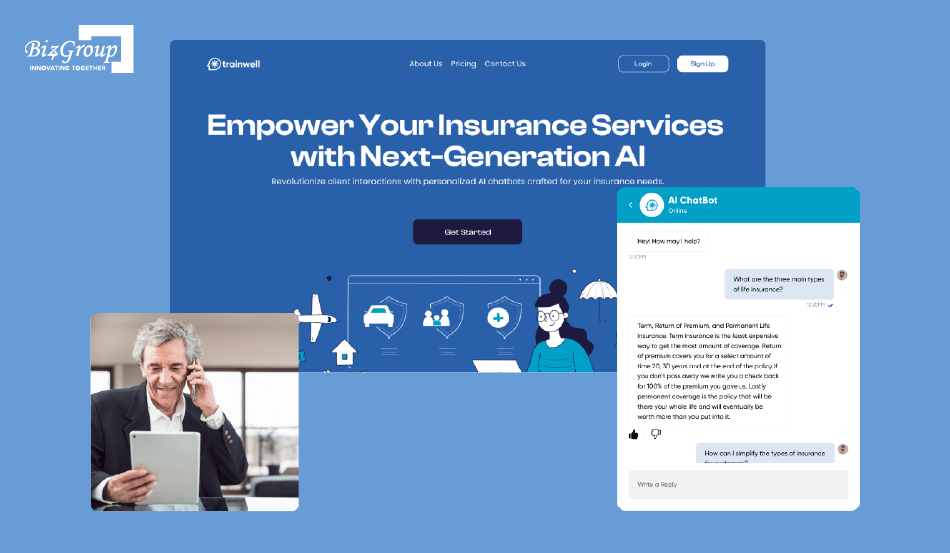
Insurance AI is a chatbot solution built to assist agents with training, knowledge access, and real-time support. It shows how AI MVPs can start with a narrow use case like internal enablement, keeping costs controlled while delivering measurable value before scaling further.
How Much Does It Cost to Run an AI MVP After Launch?
Even after a successful launch, the cost to build an MVP for an AI app doesn’t stop incurring. Running the product adds ongoing costs that come from infrastructure, AI model usage, and user activity. In early stages, this usually falls between $200 and $5,000+ per month, and increases as more users start using the product.
In simple terms, total monthly cost = infrastructure + model usage + user-driven requests.
Monthly Infrastructure and Hosting Cost
Infrastructure costs are usually stable at the start and grow with usage.
|
Setup Level |
Monthly Cost |
|---|---|
|
Early stage (low traffic) |
$50 – $500 |
|
Moderate usage |
$500 – $2,000 |
|
Higher usage |
$2,000+ |
This includes servers, databases, storage, and handling requests. Teams working on SaaS MVP development often begin with a small setup and increase capacity as usage grows.
Model Usage and Inference Cost
AI usage is one of the main ongoing costs because it depends on how often the system is used. Typical monthly cost:
- Light usage → $50 – $500
- Moderate usage → $500 – $2,000
- Heavy usage → $2,000 – $5,000+
Each request to the model adds cost. Products using AI automation services may have higher usage because processes run in the background as well.
Cost per User and Cost per Request
Looking at cost per unit helps in planning.
- Cost per request → $0.001 to $0.05
- Cost per active user → $1 to $20/month
For example, 1,000 users making 10 requests per day can lead to $300 to $1,500 per month in AI usage. This helps estimate the cost to develop MVP for AI application after launch.
How Growth Changes Total Cost Over Time
Costs increase as usage grows.
- 100 users → $200 – $500/month
- 1,000 users → $1,000 – $3,000/month
- 10,000 users → $5,000+/month
More users mean more requests, more data, and higher infrastructure load. Costs grow with activity, not just system size.
Make Smarter Decisions Before You Build
Avoid unnecessary spend and manage the cost to build an MVP for an AI app with a clear execution plan.
Talk to Our AI ExpertsStage-Wise Breakdown of MVP Development Cost of AI Application
Breaking the budget into stages gives a clearer picture of how money is spent over time. Instead of allocating a large upfront amount, most teams move step by step, starting small and increasing investment as the product proves value. In most cases, total cost grows from $2,000 in early validation to $80,000+ at the MVP stage, with each stage adding more development effort, data handling, and infrastructure.
Each stage adds a new layer of cost, based on how much of the system is being built.
|
Stage |
What It Includes |
Typical Cost Range |
|---|---|---|
|
Validation Stage Budget |
Idea testing, API trials, small experiments |
$2,000 – $8,000 |
|
Prototype Stage Budget |
Basic UI, limited features, proof-of-concept AI functionality |
$5,000 – $20,000 |
|
MVP Development Stage Budget |
Core feature development, backend, integrations, testing |
$20,000 – $80,000 |
|
Early Scaling Preparation Budget |
Performance improvements, infrastructure setup, monitoring |
$10,000 – $30,000 |
Spending is lowest in the validation stage, where the goal is to test the idea with minimal effort and cost. The prototype stage introduces a working version with limited functionality, which helps gather early feedback. Most of the budget is used during the MVP development stage, where the product becomes usable end-to-end. Early scaling preparation adds cost for handling higher usage, improving performance, and ensuring stability.
Teams that work on business app development using AI often follow this staged approach to control risk and avoid committing large budgets too early.
Cost increases at each stage as the product becomes more complete and handles more usage. Planning the budget in stages helps control spending and ensures that investment grows only when the product shows value, making the cost of developing an MVP for AI application easier to manage.
Technical Trade-Offs That Affect the Cost of Developing an MVP for AI Application
Every AI MVP is shaped by a set of technical decisions, and each one has a direct cost impact. Choices around speed, accuracy, customization, and system design can shift the budget by $5,000 to $50,000+ even when the product idea stays the same. Understanding these trade-offs early helps avoid overspending on the wrong areas.
1. Speed vs Cost
Faster timelines increase cost because they require more people and parallel work.
- Standard timeline (4–6 weeks) → $10,000 – $30,000
- Faster delivery (3–4 weeks) → $20,000 – $50,000+
Short timelines often mean hiring more developers or working in parallel tracks, which increases cost. Teams using on-demand app development solutions often choose this route when time matters more than budget.
2. Accuracy vs Cost
Improving accuracy adds cost through data, tuning, and testing.
- Basic accuracy (API-based) → $500 – $5,000 setup + usage
- Improved accuracy (fine-tuning) → $5,000 – $20,000
- High accuracy (custom models + data) → $20,000 – $60,000+
Higher accuracy requires better data and more iterations. This is one of the biggest contributors to the cost of developing an MVP for AI application.
3. Customization vs Simplicity
More customization increases both development effort and cost.
- Simple MVP → $8,000 – $20,000
- Moderate customization → $20,000 – $50,000
- High customization → $50,000+
Customization adds complexity in workflows, integrations, and testing. Keeping the system simple helps control cost in early stages.
4. Build vs Use Existing Systems
Using existing systems reduces cost compared to building everything from scratch.
- Use APIs/tools → $8,000 – $25,000
- Partial custom build → $20,000 – $50,000
- Full custom build → $50,000 – $100,000+
Many teams work with MVP development companies to combine pre-built tools and reduce development cost while still delivering a functional product.
|
Trade-Off |
Lower Cost Option |
Higher Cost Option |
|---|---|---|
|
Speed |
Standard timeline |
Faster delivery |
|
Accuracy |
Basic models |
Custom models |
|
Customization |
Simple setup |
Complex workflows |
|
System Choice |
Use existing tools |
Build from scratch |
Each of these decisions adds cost as complexity increases. Making the right trade-offs helps control the budget while still building a product that can be tested and improved over time.
Build Lean, Scale Confidently
Keep the cost of developing an MVP for AI application under control while preparing for future growth.
Start My AI MVP JourneyHow to Calculate the Cost to Build an MVP for AI App From Scratch?
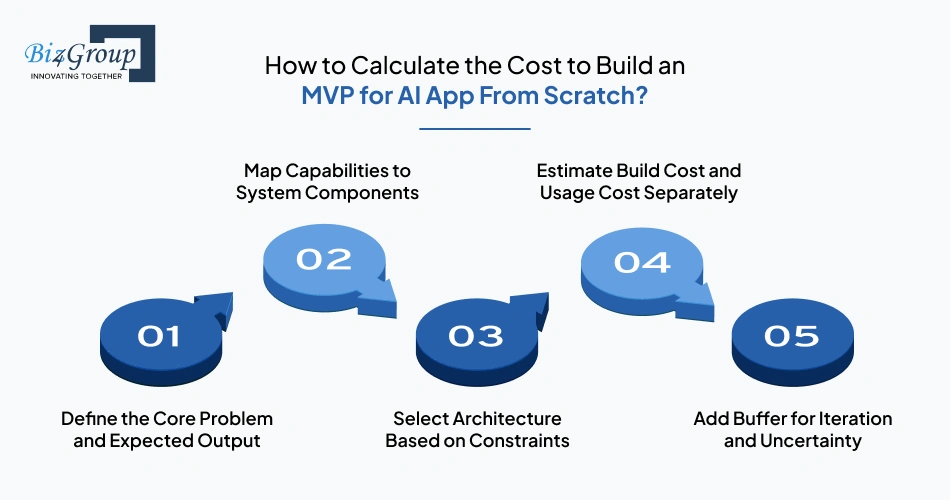
Estimating the cost to build an MVP for an AI app becomes easier when you break it into steps. A simple way to think about it is: total cost = build cost + usage cost + buffer. Most MVPs fall between $10,000 and $100,000, depending on how each part is planned.
1. Define the Core Problem and Expected Output
Start with one clear problem and a specific output. A focused use case usually costs $5,000 to $15,000, while broader ideas can go beyond $25,000+. Clear output reduces development time and testing effort.
Example: A startup builds a resume analyzer that gives feedback. The cost stays around $8,000–$12,000 because it solves one problem.
2. Map Capabilities to System Components
Break the product into parts like frontend, backend, AI, and data. Each part usually adds $2,000 to $10,000, depending on complexity. This helps you see where the budget will be spent.
Example: A chatbot MVP needs UI, backend, and AI integration. Total cost comes to $12,000–$20,000 based on setup.
3. Select Architecture Based on Constraints
Choose the architecture based on budget and timeline. API-based setups usually cost $10,000 to $25,000, while custom models can go up to $40,000–$80,000+. This decision has a major impact on total cost.
Example: A team uses APIs to launch faster. They keep costs near $15,000 instead of spending $50,000+.
4. Estimate Build Cost and Usage Cost Separately
Separate one-time build cost from monthly usage cost. Build usually costs $10,000 to $60,000, while usage adds $100 to $3,000 per month. This helps answer how much does it cost to create AI app MVP after launch.
Example: An MVP costs $18,000 to build and $800/month to run. Total yearly cost becomes about $27,600.
5. Add Buffer for Iteration and Uncertainty
Add a buffer of 20% to 40% of the total budget. Most MVPs need changes after testing, and this prevents delays. Many teams working on AI integration services include this buffer early to avoid cost overruns.
Example: A $20,000 project adds a $6,000 buffer. Final budget becomes $26,000.
|
Step |
What You Estimate |
Typical Cost Impact |
|---|---|---|
|
Define Problem |
Scope of MVP |
$5,000 – $25,000+ |
|
Map Components |
Frontend, backend, AI, data |
$2,000 – $10,000 per part |
|
Select Architecture |
API vs custom |
$10,000 – $80,000+ |
|
Build vs Usage |
One-time vs monthly |
$10,000 – $60,000 + $100–$3,000/month |
|
Add Buffer |
Iteration margin |
+20% to 40% |
Following these steps makes cost estimation more clear and practical. Each decision connects to a real number, which helps you understand what is the cost of making MVP for AI application based on your specific idea.
How to Decide the Right Investment Level for Your AI MVP?
Choosing the right budget depends on how certain you are about your idea and how much you need to prove before scaling. If the idea is still unclear, lower investment makes sense. If the requirements are defined and accuracy matters, higher investment is justified. The cost to build an MVP for an AI app usually falls between $10,000 and $100,000+, based on this decision.
When to Invest More Upfront for AI MVP Application Development?
Higher investment works when the product needs strong performance from the beginning. Typical cases:
- Complex workflows → $40,000 – $80,000+
- Domain-specific logic → $30,000 – $70,000
- High user expectations → $50,000+
Spending more early helps improve system quality, stability, and accuracy. This is common in enterprise AI solutions, where the MVP needs to perform reliably from day one.
When to Keep the AI App MVP Lean?
A lean approach works when the goal is to test the idea quickly.
|
Scope Level |
Typical Cost |
|---|---|
|
Single feature |
$10,000 – $20,000 |
|
Limited product |
$15,000 – $30,000 |
|
Basic validation |
$20,000 – $35,000 |
This keeps the product simple and focused on one outcome. It helps control the MVP development cost of AI application while still allowing real user feedback.
How to Align Investment for AI App MVP With Risk and Validation Goals?
Investment should match how much risk is involved.
- High uncertainty → $10,000 – $25,000
- Medium uncertainty → $25,000 – $50,000
- Low uncertainty → $50,000 – $100,000+
Teams often follow this step-by-step approach to manage cost while moving toward a stable product.
|
Scenario |
Investment Range |
Goal |
|---|---|---|
|
Idea validation |
$10K–$25K |
Test core concept |
|
Feature improvement |
$25K–$50K |
Improve output |
|
Early scaling |
$50K–$100K+ |
Build stable system |
Choosing the right investment level is about matching budget with clarity. This helps manage the cost to build an MVP for AI app while keeping the product aligned with its goals and stage of development.
Portfolio Spotlight
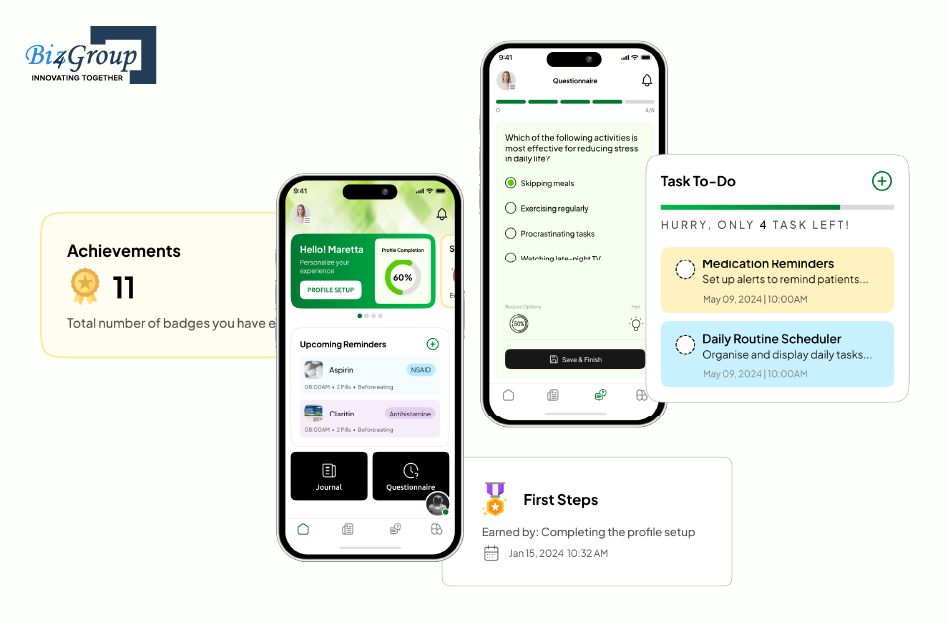
CogniHelp is an AI-driven mobile application designed to support dementia patients by improving cognitive engagement and daily functioning. It highlights how AI MVPs in sensitive domains require focused functionality and careful iteration, which directly impacts both development cost and validation timelines.
Where Founders Miscalculate the Cost to Build an MVP for AI App?
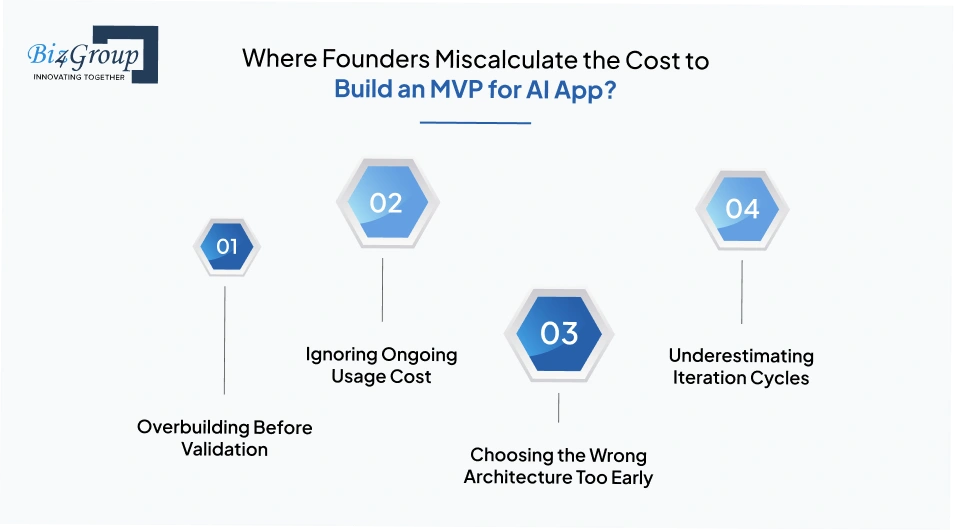
Founders often miscalculate budgets because they overlook a few common cost drivers. The cost to build an MVP for an AI app usually increases due to overbuilding, ignoring usage costs, choosing the wrong architecture early, and underestimating iteration. These mistakes can push a $15,000 plan to $30,000–$70,000+ without improving the actual outcome.
1. Overbuilding Before Validation
Adding too many features early increases cost without clear benefit. A focused MVP costs $10,000 to $25,000, but each extra feature can add $5,000 to $20,000+. This usually happens when teams try to match a full product instead of validating one core use case, which quickly raises the estimated MVP development cost of AI app.
2. Ignoring Ongoing Usage Cost
Many estimates include only development and ignore running costs. AI usage, infrastructure, and requests can add $100 to $3,000+ per month, and over time this can match or exceed the initial MVP prototype cost of AI Application. This becomes a problem when user activity grows faster than expected.
3. Choosing the Wrong Architecture Too Early
Starting with a complex setup increases cost without clear need. API-based systems usually cost $10,000 to $25,000, while custom models can reach $40,000 to $80,000+. This mistake often happens when teams plan for scale before validating the product.
4. Underestimating Iteration Cycles
Most MVPs need changes after testing, which adds to the total cost. Initial fixes usually cost $3,000 to $10,000, while multiple iterations can add $5,000 to $20,000+. This is often underestimated when teams assume the first version will work as expected.
Quick Cost Impact of Common Mistakes
|
Mistake |
Cost Impact |
|---|---|
|
Extra features |
+$5K–$20K per feature |
|
Ignoring usage |
+$100–$3K/month |
|
Wrong architecture |
+$20K–$50K |
|
Iteration cycles |
+$5K–$20K |
These cost increases come from early decisions, not unexpected issues. Keeping the scope focused, planning for usage, and allowing room for iteration helps keep the estimated MVP development cost of AI app aligned with real product needs.
How to Validate Before You Scale?
Plan the right development budget of MVP for AI application and test your idea with real users early.
Validate My AI MVPWhy Biz4Group LLC is the Best Choice for AI MVP Development?
Building an AI MVP comes down to making the right decisions early so cost, scope, and validation stay aligned. As an AI app development company, Biz4Group LLC focuses on building MVPs that are clear in purpose, controlled in cost, and ready to evolve.
The portfolios included in this guide follow that approach. Truman focuses on personalization, Coach AI streamlines workflows, and Insurance AI starts with a defined use case. Each product was built to validate a specific outcome before expanding further.
What this means in practice:
- Focused MVP scope: Define one core outcome and build around it to keep development cost within a predictable range.
- Architecture aligned with stage: Use API-based or hybrid setups early, with a shift toward custom systems only when needed.
- Cost visibility from the start: Separate build cost and usage cost, so total investment stays clear over time.
- Iteration planned upfront: Include time and budget for improvements based on real usage.
- Domain-aware execution: Shape the MVP around the industry requirements, whether it is healthcare, real estate, or internal tools.
Biz4Group’s goal is to build an MVP that validates the idea with a controlled budget and provides a clear path for growth once the product proves value.
Wrapping it Up
Building an AI MVP comes down to making clear, practical decisions at every stage. From defining scope to selecting architecture and planning for usage, each step shapes both cost and outcome. The cost to build an MVP for an AI app is determined by how well these decisions are aligned with the actual goal of the product.
Teams that get this right focus on one outcome, stay within a defined budget, and expand only after real validation. This keeps spending controlled and ensures that each iteration adds measurable value instead of unnecessary complexity.
Working with a custom software development company brings structure to this process, while the right AI consulting services help guide decisions around architecture, cost, and scaling.
The objective is clear: build an MVP that proves value, stays within budget, and creates a solid base for the next stage of growth.
FAQs
1. How long does it take to build an AI MVP?
Most AI MVPs take 4 to 6 weeks depending on scope, complexity, and team size. A simple API-based MVP can be built faster, while products involving custom models or complex workflows may take longer due to data preparation and testing.
2. What skills are required to build an AI MVP?
A typical AI MVP requires a mix of skills, including frontend development, backend engineering, AI/ML integration, and basic data handling. In many cases, a small team of 2 to 5 specialists can handle an MVP if the scope is well defined.
3. Can a non-technical founder build an AI MVP?
Yes, but it requires clear problem definition and structured execution. Non-technical founders usually work with development teams or technical partners to translate the idea into a working MVP while focusing on validation, user feedback, and business goals.
4. What is a realistic budget range for building an AI MVP?
A realistic budget for most AI MVPs falls between $10,000 and $100,000, depending on features, architecture, and level of customization. Lower budgets typically use APIs and limited features, while higher budgets involve custom models and more complex systems.
5. Do I need my own data to build an AI MVP?
Not always. Many MVPs start with pre-trained models and publicly available datasets. However, having your own data can improve accuracy and differentiation over time, especially as the product evolves beyond the MVP stage.
6. How do I know if my AI MVP is ready to scale?
An AI MVP is ready to scale when it consistently solves the core problem, shows stable performance, and has measurable user engagement. If users are returning, the output is reliable, and costs are predictable, it is a good signal to move toward scaling.
Meet Author
