 Location :
Orlando, FL, USA
Location :
Orlando, FL, USA +1 (407) 714-1616
 info@biz4group.com

- Offshore software development helps businesses lower hiring costs, scale faster, and access experienced global engineering talent efficiently.
- In 2026, companies prefer smaller dedicated offshore teams with faster onboarding and stronger delivery accountability.
- The cost of offshore software development depends on the country, team size, expertise level, and project scope.
- Strong results usually come from clear goals, active communication, realistic timelines, and structured delivery management practices.
- Common risks include unclear scope, weak ownership, and poor quality control, but they are preventable early.
- Biz4Group LLC helps businesses scale through reliable offshore teams focused on quality, speed, and sustainable growth.
Are you a new business owner looking to launch your venture with top-tier technology but limited resources? In today’s competitive business landscape, harnessing the power of offshore software development is a game-changer. Offshore software development allows you to tap into a global talent pool of offshore software developers who bring diverse expertise and innovative solutions to the table.
By partnering with offshore custom software development teams, you gain access to dedicated professionals who can transform your business ideas into robust, scalable digital products without breaking the bank.
Leveraging offshore software development companies offers the dual benefits of cost efficiency and high-quality output. This strategic approach enables you to concentrate on your core business activities while experienced offshore teams handle the technical intricacies. Whether you are looking to develop a new app, streamline operations, or build a sophisticated web platform, the offshore model provides a flexible and resourceful solution to drive your startup’s success.
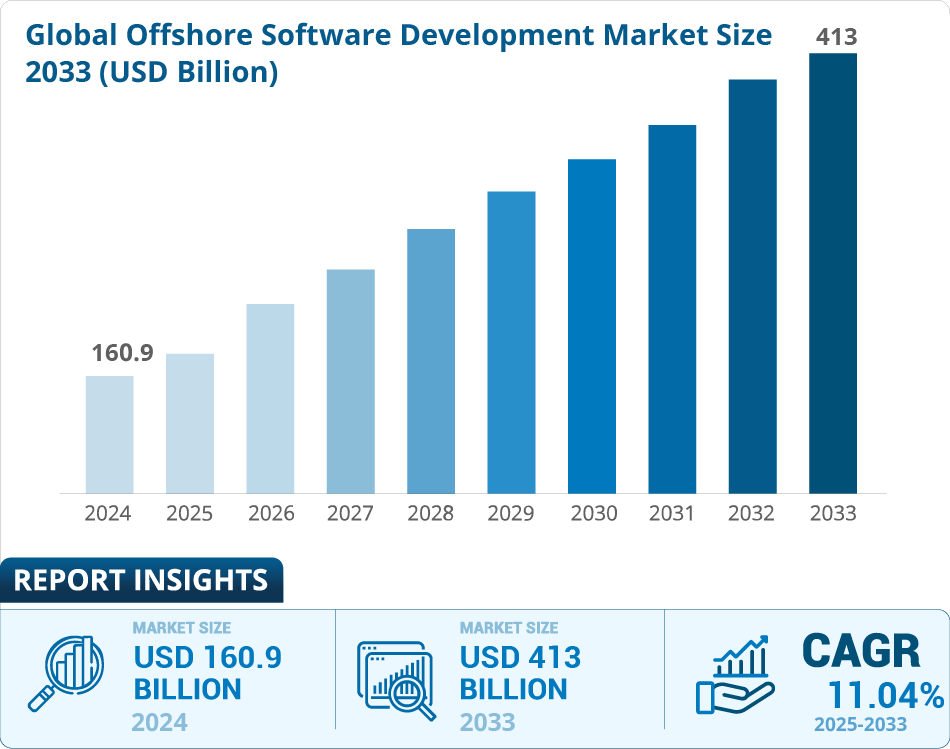
According to a report by Business Research Insights, the offshore software development market size is valued at approximately USD 198.48 billion in 2026 and is expected to reach USD 509.45 billion by 2035, growing at a compound annual growth rate (CAGR) of about 11.04% from 2026 to 2035.
With that on table, if you’re also someone trouble by these questions:
- I am leading a digital transformation initiative and need offshore software development consultants who can help us reduce cost while accelerating delivery timelines
- we are evaluating offshore development partners who can provide full-cycle software development services with skilled developers and architects
- I am looking for trusted offshore software development experts and companies who can act as long-term technology partners for our product roadmap
- we are evaluating offshore software development companies that offer dedicated developers and consultants with strong compliance and security practices
Then, in this blog you will learn how offshore software development works, what it may cost in 2026, where businesses are hiring, what risks to watch, and how to make smarter decisions for long-term growth.
What Is Offshore Software Development?
Offshore software development is the practice of hiring a software team located in another country to design, build, test, or maintain digital products. Businesses usually choose this model when they need skilled talent, faster execution, or better cost control without expanding internal hiring. It can support startups launching new products and enterprises managing large delivery pipelines.
In simple terms, a company keeps ownership of the product while an external team handles some or all development work from an overseas location. This may include mobile apps, web platforms, AI SaaS products, internal tools, modernization projects, or long-term product support. Many businesses use offshore software development to move faster when local hiring becomes slow or expensive.
The model has evolved far beyond low-cost coding support. Today, offshore teams often contribute to architecture planning, managing UI/UX design cost, cloud setup, quality testing, product scaling, and ongoing improvements. When managed well, it becomes an extension of the core business team rather than a separate vendor relationship.
A successful offshore setup depends on clear goals, communication routines, delivery ownership, and strong project visibility. Businesses that treat offshore teams as strategic partners usually see better outcomes than those using them only for short-term task execution.
Why Businesses Still Choose Offshore App Development in 2026
Local hiring remains expensive in many markets, and skilled engineers are still hard to secure quickly. At the same time, product roadmaps move faster than internal hiring cycles. That is why many companies continue to rely on offshore software development when they need speed, flexibility, and dependable execution.
The benefits of hiring offshore software development experts and dedicated teams often become clearer when deadlines tighten, hiring stalls, or expansion plans accelerate.
1. Faster Access to Skilled Talent
Many businesses lose momentum while trying to fill open technical roles for months. Offshore teams help reduce that delay by providing ready talent across development, testing, design, and support functions. This allows internal leaders to focus on product direction instead of constant hiring pressure.
Key reasons this matters:
- Faster onboarding than traditional hiring cycles
- Access to broader skill sets across technologies
- Less pressure on internal recruiters
- Easier support for urgent delivery needs
2. Better Cost Control Without Slowing Growth
Hiring locally can increase payroll costs, benefits costs, and infrastructure spending. Offshore models often help companies manage budgets while still moving product work forward. This is especially useful for startups and mid-sized firms protecting runway or margins.
Practical advantages of offshore software development include:
- Lower team expansion costs
- Flexible monthly resource planning
- Reduced overhead tied to internal hiring
- More room for product investment elsewhere
3. Easier Team Scaling During Growth Phases
Growth rarely happens in a straight line. Some quarters need rapid hiring, while others need leaner operations. Offshore teams give businesses room to scale capacity up or down based on active priorities without rebuilding internal structures each time.
This usually helps through:
- Quick expansion during launches
- Controlled scaling after funding rounds
- Smaller teams during slower cycles
- Flexible support for parallel projects
4. Strong Support for Modern Product Builds
Many companies now need faster execution for AI platforms, SaaS tools, customer portals, and internal systems. That demand has increased interest in offshore software development services for AI and SaaS product development where speed and specialized execution matter.
Common use cases include:
- SaaS MVP development
- Product modernization projects
- Ongoing feature releases
- QA and maintenance support
5. Strategic Guidance Beyond Coding
Businesses often need more than developers. They need planning support, delivery structure, and execution discipline. The role of offshore software development consultants in digital transformation becomes valuable when companies are modernizing systems or launching new revenue channels.
That support can include:
- Delivery planning and roadmap alignment
- Team structure recommendations
- Process improvement guidance
- Long-term scaling strategies
Offshore demand in 2026 is not only about lower cost. It remains strong because businesses need faster execution, flexible capacity, and dependable talent access. Companies that use the model strategically often turn hiring challenges into delivery momentum.
How Offshore Software Development Differs from Nearshore, Onshore, and In-House Approaches
Every hiring model supports a different business priority. Some companies need faster scaling, some value closer collaboration, and others want full internal ownership. The offshore development team vs in-house developers comparison for software project becomes more useful when you review each model through practical factors:
1. Cost, Hiring Speed, and Talent Access
Budget planning is rarely limited to hourly rates alone. Companies also need to know how quickly a team can start and whether the hiring model opens access to the right skills. These three factors often shape delivery momentum more than price alone.
|
Model |
Typical Cost Range |
Hiring Speed |
Talent Access |
|---|---|---|---|
|
Offshore Development |
Often lower to moderate depending on region and scope |
Usually faster through established vendors |
Broad global talent pool |
|
Moderate in many markets |
Often faster than local hiring |
Strong regional talent access |
|
|
Onshore Development |
Often higher due to local market rates |
Moderate depending on talent availability |
Limited to domestic hiring market |
|
In-House Team |
Higher long-term cost due to salaries and overhead |
Slower when recruiting from scratch |
Depends on hiring brand and local market |
2. Communication, Time Zone, and Control
Smooth execution depends on more than technical skill. Daily coordination, response time, and decision ownership can affect project speed just as much as engineering quality. This view helps businesses understand how each model operates during active delivery.
|
Model |
Time Zone Overlap |
Communication Ease |
Control Level |
|---|---|---|---|
|
Offshore Development |
Partial overlap, planned schedules help |
Strong with clear workflows and ownership |
Medium to high |
|
Nearshore Development |
Usually stronger overlap |
Easier real-time collaboration |
Medium to high |
|
Onshore Development |
Full overlap in most cases |
Very smooth day-to-day coordination |
High |
|
In-House Team |
Full overlap |
Direct internal communication |
Highest |
3. Scalability, Flexibility, and Management Effort
Growth plans can change quickly. A business may need ten engineers this quarter and three next quarter. Some models adapt faster than others, while some require stronger internal leadership to stay productive during expansion.
|
Model |
Scalability |
Flexibility |
Management Need |
|---|---|---|---|
|
Offshore Development |
High for expanding teams quickly |
Strong through dedicated offshore development team models |
Needs active planning and communication |
|
Nearshore Development |
High for regional growth plans |
Strong |
Moderate |
|
Onshore Development |
Moderate based on budget |
Moderate |
Lower than distributed external teams |
|
In-House Team |
Slower due to hiring cycles |
Lower because teams are fixed internally |
Requires internal leadership capacity |
4. Best Fit Use Cases and Long-Term Value
The right model often depends on where your business stands today and where it plans to go next. Some structures work better for rapid launches, while others support steady ownership and deeper internal capability over time.
|
Model |
Best Fit For |
Long-Term Value |
|---|---|---|
|
Offshore Development |
Fast growth, cost control, product scaling, offshore software development services |
High when managed with clear goals |
|
Nearshore Development |
Agile collaboration, shared work hours, regional expansion |
Strong for communication-heavy projects |
|
Onshore Development |
Local compliance needs, close collaboration, market-specific work |
Moderate to strong depending on budget |
|
In-House Team |
Core products, strategic ownership, internal innovation |
High for businesses with stable hiring capacity |
Strong decisions usually come from matching business needs with the right operating model. Many companies combine internal teams with offshore software development companies to gain speed, wider talent access, and delivery flexibility without depending on a single hiring path.
Still Unsure Which Model Fits?
Get expert guidance before budget and hiring mistakes slow your roadmap
Compare My OptionsOffshore Software Development vs Traditional Outsourcing
Many businesses use these terms as though they mean the same thing, yet they usually serve different operating goals. For businesses asking, “we are growing SaaS company and looking to reduce development costs by hiring an offshore software development team with experienced developers and consultants for long-term product scaling but before that we want to know how it truly stands out.” Here’s you answer:
|
Aspect |
Offshore Software Development |
Traditional Outsourcing |
|---|---|---|
|
Primary Focus |
Long-term product delivery and team extension |
Delegating specific tasks or defined projects |
|
Team Integration |
Works closely with internal product and leadership teams |
Often operates separately with limited daily involvement |
|
Product Knowledge Growth |
Improves over time as the team stays involved |
May reset with each new project or vendor cycle |
|
Delivery Style |
Continuous releases, roadmap support, iterative progress |
Milestone-based handovers or fixed deliverables |
|
Strategic Contribution |
Can support planning, product thinking, and scaling goals |
Usually centered on execution of assigned scope |
|
Relationship Duration |
Commonly structured for ongoing collaboration |
Often short-term or project-specific |
|
Team Consistency |
Stable dedicated members in many models |
Team composition may shift by project need |
|
Best Fit |
SaaS growth, evolving products, long roadmaps |
One-time builds, overflow work, isolated tasks |
|
Process Maturity |
Strong fit for agile offshore software development company models |
Commonly tied to vendor-led delivery methods |
|
Business Value |
Expands internal capability over time |
Solves immediate execution needs quickly |
Offshore software development often delivers more value when the goal is sustained product growth, not one-time output. Traditional outsourcing still has a place, yet companies planning continuous releases usually benefit more from deeper team alignment and retained product knowledge.
Top Global Destinations for Offshore App Development in 2026
Talent markets no longer compete only on hourly rates. Businesses now evaluate delivery maturity, product thinking, communication strength, time zone fit, and long-term reliability.
For businesses wondering, how to choose offshore software development experts for custom product development becomes easier when countries are grouped by the value they commonly deliver instead of being treated as one-size-fits-all options.
- A. Cost-Efficient and Scalable Delivery Markets
1. India
India remains one of the most established destinations for offshore software development because of its large engineering workforce, mature vendor ecosystem, and ability to scale teams quickly. Businesses often rely on India for long-term delivery capacity, product roadmaps, and dependable execution across multiple technologies. It is also a strong market for AI integration services and enterprise growth initiatives.
- Best Fit For: SaaS platforms, offshore application development, QA teams, cloud support, enterprise builds, product maintenance
- Industries Served: FinTech, Healthcare, Retail, Logistics, EdTech, Manufacturing
2. Vietnam
Vietnam continues to gain attention for competitive pricing, energetic talent pipelines, and strong momentum in digital product work. Many startups and mid-sized companies use Vietnam for fast-moving product releases and mobile-first solutions. It has become a practical destination for mobile app development services and startup execution teams.
- Best Fit For: MVP launches, mobile products, frontend builds, QA, startup delivery, offshore programming
- Industries Served: eCommerce, Gaming, Education, Travel, Logistics, Consumer Tech
3. Argentina
Argentina is valued for skilled developers, strong communication, and timezone alignment with North American businesses. Companies that need continuous collaboration often consider Argentina for agile product delivery and customer-facing platforms. It is also attractive for web development and release-driven SaaS teams.
- Best Fit For: SaaS releases, web platforms, agile squads, UI-focused products, support teams
- Industries Served: SaaS, Retail, Media, Finance, Education, Healthcare
- B. Premium Engineering and Product Strategy Markets
1. USA
The USA remains a strong destination for businesses that prioritize product strategy, domain expertise, and advanced innovation support. While it is not a low-cost market, many companies engage U.S.-based teams for leadership-driven execution, regulated platforms, and advanced solutions involving generative AI or large transformation programs.
- Best Fit For: Product strategy, regulated systems, AI app development, innovation programs, enterprise modernization
- Industries Served: Healthcare, Finance, LegalTech, Insurance, Government, Enterprise SaaS
2. UK
The UK is known for strong consulting maturity, reliable business communication, and expertise in regulated industries. Businesses serving European markets often work with UK teams for high-trust delivery models and planning-heavy engagements. It is also relevant for companies seeking AI consulting services and premium offshore product development support.
- Best Fit For: Product consulting, compliance systems, enterprise platforms, transformation programs, premium delivery
- Industries Served: FinTech, Healthcare, LegalTech, Retail, Insurance, Public Sector
3. Poland
Poland has built a reputation for high engineering standards, dependable delivery discipline, and strong technical education. Companies needing quality-focused teams often consider Poland for platform engineering and advanced software initiatives. It is also respected for AI automation services and technically complex builds.
- Best Fit For: Platform engineering, backend systems, enterprise tools, cloud products, modernization work
- Industries Served: FinTech, Cybersecurity, Healthcare, SaaS, Automotive, Manufacturing, eCommerce
- C. Specialized Talent and Advanced Build Markets
1. Ukraine
Ukraine remains respected for deep engineering capability, product mindset, and experience in complex software builds. Many global companies continue to value Ukrainian teams for architecture-led projects and long-term product scaling where technical depth matters.
- Best Fit For: SaaS products, architecture builds, DevOps support, product scaling, custom software development
- Industries Served: FinTech, Gaming, Media, Logistics, Healthcare, Martech
2. Belarus
Belarus has historically been recognized for strong technical education and disciplined software delivery. Businesses that need engineering-focused execution often consider Belarus for backend systems, enterprise products, and technically demanding support engagements.
- Best Fit For: Backend engineering, enterprise systems, data platforms, maintenance teams, offshore software outsourcing
- Industries Served: Banking, Telecom, Manufacturing, Retail, SaaS, Transportation
The best destination is the one that matches your roadmap, collaboration style, budget expectations, and product complexity. Businesses that evaluate countries by delivery strengths rather than headline rates usually make stronger long-term offshore decisions.
Hire Talent Where Results Happen
Find the right country fit for speed quality and long-term growth
Find My Best MarketHow Much Does Offshore Software Development Cost in 2026?
Budget planning usually starts long before vendor discussions begin. Leaders want realistic numbers, not vague ranges. For CTO, evaluating offshore software development companies to build and scale our enterprise platform cost-effectively while maintaining engineering quality and delivery speed is a common concern today. A practical estimate starts by looking at location, team structure, hiring model, and delivery scope rather than chasing the lowest quote.
The cost of offshore software development team and developers in 2026 depends on whether you need a small MVP squad, a long-term product team, or specialists for one delivery phase. Companies using offshore software development outsourcing models often control costs better when scope, ownership, and priorities are clearly defined from the start.
1. Offshore Software Development Cost by Country in 2026
Country pricing often reflects more than labor cost. Engineering maturity, communication standards, project management strength, and demand for senior talent can all shape rates. This table gives broad planning ranges for businesses evaluating reliable delivery markets.
|
Country |
Typical Hourly Rate |
Typical Monthly Cost Per Developer |
|---|---|---|
|
India |
$25 - $55 |
$4,000 - $8,500 |
|
Poland |
$45 - $90 |
$7,000 - $14,000 |
|
Ukraine |
$40 - $80 |
$6,500 - $12,500 |
|
Belarus |
$35 - $70 |
$5,500 - $11,000 |
|
Vietnam |
$25 - $50 |
$4,000 - $8,000 |
|
Argentina |
$35 - $75 |
$5,500 - $11,500 |
|
USA |
$90 - $170+ |
$14,000 - $26,000+ |
|
UK |
$80 - $160+ |
$12,500 - $24,000+ |
2. Cost by Team Size and Delivery Need
Many companies underestimate how team composition changes total spend. One senior developer costs less than a poorly balanced five-person team with unclear ownership. The right structure depends on roadmap pace, release targets, and internal leadership availability.
|
Team Structure |
Typical Monthly Budget |
Best Use Case |
|---|---|---|
|
1 Developer + PM Support |
$6,000 - $12,000 |
Small fixes, validation stage |
|
2-3 Member MVP Team |
$15,000 - $35,000 |
Startup launch, early product build |
|
5 Member Product Team |
$30,000 - $70,000 |
SaaS growth, continuous releases |
|
8+ Member Engineering Team |
$60,000 - $140,000+ |
Enterprise scaling, multi-module roadmap |
This is why many founders seek offshore software development experts for startups and MVP development when they need controlled spending during early growth.
3. Cost by Role in an Offshore Team
Project budgets also depend on the mix of specialists involved. A backend-heavy platform may need different investment than a mobile-first product. Role planning prevents overspending on resources you do not need yet.
|
Role |
Typical Monthly Cost |
|---|---|
|
Frontend Developer |
$4,500 - $9,000 |
|
Backend Developer |
$5,000 - $10,500 |
|
Full Stack Developer |
$5,500 - $11,000 |
|
QA Engineer |
$3,500 - $7,000 |
|
UI/UX Designer |
$4,000 - $8,000 |
|
Project Manager |
$6,000 - $12,000 |
|
DevOps Engineer |
$6,500 - $13,000 |
Companies using hire offshore software developers models often start lean, then add specialists once traction improves.
What Increases Offshore Software Development Cost
Budgets rise when project complexity increases. Security-heavy platforms, urgent timelines, and advanced integrations usually need more senior talent and tighter delivery management. Businesses using offshore IT development services should plan for these cost drivers early.
|
Cost Driver |
Budget Impact |
|---|---|
|
Senior Developers |
Higher rates |
|
Faster Delivery Timelines |
More resources needed |
|
Complex Integrations |
Added engineering effort |
|
Compliance Requirements |
Extra QA and documentation |
|
24/7 Support Needs |
Expanded staffing |
|
Frequent Scope Changes |
Rework and delays |
How to Control Cost Without Hurting Quality
Reducing spend should never mean reducing standards. Smart companies manage cost through planning, team design, and milestone discipline rather than picking the cheapest offshore software company available.
|
Smart Move |
Why It Helps |
|---|---|
|
Start With Core Team |
Avoids early over-hiring |
|
Prioritize MVP Scope |
Focuses spend on essentials |
|
Use Dedicated Team Model |
Better continuity and efficiency |
|
Set Clear Sprint Goals |
Reduces waste and rework |
|
Add Specialists Later |
Keeps burn rate controlled |
Many businesses working with an offshore software development firm see stronger returns when budgets are tied to roadmap milestones instead of open-ended staffing.
The right offshore budget is rarely the lowest number on a proposal. Strong outcomes usually come from matching spend with product stage, team mix, and delivery goals. Companies that plan carefully often gain speed, quality, and better long-term value from offshore product development team partnerships.
Know The Real Budget First
Get practical cost clarity before proposals inflate your spending
Estimate My BudgetHow to Hire an Offshore Software Development Team in 8 Steps
Many businesses rush into vendor talks before defining what success should look like. That usually leads to delays, rework, or mismatched expectations. Leaders often ask how to hire offshore software development team for startups and enterprises when growth plans depend on speed, quality, and dependable execution.
A smarter route is to follow a clear hiring process that reduces risk before the first sprint begins.
1. Define Business Goals and Delivery Scope
Start with clarity on what you need the team to achieve. Some companies need a new product launch, while others need support for existing systems or offshore software product development. Clear goals help you avoid over-hiring or hiring the wrong skill set.
Focus on defining:
- Product stage and roadmap priorities
- Timeline expectations
- Budget range
- Required roles and seniority
- Internal owner for decisions
2. Decide the Right Team Model
Not every project needs a large, dedicated team from day one. Some need one senior engineer, while others need a complete squad with design and QA support. Matching scope with the right model improves efficiency.
Common options include:
- Single developer for short-term needs
- Small team for MVP software development
- Dedicated product team for long roadmaps
- Specialists for short execution phases
- Ongoing offshore development team services
Also Read: Top MVP Development Companies in USA
3. Shortlist Relevant Offshore Partners
Look for firms with real experience in your product category, not just broad service claims. Strong offshore development companies usually show delivery maturity, clear communication, and long-term client relationships.
Review these signals:
- Relevant case studies
- Similar project experience
- Stable delivery teams
- Transparent engagement process
- Strong client feedback
4. Review Technical and Product Capability
A polished sales process should never replace capability checks. Ask how the team handles architecture decisions, release planning, quality assurance, and changing priorities. Reliable offshore software engineering services should show practical thinking, not vague promises.
Assess areas such as:
- Code quality practices
- Product planning approach
- Testing workflow
- Documentation habits
- Security awareness
5. Evaluate Communication and Working Style
Projects fail more from poor communication than poor coding. You need a team that responds clearly, asks smart questions, and works with structure. Strong offshore software development consultants often stand out during early conversations.
Watch for:
- Clear meeting communication
- Timely responses
- Ownership mindset
- Structured updates
- Practical problem solving
6. Start With a Pilot Sprint
A small paid trial reveals more than long proposal decks. Use a pilot sprint to test collaboration, delivery speed, quality standards, and ownership before larger commitments. Many businesses use this step before scaling with an offshore development company.
Pilot goals can include:
- One feature delivery
- Bug cleanup cycle
- Design prototype with UI/UX design support
- Code review and process test
- Sprint communication review
Also Read: Top UI/UX Design Companies in USA
7. Finalize Governance and Delivery Rules
Good teams still need clear operating rules. Define who approves priorities, who owns timelines, and how progress will be measured. This prevents confusion after onboarding begins.
Set expectations around:
- Weekly sprint planning
- Reporting cadence
- Escalation path
- Delivery milestones
- Access and security controls
8. Scale Gradually with Proven Performers
Once the first phase works, grow the team based on roadmap demand. Many companies begin lean, then expand after seeing results. This is common among offshore development experts for startups and enterprise buyers alike.
Growth often includes:
- Adding QA after core development starts
- Expanding frontend and backend capacity
- Bringing in DevOps support
- Creating product pods
- Extending long-term delivery coverage
Strong offshore hiring rarely comes from quick vendor selection. It comes from clear scope, careful validation, and phased scaling. Businesses that follow a disciplined process usually gain stronger delivery outcomes and fewer surprises after onboarding.
Best Offshore Engagement Models
The right offshore partner is only one part of the decision. The structure of the engagement often has a bigger impact on speed, accountability, and long-term results. Many businesses invest in offshore software development but underperform because the working model does not match their roadmap, internal bandwidth, or delivery style. A clear engagement model helps you use talent more effectively from day one.
1. Dedicated Team Model
This model gives you a committed team that works on your product over an extended period. It is widely used by companies planning continuous releases, product scaling, or multi-phase delivery. Many growing firms use this setup when they need stable execution and retained product knowledge.
Best suited for:
- SaaS growth roadmaps
- Long-term product builds
- Continuous feature releases
- offshore software product development
- Internal teams needing steady support
2. Staff Augmentation Model
Staff augmentation adds external developers to your existing team. Your internal managers keep control of priorities while added engineers support delivery capacity. It works well when deadlines are tight or hiring takes too long.
Best suited for:
- Extra frontend or backend capacity
- Short-term delivery pressure
- Specialist skill gaps
- Existing internal engineering teams
3. Fixed Price Project Model
This model works around a defined scope, agreed timeline, and preset budget. It is usually better for smaller projects with stable requirements. Businesses should avoid this model when priorities change frequently.
Best suited for:
- MVP validation projects
- Defined module builds
- Website rebuilds
- Limited-scope upgrades
- Early-stage offshore development service needs
4. Managed Delivery Team Model
Here, the offshore partner handles delivery execution with its own management structure. You focus on business goals while the provider manages planning, staffing, and progress. This can work well when internal leadership bandwidth is limited.
Best suited for:
- Non-technical founders
- Fast-moving product launches
- Teams lacking delivery management
- Expansion into new product lines
- Businesses using offshore software engineering services
5. Build-Operate-Transfer Model
This model starts with an external team that is later transitioned into your own controlled operation. It is more common in larger companies planning long-term offshore capability.
Best suited for:
- Enterprise expansion plans
- Dedicated overseas centers
- Long-term hiring strategies
- Multi-year delivery programs
Quick Comparison of Offshore Engagement Models
|
Engagement Model |
Best For |
Control Level |
Flexibility |
Long-Term Value |
|---|---|---|---|---|
|
Dedicated Team |
Ongoing products and scaling |
High |
High |
Strong |
|
Staff Augmentation |
Extra capacity for internal teams |
High |
High |
Strong |
|
Fixed Price Project |
Clear one-time scope |
Medium |
Lower |
Moderate |
|
Managed Delivery Team |
Limited internal management bandwidth |
Medium |
Moderate |
Strong |
|
Build-Operate-Transfer |
Future owned offshore center |
High over time |
Moderate |
Very Strong |
How to Match the Right Model to Your Stage
Startups often begin lean, while mature companies need stronger structure. Businesses working with offshore development companies usually get better results when the engagement model reflects product maturity, not just budget pressure.
Useful starting points:
- Startup launch: Dedicated small team
- Scaling SaaS product: Dedicated team or managed delivery
- Internal team overload: Staff augmentation
- Defined short project: Fixed price
- Enterprise long-term expansion: Build-operate-transfer
Strong offshore outcomes usually come from using the right model at the right time. A skilled vendor matters, but the engagement structure decides how smoothly work moves, how ownership is handled, and how well the partnership scales.
Structure Decides Delivery Success
Match the right engagement model with your roadmap goals
Recommend My ModelCommon Offshore Software Development Risks (And How to Avoid Them)
Expanding engineering capacity can unlock faster product growth, but unmanaged risks can slow delivery, increase costs, and create avoidable setbacks. Many leaders ask, we are planning to expand our engineering capacity and want to hire offshore development experts and dedicated teams to support continuous product development, what risks should be consider when preparing for scale.
The strongest results usually come from identifying risks early and putting practical controls in place before work begins.
|
Common Risk |
Why It Happens |
How to Avoid It |
|---|---|---|
|
Unclear Requirements |
Features, priorities, or expected outcomes are not clearly defined |
Create written scope, confirm priorities, and review goals before kickoff |
|
Communication Breakdowns |
Updates are inconsistent or instructions are misunderstood |
Set regular meetings, use shared tools, and document decisions clearly |
|
Poor Code Quality |
Delivery moves fast without review standards or testing discipline |
Use code reviews, testing checkpoints, and release approval processes |
|
Missed Timelines |
Planning is unrealistic or dependencies are ignored |
Break work into smaller milestones and monitor progress weekly |
|
Hidden Costs |
Scope expands gradually or additional resources are added late |
Control changes formally and review budgets at fixed intervals |
|
Security Issues |
Access rights, credentials, or data handling are loosely managed |
Apply secure access controls, NDAs, and defined security policies |
|
High Team Turnover |
Vendor resources change often or engagement lacks continuity |
Ask about retention rates, backup staffing plans, and team stability |
|
Low Product Understanding |
Developers receive tasks without business context |
Share product goals, user needs, demos, and roadmap direction |
|
Slow Internal Decisions |
Approvals take too long or ownership is unclear |
Assign decision makers and define response timelines early |
|
Inconsistent Documentation |
Key knowledge stays in chats or with individuals |
Maintain clear specs, process notes, and handover documents |
|
Overengineering Early Releases |
Too many features are added before validation |
Prioritize core functionality and release in stages |
|
Wrong Talent Match |
Skills listed by vendor do not fit real project needs |
Run interviews, technical screening, and short pilot engagements |
Most offshore risks are manageable when handled early. Clear scope, steady communication, quality controls, and strong ownership prevent many common problems before they affect delivery. Businesses that prepare for risks upfront usually gain smoother execution and better long-term outcomes from offshore software development.
What Has Changed in Offshore App Development in 2026
Offshore delivery in 2026 looks more mature, more outcome-driven, and far less focused on low-cost staffing alone. Businesses now expect stronger accountability, faster execution, and better alignment with product goals. The biggest changes reflect how companies buy, manage, and scale offshore software development today.
- Businesses now prefer smaller high-performing teams instead of oversized resource pools.
- Product ownership and business understanding are expected from offshore teams, not only task execution.
- AI-assisted development workflows are improving speed in coding, testing, and documentation.
- Security reviews are happening earlier in vendor selection and onboarding stages.
- Companies are asking for faster ramp-up times with proven onboarding processes.
- Dedicated long-term teams are replacing short-term transactional engagements.
- Outcome-based pricing models are gaining interest over hourly billing alone.
- Strong communication practices now matter as much as technical capability.
- Offshore partners are increasingly supporting SaaS scaling and continuous release cycles.
- More startups are using offshore teams from day one instead of hiring locally first.
- Businesses expect stronger reporting visibility through dashboards and weekly metrics.
- Quality assurance is being integrated earlier instead of treated as a final step.
- Demand is growing for niche specialists in cloud, DevOps, data, and AI-related work.
- Time zone overlap planning has become a standard part of engagement design.
- Vendor selection is now based more on delivery maturity than company size alone.
Offshore software development in 2026 is more strategic than before. Companies now look for reliable partners who can contribute to growth, quality, and speed rather than simply filling open engineering seats.
When Offshore Software Development Is Not the Right Choice
Offshore teams can deliver strong results, but only when the business environment supports clear execution. Some situations need tighter internal control, faster local coordination, or stronger operational readiness. Recognizing those situations early helps avoid delays, rework, and poor hiring decisions.
- When Requirements Change Constantly: Projects with shifting priorities every few days often struggle with remote handoffs. Stable direction is usually needed before offshore execution begins.
- When No Internal Owner Exists: An offshore team still needs someone inside your business to approve priorities, answer questions, and make timely decisions.
- When Real-Time Collaboration Is Essential: Some products need continuous same-hour communication across design, product, and engineering teams. Limited overlap can slow momentum in these cases.
- When Compliance Requires Local Control: Projects involving strict regulatory rules, sensitive customer data, or location-based delivery mandates may need local or tightly controlled execution models.
- When Internal Processes Are Weak: Unclear workflows, missing documentation, and scattered ownership create friction quickly. Strengthening internal operations first often leads to better results later.
- When Budget Expectations Are Unrealistic: Low budgets paired with high expectations usually create quality issues, rushed hiring, or unstable delivery teams.
- When Product Knowledge Lives in One Person: Projects become risky when only one founder, manager, or stakeholder understands how the product works. Shared documentation should come first.
Offshore software development works best when goals are clear, ownership is active, and workflows are organized. When those basics are missing, improving internal readiness first is often the smarter move.
Why Should Businesses Choose Biz4Group for Offshore Software Development?
Biz4Group LLC is a leading offshore software development company that has redefined how businesses approach technology solutions. By leveraging our offshore software development services, you gain access to a highly skilled offshore software development team dedicated to transforming your vision into a powerful digital product.
Our proven track record in delivering innovative solutions, combined with our deep understanding of industry challenges, positions us as the trusted partner for businesses worldwide and as a top software development company in USA.
Why Choose Biz4Group?
1. Expertise Across Domains
Our offshore developers possess extensive expertise in building robust solutions across various sectors. Whether you need offshore custom software development for fintech, healthcare, e-commerce, or real estate, our team consistently delivers outstanding results.
2. Tailored Solutions
We understand that every business is unique. Biz4Group offers customized offshore software development services that align with your specific needs and objectives, ensuring that your digital products not only meet but exceed expectations.
3. Seamless Integration
Our approach is built on fostering close-knit relationships with our clients. Our offshore software development team works as an extension of your in-house staff, ensuring smooth communication, streamlined processes, and faster time-to-market.
4. Commitment to Quality and Innovation
We utilize cutting-edge technologies and best practices to ensure that every project is delivered with uncompromising quality. Our continuous improvement mindset and agile methodologies keep your business competitive and ahead of market trends.
5. Cost-Effective Excellence
By choosing our team, you benefit from cost-effective offshore software development without compromising quality. Our strategic model helps reduce operational costs while driving business growth through innovative technology solutions.
So, partner with Biz4Group LLC, a software development company in Florida, for your business needs and gain a reliable delivery approach focused on growth, efficiency, and long-term success.
Ready For Smarter Offshore Growth?
Work with a team built for quality speed and scale
Start With Biz4GroupConclusion
We hope this blog has given you useful insights into the evolving landscape of offshore software development and how the right delivery model can support growth, efficiency, and innovation. As a leading offshore software development company, we highlight how offshore software development outsourcing can streamline operations and drive innovation, ensuring high-quality solutions at competitive costs. Our proven strategies empower businesses to achieve sustainable growth and digital transformation effectively.
Now, if you want to start your business, you can get in touch with us to hire offshore software developers who are ready to bring your vision to life. Embrace the advantages of global expertise and let our dedicated team help transform your ideas into success in today's competitive market. We are committed to consistently delivering excellence at every step.
FAQ
1. Who should hire offshore developers?
Businesses of all sizes, from startups to large enterprises, can benefit from hiring offshore developers. Companies aiming to scale quickly, reduce costs, or access specialized technical expertise should consider this model as a strategic move to remain competitive in today's digital landscape.
2. When should I consider offshore software development?
Offshore software development is ideal when you need to accelerate time-to-market, manage fluctuating project demands, or enhance innovation with global talent. It is particularly beneficial during digital transformation initiatives and periods of rapid business expansion.
3. How do I choose the right offshore software development partner?
Research potential vendors by reviewing portfolios, client testimonials, and ratings on trusted platforms. A strong partner should demonstrate industry expertise, transparent processes, and a deep understanding of your business needs.
4. What factors influence the cost of offshore software development?
Costs vary based on the engagement model, project complexity, geographical location, team size, and technology infrastructure. Selecting the right offshore development model helps balance cost with high-quality delivery.
5. How can I ensure quality when I hire offshore software developers?
Quality can be maintained through robust communication, regular feedback, and strict quality assurance processes. Partnering with a reputable offshore software development company with proven expertise also plays a crucial role.
