Location :
Orlando, FL, USA
Location :
Orlando, FL, USA +1 (407) 714-1616
 info@biz4group.com

















Imagine a digital system that doesn’t wait for instructions but instead, understands your business goals, learns from real-time feedback, and takes independent actions to get the job done.
Read More
 AI Summary Powered by Biz4AI
What actually kills a chatbot rollout: the AI model, or the platform underneath it?
More often than not, it's the platform. An AI chatbot development platform provides the tools, infrastructure, integrations, and deployment capabilities needed to build, deploy, and manage AI chatbots at scale. While AI models like GPT, Claude, and Gemini power conversations, the platform determines how well those models integrate with your systems, scale across your business, and meet security and compliance requirements.
The data reflects this reality. According to McKinsey's 2025 State of AI report, 88% of organizations now use AI in at least one business function, yet only about one-third have successfully scaled AI across the enterprise. The biggest obstacle isn't the model. It's choosing the right platform.
Selecting the right AI chatbot development platform starts with understanding your business requirements, not simply comparing features. The right choice depends on how well a platform fits your technology stack, integration needs, deployment preferences, security requirements, and long-term AI strategy.
At Biz4Group, we've helped organizations build enterprise AI chatbot solutions across multiple industries. One project that shaped our perspective was the customer service AI chatbot, developed to automate support inquiries, appointment scheduling, order tracking, and payment processing. Although the AI model handled the conversations, the real complexity came later. Connecting enterprise systems, coordinating business workflows, and designing for secure scalability became the biggest implementation challenges. That experience reinforced an important lesson that choosing the right AI chatbot development platform often has a greater impact on success than the AI model itself.
To help you make an informed decision, we've compared the leading AI chatbot development platforms, explained how they work, highlighted the key evaluation criteria, and outlined when a custom-built solution may be the better choice.
AI chatbot development platforms are software solutions that enable businesses and developers to build, customize, deploy, and manage AI-powered chatbots from a single environment. These chatbot development platforms provide the tools to design conversations, connect AI models, integrate business systems, manage knowledge bases, and deploy chatbots across websites, mobile apps, and messaging channels.
Unlike traditional rule-based chatbot builders, modern AI chatbot development platforms leverage large language models (LLMs) such as GPT, Claude, Gemini, and Llama to deliver intelligent, context-aware, and human-like conversations. If you're building a customer support assistant, sales bot, HR assistant, or internal knowledge assistant, an AI chatbot builder simplifies the entire development lifecycle.
If you're evaluating the best chatbot development platform, understanding how these platforms work and the capabilities they offer is the first step toward choosing the right solution.
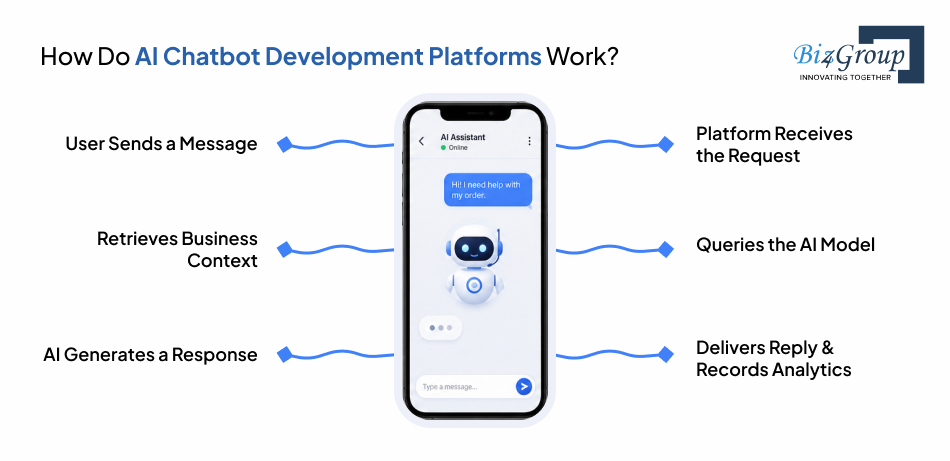
An AI chatbot development platform acts as the bridge between users and the underlying AI model. Instead of interacting directly with a large language model (LLM), users communicate through the platform, which manages the entire conversation workflow.
A typical workflow looks like this:
Rather than retraining the AI model, the platform controls chatbot behavior using system prompts, Retrieval-Augmented Generation (RAG), business rules, and integrations.
Most AI chatbot development platforms include a complete suite of AI chatbot development tools for creating, deploying, and managing conversational AI applications.
Key features include:
Businesses use AI chatbot development platforms to quickly build, deploy, and scale AI chatbots while reducing development time and operational complexity.
Common use cases include:
For larger organizations, an enterprise AI chatbot platform also offers advanced security, governance, collaboration, and compliance features for enterprise-scale deployments.
|
AI Chatbot Development Platforms |
Building a Chatbot from Scratch |
|---|---|
|
Faster development and deployment |
Longer development cycle |
|
Visual development environment |
Everything must be coded manually |
|
Pre-built AI integrations |
Manual AI API integration |
|
Built-in multi-channel deployment |
Custom deployment required |
|
Analytics and monitoring included |
Separate analytics implementation required |
|
Easier maintenance and updates |
Higher maintenance effort |
Using AI chatbot development tools allows organizations to focus on solving business problems instead of building core chatbot infrastructure.
Choosing the best AI chatbot platform depends on your business requirements, technical expertise, integration needs, deployment channels, and scalability goals. The right AI chatbot development platform should align with your use case while providing the capabilities to build, deploy, manage, and scale AI-powered chatbots efficiently.
Let's turn your business goals into an AI solution that improves efficiency, customer experience, and growth.
Talk to Our AI ExpertsIf you're looking for the best AI chatbot platform, there are several excellent options available. Each AI chatbot development platform offers a different mix of features, integrations, and deployment options. Some focus on enterprise automation, while others are built for developers or no-code users.
Below are ten of the leading AI chatbot development platforms and the capabilities that make them stand out.
Google CX Agent Studio is Google's enterprise AI agent development platform designed to build, deploy, and manage intelligent customer-facing and internal AI assistants. Built on Gemini models and integrated with Google Cloud, it enables organizations to create AI agents that automate customer support, business workflows, and enterprise operations. The platform is best suited for businesses already invested in the Google Cloud ecosystem and looking for scalable, enterprise-grade AI solutions.
Key capabilities
Best For: Enterprises building AI agents on Google Cloud
Deployment: Google Cloud
Development Experience: Low-code
Integration Ecosystem: Google Cloud, Vertex AI, BigQuery, Workspace, and enterprise APIs
Microsoft Azure Bot Service is a cloud-based AI chatbot development platform that helps organizations build, deploy, and manage conversational AI across websites, mobile apps, Microsoft Teams, and enterprise applications. Designed for businesses using the Microsoft ecosystem, it integrates seamlessly with Azure AI services, Microsoft 365, and enterprise identity management, making it a strong choice for enterprise automation.
Key capabilities
Best For: Organizations invested in the Microsoft ecosystem
Deployment: Azure Cloud
Development Experience: Pro-code with SDK support
Integration Ecosystem: Azure AI, Microsoft 365, Teams, Power Platform, Dynamics 365
OpenAI provides the AI models and developer APIs that power many of today's advanced AI chatbots and virtual assistants. While it is not a traditional chatbot development platform with visual builders, it enables developers to build highly customized conversational AI applications using GPT models, function calling, Retrieval-Augmented Generation (RAG), and multimodal capabilities. It is ideal for businesses building custom AI products from the ground up.
Key capabilities
Best For: Developers building custom AI applications and agents
Deployment: Cloud APIs (OpenAI or Azure OpenAI)
Development Experience: API-first
Integration Ecosystem: REST APIs, function calling, MCP-compatible tools, third-party frameworks
IBM watsonx Assistant is an enterprise AI chatbot platform built for customer service automation, employee support, and business process optimization. It combines conversational AI, knowledge management, and enterprise security to help organizations deploy reliable AI assistants across digital and voice channels. It is particularly well suited for regulated industries that require governance and compliance.
Key capabilities
Best For: Large enterprises and regulated industries
Deployment: Cloud, Hybrid, or Self-managed
Development Experience: Low-code
Integration Ecosystem: IBM Cloud, enterprise applications, CRM, contact centers, APIs
Amazon Lex is AWS's conversational AI service for building voice and text-based chatbots using the same speech recognition and natural language technologies behind Amazon Alexa. It integrates deeply with AWS services, making it an excellent choice for organizations already building applications on Amazon Web Services.
Key capabilities
Best For: Businesses running applications on AWS
Deployment: AWS Cloud
Development Experience: Low-code with AWS services
Integration Ecosystem: AWS Lambda, Amazon Connect, Bedrock, DynamoDB, AWS ecosystem
Salesforce Einstein Bot is an AI chatbot platform designed to automate customer service and sales interactions within the Salesforce ecosystem. It enables organizations to resolve support requests, qualify leads, and streamline customer engagement while leveraging CRM data and Salesforce automation tools. It is best suited for businesses already using Salesforce products.
Key capabilities
Best For: Businesses using Salesforce CRM and Service Cloud
Deployment: Salesforce Cloud
Development Experience: Low-code
Integration Ecosystem: Salesforce CRM, Service Cloud, Sales Cloud, Flow, Data Cloud
Rasa Platform is an open-source AI chatbot framework designed for organizations that require complete control over their AI infrastructure, data, and deployment environment. Unlike SaaS chatbot builders, Rasa enables developers to build highly customized AI assistants that can be deployed on-premises or in private cloud environments, making it a preferred choice for enterprises with strict security or compliance requirements.
Key capabilities
Best For: Enterprises requiring full control over AI infrastructure and data
Deployment: Self-hosted, Private Cloud, or Hybrid
Development Experience: Pro-code
Integration Ecosystem: APIs, custom backends, enterprise systems, third-party AI models
Botpress is a modern AI chatbot development platform that combines a visual workflow builder with support for leading large language models such as GPT, Claude, Gemini, and Llama. It enables businesses and developers to quickly create AI-powered chatbots while retaining the flexibility to customize workflows, integrate business systems, and manage enterprise knowledge.
Key capabilities
Best For: Startups, SMBs, and development teams building AI agents quickly
Deployment: Cloud or Self-hosted
Development Experience: Low-code with custom code support
Integration Ecosystem: GPT, Claude, Gemini, Llama, APIs, databases, business applications
Cognigy.AI is an enterprise AI automation platform focused on customer service, contact centers, and business process automation. It helps organizations deploy AI agents across voice and digital channels while integrating with enterprise applications and human support teams. The platform is widely used by large organizations seeking enterprise-grade scalability and governance.
Key capabilities
Best For: Enterprise customer service and contact center automation
Deployment: Cloud or On-premises
Development Experience: Low-code
Integration Ecosystem: Contact center platforms, CRM, enterprise applications, APIs
LivePerson Conversational Cloud is an enterprise conversational AI platform that helps businesses automate customer engagement across messaging, chat, and voice channels. Designed primarily for customer support and contact center operations, it combines AI automation with live agent collaboration, analytics, and enterprise integrations to improve customer experience at scale.
Key capabilities
Best For: Large organizations focused on customer engagement and support automation
Deployment: Cloud
Development Experience: Low-code
Integration Ecosystem: CRM platforms, contact centers, messaging channels, enterprise applications
Each of these AI chatbot development platforms serves a different purpose. Some are designed for enterprise automation, while others focus on developer flexibility or low-code development. The best option depends on your business requirements, technical expertise, and deployment goals. Let's look at the key factors for selecting the right AI chatbot development platform.
Every AI chatbot development platform has different strengths. Some prioritize enterprise governance, while others focus on developer flexibility, low-code development, or cloud-native AI. Comparing the platforms across the factors that matter most can help you identify the right solution for your business.
|
Comparison Criteria |
Google CX Agent Studio |
Microsoft Azure Bot Service |
OpenAI |
IBM watsonx Assistant |
Amazon Lex |
Salesforce Einstein Bot |
Rasa Platform |
Botpress |
Cognigy.AI |
LivePerson Conversational Cloud |
|---|---|---|---|---|---|---|---|---|---|---|
|
Best For |
Enterprise customer experience |
Microsoft ecosystem |
Custom AI applications |
Enterprise customer support |
AWS-native applications |
Salesforce users |
Self-hosted enterprise AI |
Rapid AI chatbot development |
Enterprise contact centers |
Customer engagement and messaging |
|
Deployment Model |
Cloud |
Cloud |
API |
Cloud & Hybrid |
Cloud |
Cloud |
Self-hosted & Cloud |
Cloud & Self-hosted |
Cloud |
Cloud |
|
Development Approach |
Low-code |
SDK-based |
API-first |
Low-code |
SDK & Console |
Low-code |
Code-first |
Visual builder + Code |
Low-code |
Low-code |
|
AI Models |
Gemini |
Azure OpenAI, Azure AI |
GPT models |
watsonx.ai, external LLMs |
Amazon Bedrock, Amazon Titan |
Salesforce AI |
BYO LLM |
GPT, Claude, Gemini, Llama |
Multiple LLM providers |
Multiple LLM providers |
|
Knowledge Base & RAG |
Native |
Supported |
Supported through APIs |
Native |
Supported |
Native |
Native |
Native |
Native |
Native |
|
Workflow Automation |
Advanced |
Advanced |
API-based |
Advanced |
AWS workflows |
Salesforce Flows |
Highly customizable |
Visual workflows |
Enterprise workflows |
Conversation workflows |
|
Integrations |
Google Cloud, CRM, APIs |
Microsoft 365, Azure, Teams |
APIs |
IBM ecosystem, APIs |
AWS ecosystem |
Salesforce ecosystem |
APIs, databases |
APIs, Zapier, webhooks |
CRM, CCaaS, enterprise systems |
CRM, messaging, CCaaS |
|
Channels |
Web, mobile, voice, messaging |
Teams, web, mobile, messaging |
Custom |
Web, voice, messaging |
Voice, web, mobile |
Salesforce channels |
Any custom channel |
Web, WhatsApp, Slack, Messenger |
Voice and digital channels |
Messaging and voice channels |
|
Analytics |
Built-in |
Azure Monitor |
API-based |
Advanced dashboards |
CloudWatch |
Salesforce Analytics |
Custom |
Built-in |
Enterprise analytics |
Conversation analytics |
|
Security & Governance |
Enterprise-grade IAM, compliance |
Azure security, Entra ID |
API security |
Enterprise governance |
AWS IAM |
Salesforce security |
Self-managed |
Role-based access |
Enterprise governance |
Enterprise governance |
|
Scalability |
Enterprise |
Enterprise |
High |
Enterprise |
Enterprise |
Enterprise |
High |
High |
Enterprise |
Enterprise |
|
Customization |
High |
High |
Very High |
High |
High |
Medium |
Very High |
High |
High |
Medium |
|
Pricing Model |
Usage-based |
Azure consumption |
Token-based API pricing |
Custom enterprise pricing |
Pay-as-you-go |
Salesforce licensing |
Open-source + Enterprise |
Subscription |
Enterprise pricing |
Enterprise pricing |
|
What Stands Out |
Native Gemini-powered AI agents |
Deep Microsoft ecosystem integration |
Latest frontier AI models |
Enterprise virtual assistants |
Alexa technology and AWS ecosystem |
CRM-native automation |
Complete control and open source |
Fast AI agent development |
Contact center automation |
Enterprise conversational messaging |
The right AI chatbot development platform depends on your business requirements, technology stack, deployment preferences, integration needs, and security requirements. Enterprise organizations often focus on compliance, governance, and scalability, while startups and developers may prioritize flexibility, customization, and faster development. Evaluate these factors to choose a platform that supports your current needs and future growth.
Get expert guidance before you invest in an AI chatbot platform or custom solution.
Connect with Our Team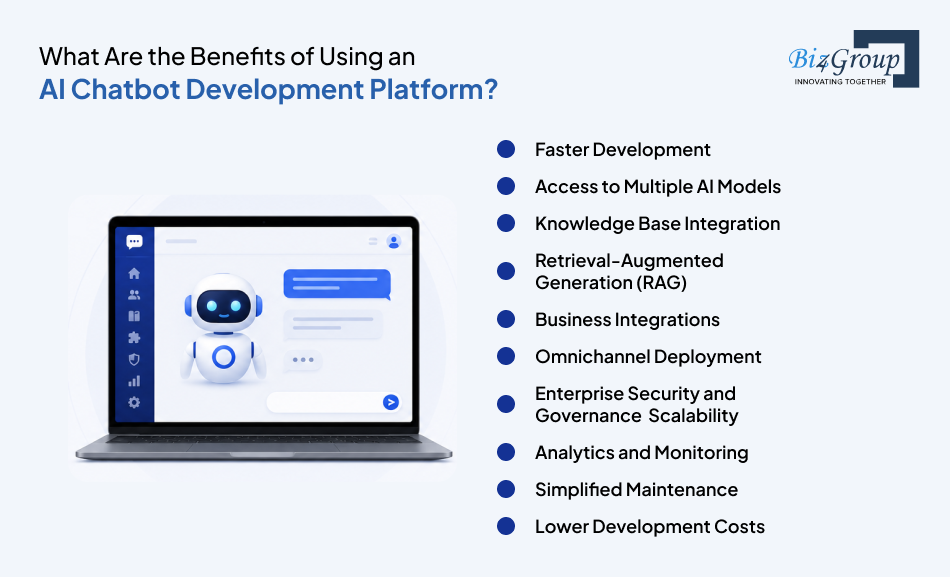
An AI chatbot development platform provides the infrastructure, AI capabilities, and management tools needed to build, deploy, and scale AI-powered chatbots. The table below summarizes the key benefits and the business value they deliver.
|
Benefit |
Business Value |
|---|---|
|
Faster Development |
Accelerates chatbot development with visual builders, templates, and reusable components. |
|
Access to Multiple AI Models |
Supports leading LLMs such as GPT, Gemini, Claude, and Llama for greater flexibility. |
|
Knowledge Base Integration |
Connects websites, documents, FAQs, and databases to deliver accurate, context-aware responses. |
|
Retrieval-Augmented Generation (RAG) |
Improves response quality by retrieving information from business knowledge instead of relying only on the AI model. |
|
Business Integrations |
Connects with CRM, ERP, help desk platforms, databases, APIs, and productivity tools to automate workflows. |
|
Omnichannel Deployment |
Deploys a single chatbot across websites, mobile apps, messaging platforms, and voice channels. |
|
Enterprise Security and Governance |
Supports encryption, SSO, role-based access control, audit logs, and regulatory compliance. |
|
Scalability |
Handles higher conversation volumes, multiple chatbots, multilingual users, and enterprise deployments. |
|
Analytics and Monitoring |
Tracks conversation volume, user satisfaction, resolution rate, and chatbot performance. |
|
Simplified Maintenance |
Updates prompts, workflows, knowledge sources, and integrations without rebuilding the chatbot. |
|
Lower Development Costs |
Reduces engineering effort by providing managed infrastructure and pre-built capabilities. |
An AI chatbot development platform streamlines the entire chatbot lifecycle, from development and deployment to monitoring and optimization. Evaluating these benefits alongside your business requirements will help you select a platform that supports both your current needs and future growth.
While AI chatbots offer significant business benefits, protecting customer data and meeting regulatory requirements are equally important.
AI chatbot development platforms ensure security and compliance through encryption, access controls, governance, monitoring, and regulatory support that help protect sensitive data and meet organizational requirements.
A common question from enterprise buyers is, "I am an enterprise IT director evaluating secure AI chatbot platforms. Which platforms offer enterprise-grade security, compliance, and private deployment?"
Most leading AI chatbot development platforms offer enterprise-grade security, but that's not what sets them apart. The real difference lies in how they deploy and manage your data. If you need complete control, platforms like Rasa and IBM watsonx Assistant offer self-hosted or hybrid deployments. If you're comfortable with the cloud, Azure Bot Service and Google CX Agent Studio leverage the security and compliance capabilities of their respective cloud platforms. Before making a decision, make sure the platform supports your required standards, such as HIPAA, SOC 2, PCI DSS, GDPR, data residency, and self-hosting.
The table below summarizes the key security and compliance capabilities offered by AI chatbot development platforms.
|
Security and Compliance Capability |
Purpose |
|---|---|
|
Data Encryption |
Encrypts data in transit and at rest to protect conversations, documents, and business data. |
|
Identity and Access Management (IAM) |
Controls access using role-based access control (RBAC), single sign-on (SSO), and multi-factor authentication (MFA). |
|
Compliance Support |
Helps organizations meet requirements for GDPR, HIPAA, SOC 2, ISO 27001, PCI DSS, and other applicable regulations. |
|
Audit Logs |
Records user activities, configuration changes, and administrative actions for auditing and monitoring. |
|
Data Privacy Controls |
Manages data retention, anonymization, deletion, and regional data residency policies. |
|
Secure Integrations |
Protects connections with APIs, databases, CRM, ERP, and third-party applications using secure authentication and authorization methods. |
|
Supports approval workflows, model management, version control, and AI usage policies. |
|
|
Threat Detection and Monitoring |
Monitors chatbot activity, detects suspicious behavior, and supports incident response. |
|
Backup and Disaster Recovery |
Protects chatbot data and enables recovery in the event of failures or data loss. |
|
Infrastructure Security |
Secures cloud infrastructure through network isolation, vulnerability management, and regular security updates. |
Evaluating these security and compliance capabilities helps organizations protect sensitive information, meet regulatory requirements, and deploy AI chatbot solutions securely. Now that security is covered, here are the mistakes to avoid.
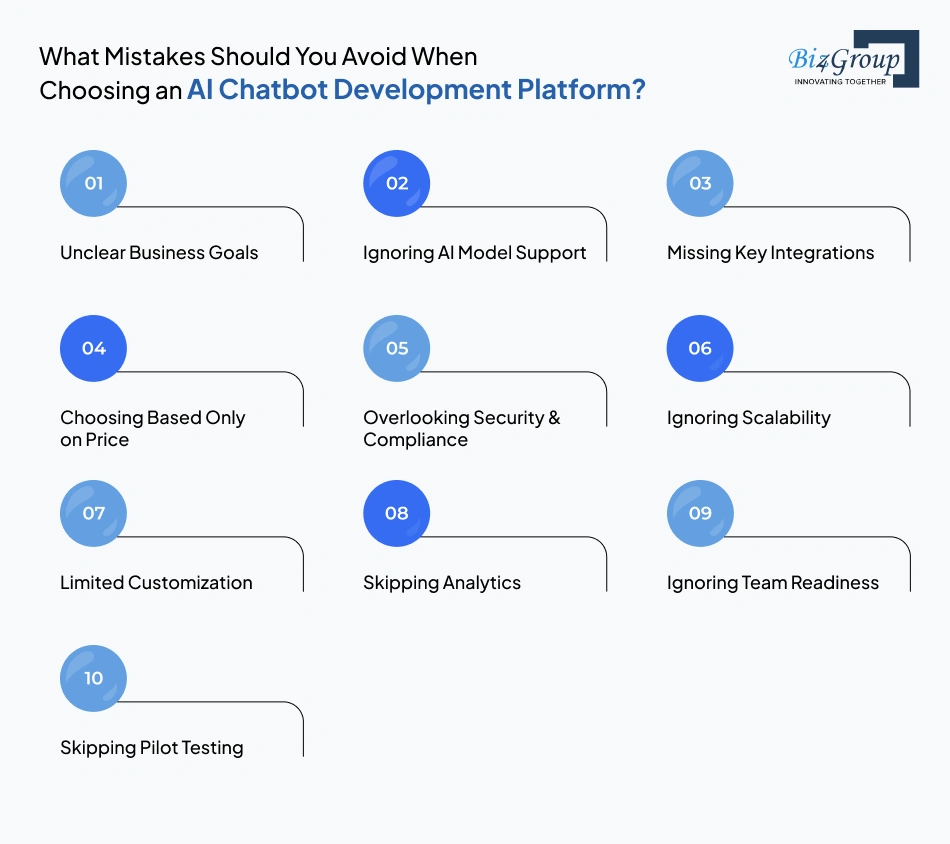
Choosing an AI chatbot development platform without evaluating your business requirements, integration needs, security, and scalability can result in higher costs, limited functionality, and migration challenges. Below are some common mistakes to avoid when evaluating platforms.
Avoiding these common mistakes can help you select an AI chatbot development platform that aligns with your business goals, technical requirements, and long-term growth strategy.
Build an AI solution designed around your business, not the limitations of a generic platform.
Connect with Biz4GroupThe cost of building an AI chatbot using a development platform typically ranges from $5,000 to $100,000+. Depending on the platform, AI model usage, implementation complexity, integrations, deployment scale, and customization requirements.
Businesses are often more concerned with finding the right platform for their specific use case, such as, "I'm a CTO of a SaaS company looking for an AI chatbot platform that integrates with Salesforce and our internal knowledge base. Which platform should I choose, and what will it cost?"
The answer depends on your business requirements rather than a single platform. In this scenario, the total investment would vary based on factors such as conversation volume, AI model usage, Salesforce integration, knowledge base size, security requirements, and the level of customization needed.
The table below provides a realistic estimate of the total first-year investment, including platform licensing, AI usage, implementation, and initial integrations.
|
Business Size |
Typical Investment |
What It Typically Includes |
|---|---|---|
|
Startup / Small Business |
$5,000 to $20,000 |
AI chatbot with basic conversational capabilities, one or two deployment channels, limited integrations, and standard setup. |
|
Mid-Market Business |
$20,000 to $50,000 |
AI chatbot with RAG, CRM or business system integrations, multiple channels, analytics, security, and workflow automation. |
|
Large Enterprise |
$50,000 to $100,000+ |
Enterprise AI assistants with custom workflows, multiple integrations, governance, compliance, dedicated infrastructure, and ongoing optimization. |
These estimates represent the total cost of ownership, not just the platform subscription. AI model consumption, implementation, integrations, customization, maintenance, and ongoing optimization often make up a significant portion of the overall investment.
Although development platforms are often cost-effective, some businesses require capabilities that go beyond what pre-built platforms offer. In such cases, working with an AI chatbot development partner to build a custom solution can be a better fit.
AI chatbot development platforms accelerate development, but they are not designed for every business scenario. Organizations building AI-powered products, implementing proprietary workflows, or integrating with complex enterprise systems often require custom AI chatbot development.
Biz4Group, a leading AI Chatbot development company in USA, helps startups, SMBs, and enterprises build AI chatbot solutions that align with their business goals, technology stack, and long-term product vision. From AI assistants and customer support chatbots to AI-powered products and digital twins, our team delivers solutions designed for real-world business applications.
Key Reasons to Partner with Biz4Group
Here are some AI chatbot and generative AI projects developed by Biz4Group for businesses across multiple industries.
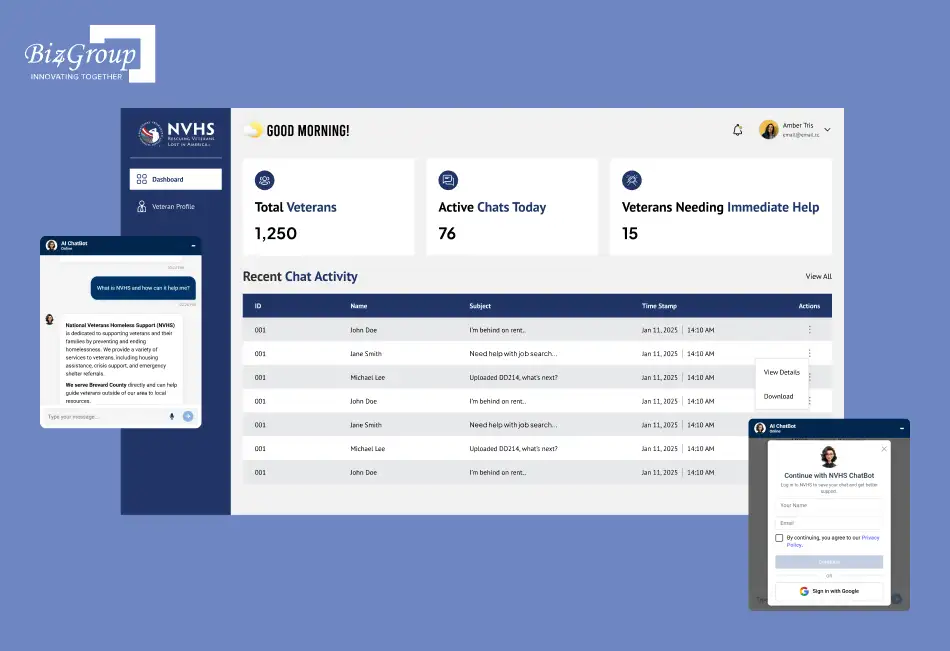
Biz4Group developed an AI-powered chatbot for the National Veterans Homeless Support (NVHS). The chatbot helps veterans find relevant information, explore support programs, and access available resources through natural language conversations, reducing the time required to locate critical assistance.
Key capabilities:
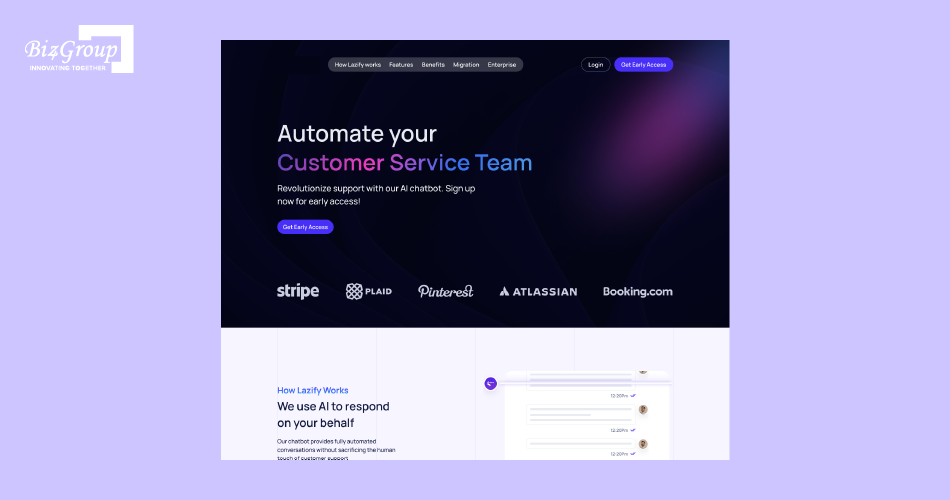
AI chatbot enables businesses to automate customer interactions while maintaining natural, human-like conversations. The solution improves customer engagement, reduces response times, and supports business workflows.
Key capabilities:
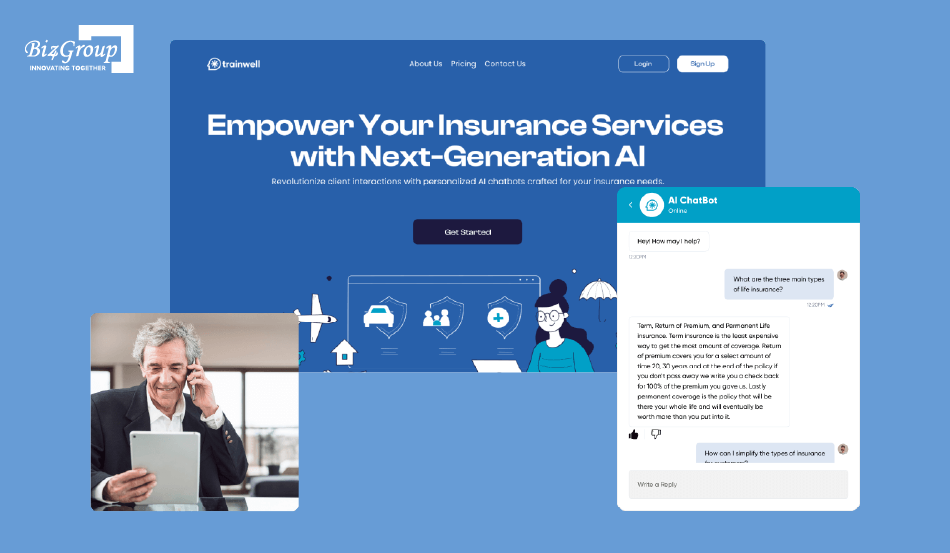
AI-powered insurance chatbot helps insurers automate customer interactions across policy management, claims assistance, and customer support. The solution simplifies insurance processes while delivering faster and more personalized customer experiences.
Key capabilities:
Build AI chatbot solutions tailored to your business with Biz4Group. Our team combines AI engineering, enterprise integration expertise, and custom software development to deliver secure, scalable, and production-ready solutions.
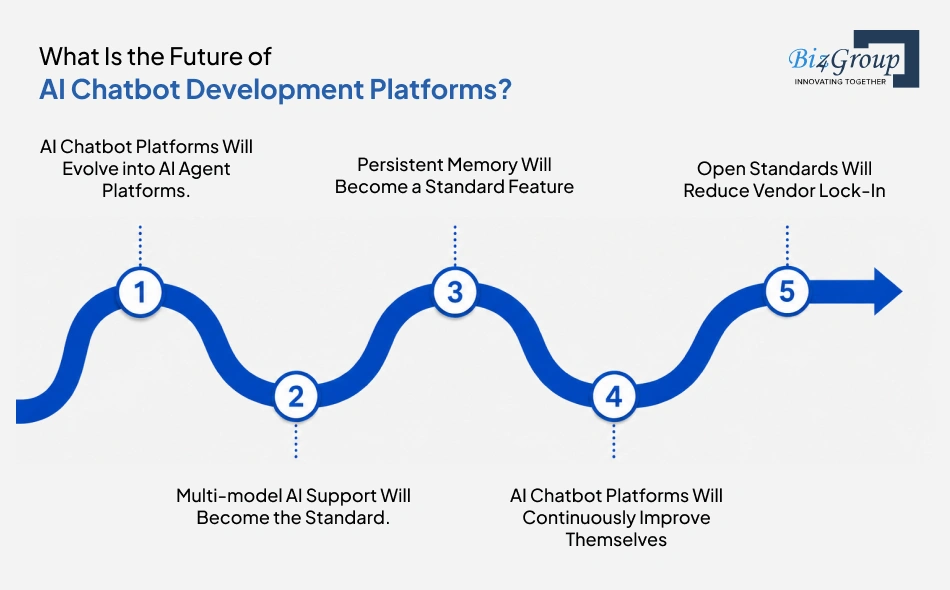
The future of AI chatbot development platforms lies in becoming the foundation for enterprise AI, not just chatbot creation. As organizations adopt AI across multiple business functions, platforms will be evaluated on scalability, governance, integrations, and long-term AI capabilities rather than conversation design alone.
Here's what the future looks like:
Chatbots will become one part of a broader AI ecosystem. The same platform will power customer support bots, internal assistants, and autonomous AI agents across HR, finance, IT, and operations.
Businesses will expect the flexibility to switch between leading AI models such as GPT, Gemini, Claude, and Llama without rebuilding their applications. Model flexibility will become a baseline feature instead of a competitive advantage.
Future AI chatbot platforms will retain context across conversations instead of starting every interaction from scratch. AI agents will remember previous interactions, user preferences, and unresolved issues across channels. This will enable more personalized conversations and long-term customer engagement, making persistent memory a key platform differentiator.
Future AI chatbot platforms will use real conversation data to improve performance automatically. Instead of relying on manual reviews, they will identify failure patterns, optimize prompts, refine retrieval strategies, and adjust escalation rules on their own. This will reduce maintenance effort and improve chatbot accuracy over time.
Standards like Model Context Protocol (MCP) and Agent2Agent (A2A) will improve interoperability between AI platforms. Businesses will be able to connect AI agents across ecosystems more easily. This will reduce migration effort and make platform selection more flexible.
As AI continues to evolve, the best AI chatbot development platforms will be those that can scale beyond conversational experiences and support enterprise-wide AI initiatives with flexibility, security, and intelligent automation.
AI chatbot development platforms have made it easier than ever to build, deploy, and scale intelligent conversational experiences. The right choice depends on your business goals, technical requirements, and long-term AI strategy.
If you need a faster, cost-effective solution with proven capabilities, an AI chatbot development platform is often the right fit. If your business requires advanced customization, complex integrations, or industry-specific functionality, a custom AI chatbot can provide greater flexibility and long-term value.
As AI continues to evolve, the focus will shift from simply building chatbots to creating AI-driven business solutions. Choosing a scalable platform or the right development partner today will help your business adapt, innovate, and maximize the value of AI in the years ahead.
At Biz4Group LLC, we help businesses evaluate, design, and develop AI chatbot solutions that align with their unique requirements. Whether you need guidance selecting the right AI chatbot development platform or want to build a fully customized conversational AI solution, our team can help you transform your ideas into secure, scalable, and production-ready applications.
Your business deserves more than a generic chatbot. Let's build an AI solution that works for you.
The cost typically ranges from $5,000 to $100,000+, depending on the platform, AI model usage, integrations, customization, deployment complexity, and ongoing maintenance. Basic chatbots cost significantly less than enterprise AI solutions with custom workflows and multiple integrations.
The best AI chatbot development platform depends on your business requirements. Google CX Agent Studio and IBM watsonx Assistant are well suited for enterprise AI, Botpress offers a low-code development experience, Rasa provides extensive customization, and OpenAI enables developers to build highly customized AI applications through APIs.
A no-code platform like Botpress is ideal for launching an MVP quickly and affordably. If your product requires unique AI capabilities, advanced integrations, or long-term scalability, custom AI chatbot development is a better investment.
Most modern platforms support leading large language models (LLMs), including GPT, Gemini, Claude, and Llama. Some platforms also support proprietary or self-hosted AI models.
Most platforms improve chatbot accuracy through Retrieval-Augmented Generation (RAG), knowledge base integration, prompt engineering, and business workflows. This enables chatbots to generate responses using up-to-date business information instead of relying only on the AI model's training data.
Yes. Most platforms integrate with CRM systems, ERP software, help desk solutions, databases, APIs, collaboration tools, and cloud services. These integrations enable chatbots to retrieve data, automate workflows, and perform business actions.
Enterprise AI chatbot development platforms typically include encryption, role-based access control, single sign-on (SSO), audit logging, and compliance with standards such as GDPR, HIPAA, and SOC 2. Security capabilities vary by platform.
Look for a platform with API integrations, RAG support, AI agents, multilingual capabilities, workflow automation, and enterprise security. If standard platforms don't meet your requirements, consider a custom AI chatbot solution.
AI chatbot development platforms are widely used across retail, healthcare, banking, education, manufacturing, travel, telecommunications, and SaaS to automate customer support, employee assistance, sales, and operational workflows.
Choose a platform with AI intent detection, help desk integrations, live agent handoff, omnichannel support, and analytics. If your support workflows are highly customized, a custom AI chatbot may deliver better automation and flexibility.

Our website require some cookies to function properly. Read our privacy policy to know more.