 Location :
Orlando, FL, USA
Location :
Orlando, FL, USA +1 (407) 714-1616
 info@biz4group.com

- AI governance platform development enables enterprises to manage AI risk, enforce accountability, and align AI initiatives with compliance and business goals.
- A strong governance approach combines ethics, transparency, and monitoring through responsible AI governance software development.
- Following a phased approach helps enterprises develop AI governance platform for enterprises, starting with an MVP and scaling into full programs.
- Leaders measure success through the ROI of AI governance software for enterprises, including risk reduction, faster AI rollouts, and lower operational effort.
- Strategic decisions around custom AI governance platform development versus off-the-shelf tools determine long-term scalability and control.
- Biz4Group LLC is the best company to develop AI governance platform in USA, offering custom AI governance platform development services, fast MVP delivery, and scalable AI governance solutions for large enterprises and CXOs.
Have you ever wondered why so many enterprise AI projects fail to deliver expected value even after huge investments?
It is not because the technology failed. It is because governance did.
In 2025, only about 25% of organizations had fully implemented AI governance programs, leaving most enterprises wrestling with AI risks and compliance blind spots that can cost millions in business value and reputation loss.
If you are a CXO steering digital transformation, responsible AI governance platform development is one of the most strategic investments you will make this decade. It helps leaders turn AI risk into oversight, trust, and operational resilience.
Too many companies still rely on spreadsheets and ad hoc policies that break when AI activity scales across teams, departments, and geographies. That gap creates blind spots that cost time, money, and strategic advantage.
Learning how to develop AI governance platform for enterprises gives your executive team the power to control risk while driving measurable business outcomes. Today’s most successful leaders see governance platforms as engines that deliver predictable, secure, scalable AI outcomes rather than tech checkboxes.
This guide will help you understand why you should build AI governance and oversight system now rather than later. So, without further ado, let’s begin with the basics.
Understanding AI Governance Platform Development for Enterprise Leaders
At a leadership level, an AI governance platform acts as the command center for everything your organization builds, deploys, and scales with AI.
It brings structure where chaos often creeps in.
Instead of scattered policies, isolated tools, and manual approvals, enterprises use a centralized system to manage AI risk, accountability, ethics, and compliance across the entire AI lifecycle.
What an AI Governance Platform Really Means in Practice
An AI governance platform is a unified software system that helps organizations:
- Track all AI models in use across teams
- Define who owns each AI decision
- Monitor risk, bias, and performance continuously
- Enforce ethical and regulatory policies automatically
- Maintain audit-ready documentation at all times
This is why many enterprises now choose to create AI governance solutions for organizations that operate at scale rather than relying on informal controls.
AI Governance Platform vs Traditional IT and Data Governance
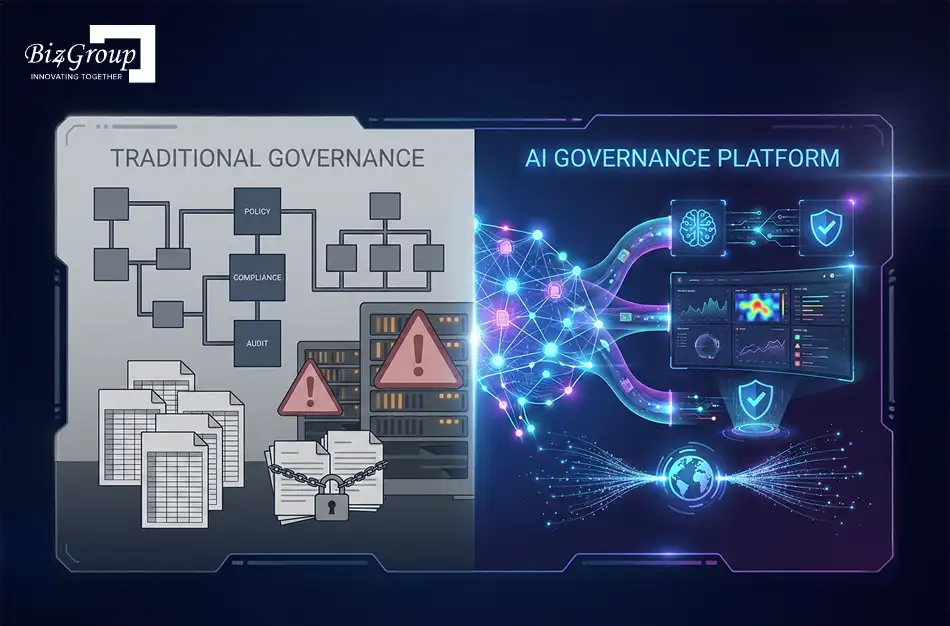
Many CXOs assume their existing IT or data governance frameworks can handle AI.
That assumption often leads to serious gaps.
|
Area |
Traditional IT Governance |
AI Governance Platform |
|---|---|---|
|
Decision logic |
Static rules |
Probabilistic and adaptive |
|
Risk profile |
Predictable |
Dynamic and evolving |
|
Oversight |
Periodic reviews |
Continuous monitoring |
|
Accountability |
System-based |
Model and outcome-based |
|
Compliance |
Manual reporting |
Automated audit trails |
This difference explains why AI governance platform vs manual governance processes is now a boardroom conversation.
AI systems learn, adapt, and influence outcomes in real time. Governance must operate at the same pace.
Why Manual AI Governance Breaks at Enterprise Scale
Manual governance relies heavily on people, documents, and delayed reviews. That approach fails when:
- Multiple teams deploy AI independently
- Models change behavior over time
- Regulations evolve faster than policies
- Leaders lack visibility into AI decisions
As AI usage expands, enterprises need to build AI oversight system for enterprise AI programs that provide real-time visibility and control.
Governance platforms do not slow innovation. They remove uncertainty so leaders can move faster with confidence.
Why Enterprises Must Build AI Risk and Governance Platform for Responsible Growth
AI delivers speed, automation, and scale.
Without governance, it also delivers risk at the same pace.
As AI systems move deeper into business-critical operations, the absence of structured oversight exposes enterprises to financial, legal, operational, and reputational threats. These risks rarely appear overnight. They accumulate quietly until leadership is forced into reactive decisions.
This is where enterprises begin to see the real value of responsible AI governance software development.
Key Business Risks of Ungoverned AI and Their Enterprise Impact
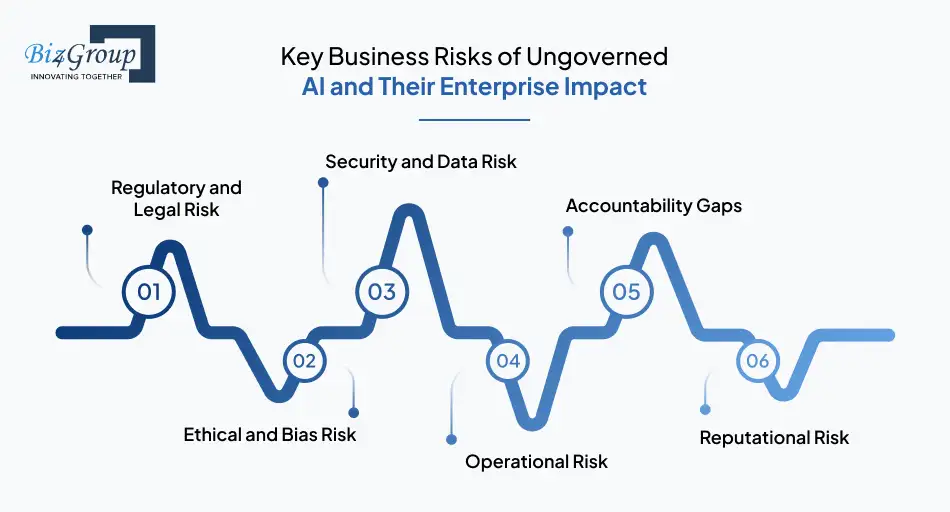
|
Risk Area |
What Goes Wrong Without Governance |
Business Impact |
|---|---|---|
|
Regulatory and Legal Risk |
AI decisions lack traceability and documented controls |
Fines, litigation, regulatory scrutiny, stalled AI initiatives |
|
Ethical and Bias Risk |
Models produce unfair or discriminatory outcomes |
Brand damage, loss of customer trust, public backlash |
|
Security and Data Risk |
AI systems access sensitive data without strict controls |
Data breaches, compliance violations, financial losses |
|
Operational Risk |
Models drift or fail silently over time |
Inaccurate decisions, business disruption, revenue loss |
|
Accountability Gaps |
No clear ownership for AI outcomes |
Leadership exposure, board-level concerns |
|
Reputational Risk |
AI failures become public incidents |
Long-term erosion of brand equity |
Enterprises that delay governance often discover these risks only after damage has already occurred.
Why Responsible AI Governance Benefits Businesses
Risk reduction is only one side of the story.
When organizations build AI risk and governance platform capabilities early, they unlock tangible business advantages that extend beyond compliance.
|
Governance Outcome |
Business Benefit |
|---|---|
|
Centralized AI visibility |
Faster executive decision-making |
|
Continuous monitoring |
Early detection of performance and bias issues |
|
Clear ownership models |
Reduced internal friction and faster approvals |
|
Audit-ready documentation |
Lower compliance overhead |
|
Ethical safeguards |
Stronger customer and partner trust |
This shift allows leadership teams to move from defensive governance to confident AI expansion.
Why CXOs Can No Longer Ignore These Risks
From a CXO lens, ungoverned AI introduces uncertainty into areas that demand precision.
- Boards demand accountability
- Regulators demand transparency
- Customers demand fairness
- Markets punish mistakes quickly
That is why enterprises increasingly create AI governance solutions for organizations that treat governance as a core business function.
Ungoverned AI does not fail loudly.
It fails quietly, then suddenly.
By investing early in responsible AI governance software development, enterprises protect their operations, their brand, and their long-term growth strategy.
Most AI Risks Surface After Deployment. Too Late.
Over 70% of AI risks appear only after systems go live. Governance catches them before they reach customers or regulators.
Build Smart with Biz4GroupKey Regulations and Expectations Shaping AI Governance Platform Development Across Industries
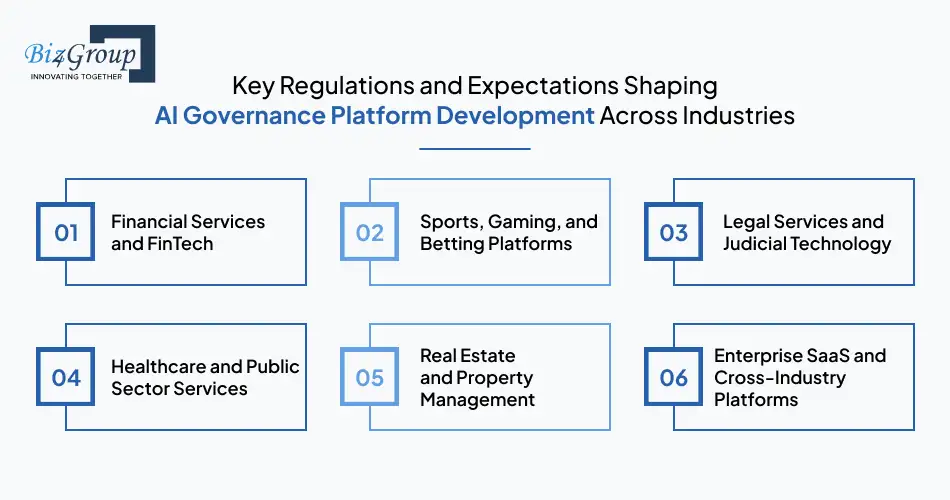
AI governance expectations are not uniform.
They change based on industry risk, data sensitivity, and decision impact.
CXOs planning AI governance platform development must understand how governance requirements differ across sectors. A one-size approach rarely works at enterprise scale.
Below are six industries where AI governance maturity is quickly becoming a competitive requirement.
1. Financial Services and FinTech
Banks, payment platforms, and fintech companies operate under intense regulatory pressure.
AI governance expectations focus on transparency, explainability, and auditability. Risk models, pricing algorithms, and fraud detection systems must provide traceable decision logic. Regulators expect documented controls, bias monitoring, and ongoing validation.
2. Sports, Gaming, and Betting Platforms
Real-time decision systems introduce unique governance challenges. AI models influence pricing, predictions, and user outcomes within seconds.
Governance platforms in this sector must manage data integrity, fairness, real-time monitoring, and accountability under high transaction volumes. Manual governance processes fail quickly at this scale.
Portfolio Spotlight: Sports Betting Platform for Major Global League Games
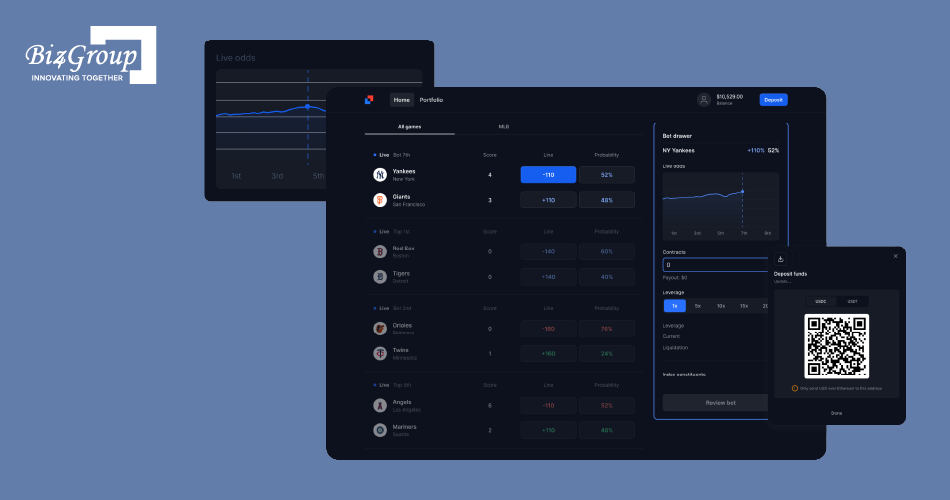
Using our seasoned sports betting app development services, Biz4Group built real-time sports betting platform governance at scale.
- Governed predictive analytics across MLB, CFB, and NFL games
- Real-time monitoring of pricing and data accuracy
- Scalable oversight architecture for high-volume user activity
- Clear audit trails for decision logic in live betting scenarios
This project reflects Biz4Group’s ability to build AI risk and governance platforms, combined with our AI app development skills, in fast-moving, high-stakes environments.
Also read: How to build a sports betting platform like BetDEX?
3. Legal Services and Judicial Technology
Legal AI systems demand absolute accuracy and traceability. Even small errors carry serious consequences.
Governance expectations here center on evidence integrity, accountability, and compliance with legal standards. Platforms must ensure AI outputs remain explainable and verifiable at every stage.
Portfolio Spotlight: Automated Legal Services

With the help of our exceptional legal software development services, Biz4Group governed legal automation web application for evidence and case management.
- Controlled AI-assisted legal workflows
- Structured oversight for evidence tracking and case logic
- Reduced risk of errors through transparent automation
- Audit-ready outputs aligned with legal accountability
This solution demonstrates how Biz4Group helps develop enterprise AI governance frameworks in compliance-sensitive domains.
Also read: How legal workflow solutions transform legal operations?
4. Healthcare and Public Sector Services
AI systems in healthcare and public welfare affect lives directly.
Governance expectations include ethical decision-making, bias mitigation, data privacy, and continuous oversight. Platforms must detect risk early and provide clear escalation paths.
Project Spotlight: AI Chatbot for Personalized Support to Homeless and At-Risk Veterans
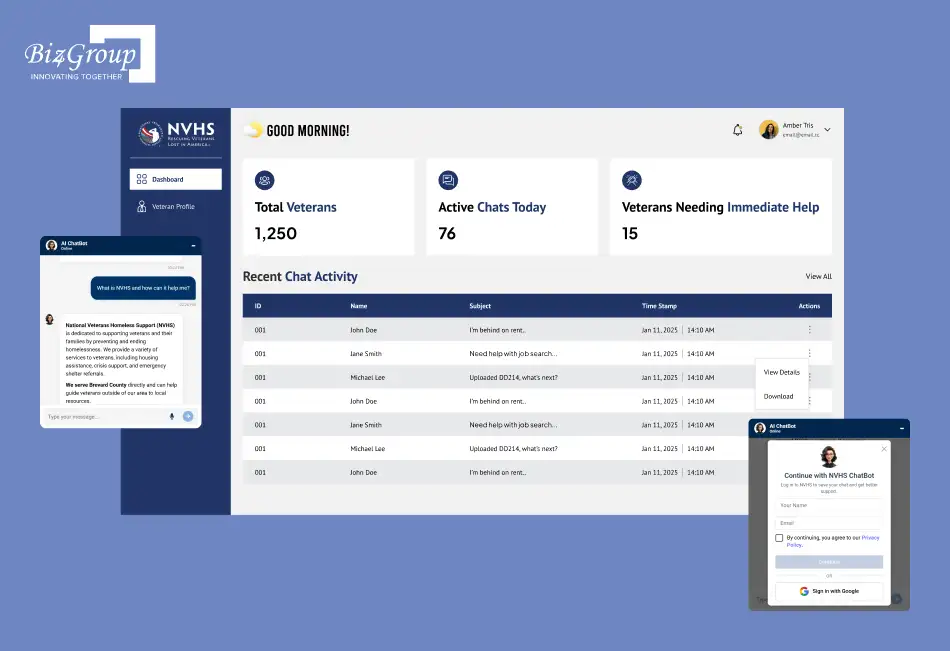
As a trusted AI chatbot development company, Biz4Group worked on ethical AI governance for veteran support and crisis detection.
- Governed conversational AI with real-time crisis detection
- Bias-aware intent recognition and response logic
- Secure, compliant data handling for sensitive populations
- Human oversight through admin dashboards and alerts
This initiative shows Biz4Group’s strength in developing AI governance software to support ethical AI adoption where trust is critical.
Also read: How to develop an AI-based fall detection software for elderly care?
5. Real Estate and Property Management
AI in real estate influences contracts, finances, and legal obligations.
Governance platforms must manage document accuracy, role-based access, financial transparency, and auditability. As AI summaries and insights become common, oversight ensures reliability and compliance.
Project Spotlight: Real Estate Contract Management Tool
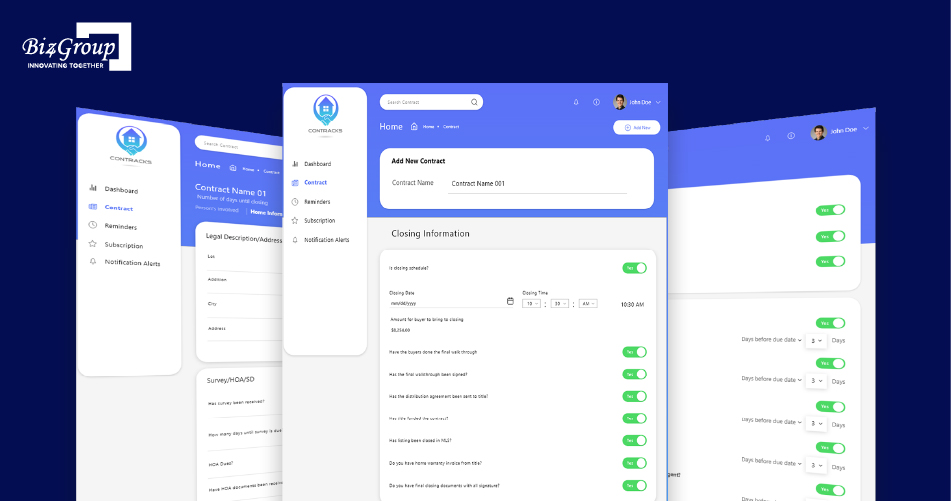
With over 20 years of developing real estate AI solutions (among other industries), Biz4Group handled AI governance for contract intelligence and financial oversight.
- Governed AI-driven contract summarization
- Secure handling of financial and legal data
- Clear ownership across multi-party transactions
- Compliance-ready document workflows
This project highlights Biz4Group’s ability to create AI governance solutions for organizations operating in transaction-heavy environments.
Also read: AI contract management software development guide
6. Enterprise SaaS and Cross-Industry Platforms
Large enterprises using AI across departments face governance fragmentation.
Governance expectations focus on central visibility, consistent standards, and scalable controls. Platforms must unify oversight across HR, finance, operations, and customer systems.
This is where organizations choose to create AI governance platform for enterprise AI programs that scale with business growth rather than restrict it.
Industry context defines AI governance success. Enterprises that align governance platforms with sector-specific expectations move faster, stay compliant, and protect long-term value. Those that ignore industry nuances face rising risk and slower adoption.
Also read: How to build an AI SaaS product and how much does it cost?
Core Pillars of Responsible AI Governance Platform Development for Enterprises
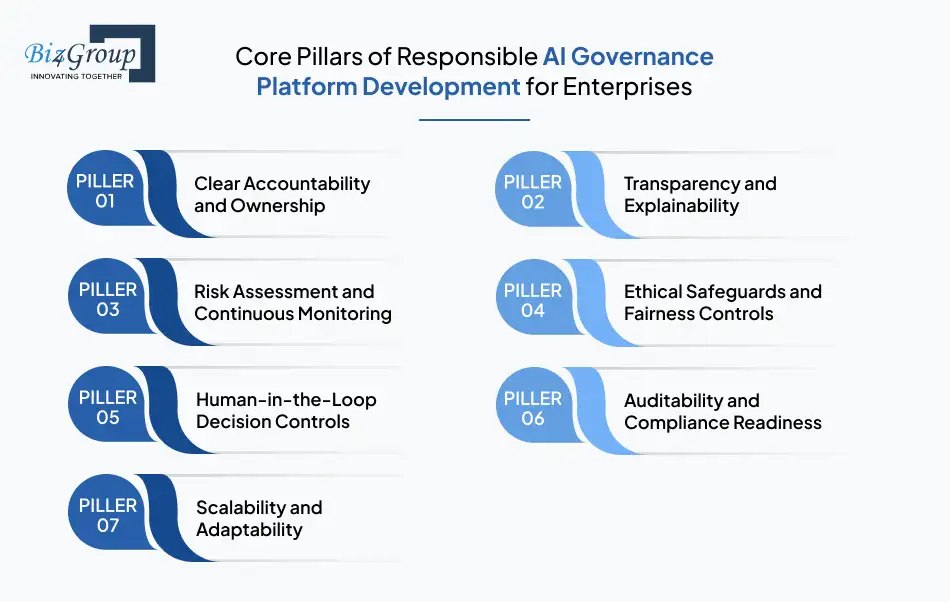
Every successful AI governance platform stands on a few non-negotiable pillars.
When these pillars are weak or missing, governance becomes fragmented, reactive, and difficult to scale.
For CXOs planning AI governance platform development, these pillars define how risk, ethics, and accountability are embedded into everyday AI operations.
Pillar 1. Clear Accountability and Ownership
- Assign defined ownership for every AI model and use case
- Establish decision accountability beyond IT teams
- Align AI ownership with business outcomes and risk exposure
This pillar supports enterprises that aim to build AI governance and oversight system aligned with executive responsibility.
Pillar 2. Transparency and Explainability
- Maintain documentation for model purpose and limitations
- Enable explainable outputs for high-impact decisions
- Support regulatory and audit inquiries with traceable logic
Transparency is foundational when organizations develop AI governance software to support ethical AI adoption.
Pillar 3. Risk Assessment and Continuous Monitoring
- Evaluate AI risk before deployment and during runtime
- Monitor model drift, performance degradation, and bias
- Trigger alerts when thresholds are breached
This pillar is essential to build AI risk and governance platform capabilities at enterprise scale.
Pillar 4. Ethical Safeguards and Fairness Controls
- Identify and mitigate bias across training and inference stages
- Enforce fairness checks aligned with organizational values
- Protect vulnerable user groups from unintended harm
Ethical oversight strengthens trust while enabling responsible AI governance software development.
Pillar 5. Human-in-the-Loop Decision Controls
- Define when human review is mandatory
- Escalate high-risk AI decisions automatically
- Enable override mechanisms for critical outcomes
Human oversight ensures governance supports innovation rather than restricting it.
Pillar 6. Auditability and Compliance Readiness
- Generate audit-ready records continuously
- Maintain logs for decisions, changes, and approvals
- Support internal reviews and external audits effortlessly
This pillar helps enterprises create AI governance platform for enterprise AI programs that remain inspection-ready at all times.
Pillar 7. Scalability and Adaptability
- Support new AI use cases without rebuilding governance
- Adapt to evolving regulations and standards
- Enable governance across departments and geographies
Scalability is what separates temporary fixes from long-term governance strategies.
These pillars are not theoretical ideals.
They are operational requirements for enterprises that want AI growth without chaos.
When embedded correctly, they allow organizations to develop enterprise AI governance frameworks that scale with confidence, compliance, and credibility.
Up next, we will dive into the mechanics behind these pillars.
One Missing Pillar Can Break the Entire System!
Enterprises with incomplete governance frameworks face up to 2x higher compliance and remediation costs as AI scales.
Book a Strategy Call TodayTechnology Stack and Standards to Build AI Governance Platforms for CXOs
A strong governance strategy fails without the right technical foundation.
For enterprises, architecture decisions define scalability, audit readiness, and long-term ROI.
When organizations plan AI governance platform development, the goal remains simple.
Build once. Scale safely. Stay compliant.
Below is a recommended, enterprise-ready technology stack that supports custom AI governance platform development across industries.
|
Layer |
Technologies |
Frameworks and Standards |
|---|---|---|
|
Frontend |
React, Next.js, Angular |
WCAG accessibility guidelines |
|
Backend APIs |
Node.js, Python, Java, Go |
REST, OpenAPI specifications |
|
AI and ML Layer |
Python, TensorFlow, PyTorch, Scikit-learn |
Model cards, fairness indicators |
|
Data Management |
PostgreSQL, MongoDB, Redis |
Data lineage and metadata standards |
|
Workflow and Rules Engine |
Temporal, Camunda, Apache Airflow |
Business process modeling standards |
|
Monitoring and Logging |
Prometheus, ELK Stack, Grafana |
Continuous monitoring principles |
|
Cloud and Infrastructure |
AWS, Azure, GCP |
Cloud security alliance guidelines |
|
Identity and Access |
OAuth 2.0, SSO, IAM |
Zero trust security frameworks |
|
Audit and Reporting |
Custom dashboards, BI tools |
Internal audit control standards |
This stack allows enterprises to build AI governance and oversight system capabilities without locking into rigid vendor tools.
Security and Regulatory Compliance Considerations
Security and compliance cannot be layered on later. They must be built into the platform from day one.
When enterprises create AI governance platform for enterprise AI programs, the following controls are critical.
- Role-based access control for AI assets
- Data encryption at rest and in transit
- Secure model versioning and rollback mechanisms
- Continuous vulnerability monitoring
- Incident logging and alerting
- Privacy-first data handling practices
- Support for industry-specific compliance audits
These safeguards ensure governance platforms remain trusted systems rather than risk amplifiers.
Technology choices define governance maturity. A well-architected platform allows enterprises to develop scalable AI governance solutions that grow with regulatory demands, business expansion, and AI innovation.
Next, we will shift from architecture to execution.
How to Develop an AI Governance Platform for Enterprises in 7 Steps?
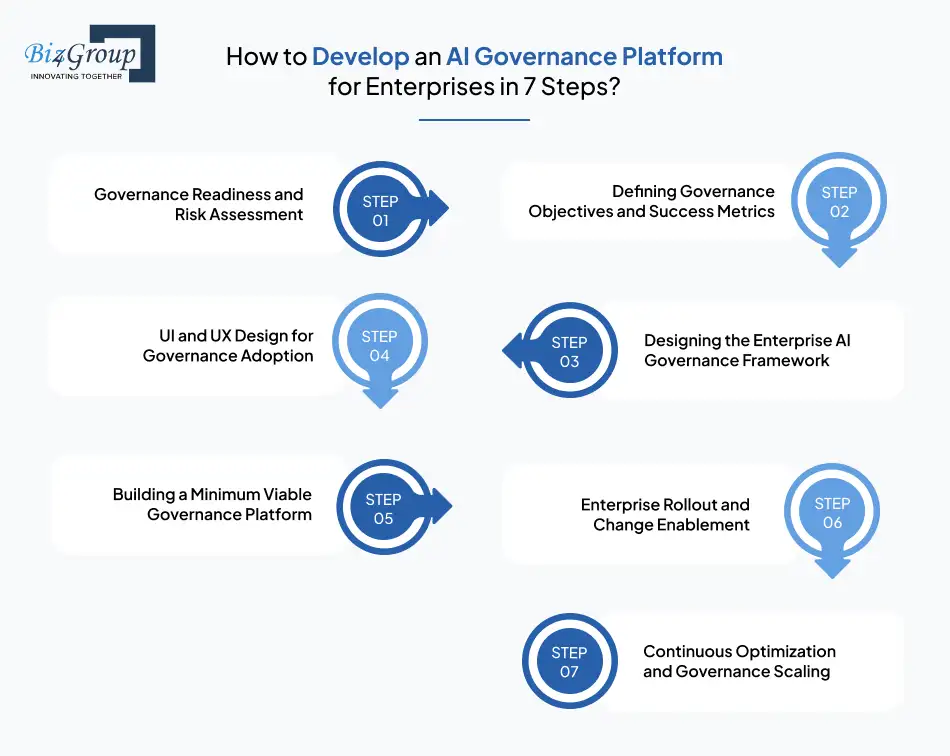
Building an AI governance platform requires strategic sequencing. When steps are rushed or skipped, governance becomes reactive and fragmented. Enterprises that succeed follow a structured development journey that balances leadership alignment, usability, and scalability.
Below is a proven process used to develop AI governance platform for enterprises without slowing innovation.
Step 1. Governance Readiness and Risk Assessment
The process begins with understanding how AI is currently used across the organization. This step evaluates existing AI models, decision points, ownership gaps, and risk exposure. It helps leadership identify where governance is missing and where immediate controls are required. This clarity sets a strong foundation to build AI governance and oversight system aligned with business reality rather than assumptions.
Step 2. Defining Governance Objectives and Success Metrics
Once risks are understood, enterprises define what governance must achieve. This includes aligning AI oversight with corporate goals, regulatory expectations, and risk tolerance. Clear success metrics ensure governance efforts remain outcome-focused.
This step prevents governance from becoming a policy-heavy exercise with no measurable value.
Step 3. Designing the Enterprise AI Governance Framework
At this stage, organizations translate objectives into structured governance rules. This includes defining accountability models, approval workflows, escalation paths, and oversight boundaries.
Enterprises that develop enterprise AI governance frameworks here gain consistency across departments and geographies.
Step 4. UI and UX Design for Governance Adoption
Governance platforms fail when they are difficult to use.
This step focuses on designing intuitive dashboards, approval flows, and reporting views that executives, compliance teams, and business users can easily navigate.
An experienced UI and UX design company drives adoption and ensures governance becomes part of daily operations rather than a bottleneck.
Also read: Top 15 UI/UX design companies in USA
Step 5. Building a Minimum Viable Governance Platform
Instead of launching a full-scale system, enterprises benefit from developing an MVP. This version focuses on high-risk AI use cases and core governance workflows.
An MVP allows organizations to validate assumptions, gather feedback, and refine governance logic before scaling.
Also read: Top 12+ MVP development companies in USA
Step 6. Enterprise Rollout and Change Enablement
After validation, the platform is rolled out across teams and departments. This step includes onboarding stakeholders, aligning governance roles, and embedding governance into existing decision workflows.
Enterprises that create AI governance platform for enterprise AI programs succeed when change management receives the same priority as development.
Step 7. Continuous Optimization and Governance Scaling
AI governance is not static. Models evolve, regulations change, and new use cases emerge. This final step focuses on refining governance rules, expanding platform coverage, and adapting to new business needs.
Continuous improvement ensures the platform remains relevant, scalable, and trusted over time.
A disciplined development process transforms governance from a compliance burden into a strategic capability. By following this roadmap, enterprises can build AI governance platforms for CXOs that support innovation, accountability, and long-term value creation.
Next, we will move into the financial lens.
Why Wait 12 Weeks When You Can Start in 3?
Most platforms take 8-12 weeks for an MVP. Biz4Group delivers in 2-3 weeks using proven, reusable governance components.
Contact Biz4Group TodayWhat It Really Costs to Build AI Governance Platforms for CXOs
Before committing to AI governance, CXOs want a clear financial picture.
On average, AI governance platform development cost estimate for enterprises ranges between $40,000-$300,000+, depending on scope, scale, and maturity expectations. This range covers everything from early-stage MVPs to enterprise-wide governance platforms supporting multiple AI programs.
To ground expectations early, here is how costs typically evolve from MVP to full-scale deployment.
|
Governance Stage |
Typical Scope |
Estimated Investment Range |
|---|---|---|
|
MVP |
High-risk AI use cases, core governance workflows |
$40,000-$75,000 |
|
Advanced Level |
Multi-department governance, dashboards, monitoring |
$75,000-$180,000 |
|
Enterprise Level |
Organization-wide governance, scaling and AI automation services |
$180,000-$300,000+ |
Understanding where your organization fits helps leaders plan realistic budgets and timelines.
Core Cost Drivers in AI Governance Platform Development
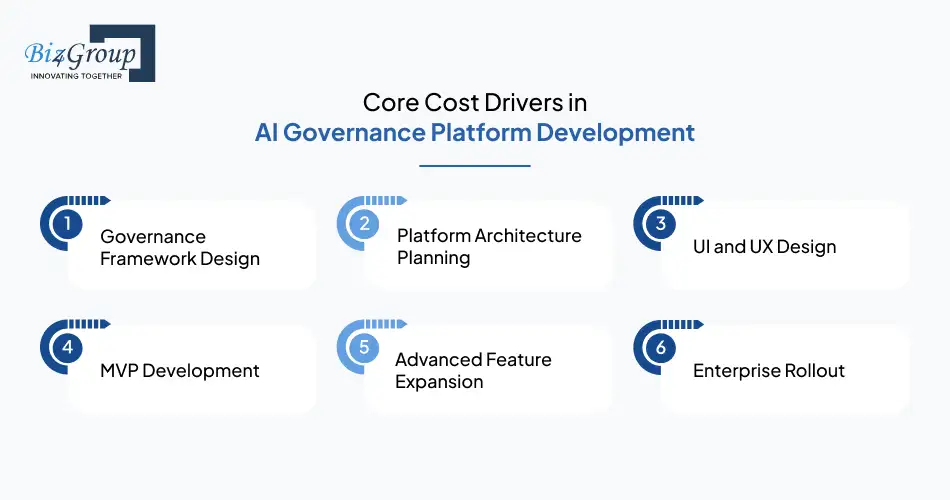
Every enterprise platform is priced differently. Costs increase based on complexity, not ambition. The table below outlines the primary cost drivers enterprises should evaluate when planning custom AI governance platform development services.
|
Cost Driver |
What It Includes |
Typical Cost Impact |
|---|---|---|
|
Governance Framework Design |
Policies, accountability models, workflows |
$8,000-$25,000 |
|
Platform Architecture Planning |
Governance logic, system mapping |
$6,000-$18,000 |
|
UI and UX Design |
Dashboards, approval flows, reporting views |
$7,000-$20,000 |
|
MVP Development |
Core governance features and validation |
$20,000-$60,000 |
|
Advanced Feature Expansion |
Monitoring, reporting, scaling |
$30,000-$90,000 |
|
Enterprise Rollout |
Multi-team onboarding and configuration |
$25,000-$70,000 |
These drivers define the baseline investment required to build AI governance platforms for CXOs with real operational impact.
Hidden Costs Enterprises Often Overlook
Budget overruns rarely come from development alone. They come from gaps in planning.
When organizations develop AI governance platform for enterprises, these hidden costs frequently surface later.
- Internal alignment delays increasing project timelines by $5,000-$15,000
- Redesigning governance workflows after early feedback costing $8,000-$20,000
- Expanding scope beyond initial MVP adding $10,000-$40,000
- Manual governance overhead when automation is deferred costing ongoing operational spend
- Lack of adoption requiring rework in UI and workflows adding $6,000-$18,000
Anticipating these early protects both budgets and leadership confidence.
Cost Optimization Strategies Without Compromising Governance
Smart cost control does not mean cutting corners. It means sequencing investment wisely. Below are proven ways enterprises reduce spend while still building AI governance and oversight system capabilities that scale.
- Start with an MVP focused on high-risk AI use cases
This approach limits initial spend to $40,000-$75,000 while proving governance value quickly. It also reduces rework later. - Reuse existing enterprise workflows where possible
Aligning governance with current approval and reporting processes can reduce design and development costs by 15%-25%. - Phase expansion instead of building everything upfront
Adding advanced features in stages helps spread investment across quarters and avoids unnecessary early spend of $30,000-$60,000. - Prioritize adoption through strong UX early
Spending $7,000-$15,000 upfront on intuitive UX often saves double that amount in future rework and change management.
AI governance investment should feel deliberate, not overwhelming.
When scoped correctly, AI governance platform development cost estimate aligns closely with risk reduction, compliance readiness, and faster AI adoption. Enterprises that plan strategically avoid surprise costs and build platforms that deliver long-term value.
Next, we will explore how leadership teams measure success after investment.
One AI Incident Can Cost More Than the Platform!
AI compliance failures often exceed $250,000 per incident. Governance costs far less than recovery and damage control.
Let's Talk NumbersMeasuring ROI of AI Governance Software for Enterprises
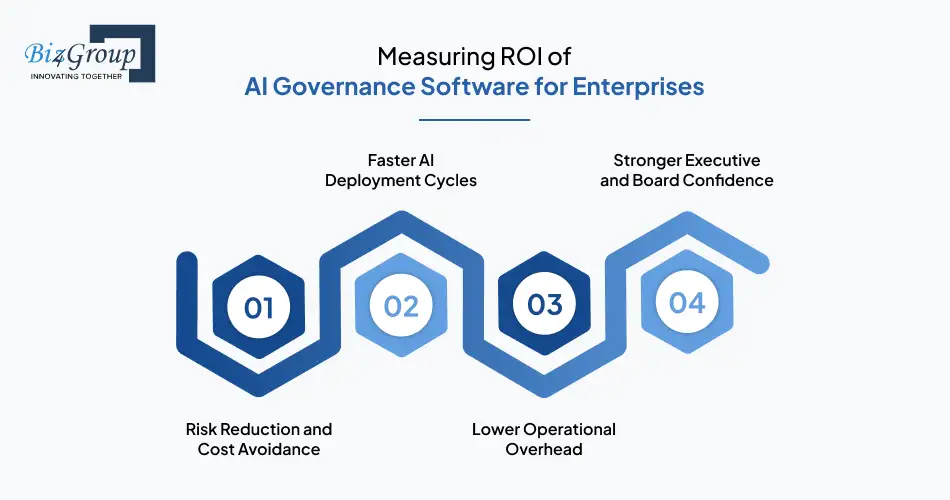
Return on investment from AI governance rarely comes from a single metric. It shows up across risk reduction, operational efficiency, and decision confidence.
For CXOs investing in AI governance platform development, ROI becomes visible sooner than expected when governance replaces manual oversight.
1. Risk Reduction and Cost Avoidance
The most immediate ROI comes from preventing regulatory penalties, legal exposure, and public incidents. Enterprises with structured governance avoid remediation costs that often exceed $250,000 per incident. This risk insulation alone can justify the full investment in governance software within the first year.
2. Faster AI Deployment Cycles
Governance platforms reduce approval bottlenecks. Standardized workflows and clear ownership accelerate AI rollouts by 20%-40%. Faster deployment means quicker time-to-value for AI initiatives, especially in revenue-generating use cases.
3. Lower Operational Overhead
Replacing manual reviews and documentation with automated governance reduces internal effort across legal, compliance, and technology teams. Enterprises often see a 30%-50% reduction in recurring governance-related operational costs within 12 months.
4. Stronger Executive and Board Confidence
Clear visibility into AI risks and decisions enables better leadership oversight. This confidence reduces hesitation around scaling AI programs, unlocking long-term value that manual governance cannot support.
The ROI of AI governance software for enterprises extends beyond numbers. It creates certainty, speed, and trust. For CXOs, that combination turns governance from a cost center into a strategic asset.
Next, we will examine what often goes wrong.
Challenges Enterprises Face When Building AI Governance Platforms
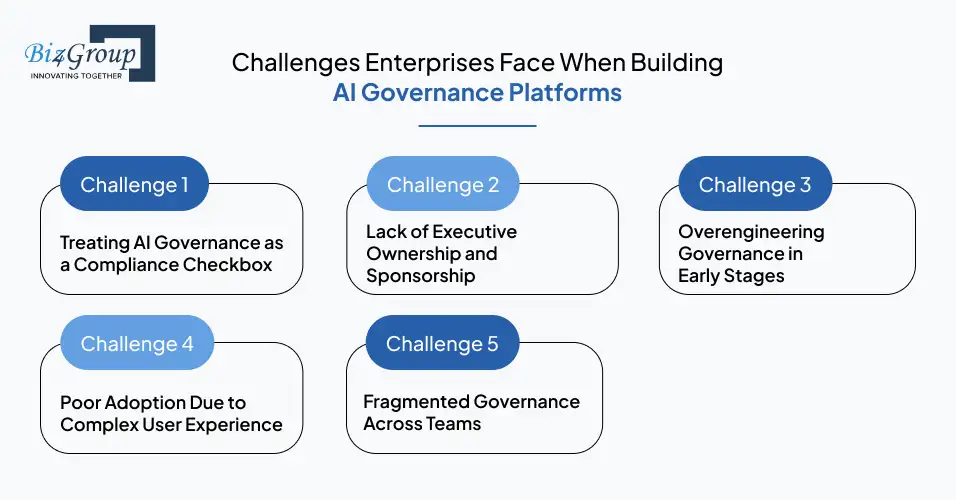
Even well-funded AI initiatives struggle when governance is treated as an afterthought. Most failures stem from a few recurring mistakes that surface across industries.
Recognizing these early helps enterprises develop scalable AI governance solutions without unnecessary friction.
Challenge 1. Treating AI Governance as a Compliance Checkbox
Many organizations approach governance only to satisfy regulators. This narrow view limits long-term value.
Best Practices
- Position governance as a strategic capability, not paperwork
- Align governance goals with business outcomes
- Involve executive leadership early
- Track governance success beyond compliance metrics
Challenge 2. Lack of Executive Ownership and Sponsorship
Without visible leadership support, governance loses authority. Teams follow processes inconsistently.
Best Practices
- Assign clear CXO-level accountability
- Establish governance ownership across departments
- Create leadership visibility through dashboards
- Reinforce governance decisions at the executive level
Challenge 3. Overengineering Governance in Early Stages
Some enterprises attempt to govern everything at once. This slows adoption and creates resistance.
Best Practices
- Start with high-risk AI use cases
- Launch governance in phases
- Validate workflows before scaling
- Focus on practicality over perfection
Challenge 4. Poor Adoption Due to Complex User Experience
Governance platforms fail when users avoid them. Complex interfaces increase workarounds.
Best Practices
- Design governance workflows for daily use
- Simplify approvals and reviews
- Build intuitive dashboards for each role
- Gather user feedback continuously
Challenge 5. Fragmented Governance Across Teams
Siloed teams create inconsistent governance rules. This leads to blind spots.
Best Practices
- Centralize AI oversight across departments
- Standardize governance rules enterprise-wide
- Maintain a unified AI inventory
- Encourage cross-functional governance reviews
AI governance challenges are predictable. So are their solutions.
Enterprises that address these issues early can create AI governance solutions for organizations that scale with confidence and avoid costly rework.
Next, we will help CXOs make a critical decision.
90% of AI Governance Failures Are Preventable!
Lack of ownership, poor adoption, and late governance cause most AI failures. Fixing them early saves years of rework.
Talk to Biz4Group's ExpertsShould You Buy or Build AI Risk and Governance Platform?
One of the most common questions CXOs ask is whether to build a governance platform internally or buy an existing tool.
There is no universal answer. The right choice depends on enterprise scale, regulatory exposure, and long-term AI strategy.
The table below breaks down how custom AI governance platform development compares with off-the-shelf solutions across critical decision factors.
|
Decision Factor |
Build |
Buy |
|---|---|---|
|
Strategic Alignment |
Fully tailored to enterprise AI goals and risk appetite |
Limited customization around predefined workflows |
|
Scalability |
Designed to scale with enterprise AI programs |
Scaling often constrained by vendor architecture |
|
Regulatory Adaptability |
Easily adjusted as regulations evolve |
Dependent on vendor update cycles |
|
Control and Ownership |
Full ownership of governance logic and data |
Vendor retains significant control |
|
Integration Flexibility |
Seamless alignment with internal systems using AI integration services |
Integration limited to supported connectors |
|
Time to Initial Launch |
Longer initial setup |
Faster short-term deployment |
|
Long-Term Cost Efficiency |
Higher upfront investment with lower long-term cost |
Lower upfront cost with rising subscription fees |
|
Industry Specific Needs |
Built for sector-specific governance |
Generic features across industries |
|
Competitive Advantage |
Governance becomes a strategic differentiator |
Governance remains a standardized capability |
How CXOs Should Make the Decision
Enterprises that view governance as a long-term capability tend to build.
Organizations seeking quick compliance coverage often buy.
For large enterprises, hybrid approaches are also common. Core governance is built internally while select tooling is integrated where it adds speed.
This evaluation is critical when organizations aim to build AI governance platforms for CXOs that remain relevant as AI maturity grows.
Why Biz4Group LLC Is the Trusted AI Governance Platform Development Company in USA?
Biz4Group LLC is a USA-based software development company that works at the intersection of enterprise strategy, technology execution, and long-term scalability. Our strength lies in building complex, regulation-aware software platforms that operate at scale.
AI governance platforms fit naturally into our core expertise. They demand architectural thinking, business alignment, usability, and long-term reliability. As a seasoned AI development company, this is exactly where Biz4Group excels.
What sets us apart is how we approach governance. We do not treat it as a layer added after AI is deployed. We design governance as a living system that grows with your AI programs, adapts to regulatory change, and supports executive decision-making.
Why Businesses Choose Biz4Group LLC
- Proven experience delivering enterprise AI solutions in regulated environments
- Deep understanding of governance, risk, and accountability frameworks
- Strong focus on usability that drives adoption across teams
- Custom-first approach aligned with business goals rather than generic templates
- Transparent engagement model with clear ownership and accountability
- Long-term partnership mindset beyond initial delivery
Enterprises do not choose Biz4Group for one-off development. They choose us because they need a partner who understands what happens after launch.
Growth. Scrutiny. Change. Scale.
When you work with Biz4Group LLC, you hire AI developers who think like builders and operators. We anticipate challenges before they surface. We design systems that stand up to real-world pressure. And we help leadership teams move forward with confidence when AI decisions matter most.
AI governance will define which enterprises scale responsibly and which ones struggle under regulatory and operational pressure. The difference lies in choosing the right development partner from the start.
We are the right development partner for you. Let’s talk.
Final Thoughts
AI governance platform development has moved from a future concern to a present-day business priority. As enterprises scale AI across departments, regions, and decision layers, governance becomes the foundation that holds everything together. It brings visibility where complexity grows, accountability where automation expands, and confidence where risk often hides.
For CXOs, the real value of AI governance lies in balance. It allows innovation to move forward without exposing the business to unnecessary regulatory, ethical, or operational threats. Enterprises that invest early gain clarity, speed, and trust. Those that delay often face costly corrections later, when AI systems are already embedded deep into operations.
This is where Biz4Group LLC plays a critical role. As a software development company with deep experience in enterprise platforms and regulated industries, Biz4Group helps organizations design and build AI governance platforms that scale responsibly. Our approach blends business strategy, usability, and technical depth to create governance systems leaders can rely on long term.
If AI is shaping your enterprise strategy, governance should shape your AI.
Connect with Biz4Group LLC today and start building an AI governance platform that protects value, earns trust, and supports confident growth.
FAQs
When should an enterprise start investing in AI governance platform development?
Enterprises should begin once AI systems start influencing customer decisions, financial outcomes, or compliance exposure. Waiting until regulators or incidents force action usually leads to rushed and expensive fixes.
How long does it typically take to build an AI governance platform?
Most AI governance platforms take around 8-12 weeks to deliver an MVP. Biz4Group accelerates this timeline to 2-3 weeks by using proven, reusable governance components that significantly reduce development time and overall cost without compromising quality.
Does AI governance slow down innovation inside organizations?
When designed correctly, governance accelerates innovation by reducing uncertainty. Clear rules and oversight allow teams to deploy AI faster without constant approvals or risk debates.
How does an AI governance platform support board-level reporting?
Governance platforms provide structured visibility into AI usage, risks, and decisions. This helps boards evaluate AI exposure confidently without relying on fragmented updates from multiple teams.
What happens if regulations change after an AI governance platform is built?
Well-designed platforms adapt to regulatory updates through configurable rules and workflows. This avoids rebuilding governance structures every time compliance expectations evolve.
Is AI governance relevant for internal tools that do not face customers?
Yes. Internal AI systems can still influence hiring, financial planning, and operational decisions. Governance ensures fairness, accountability, and consistency even when AI is used internally.
How do enterprises evaluate vendors offering AI governance platform development services?
CXOs should assess industry experience, ability to customize governance frameworks, long-term support capability, and understanding of regulatory and business risk rather than focusing on tools alone.
