 Location :
Orlando, FL, USA
Location :
Orlando, FL, USA +1 (407) 714-1616
 info@biz4group.com

- Cost to build a mental health app in 2026 typically ranges from $40,000 to $250,000+ depending on complexity, features, and compliance needs.
- Mental health app development cost increases with HIPAA compliance, video therapy, AI features, integrations, and infrastructure requirements.
- Budgets are usually spent across planning, design, development, testing, deployment, and ongoing maintenance.
- Founders can reduce mental health app building cost through MVPs, feature prioritization, cross platform development, and offshore teams.
- Smarter decisions around mental health app development pricing, scalability, and compliance, combined with experienced partners like Biz4Group, often create better long term outcomes.
If you're planning to build a mental health platform in 2026, you're probably asking one question before anything else:
What does the actual cost to build a mental health app look like?
The short answer?
The cost to build a mental health app typically ranges anywhere from $40,000 to $250,000+.
The more honest answer?
It depends.
A simple meditation app and a HIPAA compliant teletherapy platform may both fall under the same category, but their development complexity, compliance requirements, infrastructure needs, and timelines can be completely different.
And this is exactly where many founders make expensive mistakes.
The demand for digital mental healthcare continues to grow rapidly. The global mental health app market is projected to reach between $8.6 billion and $11.4 billion in 2026, reflecting growing investments from startups, healthcare providers, and enterprises moving toward digital care delivery.
At the same time, the need for accessible care continues to rise. More than 1 billion people globally live with mental health conditions, increasing pressure on healthcare systems and accelerating demand for scalable digital solutions.
So where do founders usually get the budgeting wrong?
Many assume mental health app development cost is mostly about adding features. Add video therapy, integrate scheduling, build AI functionality, launch the platform, and growth will follow.
But reality is rarely that simple.
A meditation app, therapist marketplace, journaling platform, teletherapy solution, AI companion, or enterprise behavioral health platform may all look similar from the outside, but their mental health app building cost, security requirements, infrastructure needs, and compliance obligations can vary dramatically.
You may already be validating your idea or studying competitors before making investment decisions. Many founders begin by reviewing the best mental health apps to explore to understand user expectations, market gaps, and feature benchmarks.
Maybe you're also asking yourself questions like:
- What is a realistic mental health app development pricing model?
- What does cost to develop a mental health app with compliance requirements actually look like?
- How much should founders realistically budget before talking with development teams?
- Which hidden expenses push projects beyond their original estimates?
Building a mental health platform is rarely just a technology decision. It's also a budgeting decision, compliance decision, and business decision.
Before discussing features, development timelines, and technology choices, let's first understand why getting your numbers right early can save you from expensive decisions later.
Why Is Knowing the Cost to Build a Mental Health App Before Development So Important?
Before discussing features, timelines, or technology stacks, there’s a more important question worth answering first.
Do you actually know what you’re budgeting for?
Many founders don't struggle because their product idea is weak. They struggle because budgeting assumptions are wrong from the beginning.
Healthcare products, especially mental health platforms, operate differently from standard mobile applications. Compliance requirements, security expectations, clinical workflows, infrastructure decisions, and user privacy requirements can quickly change project scope and spending. Understanding the cost of building a mental health app early helps you make better product decisions before development begins instead of fixing expensive mistakes later.
1. Common Budgeting Mistakes Founders Make
One of the biggest reasons mental health app development cost becomes unpredictable is because founders often budget around features instead of product complexity. For example, video therapy may sound like a simple feature addition, but secure video infrastructure, compliance requirements, scheduling workflows, session recording policies, and user authentication can significantly increase costs. Many teams also underestimate how much cost to build a mental health app for startups with limited budget in 2026 depends on prioritizing the right features instead of building everything at once.
2. Investor Expectations and Financial Planning
Investors rarely ask only about the product idea. They want to understand whether your financial planning makes sense.
If you're raising capital, one question usually comes up early: How much should a founder budget for mental health app development in 2026?
Without realistic projections, it becomes difficult to justify burn rates, hiring decisions, roadmap planning, or scaling strategies. A clear mental health app development cost breakdown for founders and investors creates stronger financial conversations and helps avoid unrealistic expectations later.
3. Reducing Development Risks Through Early Cost Planning
Early cost planning does more than control spending. It reduces risk. Understanding what is the total cost of creating a telehealth mental health app from scratch before development begins helps founders prioritize features, choose the right architecture, evaluate vendors properly, and avoid expensive rebuilds. When you understand where money actually goes, you're more likely to build something users want without exhausting resources before reaching product market fit.
Now that we understand why budgeting matters, let's answer the question most founders came here for: what does building a mental health app actually cost in 2026?
Still wondering if your app is a $40K build or a $250K investment?
Healthcare investments are rising fast, but budgeting mistakes still cost founders millions. Getting the numbers right early changes everything.
Talk to an ExpertsSo, What Does the Cost to Build a Mental Health App Actually Look Like in 2026?
If you're looking for a quick answer, here's the reality:
The cost to build a mental health app in 2026 typically ranges between $40,000 and $250,000+, depending on product complexity, compliance requirements, infrastructure needs, integrations, and feature scope.
The easiest way to estimate your budget is to first identify which category your product fits into.
|
App Type |
Typical Budget Range |
Common Features |
|---|---|---|
|
$40,000 to $70,000 |
Mood tracking, journaling, authentication, basic analytics, subscriptions |
|
|
Mid Complexity Mental Health Platform |
$70,000 to $150,000 |
Scheduling, therapist matching, messaging, dashboards, payments |
|
Enterprise Telehealth Platform |
$150,000 to $250,000+ |
HIPAA compliance, video therapy, EHR integration, AI, multi-provider systems |
At this stage, you might be thinking: "Why is there such a huge pricing gap?"
Because mental health app development cost is rarely determined by app size alone. Features, compliance requirements, integrations, infrastructure, and security requirements often have a much bigger impact on pricing.
Let's look at what actually drives those costs.
What Actually Impacts Mental Health App Development Pricing More Than Most Founders Expect?
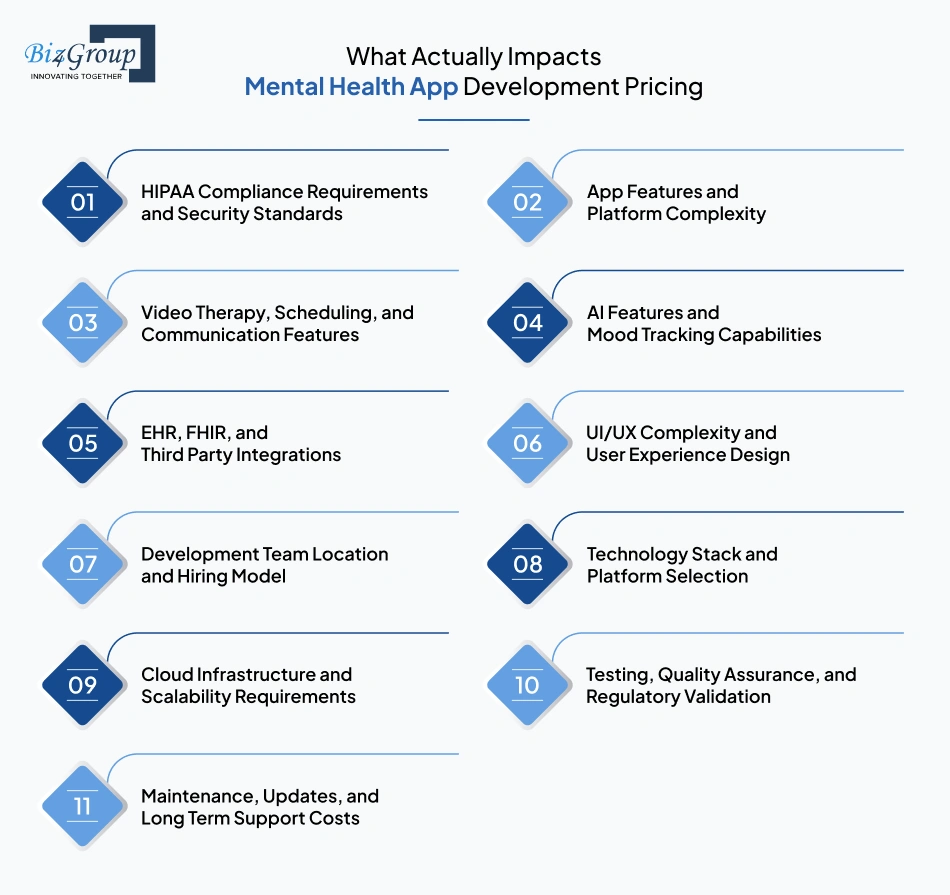
You already know that the cost to build a mental health app can range anywhere from $40,000 to $250,000+.
So why do two apps that look similar on the surface end up with completely different budgets?
The answer usually goes beyond features. Mental health app development cost is influenced by multiple factors including compliance requirements, integrations, infrastructure, scalability, user experience expectations, and long term maintenance needs.
This is also why estimating mental health app platform development pricing based only on feature lists often leads to unrealistic budgets.
If you want to understand how much should a founder budget for mental health app development in 2026, you first need to understand what actually drives the numbers.
Let's break down the biggest cost factors.
1. HIPAA Compliance Requirements and Security Standards
For many founders, compliance becomes one of the biggest surprises when estimating how much does it cost to develop a HIPAA compliant mental health app. HIPAA isn't a single feature you add later. It affects architecture, infrastructure, security, testing, documentation, and ongoing operations.
|
HIPAA Related Component |
Typical Additional Cost |
Why It Increases Cost |
|---|---|---|
|
Secure Authentication & Access Controls |
$3,000 to $10,000+ |
Multi factor authentication, role-based permissions, session management |
|
Encryption & Secure Data Storage |
$5,000 to $15,000+ |
Encryption at rest, secure databases, protected storage infrastructure |
|
Audit Logs & Activity Monitoring |
$3,000 to $12,000+ |
Required for tracking user activities and security events |
|
HIPAA Compliant Cloud Infrastructure |
$500 to $5,000+/month |
Secure hosting, monitoring, backups, compliance controls |
|
Business Associate Agreements (BAA) & Legal Reviews |
$2,000 to $15,000+ |
Vendor agreements, compliance documentation, legal validation |
|
Security Testing & Penetration Testing |
$5,000 to $25,000+ |
Security validation before launch and ongoing assessments |
|
Disaster Recovery & Backup Systems |
$2,000 to $10,000+ |
Data redundancy, failover systems, recovery planning |
For founders building clinical platforms, compliance often becomes a major reason why mental health app development cost moves far beyond initial estimates. And compliance is only one part of the equation.
Next, let's look at how features and platform complexity influence costs even more.
2. App Features and Platform Complexity
When founders ask about mental health app creation cost, features are usually the first thing they think about.
And they're not wrong. Features directly affect development hours, backend complexity, testing effort, infrastructure requirements, and long term maintenance. The challenge is that some features that appear simple from the user side can become expensive behind the scenes.
|
Feature Category |
Typical Additional Cost |
Why It Increases Cost |
|---|---|---|
|
User Authentication & Profiles |
$2,000 to $8,000+ |
User management, permissions, security layers |
|
Mood Tracking & Journaling |
$3,000 to $12,000+ |
Data storage, analytics, user history management |
|
Subscription & Payment Systems |
$4,000 to $15,000+ |
Payment gateways, billing workflows, recurring payments |
|
Notifications & Reminders |
$2,000 to $8,000+ |
Scheduling logic, engagement workflows, background services |
|
Admin Dashboard & Analytics |
$5,000 to $20,000+ |
Reporting systems, user management, data visualization |
|
Multiuser Roles (Patients, Therapists, Admins) |
$8,000 to $25,000+ |
Permissions, workflows, complex backend logic |
|
Gamification & Engagement Features |
$5,000 to $20,000+ |
Reward systems, tracking mechanisms, user retention logic |
This is one reason mental health app building cost varies significantly between products. A journaling app and a therapist marketplace may both be mental health platforms, but their complexity can be worlds apart.
Understanding which features actually matter early is critical because communication features alone can dramatically change pricing.
3. Video Therapy, Scheduling, and Communication Features
If you're estimating the cost to build a mental health app with video therapy and scheduling features, this is usually where budgets start increasing quickly.
Why? Because communication features are rarely just communication features.
Video sessions require infrastructure. Scheduling requires workflow management. Messaging requires security and compliance. What appears simple for users often creates multiple layers of backend complexity.
|
Communication Feature |
Typical Additional Cost |
Why It Increases Cost |
|---|---|---|
|
Secure Video Therapy Sessions |
$10,000 to $40,000+ |
Video infrastructure, bandwidth costs, session management, compliance requirements |
|
$4,000 to $15,000+ |
Calendar logic, reminders, timezone handling, provider availability |
|
|
Secure Messaging & Chat |
$5,000 to $20,000+ |
Real time communication, encryption, message storage |
|
Push Notifications & Reminders |
$2,000 to $8,000+ |
Scheduling systems, engagement workflows, automation |
|
Group Sessions & Multiuser Calls |
$8,000 to $30,000+ |
Increased infrastructure requirements and session management |
|
Therapist Matching Systems |
$5,000 to $20,000+ |
Recommendation logic, search systems, user management |
For example, building something similar to a mental health app like BetterHelp involves much more than adding video calls. Secure communication workflows, therapist management, scheduling logic, compliance controls, and payment systems all contribute to overall mental health app development pricing.
Communication features often become one of the biggest pricing drivers, but AI capabilities can influence budgets even more.
4. AI Features and Mood Tracking Capabilities
Not every mental health platform needs AI. But if you're planning to add AI powered experiences, understanding the cost of building a mental health app with AI powered therapy and mood tracking becomes important early.
Why? Because adding basic mood tracking is very different from building conversational AI, personalized recommendations, virtual companions, or automated risk detection systems. These features introduce additional development effort, infrastructure requirements, and long term operational costs.
|
AI Feature |
Typical Additional Cost |
Why It Increases Cost |
|---|---|---|
|
$3,000 to $12,000+ |
Data collection, user history, analytics, visualization systems |
|
|
AI Chatbot & Guided Conversations |
$10,000 to $50,000+ |
NLP implementation, conversation flows, moderation systems |
|
Personalized Recommendations |
$5,000 to $25,000+ |
Behavioral analysis, recommendation engines, personalization logic |
|
AI Based Risk Detection |
$8,000 to $40,000+ |
Monitoring systems, safety workflows, pattern recognition |
|
Generative AI Integrations |
$5,000 to $30,000+ |
Model integrations, API usage, prompt engineering workflows |
|
Ongoing AI Infrastructure Costs |
$500 to $10,000+/month |
Compute resources, inference costs, monitoring, scaling |
If you're planning advanced capabilities such as AI powered therapy, virtual companions, or conversational experiences, understanding the cost to develop AI mental health app like Wysa can help create more realistic budgeting expectations. Remember that these features increase both mental health app development cost and long term operational spending since infrastructure, monitoring, and model usage continue affecting budgets after launch.
While AI can significantly increase the cost to build a mental health app, integrations often become an even larger pricing factor because they directly affect infrastructure, compliance, data flow, and system complexity.
5. EHR, FHIR, and Third Party Integrations
Integrations are one of the biggest reasons founders underestimate mental health app development cost.
On paper, connecting your app with video providers, payment gateways, wearable devices, EHR systems, or healthcare databases may sound straightforward.
In reality, integrations often introduce additional backend complexity, security requirements, testing effort, maintenance overhead, and compliance considerations.
This becomes especially important if you're estimating what is the total cost of creating a telehealth mental health app from scratch because most telehealth platforms rarely operate in isolation.
|
Integration Type |
Typical Additional Cost |
Why It Increases Cost |
|---|---|---|
|
Payment Gateway Integration |
$2,000 to $10,000+ |
Payment workflows, subscriptions, transaction management |
|
Calendar & Scheduling Integrations |
$2,000 to $8,000+ |
Availability syncing, timezone handling, scheduling logic |
|
Wearables & Health Data Integrations |
$5,000 to $20,000+ |
Data mapping, device compatibility, synchronization |
|
$10,000 to $50,000+ |
Clinical workflows, healthcare data exchange, security requirements |
|
|
FHIR Integration |
$8,000 to $40,000+ |
Standardized healthcare interoperability and complex data structures |
|
Third Party APIs & Services |
$3,000 to $20,000+ |
API management, testing, reliability monitoring |
For founders building teletherapy platforms or provider ecosystems, integrations can significantly increase mental health app platform development pricing because every external connection introduces additional dependencies and maintenance responsibilities.
As integrations increase complexity behind the scenes, design complexity creates another layer of cost that founders often overlook.
6. UI/UX Complexity and User Experience Design
Many founders focus heavily on features when estimating the cost to build a mental health app, but user experience often plays an equally important role in determining budgets.
Why?
Because mental health products are not typical consumer apps.
Users expect trust, simplicity, accessibility, emotional comfort, and frictionless experiences. Designing for sensitive user journeys usually requires more research, testing, iterations, and customization than traditional applications.
|
UI/UX Component |
Typical Additional Cost |
Why It Increases Cost |
|---|---|---|
|
Basic UI Screens & Flows |
$3,000 to $10,000+ |
Core navigation, screen creation, basic workflows |
|
Custom User Experience Design |
$5,000 to $20,000+ |
Personalized flows, custom interactions, usability improvements |
|
Accessibility & Inclusive Design |
$3,000 to $15,000+ |
ADA considerations, accessibility testing, broader usability |
|
Design Systems & Component Libraries |
$5,000 to $25,000+ |
Reusable systems for scalability and consistency |
|
User Testing & Iteration Cycles |
$2,000 to $15,000+ |
Feedback collection, revisions, optimization |
|
Advanced Animations & Interactive Experiences |
$3,000 to $20,000+ |
Custom interactions, transitions, enhanced engagement |
For example, investing in proper mental health app design often reduces friction, improves engagement, and lowers long term redesign costs, even though it increases upfront investment.
Similarly, investing in professional UI/UX design early can prevent expensive usability problems later.
As design complexity increases costs on the product side, team structure and hiring decisions often create equally large pricing differences.
7. Development Team Location and Hiring Model
Where your team is located can significantly change the development budget of mental health app projects, sometimes more than the technology itself.
This is also where many founders start asking: Should I hire a local US agency or an offshore team in India to build my HIPAA compliant mental health app and what will each cost?
There is no universal answer because pricing, communication, compliance experience, and team structure all affect outcomes.
|
Hiring Model |
Typical Cost Range |
Why It Impacts Cost |
|---|---|---|
|
US Based Agency |
$120 to $250+/hour |
Higher labor costs, local collaboration, healthcare expertise |
|
US Freelancers |
$70 to $180+/hour |
Lower overhead but increased project management effort |
|
$25 to $80+/hour |
Lower labor costs with larger cost savings potential |
|
|
Dedicated Development Team Model |
$30,000 to $150,000+ project based |
Long term scalability and resource flexibility |
|
Hybrid Team Model |
Varies significantly |
Combines local oversight with offshore execution |
For founders looking to control mental health app development in budget, offshore or hybrid models often reduce spending substantially. However, cheaper development does not automatically mean better value if healthcare compliance expertise is missing.
Many teams evaluating whether to hire mental health app developers in USA often compare pricing against expertise, healthcare experience, and long term scalability rather than hourly rates alone.
Team selection changes budgets considerably, but the technology choices behind your product can influence costs just as much.
8. Technology Stack and Platform Selection
Technology decisions made early can have a lasting impact on mental health app development pricing.
Many founders ask whether they should build native apps, cross platform applications, web platforms, or all three at once.
The answer usually comes down to budget, timelines, scalability requirements, and user expectations.
Choosing the wrong technology stack may reduce costs initially but can create expensive rebuilds later.
|
Technology Choice |
Typical Additional Cost |
Why It Impacts Cost |
|---|---|---|
|
Native iOS Development |
$15,000 to $60,000+ |
Separate development resources and platform specific work |
|
Native Android Development |
$15,000 to $60,000+ |
Independent codebase and maintenance requirements |
|
$10,000 to $40,000+ |
Shared codebase reduces development effort |
|
|
$10,000 to $50,000+ |
Additional frontend and backend requirements |
|
|
Backend Architecture & APIs |
$10,000 to $50,000+ |
Infrastructure, business logic, scalability planning |
|
Database Architecture |
$3,000 to $20,000+ |
Security, storage, optimization, scalability |
Technology selection becomes even more important when estimating mental health app platform development pricing because adding multiple platforms, larger user volumes, or advanced functionality directly increases complexity.
Many founders reduce early risk by starting with MVP to validate demand before investing in larger platform ecosystems.
The technology stack determines how your product is built, but infrastructure decisions determine how well it scales after launch.
9. Cloud Infrastructure and Scalability Requirements
Infrastructure costs are often underestimated because they are less visible during early planning.
Founders usually budget for design and development, but forget that servers, databases, storage, monitoring, backups, and scaling infrastructure continue affecting mental health app development cost long after launch.
This becomes even more important when estimating what is the total cost of creating a telehealth mental health app from scratch, since telehealth products often require higher reliability, storage capacity, and infrastructure redundancy.
|
Infrastructure Component |
Typical Additional Cost |
Why It Increases Cost |
|---|---|---|
|
Cloud Hosting Infrastructure |
$500 to $5,000+/month |
Servers, storage, networking, compute resources |
|
Database Management & Scaling |
$1,000 to $10,000+ |
Large datasets, optimization, availability requirements |
|
CDN & Media Storage |
$500 to $5,000+/month |
Video storage, file delivery, media optimization |
|
Monitoring & Logging Systems |
$500 to $3,000+/month |
Performance tracking, error monitoring, uptime management |
|
Backup & Disaster Recovery |
$1,000 to $10,000+ |
Redundancy systems, failover infrastructure, recovery planning |
|
Auto Scaling Infrastructure |
$2,000 to $15,000+ |
Supporting growing user volumes and traffic spikes |
For founders focused on cost to build a mental health app for startups with limited budget in 2026, starting with scalable infrastructure rather than oversized infrastructure usually creates better cost efficiency.
Infrastructure keeps your platform running but ensuring that everything works reliably and securely requires testing and validation.
10. Testing, Quality Assurance, and Regulatory Validation
Testing is one of the first areas founders try to reduce when controlling mental health app development cost.
Unfortunately, it is also one of the fastest ways to create expensive problems later.
Mental health platforms handle sensitive information, multiple user types, complex workflows, and compliance requirements. This means testing goes beyond finding bugs. It also includes validating security, performance, usability, and regulatory requirements.
|
Testing Component |
Typical Additional Cost |
Why It Increases Cost |
|---|---|---|
|
Functional Testing |
$3,000 to $15,000+ |
Validates user flows, features, and system behavior |
|
Cross Platform Testing |
$2,000 to $10,000+ |
Ensures consistent experience across devices and operating systems |
|
Security Testing & Vulnerability Assessment |
$5,000 to $25,000+ |
Identifies security gaps and compliance risks |
|
Performance & Load Testing |
$3,000 to $15,000+ |
Ensures scalability during higher traffic volumes |
|
Compliance Validation |
$5,000 to $20,000+ |
Verifies regulatory requirements and security controls |
|
User Acceptance Testing |
$2,000 to $10,000+ |
Improves usability and reduces post launch issues |
For platforms targeting healthcare providers or clinical workflows, testing becomes even more important because failures directly affect trust, compliance, and user retention.
As your platform becomes more complex, timelines also start influencing how much development actually costs.
11. Maintenance, Updates, and Long Term Support Costs
Many founders calculate the cost of building the product but forget to budget for keeping it running.
The reality is simple. Launching your platform is not the end of mental health app development cost. It is usually the beginning of ongoing spending.
Bug fixes, operating system updates, compliance changes, infrastructure upgrades, security monitoring, and feature improvements continue affecting the cost to build a mental health app long after launch.
|
Maintenance Component |
Typical Additional Cost |
Why It Increases Cost |
|---|---|---|
|
Bug Fixes & Performance Updates |
$1,000 to $10,000+/month |
Ongoing issue resolution and optimization |
|
Feature Enhancements & Product Updates |
$3,000 to $25,000+ |
Continuous improvements and new functionality |
|
Infrastructure & Cloud Maintenance |
$500 to $10,000+/month |
Hosting, storage, monitoring, scaling |
|
Security Updates & Compliance Changes |
$2,000 to $15,000+ |
Regulatory updates and vulnerability management |
|
Third Party API Maintenance |
$500 to $5,000+/month |
Vendor updates, integrations, reliability monitoring |
|
Customer Support & Operational Costs |
$1,000 to $20,000+/month |
User support, onboarding, operational workflows |
A common rule many founders use is allocating 15% to 25% of the original development budget annually for maintenance and support. Ignoring these costs often creates unrealistic expectations around overall mental health app platform development pricing.
Now that we've covered what drives pricing, the next question becomes: Where does your budget actually go during development?
Already adding costs in your head after every factor?
Compliance, AI, integrations, and scaling affect budgets differently. Knowing what deserves investment makes all the difference.
Get a Cost EstimateWhere Does Your Budget Actually Go? Step by Step Mental Health App Development Cost Breakdown
Understanding the cost to build a mental health app becomes easier when you know where the money actually goes. From planning and design to development and post launch support, every stage contributes differently to your overall budget.
Breaking costs step by step also makes it easier to identify optimization opportunities and understand which areas deserve more attention during planning.
1. Discovery and Product Planning Costs
Before development begins, teams need clarity around features, requirements, technical feasibility, and business goals. This stage reduces unnecessary spending, improves planning accuracy, and helps founders decide whether they should launch a full platform or start with a smaller MVP to control mental health app development cost.
Typical activities include:
- Requirement gathering and workshops
- Feature prioritization and roadmap planning
- MVP scope definition
- Technical architecture discussions
- User flow planning
- Risk assessment and feasibility analysis
Typical Cost: $3,000 to $15,000+
Many founders trying to optimize cost to build a mental health app for startups with limited budget in 2026 spend extra time here because better planning usually means fewer expensive changes later.
Next comes turning ideas into actual product experiences.
2. UI/UX Design and Prototyping Costs
Design directly affects usability, engagement, and retention. For mental health products, creating intuitive and emotionally comfortable experiences usually requires additional research, testing, and iterations compared to standard applications.
Typical activities include:
- Wireframes and user flows
- High fidelity UI screens
- Interactive prototypes
- Design systems and component libraries
- User testing and revisions
Typical Cost: $5,000 to $25,000+
Many teams investing in strong mental health app design early often reduce expensive redesign efforts later.
Once designs are finalized, development work begins.
3. Frontend Development Costs
Frontend development covers everything users directly interact with including screens, navigation, animations, and user journeys. Platform choices and feature complexity significantly affect overall mental health app building cost.
Typical activities include:
- Mobile application development
- Web interface development
- User authentication flows
- UI implementation
- State management and navigation
Typical Cost: $10,000 to $60,000+
Frontend shapes user experiences, while backend systems power everything behind them.
4. Backend Development Costs
Backend systems manage business logic, databases, infrastructure, integrations, and security. For many projects, this becomes one of the largest contributors to overall mental health app development pricing.
Typical activities include:
- API development
- Database architecture
- Cloud infrastructure setup
- Security implementation
- Third party integrations
Typical Cost: $15,000 to $80,000+
After development, testing ensures everything works reliably and securely.
5. Quality Assurance and Testing Costs
Testing validates reliability, security, usability, and compliance requirements. Since mental health platforms often manage sensitive information and multiple user workflows, testing requirements are usually higher.
Typical activities include:
- Functional testing
- Security testing
- Cross platform testing
- Performance validation
- Compliance verification
Typical Cost: $5,000 to $30,000+
After testing is complete, products move toward deployment.
6. Deployment and Launch Costs
Launching a product requires more than publishing applications to app stores. Infrastructure preparation, monitoring systems, deployment workflows, and launch support all contribute to overall cost to develop a mental health app.
Typical activities include:
- App Store and Play Store deployment
- Infrastructure configuration
- Monitoring setup
- Production environment preparation
- Launch support
Typical Cost: $2,000 to $15,000+
Launching your product is not the end of spending because ongoing support continues affecting budgets.
7. Post Launch Maintenance Costs
Mental health products require continuous updates, security improvements, infrastructure management, and feature enhancements after launch. Ignoring these expenses often creates unrealistic expectations around overall mental health app platform development pricing.
Typical activities include:
- Bug fixes and updates
- Infrastructure maintenance
- Security monitoring
- Compliance updates
- Feature improvements
Typical Cost: 15% to 25% of initial development cost annually
Now that we've covered where budgets are spent, let's discuss the hidden expenses many founders forget to include.
What Hidden Costs of Building a Mental Health App Are Most Teams Forgetting?
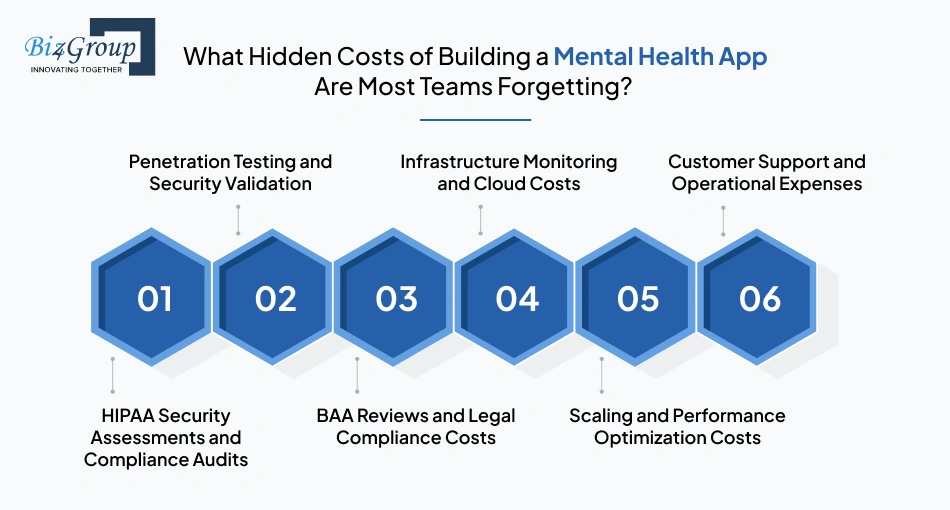
When founders estimate the cost to build a mental health app, they usually focus on development, design, and features.
What often gets missed are the costs that appear after planning is complete and development has already started.
These hidden expenses may not always be obvious early, but they can significantly affect your overall mental health app development cost if they are not accounted for from the beginning.
1. HIPAA Security Assessments and Compliance Audits
Many founders budget for HIPAA compliant development but overlook the cost of validating compliance itself. Security assessments, risk analysis, documentation reviews, and audit preparation often become necessary before launch.
These activities typically add $5,000 to $30,000+ to overall mental health app development cost and should be considered during early planning.
2. Penetration Testing and Security Validation
Building secure systems is one thing. Proving they are secure is another. Penetration testing helps identify vulnerabilities before launch and is often expected for healthcare platforms handling sensitive information.
Security testing and penetration testing typically add $5,000 to $25,000+ depending on platform complexity and security requirements.
3. BAA Reviews and Legal Compliance Costs
Business Associate Agreements, privacy policies, terms documentation, and legal reviews are often overlooked when calculating how much does it cost to develop a HIPAA compliant mental health app.
Depending on legal requirements and vendor relationships, compliance documentation and legal preparation typically cost $2,000 to $15,000+.
4. Infrastructure Monitoring and Cloud Costs
Cloud hosting is rarely a one time expense. Monitoring tools, backups, server scaling, storage requirements, and infrastructure management continue affecting costs after launch.
For many products, infrastructure and monitoring costs range between $500 and $10,000+ per month depending on user volume and platform complexity.
5. Scaling and Performance Optimization Costs
As user numbers increase, infrastructure, databases, APIs, and backend systems usually require optimization. Products that scale successfully often require performance improvements that were not part of initial budgets.
Scaling related improvements commonly add $5,000 to $50,000+ over time depending on growth requirements.
6. Customer Support and Operational Expenses
Launching the product is only one part of the investment. User onboarding, customer support, moderation, operational workflows, and support teams continue affecting overall mental health app platform development pricing.
Operational expenses vary widely but many growing platforms spend anywhere between $1,000 and $20,000+ per month supporting users after launch.
These hidden costs are often why two products with similar feature sets end up with very different budgets. The good news is that many of these expenses can be reduced with smarter planning and better prioritization.
Thought development costs were the expensive part?
Hidden expenses like audits, security testing, and infrastructure often surprise founders more than development itself.
Discuss Your Project BudgetWant to Reduce Mental Health App Development Cost Without Sacrificing Quality?
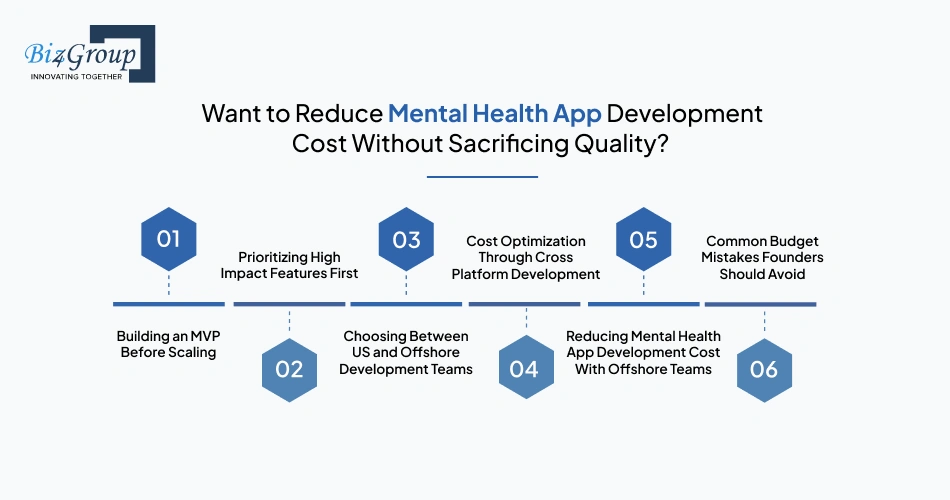
Reducing the cost to build a mental health app does not always mean removing features or choosing the cheapest development option.
In many cases, cost optimization comes from making better decisions around scope, technology, team structure, and product strategy.
Here are some of the most effective ways founders reduce mental health app development cost without affecting scalability or quality.
1. Building an MVP Before Scaling
Launching with an MVP helps validate demand before investing in larger infrastructure, advanced features, or enterprise workflows. Many successful healthcare startups start smaller and expand after understanding user behavior.
Starting with an MVP can reduce initial mental health app development cost by 30% to 60%, often reducing budgets from $150,000+ projects to $40,000 to $70,000 starting points.
2. Prioritizing High Impact Features First
Not every feature needs to be built during the first release. Focusing on essential functionality often prevents unnecessary development effort and reduces timeline risks.
Feature prioritization commonly reduces mental health app building cost by 15% to 40%, depending on complexity and scope.
3. Choosing Between US and Offshore Development Teams
Team structure significantly affects overall budgets. Offshore or hybrid development models often provide access to larger teams while reducing labor costs.
Choosing offshore teams can reduce overall mental health app development pricing by approximately 40% to 70%, depending on team composition and project complexity.
4. Cost Optimization Through Cross Platform Development
Building separate applications for multiple platforms increases both development and maintenance costs. Cross platform approaches often reduce duplication while accelerating delivery.
Cross platform development typically reduces frontend development spending by 20% to 40% compared to separate native development.
5. Reducing Mental Health App Development Cost With Offshore Teams
Many founders building healthcare products reduce spending by combining offshore execution with strong product management and compliance oversight.
For startups exploring affordable mental health app development cost with offshore development team, project savings often range between $30,000 and $100,000+ depending on scope.
6. Common Budget Mistakes Founders Should Avoid
Budget overruns often happen because teams underestimate compliance, overbuild early versions, ignore maintenance costs, or delay technical decisions.
Avoiding these mistakes alone can reduce overall development budget of mental health app projects by 10% to 30%.
Cost optimization works best when development teams understand healthcare requirements, compliance needs, and long term scalability from the beginning.
How Has Biz4Group Helped Businesses Optimize Mental Health App Development Cost Without Compromising Compliance?
Reducing mental health app development cost is rarely about removing features. The bigger challenge is building the right features, using scalable architecture, and avoiding decisions that create expensive rebuilds later.
Here are two examples where Biz4Group focused on optimizing costs while still building scalable, AI driven wellness experiences.
1. Quantum Fit: Building a Scalable Wellness Platform Without Overbuilding
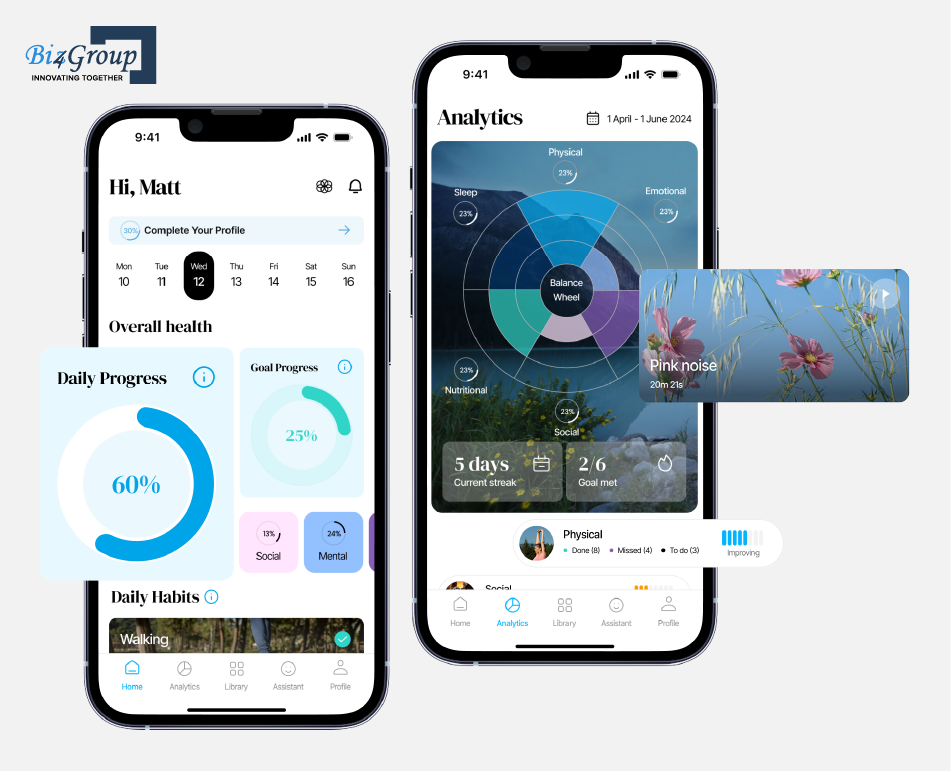
Quantum Fit is an AI powered personal development and wellness platform designed to help users improve across multiple wellness dimensions including physical, mental, social, nutritional, sleep, and lifestyle goals through personalized recommendations and progress tracking. The platform combines AI powered guidance, habit tracking, analytics, and engagement mechanisms into one ecosystem.
How cost optimization was approached:
- Prioritized core wellness experiences before expanding into larger feature sets, reducing initial development investment
- Built modular architecture so new wellness modules could be added later without rebuilding core systems
- Used AI selectively for personalized recommendations instead of introducing unnecessary AI complexity from day one
- Designed reusable infrastructure across multiple wellness categories to reduce long term development costs
- Focused on engagement features like habit tracking and analytics that increased retention without dramatically increasing infrastructure spending
This approach helped create a scalable product while controlling overall cost to build a mental health app and avoiding unnecessary feature expansion early.
2. AI Wizard: Building AI Experiences While Controlling Infrastructure Costs
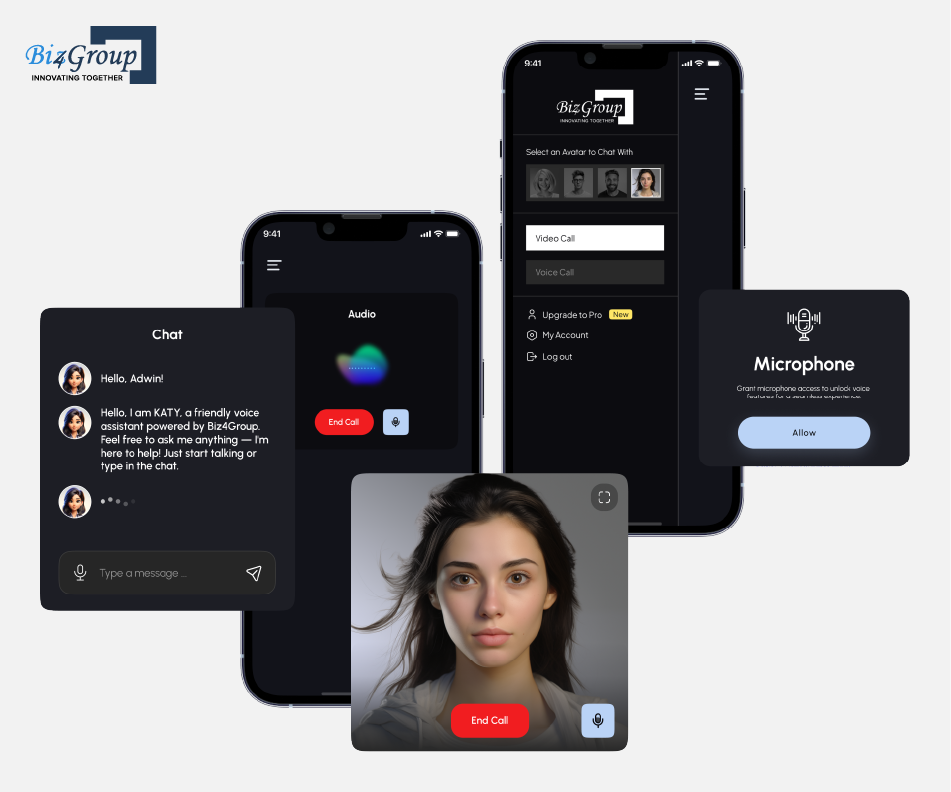
AI Wizard was developed as an AI avatar companion solution focused on delivering intelligent conversational experiences and automation while maintaining scalability and operational efficiency.
Instead of approaching AI as a feature heavy product from day one, development focused on creating a flexible architecture capable of supporting future expansion while controlling early stage investment.
How cost optimization was approached:
- Built AI capabilities around clear use cases instead of adding unnecessary model complexity
- Reduced infrastructure overhead through scalable cloud architecture and modular backend services
- Prioritized reusable components to accelerate future feature releases
- Focused development efforts on features with measurable user value rather than broad functionality expansion
- Structured architecture to support scaling without forcing major technical rebuilds later
This approach reflects an important principle when estimating mental health app development pricing: smarter architecture decisions often reduce costs more effectively than removing features.
The biggest lesson from both projects is simple.
Lowering mental health app building cost is rarely about building less. It is usually about building smarter, prioritizing correctly, and creating systems that scale without forcing expensive rework later.
Ready to build smarter instead of paying for rebuilds later?
Better planning, scalable architecture, and the right team often create better products and better budgets.
Talk to Our ExpertsWrapping Up!
Building a mental health platform in 2026 is no longer just about launching an app. It is about balancing compliance, scalability, user experience, and long term growth while keeping budgets under control.
As you've seen throughout this guide, the cost to build a mental health app can range anywhere from $40,000 to $250,000+, depending on complexity, compliance requirements, feature scope, and business goals. The challenge is not simply understanding mental health app development cost. The challenge is investing in the right things at the right time.
At Biz4Group, we've helped startups, healthcare organizations, and enterprises navigate mental health app development pricing by building scalable, compliant, and cost efficient digital health solutions.
Building a mental health platform is expensive. Rebuilding one usually costs more.
FAQ
1. How Much Does It Cost to Build a Mental Health App in 2026?
The cost to build a mental health app typically ranges between $40,000 and $250,000+ depending on features, compliance requirements, integrations, infrastructure, and platform complexity. A simple wellness app may sit at the lower end, while enterprise telehealth platforms with AI and EHR integrations usually require larger investments.
2. How Much Does It Cost to Develop a HIPAA Compliant Mental Health App?
For founders asking how much does it cost to develop a HIPAA compliant mental health app, costs generally increase because of security requirements, compliance audits, encryption, access controls, monitoring systems, and legal documentation.
Most HIPAA compliant mental health platforms start around $40,000 to $80,000+, while more advanced solutions can exceed $200,000+.
3. What Is the Total Cost of Creating a Telehealth Mental Health App From Scratch?
The total cost of creating a telehealth mental health app from scratch depends heavily on features like video consultations, scheduling, therapist dashboards, messaging, EHR integrations, and compliance requirements. Most teletherapy or telehealth platforms typically range between $100,000 and $250,000+ depending on complexity.
4. How Long Does Mental Health App Development Usually Take?
Timeline directly affects mental health app development cost. Simple MVP products generally take 3 to 5 months, mid complexity platforms often require 5 to 8 months, while enterprise solutions with compliance requirements, integrations, and advanced workflows can take 9 to 14+ months. Faster delivery timelines usually increase costs because they require larger teams and parallel development efforts.
5. Should I Hire a Local US Agency or an Offshore Team for Mental Health App Development?
The answer depends on budget, compliance needs, and team expertise. US based agencies generally provide stronger local collaboration but often come with higher costs. Offshore teams can reduce mental health app development pricing by 40% to 70% when managed properly and when healthcare experience is present. Many founders choose hybrid models to balance cost and expertise.
6. Which Features Increase Mental Health App Development Cost the Most?
Features that typically increase mental health app building cost include:
- Video therapy and communication systems
- EHR and FHIR integrations
- HIPAA compliance requirements
- AI powered experiences
- Multi user workflows
- Real time messaging systems
Communication infrastructure, compliance requirements, and integrations generally create larger cost increases than basic features alone.
7. How Do I Choose the Right Mental Health App Development Company?
Founders should look beyond hourly rates. Experience with healthcare regulations, previous mental health projects, compliance knowledge, scalability planning, security expertise, and transparent pricing models are usually better indicators than development cost alone.
