Location :
Orlando, FL, USA
Location :
Orlando, FL, USA +1 (407) 714-1616
 info@biz4group.com



















Imagine a digital system that doesn’t wait for instructions but instead, understands your business goals, learns from real-time feedback, and takes independent actions to get the job done.
Read More

 AI Summary Powered by Biz4AI
How many basketball betting platforms keep users engaged after the excitement of launch fades? More importantly, what separates the few that continue attracting bettors from the many that struggle to gain traction? The answer rarely comes down to flashy visuals or bigger promotions.
Success depends on building a platform that delivers real-time odds, accurate insights, fast transactions, and a user experience people trust. The opportunity is substantial too. According to Grand View Research, the global sports betting market is projected to grow from USD 123.4 billion in 2026 to USD 236.0 billion by 2033, fueled by the rapid growth of mobile wagering and online betting platforms.
If you're exploring basketball betting software development, this guide will help you understand what it takes to build a platform that users return to every game day. Many founders begin with the same question... "How do I build basketball betting software that can scale without compromising performance or user experience?" The answer lies in making the right product, technology, and business decisions early in the journey.
This comprehensive basketball betting software development guide explains every stage of the process. You'll learn why businesses are investing in sports betting software development, which platform model fits your goals, the features users expect, development costs, compliance requirements, and the mistakes that often derail new products.
Basketball betting software development gives businesses a chance to build a digital product that generates recurring revenue, keeps users engaged throughout the season, and expands into multiple sports over time. If you're asking, "Is basketball betting software profitable?", the answer depends less on market demand and more on how well the platform is built, monetized, and scaled.
The market signals are encouraging. According to the American Gaming Association, U.S. sportsbooks generated $16.96 billion in revenue during 2025, marking a 22.8% year-over-year increase, while bettors wagered $166.94 billion through legal sportsbooks. These numbers highlight the growing demand for regulated digital betting experiences, especially towards online platforms.
Growth like this creates room for new entrants, especially those that focus on performance, personalization, and user trust rather than trying to replicate existing sportsbooks.
Every successful betting platform solves multiple business objectives at once. It attracts users, keeps them active, and creates more than one revenue stream.
|
Business Driver |
Why It Matters |
|---|---|
|
Strong demand for basketball betting |
NBA, NCAA, EuroLeague, and international tournaments keep users active throughout the year. |
|
Recurring revenue opportunities |
Earnings can come from commissions, subscriptions, premium analytics, affiliate partnerships, and in-app advertising. |
|
Higher user retention |
Features like live odds, personalized notifications, and AI-powered insights encourage users to return regularly. |
|
Easier product expansion |
A well-planned platform can later support football, baseball, hockey, fantasy sports, and other betting formats. |
|
Greater business control |
Building your own platform gives you ownership over branding, product roadmap, pricing, and user experience. |
Every investment should create measurable value. A well-designed basketball betting platform offers advantages that continue well after launch.
Create A Brand That Users Remember
Your platform becomes a recognizable product with its own experience, loyalty programs, and community. Consistent branding also builds trust, which plays a major role in user retention.
Open Multiple Revenue Channels
Sportsbooks rarely depend on betting commissions alone. Premium AI predictions, subscription plans, affiliate partnerships, advertising, fantasy contests, and exclusive memberships all contribute to recurring revenue.
Improve User Engagement with Better Experiences
Users expect more than odds and score updates. Personalized recommendations, real-time notifications, leaderboards, social interactions, and intelligent analytics keep them engaged before, during, and after every game. Businesses planning AI-first products often explore how to use AI for sports betting to deliver smarter recommendations and personalized betting experiences.
Build A Product That Can Grow
A solid architecture makes future expansion much easier. Basketball can be the starting point, followed by football, baseball, hockey, fantasy leagues, or even micro-betting, all while reusing much of the existing technology foundation.
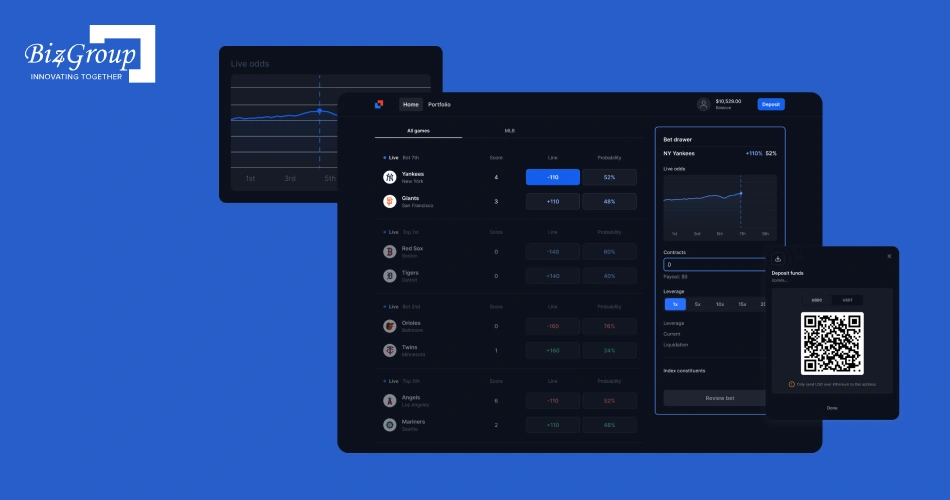
Our project, PredictEX, demonstrates how thoughtful product decisions translate into measurable business outcomes.
The platform focused on helping users make informed betting decisions instead of overwhelming them with data. That balance between AI, real-time information, and usability encouraged stronger engagement while creating a product users wanted to revisit throughout the season.
Key Highlights
Basketball betting continues to attract entrepreneurs because it combines consistent user demand with multiple monetization opportunities. Next up, we'll discuss the various types of basketball betting platforms you can build.
The answer depends on your business goals, target audience, budget, and launch timeline. Some businesses need a lightweight MVP to validate demand, while others require a full-scale platform capable of supporting thousands of concurrent users, AI predictions, and multiple sports.
Understanding the strengths of each platform type makes it much easier to invest in the right product from day one.
Basketball Betting Platform Comparison
|
Platform Type |
Best For |
Estimated Cost |
Typical Timeline |
Scalability |
|---|---|---|---|---|
|
Fixed Odds Sportsbook |
Startups |
$20,000 to $50,000+ |
2 to 4 months |
Medium |
|
Live Betting Platform |
Growing sportsbooks |
$50,000 to $100,000+ |
4 to 6 months |
High |
|
Fantasy Basketball Platform |
Sports communities |
$40,000 to $90,000+ |
3 to 5 months |
High |
|
Social Betting Platform |
Community-driven apps |
$35,000 to $80,000+ |
3 to 5 months |
Medium |
|
AI-Powered Betting Platform |
Businesses focused on personalization |
$80,000 to $180,000+ |
5 to 8 months |
Very High |
|
Multi-Tenant Sportsbook Platform |
Operators managing multiple brands |
$150,000 to $250,000+ |
7 to 10 months |
Enterprise |
Fixed odds platforms remain one of the most popular choices for businesses entering basketball betting software development. Users place bets before the game begins, and the payout is determined by the odds available at the time the wager is placed.
This model works well for startups because it requires fewer real-time calculations than live betting while still offering a familiar experience for basketball fans.
Best suited for
Many founders ask, "Should I build a live betting app from the start?" Well, live betting has become one of the fastest-growing segments because users want to place wagers while games are in progress. Every possession, timeout, and scoring run can create new betting opportunities.
Building this type of platform requires reliable live data feeds, low-latency infrastructure, and intelligent odds management. Businesses evaluating this model should also understand why most betting apps fail at real-time match accuracy before selecting sports data providers and backend architecture.
Estimated investment: $50,000 to $100,000+
Fantasy sports platforms reward strategy rather than traditional wagering. Users build teams, earn points based on real player performances, compete against others, and often subscribe for premium analytics or contests.
Estimated investment: $40,000 to $90,000+
Social betting adds community engagement to sports predictions. Instead of betting against a sportsbook, users challenge friends, join private groups, participate in leaderboards, and share predictions.
This approach increases daily engagement without requiring users to place traditional wagers every time they open the app.
Estimated investment: $35,000 to $80,000+
We hear this one question too often: Can AI improve a betting platform? Yes, when AI solves real user problems.
Modern AI-powered sportsbooks analyze player statistics, betting history, injuries, momentum shifts, and live game data to generate prediction scores, personalized betting suggestions, fraud detection, and dynamic user experiences.
Businesses planning this type of product often combine AI integration services with domain-specific sports data instead of treating AI as an isolated feature.
Estimated investment: $80,000 to $180,000+
A multi-tenant architecture allows one backend to power several sportsbooks under different brands. This model is popular among enterprise operators managing multiple regions, languages, or betting brands because administration, infrastructure, and updates remain centralized.
Organizations considering enterprise expansion often evaluate a multi-tenant AI sports betting platform before launching several independent products.
Estimated investment: $150,000 to $250,000+
If you're asking, "Which betting platform should I build?", the answer comes down to your business objectives.
|
If You Want To... |
Recommended Platform |
|---|---|
|
Validate an idea quickly |
Fixed Odds MVP |
|
Build a community |
Social Betting |
|
Increase engagement |
Live Betting |
|
Differentiate with AI |
AI-Powered Platform |
|
Expand across brands |
Multi-Tenant Platform |
|
Create a skill-based product |
Fantasy Basketball |
The platform you choose influences infrastructure, compliance requirements, monetization strategy, and future expansion. That's why the next step is understanding the capabilities every successful betting product should include before development begins.
The wrong platform can double your costs before development even begins.
Find My Best-Fit PlatformEvery betting platform may look different on the surface, but successful products share one thing in common. They solve real user problems quickly and consistently.
If you're wondering, "What features should basketball betting software include?", the answer depends on your audience, business model, and product goals. Still, a handful of capabilities have become essential for every modern sportsbook, regardless of its size.
The table below highlights the features users expect today and the business value each one delivers.
|
Feature |
Why It Matters |
Business Impact |
|---|---|---|
|
User Registration & KYC |
Verifies user identity and supports regulatory compliance. |
Builds trust and reduces fraudulent accounts. |
|
Live Odds Integration |
Displays constantly updated betting odds throughout the game. |
Encourages more frequent betting activity. |
|
Bet Builder |
Allows users to combine multiple selections into a single wager. |
Increases average bet value and engagement. |
|
Live Match Tracking |
Shows scores, player statistics, and game events in real time. |
Keeps users active without leaving the platform. |
|
Secure Wallet & Payments |
Supports deposits, withdrawals, and transaction history. |
Improves payment confidence and user retention. |
|
Personalized Notifications |
Sends alerts for odds changes, game starts, and betting opportunities. |
Drives repeat visits. |
|
Multi-League Support |
Covers NBA, NCAA, EuroLeague, and other competitions. |
Expands audience reach. |
|
Admin Dashboard |
Manages users, betting markets, payments, and reports. |
Simplifies daily operations. |
|
Analytics Dashboard |
Tracks betting trends, revenue, and user behavior. |
Supports faster business decisions. |
|
Responsible Gaming Controls |
Includes betting limits, self-exclusion, and activity monitoring. |
Supports compliance and user protection. |
Every feature above contributes to one of three business goals.
For example, live odds, bet builders, and match tracking encourage users to remain active throughout a game, while KYC, secure payments, and responsible gaming features help operators meet regulatory requirements. Businesses planning turnkey sports betting solutions often prioritize these core capabilities before expanding into advanced AI-powered experiences.
Another common question founders ask is, "Can I launch without every advanced feature?" Yes. Many successful products begin with the essentials and expand based on user feedback. The right roadmap depends on business priorities rather than packing every feature into version one.
AI has moved well beyond simple prediction models. Today, it helps sportsbooks deliver faster decisions, better personalization, and smarter operations behind the scenes. The goal is not to replace human judgment. The goal is to help users discover relevant insights while helping operators manage growing platforms more efficiently.
|
AI Feature |
Practical Use |
Business Value |
|---|---|---|
|
Predictive Betting Insights |
Evaluates historical performance, injuries, team form, and live statistics to surface probability-based recommendations. |
Helps users make more informed betting decisions. |
|
Personalized Betting Recommendations |
Suggests markets based on user preferences and betting history. |
Improves session duration and repeat visits. |
|
Fraud & Risk Detection |
Identifies unusual betting behavior using anomaly detection models. |
Reduces financial risk and protects platform integrity. |
|
Intelligent Odds Monitoring |
Detects unusual market movements and supports pricing decisions. |
Improves operational accuracy. |
|
AI Customer Support |
Resolves common user questions through conversational assistants. |
Reduces support workload and response times. |
|
Churn Prediction |
Identifies users likely to become inactive. |
Enables proactive retention campaigns. |
|
Content Personalization |
Adjusts dashboards, promotions, and notifications for each user. |
Creates a more relevant user experience. |
|
Automated Reporting |
Generates operational and betting reports for platform administrators. |
Saves manual effort and improves decision-making. |
Many businesses focus on AI models while overlooking the quality of the data behind them. That approach rarely produces consistent results.
Prediction accuracy, personalized recommendations, and fraud detection all depend on reliable, low-latency sports data. This is why leading sportsbooks invest heavily in trusted providers.
Also read: Why enterprise sports data APIs like Sportradar matter more than features?
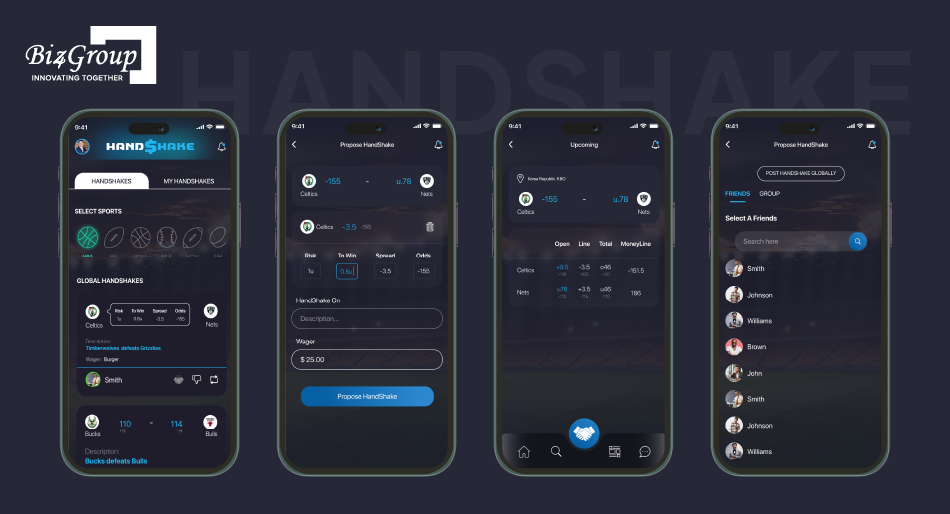
One of the biggest challenges for sportsbooks is keeping users engaged between wagers. Instead of relying only on promotions or push notifications, AI can create more personalized and interactive experiences throughout the user journey.
This betting app for sports enthusiasts showed that AI doesn't always have to predict match outcomes to deliver value. It can also analyze user behavior, personalize betting suggestions, surface relevant contests, and strengthen community engagement.
Key Highlights
For operators building an AI sports betting software, this creates more opportunities to increase session duration, user retention, and lifetime value while offering a more engaging betting experience.
The best tech stack for basketball betting software development is one that delivers real-time performance, scales with growing user traffic, and integrates reliably with third-party sports data providers, payment gateways, and compliance services. There isn't a single technology that works for every platform. Instead, the right combination depends on your product vision, expected traffic, AI capabilities, and expansion plans.
If you're wondering, "Which technologies are used to build a basketball betting platform?", the answer usually includes modern frontend frameworks, scalable backend services, cloud infrastructure, real-time communication tools, and enterprise-grade betting APIs working together.
Recommended Tech Stack for Basketball Betting Software
|
Layer |
Recommended Technologies |
Why It Matters |
|---|---|---|
|
Frontend |
React, Next.js |
Fast rendering, responsive UI, SEO support for web portals |
|
Mobile Apps |
Flutter, React Native |
Single codebase for Android and iOS with native-like performance |
|
Backend |
Node.js, Python, Go |
Handles betting logic, APIs, authentication, and AI workloads |
|
Database |
PostgreSQL, Redis |
Reliable transactional storage with high-speed caching |
|
Real-Time Communication |
WebSockets, Socket.IO |
Instantly updates odds, scores, and betting events |
|
Cloud Infrastructure |
AWS |
Supports auto scaling, high availability, and global deployments |
|
AI & Machine Learning |
Python, TensorFlow, OpenAI APIs |
Powers predictive analytics, personalization, and intelligent automation |
|
Sports Data APIs |
Sportradar, Genius Sports, API Sports |
Supplies live scores, odds, player statistics, and event data |
|
Payments |
Stripe, PayPal, Trustly |
Secure deposits, withdrawals, and transaction management |
|
Security |
JWT, OAuth 2.0, SSL, PCI DSS |
Protects user accounts, payments, and sensitive information |
|
DevOps |
Docker, Kubernetes, GitHub Actions |
Simplifies deployment, scaling, and continuous delivery |
Many founders focus on choosing frameworks before defining how the platform should operate under real-world conditions.
A basketball betting platform processes thousands of concurrent actions during popular games. Odds change within seconds, users place wagers simultaneously, and payment requests arrive alongside live data updates. A loosely connected architecture can quickly become difficult to maintain as traffic grows.
That's why modern sportsbook software development increasingly relies on microservices, where each core function operates independently.
For example:
This architecture makes it easier to update one component without interrupting the rest of the platform. It also improves fault isolation, allowing critical services to continue operating even if a non-essential component experiences issues.
Real-time performance depends on much more than fast servers. Every event travels through a connected pipeline before reaching the user.
|
Stage |
What Happens |
|---|---|
|
Sports Data Provider |
Live game events, odds, and player statistics are received from trusted APIs. |
|
Data Processing Layer |
Incoming data is validated, normalized, and distributed across platform services. |
|
Betting Engine |
Markets are updated, betting rules are applied, and wagers are processed. |
|
AI Decision Layer |
Recommendation models evaluate user context and generate personalized insights where applicable. |
|
User Applications |
Web and mobile apps display updated information with minimal latency. |
|
Analytics & Monitoring |
Operational dashboards track performance, system health, and user activity. |
Not always.
Many successful products combine custom-built modules with trusted third-party services for payments, identity verification, notifications, and sports data. This hybrid approach reduces development effort while preserving the flexibility to expand the platform over time.
Technology alone doesn't determine the success of a betting platform. Execution matters just as much. In the next section, we'll walk through the basketball betting software development process.
Also read: Why top US betting apps rely on multiple sports data providers
Building successful basketball betting software starts with a clear product strategy, not with writing code. Every stage of the development process influences the final product, from defining your target audience and selecting betting markets to designing an intuitive interface, integrating live sports data, and preparing for launch.
If you're wondering, "How do I build basketball betting software?", the seven-step framework below reflects how experienced sports betting software development teams approach projects that are built to scale.
Basketball Betting Software Development Process
|
Step |
What Happens |
Why It Matters |
|---|---|---|
|
1 |
Define the product strategy |
Establishes the business model, target audience, and product roadmap. |
|
2 |
Plan features and technical requirements |
Prioritizes functionality and avoids unnecessary development costs. |
|
3 |
Design the user experience |
Creates intuitive betting flows that improve user adoption. |
|
4 |
Build an MVP |
Validates the product before investing in advanced capabilities. |
|
5 |
Develop the platform |
Implements the frontend, backend, APIs, and core betting logic. |
|
6 |
Test, secure, and optimize |
Ensures reliability, security, and smooth performance under load. |
|
7 |
Launch, monitor, and improve |
Uses real user feedback to guide future releases. |
Every successful platform begins with a business decision rather than a technical one.
Questions worth answering early include:
A clear product strategy prevents unnecessary feature development and creates a roadmap that aligns technology with business goals.
Once the business direction is defined, the next step is translating ideas into technical requirements.
This includes identifying essential features, selecting third-party integrations, outlining user journeys, and defining performance expectations.
Typical planning activities include:
A detailed specification at this stage reduces rework and helps development teams estimate timelines and budgets more accurately.
The success of a betting platform depends on how quickly users can understand and navigate it during live games.
Every tap matters.
Navigation, bet slips, live score updates, account management, and payment flows should feel effortless, even when thousands of users are active simultaneously.
Working with an experienced UI/UX design company helps transform product requirements into interfaces that balance usability, accessibility, and business objectives before development begins.
Also read: Top 15 UI/UX design companies in USA
Many founders assume they need a fully featured sportsbook before launching. In reality, reliable MVP development services often delivers faster validation with lower upfront investment.
A typical sportsbook MVP includes:
Launching with an MVP allows businesses to validate assumptions, gather user feedback, and prioritize future enhancements based on actual usage instead of guesswork.
Also read: Top 12+ MVP development companies in USA
This is where the product starts taking shape.
Development teams build the frontend and backend, connect sports data providers, implement betting logic, integrate payment gateways, and establish secure communication between every system.
Depending on project requirements, this stage may also include:
Each module should be designed for future expansion without disrupting existing functionality.
Before launch, every component must be validated under realistic operating conditions. Testing extends well beyond finding software bugs.
It includes:
Resolving issues before launch helps protect user trust while reducing operational risks after deployment.
Launching the platform marks the beginning of product growth, not the end of development. User behavior, betting activity, feature adoption, and operational metrics provide valuable insights for future releases.
Post-launch improvements often include:
Successful basketball betting app development follows an iterative approach where each release builds on real customer feedback instead of assumptions.
The development process provides the roadmap, but budgeting determines how much can be achieved at each stage. Now, the next section breaks down the actual cost of basketball betting software development.
The average cost of basketball betting software development ranges from $20,000-$250,000+, depending on the platform's complexity, feature set, third-party integrations, AI capabilities, compliance requirements, and scalability goals. A startup launching an MVP can enter the market with a relatively modest investment, while an enterprise sportsbook serving multiple regions and betting markets requires a much larger budget.
If you're asking, "How much does it cost to build basketball betting software?", the answer depends less on the number of screens and more on the business you're trying to build.
Average Cost by Development Stage
|
Development Stage |
Typical Investment |
Best For |
|---|---|---|
|
MVP |
$20,000-$50,000+ |
Startups validating a business idea with core betting functionality |
|
Advanced Platform |
$50,000-$120,000+ |
Growing sportsbooks adding live betting, AI features, analytics, and multiple payment options |
|
Enterprise Platform |
$120,000-$250,000+ |
Large operators requiring multi-region support, enterprise security, automation, and high scalability |
Launching with a sports betting app MVP is often the most cost-effective path because it validates product demand before significant investment.
Every additional capability increases development effort, testing, infrastructure, and ongoing maintenance. Understanding these cost drivers helps businesses prioritize investments that deliver measurable value instead of overspending on unnecessary functionality.
Average additional investment: $5,000-$60,000 per major component, depending on complexity.
|
Cost Driver |
Estimated Cost Impact |
Why It Affects Budget |
|---|---|---|
|
Platform Complexity |
+$10,000-$50,000 |
More workflows, betting markets, and administrative controls increase development effort. |
|
Web and Mobile Apps |
+$8,000-$35,000 |
Supporting multiple platforms requires additional design, development, and testing. |
|
Live Odds & Sports Data APIs |
+$5,000-$25,000 |
Enterprise-grade API integration, data normalization, and monitoring add complexity. |
|
AI Features |
+$15,000-$60,000 |
Recommendation engines, predictive analytics, and intelligent automation require specialized development. |
|
Payment & Wallet Integration |
+$5,000-$20,000 |
Secure payment processing, wallet management, and transaction reconciliation require careful implementation. |
|
Compliance & Security |
+$8,000-$30,000 |
KYC, AML, audit logging, encryption, and responsible gaming features increase development scope. |
|
Cloud Infrastructure |
+$3,000-$15,000 |
Auto scaling, monitoring, backups, and disaster recovery contribute to operational costs. |
|
Admin & Analytics Tools |
+$5,000-$20,000 |
Dashboards, reporting, and operational controls require additional backend development. |
Not every platform needs every feature on day one. Prioritizing capabilities based on business objectives often delivers a stronger return than trying to build everything at once.
Also read: How much does it cost to develop an AI sports betting software?
Many founders budget only for development and underestimate the recurring expenses that begin after launch. Planning for these costs early reduces financial surprises and helps maintain a stable product over time.
Average ongoing expense: $1,000-$12,000 per month, depending on platform size and traffic.
Some of the most common post-launch expenses include:
These recurring expenses are part of operating a reliable sportsbook and should be considered alongside the initial development budget.
Reducing costs doesn't necessarily mean removing features. The biggest savings usually come from making smarter product decisions and planning development in phases.
Potential savings: 15%-40% compared to building every feature in the initial release.
Practical ways to optimize your investment include:
Optimizing costs is about investing where it creates the greatest business value, not simply choosing the lowest development quote.
The total investment depends on the type of platform you choose, but cost is only one side of the equation. The next decision is equally important: Should you build custom basketball betting software or choose a white-label solution?
Also read: Honest breakdown of sports betting app development cost
A quick conversation can help you avoid expensive features you don't actually need.
Call a Sportsbook ArchitectThe right choice depends on your launch timeline, budget, growth plans, and the level of control you want over your product. White-label platforms help businesses enter the market quickly with pre-built functionality, while custom basketball betting software development gives you complete ownership over features, branding, integrations, and future expansion.
If you're asking, "Should I build custom betting software or choose a white-label platform?", the comparison below highlights where each approach fits best.
|
Comparison Factor |
Custom Basketball Betting Software |
White-Label Sports Betting Platform |
|---|---|---|
|
Development Timeline |
Typically 8-12 weeks, depending on complexity |
Typically 1-3 weeks with configuration and branding |
|
Initial Investment |
$20,000-$250,000+, based on features and scale |
Lower upfront licensing cost with recurring platform fees |
|
Product Ownership |
Full ownership of codebase, infrastructure, and roadmap |
Vendor owns the core platform |
|
Branding & User Experience |
Fully customized design and workflows |
Limited to available customization options |
|
Feature Flexibility |
Build any feature, integration, or betting market |
Restricted by vendor capabilities and release cycles |
|
AI Integration |
Complete freedom to implement AI betting assistants, predictive analytics, and automation |
AI options depend on vendor support and available modules |
|
Third-Party Integrations |
Integrate preferred payment gateways, sports APIs, and business tools |
Limited to supported integrations |
|
Scalability |
Designed to support future growth, additional sports, and regional expansion |
Scaling depends on the provider's platform architecture |
|
Maintenance |
Managed by your development team or technology partner |
Managed primarily by the white-label vendor |
|
Best Fit |
Businesses building a long-term sportsbook brand |
Businesses validating an idea or entering the market quickly |
Custom development offers greater flexibility, but it also requires more planning and investment. White-label platforms reduce time to market, although businesses may eventually outgrow the platform as user expectations and operational requirements increase. This transition is common enough that many operators later explore migrating from white label to custom sports betting software development once they need greater control over features and scalability.
Quick Decision Guide
If you're still deciding which approach fits your business, use this simple framework.
|
Choose This Approach |
When It Makes Sense |
|---|---|
|
Build Custom |
You want complete ownership, unique features, AI capabilities, long-term scalability, and full control over your product roadmap. |
|
Choose White-Label |
You want to launch quickly, validate market demand, minimize upfront investment, and use an established platform. |
|
Choose a Hybrid Approach |
You want to launch with a white-label foundation while gradually replacing core modules with custom development as the business grows. |
There isn't a universal winner. The right decision depends on where your business is today and where you expect it to be in the next few years. If speed to market is your priority, a white-label platform may be the right starting point. If differentiation, flexibility, and long-term growth matter more, investing in custom betting software development often delivers greater value over time.
The platform model is only one part of the equation. Before launching your sportsbook, you'll also need to meet licensing, security, and responsible gambling requirements. That's where compliance becomes the next critical consideration.
Also read: Build vs. buy a sportsbook platform
Basketball betting software must comply with licensing regulations, user verification requirements, data security standards, and responsible gambling policies before it can legally operate in regulated markets. Compliance is not a feature added at the end of development. It influences how the platform is designed, how users are onboarded, and how every transaction is recorded.
If you're asking, "How do I build compliant basketball betting software?", the answer depends on the jurisdictions you plan to serve. Requirements vary across countries and even between U.S. states, making compliance planning one of the earliest decisions in basketball betting software development.
Key Compliance Areas Every Sportsbook Should Address
|
Compliance Area |
Why It Matters |
Typical Implementation |
|---|---|---|
|
Licensing |
Determines where the sportsbook can legally operate. |
Obtain licenses from the appropriate regulatory authority before launch. |
|
KYC (Know Your Customer) |
Confirms user identity and age before allowing wagering. |
Identity verification, document validation, and age checks during registration. |
|
AML (Anti-Money Laundering) |
Detects suspicious financial activity and reduces fraud risks. |
Transaction monitoring, risk scoring, and audit trails. |
|
Responsible Gambling |
Promotes safer betting practices and regulatory compliance. |
Deposit limits, self-exclusion, cooling-off periods, and activity alerts. |
|
Data Privacy |
Protects user information and financial records. |
Encryption, consent management, and secure data storage. |
|
Payment Security |
Safeguards deposits and withdrawals. |
PCI DSS-compliant payment processing and secure transaction workflows. |
|
Audit & Reporting |
Helps regulators review platform activity when required. |
Immutable logs, betting history, and compliance reporting tools. |
Each of these requirements affects product planning, infrastructure, and operational workflows. Addressing them early is typically more efficient than retrofitting compliance after the platform is already in production.
One of the most common misconceptions is that a sportsbook approved in one jurisdiction can automatically operate elsewhere.
That isn't how regulated betting works.
Licensing authorities define their own rules for user verification, taxation, payment processing, advertising, and reporting. Businesses planning to launch in the United States should evaluate requirements on a state-by-state basis because sports betting regulations across US states differ significantly.
Many operators assume compliance introduces friction that discourages new users.
In practice, thoughtful implementation can achieve both regulatory compliance and a smooth customer experience.
For example:
When compliance is integrated naturally into the product experience, users gain confidence in the platform while operators reduce regulatory and operational risks.
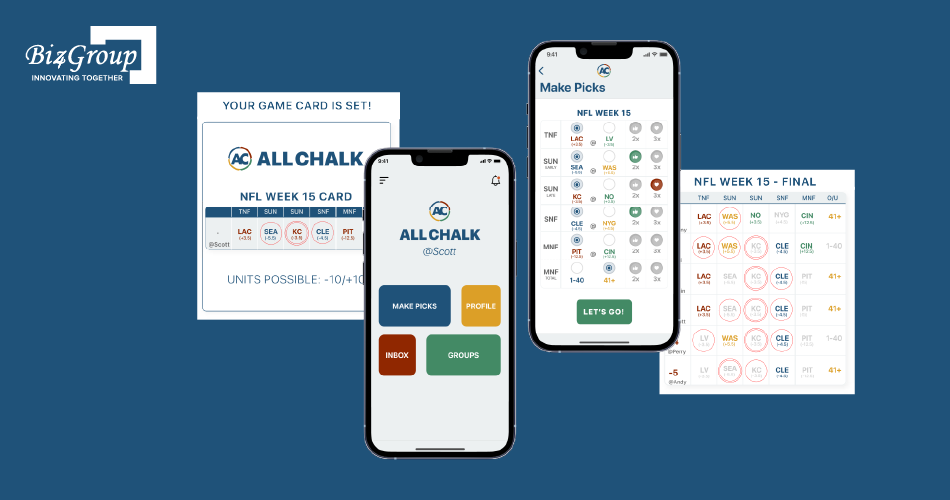
Projects like All Chalk demonstrate that compliance is closely tied to system architecture rather than individual features. Secure authentication, reliable data handling, and centralized administration create a stronger foundation for meeting evolving regulatory requirements while maintaining a consistent user experience.
Key Highlights
The next section explores the monetization models for basketball betting software, including the most common ways sportsbooks turn user engagement into recurring income.
Also read: How to build AI sports betting app following USA compliance?
Basketball betting software generates revenue through multiple income streams rather than relying on wagers alone. While betting commissions remain the primary source of income for many operators, modern platforms also earn from subscriptions, affiliate partnerships, advertising, premium analytics, and value-added services. The right monetization strategy depends on your audience, product positioning, and business goals.
If you're wondering, "How do basketball betting apps make money?", the answer is usually a combination of the models below rather than a single revenue source.
The most common revenue model is the betting margin, often referred to as the sportsbook hold. Instead of earning from every winning bet, operators generate revenue from the difference between the odds offered and the actual payouts over time.
This model works best for platforms with consistent user activity and balanced betting markets. As the number of active users grows, even a modest margin can produce predictable recurring revenue.
Not every user is looking for the same experience. Some are willing to pay for additional value, such as advanced statistics, exclusive betting insights, personalized dashboards, or early access to new features.
Subscription plans create a recurring revenue stream while giving loyal users more reasons to stay engaged throughout the season.
Many platforms generate income by referring users to sportsbooks, payment providers, fantasy sports platforms, or sports-related services.
Affiliate partnerships work especially well for businesses focused on content, betting insights, or comparison tools. If affiliate marketing is part of your business strategy, building a dedicated sports betting affiliate website alongside your betting platform can create an additional source of recurring revenue.
As user traffic grows, advertising becomes another valuable revenue channel.
Sports brands, equipment manufacturers, streaming services, and gaming companies often look for opportunities to reach highly engaged sports audiences. Carefully placed advertisements, sponsored campaigns, and branded promotions can generate income without disrupting the overall user experience.
The focus should remain on relevance. Poorly targeted advertising can reduce user satisfaction and long-term retention.
Businesses serving professional bettors or sports enthusiasts can monetize advanced insights instead of basic betting functionality.
Examples include:
This model is especially attractive because users pay for information that helps them make better decisions, creating value beyond the betting transaction itself.
Some companies build basketball betting software not only for their own brand but also as a product they can license to other operators.
Revenue comes from implementation fees, recurring licensing agreements, platform maintenance, and premium support services. This model works well for businesses targeting multiple markets or serving regional sportsbook operators.
Small purchases can contribute meaningful revenue while strengthening user engagement.
Platforms may offer:
When designed thoughtfully, these purchases complement the core betting experience rather than distracting from it.
There isn't a single revenue model that works for every sportsbook.
A startup validating its first product may begin with betting commissions and affiliate partnerships. An AI-driven platform might prioritize premium subscriptions and analytics. Enterprise operators often combine several revenue streams to reduce dependence on any one source.
And generating revenue is only half the challenge. Sustaining that growth requires avoiding technical, operational, and business mistakes that can limit adoption or increase costs. The next section covers the most common pitfalls in basketball betting software development and practical ways to avoid them.
Also read: How enterprise-grade sports APIs power $10M+ betting app valuations?
Successful basketball betting software development is rarely limited by technology. More often, projects lose momentum because of product decisions that could have been avoided with better planning. Understanding these challenges early helps businesses reduce unnecessary costs, improve user adoption, and build a platform that remains competitive as the market evolves.
If you're wondering, "What are the biggest challenges in basketball betting software development?", the following are some of the most common pitfalls and the best ways to address them.
Launching with every possible betting market may seem like a competitive advantage, but it often creates the opposite effect.
Why it happens Many businesses assume that offering more betting options automatically attracts more users. In reality, too many low-interest markets can overwhelm users, increase operational complexity, and dilute engagement.
Solution Start with the betting markets your audience values most, such as NBA games, player props, or live betting, then expand based on actual user behavior and platform analytics. A focused basketball betting software strategy almost always outperforms a feature-heavy launch.
Getting users to install your app is only the beginning. Building a profitable sportsbook depends on keeping them engaged throughout the season.
Why it happens Many operators invest heavily in marketing while overlooking the product experiences that encourage users to return.
Solution Build retention into the platform from day one through personalized recommendations, loyalty programs, seasonal campaigns, and meaningful basketball betting analysis that helps users make informed decisions. Long-term engagement generally delivers a stronger return than continuously replacing inactive users.
Users have countless betting platforms to choose from. If your product offers the same experience as everyone else, convincing users to switch becomes much harder.
Why it happens Businesses often replicate popular sportsbooks instead of identifying a unique market position.
Solution Differentiate through exclusive features such as a basketball bet creator, AI-assisted insights, community challenges, or specialized experiences for niche audiences. The goal is to create reasons for users to choose your platform instead of simply comparing odds.
Many sportsbooks collect large amounts of data but rarely use it to improve the product.
Why it happens Teams focus on launching features without tracking how users interact with them after release.
Solution Measure user journeys, feature adoption, abandoned bet slips, betting trends, and campaign performance. These insights help prioritize future releases based on evidence instead of assumptions. Strong reporting capabilities are often what separate growing sportsbooks from those that struggle to scale.
Adding AI to a platform doesn't automatically improve the user experience.
Why it happens Some businesses introduce AI simply because it's popular, without defining the problem it should solve.
Solution Use AI where it delivers measurable value, such as personalized recommendations, intelligent search, operational automation, or player performance insights. Businesses investing in custom basketball betting software solutions should treat AI as part of the overall product strategy rather than an isolated feature.
Many founders think development ends once the platform goes live.
Why it happens The initial release is often treated as the final milestone instead of the starting point for continuous improvement.
Solution Plan for regular product updates, feature validation, A/B testing, and performance optimization. New betting markets, additional payment methods, support for NBA betting software, and evolving user expectations should all be part of the long-term roadmap. As platforms mature, these continuous improvements become just as important as the original launch.
Also read: Challenges in modern sports betting app development
Avoiding mistakes is only part of the equation. The strongest betting software development services combine technical excellence with disciplined product planning.
Keep these principles in mind throughout development:
The most successful sportsbooks aren't necessarily the ones with the largest feature lists. They're the ones that consistently improve, respond to user behavior, and make informed product decisions over time.
The best basketball betting software development company is one that understands the business behind sports betting, not just the technology. Beyond writing code, your development partner should be able to guide product decisions, anticipate technical challenges, and build a platform that supports long-term growth.
If you're wondering, "How do I choose a sports betting app development company?", the checklist below can help you evaluate vendors with confidence.
Before signing any contract, verify that the team has experience building sportsbooks or closely related gaming platforms.
Ask questions like:
A dependable partner, like Biz4Group, should spend time understanding your business before proposing a solution.
Look for a team that asks about:
The quality of these early conversations often reflects the quality of the final product.
Modern sportsbooks depend on far more than frontend and backend development.
Make sure the vendor has proven experience with:
If AI plays a central role in your roadmap, partnering with an experienced AI development company can make it easier to introduce intelligent features without increasing technical complexity.
A betting platform must connect with multiple external systems that need to work together reliably.
Confirm the vendor has hands-on experience integrating:
At Biz4Group, projects are typically planned with this integration-first approach so future enhancements can be added without rebuilding the platform from scratch.
Launching your platform is only the first milestone.
Ask whether the vendor provides:
A long-term technology partner should be prepared to support the product well beyond launch.
The lowest proposal isn't always the best investment.
Instead of comparing estimates alone, evaluate:
Businesses looking for betting software development services often achieve better results by selecting a partner that understands both technology and sportsbook operations rather than simply choosing the lowest bid.
Choosing the right sports betting app development company is one of the most important decisions you'll make during the development journey.
Also read: Top 14 sports betting software development companies in the USA
The right architecture today can save months of redevelopment tomorrow. Let's validate your sportsbook idea before you invest.
Let's TalkBuilding a successful betting platform takes much more than adding odds and payment gateways. Every decision, from choosing the right platform type and technology stack to planning compliance, monetization, and scalability, directly impacts the product's success. As this guide has shown, basketball betting software development requires a balanced approach that combines business strategy, technical expertise, and a deep understanding of user expectations. Whether you're planning an MVP or a full-scale sportsbook, investing in the right foundation today makes it easier to grow tomorrow.
If you're still asking, "How do I build basketball betting software?" or searching for reliable betting software development services, the answer starts with choosing the right development partner. A well-built platform isn't defined by the number of features it offers. It's defined by how reliably it performs, how effectively it engages users, and how easily it adapts as your business evolves.
At Biz4Group LLC, we've helped startups, gaming businesses, and enterprises transform sportsbook ideas into scalable digital products by combining AI expertise, real-time sports data integration, cloud-native engineering, and user-focused product development. From custom sportsbook platforms and intelligent betting experiences to enterprise-grade architectures, our team builds solutions designed around business outcomes.
Ready to build your basketball betting platform? Let's turn your vision into a high-performing product that users trust, investors value, and your business can confidently scale. Connect with Biz4Group today and start building a sportsbook that's engineered for growth from day one.
Yes. Most modern basketball betting software is developed with a cross-platform strategy, allowing users to access the platform through web browsers, Android devices, and iPhones. This approach provides a consistent user experience across devices while reducing development effort and simplifying future updates.
The timeline depends on the platform's complexity, integrations, and feature set. Most basketball betting software development projects take 8-12 weeks to build a production-ready platform. However, at Biz4Group, we can deliver a functional MVP in 2-4 weeks by using reusable components, proven development frameworks, and pre-built modules that reduce both development time and overall project cost.
Yes. If the platform is designed with scalability in mind, additional sports such as football, baseball, hockey, tennis, or esports can be introduced without rebuilding the entire application. Many businesses start with basketball to validate their product before expanding into other betting markets.
A modern betting platform typically integrates with sports data providers, payment gateways, identity verification services, notification platforms, analytics tools, and CRM systems. The exact integrations depend on your business model, target market, and compliance requirements.
Absolutely. Multi-language and multi-currency support allows operators to serve users across different regions from a single platform. This is particularly useful for businesses planning international expansion or operating in markets with diverse user bases.
Yes. With custom basketball betting software solutions, operators can introduce unique betting markets, configure odds formats, create promotional campaigns, and even offer specialized experiences such as player props or a basketball bet creator. This flexibility helps businesses differentiate their platform instead of relying on standard sportsbook offerings.

Our website require some cookies to function properly. Read our privacy policy to know more.