Location :
Orlando, FL, USA
Location :
Orlando, FL, USA +1 (407) 714-1616
 info@biz4group.com









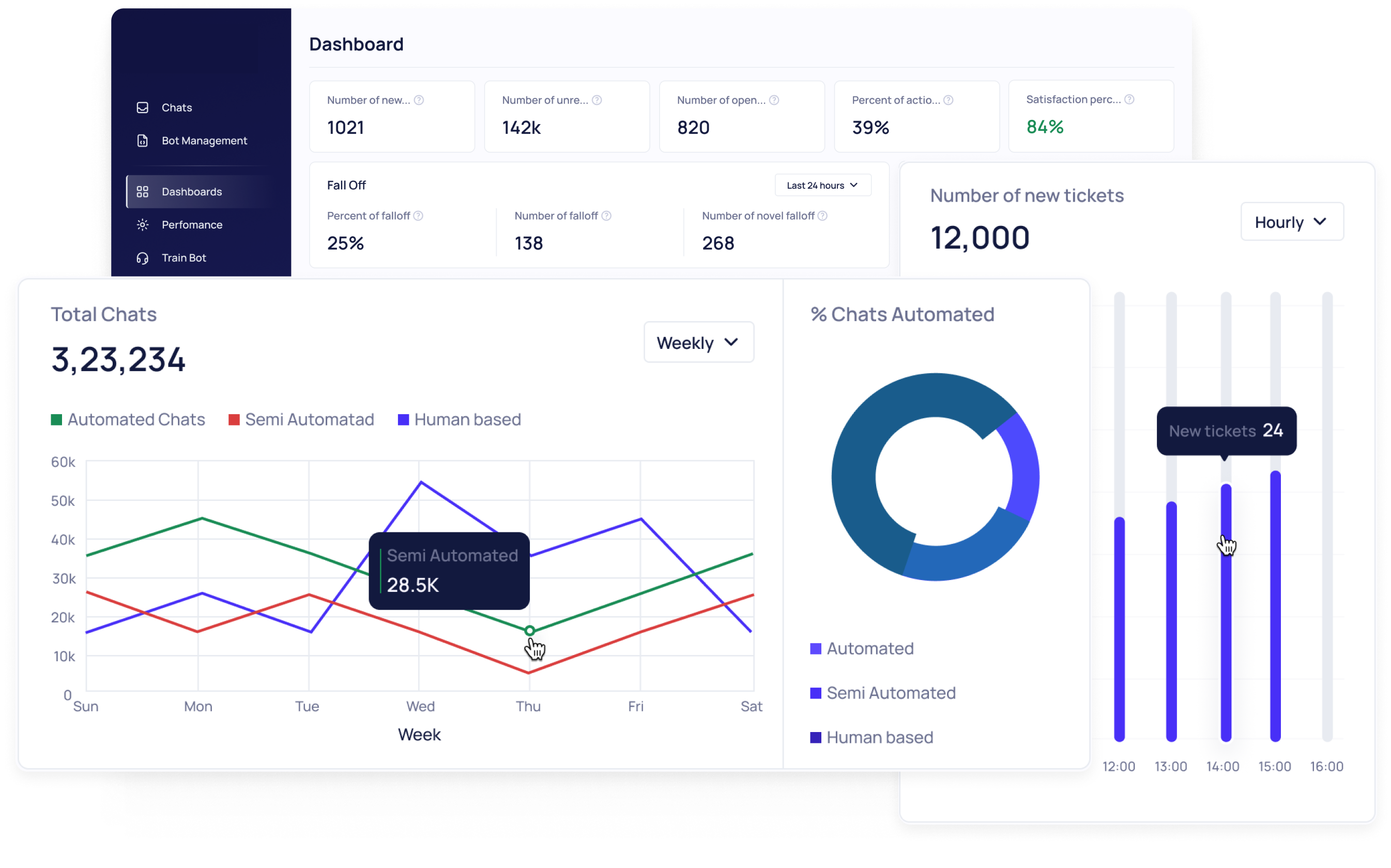









Imagine a digital system that doesn’t wait for instructions but instead, understands your business goals, learns from real-time feedback, and takes independent actions to get the job done.
Read More

 AI Summary Powered by Biz4AI
How much could an AI claim denial management system cost before your first line of code is even written?
The answer starts with scope. The cost to develop an AI claim denial management system can range from $35,000 to $350,000+, based on the AI capabilities, workflow depth, integrations, data requirements, and scale you need. A focused system can address a defined denial workflow, while a broader platform may connect multiple revenue cycle systems and support complex recovery operations.
For a healthcare organization planning healthcare claim denial management system development, the development scope can include:
That level of scope makes upfront financial planning critical. PMI's Pulse of the Profession research surveyed 2,841 project professionals. Teams with strong upfront financial and business planning stayed within budget 73% of the time and had an 8% project failure rate. Teams without it recorded 68% within budget and an 11% failure rate.
So, if you're thinking along this line, "I am running a healthcare business, and our team spends a lot of time reviewing denied claims manually. I want to build an AI claim denial management system, but I need to understand how much the development could cost before I set a budget?"
This guide breaks down the investment by development tier, cost factor, organization type, build-versus-buy decision, ongoing expense, and cost-control strategy.
AI claim denial management system cost by development tier depends on how much of the denial lifecycle the product must support, from essential workflows to enterprise-grade revenue operations.
Here's what we came across, "we are running a hospital revenue cycle operation with a high volume of denied claims, and I am considering building an AI system to automate denial identification, prioritization, and appeals. How much should I expect to invest in development?"
Well, the table below maps the answer to your question:
|
Development Tier |
Estimated Cost |
Typical Development Scope |
|---|---|---|
|
MVP AI Claim Denial Management System |
$35K-$90K |
Core denial workflows with essential automation and limited integrations |
|
Mid-Level AI Claim Denial Management System |
$90K-$200K |
Expanded workflows, deeper data handling, and broader connectivity |
|
Advanced/Enterprise AI Claim Denial Management System |
$200K-$350K+ |
Complex operations, extensive connectivity, scalability, and advanced automation |
Let's take a deeper look at what is included in each tier:
At this stage, AI claim denial management system development cost centers on validating the core product. MVP development services can support a focused release with:
Here, AI claim denial management system development pricing accounts for broader workflow coverage and richer operational functionality:
At this level, AI claim denial management system development charges reflect requirements for larger, more complex revenue cycle environments:
With the AI claim denial management system development price bifurcation now on table, let's understand which decisions have the biggest impact on this investment.
Eight development variables affect the cost of an AI claim denial management system: AI capability depth, integration depth, security architecture, payer and specialty coverage, data readiness, multi-tenancy, document intelligence, and team structure and region.
A question that we usually come across is, "We run an RCM company and handle denial workflows for multiple healthcare providers. We want to create our own AI claim denial management system, but we are concerned that EHR integrations, payer connectivity, security, and compliance will make the project too expensive. How do these factors affect the cost?"
The table below breaks down what each factor covers and where it falls in the overall cost:
|
Factor |
What It Covers |
Cost Range |
|---|---|---|
|
AI Capability Depth |
Rule-based logic, predictive scoring, generative AI, and autonomy |
$6,000-$83,000 |
|
Payer, EHR & Clearinghouse Integration Depth |
FHIR, HL7, X12, synchronization, and endpoints |
$6,000-$60,000 |
|
HIPAA Compliance & Security Built Into the System |
Encryption, RBAC, logging, BAA, and security architecture |
$5,000-$45,000 |
|
Number of Payers and Specialty Lines Supported |
Payer mix, specialty rules, and launch configuration |
$4,000-$36,000 |
|
Data Readiness and Historical Denial Volume |
Migration, mapping, normalization, and legacy data preparation |
$4,000-$32,000 |
|
Multi-Tenancy Requirements |
Tenant isolation, client configuration, and white-labeling |
$3,000-$45,000 |
|
Document Intelligence and OCR Requirements |
OCR, IDP, scanned records, faxes, and handwriting |
$3,500-$28,000 |
|
Team Structure and Region |
Delivery model, geographic rates, team composition, and coordination |
$3,500-$21,000 |
Here's a detailed dive into each factor that adds to the development scope:
Estimated cost: $6,000–$83,000
What AI capabilities are included in a claim denial management system sets the ceiling on this entire line item as:
The real budget swing, however, sits in the control model: assistive AI (human signs off on every output) costs meaningfully less than autonomous AI that executes without supervision.
Therefore,
Estimated cost: $6,000–$60,000
Two independent levers determine how much EHR and clearinghouse integrations add to AI denial management development costs: the number of systems connected and the demand level of each connection.
A one-way batch feed that pulls data once a day is a different engineering job from a bidirectional real-time sync running FHIR R4 or HL7 with live error handling and active monitoring.
X12 835 and 837 transaction handling adds its own parsing layer on top of whichever sync model is chosen. Every additional endpoint stacks close to linearly there is no bulk discount once the first three are built.
So,
Also Read: How to Integrate Healthcare Platforms with AI EHRs
Estimated cost: $5,000–$45,000
The security architecture built directly into the system determines how much HIPAA compliance, security, and healthcare data protection add to development costs. This range covers engineering built into the product itself, not an outside firm verifying it later.
A system built for basic compliance costs less to engineer than one built to pass a SOC 2 audit, because the second one needs far more documentation, monitoring, and control depth baked into the code itself.
Three things decide where in that range a project lands:
Also Read: Cost to Develop HIPAA-Compliant AI Healthcare Platform
Estimated cost: $4,000–$36,000
This cost is set by what the system must be ready to handle on day one, not what it might grow later. Every payer you add before launch means the system must learn a new set of denial reasons and a new appeal format for that payer.
Every specialty you add works the same way. Cardiology, orthopedics, and behavioral health don't deny claims for the same reasons, so the system can't lean on one shared model across all three. Each one needs its own configuration, built separately.
Here's where that shows up in the number:
Estimated cost: $4,000–$32,000
A denial management system architecture can only learn from the data it's given. If that data is scattered, inconsistent, or buried in old formats, someone has to fix that before the system can be trained on it at all.
That work is what this cost actually covers, not the AI model itself, but the effort of getting your records into a state the model can use.
Here's what decides where this number lands:
Also Read: AI Document Analysis Tool Development: A Complete Guide
Estimated cost: $3,000–$45,000
This cost applies once a platform has to serve more than one healthcare organization, not before. The moment AI claims management system development has to support multiple clients under one platform, isolation stops being optional.
Every client's data, workflows, and configurations have to stay separate from every other client's, and that separation has to hold up under audit. That's the real reason single organization builds run 15 to 30 percent cheaper than multi-tenant ones, not the extra engineering alone.
What decides where in the range this lands is how far that isolation goes as:
Estimated cost: $3,500–$28,000
This is different from cleaning up old records. It is about what claim denial automation development has to handle every day after launch. Denial letters, remittance advice, and correspondence do not always arrive as clean text.
Some come in as scans, faxes, or handwritten notes, and the system needs a permanent way to read those formats, not a one-time fix.
Document format decides this cost:
Also Read: AI-based OCR System Development: A Complete Guide
Estimated cost: $3,500–$21,000
Two vendors can quote the exact same project and still land $30,000 apart. The difference usually comes down to who is building it, not what is being built. Hourly rates shift by location, and so does how much control you keep over the build as it happens.
Cheaper rates on paper fluctuate once time zones and coordination enter the picture, especially on a project with this much compliance detail to get right.
Where a quote falls in this range depends on the team behind it:
Ultimately, the real cost of building an AI claim denial management system comes down to how much complexity you are asking the product to handle. A tightly defined system can stay within a controlled budget, while deeper automation and broader operational requirements can push development substantially higher.
Turn rough estimates into a realistic development budget before scope creep gets expensive.
Map My Development BudgetBeyond the $35,000–$350,000+ development quote, budget for two more layers of cost. First, fixes and scope changes that come up mid-build. Second, hosting, retraining, and compliance costs you'll pay every year after launch.
Together, these usually add 15 to 25 percent of your build cost annually. It's not a separate expense to track. It's just what it costs to keep the system running once it's live.
Here the hidden costs that you should budget for in healthcare denial management platform development:
Estimated cost: $2,000–$8,000
Historical claim records that pass a scoping review often hide undocumented fields, inconsistent formatting, or broken mappings that only surface once developers are working inside the full dataset. A scoping assessment samples the data. Development touches all of it. The gap between those two is what this line item pays for.
Estimated cost: $3,000–$10,000
Payer APIs and EHR systems frequently behave differently in production than their own documentation claims. A field returns in an unexpected format, error handling fails silently, a promised real-time sync lags. The original integration budget paid for building the connection, but this cost pays for fixing it once the documentation turns out to be wrong.
Estimated cost: $3,000–$12,000
A new payer added mid-build, an extra approval step, a change to how appeals route internally; these come from a stakeholder deciding something should work differently once the build is already underway.
It's a scope decision made after the project started rather than before, and that's exactly why it carries the widest range here: one change request stays small, three or four compound fast.
Your development team builds the security itself. This cost is someone else testing that security actually works.
Estimated cost: $1,500–$6,000
New denial queues, new appeal workflows, new review steps, none of that changes how work gets done until your RCM team is actually trained on it. Vendors rarely itemize this because it's a cost your organization absorbs internally, not something billed by the development team. Skipping this budget line is usually why a technically finished system sits unused for weeks after launch.
Now let's look at what are the ongoing maintenance and infrastructure costs that surface after launching an AI denial management system:
Estimated cost: $3,000–$12,000/year
This is what it costs to keep the system running every day, servers, storage, and cloud services that process each claim. The more claims the system handles, the higher this cost runs.
A single practice processing a small number of denials monthly stays near $3,000. A hospital system or RCM company processing thousands of claims a month runs closer to $12,000 per year.
Estimated cost: $3,000–$10,000/year
The model gets trained once before launch. Over time, denial patterns change, and a model that isn't updated drifts in accuracy starts making more mistakes.
How often it needs retraining depends on two things: how many claims the system processes and how often payer behavior changes. More claims and faster-changing payers mean more frequent retraining, thus more cost.
Estimated cost: $2,000–$8,000/year
Payers change denial codes, appeal formats, and adjudication logic without much advance notice. Updating the rules engine to match is a configuration change, not a model retraining cycle, and specific to individual payer behavior rather than broader pattern drift. This covers payers you're already live with. Adding a new payer after launch is a separate, additional expense.
Estimated cost: $3,000–$10,000/year
Covers the vendor's response to problems that surface after launch which include fixing bugs, resolving system crashes, and repairing integrations that break once the system is live and processing real claims. Response time matters here more than in most software categories, because downtime during a high-volume denial period stalls revenue recovery directly.
Estimated cost: $2,500–$10,000/year
Covers OpenAI or Azure usage fees, OCR licensing, and clearinghouse API costs, billed on an ongoing basis and tied directly to system usage. These run separately from the development quote itself, since they're metered fees paid to third parties rather than labor the vendor bills for. Ask specifically for this to be itemized when comparing quotes.
As a rule of thumb, annual maintenance runs 15 to 25 percent of your original build cost. The six categories above are what makes up that percentage, not a separate number to track alongside it.
This is what building an AI claim denial management system actually costs once you factor in what happens after the contract is signed, not just the number quoted at the start of healthcare denial management platform development.
Plan maintenance, monitoring, and infrastructure costs before small expenses become recurring budget leaks.
Plan My Ongoing CostsEvery dollar figure in this guide reflects one path: building custom. That's a deliberate choice, not the only option as platforms like Waystar, Innovaccer, and RapidClaims already offer a version of this, priced as a subscription instead of a development budget.
The cost to build an AI claim denial management system and the cost of licensing one work on entirely different pricing models, and knowing both before committing to a vendor is what actually protects the budget.
|
Aspect |
Build Custom |
Buy an Existing Platform |
|---|---|---|
|
Pricing model |
One-time development cost + annual maintenance |
Ongoing subscription, typically per-provider or per-claim volume |
|
Typical cost |
$35,000-$350,000+ to build, $10,000-$50,000+/year to maintain |
Small practice: ~$100-$300/provider/month. Mid-to-large organization: $2,000-$5,000+/month, often with annual contracts starting near $11,000 |
|
Time to live |
3-12+ months depending on scope |
Weeks, once a contract is signed |
|
Payer connectivity |
Built to the exact payer mix specified |
Often pre-built — Waystar alone connects to 500+ payers out of the box |
|
AI capability |
Fully custom, rule-based, predictive, or generative, by choice |
Fixed to whatever the vendor has already built (e.g., Waystar's AltitudeCreate for automated appeal generation) |
|
Data ownership and control |
Full ownership, full architectural control |
Data typically lives inside the vendor's platform, under their terms |
|
Multi-tenancy for RCM companies |
Built to the client structure specified |
Usually not designed for reselling to a client base |
|
Customization ceiling |
As high as the budget allows |
Capped by the vendor's product roadmap |
Neither path is cheaper in absolute terms. Enterprise platform subscriptions scale with provider count and claim volume, whereas custom development scales with capability and integration depth. Most vendors in this space don't publish exact rates without a sales call. What actually separates the two isn't cost, its which of these describes your situation.
Therefore, custom AI denial management system development when:
And buy an existing platform when:
The cost to build an AI claim denial management system drops significantly when build sequencing, contract structure, and architectural decisions are made deliberately before development starts, not adjusted mid-build when course corrections are expensive.
Let's take a deeper look at them:
Entering through a deliberately narrow MVP keeps first-phase spend between $35,000 and $90,000 and funds later phases from live performance data rather than projected assumptions.
Organizations that validate classification accuracy on real claims before committing to predictive scoring or generative appeal drafting typically save 20–35% in the first phase compared to those that scope everything upfront.
If you're unsure where to start, AI consulting services can help define the right MVP scope before development begins.
What to prioritize at MVP to control the initial cost of building medical claim denial management with AI:
Routing all EHR, clearinghouse, and payer connections through one FHIR-based interoperability layer instead of building each as a separate point-to-point connection typically saves 10–15% of the integration line item.
Connection logic built once and configured per endpoint costs less to build and less to maintain than independently engineered connections. Reliable AI integration services structure this layer upfront so every subsequent endpoint is a configuration, not a new engineering job.
Integration decisions that protect the budget:
Projects structured around milestone contracts are 35% more likely to stay on budget than time-and-materials equivalents. Each phase carries a fixed deliverable, and a fixed price agreed before work starts. Change requests that arrive mid-build are priced as explicit change orders rather than absorbed invisibly into billable hours.
Milestone contract protections worth confirming before signing:
An independent data audit before vendor selection moves data cleanup cost into the original quoted scope at scoping rates rather than mid-build crisis rates. This typically saves 10–20% of the data-readiness line item alone.
Data conditions to assess before any vendor conversation:
For a HIPAA-regulated system handling PHI, building encryption, RBAC, and immutable audit logging into the data layer from day one avoids the late-stage rework that typically adds 10% to the compliance engineering line item when treated as a retrofit.
Compliance decisions that protect both the budget and the launch date:
With every cost lever now mapped, the next question most healthcare organizations ask is whether there's a partner who actually applies all of these in practice, not just recommends them.
Yes, we know one: Biz4Group LLC
It is an US-based AI product development company with direct, hands-on experience building commercial AI systems for the medical billing and healthcare RCM sector. That experience is demonstrated in two live products built around the same denial and revenue recovery workflows covered in this guide:
The cost to build an AI healthcare claims management system doesn't have to be the number that stops a project before it starts. Applied together, these six strategies don't reduce what gets built; they reduce what gets wasted building it.
So, with everything now on table, the number was never the real obstacle, unclear scope was. Once you know what drives cost, where hidden expenses hide, and whether to build or buy, that $35,000 to $350,000+ range stops being intimidating and starts being a plan.
Ready to scope your build? Book a free consultation with Biz4Group and get a cost estimate tailored to your organization.
Layering AI onto existing infrastructure typically runs $40,000 to $150,000, well below a full rebuild, since the cost centers on connecting to your current EHR and claims system rather than replacing it. The bulk of that spend goes toward integration work and the AI capability layer itself, whether that's classification, predictive scoring, or generative appeal drafting. Clean, structured existing data lowers the number further.
Realistic development costs range from $35,000 for a narrow MVP to $350,000 or more for an enterprise-grade, multi-tenant platform. Most mid-sized deployments land between $90,000 and $200,000, depending on AI capability depth, integration scope, and payer breadth.
Adding a single new payer post-launch typically costs $3,000 to $15,000, covering new rule configuration, appeal-format setup, and testing against that payer's specific denial patterns. This sits outside your original development budget and outside ongoing maintenance since it's a distinct, one-time expansion cost.
Yes. Medicaid rules vary by state, so a platform supporting Medicaid across five states needs five distinct rule sets, not one generic configuration. Each additional state typically adds $2,000 to $8,000 on top of the base Medicaid integration, making multi-state Medicaid support one of the more overlooked line items in a build like this.
A mid-tier build typically takes 4 to 6 weeks. Compressing that into 2 to 4 weeks usually adds 15 to 25% to the cost, since it forces parallel workstreams and more senior staff working simultaneously instead of sequentially. Rushed timelines also raise the odds of hidden costs surfacing later, since less time exists for thorough data and scope assessment upfront.
A well-architected system can be built to expand without a rebuild, provided multi-tenancy and modular payer configuration are part of the original architecture rather than added afterward. Retrofitting that flexibility into a system that wasn't designed for it typically costs more than building it in from the start.
An in-house team carries higher fixed overhead, including salaries, benefits, and infrastructure regardless of project phase, while an agency typically costs less upfront but shifts long-term control and institutional knowledge to the vendor. For a single build, agency costs generally land lower in total. For an organization planning continuous AI development beyond this one system, in-house often costs less over 18 to 24 months despite the higher starting overhead.

Our website require some cookies to function properly. Read our privacy policy to know more.