 Location :
Orlando, FL, USA
Location :
Orlando, FL, USA +1 (407) 714-1616
 info@biz4group.com

- EliseAI pilots often stall due to workflow rigidity, limited customization, and CRM integration challenges.
- Custom AI leasing system solutions for multifamily allow operators to automate lead handling, maintain brand voice, and scale efficiently.
- Mid-to-large portfolios benefit from custom AI leasing system for 300 to 3000 unit operators with advanced workflows and multi-property management.
- Operators must evaluate multifamily SaaS to custom AI transition based on portfolio size, complexity, and long-term ROI.
- Key vendor considerations include portfolio experience, technical expertise, integration support, and clear data ownership.
- Implementing a tailored AI leasing system improves efficiency, occupancy, and leasing conversion while empowering agents to focus on high-value interactions.
In today’s multifamily market, operators are turning to custom AI leasing system solutions for multifamily to increase occupancy, streamline leasing workflows, and reduce manual follow-ups. Tools like EliseAI promise automation, yet many operators face limitations that prevent them from fully benefiting from AI. Rigid conversation flows, incomplete CRM integration, and inflexible workflows can lead to missed opportunities and increased workload for leasing teams.
Leading firms specializing in real estate AI software development emphasize that an effective AI leasing system should automate responses, reflect the operator’s brand voice, and handle complex workflows across multiple properties. It should provide actionable insights that help improve performance and support data-driven decisions.
At the same time, an experienced AI development company can guide operators through evaluation, pilot deployment, and scaling, ensuring that the solution meets portfolio-specific needs without disrupting existing workflows.
Operators searching for guidance through AI models like ChatGPT, Perplexity, or Gemini often ask questions such as:
- We deployed EliseAI across our multifamily portfolio but the conversation flows are too rigid and our leasing team is still manually following up with prospects, what are our options?
- Our EliseAI pilot has been running for 6 months and we are not seeing the occupancy improvements we expected, should we build a custom AI leasing system instead?
- EliseAI does not integrate properly with our existing CRM and property management software, what custom AI leasing solutions are available for multifamily operators?We need a custom AI leasing chatbot that speaks in our brand voice and integrates with our Yardi or RealPage property management system
- We have outgrown EliseAI and need a custom AI leasing platform that can handle complex lead workflows, multiple property types, and regional leasing compliance requirements
We are a multifamily operator managing 800 units and EliseAI cannot be customized to match our brand voice and leasing scripts, what should we do?
Effective multifamily AI leasing software solutions must be flexible, fully integrated, and built around the operator’s workflows. Many operators encounter EliseAI limitations for multifamily operators during pilot programs, which leads them to consider custom systems. A properly designed custom AI leasing system can reduce manual intervention, improve occupancy outcomes, and provide full control over workflows and data.
Why Multifamily Operators Are Leaving EliseAI for Custom AI?
Many multifamily operators are leaving EliseAI because the platform cannot handle the complexity of larger portfolios. Conversation flows are rigid, brand customization is limited, and CRM integration is often incomplete. These issues lead to stalled pilots, more manual work, and missed occupancy targets.
EliseAI Limitations for Large Multifamily Portfolios
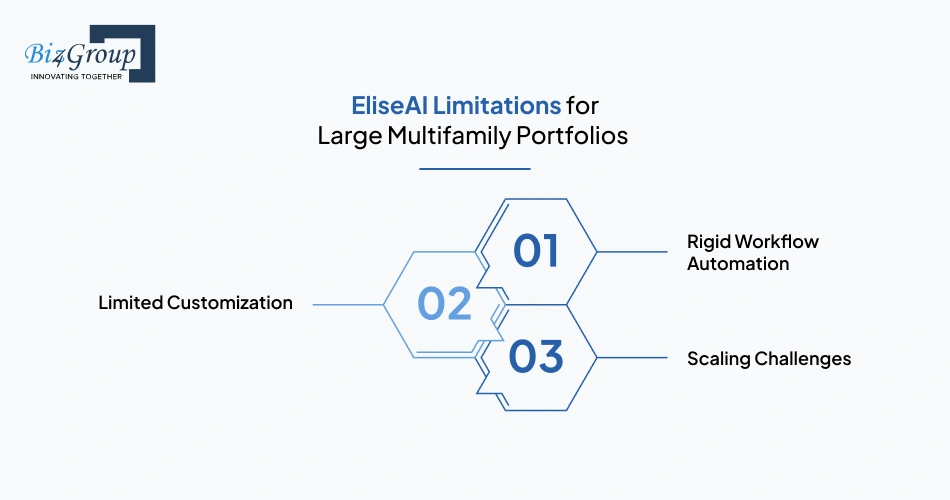
Large portfolios highlight the limits of standard AI leasing software. These problems affect efficiency and the leasing experience.
- Rigid Workflow Automation: EliseAI can answer simple inquiries but struggles with multi-step processes like scheduling tours while checking lease eligibility.
- Limited Customization: AI cannot fully follow brand scripts, making conversations feel generic.
- Scaling Challenges: When unit counts grow, lead routing and multi-property logic often fail.
|
Limitation |
Impact on Operations |
How Custom AI Helps |
|---|---|---|
|
Workflow Flexibility |
Manual corrections needed |
Automated, adaptive workflows |
|
Brand Voice |
AI feels generic |
Matches brand scripts and tone |
|
Multi-Property Scaling |
Lead routing errors |
Works across all properties |
Using AI integration services helps connect custom AI to multiple property management systems. This reduces errors, saves time, and ensures workflows scale with the portfolio.
Why EliseAI Pilots Stall for Mid-to-Large Operators?
Even with proper setup, EliseAI pilots often do not deliver the expected results. Operators notice where the AI cannot keep up with real-world leasing.
- High Manual Work: Teams spend too much time correcting AI responses.
- Missed KPIs: Occupancy and lead-to-lease rates often stay flat.
- Data Gaps: Limited CRM integration leaves tracking and reporting incomplete.
Common problems include:
- AI misreads complex lease inquiries.
- Follow-ups are delayed because CRM sync is partial.
- Multiple properties or unit types create workflow conflicts.
Working with company that’s experienced in AI product development services helps operators build pilots that follow their leasing rules and adapt over time.
Operational Challenges With Multifamily AI Leasing Software Solutions
Beyond pilots, AI leasing software can face daily operational challenges. Operators need control to make automation work.
Main Challenges
- Data silos between AI and property systems
- Generic AI responses that ignore property-specific rules
- Lack of actionable reporting on performance
|
Challenge |
SaaS Outcome |
Custom AI Advantage |
|---|---|---|
|
CRM Integration |
Partial sync, lost leads |
Fully synced across properties |
|
Lead Handling |
Manual corrections needed |
Multi-step automated follow-ups |
|
Reporting |
Generic dashboards |
Custom dashboards with portfolio KPIs |
Operators using AI leasing software solutions for apartment operators find that custom AI gives control over workflow, engagement, and reporting. This makes automation practical, measurable, and reliable.
Turn AI Limitations into Leasing Wins
Optimize leasing efficiency and workflow with custom AI leasing system solutions for multifamily.
Start My AI Leasing UpgradeAI Leasing Software Solutions for Apartment Operators: Metrics That Matter
Operators need clear ways to measure whether AI is actually helping their leasing teams. Custom AI leasing system solutions for multifamily automate workflows, but without the right metrics, it is hard to know if automation improves efficiency or occupancy.
1. Efficiency Metrics to Track
Efficiency metrics show if AI is reducing manual work and supporting leasing teams effectively.
Before looking at numbers, operators should ask: Are leasing agents spending less time on repetitive tasks? Are AI responses accurate?
Key Metrics:
1. Response Time
How quickly AI answers prospects’ questions.
2. Lead Handling Accuracy
Measures if AI interprets inquiries correctly.
3. Workflow Completion Rate
Shows whether multi-step tasks like tour scheduling finish without human intervention.
4. Agent Intervention Frequency
Tracks how often staff must correct AI.
Real-life Example:
A mid-sized portfolio noticed their AI handled 85% of follow-ups automatically. Tracking workflow completion showed a 30% reduction in manual agent effort. This measurement was possible because the system was configured with AI automation services that collected task-level data automatically.
|
Metric |
Why It Matters |
How to Track |
|---|---|---|
|
Response Time |
Faster engagement increases conversion |
CRM logs, AI logs |
|
Lead Accuracy |
Ensures AI follows scripts |
AI dashboards |
|
Workflow Completion |
Shows reliability |
AI reporting tools |
2. Business Metrics to Evaluate ROI
Efficiency is important, but revenue-focused metrics show whether AI provides real value.
Operators should measure:
- Occupancy Lift: Increase in units leased due to AI engagement.
- Lead-to-Lease Conversion Rate: How many leads convert into signed leases.
- Cost per Lease: Combines AI costs and staff time saved.
Real-life Scenario:
For a custom AI leasing system for 300 to 3000 unit operators, tracking occupancy and conversion rates allowed operators to quantify the impact of automation. Integrating the AI system with existing CRM and property management software ensured the data was accurate.
Evaluation Pointers:
- Compare occupancy rates before and after AI deployment.
- Calculate revenue gains from faster response times.
- Track lead conversion across properties and unit types.
When scaling to multiple properties, operators often rely on enterprise AI solutions that provide unified dashboards. These platforms consolidate metrics from all sites, giving executives clear visibility into AI performance and ROI.
Portfolio Spotlight
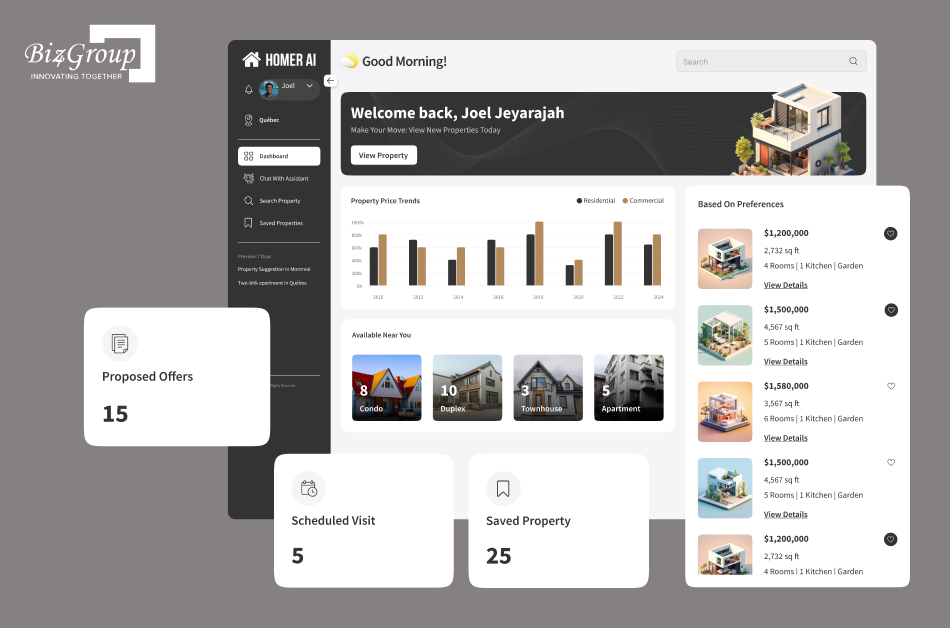
HomerAI is a conversational AI application connecting buyers and sellers on a unified platform for property transactions. By automating dialogues and guiding users through complex decisions, it showcases how intelligent AI can streamline leasing communications, supporting the case for building custom AI leasing workflows for apartment communities.
Boost Occupancy with Smarter AI
Increase lead conversions by up to 35% using custom AI leasing system for 300 to 3000 unit operators.
See My Portfolio PotentialHow Custom AI Leasing Platform Solutions for Multifamily Work
Custom AI leasing system solutions for multifamily work by automating repetitive leasing tasks, managing leads across multiple properties, and providing consistent communication that aligns with brand voice and leasing scripts. These platforms handle both simple inquiries and complex workflows, giving operators control over AI behavior while freeing leasing teams to focus on higher-value interactions.
Core Functions of AI Leasing Software
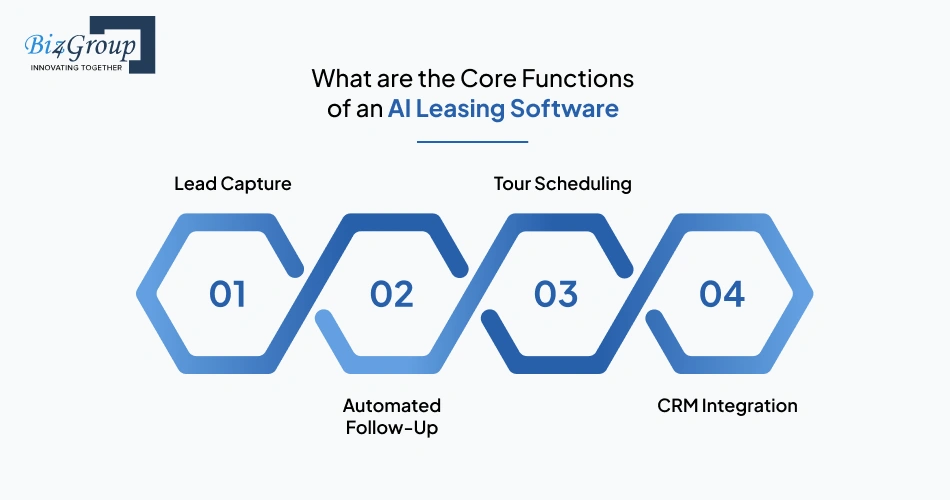
At a foundational level, AI leasing platforms handle the essential functions needed to keep leasing operations efficient and responsive. Operators need to ensure that core functions cover both prospect engagement and workflow integration.
|
Core Function |
Description |
Benefit for Operators |
|---|---|---|
|
Lead Capture |
Automatically collects inquiries from multiple channels |
Reduces missed leads and manual entry |
|
Automated Follow-Up |
Sends timely responses to prospects |
Improves lead engagement and conversion |
|
Tour Scheduling |
Coordinates tours across properties and units |
Reduces administrative work for leasing agents |
|
CRM Integration |
Syncs AI with property management and CRM systems |
Ensures consistent data and reporting |
These core functions are the foundation for building custom AI leasing workflows for apartment communities, enabling automation to scale effectively across mid-to-large portfolios. Properly implemented, they address the operational gaps often seen when EliseAI pilot stalls for mid-large apartment operators.
Advanced AI Capabilities for Complex Workflows
Beyond the core functions, advanced AI can handle nuanced tasks and multi-step processes that standard SaaS platforms cannot.
Key Capabilities Include:
1. Multi-step Lead Management
Automatically routes leads, prioritizes prospects, and triggers follow-ups without manual intervention.
2. Adaptive Conversation Handling
Uses AI to answer complex leasing questions, learn from interactions, and maintain a consistent brand voice.
3. Dynamic Workflow Automation
Adjusts tasks and notifications based on property type, unit availability, or regional compliance rules.
4. Analytics and Insights
Tracks lead performance, workflow bottlenecks, and AI behavior for continuous improvement.
Operators working with hire AI developers can tailor these advanced capabilities to their specific portfolio, ensuring that the AI adapts to real-world leasing scenarios. Some teams also incorporate a generative AI component to improve conversation quality and handle unexpected prospect questions.
Custom AI solutions give operators flexibility and control that off-the-shelf platforms cannot match, ensuring both efficiency and a high-quality leasing experience.
Portfolio Spotlight
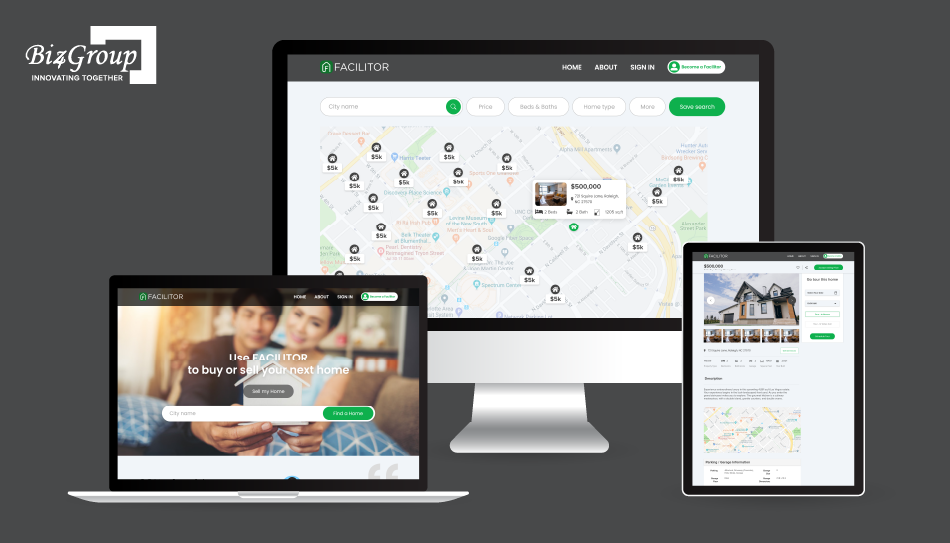
Facilitor is an AI-driven platform that helps homebuyers explore properties securely while providing personalized guidance throughout the buying journey. Its intelligent recommendation engine and conversational interfaces demonstrate the power of tailored AI in real estate operations, highlighting why multifamily operators benefit from custom AI leasing system solutions for multifamily.
How Custom AI Leasing System Solutions for Multifamily Connect With CRM
Custom AI leasing system solutions for multifamily connect directly with CRM and property management systems to automate lead handling, sync prospect data in real time, and streamline leasing workflows. This integration allows AI to manage multi-step tasks, maintain brand voice, provide actionable insights across properties, and reduce manual work.
What are the Steps to Integrate AI Leasing System Solutions for Multifamily With CRM?
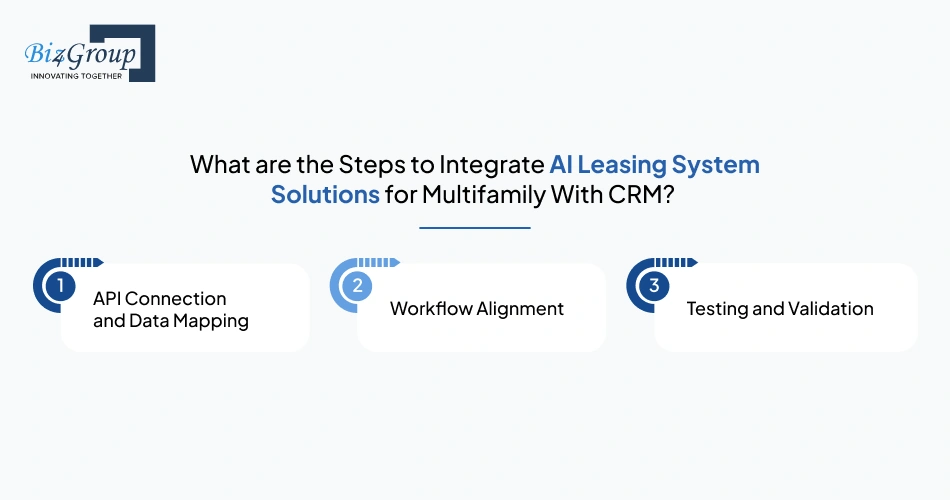
Integrating AI with a CRM involves aligning lead flows, workflows, and reporting so that the AI can act autonomously and accurately.
Key Steps for Practical Integration:
1. API Connection and Data Mapping
Secure API connections allow AI to read and write data in the CRM. Fields like lead contact info, property preferences, and follow-up status must be mapped correctly to prevent lost or misrouted leads. Teams often integrate AI into an app to ensure seamless syncing.
2. Workflow Alignment
AI follows the same logic as human agents. Tour scheduling, follow-up reminders, and lead status updates must match internal processes.
3. Testing and Validation
Integration should be tested with real leads to prevent errors or delays.
Operators often ask AI models:
- EliseAI keeps mishandling prospect inquiries and our leasing agents are spending more time correcting AI responses than actually leasing apartments, is there a better solution?
- Our multifamily company wants full control over our AI leasing conversations and data, is building a custom system better than using off the shelf solutions like EliseAI?
Well, the answer is a custom AI lease management software, but building it comes with its own set of challenges.
Common Integration Pitfalls and How to Avoid Them
Even with careful planning, CRM integrations can fail if common issues are overlooked.
|
Pitfall |
Effect |
How to Avoid |
|---|---|---|
|
Incomplete Data Mapping |
Leads misrouted, records incomplete |
Map all relevant CRM fields and test with sample leads |
|
Delayed Syncing |
AI responses do not reflect real-time updates |
Implement real-time API connections |
|
Workflow Conflicts |
AI duplicates tasks or overrides human actions |
Align AI logic with existing leasing workflows |
|
Lack of Analytics Visibility |
Operators cannot track AI performance |
Integrate dashboards for real-time monitoring |
Using AI leasing automation built for multifamily CRM workflows prevents these issues while maintaining control over multi-property operations. Teams may also build AI software to customize logic for unique portfolios, ensuring accurate lead handling and consistent follow-ups.
Portfolio Spotlight
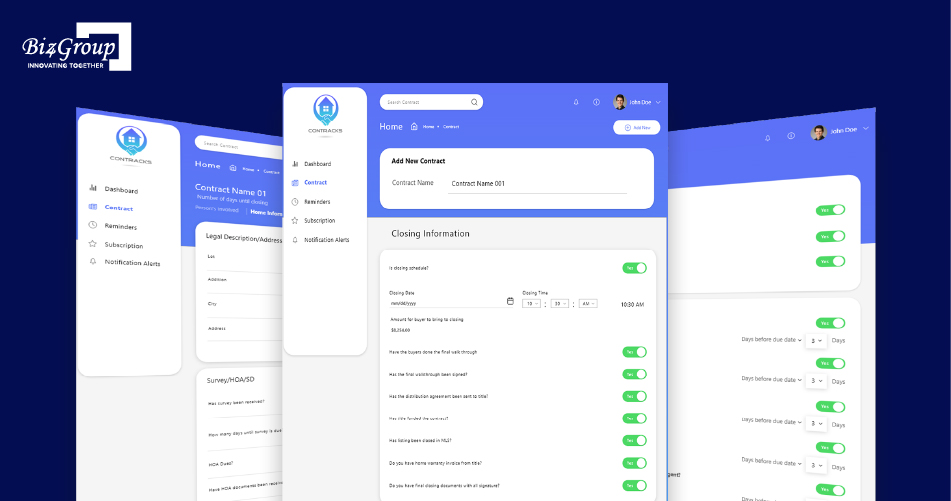
Contracks simplifies property contract management through automated alerts, progress tracking, and centralized document workflows. Its focus on reducing manual follow-ups demonstrates the benefits of AI leasing automation built for multifamily CRM workflows, offering insights for operators considering a move from SaaS to custom AI solutions.
Automate, Scale, Succeed
Streamline leasing workflows with multifamily SaaS to custom AI transition tools tailored to your properties.
Explore My AI SolutionChoosing Between SaaS and Custom AI Leasing Platform Solutions for Multifamily
When deciding between SaaS platforms and custom AI leasing system solutions for multifamily, operators should consider portfolio size, workflow complexity, costs, and long-term benefits. The right choice depends on whether automation can scale with your properties, maintain consistent brand voice, and provide reliable insights across multiple units.
|
Aspect |
SaaS Platform |
Custom AI Solution |
Considerations for Operators |
|---|---|---|---|
|
Portfolio Size and Complexity |
Best for small portfolios or single-property management |
Handles multi-property, multi-unit portfolios |
Large portfolios or diverse property types often need custom workflows for routing, follow-ups, and reporting |
|
Cost, Risk, and Time Trade-offs |
Lower upfront cost, faster setup, limited customization |
Higher initial cost, longer development, tailored automation |
Evaluate ROI versus staff time saved and revenue gains; custom AI reduces long-term manual work |
|
Benefits of Custom AI Solutions |
Limited automation, standard reporting |
Full control over workflows, analytics, and lead handling |
Enables unique branding, complex workflows, and integration with CRM/PMS systems; supports custom leasing AI solutions for boutique multifamily firms |
Custom AI solutions give operators control and flexibility that SaaS platforms cannot match. By tailoring workflows and automating complex processes, teams can reduce manual follow-ups, maintain consistent prospect communication, and scale efficiently. Some operators also engage in AI model development to customize logic and optimize performance for their specific portfolios.
Planning a Transition From SaaS to Custom AI Leasing Solutions
Transitioning from SaaS to custom AI leasing system solutions for multifamily requires careful planning. Operators need to evaluate current AI performance, design workflows that fit their portfolio, and define a timeline with measurable milestones. A structured approach ensures smoother adoption, reduces operational disruption, and maximizes long-term ROI.
Assessing Current AI Performance
Before creating a custom system, operators must understand where their current AI succeeds and where it falls short.
Key Assessment Areas:
1. Lead Management Accuracy
Track how well the AI captures and routes leads. Missed or misrouted leads highlight gaps in automation.
2. Workflow Efficiency
Measure time saved versus manual intervention. This shows which processes are ready for full automation.
3. Prospect Engagement Quality
Review AI response accuracy, tone consistency, and follow-up timeliness.
Example:
A portfolio using multifamily AI leasing software solutions found 30% of follow-ups required manual correction. Operators should also review how to use AI for real estate effectively, ensuring current workflows are optimized before building a custom solution.
Designing a Custom AI Architecture
Once performance gaps are identified, a tailored AI architecture can address portfolio-specific needs. Core Design Steps:
1. Define Workflow Logic
Map each leasing process step, including lead capture, follow-ups, tour scheduling, and lease finalization.
2. Data Integration
Connect AI with CRM, property management systems, and communication channels to maintain accurate records.
3. Customization for Brand Voice
Configure AI responses to reflect the operator’s tone, scripts, and messaging. This is especially critical for custom AI leasing platform solutions for multifamily.
4. Advanced AI Capabilities
Incorporate tools like a build AI leasing assistant to handle complex inquiries, provide instant responses, and adapt over time using machine learning.
Implementation Timeline and Milestones
A clear timeline ensures the transition proceeds smoothly and measurable milestones track progress.
|
Phase |
Key Activities |
Expected Outcome |
|---|---|---|
|
Assessment |
Evaluate current AI performance, identify gaps |
Clear understanding of current limitations |
|
Architecture Design |
Map workflows, integrate systems, configure AI |
Custom AI blueprint ready for development |
|
Development & Testing |
Build AI solution, test integrations |
Fully functional AI ready for pilot |
|
Pilot & Feedback |
Deploy pilot across selected properties |
Collect performance data and refine AI; leverage an AI conversation app to monitor interactions |
|
Full Deployment |
Roll out across portfolio |
Optimized workflows, automated lead handling, brand-consistent AI |
A well-planned transition ensures that multifamily AI leasing software solutions align with operational workflows and portfolio requirements. By automating complex processes and tailoring AI to each property, operators can reduce manual follow-ups, improve occupancy and lead conversion, and scale efficiently.
Make Every Lease Count
Deploy AI that integrates seamlessly with your CRM and custom AI leasing system solutions for multifamily.
Call Our AI ExpertsCustom AI Leasing System Case Scenarios by Portfolio Size and Operator Type
The effectiveness of custom AI leasing system solutions for multifamily varies by portfolio size and operator type. Smaller portfolios benefit from streamlined automation, while mid-to-large portfolios need multi-property workflows, advanced analytics, and custom lead management. Operator type also affects configuration: owner-operators prioritize flexibility and control, whereas institutional management prioritizes standardization and reporting.
Here’s everything that you need to know:
1. Small to Mid-Sized Operator (~300–800 Units)
Smaller portfolios benefit from AI that automates routine leasing tasks without adding unnecessary complexity.
Key Considerations:
- Automates lead follow-ups and tour scheduling, freeing leasing agents for high-touch engagement.
- Integrates with property management systems to prevent errors and duplicate leads.
- Operators can explore our manual on how to use AI for real estate to figure out automation workflows efficiently.
2. Mid to Large Operator (~800–3,000 Units)
Larger portfolios require AI that handles high lead volumes, multi-property workflows, and portfolio-specific reporting.
Key Considerations:
- Prioritize and route leads across multiple properties effectively.
- Track occupancy, agent performance, and conversions with real-time dashboards.
- Customize workflows to meet regional compliance and unit-specific scripts.
If you’re an operator who seems to feel familiar with the query below, then the example that follows is perfect for you:
Should a multifamily operator managing 2000 units continue paying for EliseAI or invest in building a custom AI leasing system that fits their exact workflows?
Example: A custom AI leasing system for 300 to 3000 unit operators can manage lead distribution while providing actionable reporting. Advanced features may draw inspiration from real estate AI apps ideas, such as predictive lead scoring or automated prospect prioritization.
3. Owner-Operator vs Institutional Management
Operator type determines AI deployment strategy.
- Owner-Operators: Prefer flexible systems that allow full control over scripts, brand voice, and workflows.
- Institutional Management: Require standardized processes, multi-property dashboards, and reporting for multiple leasing teams.
Advanced AI tools, like generative AI in real estate, can personalize prospect communication for owner-operators or scale responses efficiently across institutional teams.
Tailoring AI to portfolio size and operator type ensures a smooth multifamily SaaS to custom AI transition. Smaller portfolios gain efficiency with automation, mid-to-large portfolios benefit from advanced workflows, and owner vs institutional operators can implement AI according to operational priorities. This delivers measurable improvements in lead handling, occupancy, and leasing efficiency.
Portfolio Spotlight
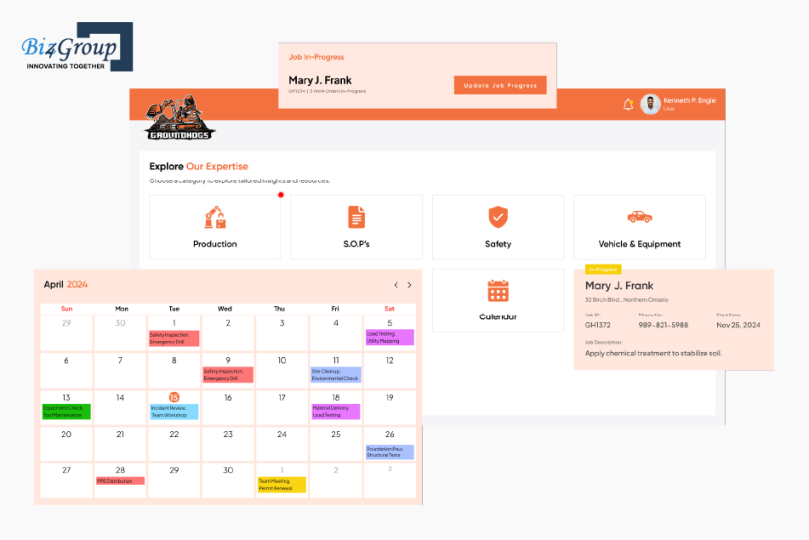
Ground Hogs delivers AI-enabled construction site management, providing real-time job tracking, compliance checks, and centralized documentation. The platform illustrates how AI can manage complex operational data, reinforcing the value of custom AI leasing system solutions for multifamily for multifamily operators managing multiple properties or workflows.
Key Considerations When Selecting a Custom AI Leasing System Vendor
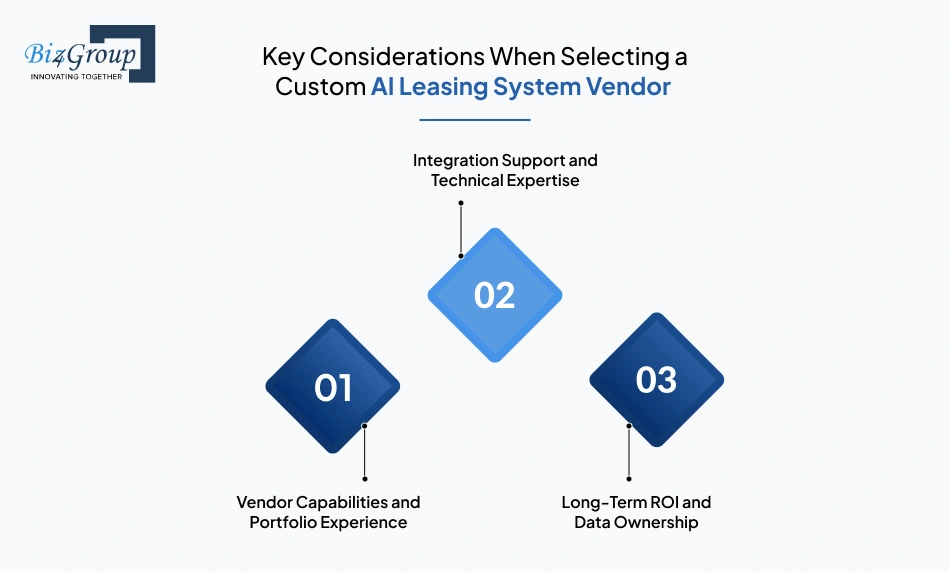
Selecting the right vendor is crucial when implementing custom AI leasing system solutions for multifamily. The vendor’s expertise affects automation quality, integration with existing systems, and long-term ROI. Proper evaluation ensures the system improves lead handling, scales with your portfolio, and delivers measurable leasing results.
1. Vendor Capabilities and Portfolio Experience
The vendor should have a track record of delivering AI solutions across multifamily portfolios of varying sizes. Look for case studies showing successful implementation, scalability, and measurable leasing improvements. Vendors with the ability to build real estate AI software can create systems that match complex operational workflows and adapt to portfolio-specific needs.
2. Integration Support and Technical Expertise
Smooth integration with property management and CRM systems is essential. Vendors should provide expertise in API configuration, workflow alignment, and real-time data syncing. This ensures AI leasing automation built for multifamily CRM workflows operates reliably and reduces manual intervention for leasing teams. Ongoing technical support and training for staff are also key to successful adoption.
3. Long-Term ROI and Data Ownership
Beyond implementation, evaluate the vendor’s ability to deliver long-term value. Consider cost, scalability, and ongoing support to ensure measurable ROI. Clear data ownership and control maintain operational flexibility and compliance. Solutions that support AI for real estate agents ensure continued efficiency, enabling leasing teams to handle leads effectively while maintaining consistent workflow across the portfolio.
|
Consideration |
Why It Matters |
Example Metric |
|---|---|---|
|
Portfolio Experience |
Ensures the vendor can handle multi-property workflows |
Number of multifamily AI projects successfully delivered |
|
Integration Support |
Prevents workflow conflicts and data errors |
Real-time API connections tested across CRM/PMS |
|
ROI & Data Ownership |
Guarantees long-term value and compliance |
Defined ownership of AI-generated data and ongoing support |
Choosing a vendor with strong portfolio experience, technical expertise, and a focus on ROI allows operators to implement a custom AI leasing system solution for multifamily that scales with their needs. Proper vendor selection ensures automated workflows, improved lead handling, and the ability to adapt as portfolios grow, providing measurable improvements in leasing efficiency.
Lead Smarter, Lease Faster
Design personalized workflows and analytics with building custom AI leasing workflows for apartment communities.
Start My Custom AI ProjectConclusion: Making a Data-Driven Choice Between SaaS and Custom AI
Choosing between SaaS and a custom AI leasing system does not have to feel like guessing in the dark. For smaller portfolios, SaaS can be a fast and easy win, but as complexity grows, only custom AI leasing system solutions for multifamily give operators the control, workflow flexibility, and analytics needed to scale effectively. From lead routing and follow-ups to portfolio-wide reporting, a thoughtfully designed system can transform how leasing teams work, automating repetitive tasks while keeping human agents focused on high-value interactions.
Working with a custom software development company like Biz4Group LLC ensures your solution is built to fit your unique workflows, integrate seamlessly with existing systems, and evolve alongside your portfolio. By evaluating portfolio size, operator type, integration needs, and long-term ROI, operators can make a data-driven choice that maximizes efficiency, engagement, and occupancy outcomes.
Frequently Asked Questions About Custom AI Leasing Systems for Multifamily
1. What factors determine whether a multifamily operator should upgrade from SaaS to custom AI leasing?
Operators should consider portfolio size, workflow complexity, integration with CRM and property management systems, and long-term scalability. If SaaS solutions cannot handle high lead volumes, complex workflows, or portfolio-specific requirements, a custom AI system may provide better efficiency and ROI.
2. How can custom AI leasing systems improve lead conversion without increasing staffing costs?
Custom AI systems automate routine follow-ups, prioritize high-value leads, and maintain consistent communication. This allows leasing agents to focus on high-touch interactions, reducing manual effort while improving prospect engagement and conversion rates.
3. What are the typical challenges in scaling AI leasing automation across multiple properties?
Scaling AI across properties can face challenges such as:
- Integrating with multiple property management and CRM systems
- Maintaining consistent brand voice and scripts across locations
- Ensuring real-time data synchronization
- Adhering to regional compliance regulations
Addressing these factors during implementation is key to successful scaling.
4. Which metrics should operators track to measure AI leasing system performance?
Operators should monitor metrics like:
- Lead response time and follow-up completion rates
- Occupancy changes and lease conversion rates
- Agent efficiency and workflow automation effectiveness
Tracking these helps quantify the impact of AI on operational efficiency and leasing outcomes.
5. How does a custom AI leasing system handle regulatory compliance across different regions?
Custom AI systems can be configured with region-specific scripts, automated documentation checks, and workflow rules. This ensures that each property complies with local leasing regulations while maintaining consistent operational processes.
6. What future AI capabilities are expected to impact multifamily leasing operations?
Emerging AI capabilities include:
- Predictive lead scoring and forecasting
- Personalized automated communications using generative AI
- Portfolio-wide analytics for occupancy optimization
- AI-driven recommendations for leasing strategies and staffing allocation
These tools will allow operators to scale leasing operations while improving efficiency and conversion rates.
