Location :
Orlando, FL, USA
Location :
Orlando, FL, USA +1 (407) 714-1616
 info@biz4group.com









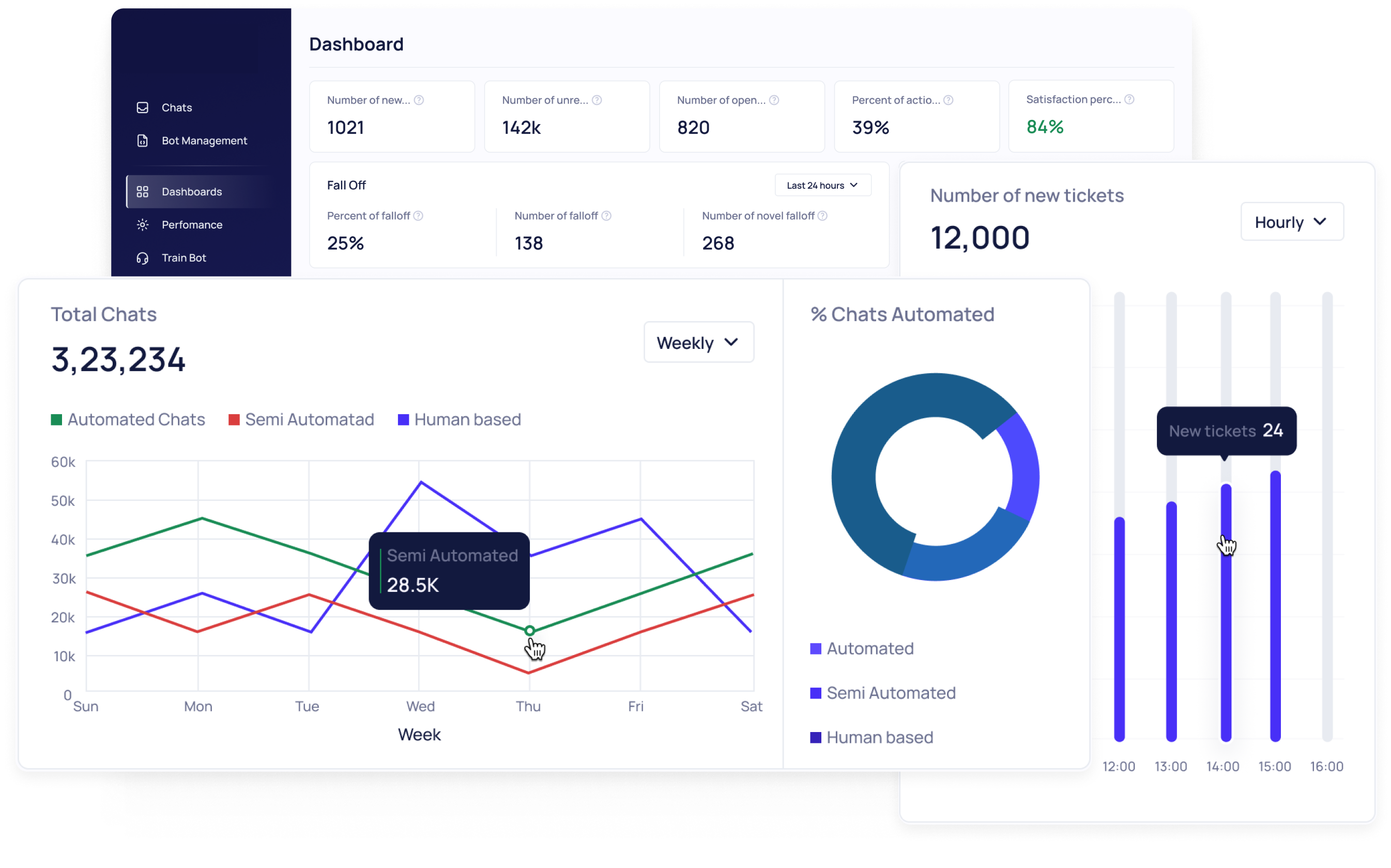









Imagine a digital system that doesn’t wait for instructions but instead, understands your business goals, learns from real-time feedback, and takes independent actions to get the job done.
Read More

How do you know if your AI startup idea is worth building?
Most founders think they know the answer. After all, the idea sounds promising, technology works, the market opportunity looks huge. So they hire developers, start building, and spend months turning their vision into a real product.
Then launch day arrives, and....... nothing happens.
A few signups trickle in. Some people say the idea is interesting. But users aren't sticking around, prospects aren't buying, and the excitement that fueled the project starts giving way to a difficult question “Did anyone actually need this product in the first place?”
According to startup failure studies, 35% of failed startups cite a lack of market need as the primary reason for failure, making it the most common startup killer.
This is exactly why startup idea validation matters. It helps you test your assumptions before they become expensive mistakes. It ensures you're solving a real problem for a market that actually wants and is willing to pay for your solution.
Unfortunately, this scenario is far more common than most founders realize. Roughly 90% of startups fail, and one of the biggest reasons has nothing to do with technology, funding, or execution. It comes down to a lack of startup idea validation.
What's particularly surprising is that many of these companies didn't fail because they built a bad product. They failed because they built a product before proving there was a real problem worth solving.
This challenge is even more important in the age of AI. Today, building software is faster and cheaper than ever. AI tools can generate code, create prototypes, and accelerate development dramatically. But while building has become easier, validating demand hasn't.
An impressive AI demo doesn't automatically translate into a viable business. A model can perform flawlessly, automate complex tasks, and still fail to attract paying customers. The gap between "that's cool" and "I'll pay for that" is often much larger than founders expect.
So, before investing months of development time or thousands of dollars into an MVP, there's a more important question to answer: “How do you know your AI startup idea is worth building at all?”
Before we get into the how, let's make sure we're aligned on the what and why, because validation for AI startups isn't quite the same as validation for a traditional SaaS product.
Startup idea validation is the process of testing your core assumptions about a business idea before investing significant time, money, or resources into building it. It's the discipline of replacing gut feeling with evidence.
Basically , validation asks three questions:
For most software products, these questions are hard enough. For AI startups, they're even harder because you're not just validating a business idea. You're also validating an assumption that AI is the right tool for the job.
That's an important distinction.
Many founders identify a problem and immediately start looking for ways to apply AI to it. But customers rarely care whether a solution uses machine learning, large language models, AI agents, or AI automation workflows. All they care about is outcomes. They want tasks completed faster, costs reduced, errors eliminated, and productivity improved.
This basically means, customers buy solutions to problems, not AI for the sake of AI.
This is where many AI startups get into trouble.
They successfully validate that a problem exists, but they never validate whether AI creates enough additional value to justify the complexity, cost, and risk that comes with it. Others build impressive AI-powered products only to discover that customers are perfectly satisfied with existing tools, manual processes, or simpler software alternatives.
There's also another challenge unique to the AI market; that is - technology evolves incredibly fast.
A feature that feels groundbreaking today could become a built-in capability of a major AI platform six months from now. That means validating demand alone isn't enough. You also need to understand whether your idea can remain valuable as the underlying technology changes.
That's why validating an AI startup requires looking beyond the product itself. You need evidence that:
Only when these assumptions are supported by real-world evidence should you consider investing in an MVP.
The good news? You don't need a finished product to gather that evidence. In fact, the most effective validation happens long before a single line of production code is written. Before jumping into validation tactics, it's important to understand why validating an AI startup is fundamentally different from validating a traditional software idea.
Before you build, validate the problem—not just the AI.
Validate My AI Idea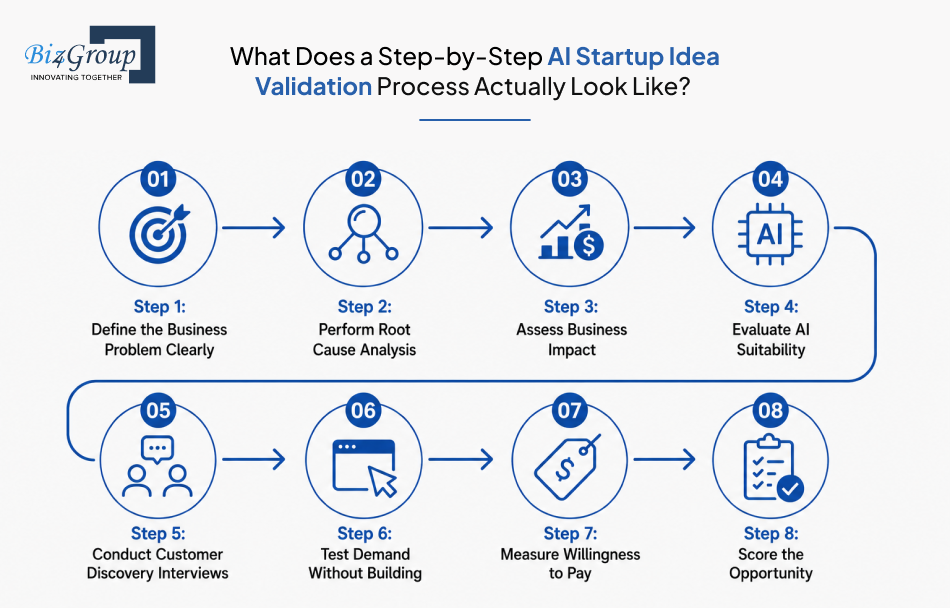
Few years back, JPMorgan's $175 million acquisition of Frank serves as a reminder that even industry giants can make costly mistakes when key customer and market assumptions aren't properly validated.
By now, you understand what validation is and why it matters. So, the question now becomes - “How do you actually validate an AI startup idea before building an MVP?”
The answer isn't a single interview, a survey, or a landing page.
Validation is a process. Each step is designed to reduce uncertainty and test a specific assumption about your business. Skip one, and you risk building incomplete information. Follow them in order, and you'll gradually replace assumptions with evidence.
By the end of this framework, you should be able to answer one critical question with confidence: “Does this idea deserve an MVP, or does it need more validation before I invest further?”
Let's start with the foundation of everything that follows.
You can't validate something you can't define. Yet this is where many founders stumble. They describe problems in broad, generic terms:
These aren't problem statements. They're observations.
A strong problem statement is specific enough that the right customer immediately recognizes themselves in it.
One useful framework is to define the problem using four components:
Question: Who exactly experiences this problem?
Answer: Be
specific. "Marketers" is too broad. "Mid-sized e-commerce brands with 3-20 person marketing teams"
is much better.
Question: What friction, inefficiency, or pain are they experiencing?
Answer: Describe the actual task, process, or challenge.
Question: Why does this problem continue to exist despite available
solutions?
Answer: This is often where opportunity emerges.
Question: What happens if the problem remains unsolved?
Lost time? Lost
revenue? Increased risk? Frustrated employees?
Answer: If there are no
meaningful consequences, there probably isn't a business opportunity.
Before moving to the next step, challenge yourself with a simple test: “Can you describe the problem without mentioning AI, automation, machine learning, or your product?”
If the answer is no, you may be defining a solution rather than a problem. And that's one of the fastest ways to build something nobody needs.
Defining the problem is only the first step. The next challenge is figuring out what's actually
causing it.
Customers often describe symptoms rather than root causes. If you solve the
symptom, you may end up building an AI product that creates little real value.
A simple technique is the 5 Whys:
Problem: Marketing teams spend too much time creating ad copy.
Why? They need multiple variations for different audiences.
Why? They don't know which messages perform best.
Why? Performance insights are scattered across platforms.
Why? Reporting is fragmented.
Why? There's no feedback loop between campaign data and content creation.
Suddenly, the opportunity isn't copy generation. It's performance-driven decision-making.
Key takeaway: Don't ask, "What are people complaining about?" Ask, "Why does this problem exist?"
Not every problem deserves a startup. To determine whether an opportunity is worth pursuing, quantify the cost of the problem.
Ask questions like:
The bigger the economic impact, the easier it becomes to justify a purchase.
A useful rule: Pain × Frequency × Cost = Opportunity Size
If customers can't clearly explain the impact of the problem, they may not be motivated enough to pay for a solution.
This is where AI startups separate themselves from traditional software businesses. A real problem doesn't automatically mean AI is the right solution.
Before moving forward, ask:
Many founders discover that automation, workflow improvements, or better software solve the problem more effectively than AI.
That's a win, not a setback. The goal is to find the best solution, not force AI into every problem.
This is the most important validation step in the entire process. Everything else generates signals. Customer conversations generate understanding.
For B2B products, aim for 15-25 interviews. For B2C products, aim for 30-50.
The objective isn't to pitch your idea. It's to understand how people currently experience the problem.
Questions worth asking:
Pay close attention to emotional language, existing workarounds and previous spending behavior and ignore Compliments, polite enthusiasm and most importantly "I'd probably use that". People are often wrong about what they'll do in the future. Their past behavior is much more reliable.
Customer interviews validate the problem. And demand tests validate whether people will take action.
The easiest methods include:
Create a simple page explaining:
Then drive traffic through LinkedIn, communities, ads, or outreach.
Measure email signups, demo requests and waitlist registrations for confirmation
Add a "Get Started" or "Book a Demo" button before the product exists. If people click, you've validated interest. If nobody clicks, you've learned something valuable without writing code.
The strongest validation signal is commitment.
Even a small pre-payment, pilot agreement, or signed letter of intent is more valuable than hundreds of survey responses.
Interest and purchasing intent are not the same thing. Many founders validate demand but never validate pricing. During customer interviews, ask: "If this solved the problem exactly as described, what would it be worth to you?"
Then push further:
This helps establish an early pricing range and reveals whether the problem is valuable enough to justify a purchase.
Always remember, people saying they like your idea is validation and people discussing budget is evidence.
At this point, you should have enough evidence to make a decision.
Rate each category from 1-5:
|
Criteria |
Weight |
|---|---|
|
Problem Severity |
25% |
|
Market Size |
20% |
|
Willingness to Pay |
20% |
|
AI Feasibility |
20% |
|
Competitive Differentiation |
15% |
Interpret the results:
80-100: Strong opportunity. Move toward MVP planning.
60-79: Promising, but more validation is needed.
Below 60: Reconsider the idea or revisit your assumptions.
Real-World Example: Dr. Truman
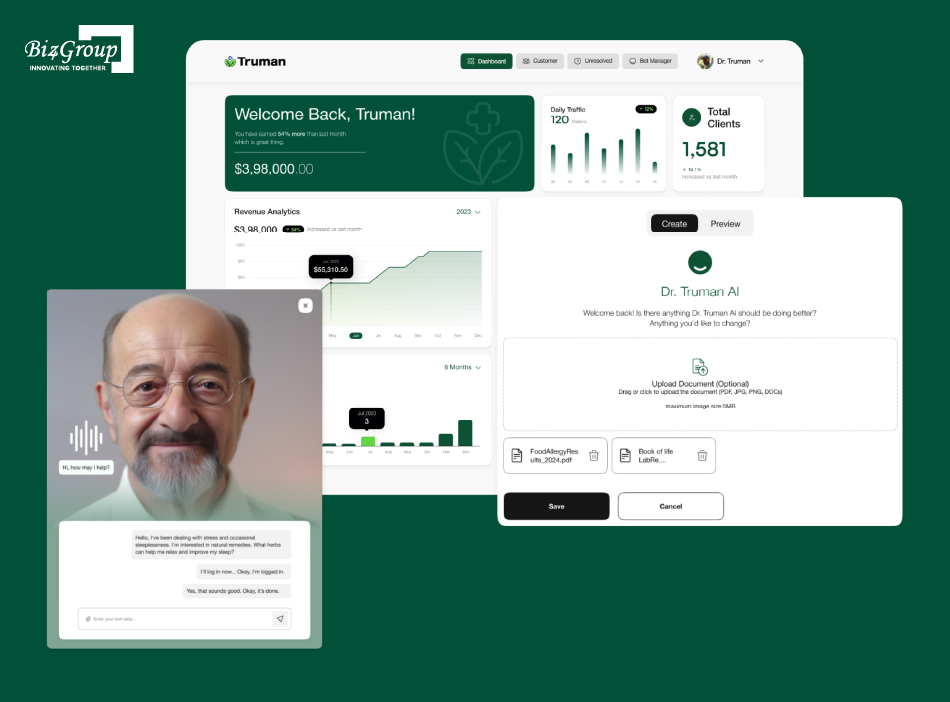
At Biz4Group, we worked with Dr. Truman, an AI-powered healthcare platform designed to help users access health information and personalized recommendations through an interactive AI avatar.
Initially, the opportunity seemed broad, improve healthcare guidance through AI. However, deeper discovery revealed the core problem wasn't simply delivering information. Users were spending significant time searching, reading, and interpreting health-related content on their own.
That insight helped shape a more focused solution centered on conversational guidance, personalized recommendations, and an engaging AI avatar experience.
Lesson: The clearer you define the problem, the easier it becomes to build a solution that delivers measurable value. In Dr. Truman's case, that resulted in a 40% increase in user engagement, 30% growth in supplement sales, and 85% positive user feedback.
The goal isn't to get a perfect score. It's to identify weaknesses before they become expensive mistakes. A failed validation process is still a successful outcome if it prevents you from spending six months building the wrong product. Not every validation method serves the same purpose. Let's look at which methods work best for different assumptions.
If you're unsure where your idea stands, we'll help uncover the gaps and next steps.
Get a Validation AssessmentJust think that you are launching your AI product tomorrow. Customers upload data, receive results, and walk away happy.
Now think there's no AI behind the scenes. Instead, you and your team manually perform the work while presenting the experience as if the product were fully automated.
That's the essence of a Wizard of Oz MVP.
The customer experiences the outcome. You learn whether they value the result. But you avoid spending months building technology before knowing whether anyone wants it.
For AI startups, this is one of the most powerful validation techniques available.
Let's say you're building an AI-powered resume screening platform. Instead of training models, building workflows, and integrating applicant tracking systems, you could:
From the customer's perspective, the experience feels real.
From your perspective, you're collecting answers to far more important questions:
Those insights are worth far more than an early prototype.
Many founders assume they need sophisticated AI before they can test demand. The opposite is usually true. A Wizard of Oz MVP helps you validate three critical assumptions before investing heavily in development:
Customers don't buy machine learning models. They buy faster hiring, better leads, lower costs, or increased productivity.
A Wizard of Oz test focuses entirely on whether those outcomes matter.
Even if your AI performs perfectly, customers still need to adopt the process around it.
Testing manually helps uncover workflow issues, trust concerns, approval bottlenecks, and integration challenges before you write code.
You'll quickly learn how much effort is required to deliver the promised value.
If the process is expensive to perform manually, you'll also gain clarity on the level of automation needed to make the business profitable.
Founders often confuse these two approaches.
A Concierge MVP is transparent. Customers know a human is providing the service. Whereas, a Wizard of Oz MVP hides the manual work behind a product-like experience.
Both are useful. But the difference is that a Wizard of Oz MVP tests whether customers believe and trust the product experience itself, making it especially valuable for AI startups.
|
AI accuracy requirements |
Helps determine the minimum quality threshold users expect before investing in model development. |
|
User trust and adoption |
Reveals whether users actually trust and rely on the output. |
|
Workflow design |
Tests how the solution fits into existing processes and where friction exists. |
|
Product-market fit |
Validates whether the problem is important enough for users to adopt the solution. |
|
Willingness to pay |
Measures whether users see enough value to pay for the outcome. |
|
Technical scalability |
Not ideal. A Wizard of Oz MVP validates business assumptions, not infrastructure or performance at scale. |
|
Common Founder Mistake |
Building the AI first and validating demand later. |
|
Better Approach |
Validate the outcome, workflow, and willingness to pay before investing heavily in AI development. |
Customers don't care how the magic happens. They care whether the problem gets solved. A Wizard of Oz MVP helps you prove that before committing significant time and resources to building the AI. Among all validation techniques, one stands out as especially valuable for AI startups.
Interest or actual demand? Let's find out.
Validate Market Demand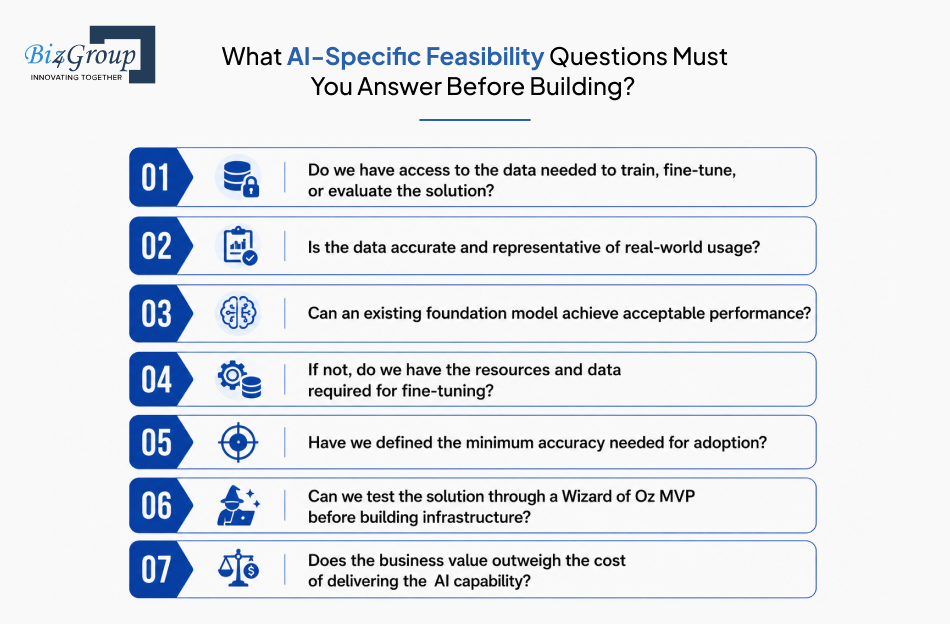
Before building an MVP, you should be able to answer "yes" to most of these questions:
If several answers are "no," you're not facing a product problem. You're facing a feasibility problem.
Many founders chase perfect accuracy too early. But in reality, customers rarely need perfection. They need a solution that's meaningfully better than the current alternative.
If an AI tool can reduce manual effort by 70%, improve response times by 50%, or increase accuracy enough to save money, that's often more than enough to create value.
The goal isn't building the smartest model. It's solving the problem well enough that customers will adopt and pay for it.
The best AI startup opportunities exist where market validation and technical validation overlap.
You need both. Strong demand without technical feasibility creates impossible products. Strong technology without demand creates products nobody wants.
The most successful AI startups reduce both risks before they build, using evidence rather than assumptions to decide whether an MVP is worth pursuing. Even with a solid framework, founders often fall into predictable traps. Let's look at the mistakes worth avoiding.
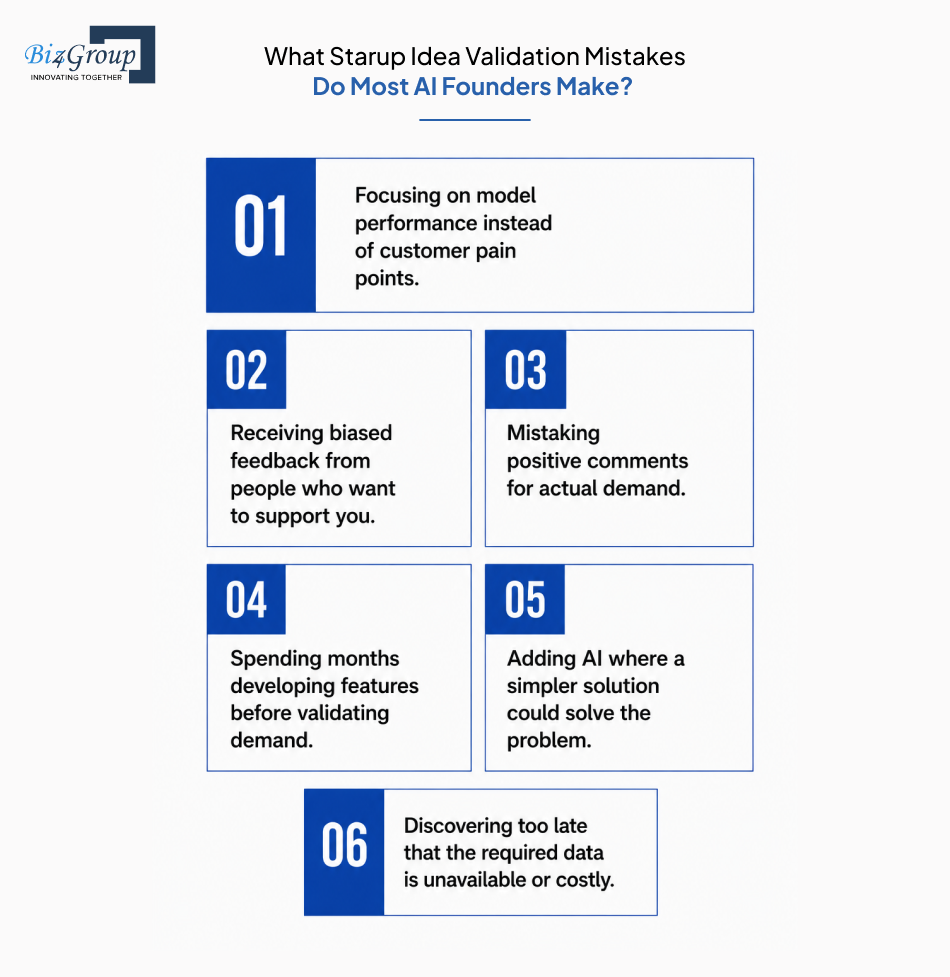
Even with the right framework, founders often make the same validation mistakes. Here are the biggest ones to watch for.
|
Validation Mistake |
The Challenge |
How to Avoid It |
|---|---|---|
|
Validating the Technology, Not the Problem |
Focusing on model performance instead of customer pain points. |
Validate the problem first through customer interviews and market research before testing AI capabilities. |
|
Asking Friends and Family |
Receiving biased feedback from people who want to support you. |
Speak with potential customers who match your target audience and can provide objective feedback. |
|
Confusing Interest with Commitment |
Mistaking positive comments for actual demand. |
Look for strong signals such as demo requests, pilot programs, LOIs, pre-sales, or payments. |
|
Building Too Much, Too Soon |
Spending months developing features before validating demand. |
Build the smallest possible test, gather feedback, and iterate based on evidence. |
|
Skipping the 'Why AI?' Question |
Adding AI where a simpler solution could solve the problem. |
Clearly define why AI is necessary and what unique value it delivers. |
|
Ignoring the Data Problem |
Discovering too late that the required data is unavailable or costly. |
Assess data availability, quality, and accessibility early in the validation process. |
Most validation mistakes happen when founders focus on proving their idea right instead of testing what could make it fail. The goal isn't to confirm assumptions. It's to challenge them before they become expensive mistakes. Theory only takes you so far. Let's look at how real startups used validation to avoid costly mistakes and uncover better opportunities.
Good. There may be a simpler way to validate before you build.
Explore MVP OptionsFrameworks are helpful but use cases show why validation matters. Here are AI startup scenarios, developed by Biz4group, where early validation changed the direction of the product before development began.
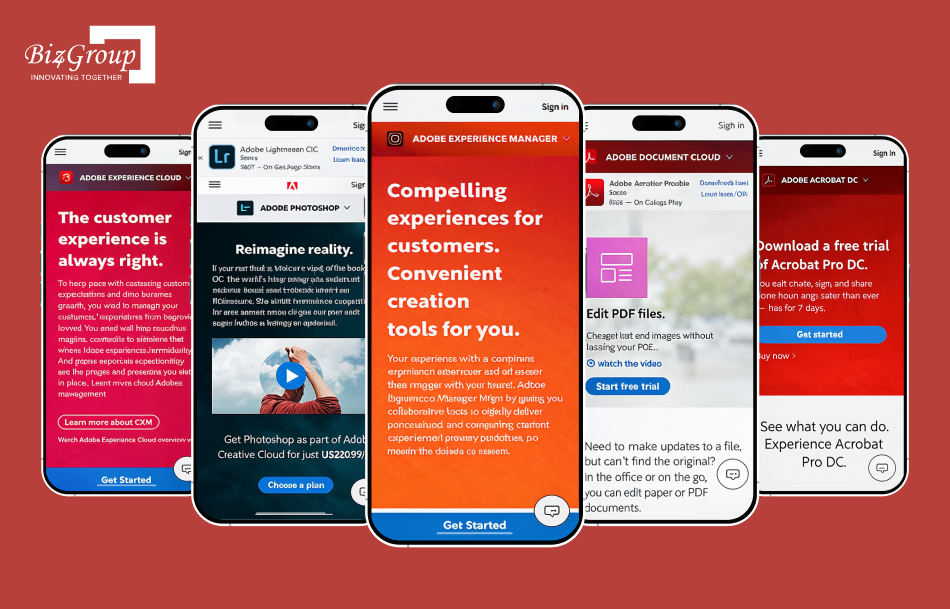
Adobe partnered with Biz4Group to transform its existing web pages into Accelerated Mobile Pages (AMP), with the goal of delivering a faster, more engaging mobile experience for users worldwide.
The Initial Challenge: Adobe needed to convert a large number of existing web pages into AMP-compliant versions while maintaining design consistency, improving page speed, and ensuring seamless integration with its existing digital ecosystem.
What the Project Required:
The Solution: Biz4Group worked closely with Adobe and Google AMP standards to create pixel-perfect AMP pages optimized for performance and usability. Using HTML, CSS, and AMP technologies, the team streamlined page structures, improved loading speeds, and ensured full AMP compliance across all converted pages.
The Outcome:
The Key Lesson: Delivering exceptional digital experiences isn't always about adding new features. Sometimes, optimizing performance and user experience can create the biggest impact.
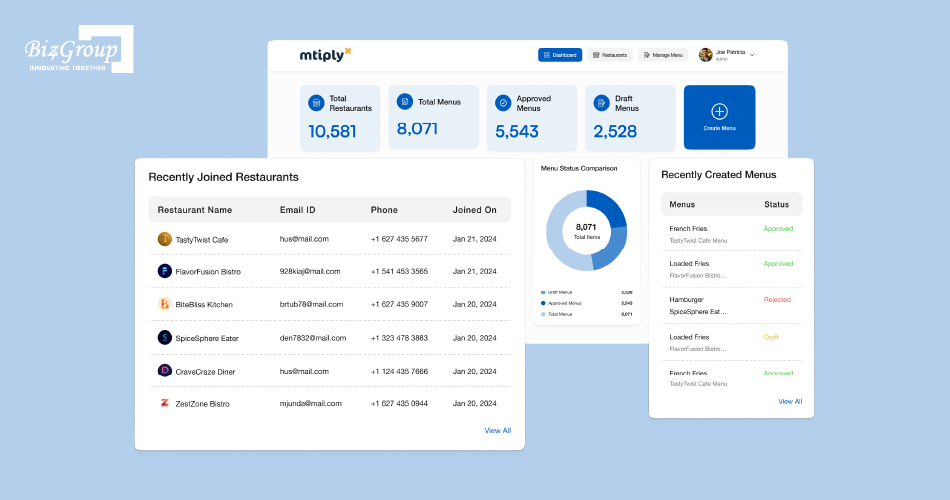
Mtiply is an AI-powered menu synchronization platform developed by Biz4Group, that keeps restaurant menus updated across all digital channels in real time.
The Initial Problem
Restaurant brands were struggling to keep menus updated across websites, mobile apps, POS systems, and food delivery platforms. A simple price change or menu update often had to be made manually in multiple places, which led to inconsistencies, order errors, and operational delays.
What Validation Revealed
Conversations with restaurant operators showed that the real issue wasn't menu creation or editing. It was synchronization. As businesses expanded across locations and delivery channels, keeping menu data consistent became increasingly difficult. Teams were spending valuable time managing updates instead of focusing on operations and customer experience.
The Solution
Instead of building a standard menu management platform, the team developed Mtiply, an AI-powered solution focused on real-time synchronization. The platform centralized menu updates and automatically pushed changes across all connected channels, while supporting integrations with POS systems, delivery apps, and internal tools.
The Outcome
The solution reduced
It also provided the scalability needed to support growing restaurant operations without increasing administrative workload.
The Key Lesson
The most valuable opportunities often lie beneath the obvious problem. Restaurants didn't need a better way to edit menus. They needed a smarter way to keep every menu synchronized, accurate, and up to date across every customer touchpoint.
That's the value of validation. It helps uncover the truth before costly decisions are made. Next, let’s look at how to movw towards validation.
Validation doesn't eliminate uncertainty. It reduces it. Once you've gathered enough evidence, the next step is building an MVP. The key word is minimum. An MVP isn't a feature-rich Version 1. It's the smallest product that tests your most important remaining assumption.
Use your validation findings to answer three questions:
Next, prioritize features using the MoSCoW framework:
Your MVP should consist primarily of Must-haves and only a handful of critical Should-haves.
It's also worth setting a strict timeline. For most AI startups, 6-8 weeks is a reasonable target for a first functional MVP. If the roadmap stretches far beyond that, you've probably defined a product, not an MVP.
Most importantly, keep validating after launch. An MVP isn't the finish line. It's simply the next experiment. The goal is to learn faster than competitors, refine what works, and continue reducing risk as you move toward product-market fit. Validation is only valuable if it helps you make better decisions. So what happens once you've gathered enough evidence?
We'll help you spot what's validated and what still needs proof.
Check My ReadinessComing up with an AI startup idea is easy. Validating it, scoping it correctly, and turning it into a product people will actually pay for is where most founders struggle.
That's where Biz4Group, a leading MVP development company in USA, adds value.
From projects like Mtiply, our AI-powered menu synchronization platform, and other AI-driven business solutions, we've helped companies identify the right problem, validate market opportunities, and build products that deliver measurable results. These success stories reinforce a simple truth: successful products aren't built on assumptions—they're built on validated insights.
With expertise spanning AI consulting, MVP development, product strategy, and scalable software engineering, we help founders move from idea to execution with clarity and confidence.
Whether you're validating a new AI concept or preparing to launch an MVP, Biz4Group can help you make smarter product decisions and bring the right solution to market faster.
The most expensive product you'll ever build is the one nobody wants. Not because of development costs, but because of the time and opportunity lost building in the wrong direction. That's why validation isn't a detour from building. It's the first stage of building. You're replacing assumptions with evidence before investing in code, infrastructure, and AI development.
For AI startups, where technical complexity amplifies the cost of being wrong, this step is non-negotiable. The founders who succeed aren't always the ones with the best technology. They're the ones who validate the problem, the market, and the feasibility before they build. Before moving forward, ask yourself:
If you can answer all three with evidence, not assumptions, you're ready to move from validation to execution.
At Biz4Group LLC, we help startups and businesses validate AI ideas, assess feasibility, define MVP scope, and build market-ready AI products with confidence.
Ready to turn your AI idea into a market-ready product? Connect with us to discuss your vision and chart the right path forward.
It takes 1-2 weeks for Biz4Group to validate the problem, talk to customers, test demand, and assess AI feasibility. Those few weeks can save months of building the wrong product.
Absolutely. You can handle customer interviews, problem validation, and demand testing yourself. For AI feasibility and technical decisions, it's helpful to involve a technical co-founder, advisor, or AI consultant.
Market research studies the market. Validation tests your idea. Research tells you what's happening; validation tells you whether customers actually want your solution.
As a rule of thumb, aim for 15-25 interviews for B2B products and 30+ for B2C. Stop when you start hearing the same problems and patterns repeatedly.
Before. Validate the problem, demand, and willingness to pay first. Prototypes are best used to test usability and product experience, not whether the opportunity exists.
That's usually a warning sign. It may indicate a weak market, low demand, or a problem others have already failed to solve. Investigate carefully before assuming you've found a hidden opportunity.
Talk to three groups: the user, the buyer, and the internal champion. Many founders validate with users but forget the people who control budgets and purchasing decisions.
A Wizard of Oz MVP looks automated to users, but humans perform the work behind the scenes. It's a fast, low-risk way to test adoption, trust, and willingness to pay before building AI infrastructure.
You're ready when you've confirmed the problem is real, validated willingness to pay, identified a clear use case, and verified that AI can realistically solve the problem.
That's valuable feedback. It usually means the problem isn't painful enough, the pricing is off, or you're talking to the wrong audience. Dig deeper before moving forward.

with Biz4Group today!
Our website require some cookies to function properly. Read our privacy policy to know more.