Location :
Orlando, FL, USA
Location :
Orlando, FL, USA +1 (407) 714-1616
 info@biz4group.com

















Imagine a digital system that doesn’t wait for instructions but instead, understands your business goals, learns from real-time feedback, and takes independent actions to get the job done.
Read More
We helped our clients with development and assisted in clocking a $24 million market valuation.
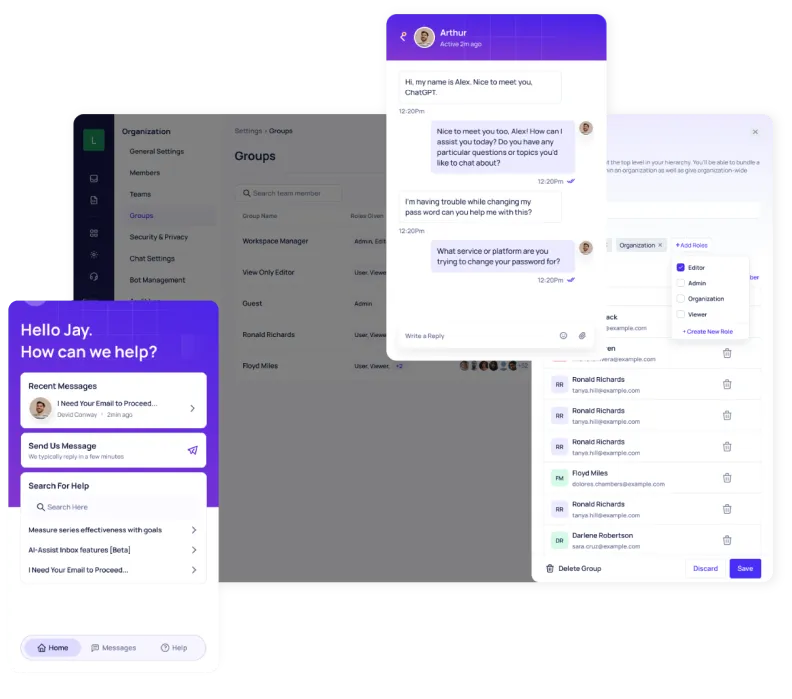
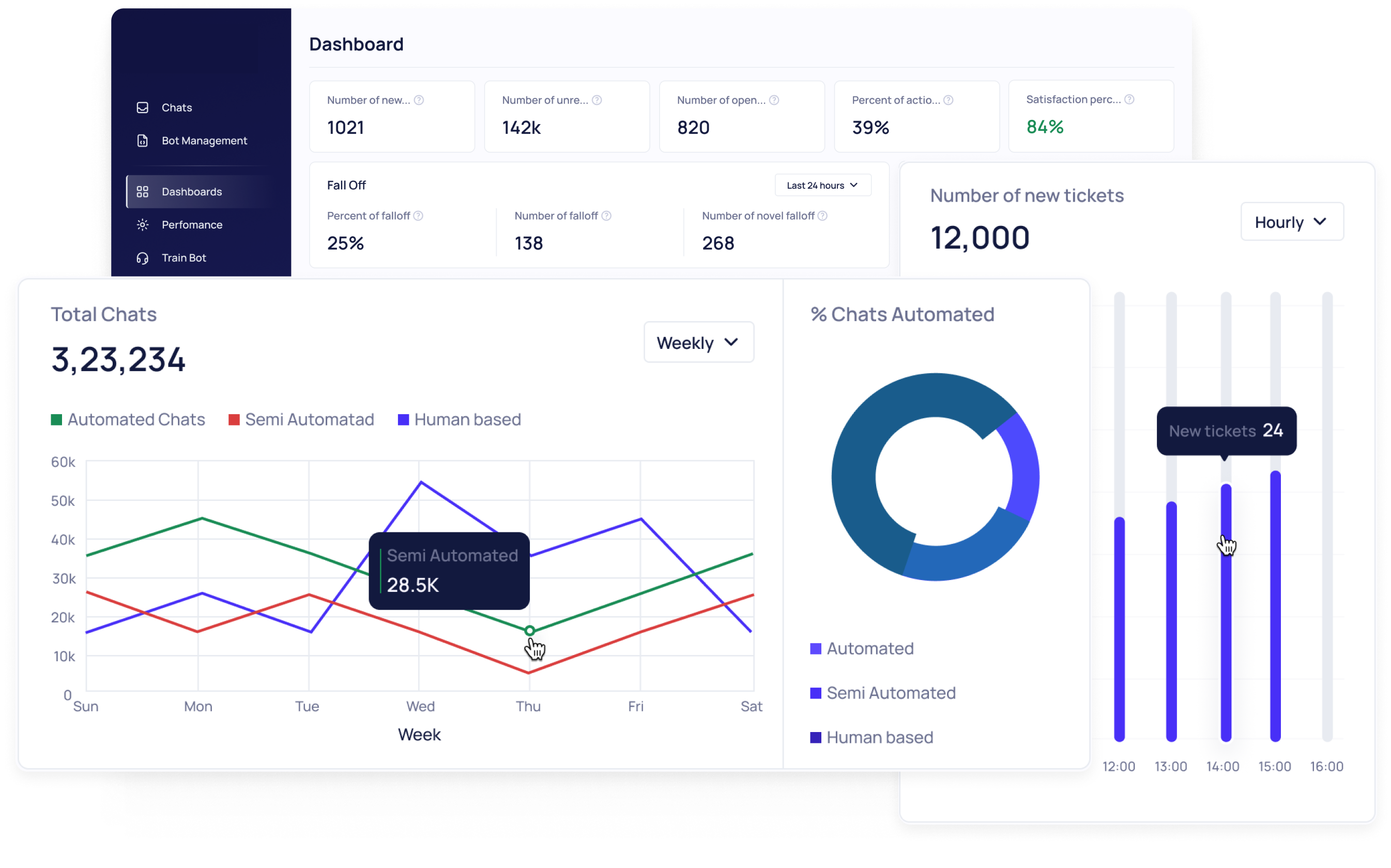
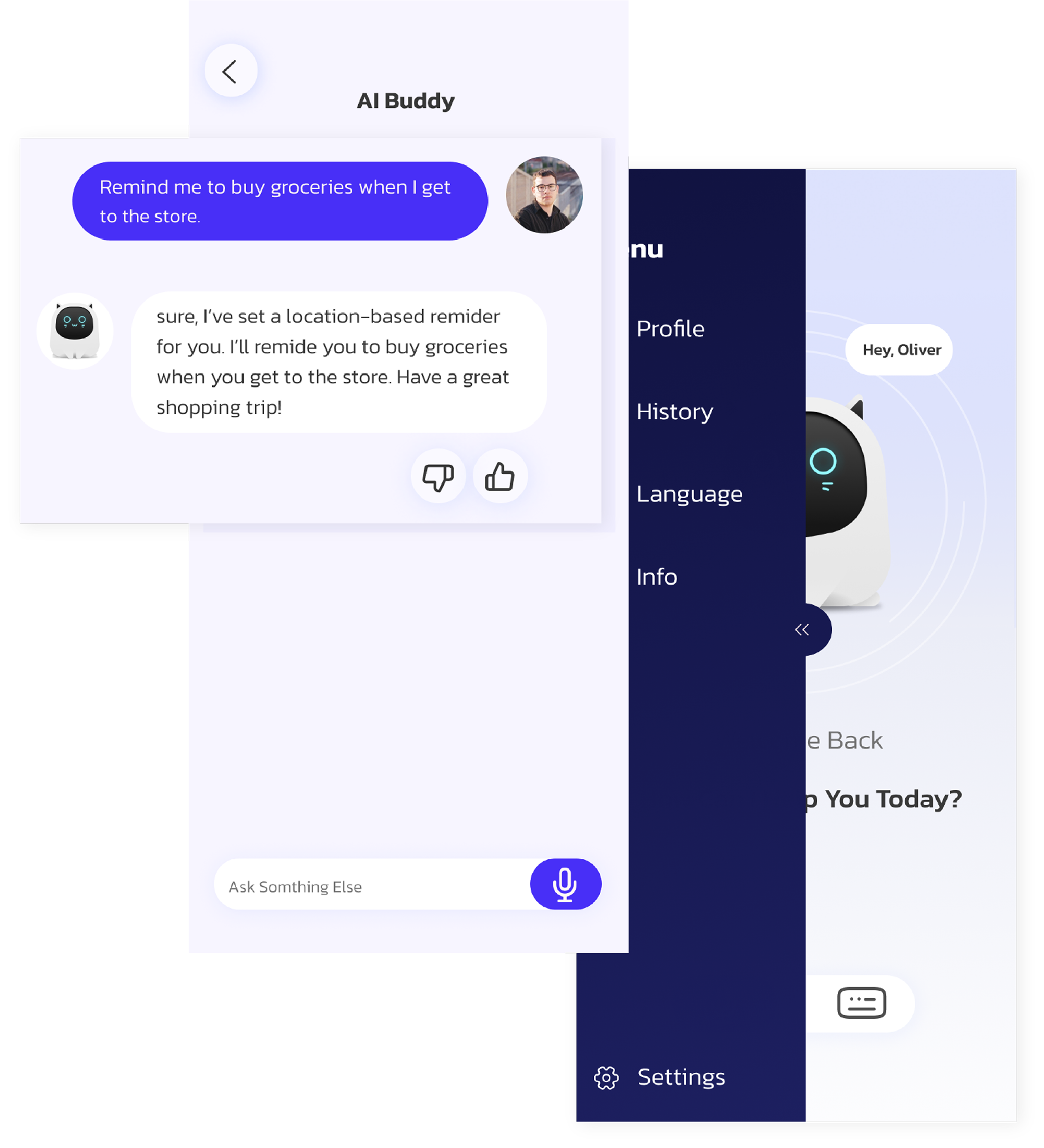
The AI-driven customer service chatbot is your ultimate solution for authentic, human-like communication, making it a strong fit for modern AI chatbots in customer service. With seamless integration and dynamic responses, it's like having a knowledgeable team member available 24/7. The chatbot learns from human agents, ensuring personalized interactions and reducing agent inboxes, showing how AI chatbots are improving customer service. From refunds to subscription changes, it adapts effortlessly to meet customer needs. Experience the efficiency of automated conversations without sacrificing human touch. The chatbot aims to reduce workloads and empower businesses to align their team with other market-competitive tasks, reflecting the capabilities of effective customer service AI chatbots.
The client encountered significant challenges in the customer service industry. Later, the client decided to bridge the gap with the help of AI, recognizing the growing value of AI in customer service and chatbots. In earlier days, keeping your support active 24/7 required an increased workforce. The other side of the coin was that various gaps were still untouched and extended beyond mere responsiveness. Overcoming the challenge of delivering an enhanced solution and experience to the customers, the client aimed to explore AI chatbots for customer service as a scalable and efficient approach.

Update information in real-time for continuous learning.

Streamline the process by requesting reimbursement.

Resolve payment issues or raise a dispute quickly.

Manage, change, or upgrade your subscription plan per your needs.

Know the policies for claiming a coupon to raise an issue.
Our task involved collaborating with product managers, developers, and business analysts to craft an optimal chatbot for customer support, aligning closely with modern conversational AI chatbot for customer service standards. Working closely together, we synthesized insights and expertise to develop a robust solution tailored to meet the diverse needs of our client and their customers. For the beta version, we selected 8 participants to test and stay unbiased on the product outcomes.

We did market research, user feedback, and competitive analysis for developing innovation.

We created seamless experiences through user flow, journey mapping, and wireframing.

We worked on building for Android and iOS through rigorous user testing.

We launched the AI chatbot on Android and Apple stores.
The results of our product in the beta testing phase helped us address the even odds. 8 out of 8 participants found the idea useful to offload repetitive tasks with the help of generative AI. Highlighting how AI chatbots can streamline customer service interactions. Despite the successful testing, some points still needed to be taken into consideration, and empowering businesses to leverage AI technologies remained a priority. After months of working on the gaps, the final output brought a spark of happiness to the client's face. Let's take a moment to read his words.

"Their software development skills are inspiring. They quickly converted our complex challenges into a solution. Also, their UI/UX team has done an awesome job."


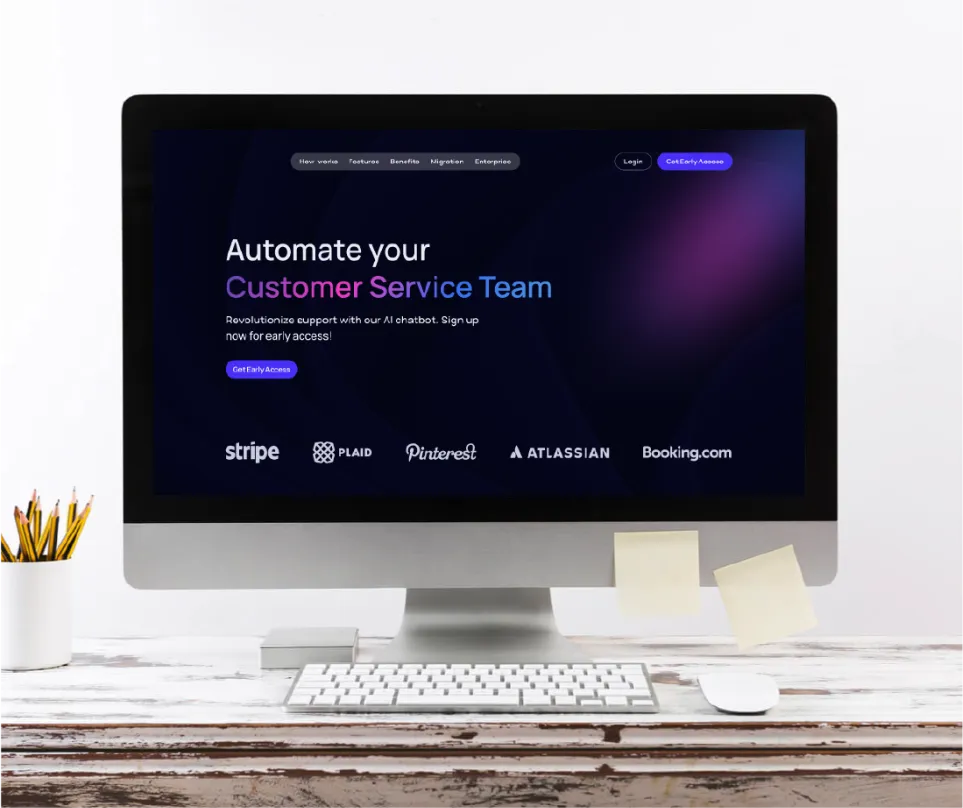
The project challenges encountered during software development demanded innovative solutions and strategic problem-solving for successful outcomes. These challenges also highlighted the growing importance of AI in customer service and chatbots as businesses move toward intelligent automation.

Ensuring accurate and efficient integration of constantly evolving data streams with Large Language Models (LLMs) poses synchronization challenges, demanding meticulous coordination and adaptation strategies.
Developing an efficient automated system for refund processing involves navigating complex transactional scenarios while ensuring compliance and customer satisfaction, demanding robust algorithms and seamless integration with existing frameworks that align with modern AI chatbots for customer service.
Implementing automated processes for subscription plan changes necessitates addressing diverse user preferences and billing structures, requiring sophisticated algorithms and seamless integration with backend systems to ensure accuracy and user satisfaction.
Teaching Large Language Models (LLMs) to comprehend and apply the rational aspects of policies involves overcoming semantic nuances & contextual ambiguities, demanding advanced Natural Language Processing (NLP) techniques & iterative refinement strategies. This is essential for building reliable customer service AI chatbots capable of handling policy-driven decisions.
We embarked on our mission to pick the best from our talent pool to prioritize accessibility, instant connectivity, and efficiency. Our journey commenced with a seven-day interactive session where the team understood the client's vision and desired features, aligning the foundation with modern AI chatbots in customer service practices.
Drawing insights from this collaborative sprint, we crafted a comprehensive solution to streamline the entire process. This involved everything from identifying key market metrics to refining structures and prospects.
Moreover, our team spearheaded several integration features, empowering businesses to connect with customers proactively when necessary. This fusion of technology and human connection facilitates swift and meaningful interactions, bridging the gap between customers and agents and reflecting the benefits of how AI chatbots are improving customer service.
Through our collaborative efforts and innovative solutions, we're reshaping the customer service landscape, enabling executives to invest their time in learning or boosting productivity on meaningful tasks, supported by advancements in chatbots and AI in customer service.







This architecture diagram represents a web application infrastructure built on Amazon Web Services (AWS) and incorporates a mix of internal services and third-party integrations. The overall structure supports scalable operations commonly seen in AI chatbots for customer service.
The user interfaces include an Admin Panel and a User Panel, both developed with React, a popular JavaScript library for building user interfaces. The Admin Panel is enhanced with Redux for state management, ensuring a predictable state container across the app. The User Panel is noted for being constructed with Next.js, a React framework that enables server-side rendering and generates static websites.
The backend logic of the application is powered by Python with FastAPI, a modern, fast (high-performance) web framework for building APIs with Python based on standard Python-type hints. The backend services run inside Docker containers, which provide a lightweight, standalone, executable package of software that includes everything needed to run an application: code, runtime, system tools, libraries, and settings.
For data storage, PostgreSQL is employed as the primary database, known for its robustness and reliability. Milvus, an open-source vector database built for AI applications, is used alongside PostgreSQL to handle complex data structures that are typical in AI-driven applications and modern customer service AI chatbots.
The WebSocket protocol is used for real-time bidirectional communication between the client and server, enhancing the application's interactivity and supporting responsive experiences found in conversational AI chatbot for customer service systems.
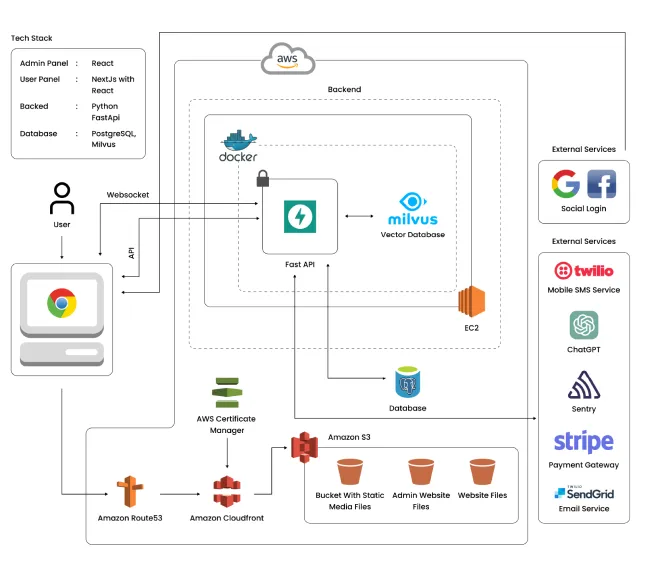
When a user interacts with the system by entering a prompt, here's the journey the data takes within this architecture:
The user enters the prompt, either through the User Panel or the Admin Panel, through a web browser or a mobile application interface. This interaction flow resembles how users engage with modern AI chatbots in customer service environments.
React, possibly with the help of Next.js, processes the user input. If it’s an administrative action, Redux might update the application state accordingly. This processed input is then sent to the backend through a secure WebSocket connection or HTTP/S request.
The request from the user is routed through AWS Route53, which resolves the domain name to the correct IP address. If it’s a request for static content, CloudFront, AWS’s CDN, delivers it from the nearest edge location for lower latency.
The request reaches the backend services hosted on AWS EC2 instances. FastAPI, running within Docker containers, receives the request. It’s responsible for handling the business logic of the application, which might include interacting with the databases or external services that support conversational AI chatbot for customer service systems.
After the backend logic is executed and the necessary data is fetched or processed, FastAPI sends a response back to the user interface.
The response is rendered on the User or Admin Panel, providing the user with feedback, such as confirmation of an action, the outcome of a request, or the requested data.
The robust infrastructure ensures security, scalability, and performance while combining internal and external services enables a seamless, feature-rich user experience. The journey continues if any new session begins from the user's end.
Sales:
$05 Million
Market Valuation:
$24 Million
Subsequently, the client underwent a share dilution process, resulting in the shifting of operational control to the appointed takeover director.

The outlook for AI chatbots in customer service is promising. With 23% of companies already utilizing them and 67% of consumers engaged with chatbots in the past year, adoption rates are expected to rise. Consumer preference for chatbots (74%) and the growing expectation for their presence on websites (73%) underscore their significance, especially as businesses continue exploring how AI chatbots are improving customer service. Additionally, chatbots offer substantial quantifiable benefits, such as saving businesses up to 30% on customer service costs and handling full conversations 69% of the time. This technology shows potential in resolving various customer issues, further enhancing its value proposition and reinforcing its role as one of the best AI chatbot software for your business.
Our website require some cookies to function properly. Read our privacy policy to know more.