 Location :
Orlando, FL, USA
Location :
Orlando, FL, USA +1 (407) 714-1616
 info@biz4group.com
- AI predictive diagnosis and disease forecasting software development helps healthcare providers detect diseases earlier, improve patient outcomes, and enable proactive care using predictive analytics.
- These systems analyze EHR data, lab reports, and patient health records to develop AI predictive diagnosis systems and identify early disease risks.
- Key capabilities include predictive risk scoring, population health forecasting, clinical dashboards, and secure patient data management to build predictive analytics software for healthcare using AI.
- The development process involves data preparation, AI model training, system integration, and deployment using modern healthcare AI technologies.
- The cost of AI predictive diagnosis and disease forecasting software development usually ranges from $25,000 to $250,000+, depending on features, integrations, and platform complexity.
Healthcare leaders are facing a difficult question today - What if we could identify disease risk before symptoms appear?
For decades, healthcare systems have been built around treatment. A patient gets sick, symptoms show up, doctors investigate, and treatment begins. But by the time that process starts, the disease may already be progressing.
Now imagine a different approach - What if your healthcare platform could analyze patient records, lab results, and population health signals to detect risks months or even years earlier?
That shift is why AI predictive diagnosis and disease forecasting software development is gaining serious momentum across healthcare systems.
The numbers show how quickly this transformation is happening. The global AI healthcare market is projected to grow from $56 billion in 2026 to more than $1 trillion by 2034.
At the same time, the healthcare predictive analytics market is expected to reach $27.6 billion in 2026 as hospitals increasingly rely on data driven forecasting.
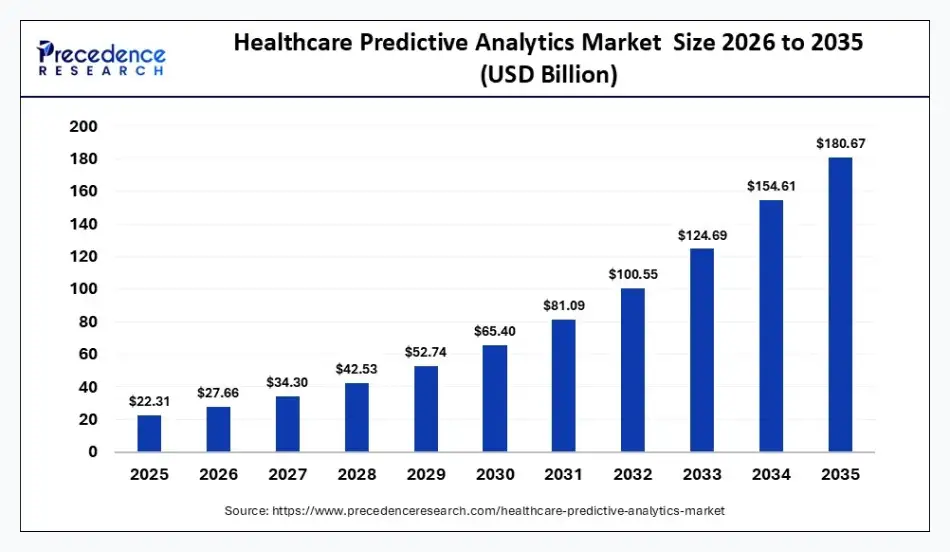
Healthcare organizations are now investing in AI predictive diagnosis software development and disease forecasting software development using AI to detect risks earlier, improve care planning, and reduce long term treatment costs.
Many modern platforms rely on predictive analytics software to transform massive clinical datasets into practical insights that support better medical decisions.
So the real question becomes: why are healthcare leaders accelerating investments in AI predictive diagnosis and disease forecasting software development right now?
What Exactly Is AI Predictive Diagnosis Software and Why Are Healthcare Leaders Investing in It?
At its core, AI predictive diagnosis and disease forecasting software development focuses on identifying health risks before symptoms appear. These systems analyze large volumes of medical data such as patient history, lab reports, imaging data, and lifestyle information. By studying patterns across this data, the software can estimate the probability of a patient developing a specific condition.
In practical terms, AI predictive diagnosis software development helps clinicians detect warning signs earlier. Instead of waiting for a disease to progress, healthcare providers gain insight into potential risks and can intervene sooner.
At the same time, disease forecasting software development using AI expands this capability to the population level. Healthcare organizations can analyze broader trends to anticipate disease patterns, patient demand, and emerging health risks across communities.
Healthcare leaders are investing heavily in AI predictive diagnosis and disease forecasting software development because it addresses several critical challenges:
- Earlier interventions through systems that create AI powered disease prediction tools for early detection
- The ability to develop AI based disease risk assessment tools that identify high risk patients sooner
- Stronger planning capabilities through AI healthcare forecasting platform development
- Reduced long term treatment costs by shifting from reactive care to preventive care
- Improved public health monitoring by building platforms that create AI disease forecasting software for population health management
Simply put, predictive healthcare platforms help organizations move from reacting to illness toward anticipating health risks and acting earlier.
So the next question becomes clear - How does AI predictive diagnosis and disease forecasting software actually work behind the scenes?
Curious How Predictive Healthcare Platforms Actually Work?
Explore how AI predictive diagnosis and disease forecasting software development can turn healthcare data into early risk insights.
Talk to Our ExpertsHow Does AI Predictive Diagnosis and Disease Forecasting Software Actually Work Behind the Scenes?
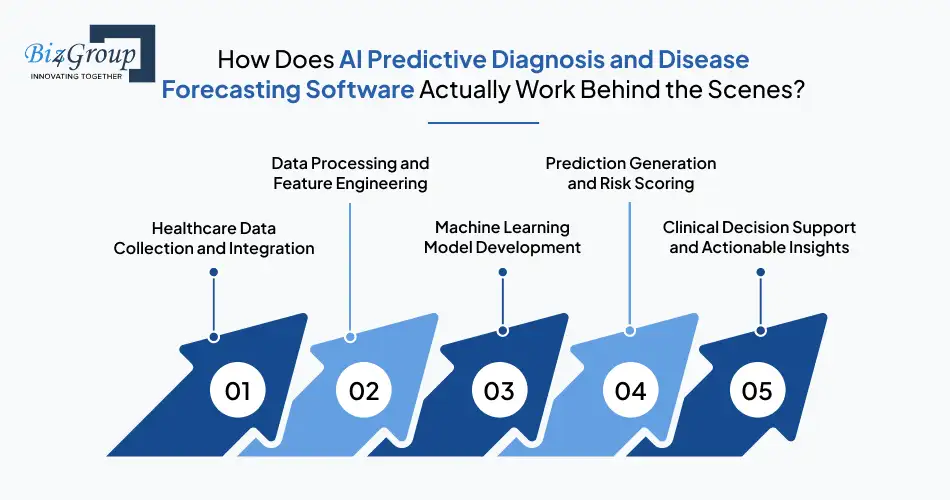
Understanding the mechanics behind AI predictive diagnosis and disease forecasting software development helps you see why these systems are becoming essential in modern healthcare. At a high level, the process involves collecting medical data, preparing it for analysis, training predictive models, and delivering insights to clinicians in real time.
Let’s break down how AI predictive diagnosis software development typically works in practice.
1. Healthcare Data Collection and Integration
The first step in development of AI predictive diagnosis and disease forecasting software is gathering large volumes of healthcare data from multiple sources. Predictive systems rely on diverse datasets to identify meaningful health patterns.
Common data sources include:
- Electronic medical records and clinical histories
- Laboratory test results and diagnostic reports
- Medical imaging and radiology data
- Wearable health device and remote monitoring data
- Demographic and lifestyle information
2. Data Processing and Feature Engineering
Raw medical data cannot be used directly for prediction. It must first be cleaned, structured, and transformed so AI models can analyze it effectively. This stage is critical when organizations develop AI predictive diagnosis systems.
Key processing tasks typically include:
- Removing incomplete or inconsistent data
- Standardizing medical records and formats
- Identifying important health indicators (features)
- Structuring time-based patient health data
Feature engineering helps predictive systems focus on signals that indicate disease risk, such as abnormal vitals, medication history, or recurring symptoms.
3. Machine Learning Model Development
Once the dataset is ready, developers train machine learning models that learn patterns associated with disease development. This stage forms the core of AI clinical prediction software development.
Common model types used in healthcare prediction include:
- Regression models for disease risk scoring
- Decision trees and random forests for classification
- Deep learning models for imaging analysis
- Time series models for tracking disease progression
These models help healthcare providers build predictive analytics software for healthcare using AI that estimates patient risk levels based on historical patterns.
4. Prediction Generation and Risk Scoring
After training, the system begins generating predictions. For each patient record, the platform calculates the probability of developing a specific condition.
Typical predictive outputs include:
- Individual patient risk scores
- Early disease warning alerts
- Population health forecasts
- Treatment response predictions
These insights allow healthcare providers to create AI powered disease prediction tools for early detection, helping clinicians prioritize high risk patients and intervene earlier.
5. Clinical Decision Support and Actionable Insights
The final step is delivering predictions in a way that clinicians can easily use during care decisions. This is where predictive systems become practical tools within healthcare workflows.
These platforms often include:
- Risk dashboards for clinicians
- Alerts for high risk patients
- Population health analytics tools
- Integration with hospital care management systems
Modern predictive platforms may also incorporate intelligent assistants such as an AI chatbot to help clinicians and patients access insights, answer medical queries, or guide next steps in care pathways.
Together, these components enable healthcare organizations to build AI disease prediction and forecasting software that transforms raw medical data into meaningful predictions, helping clinicians act earlier and manage health risks more effectively.
How Do You Build Secure and HIPAA Compliant AI Predictive Healthcare Software Using Patient Data?
Healthcare AI systems rely heavily on sensitive medical records. When organizations pursue AI predictive diagnosis and disease forecasting software development, they must ensure patient data remains secure and private at every stage. Regulations such as HIPAA define strict rules for how protected health information (PHI) can be collected, processed, stored, and shared. These safeguards are essential when organizations build secure AI predictive healthcare software using patient data.
Understanding HIPAA Requirements for Predictive Healthcare Systems
Any platform handling patient records must follow strict HIPAA compliant AI diagnosis and disease forecasting software development practices. HIPAA establishes national standards that protect electronic health information and ensure that patient data remains confidential, accurate, and available only to authorized individuals. These regulations define how PHI can be accessed, how long it can be stored, and who is allowed to process it. Predictive healthcare systems must therefore include safeguards that ensure medical data is used only for approved healthcare operations and research purposes.
Organizations building predictive healthcare platforms often follow guidelines outlined in HIPAA compliance frameworks to ensure their AI models handle sensitive patient data responsibly.
Protecting Patient Data Through Encryption and Secure Infrastructure
When companies build secure AI predictive healthcare software using patient data, strong data protection mechanisms are essential. Healthcare AI platforms must secure medical data during storage, processing, and transmission to prevent unauthorized access or data breaches. HIPAA security guidelines emphasize encryption, secure communication protocols, and role based access systems to protect electronic health information.
This means predictive platforms typically include encrypted databases, secure cloud infrastructure, and identity management systems that ensure only authorized clinicians or administrators can access patient records.
Implementing Access Control and Audit Monitoring
Another key component of HIPAA compliant AI diagnosis and disease forecasting software development is strict access management. Not every user should be able to view or modify patient records within a predictive healthcare system. HIPAA requires organizations to implement access controls, unique user identification, and monitoring systems that track who accesses patient data and when.
Audit trails and activity logs allow healthcare organizations to detect suspicious behavior, prevent misuse of sensitive information, and maintain accountability across clinical teams and technology providers.
Ensuring Responsible and Ethical AI in Healthcare
Beyond data security, healthcare organizations must also address ethical concerns when developing AI predictive diagnosis systems. Predictive models influence clinical decisions, so accuracy, transparency, and fairness become critical. Healthcare AI platforms must continuously monitor models for bias, validate predictions against real clinical outcomes, and maintain human oversight over automated recommendations. Responsible AI practices help ensure predictive systems improve healthcare decisions without introducing new risks or inequalities.
When organizations prioritize these safeguards, AI predictive diagnosis and disease forecasting software development becomes both innovative and trustworthy, allowing healthcare providers to use predictive insights while maintaining full regulatory compliance.
So once a secure and compliant foundation are established, the next question becomes: where is AI predictive diagnosis software already making a real impact in healthcare?
Where Is AI Predictive Diagnosis Software Already Making a Real Impact in Healthcare?
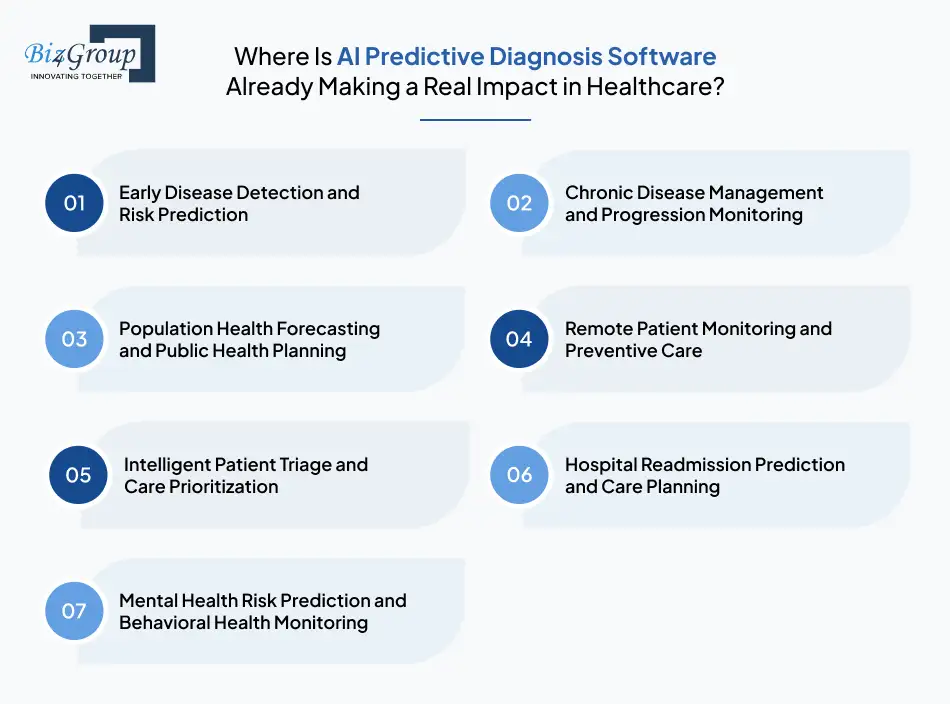
The true value of AI predictive diagnosis and disease forecasting software development becomes clear when you look at how healthcare organizations apply it in real environments. These systems help clinicians detect risks earlier, monitor patient populations more effectively, and allocate resources with greater accuracy. As more providers develop AI predictive diagnosis systems, predictive technology is becoming a key component of modern healthcare infrastructure.
Below are some of the most impactful use cases.
1. Early Disease Detection and Risk Prediction
One of the most powerful applications of AI predictive diagnosis software development is identifying diseases before symptoms become severe. Predictive models analyze patient history, genetic markers, lifestyle patterns, and diagnostic data to estimate the likelihood of developing conditions such as heart disease, diabetes, or cancer. Healthcare providers can create AI powered disease prediction tools for early detection that support preventive care and reduce long term treatment costs.
Key features typically include:
- Real time patient risk scoring
- Early warning alerts for clinicians
- Predictive screening recommendations
- Patient risk stratification dashboards
Real World Example: Dr. Ara – AI Platform for Blood Biomarker Insights

Dr. Ara is an AI powered health platform that analyzes blood test data and health biomarkers to provide personalized insights about a user's health and performance. By interpreting complex laboratory reports, the platform helps users better understand their physiological indicators and identify potential health concerns earlier.
This approach supports preventive healthcare by turning raw diagnostic data into actionable insights that help users take proactive steps toward better health.
Key features include:
- AI analysis of blood test biomarkers
- Personalized health and wellness insights
- Simplified interpretation of complex lab reports
- Data driven recommendations for lifestyle improvements
It supports early awareness of health risks through biomarker analysis, which aligns with early detection.
2. Chronic Disease Management and Progression Monitoring
Chronic illnesses require continuous monitoring and long term care planning. Predictive healthcare platforms help providers anticipate disease progression and adjust treatment strategies before complications occur. Many organizations are investing in chronic disease management software with AI that uses predictive models to track patient health trends and identify deterioration early.
Key features often include:
- Disease progression prediction models
- Personalized treatment planning insights
- Continuous patient health monitoring
- Predictive medication adherence tracking
Biz4Group in Action: Cognihelp – AI Companion for Dementia Support
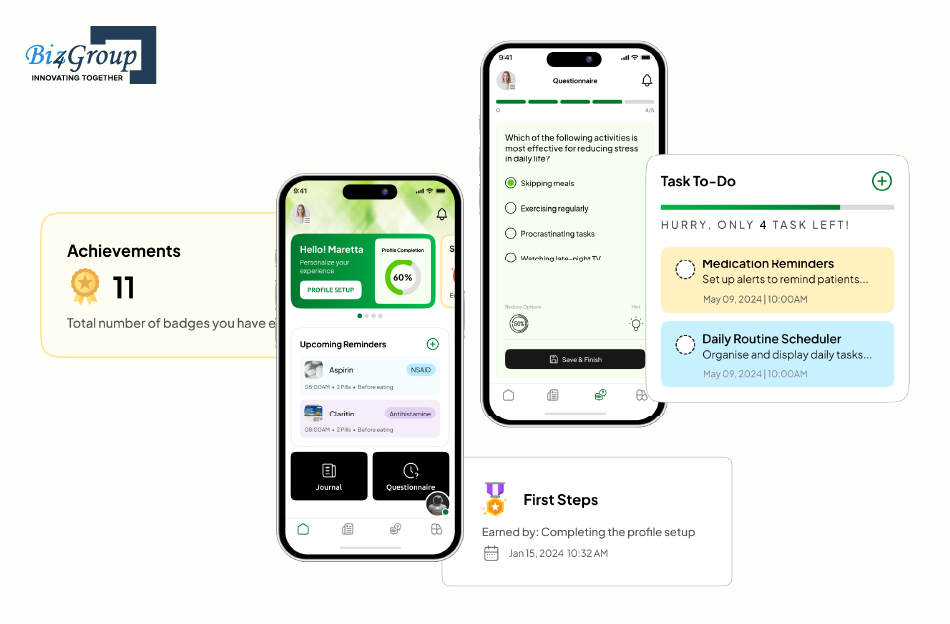
Cognihelp is an AI powered mobile application developed to assist individuals living with dementia. The platform provides cognitive support tools that help users manage daily routines, maintain independence, and stay engaged through guided interactions.
The application also supports caregivers by helping monitor cognitive activities and behavioral patterns that may signal changes in a patient’s condition.
Key features include:
- AI assistant for dementia patient support
- Daily reminders and cognitive assistance tools
- Emotional and behavioral engagement features
- Tools that support caregivers in monitoring patient routines
3. Population Health Forecasting and Public Health Planning
Beyond individual diagnosis, disease forecasting software development using AI allows healthcare organizations to analyze health trends across entire populations. This helps identify emerging disease patterns, predict outbreaks, and plan healthcare resources more effectively. Hospitals and health agencies increasingly create AI disease forecasting software for population health management to support long term public health strategies.
Key features typically include:
- Population level disease trend analysis
- Regional health risk forecasting
- Healthcare demand prediction models
- Epidemiological pattern monitoring
4. Remote Patient Monitoring and Preventive Care
Predictive healthcare systems are also transforming remote care models. By analyzing continuous patient data from wearable devices and connected health systems, predictive platforms can detect changes in health conditions earlier. Many providers combine predictive analytics with AI remote patient monitoring to track patient vitals and identify warning signals outside traditional clinical settings.
Key features often include:
- Continuous patient vitals monitoring
- Predictive alerts for health deterioration
- Real time clinician notifications
- Home based patient health tracking
5. Intelligent Patient Triage and Care Prioritization
Hospitals and emergency departments must constantly decide which patients require immediate attention. Predictive models can analyze symptoms, medical history, and clinical indicators to help prioritize cases more effectively. Healthcare platforms using AI-enabled patient triage help providers evaluate patient severity faster and direct care resources where they are needed most.
Key features include:
- Automated symptom assessment systems
- AI assisted patient prioritization
- Emergency risk scoring models
- Decision support tools for clinical teams
6. Hospital Readmission Prediction and Care Planning
Preventable hospital readmissions increase healthcare costs and often indicate gaps in post treatment care. Through AI predictive diagnosis and disease forecasting software development, healthcare providers can analyze patient records, treatment history, and recovery indicators to identify patients at higher risk of returning to the hospital. Predictive models help clinicians plan better discharge strategies and follow up care. Many providers now build predictive analytics software for healthcare using AI to reduce readmission rates and improve care continuity.
Key features include:
- Patient readmission risk scoring
- Post discharge monitoring alerts
- Predictive recovery tracking
- Care plan optimization tools
7. Mental Health Risk Prediction and Behavioral Health Monitoring
Mental health conditions often develop gradually, making early detection challenging. Platforms built through AI predictive diagnosis software development can analyze behavioral patterns, patient history, and lifestyle signals to detect early indicators of mental health decline. These systems help providers intervene earlier and improve long term behavioral health outcomes. Predictive tools also allow healthcare organizations to develop AI-based disease risk assessment tools for mental health monitoring.
Key features include:
- Behavioral pattern monitoring
- Mood trend analysis dashboards
- Early mental health risk alerts
- Therapy and care recommendation support
Real World Example: Quantum Fit – AI Powered Wellness and Lifestyle Tracking Platform
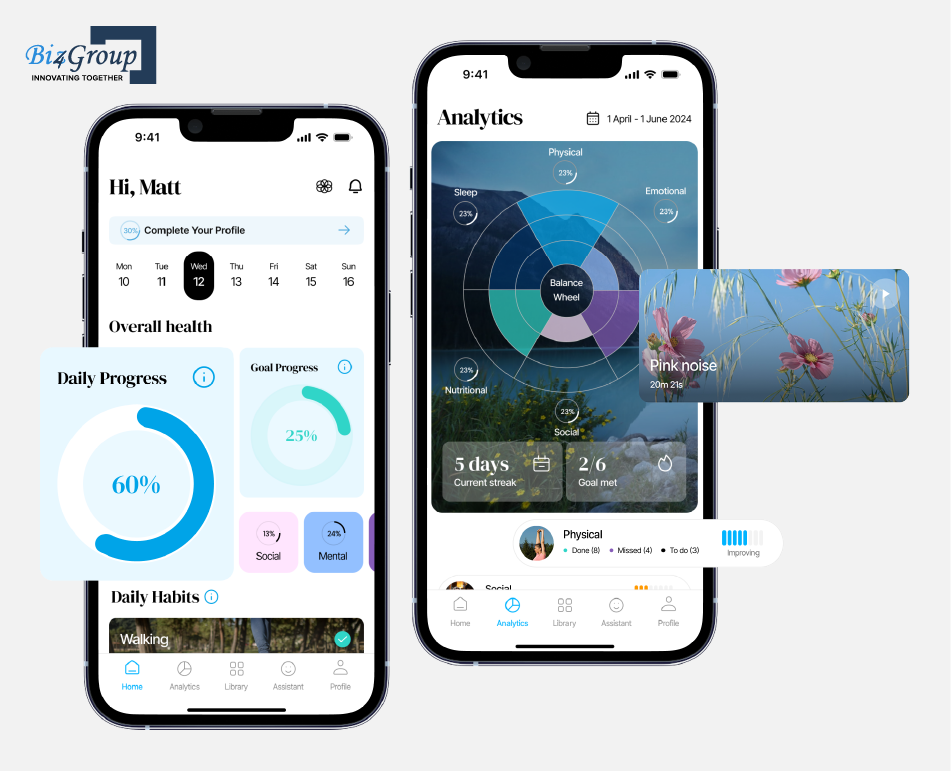
Quantum Fit is a digital wellness platform designed to help users monitor lifestyle habits that impact long term health. The platform combines AI insights with fitness and nutrition tracking to guide users toward healthier behaviors.
By helping users maintain balanced routines and track wellness metrics over time, the platform supports preventive health management and long term disease risk reduction.
Key features include:
- AI powered fitness and wellness tracking
- Personalized fitness and nutrition guidance
- Lifestyle habit monitoring and progress tracking
- Data driven insights for improving daily health routines
These use cases demonstrate how healthcare providers can build AI disease prediction and forecasting software that improves early diagnosis, strengthens care management, and supports better healthcare planning.
But to enable these capabilities, predictive healthcare platforms must include several core system features that power their functionality.
Want to Build a Predictive Healthcare Platform Like These?
Use AI to detect risks early and build predictive analytics software for healthcare using AI that improves patient outcomes.
Start Your AI ProjectWhat Features Should You Include When You Build AI Disease Prediction and Forecasting Software?
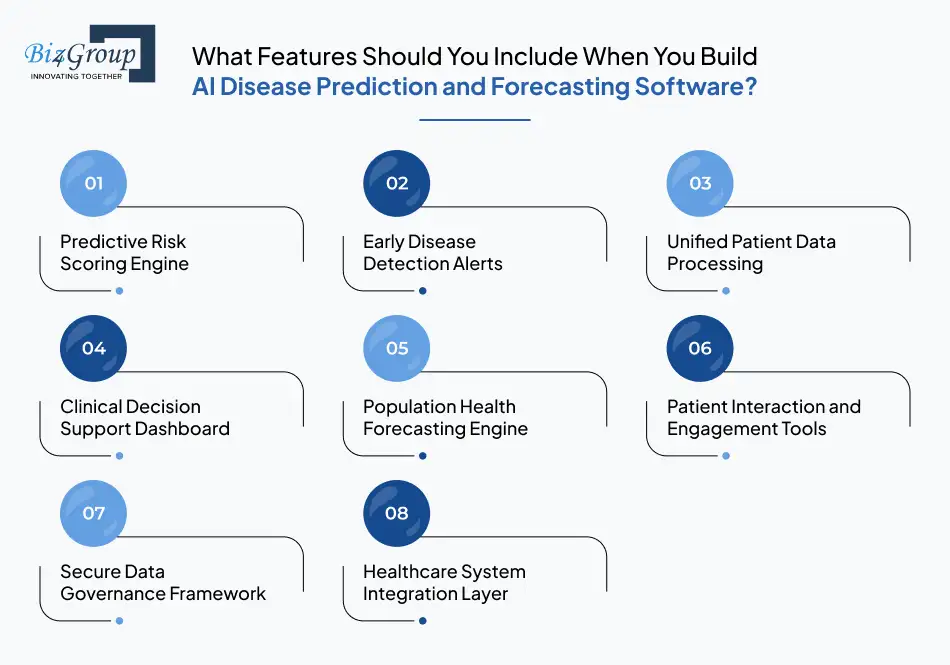
When organizations invest in AI predictive diagnosis and disease forecasting software development, the platform must do more than generate predictions. It should support clinicians with actionable insights, help healthcare teams manage patient data efficiently, and deliver reliable forecasts that improve care planning.
To achieve this, companies must build AI disease prediction and forecasting software with capabilities that support data processing, predictive modeling, patient engagement, and system scalability.
Below are the core features typically included when organizations build predictive analytics software for healthcare using AI.
|
Feature |
Description |
Why It Matters |
|---|---|---|
|
Predictive Risk Scoring Engine |
AI models analyze patient records, lab results, and clinical history to estimate the probability of developing specific conditions. |
Helps healthcare teams develop AI based disease risk assessment tools that identify high risk patients earlier. |
|
Early Disease Detection Alerts |
Predictive algorithms detect subtle health indicators and notify clinicians about potential disease risks. |
Enables providers to create AI powered disease prediction tools for early detection and intervene sooner. |
|
Unified Patient Data Processing |
The platform aggregates health data from multiple systems including lab reports, diagnostic records, and monitoring tools. |
Many organizations rely on intelligent AI patient software to consolidate and analyze patient health information efficiently. |
|
Clinical Decision Support Dashboard |
Visual dashboards display patient risk scores, treatment insights, and population health trends in an easy to understand format. |
Helps clinicians interpret predictive insights and make faster clinical decisions. |
|
Population Health Forecasting Engine |
AI models analyze healthcare trends across populations to detect disease patterns and forecast healthcare demand. |
Supports organizations that want to create AI disease forecasting software for population health management. |
|
Patient Interaction and Engagement Tools |
Predictive healthcare platforms often include interactive tools that help patients report symptoms, track health metrics, and receive guidance. |
Conversational tools such as an AI chatbot can simplify patient communication and automate routine healthcare interactions. |
|
Secure Data Governance Framework |
Healthcare AI platforms must manage sensitive patient data securely while maintaining strict compliance standards. |
Essential for organizations aiming to build secure AI predictive healthcare software using patient data. |
|
Healthcare System Integration Layer |
Predictive platforms must connect with hospital systems, care management tools, and diagnostic platforms to ensure smooth data exchange. |
Many organizations rely on specialized AI integration services to integrate predictive systems with existing healthcare infrastructure. |
These features form the foundation for organizations planning the development of AI predictive diagnosis and disease forecasting software that is scalable, secure, and clinically effective.
But building these capabilities requires a structured development approach. The next step is understanding how organizations develop AI predictive diagnosis systems from concept to deployment.
What Are the Key Steps in AI Predictive Diagnosis and Disease Forecasting System Development?
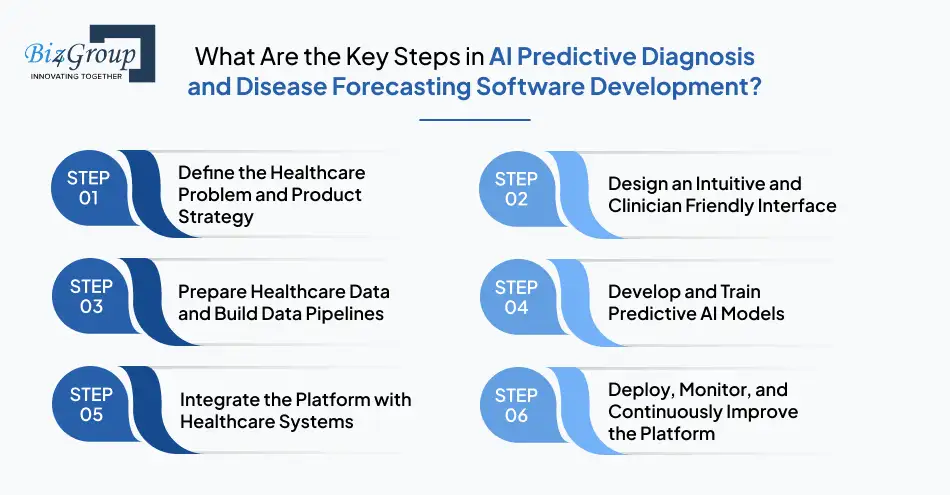
Building reliable healthcare prediction systems requires a structured approach. Organizations pursuing AI predictive diagnosis and disease forecasting software development must focus on data quality, predictive accuracy, system usability, and regulatory readiness. Following a clear development roadmap helps teams develop AI predictive diagnosis systems that generate actionable healthcare insights and scalable digital health platforms.
Below are the key steps followed when organizations build predictive analytics software for healthcare using AI.
Step 1: Define the Healthcare Problem and Product Strategy
The first step in developing AI predictive diagnosis and disease forecasting software is identifying the healthcare challenge the platform will address. This may include early disease detection, population health forecasting, or chronic disease monitoring. Defining the problem helps teams determine what type of predictive models and healthcare data will be required. Organizations often start with a simplified product version to test the concept before scaling the full platform.
Key activities include:
- Identifying clinical objectives for AI predictive diagnosis software development
- Defining target users such as hospitals, healthcare providers, or research teams
- Planning features required to create AI powered predictive healthcare software
- Building an early product version through MVP development
Step 2: Design an Intuitive and Clinician Friendly Interface
Predictive insights are only useful if clinicians can understand them quickly. During this phase, teams focus on designing dashboards and workflows that clearly present predictions and health risk indicators. Strong interface design ensures healthcare professionals can easily interpret insights produced by AI predictive diagnosis and disease forecasting software development.
Key activities include:
- Designing dashboards that visualize predictive health insights
- Creating workflows for clinicians using AI clinical prediction software development platforms
- Simplifying medical analytics for faster clinical interpretation
- Developing intuitive systems through professional UI/UX design
Step 3: Prepare Healthcare Data and Build Data Pipelines
Predictive healthcare systems depend on structured and high quality datasets. During this stage, developers gather and prepare healthcare data so predictive models can analyze it effectively. This process ensures that teams can develop AI-based disease risk assessment tools using reliable medical data.
Key activities include:
- Collecting patient records, clinical reports, and diagnostic data
- Cleaning and structuring datasets for AI healthcare forecasting platform development
- Building scalable pipelines for processing healthcare data
- Preparing data required to build AI disease prediction and forecasting software
Step 4: Develop and Train Predictive AI Models
After preparing the data, machine learning models are trained to recognize patterns associated with disease risks. These AI models analyze historical healthcare records to generate predictions about future medical outcomes. This stage forms the core of AI predictive diagnosis software development because model accuracy determines how effectively the system forecasts health risks.
Key activities include:
- Selecting machine learning models for AI predictive diagnosis and disease forecasting software development
- Training predictive models using healthcare datasets
- Testing model accuracy for disease forecasting software development using AI
- Refining algorithms to improve predictive reliability
Step 5: Integrate the Platform with Healthcare Systems
Predictive healthcare platforms must connect with existing hospital infrastructure. Integration ensures clinicians can access predictive insights within the systems they already use. This step helps organizations build secure AI predictive healthcare software using patient data while maintaining seamless healthcare workflows.
Key activities include:
- Integrating predictive platforms with clinical systems
- Connecting dashboards with hospital databases and diagnostic tools
- Ensuring interoperability for AI healthcare forecasting platform development
- Automating workflows through AI automation services
Step 6: Deploy, Monitor, and Continuously Improve the Platform
Once the platform is deployed, organizations must continuously monitor model performance and update predictive algorithms. Healthcare data evolves constantly, so predictive systems must be refined regularly. Continuous monitoring ensures organizations can maintain accurate AI predictive diagnosis and disease forecasting software development systems that deliver reliable healthcare insights.
Key activities include:
- Deploying predictive healthcare platforms at scale
- Monitoring prediction accuracy and system performance
- Updating models with new healthcare data
- Improving the development of AI predictive diagnosis and disease forecasting software through continuous optimization
Now, let's check what technologies actually power AI predictive diagnosis and disease forecasting software development behind the scenes?
What Technology Stack Powers AI Predictive Diagnosis and Disease Forecasting System Development?
Building reliable platforms for AI predictive diagnosis and disease forecasting software development requires a strong technology foundation across multiple layers. From user interfaces to machine learning models and healthcare data infrastructure, each layer plays a critical role in ensuring predictive healthcare systems are scalable, secure, and accurate.
The table below outlines the typical technology stack used to build predictive analytics software for healthcare using AI.
|
Technology Layer |
Tools & Technologies |
Role in the Platform |
|---|---|---|
|
Frontend Development |
React.js, Angular, Vue.js |
Used to build clinician dashboards and patient interfaces that display predictive insights and health risk scores. Strong frontend design improves usability for AI predictive diagnosis software development platforms. |
|
Backend Development |
Backend services handle system logic, API development, and healthcare data processing required to develop AI predictive diagnosis systems. |
|
|
AI / Machine Learning Layer |
TensorFlow, PyTorch, Scikit-learn, XGBoost |
These frameworks power predictive models used for disease forecasting software development using AI and patient risk prediction. |
|
Data Engineering & Processing |
Apache Spark, Hadoop, Kafka, Pandas |
Data pipelines process large volumes of healthcare data needed to develop AI based disease risk assessment tools and predictive models. |
|
Database & Data Storage |
PostgreSQL, MongoDB, Snowflake, BigQuery |
Databases store patient data, prediction results, and analytics used during AI healthcare forecasting platform development. |
|
Healthcare Interoperability |
HL7, FHIR, DICOM |
These standards enable predictive platforms to exchange medical data with hospital systems and EHR platforms. |
|
Cloud Infrastructure |
AWS HealthLake, Microsoft Azure Health Data Services, Google Cloud Healthcare API |
Cloud platforms provide scalable infrastructure for organizations building AI predictive diagnosis and disease forecasting software development solutions. |
|
Security & Compliance Layer |
OAuth 2.0, Role-based access control, encryption protocols |
Ensures healthcare platforms can build secure AI predictive healthcare software using patient data while maintaining regulatory compliance. |
|
DevOps & Deployment |
Docker, Kubernetes, CI/CD pipelines |
These technologies support continuous deployment and scaling of platforms that build AI disease prediction and forecasting software. |
|
AI Product Engineering |
Custom AI model deployment and system architecture |
Organizations often partner with experts offering AI product development to design and scale predictive healthcare solutions. |
While selecting the right technology stack is essential, healthcare organizations also need to evaluate the investment required to build predictive healthcare platforms.
So the next question many decision makers ask is:
How much does AI predictive diagnosis and disease forecasting software development actually cost?
What Is the Cost of AI Predictive Diagnosis and Disease Forecasting System Development?
The cost of AI predictive diagnosis and disease forecasting software development can vary widely depending on the complexity of the system, the number of predictive features, and the healthcare integrations required. On average, organizations can expect the development of AI predictive diagnosis and disease forecasting software to range from $25,000 to $250,000+.
Smaller solutions such as early prototypes or pilot platforms may fall closer to the lower end of the range. However, enterprise healthcare platforms with advanced predictive analytics, regulatory compliance, and hospital system integrations can significantly increase development costs. The final investment also depends on data availability, AI model complexity, and infrastructure requirements when companies build predictive analytics software for healthcare using AI.
Feature Cost Breakdown in AI Predictive Diagnosis Software Development
Different features directly influence the cost of AI predictive diagnosis software development. Predictive healthcare platforms require multiple system components such as AI models, data pipelines, dashboards, and security layers.
Below is a typical feature level cost breakdown when organizations build AI disease prediction and forecasting software.
|
Feature |
Estimated Cost Range |
Role in the Platform |
|---|---|---|
|
Predictive Risk Scoring Engine |
$8,000 – $40,000 |
Core machine learning system used to develop AI based disease risk assessment tools that calculate patient risk levels. |
|
Healthcare Data Integration |
$5,000 – $30,000 |
Connects hospital systems, diagnostics tools, and health records required for AI healthcare forecasting platform development. |
|
Clinical Decision Support Dashboard |
$6,000 – $25,000 |
Visual interface that displays predictive insights for clinicians during AI predictive diagnosis and disease forecasting software development. |
|
Population Health Forecasting Models |
$10,000 – $50,000 |
AI models used to create AI disease forecasting software for population health management and healthcare demand prediction. |
|
Patient Interaction and Engagement Tools |
$5,000 – $20,000 |
Patient facing systems that support symptom reporting and digital engagement during AI predictive diagnosis software development. |
|
Security and Compliance Layer |
$8,000 – $35,000 |
Ensures organizations can build secure AI predictive healthcare software using patient data and maintain regulatory compliance. |
|
System Integration with Hospital Platforms |
$10,000 – $45,000 |
Required to connect predictive platforms with EHR systems and other clinical tools during development of AI predictive diagnosis and disease forecasting software. |
Organizations planning to create AI powered predictive healthcare software should prioritize features that deliver immediate clinical value before expanding to more advanced capabilities.
Factors That Affect the Cost of AI Predictive Diagnosis and Disease Forecasting System Development
Several technical and operational factors influence the overall cost of AI predictive diagnosis and disease forecasting software development. Understanding these elements helps organizations plan budgets more effectively.
Data availability and quality
Predictive healthcare platforms rely on large datasets. If healthcare organizations need to collect, clean, or structure medical data before training models, the development timeline and cost increase.
AI model complexity
Simple prediction models require less time to develop compared to advanced machine learning models used in disease forecasting software development using AI.
Healthcare integrations
Integrating predictive systems with hospital platforms such as EHR systems or diagnostic tools adds additional development effort during AI healthcare forecasting platform development.
Compliance and security requirements
Healthcare software must meet strict security regulations. Platforms that handle protected health information must include encryption, secure authentication, and data governance layers.
Platform scalability
Organizations building large scale systems to develop AI predictive diagnosis systems for hospitals or healthcare networks require stronger infrastructure and cloud resources.
Hidden Costs in AI Predictive Diagnosis Software Development
Some costs are not always obvious at the beginning of AI predictive diagnosis and disease forecasting software development projects. These hidden costs can affect the total investment if not planned properly.
Data preparation and labeling
Training predictive models often requires manually labeled healthcare datasets, which can increase development costs.
AI model retraining
Healthcare data changes over time. Predictive systems must continuously update models to maintain accuracy in AI predictive diagnosis software development platforms.
Compliance and regulatory audits
Healthcare platforms must undergo regular compliance checks, especially when organizations build secure AI predictive healthcare software using patient data.
System maintenance and updates
Predictive healthcare platforms require ongoing updates, security patches, and infrastructure management.
Organizations often work with experienced teams that specialize in enterprise AI solutions to manage these operational complexities and ensure long term system stability.
Cost Optimization Strategies for AI Predictive Diagnosis and Disease Forecasting System Development
Healthcare organizations can reduce development costs by taking a strategic approach to AI predictive diagnosis and disease forecasting software development.
Start with a focused MVP
Launching a limited version of the platform allows teams to validate predictive models before investing in full scale development.
Prioritize high value features
Organizations should initially focus on features that support AI predictive diagnosis software development such as risk scoring and predictive alerts.
Leverage existing healthcare datasets
Using existing hospital data can reduce the time required to develop AI based disease risk assessment tools.
Partner with experienced AI development teams
Working with specialists who understand healthcare technology helps organizations build predictive analytics software for healthcare using AI more efficiently.
In many cases, healthcare companies partner with teams where they can hire AI developers experienced in predictive healthcare systems to accelerate development and control costs.
Understanding the investment required is essential, but cost is only one part of the equation. Healthcare organizations must also prepare for technical and operational challenges that arise when deploying predictive healthcare platforms.
Wondering What Your Predictive Healthcare Platform Will Cost?
Get a tailored estimate for AI predictive diagnosis and disease forecasting software development based on your features and goals.
Get Cost EstimateWhat Challenges Do Organizations Face in AI Predictive Diagnosis and Disease Forecasting System Development?
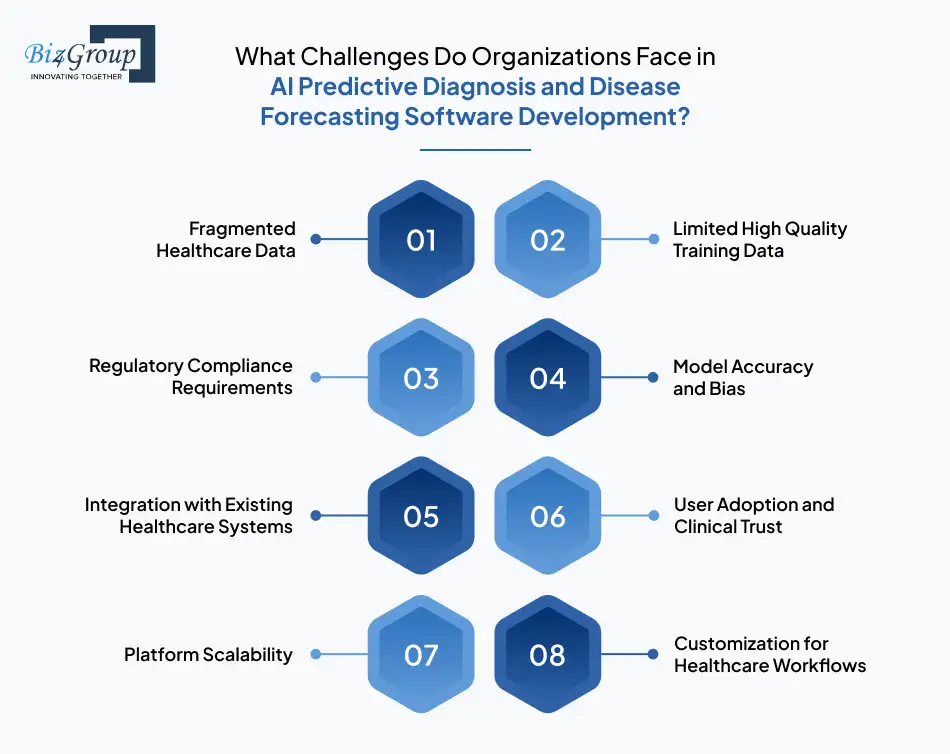
While the benefits of AI predictive diagnosis and disease forecasting software development are significant, building these systems comes with several technical, operational, and regulatory challenges. Healthcare data complexity, model accuracy, and integration with existing hospital systems can create obstacles during the development of AI predictive diagnosis and disease forecasting software.
Organizations planning to build predictive analytics software for healthcare using AI must anticipate these challenges and implement the right strategies to address them effectively.
Below are some of the most common challenges faced during AI predictive diagnosis software development and the practical solutions organizations use to overcome them.
|
Challenge |
Impact on Predictive Healthcare Platforms |
Practical Solution |
|---|---|---|
|
Fragmented Healthcare Data |
Healthcare data often exists across multiple systems such as lab reports, EHRs, imaging platforms, and patient records. This fragmentation makes it difficult to train reliable models for disease forecasting software development using AI. |
Implement centralized healthcare data pipelines and interoperable systems when organizations build AI disease prediction and forecasting software. |
|
Limited High Quality Training Data |
Predictive models require large volumes of clean and structured medical data. In many cases, organizations lack sufficient labeled datasets to develop AI based disease risk assessment tools. |
Use synthetic datasets, collaborate with research institutions, and apply advanced data preprocessing techniques during AI predictive diagnosis software development. |
|
Regulatory Compliance Requirements |
Healthcare systems must comply with strict regulations regarding patient data protection and medical software governance. This increases complexity when companies build secure AI predictive healthcare software using patient data. |
Adopt strong compliance frameworks and follow best practices used in modern AI medical software platforms to protect sensitive health data. |
|
Model Accuracy and Bias |
Predictive healthcare systems must deliver reliable results. Poorly trained models may introduce bias or inaccurate predictions during AI predictive diagnosis and disease forecasting software development. |
Continuously retrain models with diverse datasets and validate predictions through clinical testing during AI clinical prediction software development. |
|
Integration with Existing Healthcare Systems |
Hospitals already rely on multiple digital systems. Integrating predictive platforms with these systems is challenging during AI healthcare forecasting platform development. |
Use scalable architectures and interoperability standards when organizations build predictive analytics software for healthcare using AI. |
|
User Adoption and Clinical Trust |
Healthcare professionals may hesitate to rely on predictive tools if the system lacks transparency or usability. This slows adoption of AI predictive diagnosis software development platforms. |
Build transparent and explainable systems that help clinicians understand predictions generated through AI predictive diagnosis and disease forecasting software development. |
|
Platform Scalability |
Predictive healthcare systems must process large volumes of healthcare data as adoption grows. Poor infrastructure can limit system performance during AI healthcare forecasting platform development. |
Invest in scalable architecture and cloud infrastructure when organizations create AI powered predictive healthcare software. |
|
Customization for Healthcare Workflows |
Different healthcare organizations require tailored solutions for their workflows. Generic systems may not meet clinical needs during AI predictive diagnosis and disease forecasting software development. |
Develop flexible platforms through specialized custom software development approaches that adapt to healthcare environments. |
Addressing these challenges early allows organizations to successfully develop AI predictive diagnosis systems that deliver accurate predictions, integrate with healthcare infrastructure, and support real world clinical decision making.
Despite these challenges, healthcare organizations that successfully implement AI predictive diagnosis and disease forecasting software development gain powerful capabilities to detect diseases earlier, optimize healthcare planning, and improve patient outcomes.
Why Choose Biz4Group for AI Predictive Diagnosis and Disease Forecasting System Development?
Building successful healthcare AI platforms requires deep expertise in healthcare data, predictive analytics, and secure system architecture. Biz4Group brings this expertise to organizations looking to implement AI predictive diagnosis and disease forecasting software development solutions that improve early detection, care planning, and population health insights.
As an experienced AI healthcare software development company, Biz4Group develops scalable healthcare platforms that transform complex medical data into actionable insights for clinicians and healthcare providers. The team focuses on building systems that support early disease detection, predictive health monitoring, and data driven healthcare decision making.
Biz4Group has delivered multiple AI powered healthcare solutions, including Dr. Ara, which analyzes blood biomarkers to generate personalized health insights, Quantum Fit, a wellness platform that helps users monitor lifestyle habits influencing long term health, and Cognihelp, an AI powered companion designed to assist dementia patients and support cognitive care.
With extensive experience in healthcare innovation, Biz4Group is recognized among the top AI healthcare software development companies in USA and continues to help organizations develop AI predictive diagnosis systems that are secure, scalable, and clinically impactful. Companies seeking a trusted AI development company can rely on Biz4Group to turn predictive healthcare ideas into real world solutions.
Ready to Turn Predictive Healthcare Ideas Into Reality?
Work with experts who develop AI predictive diagnosis systems built for real healthcare environments.
Contact UsWrapping Up!
Healthcare is rapidly shifting toward a proactive model where organizations aim to detect risks earlier and intervene before conditions worsen. This is why AI predictive diagnosis and disease forecasting software development is becoming a strategic priority for healthcare providers, digital health startups, and research organizations.
When implemented effectively, these platforms help organizations develop AI predictive diagnosis systems that enable early disease detection, improve care planning, and strengthen population health strategies. Companies that build predictive analytics software for healthcare using AI can transform raw medical data into actionable insights that support faster and more informed clinical decisions.
Successfully building these systems requires a strong understanding of healthcare data, predictive modeling, and secure infrastructure. With proven experience in healthcare technology and AI innovation, Biz4Group helps organizations translate predictive healthcare ideas into reliable digital solutions.
The future of healthcare belongs to systems that can anticipate risks before they become emergencies. Build it before the rest of the industry catches up.
FAQ
AI predictive diagnosis and disease forecasting software development involves building intelligent healthcare platforms that analyze patient data to predict disease risks, health deterioration, or population health trends. These systems use machine learning models to process electronic health records, wearable data, medical imaging, and clinical reports to estimate future medical outcomes. Healthcare organizations use these systems to detect diseases earlier, personalize treatments, and support proactive healthcare decision making.
AI predictive diagnosis software development improves healthcare outcomes by identifying high risk patients earlier and enabling preventive care strategies. Predictive systems analyze historical and real time patient data to forecast disease progression or complications before symptoms appear. This allows healthcare providers to intervene earlier, reduce hospital readmissions, and improve overall patient care.
To build predictive analytics software for healthcare using AI, organizations typically use several types of healthcare data, including:
- Electronic health records (EHR)
- Diagnostic imaging and lab reports
- Wearable device and remote monitoring data
- Demographic and lifestyle information
- Population health datasets
Combining these datasets allows predictive models to detect patterns that indicate potential health risks.
Disease forecasting software development using AI offers several benefits for healthcare providers and health systems:
- Earlier disease detection and prevention
- Improved patient care and treatment planning
- Better population health management
- Reduced healthcare costs through preventive interventions
Predictive analytics enables healthcare organizations to shift from reactive treatment to proactive care strategies.
5. How long does it take to develop AI predictive diagnosis systems?
The timeline to develop AI predictive diagnosis systems depends on project complexity, data readiness, and compliance requirements.
Typical timelines include:
- MVP or prototype platform: 2 to 4 weeks
- Mid scale predictive healthcare platform: 5 to 7 weeks
- Enterprise level AI healthcare forecasting platform: 8 to 12 weeks
Integration with hospital systems and regulatory compliance can extend development timelines.
Organizations implementing AI predictive diagnosis and disease forecasting software development often face challenges such as:
- Fragmented healthcare datasets
- Regulatory and compliance requirements
- AI model bias and interpretability issues
- Integration with legacy healthcare systems
Addressing these challenges requires strong data governance, explainable AI models, and secure healthcare infrastructure.
The cost of AI predictive diagnosis and disease forecasting software development typically ranges between $25,000 and $250,000+, depending on the complexity of the platform. Factors such as AI model sophistication, healthcare data integration, regulatory compliance, and system scalability influence the final cost.
