 Location :
Orlando, FL, USA
Location :
Orlando, FL, USA +1 (407) 714-1616
 info@biz4group.com

- Generative AI software development cost usually ranges from $20,000 to $250,000+, shaped by use case, features, data, models, and scale.
- Key cost factors include feature scope, business logic, model strategy, infrastructure, integrations, security, and long-term maintenance.
- The development process spans discovery through deployment and optimization, with each stage contributing to the total investment.
- Hidden costs such as inference usage, retraining, compliance, and monitoring can add $5,000 to $100,000+ per year if ignored early.
- Biz4Group helps businesses achieve cost effective generative AI software development by applying proven optimization strategies, MVP led execution, and scalable architecture across real world projects.
Have you ever wondered why estimates on how much does generative AI software development cost vary so widely? One moment you see a small budget quoted. The next, the figures look astronomical. That confusion makes sense. Generative AI investment is booming, and leaders like you are trying to separate real planning from hype.
Let’s ground this conversation with a realistic starting point.
For most businesses today, the generative AI software development cost typically falls in the range of $20,000 to $250,000+. And yes, that “plus” matters. The final number varies widely, and in this guide, we will break down exactly what factors influence this range and how you can estimate where your project realistically fits.
Before we go deeper, here is why this conversation matters right now.
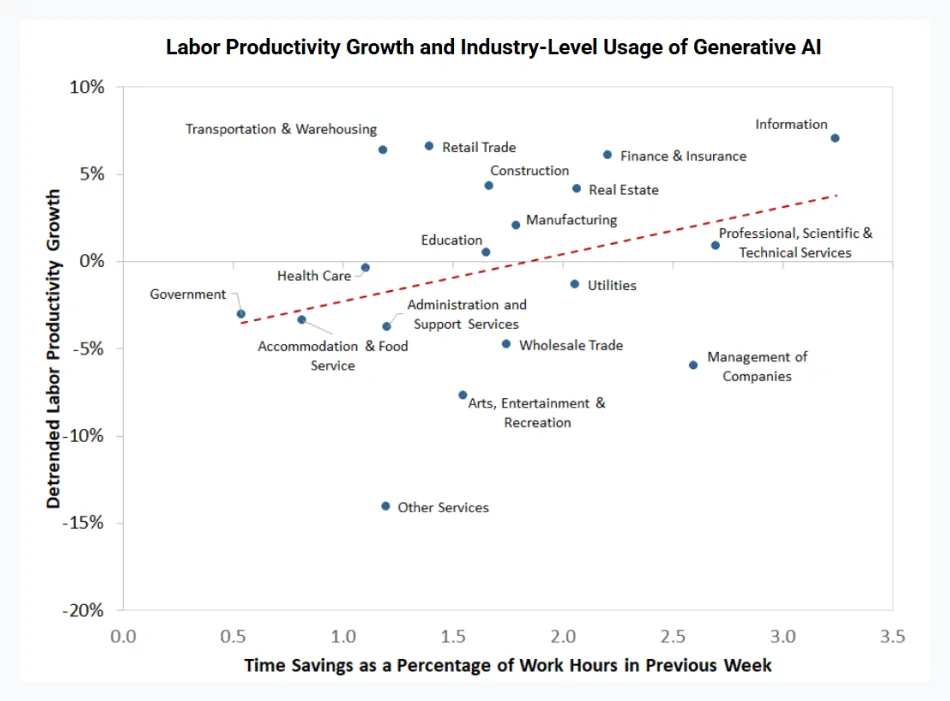
According to a report, global private investment in generative AI surpassed $33.9 billion, signaling a clear shift from experimentation to production grade systems.
Generative AI adoption in the workplace accelerated sharply in 2025, with usage spreading across departments and business functions.
So, what does this mean for you?
It means cost is no longer an abstract question. Whether you are planning an MVP, scaling an internal tool, or launching a customer-facing product, the cost to develop generative AI software directly impacts timelines, ROI, and long-term sustainability.
You might be asking yourself, “If the range is that wide, how do I avoid overpaying or underbuilding?” That is exactly the challenge most founders, CTOs, and product leaders face. Without understanding the generative AI software development cost breakdown, budgets tend to drift or balloon.
With the right planning and the right partner, the custom generative AI software development cost becomes far more predictable. That is where working with an experienced generative AI development company makes a difference.
The goal is not just to build AI, but to build it intelligently, with cost, performance, and business outcomes aligned from day one.
Why Understanding Generative AI Software Development Cost Matters Before You Invest
Before you write a single line of code or talk to vendors, getting clarity on generative AI software development cost is one of the smartest moves you can make. Not because you want the cheapest option, but because the wrong assumptions early on almost always lead to wasted spend later.
Let’s break down why this matters so much for you and your business.
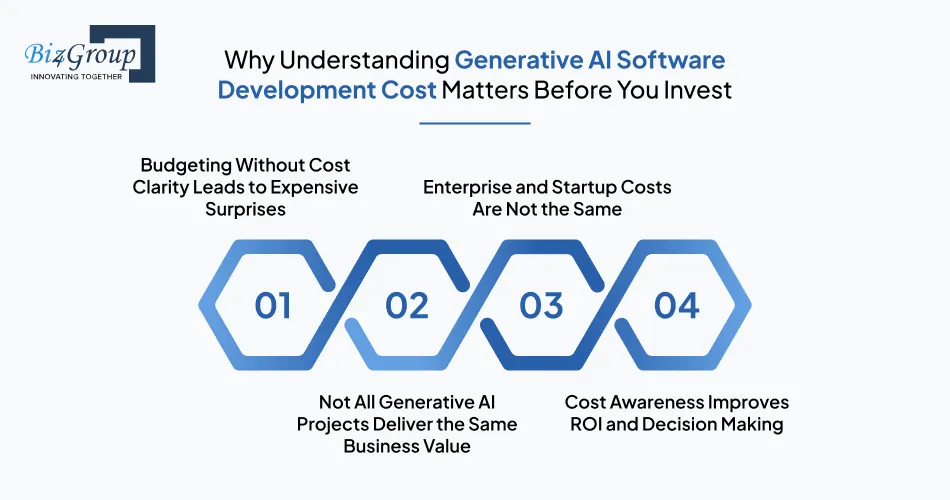
1. Budgeting Without Cost Clarity Leads to Expensive Surprises
When teams jump into AI initiatives without understanding the cost to develop generative AI software, budgets tend to drift. Infrastructure usage grows. Scope expands. Suddenly, what looked like a manageable project feels out of control. Knowing the real generative AI software development cost breakdown upfront helps you plan realistically and avoid mid project resets that slow momentum.
2. Not All Generative AI Projects Deliver the Same Business Value
A simple prototype and a production ready system do not carry the same price tag or impact. If you do not align cost with outcomes, you risk overspending on features that do not move the needle. Understanding custom generative AI software development cost helps you decide where to invest deeper and where a lighter approach is enough.
3. Enterprise and Startup Costs Are Not the Same
Startups often focus on speed and validation, while enterprises prioritize scale, security, and reliability. These priorities dramatically change the enterprise generative AI development cost compared to early-stage builds. Clear cost visibility allows you to match your investment to your growth stage instead of copying someone else’s roadmap.
4. Cost Awareness Improves ROI and Decision Making
When you understand where money goes, you can measure returns more accurately. This is especially important when justifying AI spend to leadership or investors. Teams that plan with a clear view of generative AI software development cost and ROI analysis make faster decisions and see value sooner.
This is also where the right technical partner plays a key role. A strong AI development company does not just build features. They help you connect cost, architecture, and business goals from day one.
Now that you know why cost clarity matters, the next step is understanding how different use cases directly shape what you end up paying and why some ideas cost more than others.
Still unsure where your generative AI project fits in the cost range?
A quick conversation can help you map your idea to a realistic budget before assumptions get expensive.
Talk to Our AI ExpertsFrom Idea to Impact: Generative AI Use Cases and Their Development Cost
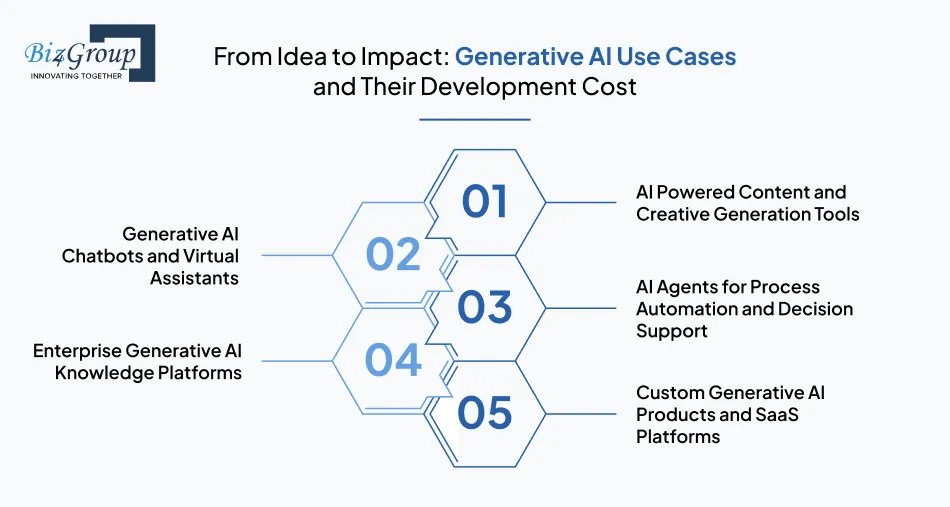
Every generative AI idea does not carry the same price tag. The generative AI software development cost changes significantly based on what you are trying to build and how deeply it integrates into your business. Below are some of the most common use cases we see, explained in practical terms, with realistic cost ranges.
1. AI Powered Content and Creative Generation Tools
These tools help businesses generate text, images, reports, or marketing assets at scale. They often rely on pretrained models with light customization and are quicker to launch compared to complex platforms.
Key benefits
- Faster content creation across teams
- Reduced dependency on manual workflows
- Consistent brand messaging at scale
Estimated development cost
$20,000 to $50,000 for basic to mid-level implementations. This falls on the lower end of the create generative AI applications development cost spectrum.
2. Generative AI Chatbots and Virtual Assistants
These systems go beyond scripted bots. They understand context, answer complex questions, and continuously improve through feedback. Many businesses start here when exploring custom generative AI software development cost.
Key benefits
- Improved customer support availability
- Faster internal knowledge access
- Lower operational support costs
Estimated development cost
$30,000 to $80,000, depending on integrations and data sources
3. AI Agents for Process Automation and Decision Support
Generative AI agents can take actions, make recommendations, and automate multi-step workflows. These systems often require deeper logic, monitoring, and guardrails.
Key benefits
- Reduced manual effort in repetitive tasks
- Faster decision making with AI assisted insights
- Better operational efficiency across teams
Estimated development cost
$60,000 to $120,000; costs vary based on autonomy level and integration depth, especially for teams exploring agent-based systems similar to modern generative AI agents.
4. Enterprise Generative AI Knowledge Platforms
These platforms unify internal documents, data, and systems into a single intelligent interface. They are commonly used by larger organizations and fall under enterprise generative AI development cost.
Key benefits
- Centralized access to organizational knowledge
- Improved employee productivity
- Stronger data governance and security
Estimated development cost
$100,000 to $250,000+, depending on scale, security, and compliance needs
This aligns closely with generative AI platform development cost expectations.
5. Custom Generative AI Products and SaaS Platforms
These are customer facing AI products where generative AI is the core value proposition. They require careful design, scalability planning, and ongoing optimization.
Key benefits
- Differentiated product offerings
- New revenue streams
- Long term competitive advantage
Estimated development cost
$80,000 to $200,000+, influenced by product scope and market readiness. This represents the higher end of generative AI software creation cost.
As you can see, building generative AI software cost estimate is tightly tied to the use case you choose. Many teams reduce risk by starting with a focused MVP and expanding based on results. This is where structured MVP development becomes a practical way to validate value before committing to larger investments.
What Actually Drives Generative AI Software Development Cost? The Real Cost Factors
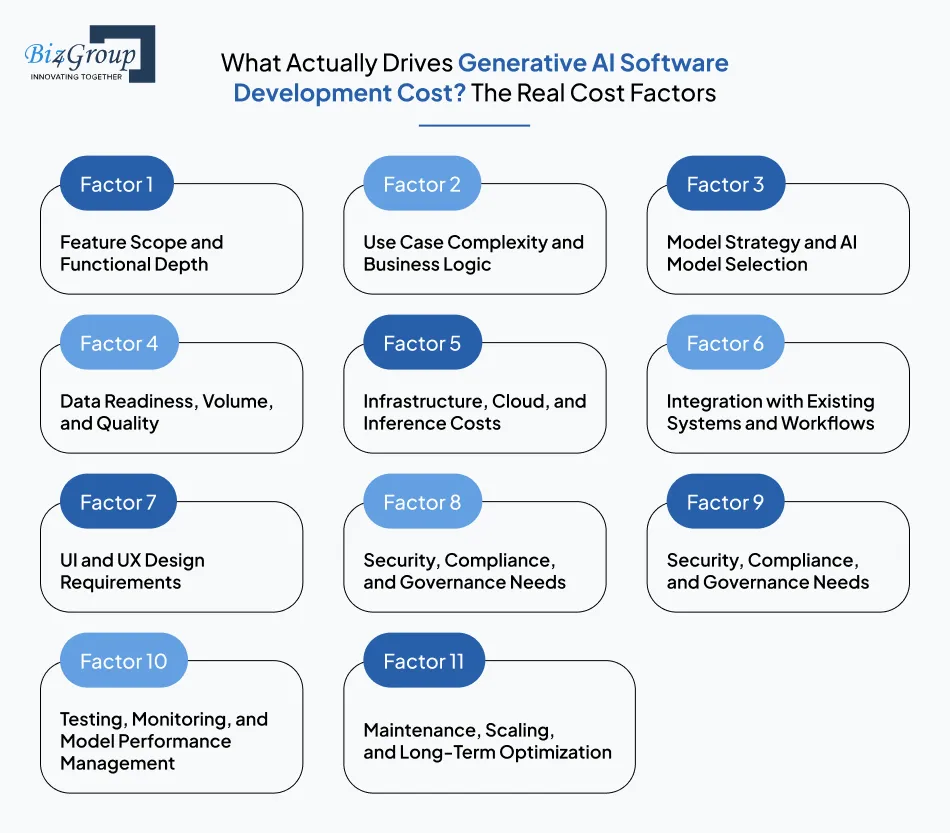
Before we dive into individual cost drivers, it helps to step back and look at the big picture. Most businesses fall into one of three development tiers, and each tier sets a very different baseline for generative AI software development cost.
Here is a simple way to think about it.
|
Project Scope |
What It Typically Includes |
Estimated Cost Range |
|---|---|---|
|
MVP |
Core use case, limited features, API based models |
$20,000 to $50,000 |
|
Mid-Level Product |
Custom logic, integrations, improved UX |
$50,000 to $120,000 |
|
Enterprise Grade Solution |
Scalability, security, compliance, custom models |
$120,000 to $250,000+ |
This table gives you context, not a promise. Two MVPs can still vary widely in price. The difference comes down to the factors below. Understanding these is key to building a realistic build generative AI software cost estimate instead of guessing.
Let’s start with the most important one.
Factor 1: Feature Scope and Functional Depth
When you ask about generative AI software development cost, what you are really asking first is this: how many features am I building, and how advanced do they need to be?
Features are one of the biggest cost drivers because every feature adds design effort, development time, testing, and ongoing maintenance. A simple AI powered feature can be delivered quickly. A feature that reasons, adapts, or interacts across systems increases the custom generative AI software development cost significantly.
To give you a clearer picture, here is a practical view of common features used in generative AI software and how they influence cost.
|
Feature Type |
What It Enables |
Estimated Cost Impact |
|---|---|---|
|
Text generation and summarization |
Creates content, reports, or responses |
$5,000 to $15,000 |
|
Natural language interaction with users |
$8,000 to $20,000 |
|
|
Context memory and conversation history |
Remembers past interactions |
$6,000 to $15,000 |
|
Multi document knowledge search |
Answers questions across large datasets |
$10,000 to $30,000 |
|
Prompt customization and templates |
Tailored outputs for different roles |
$4,000 to $10,000 |
|
Role based access and permissions |
Controls who can access what |
$5,000 to $12,000 |
|
Executes multi step tasks |
$15,000 to $40,000 |
|
|
Generative AI agents |
Takes actions and makes decisions |
$20,000 to $60,000 |
|
Analytics and usage dashboards |
Tracks performance and adoption |
$6,000 to $15,000 |
|
Feedback loops and learning |
Improves outputs over time |
$8,000 to $20,000 |
Feature scope directly shapes generative AI software development cost. MVPs focus on a small set of core features, while enterprise solutions bundle advanced capabilities that raise the overall generative AI software development cost breakdown.
Prioritizing only high-impact features early helps control spend. Many teams use a focused custom MVP software development approach to validate value before expanding functionality.
Next, we’ll look at how use case complexity and business logic further influence cost.
Factor 2: Use Case Complexity and Business Logic
Use case complexity is one of the fastest ways generative AI software development cost increases, even when features look similar on paper. The difference comes from how much reasoning, context handling, and decision making your system must perform.
Typical cost impact by complexity level
- Simple use cases like Q&A or content generation
Cost impact: $10,000 to $30,000 - Moderate complexity such as workflow assistance or multi source reasoning
Cost impact: $30,000 to $70,000 - High complexity systems with automation, actions, and decision logic
Cost impact: $70,000 to $150,000+
What drives these numbers?
- Number of business rules and exceptions
- Depth of contextual understanding required
- Level of automation or decision making
- Need for safeguards and human oversight
Use cases involving autonomous behavior for additional testing and controls, which raises the custom generative AI software development cost.
Keeping your initial use case tightly defined helps manage the build generative AI software cost estimate and prevents unnecessary complexity early on.
Next, we’ll break down how model selection can significantly shift your overall budget.
Factor 3: Model Strategy and AI Model Selection
Your choice of model plays a major role in generative AI software development cost. Using an existing model is faster and cheaper. Building or fine tuning your own model gives you control, but it increases effort and spending.
Common model strategy options and cost impact
- Pre trained model APIs for text, chat, or image generation
Cost impact: $5,000 to $20,000
Best for MVPs and faster launches - Fine tuned models trained on your domain data
Cost impact: $20,000 to $60,000
Balances performance with budget - Custom model development built for proprietary use cases
Cost impact: $60,000 to $150,000+
Typical for regulated or highly specialized workflows
What drives cost here?
- Training and fine-tuning effort
- Model performance expectations
- Data preparation requirements
- Long term inference and maintenance costs
Teams investing in deeper AI model development often see higher upfront spending but gain long term accuracy and control. The key is aligning model choice with business goals so your build generative AI software cost estimate stays realistic.
Next, we’ll look at how data readiness and quality quietly influence timelines and budgets more than most teams expect.
Factor 4: Data Readiness, Volume, and Quality
Data is often the hidden multiplier in generative AI software development cost. Even the best models struggle without clean, relevant data. The more work needed to prepare data, the higher the cost to develop generative AI software.
Below is a clear view of how data readiness affects cost.
|
Data Readiness Level |
What It Looks Like |
Estimated Cost Impact |
|---|---|---|
|
High readiness |
Clean, structured, well documented data |
$5,000 to $15,000 |
|
Moderate readiness |
Some cleanup, formatting, basic labeling |
$15,000 to $40,000 |
|
Low readiness |
Scattered sources, heavy cleaning, labeling |
$40,000 to $100,000+ |
What usually increases cost:
- Large data volumes from multiple sources
- Unstructured formats like PDFs or emails
- Domain specific terminology
- Ongoing data updates and governance
Poor data quality leads to longer timelines and repeated fixes, which directly affects the generative AI software development cost breakdown. Teams that invest early in data readiness almost always save money later.
Next, we’ll cover infrastructure, cloud, and inference costs, which often continue long after launch and impact total cost of ownership.
Factor 5: Infrastructure, Cloud, and Inference Costs
Infrastructure is where generative AI software development cost often extends beyond initial development. While building the system is a one time effort, running it at scale introduces ongoing expenses tied to usage and performance.
Here is how infrastructure choices typically affect cost.
|
Infrastructure Scope |
What It Includes |
Estimated Cost Impact |
|---|---|---|
|
Basic setup |
Shared cloud resources, low usage |
$5,000 to $15,000 |
|
Mid-scale deployment |
Dedicated instances, moderate traffic |
$15,000 to $40,000 |
|
Enterprise scale |
High availability, GPU heavy workloads |
$40,000 to $100,000+ |
Key cost drivers:
- GPU and compute consumption
- Inference frequency and response time requirements
- Traffic spikes and scalability needs
- Monitoring and uptime expectations
This factor is often underestimated because inference costs grow as usage grows. Teams that plan infrastructure early and carefully integrate AI models into their workflows gain far better control over long term spend.
Ignoring this aspect can quickly inflate the enterprise generative AI development cost, even when the initial build looks affordable.
Next, we’ll look at how integrations with your existing systems further influence the overall cost picture.
Factor 6: Integration with Existing Systems and Workflows
Integrations often push generative AI software development cost higher than expected. The more systems your AI needs to talk to, the more effort goes into reliability, security, and data consistency.
Here is how integrations typically affect cost.
- Single system integration
Connecting with one platform like a CRM or document repository
Cost impact: $5,000 to $15,000 - Multiple internal systems
ERP, databases, analytics tools, internal dashboards
Cost impact: $15,000 to $40,000 - Enterprise wide integrations
Cross department systems, real time data sync, strict access control
Cost impact: $40,000 to $80,000+
What increases integration cost:
- Legacy systems with limited APIs
- Real time data exchange requirements
- Complex permission and role handling
- High reliability and uptime expectations
This is a common reason why the cost of developing generative AI software for businesses rises as projects move from MVPs to enterprise deployments. Working with teams experienced in AI integration services helps reduce friction and avoid costly rework.
Next, we’ll look at how user experience expectations and design decisions influence overall cost and adoption.
Factor 7: UI and UX Design Requirements
How users interact with your product directly affects generative AI software development cost. A simple interface costs far less than a polished, role based experience designed for daily use.
Here is how UI and UX choices influence cost.
- Basic interface
Simple chat or input output screens
Cost impact: $3,000 to $8,000 - Custom workflows and dashboards
Role based views, filters, and task flows
Cost impact: $8,000 to $25,000 - Enterprise grade UX
Advanced usability, accessibility, feedback loops
Cost impact: $25,000 to $50,000+
What drives these costs:
- Number of user roles and journeys
- Custom dashboards and visualizations
- Feedback and correction mechanisms
- Accessibility and usability standards
Strong UX improves adoption and reduces rework, which ultimately protects your generative AI software development cost breakdown. Teams that invest early in thoughtful UI/UX design often see faster adoption and fewer post launch changes.
Next, we’ll cover how security and compliance requirements can significantly change cost expectations, especially for enterprise teams.
Factor 8: Security, Compliance, and Governance Needs
Security and compliance are nonnegotiable for many organizations and they have a direct impact on generative AI software development cost. The stricter the requirements, the more effort goes into controls, audits, and safeguards.
Here is how these needs typically affect cost.
|
Security Level |
What It Covers |
Estimated Cost Impact |
|---|---|---|
|
Basic security |
Authentication, basic access control |
$5,000 to $15,000 |
|
Business level security |
Role based access, data encryption |
$15,000 to $40,000 |
|
Enterprise compliance |
Auditing, governance, regulations |
$40,000 to $100,000+ |
Common cost drivers:
- Regulatory requirements such as SOC 2 or HIPAA
- Data privacy and retention policies
- Monitoring and audit logging
- Model usage governance and controls
For companies building regulated or large scale systems, these needs are a major reason enterprise generative AI development cost is higher than MVP or mid level products. Teams delivering secure enterprise AI solutions plan for these requirements from the start to avoid costly retrofits.
Next, we’ll explore how team structure and development models influence both speed and cost.
Also Read: HIPAA Compliant AI App Development for Healthcare Providers
Factor 9: Team Composition and Development Model
Who builds your product and how they work together plays a major role in generative AI software development cost. Team structure affects speed, quality, and long term flexibility.
Here is how different models influence cost.
- In house team
Full control but higher fixed costs and longer ramp up
Cost impact: $80,000 to $200,000+ annually per role - Outsourced development team
Faster start, flexible scaling, predictable pricing
Cost impact: $25,000 to $120,000 depending on scope - Hybrid model
Internal leadership with external execution support
Cost impact: $40,000 to $150,000
What drives cost here:
- Availability of AI expertise
- Speed of hiring and onboarding
- Collaboration and delivery model
- Ongoing maintenance and support needs
Many businesses reduce risk and cost by choosing to hire AI developers through experienced partners instead of building large teams from scratch.
Next, we’ll look at how testing, monitoring, and performance management add to the overall cost but protect long term value.
Factor 10: Testing, Monitoring, and Model Performance Management
Testing and monitoring are often underestimated, yet they directly affect long term generative AI software development cost. Generative systems need ongoing evaluation to ensure accuracy, reliability, and safe outputs.
Here is how this factor typically impacts cost.
|
Scope |
What It Includes |
Estimated Cost Impact |
|---|---|---|
|
Basic testing |
Functional testing, output validation |
$5,000 to $10,000 |
|
Continuous monitoring |
Performance tracking, error detection |
$10,000 to $30,000 |
|
Advanced performance management |
Feedback loops, drift detection, tuning |
$30,000 to $70,000+ |
What drives these costs:
- Output accuracy and consistency requirements
- Frequency of model updates
- Monitoring for bias or hallucinations
- User feedback integration
Skipping this step may reduce short-term spending, but it often leads to higher rework costs later. Proper testing protects your generative AI software development cost breakdown and ensures the system continues to deliver value after launch.
Next, we’ll cover the final cost factor that many teams overlook until it is too late. Long term maintenance and scaling.
Factor 11: Maintenance, Scaling, and Long-Term Optimization
Launching your product is not the finish line. Ongoing maintenance and scaling have a direct and lasting impact on generative AI software development cost, especially as usage grows.
Here is how long-term needs influence cost.
|
Ongoing Scope |
What It Includes |
Estimated Cost Impact |
|---|---|---|
|
Basic maintenance |
Bug fixes, minor updates |
$5,000 to $15,000 per year |
|
Growth support |
Scaling infrastructure, usage optimization |
$15,000 to $50,000 per year |
|
Enterprise optimization |
Model upgrades, cost tuning, new features |
$50,000 to $100,000+ per year |
What drives long term costs:
- User growth and traffic patterns
- Model retraining and updates
- Infrastructure optimization
- Feature expansion and enhancements
Many teams underestimate this phase, which is why total ownership cost often exceeds initial estimates. Planning ahead helps manage enterprise generative AI development cost and ensures your investment remains sustainable.
Here is a table showing the comprehensive cost of factors:
|
Cost Factor |
What It Covers |
Typical Cost Range |
|---|---|---|
|
Feature scope and depth |
Core and advanced functionality |
$5,000 to $60,000+ |
|
Use case complexity |
Logic, decision making, automation |
$10,000 to $150,000+ |
|
Model strategy |
APIs, fine tuning, custom models |
$5,000 to $150,000+ |
|
Data readiness and quality |
Data cleaning, labeling, governance |
$5,000 to $100,000+ |
|
Infrastructure and inference |
Cloud, GPUs, usage-based costs |
$5,000 to $100,000+ |
|
System integrations |
CRM, ERP, APIs, workflows |
$5,000 to $80,000+ |
|
UI and UX design |
Interfaces, dashboards, usability |
$3,000 to $50,000+ |
|
Security and compliance |
Access control, auditing, regulations |
$5,000 to $100,000+ |
|
Team and delivery model |
In house, outsourced, hybrid |
$25,000 to $200,000+ |
|
Testing and monitoring |
Quality control, drift detection |
$5,000 to $70,000+ |
|
Maintenance and scaling |
Long term support and optimization |
$5,000 to $100,000+ per year |
Which cost factors are driving your budget up without you realizing it?
Not every factor applies to every project. We help you identify what truly matters for your use case.
Get a Cost BreakdownStep by Step Generative AI Software Development Process and Cost at Each Stage
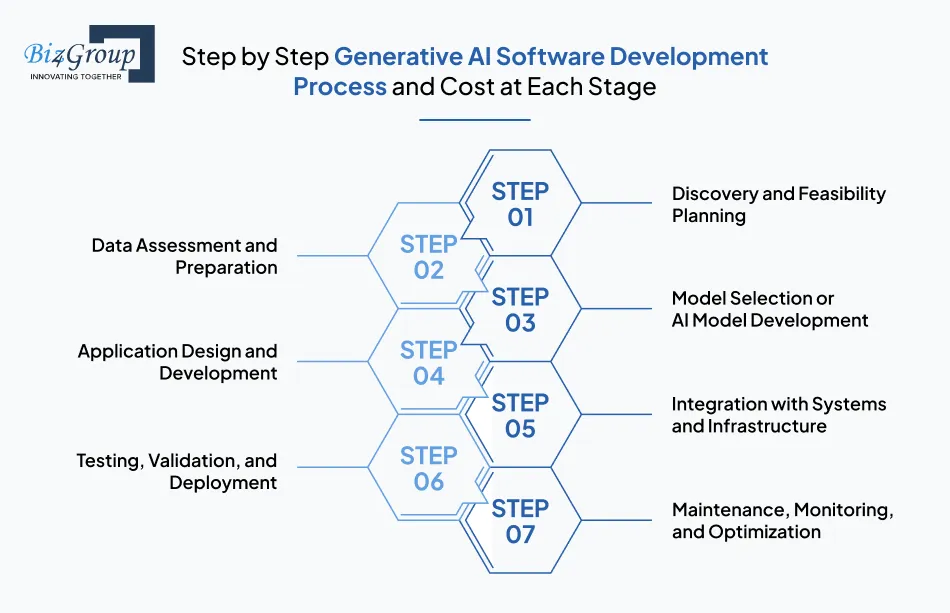
Understanding the process helps you see where the generative AI software development cost is actually spent. Each stage builds on the previous one, and skipping steps almost always leads to higher rework and hidden expenses later.
Step 1: Discovery and Feasibility Planning
This phase defines the foundation of your generative AI initiative. Teams clarify the business problem, success metrics, and technical approach before committing resources. It also helps identify early risks that can affect budget and timelines. Strong discovery reduces costly changes later.
- Use case and scope definition
- Technical and data feasibility review
- Cost and ROI alignment
Cost range: $3,000 to $10,000
Step 2: Data Assessment and Preparation
Generative AI systems depend heavily on data quality. In this step, teams evaluate existing data sources, identify gaps, and prepare data for model usage. The more work required here, the higher the overall cost to develop generative AI software.
- Data audit and gap analysis
- Cleaning, structuring, and labeling
- Governance and access planning
Cost range: $5,000 to $40,000
Step 3: Model Selection or AI Model Development
Here, teams decide whether to use pretrained models, fine tune them, or build custom models. This choice has a major impact on performance, control, and long-term cost. Poor model decisions often lead to expensive rewrites.
- Model evaluation and benchmarking
- Fine tuning or custom training
- Performance validation
Cost range: $5,000 to $150,000+
Step 4: Application Design and Development
This is where the product becomes usable. AI capabilities are embedded into workflows, interfaces, and business logic. Design and development choices here directly affect adoption and maintenance effort.
- Backend and frontend development
- AI workflow and logic implementation
- Feature and UX integration
Cost range: $15,000 to $80,000+
This is the phase where teams actively build AI software that aligns with real business needs, not just experiments.
Step 5: Integration with Systems and Infrastructure
At this stage, the solution is connected to existing systems so it can operate in production environments. Integration complexity often determines whether a project scales smoothly or becomes fragile.
- API and system integrations
- Cloud and infrastructure setup
- Security configuration
Cost range: $5,000 to $40,000+
Step 6: Testing, Validation, and Deployment
Before launching, the system must be tested to ensure accuracy, reliability, and safe outputs. This step protects your brand and prevents unexpected failures in live environments.
- Functional and performance testing
- Output validation and monitoring setup
- Production deployment
Cost range: $5,000 to $30,000
Step 7: Maintenance, Monitoring, and Optimization
After launch, costs shift from development to long term sustainability. Models need tuning, systems need monitoring, and usage patterns change over time. Planning for this phase protects your total cost of ownership.
- Ongoing monitoring and optimization
- Model updates and performance tuning
- Feature enhancements
Cost range: $5,000 to $100,000+ per year
Hidden Costs That Quietly Increase Generative AI Software Development Cost
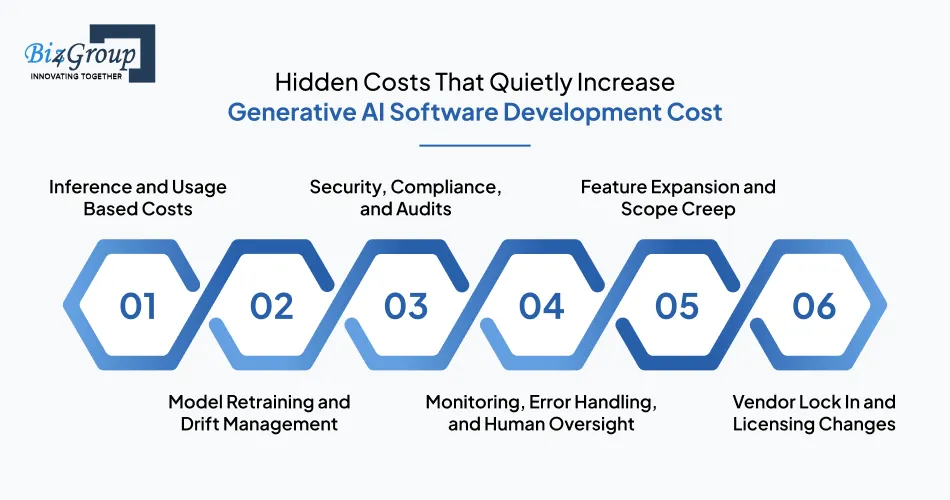
Most teams budget for development, models, and infrastructure. What often gets missed are the hidden expenses that show up after launch or mid project. These costs are a major reason why the generative AI software development cost breakdown ends up higher than expected.
Below are the most common hidden cost areas you should plan for early.
1. Inference and Usage Based Costs
As adoption grows, so does usage. Every prompt, response, and interaction consumes compute resources. This makes inference one of the most underestimated parts of generative AI software development cost. High usage, peak traffic, or complex prompts can quickly increase monthly bills if not optimized.
Hidden cost impact: $1,000 to $20,000+ per month, depending on scale
2. Model Retraining and Drift Management
Generative AI models lose accuracy over time as data, language, or business rules change. Regular retraining or tuning is required to maintain performance. Ignoring this leads to declining output quality and expensive rework later, impacting the cost to develop generative AI software for businesses long term.
Hidden cost impact: $10,000 to $50,000+ per year
3. Security, Compliance, and Audits
Initial security setups rarely cover evolving regulations or enterprise audits. As usage expands, additional controls, logging, and compliance updates become necessary. This is a frequent driver of unexpected enterprise generative AI development cost increases.
Hidden cost impact: $10,000 to $60,000+
4. Monitoring, Error Handling, and Human Oversight
Generative AI systems require continuous monitoring to detect hallucinations, bias, or performance drops. In many cases, human review workflows are added to reduce risk. These operational layers are often missing from early build generative AI software cost estimate calculations.
Hidden cost impact: $5,000 to $25,000+ per year
5. Feature Expansion and Scope Creep
Once users adopt the system, new feature requests arrive fast. Without a roadmap, incremental additions quietly inflate the custom generative AI software development cost. What starts as small changes often turns into ongoing development cycles.
Hidden cost impact: $15,000 to $80,000+
6. Vendor Lock In and Licensing Changes
Reliance on third party models or platforms can expose you to pricing changes or usage caps. Over time, these dependencies impact the generative AI software development pricing models you rely on. Switching vendors later is far more expensive than planning flexibility upfront.
Hidden cost impact: $10,000 to $100,000+
Hidden costs do not appear all at once, but together they shape your total generative AI software creation cost and long-term ROI. Teams that account for these early make smarter budgeting decisions and avoid unpleasant surprises.
Worried about costs that show up after launch instead of on day one?
Hidden expenses are avoidable when planned early. We help you surface them before they hit your budget.
Review Hidden Cost RisksCost Optimization: How to Reduce Generative AI Software Development Cost Without Sacrificing Quality
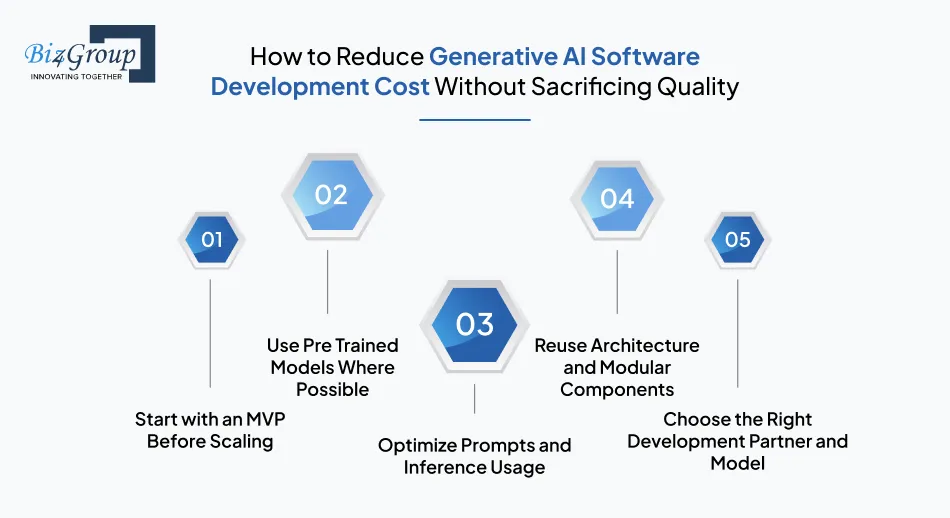
Cutting costs in generative AI is not about doing less. It is about doing the right things in the right order. When planned well, teams can reduce generative AI software development cost by a meaningful margin while still building scalable, reliable solutions.
Below are proven optimization strategies, along with realistic cost savings you can expect.
1. Start with an MVP Before Scaling
Building everything at once is one of the fastest ways budgets spiral. An MVP helps you validate real usage before committing to advanced features or infrastructure.
This approach reduces upfront risk and gives you data to guide future investment.
Cost optimized: $20,000 to $60,000
Typical savings: 25% to 40%
Supports generative AI development cost for MVP vs full product
2. Use Pre Trained Models Where Possible
Many teams over invest in custom models too early. For most business use cases, modern APIs deliver strong performance with far lower setup effort. You can always fine tune or build custom models later, once value is proven.
Cost optimized: $30,000 to $80,000
Typical savings: 30% to 50%
Improves cost effective generative AI software development
3. Optimize Prompts and Inference Usage
Smarter prompt design and response handling can significantly reduce token usage and compute consumption. This directly lowers recurring infrastructure and inference costs. Small technical optimizations here add up fast at scale.
Cost optimized: $10,000 to $40,000 annually
Typical savings: 20% to 35%
Key for controlling generative AI software development cost breakdown
4. Reuse Architecture and Modular Components
Reusable workflows, shared services, and modular design reduce duplication across features. This shortens development cycles and lowers maintenance effort over time. Teams building multiple AI features benefit the most from this strategy.
Cost optimized: $15,000 to $50,000
Typical savings: 20% to 30%
Helps stabilize custom generative AI software development cost
5. Choose the Right Development Partner and Model
The wrong delivery model often costs more than the technology itself. A partner that aligns architecture, cost, and ROI early helps you avoid rework and delays. Many teams optimize both speed and budget by working with an experienced AI product development company that understands generative AI at scale.
Cost optimized: $25,000 to $100,000+
Typical savings: 30% to 45%
Directly improves generative AI software development cost and ROI analysis
Cost optimization is not a onetime decision. It is an ongoing discipline that protects long term ROI and keeps your enterprise generative AI development cost sustainable as adoption grows.
How Biz4Group LLC Helped Optimize Costs in Strategic Projects?
Understanding generative AI software development cost is useful but seeing how cost decisions play out in real projects brings clarity. Below are three projects where our team delivered high value while carefully managing cost and complexity. These are not all strictly generative AI builds, but each showcases strategic cost optimization principles that directly apply to generative AI work.
1. CSO: A Holistic Wellness Intelligence Platform
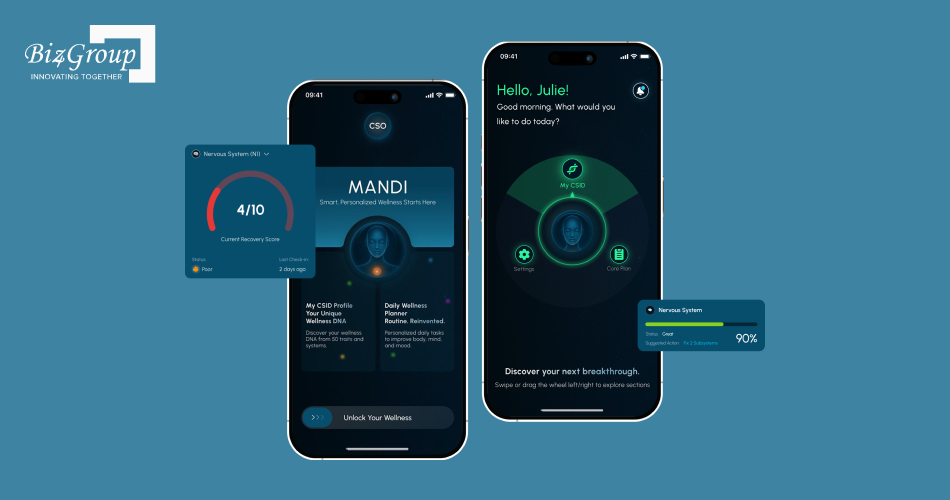
CSO is a mobile-first AI driven wellness and health assessment platform. It combines conversational AI, emotional context analysis, and adaptive scoring across multiple health subsystems to help users understand and improve well-being over time. The system needed to interpret text and voice inputs, maintain context, and deliver adaptive personalized insights.
How we optimized cost
- Implemented a dual memory architecture to separate short and long-term context, reducing excessive AI calls and inference costs
- Optimized API orchestration with throttling and retry logic to control external AI provider usage without degrading experience
- Prioritized core health scoring and adaptive task logic early, avoiding over investment in secondary features upfront
Cost impact
- Reduced ongoing inference and performance cost significantly
- Enabled development focus on high impact modules before advanced personalization
- Resulted in a more predictable build generative AI software cost estimate
2. Quantum Fit: AI-Powered Personal Development App

Quantum Fit is a mobile app that supports users in six key areas of personal development, including physical, mental, and sleep goals. The system uses AI to personalize goals, track habits, and provide guidance that evolves continually with user progress.
How we optimized cost
- Focused on clean, intuitive design that minimized unnecessary UI/UX complexity but maximized adoption
- Balanced personalization requirements with efficient data handling to avoid inflated training and hosting costs
- Built core habit tracking and analytics first, then extended features after validating user engagement
Cost impact
- Limited early generative AI software development cost while ensuring critical personalized experiences
- Avoided redundant feature development by sequencing based on real usage data
- Prepared the app for gradual scaling without heavy recurring infrastructure spend
3. AI-Powered Social Media App

AI social media app allows users to create images and videos from text prompts and share them across networks. It integrates multiple AI platforms for media generation and includes content reuse features to manage operational costs.
How we optimized cost
Implemented a caching layer so previously generated images and videos are reused, minimizing repetitive AI calls
Designed content storage and mapping to avoid unnecessary inference expenses while preserving quality
Used efficient cross-platform frameworks to reduce development overhead and speed time to market
Cost impact
- Significantly lowered token and compute costs tied to AI text-to-media generation
- Reduced backend workload and infrastructure expense with reuse mechanisms
- Ensured the project stayed within a practical generative AI software development cost range
Across all three examples, the same principles apply to managing generative AI software creation cost:
- Focus first on high value capabilities
- Optimize AI usage rather than simply increasing calls
- Sequence development based on usage data and business impact
- Avoid rework by planning architecture and performance constraints early
Want to build generative AI without overspending or overengineering?
See how your idea compares to real projects we have delivered with cost discipline and scalability in mind.
Contact UsFinal Thoughts on Making Generative AI Software Development Cost Work for Your Business
By now, it should be clear that how much does generative AI software development cost depends on a series of informed decisions, not a fixed price. Use case scope, feature depth, data quality, model choices, and long-term scaling all shape the final investment. When these elements are planned together, cost becomes predictable instead of reactive.
High performing teams treat generative AI software development cost as a strategic lever. They invest where AI delivers measurable impact, phase development wisely, and account for operational costs early. This approach leads to better outcomes and stronger ROI.
Biz4Group brings years of experience delivering complex AI driven products for startups and enterprises. Our work reflects a deep understanding of custom generative AI software development cost, scalability, and business alignment. We focus on building AI solutions that perform in production, not just in demos.
If you are planning your next AI initiative, clarity is your strongest asset. Understanding the generative AI software development cost breakdown helps you move forward with confidence and avoid costly missteps. And when execution begins, partnering with a trusted top AI development company in USA ensures your investment stays focused on long term value, not surprises.
Connect with us and let's make your ideas into reality.
FAQ
1. What is a typical range for generative AI software development cost?
For most business use cases, the generative AI software development cost ranges from $20,000 to $250,000+. MVP level solutions with limited features sit at the lower end, while enterprise grade platforms with integrations, security, and scalability push costs higher. The final number depends on scope, complexity, and long-term goals.
2. How is the cost to develop generative AI software calculated?
The cost to develop generative AI software is calculated based on multiple factors including feature scope, use case complexity, data preparation, model selection, infrastructure, integrations, and ongoing support. It is not just a onetime build cost but a combination of development and operational investment.
3. What drives enterprise generative AI development cost higher than startups?
Enterprise generative AI development cost is higher due to requirements such as security, compliance, system integrations, performance guarantees, and governance. Enterprises also need monitoring, audit trails, and scalable infrastructure, all of which increase development and long-term ownership costs.
4. How much does customization or fine-tuning increase generative AI software development cost?
Customization and fine tuning can add $20,000 to $100,000+ to the custom generative AI software development cost, depending on data volume and accuracy expectations. While this increases upfront spending, it often improves output quality and long-term ROI for domain specific use cases.
5. Does integrating generative AI into existing software increase costs?
Yes. Integrations with CRM, ERP, analytics platforms, or internal systems increase the cost to develop generative AI software for businesses. Integration work typically adds $5,000 to $80,000+, depending on the number of systems, data complexity, and real time requirements.
6. What are the ongoing costs after deploying generative AI solutions?
Ongoing expenses include cloud infrastructure, inference usage, monitoring, model retraining, and feature updates. These costs typically range from $5,000 to $100,000+ per year, depending on usage volume, system complexity, and how frequently the solution evolves. This forms a critical part of the generative AI software development cost breakdown.
7. Is it more cost effective to build generative AI software in house or outsource?
For many teams, outsourcing is more cost effective than building entirely in-house. It reduces hiring overhead, speeds up delivery, and provides access to specialized expertise. Working with the right partner helps control both generative AI software creation cost and long-term scaling expenses.
