 Location :
Orlando, FL, USA
Location :
Orlando, FL, USA +1 (407) 714-1616
 info@biz4group.com

- Property listing calls are high volume, repetitive, and time sensitive, which makes them ideal for IVR systems solutions for real estate property listing calls.
- Most listing inquiries fall into categories like availability, pricing, and viewings, allowing predictable automation with real estate IVR systems solutions for property listings.
- IVR fits best at the front of the call flow by answering calls instantly, capturing intent, sharing basic details, and routing only qualified calls to agents.
- Using IVR solutions for real estate agencies, teams reduce missed calls, improve lead capture, and keep agents focused on active deals.
- Poor IVR design, long menus, and outdated listing data are the main reasons automation fails, not the technology itself.
- When implemented simply and maintained regularly, IVR helps agencies scale listing demand without changing how agents sell.
Property listing calls make up a large portion of inbound calls for most real estate agencies. Buyers and renters usually ask about availability, price, location, or how to schedule a visit. These questions are repetitive and urgent. If the call is not answered quickly, the lead often moves on. This is why many agencies adopt IVR systems solutions for real estate property listing calls to ensure every inquiry receives an immediate response.
This came out as a result of the shortcomings related to manual handling, which does not scale well. Agents spend much of their time in showings, negotiations, or client meetings. When calls come in during those moments, they are missed or sent to voicemail. As listing volume increases, this gap becomes harder to manage. Real estate IVR systems solutions for property listings help by answering calls instantly and guiding the caller through basic listing information without waiting for an agent.
Manual processes also create inconsistency. Information may vary depending on who answers the phone, and lead details are sometimes captured late or incompletely. Agencies investing in real estate AI software development often begin with listing calls because the workflow is structured and predictable.
In this blog, you’ll learn why the goal shall always be to protect the caller’s time. An AI development company building IVR solutions for real estate agencies typically focuses on ensuring that no listing inquiry goes unanswered while keeping agents focused on closing deals.
Understanding Listing Call Categories Before Using IVR solutions for Real Estate Agencies
Most of the property listing calls fall into a few clear categories. Understanding these categories helps businesses know where IVR systems solutions for real estate property listing calls can handle demand without involving agents on every call.
1. Availability checks
These are the most frequent type of listing calls. Callers want to know if a property is still available in the market or has been already taken. These calls usually peak right after a listing goes live and are often made after business hours. Since the answers are direct and based on listing status, this category works well with property listing call automation with IVR system logic connected to updated listing data.
2. Price and location questions
Price and location questions are also pretty common. Callers ask about the listed price, the area, or basic details. These questions are repeated across many calls and rarely demand agent judgment or intelligence. Real estate call handling IVR system solutions can provide the same information every time, reducing interruptions and keeping answers consistent.
3. Viewing requests
Viewing requests show higher interest but still follow basic patterns. Callers want to know when they can see the property or attend an open house. These calls usually increase on weekends and during new listings. AI IVR can collect preferred dates and contact details before passing the request to an agent, which cuts down follow up time.
4. Similar property requests
When a property is not available or does not meet expectations, callers often ask about similar options. These calls take time as agents have to handle custom queries. Automating the initial intake helps capture budget and preferences before passing on any information. Majority of the teams exploring AI automation services start with this category to reduce call load without affecting buyer experience.
Understanding these call types helps agencies decide what to automate and what to route to agents. Used correctly, real estate call handling IVR system solutions reduce repetitive calls while keeping agents focused on active deals.
Stop Losing Listing Calls to Voicemail
See how IVR systems solutions for real estate property listing calls can answer every inquiry the moment it comes in.
Explore Listing Call AutomationWhere IVR Solutions for Real Estate Agencies Fit into the Property Listing Call Flow
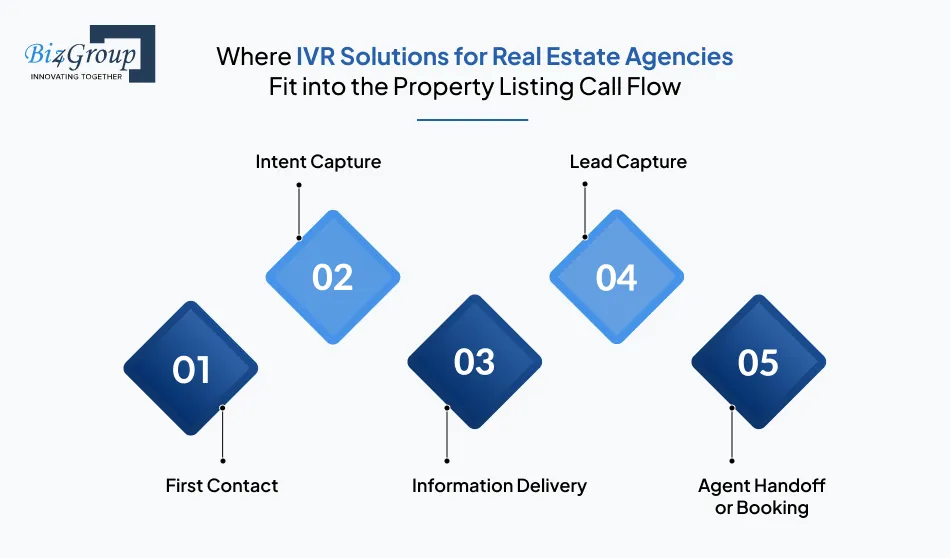
Most property listing calls follow the same basic steps from start to finish. Internal call data from real estate teams shows that more than half of listing calls involve repeat questions that do not need a human agent right away. AI IVR systems solutions for real estate property listing calls fit into this flow by handling these early steps and passing only tricky calls to human agents.
1. First Contact
IVR answers the call as soon as it comes in. This removes long ring times and voicemail, which are common reasons callers drop calls. Immediate pickup helps in keeping callers engaged, especially after office hours and during busy listing periods.
- Example: A buyer calls in the evening and hears a short greeting instead of voicemail.
2. Intent Capture
After answering, IVR identifies why the caller is calling. Most listing calls fall into a particular set of intents like availability, pricing, or viewing requests. Understanding intent early avoids unnecessary human agent involvement.
- Example: The system asks what the caller is calling about and records the response.
3. Information Delivery
Once the intent is clear, IVR provides basic listing information. This includes availability, price, or simple location details. This step removes the most common questions from human agent's call handling routine and supports property listing call automation with IVR system workflows.
- Example: The caller hears whether the property is still available and the listed price.
4. Lead Capture
IVR collects basic caller details before moving ahead with the conversation. This usually includes name and phone number. Capturing this information early improves follow up and reduces a lot of manual work. Many teams rely on AI integration services to pass this data directly into internal tools.
- Example: The caller shares contact details before speaking with an agent.
5. Agent Handoff or Booking
Only the calls that need human attention regarding complex matters reach human agents. AI IVR can transfer the call or schedule a callback based on agent availability. This helps agents focus on active conversations. Some agencies align this step with tools designed for AI for real estate agents.
- Example: A qualified caller is routed to the right agent or booked for a later call.
By handling these steps in order, IVR keeps listing calls organized and manageable. When used in this way, real estate call handling IVR system solutions reduce missed calls while keeping agents focused on closing important deals.
Turn Repetitive Listing Calls Into a Clean Workflow
Design real estate IVR systems solutions for property listings that handle availability, pricing, and viewings automatically.
See How the Flow WorksExample Call Flow Built with IVR Software Solutions for Real Estate Listing Inquiries
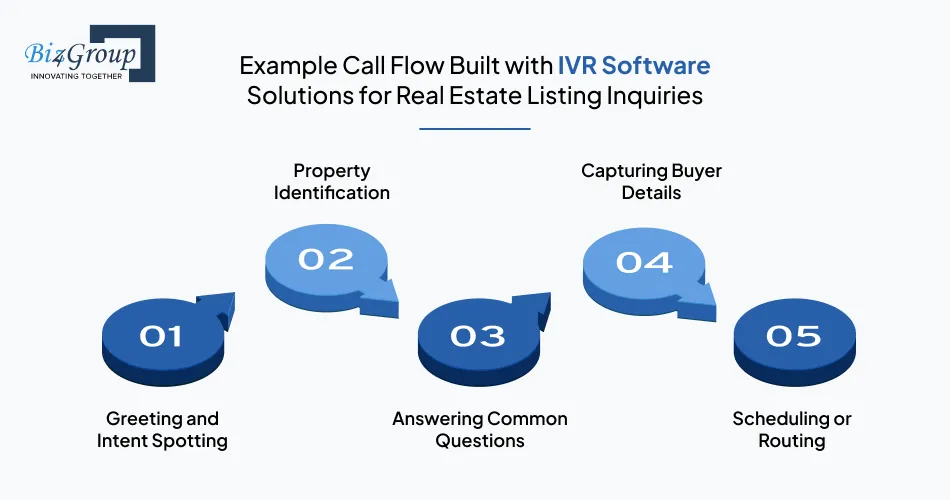
Industry experts from real estate believe that more than half of listing calls move through the same steps every time. IVR systems solutions for real estate property listing calls use this predictable flow given below, to answer basic questions first and involve agents only for complex cases.
1. Greeting and Intent Spotting
The call starts with a short greeting so the caller knows that they have reached the right place. The AI system then asks why the caller is reaching out. Most callers respond with a basic request like checking availability or asking about a viewing. This step helps shorten the call and sets the direction of the conversation early.
2. Property Identification
Next, the AI IVR asks the caller to identify the property. This can be done by sharing an address, listing number, or recent inquiry. Clear identification at this point avoids confusion and ensures the right listing information is being used. This step is commonly supported by automated IVR system solutions for property details.
3. Answering Common Questions
Once the property is identified and confirmed by the caller, the IVR provides common information like availability, price, and basic features. These questions make up a huge chunk of listing calls and do not require a human agent. Automating this step keeps responses consistent. Several agencies rely on enterprise AI solutions to keep information in sync with listings.
4. Capturing Buyer Details
If the caller wants to move ahead in the negotiation, the IVR collects basic details such as name and phone number. This information is recorded before the involvement of any human agent. Collecting basic details early reduces delays in follow up calls. Teams focused on AI model development often improve this step over time, gradually.
5. Scheduling or Routing
In the final step, the IVR decides what happens next in the conversation, depending on the interaction so far. The call is either directed to a human agent (if required) or a callback is scheduled. This ensures human agents speak with callers who are ready to move ahead in the deal.
|
Step |
What Happens |
Result |
|---|---|---|
|
Greeting and Purpose Detection |
Call is answered and intent is identified |
Faster call handling |
|
Property Identification |
Listing is confirmed |
Accurate information |
|
Answering Common Questions |
Basic details are shared |
Fewer agent calls |
|
Capturing Buyer Details |
Contact info is collected |
Better follow up |
|
Scheduling or Routing |
Call is transferred or booked |
Agent time protected |
This example flow shows how automation keeps listing calls simple and organized. Used correctly, IVR software solutions for real estate listing inquiries help agencies respond faster and manage listing demand without overloading human agents.
Protect Agent Time Without Slowing Down Leads
Use IVR solutions for real estate agencies to filter listing inquiries before they reach your agents.
Check out a Sample Call FlowChoosing Between AI and Menu IVR in Real Estate Call Handling IVR System Solutions
The choice between AI IVR and menu IVR depends on how callers behave and how complex the inquiries are. For agencies managing listing demand, IVR systems solutions for real estate property listing calls work best when the IVR type matches real call patterns. Menu IVR is structured and works well for fixed and repetitive setups.
Here's all you need to know about the differences between AI and Menu IVR in Real Estate:
|
Decision Factor |
Menu IVR |
AI IVR |
|---|---|---|
|
Best for |
Simple, repeat questions |
Mixed or unpredictable questions |
|
Caller input |
Presses numbers |
Speaks naturally |
|
Setup effort |
Lower |
Higher |
|
Flexibility |
Limited |
High |
|
Handling unclear input |
Often repeats menu |
Can ask clarifying questions |
|
Scalability |
Works for stable listings |
Works for growing inventory |
Menu IVR is the top choice when most of the calls follow the same pattern, such as checking availability or asking the price. It is easier to launch and maintain. AI IVR is more suitable when callers ask open-ended questions or switch topics during the conversation. Teams that integrate AI into an app often use AI IVR to reduce friction and shorten conversations.
AI IVR requires more planning and testing. Agencies exploring AI in real estate development often choose it when call volume is high and listing data changes frequently.
Overall, choose menu IVR for structured calls and AI IVR for flexible conversations. When designed in the right way, real estate IVR call routing solutions ensure listing inquiries reach the right outcome without increasing human agent workload.
Operational Benefits of IVR Software Solutions for Real Estate Listing Inquiries
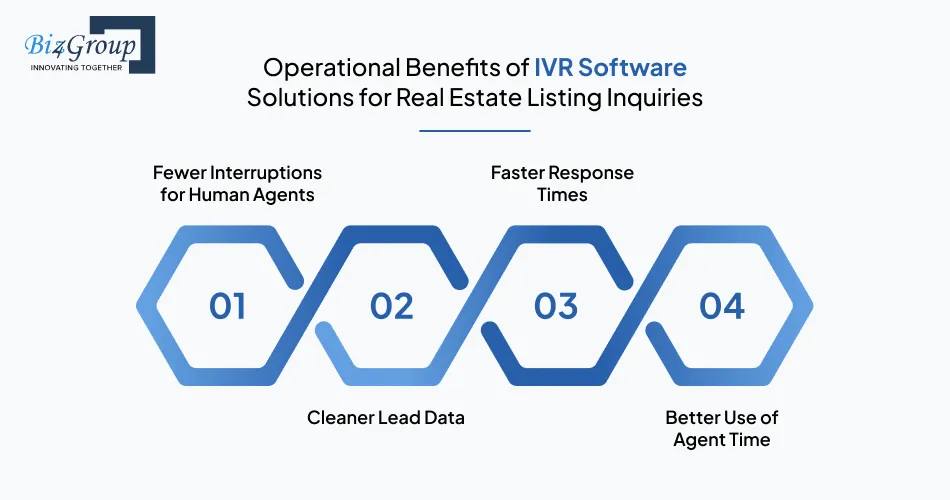
Listing calls arrive throughout the day and often interrupt active work. IVR systems solutions for real estate property listing calls help manage this inflow and and offer several other benefits as listed below:
1. Fewer Interruptions for Human Agents
Agents are often in showings or client meetings when inquiry calls come in. Answering every call breaks focus and delays ongoing work. IVR AI handles basic questions before they reach human agents, thus reducing unplanned interruptions. Teams that hire AI developers to refine call flows often see fewer agent call disruptions.
2. Cleaner Lead Data
When agents handle calls manually, lead details are sometimes missed or recorded incorrectly (or partially). IVR collects caller information in the same format every single time. This creates more accurate records and simpler follow up routines. Some agencies use this data as a base to build AI software for internal tracking.
3. Faster Response Times
Callers expect quick answers when asking about listings or making other enquiries. Even short delays during the call can lead to lost interest. IVR answers calls instantly and provides basic resolutions without wait time. This makes voice response system solutions for property listing calls useful during busy office hours as well as after hours.
4. Better Use of Agent Time
When IVR filters routine calls, agents spend more time on serious inquiries and complex negotiations. This improves daily productivity and reduces call fatigue in general. Agencies testing generative AI often extend this approach to better prioritize high-ticket follow ups.
|
Benefit Area |
Result |
|---|---|
|
Agent interruptions |
Fewer unexpected calls |
|
Lead data quality |
More consistent information |
|
Response speed |
Immediate call handling |
|
Agent focus |
More time on active deals |
When listing calls are organized, daily operations feel different. Agents are not constantly switching context, leads are not sitting in voicemail, and information is delivered the same way every time. Over time, this creates a more controlled workflow. That is the practical value of real estate call management system solutions with IVR: fewer distractions, clearer data, and more time spent where it matters most, closing valuable deals.
Bring Structure to High-Volume Listing Inquiries
Learn how property listing call automation with IVR system design reduces missed calls and manual follow ups.
Talk Through Your Use CaseLead Routing and CRM Impact of Real Estate IVR Call Routing Solutions
Listing leads are often lost because calls are missed or follow ups are delayed. Real estate business know for a fact that contacting a lead late reduces the chance of conversion. IVR systems solutions for real estate property listing calls help by logging and routing every inquiry as soon as the call comes in. Here's how these AI systems help:
1. Auto-Logging Inquiries
IVR records each listing call on its own. Basic details such as phone number, call time, and inquiry type are saved without any input from a human agent. This reduces missed information and keeps records complete. Teams experimenting with an AI conversation app often use this step to standardize how calls are captured.
2. Assigning to the Right Agent
After a call is logged, IVR routes the inquiry based on simple rules like listing, area, or human agent availability. This avoids delays and reduces internal handoffs. Automated IVR system solutions for managing real estate inquiries help ensure leads reach the correct agent faster.
3. Avoiding Lead Leakage
Lead leakage happens when calls are missed or never followed up. IVR reduces this by making sure every call creates a record and a clear next step in the process. Teams exploring business app development using AI make use of IVR to close these gaps.
When lead capture and routing happen automatically, follow up becomes more reliable. IVR system solutions for real estate agencies are a great way to reduce missed calls and keep more listing leads in the negotiation loop.
Where Real Estate IVR Systems Solutions for Property Listings Often Break Down
Most of the IVR problems come from how the system is designed and maintained. When call flows do not support natural conversations, callers drop off quickly. Even IVR systems solutions for real estate property listing calls lose effectiveness when they become hard to follow, slow to respond, or disconnected from live data.
|
Breakdown Area |
What Causes the Issue |
What Callers Experience |
Why It Hurts Operations |
|---|---|---|---|
|
Too many options |
Long menus with many choices |
Callers wait, get confused, or hang up |
Higher call drop rates and lost leads |
|
Unclear prompts |
Vague or generic questions |
Callers repeat themselves or choose wrong options |
Poor intent capture and misrouting |
|
Outdated listing data |
No regular sync with listing updates |
Incorrect availability or pricing |
Loss of trust and follow up confusion |
|
No clear agent path |
Agent option hidden or delayed |
Callers feel blocked |
High frustration and negative perception |
|
Over-qualification |
Too many questions before help |
Call feels slow and tiring |
Drop offs before lead capture |
|
Lack of updates |
Call flows never adjusted |
System does not match current listings |
Gradual decline in usefulness |
Complexity is the queen of all problems, everything else branches out of it. When callers have to listen to long menus or answer too many questions, they choose to hang up. This is also the reason why teams learning how to use AI for real estate often simplify call flows first before adding advanced features.
Another frequent issue is stale data. Listings change with a lot of speed, and IVR systems must keep up with that pace. Agencies that build real estate AI software usually focus on keeping listing information current to avoid sharing incorrect details.
When designed with real call behavior in mind and reviewed often, real estate IVR systems solutions for property listings stay simple, accurate, and effective even as call volume grows.
Make Listing Calls Easier to Route and Track
Implement real estate call handling IVR system solutions that log, route, and prioritize inquiries automatically.
See Routing in ActionWhy Build IVR Systems That Help Real Estate Agencies Handle Property Listing Calls with Biz4Group LLC?
Biz4Group LLC is a custom software development company that builds AI IVR systems for real estate around real operational workflows. Our focus is on automation that works under real conditions, high volume, real users, and real consequences.
As an AI app development company, we have hands-on experience designing voice-driven systems that understand intent, manage conversations, and respond accurately in real time. This matters for real estate IVR, where listing calls are fast, repetitive, and unforgiving of delays or confusion.
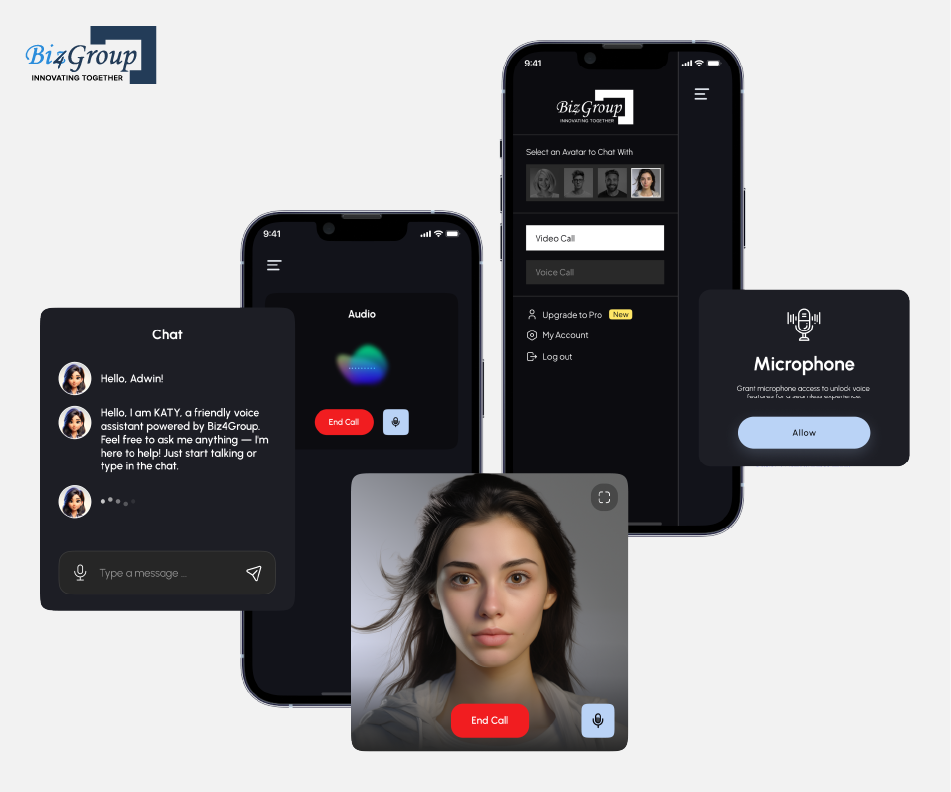
One example is AI Wizard, an avatar-based AI companion platform built by Biz4Group LLC to handle live voice and video conversations. The system listens, interprets intent, and responds naturally while maintaining conversation context. Building AI Wizard required solving challenges around speech accuracy, intent flow, fallback handling, and response timing, the same challenges that exist in IVR systems handling property listing calls at scale.
Our work is best suited for teams that want IVR to feel like part of their operations, not just a generic tool that’s been added on top.
Wrapping Up IVR Systems for Real Estate Agencies that Handle Property Listing Calls
The phone rings while agents are in showings. Voicemails pile up. A buyer calling about a listing wants an answer now. When that does not happen, the opportunity usually disappears. This is the real problem IVR systems solutions for real estate property listing calls are designed to solve.
IVR works best when it does one job, and does it really well. It answers listing calls immediately, handles the repeat questions, captures the basics every time, and steps aside when a human agent is actually needed. That is why many teams see the fastest impact when they use IVR solutions for real estate agencies specifically for listing inquiries, not as a generic call center tool.
For most agencies, fixing listing calls is the first workflow that truly feels lighter after automation. It reduces noise, protects agent focus, and brings order to something that was previously reactive. That is often what opens the door to deeper conversations around product development services and partnerships with AI consulting services, because the value is easy to see and easy to measure.
See how IVR can protect agent time without changing how they sell – Talk to our AI Experts!
FAQs
1. Can IVR handle property listing calls without frustrating callers?
Yes, when designed correctly. IVR works best for listing calls because most questions are short and predictable. Frustration usually comes from long menus or unclear prompts, not from automation itself.
2. How accurate is IVR when callers mention property addresses or listing details verbally?
Modern IVR systems can reliably capture addresses, listing numbers, and common property terms, especially when the system is trained on local listing data. Accuracy improves further when callers are guided with short prompts.
3. Does IVR work for both buyers and renters calling about listings?
Yes. Buyer and renter inquiries often follow similar early call patterns, such as availability and pricing. IVR can separate these intents early and route them correctly without needing different call systems.
4. What happens if a caller asks a question the IVR cannot answer?
In well designed systems, the IVR escalates the call to an agent or schedules a callback. This ensures the caller is never stuck in a loop or forced to repeat information.
5. Can IVR be used alongside existing phone systems and CRMs?
Yes. IVR is commonly layered on top of existing phone infrastructure and connected to CRMs through integrations. Agencies do not need to replace their current tools to use IVR for listing calls.
6. How long does it take for a real estate team to see results after adding IVR for listings?
Most teams notice fewer missed calls and faster response times within the first few weeks. Improvements in lead organization and agent workload usually follow shortly after.
