Location :
Orlando, FL, USA
Location :
Orlando, FL, USA +1 (407) 714-1616
 info@biz4group.com

















Imagine a digital system that doesn’t wait for instructions but instead, understands your business goals, learns from real-time feedback, and takes independent actions to get the job done.
Read More

 AI Summary Powered by Biz4AI
Have you ever launched an app that worked flawlessly in demos, only to watch it struggle the moment real users showed up?
You're not alone. In fact, many of today's most talked-about startup failures begin with the same story. A founder uses tools like Bolt, Cursor, Lovable, or Replit to build an MVP in weeks, gains early traction, and then encounters problems that never appeared during testing. Login failures, slow databases, security gaps, and unexpected crashes are some of the most common vibe coding challenges teams face after launch.
The rise of AI-assisted development has changed how software gets built. According to GitHub, 92% of U.S.-based developers use AI coding tools in some capacity, making AI-generated software a mainstream part of modern product development. At the same time, Veracode's 2026 GenAI Code Security Report found that 45% of AI-generated code samples introduced known security vulnerabilities, highlighting one of the biggest risks of launching AI-generated apps into production environments.
One founder recently asked, "I am running a SaaS startup and I built my app using Bolt and it worked fine in demos but now that we have real users it keeps crashing and I have no idea why. What are the most common reasons AI built apps fail in production and what do I need to fix first?" That question captures a growing concern across the startup ecosystem.
This guide explores why vibe coding fails in production, the most critical AI-built app challenges with real users, and the practical steps founders can take to turn fast-moving prototypes into secure, scalable, production-ready products.
But before diving into the details, let’s talk about the basics.
A vibe coding failure occurs when an application built with AI coding tools performs well during development, testing, or demos but encounters serious problems after deployment. In simple terms, the app works when a founder is showing it off. It struggles when customers begin relying on it.
This distinction matters because most AI tools are designed to generate working functionality. Production software requires something different. It must handle growth, unexpected user behavior, operational risks, compliance requirements, and business continuity.
That is where many founders encounter their first reality check.
So, vibe coding failure is a production issue that emerges after an AI-built application is launched to real users because critical engineering requirements were never addressed during rapid development.
The key phrase here is real users.
Real users behave differently than test users. They upload unexpected files. They abandon payment flows halfway through. They use weak passwords. They access the platform from different devices, browsers, and networks.
Production environments expose assumptions.
AI-generated code often contains many of them.
|
During Development |
In Production |
|---|---|
|
The feature works |
The feature must work consistently |
|
Five test users succeeded |
Five hundred users must succeed |
|
Data looks correct |
Data must remain accurate under load |
|
Login works on your laptop |
Login must work for every customer |
|
Payment completes once |
Payment must never duplicate or fail silently |
|
Files upload successfully |
Files must remain secure and access-controlled |
This gap is the foundation of most common vibe coding challenges facing startups today.
Let's clear up one misconception. Vibe coding is not bad.
In fact, it has helped thousands of
founders build products that may never have existed otherwise.
GitHub reports 51% of committed code in early 2026 was AI-generated or AI-assisted. This has dramatically lowered the barrier to software development and product experimentation.
The challenge begins when a prototype is treated as a finished product.
Think about building a house. Getting the walls up quickly is impressive. Making sure the foundation survives storms, heavy use, and years of wear is a completely different task.
Software works the same way.
If you recognize any of these situations, your application may already be experiencing early-stage production risks:
One founder recently asked: "We are a two-person startup team with no technical background and we built our whole product using AI tools. We want to raise funding but we are worried that a technical due diligence review will expose problems in our codebase. What do expert developers usually find when they audit an AI built app?"
The answer is rarely a single catastrophic issue.
Most audits uncover dozens of smaller weaknesses that quietly accumulate over time. Together, they create risk that affects scalability, security, maintainability, and customer trust.
The speed of AI development has changed startup building forever.
What has not changed is how
users evaluate software.
Customers do not care whether an app was built by a team of twenty engineers or generated through prompts over a weekend. They care about one thing... Does it work when they need it?
So basically, build quickly. Launch confidently. Move fast.
Then verify everything before
real users, investors, regulators, or enterprise buyers do it for you.
AI-built apps fail in production because demos run under ideal, controlled conditions while production environments expose unpredictable user behavior, traffic, and edge cases the AI never accounted for.
That difference explains many of the most common vibe coding challenges founders encounter after launch.
A demo environment differs from production because it uses clean data, predictable workflows, and a small number of users who already know how the product is supposed to work.
Real customers bring a very different reality.
|
Demo Environment |
Production Environment |
|---|---|
|
Predictable user behavior |
Unpredictable user behavior |
|
Small datasets |
Large and growing datasets |
|
Limited traffic |
Traffic spikes and concurrency |
|
Controlled testing flows |
Thousands of user journeys |
|
Known inputs |
Unexpected inputs |
|
Friendly conditions |
Real-world conditions |
This gap creates many AI-built app challenges with real users.
When real users arrive, they create far more unpredictable behavior than test users, exposing hidden weaknesses in workflows, inputs, and edge cases that demos never surfaced.
A founder may test ten perfect user journeys. Customers create hundreds of imperfect ones.
Some users refresh pages repeatedly. Some abandon actions halfway through. Some upload files the system never expected. Others use devices, browsers, and network conditions that were never tested.
As user activity grows, hidden weaknesses begin to surface.
Common symptoms include:
AI-generated code misses these scenarios because AI coding tools are optimized to fulfill a prompt, not to anticipate every real-world condition the business will eventually face.
Yes, AI coding tools are excellent at generating functionality. But their primary goal is answering the prompt only.
Many founders ask, "My app worked perfectly during testing. Why is it crashing after launch?" The answer is usually simple.
The testing environment never recreated production conditions.
According to GitHub research, AI-assisted development continues to accelerate software creation across startups and enterprises alike. Faster development creates enormous advantages, but it also shortens the time available for architecture reviews, testing, and production planning.
The result?
Many teams unknowingly launch software that has never been tested under realistic business conditions.
Most AI-generated code issues in production fall into four categories:
|
Area |
What Production Reveals |
|---|---|
|
Security |
Unauthorized access and data exposure risks |
|
Scalability |
Performance drops as usage grows |
|
Reliability |
Failures during unexpected conditions |
|
Maintainability |
Increasing difficulty making safe changes |
These are the areas that separate a working prototype from a sustainable software product.
The next step is understanding which of these challenges creates the greatest risk and how to prioritize them before they affect customers, revenue, or investor confidence.
The most common vibe coding challenges after launch are security gaps, scalability limits, reliability failures, compliance blind spots, technical debt, and knowledge dependency on a single builder.
Most founders assume the biggest risk is building the product. In reality, the bigger challenge often begins after launch.
Developing an MVP can attract users, validate an idea, and even generate revenue. What happens next determines whether the product grows or becomes difficult to maintain. This is why many teams that move quickly with AI-generated software eventually encounter a familiar set of problems.
If you're wondering, "What are the biggest risks of launching AI-generated apps?", the answer usually falls into a handful of recurring categories.
|
Challenge |
What Founders Notice |
Business Impact |
|---|---|---|
|
Security gaps |
Unexpected access issues or exposed data |
Loss of trust and legal risk |
|
Scalability limitations |
Slower performance as users grow |
Customer churn |
|
Reliability failures |
Features behaving inconsistently |
Poor user experience |
|
Compliance blind spots |
Questions from investors or enterprise clients |
Delayed growth opportunities |
|
Technical debt |
Every update becomes harder to ship |
Reduced development speed |
|
Knowledge dependency |
Nobody fully understands the codebase |
Operational risk |
These challenges rarely appear on day one. They emerge as usage, complexity, and expectations increase.
Security gaps go undetected because an application can successfully process payments, store files, manage users, while still silently exposing data in ways no one tested for.
Many founders focus on whether a feature works. Production environments care whether it works safely.
AI-built apps struggle as user numbers grow because they're typically optimized for early validation, not for the concurrency, load, and traffic patterns real scale introduces.
A common founder question is, "Can AI-generated code handle production traffic?"
The answer
depends on how the application was designed behind the scenes.
Features become less reliable over time because real users introduce unusual, unscripted behavior that early testing, built around expected workflows, never accounted for.
During early testing, users often follow expected workflows. Customers rarely do.
As more people interact with the platform, unusual scenarios begin appearing. Small issues that seemed harmless during development can create support tickets, failed transactions, and customer frustration.
Compliance concerns surface late because they're typically raised only once an investor, enterprise buyer, or regulator asks for proof of data protection, auditability, or encryption.
Typical questions include:
These concerns are especially important in healthcare, fintech, and enterprise SaaS products.
Development slows down because understanding and safely modifying AI-generated decisions becomes harder as the codebase grows, often costing more time than writing it manually would have.
A 2026 developer survey found that 63% of developers spend more time debugging AI-generated code than they would have spent writing the code manually.
When nobody understands the entire system, startups lose the ability to confidently assess risk, fix issues quickly, or prove technical due diligence to investors.
Many startups reach a point where:
One fintech founder recently asked, "Our CTO left after building the backend with AI tools. How do we know what risks are hidden in the codebase?"
That concern is becoming increasingly common as AI-generated software moves from prototype stage into long-term business operations.
Not every application experiences all six challenges. However, most AI-generated code issues in production can be traced back to one or more of these categories.
The good news?
They are identifiable.
They are measurable.
Most importantly,
they are fixable when addressed before they turn into customer-facing problems.
The first and most urgent category deserves special attention because a single oversight can impact customers, revenue, and company reputation overnight.
Most founders discover production issues after customers complain or investors start asking questions. Find out where your app stands before that happens.
Get My Free AI App Risk AssessmentBroken access control, weak authentication, exposed credentials, missing audit trails, and excessive permissions are the security risks most likely to end a startup, since a single incident can destroy customer trust and stall fundraising.
Performance issues frustrate users. Security incidents destroy trust.
And trust is far more
difficult to rebuild than software.
For startups, a single security oversight can affect customer retention, fundraising discussions, compliance reviews, and brand reputation all at once.
One founder recently asked, "We used Cursor to build our MVP and our investor is asking about
security and compliance before they wire the next tranche. Do we need a developer to review the
code before our Series A?"
The short answer is yes. Investors increasingly view application
security as a business risk, not merely a technical concern.
Broken access control and weak authentication logic appear most often in AI-built applications, followed by exposed credentials, missing audit trails, and overly permissive access controls.
The table below summarizes the most frequently discovered vibe coding security risks.
|
Security Risk |
What It Means |
Potential Impact |
|---|---|---|
|
Broken access control |
Users gain access to resources they should not see |
Data exposure |
|
Weak authentication logic |
Inadequate account protection mechanisms |
Account compromise |
|
Exposed secrets and credentials |
Sensitive keys stored insecurely |
System takeover |
|
Missing audit trails |
No visibility into critical user actions |
Compliance concerns |
|
Insufficient permission controls |
Excessive access granted to users or staff |
Insider risk |
|
Unvalidated third-party integrations |
External services gain unnecessary access |
Expanded attack surface |
These risks are difficult to spot because the application looks fully functional on the surface (signups, payments, and uploads all work) until someone deliberately tests for weaknesses.
That is why many founders discover vulnerabilities through:
Founders should prioritize access control and authentication first, since these protect customer data and accounts directly and carry the highest business risk if broken.
Start with these questions:
A "no" answer to any of these questions deserves immediate attention.
|
Priority |
Area to Review |
Why It Matters |
|---|---|---|
|
Critical |
Access controls |
Protects customer data |
|
Critical |
Authentication workflows |
Protects user accounts |
|
High |
Permissions management |
Limits unauthorized actions |
|
High |
Audit logging |
Supports investigations and compliance |
|
Medium |
Integration security |
Reduces third-party exposure |
|
Medium |
Administrative controls |
Protects internal operations |
For founders asking, "How secure is my AI-built app?", this framework provides a practical starting point.

Security becomes significantly more important when software handles hiring decisions, candidate information, interview recordings, and evaluation data. That was one of the core considerations behind Stratum 9 InnerView, an AI-powered hiring management platform developed by Biz4Group.
Key security-focused capabilities included:
The platform was designed to ensure that hiring teams, recruiters, managers, and candidates could access only the information relevant to their role.
This type of permission architecture becomes increasingly important as applications scale and handle larger volumes of sensitive data.
Many founders worry about visible problems such as bugs and crashes. The bigger concern is often what remains invisible. Security weaknesses can exist quietly for months before anyone notices them. When they are finally discovered, the consequences often extend far beyond the engineering team.
The next challenge is different but equally important... Even secure applications can struggle when growth arrives faster than expected.
AI-built apps slow down as they grow because the underlying architecture was typically optimized for early validation rather than for handling increasing users, data, and transaction volume.
And we get it, one of the most frustrating moments for a founder comes when growth becomes the problem.
The launch goes well. Users sign up. Traffic increases. Then the application starts slowing
down...
Pages take longer to load.
Reports generate slowly.
Users begin
submitting support tickets.
The product that felt fast during testing suddenly feels heavy. This is where many vibe coding scalability issues begin to surface.
Performance changes after growth because bottlenecks in database access, processing workloads, and infrastructure accumulate gradually rather than appearing all at once.
An app that performs well with 50 users may behave very differently with 5,000.
That does not
necessarily mean the application was built incorrectly. It often means the system was optimized for
validation rather than scale.
|
Bottleneck |
What Founders Experience |
Business Impact |
|---|---|---|
|
Inefficient database access |
Slow pages and reports |
Reduced productivity |
|
Excessive processing workloads |
Long wait times |
Lower engagement |
|
Resource-heavy workflows |
Delayed actions |
Poor customer experience |
|
Unoptimized infrastructure |
Performance drops during growth |
Scaling challenges |
|
Data growth overload |
Increasing response times |
Operational inefficiency |
Many AI-generated app challenges after launch emerge because these bottlenecks remain hidden until user activity reaches a certain threshold.
Performance issues rarely appear overnight. Most applications show warning signals first.
Watch for:
These symptoms often indicate that the application has outgrown its original architecture.
A common question we hear is, "My app worked great with 10 test users, but after getting hundreds of signups it became unusable. Do I need to rebuild everything?"
In most cases, no. Many scalability issues can be addressed through targeted improvements rather than complete redevelopment. The key is identifying where performance constraints exist before making expensive decisions.
|
Growth Stage |
Typical User Volume |
Common Performance Reality |
|---|---|---|
|
Prototype |
Internal testing |
Fast and predictable |
|
MVP |
Early adopters |
Minor slowdowns emerge |
|
Growth Stage |
Hundreds or thousands of users |
Bottlenecks become visible |
|
Scale Stage |
Large user base |
Architecture determines success |
This is one of the biggest differences between a product that attracts users and a product that retains them.
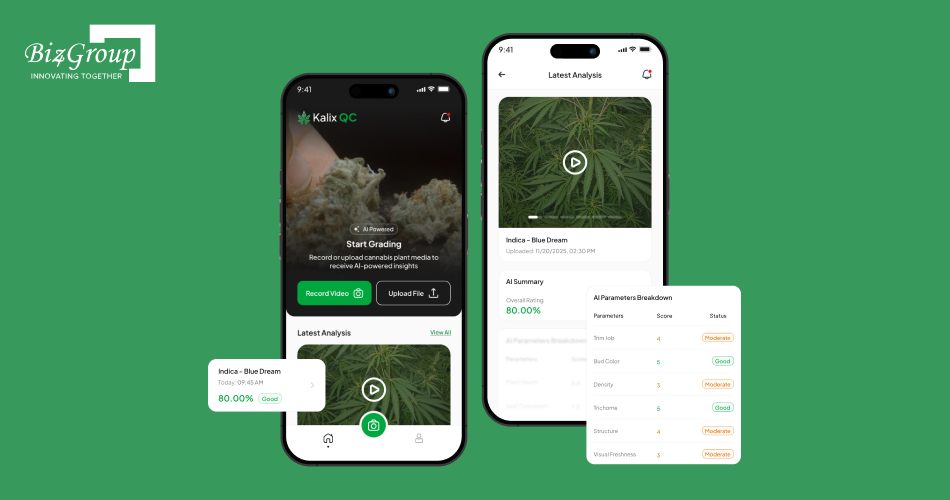
Kalix QC required more than a leading computer vision software development company. It needed to deliver results quickly and consistently as usage increased.
To support that goal, Biz4Group focused on:
The platform evaluates cannabis products using computer vision, image analysis, and machine learning models. As evaluation volume grows, performance becomes critical to maintaining a smooth user experience.
By designing the system with scalability in mind, the platform can process large volumes of visual data while maintaining practical response times for growers and buyers.
Projects like Kalix QC highlight an important reality... Building AI functionality is only one part of the equation. Scaling that functionality efficiently is what determines long-term success.
This is why organizations moving from prototypes to production environments often invest in robust enterprise AI solutions that can support growth without sacrificing performance.
Not every slow application has a scalability problem. But every growing application eventually reaches a point where performance becomes more of a business concern.
The next challenge is less visible than security risks or performance bottlenecks, yet it quietly affects product quality, development speed, and long-term sustainability.
Research shows that even small performance delays can reduce conversions and customer satisfaction. Fix bottlenecks before growth amplifies them.
Calculate My Scalability ROIReal vibe coding failures teach founders that production software still requires human oversight. Most documented incidents stemmed from unreviewed assumptions, not from AI tools being inherently unsafe.
Over the past two years, several high-profile incidents have demonstrated what can happen when AI-generated applications reach production environments without sufficient review.
The lesson is not that AI coding tools are dangerous. The lesson is that production software still requires human oversight.
|
Incident |
What Happened |
Founder Lesson |
|---|---|---|
|
Security researchers reported a vulnerability affecting applications generated through Lovable's platform. The issue involved access control logic that could expose data when implemented incorrectly. |
Access control should always be independently reviewed before launch. |
|
|
A widely discussed case involved an AI coding agent making destructive database changes that exceeded the intended scope of the task. |
Production data should never rely solely on AI-generated operational decisions. |
|
|
Veracode's 2026 GenAI Code Security Report found that 45% of AI-generated code samples contained security weaknesses aligned with OWASP risk categories. |
Functional code and secure code are not the same thing. |
|
|
Academic and industry studies have repeatedly shown that AI-generated code can introduce insecure patterns when prompts lack security requirements. |
Security requirements must be specified, reviewed, and tested explicitly. |
A common question founders ask is, "What are the actual documented risks of launching AI-generated apps?"
The answer is surprisingly consistent. Most failures do not originate from advanced cyberattacks.
They originate from assumptions.
Assumptions about permissions.
Assumptions about user
behavior.
Assumptions about operational safety.
Assumptions about security.
The companies that avoid these problems typically treat AI-generated code as a starting point rather than a final deliverable. That approach becomes even more important as products grow, attract investors, and serve larger customer bases.
For startups building customer-facing products, modern AI product development services increasingly focus on validating what AI creates rather than blindly trusting every generated component.
Although these incidents differ in technical details, they share one common theme.
The software worked... Until it encountered a situation nobody had planned for.
That insight leads to one of the most important decisions founders face after launch: Should you improve the existing codebase, or is it time to start over?
Refactor if the core product still delivers value and problems are isolated to specific modules. Rebuild only if the architecture itself can no longer support the business.
According to Forrester, 75% of technology leaders are expected to face moderate-to-severe technical debt challenges by 2026. This is forcing many startups to evaluate whether improving existing systems creates more value than replacing them.
|
Situation |
Refactor |
Rebuild |
|---|---|---|
|
Core business logic works correctly |
✓ |
|
|
Users actively depend on the product |
✓ |
|
|
Revenue is already being generated |
✓ |
|
|
Problems are isolated to specific modules |
✓ |
|
|
Architecture remains understandable |
✓ |
|
|
Most workflows perform as expected |
✓ |
|
|
Large portions of the application require redesign |
|
✓ |
|
Critical systems cannot support business goals |
|
✓ |
|
Multiple core workflows need replacement |
|
✓ |
|
Development has become significantly slower over time |
|
✓ |
|
New developers struggle to understand system structure |
|
✓ |
|
Product direction has fundamentally changed |
|
✓ |
|
Question |
If Yes |
|---|---|
|
Does the application still deliver value to users? |
Lean toward refactoring |
|
Can the biggest issues be isolated to specific areas? |
Lean toward refactoring |
|
Would rebuilding delay growth for months? |
Lean toward refactoring |
|
Would fixing one area require rewriting multiple others? |
Lean toward rebuilding |
|
Has the product evolved beyond its original architecture? |
Lean toward rebuilding |
|
Are development costs rising without meaningful progress? |
Lean toward rebuilding |
|
Scenario |
Typical Recommendation |
|---|---|
|
Early-stage SaaS with targeted issues |
Refactor |
|
Growing product with stable customer base |
Refactor |
|
Startup preparing for funding diligence |
Refactor first, rebuild only if necessary |
|
Product with widespread architectural limitations |
Rebuild |
|
Platform undergoing major business transformation |
Rebuild |
A founder recently asked, "I want to hire a developer to fix my AI-generated app, but I don't know whether I should pay for improvements or start from scratch."
That is exactly the point where objective technical evaluation becomes valuable.
The most expensive mistake is often choosing a rebuild when a targeted refactor would have solved the problem.
The second most expensive mistake is continuing to patch a system that has already outgrown its foundation.
For founders facing this decision, it often helps to bring in experienced engineers before committing significant resources. Many startups choose to hire AI developers specifically to evaluate the codebase, estimate remediation effort, and determine whether the existing product can support future growth.
If the application still supports the business, customers still receive value, and improvements can be isolated to specific areas, refactoring usually provides the fastest path forward.
If the foundation itself prevents the business from moving forward, rebuilding becomes the more strategic option.
The challenge is knowing which situation you're actually in.
A production-ready AI app requires documented user journeys, defined data governance, mapped workflows, reviewed dependencies, and clear team ownership... not just working features.
A common misconception is that production readiness happens automatically after launch. It doesn't.
Production readiness is a deliberate process of preparing software for sustained business
use.
For founders asking, "How do I know if my AI-built app is production-ready?", the answer is surprisingly straightforward.
The following checklist provides a practical framework for evaluating readiness before problems become expensive.
|
Step |
What to Verify |
Why It Matters |
|---|---|---|
|
1 |
User journeys are documented and validated |
Reduces unexpected customer friction |
|
2 |
Data ownership and governance are clearly defined |
Prevents operational confusion |
|
3 |
Critical business workflows are mapped end-to-end |
Ensures consistency across processes |
|
4 |
Third-party dependencies are reviewed regularly |
Reduces dependency-related disruptions |
|
5 |
Deployment procedures are documented |
Improves operational stability |
|
6 |
User feedback loops are established |
Helps identify issues early |
|
7 |
Internal team ownership is clearly assigned |
Prevents accountability gaps |
|
8 |
Growth assumptions are documented and reviewed |
Supports long-term planning |
|
9 |
Change management processes exist |
Reduces unintended disruptions |
|
10 |
Future roadmap requirements align with current architecture |
Prevents premature limitations |
There is no magic number.
However, applications that struggle after launch often have gaps across multiple areas of operational readiness.
A simple self-assessment can help.
|
Readiness Score |
Interpretation |
|---|---|
|
8-10 completed |
Strong production foundation |
|
5-7 completed |
Moderate risk requiring attention |
|
Below 5 completed |
Significant production readiness concerns |
Decision makers often think, "What specific things is the demo version missing that a production-ready app requires?"
In many cases, the missing pieces are not features. They are processes.
A demo proves an idea
works. Production readiness proves a business can depend on it.
Every startup wants to move quickly.
The challenge is maintaining momentum without creating
operational blind spots.
A structured readiness review helps founders evaluate their application from a business perspective rather than purely a development perspective.
As products evolve and connect with more platforms, services, and workflows, many organizations invest in specialized AI integration services to ensure those systems operate cohesively and support long-term growth objectives.
The next logical question is how do experienced teams evaluate all of these areas and identify what needs attention first?
A single blind spot can delay funding, impact customer trust, or create costly rework later. Let's find out where your app scores before someone else does.
Call an AI Solutions ExpertA professional AI codebase audit evaluates whether the application can support the company's next stage of growth, covering architecture, security, dependencies, data flow, and documentation.
Many founders assume a code audit is simply a developer looking through files and pointing out bugs. A professional audit goes much deeper.
Its purpose is to answer one critical business question... Can this application support the company's next stage of growth?
This is particularly important for founders facing investor scrutiny, enterprise sales discussions, acquisitions, leadership transitions, or rapid customer growth.
One of the most common user queries on this topic is: "What do expert developers usually find when
they audit an AI-built app?"
The answer varies by application, but the process itself is
surprisingly structured.
|
Audit Area |
Key Objective |
|---|---|
|
Architecture review |
Determine whether the system can support future business goals |
|
Code quality assessment |
Evaluate maintainability and consistency |
|
Dependency review |
Identify outdated or unnecessary components |
|
Data flow analysis |
Understand how information moves across the platform |
|
Infrastructure evaluation |
Assess operational readiness |
|
AI workflow review |
Examine model integrations and AI-related dependencies |
|
Documentation assessment |
Measure knowledge transfer and maintainability |
|
Development process review |
Identify workflow and delivery risks |
Notice what is missing from this list.
An audit is not focused on adding features. It is focused on reducing uncertainty.
A useful audit should provide clear business outcomes, not technical jargon.
Most founders want answers to questions such as:
A quality audit helps create that roadmap.
While every application is different, findings often fall into three categories.
|
Finding Type |
Typical Outcome |
|---|---|
|
Low-risk findings |
Minor improvements and cleanup opportunities |
|
Medium-risk findings |
Areas that could slow future growth |
|
High-risk findings |
Issues requiring near-term action before scaling |
The goal is prioritization.
Founders rarely need to fix everything at once. They need to know what matters most.
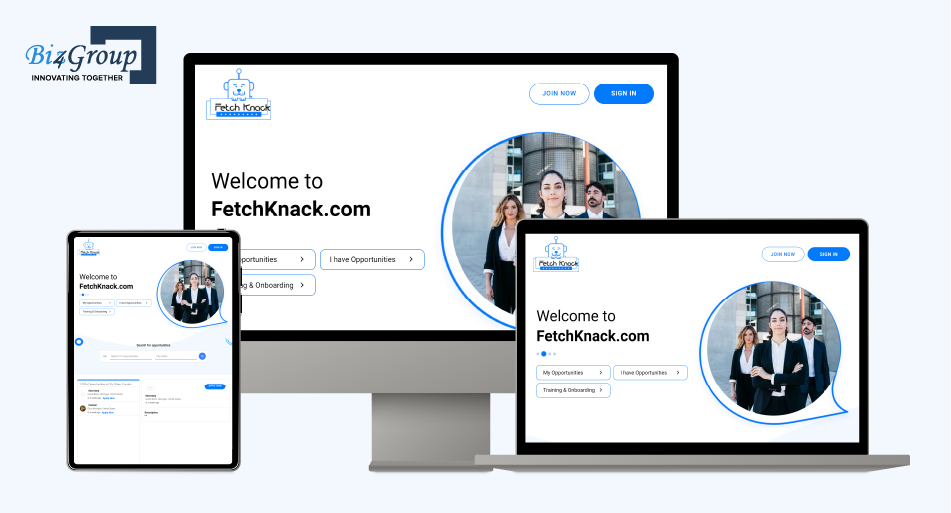
One example of this mindset can be seen in FetchKnack, an AI-powered platform developed by Biz4Group. The project required careful coordination between AI capabilities, workflow automation, user interactions, and business operations.
To ensure long-term maintainability and scalability, our team focused on:
Projects like FetchKnack reinforce an important lesson... The true challenge is rarely building the first version. The challenge is ensuring the platform remains understandable, adaptable, and scalable as business requirements evolve.
That same philosophy guides every audit engagement.
AI-generated software is becoming increasingly sophisticated. Many startups now rely on systems built partially or entirely through AI-assisted development.
As a result, founders are seeking greater visibility into how those systems operate and whether they can support future business objectives.
This is one reason companies often partner with an agentic AI development company when managing more autonomous AI-driven workflows and decision-making systems.
A professional audit does not exist to criticize what has been built. It exists to provide clarity. The outcome should be a prioritized understanding of what works, what needs attention, and what steps will create the strongest path forward.
For many founders, that clarity becomes the difference between guessing and making informed decisions about the future of their product.
Building an AI-powered product is one challenge. Making sure it remains secure, scalable, maintainable, and ready for growth is another.
That is where Biz4Group LLC helps.
For more than two decades, we've partnered with startups, founders, and enterprises across the USA to build, improve, and scale digital products. Today, that expertise extends to helping businesses overcome complex vibe coding challenges and confidently move from AI-generated prototypes to production-ready applications.
|
What Founders Need |
What Biz4Group Delivers |
|---|---|
|
Clarity on hidden risks |
Comprehensive AI codebase assessments |
|
Confidence before fundraising |
Technical due diligence support |
|
A practical action plan |
Prioritized remediation roadmaps |
|
Long-term scalability |
Architecture and growth planning |
|
Reliable AI implementation |
Production-focused engineering expertise |
Unlike many firms that focus solely on development, we focus on outcomes.
Work with an AI-generated MVP, an enterprise platform, or a rapidly growing SaaS product, our team helps identify what needs attention, what can wait, and what creates the highest business impact.
As a trusted AI development company, we bring hands-on experience building complex AI-powered products across industries. Businesses looking to accelerate innovation partner with us to ensure their products can support real-world users, operational demands, and future growth.
If you're preparing for growth, fundraising, enterprise adoption, or a technical due diligence review, Biz4Group can help you understand exactly what needs to be fixed and what is already working well.
Book a consultation with our team and get a clear roadmap to transform your AI-built application into a secure, scalable, and production-ready product.
Vibe coding has changed software development forever. Founders can now build and launch products faster than ever before, validate ideas quickly, and bring innovation to market without large engineering teams. However, as this guide has shown, many common vibe coding challenges begin after launch when real users, growing data volumes, investor scrutiny, and business-critical operations expose weaknesses that never appeared during development.
The good news is that most AI-generated code issues in production are fixable. Irrespective of whether you're dealing with vibe coding scalability issues, security concerns, operational gaps, or wondering why AI-built apps fail after deployment, the solution is rarely guesswork. It starts with understanding where the risks exist, prioritizing what matters most, and creating a structured plan to move from prototype to production-ready software.
At Biz4Group, a leading USA-based software development company, we've helped startups and enterprises build, scale, and optimize complex digital products for over 20 years. We understand the challenges founders face because we've worked alongside businesses navigating rapid growth, technical due diligence, AI adoption, and production-scale software development.
If you've ever asked yourself, "How do I know if my AI-built app is ready for real customers?", now is the time to find out.
Your app already proved the idea. Let's make sure it can handle the future. Connect with Biz4Group and get a clear roadmap to turn your AI-built product into a secure, scalable, and production-ready business asset.
In most cases, investors are not concerned about whether AI was used to build the product. They care about whether the application is reliable, maintainable, secure, and capable of supporting growth. During technical due diligence, reviewers typically focus on code quality, documentation, architecture, and operational readiness rather than the tools used during development.
Enterprise buyers rarely reject software because AI was involved in development. Their concern is whether the product meets their security, compliance, governance, and reliability requirements. If the application can satisfy those standards, the development methodology becomes far less important than the business outcomes it delivers.
Yes, many AI-generated applications can support large user bases when they are properly engineered and optimized. The determining factor is not whether AI created the code, but whether the underlying architecture, infrastructure, and operational processes were designed to handle growth efficiently.
Industries handling sensitive information typically face greater scrutiny. Healthcare, fintech, legal technology, insurance, cybersecurity, and enterprise SaaS platforms often have stricter requirements because they manage regulated data, financial transactions, or mission-critical business operations.
Start by documenting the business problems you are experiencing rather than requesting specific technical fixes. Examples include slow performance, user complaints, onboarding friction, maintenance challenges, or investor concerns. This helps developers focus on solving the root cause rather than addressing symptoms individually.
Absolutely. Many startups use AI coding tools to accelerate development and validate ideas faster. Success depends on what happens after launch. Teams that invest in continuous improvement, product strategy, operational readiness, and technical scalability are often able to transform AI-built prototypes into sustainable, revenue-generating businesses.

Our website require some cookies to function properly. Read our privacy policy to know more.