 Location :
Orlando, FL, USA
Location :
Orlando, FL, USA +1 (407) 714-1616
 info@biz4group.com

- A multilingual IVR system for real estate companies in USA helps teams capture more inbound calls by supporting customers in their preferred language.
- Language barriers often lead to dropped calls, slower follow ups, and lost trust, especially in diverse markets where callers expect basic language access.
- Multilingual IVR systems for real estate improve lead quality by collecting clearer intent before calls reach agents, reducing repeat questions and delays.
- Rolling out multilingual IVR works best when done gradually, starting with high-demand languages and testing each call flow carefully.
- Technical consistency across languages is critical to avoid broken call flows and uneven customer experiences.
- Real estate multilingual IVR solutions are important for scaling natural conversations without adding operational complexity.
The US real estate market serves people who speak many different languages. In places like Los Angeles, New York, Miami, Houston, and Chicago, a large share of buyers, renters, and tenants prefer to start conversations in a language other than English. In this context, a multilingual IVR system for real estate companies in USA becomes a practical requirement for handling inbound calls without losing interest at the first touchpoint.
Language affects whether a caller stays on the line. Many prospects understand English but feel more confident discussing property details, pricing, or leasing questions in their primary language. When automated call handling only supports English, callers often hang up before leaving any information. These missed calls rarely get tracked, but they reduce lead volume and slow down overall deal flow.
This guide covers where multilingual IVR systems for real estate make a direct difference. By offering clear language options at the start of a call, real estate teams capture more inquiries, collect usable intent, and route calls correctly without creating confusion.
Language access also shapes how a brand is perceived. In neighborhoods where Spanish, Mandarin, or Vietnamese are commonly spoken, accessibility builds familiarity and trust. Real estate multilingual IVR solutions help deliver the same experience during office hours, after hours, and peak call periods without relying entirely on live agents.
As part of real estate AI software development projects, multilingual call handling removes friction at the earliest stage of engagement. For an AI development company working with brokers, developers, or property managers, the takeaway is simple. The more systems reflect how people actually communicate, lesser opportunities are lost before the conversation even begins.
How Language Barriers Affect Multilingual IVR for Real Estate Customer Service?
Language barriers create problems the moment a call begins. Many times, unfortunately, a multilingual IVR system for real estate companies in USA becomes important only after missed calls, fewer leads, or slow follow ups gather. When callers cannot easily understand or respond to an automated system, they often disconnect before any real interaction happens.
1. Lost Leads at the First Touchpoint
Many callers hang up when they do not understand the first menu or prompt. This usually happens during after-hours or busy periods when agents are unavailable. Without real estate IVR systems with multiple languages, these calls never turn into leads.
- Example: A renter calls in the evening to ask about availability. The English-only menu feels confusing, and the caller disconnects without leaving details.
2. Lower Trust From the Start
Real estate involves important decisions at many levels. If the first interaction feels hard to follow, trust drops quickly. Even callers who speak a bit of English may feel unsure when discussing prices, leases, or timelines in a second language.
- Example: A buyer understands basic English but struggles with automated prompts realted to financing. The call feels uncomfortable, and confidence in the company or business drops.
3. Slower Deal Cycles
When language gets in the way, information becomes difficult to convey and conversations are often left incomplete. Agents must call back, ask the same questions again, or clarify basic details. This slows down leasing, buying, and property management processes.
- Example: A caller reports a maintenance issue but cannot explain it clearly. The agent has to follow up later, which delays resolution.
4. Poor First Impressions
The first call shapes the reputation of a real estate company for the caller. If the experience feels confusing or rushed, many prospects do not call again, even if the listings are a good fit.
- Example: A prospect calls to ask about units but leaves frustrated. They contact another property manager instead.
As real estate teams use AI automation services to improve communication, language support remains a non-negotiable. In practice, multilingual IVR for real estate customer service helps more callers stay on the line, share clear intent, and move forward without unnecessary delays.
Stop Losing Calls Before They Start
See how a multilingual IVR system for real estate companies in USA helps capture inquiries the moment they come in.
Explore Multilingual IVR OptionsHow Multilingual IVR Systems for Real Estate Work Beyond Translation
A multilingual IVR system for real estate companies in USA does more than translate English prompts into other languages. It controls how calls are understood, routed, and completed while keeping the experience simple and clear for every caller. The focus is on capturing intent correctly, not just offering multiple language options.
| Capability | What It Does | Why It Matters in Real Estate |
|---|---|---|
| Language Detection | Identifies the caller's preferred language via basic speech recognition | Helps callers reach the right menu without confusion |
| Intent Consistency Across Languages | Uses the same call logic and routing rules for all languages | Ensures property inquiries and support requests follow the same path |
| Cultural Phrasing Differences | Adjusts wording so prompts sound natural in each language | Makes questions about pricing, availability, and next steps easier to understand |
Well-designed multilingual voice response systems for real estate keep the call structure consistent, even when the language changes. This consistency becomes very important when IVR connects with scheduling tools, lead forms, or customer records. Many teams make use of AI integration services to keep existing workflows intact.
Google translate taught us that basic translation mostly leads to confusion. Words, tone, context, and sentence structure vary across languages, especially when discussing property details. Ongoing AI model development helps improve recognition accuracy and keeps conversations natural as call volume grows.
IVR solutions for multilingual real estate support help teams handle more calls without making operations harder. By focusing on intent, clarity, and consistency, real estate companies can support multiple languages without affecting customer experience.
Business Benefits of Multilingual IVR Systems for Real Estate
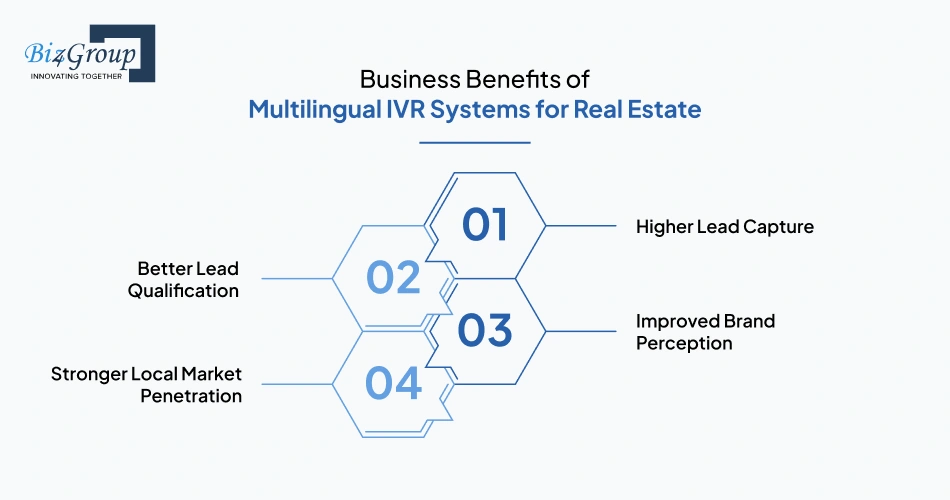
A multilingual IVR system for real estate companies in USA helps business by improving how inbound calls are treated. When callers can interact in their preferred language, more calls are completed, more details are captured, and agents carry conversations with better information. The result is higher efficiency, stronger engagement, and more consistent results across sales and support workflows. Here are some of the top benefits to consider:
1. Higher Lead Capture
Callers are more likely to stay on the line when they clearly understand the options presented to them. Language support reduces early hang ups, especially during evenings and busy periods, which helps more inquiries turn into recorded leads.
2. Better Lead Qualification
Multilingual call automation for real estate businesses makes it easier for callers to explain what they are looking for. Details such as property type, budget range, and move in timeline are captured more accurately, and agents start conversations with better context.
3. Improved Brand Perception
When a company supports multiple languages via AI in real estate development, it feels easy to approach and organized. Callers feel confident that their needs will be understood, and hence they come back for more.
4. Stronger Local Market Penetration
Serving people in their preferred language helps real estate companies connect more easily with local communities. An AI powered multilingual IVR for real estate supports this reach without adding more resources, boosting business app development using AI.
Overall, multilingual IVR improves how calls are handled, how information is collected, and how the business is perceived. These benefits directly support better engagement and stronger results in competitive real estate markets.
Turn Language Access Into Better Lead Quality
Use multilingual IVR systems for real estate to collect clearer intent before calls reach your agents.
Improve Call QualificationTop Use Cases for Multilingual IVR Solutions for Real Estate Call Centers
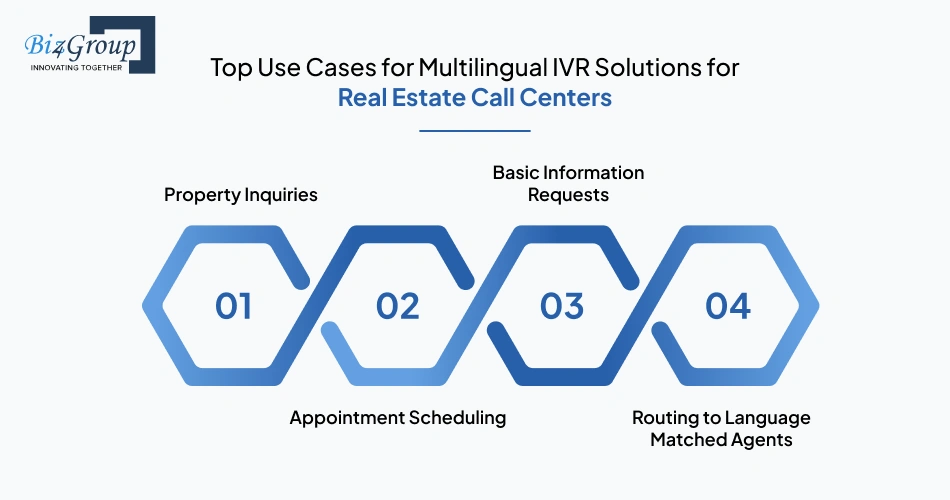
Real estate call centers manage a high volume of inbound calls every day, often from people who prefer different languages. A multilingual IVR system for real estate companies in USA helps manage these calls clearly, so callers understand their options and stay engaged instead of dropping off early.
1. Property Inquiries
Property inquiries make up a large share of inbound calls. Callers usually want quick details about availability, pricing, or location, and language confusion can prevent those questions from being answered properly. This is where real estate IVR solutions to serve diverse US communities help ensure that basic property information is shared clearly before escalation happens.
- Example: A buyer calls about a listing, selects their preferred language, and hears basic property details before the call continues.
2. Appointment Scheduling
Scheduling tours and site visits demands clear steps and confirmation. When language support is built into IVR, callers can request appointments without repeated calls or misunderstandings, keeping the process simple for both parties.
- Example: A renter schedules a viewing through AI IVR prompts and receives confirmation without speaking to a human agent.
3. Basic Information Requests
Many callers contact call centers with simple questions that include asking for office hours or application steps. Automating these requests reduces human agent workload and keeps callers from waiting unnecessarily, especially in setups powered by enterprise AI solutions.
- Example: A caller asks about rental application requirements and receives clear guidance through AI IVR prompts.
4. Routing to Language Matched Agents
Some calls, after all, require human support. Identifying language preference early helps route calls to the right agent, reducing repeated explanations and misunderstandings. This routing logic is often planned when teams build real estate AI software to support scalable operations.
- Example: A tenant reports an issue and is connected to an agent who speaks their language, making the conversation easier.
These use cases highlight how call centers can scale efficiently without adding friction. When teams focus on structured automation and clarity, multilingual IVR solutions for real estate call centers support business growth while keeping communication smooth.
Technical and Operational Requirements of Real Estate IVR Systems with Multiple Languages
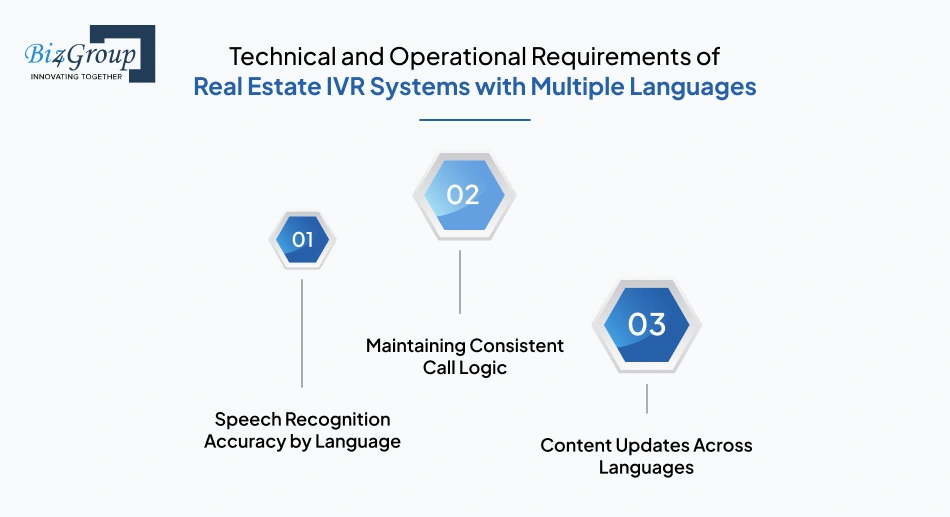
A multilingual IVR system for real estate companies in USA needs to work reliably before it can be useful. Supporting multiple languages means the system must understand callers clearly, follow the same steps every time, and stay updated when information changes. If these basics are not handled well, the experience quickly breaks down.
1. Speech Recognition Accuracy by Language
The system must correctly understand what callers are saying in each supported language. Accents, speaking speed, and background noise can affect accuracy, so regular testing is important. Some teams improve results by choosing to implement generative AI in real estate tools that help the system recognize speech more consistently.
2. Maintaining Consistent Call Logic
Every language should follow the same call path behind the scenes. Whether someone is asking about a property or requesting help, the routing and steps should not change based on language. This matters most when using multilingual IVR systems to scale real estate operations and handle large call volumes.
3. Content Updates Across Languages
When prompts or instructions change, updates must be made in all languages at the same time. This is especially important for multilingual IVR systems for property management companies, where incorrect information can cause confusion or delays. To keep updates aligned, some teams hire AI developers to manage changes more easily.
When teams plan carefully and build AI software with clear rules for updates and call flow, multilingual IVR becomes easier to manage and more dependable. Clear speech recognition, consistent logic, and synced content help support more callers without adding complexity.
Design Call Flows That Work in Every Language
Build consistent, reliable experiences with real estate multilingual IVR solutions tailored to your markets.
Plan My IVR Call FlowsCommon Pitfalls in Multilingual IVR Solutions for Real Estate
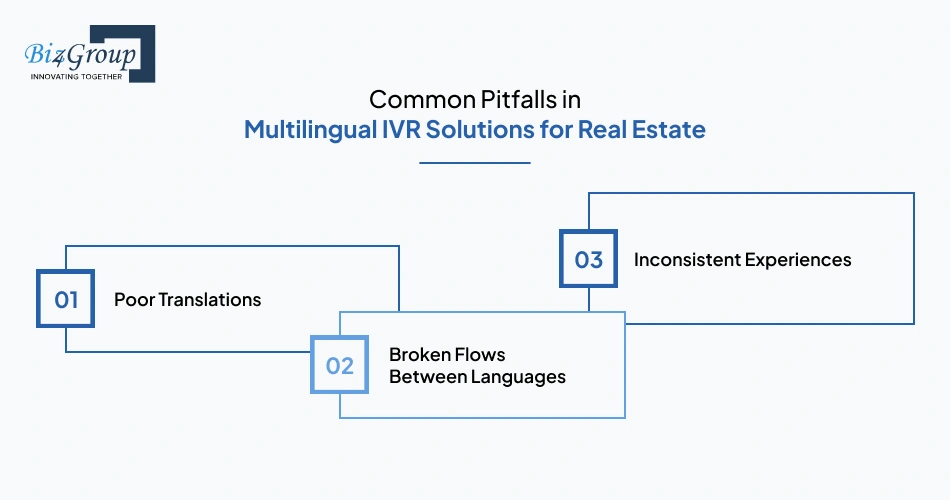
A multilingual IVR system for real estate companies in USA only works well when it is set up with care. Many problems appear when language support is added quickly without enough planning. These issues may seem small at first, but they often lead to confused callers and missed calls.
| Common Pitfall | What Happens | Why It Matters |
|---|---|---|
| Poor Translations | Prompts are translated directly without adjusting wording | Callers struggle to understand options |
| Broken Flows Between Languages | Call steps change when a different language is selected | Calls drop or get routed incorrectly |
| Inconsistent Experiences | Some languages have fewer options or longer waits | Service feels uneven and unreliable |
When these problems exist, callers lose confidence and often drop the call. Direct translations can sound weird, broken flows interrupt calls, and uneven experiences make the system feel unreliable. These issues become more noticeable when teams try to integrate AI into an app without fixing basic language flow and structure.
Understanding how to choose multilingual IVR solutions for real estate helps teams avoid these common mistakes. Clear language, stable call flows, and the same experience in every language keep callers engaged and satisfied.
How to Choose Multilingual IVR Solutions for Real Estate?
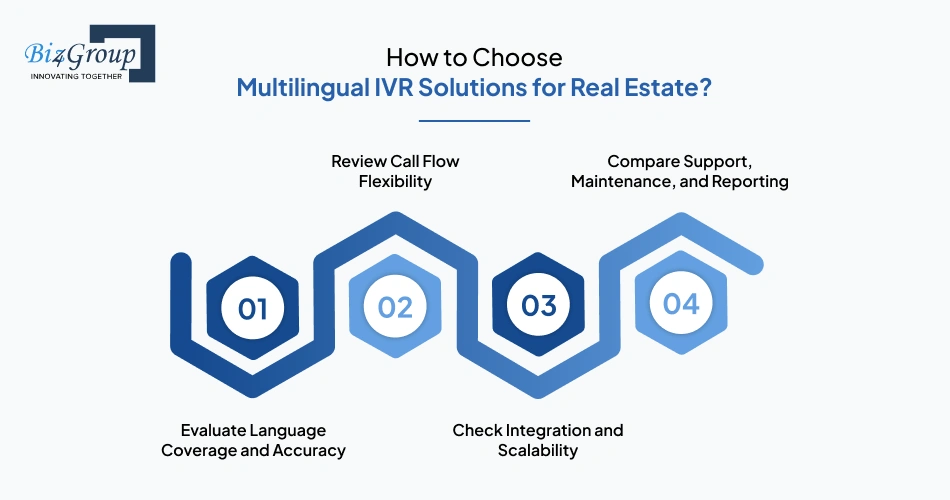
Choosing the right multilingual IVR system for real estate companies in USA requires a lot of focused effort. The eventual goal is to find a system that fits your call volume, supports your customer base, and works smoothly with your existing tools. A careful evaluation helps avoid costly changes later.
Here's all you need to know about it:
1. Evaluate Language Coverage and Accuracy
Start by reviewing which languages are supported and how well AI speech recognition performs in each one. Accuracy matters a lot more than the number of languages offered, particularly in high call volume setups. Strong multilingual IVR systems for real estate should be tested for clarity, pronunciation, and caller understanding before rollout.
2. Review Call Flow Flexibility
The system should allow you to design and update call flows without breaking logic across languages. Property inquiries, scheduling, and support should follow consistent steps. Some business owners make use of generative AI to improve understanding of caller intent, but structure and routing clarity remain the foundation.
3. Check Integration and Scalability
Make sure the IVR connects easily with CRM systems, scheduling tools, and support platforms. If you plan to expand features later, the system should scale without major rebuilds. Teams exploring AI for real estate agents or planning how to use AI for real estate workflows should ensure the IVR supports those future integrations.
4. Compare Support, Maintenance, and Reporting
Ongoing updates and performance tracking are just as important as initial setup. The provider should offer clear reporting on call completion rates, language usage, and drop offs. Reliable real estate multilingual IVR solutions also make it easy to adjust prompts and routing rules as your business grows.
When implemented carefully, multilingual IVR for real estate customer service becomes a stable foundation for clear communication and consistent call handling across languages.
Scale Call Handling Without Adding Headcount
Learn how multilingual call automation for real estate businesses supports growth without operational strain.
See How Automation FitsHow to Roll Out Multilingual IVR Systems for Real Estate Without Disruption?
Rolling out a multilingual IVR system for real estate companies in USA can be easily done if carried out in a step-by-step manner. A simple rollout plan helps teams avoid call issues and keeps daily operations running while new languages are added.
1. Start With Top Languages
Begin with the languages most callers already use. This decision should be based on call data and location, not guesses. Starting with a small set makes it easier to fix issues early, similar to testing features in an AI conversation app before wider use.
2. Expand by Call Volume
After the first languages are stable, add more based on call volume. Focus on languages that appear often in inbound calls. This approach helps teams grow support gradually while keeping real estate IVR systems with multiple languages stable and easy to manage.
3. Test Language-Specific Flows
Each language flow should be tested on its own. Prompts, routing, and transfers must work the same way in every language. This careful testing approach reflects how teams review real estate AI apps ideas before rolling them out to users.
Wrapping Up Multilingual AI IVR Systems in USA
Real estate runs on conversations, and conversations start with being understood. In a market as linguistically diverse as the US, a multilingual IVR system for real estate companies in USA is a must have.
When language is handled well, fewer calls drop, more details are captured, and teams spend less time fixing misunderstandings. When it is handled poorly, opportunities disappear quietly. That is why multilingual IVR has become a standard part of modern real estate operations, sitting alongside AI consulting services that focus on building systems people can actually use.
So, if your call flows reflect how your customers speak, your business moves faster, feels more accessible, and wastes less effort at the very first step.
A gradual rollout reduces risk and confusion. When planned simply, multilingual voice response systems for real estate can be introduced without disrupting call handling or customer experience.
Talk to our team about designing a multilingual IVR that fits your real estate workflows.
FAQs
1. How many languages should a real estate company support in a multilingual IVR system?
There is no fixed number. Most real estate companies start with the top one or two non-English languages based on call data and local demographics, then expand as demand grows. The right number depends on where your properties are located and who is calling.
2. Can a multilingual IVR work alongside live agents who speak limited languages?
Yes. Multilingual IVR is often used to handle the first part of the call, capture intent, and route calls intelligently. If a language-matched agent is unavailable, the system can still collect details and schedule callbacks without losing the inquiry.
3. Does multilingual IVR replace the need for bilingual staff?
No. Multilingual IVR reduces pressure on staff but does not eliminate the need for human support. It handles repetitive and early-stage interactions so agents can focus on conversations that require judgment, negotiation, or empathy.
4. How long does it typically take to implement a multilingual IVR for real estate?
Implementation timelines vary based on the number of languages, call flows, and integrations. A basic rollout can be completed in weeks, while more complex setups with CRM and scheduling tools may take longer. Phased rollouts are common.
5. How do real estate companies measure success after adding multilingual IVR?
Common metrics include call completion rate, call abandonment rate by language, lead capture volume, and average handling time. Many teams also track language usage trends to guide future expansion.
6. Is multilingual IVR useful for smaller real estate teams or only large call centers?
Multilingual IVR is useful for teams of all sizes. Smaller teams benefit by avoiding missed calls and after-hours drop-offs, while larger teams benefit from reduced agent load and better call routing. The value comes from efficiency, not scale alone.
