Location :
Orlando, FL, USA
Location :
Orlando, FL, USA +1 (407) 714-1616
 info@biz4group.com


















Imagine a digital system that doesn’t wait for instructions but instead, understands your business goals, learns from real-time feedback, and takes independent actions to get the job done.
Read More

 AI Summary Powered by Biz4AI
What happens when an investor is racing against a 1031 exchange deadline, but key documents, property details, and stakeholder updates are scattered across emails and spreadsheets?
A missed detail can create costly uncertainty. An AI-powered platform can help bring those moving parts together by organizing exchange records, extracting information from documents, tracking deadlines, flagging gaps, and helping teams coordinate next steps.
The key is to build more than a chatbot. Reliable 1031 exchange platform needs structured transaction data, dependable deadline rules, secure integrations, and clear human oversight. AI can support research and routine administration, while qualified professionals remain responsible for tax advice and critical exchange decisions.
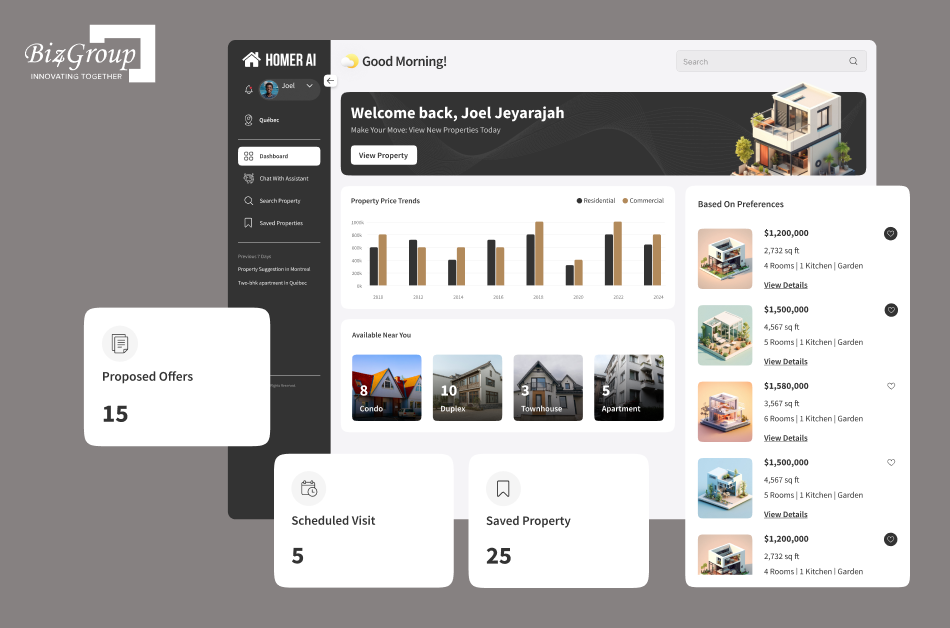
At Biz4Group LLC, our work in real estate AI solutions has shown us how much more helpful these tools become when they connect naturally with the way people search for and evaluate properties. Take our Homer AI, for example. It brings together conversational property discovery, personalized preferences, property information, and visit scheduling. That experience offers a useful lesson for a 1031 exchange platform too: AI needs to work hand in hand with reliable property and transaction data, connected systems, and the people responsible for making important decisions.
A 2026 survey by 1031 CORP. of 407 investors and industry professionals found that 74% of investors surveyed became repeat exchangers after their first exchange.
That makes repeatable, well-organized workflows especially relevant to consider when designing a platform.
Let's look at how to build one.
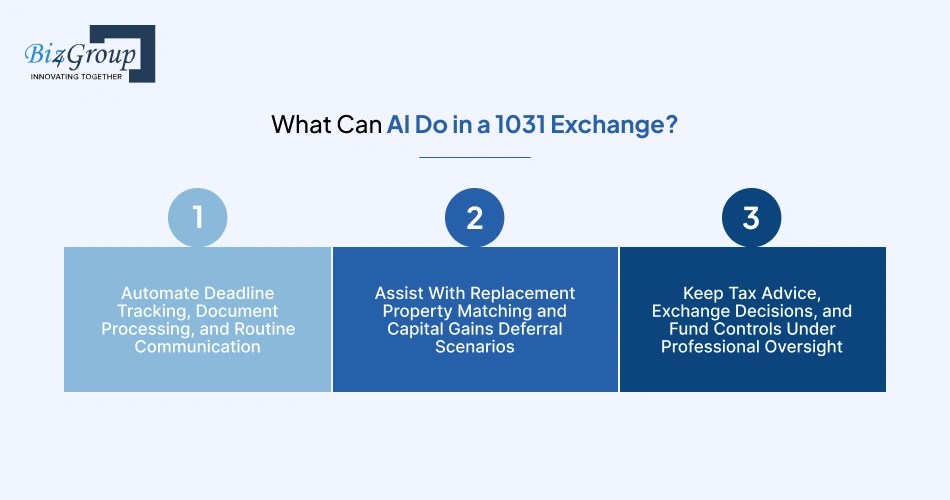
A 1031 exchange allows real estate investors to defer capital gains tax by exchanging qualifying investment or business property for like-kind real property, subject to IRS rules. An AI 1031 exchange platform can support that capital gains deferral process by helping teams track deadlines, organize documents, compare replacement properties, and coordinate next steps.
Think of AI as a helpful assistant throughout the exchange. It can reduce routine work and make important information easier to find, while rules-based calculations and qualified professionals remain responsible for tax-sensitive requirements and decisions.
Imagine opening an exchange file and quickly seeing key dates, documents received, missing information, and what needs attention next. That's the kind of practical support AI can bring to a capital gains deferral workflow.
It can help your team:
One important safeguard, don't rely on an LLM to calculate critical exchange deadlines on its own. Use a rules-based date calculator with verified transaction dates and applicable requirements. AI can explain the timeline and help with reminders, while the calculator keeps results consistent and auditable.
Choosing a replacement property is a key part of a 1031 exchange. An AI platform can help you compare options based on location, property type, budget, financing needs, and exchange timeline. It can also organize property details and compare preliminary financial scenarios, giving you and your advisors a clearer picture of the options.
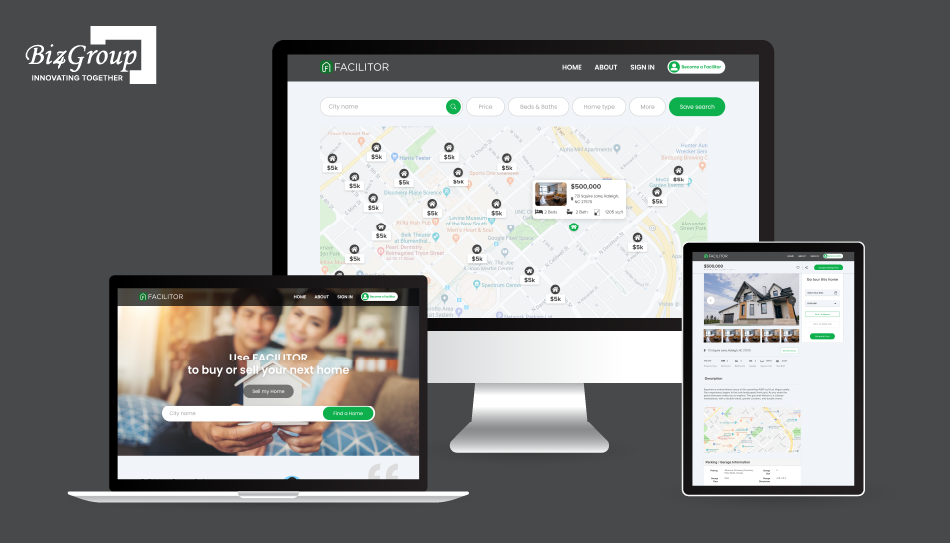
For example, Biz4Group's Facilitor brings property discovery and buyer-seller coordination together. Similar capabilities could help investors explore replacement properties and keep related information organized during an exchange.
AI can also help present different capital gains deferral scenarios using verified figures and clearly stated assumptions. But remember, a property match isn't a guarantee of 1031 eligibility, and a scenario isn't a promise of tax treatment. Qualified professionals still need to review the property, transaction structure, and relevant tax requirements.
So, where should AI step back? When a decision could affect whether an exchange qualifies, change an investor's tax position, or involve control of exchange funds, the platform should require appropriate professional review and authorization.
A practical way to divide responsibilities is:
This distinction matters for capital gains deferral. Section 1031 has specific eligibility and timing requirements, and receiving cash or other non-like-kind property can affect the gain recognized. The platform should help people work through those requirements, not treat an AI response as the final authority.
AI can make an AI 1031 exchange platform more useful by supporting document handling, property comparisons, and everyday coordination. Keeping calculations traceable and consequential decisions under professional oversight helps the platform support capital gains deferral workflows without overstepping its role.
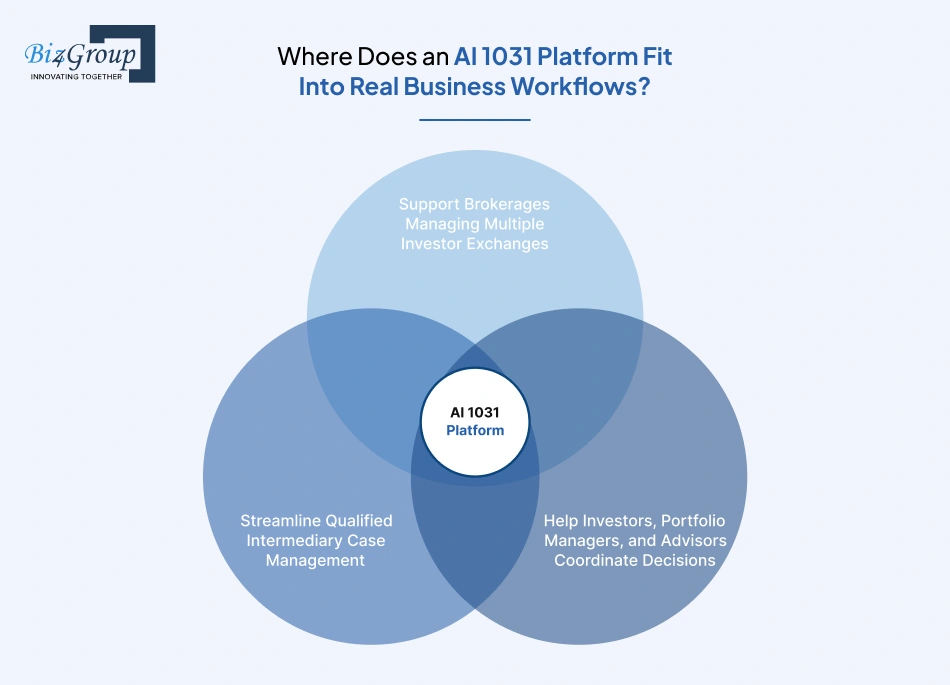
An AI 1031 exchange platform fits into the daily work of investors, brokerages, qualified intermediaries (QIs), and advisors. It helps them manage exchange records, organize documents, track deadlines, and coordinate tasks. Everyone can see what needs attention and keep the exchange moving.
For brokerages, 1031 exchange automation can help teams:
For QIs, the platform can simplify 1031 exchange case management by helping staff:
AI supports administration, QIs retain responsibility for their exchange duties and fund controls.
Investors and advisors can use AI-powered property matching and scenario analysis to:
The platform helps coordinate decisions, but tax and legal conclusions still require appropriate professional review.
Your team has enough deadlines to chase. Let's explore how an AI 1031 exchange platform could take some of the busywork off their plate.
Let's Talk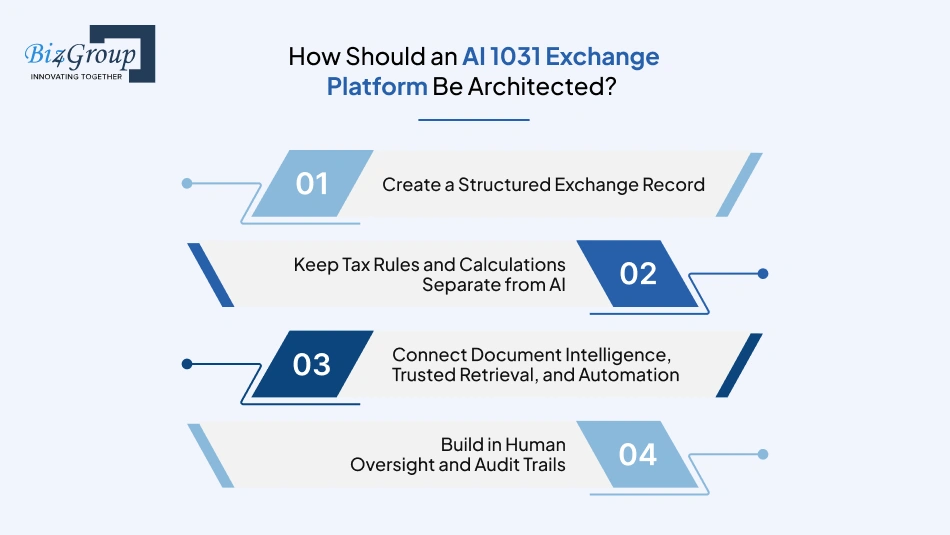
Build your AI 1031 exchange platform around five connected layers, structured exchange data, rules-based calculations, AI services, workflow automation, and human oversight. Together, they keep information verifiable, automate routine tasks, and help prevent AI from making decisions beyond its role.
Start with one central record for each exchange. Include:
Use this record to power dashboards, reminders, and AI-assisted summaries.
Use a deterministic rules engine for deadline logic and financial calculations. AI can explain results and flag questions, but it shouldn't be the authority for critical calculations.
Bring these capabilities together to reduce manual work:
Make review and accountability part of the architecture from the start.
The key takeaway: Keep exchange data and calculations reliable, use AI to assist with documents and coordination, and preserve human control over consequential decisions.
An AI 1031 exchange platform needs features that keep each exchange organized, deadlines visible, documents accessible, and stakeholders coordinated. Start with the essential transaction workflows, then add AI assistance where it reduces manual work without replacing professional review.
|
Core feature |
What it should do |
Where AI helps |
|---|---|---|
|
Exchange intake and investor profiles |
Capture taxpayer and entity details, property information, transaction dates, and exchange requirements. |
Extract information from forms and flag missing or inconsistent fields. |
|
Exchange dashboard and deadline tracking |
Show exchange status, upcoming deadlines, task owners, and outstanding actions. |
Generate reminders, summarize progress, and flag overdue tasks. Deadline calculations should use verified dates and rules-based logic. |
|
Document management |
Store, classify, search, and track versions of exchange agreements, closing statements, and identification records. |
Categorize documents, extract key details, and highlight items that need review. |
|
Financial calculations and scenario tracking |
Record transaction figures and provide traceable calculations and scenario comparisons. |
Explain calculation outputs and help users compare scenarios. Use tested formulas for the calculations themselves. |
|
Deferred gain and basis ledger |
Carry deferred gain and adjusted basis forward across successive exchanges. |
Explain the ledger in plain language and flag missing basis information. |
|
Boot and recognized-gain calculation |
Calculate boot, recognized gain, and deferred gain using documented transaction inputs. |
Explain the results, while tested formulas handle the calculations. |
|
Form 8824 data preparation |
Assemble exchange figures and supporting information for CPA review. |
Extract figures from closing statements and flag missing or inconsistent information. |
|
Replacement property management |
Maintain property details, investor criteria, identification lists, and the status of potential acquisitions. |
Organize property information, compare options against stated criteria, and flag missing data. |
|
Task and communication management |
Assign responsibilities, track follow-ups, and maintain a record of stakeholder communication. |
Draft routine updates, summarize conversations, and suggest next actions for staff approval. |
|
Stakeholder portals and access controls |
Give investors, brokers, QIs, and advisors access to information relevant to their roles. |
Help users find information and prepare summaries within their permitted access. |
These features form the platform's operational foundation. Once they work reliably, advanced AI capabilities can build on top of them rather than operating on disconnected or unverified information.
Advanced AI features can help a 1031 exchange platform do more than store records and send reminders. They can help users compare replacement properties, spot missing information, research exchange questions, and coordinate routine tasks. The goal is to make workflows easier to manage while keeping calculations verifiable and important decisions subject to professional review.
|
Advanced AI feature |
How it improves the exchange workflow |
Important guardrail |
|---|---|---|
|
AI replacement property matching |
Compare properties against investor preferences, budget, location, financing needs, and transaction timelines. |
Treat matches as options to investigate, not confirmation of tax eligibility or suitability. |
|
Document and risk detection |
Identify missing documents, inconsistent transaction details, and information that may need attention. |
Flag potential issues for review rather than declaring an exchange invalid. |
|
Tax and regulatory research assistant |
Help users find and understand relevant tax guidance using verified sources, with citations they can inspect. |
Keep answers grounded in current authoritative materials and route tax advice questions to qualified professionals. |
|
Deadline-aware AI agents |
Help coordinate reminders, follow-ups, task assignments, and routine stakeholder updates based on exchange status. |
Use verified dates and rules-based calculations; require human approval for consequential actions. |
|
Scenario analysis assistant |
Help users compare possible transaction structures, purchase prices, financing assumptions, and preliminary financial outcomes. |
Clearly show assumptions and use tested calculations rather than relying on generated numbers. |
These capabilities can make AI 1031 exchange platform more useful by reducing manual coordination and helping people focus on the decisions that need their attention. Start with one or two high-value workflows, validate their accuracy, and expand only when the controls and review process are working reliably.
Choose a stack that keeps exchange data secure, calculations reliable, documents searchable, and AI services easy to test and maintain. The exact tools depend on your team and existing systems, but these are practical options for a custom AI 1031 exchange platform.
|
Layer |
Suggested technologies |
Why it fits |
|---|---|---|
|
Frontend |
React, Next.js, TypeScript |
Build investor portals, exchange dashboards, document views, and staff workspaces. |
|
Backend and APIs |
Python with FastAPI, or Node.js with NestJS |
Handle exchange workflows, business rules, integrations, and AI service calls. |
|
Primary database |
PostgreSQL |
Store structured exchange records, properties, deadlines, tasks, permissions, and approvals. |
|
Document storage |
Amazon S3 or Azure Blob Storage |
Store exchange documents with access controls, versioning, and retention policies. |
|
Document processing |
AWS Textract, Azure AI Document Intelligence, or Google Document AI |
Extract text and fields from closing statements, agreements, and other uploaded documents. |
|
AI and language models |
OpenAI API or another approved model provider |
Support document summaries, information extraction, grounded Q&A, and routine message drafting. |
|
Search and retrieval |
PostgreSQL full-text search with pgvector, or a dedicated search service |
Retrieve relevant documents and approved reference material for AI-assisted answers. |
|
Rules and calculations |
Python or TypeScript domain services with versioned rules and automated tests |
Calculate deadlines and financial outputs deterministically, with traceable inputs and results. |
|
Background jobs and notifications |
Celery with Redis, or a managed queue service |
Run document processing, scheduled reminders, task updates, and retryable jobs outside user requests. |
|
Identity and access control |
Auth0, Amazon Cognito, or Microsoft Entra ID |
Support authentication, role-based access, and controlled access for investors, brokers, QIs, and advisors. |
|
Cloud and deployment |
AWS, Microsoft Azure, or Google Cloud |
Host the application, databases, storage, networking, and operational services. Choose based on existing expertise and compliance needs. |
|
Monitoring and testing |
OpenTelemetry, cloud monitoring tools, unit and integration tests, AI evaluation datasets |
Track reliability, investigate errors, and test calculations, permissions, retrieval quality, and AI behavior. |
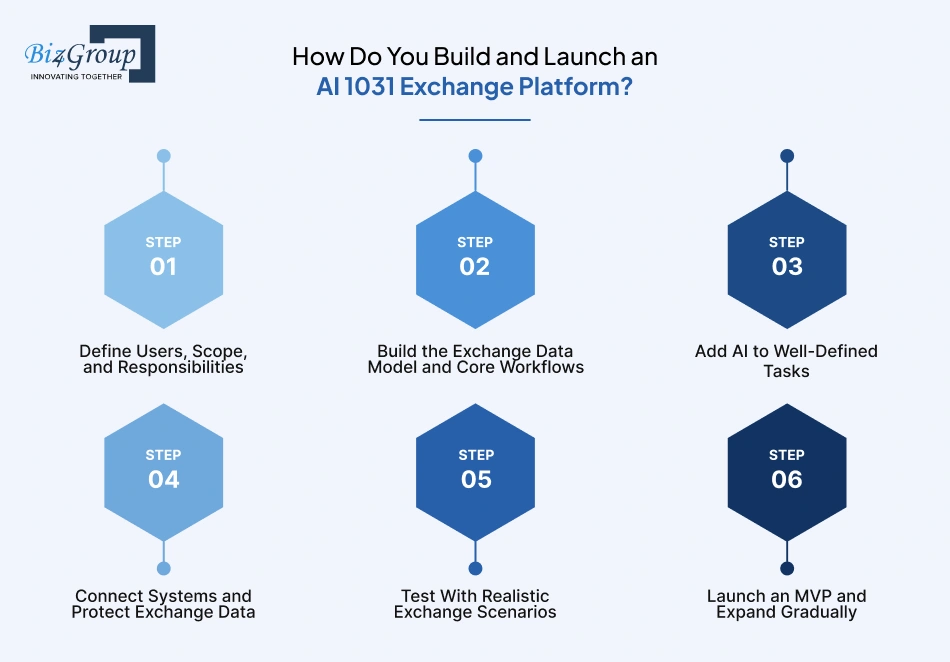
To build and launch an AI 1031 exchange platform, start with the exchange workflow, establish reliable data and deadline rules, add AI to specific tasks, and test the system with exchange professionals before expanding. A phased rollout helps you validate the platform without automating high-stakes decisions too early.
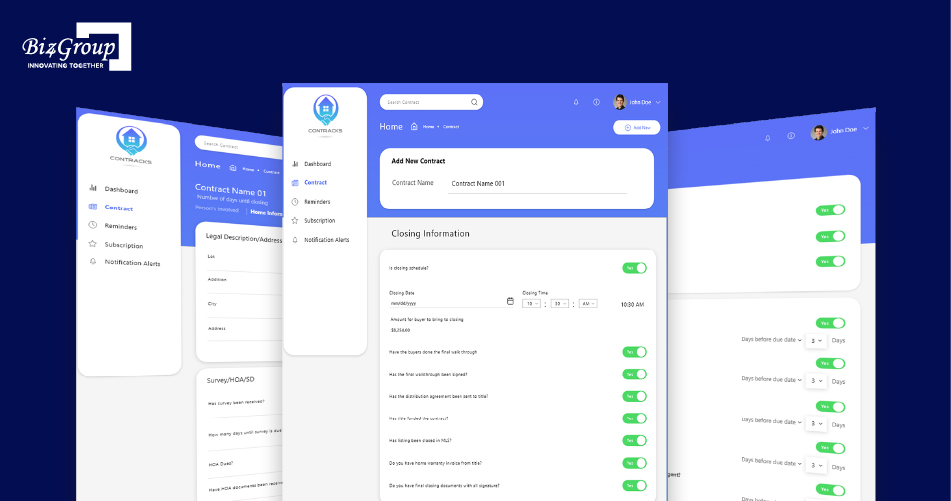
While building Contracks, we saw how bringing contract handling, reminders, and stakeholder coordination together can make a real estate workflow easier to manage. The lesson learn was simple, get the process right before adding features. For your AI 1031 exchange platform, first map out who needs to do what and where delays happen. Then build around those needs, test with real users, and improve as you go. This keeps the project focused, helps avoid unnecessary rework, and gives you a clearer path from idea to launch.
Decide who the platform serves and what it will handle in its first release.
Example: A brokerage might begin with an internal tool for intake, document collection, deadline visibility, and client updates rather than trying to build a complete exchange service immediately.
Create the foundation before adding advanced AI.
Example: When a user enters a verified transfer date, the platform calculates the relevant deadlines using maintained rules and displays them on the exchange dashboard.
Use AI where it can reduce repetitive work and assist users without becoming the authority for tax decisions.
Example: AI extracts property details from a closing statement, attaches them to the exchange record, and asks a staff member to confirm uncertain fields before they are used elsewhere.
Integrate the platform with the tools users already rely on, while controlling access to sensitive information.
Example: A broker may view property and task information, while access to financial records or fund-related workflows is restricted to specifically authorized users.
Before launch, check both normal workflows and situations that could expose errors.
Example: Simulate a replacement property deal falling through close to the identification deadline. Check whether the platform updates the case, alerts the responsible person, and records the follow-up without making an unsupported tax conclusion.
Start with a limited group of users and a clearly defined set of workflows while MVP development.
Example: Pilot the platform with one brokerage team or QI workflow, review its performance, fix issues, and then expand to more users and integrations.
Also Read: 12+ MVP Development Companies in USA
The key: Build the exchange workflow first, add AI where it has a clear job, and scale only after the system's calculations, controls, and review process have been tested.
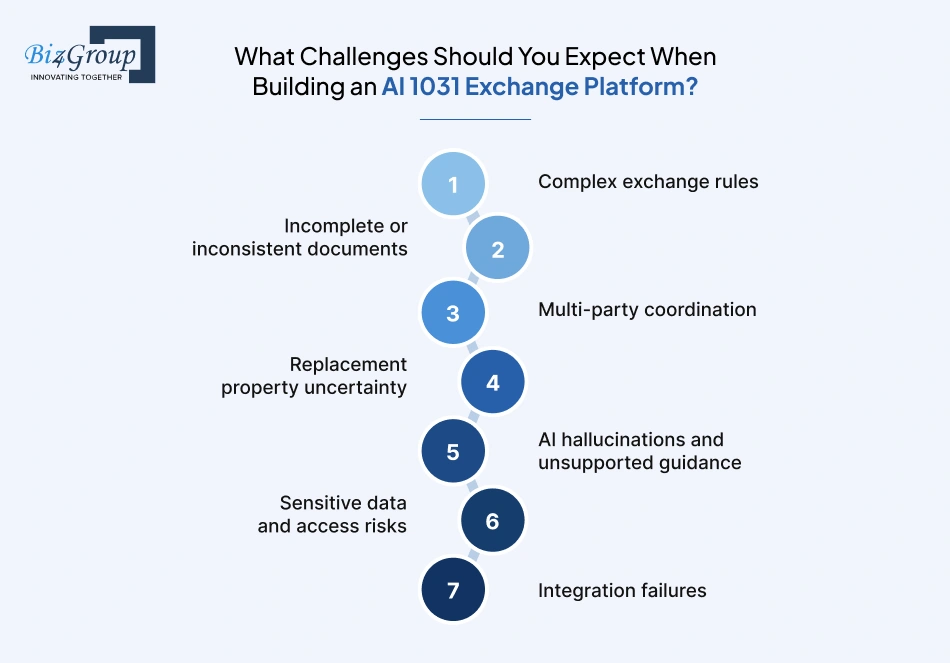
Building an AI 1031 exchange platform comes with a few challenges. You need accurate tax-related logic, complete transaction data, smooth coordination between multiple parties, and strong protection for sensitive records. You also need to keep AI within its intended role. Planning for these challenges early can help prevent costly redesigns and unreliable workflows.
|
Challenge |
Why it matters |
How to address it |
|---|---|---|
|
Complex exchange rules |
Exchange types, deadlines, and transaction details can vary. A wrong assumption may mislead users. |
Use a maintained rules engine for dates and calculations. Escalate unusual structures and tax-sensitive questions to qualified professionals. |
|
Incomplete or inconsistent documents |
Closing statements, agreements, and property records may contain missing fields, conflicting dates, or different formats. |
Use document extraction to identify information, validate it against the exchange record, and require review of uncertain values. |
|
Multi-party coordination |
Investors, brokers, QIs, lenders, closing agents, and advisors may use different systems and have different responsibilities. |
Provide role-specific access, clear task ownership, shared status tracking, and documented handoffs. |
|
Replacement property uncertainty |
Listings may be outdated, financing may change, or a potential acquisition may fall through. |
Track source and freshness of property data, record assumptions, and support alternate-property workflows and exception alerts. |
|
AI hallucinations and unsupported guidance |
A language model may produce confident but incorrect explanations or infer facts that are not in the record. |
Ground answers in approved sources, show references, test common and edge cases, and route uncertain tax questions for review. |
|
Sensitive data and access risks |
Exchange records can contain personal, financial, and transaction information that should not be visible to every participant. |
Apply encryption, least-privilege permissions, tenant separation, audit logs, and secure AI-provider data handling. |
|
Integration failures |
CRM, QI, document, property, and closing systems may have different data formats or unreliable connections. |
Define clear integration contracts, validate incoming data, use retry and error-handling workflows, and monitor synchronization. |
|
Over-automation |
Automatically acting on uncertain information or consequential decisions can create operational and compliance risks. |
Set approval gates for critical actions, maintain an audit trail, and make it easy for staff to pause or override automated workflows. |
The practical lesson don't treat AI accuracy as the only measure of success. A dependable platform also needs trustworthy data, tested rules, secure integrations, clear responsibility, and a safe way to handle exceptions.
Building an AI 1031 exchange platform may cost around $25,000–$70,000 for a focused MVP, while a more complex, enterprise-level platform can reach $150,000–$300,000+ or more. These are preliminary planning estimates, not fixed quotes. The final budget depends on the workflows, integrations, AI features, security controls, and testing required.
You should also budget for ongoing expenses such as cloud hosting, AI usage, data services, maintenance, and support. Here's a practical breakdown of where the money goes.
|
Development scope |
Estimated cost (USD) |
Typical inclusions |
|---|---|---|
|
Focused MVP |
$25,000–$70,000 |
Exchange records, deadline tracking, document handling, basic AI assistance, and limited integrations. |
|
Mid-complexity platform |
$70,000–$150,000 |
Multiple user roles, QI and CRM integrations, property comparison, and expanded reporting. |
|
Enterprise platform |
$150,000–$300,000+ |
Complex integrations, multi-tenant access, advanced AI workflows, enterprise security, and extensive validation. |
These are directional estimates for planning, not verified quotes for a 1031-specific product. Confirm costs with a scoped proposal.
The cost of an AI 1031 exchange platform depends on how much you build, how advanced its AI needs to be, and how many systems it must connect with. The table breaks down the main cost of drivers and their estimated development ranges.
|
Cost factor |
What affects the cost |
Estimated cost range (USD) |
|---|---|---|
|
Feature scope |
Basic intake and deadline tracking costs less than multi-party portals, property matching, and advanced reporting. |
$10,000–$50,000+ |
|
AI complexity |
Document extraction and summaries are simpler than multi-step agents, advanced matching, and grounded tax research. |
$5,000–$40,000+ |
|
Integrations |
Connecting QI, CRM, closing, accounting, and property-data systems adds development and ongoing maintenance work. |
$5,000–$30,000+ |
|
Data preparation |
Cleaning legacy records, standardizing exchange data, and processing scanned documents increase implementation effort. |
$2,000–$20,000+ |
|
Security and access controls |
Role-based permissions, encryption, tenant separation, and audit logs add engineering work. |
$5,000–$25,000+ |
|
Testing and professional validation |
Testing calculations, AI outputs, integrations, permissions, and exception scenarios requires dedicated time and review. |
$3,000–$20,000+ |
These are indicative estimates for individual work areas. They can overlap and should not be added together as a fixed project quote. Actual costs depend on scope, team rates, existing infrastructure, and required integrations.
Beyond development, consider these initial planning allowances. Actual costs depend on usage, vendors, and service requirements.
These figures are estimates, not guaranteed rates. Validate them against expected users, exchange volume, document processing, and vendor pricing.
You can control costs by launching in stages, limiting unnecessary AI calls, and prioritizing features that solve real workflow problems.
Budget separately for development, ongoing operations, and exchange-related professional services. Build in stages and expand when validated needs justify the added cost.
You can buy an existing solution, build a custom AI 1031 exchange platform, or partner with an AI development company. Buying suits standard workflows, building gives you more control over specialized features, and partnering helps when you need custom development without handling every technical detail in-house. The right path depends on your workflow, budget, timeline, and existing systems.
|
Approach |
Best suited for |
Advantages |
|---|---|---|
|
Buy |
Businesses with standard exchange workflows |
Faster setup, existing features, less initial development |
|
Build |
Businesses with specialized workflows and product requirements |
More control over features, data, and integrations |
|
Partner |
Businesses needing custom AI capabilities without building everything in-house |
Access to technical expertise, tailored development, support through implementation |
Consider buying if your team mainly needs established exchange workflows rather than a highly customized product.
Example: A QI that needs reliable case tracking and document organization may be able to meet its needs with an existing platform instead of funding a full custom build.
A custom build may make sense when your business needs functionality that existing products cannot support well.
Example: A real estate technology company developing a multi-party exchange workspace with specialized CRM and property-data integrations may need custom development to meet its requirements.
An experienced development partner can help turn your AI 1031 exchange platform idea into a working product. From planning features and connecting existing systems to building AI capabilities and testing the platform, they can guide you through the technical process while you focus on your business goals.
With the right team by your side, you can focus on your business and exchange workflows while the technical details are handled with you, not left for you to figure out alone.
Why Choose Biz4Group LLC as Your Development Partner?
Building an AI 1031 exchange platform means bringing property information, documents, deadlines, and people together. Biz4Group LLC has 20+ years of technology experience, including real estate projects like Homer AI, Facilitor, and Contracks.
That experience gives us a practical starting point for thinking through property discovery, document workflows, and transaction coordination. These are all areas that can matter when designing a platform to support 1031 exchanges and capital gains deferral, while keeping tax-sensitive decisions with qualified professionals.
You don't have to figure it all out alone. Let's talk through your goals and find a practical path from idea to launch.
Connect with us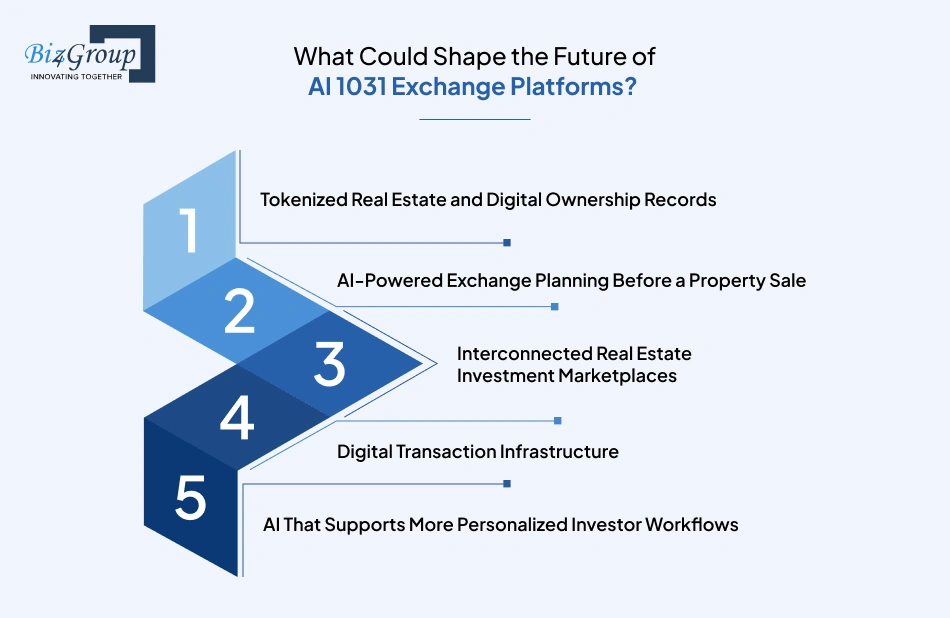
The next generation of AI 1031 exchange platforms could move beyond transaction management toward connected investment ecosystems, more accessible replacement-property options, and digital asset infrastructure. These are emerging possibilities, not guaranteed outcomes.
Tokenization could change how certain real estate interests are recorded, transferred, and administered. For 1031 exchanges, the legal form of the interest remains critical, a digital token does not automatically qualify as replacement real property.
Platforms could help investors model potential exchange scenarios earlier, using property values, financing assumptions, investment goals, and estimated timelines to prepare questions for their tax and legal advisors.
Future platforms may connect property listings, investor criteria, transaction records, and due-diligence documents in one environment. This could make it easier to compare opportunities and coordinate with brokers and qualified intermediaries.
Digital identity checks, standardized records, and automated document workflows could reduce repetitive administrative work across real estate transactions. Wider adoption will depend on integration, security, and regulatory requirements.
Rather than giving every investor the same dashboard, future AI-powered 1031 exchange solutions could tailor task lists, property comparisons, explanations, and reminders to each investor's portfolio and transaction stage, while keeping sensitive decisions under professional review.
For platform builders, these possibilities point toward a broader product vision, an AI 1031 exchange platform that connects investment information, transaction infrastructure, and professional guidance, while treating tax eligibility and compliance as matters requiring qualified review.
A 1031 exchange involves more than meeting deadlines. It means keeping property details, documents, investors, qualified intermediaries, and advisors moving in sync. The right AI 1031 exchange platform can bring those pieces together, reduce repetitive work, and help teams spot missing information earlier, while leaving tax-sensitive decisions to qualified professionals.
The opportunity is to build around real exchange workflows, not just add AI for the sake of it. Start with the tasks that slow your team down, then expand as your data, integrations, and review processes mature.
At Biz4Group LLC, we help businesses turn ideas into practical AI products. Our experience with real estate projects such as Homer AI, Facilitor and Contracks provides a foundation for building around property discovery, document workflows, deadline tracking, and stakeholder coordination. Your 1031 platform can be tailored to your users, processes, and goals.
Have a platform idea in mind? Let's talk about what you want to build.
Yes. A platform can support multiple brokerages, QIs, or advisory firms through separate workspaces, organization-specific settings, and permission controls. The design should prevent one organization from accessing another's investor or transaction data.
Yes, if the CRM provides suitable APIs, webhooks, or supported data exports. Integration can help synchronize contact details, transaction status, and follow-up tasks, subject to data mapping and access permissions.
A focused MVP may be budgeted at $25,000–$70,000, while a more extensive platform can cost $150,000–$300,000+. These are broad planning estimates. Integrations, AI capabilities, security requirements, and ongoing operating costs affect the final budget.
AI can compare property information against investor-provided criteria, such as location, price range, property type, and investment goals. It can help organize options, but users should verify listing details and consult qualified professionals about exchange eligibility and tax treatment.
A platform can be designed with workflows for reverse and improvement exchanges, including specialized task lists, document requirements, and approval steps. These transactions can involve additional structuring considerations, so qualified tax and legal professionals should guide the process.
Useful starting materials include existing exchange records, document templates, workflow checklists, deadline policies, user roles, and integration documentation. Reviewing data quality and identifying authoritative sources early can help reduce implementation delays.
Businesses can track measures such as:
Compare these measures before and after rollout, while accounting for changes in transaction volume and case complexity.
Yes. A white-label platform can be configured with a business's branding, user experience, and organization-specific workflows. The project should also define tenant separation, support responsibilities, data ownership, and how updates are managed.
Biz4Group LLC can help businesses plan and develop custom AI platforms, including workflows, integrations, and AI capabilities. Its real estate projects, such as Homer AI and Contracks, provide relevant experience with property discovery, document handling, and transaction coordination. The scope for a 1031 exchange product should be defined around the client's requirements and reviewed with qualified exchange professionals.
A focused MVP may take a few months, while a platform with multiple user groups, complex integrations, and advanced AI may take considerably longer. A realistic schedule depends on scope, data readiness, third-party access, testing, and the time needed for professional review.

Our website require some cookies to function properly. Read our privacy policy to know more.