 Location :
Orlando, FL, USA
Location :
Orlando, FL, USA +1 (407) 714-1616
 info@biz4group.com

- AI commercial real estate software development helps improve pricing, occupancy, and operations by turning data into actionable decisions across property portfolios.
- Typical investment ranges between $45,000 and $300,000+, depending on features, data complexity, and system scale.
- Businesses that develop scalable AI commercial real estate software for businesses can manage multiple properties, automate workflows, and improve long-term efficiency.
- Core systems rely on structured data, model outputs, and integrations to build AI commercial real estate platform capabilities that support real-time and batch decisions.
- AI adoption in commercial real estate is growing steadily, with firms using it to reduce vacancy rates, improve pricing accuracy, and optimize asset performance.
- The biggest impact comes from combining multiple use cases like pricing, tenant insights, and automation rather than relying on a single AI feature.
Commercial real estate has long relied on experience, intuition, and periodic analysis. While that still plays a role, it is no longer enough on its own. AI commercial real estate software development is shifting how decisions are made by turning scattered data into usable, real-time insights. Instead of waiting on reports or manual reviews, teams can act on continuously updated information.
At a basic level, AI systems follow a simple flow: collect data, identify patterns, and generate outputs that support decisions. The real value comes from speed and consistency. That is why businesses that develop AI software for commercial real estate usually begin with focused goals such as improving pricing accuracy, understanding tenant behavior, or managing assets more efficiently.
Unlike traditional systems, AI-driven platforms are designed to adapt. They can improve over time as new data becomes available, but only if the data is reliable and the workflows are clearly defined. This is where many challenges emerge in real estate AI software development, especially when data is fragmented or poorly structured.
For decision-makers, the key is knowing where AI adds value and where it does not. Some processes benefit from automation and prediction, while others still depend on human judgment. In many cases, working with an experienced AI development company helps bridge the gap between business needs and system design.
This guide explains how these systems work, where they are used, and how they are built. It covers architecture, data requirements, development steps, and key decisions involved in building practical solutions.
As adoption grows, more organizations are exploring AI commercial real estate software development services to build systems that align with their operations and scale over time.
Understanding AI Commercial Real Estate Software Development
AI commercial real estate software development refers to building systems that use data to support property operations and investment decisions. These systems analyze information from multiple sources and turn it into clear outputs such as predictions, alerts, or recommendations.
In simple terms, AI is useful when decisions depend on large and changing datasets instead of fixed rules.
Scope includes:
- Data-driven decision systems: Use property, tenant, and market data to support everyday decisions
- Predictive capabilities: Estimate pricing, occupancy, and asset performance based on past and current data
- Operational automation: Reduce manual work in tasks like lease processing, reporting, and maintenance tracking
- System integration: Connect different tools and data sources using AI integration services
- Continuous improvement: Systems improve over time as more data is added
In practice, these systems are not built as single tools. Most organizations aim to build AI commercial real estate platform capabilities that support multiple functions in one place.
Core Business Problems in Commercial Real Estate Operations
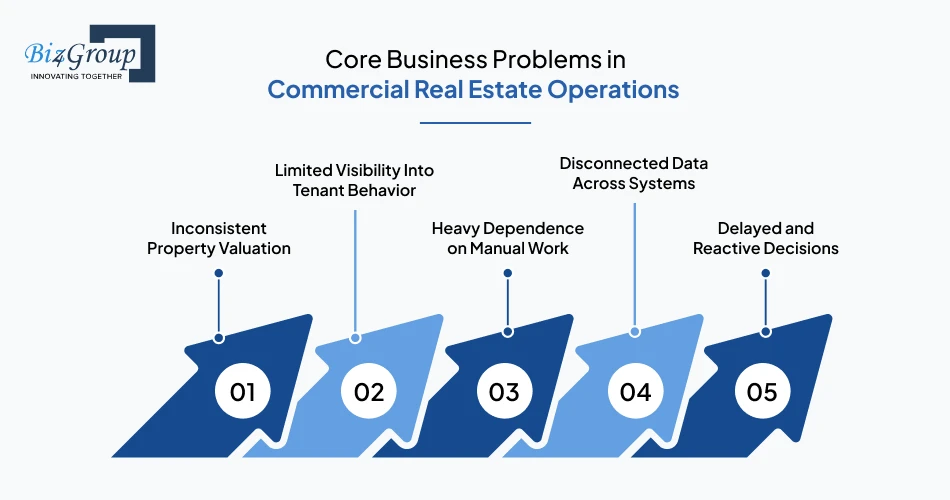
Commercial real estate operations often face issues with data, processes, and decision timing. These problems become more visible as the business grows.
AI is usually introduced when these issues start affecting efficiency and outcomes.
1. Inconsistent Property Valuation
Property pricing often varies because it depends on limited data and manual adjustments.
2. Limited Visibility Into Tenant Behavior
Tenant activity, preferences, and risks are not always tracked in a structured way.
3. Heavy Dependence on Manual Work
Processes like lease abstraction and reporting take time and require human effort.
4. Disconnected Data Across Systems
Data is spread across different tools, making it hard to use in one place.
5. Delayed and Reactive Decisions
Most decisions are based on past data instead of forward-looking insights.
These challenges make it difficult to scale operations efficiently. This is where structured AI model development helps turn scattered data into clear and usable outputs.
Traditional Software vs AI Software for Commercial Real Estate
Traditional software and AI-based systems work in different ways. The main difference is how they handle data and decisions. AI is more useful when decisions depend on patterns in large and changing datasets.
|
Aspect |
Traditional Software |
AI-Based Software |
|---|---|---|
|
Logic Type |
Rule-based |
Data-driven |
|
Adaptability |
Fixed unless updated manually |
Improves with new data |
|
Data Usage |
Mostly structured data |
Structured and unstructured data |
|
Decision Support |
Reports and dashboards |
Predictions and recommendations |
|
Automation Level |
Task-level automation |
Decision-level support |
|
Best Use Case |
Stable processes |
Changing environments |
In most cases, AI is added on top of existing systems rather than replacing them. Organizations that create AI real estate software for commercial properties use AI to improve decision-making while continuing to use their current tools.
How AI Commercial Real Estate Software Works?
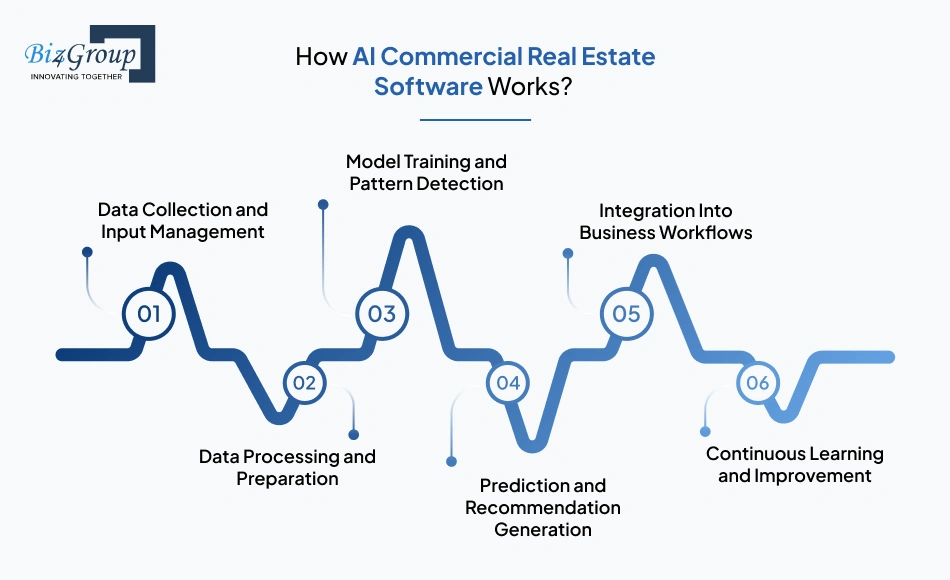
AI systems in commercial real estate follow a simple flow: collect data, process it, and generate outputs that help with decisions. AI commercial real estate software development focuses on building this flow so it works reliably across daily operations.
In simple terms, AI software takes raw data and turns it into useful insights like predictions, alerts, or recommendations.
1. Data Collection and Input Management
The system starts by collecting data from sources like property records, tenant details, lease documents, and market data. This data often comes from different tools and formats. In AI proptech software development for commercial real estate, bringing all this data together is the first step.
2. Data Processing and Preparation
Once collected, the data is cleaned and organized. Errors are removed, missing values are handled, and formats are made consistent. This step is important because the system can only perform well if the data is accurate.
3. Model Training and Pattern Detection
The system then studies past data to find patterns. It learns how different factors affect outcomes like pricing or occupancy. This is where AI automation services help systems learn from data instead of following fixed rules.
4. Prediction and Recommendation Generation
After learning from data, the system uses new inputs to generate outputs. These can include price estimates, risk signals, or suggested actions. The goal is to support better and faster decisions.
5. Integration Into Business Workflows
The outputs are connected to tools already used by teams, such as dashboards or management systems. This makes it easier to use insights in daily work. Many businesses that develop AI property management software for commercial real estate focus on this step to ensure practical use.
6. Continuous Learning and Improvement
The system keeps improving as new data is added. This helps maintain accuracy and keeps the system useful as conditions change.
These steps run in a continuous cycle, allowing the system to keep learning and supporting decisions over time.
Portfolio Spotlight
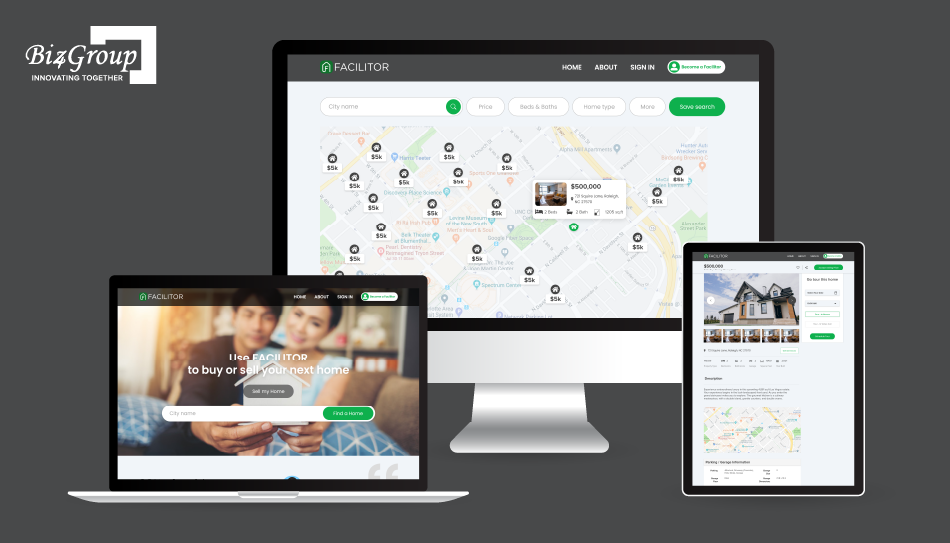
Facilitor is an AI-powered real estate platform built by Biz4Group, that helps users explore properties, assess options, and make informed decisions through guided insights and secure workflows. It reflects how intelligent systems can simplify property discovery and advisory processes, aligning closely with modern AI-driven decision support in commercial real estate systems.
Turn Data into Smarter Property Decisions
Use AI commercial real estate software development to simplify pricing, tenant insights, and operations.
Start Building Your AI SystemWhat Are the Most Valuable Use Cases for AI Commercial Real Estate Software?
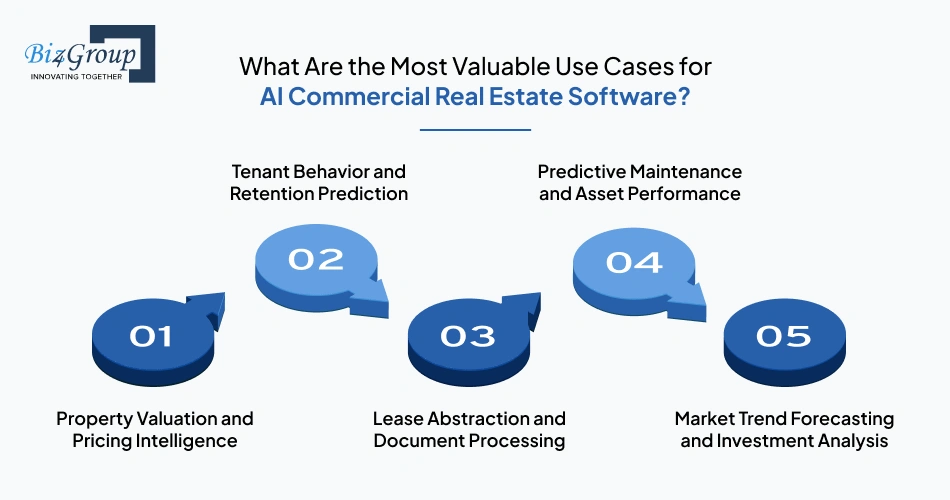
AI is most useful in commercial real estate where decisions rely on large, changing datasets. AI commercial real estate software development focuses on applying AI to specific problems where manual analysis is slow or inconsistent. The goal is to improve how decisions are made using clear and repeatable data-driven outputs.
1. Property Valuation and Pricing Intelligence
AI systems estimate property values by analyzing past transactions, location data, and property features. This reduces variation in pricing and improves consistency across decisions. Many teams that develop intelligent commercial real estate software using AI start with this use case.
- Example: A system reviews comparable properties and market trends to generate a price range for a commercial building in real time.
2. Tenant Behavior and Retention Prediction
AI models track tenant activity such as payments, lease history, and usage patterns. This helps identify tenants who may leave or expand, allowing teams to act early. It supports better planning and communication.
- Example: A system flags tenants with delayed payments and reduced engagement, helping teams take steps to improve retention.
3. Lease Abstraction and Document Processing
AI systems extract key data from lease documents, including terms, dates, and obligations. This reduces manual work and improves accuracy when handling large volumes of contracts. This use case is often explored when learning how to develop AI commercial real estate software for businesses.
- Example: A system scans lease agreements and pulls out rent terms and renewal dates into a structured dashboard.
4. Predictive Maintenance and Asset Performance
AI analyzes equipment data and maintenance history to predict when issues may occur. This helps reduce downtime and plan maintenance more effectively. It also improves asset performance over time.
- Example: A system detects patterns in equipment usage and alerts teams before a failure happens, helping avoid unexpected repairs.
5. Market Trend Forecasting and Investment Analysis
AI systems analyze market data, economic signals, and property performance to support investment decisions. This helps businesses understand demand patterns and future opportunities. In some cases, generative AI is used to summarize insights from multiple data sources.
- Example: A system combines market trends and historical data to estimate future demand in a commercial area.
These use cases show where AI can improve speed, accuracy, and consistency in decision-making. Businesses exploring how to build AI software for commercial property management often begin with these areas to achieve early and measurable results.
Portfolio Spotlight
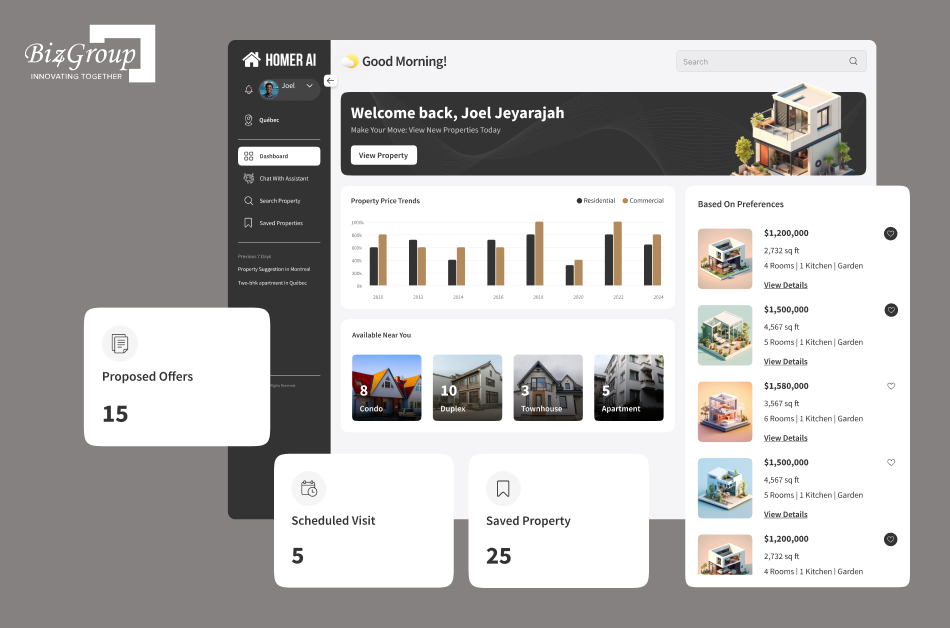
Homer AI is a conversational AI platform that connects buyers and sellers through automated interactions and smart property recommendations. It shows how AI can streamline communication and decision-making within property ecosystems, especially where real-time engagement and intelligent assistance are required.
AI Commercial Real Estate Software Architecture Explained
AI systems in commercial real estate are built in layers. Each layer handles a specific step, from collecting data to showing results. AI commercial real estate software development focuses on setting up these layers so data can move smoothly and support clear decisions. The architecture explains how data enters the system, how it is processed, and how results are delivered.
|
Layer |
What It Does |
Why It Matters |
|---|---|---|
|
Data Ingestion and Integration Layer |
Collects data from different sources |
Brings all data together using AI integration services |
|
Data Processing and Feature Engineering Layer |
Cleans and organizes data |
Makes sure data is accurate and ready to use |
|
Model Training and Inference Layer |
Finds patterns and generates outputs |
Turns data into predictions or suggestions |
|
Application and User Interaction Layer |
Shows results to users |
Helps teams use insights in daily work |
|
Monitoring, Feedback, and Retraining Systems |
Tracks and updates the system |
Keeps results accurate over time |
Each layer has a clear role, but they need to work together. Teams that develop intelligent commercial real estate software using AI usually build these layers as one connected system. This structure also acts as a guide to create AI commercial real estate solution for businesses, helping teams plan and build systems that are simple, reliable, and easy to scale.
Portfolio Spotlight
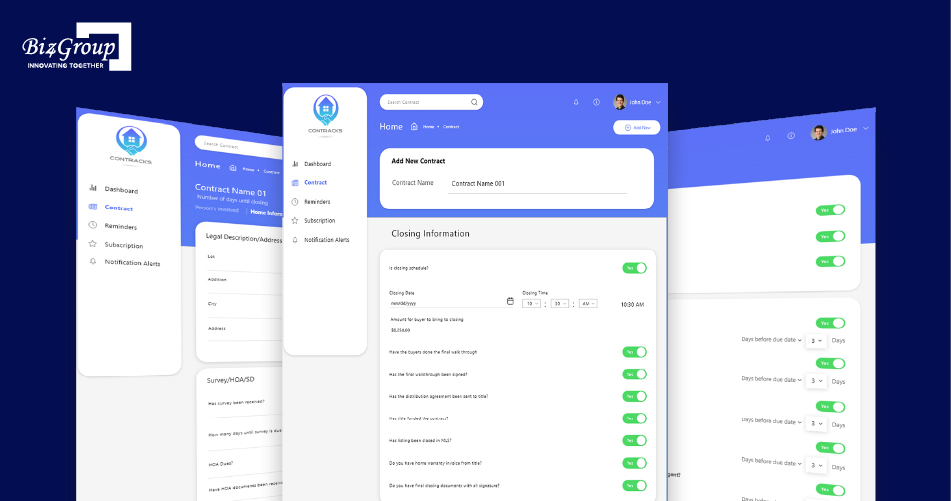
Contracks is a real estate contract management platform that simplifies documentation, tracks progress, and provides alerts for key events. It highlights how structured workflows and automation can reduce friction in complex real estate processes, especially where multiple stakeholders and timelines are involved.
Unlock Real Value from Property Data
Learn how to build AI commercial real estate platform solutions that improve occupancy and reduce manual work.
Explore AI CapabilitiesWhat Data Is Needed to Build AI Commercial Real Estate Software?
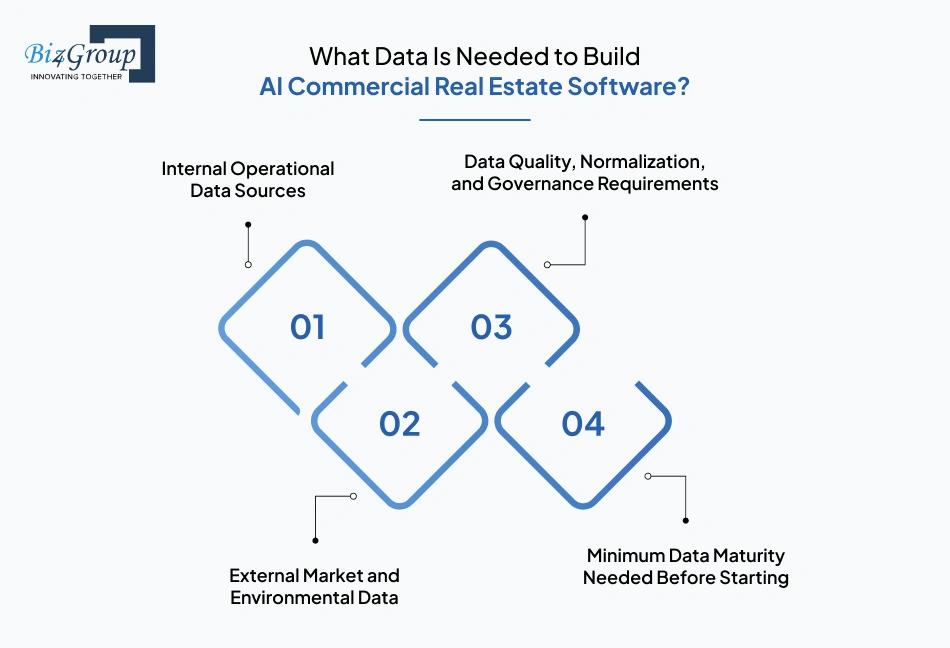
AI systems depend on data. In AI commercial real estate software development, the system can only perform as well as the data it receives. If the data is incomplete or inconsistent, the results will also be unreliable.
1. Internal Operational Data Sources
This includes data from daily operations such as lease records, tenant details, payment history, occupancy rates, and maintenance logs. It shows how properties are managed over time. In AI software development for Commercial Real Estate, this data is often the main input for building models.
2. External Market and Environmental Data
This includes data from outside the business, such as market trends, location insights, economic conditions, and competitor activity. It helps the system understand the broader environment and improves prediction accuracy.
3. Data Quality, Normalization, and Governance Requirements
Data needs to be clean and consistent before it can be used. This means removing errors, standardizing formats, and setting clear rules for how data is stored and updated. Teams that implement generative AI in real estate often focus on this step to ensure stable outputs.
4. Minimum Data Maturity Needed Before Starting
Before building AI systems, there should be enough historical data and a consistent way to collect and store it. The data should also be easy to access and use. Without this, the system will not perform well.
Good results come from usable data, not just large amounts of it. Businesses working on commercial real estate software development integrating AI need to focus on data quality and consistency from the start.
Essential Features in AI Commercial Real Estate Software Development
AI systems in commercial real estate need a clear set of core features to work properly. AI commercial real estate software development focuses on building features that help manage data, support decisions, and reduce manual work. These features form the base of the system and are required before adding more advanced capabilities.
|
Feature |
What It Does |
Why It Matters |
|---|---|---|
|
Centralized Data Management |
Stores property, tenant, and market data in one place |
Makes data easy to access and manage |
|
Property and Asset Tracking |
Tracks property details, occupancy, and performance |
Helps monitor assets consistently |
|
Tenant Management System |
Manages tenant data, leases, and payments |
Improves visibility into tenant activity |
|
Lease Data Extraction |
Extracts key details from lease documents |
Reduces manual effort and improves accuracy |
|
Reporting and Dashboards |
Displays data through charts and summaries |
Helps teams understand performance quickly |
|
System Integration Capabilities |
Connects with CRM, ERP, and other tools |
Keeps data consistent across systems |
These features are commonly included when teams build real estate AI software, as they support daily operations and decision-making. For those thinking of developing an AI commercial real estate software, these core features create a strong base that can be expanded as the system grows.
Advanced Features in AI Commercial Real Estate Software Development
Before adding AI, the system needs to handle data and daily operations in a simple and reliable way. In AI commercial real estate software development, these core features make sure the system works properly and supports basic business needs.
1. Centralized Data Management
This stores property, tenant, and market data in one place. It removes the need to manage data across multiple tools. This is a basic part of modern commercial real estate technology.
2. Property and Asset Tracking
This tracks property details like occupancy and performance. It helps teams monitor assets in a consistent way. It also supports regular reporting.
3. Tenant Management System
This manages tenant records, lease details, and payments. It gives a clear view of tenant activity. Many teams start here when they build AI software for real estate systems.
4. Lease Data Extraction
This pulls key details from lease documents, such as terms and dates. It reduces manual work and helps avoid errors. It also makes data easier to use later.
5. Reporting and Dashboards
This shows data in a simple format using charts and summaries. It helps teams understand performance quickly. This supports better day-to-day decisions.
6. System Integration Capabilities
This connects the system with other tools like CRM and ERP. It keeps data consistent across platforms. Many teams integrate AI into an app after setting up these connections.
These features help manage data, track operations, and keep systems connected. They also create the base for adding AI real estate solutions for commercial later on.
Increase Occupancy and Reduce Costs
Businesses using AI systems have reported up to 15–25% improvement in occupancy and operational efficiency.
Get Started with AIStep-by-Step Process to Develop AI Commercial Real Estate Software
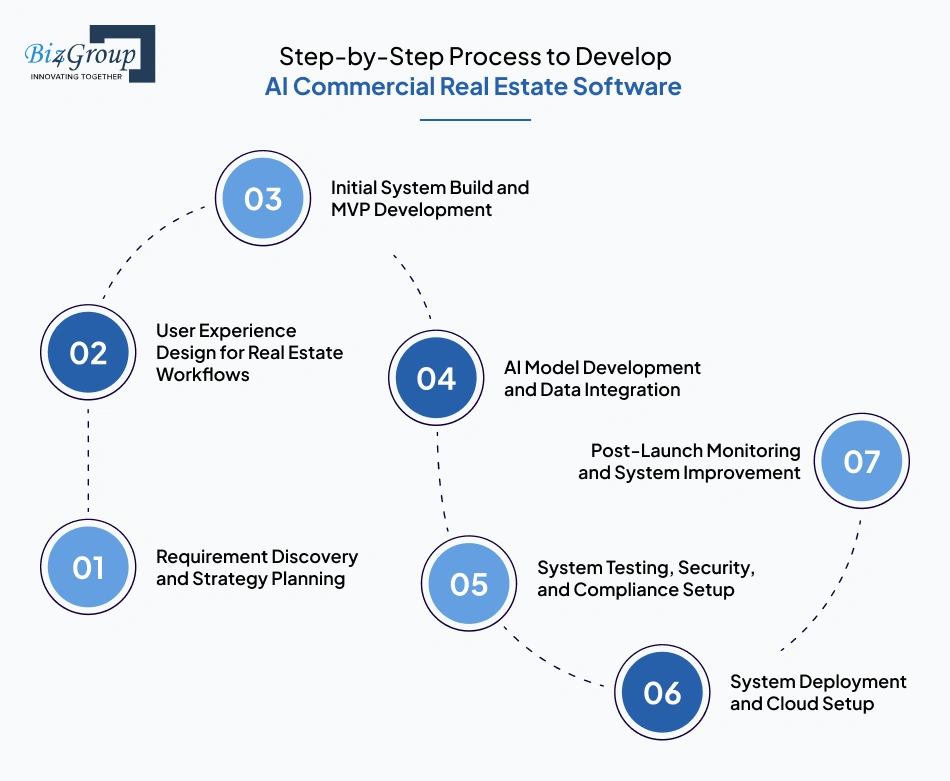
Building AI systems for commercial real estate requires a clear and structured approach. AI commercial real estate software development is not just about adding models, it is about solving real problems like pricing gaps, tenant churn, and operational delays using data. Each step should align with how real estate teams manage properties, leases, and investments.
1. Requirement Discovery and Strategy Planning
Start by identifying where current processes are slow or inconsistent. In commercial real estate, this often includes valuation, leasing, and tenant tracking.
- Identify high-impact use cases such as pricing, occupancy, or maintenance
- Check availability of lease data, tenant history, and property records
- Define clear outcomes like reduced vacancy or faster leasing cycles
- Set KPIs such as improved pricing accuracy or tenant retention
This step defines what is the process to build an AI commercial real estate software by aligning business problems with system goals.
2. User Experience Design for Real Estate Workflows
The system should match how property managers, brokers, and asset managers work. Simple interfaces help teams use insights in daily operations.
- Design dashboards for occupancy, revenue, and asset performance
- Create workflows for lease tracking and tenant management
- Test designs with real users from different roles
- Keep layouts simple and consistent across devices
Working with a dedicated UI/UX design team supports effective business app development using AI.
Also read: Top UI/UX design companies in USA
3. Initial System Build and MVP Development
Build a focused system that solves one or two key problems first. This helps validate the system before expanding.
- Develop modules for property data, tenant tracking, and lease handling
- Add initial AI features like lease extraction or pricing support
- Use real data to test outputs
- Keep the system flexible for future features
This step is important in custom AI commercial real estate software development to ensure early value.
This is where MVP development services help in validating the system.
Also read: Top 12+ MVP Development Companies to Launch Your Startup in 2026
4. AI Model Development and Data Integration
This step connects data and builds models that generate useful outputs. Real estate data is often spread across systems.
- Combine lease, tenant, and market data into one system
- Train AI models for pricing, tenant behavior, and asset performance
- Build feedback loops to improve outputs
- Use enterprise AI solutions to manage large datasets
This is where AI in commercial real estate software becomes practical and usable.
5. System Testing, Security, and Compliance Setup
Real estate systems handle sensitive data like lease terms and financial details. Security and testing ensure reliability.
- Set access controls for different user roles
- Test system performance with large datasets
- Validate outputs such as pricing and lease extraction
- Ensure compliance with data protection standards
This step supports stable intelligent real estate system development for commercial environments.
Also Read: Software Testing Companies in USA
6. System Deployment and Cloud Setup
The system should support multiple properties and users without performance issues. It should also scale as the business grows.
- Deploy on cloud systems for flexibility
- Monitor system usage across locations
- Enable updates without disruption
- Provide onboarding for teams
This step ensures smooth rollout when building AI solutions for commercial real estate businesses.
7. Post-Launch Monitoring and System Improvement
After launch, the system needs to improve based on real usage and changing data.
- Collect feedback from property managers and analysts
- Update models with new data
- Add features based on operational needs
- Track metrics like occupancy, pricing accuracy, and usage
This step ensures the system continues to deliver value over time and adapts to business changes.
Each step in this process is connected, and skipping one usually creates issues later. In commercial real estate, systems need to work with real data, real workflows, and real users from day one. A structured approach helps avoid rework, reduces risk, and ensures that AI is applied where it actually improves decisions. This is how teams move from isolated features to building AI solutions for commercial real estate businesses that are stable, usable, and ready to scale.
Tech Stack for AI Commercial Real Estate Software Development
The tech stack defines how an AI system is built and how it handles data, models, and user interactions. In AI commercial real estate systems, the stack must support large datasets, real-time processing, and integration with property management tools. The focus is on building systems that can process data reliably and deliver outputs that teams can use in daily operations.
|
Label |
Preferred Technologies |
Why It Matters |
|---|---|---|
|
Frontend Framework |
React.js, Vue.js |
Builds dashboards for property and tenant insights using ReactJS development |
|
Server-Side Rendering & SEO |
Next.js, Nuxt.js |
Improves performance for data-heavy interfaces with NextJS development |
|
Backend Framework |
Node.js, Django (Python) |
Handles APIs, workflows, and system logic using NodeJS development and Python development |
|
API Development Layer |
REST, GraphQL, FastAPI |
Connects AI modules with CRM, ERP, and property systems |
|
AI & Data Processing |
TensorFlow, PyTorch, Scikit-learn |
Runs models for pricing, tenant behavior, and forecasting |
|
Data Processing and Pipelines |
Apache Spark, Pandas, Airflow |
Processes large volumes of lease, tenant, and market data |
|
Data Storage (Structured) |
PostgreSQL, MySQL |
Stores structured data like leases and tenant records |
|
Data Storage (Unstructured) |
MongoDB, Elasticsearch |
Manages documents such as lease files and reports |
|
Real-Time Processing |
Kafka, Redis |
Supports alerts for pricing, tenant activity, and maintenance |
|
Cloud Infrastructure |
AWS, Azure, Google Cloud |
Enables scaling across properties and users |
|
DevOps and Deployment |
Docker, Kubernetes, CI/CD tools |
Supports stable releases and system updates |
|
Security and Access Control |
OAuth, JWT, IAM tools |
Protects sensitive property and tenant data |
|
Analytics and Visualization |
Power BI, Tableau, custom dashboards |
Helps teams track performance and trends |
This stack supports the full system, from data collection to decision-making. It allows teams to build systems that handle real estate data, run AI models, and deliver outputs in a usable format. The right combination of technologies helps ensure the system remains scalable, reliable, and aligned with real-world commercial real estate operations.
Move from Ideas to Working Systems
Plan and execute AI-driven real estate platform development for commercial spaces with clear steps and scalable architecture.
Build Your AI SolutionWhat Is the Cost of AI Commercial Real Estate Software Development?
The cost of building AI software for commercial real estate depends on how much you want the system to do. In most cases, AI commercial real estate software development falls between $45,000 and $300,000+, but this is only a ballpark range. The final cost changes based on features, data complexity, and system scale.
|
Level |
What It Includes |
Typical Cost Range |
Why Cost Varies |
|---|---|---|---|
|
MVP-Level AI Commercial Real Estate Software |
Core features like data storage, tenant management, dashboards, and simple automation |
$45,000 – $90,000 |
Lower cost due to fewer features and limited AI use |
|
Advanced-Level AI Commercial Real Estate Software |
Adds features like pricing models, lease data extraction, and basic predictions |
$90,000 – $180,000 |
Higher cost due to model building and data processing |
|
Enterprise-Level AI Commercial Real Estate Software |
Full system with multiple AI models, integrations, real-time data, and scaling |
$180,000 – $300,000+ |
Higher cost due to system complexity and infrastructure |
Costs increase as the system becomes more advanced and handles more data. Data preparation, model setup, and system integration are the main factors that affect pricing.
Instead of starting with a large system, many teams begin with a smaller setup and expand it over time. This approach helps manage investment while adapting to how AI is transforming commercial real estate software in practical and scalable ways.
Also Read: AI Software Development Cost: How Much Does It Really Take to Build Smart Solutions?
Build vs Buy vs Hybrid: How Should You Approach Custom AI Commercial Real Estate Software Development?
Choosing how to build your system depends on your business needs, data, and timeline. In AI commercial real estate software development, there is no single right approach. Some businesses need full control, while others need speed or flexibility. The right choice depends on how your operations work and how much you plan to scale.
When Custom AI Commercial Real Estate Software Development Makes Sense
Custom development is best when your workflows are not standard and cannot fit into ready-made tools.
- You should consider custom development if:
- You manage multiple properties with different pricing or leasing models
- Your decisions depend on internal or proprietary data
- You need control over how models and outputs work
- You are planning long-term AI-driven real estate platform development for commercial spaces
In such cases, teams often hire AI developers to build systems that match their exact processes.
When Pre-Built AI Solutions Are Sufficient
Pre-built AI tools are useful when your needs are simple and you want to get started quickly. They work best when you do not require deep customization or control over how the system works.
1. When Speed Is a Priority
If you need a working system quickly, pre-built tools reduce development time. They are already designed and can be deployed with minimal setup.
2. When Use Cases Are Standard
If your needs are limited to common tasks like reporting, tenant tracking, or basic insights, pre-built tools are usually enough. They are designed for widely used workflows.
3. When Data Is Limited or Unstructured
If your data is not well-organized or not available in large volumes, custom AI may not perform well. Pre-built tools can still work with simpler setups.
4. When You Want to Test AI First
If you are unsure about long-term investment, pre-built tools help you test how AI fits into your operations before building a full system.
These solutions are often used in early stages of proptech AI development for commercial spaces, where quick adoption matters more than flexibility.
When a Hybrid Approach Is Optimal
A hybrid approach combines existing tools with custom-built features. Here’s how a typical setup looks like:
- Existing systems handle data storage and daily operations
- Custom modules handle pricing, tenant insights, or forecasting
- APIs connect both systems for smooth data flow
- New features are added gradually based on business needs
This approach is common in AI in real estate development, where systems evolve step by step instead of being built all at once.
Decision Checklist for Choosing the Right Approach
Before choosing between build, buy, or hybrid, it helps to evaluate your current situation. This checklist simplifies the decision by focusing on practical factors like data, workflows, and scale.
|
Factor |
What to Check |
What It Indicates |
|---|---|---|
|
Data Readiness |
Do you have clean, structured, and accessible data? |
Strong data supports custom or hybrid systems |
|
Workflow Complexity |
Are your processes standard or unique? |
Unique workflows favor custom development |
|
Need for Control |
Do you need control over models and outputs? |
Higher control needs point to custom solutions |
|
Time to Deploy |
How quickly do you need the system? |
Faster timelines favor pre-built tools |
|
Scalability Needs |
Will you expand across properties or regions? |
Larger scale favors custom or hybrid approaches |
This table helps turn a complex decision into a simple comparison. Instead of choosing based on preference, it allows you to match the approach with your actual business needs.
The approach you choose should match your current stage, not just long-term plans. Many businesses start with simple tools and move toward custom systems as their needs grow. This also helps clarify who can build AI software for commercial real estate based on the level of system complexity.
Choose the Right Way to Build AI
Understand when to develop scalable AI commercial real estate software for businesses and when to start small.
Plan Your ApproachHow AI Commercial Real Estate Software Creates Revenue
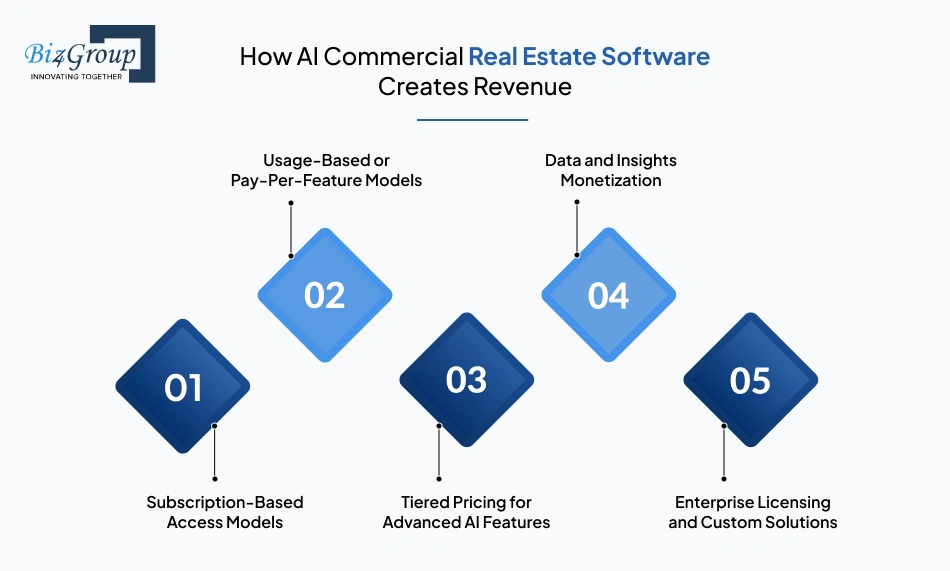
Revenue from AI systems in commercial real estate is not just about improving operations. It also depends on how the software is packaged, priced, and delivered. AI commercial real estate software development makes it possible to build products that generate consistent revenue while supporting day-to-day workflows.
1. Subscription-Based Access Models
Most platforms use a subscription model where users pay monthly or yearly. Pricing is usually based on the number of properties, users, or features. This creates steady and predictable revenue.
- Example: A platform charges property managers based on the number of units they manage, with higher plans offering more advanced features.
2. Usage-Based or Pay-Per-Feature Models
Some platforms charge based on how often certain features are used. This works well for AI-driven tasks that are not needed all the time.
- Example: A system charges per lease processed or per valuation request, allowing users to pay based on actual usage.
3. Tiered Pricing for Advanced AI Features
Basic features are included in lower plans, while advanced capabilities are offered in higher tiers. This allows businesses to grow revenue as users upgrade.
- Example: A standard plan includes reporting, while higher plans include forecasting and recommendations as teams expand how they use AI for real estate in their operations.
4. Data and Insights Monetization
AI systems generate useful data that can be offered as paid insights. This includes reports, trends, and benchmarks that help users make decisions.
- Example: A platform provides paid access to market data and pricing trends derived from aggregated property information.
5. Enterprise Licensing and Custom Solutions
Larger companies often need tailored systems. These are usually offered through licensing or long-term agreements.
- Example: A real estate firm pays for a custom platform with integrations and ongoing support under a yearly contract.
Revenue usually comes from combining multiple models instead of relying on just one. Businesses exploring the best way to create AI real estate software for commercial properties often start with simple pricing and expand over time.
As systems grow, companies that develop scalable AI commercial real estate software for businesses can layer different revenue streams across users, features, and data to build long-term value.
Portfolio Spotlight
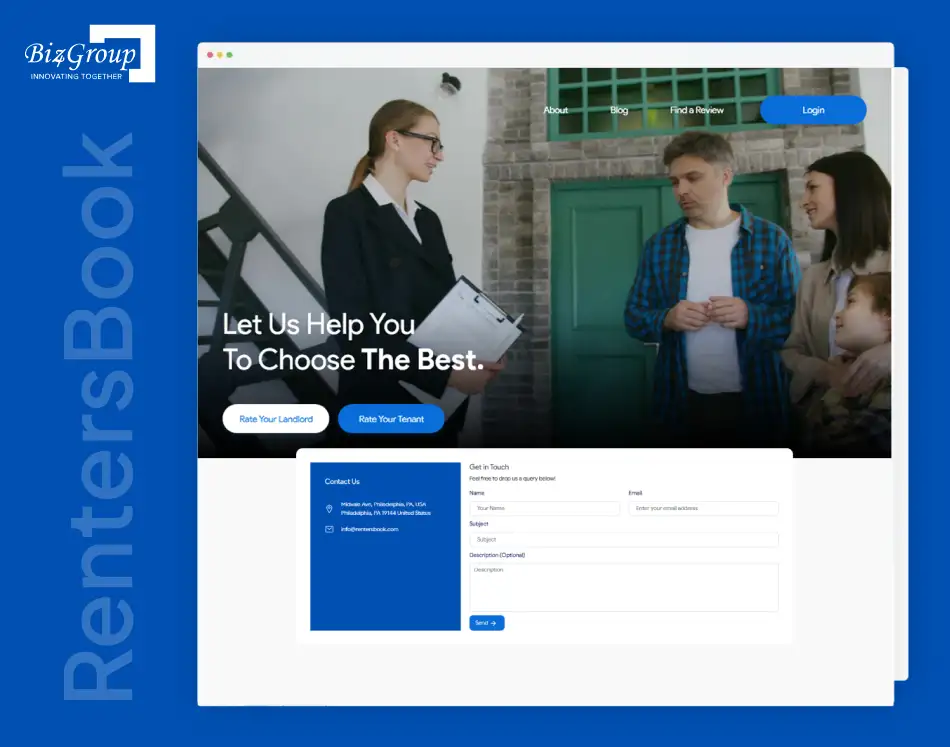
Renters Book is a platform focused on rental transparency through reviews and ratings tied to leasing experiences. It demonstrates how data-driven insights can improve tenant selection and risk evaluation, which is a key part of building more reliable and informed property management systems.
Key Challenges in Building AI Commercial Real Estate Software
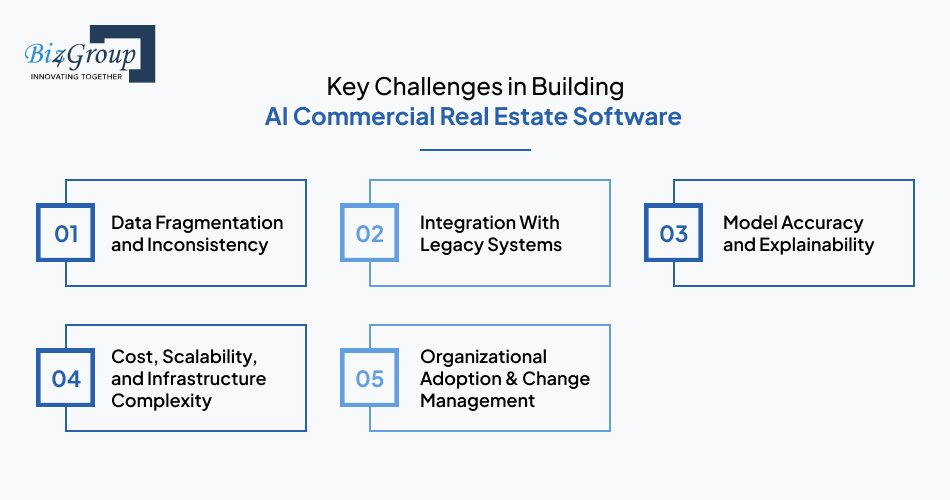
Building AI systems for commercial real estate comes with a few common challenges. These are not just technical issues. They are mostly related to data, system setup, and how teams use the system. AI commercial real estate software development works best when these areas are handled early.
|
Challenge |
What It Means |
Why It Matters |
|---|---|---|
|
Data Fragmentation and Inconsistency |
Data is stored in different tools and formats |
Makes it harder to get accurate results |
|
Integration With Legacy Systems |
Older systems are not built for AI |
Creates extra work when teams develop AI software for commercial real estate |
|
Model Accuracy and Explainability |
Outputs are not always easy to understand |
Makes teams less likely to trust the system |
|
Cost, Scalability, and Infrastructure Complexity |
Systems need cloud setup and scaling support |
Costs increase as the system grows |
|
Organizational Adoption and Change Management |
Teams may not use the system fully |
Reduces the overall impact of AI |
These challenges are common when moving from basic tools to AI systems. Many teams use enterprise AI solutions to manage scale, while others focus on business app development using AI to make systems easier to use.
If these issues are handled early, the system is easier to build and use. Businesses working with AI commercial real estate software development services often focus on these areas to avoid delays and improve results.
Scaling AI Software for Commercial Property Management Systems
Scaling AI systems in commercial real estate means handling more properties, more users, and more data without slowing down. AI commercial real estate software development should plan for scale early so the system continues to work smoothly as the business grows.
1. Designing for Multi-Property and Multi-Region Systems
The system should support many properties across different cities or regions. Each location may have different pricing, rules, and tenant patterns. The system should handle these differences without needing separate setups.
2. Handling Real-Time vs Batch Processing Workloads
Some tasks need instant results, like alerts for tenant activity or maintenance issues. Other tasks, like reports and forecasts, can run on a schedule. A good system supports both without affecting performance. This is important when teams build AI commercial real estate platform features for daily use.
3. Ensuring System Reliability and Performance
The system should stay stable as more users and data are added. It should load quickly, avoid downtime, and handle peak usage without issues. This becomes important when features like an AI conversation app are used in real time.
4. Scaling Data Pipelines and Model Infrastructure
As data grows, the system should process it without delays. Models should also update regularly to stay accurate. This includes supporting new use cases, including tools used by AI for real estate agents.
Scaling is an ongoing process. Systems need to adjust as data, users, and use cases grow. Businesses that create AI real estate software for commercial properties should design systems that are simple to expand and manage over time.
Build Systems That Actually Work in Real Estate
Work with experts who develop AI software for commercial real estate aligned with your data and workflows.
Talk to Our AI ExpertsWhy Choose Biz4Group to Develop AI Software for Commercial Real Estate?
Choosing the right partner matters when building AI systems for real estate. AI commercial real estate software development requires both technical skills and a clear understanding of how property operations actually work. Biz4Group works as a custom software development company that focuses on building systems that are simple to use, scalable, and aligned with real business needs.
Platforms like Facilitor, Homer AI, Contracks, and Renters Book developed by Biz4Group LLC are practical examples of how AI can be applied across property search, communication, contract handling, and tenant insights. This same approach is followed across all projects.
What Biz4Group LLC focuses on:
- Building systems that match real workflows in commercial real estate
- Working with actual data, not just sample use cases
- Handling end-to-end development, from planning to deployment
- Designing systems that can scale across multiple properties
- Keeping the product simple so teams can use it easily
As an AI app development company, Biz4Group builds systems that are not just functional but usable in day-to-day operations. The focus stays on solving real problems instead of adding unnecessary complexity.
Wrapping Up
Commercial real estate has always run on data, it just wasn’t always used well. That’s what’s changing. AI is not replacing existing systems, it is making them more useful, more responsive, and easier to act on.
Everything connects. Data feeds models. Models drive decisions. Decisions impact pricing, occupancy, and operations. When this loop works well, the system starts to feel less like software and more like a working layer of your business.
This is exactly where AI commercial real estate software development fits in. It is not about adding complexity, but about making systems smarter in ways that actually matter.
That being said, not every business needs a full-scale platform from day one. Some start small, some build gradually, and some integrate AI into what they already have. The important part is knowing what to build, when to build it, and how to scale it without overcomplicating things.
This is where the right mix of AI consulting services and product development services actually makes a difference, not in theory, but in how quickly you can move from idea to something that works.
If AI is done right, it should quietly improve how your business runs. No noise, no hype, just better decisions showing up where they matter.
Not sure where AI fits into your commercial real estate workflows? We can help you map it out.
FAQs
1. How Long Does It Take to Build AI Software for Commercial Real Estate?
The timeline depends on the scope and complexity of the system. A basic version can take around 3 to 5 months, while a more advanced system with multiple AI features and integrations may take 6 to 12 months. The biggest factors are data readiness, feature set, and system integration requirements.
2. What Type of Data Is Most Important for AI in Commercial Real Estate?
The most important data includes property details, lease data, tenant history, pricing trends, and market signals. Clean and structured data is more valuable than large volumes of unorganized data, as it directly affects the accuracy of AI outputs.
3. Do You Need In-House AI Expertise to Build and Manage These Systems?
Not necessarily. Many businesses start without in-house AI teams and rely on external expertise during development. Over time, internal teams can manage operations, while model updates and improvements can still be handled externally if needed.
4. How Do You Measure ROI from AI in Commercial Real Estate Software?
ROI is usually measured through improvements in occupancy rates, pricing accuracy, operational efficiency, and cost reduction. Instead of a single metric, businesses track a combination of these outcomes over time to evaluate impact.
5. What Is the Typical Cost of AI Commercial Real Estate Software Development?
The cost usually ranges between $45,000 and $300,000+, depending on the system’s complexity. A basic system with limited features costs less, while advanced platforms with multiple AI models, integrations, and scalability requirements fall on the higher end.
6. Can AI Commercial Real Estate Software Work With Existing Systems?
Yes, most AI systems are designed to integrate with existing tools such as CRM, ERP, and property management systems. However, the ease of integration depends on how modern and compatible the current systems are.
