 Location :
Orlando, FL, USA
Location :
Orlando, FL, USA +1 (407) 714-1616
 info@biz4group.com

- AI legal drafting software development helps legal teams reduce drafting time, improve consistency, and handle growing workloads without increasing risk or headcount.
- Legal organizations use AI-powered legal document drafting system to manage contracts, policies, and other documents while keeping lawyers in control.
- With more than 50% of legal professionals using AI, the market for AI legal tech is accelerating for law firms and enterprises.
- The cost of AI legal drafting software typically ranges from $10,000 to $100,000+, depending on scope, customization, security, and scale.
- Long term value comes from aligning drafting tools with real workflows, governance needs, and a clear roadmap for growth rather than treating AI as a one-off experiment.
Legal drafting rarely fails because of legal expertise. It fails because of time pressure, fragmented inputs, and repetitive work that pull attorneys away from higher value thinking. As legal workloads expand and expectations rise, AI legal drafting software development is becoming a practical response to operational strain rather than an experimental idea. The focus has shifted from whether AI fits legal work to how it can be implemented responsibly and at scale.
- AI legal drafting software development
- can AI draft legal documents for law firms
- AI tool for writing contracts and legal drafts
- how reliable is AI for legal drafting
- AI software to automate legal document creation
Market signals reinforce this shift and influence how leaders think about scale and execution:
- According to a report, 54 % of legal professionals report using AI for drafting tasks, making it one of the most common AI use cases in practice today.
- 74% of legal professionals expect their jobs to involve using AI technologies within the next 12 months, according to a survey by Secretariat and ACEDS.
These trends are shaping decisions to create AI legal document drafting solutions with support from an AI development company that understands legal complexity.
For law firm partners, in-house counsel, and legal operations leaders, this pressure shows up daily. Turnaround expectations keep shrinking while document volumes keep growing. Teams are expected to maintain consistency across contracts, reduce risk exposure, and control costs without adding headcount. These realities force decision makers to reassess drafting workflows and evaluate where technology can bring structure, accountability, and operational clarity across legal operations.
The conversation now centers on execution. Questions around system design, governance, and scalability shape whether teams choose to develop AI legal drafting tools internally or collaborate with a legal software development company that understands both technical rigor and legal realities.
What Is AI Legal Drafting Software?
AI legal drafting software refers to systems designed to support lawyers and legal teams in producing structured legal documents with speed, consistency, and control. It fits naturally into modern legal workflows where accuracy and efficiency are non negotiable.
Key aspects include:
- Automated drafting aligned with legal language standards
- Context aware suggestions based on document intent
- Clause reuse and structured document assembly
- Secure handling of sensitive legal data
- Continuous learning through generative AI
At its core, AI legal drafting software development focuses on giving legal teams reliable drafting infrastructure that scales with demand while preserving legal judgment, oversight, and accountability across every document produced.
The Workflow of AI Legal Drafting Software Explained
At a functional level, AI legal drafting software development connects legal knowledge, structured data, and intelligent automation into one controlled drafting workflow. Seeing how these components operate together helps clarify how accuracy and consistency are maintained at scale.
1. Data Ingestion and Structuring
Legal templates, clauses, and historical documents are securely ingested and standardized within the system. Each asset is tagged by jurisdiction, document type, and legal context to maintain relevance. This structured data layer ensures drafting outputs remain predictable and controlled.
2. Model Training and Intelligence Layer
Drafting logic is driven through focused AI model development aligned with legal language patterns. The system learns clause dependencies, formatting rules, and contextual usage over time. This allows drafting recommendations to stay within predefined legal parameters.
3. Draft Generation and Refinement
Users initiate drafting through structured inputs rather than unstructured prompts. Documents are assembled using approved clauses and predefined drafting logic. Review checkpoints keep legal professionals in control throughout the process.
4. Integration and Workflow Alignment
Drafts connect seamlessly with internal legal systems and repositories. This is where AI legal drafting software development services help align drafting with broader legal operations. Workflows remain consistent across teams without disrupting existing processes.
|
Component |
Role in Drafting Workflow |
|---|---|
|
Legal Data Layer |
Organizes clauses and templates |
|
Intelligence Engine |
Applies drafting logic |
|
Draft Assembly |
Generates structured documents |
|
Review Controls |
Maintains oversight |
|
System Integration |
Fits into legal workflows |
When implemented thoughtfully, this approach allows teams to develop AI legal drafting tool capabilities that feel native to daily legal work while naturally setting the stage for understanding why investment in such systems makes strategic sense.
Turn Drafting Bottlenecks Into Competitive Advantage
Explore how AI legal drafting software development can reduce turnaround time while keeping legal judgment firmly in control.
Start My AI Legal Drafting JourneyWhy Invest in AI Legal Drafting Software?
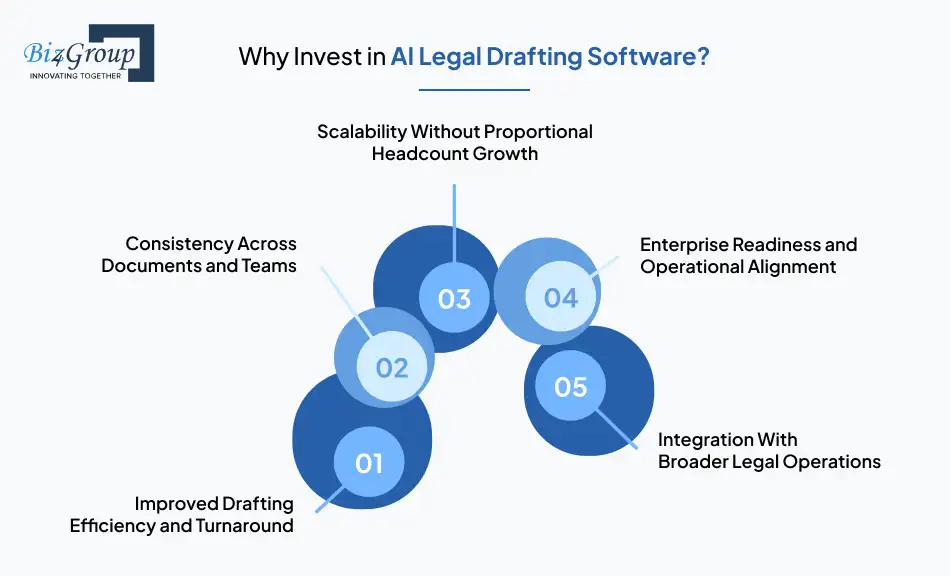
Investing in AI legal drafting software development is not about chasing trends. It is about fixing the daily friction legal teams feel when drafting workloads keep growing but time and resources do not.
1. Improved Drafting Efficiency and Turnaround
Most legal teams spend too much time starting documents from scratch or reworking prior versions. AI assisted drafting shortens that cycle while keeping lawyers firmly in control. The result is faster delivery without sacrificing confidence in the final output.
2. Consistency Across Documents and Teams
When multiple attorneys draft similar documents, inconsistency is almost inevitable. AI legal drafting software development for legal teams helps maintain a shared drafting standard across contracts and departments. This makes reviews smoother and reduces avoidable risk.
3. Scalability Without Proportional Headcount Growth
Legal demand rarely grows in neat, predictable ways. Teams that develop scalable AI legal drafting solutions can handle volume spikes without immediately adding staff. That flexibility matters when budgets are tight and expectations are high.
4. Enterprise Readiness and Operational Alignment
Large organizations need visibility and control, not just speed. Many choose to develop AI driven legal drafting tool for enterprises so drafting aligns with governance, compliance, and reporting requirements. This keeps legal work structured as the organization scales.
5. Integration With Broader Legal Operations
Drafting is only one step in the legal workflow. When drafting connects naturally with AI legal document management software through AI automation services, work moves forward with fewer handoffs and less friction. That continuity improves how legal teams operate day to day.
Once these foundations are in place, it becomes easier to see where AI driven drafting delivers the most practical value across contracts, internal policies, and high volume legal documentation without forcing change for its own sake.
Practical Applications of AI Legal Drafting Solutions for Law Firms and Enterprises

Legal teams adopt AI legal drafting software development to improve how legal language is created, structured, and reviewed before a document ever reaches final form. The strongest use cases focus on drafting scenarios where speed, precision, and repeatability directly affect legal outcomes.
1. Contract Draft Creation From Approved Clauses
Drafting contracts repeatedly from prior agreements slows legal teams down. Through custom AI legal drafting software development, teams generate first drafts using pre approved clause structures. This keeps legal language consistent while allowing controlled edits.
- Example: Drafting NDAs and service agreements using standardized clause logic rather than manual copy paste.
2. Drafting Internal Legal Templates and Playbooks
Legal teams draft internal templates that guide business teams. AI driven drafting ensures these templates remain current and structurally aligned. This use case reflects how legal workflow automation transforms legal operations at the drafting stage.
- Example: Drafting standardized contract playbooks used across departments.
3. Jurisdiction Specific Draft Adaptation
Legal drafting often requires subtle changes based on jurisdiction. Teams develop AI powered legal document drafting system logic to adapt clauses during drafting itself. This reduces rework caused by late stage compliance edits.
- Example: Drafting employment contracts that adjust language based on state level requirements.
4. Enterprise Scale Drafting Standardization
Large organizations require drafting standards across practice areas. AI legal drafting solutions for law firms and enterprises support consistent drafting logic without forcing uniform outcomes. This is often supported through enterprise AI solutions tailored to legal teams.
- Example: Drafting commercial agreements across multiple business units using shared drafting rules.
5. Pilot Drafting Programs and Controlled Rollouts
Organizations often begin with narrow drafting use cases. Leaders evaluate how long does it take to build AI legal drafting tool capabilities by piloting drafting on select document types. This limits risk while validating value.
- Example: Rolling out AI assisted drafting for vendor contracts before expanding further.
|
Drafting Use Case |
Drafting Value Delivered |
|---|---|
|
Clause Based Drafting |
Faster first drafts |
|
Jurisdictional Drafting |
Fewer revision cycles |
|
Template Drafting |
Consistent legal language |
|
Enterprise Drafting |
Scalable drafting standards |
|
Pilot Programs |
Controlled adoption |
With drafting use cases clearly defined, the next logical focus becomes the core capabilities required to support them, from clause logic to review controls, which directly influence how effective the system can be.
Standardize Legal Drafts Without Slowing Teams Down
Build smarter workflows with AI legal drafting solutions for law firms and enterprises designed for consistency, compliance, and scale.
Discuss My Legal Drafting Use CaseCore Features Required to Develop AI Legal Drafting Tool
Successful AI legal drafting software development starts with features that support how lawyers actually draft legal language, not how documents are stored or managed later. These core capabilities ensure drafting remains accurate, controlled, and usable before any advanced intelligence is introduced:
|
Core Feature |
What It Enables for Legal Drafting |
|---|---|
|
Clause Library Management |
Uses approved clauses to maintain drafting consistency |
|
Template Based Draft Creation |
Creates structured legal drafts from predefined formats |
|
Context Aware Draft Suggestions |
Recommends clauses based on document purpose |
|
Draft Editing and Redlining |
Allows lawyers to revise language directly |
|
Version Control |
Tracks drafting changes across iterations |
|
Human Review & Approval Controls |
Keeps final drafting authority with legal professionals |
|
Jurisdiction Sensitive Draft Logic |
Adjusts language during drafting based on location |
|
Secure Draft Data Handling |
Protects confidential legal drafting inputs |
|
Role Based User Access |
Controls who can draft, edit, or approve content |
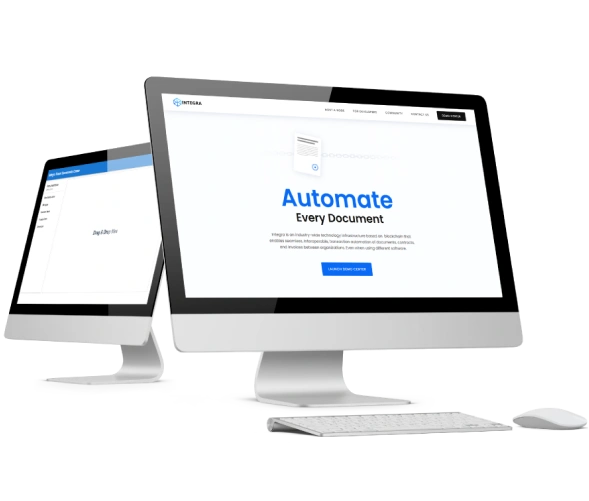
Integra Ledger is a blockchain based legal document platform designed to secure, validate, and manage sensitive legal records with tamper proof integrity. Its emphasis on document trust, version history, and governance directly complements AI legal drafting systems that require verifiable drafting trails and controlled document lifecycles.
These foundational features are typically delivered through AI automation services and usually supported by AI consulting services during implementation. Together, they form the baseline for custom AI legal drafting software development before more advanced capabilities are layered in.
Advanced Features for Scalable AI Legal Drafting Solutions
Once the foundation is stable, AI legal drafting software development evolves through advanced capabilities that help legal teams scale drafting with greater confidence and control. These features address the complexity that emerges as usage expands across teams, jurisdictions, and document types:
1. Intelligent Clause Governance and Dependency Logic
Advanced systems manage clause behavior through embedded logic rather than static rules. Dependencies between clauses are enforced during drafting to prevent conflicts and omissions. This supports organizations that create AI legal drafting software with clause libraries at scale.
2. Draft Personalization Based on Role and Context
Drafting behavior adapts based on user roles, seniority, and document intent. Senior attorneys receive different prompts than junior team members. This level of refinement is typically achieved when teams hire AI developers with legal domain experience.
3. Automated Compliance and Risk Checks During Drafting
Drafts are continuously evaluated against regulatory and internal compliance rules. This allows teams to build AI legal drafting tool with compliance checks before documents reach formal review stages. Issues surface early, reducing late stage revisions.
4. Cross System Drafting Intelligence
Drafting tools exchange context with other legal platforms through AI integration services. Relevant information flows into drafts without manual re-entry. This helps teams build AI software that fits naturally into daily legal workflows.
5. Conversational Draft Guidance for Legal Users
Some advanced systems introduce guided drafting through conversational interfaces. These resemble controlled legal AI chatbot development focused on drafting accuracy rather than open ended responses. Users receive real time guidance without sacrificing structure.
As these capabilities mature, legal leaders begin evaluating how to implement them effectively, including assessing the best company to develop AI legal drafting software and planning the next phase of development with confidence.
Step by Step Process for AI Legal Drafting Software Development

Building intelligent drafting systems for legal teams requires more than technical execution. AI legal drafting software development succeeds when every stage is grounded in how lawyers draft, review, and approve documents while managing risk, compliance, and accountability.
1. Discovery and Planning Aligned with Legal Drafting Needs
This step focuses on identifying where drafting work slows legal teams down and where AI can help without disrupting judgment. Teams offering AI legal drafting software development services begin by mapping real drafting pain points rather than abstract automation goals.
- Identify high frequency drafting scenarios
- Document existing drafting standards and controls
- Define risk tolerance and review boundaries
- Establish measurable drafting efficiency goals
2. UI and UX Design for Drafting Focused Adoption
Legal users adopt tools that feel familiar and purposeful. In AI legal drafting software development for legal teams, design decisions must support structured drafting while minimizing friction during review and revisions. It’s recommended that you collaborate with a professional and experienced UI/UX design company for the best results.
- Design interfaces around clause selection flows
- Prototype real drafting and redlining journeys
- Test usability with attorneys and legal ops
- Ensure clarity across roles and devices
Also read: Top UI/UX design companies in USA
3. Core Engineering and MVP Development
Early development focuses on proving drafting value with limited scope. Teams that develop AI-powered legal document drafting system capabilities often start with MVP development services that help in processing a small set of document types to validate usability and trust.
- Implement controlled clause libraries
- Enable structured drafting inputs
- Build review checkpoints into workflows
- Prepare architecture for future expansion
Also Read: Top 12+ MVP Development Companies to Launch Your Startup in 2026
4. AI and Legal Data Integration
Drafting intelligence depends on how well legal language is understood. To develop AI driven legal drafting tool for enterprises, models must be trained on approved legal content rather than generic text.
- Prepare clean legal datasets
- Train AI models using real drafting patterns
- Incorporate attorney feedback loops
- Maintain separation between suggestion and decision
5. Security, Compliance, and Draft Validation
Trust is essential when AI supports legal drafting. Organizations pursuing custom AI legal drafting software development embed governance and validation directly into drafting workflows before broader rollout.
- Configure role based drafting access
- Enable detailed audit trails
- Validate outputs against compliance rules
- Test drafting scenarios under real conditions
Also Read: Software Testing Companies in USA
6. Deployment and Cloud Readiness
Legal drafting demand fluctuates based on business activity. Teams that develop scalable AI legal drafting solutions plan deployments that remain reliable during peak drafting periods.
- Deploy scalable cloud infrastructure
- Monitor drafting usage patterns
- Roll out access in controlled phases
- Support onboarding with clear guidance
7. Post Launch Optimization and Continuous Improvement
AI drafting systems improve through real use. Post launch refinement ensures drafting stays aligned with evolving legal standards and business priorities.
- Collect attorney feedback continuously
- Expand clause coverage gradually
- Retrain models as policies change
- Track adoption and efficiency gains
When executed with discipline, this process enables organizations to scale drafting responsibly and build systems that support enterprise growth through AI legal drafting software development services without compromising legal oversight.

Trial Proofer is a virtual law firm automation platform that helps legal professionals manage deadlines, workflows, and service delivery remotely. Its focus on structured legal operations aligns closely with AI-driven drafting environments where documents, timelines, and accountability must move together without manual coordination.
Move From Manual Drafting to Intelligent Systems
See how teams develop AI powered legal document drafting system capabilities that fit real legal workflows, not generic automation.
Plan My AI Drafting SolutionChoosing the Right Tech Stack for AI Legal Drafting Software Development
A well-chosen tech stack determines how reliably an AI legal drafting system performs under real legal pressure. Each layer below supports secure drafting, controlled intelligence, and workflows that legal teams can trust when accuracy and accountability matter:
|
Label |
Preferred Technologies |
Why It Matters |
|---|---|---|
|
Frontend Framework |
ReactJS, VueJS |
Lawyers need drafting interfaces that are fast and intuitive, which is why teams often rely on proven UI stacks supported by ReactJS development. |
|
Server Side Rendering and SEO |
NextJS, NuxtJS |
Drafting dashboards benefit from fast load times and accessibility, a common strength of applications built through NextJS development. |
|
Backend Framework |
NodeJS, Python |
Drafting logic, permissions, and rule enforcement live here, making NodeJS development and Python development a strong fit for legal systems. |
|
REST, GraphQL |
Drafting tools must exchange data cleanly with internal legal platforms, and well structured APIs prevent workflow disruptions as systems scale. |
|
|
AI and Data Processing |
TensorFlow, PyTorch |
Clause intelligence and drafting logic rely on controlled model behavior rather than open text generation. |
|
Data Storage and Version Control |
PostgreSQL, MongoDB |
Legal drafting requires precise version tracking to support edits, approvals, and audit readiness. |
|
Security and Access Management |
OAuth, RBAC |
Strict access controls are essential to protect confidential legal drafts and reviewer authority. |
|
Deployment and Scalability |
AWS, Azure |
Cloud infrastructure ensures drafting systems remain stable during deal surges and regulatory deadlines. |
|
Monitoring and Observability |
Prometheus, ELK Stack |
Usage visibility helps legal ops teams track adoption, performance, and drafting bottlenecks. |
When these technologies are aligned thoughtfully, AI legal drafting software development becomes easier to scale without compromising performance, security, or drafting integrity. Now, let’s dive into a clearer understanding of cost expectations across different stages of implementation.
Cost of AI Legal Drafting Software Development at Different Stages
The cost of building AI driven drafting systems varies widely based on scope, risk tolerance, and scale. For most organizations, AI legal drafting software development typically falls in the $10,000 to $100,000+ range, shared here as a ballpark figure rather than a fixed quote, since requirements differ significantly.
|
Development Stage |
Typical Cost Range |
What This Stage Usually Covers |
|---|---|---|
|
MVP AI legal drafting software |
$10,000 to $25,000 |
Limited document types, basic clause libraries, structured drafting inputs, and early validation with a small legal user group |
|
Mid-Level AI legal drafting software |
$25,000 to $60,000 |
Expanded document coverage, improved drafting logic, compliance rules, role-based access, and stronger review controls |
|
Enterprise Grade AI legal drafting software |
$60,000 to $100,000+ |
Multi jurisdiction drafting logic, advanced compliance checks, scalability, security hardening, and integration with enterprise legal workflows |
Several factors influence where a project lands within these ranges. These include the number of document types, depth of clause logic, compliance requirements, security expectations, and the level of customization needed to match existing legal processes. Timelines, internal readiness, and change management efforts also play a role in overall investment.
Understanding these cost stages helps legal leaders align expectations early and plan investments more confidently. That brings us to our next question - how such platforms can generate returns and support sustainable monetization strategies over time.
Also Read: What is the Cost to Develop Legal AI Agent?
Scale Legal Drafting Without Scaling Headcount
Future proof operations by choosing to develop scalable AI legal drafting solutions that grow with your firm or enterprise.
Explore Scalable Drafting OptionsMonetization Models for AI Legal Drafting Software Development
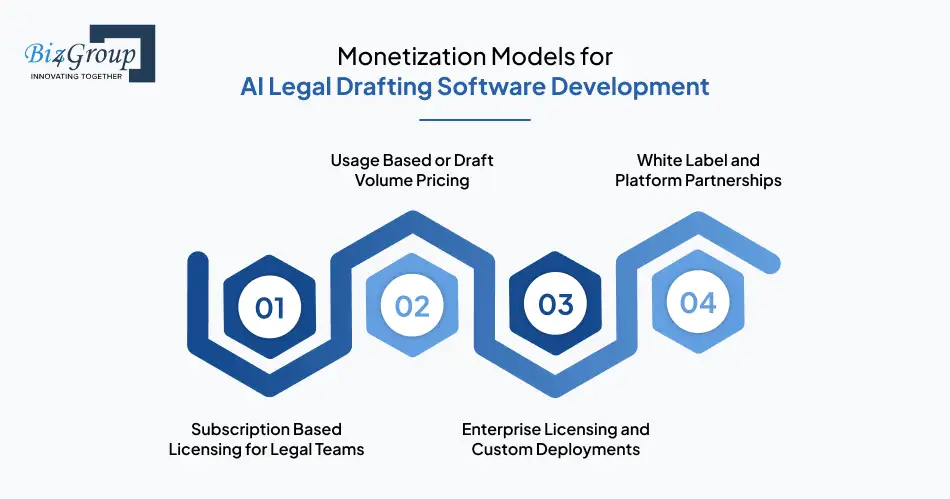
Once a drafting platform proves value, monetization becomes a strategic decision rather than a technical one. AI legal drafting software development supports flexible revenue models that align with how legal teams adopt technology, manage risk, and justify spend internally.
1. Subscription Based Licensing for Legal Teams
This model works well when drafting software becomes part of daily legal operations. Law firms and corporate legal departments prefer predictable monthly or annual pricing tied to users or drafting volume rather than unpredictable usage spikes.
- Example: A mid sized law firm adopts AI legal drafting solutions for law firms and enterprises and integrates them with attorney billing software to align drafting usage with revenue tracking.
2. Usage Based or Draft Volume Pricing
Some organizations prefer paying only for what they use, especially during early adoption. This model aligns cost directly with drafting activity and works well for teams testing how AI fits into their workflows.
- Example: An in house legal team evaluates how long does it take to build AI legal drafting tool capabilities while paying per finalized draft after choosing to integrate AI into an app.
3. Enterprise Licensing and Custom Deployments
Large organizations often require customized deployments that reflect governance, compliance, and scale. Enterprise licensing supports broader rollouts while accommodating internal controls and long term planning.
- Example: A global legal department deploys a drafting platform developed through AI lawyer app development across regions under a single enterprise agreement.
4. White Label and Platform Partnerships
Some providers monetize drafting technology by embedding it into existing legal products. This approach works well when drafting is one part of a broader legal software ecosystem.
- Example: Drafting intelligence is bundled into a legal operations platform built through business app development using AI.

Compare Legal is a legal quotation and comparison platform that helps users evaluate legal service options based on structured criteria. Its data driven decision framework mirrors how AI legal drafting systems standardize inputs, clauses, and outcomes to reduce subjectivity while improving consistency across legal deliverables.
As revenue models mature, decision makers naturally start evaluating vendor credibility and delivery capability, often focusing on selecting the best company to develop AI legal drafting software that supports sustainable growth without compromising legal rigor.
Also Read: What is the cost to develop AI lawyer app?
Challenges in AI Legal Drafting Software Development and How to Overcome Them
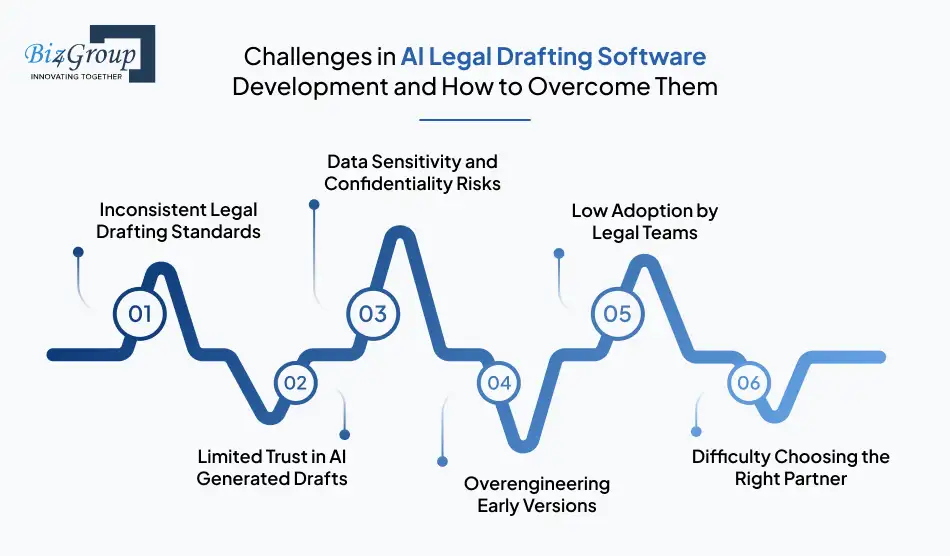
Building drafting systems for legal teams comes with unique constraints that go beyond typical software projects. AI legal drafting software development must balance accuracy, trust, and usability, which makes understanding the most common hurdles essential before moving into execution decisions.
|
Top Challenges |
How to Solve Them |
|---|---|
|
Inconsistent Legal Drafting Standards |
Start by codifying firm approved clauses and drafting rules before introducing automation so AI supports existing legal standards rather than redefining them. |
|
Limited Trust in AI Generated Drafts |
Keep lawyers in control through review checkpoints and transparent drafting logic that explains why clauses are suggested. |
|
Data Sensitivity and Confidentiality Risks |
Implement strict access controls, audit trails, and secure environments to protect draft content and client information. |
|
Overengineering Early Versions |
Focus on narrow drafting use cases first and avoid building unnecessary features before adoption is proven. |
|
Low Adoption by Legal Teams |
Design drafting experiences that feel familiar to lawyers rather than resembling an AI conversation app meant for general users. |
|
Difficulty Choosing the Right Partner |
Work with teams that understand both legal workflows and AI delivery, including those recognized among top AI legal software development companies in USA. |
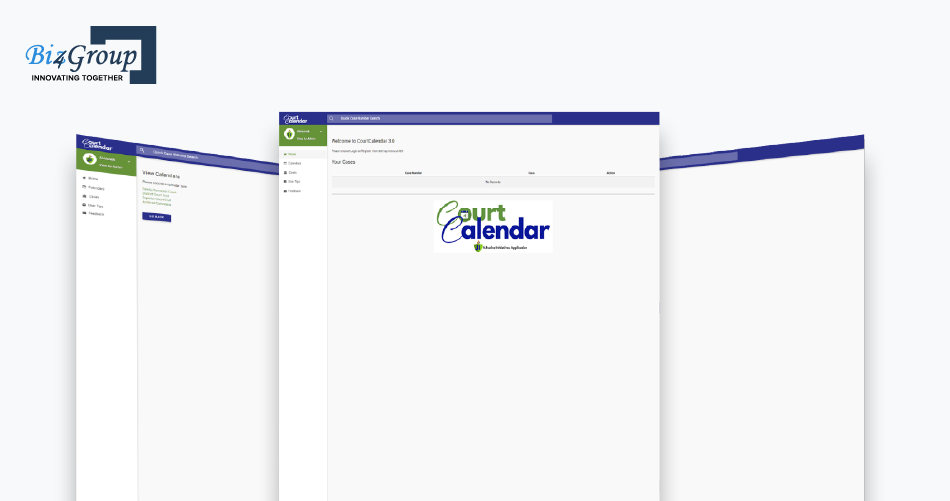
Court Calendar is a judiciary focused scheduling and case management platform built to reduce backlog and improve coordination for courts and attorneys. Its emphasis on structured legal timelines reinforces the importance of AI drafting systems that align documents with procedural deadlines and operational reality.
When these challenges are addressed early, organizations are better positioned to deploy reliable AI legal drafting solutions for law firms and enterprises that gain user trust and deliver real operational value. Next, let's define the best development practices that ensure long term success and scalability.
Design Drafting Tools That Lawyers Actually Use
From contracts to internal templates, AI legal drafting software development for legal teams works best when adoption comes first.
Build My Legal Drafting PlatformBest Practices for AI Legal Drafting Software Development
Strong outcomes depend less on tools and more on disciplined execution. AI legal drafting software development works best when legal judgment, technical design, and operational realities stay aligned, which sets the foundation for the best practices that follow.
1. Anchor Drafting Logic in Legal Standards
Drafting systems should reflect how lawyers already write and review documents. Clause structures, approval rules, and legal tone must be defined before automation begins. This prevents drift and keeps AI outputs legally defensible.
2. Design Compliance Into Drafting From Day One
Compliance cannot be added after drafts are generated. Teams should build AI legal drafting tool with compliance checks embedded directly into drafting logic. This ensures issues surface early rather than during final review.
3. Separate Intelligence From Interface Design
Drafting intelligence should remain structured even when interfaces feel conversational. Avoid turning drafting into an AI conversation app and focus instead on guided inputs. This preserves control while improving usability.
4. Treat Clause Libraries as Living Assets
Clause libraries evolve with regulations and firm preferences. Teams should create AI legal drafting software with clause libraries that are easy to update and govern. This keeps drafting outputs consistent as standards change.
5. Limit Early Scope and Expand Intentionally
Attempting to automate every document type creates unnecessary risk. It is more effective to develop AI legal drafting tool capabilities around a small set of high value drafts first. Expansion should follow real usage patterns.
6. Plan Early for Legal Product Extensions
Drafting systems often become part of broader legal platforms. Planning early supports future expansion such as build legal AI agent initiatives or integration paths similar to develop AI website for law firms use cases. This foresight reduces friction as needs evolve.
When these practices are followed consistently, teams are better prepared to scale responsibly and adapt to change, which naturally leads into examining how emerging trends are shaping the future of AI driven legal drafting.
The Future of AI Legal Drafting Software Development
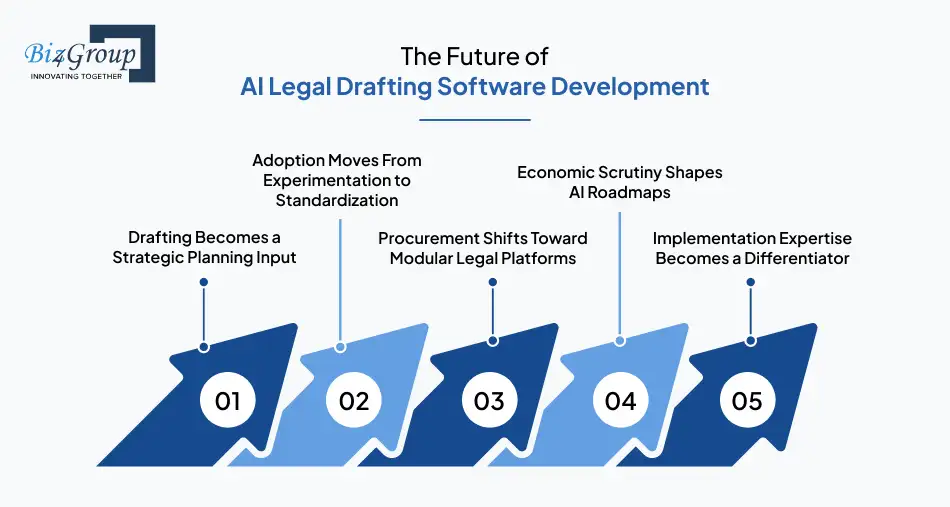
Legal drafting is entering a phase where value is defined less by novelty and more by operational maturity. AI legal drafting software development is evolving toward long term infrastructure that supports how legal teams think, plan, and scale work over time, which shapes the future in several distinct ways.
1. Drafting Becomes a Strategic Planning Input
Legal drafting systems will increasingly inform upstream decision making rather than react to requests. Draft insights will influence contract strategy, risk posture, and workload forecasting. This shift enables organizations to create AI legal document drafting solutions that support planning, not just execution.
2. Adoption Moves From Experimentation to Standardization
Early pilots are giving way to standardized drafting environments across organizations. Legal leaders will prioritize consistency, governance, and repeatability over experimentation. This trend strengthens demand for AI legal drafting software development for legal teams built for long term use.
3. Procurement Shifts Toward Modular Legal Platforms
Future buyers will favor modular systems that can evolve incrementally. Drafting tools will be selected as part of broader legal ecosystems supported by on-demand app development solutions. This reduces vendor lock in while allowing controlled expansion.
4. Economic Scrutiny Shapes AI Roadmaps
Budget discipline will increasingly influence what gets built and when. Leaders will question the return on advanced interactions by weighing the cost to build legal AI chatbot style functionality against measurable drafting outcomes. Value clarity will drive adoption decisions.
5. Implementation Expertise Becomes a Differentiator
Success will depend less on tools alone and more on execution quality. Organizations will rely on AI legal drafting software development services to guide rollout, governance, and change management. This ensures AI supports legal work rather than disrupting it.
Now, let’s figure out how to find tech partners who can support this maturity curve and deliver drafting systems that align with legal accountability, business priorities, and long-term operational confidence.
Why Choose Biz4Group LLC for AI Legal Drafting Software Development?
Choosing the right development partner matters as much as choosing the right technology. Biz4Group LLC brings hands on experience building legal focused platforms where accuracy, governance, and workflow alignment are non-negotiable, which directly translates into how AI legal drafting systems are designed and delivered.
Our work on platforms like Integra Ledger, Trial Proofer, Compare Legal, and Court Calendar reflects a consistent pattern. We build systems that respect legal processes first, then apply AI in ways that enhance structure, traceability, and operational clarity rather than forcing disruption.
What sets Biz4Group LLC apart is execution discipline combined with domain awareness.
- Proven experience delivering legal platforms that handle sensitive data and regulated workflows
- Strong understanding of how drafting connects with deadlines, compliance, and operational timelines
- Ability to design AI systems that integrate cleanly into existing legal environments
- End to end ownership as a custom software development company, from discovery through deployment
Instead of treating AI legal drafting as a standalone product, Biz4Group LLC approaches it as part of a larger legal ecosystem. This ensures the solutions we build are practical, scalable, and trusted by the teams who rely on them every day.
Turn Legal Drafting Ideas Into Production Ready Systems
Work with experts who know how to develop AI driven legal drafting tool for enterprises without compromising governance or trust.
Start My AI Drafting BuildFinal Thoughts on AI Legal Drafting Software Development
Legal drafting has always been less about writing and more about thinking clearly under pressure. AI does not change that. What it changes is how much time lawyers spend on repetition, cleanup, and second guessing.
When approached thoughtfully, AI legal drafting becomes the quiet system running in the background, keeping language consistent while people focus on judgment. With the right product development services and an experienced AI app development company, drafting stops being a bottleneck and starts behaving like infrastructure.
Thinking about AI for legal drafting but want it done responsibly? We should have a conversation.
FAQs on AI Legal Drafting Software Development
1. Can AI legal drafting software be tailored to specific practice areas or jurisdictions?
Yes. Many organizations choose custom AI legal drafting software development to reflect specific practice areas, jurisdictions, and drafting standards. This ensures legal language stays accurate while adapting to regional laws and domain specific requirements.
2. How do legal teams maintain control over drafts created using AI?
AI drafting tools are designed to support, not replace, legal judgment. With AI legal drafting software development for legal teams, lawyers retain control through review workflows, approval checkpoints, and the ability to revise drafts before finalization.
3. What types of legal documents are best suited for AI assisted drafting?
Structured and repeatable documents benefit the most from AI assistance. Organizations often develop AI powered legal document drafting system capabilities for contracts, agreements, policies, and internal templates that follow predictable drafting patterns.
4. How long does it take for legal teams to see value after implementation?
Timelines vary based on scope and readiness, but many leaders ask how long does it take to build AI legal drafting tool solutions that deliver early wins. Focused rollouts often show productivity improvements within weeks of deployment.
5. What is the cost of AI legal drafting software development?
The investment typically falls between $10,000 and $100,000 or more, depending on complexity and scale. Costs differ when organizations develop scalable AI legal drafting solutions that support multiple document types and teams.
6. Does AI legal drafting software replace junior lawyers or legal staff?
No. AI drafting tools reduce repetitive work rather than roles. Many firms adopt AI legal drafting solutions for law firms and enterprises to free legal professionals to focus on analysis, strategy, and higher value legal judgment.
