 Location :
Orlando, FL, USA
Location :
Orlando, FL, USA +1 (407) 714-1616
 info@biz4group.com
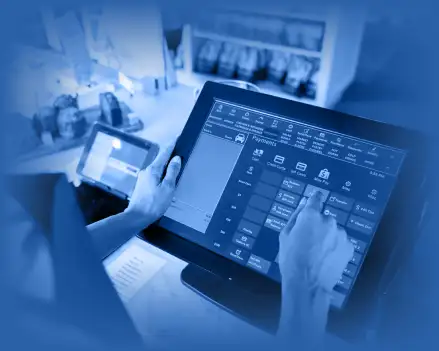
- AI POS system development helps retailers turn checkout systems into platforms that analyze sales activity, inventory movement, and store performance.
- Many businesses develop intelligent POS software with AI driven insights to understand demand patterns, monitor store activity, and support faster operational decisions.
- Retailers also create AI POS solutions for real time sales analytics to track product demand and compare performance across multiple store locations.
- The cost to build AI POS software usually ranges from $25,000 to $150,000+, depending on features, integrations, and whether the platform supports multi store environments.
- Scalable POS platforms often use cloud infrastructure and centralized analytics so businesses can monitor sales and inventory across multiple stores.
Retail businesses handle a constant flow of transactions every day. Each sale records details like products, prices, payment methods, and buying patterns. Traditional point of sale systems mainly store this information for billing and reports. But today, many businesses want systems that can do more than that. They want tools that can analyze retail data and help them make quicker operational decisions. This shift has led many organizations to explore AI POS system development, where AI is integrated into POS platforms to improve how store data is understood and used.
An AI POS can review sales activity, identify patterns in customer purchases, and highlight changes in product demand. With AI powered POS software development, POS platforms begin to function as both transaction systems and insight tools, helping businesses better understand what is happening across their sales operations.
When AI capabilities are integrated into POS platforms, this data can be analyzed to spot patterns that may otherwise go unnoticed. Many businesses work with an AI development company to add these capabilities to their systems and improve how data is used.
For businesses planning to develop AI POS systems for retail, understanding how these platforms work is an important starting point. This guide explains what AI POS systems are, how they operate, where they are used, and what businesses should consider when building or adopting them.
Understanding AI POS System Development
An AI POS system is a point of sale platform that uses artificial intelligence to analyze transaction data and generate insights for inventory, customer behavior, and retail operations.
How AI Changes the Role of POS Software
Traditional POS software mainly records transactions and processes payments. As retail operations generate more data, businesses expect these systems to do more than store sales records. This shift is one reason companies are exploring AI POS system development, where artificial intelligence helps POS platforms analyze sales activity and highlight useful patterns.
AI changes the role of POS software in a few practical ways:
- Reviews transaction history to identify demand trends and product performance. Businesses often build AI driven point of sale systems to better understand how products sell over time.
- Combines sales and inventory data to highlight possible stock shortages or slow moving items.
- Examines purchase history to reveal common buying patterns and product relationships.
- Flags unusual transactions or unexpected shifts in sales activity.
- Turns large volumes of POS data into insights that managers can review more easily.
As a part broader enterprise AI solutions or initiatives, POS data can work with inventory platforms, supply chain systems, and other retail tools.
That’s why, POS platforms are gradually evolving from simple checkout tools into systems that help with the interpretation of retail data. Businesses looking to create AI POS software solutions are basically leveraging data to understand store performance, product demand, and operational trends.
How do AI POS Systems Work?
Modern POS platforms handle more than payments and receipts. In AI POS system development, the system captures transaction data, processes it through data pipelines, and applies machine learning to uncover patterns. These layers work together to turn everyday store activity into useful operational insights.
1. POS Transaction Layer
This layer records every action that happens at the checkout counter, such as product scans, price updates, payments, and refunds. Each interaction creates a digital transaction record containing product details, quantity, price, and time of purchase. These records form the basic dataset that the rest of the system analyzes.
2. Data Processing and Event Streaming Layer
Once transactions are recorded, they move into a data pipeline that organizes and prepares information for analysis. Instead of waiting for end-of-day reports, the system treats every sale as an event that flows through the platform. Businesses often use AI integration services to connect POS data streams from different stores into one processing environment.
3. Machine Learning and AI Services Layer
At this stage, machine learning models analyze sales history, inventory data, and purchasing patterns. The models look for trends such as rising product demand or unusual transaction activity. In retail AI POS application development, this layer handles model training, deployment, and updates as new sales data arrives.
4. Analytics and Decision Support Layer
This layer turns processed data into dashboards and reports that store managers can review easily. Sales trends, product performance, and transaction patterns become visible through simple analytics tools. Instead of manually reviewing sales logs, teams can quickly see how stores and products are performing.
5. Device and Edge Processing Layer
The device layer includes the POS terminals, mobile checkout devices, barcode scanners, and self-checkout kiosks used inside stores. These devices capture transaction activity and send it to the POS platform. In systems built through custom AI POS system development, some checks can also run directly on these devices through edge processing.
AI POS System Architecture Overview
|
Layer |
Role in the System |
|---|---|
|
POS Transaction Layer |
Records product scans, payments, and checkout events |
|
Data Processing Layer |
Organizes transaction data and processes event streams |
|
Machine Learning Layer |
Detects patterns and generates predictions |
|
Analytics Layer |
Provides dashboards and operational insights |
|
Device and Edge Layer |
Captures store transactions and supports local processing |
When these layers work together, POS platforms allow businesses to understand what is happening across their stores and sales channels, using transaction data to support everyday retail decisions.
Thinking About AI POS System Development?
Understand how an AI-enabled POS platform can help you monitor store performance, inventory movement, and sales activity more clearly.
Talk to Our POS ExpertsWhy Are Businesses Investing in AI POS System Development?
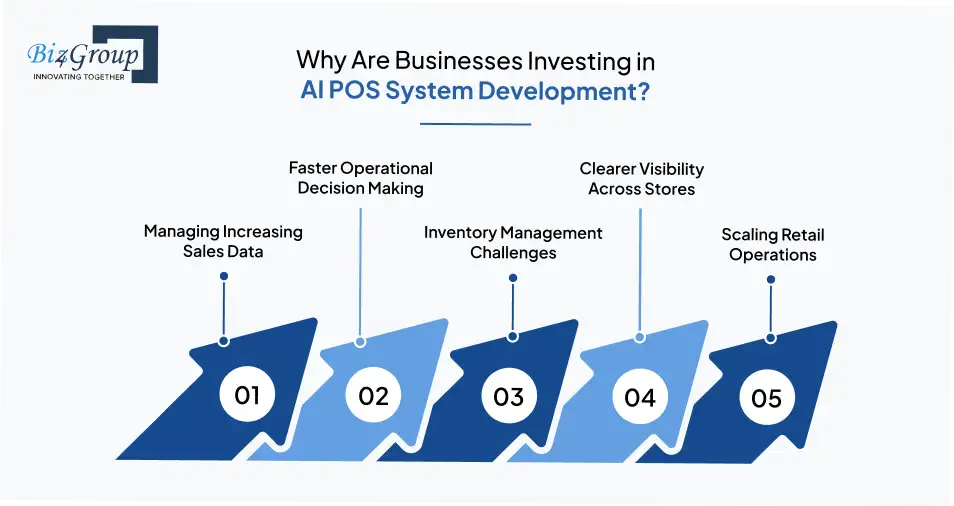
Businesses are investing in AI POS system development to gain clearer visibility into sales activity, manage inventory more accurately, and monitor store performance without relying only on manual reports.
1. Managing Increasing Sales Data
Retail systems record thousands of transactions through product scans, payments, and order updates. As this data grows, manual analysis becomes difficult and slow. AI POS platforms help businesses process large transaction datasets and interpret sales activity more efficiently.
2. Faster Operational Decision Making
Store teams often need to react quickly to changes in product demand or sales patterns. AI systems analyze transaction activity continuously and highlight operational signals earlier. Many organizations seek AI consulting services when designing POS platforms that support quicker decisions.
3. Inventory Management Challenges
Retail inventory changes constantly as products are sold, returned, or restocked. AI POS systems analyze sales and stock data together to identify shortages or slow-moving items. This helps businesses adjust inventory planning before stock issues affect store operations.
4. Clearer Visibility Across Stores
Retail chains operating across several locations often struggle to track performance consistently. AI-enabled POS platforms allow businesses to monitor sales activity across stores and identify differences in product demand or store performance.
5. Scaling Retail Operations
As businesses expand to more locations, monitoring store activity becomes harder with traditional POS systems. Companies that build smart POS systems using AI can track transaction data across locations and maintain better visibility into overall retail performance.
Businesses are increasingly adopting POS platforms to convert everyday transaction data into insights that support the overall growth of their business.
Should Small Businesses Invest in AI POS Software?
For small stores, the decision usually depends on how complex daily operations are. AI POS system development becomes more relevant when transaction activity, inventory movement, or store data grows beyond what basic POS reports can explain.
Situations Where AI POS Provides Clear Value
AI POS systems become more useful when store operations generate enough transaction data that simple reports no longer provide clear answers.
- Large or frequently changing inventories where product demand shifts often.
- Multiple store locations that require centralized visibility into sales activity.
- Customer purchase pattern analysis to understand which products sell together or repeat over time.
- High daily transaction volume where reviewing reports manually becomes time consuming.
In some cases, AI automation services are used to connect POS transaction data with inventory monitoring or operational reporting tools.
As store operations grow more complex, some teams decide to develop AI enabled POS platforms to track sales activity and inventory behavior more clearly.
When Traditional POS Systems May Be Enough
Not every store needs AI capabilities in its POS system. When operations are simple, traditional POS platforms can handle sales processing and reporting without added complexity.
|
Store Situation |
POS Requirement |
|---|---|
|
Single location with limited transactions |
Basic POS reporting is usually sufficient |
|
Small product catalog |
Inventory tracking remains straightforward |
|
Limited need for analytics |
Manual reports can support decisions |
|
No short-term expansion plans |
Standard POS platforms are often adequate |
AI features usually become relevant once transaction data grows and operational decisions require deeper analysis. At that stage, some organizations move to create intelligent POS systems for businesses that provide clearer insight into sales and inventory activity.
Build Smart POS Systems Using AI
Move beyond traditional checkout systems and give your retail teams better visibility into what's actually happening in the store.
See What an AI POS Can DoReal World Use Cases of AI POS Systems

Businesses apply AI POS systems in different ways depending on their operations. Some use them to monitor sales trends, while others rely on them to manage inventory, understand customer behavior, or automate routine store tasks.
1. AI POS Systems for Retail Businesses
Aim: Understanding Product and Store Performance
Retail stores generate large volumes of transaction data through product scans and payments. AI POS platforms analyze this data to show which products are selling well, which items slow down, and how different stores perform over time. This is a common goal in AI based POS platform development.
- Example: A clothing retailer reviews POS insights and notices that certain jackets sell faster in colder regions, helping managers adjust store inventory.
2. AI POS Software for Restaurants
Aim: Analyzing Menu Demand and Ordering Patterns
Restaurant POS systems capture detailed order information for every meal served. AI analysis can highlight which menu items are ordered most often, what times demand increases, and how ordering patterns change during the day. Many restaurants build AI powered POS systems for restaurants and stores to better understand these patterns.
- Example: A restaurant discovers through POS data that specific dishes sell most during lunch hours, helping the kitchen prepare ingredients earlier.
3. AI POS Systems for Smarter Inventory Management
Aim: Monitoring Stock Movement and Product Demand
Inventory often changes quickly in busy retail environments. AI POS systems compare sales data with inventory levels to detect when certain products are selling faster or slower than usual. This process often relies on AI model development to interpret sales patterns.
- Example: A grocery store receives an alert when POS data shows a fast increase in demand for a particular product, allowing the team to reorder before shelves run empty.
4. AI POS Systems for Personalized Customer Experiences
Aim: Understanding Customer Purchase Patterns
POS systems record purchase history that can reveal useful patterns about how customers shop. When retailers integrate AI into an app connected to POS platforms, this data can help identify frequently purchased products or repeat buying behavior.
- Example: A store identifies that customers who buy sports shoes often purchase related accessories, helping the retailer group these products together.
5. AI POS Systems for Automated Retail Operations
Aim: Reducing Manual Store Monitoring
AI POS platforms can automate certain operational checks such as identifying sudden changes in product demand or monitoring stock levels. These signals reduce the need for constant manual monitoring and help staff react sooner to operational changes.
- Example: When a product starts selling unusually fast during a promotion, the POS system highlights the change so store staff can replenish shelves quickly.
6. AI POS Systems for Real Time Sales Analytics
Aim: Observing Sales Activity as It Happens
AI POS systems can analyze transactions continuously instead of relying only on daily reports. This allows store managers to observe how promotions, pricing changes, or seasonal trends affect sales throughout the day.
- Example: During a store promotion, a manager monitors the POS dashboard and quickly sees which products are attracting the most purchases.
These use cases show how POS platforms can support everyday store decisions once sales data is analyzed more effectively. As teams explore how to develop AI POS systems for retail businesses, many focus on using transaction data to improve visibility into sales trends, inventory movement, and customer purchasing behavior.
These use cases show how POS platforms help with everyday operations. Different businesses apply these systems in different ways depending on store size, transaction volume, and operational needs.
Core Features of AI Powered POS Software
Every AI POS platform comes with a set of capabilities that help teams monitor store activity and respond to changes faster. In AI POS system development, these features allow POS systems to interpret transaction data instead of simply recording it.
|
Core Feature |
What It Does |
|---|---|
|
Real Time Sales Monitoring |
Tracks transactions as they happen so teams can see how products are selling throughout the day. |
|
Inventory Tracking with AI Alerts |
Watches stock levels and highlights items that may run low based on current sales activity. |
|
Demand Trend Identification |
Reviews past sales records to identify patterns in how product demand changes over time. |
|
Customer Purchase Pattern Analysis |
Looks at purchase history to reveal commonly bought product combinations and repeat buying behavior. |
|
Automated Sales Reporting |
Generates sales summaries automatically so teams do not need to compile reports manually. |
|
Promotion Performance Tracking |
Shows how discounts or campaigns affect product sales and customer purchasing behavior. |
|
Multi Location Sales Visibility |
Combines transaction data from different stores to show how locations perform relative to each other. |
|
Operational Alerts and Notifications |
Sends alerts when unusual sales activity or inventory changes occur. |
|
Transaction History Analysis |
Stores and organizes past POS data so teams can review long term sales trends. |
|
POS Data Integration |
Connects POS data with inventory systems and analytics platforms. |
Some retailers work with a custom software development company when building POS platforms that combine these capabilities with other operational tools.
These capabilities are commonly implemented during AI POS system development for smarter inventory management, where transaction data helps stores monitor product demand and respond to stock changes more quickly.
Advanced Features in AI POS System Development
Some POS platforms go beyond tracking sales and start responding to store activity automatically. In AI POS system development, these advanced capabilities help systems anticipate demand changes, adjust operations, and surface patterns that are harder to detect through standard reports.
1. Predictive Demand Forecasting
AI models can review historical sales patterns and estimate how product demand may change in the near future. Instead of reacting after stock runs low, store teams can prepare for demand shifts earlier. This helps reduce situations where fast-selling products suddenly run out.
2. Automated Inventory Replenishment
Advanced POS platforms can link sales patterns directly with inventory signals. When demand rises or stock falls below expected levels, the system can trigger restocking alerts or purchase recommendations. These capabilities are often used when retailers make AI POS systems for automated retail operations.
3. Dynamic Pricing Insights
Some systems analyze how pricing changes affect product demand over time. Instead of guessing which discounts might work, managers can review data patterns that show how customers respond to pricing adjustments. Some teams also experiment with generative AI to study larger sales datasets.
4. Personalized Checkout Recommendations
AI can review purchase history to detect patterns in how customers buy related products. These patterns can appear during checkout as suggested items or targeted offers. Retailers often create AI POS software for personalized customer experiences using these insights.
5. Sales Anomaly Detection
Advanced POS platforms can highlight unusual activity in transaction data, such as sudden spikes in product sales or unexpected refund patterns. These signals help store teams review what changed in sales activity and respond faster.
As POS platforms evolve, these advanced features allow stores to move beyond simple reporting. They introduce forecasting, automation, and personalization into everyday retail operations without changing how transactions are processed.
Turn Store Data Into Practical Insights
Many retailers now develop intelligent POS software with AI driven insights to track product demand and identify operational patterns earlier.
Explore the PossibilitiesStep by Step Process for AI POS System Development
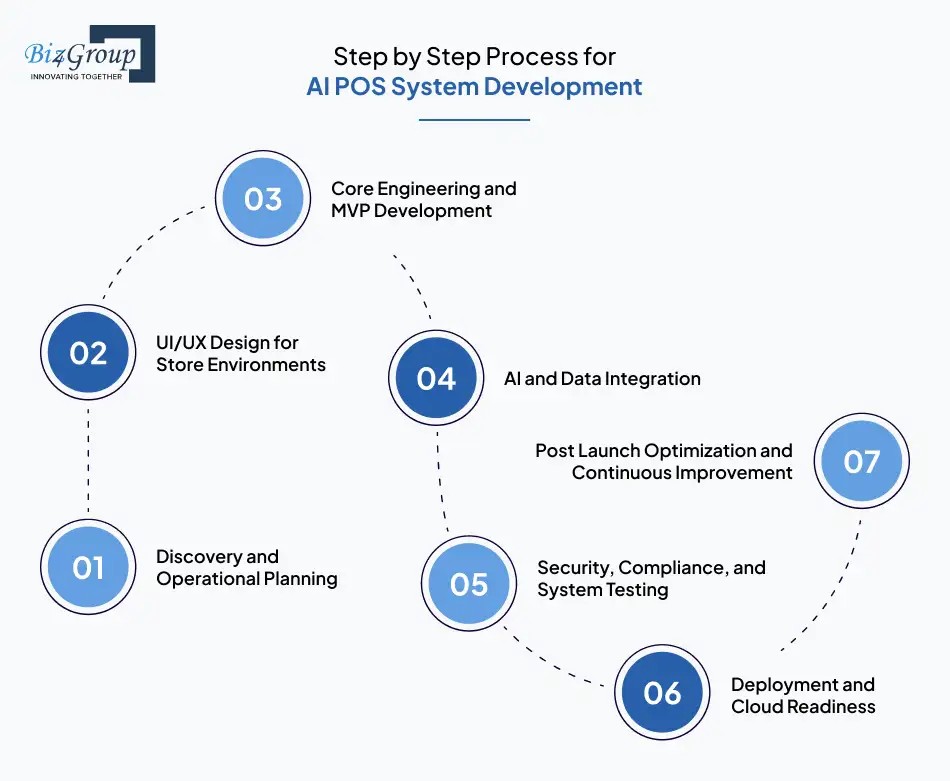
Building an intelligent POS platform requires aligning store operations, transaction data, and analytics capabilities. In AI POS system development, teams gradually move from a basic checkout system to a platform that can interpret sales activity and support retail decision-making.
1. Discovery and Operational Planning
The first step is understanding how the POS system will fit into daily store operations. Retail teams often struggle with issues like delayed inventory visibility, fragmented reporting, or lack of demand insights. Identifying these operational gaps helps product teams design a system that supports modern retail workflows.
Planning discussions usually focus on the data the system must capture and the type of insights store managers need. These early decisions guide how to build AI POS systems for modern retail environments where transaction data plays a central operational role.
Key planning activities include:
- Interviewing store managers and operations teams to identify workflow bottlenecks
- Mapping processes such as checkout, order updates, and inventory movement
- Defining the types of transaction data that will feed analytics models
- Setting measurable goals such as faster checkout or improved stock visibility
2. UI/UX Design for Store Environments
POS interfaces must work in fast-paced environments where staff cannot spend time navigating complex screens. Cashiers, restaurant staff, and store managers all interact with the system differently, so the interface must support multiple roles without slowing down transactions.
Design teams usually create checkout simulations to test how the interface performs during real store activity. Many companies collaborate with a experienced UI/UX design company in USA to ensure the experience remains consistent across POS terminals, tablets, and mobile devices.
Design work usually includes:
- Prototyping checkout flows that replicate real store transactions
- Testing usability with store staff during simulated peak hours
- Designing dashboards that surface operational insights quickly
- Standardizing layouts so the system behaves consistently across devices
Also read: Top 15 UI/UX Design Companies in USA (2026 Edition)
3. Core Engineering and MVP Development
Launching a fully featured AI POS platform immediately can increase development complexity. Many product teams start with MVP development services, focusing on the core transaction engine and a few analytics capabilities.
The goal of the MVP is to validate the platform in real stores before expanding it. At this stage, the system is often designed so it can later build scalable AI POS systems for multi store businesses as operations grow.
Typical MVP components include:
- Building the POS transaction engine for product scans and payments
- Developing inventory tracking linked to sales activity
- Creating initial sales dashboards for store managers
- Designing backend services that can support additional AI modules
Also read: Top 12+ MVP Development Companies to Launch Your Startup in 2026
4. AI and Data Integration
Once the POS platform is stable, the next step is connecting transaction data with analytics models. Sales events generated by product scans and payments become the foundation for AI insights.
This stage focuses on structuring data pipelines and training models so they can interpret retail activity accurately. Many teams use this phase to create AI POS solutions for real time sales analytics, allowing store managers to monitor demand patterns while transactions are happening.
This stage typically includes:
- Designing pipelines that capture transaction and inventory events
- Training AI models on historical sales and purchasing behavior
- Building analytics services that interpret sales activity across stores
- Integrating AI insights into POS dashboards and reporting tools
5. Security, Compliance, and System Testing
POS systems process payment data and sensitive business information, so security and reliability are critical before deployment. Testing ensures the system performs well even when transaction volume increases during busy store hours.
Compliance checks also confirm that payment processing and data storage meet regulatory standards. Organizations often involve experienced engineering teams when validating systems designed for large retail networks.
Testing and compliance tasks often include:
- Running PCI compliance audits for payment systems
- Stress testing checkout workflows under heavy transaction loads
- Simulating store activity to identify operational issues
- Implementing logging and role-based access controls
Also Read: 15+ Software Testing Companies in USA in 2026
6. Deployment and Cloud Readiness
Retail POS platforms must support transactions across multiple locations without losing synchronization between stores. Cloud infrastructure allows the system to handle fluctuating demand while keeping store data centralized.
This stage typically focuses on deploying infrastructure that can develop cloud based AI POS platforms for retail chains, ensuring every store location contributes to a shared analytics environment.
Deployment planning often includes:
- Hosting services on scalable cloud infrastructure
- Implementing CI/CD pipelines for controlled system updates
- Monitoring transaction activity through operational dashboards
- Preparing onboarding materials so store staff can adopt the system quickly
7. Post Launch Optimization and Continuous Improvement
Retail operations change frequently as product catalogs evolve and customer behavior shifts. After deployment, teams continue refining the system using the data generated during daily store activity.
Over time, analytics capabilities expand as new transaction patterns emerge. This phase often focuses on develop intelligent POS software with AI driven insights, enabling deeper analysis of sales trends and store performance.
Post-launch improvements usually include:
- Gathering feedback from store managers and operations teams
- Retraining models with new sales and inventory data
- Expanding analytics capabilities for demand forecasting
- Tracking metrics such as inventory turnover and POS usage across locations
Following a structured approach helps reduce development risk while ensuring the POS platform aligns with real store operations. Many retailers use this staged process to gradually develop intelligent POS software with AI driven insights, allowing transaction data to support inventory decisions, operational visibility, and long term retail planning.
Tech Stack Behind AI Powered POS Software Development
An AI POS platform needs to handle checkout transactions, store data, and analytics at the same time. The technology stack therefore combines fast interfaces, scalable backend services, and reliable data pipelines built specifically for retail environments.
|
Label |
Preferred Technologies |
Why It Matters |
|---|---|---|
|
Frontend Framework |
ReactJS, Vue.js |
POS interfaces must respond instantly during checkout. Modern UI systems via ReactJS development help create fast cashier screens and operational dashboards. |
|
Server-Side Rendering & SEO |
NextJS, Nuxt.js |
Management dashboards often load large datasets. Frameworks commonly used in NextJS development help render these dashboards smoothly without slowing the interface. |
|
Backend Framework |
NodeJS, Python, Express.js |
The backend manages transactions, product updates, and integrations with store systems. NodeJS development and Python development are used to support high transaction volumes. |
|
API Development Layer |
REST APIs, GraphQL, gRPC |
POS systems constantly exchange data with payment gateways, inventory tools, and ecommerce platforms. APIs make these integrations possible while keeping the system flexible. |
|
AI & Data Processing |
TensorFlow, PyTorch, Apache Spark |
AI models analyze transaction data, detect demand patterns, and generate insights that help teams monitor sales and inventory movement. |
|
Real-Time Data Streaming |
Apache Kafka, Redis Streams |
Retail transactions happen continuously. Streaming tools allow sales data to move instantly from POS devices to analytics systems. |
|
Database Layer |
PostgreSQL, MongoDB, DynamoDB |
POS systems store transaction logs, product catalogs, and inventory records that power reporting and analytics. |
|
Payment Processing Layer |
Stripe APIs, Square APIs, PayPal APIs |
Secure payment integrations ensure transactions can be processed safely while meeting financial compliance requirements. |
|
Cloud Infrastructure |
AWS, Google Cloud, Microsoft Azure |
Cloud platforms help POS systems operate across multiple stores while keeping transaction data synchronized. |
|
Security & Compliance |
OAuth 2.0, PCI DSS tools |
POS platforms handle sensitive transaction data, so security frameworks help protect payment information and system access. |
|
POS Hardware Integration |
POS terminals, barcode scanners, receipt printers |
Retail POS platforms must connect directly with store hardware so product scans and payments flow into the system automatically. |
A well-chosen tech stack helps ensure AI POS system development stays quick, while supporting analytics and AI capabilities in the background. In the next section, we’ll look at how these systems scale across multiple store locations and retail networks.
Want Clearer Sales Visibility Across Stores?
Businesses increasingly create AI POS solutions for real time sales analytics to understand product demand and compare performance across locations.
Let's Discuss Your IdeaHow to Build Scalable AI POS Systems for Multi Store Businesses?
Retail chains rarely operate from a single location. Sales, inventory, and customer activity come from many stores at the same time. In AI POS system development, the system must handle transactions from every location while keeping data synchronized and insights consistent.
1. Multi Store Data Aggregation
Aim: Bringing Store Data Into One System
When multiple stores run on the same POS platform, each location generates its own stream of transactions. A scalable system collects these events in a shared environment so sales, inventory, and product activity can be viewed together instead of store by store. This approach helps maintain a unified AI POS system for retail businesses operating across regions.
- Example: A clothing retailer with ten outlets sends all POS transactions to one central system, allowing headquarters to see which products sell fastest across locations.
2. Centralized Analytics for Retail Networks
Aim: Viewing Store Performance From One Dashboar
Once store data is combined, analytics tools can show how different locations perform over time. Managers can compare sales activity, identify regional demand patterns, and monitor inventory movement without switching between systems. Some companies opt for business app development using AI to explore large retail datasets and highlight patterns across stores.
- Example: A restaurant chain reviews a central dashboard showing daily orders from every branch to understand which menu items sell best in different cities.
3. Scaling POS Platforms Across Locations
Aim: Infrastructure That Supports Business Growth
As new stores open, the POS platform must handle additional transactions, devices, and data streams without slowing checkout. Cloud infrastructure and modular architecture allow the system to expand smoothly as the retail network grows. This type of design is often used when deploying the best AI powered POS system for stores operating in multiple locations.
- Example: When a grocery brand opens three new outlets, the POS platform connects them to the same cloud system so sales and inventory data appear instantly in the main dashboard.
Scalability ensures that a growing retail network can operate on one connected POS environment. This becomes especially useful for chains that run an AI POS software for restaurants or retail stores where operational visibility across locations is essential.
What is the Cost to Build AI POS Software?
The cost of building an AI POS platform varies depending on features, integrations, and the number of store locations supported. In most cases, AI POS system development can range from $25,000 to $150,000+ as a ballpark estimate. Smaller systems focus on transaction tracking and analytics, while enterprise platforms include advanced automation, integrations, and multi-store scalability.
|
Development Level |
Typical Features Included |
Estimated Cost Range |
|---|---|---|
|
MVP-Level AI POS Software |
Core checkout functionality, product catalog management, basic sales dashboards, inventory tracking, and simple analytics. Suitable for testing the product in a few stores before expanding features. |
$25,000 – $50,000 |
|
Advanced-Level AI POS Software |
Includes sales trend analysis, automated inventory alerts, customer purchase pattern insights, and integrations with payment gateways and inventory systems. Often used by growing retailers that want smart POS systems with AI features to support operational decisions. |
$50,000 – $100,000 |
|
Enterprise-Grade AI POS Software |
Built for large retail chains with multi-store management, centralized analytics dashboards, predictive demand models, and scalable cloud infrastructure. These systems support high transaction volumes and complex integrations. |
$100,000 – $150,000+ |
Some retailers work with a software development company in Florida or similar development partners when planning systems that combine POS operations with AI analytics.
The final investment usually depends on the number of stores, integrations required, and the level of automation expected from the platform. Businesses exploring smart POS systems with AI features often begin with a limited feature set and expand capabilities as store operations grow.
Managing Multiple Stores? Your POS Should Keep Up
Retailers are starting to develop cloud based AI POS platforms for retail chains to keep transactions, analytics, and inventory data connected.
Start the ConversationHow AI POS Platforms Impact Revenue?
AI POS platforms improve revenue by helping stores use sales data more effectively. In AI POS system development, the focus shifts from just recording transactions to using that data for everyday decisions.
1. Better Inventory Decisions
Stores can see which products are selling faster and which are not. This helps avoid stockouts and reduces unsold inventory sitting in storage.
2. Clear View Across Stores
Retailers that build scalable AI POS systems for multi store businesses can compare how different locations perform. This helps move the right products to the right stores.
3. Smarter Pricing and Promotions
POS data shows how products perform during discounts or campaigns. Teams can adjust pricing based on actual results instead of guesswork.
4. Faster Response to Demand
Businesses that create AI POS solutions for real time sales analytics can track changes in demand during the day. This helps them react quickly to sales trends.
These improvements may seem small on their own, but together they help stores sell more efficiently and reduce lost opportunities
Custom AI POS System Development vs Off the Shelf POS Solutions
Businesses evaluating POS platforms often choose between ready-made software and building a system tailored to their operations. AI POS system development allows companies to design features around their store workflows, while off-the-shelf POS tools offer faster deployment with standardized capabilities.
|
Comparison Factor |
Custom AI POS System Development |
Off the Shelf POS Solutions |
|---|---|---|
|
Flexibility |
Built around specific retail workflows, store layouts, and reporting needs. |
Features are predefined and may require adapting store processes to the software. |
|
AI Capabilities |
AI models and analytics can be designed around store data, enabling tailored insights and automation. |
AI features are limited to what the vendor provides within the platform. |
|
Integration Options |
Can integrate deeply with inventory systems, ecommerce platforms, and internal tools. |
Integrations depend on vendor support and available APIs. |
|
Scalability |
Systems can evolve as the business grows, supporting additional locations and custom features. |
Scaling depends on the vendor’s infrastructure and pricing plans. |
|
Deployment Speed |
Development takes longer since the platform is built from scratch. |
Faster implementation since the system is already developed. |
|
Cost Structure |
Higher initial investment but more control over long-term capabilities. |
Lower upfront cost but recurring subscription fees may increase over time. |
|
Data Ownership |
Businesses maintain direct control over transaction data and analytics models. |
Data storage and analytics are usually managed by the software provider. |
Some organizations choose to hire AI developers when building POS platforms tailored to their operational needs. Others evaluate vendors or top AI development companies in Florida when exploring custom technology partnerships.
The choice depends on business size, operational complexity, and long-term technology strategy. Retailers planning cloud based AI POS solutions for retail environments often prefer custom systems when they need deeper integrations, multi-store analytics, or specialized automation capabilities.
Implementation Challenges in AI POS System Development
Building an intelligent POS platform is not only about adding AI capabilities. In AI POS system development, teams often encounter practical issues around data accuracy, system integrations, and ensuring the platform works smoothly across store locations.
|
Challenge |
Why It Matters |
How Teams Usually Handle It |
|---|---|---|
|
Data Quality |
AI models rely on reliable sales and inventory records. |
Teams usually start by cleaning product catalogs and standardizing transaction data. |
|
System Integrations |
POS platforms must exchange data with payment systems, inventory tools, and ecommerce platforms. |
Stable APIs and early integration testing help prevent disruptions later. |
|
Multi-Store Synchronization |
Retail chains process transactions from many locations at the same time. |
Cloud infrastructure and centralized data pipelines help keep store data aligned. |
|
Hardware Compatibility |
POS software must interact with scanners, printers, and payment terminals used in stores. |
Device testing across store hardware setups helps avoid checkout issues. |
|
AI Model Training |
AI insights depend on historical sales data to detect patterns. |
Teams train models using past transaction records and refine them over time. |
|
Operational Adoption |
Store teams need to understand new dashboards and workflows. |
Clear interfaces and basic training sessions help staff adjust to the system. |
Some retailers prefer to build AI software internally when developing a custom AI POS system for business operations. Others collaborate with companies that develop AI POS systems to handle integrations, infrastructure, and deployment challenges.
Addressing these challenges early helps reduce development delays and makes the rollout smoother once the system reaches real store environments.
How to Choose AI POS Technology Partners?
Selecting the right development partner can influence how smoothly the project moves from concept to deployment. When planning AI POS system development, businesses often evaluate technical expertise, retail domain knowledge, and the ability to deliver scalable platforms.
When reviewing potential partners, consider the following factors:
1. Experience with Retail POS Platforms
Look for teams that have previously worked on retail technology or transaction systems. Experience with store workflows, inventory tools, and checkout operations helps ensure the platform is designed around real retail environments.
2. AI and Data Engineering Capabilities
AI POS platforms rely on data pipelines and machine learning models to analyze transaction patterns. Teams that regularly build an AI app or AI-enabled systems are usually more comfortable handling these technical components.
3. Integration Expertise
POS platforms rarely operate in isolation. A reliable partner should be able to connect the system with payment gateways, inventory tools, ecommerce platforms, and analytics services as part of their AI POS system development services.
4. Understanding of Infrastructure and Scalability
Retail businesses often expand to multiple locations over time. Development partners should demonstrate how the platform can support additional stores, devices, and transaction volumes without affecting performance.
5. Transparent Development Process
Clear communication about milestones, development stages, and delivery timelines helps businesses monitor progress. Teams experienced in AI assistant app design or other AI products often follow structured product development practices.\
6. Cost and Long-Term Maintenance
Businesses should evaluate not only development costs but also the long-term effort required to maintain and upgrade the system. Understanding the cost to build AI POS software early helps set realistic project expectations.
Choosing the right partner ensures that the POS platform is built with both operational reliability and long-term scalability in mind. Businesses evaluating AI POS system development services often prioritize teams that combine retail domain understanding with strong engineering capabilities.
Planning POS Infrastructure for a Growing Retail Network?
Many brands now build scalable AI POS systems for multi store businesses so their technology can expand as new locations open.
Get Expert InputFuture Trends in Smart POS Systems with AI Features
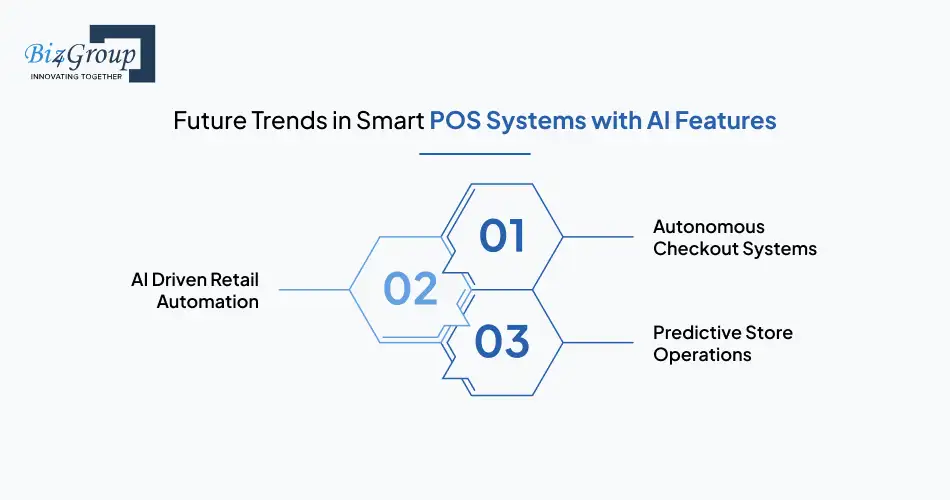
POS platforms are gradually moving beyond checkout and reporting tools. In AI POS system development, newer capabilities are starting to change how stores manage transactions, assist staff, and plan daily operations.
1. Autonomous Checkout Systems
Autonomous checkout is gaining attention as retailers experiment with faster store experiences. Cameras, sensors, and POS software work together to identify products as customers pick them up or leave the store. Instead of scanning items one by one, the system records purchases automatically.
2. AI Driven Retail Automation
Retail platforms are beginning to introduce assistants that help staff handle routine store tasks. Some systems connect POS data with tools that respond to operational questions through an AI conversation app interface. Others rely on AI chatbot integration to surface alerts, product details, or quick system actions.
3. Predictive Store Operations
Store planning is also shifting toward predictive insights rather than reactive decisions. Future POS platforms may combine sales activity, regional demand signals, and seasonal trends to guide store operations. This allows teams to prepare inventory and staffing plans before demand changes occur.
As these capabilities mature, retailers evaluating best AI POS technology partners for enterprise retail will focus on platforms that can adapt to these evolving store environments while keeping checkout systems reliable.
Why Choose Biz4Group LLC to Develop AI POS Software for Your Business?
Biz4Group LLC is an AI product development company with experience building AI-enabled platforms that process operational data, automation workflows, and analytics systems. The same engineering capabilities apply when businesses plan AI POS system development for retail and restaurant environments.
Why businesses work with Biz4Group:
Strong AI and data engineering expertise: Experience building AI-driven applications that analyze large datasets and generate operational insights.
Capability to build tailored platforms: Through custom POS software development with AI, businesses can create POS systems aligned with their workflows instead of relying on rigid off-the-shelf tools.
Modern technology stack knowledge: Our team works with scalable technologies, cloud infrastructure, and machine learning frameworks commonly used in retail analytics platforms.
Product-focused development approach: Biz4Group follows structured product development practices, from planning and MVP development to scaling and optimization.
This combination of AI engineering expertise and product development experience allows Biz4Group LLC to help businesses design and build AI-enabled POS platforms suited for modern retail operations.
Wrapping It Up
POS systems used to focus mainly on processing transactions. Today, they are becoming tools that help retailers understand store activity, track product demand, and manage operations across locations.
This guide covered the key aspects of AI POS system development including system architecture, practical use cases, core and advanced features, development steps, technology stack, costs, and implementation challenges. Each of these areas plays a role in building a POS platform that can support modern retail environments.
For businesses planning the next stage of their retail technology stack, the goal is not simply adding AI features. The focus should be on building a system that fits store workflows, integrates with existing tools, and scales as operations grow.
Working with an experienced AI app development company can help translate these requirements into a platform designed for real retail operations rather than generic software solutions.
Have questions about AI POS requirements? Let’s discuss your project.
FAQs About AI POS System Development
1. How long does it typically take to build an AI POS system?
Development timelines usually depend on the platform’s complexity. A basic AI-enabled POS platform may take 3–5 months, while a more advanced system with multi-store support, analytics dashboards, and integrations can take 6–12 months to complete.
2. What type of data is required for AI features in POS systems?
AI-powered POS platforms rely mainly on transaction data, product catalogs, inventory records, and historical sales activity. This data helps machine learning models detect demand patterns, analyze purchasing behavior, and generate operational insights.
3. Can AI POS systems work with existing retail software?
Yes. Most AI POS platforms are designed to integrate with inventory systems, payment gateways, ecommerce platforms, accounting tools, and CRM systems. These integrations allow businesses to analyze data across multiple retail systems without replacing their existing infrastructure.
4. What kind of businesses benefit most from AI POS systems?
AI POS platforms are most useful for businesses that handle high transaction volumes, large product catalogs, or multiple store locations. Retail chains, restaurants, and multi-channel sellers often benefit the most from the operational insights these systems provide.
5. How much does it cost to build an AI POS system?
The cost can vary depending on features, integrations, and the number of store locations supported. In many cases, the development cost ranges between $25,000 and $150,000+, with larger enterprise platforms requiring higher investment.
6. Do AI POS systems require continuous model updates?
Yes. AI models improve over time as they receive new transaction data. Periodic updates and retraining help ensure that sales insights, demand signals, and analytics remain accurate as retail activity and product trends change.
