 Location :
Orlando, FL, USA
Location :
Orlando, FL, USA +1 (407) 714-1616
 info@biz4group.com

- To build an AI legal consultation platform, firms focus on automation, accuracy, compliance and smoother client intake workflows.
- Legal teams can create AI legal advisory software that supports intake, drafting, analysis, triage and scalable service delivery.
- Estimated cost ranges from $20,000-$150,000+ depending on features, automation depth, integrations and scalability goals.
- Organizations gain long-term value AI legal consultation software development that fits internal workflows.
- Strong demand from corporate counsel groups encourages firms to make AI powered consultation software for corporate legal departments to handle growing caseloads.
- Biz4Group LLC delivers enterprise grade legal tech solutions with proven results for law firms, corporate teams and judiciary platforms.
Legal services are moving faster than ever, and many firms are starting to feel the pressure. Clients want quicker answers, smoother onboarding and reliable support at any time of day. This shift has pushed more organizations to explore how to build an AI legal consultation platform that handles routine work with accuracy and speed. The momentum is strong. The global legal technology market is projected to grow to USD 63.59 billion by 2032, according to Fortune Business Insights.
A modern platform in this space can handle intake, read documents, organize case materials and guide clients through structured queries. When firms develop an AI legal consultation platform, they are not replacing attorneys. They are giving their teams a smarter starting point for every conversation while improving overall accessibility.
Many legal teams want to create AI legal advisory software because it helps them scale their services. It reduces repetitive work, provides consistent responses and helps attorneys focus on the parts of the job that need human judgment. With the right setup, these platforms become a quiet but powerful engine behind stronger client experiences.
As interest grows, one question keeps coming up. What is the process of developing AI legal consultation platform that is secure, accurate, and aligned with real legal workflows? This guide breaks it down step by step so firms can understand how these systems work and how they bring value from day one.
Why the Legal Industry Should Build an AI Legal Consultation Platform Now
The legal field has never been busier. Rising caseloads, higher client expectations and growing compliance demands have created a perfect storm. This is why more organizations are exploring how to improve efficiency when they create AI legal advisory software. The goal is simple. Reduce operational pressure and create smoother client interactions without compromising the quality attorneys bring to the table.
Market Signals That Show Why AI Matters
Before legal teams decide to develop an AI legal consultation platform, they often look at how the market is evolving. A quick glance at industry data reveals a clear trend.
- The global legal technology market is growing at CAGR of 9.4%
- Over half of law firms in the United States now rely on some form of automation for daily operations
- More than 70% of legal clients prefer firms that offer digital communication and quicker responses
These trends show a clear shift. Legal services are moving toward a model where accuracy, speed and accessibility matter more than ever. This makes the idea to create AI legal advisory software a competitive advantage. Businesses interested in deeper automation often explore how to build legal AI agent systems that support reasoning and structured decision flows.
Major Pain Points That AI Helps Solve
Every legal department deals with a few common struggles. When organizations choose to make an AI powered legal consultation system, they are usually responding to pain points that impact both clients and attorneys.
Key Pain Points
- Time consuming intake and onboarding
- Delays in document review or analysis
- Rising caseloads with limited staffing
- Repeated queries from clients
- Fragmented workflows across multiple tools
- Manual compliance checks
- Backlogs that slow down case progress
Firms need smoother systems. They need tools that support attorneys and lift some weight off administrative teams. That is where AI supported workflows begin to shine.
Practical Benefits for Modern Legal Teams
Organizations want systems that deliver measurable improvements. When decision makers plan what is the process of developing AI legal consultation platform, they often focus on outcomes such as accuracy, speed or operational clarity.
Here are the benefits that matter most.
| Benefit | Description |
|---|---|
|
Faster Client Intake |
Smart forms and conversational systems collect accurate details within minutes |
|
Better Document Handling |
AI recognizes, reads and organizes documents automatically |
|
Stronger Compliance |
Built in rules help teams stay aligned with regulatory requirements |
|
Consistent Interactions |
Clients receive clear and reliable guidance at every step |
|
Scalable Operations |
Teams handle more cases without proportionally increasing workload |
These improvements help both small firms and large corporate legal departments operate with more confidence and less friction.
The final reason firms decide to build an AI legal consultation platform relates to timing. Regulatory changes are frequent, digital communication is now the norm and clients expect clarity from the moment they make contact.
When legal teams develop an AI legal consultation platform today, they place themselves in a strong position to keep up with client expectations without burning out internal teams.
Use Cases to Explore When You Develop an AI Legal Consultation Platform
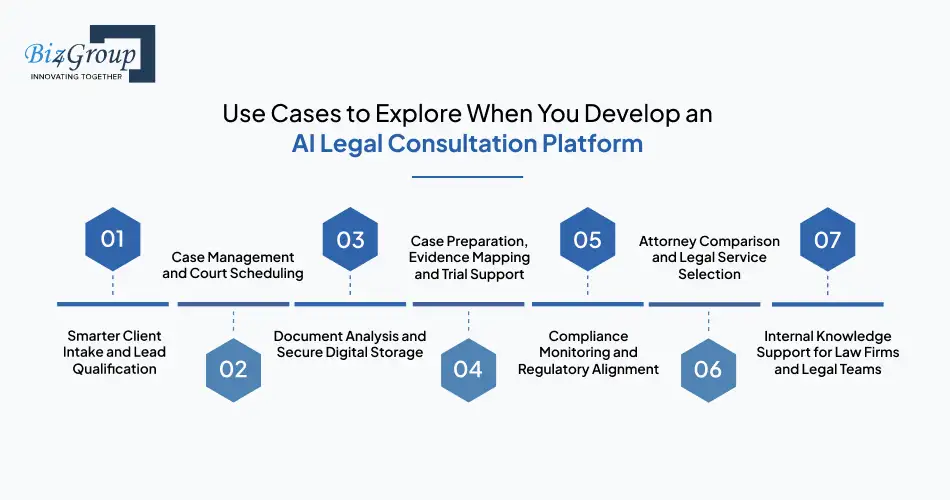
AI supported legal systems can strengthen client service, accelerate research, simplify case prep and bring clarity to busy legal teams. Each of the following use cases highlights practical ways firms can create AI legal advisory software that fits real operations.
1. Smarter Client Intake and Lead Qualification
Legal intake is often the first moment a client forms an opinion about a firm. With the right setup, a platform can identify case types, assign priority levels and route clients to the right attorney. This supports both corporate legal departments and private practices as they move toward consistent service delivery.
Project Spotlight: Innovative Web Application for Attorneys and Law Associates
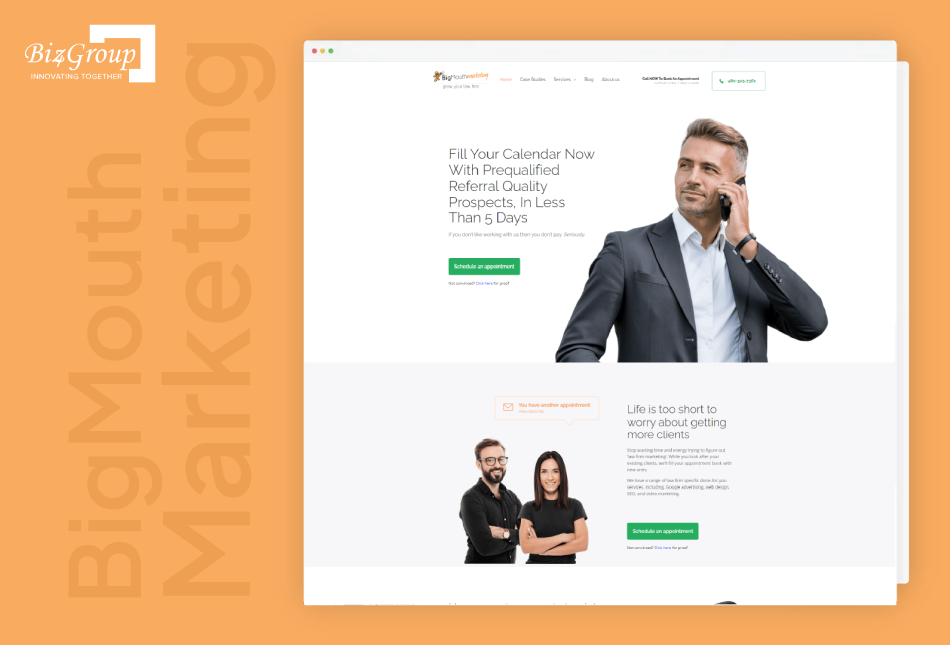
This web application for attorneys and law associates reflects how effective intake and lead handling can reshape legal service platforms.
Highlights include:
- Categorized services for easy navigation
- Chat guidance for early clarification
- Appointment booking
- Knowledge sharing through blogs and articles
Our AI app development expertise made this project a strong example of how intake, engagement and attorney matching can run smoothly when technology supports the workflow.
Also read: Legal AI app development guide
2. Case Management and Court Scheduling
When organizations make an AI powered legal consultation system, they often aim to simplify scheduling, notifications and case progress tracking. A centralized dashboard helps teams track hearings, monitor case changes and maintain updated timelines. This reduces chaos for attorneys who manage multiple matters at once.
Portfolio Spotlight: Judiciary Platform for Attorneys and Law Firms
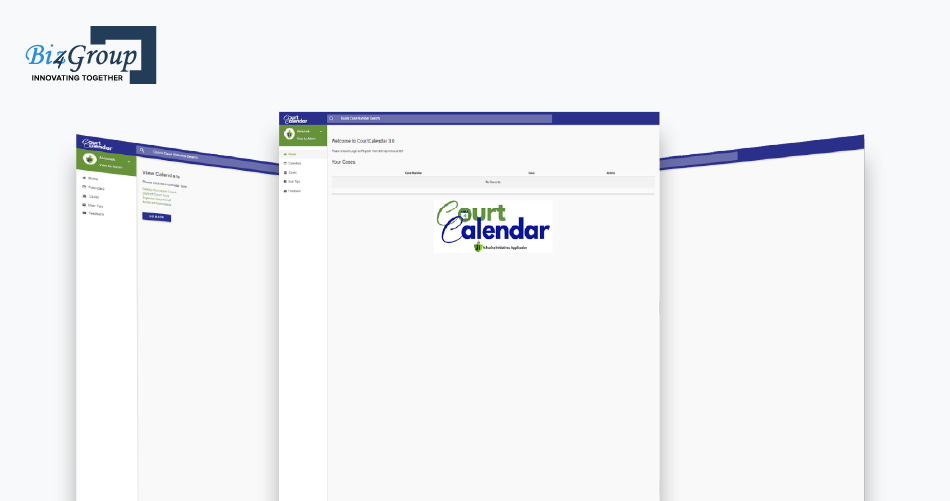
This judiciary platform for attorneys and law firms by Biz4Group was designed keeping attorneys in mind.
Key elements:
- Case dashboards
- Court hearing schedules
- Secure messaging
- Document upload and sharing
The project shows how digital tools can support day-to-day legal operations without adding complexity.
Also read: AI lawyer app development guide
3. Document Analysis and Secure Digital Storage
When firms develop an AI legal consultation platform that reads, indexes and stores files with precision, they eliminate repetitive manual work. OCR, classification and data extraction also speed up case preparation. This improves accuracy and increases billable productivity.
Project Spotlight: Enterprise Blockchain System for Document Management
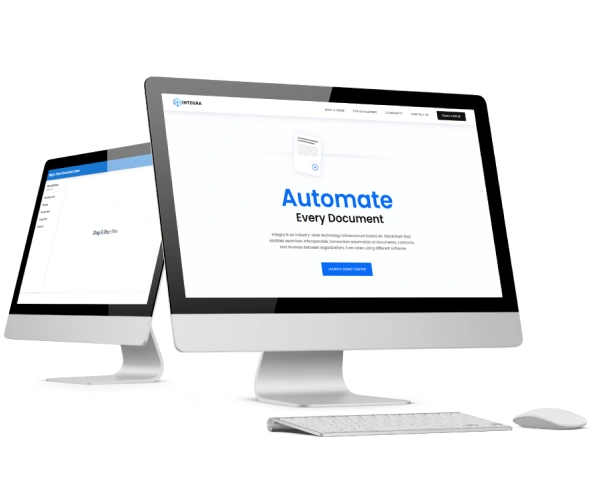
Biz4Group built this enterprise blockchain system for enterprise grade document security.
Notable strengths:
- Blockchain supported data integrity
- Automated document generation
- Role based access control
- Interoperability across organizations
It offers a real view of how secure storage and audit ready workflows strengthen legal environments.
Also read: AI legal document management software development guide
4. Case Preparation, Evidence Mapping and Trial Support
Legal preparation requires intense attention. Creating timelines, organizing proofs, tracking witnesses and reviewing case materials can overwhelm even seasoned teams. AI supported platforms can sort evidence, outline case structures and surface insights. This helps attorneys prepare with accuracy while reducing the time spent assembling materials from scratch.
Project Spotlight: Web Application for Automating Legal Services

This web application for automating legal services highlights what effective case preparation looks like in a modern environment.
Core strengths:
- Witness proofs
- Case maps
- Chronology creation
- Global proof lists
- Evidence organization
It captures how structured digital tools give legal teams more clarity during trial prep.
5. Compliance Monitoring and Regulatory Alignment
Compliance requirements grow more complex each year. An AI supported solution can track rule changes, flag inconsistencies and help teams maintain proper documentation. This use case benefits organizations that need constant vigilance, especially corporate legal departments and regulated industries.
6. Attorney Comparison and Legal Service Selection
Clients often look for clarity when selecting legal representation. Platforms that collect attorney information, compare expertise, share quotes and guide users through options offer transparency and trust. This is gaining traction in real estate law, family law and consumer legal services.
Portfolio Spotlight: A Quotation Platform

Biz4Group integrated a quotation platform into an existing website of a law firm. This project brings comparison features to life.
Highlights:
- Quote comparison
- Automated selection of four legal firms
- Report features for admin
- User friendly interface
It demonstrates how decision support tools help clients choose representation with more confidence.
Also read: How to develop AI website for law firms?
7. Internal Knowledge Support for Law Firms and Legal Teams
AI consultation platforms can answer common questions, surface case law excerpts, suggest drafting language and guide junior associates. This keeps teams consistent and reduces dependency on manual research. This helps corporate legal departments, compliance teams and multilocation firms stay aligned.
Also read: AI legal research platform development guide
These use cases show how wide the impact can be when firms begin to develop an AI legal consultation platform. Each scenario highlights a real challenge in the legal world and how technology helps solve it.
Ready To Build What Clients Actually Want?
More than 70% of legal clients prefer firms that offer quick digital support. Your platform could be the one they choose next.
Build Smart with Biz4GroupImportant Features to Have When You Create AI Legal Advisory Software
A strong platform needs features that support attorneys, guide clients and maintain smooth workflows. These features form the foundation of a reliable system that delivers clarity, consistency and efficiency across every interaction.
| Feature | What It Is | What It Does |
|---|---|---|
|
Smart Client Intake |
An automated intake interface with guided questions |
Collects accurate client details and reduces repetitive manual onboarding |
|
Secure User Accounts |
Role based login system for clients, attorneys and admins |
Protects confidential information and manages user permissions |
|
Document Upload and OCR |
Tools that read PDFs, images and text files |
Extracts relevant information and organizes content for quick review |
|
Legal Knowledge Retrieval |
Search and query system connected to legal databases and internal materials |
Answers client questions and supports internal research with reliable insights |
|
Case Tracking Dashboard |
A central view of active matters, deadlines and actions |
Keeps attorneys updated and reduces missed tasks or delays |
|
Scheduling and Appointments |
Built in calendar with notifications and booking options |
Makes coordination easier for clients and legal teams |
|
Secure Messaging |
Encrypted communication channel between clients and attorneys |
Maintains professional correspondence in a central and safe space |
|
Document Storage and Versioning |
Repository for files with history logs |
Helps teams track updates and maintain clean document records |
|
Payment and Billing Support |
Digital invoicing and integrated payment modules |
Simplifies financial tasks and speeds up payment cycles |
|
Compliance and Audit Logging |
Automated system for recording interactions and updates |
Supports regulatory requirements and protects firms from risk |
These must-have features create a solid baseline for any organization planning to develop an AI legal consultation platform. They ensure the system is functional from day one and capable of scaling as the legal practice grows.
Advanced Capabilities to Add When You Make an AI Powered Legal Consultation System
Basic features cover daily tasks, but advanced capabilities turn a digital solution into a high performing legal platform. Each of the following points highlights a mature function designed to give legal teams sharper control, clearer insights and better service quality.
1. Retrieval Supported Legal Reasoning
A system with retrieval backed logic can pull precise segments from statutes, regulations, internal documents or past cases before it offers any guidance. This helps attorneys check the reasoning path behind each response. Firms benefit from improved clarity and stronger review cycles.
2. Automated Drafting and Clause Suggestions
Attorneys often begin with templates. An advanced platform can review a draft, insert missing clauses and modernize outdated language. The result is a customizable document that respects structure, tone and legal accuracy. This cuts down the time spent polishing routine paperwork.
3. Advanced Document Comparisons
Contracts, amendments and updated policies often carry minor but important changes. A comparison engine highlights differences with accuracy and speed. It can identify clause edits, compliance updates or conflicting terms.
4. Multi Jurisdiction Logic Handling
Large firms and multinational companies work across different regions. An advanced system knows how rules differ from one state or country to another. This helps attorneys deliver tailored guidance while staying aligned with local requirements.
5. Evidence Structuring for Case Prep
A platform that organizes evidence into timelines, categories or witness groups reduces preparation hours. It helps attorneys see relationships among documents, events or testimonies. This gives teams a stronger sense of direction as they prepare for hearings or negotiations.
6. Document Integrity with Blockchain Support
Some legal documents need traceable authenticity. A blockchain layer records immutable timestamps and access logs. This helps preserve document integrity for sensitive agreements or verification workflows. It also strengthens trust when dealing with audits or external parties.
7. Approval Flows with Human Review
Legal AI should always involve attorneys in key decision moments. Human review checkpoints allow lawyers to approve drafts, validate reasoning and add context. This creates a safe blend of automation and professional oversight.
These advanced capabilities support deeper accuracy and higher efficiency across legal workflows. Organizations that develop an AI legal consultation platform with these features gain a system that feels intuitive, dependable and adaptable over time. This raises the value of every working hour and strengthens the client experience from the first interaction onward.
Want Features Even Top Firms Brag About?
If your platform had these advanced capabilities, your clients would never look anywhere else.
Book a Strategy Call TodayRecommended Tech Stack for AI Legal Consultation Software Development
Building a dependable legal platform calls for a balanced full stack approach that blends intelligence, security and smooth performance. Every layer works together to support intake, document handling, case management and legal review.
| Component | What It Supports | Tools and Frameworks |
|---|---|---|
|
AI and NLP Layer |
Understanding queries, generating responses and processing legal language |
OpenAI models, spaCy, Hugging Face transformers, custom fine-tuned models |
|
Backend Services |
Business logic, user flows, data processing and integrations |
|
|
Frontend Interface |
Client and attorney dashboards, forms and interactive screens |
React, Angular, Vue, Next.js |
|
Databases |
Secure storage for user data, documents, cases and logs |
PostgreSQL, MongoDB, MySQL, Redis |
|
Vector Search Layer |
Retrieval support for legal documents and knowledge queries |
FAISS, Pinecone, Weaviate |
|
Document Processing |
Reading and extracting data from PDFs and images |
Tesseract OCR, PDFBox, AWS Textract |
|
Cloud Hosting |
Deployment, scaling, monitoring and storage |
AWS, Google Cloud, Microsoft Azure |
|
Security Layer |
Encryption, authentication, role based access and compliance controls |
JWT, OAuth, TLS encryption, Key Vault services |
|
Integrations |
AI integration services for external systems like billing, calendaring or CRM tools |
REST APIs, GraphQL, Zapier, Clio integrations |
|
DevOps |
Continuous deployment, version control and environment management |
Docker, Kubernetes, GitHub Actions, Jenkins |
This structure gives legal teams a stable foundation as they develop an AI legal consultation platform that can scale, adapt and remain reliable for many years.
Step by Step Process to Make Intelligent Legal Consultation Automation Software
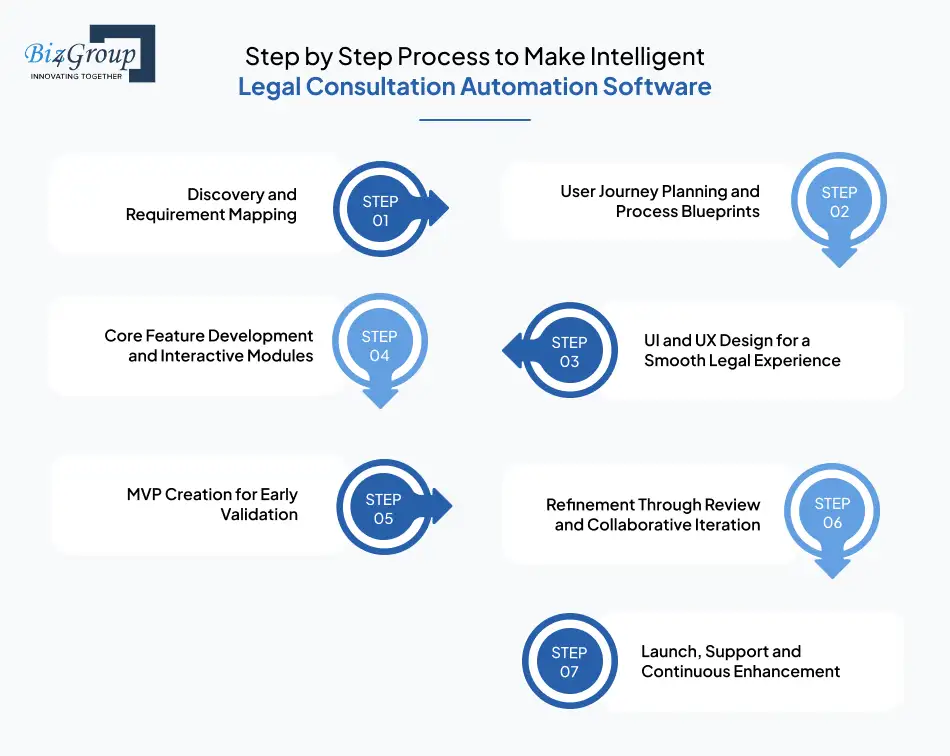
A strong legal consultation platform takes shape through a clear and thoughtful build process. The following steps outline how legal teams and development partners turn an idea into a reliable working product that supports both clients and attorneys.
Step 1. Discovery and Requirement Mapping
Every successful project begins with clarity. Teams start by identifying target users, defining internal workflows and listing the real world challenges the platform should solve. This helps separate essential functionality from features that can wait for later phases.
This stage also brings attorneys, analysts and business stakeholders into one conversation so the platform aligns with real legal operations.
Step 2. User Journey Planning and Process Blueprints
Once requirements are clear, the next step is mapping how clients and attorneys will interact with the system. This involves outlining every touchpoint from intake to consultation to follow up tasks.
The goal is to create a smooth flow that feels natural for users. When journeys are mapped early, the platform becomes easier to navigate and more intuitive to operate.
Step 3. UI and UX Design for a Smooth Legal Experience
UI and UX design give the platform its personality and make complex tasks feel simple. A clean interface helps users submit details, upload documents, book appointments or review cases without confusion.
This phase includes wireframes, prototypes and iterative improvements based on feedback. A good UI/UX design company helps legal teams work faster and helps clients feel more confident while interacting with the system.
Also read: Top 15 UI/UX design companies in USA
Step 4. Core Feature Development and Interactive Modules
With design approved, developers begin creating the core platform functions. This includes building intake forms, dashboards, messaging modules, document handling features and any specialized components needed for legal workflows.
Each feature is shaped to match the earlier journey maps. This keeps the product consistent and gives users a sense of continuity as they move from one screen to another.
Step 5. MVP Creation for Early Validation
Not every feature needs to go live in the first release. Developing a minimum viable product gives teams a focused version of the platform that covers the most important tasks. It lets them collect real feedback, uncover usability issues and refine the experience before expanding.
This approach saves time and reduces cost while confirming the platform fits genuine legal needs.
Also read: Top 12+ MVP development companies in USA
Step 6. Refinement Through Review and Collaborative Iteration
Once the MVP gains traction, teams collect insights from attorneys, clients and internal staff. These findings guide improvements to user flows, screen layouts, content clarity or feature behavior.
This stage often brings some of the most valuable progress because it blends user experience with practical legal knowledge.
Step 7. Launch, Support and Continuous Enhancement
After testing and refinements, the platform moves into a full release. Even after launch, updates continue based on feedback, new requirements or evolving legal processes. This commitment to improvement keeps the platform relevant and dependable for long term use.
A thoughtful process helps organizations develop an AI legal consultation platform that feels polished, practical and trustworthy. By following these steps, legal teams end up with a system that reflects their values and strengthens their ability to serve clients with clarity and confidence.
Stop Guessing and Build It Right
You now know the roadmap. Partner with a team that has walked it hundreds of times.
Get in Touch with Biz4GroupSecurity and Regulatory Requirements When You Make an AI Platform That Automates Client Intake and Legal Triage
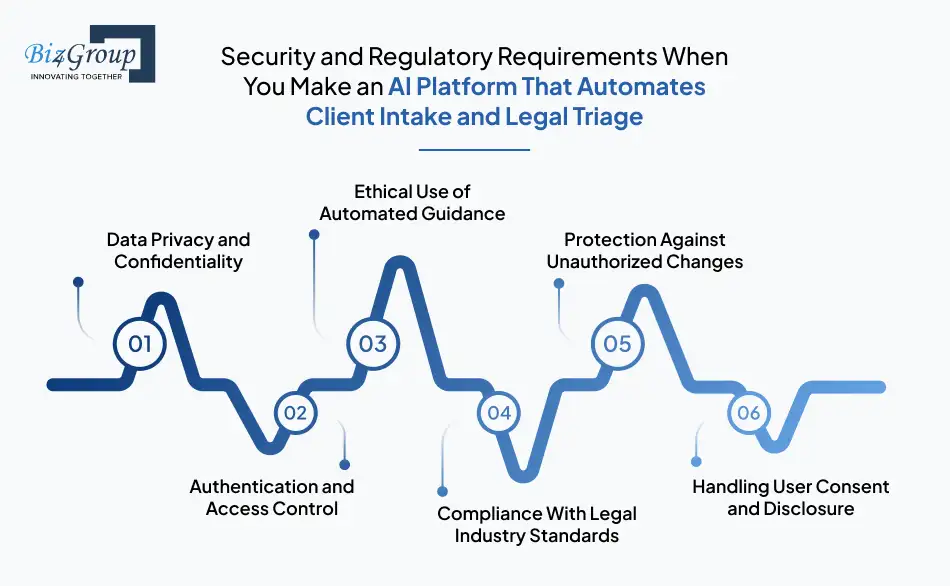
Building a legal consultation platform calls for strong protections that keep client information safe and uphold professional standards. This section outlines the safeguards that help firms maintain trust, reduce risks and operate with full confidence.
Data Privacy and Confidentiality
- Limit data access to verified users
- Mask or restrict confidential information in shared workflows
- Store sensitive content in environments aligned with privacy rules
- Use access logs to monitor interactions that involve client data
Authentication and Access Control
- Use layered authentication for clients, attorneys and admins
- Enforce role-based permissions to limit unnecessary visibility
- Apply session monitoring to prevent account misuse
- Maintain password and identity guidelines that meet legal industry norms
Ethical Use of Automated Guidance
- Clarify that automated responses support attorneys rather than offer final legal advice
- Provide human review for important interpretations or drafting tasks
- Keep reasoning visible so attorneys understand how the system generated the result
- Avoid presenting automated outputs as attorney verified
Compliance With Legal Industry Standards
- Maintain workflows that respect professional responsibility guidelines
- Support data residency needs based on state and federal requirements
- Track audit trails for reviews, edits and decisions
- Provide documentation that supports compliance checks
Protection Against Unauthorized Changes
- Preserve version histories for documents and updates
- Maintain edit records for internal review
- Track access patterns to identify suspicious activity
- Add safeguards that prevent accidental deletion or alteration
Handling User Consent and Disclosure
- Ask for consent before collecting personal information
- Provide clear disclosure about how information is stored and used
- Inform clients of automated features involved in their interaction
- Offer options to request data removal when possible
Security and regulatory compliance form the foundation of a trustworthy legal platform. When these areas are handled with care, organizations can develop an AI legal consultation platform that mirrors the discipline and professionalism expected in legal practice.
How Much Does It Cost to Build an AI Legal Consultation Platform?
Building a legal consultation platform is an investment that depends on features, workflow depth and operational goals. On average, the development range falls between $20,000-$150,000+. The lower end covers essential functionality while the upper end supports complex legal requirements, AI automation services, compliance and enterprise scale workflows.
| Version | What It Includes | Estimated Cost Range |
|---|---|---|
|
MVP |
Intake, simple dashboards, messaging, document upload, basic automation |
$20,000-$45,000 |
|
Advanced Level |
Document analysis, legal reasoning support, workflow automation, role-based dashboards |
$50,000-$95,000 |
|
Enterprise Level |
Multi region logic, advanced analytics, integrations, continuous enhancements, audit ready operations |
$100,000-$150,000+ |
Each stage reflects the maturity of the system. Costs rise with complexity, automation depth and legal compliance expectations.
Cost Drivers That Shape the Final Build
Every legal platform has unique requirements. The table shows how each driver plays a role and how it connects to the final budget.
| Cost Driver | Explanation | Typical Impact |
|---|---|---|
|
Feature Scope |
Larger feature sets require more engineering and testing effort |
Adds $5,000-$40,000 depending on complexity |
|
UI and UX Styling |
Clear layouts, intuitive interactions and legal friendly navigation enhance usability |
Adds $3,000-$15,000 based on depth |
|
Document Handling |
OCR, extraction, parsing and categorization tools increase accuracy |
Adds $5,000-$20,000 |
|
Legal Logic and Workflows |
Rules, routing, logic trees and multi jurisdiction handling |
Adds $7,000-$30,000 |
|
Integrations |
CRM, billing, calendars, legal databases, case systems |
Adds $5,000-$25,000 |
|
User Roles and Permissions |
Secure access control and multi level dashboards |
Adds $2,500-$10,000 |
|
Analytics |
Performance metrics, case insights and user activity tracking |
Adds $3,000-$15,000 |
|
Scalability |
Containerization, load management and performance optimization |
Adds $5,000-$20,000 |
These drivers shape the core budget. Understanding them early helps teams plan the right balance between cost and capability.
Hidden Costs That Teams Often Miss
Many legal practices focus on the visible build cost but overlook ongoing needs. Hidden costs can influence long term value, sustainability and overall ownership.
- Continuous Model Updates
Legal knowledge changes quickly. Government updates, rule revisions and case law shifts can influence platform accuracy. Teams need periodic updates that refine how the system interprets legal content.
Estimated Hidden Cost: $200-$2,000 per update cycle depending on depth.
- Maintenance and Functional Enhancements
A working platform requires periodic checks to fix bugs or improve usability. These improvements keep the system stable and attractive for long term use.
Cost Details: Maintenance tends to fall between $500-$3,500 per month based on workload.
- Server Hosting and Storage
Platform traffic, file size and user volume influence hosting needs. Larger teams or client heavy environments need scalable hosting structures.
Cost Range: $50-$600 per month depending on usage and storage patterns.
- Compliance Reviews
Legal platforms must pass internal and external reviews from time to time. This includes data handling checks, workflow confirmations and documentation audits.
Cost Impact: $1,000-$8,000 per review depending on the scope.
- Integration Renewals and Subscription Tools
Third party tools such as calendars, billing systems or reference databases may have annual renewal fees.
Cost Considerations: These tools range from $200-$5,000 per year depending on licensing.
These expenses often appear over time. Preparing for them upfront helps legal teams maintain predictable budgets while they develop an AI legal consultation platform that remains strong and reliable for many years.
Investing Smart Beats Spending Big
Now that you know the real numbers, it is time to build a platform that pays you back fast.
Get a Custom QuoteMaximizing ROI In AI Legal Consultation Software Development
A well-designed platform becomes a measurable business asset. The following strategies focus on lowering operational expenses, improving efficiency and unlocking new revenue opportunities.
Optimization Strategies That Strengthen ROI
Improving efficiency is one of the fastest ways to see returns. The table below highlights methods that enhance performance and reduce ongoing costs.
| Optimization Strategy | What It Improves | Verified Saving Estimate |
|---|---|---|
|
Automated Intake Workflows |
Cuts manual intake time and reduces admin load |
Firms using automated workflows reduce intake time by up to 50%. |
|
Smart Document Processing |
Speeds up contract and file review cycles |
Automated review shortens analysis time by roughly 30%. |
|
Centralized Dashboards |
Reduces tool switching and improves productivity |
Context switching accounts for up to 20% productivity loss in professional services. |
|
Automated Scheduling |
Lowers back and forth communication and missed appointments |
Automated scheduling tools cut coordination time by an average of 34%. |
|
Streamlined Case Tracking |
Improves case completion speed |
Firms using digital case tracking resolve cases faster by 25%. |
These optimizations form an ongoing advantage. Once workflows operate smoothly, the platform creates daily returns without additional effort.
Monetization Strategies That Increase Revenue
Optimizing operations is valuable, but adding new revenue streams moves ROI even further. These methods help firms earn through service expansion and strategic platform use.
1. Subscription Based Client Access
Many firms provide clients with secure portals for document storage, case updates or consultation history. Offering premium access as a subscription can turn existing workflows into a recurring revenue stream.
Revenue Insight: Firms that use client portals experience a rise in client retention by up to 35%.
2. Pay Per Consultation or Report Generation
Automated summaries, quick legal insights or basic contract evaluations can be offered as on-demand services. This works well for high volume practice areas like real estate, family law or immigration.
Revenue Insight: On-demand service models often outperform flat fee models by 20%.
3. White Label Licensing for Other Firms
A platform with structured workflows can be licensed to partner firms. This transforms the system into a scalable revenue generator, especially for firms that want to expand influence without opening new offices.
Revenue Insight: White label legal software contributes up to 15% extra revenue.
4. Corporate Legal Department Retainers
Organizations that handle regulatory filings or contracts appreciate predictable service models. Offering AI supported consultation packages gives clients consistent assistance with lower turnaround time.
Revenue Insight: Corporate retainers often lead to 25% higher annual client value due to repeat engagement.
5. Marketplace Expansion for Specialized Attorneys
Platforms with strong discovery features can expand into a regional or niche marketplace model. Firms can onboard verified attorneys and earn through referral fees or listing fees.
Revenue Insight: Legal marketplaces see user acquisition growth of 40% year over year.
Monetization strategies combined with smart optimization form a strong ROI path. Legal teams that implement even a few of these approaches can experience meaningful savings, steady recurring income and stronger client relationships.
Also read: Top 12+ AI legal software development companies in USA
Challenges, Risks and Mitigation When You Develop an AI Legal Consultation Platform
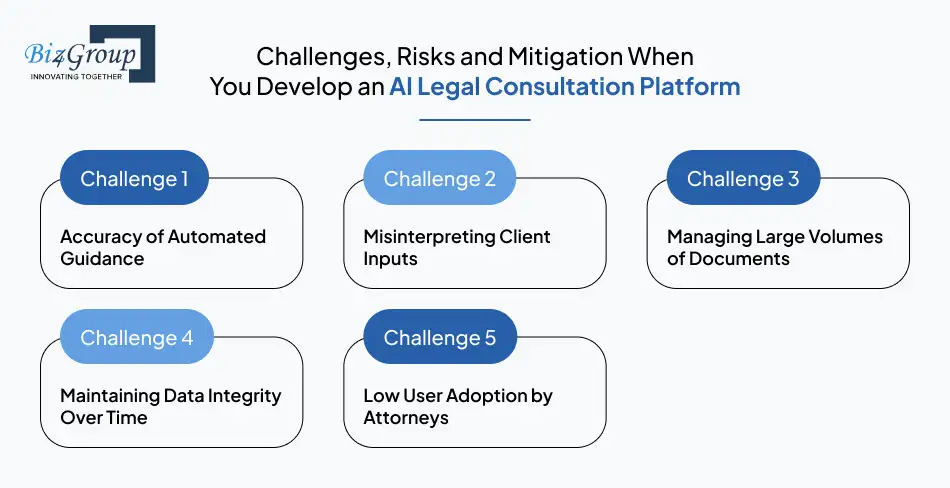
Every serious digital product comes with obstacles that can slow progress if not planned for early. Legal platforms include some unique risks because the work they support is sensitive, regulated and often time critical.
Challenge 1. Accuracy of Automated Guidance
Legal information changes often and can be interpreted in many ways. Automated answers can drift if the system works with outdated material or incomplete context. This creates a risk of misaligned suggestions that require manual correction.
Mitigation Strategies
- Update legal reference data on a consistent schedule
- Add human review checkpoints for important interactions
- Provide attorneys with visibility into how the system reached a conclusion
- Train the platform with verified sample documents from your own practice area
Challenge 2. Misinterpreting Client Inputs
Clients often submit incomplete or vague information. When the system misreads the context, it can produce the wrong next step or assign the matter to the wrong category.
Mitigation Strategies
- Use structured intake questions that catch missing details
- Add follow up prompts that confirm intent before processing
- Allow attorneys to reclassify cases in one click
- Store common misinterpretations and train the system to avoid them
Challenge 3. Managing Large Volumes of Documents
Legal teams deal with contracts, evidence files, recordings, receipts and various forms. Handling these at scale can overwhelm weaker systems and slow the entire workflow.
Mitigation Strategies
- Compress files during upload without affecting clarity
- Organize documents with tags and automated categories
- Maintain version histories to prevent accidental overwrites
- Implement batch upload tools to avoid delays for clients
Challenge 4. Maintaining Data Integrity Over Time
As documents and case records grow, maintaining accurate histories becomes harder. Missing edits or incorrect versions can disrupt case preparation.
Mitigation Strategies
- Track every update and make it reversible
- Use timestamps for all user actions
- Warn users before modifying files connected to active matters
- Store complete audit logs in a protected area
Challenge 5. Low User Adoption by Attorneys
Some attorneys hesitate to incorporate new digital tools into daily work. Adoption drops when screens feel cluttered or processes feel unfamiliar.
Mitigation Strategies
- Keep screen layouts clean and predictable
- Offer short in-platform walkthroughs for new users
- Collect feedback within the interface and act on it regularly
- Align the platform with existing workflows instead of forcing new habits
These challenges are common across digital legal platforms, yet each one becomes manageable when addressed with practical controls and steady improvements. By preparing for these risks early, legal teams can develop an AI legal consultation platform that works consistently and earns trust from both clients and attorneys.
Every Challenge Has a Shortcut
Why fight the common pitfalls when you can build with a team that already solved them.
Talk to Our ExpertsFuture Trends Shaping AI Legal Consultation Software Development
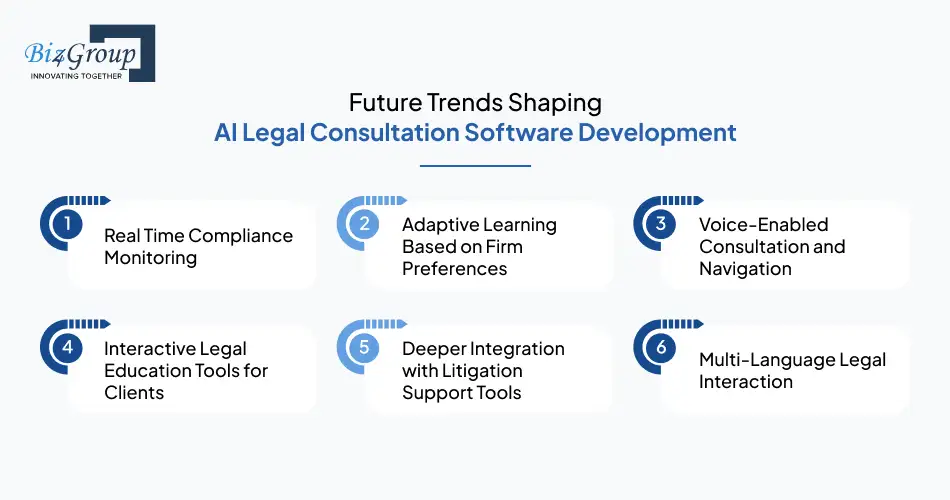
Innovation in the legal world is accelerating. As legal teams refine digital strategies, new patterns are emerging that affect how organizations make AI legal consultation platforms. The following trends are gaining traction and signal how the next generation of legal systems will operate.
1. Real Time Compliance Monitoring
Future platforms will not wait for manual reviews. They will track regulatory updates in the background and inform attorneys before an issue becomes a risk. Real time monitoring keeps departments aligned with evolving laws and reduces the time spent manually checking for updates.
2. Adaptive Learning Based on Firm Preferences
Each legal team works differently. New systems will learn firm specific writing styles, drafting preferences and workflow patterns. As they adapt, they provide suggestions that match the firm's voice and internal processes. This creates a more personalized experience that improves both accuracy and efficiency.
3. Voice-Enabled Consultation and Navigation
Voice commands are becoming more common in professional software. Future legal platforms will allow attorneys to search files, draft notes or initiate tasks through voice instructions. This improves accessibility and helps attorneys work on the go. It also supports busy teams who manage multiple screens during hearings or research sessions.
4. Interactive Legal Education Tools for Clients
Clients often need clarity before speaking with an attorney. Next generation systems will provide interactive tutorials, guided walkthroughs and scenario-based modules. These tools help clients understand processes, risks and expected timelines. This reduces confusion and shortens intake conversations for legal teams.
5. Deeper Integration with Litigation Support Tools
Litigation support technologies are advancing quickly. Future consultation platforms will integrate with tools for eDiscovery, deposition review and trial graphics. This gives attorneys a single workspace with consistent access to case materials and insights. It makes case preparation more structured and reduces time spent switching platforms.
6. Multi-Language Legal Interaction
Global teams and multicultural communities require multi-language support. New systems will manage consultations, document summaries and intake flows in several languages while maintaining legal precision. This increases accessibility and ensures a smooth experience for diverse clients.
These trends show how the legal world is evolving toward smarter, more adaptive and more accessible digital solutions. As teams continue to explore how to make AI legal consultation platforms, these developments will shape the systems that define modern legal practice.
Why Biz4Group LLC Stands Out for AI Legal Consultation Software Development in USA?
Biz4Group LLC has spent many years helping legal firms, corporate counsel teams and technology innovators reshape the way legal services operate.
We are a USA-based software development company known for producing reliable and secure digital platforms. Our work spans judiciary systems, blockchain-backed document networks, and compliance-oriented interfaces that simplify every step of the legal journey.
As an experienced legal software development company, we understand how attorneys think, how legal teams function and how users expect to navigate modern legal technology. Our developers and architects bring experience from hundreds of successful builds. Every solution is structured to scale and support real legal workflows. This depth of understanding gives clients immediate confidence in the quality of work they receive.
We also bring a strong history of completing high complexity legal projects. Our portfolio reflects our ability to solve real legal challenges with solutions that perform well over time.
Why Businesses Choose Us
Clients choose Biz4Group LLC because they want a partner who understands both legal operations and custom software development.
- We specialize in platforms that must comply with strict confidentiality and workflow standards
- We build platforms that feel intuitive even when the functionality is complex
- We provide long term support so the platform continues to perform as laws, teams and operational needs change
- We have proven results across multiple legal technology solutions in the USA
- We approach every project with a consulting mindset, not a pre-defined playbook
These strengths make our team a dependable choice for organizations that require stability, clarity and professionalism from day one.
We step in as innovators, advisors and partners who take your goals seriously. Our commitment to quality engineering and thoughtful design makes us a standout choice for any legal team ready to modernize. Companies across the USA continue to rely on Biz4Group LLC because we combine strategy, talent and experience into enterprise AI solutions that genuinely elevate legal service delivery.
So, contact Biz4Group LLC today and let our experts create a solution tailored to your goals.
Final Thoughts
Building an AI legal consultation platform has become one of the most practical steps a modern law firm or corporate legal team can take. The legal industry is dealing with higher workloads, rising client expectations and increased pressure to deliver faster and more accurate results.
Platforms in this category help teams manage intake, review documents, organize cases and maintain smoother workflows. With the right strategy, a system like this improves daily efficiency and supports better legal outcomes.
The process involves understanding user needs, creating intuitive journeys, developing a strong MVP and then scaling into advanced capabilities. Businesses that follow the right roadmap end up with a dependable legal solution that grows with their operations. These platforms also open new revenue channels, reduce operational effort and position firms as forward-looking leaders.
Biz4Group LLC has been helping companies across the USA bring innovative ideas to life through thoughtful engineering, creative design and impactful AI development. Our experience in building legal tech products gives clients the confidence to build AI products that are both polished and practical.
If you are considering a project in this space, this is the perfect moment to explore it. Reach out to Biz4Group and let's build something powerful together.
Let's talk.
FAQs
How often should an AI legal consultation platform be updated?
Updates usually depend on changing regulations, new features and performance improvements. Many firms schedule quarterly reviews and mid cycle patches to keep the system aligned with current legal workflows.
Can an AI legal consultation platform support multilingual consultations?
Yes. Many modern platforms include multilingual models to help firms serve clients who speak different languages. This improves accessibility and reduces the chances of miscommunication for global or regional practices.
Can firms integrate existing CRM or billing tools into an AI legal platform?
Most platforms support integrations with external tools through APIs. This helps firms avoid shifting to new systems and keeps daily operations consistent for attorneys and support teams.
Does AI help junior legal staff or paralegals perform better?
Yes. AI can surface important insights, organize information and suggest next steps. This gives junior staff a more confident starting point and reduces their time spent searching through documents.
How do firms measure the success of an AI legal consultation platform?
Common metrics include client response time, intake completion rate, case preparation hours saved, user satisfaction, task automation rate and overall growth in client conversions.
Can an AI legal platform help reduce missed deadlines or overlooked tasks?
Yes. Automated reminders, structured workflows and smart scheduling features help reduce delays. These tools keep attorneys informed of upcoming actions so tasks stay organized across cases.
