Location :
Orlando, FL, USA
Location :
Orlando, FL, USA +1 (407) 714-1616
 info@biz4group.com


















Imagine a digital system that doesn’t wait for instructions but instead, understands your business goals, learns from real-time feedback, and takes independent actions to get the job done.
Read More

There is a quiet shift unfolding across the real estate world. Firms that once relied on paper checklists, inbox trails, and manual oversight are racing to modernize their compliance operations. According to a 2025 report, 77% of companies across industries say compliance complexity negatively impacts their growth and operations.
This trend has created a fear of falling behind, especially for teams exploring how to build real estate AI software, pushing firms to act now.
Many brokerages and property management teams now prefer to build real estate compliance software instead of forcing their workflows into rigid, fragmented tools. They want systems shaped around real challenges. This is where forward-thinking teams explore ways to develop real estate compliance software that reflects how their people actually work. The pressure to improve accuracy, reduce risk, and speed up operations has never felt more real.
As regulations shift and deal cycles tighten, the need to create a real estate compliance management system feels more like a survival strategy. Even small inefficiencies can cause lost deals, delayed closings, or compliance gaps that ripple across an entire organization.
This guide walks through everything required to build a digital compliance system for real estate transactions with clarity. It serves decision makers who want to strengthen oversight, reduce liability, and bring a smarter level of automation into their day-to-day operations.
Real estate compliance touches every part of how brokerages, property managers, and transaction teams operate. Before you start planning to build real estate compliance software, it helps to break down the areas that define compliance.
Below are the core components that influence how teams develop real estate compliance software with accuracy and structure.
Every transaction has its own paper trail. Each step contains rules that must be followed, documented, and stored. A compliance platform should reflect this reality in a simple and organized way.
This includes:
Brokerages operate with many moving parts. Agents join, leave, transfer states, and upgrade certifications throughout the year.
Your platform should track:
Property management teams deal with a very different set of obligations. These vary by property type, city, and sometimes even by neighborhood.
To help you visualize how varied this can get, here is a snapshot.
|
Compliance Area |
Examples of Required Records |
Why It Matters |
|---|---|---|
|
Inspections |
HVAC tests, fire safety checks |
Avoids violations and surprise fines |
|
Permits |
Elevator permits, occupancy permits |
Keeps buildings legally operational |
|
Insurance |
COIs, liability coverage |
Reduces exposure during disputes |
|
Vendors |
Certifications, background checks |
Ensures safe and approved work quality |
This creates a strong logic for teams that want to create property management compliance software tailored to their operations.
Modern real estate operations involve a large number of external partners. Each one brings compliance obligations that must be tracked with consistency.
Your platform needs to manage:
Compliance software cannot ignore broader regulatory expectations. These include data privacy, record retention, audit trails, and consumer protection rules that may vary by state or region.
Important areas include:
Understanding these compliance pillars clarifies why many firms choose to develop compliance tracking software for real estate firms rather than rely on legacy systems. Each requirement becomes clearer once you look at compliance through the lens of real daily operations. When that clarity exists, the path to a well-designed compliance platform becomes much easier to follow.
Also read: AI property asset management software development guide
Most teams discover their compliance gaps after an audit. You can stay ahead of that curve.
Build Smart with Biz4GroupThe world of real estate is changing fast. New laws, higher standards, bigger portfolios, more tenants, and stricter audits make manual compliance systems fragile and risky.
When you consider these market dynamics, developing real estate compliance software becomes imperative.
These advantages explain why many decision makers now prefer to develop compliance tracking software for real estate firms instead of stretching legacy tools beyond their limit.
|
Problem with Manual Methods |
What an In-House Compliance System Solves |
|---|---|
|
Lost or misfiled documents, missed renewals or inspection dates |
Automated reminders, document version control, renewal tracking |
|
Disconnected data across property management, transactions, vendors, contracts |
Unified database and integrated workflows |
|
Delays in closing deals due to checklist mismanagement |
Real estate transaction compliance tools enforce consistent workflows |
|
Regulatory risks in multi-state operations or mixed portfolios |
Customizable compliance engine tuned to each region or property type |
|
High overhead and recurring compliance outsourcing cost |
One-time build cost leading to lower long-term cost per transaction |
A properly built compliance system delivers tangible gains:
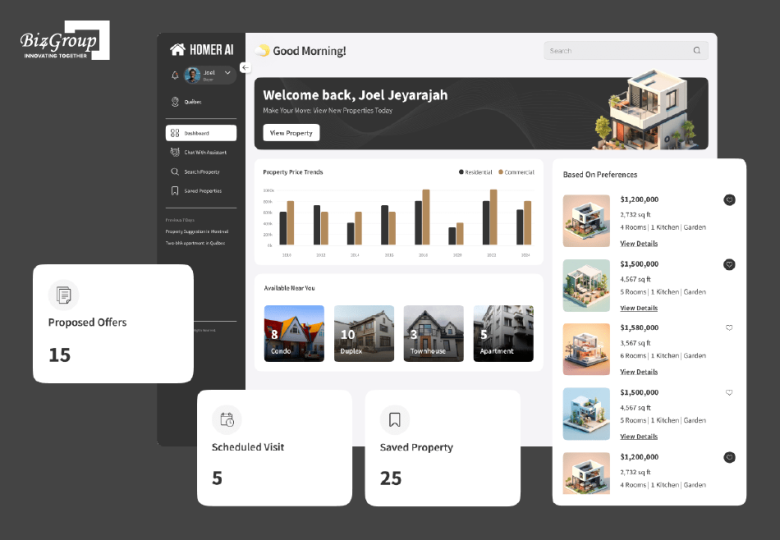
As a bespoke AI chatbot development company, we built this modern AI property management application, which demonstrates real-world value when you build a real estate compliance management system that also serves broader property management needs.
Why it stands out:
This project’s success shows that building a compliance-ready property management solution is not only feasible but also beneficial.
Rising regulatory complexity, market demand, and operational inefficiencies are strong signals that the time to build real estate compliance software has arrived. Firms that act now will gain operational agility and compliance readiness.
Before any team writes the first line of code, it helps to define the exact components that will drive value inside a compliance platform. Brokerages and property management teams run on multiple moving parts. Each part influences how you develop real estate compliance software that holds up under pressure.
Documents form the backbone of compliance. A platform needs to simplify how teams store, retrieve, and verify important files throughout property, licensing, and transaction cycles. When used well, this becomes the foundation of a real estate compliance management system that keeps everything visible.
Real estate operations move in phases. Every phase has requirements that must be signed off, tracked, or documented. Automated flow helps build a digital compliance system for real estate transactions that improves coordination across departments.
Leadership teams need visibility into how well the organization is performing against internal and external requirements. A dashboard translates data into action. Structured reporting supports future planning and risk management.
Insurance requirements shift based on property type, state rules, and vendor categories. Tracking them manually often leads to missed renewals and liability exposure. This improves safety and reduces operational risk.
Real estate operations depend on many other tools. A compliance system should not add more turbulence. Integrations help teams develop compliance tracking software for real estate firms that functions smoothly across their tech stack.
Compliance activities happen everywhere. A mobile-capable platform ensures that field teams, property managers, and agents stay aligned. Mobility is becoming a core requirement for firms planning to create property management compliance software.
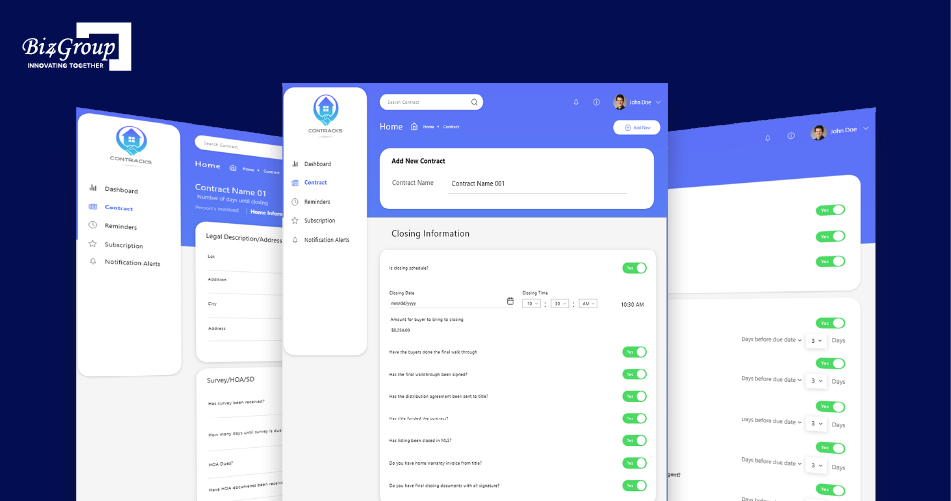
This real estate contract management tool shows how a well-designed platform can simplify complex workflows that many real estate professionals struggle to manage. Its structure offers a practical example of what strong compliance-focused features look like.
High-impact capabilities:
This project reflects how thoughtful real estate compliance software development helps professionals work with confidence. It highlights the value of a platform that blends structure, traceability, and ease of use.
A compliance platform should feel smooth, simple, and accurate. Understanding these components early makes it easier to build real estate compliance software that fits real-world workflows and scales confidently as your business grows.
Top performing brokerages cut almost 40% of manual workload with the right compliance features.
Book a Strategy Call NowChoosing the right full stack sets the foundation for everything that follows. The table below outlines the recommended options for teams planning to build real estate compliance software or develop compliance tracking software for real estate firms.
|
Layer of the Platform |
Recommended Technologies |
Why These Choices Support Real Estate Compliance Software Development |
|---|---|---|
|
Backend Development |
Node.js, Django, Laravel, FastAPI |
Reliable frameworks for structured workflows, secure APIs, and fast data handling. Ideal for teams that need to develop real estate compliance software with predictable performance. |
|
Frontend Development |
React, Vue, Angular |
Strong UI libraries that offer flexibility for building responsive dashboards and compliance views needed in a real estate compliance management system. |
|
Mobile App Stack |
Flutter, React Native |
Helps create property management compliance software with mobile capability for inspections, uploads, and field tasks. |
|
Database Options |
PostgreSQL, MongoDB, MySQL, ElasticSearch |
Databases built for speed and scalability. They support document storage, audit logs, credential records, and real estate transaction compliance tools. |
|
AI and Automation Tools |
SpaCy, TensorFlow, custom NLP models, OCR libraries |
Useful for automated document reading, extraction, and managing high volume compliance workloads while creating AI powered real estate compliance tools. |
|
Cloud Infrastructure |
AWS, Azure, Google Cloud |
Provides secure storage, multi-region backups, role-based identity controls, and auto scaling needed to build a digital compliance system for real estate transactions. |
|
Integrations and APIs |
MLS APIs, Stripe, DocuSign, Twilio, QuickBooks |
Enables smooth communication between compliance modules and business operations while supporting brokerage compliance platform development. |
|
DevOps and CI/CD |
Docker, Kubernetes, GitHub Actions, Jenkins |
Supports continuous updates, testing, and deployment. Helps maintain stable environments during the development of real estate licensing and audit compliance software. |
|
Security Layers |
JWT, OAuth 2.0, SSL encryption, IAM tools |
Protects sensitive licensing documents, COIs, contracts, and records. Essential to build real estate compliance software with safe data handling. |
|
Logging and Monitoring |
Prometheus, Elastic Stack, Datadog |
Offers clarity into system health, usage patterns, uptime, and audit trails. These tools make compliance operations easier for large teams. |
A well-chosen tech stack ensures that teams planning to create a real estate compliance management system can scale their platform without sacrificing speed, accuracy, or security.
Also read: How to build a real estate transaction management software?
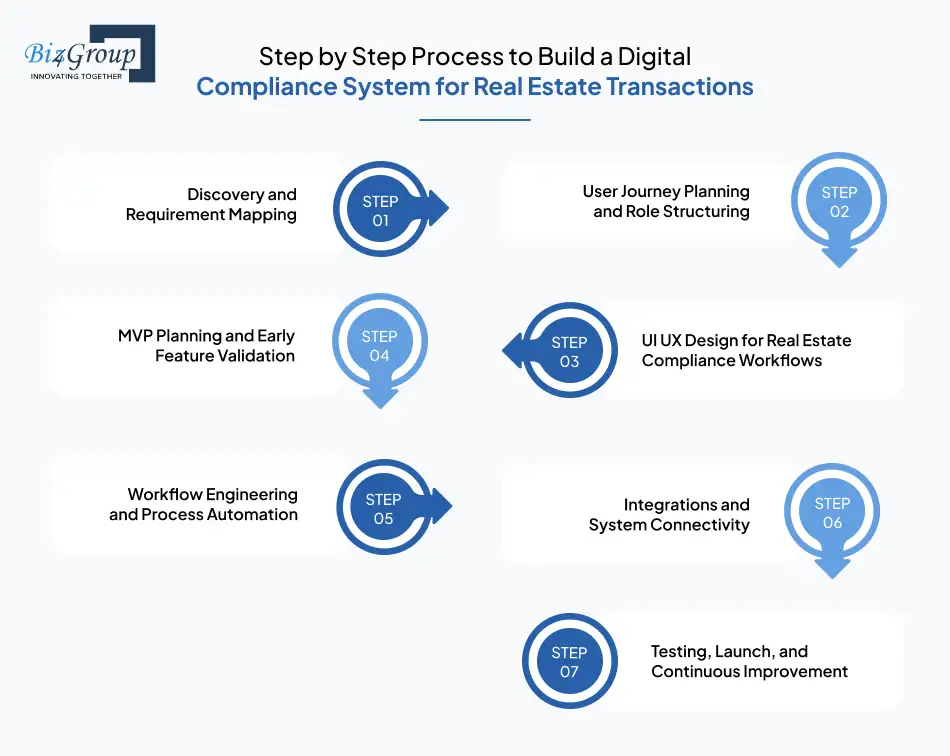
Creating a compliance platform takes careful planning, workflow clarity, and a clean approach to how real estate teams operate in real time. The following seven steps help teams build real estate compliance software with direction and purpose.
This step defines the problem with accuracy. Every compliance requirement is mapped before development begins. Teams study how documents move, where errors happen, and how people currently monitor compliance.
Focus areas
Compliance work touches many roles across a brokerage. Understanding how each role moves through tasks helps shape a more intuitive system.
Typical role mapping includes
A good UI/UX design company keeps a compliance platform understandable. Compliance itself can be complex, so the interface must feel comfortable and predictable.
Elements emphasized
Also read: Top 15 UI/UX design companies in USA
Launching everything at once slows down development. Developing a Minimum Viable Product provides a structured entry point.
A strong compliance MVP normally includes
Also read: Top 12+ MVP development companies in USA
After the UI and MVP plan are locked, developers structure rules and flows that manage compliance tasks using advanced AI automation services. These workflows guide how each compliance requirement is followed inside the system. This step makes the difference between a static tool and a functioning compliance engine.
Compliance touches multiple platforms. AI integration services keep the new system aligned with daily work. This makes it easier for firms to build a digital compliance system for real estate transactions without creating duplicate work. When systems communicate well, compliance becomes a smoother part of the workflow.
Testing brings stability. Audits, stress tests, and workflow reviews ensure that the platform supports the needs of busy real estate teams.
Testing stages include
Once the system launches, teams gather feedback and expand features in phases.
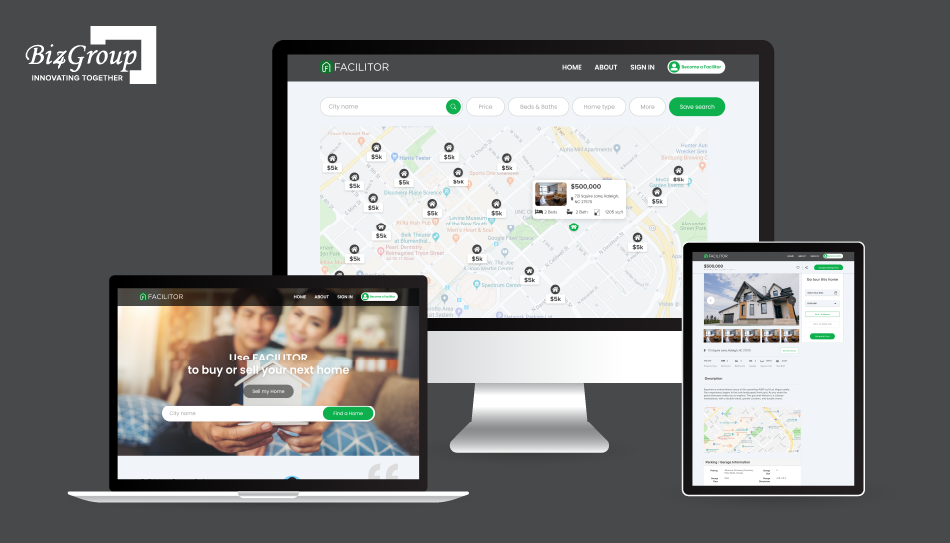
This AI real estate platform shows how structured planning leads to a successful product. It is a real estate platform that connects buyers, sellers, and facilitators through guided workflows that help users navigate the entire property journey.
What made the project effective:
Facilitor highlights the benefit of thoughtful planning when you develop real estate compliance software or build related PropTech systems.
A structured development process keeps the project on track from early planning to launch. When a team follows these steps, it becomes easier to build real estate compliance software with confidence and clarity.
Also read: AI real estate lease management software development
Most firms lose momentum between planning and execution. You do not want to be one of them.
Contact Biz4Group Now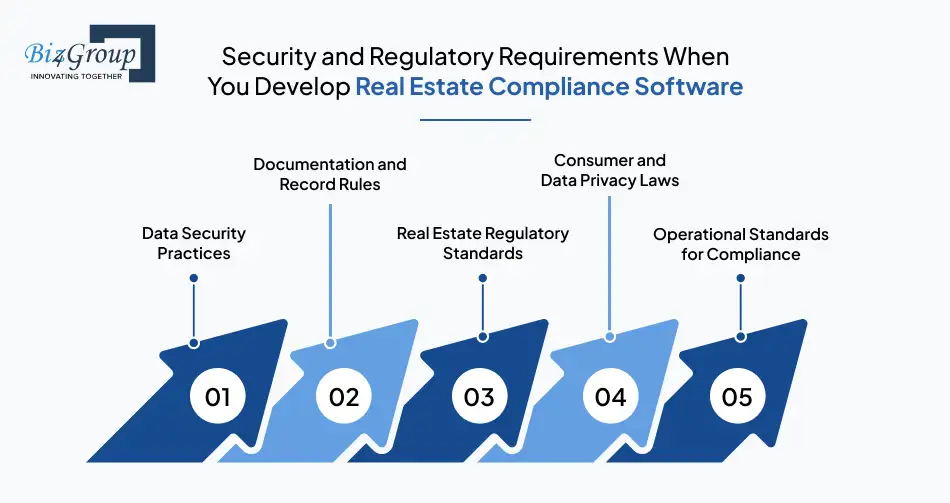
Security and regulatory expectations form the backbone of any compliance solution. The following points outline the essential practices that help teams build real estate compliance software with confidence.
A platform can only be trusted when it protects data, supports transparency, and satisfies state and federal rules that govern the real estate industry. Up next, most common challenges you face when you build brokerage compliance software and how to solve them.
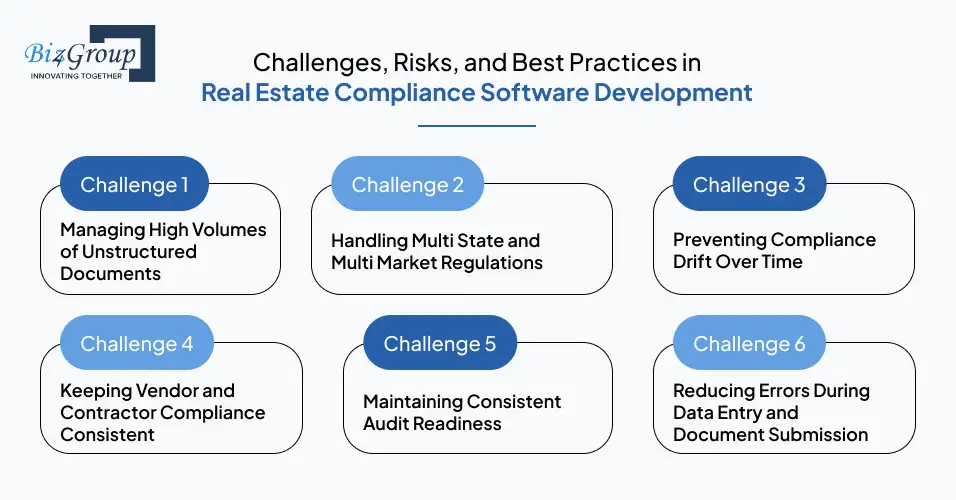
Building a compliance platform involves high liability, large volumes of documentation, and complex workflows across multiple roles. This section breaks down the core challenges teams face when they develop real estate compliance software, along with best practices that help solve them.
Real estate compliance requires teams to handle contracts, COIs, permits, disclosures, inspections, reports, and credentials. These documents arrive from different sources and often follow no consistent format.
Best practices:
Regulations shift from state to state, and even between counties. What works in one region may not apply in another. This introduces major risk when teams try to scale.
Best practices:
Compliance drift happens when rules, tasks, or workflows become outdated. As regulations evolve, the platform must evolve as well.
Best practices:
Vendors handle repairs, renovations, inspections, and maintenance. Missing a COI or expired certification exposes the firm to significant risk.
Best practices:
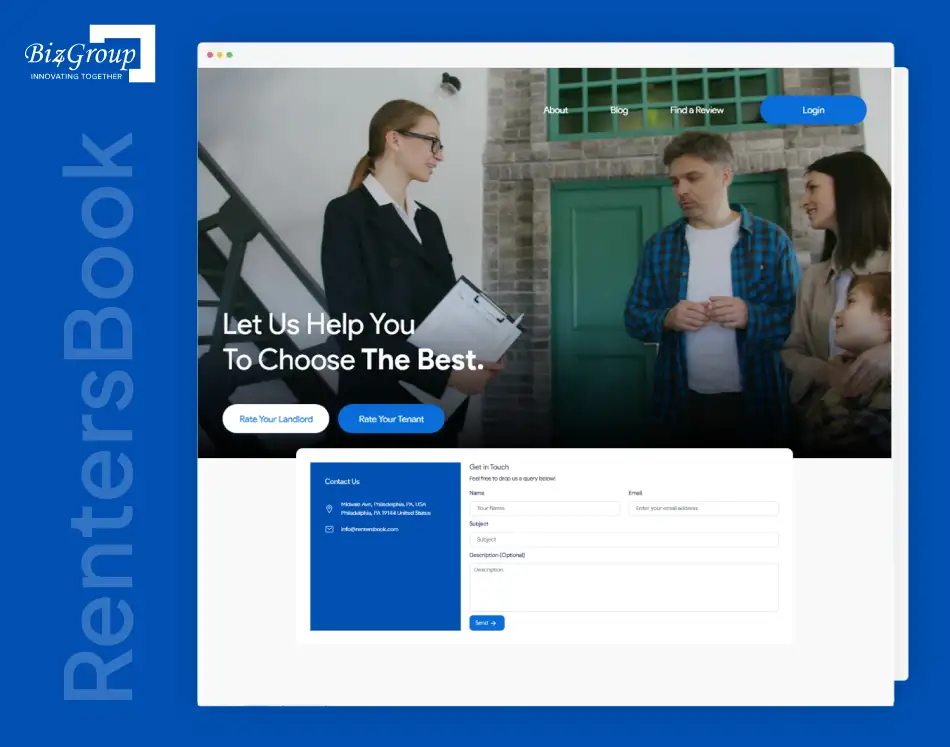
This ratings platform for rental agreements stands as a strong reference point when discussing risk, verification, and trust inside a compliance framework. The platform was built to help tenants and landlords gain clarity through verified reviews, secure data handling, and identity protection.
What it delivered:
This project proves that credibility and verification are not optional. They form the backbone of any platform where decisions depend on reliable information.
Audits are often stressful for real estate teams, mainly because documents, approvals, and communication trails are scattered across multiple systems.
Best practices:
Manual uploads and manual data entry create space for typos, missing fields, or misfiled documents. These small mistakes can cause large compliance gaps.
Best practices:
Challenges in compliance do not disappear with software. They are managed through clarity, structure, and thoughtful design. When teams plan with these risks in mind, they build real estate compliance software that stays dependable as regulations shift, markets evolve, and internal processes grow more complex.
Every month of delay increases compliance risk across teams, vendors, and transactions.
Talk to Our ExpertsCreating a strong compliance platform is a sizable investment. Most real estate organizations spend somewhere between $30,000-$150,000+ based on features, integrations, customization, and long-term scalability needs. The wider the scope, the higher the cost. A clear estimate at the start helps teams plan budgets without surprises.
|
Build Level |
Typical Scope |
Average Cost Range |
|---|---|---|
|
MVP Version |
Core document handling, basic workflows, simple dashboards, alerts, user roles |
$30,000-$55,000 |
|
Advanced Level |
COI tracking, multi state logic, reporting, integrations, refined UX, compliance templates |
$55,000-$95,000 |
|
Enterprise Level |
Full automation, advanced analytics, large team roles, custom workflows, high volume documents, complex integrations, multi market support |
$95,000-$150,000+ |
This breakdown makes it easier for teams to compare what they need now with what they may need later.
Every platform is shaped by unique requirements. These requirements create direct cost movements. The table below outlines the most common cost influencers when organizations develop real estate compliance software.
|
Cost Driver |
Why It Matters |
Estimated Impact |
|---|---|---|
|
Scope of Features |
More checklists, dashboards, workflows, and modules require longer build timelines |
$8,000-$45,000 added based on volume |
|
User Roles and Permissions |
Complex role mapping increases design and development hours |
$3,000-$12,000 added |
|
Multi State Regulations |
Unique rules for each state increase logic complexity |
$4,000-$20,000 added |
|
Document Volume and Records |
High volume systems need optimized storage and retrieval |
$5,000-$18,000 added |
|
Integrations With Other Systems |
MLS, CRM, accounting, signature tools, vendor systems add integration work |
$6,000-$35,000 added |
|
Workflow Automation |
Approval routes, compliance triggers, and parallel flows raise engineering hours |
$7,000-$30,000 added |
|
Reporting and Analytics |
Custom metrics, dashboards, and export formats require deeper data modeling |
$4,000-$15,000 added |
|
UX Depth and Custom Screens |
Advanced interfaces increase design cycles |
$3,000-$10,000 added |
|
Mobile Capability |
Support for inspections and uploads on mobile devices adds extra components |
$6,000-$22,000 added |
|
Scalability Requirements |
High traffic and multi region loads require specialized architecture |
$5,000-$25,000 added |
Understanding these cost drivers early helps avoid delays and last-minute budget adjustments.
Even the most careful planning misses certain behind-the-scenes costs. The hidden elements below can influence final pricing when you create a real estate compliance management system.
Moving files from spreadsheets, shared drives, and old systems takes time.
Cost influence:
Compliance templates differ across states and counties. Setting them up requires configuration time and validation.
Cost influence:
Every brokerage or property management company follows a unique process. Custom flows increase complexity.
Cost influence:
External systems often have API fees, usage limits, setup complexities, or special permissions.
Cost influence: $2,000-$10,000 aside from build hours
After teams begin using the system, new ideas and fixes naturally appear.
Cost influence: $1,500-$10,000 in refinements
Training different roles increases adoption and reduces errors.
Cost influence:
Compliance evolves every year. The system must stay aligned with new rules.
Cost influence: $3,000-$15,000 annually
These costs are not always visible in the beginning, but they matter when you build a digital compliance system for real estate transactions. Awareness helps teams budget smarter and reduce unexpected hurdles.
Firms investing early save up to 60% on long-term compliance operations.
Get a Custom Quote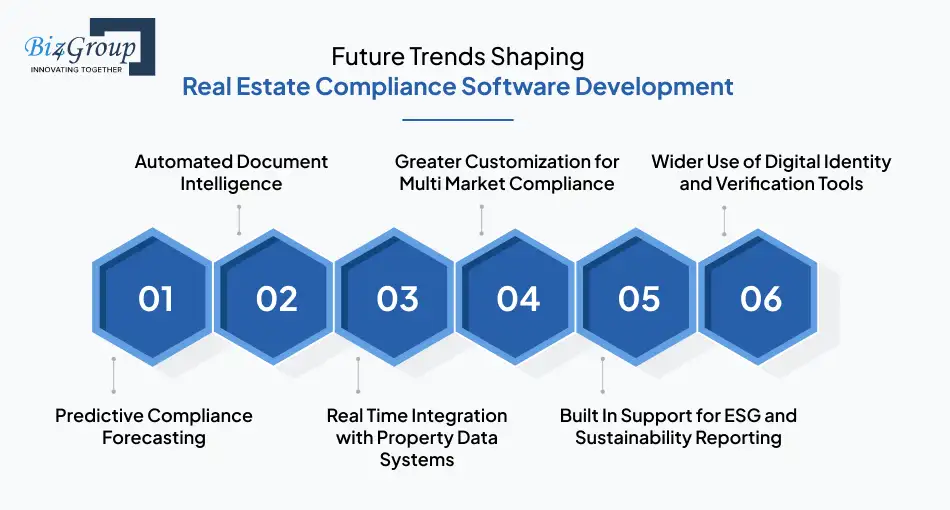
Real estate teams expect compliance solutions to grow with the industry. As portfolios expand and regulations evolve, the systems behind compliance must become smarter, faster, and more predictive. These future trends help organizations understand how to build real estate compliance software that stays relevant for years.
Compliance software is moving toward early risk detection. Future platforms will help teams spot renewal issues, documentation gaps, or vendor problems before they become obstacles. This trend encourages leaders to develop real estate compliance software that supports forward looking decision making instead of reactive corrections.
Also read: Real estate AI predictive analytics software development guide
Document heavy tasks will keep shifting toward automation. Systems will extract essential information, classify files, and detect missing paperwork without manual checks. This momentum influences how teams create real estate compliance management systems that save time for busy property and brokerage teams.
The next wave of compliance solutions will connect live data from inspections, sensors, and property operations. These connections help users track compliance status without relying on outdated information. This will shape the way companies build a digital compliance system for real estate transactions with accurate daily updates.
Brokerages expanding into new states and regions will demand systems that adjust quickly to local regulations. Compliance engines will allow easy template updates and market specific workflows. This evolution affects firms planning to develop compliance tracking software for real estate firms with multi-region portfolios.
Also read: AI real estate valuation software development guide
Environmental and sustainability requirements are rising in commercial and residential portfolios. Compliance platforms will include energy reporting, sustainability certifications, environmental inspection logs, and carbon footprint tracking. This motivates teams to include ESG modules when they create property management compliance software.
Identity verification during transactions, vendor onboarding, and property access will become more common. Systems will integrate verification tools to reduce fraud and ensure regulatory accuracy. This influences how firms approach real estate compliance software development for high trust environments.
These trends signal a shift toward smarter, more adaptive systems. As regulations tighten and portfolios expand, forward thinking leaders will benefit from preparing early. Aligning development plans with these trends ensures the platform remains useful, scalable, and reliable across future market conditions.
Biz4Group LLC is a USA-based software development company known for delivering advanced platforms that solve complex business challenges with clarity and precision. Over the years, we have helped brokerages, property management firms, and enterprise clients modernize their operations with custom software that is stable, scalable, and ready for future growth.
Our strength comes from decades of combined experience in real estate compliance, workflow automation, PropTech, and enterprise AI solutions. This makes us a partner that understands how real estate teams manage transactions, track documents, and maintain alignment across large portfolios. The goal is always the same. Build platforms that simplify work while reducing risk.
Biz4Group LLC has become a preferred real estate AI software development company for organizations that want custom tools built around their workflows rather than generic templates. We deliver systems that streamline communication, improve documentation flow, and support compliance accuracy from day one.
Working with us means you get a highly coordinated team that understands the pace, pressure, and precision of real estate operations. We have built AI products that support contract cycles, vendor management, COI monitoring, property visits, MLS connectivity, review transparency, and much more.
Businesses rely on Biz4Group LLC because we deliver measurable impact. Our process, diligence, and innovation create software platforms that help organizations stay confident in their compliance operations.
Here is what sets us apart:
These qualities give clients confidence that they are partnering with a team that delivers what they promise.
Working with Biz4Group LLC gives your organization the advantage of a team that understands both AI development and the real estate industry at a deep level. We are not learning the space. We are building for it every day. When you work with us, you get AI developers who anticipates challenges, designs around them, and keeps your operations prepared for future expansion across new markets and regulations.
So, contact Biz4Group LLC now and let our team design a custom solution that elevates your operations and strengthens your compliance from the ground up.
Real estate companies handle a unique mix of transactions, documents, inspections, licenses, and vendor relationships. Each of these creates compliance obligations that must be tracked with precision. This is why more organizations are moving toward building custom platforms that manage these requirements with clarity. Developing real estate compliance software brings structure to workflows that were once scattered across spreadsheets, emails, and day to day reminders.
A custom-built system improves operational oversight, strengthens accountability, and allows teams to work with confidence. It reduces missed deadlines, prevents documentation gaps, and helps decision makers stay aligned as regulations evolve. A digital compliance system also becomes a strategic asset as businesses expand across new states and manage larger portfolios.
Biz4Group LLC, with its AI app development expertise, has helped organizations modernize their operations with platforms built around real-world processes. Our experience covers everything from compliance automation to property workflows and transaction management. As a trusted real estate website development company and software partner, we bring a level of engineering and industry knowledge that supports long term success.
If you are planning to upgrade your compliance operations or build a platform that works the way your team works, this is the right moment to take the next step. Reach out to Biz4Group LLC today.
Teams that manage frequent transactions or large portfolios gain the most value. This includes fast growing brokerages, regional property groups, national management companies, and organizations with expanding agent networks. Custom platforms reduce operational friction and help these teams maintain clarity as their workload increases.
Many teams launch their first version within a few months, depending on scope and integrations. For faster delivery, Biz4Group can build an MVP in 2-3 weeks by using our library of reusable components, which shortens development time and lowers cost.
Most organizations notice an improvement within a few weeks of adoption. The platform centralizes tasks that were previously scattered across many tools. This frees up staff time, reduces repetitive steps, and increases productivity across teams.
Yes. Custom development allows the platform to communicate with older systems through connectors, APIs, or data bridges. Even if the legacy system is outdated, a custom integration strategy helps maintain operational continuity.
Ready-made tools follow a fixed structure. Custom software aligns directly with how your team works. This alignment creates efficiency, improves visibility across departments, and supports growth without forcing teams to change their internal process.

with Biz4Group today!
Our website require some cookies to function properly. Read our privacy policy to know more.