 Location :
Orlando, FL, USA
Location :
Orlando, FL, USA +1 (407) 714-1616
 info@biz4group.com

- Building a legal AI avatar helps automate legal intake, document navigation and compliance workflows, making it easier for clients and legal teams to use.
- When you create an AI Avatar for legal software, you strengthen user confidence through guided steps, clear explanations and reliable workflow assistance.
- Modern firms are exploring systems that build AI avatar for compliance workflows that improves efficiency without adding complexity.
- Future facing teams also invest in solutions that support AI avatar for law firm automation, giving attorneys more time to focus on higher value work.
- Adoption is growing fast, with legal AI usage increasing as the industry embraces automation and intelligent assistance.
- The cost to build an avatar ranges between $8,000 and $50,000+, depending on features, integrations and workflow depth.
Imagine your platform instantly guiding users through onboarding, contracts or compliance steps the moment they log in. Now imagine doing that at scale when you create an AI Avatar for legal software that feels natural, smart and always available. It is the kind of upgrade that makes every product leader pause and ask a few mission-critical questions before jumping in:
- How do I make an AI avatar for my legal software?
- Can an AI avatar explain legal stuff to users in my app?
- Is it expensive to build a lawyer-style AI avatar for clients?
- What tech do I need for AI legal software avatar development?
- Can an AI avatar handle basic legal queries without messing up?
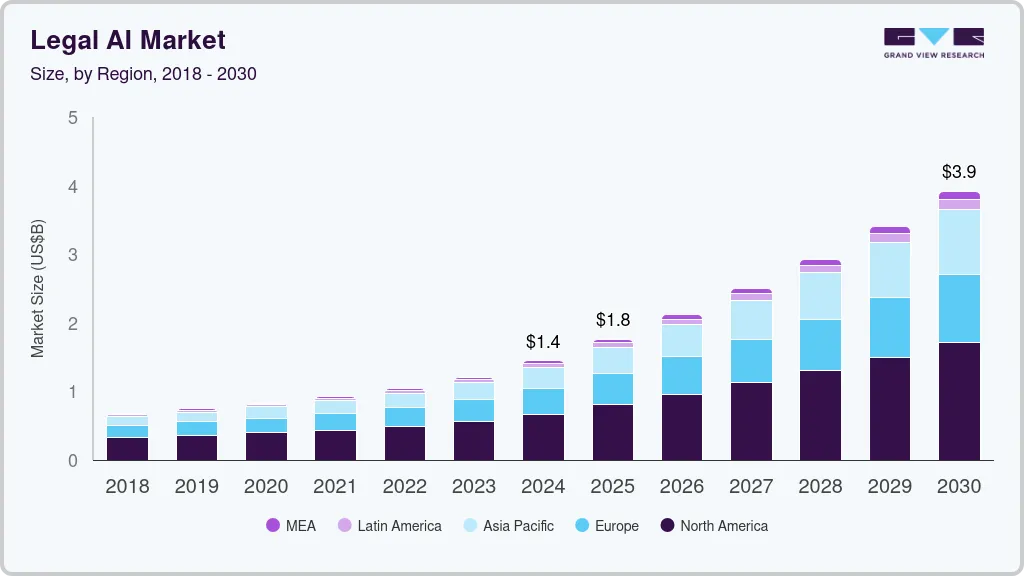
The legal AI space is booming:
The global legal AI market is projected to nearly triple by 2030, reaching USD 3.90 billion.
If you lead product, engineering or innovation inside a legal organization, you already know the pressure points. Clients want faster answers without back-and-forth emails. Legal teams are buried under intake, document sorting and compliance steps. Platforms need an edge to stand out in a crowded legal tech market. An AI Avatar for Legal Software solves these challenges by acting as a reliable, always-on guide that keeps users moving without draining your internal resources.
As more platforms adopt automation, teams are exploring how to develop AI avatar for legal software solutions that simplify client interactions, reduce operational drag and make legal tools feel more approachable without compromising accuracy. Many teams often turn to a legal software development company or collaborate with an AI development company when planning their next move.
In this guide we will show you exactly how to create an AI Avatar for Legal Software, what it takes behind the scenes, and why building an intelligent legal assistant avatar is no longer optional for legal tech innovators.
What Is an AI Avatar for Legal Software?
An AI Avatar for Legal Software is a digital assistant that uses natural conversation, guided prompts and intelligent responses to help users move through legal workflows with clarity and confidence.
- Represents a smart interface that enhances how users interact with legal tasks
- Supports automated guidance for intake, compliance steps and document navigation
- Delivers clear responses through natural language understanding tailored to legal workflows
- Reduces repetitive questions by offering consistent, always-available assistance
- Works seamlessly with systems connected through AI integration services
When you create an AI avatar for legal software, you ultimately boost usability, strengthen client interactions and create a smoother experience across legal processes.
How Does an AI Avatar for Legal Software Work?
An AI Avatar for Legal Software operates through intelligent conversation, workflow automation and secure system connectivity that begins functioning as soon as you create an AI Avatar for legal software for your platform.
- The avatar understands user questions through natural language processing so it can guide intake, compliance and document navigation with clarity.
- It retrieves information from legal databases, case files or document repositories to give users accurate and context aligned support.
- The avatar initiates workflow actions such as routing forms or generating summaries, supported by systems connected through AI model development that enhance reasoning and reliability.
- It communicates securely with backend systems, often working alongside AI automation services to keep every action consistent, traceable and compliant.
Quick Summary Table
|
Component |
What It Does |
Why It Matters |
|
User Input Understanding |
Interprets questions and intent |
Ensures clarity across legal workflows |
|
Knowledge Retrieval |
Pulls information from legal systems |
Supports accurate responses |
|
Workflow Actions |
Executes intake or navigation steps |
Reduces manual effort |
|
System Integration |
Connects securely with backend platforms |
Maintains reliability and compliance |
All these components work together to deliver a guided, predictable experience for every user, further strengthened by solutions that help teams develop AI avatar for legal software, which becomes even more valuable as we move into real-world use cases next.
Turn Legal Workflows into Smart Experiences
Build clarity and speed into every legal task with guided intelligence.
Create an AI Avatar for Legal SoftwareWhy Invest in Building an Intelligent Legal Software Avatar?
Legal tech buyers expect faster guidance, clearer workflows and modern interactions that keep users moving. When you create an AI Avatar for legal software, you are not just improving usability. You are investing in efficiency, scalability and long-term product growth. Here is why the return justifies the spend:
1. Immediate Operational ROI That Reduces Burn
An intelligent avatar handles repetitive intake questions and document guidance automatically, which cuts operational load and improves turnaround time. Teams that develop AI avatar for legal software functions see measurable reductions in manual effort. Platforms supported by enterprise AI solutions often recover value within the first months.
2. Revenue Lift Through Stronger User Completion Rates
Legal workflows lose users when steps feel unclear. An avatar provides real-time clarity, increasing task completion, and reducing drop-offs. This drives higher conversions and retention, especially when platforms build AI legal assistant avatar capabilities that respond with consistent accuracy.
3. Competitive Advantage in a Rapidly Crowded Market
Most legal tools still rely on static forms and outdated UIs. An avatar becomes an interaction layer competitors cannot replicate quickly. It strengthens product differentiation and improves defensibility, which investors see as a strategic moat.
4. Lower Long-Term Support and Infrastructure Costs
As user volume grows, support teams often struggle to keep up. An avatar scales instantly without additional headcount, reducing ticket volume and stabilizing long-term operational costs. This creates a margin-friendly growth model.
5. Scalable AI Backbone for Future Expansion
Integrated intelligently with backend systems and supported by AI consulting services, the avatar becomes a foundation for future automation, compliance workflows and broader AI-driven capabilities.
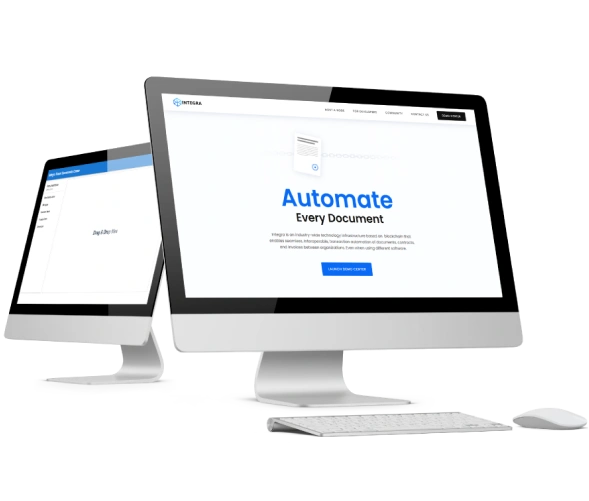
Integra ledger is a blockchain powered legal data integrity platform that ensures documents, identities and transactions remain verifiable and tamper resistant. Its focus on trust and auditability aligns naturally with the foundation needed for AI avatars that handle sensitive legal interactions, especially when accuracy and data reliability are non-negotiable.
When you combine these advantages, the business case becomes hard to ignore. An intelligent legal avatar strengthens your product economics, improves user trust and positions your platform for the next wave of AI driven legal workflows. With that foundation in place, it becomes easier to see how this technology fits into everyday legal operations.
Make Legal Platforms Effortless for Every User
Bring in conversational guidance and workflow accuracy your clients will trust.
Help Me Build AI Legal Assistant AvatarReal-World Use Cases to Build AI Avatar for Compliance Workflows
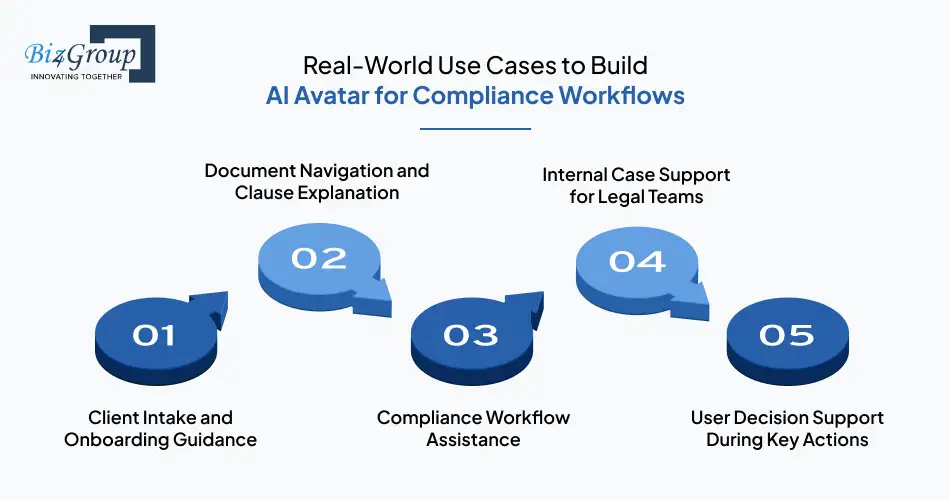
Legal workflows often overwhelm users with steps, documents and decisions. When you create an AI Avatar for legal software, you transform those interactions into guided conversations that keep everything moving smoothly. These use cases show where the impact becomes visible right away.
1. Client Intake and Onboarding Guidance
The avatar walks users through intake questions, collects the right details and reduces the back-and-forth that slows down onboarding. This leads to faster case openings and fewer incomplete submissions.
- Example: A platform uses support from a team that can hire AI developers to ensure the avatar captures all required intake data without manual supervision.
2. Document Navigation and Clause Explanation
Long contracts and compliance documents become easier to handle when the avatar highlights key sections and explains complex language in simple terms. Users stay engaged instead of getting stuck.
- Example: A system built using insights from our blog on how to build AI software allows the avatar to guide users through dense legal files effortlessly.
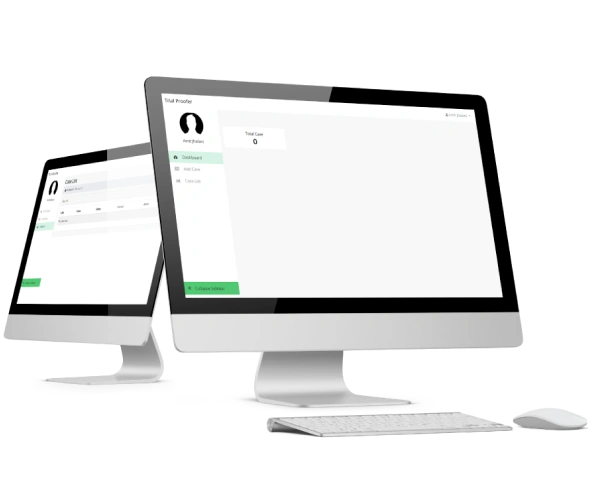
Trial Proofer is a virtual legal automation system that helps clients track deadlines, manage filings and receive legal services remotely. Its workflow centric structure mirrors the same operational intelligence an AI avatar can provide when guiding users through deadlines, compliance steps and procedural tasks inside modern legal software.
3. Compliance Workflow Assistance
Compliance steps require accuracy and sequence. The avatar guides users through each requirement, ensures steps are not skipped and provides reminders when additional actions are needed.
- Example: A team that’s planning to integrate AI into an app uses an AI avatar to support multi-step regulatory workflows.
4. Internal Case Support for Legal Teams
Attorneys and paralegals receive fast assistance when the avatar retrieves documents, summarizes content or provides procedural prompts without interrupting their work.
- Example: A research workflow supported by an approach used for an AI conversation app approach lets the avatar answer common internal queries instantly.
5. User Decision Support During Key Actions
Users often need clarity before choosing a legal option. The avatar explains available paths, outlines implications and guides them to the next step confidently.
- Example: A decision flow built with principles similar to those used to build legal AI agent helps the avatar present choices clearly at critical moments.
|
Use Case |
What the Avatar Does |
Why It Matters |
|
Client Intake |
Guides users through required information |
Reduces onboarding delays |
|
Document Navigation |
Explains clauses and points to key sections |
Improves clarity and confidence |
|
Compliance Workflows |
Ensures tasks are completed accurately |
Minimizes compliance risk |
|
Internal Case Support |
Retrieves insights and documents |
Saves time for legal teams |
|
Decision Support |
Clarifies options and next steps |
Helps users make informed choices |
These use cases show how an avatar strengthens everyday legal workflows and clears the path for deeper capabilities that shape a more reliable product experience.
Core Features for AI Legal Software Avatar Development
When you create an AI Avatar for legal software, you need capabilities that support clarity, accuracy and smooth navigation across every legal task. These core features form the foundation of an effective avatar that users can rely on consistently:
|
Feature |
What It Does |
Why It Matters |
|
Natural Language Understanding |
Interprets questions and identifies legal intent |
Ensures users receive guidance they can rely on |
|
Document Comprehension |
Reads clauses and identifies relevancy via AI legal document management |
Helps users navigate complex legal documents |
|
Workflow Awareness |
Tracks the user’s position within a legal process |
Reduces mistakes during intake or compliance |
|
Context Retention |
Remembers earlier inputs during the session |
Keeps conversations coherent across multiple steps |
|
Data Validation |
Checks for missing fields or incorrect entries |
Prevents incomplete or invalid submissions |
|
Response Accuracy Controls |
Applies rules to avoid incorrect interpretations |
Minimizes risk during legal interactions |
|
Secure System Integration |
Connects to case files, repositories and tools securely |
Maintains compliant data access at every step |
|
Audit and Activity Logging |
Records avatar actions and user interactions |
Supports accountability within legal operations |
|
Role Based Adaptation |
Adjusts behavior for attorneys, clients or staff |
Makes interactions more relevant to each user |
These capabilities create the foundation needed to make an AI avatar for contract review and legal document navigation that feels consistent and dependable, paving the way for the advanced functions that build on top of this core layer.
Advanced Features for AI Legal Intake Automation Avatar Systems
Once the essentials are in place, advanced capabilities push the avatar from helpful to highly intelligent. These enhancements elevate how you create an AI Avatar for legal software and unlock deeper automation across complex legal tasks:
1. Predictive Workflow Intelligence
The avatar analyzes user patterns and case context via predictive analytics to anticipate upcoming steps before the user requests them. This minimizes delays and streamlines how legal processes unfold across intake, compliance and document-heavy workflows.
2. Deep Clause Reasoning and Contextual Summaries
The avatar breaks down legal language, identifies patterns and produces concise explanations that reduce confusion. Teams using techniques that include generative AI strengthen its ability to simplify dense sections with legal accuracy.
3. Cross Document Semantic Linking
Instead of basic retrieval, the avatar identifies relationships across contracts, filings or compliance documents. It leverages AI document analysis tools so that users understand how clauses or evidence relate inside a larger case structure.
4. Dynamic Compliance Validation
The avatar evaluates user actions in real time and flags missing steps, discrepancies or regulatory gaps. This reduces risk and brings structure to multi stage workflows similar to how legal workflow automation transforms legal operations.
5. Multi-Layer Personalization Based on User Roles
The avatar adapts its explanations, details and tone for attorneys, paralegals or clients. This ensures every interaction feels appropriate and aligned with the user’s level of experience during tasks shaped through business app development using AI.
These capabilities expand the system beyond its core functionality and help you develop AI avatar for legal software solutions that feel more anticipatory, more adaptive and far more capable as you move into the development process ahead.
Transform Complex Legal Processes into Simple Conversations
Scale your platform with automation that actually understands legal work.
Let’s Make AI Avatar for Law Firm SoftwareHow to Develop an AI Avatar for Legal Software: End-to-End Process
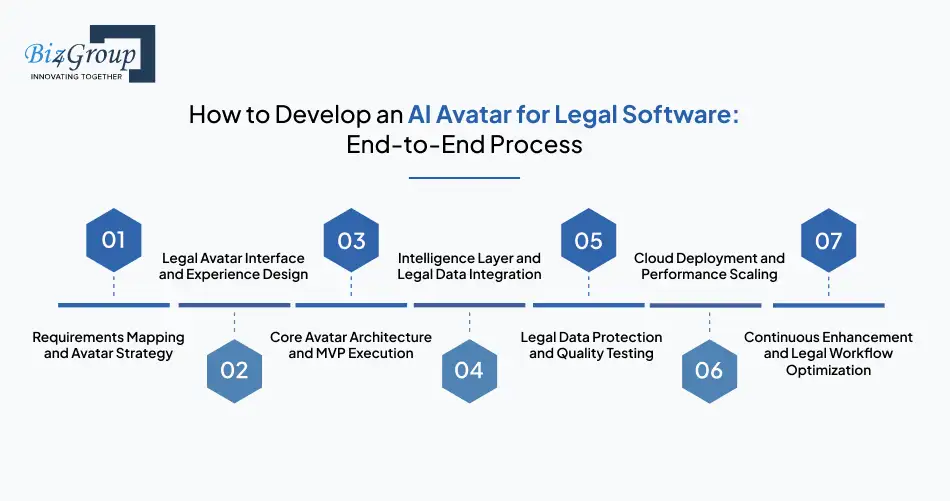
Building an AI avatar for legal platforms requires structured planning, precise engineering and a deep understanding of how users navigate legal tasks. Each phase below ensures you move from concept to functional deployment with minimal friction and maximum accuracy.
1. Requirements Mapping and Avatar Strategy
The first step is understanding where users struggle inside your legal platform. It might be compliance questions, document navigation, intake confusion or interpreting legal terminology. Defining these gaps early ensures your solution delivers tangible value rather than adding another layer of complexity.
- Conduct interviews with attorneys, paralegals and frequent platform users to uncover workflow bottlenecks
- Map high friction areas like intake, clause clarification or procedure guidance to decide what to automate first
- Validate legal compliance needs since the avatar interacts with sensitive case and identity data
- Establish KPIs such as reduced support tickets, faster intake completion or higher workflow adherence
This stage sets the foundation for an avatar that aligns with real legal behavior and avoids costly misalignment later.
2. Legal Avatar Interface and Experience Design
Legal users abandon tools quickly if the interface feels overwhelming. Clear screens, structured guidance and intuitive conversational modules are critical for adoption. A clean design ensures the avatar feels approachable, not intrusive, and supports the legal tasks users already understand.
- Build an AI avatar that automates client intake and onboarding via compliance steps and smooth document navigation
- Test interface layouts with both legal professionals and non legal users to capture usability differences
- Add features like guided prompts, easy access to supporting documents and a simple conversational dashboard
- Standardize visual elements so interactions feel consistent across desktop and mobile experiences
Partnering with a UI/UX design team with legal-tech experience ensures the avatar’s experience feels natural across complex workflows.
Also read: Top UI/UX Design Companies in USA
3. Core Avatar Architecture and MVP Execution
An AI avatar for legal software should not launch with every feature. Start with targeted MVP development services that solve your highest friction areas first. This ensures that users see immediate improvement while you validate functionality before expanding.
- Build the conversational flow for the most common interactions such as intake guidance or clause explanations
- Develop foundational modules like secure document retrieval, role identification and response structuring
- Enable the avatar to walk users through essential steps like compliance confirmations or form preparation
- Architect the backend to scale into more advanced reasoning, search and automation later
This staged approach keeps development lean.
Also read: Top 12+ MVP Development Companies in USA
4. Intelligence Layer and Legal Data Integration
The avatar’s intelligence depends on how well it understands legal text, identifies relevant sections and interprets user intent. This requires strong data pipelines and well-trained models that can handle the nuance of legal language.
- Train AI models on diverse legal documents such as contracts, compliance files and intake forms
- Build clause level reasoning so the avatar can explain sections in user friendly terms
- Add continuous learning from attorney corrections or user interactions
- Balance domain specific models with broader AI capabilities to stay accurate without sounding rigid
Legal accuracy is non-negotiable, so this stage is where the avatar gains the depth required to operate inside legal workflows.
5. Legal Data Protection and Quality Testing
Legal data carries sensitive information, and even minor mistakes can affect cases. Rigorous security audits and testing cycles ensure the avatar behaves predictably, respects confidentiality and meets legal compliance thresholds.
- Conduct legal compliance audits covering data storage, retention, access control and identity handling
- Simulate heavy usage to uncover performance gaps during document uploads or high volume intake
- Test every workflow scenario to ensure guidance is accurate, stable and predictable
- Maintain comprehensive logs and access trails for audit readiness
This phase protects your platform and ensures the AI avatar functions reliably in real legal environments.
Also Read: Software Testing Companies in USA
6. Cloud Deployment and Performance Scaling
Legal platforms experience unpredictable usage spikes, especially during deadlines, filings or internal case surges. Cloud ready deployment ensures smooth performance while giving you the flexibility to roll out new avatar features with zero downtime.
- Use scalable cloud infrastructure to balance sudden increases in user activity
- Implement CI/CD pipelines to release improvements and fix issues rapidly
- Monitor real time user interactions to identify training gaps, slowdowns or failure patterns
- Prepare internal onboarding guides so teams can adopt the avatar without friction
This ensures your avatar stays responsive, reliable and ready for high stakes workloads.
7. Continuous Enhancement and Legal Workflow Optimization
Legal workflows evolve constantly, and your AI avatar must evolve with them. Continuous updates ensure your system remains accurate, relevant and aligned with how attorneys and clients use the platform.
- Gather ongoing feedback from attorneys, paralegals and regular users to prioritize enhancements
- Add advanced capabilities such as predictive recommendations or case specific guidance
- Retrain models with fresh legal documents to maintain precision and reduce reasoning errors
- Track metrics like reduced intake time, user satisfaction and workflow adherence
This is where the avatar grows from “helpful assistant” into a core component of your legal software ecosystem.
Guide Clients Through Legal Tasks Without the Guesswork
Use intelligent support that reads, explains and navigates documents in real time.
Create AI Avatar for Legal Document ReviewTech Stack Required to Build an AI Legal Assistant Avatar
A reliable avatar depends on a tech stack designed for secure conversations, accurate legal reasoning and smooth performance. Each layer below supports how users interact with the system and how the avatar processes complex legal tasks behind the scenes.
|
Label |
Preferred Technologies |
Why It Matters |
|
Frontend Framework |
ReactJS, NextJS, Vue |
ReactJS development creates responsive interfaces, helping the avatar guide users through legal tasks with clarity. |
|
Server-Side Rendering & SEO |
NextJS, Nuxt, Remix |
NextJS development improves loading speed and supports clean rendering for avatar based interactions. |
|
Backend Framework |
NodeJS, Python, Django |
NodeJS development and Python development manage workflow logic, authentication and real time avatar responses reliably. |
|
REST, GraphQL, gRPC |
Enables the avatar to interact with case data, compliance tools and document systems through structured request handling. |
|
|
Conversational Interface Layer |
React components, WebSockets, state machines |
Allows responsive and accessible communication, ensuring the avatar adapts to multi-step legal tasks without lag. |
|
AI & Data Processing |
PyTorch, TensorFlow, Hugging Face |
Powers clause reasoning, legal language understanding and contextual explanations. |
|
Vector Database & Semantic Search |
Pinecone, FAISS, Elasticsearch |
Enables the avatar to retrieve clauses, map related sections and support deeper legal queries through embeddings. |
|
Document Parsing & Legal NLP |
SpaCy, custom parsers, LLM extraction |
Helps the avatar understand long contracts and compliance documents with section-level precision. |
|
Integration Layer |
Zapier, custom connectors, API gateways |
Connects the avatar with case systems and repositories built during development. |
|
Workflow Automation Engine |
Rule engines, AWS Step Functions, serverless logic |
Runs intake steps, compliance approvals and document routing consistently. |
|
Caching Layer |
Redis, Memcached |
Provides faster clause lookups and smoother avatar responses during long sessions. |
|
Data Storage & Retrieval |
PostgreSQL, MongoDB, Elasticsearch |
Stores structured legal data so the avatar can answer case-specific queries accurately. |
|
Identity & Security Layer |
OAuth, JWT, encrypted stores |
Protects client data and ensures role-based access across legal workflows. |
|
Content Moderation & Legal Risk Filters |
Rule filters, custom validation layers |
Prevents the avatar from generating risky or unauthorized legal statements. |
|
Session Management Layer |
Redis, secure session stores |
Maintains continuity across long multi-step legal interactions. |
|
Cloud Infrastructure |
AWS, GCP, Azure |
Supports large document uploads and high-traffic legal activity. |
|
DevOps & CI/CD Pipeline |
Docker, Kubernetes, GitHub Actions |
Ensures you can update avatar logic safely and frequently with the help of top AI legal software development companies in USA. |
|
Monitoring & Audit Logging |
Elastic Stack, CloudWatch, Prometheus |
Tracks avatar decisions and workflow actions for compliance, auditing and internal visibility. |
Each component strengthens the system's ability to make AI-powered legal support avatar in a stable, scalable way, naturally setting the stage for understanding costs across MVP to enterprise builds.
Cost to Create an AI Avatar for Legal Software Across MVP to Enterprise
Building an AI avatar requires a mix of engineering, compliance considerations and intelligent workflow design, so pricing varies based on complexity. Most projects fall between $8,000 and $50,000+, although this is a ballpark range and actual costs depend on the depth of features you choose.
|
Build Tier |
What You Get |
Estimated Cost |
|
MVP Build |
Basic conversation flow, guided intake steps, simple clause explanations, limited integrations during MVP software development. |
$8,000 to $15,000 |
|
Mid Level Build |
Advanced NLU, stronger document understanding, compliance workflows, secure integration with case data |
$18,000 to $35,000 |
|
Enterprise Build |
Deep clause reasoning, predictive guidance, multi role personalization, full workflow automation, heavy legal NLP |
$40,000 to $50,000+ |
Pricing scales with how deeply you create an AI Avatar for legal software and the sophistication required to develop AI avatar for legal software varies at enterprise levels. With the cost structure clear, the next step is understanding how these avatars generate value beyond operational efficiency.
Also Read: Cost to Develop Legal AI Agent
Challenges in AI Legal Software Avatar Development and How to Solve Them
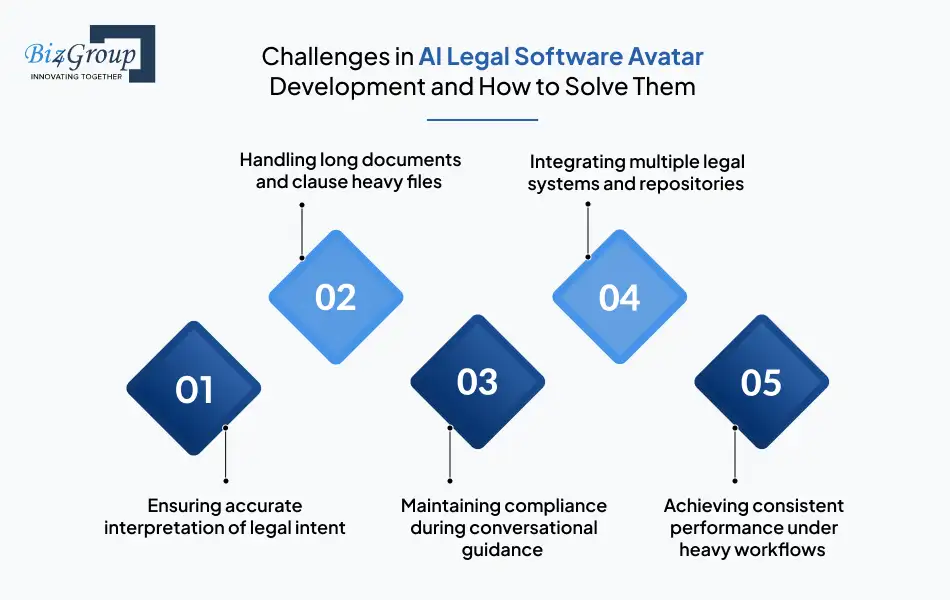
Even the smartest teams encounter roadblocks when they create an AI Avatar for legal software. These hurdles often surface as you scale accuracy, compliance and automation. Below are the most common issues and how to resolve them effectively:
|
Top Challenges |
How to Solve Them |
|
Ensuring accurate interpretation of legal intent |
Train models with diverse legal documents, role based phrasing and real usage patterns so you can confidently develop AI avatar for legal software features without misinterpretation. |
|
Handling long documents and clause heavy files |
Use strong NLP pipelines, chunking strategies and semantic mapping to let the avatar process sections without losing context. |
|
Maintaining compliance during conversational guidance |
Implement rule validation, jurisdiction filters and secure access control layers to avoid offering unauthorized or risky responses. |
|
Integrating multiple legal systems and repositories |
Create a structured integration layer with clean APIs so the avatar can retrieve cases, notes or filings reliably. Many teams follow patterns similar to those used in AI lawyer app development. |
|
Achieving consistent performance under heavy workflows |
Use scalable cloud setups, caching and adaptive load handling to keep response times stable during filings, audits or document surges. |
Overcoming these barriers ensures your avatar performs predictably across complex tasks, allowing the system to evolve smoothly into the long term vision explored in the next section.
Also Read: Cost to Build Legal AI Chatbot
Future-Proof Your Legal Platform with Smart Automation
Give users structured, accurate and role-aware guidance every step of the way.
Build AI Avatar for Compliance WorkflowsBest Practices to Create an AI Avatar for Legal Document Review Systems
Building an effective avatar starts with a clear plan for accuracy, compliance and user clarity. When you create an AI Avatar for legal software, you need practices that support reliable guidance across legal tasks and lay the foundation for deeper capabilities.
1. Train the Avatar on Real Legal Interactions
Use authentic legal conversations, intake flows and document patterns to shape how the avatar interprets intent. This becomes essential when you create AI avatar for legal document review, since accuracy depends on exposure to real clauses and case structures.
2. Keep Workflows Structured and Role Aware
Attorneys, clients and staff expect different levels of detail. Build role specific guidance shaped through practices seen in on-demand app development solutions so users receive direction that matches their needs.
3. Prioritize Accuracy Over Creativity
Legal responses demand precision and boundaries. Controlled rules, validation layers and restricted output formats help maintain compliance, similar to workflows implemented in legal AI chatbot development to ensure dependable guidance.
4. Build Clear Document Navigation Logic
Clause interpretation and section jumps require intentional design. Strong NLP and indexing help the avatar guide users more effectively, following patterns often applied to develop AI website for law firms.
5. Test Across Every Legal Workflow Scenario
Run tests on long clauses, multi-step compliance flows and unusual case variations. This helps identify early gaps and refine reasoning, a habit common in teams that build a personal avatar chatbot where consistency matters.
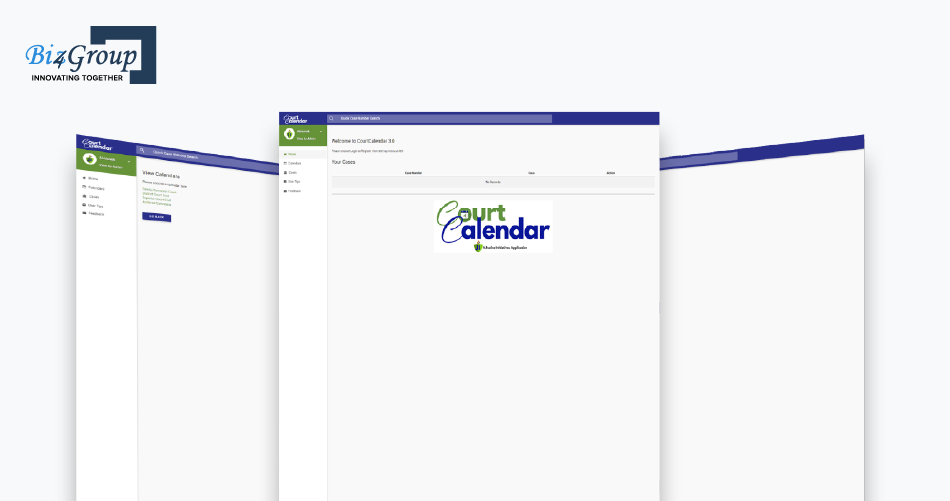
Court Calendar is a comprehensive scheduling platform that centralizes hearing dates, reminders and case related timelines. Its structured organization of legal events maps perfectly to how an AI avatar can help users manage deadlines, surface upcoming actions and maintain procedural accuracy inside a legal ecosystem.
Following these practices ensures your system can confidently build AI legal assistant avatar features that stay accurate across real legal scenarios, naturally preparing the foundation for what comes next.
The Future of AI Legal Intake Automation Avatar Technology
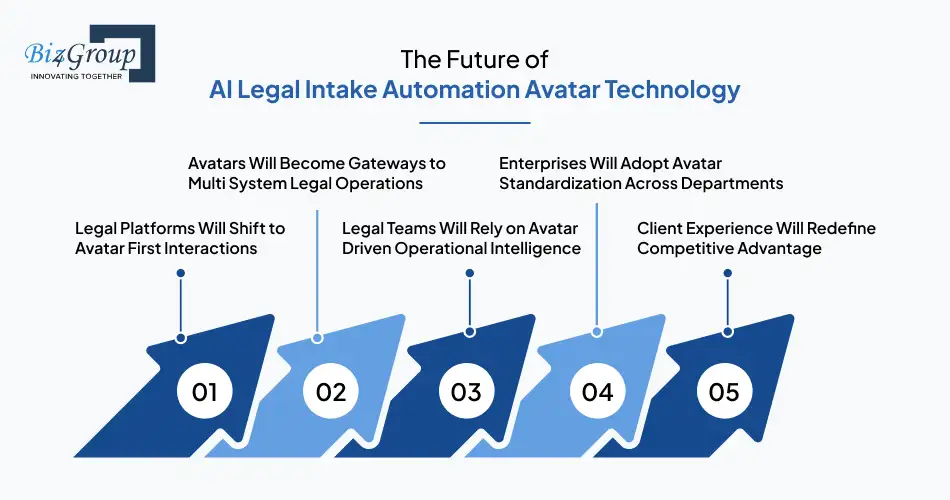
AI avatars are entering a phase where legal work will feel more guided, more predictable and more transparent for both clients and attorneys. As you create an AI Avatar for legal software, the future points toward ecosystem level transformation rather than feature expansion alone.
1. Legal Platforms Will Shift to Avatar First Interactions
Legal users will begin their journey with the avatar rather than navigating menus or dashboards. This shift creates a single conversational entry point for tasks that previously required multiple tools, making legal platforms more intuitive from the first click.
2. Avatars Will Become Gateways to Multi System Legal Operations
Instead of functioning inside one platform, avatars will orchestrate actions across compliance systems, contract tools, case platforms and internal records. This evolution mirrors the direction of modern legal infrastructures used in attorney billing software.
3. Legal Teams Will Rely on Avatar Driven Operational Intelligence
Beyond conversation, avatars will surface insights about workload patterns, bottlenecks, missed deadlines and user behavior. This operational intelligence will guide legal departments toward smarter resourcing and better workflow planning.
4. Enterprises Will Adopt Avatar Standardization Across Departments
Large organizations will unify intake, document review and compliance flows under a standardized avatar framework. This trend will be driven by benchmarks set by the top AI legal software development companies in USA who set the pace for legal automation.
5. Client Experience Will Redefine Competitive Advantage
Law firms and legal tech products will differentiate themselves through avatar friendliness, onboarding smoothness and how confidently the avatar guides users. Client trust will increasingly depend on how fluid and human centric the avatar interaction feels.
Compare Legal enables users to review and compare quotations from multiple real estate lawyers through a streamlined digital interface. Its guided decision flow demonstrates how structured legal assistance can simplify choices, making it a strong precursor to the clarity and direction an AI avatar can provide inside legal platforms.

These shifts signal a future where avatars influence not just features but entire legal ecosystems, creating a natural path for teams preparing to expand into the next stage of platform evolution.
Why Biz4Group Is a Strong Partner to Create an AI Avatar for Legal Software?
When you create an AI Avatar for legal software, you need a partner that understands the nuance of legal workflows, user expectations and compliance driven engineering. Biz4Group brings that experience together with a track record of solving real problems for modern legal platforms.
Our work on solutions like Integra Ledger, Trial Proofer, Compare Legal and Court Calendar shows how we approach legal-specific challenges with precision. These platforms reflect the same clarity and structure required when you aim to build AI legal assistant avatar systems that support attorneys and clients without friction.
What Sets Biz4Group Apart
- Proven ability to design workflow logic that aligns with the needs of teams pursuing make AI avatar for law firm software implementations.
- Strong engineering practices shaped by years of building legal systems that prioritize accuracy, privacy and predictable outcomes.
- Leading custom software development company with deep experience in AI, data and secure legal platforms.
- User experience expertise rooted in real platforms where guided interactions matter just as much as backend correctness.
- A delivery model designed for scalable AI, which supports long term growth for anyone planning to develop AI legal intake avatar or intake automation solutions.
- Our experts know how to create an AI avatar for business and apply those principles responsibly within high-stakes legal environments.
Choosing Biz4Group means partnering with a team that already understands the expectations, constraints and opportunities in legal tech, making it far easier to turn your AI avatar vision into a dependable, production ready reality.
Upgrade Your Legal Ecosystem with Intelligent Assistance
Enhance intake, review and client experience with next-gen conversational tools.
Develop AI Legal Intake Avatar For My PlatformConclusion: Bringing Your AI Legal Software Avatar Vision to Life
Creating an AI avatar for legal workflows is no longer a futuristic experiment. It is a practical, high impact upgrade that helps users move through documents, compliance steps and intake tasks without getting lost in legal jargon. With the right strategy and the right build partner, your platform can evolve from “useful software” to “smart legal companion” faster than you think.
Teams that combine strong engineering, clear workflows and reliable product development services already see the advantage of guided interactions. And when supported by an experienced AI App development company, your avatar becomes more than a feature. It becomes the new front door to your legal ecosystem.
If you are ready to turn this vision into something real and revenue generating, here are four simple ways to get started.
Transform Your Legal Platform With a Custom AI Avatar
FAQs About How to Create an AI Avatar for Legal Software
1. How long does it typically take to build an AI avatar for legal software?
Most projects take 6 to 14 weeks, depending on workflow depth and document complexity. Teams often map out the steps to develop an AI avatar for legal tech applications early to keep timelines predictable as features expand.
2. Do AI legal avatars require continuous training after launch?
Yes. Legal rules, user behavior and document structures change frequently, so ongoing refinement is essential. This becomes even more important when the system resembles an Intelligent Legal Software Avatar that must maintain accuracy across evolving workflows.
3. Can an AI avatar handle jurisdiction specific differences in legal language?
It can, provided it is trained on region specific rules and terminology. Systems built with virtual legal assistant avatar design in mind often use layered knowledge models to adapt responses based on jurisdiction.
4. What types of legal workflows benefit the most from AI avatar guidance?
Client intake, document navigation, form preparation, compliance steps and case research see the biggest gains. Many teams use structures similar to build legal AI avatars with NLP for case assistance and summaries to streamline these tasks.
5. How much does it cost to develop an AI avatar for legal software?
Budgets typically fall between $8,000 and $50,000+, depending on workflow complexity and integration needs. Larger builds often include capabilities found in legal tech AI avatar development services, which naturally increases scope and cost.
6. Do legal AI avatars need access to internal case files to work effectively?
Not always. Some avatars function using summaries or metadata, while deeper integrations are only required for detailed guidance. This flexibility is helpful when teams focus on models similar to make AI-powered legal support avatar solutions that do not always require full file access.
