 Location :
Orlando, FL, USA
Location :
Orlando, FL, USA +1 (407) 714-1616
 info@biz4group.com
- Develop an AI based fall detection software for hospitals and elderly care with essential features, accurate sensing and real time monitoring.
- Organizations can create an AI fall detection system for hospitals using multi sensor fusion, environmental analysis, and predictive scoring.
- Advanced capabilities allow teams to build AI fall detection software with sensors and video analytics for higher accuracy.
- Make an elderly care fall detection platform using machine learning with adaptive models for personalized insight.
- A complete system usually ranges from $25,000-$200,000+, depending on MVP scope, advanced features, integrations and deployment scale.
- Explore what is the process of AI fall detection software for hospitals and elderly care, from planning through scaling.
- Biz4Group LLC brings proven healthcare, AI and IoT development expertise to build reliable, scalable fall detection platforms for real care environments.
Every year in the United States, more than one in four adults aged 65 or older suffers a fall. That means out of every four seniors you know, at least one is likely to fall, and many of those incidents lead to injuries or long-term complications. This one verified fact alone should make every hospital and elderly care provider rethink how they protect their patients.
More healthcare leaders today are choosing to develop an AI based fall detection software for hospitals and elderly care because traditional monitoring methods cannot keep up with growing patient loads and increasing safety expectations. Families want reassurance. Facilities want accuracy. Caregivers want support that keeps them alert without overwhelming them.
This shift is especially important for teams planning to build AI based elderly fall detection platform that reduces manual oversight and increases real time awareness. When you develop AI fall detection software that captures subtle movements, identifies risks, and alerts staff within moments, you strengthen your entire care ecosystem.
Throughout this guide, you will discover how organizations can create AI fall detection system for hospitals with the right mix of sensors, analytics and thoughtful implementation. The goal is simple. Safer environments, quicker responses, and a modern approach to senior care that feels dependable for everyone involved.
Why Develop an AI Based Fall Detection Software for Hospitals and Elderly Care Today?
Caring for seniors or vulnerable patients has always required vigilance, empathy, and quick action. The challenge is that hospitals and elderly care centers have more residents to monitor and fewer staff available at any given hour. This is where technology steps in with real value.
Growing Risk and Rising Costs
Fall incidents continue to rise across healthcare environments. In the United States, more than three million older adults are treated in emergency departments every year for fall related injuries.
A quick overview of the impact shows how serious this challenge is.
|
Key Concern |
What It Means for Hospitals and Care Centers |
|---|---|
|
High patient volume |
Staff cannot maintain continuous room observation |
|
Increased fall injuries |
Longer recovery, higher liability and reduced patient trust |
|
Higher care demand |
More pressure on caregivers already stretched thin |
|
Cost of falls |
Billions spent on treatment, rehabilitation and extended stays |
Facilities that develop AI fall detection software often start with the goal of improving safety. The outcome, however, tends to be far larger. Faster response improves injury outcomes, reduces hospital readmissions, and strengthens patient confidence.
Pain Points That Push Facilities Toward Smart Monitoring
Care teams often navigate daily challenges that make manual monitoring difficult. These pain points reveal why teams move toward smarter, automated tools supported by AI automation services.
- Staff cannot be everywhere at once
- Traditional alarms may not activate during an actual fall
- Some residents forget to use help buttons
- Night shifts have fewer caregivers to monitor higher risk patients
- Manual checks interrupt patient privacy and rest
When facilities choose to build AI based elderly fall detection platform, they gain a monitoring system that never loses focus. Detection becomes continuous. Alerts become accurate. Human oversight becomes more effective instead of more stressful.
Benefits That Create Long Term Value
Hospitals and care homes that create AI fall detection system for hospitals often discover benefits beyond fall prevention. These include stronger operational efficiency and a smoother experience for caregivers.
Benefits include:
1. Faster and more reliable incident detection
2. Immediate alerts sent to the right staff members
3. Better documentation of events for compliance and internal review
4. Reduced risk of missed falls that could lead to serious injuries
5. Improved family trust and transparency
6. Stronger reputation in the community
For elderly care organizations planning to build AI fall detection software with sensors and video analytics, the motivation often starts with safety but expands into workflow optimization and enhanced resident experience seen across modern AI remote patient monitoring app development solutions.
Falls remain one of the most preventable causes of injury in senior care and hospital environments. With rising expectations for safety and accountability, the shift toward intelligent monitoring is a competitive advantage that helps care providers stay ahead.
The Next Fall Could Be Prevented
Hospitals lose an estimated $34 billion a year to fall-related injuries.
Upgrade Safety with Biz4GroupImportant Features to Include When You Create AI Fall Detection System for Hospitals
Smart fall monitoring systems work only when the foundation is strong. Before adding advanced capabilities, hospitals and senior care organizations need a solid set of core features that make detection accurate, alerts reliable, and workflows smooth.
|
Feature |
What It Is |
What It Does |
|---|---|---|
|
Real Time Fall Detection |
Constant monitoring powered by sensors, vision models or both |
Identifies fall events the moment they occur and triggers alerts |
|
Multi Sensor Compatibility |
Ability to work with wearables, cameras, radar and ambient sensors |
Ensures flexibility for different room types and privacy needs |
|
Automatic Caregiver Alerts |
Direct notifications sent to nurses, staff or emergency teams |
Reduces response time and improves safety outcomes |
|
Activity Recognition |
Analysis of movements like sitting, standing, walking or lying down |
Helps detect unusual behavior patterns that may signal risk |
|
Night-Time Visibility |
Low light or infrared support for dark rooms |
Maintains accuracy during nighttime monitoring |
|
Patient Identification |
Ability to recognize the right resident in multi occupant environments |
Prevents confusion and reduces false alerts |
|
Event Logging |
Record of every fall, near fall and alert trigger |
Supports audits, compliance needs and internal reporting |
|
Integration Readiness |
Compatible with dashboards, nurse call systems and hospital software |
Ensures smooth adoption and operational visibility |
These essential features form the backbone of any reliable fall detection platform. They give care teams a dependable safety net before more advanced intelligence is added on top.
Also read: AI elderly care monitoring app development guide
Advanced Capabilities You Must Add When You Develop AI Fall Detection Software
Core features build a reliable foundation, but advanced capabilities turn fall detection into a proactive, intelligent safety system. These enhancements improve accuracy, reduce false alerts and help teams understand the full context behind every event.
1. Predictive Risk Scoring
This capability goes beyond simple detection. It evaluates movement history, posture changes, and mobility patterns to anticipate who might be at risk before a fall occurs.
Short bursts of abnormal motion, slower gait, or instability become early warning signals.
Care teams receive insights that guide preventive actions instead of reacting after a fall.
2. Multi Modal Sensor Fusion
One sensor alone can miss critical details. Multi modal fusion blends data from cameras, smart wearable technology, radar or pressure sensors to produce a more reliable detection model.
The system compares signals across sources to confirm whether a fall actually happened.
This reduces false alarms and improves consistency across different room conditions.
3. Context Aware Scene Analysis
Context awareness helps the system understand what is happening in the room.
It recognizes furniture placement, obstacles, occupancy patterns, and movement paths.
A fall behind a bed frame or next to a chair becomes easier to identify because the system understands the environment.
4. Post Fall Condition Assessment
Detecting the fall is only step one. Advanced systems also analyze stillness, body position and lack of recovery attempts.
This helps determine severity and whether immediate intervention is needed.
Hospitals gain an added safety layer that supports better triage decisions.
5. Crisis Identification and Response Continuity
Some environments require more than simple fall alerts. They need awareness of distress signals, emotional cues and high risk conversations.
Project Spotlight: AI Chatbot for Personalized Support to Homeless and At-Risk Veterans
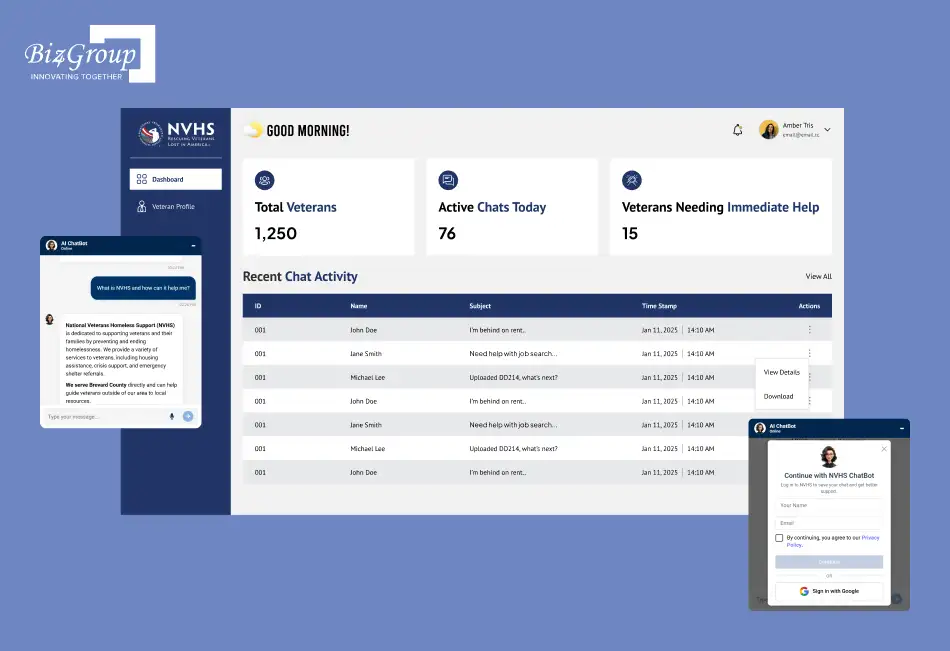
This project shows how meaningful context detection can save lives. Using our expert AI chatbot development services, we built an AI chatbot that supports homeless and at-risk veterans across the United States. The platform listens for signs of distress and escalates when a crisis emerges.
A few strengths that align with advanced fall detection capabilities include:
- Real time detection of emotional or crisis related phrases
- Alerts routed to staff dashboards for immediate follow up
- Location aware guidance so users receive support near them
- Multi turn understanding that keeps conversations coherent
- Secure handling of sensitive details for compliance readiness
Hospitals and elderly care organizations benefit from similar logic when integrating crisis detection into fall monitoring. An unresponsive patient after a fall or signs of panic can be flagged early for faster intervention.
6. Adaptive Sensitivity Control
Different rooms and patient types require different alert sensitivity. Adaptive calibration learns patterns over time and adjusts thresholds for accuracy.
The system becomes smarter as it observes daily routines.
7. Natural Language Event Summaries
Instead of raw data logs, the system generates readable summaries for staff. Short descriptions help caregivers understand what happened without reviewing lengthy footage.
This also simplifies reporting and compliance reviews.
8. Anonymous Body Mapping
Privacy concerns often slow adoption. Anonymous skeletal mapping protects identity while still enabling accurate motion analysis. It can work without capturing any personal or facial details.
Facilities gain precision without compromising dignity.
Advanced features turn a basic fall detection setup into a smart companion for caregivers. These capabilities support better decisions, stronger reliability and smoother operations across hospital and senior care environments.
Still Using Yesterday's Tech for Today's Risks?
If your platform cannot predict, interpret or adapt, it is already behind what modern care demands.
Build Smart with Biz4GroupRecommended Tech Stack for AI Based Fall Detection Software Development for Hospitals and Elderly Care
A strong full stack supports accuracy, scalability, and dependable performance. Every component plays a role in how fast the system responds and how well it adapts to unique environments. The table below highlights the essential layers along with common frameworks and tools used in fall detection projects.
|
Technology Layer |
Tools and Frameworks |
What It Covers |
|---|---|---|
|
AI and ML Models |
TensorFlow, PyTorch, OpenVINO, MediaPipe |
Pose estimation, motion tracking, anomaly detection, fall pattern learning |
|
Computer Vision Engines |
OpenCV, YOLO models, Intel RealSense SDK |
Frame analysis, body mapping, spatial recognition, depth sensing |
|
Sensor Processing |
BLE toolkits, Sensor Fusion APIs, Edge SDKs |
Data capture from wearables, radar, pressure pads or IoT sensors |
|
React Native, Flutter, React, Angular |
User apps for caregivers, dashboards for monitoring |
|
|
Backend Services |
Data processing, alert routing, event management, model execution |
|
|
Cloud Architecture |
AWS EC2, AWS Lambda, GCP Compute, Azure App Services |
Storage, compute power, model hosting, logs and analytics |
|
Databases |
PostgreSQL, MongoDB, DynamoDB |
Event logs, historical movement data, patient profiles |
|
DevOps and Deployment |
Docker, Kubernetes, GitHub Actions |
Versioning, CI pipelines, load balancing, upgrades |
|
Connectivity Layer |
MQTT, WebSockets, REST APIs |
Communication between sensors, devices and servers |
A technology stack becomes most effective when all layers work together without friction. Each selection shapes how stable, fast and adaptable the final fall detection solution becomes.
Also read: AI medical software development guide
Step-by-Step Process to Develop AI Fall Detection Software
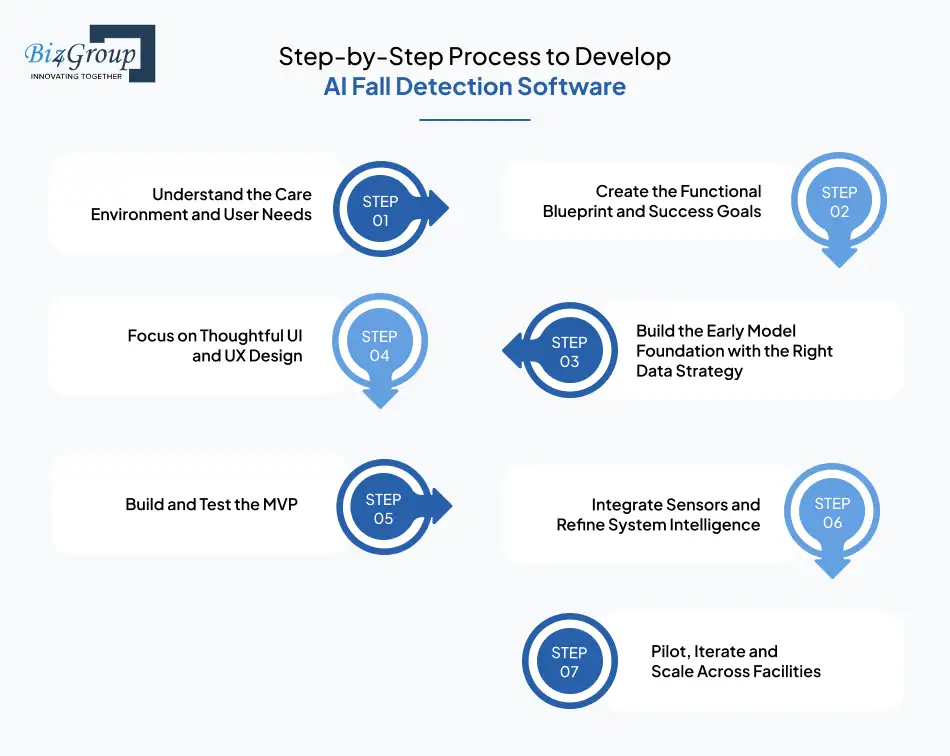
Bringing a fall detection system to life involves more than training a model. Hospitals, nursing homes and senior care facilities depend on solutions that feel reliable from day one. A well-structured roadmap makes that possible.
Step 1. Understand the Care Environment and User Needs
This stage focuses on mapping real world conditions. Every facility has unique room layouts, patient mobility levels, and caregiver workflows. By studying these details, product teams can build a detection system that fits everyday operations instead of disrupting them.
Teams usually explore:
- High risk zones
- Patient activity patterns
- Staff availability and shift structures
- Special privacy needs
- Required alert destinations
This clarity shapes feature decisions and makes development much smoother.
Step 2. Create the Functional Blueprint and Success Goals
Once teams understand the environment, they build a functional plan for the system. This includes essential features, event workflows and alert paths.
Clear documentation keeps everyone aligned and avoids scope gaps later. It also defines measurable success like detection accuracy, alert speed and acceptable false alert thresholds.
Step 3. Build the Early Model Foundation with the Right Data Strategy
Reliable fall detection depends on quality data. Teams gather datasets that represent the target environment and train initial models on movement patterns, body transitions and fall dynamics. The focus here is on building a stable baseline model that performs well enough for pilot testing.
Step 4. Focus on Thoughtful UI and UX Design
Caregivers use monitoring systems during busy shifts. A cluttered interface slows them down. This step involves creating layouts that match how nurses and care teams think and act.
A robust UI/UX design company maps clear alert flows, accessible dashboards and an intuitive experience for mobile and desktop screens. Short interactions save time, reduce frustration, and support quick decisions during emergencies.
Also read: Top 15 UI/UX design companies in USA
Step 5. Build and Test the MVP
Developing an MVP helps teams validate whether the solution works well in real environments. It includes core detection features, basic alerts and a light dashboard.
During testing, caregivers share feedback on alert accuracy, noise levels and usability. This stage uncovers blind spots early, which reduces expensive rework later.
Also read: Top 12+ MVP development companies in USA
Step 6. Integrate Sensors and Refine System Intelligence
After the MVP performs well, the system expands to support additional sensors, advanced logic, and improved contextual understanding.
This step improves detection reliability across different rooms and lighting conditions. Sensor behavior, alert timing and event reconstruction are refined through repeated field testing.
Step 7. Pilot, Iterate and Scale Across Facilities
The final step involves running a longer pilot in selected rooms or wings. Model performance is monitored over weeks, not days. Teams gather evidence, optimize thresholds and prepare the platform for full deployment across large buildings or multi facility networks.
Project Spotlight: AI Avatar for Personalized Wellness Guidance
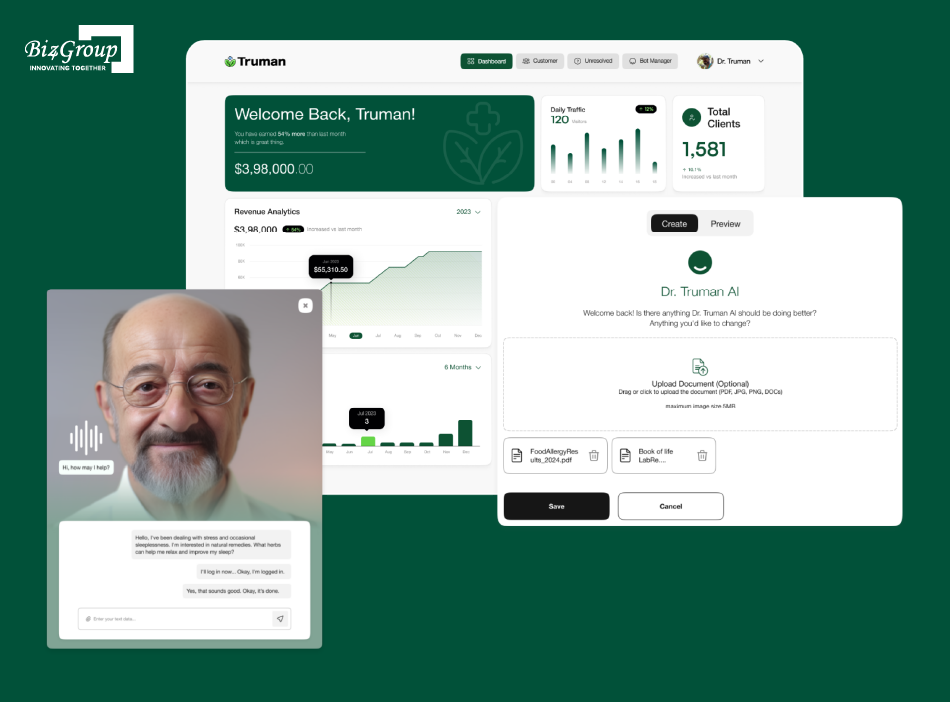
A strong example of structured execution is the Dr. Truman wellness platform created using our exceptional AI avatar development services. Although the project focuses on personalized healthcare rather than fall detection, the development journey reflects the same principles required for hospital grade safety solutions.
A few highlights from how our team navigated complex requirements include:
- Advanced behavior modeling through the AI avatar
- Smooth user journeys from consultation to product purchase
- Accurate recommendation engine based on personal health inputs
- Integration of medical records and history uploads
- Clean and quick UI that simplifies decision making for users
These strengths come from a disciplined process. Planning, iterative testing, design attention, and smart engineering help ensure the final AI product supports real people in real moments.
A dependable fall detection system grows through careful planning and consistent refinement. When each step is handled with intention, hospitals and senior care providers gain a monitoring platform that improves their daily work without adding complexity.
You Know the Process. Now Choose the Right Team
Most teams spend weeks figuring out a plan. With us, you can launch an MVP by that time.
Contact Biz4Group TodayEthical, Security and Regulatory Guidelines for AI Fall Detection Software Development for Hospitals and Elderly Care
Any solution built for hospitals, assisted living facilities or home healthcare environments must meet strict protection standards. Fall detection technology processes sensitive information, so responsible design becomes a cornerstone of successful adoption. Below are the key areas that need careful attention before rolling out a system in real patient settings.
Protecting Patient Data
Data protection supports trust at every level of elderly care. Patients and families want reassurance that cameras, sensors and digital records do not compromise privacy.
Key practices include:
- Encryption during data transfer and storage
- Strict role based access controls
- Time bound access for staff and vendors
- Localized processing whenever possible to limit data exposure
- No storage of unnecessary video files
- Clear policies on retention and deletion of movement data
These measures help maintain the confidentiality expected in care environments.
Meeting HIPAA Requirements
Any platform that interacts with patient information falls under HIPAA expectations. Compliance ensures that the solution respects privacy rights while maintaining operational transparency.
Compliance guidelines include:
- Handling all patient identifiers with controlled access
- Securing PHI stored in databases
- Protecting event logs that reference room numbers or patient identifiers
- Using audit trails to record system activity for accountability
- Working with cloud providers that meet HIPAA readiness
These standards make the system acceptable for hospitals, clinics, and senior living facilities that operate under strict regulations.
Also read: HIPAA compliant AI app development guide
Ethical Practices in Elderly Monitoring
Ethics play a central role in any technology that watches over vulnerable groups. Seniors deserve systems that protect their dignity while supporting their safety.
Ethical considerations include:
- Avoiding intrusive constant video storage
- Using anonymous skeletal mapping or depth sensors when appropriate
- Informing residents and families about how the system works
- Providing caregivers with training on responsible usage
- Offering clear documentation that sets expectations for data behavior
When ethical safeguards are in place, technology becomes a supportive partner rather than a source of discomfort.
Transparency and Accountability for Facilities
Hospitals and elderly care organizations must be confident that their monitoring tools stand up to audits and regulatory review. Transparency removes uncertainty and supports strong internal governance.
Key requirements include:
- Documented operating procedures
- Clear records of alerts, fall incidents and system actions
- Consistent testing of detection accuracy
- Tracked updates and version histories
- Defined escalation paths for any data related incident
These steps ensure readiness for inspections and strengthen trust within medical teams.
Security and compliance are not finishing touches. They are foundational elements that protect patients and shield care providers from risk. When addressed early, they create a framework that welcomes innovation without compromising ethics or privacy.
How Much Does It Cost to Build AI-Based Elderly Fall Detection Platform?
Building an intelligent fall monitoring solution involves multiple moving parts. From AI modeling to AI integration services to deployment scale, each decision affects the final investment a hospital or elderly care facility will make. On average, organizations spend anywhere between $25,000-$200,000+ depending on complexity, accuracy goals and system reach.
Before diving deeper, here is a snapshot of how costs typically shift from the early MVP phase to a full enterprise rollout.
|
Development Stage |
What It Includes |
Estimated Range |
|---|---|---|
|
MVP |
Core fall detection model, basic sensor support, alert flow, simple dashboard |
$25,000-$60,000 |
|
Advanced Level |
Multi modal sensing, context awareness, better UI, analytics |
$60,000-$120,000 |
|
Enterprise Level |
Multi facility deployment, high accuracy models, integrations, scaling |
$120,000-$200,000+ |
The right level depends on whether your facility needs a starter solution or a platform ready for large-scale use.
Key Cost Drivers in Fall Detection Development
Each cost driver shapes how your budget evolves.
|
Cost Driver |
Description |
Impact Range |
|---|---|---|
|
Data preparation, model development, accuracy tuning |
$8,000-$40,000 |
|
|
Sensor Ecosystem |
Cameras, radar, wearables or pressure sensors |
$5,000-$50,000 depending on rooms |
|
Multimodal Fusion Logic |
Combining signals from multiple sensor types |
$6,000-$25,000 |
|
Custom Dashboards |
Caregiver UI, reporting tools, alert visibility |
$4,000-$20,000 |
|
Integrations |
Nurse call systems, EHR, existing software |
$6,000-$30,000 depending on complexity |
|
Testing and Validation |
Pilot tests, field calibration, threshold tuning |
$3,000-$15,000 |
|
Deployment Infrastructure |
Cloud hosting, edge devices, network upgrades |
$2,000-$25,000 |
Each one influences your final costs based on how advanced your system needs to be.
Hidden Costs You Should Plan For
Many organizations overlook factors that quietly increase budgets over time. These hidden costs affect both short-term and long-term planning. Understanding them upfront helps keep financial expectations realistic and prevents interruptions later.
- Data Annotation and Model Improvements
AI modeling improves when real facility data becomes available. Annotation work often increases as the system grows.
Typical hidden costs: $2,000-$10,000 for annotation rounds, $1,000-$6,000 for retraining cycles, and additional costs when adding new sensor types or room layouts.
- Staff Training and Workflow Adoption
Caregiver teams need time and guidance to adopt new tools. A smooth onboarding process saves time during emergencies.
Training efforts usually require: $1,500-$7,000 for staff sessions, $500-$2,000 for workflow materials and tutorials, and additional costs for follow up training during scaling.
- Hardware Lifecycle and Maintenance
Sensors and cameras need periodic upkeep to maintain accuracy.
Possible hidden expenses: $200-$800 per device for replacement, $500-$4,000 yearly for calibration or updates, and maintenance costs increase as facility coverage expands.
- Infrastructure Adjustments
Some buildings require network improvements or additional power access points for optimal performance.
Common adjustments include: $1,000-$15,000 for WiFi upgrades, $500-$3,000 for mounting, rewiring or layout modifications, room by room setup costs when scaling.
- Ongoing Monitoring and Support
A dependable system needs technical support and periodic evaluations.
Support expenses can include: $300-$1,500 monthly support plans, $1,000-$6,000 for annual system audits, and additional charges for emergency patches or new features.
Cost planning is easier when you understand the entire landscape. With clear budgeting, healthcare organizations gain the confidence to adopt technology that strengthens safety and improves the overall care environment.
Challenges and Risks to Consider When You Develop AI Fall Detection Software
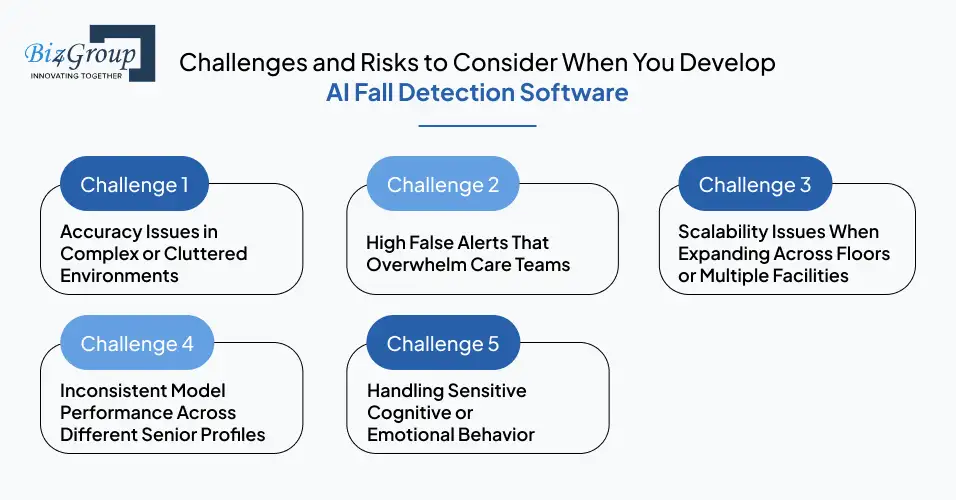
Creating a reliable fall monitoring platform for hospitals and elderly care settings requires more than technical expertise. It demands an understanding of human behavior, environmental unpredictability, and senior care patterns. Every system encounters challenges during development. When those challenges are acknowledged early, teams can prevent costly setbacks and build solutions that caregivers confidently rely on.
Challenge 1: Accuracy Issues in Complex or Cluttered Environments
Hospitals and elderly care centers rarely have clean, open spaces. Furniture, walkers, curtains, and personal belongings create situations where falls are partially blocked or visually distorted.
Solutions
- Use multi sensor setups so one blind spot does not impact the entire detection flow
- Calibrate detection thresholds based on actual room layouts rather than ideal conditions
- Train models on real facility footage gathered through controlled sessions
- Use depth sensing or radar to strengthen detection in obstructed corners
Challenge 2: High False Alerts That Overwhelm Care Teams
A fall detection system loses trust if alerts constantly disrupt caregivers. False triggers can occur from sudden movements, bed transfers, or simple posture changes.
Solutions
- Apply contextual awareness so the system understands body position before triggering alerts
- Use multi-stage detection instead of single frame judgments
- Introduce adaptive sensitivity that adjusts based on room type and time of day
- Test detection logic with cross departmental caregivers during pilots
Challenge 3: Scalability Issues When Expanding Across Floors or Multiple Facilities
Many systems work well during pilots but fail when scaling to large hospitals or multiple elderly care sites.
Solutions
- Use modular designs that support additional sensors without reengineering core features
- Store only essential information to limit load on servers
- Validate capacity needs early during the MVP
- Build dashboards that support room grouping and cross facility views
Challenge 4: Inconsistent Model Performance Across Different Senior Profiles
Seniors vary in mobility, gait, posture, and daily habits. A model trained on limited datasets may not generalize well.
Solutions
- Continuously update datasets after deployment for broader learning
- Use age diverse and mobility diverse training samples
- Test with residents who have different health conditions
- Allow facility admins to flag misdetections for model improvement
Challenge 5: Handling Sensitive Cognitive or Emotional Behavior
Many elderly care residents live with cognitive decline, depression, or memory issues. Systems need to detect situations beyond physical falls. Some falls are preceded by emotional distress or disorientation.
Solutions
- Integrate emotional or behavioral signals into fall risk prediction
- Use simple interaction elements to avoid overwhelming users with cognitive challenges
- Ensure data stored on-device or cloud is protected with strict access rules
- Provide caregivers with context rich insights after incidents
This is where Biz4Group’s project fits as a powerful example of tackling sensitive scenarios through intelligent design.
Real World Expertise Applied to Delicate Patient Needs
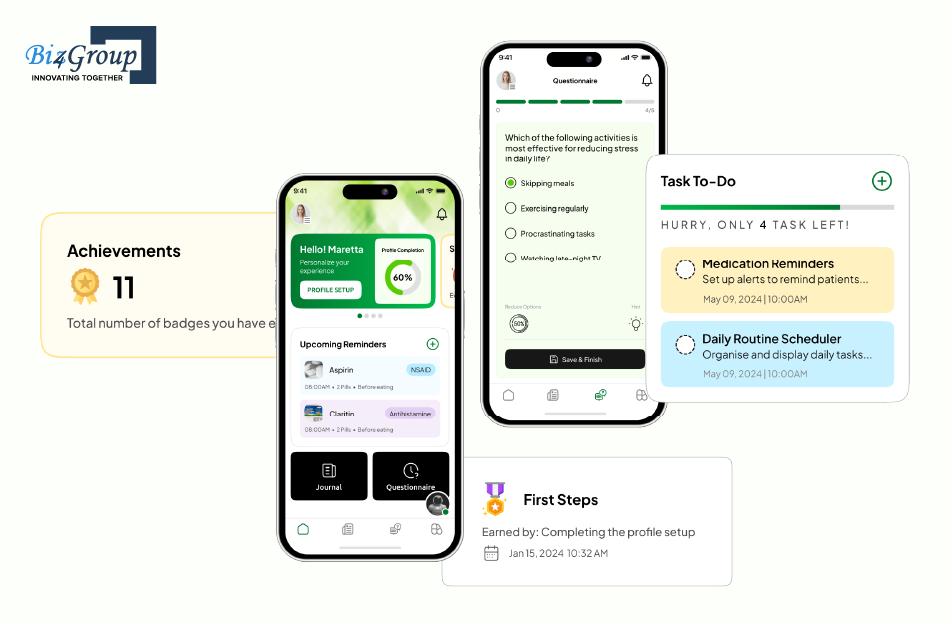
Our AI-based solution for dementia patients is a mobile support system created to help dementia patients stay connected with their daily experiences and emotional state. Although the platform focuses on cognitive wellness rather than fall detection, the complexities we solved mirror the challenges found in elderly monitoring systems.
A few ways the project demonstrates our strength include
- Emotional recognition through journaling and conversational interactions
- Personalized cognitive assessment using safe data handling
- Routines and memory reinforcement that help reduce disorientation
- Clean layouts designed for seniors with limited digital familiarity
- A performance algorithm that learns gradually without overwhelming users
These competencies transfer seamlessly to fall detection projects, especially those involving vulnerable seniors who need both physical and emotional monitoring.
Challenges are natural in any healthcare technology project. What matters is how thoughtfully they are addressed. By planning for these roadblocks early, hospitals and elderly care teams can build a fall detection system that improves safety, supports caregivers and performs reliably in real world conditions.
Every Challenge Has a Smarter Shortcut
Every obstacle you face, we have solved a dozen times before. Skip the struggle and jump straight to the results.
Talk to Our Experts
Future Trends in AI Based Fall Detection Software Development for Hospitals and Elderly Care
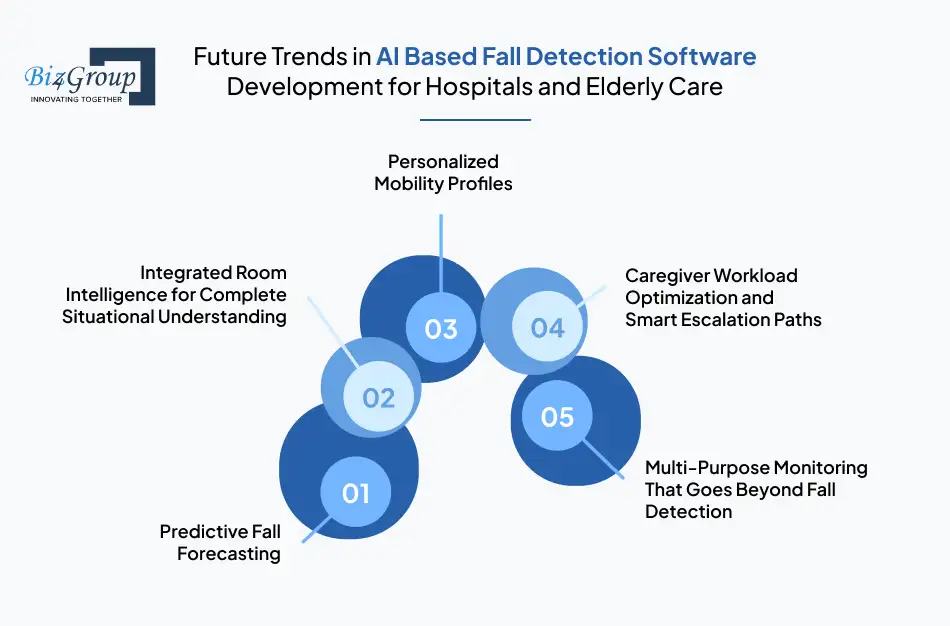
Fall detection technology is moving forward quickly. Hospitals, senior care facilities and home healthcare providers are looking beyond basic monitoring and adopting smarter, more intuitive systems.
1. Predictive Fall Forecasting
Future systems will focus on prevention rather than reaction. Instead of waiting for a fall, models will study gait, mobility declines and subtle movement patterns to highlight residents who may be at risk.
This shift helps caregivers intervene with physical therapy, environmental adjustments, or personalized care plans before the incident happens.
2. Integrated Room Intelligence for Complete Situational Understanding
Rooms of the future will support real-time environmental awareness. Systems will understand obstacles, hazards, walking paths, and spatial layouts.
This helps the detection logic determine whether the environment contributed to the fall and how it can be improved for safer resident movement.
3. Personalized Mobility Profiles
Instead of using one generic model for all residents, next generation solutions will build individual mobility signatures. The system learns each resident’s posture, walking style, and typical movements. This reduces false alerts and increases accuracy for seniors with unique physical needs.
4. Caregiver Workload Optimization and Smart Escalation Paths
Future platforms will automatically prioritize alerts based on severity, resident condition and staff availability. This reduces alert fatigue and keeps caregivers focused on the residents who need attention the most.
5. Multi-Purpose Monitoring That Goes Beyond Fall Detection
Fall detection is becoming part of a broader safety ecosystem. Systems will support wandering alerts, bed exit detection, posture change analysis and recovery supervision. This unified approach helps care teams manage multiple risks through one interface instead of switching between tools.
These trends point toward a future where fall detection becomes proactive, personalized, and deeply integrated into everyday caregiving. Hospitals and elderly care organizations that start exploring these innovations now will be better positioned to offer safer environments and more efficient care.
Why is Biz4Group LLC the Trusted Partner in the USA to Develop an AI Based Fall Detection Software for Hospitals and Elderly Care?
When hospitals, senior living facilities and healthcare startups begin exploring advanced fall detection or patient safety platforms, they need a team that understands how technology behaves in real care environments. Biz4Group LLC brings that level of clarity, precision and responsibility.
Our work across the USA as a software development company reflects years of experience in AI development, machine learning, cloud engineering, and AI healthcare solutions. We understand the realities of elderly care. We understand the stakes involved in hospital safety. We understand how critical accuracy and reliability are when lives depend on timely alerts.
From AI companions that personalize wellness journeys to platforms that support at-risk populations in moments of crisis, our work proves our ability to build systems that matter. Clients rely on us because we bring thoughtful AI developers, dependable execution, and a commitment to building technology that feels human and helpful.
Why Businesses Choose Us
Organizations across the USA choose Biz4Group LLC because they value capability, consistency, and deep domain knowledge. They want partners who treat their vision with care. They want systems that feel robust from day one. They want a team that solves problems instead of creating delays. Here is what makes our partnerships strong:
- We build solutions that scale across multiple facilities without performance drops
- We follow development processes that prevent rushed releases and weak foundations
- We design interfaces that match how caregivers think in real time situations
- We know how to build AI models that remain stable across varied environments
- We train systems with data strategies that strengthen accuracy over time
- We embed empathy into design, especially for elderly users and caregivers
- We bring the experience of completing complex healthcare, AI and safety projects
Our portfolio reflects this commitment. We listen carefully. We design responsibly. We deliver enterprise AI solutions that earns trust. If your organization is exploring ways to improve patient safety, Biz4Group LLC can help you move forward with confidence.
We know that adopting an intelligent fall detection platform is a major step. With the right partner, the journey becomes smoother and faster. Biz4Group LLC is ready to guide that transformation with skill, commitment and a strong understanding of what healthcare facilities truly need.
Let's talk.
Wrapping Up
Fall-related injuries continue to place seniors at risk and put pressure on caregivers who want to do more with limited time and resources. Developing an AI based fall detection software for hospitals and elderly care creates a dependable layer of protection that never loses focus. With the right features, accurate sensors and thoughtful workflows, healthcare organizations can respond faster, lower risk and offer a safer living environment for their residents or patients.
As this guide showed, building a complete solution requires clear planning, careful testing and a deep understanding of how senior care environments function. When supported by strong compliance, a refined user experience and future ready capabilities, a fall detection platform becomes a trusted part of daily care operations.
Biz4Group LLC supports hospitals, care homes and healthcare innovators with solutions that deliver stability, accuracy and long-term value. As an experienced AI app development company, we collaborate closely with each client to shape systems that feel intuitive, perform consistently and adapt as patient needs evolve.
If you are serious about improving safety and building a modern fall detection platform, now is the time to act. Connect with Biz4Group LLC and take the first step toward creating a system that elevates care, supports staff and strengthens your facility’s reputation.
FAQs
How long does it usually take to develop a complete AI based fall detection system?
Most teams spend 8-14 weeks developing a basic MVP. Biz4Group completes the same MVP stage in about 2-3 weeks. We use a library of reusable components, pre-built modules and tried and tested development patterns. This reduces both development time and overall cost while still giving clients a custom solution that fits their care environment.
Can fall detection software work in areas where cameras are not allowed?
Yes. Many modern systems use radar sensing, RF motion tracking or wearable based signals to monitor movement without capturing visual data. These options help maintain privacy in bathrooms or rooms where cameras feel intrusive.
Does fall detection technology work for residents with mobility aids like walkers or canes?
Advanced systems can track assisted movement as long as the model is trained on diverse mobility patterns. Additional calibration sessions help the system understand how walking aids influence posture and transitions.
What level of internet connectivity is required for real-time monitoring?
Minimum requirements depend on whether the system processes data on edge devices or cloud servers. Systems built for edge processing need only basic local connectivity. Cloud-driven setups benefit from a stable network with enough bandwidth for sensor streams.
Can the software detect slow or gradual collapses rather than sudden falls?
Yes. Many fall patterns begin with slow instability, knees buckling or partial loss of balance. Systems trained on varied motion sequences can identify both slow declines and sudden drops with strong reliability.
Can this technology integrate with remote caregiving or telehealth platforms?
Integration is possible through APIs that share alerts, event summaries or patient identifiers with remote care teams. Many facilities use these links to keep off site caregivers informed about residents who need frequent monitoring.
