 Location :
Orlando, FL, USA
Location :
Orlando, FL, USA +1 (407) 714-1616
 info@biz4group.com

- Healthcare website design plays a critical role in building patient trust, improving usability, and guiding visitors toward confident actions across clinics and hospitals.
- Patient centric healthcare website design focuses on clarity, accessibility, and emotional reassurance, helping users feel comfortable while navigating healthcare services online.
- Best practices for healthcare website design combine intuitive UX, clear calls to action, privacy-aware interfaces, and scalable layouts that support long-term growth.
- Cost of healthcare website design for clinics and hospitals typically ranges from $10,000-$30,000+, depending on complexity, compliance needs, and future scalability.
- Modern healthcare website design trends emphasize personalization, self-service experiences, and trust-focused micro-interactions that improve patient engagement.
- Biz4Group LLC helps healthcare organizations across the USA design professional, patient-focused websites that build trust, convert visitors, and support sustainable growth.
Have you ever clicked on a medical practice’s website and felt unsure whether you should trust the information there? For patients, a healthcare website often acts as the first point of contact with a provider. That first impression matters more than most healthcare leaders realize.
Data shows that about 68% of patients are more likely to choose a provider whose online presence feels credible and easy to use. When your website fails to reassure or guide visitors, you lose not only potential patients but also opportunities to build long-term loyalty.
At its core, healthcare website design plays a major role in shaping patient confidence. Thoughtful layout, clear communication, and intuitive navigation reduce anxiety and help patients take action. A shabby or confusing interface, on the other hand, raises doubts before you even speak with someone in person.
In this guide, we will explore everything from best practices for healthcare website design to advanced features that improve engagement. We will also discuss how to design a healthcare website that inspires confidence and why this should be a priority for every clinic, hospital, or medical group.
By understanding what makes a healthcare website trustworthy, you can transform your online presence into a powerful tool for growth, patient satisfaction, and meaningful digital experiences.
So, without further ado, let’s begin with the basics.
How Healthcare Website Design Directly Impacts Patient Trust
Trust begins forming long before a patient books an appointment.
It starts the moment your website loads.
For many patients, especially first-time visitors, your website becomes a proxy for your quality of care. If the experience feels confusing, outdated, or impersonal, hesitation follows. Clean structure and thoughtful design reduce that hesitation. Fast.
Patients Judge Credibility in Seconds
Research shows users form opinions about a website within a few seconds of landing on it. In healthcare, those seconds carry more emotional weight.
Patients subconsciously ask:
- Does this place feel professional?
- Is the information clear and easy to find?
- Can I trust this provider with my health data?
Strong visual hierarchy, readable typography, and balanced spacing help answer these questions positively.
Design Reduces Anxiety Before Care Begins
Healthcare decisions are rarely neutral. Many patients arrive stressed, uncertain, or worried.
Patient centric healthcare website design helps by:
- Presenting information in digestible sections
- Avoiding clutter and visual overload
- Using calming colors and consistent layouts
The result is a sense of control. That feeling matters.
Trust Grows When Navigation Feels Effortless
Confusing menus and buried information frustrate users. Frustration erodes trust.
Healthcare UX and UI design should guide patients smoothly to:
- Services and specialties
- Appointment booking
- Contact details and next steps
When people find what they need without effort, confidence follows.
Familiar Design Patterns Signal Professionalism
Leading healthcare brands follow proven UX patterns. This consistency reassures users that they are in capable hands.
Many organizations study benchmarks from resources such as top 15 UI/UX design companies in USA to understand how high-trust digital experiences are structured and why they work so well in sensitive industries like healthcare.
How Design Choices Translate into Trust Outcomes
|
Design Element |
Patient Reaction |
Trust Impact |
|---|---|---|
|
Clear page structure |
Less confusion |
Higher confidence |
|
Readable fonts |
Easier understanding |
Reduced anxiety |
|
Consistent layout |
Predictability |
Sense of reliability |
|
Visible calls to action |
Guided decisions |
Increased engagement |
Healthcare website design that builds patient trust does not rely on flashy visuals. It relies on clarity, empathy, and consistency. When done right, your website becomes a quiet reassurance that patients are making the right choice.
Healthcare UX and UI Design Principles That Patients Trust

A strong healthcare website does not happen by chance. It follows clear principles that guide every design decision.
Before diving into features or trends, it is important to understand the foundation. These principles shape how patients feel, behave, and decide while navigating your website. When followed consistently, they support professional healthcare website design that feels reliable and calm.
1. Clarity Comes Before Creativity
Healthcare websites serve people who want answers quickly. Design should remove friction, not add flair.
Clear headings, logical page flow, and predictable layouts help patients stay oriented. When information feels easy to scan and absorb, trust grows naturally. Overdesigned pages often confuse users, especially those already under stress.
2. Consistency Builds Familiarity
Patients feel safer when experiences feel predictable. Consistency across pages creates that sense of familiarity.
This includes:
- Uniform color usage
- Repeated navigation patterns
- Consistent button styles and interactions
3. Visual Hierarchy Guides Decision Making
Not all information carries equal importance. Good healthcare website design makes that obvious.
Strategic use of font size, spacing, and placement helps patients understand what to read first and what action to take next. This quiet guidance reduces cognitive load and supports better decision making.
4. Human-Centered UX Over Technical Complexity
Healthcare websites should feel human, not mechanical. Patients respond better to interfaces that reflect empathy.
Modern teams increasingly explore how you can use AI for UX design to understand user behavior and refine layouts that adapt to real patient needs. When insights guide experience design, usability improves without sacrificing warmth or clarity.
5. Accessibility Is Part of Professionalism
Accessibility is not optional in healthcare. It is a core expectation.
Readable fonts, sufficient contrast, and simple navigation ensure that patients of all abilities can access care information. Inclusive design strengthens credibility and demonstrates responsibility.
These principles work together. Remove one, and the experience weakens.
When healthcare UX and UI design follows these foundations, patients feel guided rather than pushed. They feel informed rather than overwhelmed. Most importantly, they feel confident enough to take the next step.
Does Your Website Pass the 5-Second Trust Test?
Patients decide faster than you think. If your design does not signal trust instantly, they leave. Want to know where you stand?
Talk to Biz4Group’s ExpertsPatient Centric Healthcare Website Design Tips That Improve Confidence
Patients arrive on healthcare websites with questions.
Often with stress.
Sometimes with urgency.
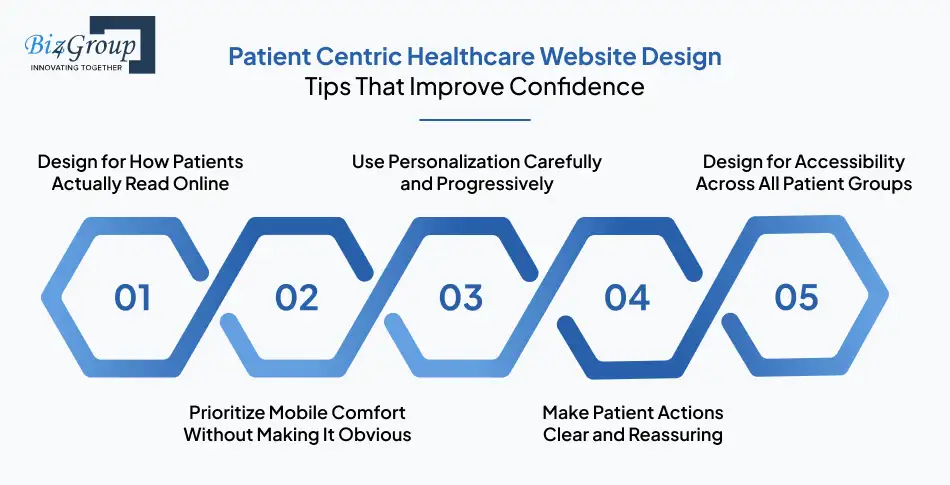
This section focuses on patient centric healthcare website design choices that directly shape comfort, trust, and action. These are hands-on design tips rooted in how real patients behave across devices and moments.
1. Design for How Patients Actually Read Online
Patients rarely read line by line.
They scan. They pause. They look for reassurance.
Design content in short sections with clear subheadings. Break complex information into digestible chunks. Use spacing generously. This improves comprehension and keeps users engaged longer.
Responsive healthcare website design plays a quiet role here. On smaller screens, scannable layouts reduce frustration and help patients move forward without cognitive strain.
2. Prioritize Mobile Comfort Without Making It Obvious
Most patient interactions now begin on mobile devices.
That reality should feel invisible to the user.
Buttons should be easy to tap. Forms should feel light. Navigation should never feel cramped. When mobile interactions feel natural, confidence increases without patients noticing why.
Teams often study how to design an AI app when thinking about adaptive layouts and personalized flows. The same thinking applies here. Design should respond to patient context without drawing attention to itself.
3. Use Personalization Carefully and Progressively
Personalization builds trust when it respects boundaries.
Too much, too soon creates hesitation.
Thoughtful design introduces personalization gradually. Content suggestions. Progress indicators. Optional prompts. Each element should feel helpful, not intrusive.
Project Spotlight: AI-Powered Personal Development Mobile App
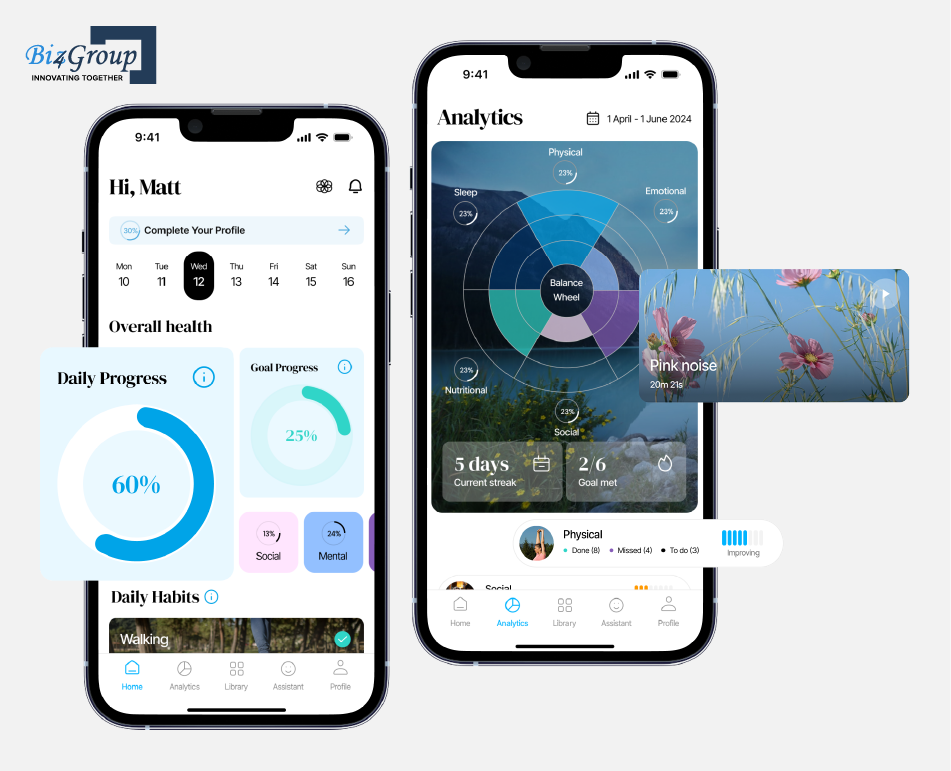
This balance is reflected well in Quantum Fit, where intuitive navigation and habit-based visuals guide users at their own pace. The interface encourages engagement without overwhelming users, a mindset that translates well to patient centric healthcare website design.
4. Make Patient Actions Clear and Reassuring
Patients hesitate when outcomes feel unclear.
Design should remove that doubt.
Every action should communicate what happens next. Booking an appointment. Sending an inquiry. Accessing information. Clear labels and supportive microcopy reduce uncertainty and increase completion rates.
5. Design for Accessibility Across All Patient Groups
Healthcare websites serve diverse audiences.
Accessibility strengthens trust across every segment.
Readable fonts, strong contrast, and simple navigation benefit older adults, visually impaired users, and anyone accessing care under pressure. Inclusive design reflects professionalism and empathy.
Organizations that invest in accessibility often partner with a seasoned UI/UX design company to ensure usability standards are met without compromising visual quality.
Patient centric healthcare website design succeeds when empathy guides structure.
When users feel understood, they stay.
When they feel comfortable, they act.
Healthcare Website Design Features Every Modern Medical Website Must Have
Good design sets the tone. Features carry the experience forward.
Patients may trust your website visually, but features decide whether that trust turns into action. This section highlights the most important healthcare website design features that support usability, clarity, and measurable outcomes for clinics, hospitals, and medical practices.
Why Features Matter in Healthcare Website Design
Patients come with a purpose.
Book an appointment.
Understand a service.
Reach a provider quickly.
Every feature should help them do that with confidence. When features are designed thoughtfully, they reinforce patient centric healthcare website design rather than distracting from it.
|
Feature |
What Patients Experience |
Why It Matters |
|---|---|---|
|
Clear Service Pages |
Immediate understanding of care options |
Reduces confusion and early drop-offs |
|
Appointment Booking Interface |
Simple and predictable scheduling |
Increases completed bookings |
|
Visible Contact Information |
Easy access to help |
Builds instant credibility |
|
Educational Content Layout |
Clear explanations of conditions and treatments |
Supports informed decisions |
|
Secure Patient Forms |
Confidence while sharing personal data |
Strengthens trust |
|
Provider and Location Details |
Transparency and legitimacy |
Encourages follow-through |
|
Testimonials and Trust Signals |
Social reassurance |
Lowers hesitation |
|
Clear Calls to Action |
Guidance on next steps |
Improves conversions |
Designing Features That Work Together
Features should never exist in isolation. A booking tool relies on a clear service page. Educational content relies on intuitive navigation.
Healthcare organizations planning long-term digital growth often align feature design with broader healthcare software product development strategies. This ensures that today’s website design supports tomorrow’s patient portals, digital services, or care extensions without requiring a full redesign.
Feature Design Mistakes That Undermine Confidence
Even essential features can fail when design decisions miss the mark. Common issues include:
- Overloaded booking forms that feel time-consuming
- Contact details buried deep in the site
- Service pages packed with jargon
- Calls to action that feel vague or rushed
Each of these creates hesitation at moments where reassurance matters most.
Healthcare website design features should feel invisible.
When patients notice them working smoothly, confidence grows.
When they struggle, trust fades quickly.
Features That Look Good or Features That Book Appointments?
Over 70% of patients prefer providers with easy online actions. Are your features helping patients move forward or slowing them down?
Book a Strategy CallPrivacy and Compliance in Healthcare Website Design
Privacy is personal in healthcare. Patients feel it before they understand it.
Strong healthcare website design does more than meet regulations. It reassures patients that their data, conversations, and actions are treated with care. When privacy and compliance are visible through design, trust strengthens naturally.
Below are the key design considerations that support privacy-first, compliance-friendly healthcare experiences.
- Visible Privacy Signals
Patients look for cues that their information is protected. Secure form indicators, clear privacy links, and reassuring microcopy help reduce hesitation. - Transparent Data Communication
Explain what data is collected and why. Keep language simple. Avoid legal-heavy phrasing that creates confusion or doubt. - Secure Form Design
Forms should feel safe and intentional. Limit fields to what is necessary. Provide context for sensitive information requests. - Consent and Control
Patients should feel in control of their data. Clear consent flows and easy access to privacy preferences improve confidence. - Consistency Across Touchpoints
Privacy design must remain consistent across pages, devices, and interactions. Gaps in experience weaken trust.
Organizations working with advanced digital health experiences often explore AI medical web development to ensure that intelligent interactions remain compliant while still feeling natural to users.
Project Spotlight: AI Avatar for Personalized Wellness Guidance
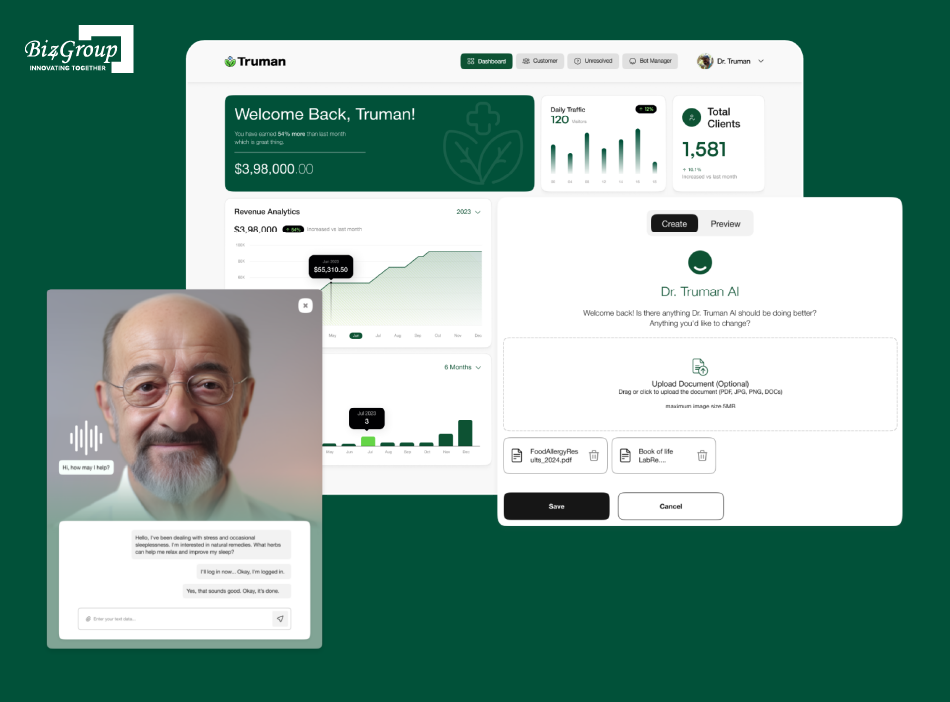
Privacy played a central role in the design of the Dr. Truman platform. The goal was to create a digital experience where users felt comfortable seeking guidance, sharing health details, and interacting with an AI-powered avatar.
Design and UX solutions
- Clear visual separation between personal data areas and general content
- Reassuring interface cues during chatbot and avatar interactions
- Simple, guided flows for uploading medical documents
- Transparent prompts explaining how information is used
Outcomes from a design perspective:
- Increased user engagement through trust-focused UX.
2. Higher comfort levels during AI-driven consultations.
3. Strong alignment between privacy expectations and user behavior.
This project demonstrates how healthcare UX and UI design can balance innovation with responsibility, without compromising user confidence.
Common Privacy Design Pitfalls to Avoid
- Hiding privacy information deep within the site
- Overloading users with legal terminology
- Requesting sensitive data without explanation
- Inconsistent privacy experiences across devices
Each of these erodes trust faster than most teams expect.
Privacy-first healthcare website design communicates one clear message.
Your patients are respected. Their data is handled responsibly.
Common Challenges in Healthcare Website Design and How to Fix Them
Even well-funded healthcare websites fail to perform. Not because of intent. Because of avoidable design mistakes.
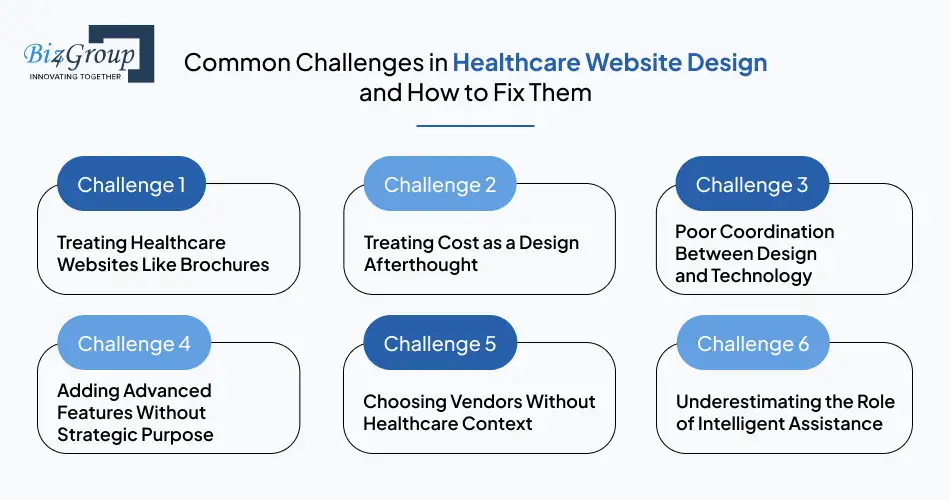
This section pairs the most common healthcare website design challenges with proven best practices that improve trust, usability, and conversion. Each point is rooted in real-world outcomes seen across clinics, hospitals, and healthcare brands.
Challenge 1: Treating Healthcare Websites Like Brochures
Many websites focus on presenting information rather than guiding action. Patients read, then stall.
Best practices to follow:
- Design pages around patient intent, not internal structure
- Use clear calls to action that explain what happens next
- Guide users step by step toward booking or contact
Challenge 2: Treating Cost as a Design Afterthought
Design decisions are made without understanding long-term cost implications.
Best practices to follow:
- Plan design scope based on future scalability
- Understand how advanced features affect budgets
- Evaluate how much UI/UX design cost in general
Challenge 3: Poor Coordination Between Design and Technology
Design and development teams often work in silos, creating gaps in execution.
Best practices to follow:
- Align design decisions with technical feasibility
- Partner with teams that offer integrated web development services
- Ensure design intent survives implementation
Challenge 4: Adding Advanced Features Without Strategic Purpose
Healthcare websites adopt new technologies without a clear patient benefit.
Best practices to follow:
- Introduce advanced features only when they support trust or usability
- Evaluate whether AI enhances clarity or creates friction
- Plan responsibly when exploring complex builds
Challenge 5: Choosing Vendors Without Healthcare Context
Generic vendors miss healthcare-specific design nuances.
Best practices to follow:
- Work with a healthcare-aware software development company
- Look for experience in patient-centric UX
- Prioritize long-term partnership over short-term delivery
Challenge 6: Underestimating the Role of Intelligent Assistance
Patients leave when questions remain unanswered.
Best practices to follow:
- Use conversational interfaces to guide users
- Support education and navigation through smart assistance
- Partner with an experienced AI chatbot development company when conversational UX adds value
Healthcare website design improves when mistakes are addressed deliberately.
Best practices are not shortcuts. They are guardrails that protect patient trust and business growth.
Fixing Design Mistakes Costs Less Than Losing Patients
Small UX gaps quietly drain conversions every day. Lucky for you, most are easy to spot and easier to fix.
Identify My UX GapsWhat to Assess First and When to Invest in Healthcare Website Redesign?
Redesign decisions often arrive quietly.
Lower engagement. Fewer inquiries. Rising patient confusion.
A healthcare website redesign should never be cosmetic. It should solve real experience gaps, restore trust, and support growth. This section helps you recognize when redesign is necessary and how to evaluate your current healthcare website design with clarity.
Healthcare Website Design Evaluation Checklist
Use this checklist to assess whether your current website supports patient confidence and conversions.
User Experience and Trust
- Is the homepage clear within seconds?
- Do service pages answer common patient questions?
- Are calls to action visible and reassuring?
Design and Usability
- Is the layout consistent across pages?
- Does content feel easy to scan on mobile?
- Are fonts, spacing, and colors accessible?
Conversion Readiness
- Can patients book or contact easily?
- Are next steps always clear?
- Is friction minimized across forms?
Scalability and Readiness
- Can new services be added without disruption?
- Is the design flexible for future tools?
- Does the site support long-term digital plans?
Teams preparing for intelligent features often consider how generative AI or adaptive interfaces may fit later, even if those capabilities are not deployed immediately.
When Healthcare Website Redesign Services Become Necessary
Redesign usually becomes the right move when small fixes stop working. Watch for these signals.
- Patients struggle to find services or contact details
- Appointment bookings decline without clear reasons
- Mobile engagement drops while traffic remains steady
- Content feels outdated or difficult to scan
- Compliance messaging feels hidden or unclear
Healthcare website redesign solutions for medical practices work best when guided by evidence, not assumptions.
What a Strategic Healthcare Website Redesign Should Address
A redesign should improve experience, not add noise. It should align design with current patient behavior and future goals.
Key focus areas include:
- Clear information architecture
- Simplified patient journeys
- Trust-focused visual language
- Scalable design systems
- Accessibility across devices
Organizations planning growth often connect redesign efforts with broader digital initiatives. This is where working with an experienced AI development company helps align design with future-ready capabilities without overwhelming users.
Healthcare website redesign works best when guided by clarity.
Clear goals. Clear evaluation. Clear ownership.
When design aligns with patient needs and future direction, redesign becomes a growth investment.
Cost of Healthcare Website Design for Clinics and Hospitals
Cost is often the first question decision makers ask. It is also the most misunderstood.
On average, professional healthcare website design typically falls in the range of $10,000-$30,000+, depending on scope, complexity, and long-term goals. Clinics with simpler needs sit on the lower end, while hospitals and multi-location providers often invest more to support scale, compliance, and patient experience.
This section breaks down where that investment goes, what often gets overlooked, and how to plan costs wisely without sacrificing trust or usability.
Core Cost Drivers in Healthcare Website Design
Every healthcare website carries unique requirements. Still, certain design drivers consistently shape overall cost.
The table below outlines the most common cost drivers and how they influence pricing.
|
Cost Driver |
What It Covers |
Typical Cost Impact |
|---|---|---|
|
UX Research and Planning |
Patient journeys, content structure, wireframes |
$2,000-$5,000 |
|
Visual Design and Branding |
Layouts, typography, color systems |
$3,000-$8,000 |
|
Responsive Design Execution |
Mobile and tablet optimization |
$2,000-$5,000 |
|
Appointment and Form Design |
Booking flows, secure forms |
$2,500-$6,000 |
|
Accessibility and Compliance Design |
Readability, contrast, consent flows |
$1,500-$4,000 |
|
Content Structuring and UI Copy |
Page layouts and guidance text |
$1,000-$3,000 |
|
Quality Assurance and Testing |
Cross-device and usability testing |
$1,000-$2,500 |
Each of these elements supports healthcare website design that builds patient trust. Removing one often leads to usability gaps that cost more later.
Hidden Costs That Often Surprise Healthcare Teams
Hidden costs rarely appear upfront. They surface after launch. Understanding these early helps avoid budget strain and redesign cycles.
- Iteration and Rework Costs
Design rarely lands perfectly in the first round. Feedback cycles add value but also cost.
Additional iteration rounds can add $1,000-$3,000 depending on scope changes. This is common when requirements are unclear or stakeholder alignment happens late.
- Compliance Adjustments
Privacy and compliance requirements sometimes evolve mid-project. Design updates for consent flows, disclosures, or accessibility fixes can add $1,500-$4,000 if not planned early.
This becomes more relevant when advanced functionality is explored, such as intelligent diagnostics or data-driven features similar to those discussed in the cost to develop AI website for medical diagnosis.
- Content Migration and Cleanup
Older websites often carry outdated or duplicated content. Restructuring and cleaning this content takes time.
Content migration and refinement can add $1,000-$3,000 depending on volume and complexity.
- Scalability Gaps
Designs that do not anticipate growth create future costs. Adding new services, locations, or patient tools later may require partial redesign.
Addressing scalability early typically saves $5,000+ over time compared to reactive fixes.
How to Control Healthcare Website Design Costs
Cost control does not mean cutting corners. It means planning deliberately.
Start with clear priorities. Define patient actions that matter most. Align design scope with business goals. Invest where trust and usability have the highest impact.
Healthcare organizations that treat design as a long-term asset often achieve better ROI and fewer redesign cycles.
Healthcare website design costs reflect more than visuals. They reflect strategy, empathy, and foresight. When planned well, a $10,000-$30,000+ investment becomes a growth enabler.
Still Guessing What Your Website Should Cost You?
Healthcare websites fail when cost decisions ignore patient trust. Get clarity before budgets get wasted.
Get a Realistic Cost EstimateEmerging Trends in Healthcare Website Design for Patient Trust and Engagement
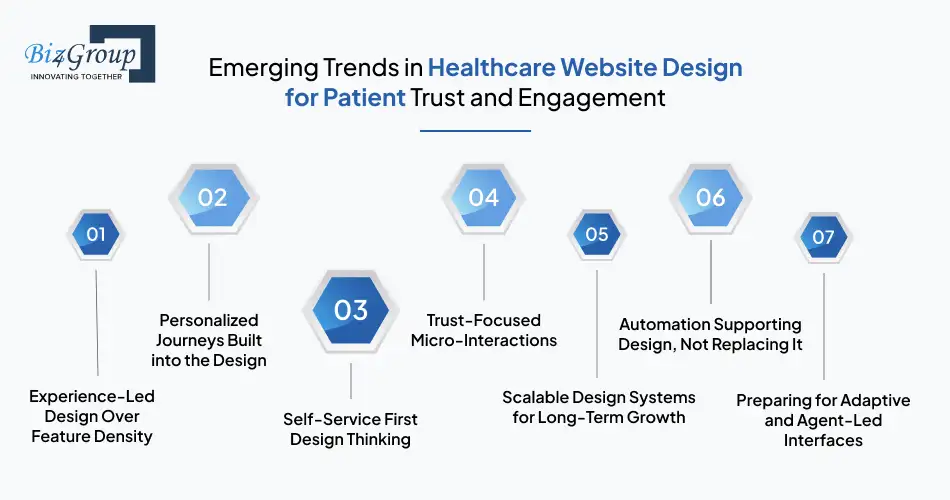
Healthcare website design continues to evolve as patient expectations change. What felt advanced a few years ago now feels slow or disconnected.
Modern healthcare websites focus on clarity, adaptability, and meaningful interaction. These trends are not cosmetic. They influence trust, engagement, and long-term growth. Below are the most impactful design trends shaping how patients experience digital healthcare today.
1. Experience-Led Design Over Feature Density
Healthcare websites are moving away from crowded interfaces. Patients want guidance, not overload. Design now emphasizes:
- Clear entry points
- Focused page goals
- Fewer distractions
This approach supports healthcare website design that builds patient trust by helping users understand what to do without second-guessing.
2. Personalized Journeys Built into the Design
Patients expect relevance. Not repetition.
Modern healthcare UX and UI design supports adaptive content paths based on user behavior. This does not mean aggressive personalization. It means designing layouts that adjust naturally as patients explore services, education, or next steps.
Organizations planning such adaptive experiences often work with an AI app development company to align personalization with usability rather than complexity.
3. Self-Service First Design Thinking
Patients increasingly prefer solving problems on their own. Design must support that preference.
Self-service trends include:
- Intuitive navigation
- Easily accessible FAQs
- Clear educational pathways
This reduces dependency on call centers and improves patient satisfaction while keeping the experience patient friendly.
4. Trust-Focused Micro-Interactions
Small interactions shape big perceptions. Micro-interactions now play a quiet but powerful role.
Examples include:
- Reassurance text near forms
- Visual feedback after actions
- Progress indicators during tasks
These design details reduce uncertainty and improve confidence at critical moments.
5. Scalable Design Systems for Long-Term Growth
Healthcare organizations grow. Websites should grow with them.
Design systems help maintain consistency as services expand. They also support smoother updates when integrating new tools or workflows. Teams delivering complex platforms often rely on AI integration services to ensure scalability without redesign fatigue.
Project Spotlight: A Performance Improvement Platform for Personal Growth

Stratum 9 reflects how modern experience design supports continuous growth rather than one-time interaction.
Design outcomes:
- Improved user engagement through clear progression paths
- Reduced overwhelm despite rich content depth
- Scalable experience across web and mobile platforms
This project demonstrates how thoughtful UX design supports long-term user confidence, a principle increasingly relevant to patient centric healthcare website design.
6. Automation Supporting Design, Not Replacing It
Automation now supports experience design behind the scenes. Patients feel the benefit even if they never see the mechanics.
From intelligent routing to content optimization, teams often explore AI automation services to improve responsiveness while keeping interfaces simple and human.
7. Preparing for Adaptive and Agent-Led Interfaces
Healthcare websites are gradually preparing for adaptive assistants and guided experiences. Design must anticipate these interactions without overwhelming users.
Planning for such evolution often involves collaboration with an agentic AI development company, ensuring future capabilities fit naturally into existing UX frameworks.
Modern healthcare website design trends share one theme. They respect patient time and emotional state. Websites that adapt thoughtfully today are far better positioned to earn trust, support engagement, and scale confidently tomorrow.
Biz4Group LLC: A Trusted Healthcare Website Design Partner in the USA
Healthcare organizations in the USA face a unique challenge. They must balance trust, usability, compliance, and growth, all within a single digital experience. That balance is where Biz4Group LLC stands apart.
Biz4Group LLC is a US-based software development company that helps healthcare businesses, clinics, and enterprises design digital experiences patients trust and engage with. Our work sits at the intersection of strategy, design, and long-term scalability. We approach healthcare website design as a business asset, not a visual exercise.
Our teams understand how patients think, how decision makers evaluate risk, and how digital platforms must evolve over time. Every healthcare website we design focuses on clarity, confidence, and conversion. Our experience spans intelligent systems, data-driven experiences, and enterprise AI solutions that support personalization, automation, and future-ready growth.
We also work closely with healthcare leaders who want more than surface-level design. Whether the goal is launching a new digital presence or transforming an existing one into a robust AI product, our approach remains grounded in outcomes, not assumptions.
Why Businesses Across the Globe Choose Biz4Group LLC
Healthcare organizations choose Biz4Group LLC because credibility and results matter.
- Proven experience designing patient-centric digital platforms
- Deep understanding of healthcare usability and compliance expectations
- Strong alignment between design strategy and business goals
- Ability to scale from websites to complex healthcare AI solutions
- In-house teams that allow clients to confidently hire AI developers when advanced capabilities are required
- A collaborative approach that values clarity, transparency, and long-term partnership
Our work reflects consistency, discipline, and attention to detail. These are the qualities healthcare leaders look for when patient trust is on the line. Biz4Group LLC does not believe in one-size-fits-all healthcare website design. We believe in solutions shaped by context, users, and growth goals.
When you partner with Biz4Group LLC, you work with a team that understands how digital trust is built, protected, and scaled across the healthcare landscape in the USA.
So, without delaying further, talk to Biz4Group LLC and turn your digital presence into a measurable growth engine.
Final Thoughts
Healthcare website design plays a decisive role in how patients perceive care, credibility, and confidence. From the first click to the final action, every layout choice, interaction, and visual cue shapes trust. When design prioritizes clarity, accessibility, and empathy, patients feel supported rather than overwhelmed. That experience directly influences engagement, conversions, and long-term loyalty.
Modern healthcare website design must support informed decisions, reduce anxiety, and guide users effortlessly across devices and touchpoints. When design aligns with real patient behavior, digital experiences become reliable extensions of care itself.
Biz4Group LLC works with healthcare organizations across the globe to design websites that balance trust, usability, and growth. Our experience as a US-based technology partner allows us to think beyond visuals and focus on outcomes that matter to both patients and decision makers. We help healthcare brands build digital experiences that stand up to scrutiny, scale with confidence, and deliver measurable results.
If your healthcare website needs to inspire more confidence, convert more visitors, and support long-term growth, now is the time to act.
Start a conversation with Biz4Group LLC and build a healthcare website your patients will trust from the very first visit.
FAQs
How often should a healthcare website be redesigned to stay effective?
Most healthcare websites benefit from a strategic redesign every 3-5 years. However, if patient behavior, regulations, or digital expectations change sooner, smaller redesign cycles may be required to stay relevant and competitive.
Can healthcare website design impact patient retention, not just acquisition?
Yes. A well-designed healthcare website improves follow-up engagement, repeat visits, and ongoing trust by making information easy to access and actions predictable. Patients who feel comfortable navigating a site are more likely to return.
What role does website design play in reducing administrative workload?
Thoughtful design can significantly reduce calls and manual inquiries by guiding patients toward self-service actions such as appointment booking, form access, and educational resources, easing pressure on front-desk teams.
How do healthcare websites balance trust with marketing goals?
Effective healthcare website design avoids aggressive sales tactics. Instead, it builds trust through clarity, transparency, and reassurance, which naturally leads to higher-quality conversions without compromising credibility.
What metrics should healthcare leaders track after launching a redesigned website?
Key metrics include appointment completion rates, bounce rates, mobile engagement, time on key pages, and form completion rates. These indicators reflect whether the design supports patient confidence and usability.
Can healthcare website design influence patient reviews and reputation?
Indirectly, yes. When patients find information easily and experience fewer frustrations online, they enter care interactions with more confidence, which often translates into more positive reviews and feedback.
