 Location :
Orlando, FL, USA
Location :
Orlando, FL, USA +1 (407) 714-1616
 info@biz4group.com

- IVR use cases for real estate help teams qualify inbound leads and schedule appointments automatically, reducing delays and missed calls at high-intent moments.
- Well-designed IVR call flows balance automation with easy handoff to human agents to protect caller experience and conversions.
- IVR use cases for real estate lead qualification focus on identifying intent, urgency, and fit early, so agents spend time only on serious inquiries.
- Phased implementation and real-call testing prevent over-automation and keep IVR aligned with sales operations.
- IVR use cases for real estate appointment scheduling allow callers to book, reschedule, or confirm meetings without waiting for agent availability.
- The strongest IVR setups work quietly in the background, improving response speed, appointment quality, and overall lead handling consistency.
Inbound phone calls are mostly the first serious signal of a genuine buyer or seller intent. IVR use cases for real estate focus on handling these types of calls by qualifying the lead and scheduling the next step on their own. An AI IVR system answers the call, asks clear questions, records responses, and decides the next steps, like booking an appointment or routing the caller to the right human agent.
In real estate operations, lead qualification and appointment scheduling usually happen in the same interaction. First, the caller’s intent, budget, location preference, or timeline is confirmed. Then, if the lead matches the basic criteria, a viewing, callback, or consultation is set up. When this process is manual, response time depends majorly on human agent availability. AI IVR reduces delays and keeps the process consistent. Many teams exploring real estate AI software development use IVR to manage the early stage of engagement in a better way.
This blog explains how IVR use cases in real estate business support inbound handling and reduce boring and repetitive work. It focuses particularly on real estate IVR use cases for lead management and appointment scheduling, and how an AI development company improves response speed, lead clarity, and appointment scheduling accuracy with these systems.
Understanding Lead Qualification and Appointment Scheduling in Real Estate Operations
Lead qualification and appointment scheduling are the first steps after a potential buyer or seller calls a real estate business. These steps decide if the caller is ready to speak with an agent, what kind of help they need, and when the next conversation/negotiation should happen. IVR use cases for real estate are often used at this stage to gather information and decide next steps, particularly when human agents are busy or unavailable.
What Lead Qualification Means for Buyers and Sellers
Lead qualification helps determine how serious a caller is and what they are looking for.
For buyers, this usually includes:
- Budget range
- Preferred location
- Buying timeline
- Financing status
For sellers, qualification often includes:
- Type of property
- Ownership details
- Expected selling timeline
- Reason for selling
This information helps decide whether the caller should move forward right away or be followed up later. Many real estate IVR automation use cases focus on gathering these details in a clear and consistent way.
What Appointment Scheduling Looks Like in Real Estate Teams
Appointment scheduling turns interest into action. Here’s what common scheduling steps include:
- Booking property visits
- Setting up agent callbacks
- Scheduling consultations
In most teams, this process depends on the availability of human agent and manual coordination. This can slow things down a lot. Many teams make use of AI integration services to match caller responses with open time slots and reduce missed or delayed appointments.
Why Lead Qualification and Appointment Scheduling Are Tightly Connected in Inbound Calls?
Lead qualification and appointment scheduling usually happen during the same call.
- If a lead is qualified but no appointment is set, interest may drop
- If an appointment is set without enough details, agent’s time may be wasted
Because of this, IVR use cases for real estate sales teams combines both steps into one simple call flow. This also helps maintain consistent IVR use cases for real estate customer engagement, especially when supported by enterprise AI solutions that allow teams to handle more calls without adding extra work.
Design IVR That Works From the First Call
Apply IVR use cases for real estate that qualify leads and trigger the right next step without slowing callers down.
Build My IVR FlowHow IVR Use Cases in Real Estate Business Support Lead Qualification and Scheduling
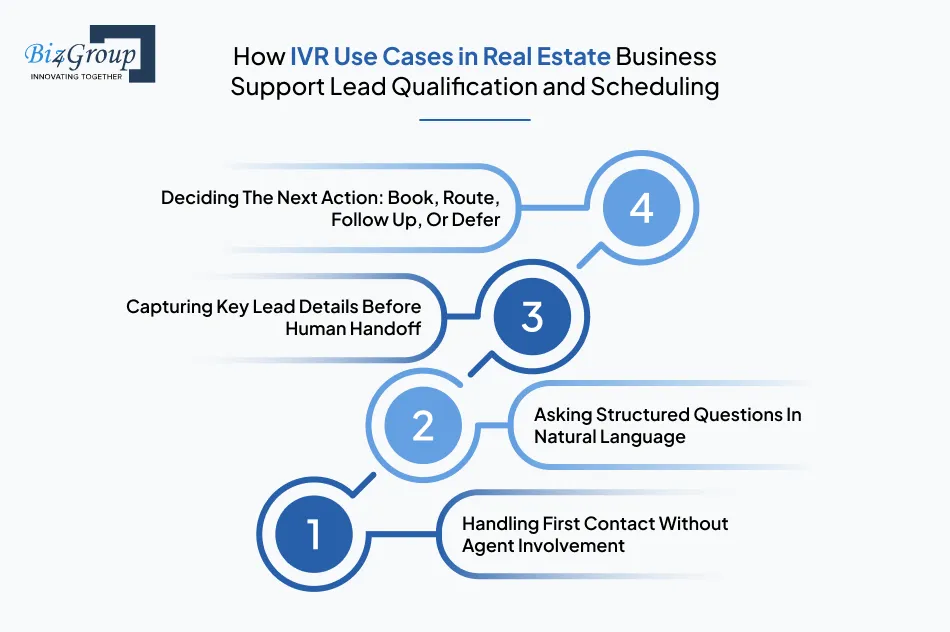
Most of the time, inbound calls often come in when human agents are not available. IVR use cases for real estate help handle these calls by answering them automatically, asking basic questions, and deciding what should happen next. This allows real estate teams to respond to every call without delay and without having to depend on a human agent's availability.
1. Handling First Contact Without Agent Involvement
IVR systems answer calls as soon as they come in and guide callers through the first steps. This helps in preventing missed calls during busy periods or after hours. Many real estate IVR automation use cases focus on making sure that the user interest is captured right when the caller reaches out.
2. Asking Structured Questions In Natural Language
IVR systems ask simple, pre-set questions to understand what the caller needs. These questions usually cover whether the caller is buying or selling, where they are looking, and how soon they want to move. Teams that build AI software often keep these questions short to avoid slowing down the call.
3. Capturing Key Lead Details Before Human Handoff
Before a call reaches a human agent, the IVR collects key details like intent, urgency, and contact information. This gives agents context before they speak with the caller. For IVR use cases for real estate sales teams, this helps in cutting down repeated questions and saves a lot of time in general.
4. Deciding The Next Action: Book, Route, Follow Up, Or Defer
Based on the caller’s answers, the IVR decides what needs to be done next. This may include booking an appointment, routing the call, or scheduling a follow-up. Some teams choose to hire AI developers to fine-tune these rules as call patterns and business needs change with time.
By using this approach, teams can reduce manual work and respond faster to inbound calls. This also supports consistent IVR use cases for real estate customer engagement, where every caller follows a clear and predictable path.
Top IVR Use Cases for Real Estate Lead Qualification
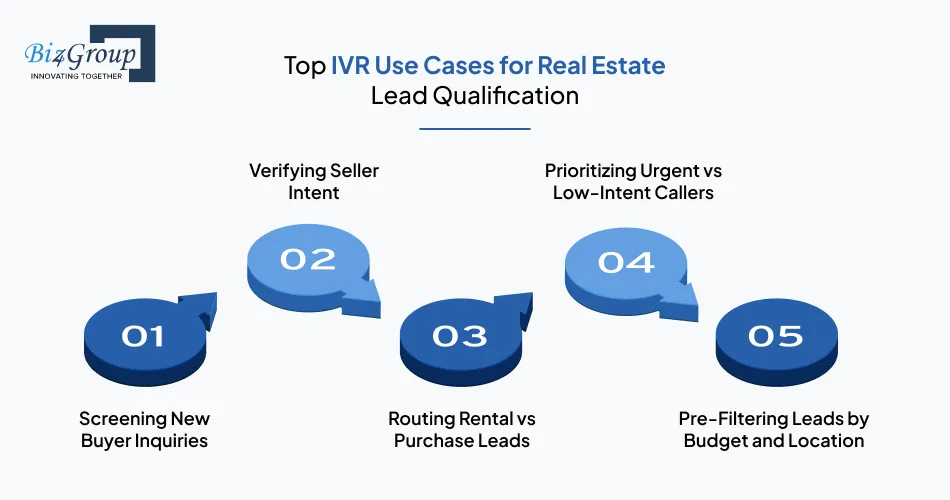
Lead qualification helps real estate teams decide which callers need quick attention and which can be followed up later. IVR use cases for real estate support this by asking a few clear questions at the start of the call and applying basic rules before a human agent gets involved. This helps in keeping response times short and reduces unnecessary handoffs.
1. Screening New Buyer Inquiries
AI IVR systems screen buyer calls by confirming whether the caller is actively looking to buy or not. They usually ask about things like the preferred property type and general timing. This helps in resolving inquiries early and keeps human agents focused on serious buyers.
- Example: A caller confirms they are looking to buy a home within the next three months.
2. Verifying Seller Intent
For sellers, IVR flows confirm property ownership and the intent to list. This separates serious sellers from callers who are only exploring options with no clear intent. Some teams working on AI in real estate development use this step to reduce low-quality listing calls.
- Example: A caller confirms they own the property and want to list it 'soon'.
3. Routing Rental vs Purchase Leads
AI IVR systems can quickly identify whether a caller wants to rent or buy. These two paths are often handled by different teams and follow different processes. Many IVR calling use cases for real estate companies include routing to avoid unnecessary internal call transfers.
- Example: Rental inquiries are sent to leasing, while purchase inquiries go to sales.
4. Prioritizing Urgent vs Low-Intent Callers
IVR questions can also identify how urgent a caller’s need is. Callers with short timelines can be handled faster, while others are queued for later follow-up. Some teams integrate AI into an app to improve how urgency is detected.
- Example: A caller needs housing within two weeks and is flagged as high priority.
5. Pre-Filtering Leads by Budget and Location
Budget and location help in figuring out whether a lead matches available inventory. IVR systems collect this information early to avoid any kind of mismatches. Teams using AI automation services often apply this step to reduce wasted human agent time.
- Example: A caller’s budget does not match current listings and is scheduled for follow-up.
|
Use Case |
What It Checks |
Why It Matters |
|---|---|---|
|
Buyer Screening |
Intent and timing |
Focus on serious buyers |
|
Seller Verification |
Ownership and readiness |
Fewer low-quality listings |
|
Rent vs Buy Routing |
Inquiry type |
Faster routing |
|
Urgency Detection |
Timeline |
Better prioritization |
|
Budget and Location |
Fit with inventory |
More useful calls |
Together, these workflows create a clear way to handle inbound calls. They help teams respond faster and keep qualification consistent across all real estate IVR system use cases, without adding manual work for human agents.
Make Lead Qualification Automatic and Consistent
Use IVR use cases for real estate lead qualification to filter intent early and help agents focus on serious inquiries.
Optimize My Lead HandlingTop IVR Use Cases for Real Estate Appointment Scheduling
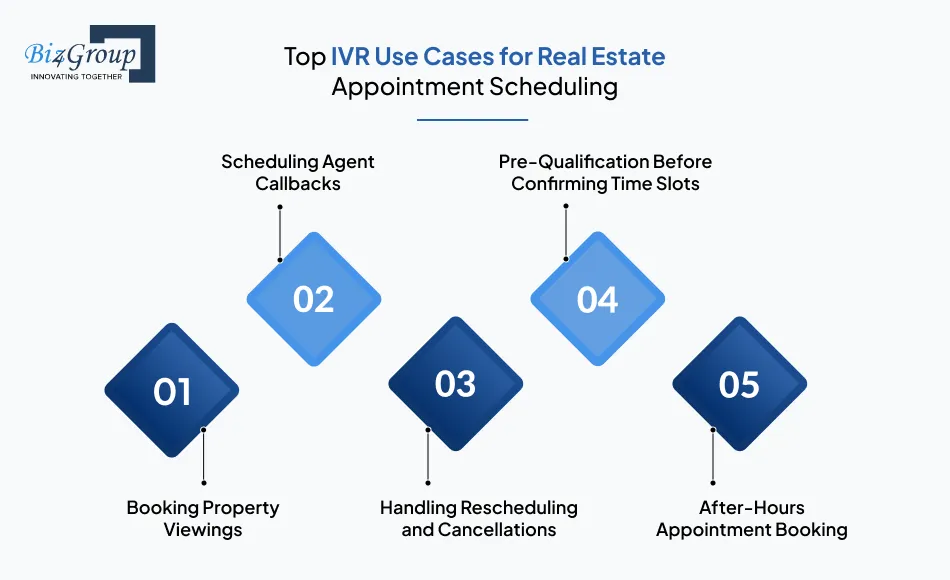
Appointment scheduling is point where user interest turns into a clear next step. IVR use cases for real estate help callers book or manage appointments and keep scheduling fast, reduce missed calls, and ensures availability even outside normal business hours.
1. Booking Property Viewings
AI IVR systems let callers book property viewings during the call. The system checks available time slots and confirms the appointment right away. Many automated IVR use cases in real estate focus on cutting short the gap between inquiry and viewing.
- Example: A buyer selects a date and time for a property visit during the call.
2. Scheduling Agent Callbacks
When a human agent cannot take the call, AI IVR systems offer callback scheduling. The caller chooses a preferred time, and the request is added to the schedule. Some teams working on AI in real estate development use this to avoid missed follow-ups.
- Example: A caller books a callback for the next morning.
3. Handling Rescheduling and Cancellations
AI IVR systems allow callers to change or cancel appointments on their own. This keeps calendars accurate and reduces the efforts that are required to updates things manually. It also makes the process easier for callers.
- Example: A caller reschedules a viewing after selecting a new date.
4. Pre-Qualification Before Confirming Time Slots
Before confirming an appointment, IVR systems ask a few basic questions. This helps ensure time slots are used for relevant leads only. Teams using AI model development often refine this step to keep it short and effective.
- Example: A caller confirms buying intent before the booking is finalized.
5. After-Hours Appointment Booking
IVR systems allow appointments to be booked outside office hours. This ensures interest is captured when it happens, not just during the working hours. Many IVR software use cases for real estate rely on this to support continuous availability.
- Example: A caller books a viewing late at night without agent help.
|
Use Case |
What It Does |
Why It Matters |
|---|---|---|
|
Property Viewings |
Direct booking |
Faster action |
|
Agent Callbacks |
Planned follow-up |
Fewer missed calls |
|
Rescheduling |
Easy changes |
Less manual work |
|
Pre-Qualification |
Confirms fit |
Better use of time |
|
After-Hours Booking |
24/7 access |
No lost interest |
These workflows help real estate teams stay responsive and well-structured. They make scheduling more reliable, especially when call volume grows through automated IVR use cases in real estate.
Simplify Appointment Booking at Scale
Implement IVR use cases for real estate appointment scheduling to reduce back-and-forth and keep calendars clean.
Improve My Scheduling ProcessUnderstanding End-to-End Call Flows for Qualification and Scheduling
An end-to-end call flow shows how a call moves from the first greeting to a final course-of-action. IVR use cases for real estate show how qualification and scheduling can happen in a logical order. The goal is simple: collect the right information, decide what the caller needs, and move them to the next step without any delay. These flows are often part of IVR use cases for real estate operations, where consistency and speed matter. Some teams use an AI conversation app to test how callers respond before applying changes more widely.
|
Call Flow Type |
How It Works |
When It Is Used |
|---|---|---|
|
Qualification First, Then Booking |
The system asks key questions first, then offers time slots |
When agent time is limited |
|
Direct Booking with Light Qualification |
The system books quickly and asks only basic questions |
When most callers are ready to move forward |
|
Fast-Tracking Urgent Leads |
Urgent callers are routed to agents early |
When timing is critical |
|
Low-Intent Lead Capture |
Basic details are stored for follow-up |
When callers are still exploring |
The right call flow depends on call volume, lead quality, and overall team capacity. IVR use cases for real estate lead qualification often combine more than one flow to handle different caller types. If you're planning to build real estate AI software , it’s important to know that these flows need to be adjusted over time as business needs change.
Top Business Benefits of IVR Use Cases for Real Estate
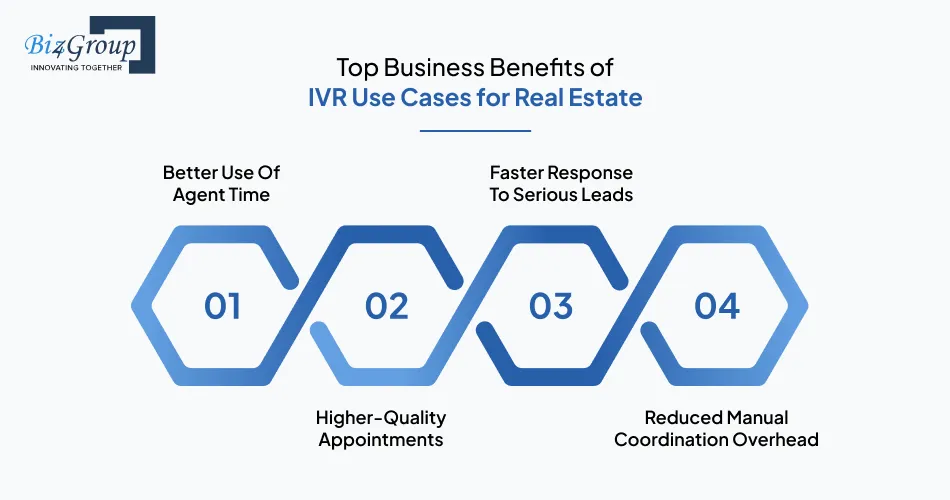
The value of IVR in real estate is measured by operational outcomes. IVR use cases for real estate deliver business benefits by minimizing wasted agent effort, improving quality of appointments, and speeding up responses. Instead of relying on manual coordination, teams use IVR to apply consistent rules that improve both efficiency across inbound calls and scheduling workflows.
1. Better Use Of Agent Time
IVR systems handle basic qualification and transfer the call to a human agent only if and when required. This reduces a lot of time spent on low-intent inquiries. Teams exploring how to use AI for real estate often apply this approach to protect agent productivity as call volume increases.
2. Higher-Quality Appointments
When appointments are booked through structured flows, basic intent and fit are already confirmed. This reduces unprepared meetings and lowers the chance of no-shows. This is one of the top benefits of AI IVR use cases for real estate appointment scheduling, as improves meeting relevance.
3. Faster Response To Serious Leads
AI IVR systems respond almost instantly and can prioritize callers based on urgency. Serious leads can be routed or scheduled faster without putting the caller in a queue. Some teams evaluating real estate AI apps ideas use this to reduce response time during peak business hours or busy events.
4. Reduced Manual Coordination Overhead
Without automation, qualification and scheduling require several follow-ups and calendar adjustments. IVR systems reduce this back-and-forth by collecting details and setting next steps on their own. Organizations that implement generative AI in real estate often use this to simplify call handling workflows.
By improving time use, appointment quality, and response speed, teams create a more efficient inbound process. This is how IVR use cases improve real estate lead conversion in practice, through faster handling and more consistent qualification.
Prepare Your Call Flows for Growth
Adopt IVR use cases for inbound lead handling in real estate that scale with volume and protect response time.
Scale My Call OperationsWhere Real Estate IVR Automation Use Cases Can Break Down
AI IVR can improve speed and consistency, but it does not work well in ‘every’ situation. IVR use cases for real estate can break down when call flows feel too rigid or ask for too much too soon. Most problems appear when automation gets in the way of a caller’s intent instead of supporting it.
Here’s all you need to know about it:
|
Issue |
What Happens |
Why It Causes Problems |
|---|---|---|
|
Asking Too Many Questions Too Early |
Callers hear long question flows at the start of the call |
Many callers hang up before finishing |
|
Booking Without Enough Context |
Appointments are set without checking intent or fit |
Agents spend time on weak meetings |
|
Over-Qualifying Leads |
Rules filter out callers who are still interested |
Fewer leads move forward |
|
No Easy Human Handoff |
Callers cannot reach an agent when needed |
Frustration and drop-offs increase |
These issues usually happen when IVR flows are designed only for internal efficiency, without any foresight. Long scripts and strict rules can make callers feel blocked instead of helped. Many teams that are exploring real estate AI apps ideas run into this when automation is added without testing how real callers respond.
IVR works best when it supports human judgment. Teams using real estate IVR use cases to reduce manual follow ups still need to keep call flows flexible. Simple questions, clear escape options, and easy human agent access help prevent automation from hurting lead conversion.
Convert Interest While It Is Fresh
See how IVR use cases improve real estate lead conversion by prioritizing urgent callers instantly.
Increase My ConversionsHow to Implement IVR Use Cases for Real Estate Lead Qualification Safely?
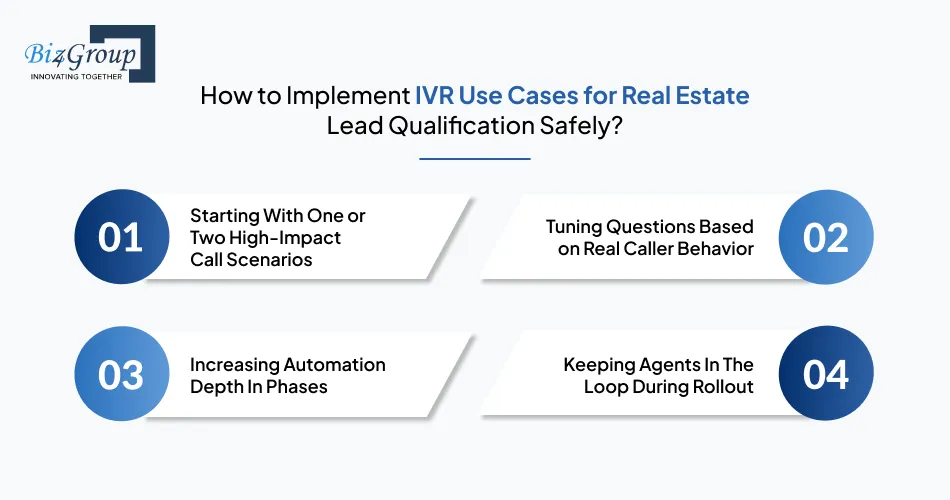
Implementing IVR is all about control. IVR use cases for real estate truly succeed when automation is introduced in a way that it protects caller experience and human agent in sync. A safe rollout focuses on limiting scope, learning from real calls, and expanding only after early flows perform reliably.
1. Starting With One or Two High-Impact Call Scenarios
The safest way to begin is by automating only the most common and predictable call types, such as basic buyer inquiries or callback requests. This keeps the IVR simple and easy to test. Many teams start here when setting up IVR use cases for inbound lead handling in real estate because outcomes are easier to measure.
2. Tuning Questions Based on Real Caller Behavior
Initial IVR questions should be reviewed using actual call results and not assumptions. Drop-offs, skipped answers, or repeated responses signal confusion for the caller. Teams involved in business app development using AI often use this feedback to shorten scripts and remove unnecessary steps.
3. Increasing Automation Depth In Phases
Once early flows work well, automation can be expanded gradually to include deeper qualification or routing logic. Each change should be introduced one step at a time and reviewed before adding more. Some teams apply generative AI at this stage to improve decision accuracy without increasing call length.
4. Keeping Agents In The Loop During Rollout
Agents need visibility into what the IVR asks and how it routes calls. This helps them trust the system and use the gathered data effectively. This approach is critical when IVR is meant to support AI for real estate agents.
A controlled rollout reduces risk and protects conversion rates for businesses. By limiting early scope and expanding only after validation, teams can scale without any fear. This is how IVR use cases for scaling real estate sales operations are implemented without disrupting daily lead flow.
Cut Down Manual Follow-Ups
Apply real estate IVR use cases to reduce manual follow ups and keep every inbound call moving forward.
Streamline My Sales WorkflowHow Biz4Group LLC Helps Businesses Leverage Top IVR Use Cases for Real Estate Lead Qualification and Appointment Scheduling?
Using IVR in real estate works best when it feels like a natural part of daily operations, and not a layer on top. Biz4Group LLC helps teams apply IVR use cases for real estate in a practical way, so calls are handled smoothly, leads are qualified correctly, and appointments are scheduled without extra effort from agents.
As a custom software development company, Biz4Group LLC focuses on building systems that fit into existing sales and CRM workflows. The goal is simple: make sure IVR supports how teams already work, instead of forcing them to change their process. This is also why Biz4Group operates as an AI app development company, with experience turning AI-driven logic into usable, real-world tools.
Where Biz4Group adds value:
- Designs IVR call flows based on real qualification and scheduling needs
- Connects IVR systems directly with real estate CRMs and calendars
- Helps teams decide what to automate and what should stay human
- Builds systems that can scale without becoming complex to manage
Platform Spotlight
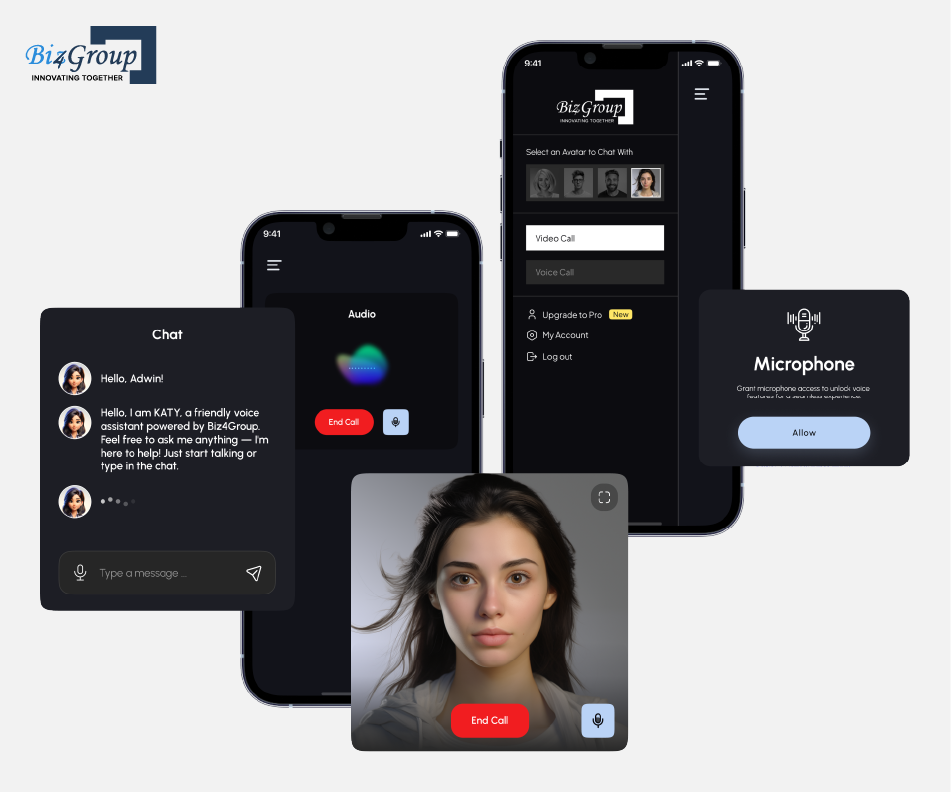
AI Wizard is an AI-based platform designed by Biz4Group to guide users through structured conversations and decision paths. It collects inputs, applies clear rules, and decides the next action automatically. This same approach is used in IVR systems that qualify real estate leads, update CRM records, and move callers toward booking or follow-up.
Biz4Group’s work is focused on making automation feel useful, not overwhelming. When IVR is set up this way, it stays in the background, calls move faster, and teams spend more time on conversations that matter.
Wrapping Up Top IVR Use Cases for Real Estate Lead Qualification and Appointment Scheduling
IVR is not about replacing people on the phone. It is about making sure every inbound call goes somewhere useful. Across lead qualification, appointment scheduling, and call routing, the strongest setups focus on removing friction at the exact moment intent is highest. That is the real value behind IVR use cases for real estate when they are applied with care.
When IVR is designed well, it filters noise without blocking real interest. It helps agents spend time on the right conversations, keeps calendars cleaner, and ensures serious leads are handled quickly. When it is rushed or overloaded with logic, it does the opposite. The difference comes down to flow design, clear limits, and a gradual rollout.
For real estate teams, IVR works best when treated as part of the product, not just a phone feature. This mindset aligns closely with how teams think about product development services, where systems are built to improve over time. It is also where AI consulting services play a role, helping teams decide what to automate, what to keep human, and how to evolve call flows as lead volume and behavior change.
When it works, IVR stays out of the spotlight. Calls get answered, leads get sorted, appointments get booked, and agents deal with fewer interruptions. Quiet efficiency is usually a good sign.
Review Your Lead Qualification and Scheduling Flows
Talk to our experts and see where IVR can remove delays and manual steps.
Frequently Asked Questions
1. Can IVR systems work alongside live agents without hurting the caller experience?
Yes. IVR works best when it handles early steps like intent capture and routing, then hands off to agents at the right moment. Clear escape options and short call flows help ensure callers do not feel blocked by automation.
2. How long should an IVR lead qualification call typically last in real estate?
Most effective IVR qualification calls last under two minutes. The goal is to collect only essential information needed to decide the next step, not to complete the entire sales conversation.
3. Do IVR systems work for both high-end and high-volume real estate inquiries?
Yes, but the call flow should differ. High-end inquiries often require lighter qualification and faster agent access, while high-volume inquiries benefit from stronger filtering and scheduling logic.
4. What data from IVR calls is most useful for real estate sales teams?
The most useful data includes intent type, urgency, budget range, preferred location, and requested action. This information helps agents prepare before the conversation starts and prioritize follow-ups.
5. How do real estate teams measure whether IVR is actually improving results?
Common measures include response time, percentage of qualified calls, appointment show rates, and agent call handling time. Improvements in these areas usually indicate IVR is working as intended.
6. Is IVR suitable for small real estate teams, or only large operations?
IVR can benefit teams of any size. Smaller teams often use it to avoid missed calls and manage after-hours inquiries, while larger teams use it to scale lead handling without adding staff.
