 Location :
Orlando, FL, USA
Location :
Orlando, FL, USA +1 (407) 714-1616
 info@biz4group.com
- Computer vision in healthcare uses AI to analyze medical images like X-rays, MRIs, and pathology slides, enabling faster diagnostics and better clinical decisions. This drives many use cases of computer vision in healthcare.
- Key computer vision use cases in healthcare include radiology imaging, digital pathology, ophthalmology detection, surgical assistance, cardiovascular imaging, and remote patient monitoring.
- Healthcare leaders adopt these AI computer vision use cases in healthcare to achieve faster diagnosis, improved accuracy, and reduced specialist workload.
- Implementing computer vision technology use cases can be challenging due to data quality, compliance requirements, and system integration.
- With deep expertise in healthcare AI, Biz4Group LLC, a leader among top computer vision development companies, helps organizations build solutions that power real-world computer vision use cases in healthcare.
How many medical images does your clinical team analyze every single day?
If you work in healthcare leadership, you already know the answer is growing fast.
Hospitals generate enormous amounts of visual data. X-rays, CT scans, MRI images, pathology slides, retinal photos, and surgical videos are produced around the clock. As this data grows, healthcare organizations are actively exploring use cases of computer vision in healthcare to help clinicians analyze medical images faster and make better decisions.
The scale of the problem is significant. According to a report, more than 3.6 billion diagnostic imaging exams such as X-rays are performed globally every year.
Now think about the pressure on your specialists.
Radiologists must interpret hundreds of scans in a single shift. Pathologists examine thousands of microscopic cells on digital slides. Surgeons rely on real-time visual feedback during complex procedures. Even the most experienced clinicians can struggle when the volume of images grows faster than the workforce.
This is where computer vision is starting to reshape healthcare.
Computer vision allows AI systems to analyze medical images and videos within seconds. These systems detect patterns, flag abnormalities, and support clinicians with faster insights. Instead of replacing doctors, they help medical teams focus on the decisions that matter most.
Healthcare organizations are already adopting computer vision use cases in healthcare to improve diagnostics, accelerate clinical workflows, and enhance patient outcomes.
Building these solutions often requires working with an experienced computer vision development company that understands healthcare workflows, AI model development, and regulatory requirements.
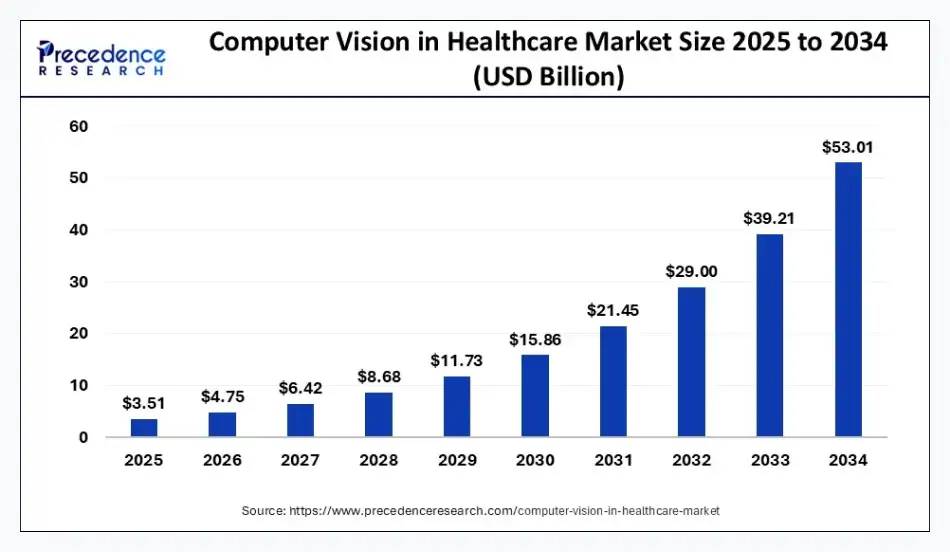
And the shift is happening quickly. The global computer vision in healthcare market was valued at about $4.75 billion in 2026 and is projected to surpass $50 billion by 2034, showing how rapidly healthcare providers are adopting visual AI technologies.
For many healthcare leaders today, the real question is no longer whether computer vision belongs in healthcare.
The real question is where it delivers the greatest impact first.
Curious How Computer Vision Could Transform Your Healthcare Platform?
From diagnostics to patient monitoring, the right AI solution can unlock powerful use cases of computer vision in healthcare for your organization.
Talk to Our AI ExpertsWhat Is Computer Vision in Healthcare and Why Are Healthcare Leaders Investing in It?
Before looking at the computer vision use cases in healthcare, it is important to understand what the technology actually means in a medical context.
Computer vision in healthcare refers to AI systems that analyze medical images and videos to identify patterns, detect abnormalities, and assist clinicians in diagnosing or monitoring diseases.
These systems process visual data from sources such as:
- X-rays
- CT scans
- MRI images
- pathology slides
- retinal photographs
- surgical video feeds
Instead of manually reviewing every image, clinicians can use computer vision systems to quickly identify areas that may require attention. Many healthcare platforms rely on AI image recognition software to analyze these images and support faster clinical decisions.
Computer vision is typically integrated into broader healthcare platforms developed through healthcare software product development, allowing hospitals to combine imaging analysis with patient data, clinical workflows, and diagnostic tools.
Why Healthcare Leaders Are Investing in Computer Vision
Healthcare organizations are prioritizing computer vision technology use cases because the technology addresses several practical challenges.
Key reasons include:
- Growing medical imaging volumes
Hospitals generate large amounts of imaging data every day. Computer vision helps clinicians review images more efficiently. - Faster disease detection
AI systems can flag abnormalities in scans earlier, supporting quicker diagnosis and treatment. - Support for specialist workloads
Radiologists and pathologists often review hundreds of images daily. Computer vision assists by highlighting potential issues. - Improved diagnostic consistency
Automated image analysis reduces the risk of missed patterns or overlooked abnormalities. - Scalable healthcare delivery
Hospitals can analyze more patient data without proportionally increasing clinical staff.
Because of these benefits, healthcare providers are actively exploring ways computer vision AI is being implemented in healthcare to improve diagnostics, patient monitoring, and treatment planning.
What Are the Top Use Cases of Computer Vision in Healthcare Transforming Patient Care?
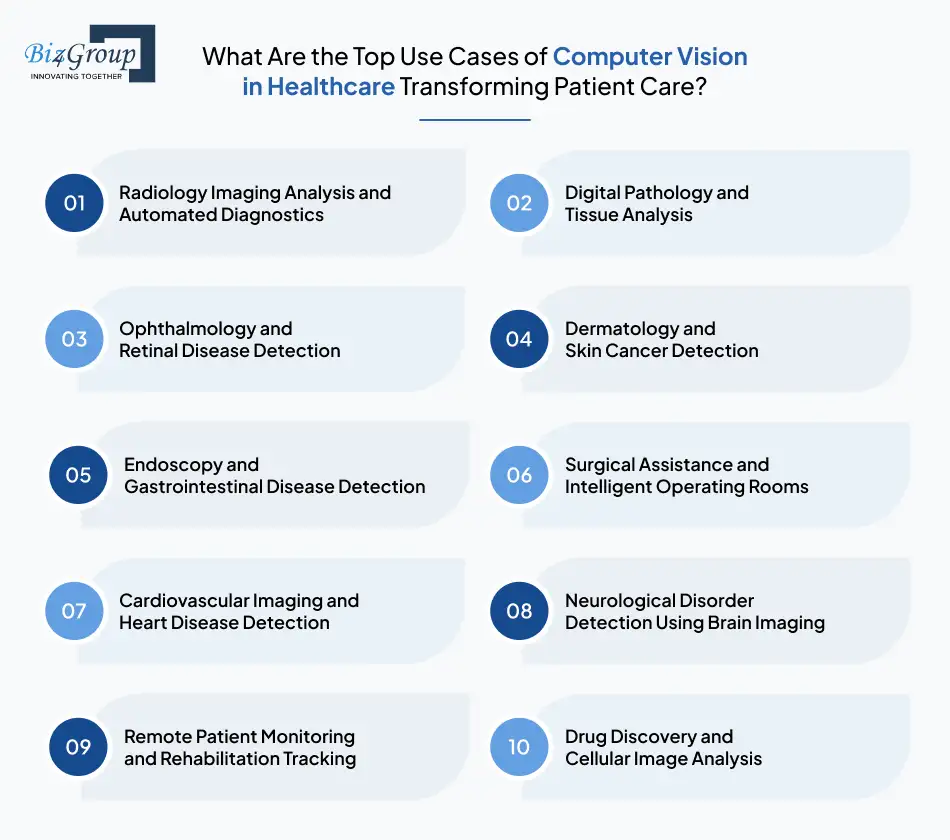
Healthcare organizations are increasingly adopting visual AI technologies to improve diagnostics and clinical efficiency. From analyzing medical scans to assisting surgeons during procedures, there are many real world computer vision use cases in healthcare already delivering measurable value.
The following examples highlight the top use cases of computer vision in healthcare industry and how hospitals are using this technology to improve patient outcomes and support clinical teams.
1. Radiology Imaging Analysis and Automated Diagnostics
Radiology imaging analysis is one of the most common use cases of computer vision in healthcare. AI systems analyze medical scans such as X-rays, CT scans, and MRIs to detect abnormalities and assist radiologists in diagnosing diseases faster.
Radiology departments generate thousands of diagnostic images every day. Reviewing these images manually takes time and requires careful attention to detail.
Computer vision systems analyze medical imaging data to detect abnormalities such as tumors, fractures, infections, or internal bleeding. These systems highlight suspicious regions in scans so radiologists can review them more quickly.
Instead of examining every image pixel by pixel, clinicians can use AI-assisted tools to prioritize cases and focus on critical findings.
Radiology AI is commonly used for:
- detecting lung diseases in chest X-rays
- identifying brain hemorrhage in CT scans
- analyzing MRI scans for tumors
- screening mammograms for early breast cancer
Many healthcare organizations adopt these solutions through platforms developed by an AI healthcare software development company that specializes in medical imaging technologies.
Healthcare leaders prioritize this use case because it delivers immediate value:
- faster diagnostic turnaround
- reduced radiologist workload
- improved detection of early-stage diseases
- better triage of urgent cases
Because radiology departments handle massive imaging volumes, this remains one of the most impactful use cases of computer vision in healthcare today.
2. Digital Pathology and Tissue Analysis
Digital pathology is one of the most impactful use cases of computer vision in healthcare. AI systems analyze microscope images of tissue samples to help pathologists detect diseases such as cancer with greater speed and consistency.
Traditionally, pathologists examine tissue samples under microscopes to identify abnormal cells. A single slide can contain thousands of cells, which makes manual analysis time-consuming. This is where computer vision use cases in healthcare are becoming increasingly valuable. Computer vision models analyze digital slides and highlight patterns that may indicate disease.
In digital pathology, AI systems study tissue structures, cell shapes, and staining patterns to identify abnormalities. These systems assist clinicians in detecting cancer cells, grading tumors, and analyzing tissue samples more efficiently. Many modern pathology platforms rely on advanced AI image recognition software to process microscopic images and support clinical decision making.
Digital pathology solutions are commonly used for:
- detecting cancer cells in biopsy samples
- analyzing tumor characteristics and grading
- identifying cellular abnormalities in tissue slides
- assisting pathologists during laboratory diagnosis
Healthcare leaders prioritize this use case because:
- pathology labs process thousands of slides every day
- AI helps reduce manual workload for specialists
- early cancer detection improves treatment outcomes
- laboratories can analyze more samples without increasing staff
Because of these advantages, digital pathology has become one of the fastest growing real world computer vision use cases in healthcare, helping laboratories improve diagnostic efficiency and patient outcomes.
3. Ophthalmology and Retinal Disease Detection
Ophthalmology is one of the fastest growing use cases of computer vision in healthcare. AI systems analyze retinal images to detect eye diseases early and support faster diagnosis.
Eye diseases such as diabetic retinopathy, glaucoma, and macular degeneration often develop gradually and may not show symptoms in the early stages. Detecting these conditions early is critical to preventing vision loss. This is where computer vision use cases in healthcare are creating significant impact.
Computer vision models analyze high-resolution retinal images and identify subtle changes in blood vessels, nerve tissue, and retinal structure. These systems help ophthalmologists detect abnormalities that could indicate eye disease.
Today, many digital health platforms are integrating computer vision with tools like an AI eye test app to screen patients remotely. Some solutions also combine diagnostic workflows with an AI chatbot for eye test that guides patients through vision assessments and symptom reporting.
Ophthalmology AI is commonly used for:
- detecting diabetic retinopathy from retinal images
- identifying glaucoma risk through optic nerve analysis
- diagnosing age-related macular degeneration
- enabling remote eye screening through mobile applications
Healthcare leaders prioritize this use case because:
- early detection prevents irreversible vision loss
- automated screening increases access to eye care
- AI enables remote diagnostics for underserved populations
- clinics can screen large patient populations efficiently
Because of these benefits, ophthalmology has become one of the most practical real world computer vision use cases in healthcare, helping healthcare providers improve preventive eye care and expand access to diagnostic services.
4. Dermatology and Skin Cancer Detection
Dermatology is another important area where computer vision is improving disease detection. AI systems analyze images of skin lesions to identify potential signs of skin cancer and other dermatological conditions.
Skin diseases are often diagnosed through visual examination. Dermatologists study the size, color, texture, and shape of lesions to determine whether they may be harmful. Computer vision systems support this process by analyzing skin images and identifying patterns that may indicate melanoma or other conditions.
These systems are trained on large datasets of dermatology images and can compare new images against known disease patterns. As a result, AI computer vision use cases in healthcare are helping clinicians detect suspicious lesions earlier and prioritize high-risk cases.
Dermatology AI is commonly used for:
- identifying melanoma and other skin cancers
- analyzing skin lesions through mobile imaging
- monitoring changes in moles over time
- assisting dermatologists with diagnostic decisions
Healthcare leaders prioritize this use case because:
- early detection significantly improves skin cancer survival rates
- visual diagnosis makes dermatology well suited for computer vision
- AI tools enable remote skin screening through mobile apps
- clinicians can evaluate more patients efficiently
Because skin conditions are primarily diagnosed through visual examination, dermatology remains one of the most promising real world computer vision use cases in healthcare for improving early disease detection.
5. Endoscopy and Gastrointestinal Disease Detection
Endoscopy is a critical procedure used to examine the digestive tract, and computer vision is now helping physicians detect abnormalities during these procedures.
During endoscopic procedures, clinicians examine internal organs using a small camera inserted into the body. Detecting polyps, lesions, or bleeding in real time can be challenging because abnormalities may appear briefly in the video feed.
Computer vision systems analyze endoscopy video streams and highlight suspicious regions that may indicate disease. This helps physicians detect conditions that could otherwise be missed during a procedure.
These solutions represent practical ways computer vision AI is being implemented in healthcare, especially in gastrointestinal diagnostics.
Computer vision in endoscopy is commonly used for:
- detecting colon polyps during colonoscopy procedures
- identifying early signs of colorectal cancer
- recognizing gastrointestinal bleeding
- assisting physicians during real-time endoscopic examinations
Healthcare leaders prioritize this use case because:
- colorectal cancer screening saves lives when detected early
- AI improves detection rates of small or hidden polyps
- real-time assistance helps physicians during procedures
- healthcare providers can improve diagnostic accuracy
Because gastrointestinal diseases often rely on visual detection, endoscopy remains one of the top use cases of computer vision in healthcare industry for improving procedural diagnostics.
6. Surgical Assistance and Intelligent Operating Rooms
Computer vision is also transforming surgical environments by providing real-time insights during medical procedures. AI systems analyze surgical video to help clinicians monitor instruments, identify anatomy, and improve surgical precision.
Modern operating rooms generate large amounts of visual data through cameras and imaging devices. Computer vision systems analyze this video feed to track surgical tools, recognize procedural steps, and assist surgeons during complex procedures.
These systems support clinicians by highlighting critical anatomical structures and monitoring surgical workflows. As a result, surgeons receive additional visual guidance that can improve accuracy during operations.
This represents one of the most advanced computer vision technology use cases in modern healthcare environments.
Computer vision in surgery can be used for:
- tracking surgical instruments during procedures
- identifying anatomical structures in real time
- analyzing surgical workflows for quality improvement
- assisting robotic surgery platforms
Healthcare leaders prioritize this use case because:
- AI-assisted surgery can improve procedural accuracy
- operating room analytics help improve surgical training
- hospitals can monitor and optimize surgical workflows
- technology supports safer and more consistent procedures
As surgical technology continues to evolve, intelligent operating rooms are becoming one of the most innovative computer vision use cases in healthcare for improving procedural outcomes.
7. Cardiovascular Imaging and Heart Disease Detection
Cardiovascular imaging is one of the most valuable use cases of computer vision in healthcare because it helps clinicians detect heart conditions earlier and analyze complex cardiac scans more efficiently.
Heart disease remains one of the leading causes of death worldwide. Diagnosing these conditions often requires analyzing imaging data such as echocardiograms, cardiac CT scans, and MRI images. Reviewing these images manually can be time-consuming and requires significant expertise.
Computer vision systems assist cardiologists by analyzing heart imaging data and identifying patterns that may indicate abnormalities. These systems can measure heart chamber size, evaluate blood flow patterns, and detect structural changes that signal potential heart disease.
This technology is commonly used for:
- analyzing echocardiograms to evaluate heart function
- detecting coronary artery blockages in cardiac CT scans
- identifying structural heart abnormalities
- supporting early detection of cardiovascular disease
Healthcare leaders prioritize this use case because:
- heart disease remains a major global health challenge
- early detection improves treatment outcomes
- automated imaging analysis reduces diagnostic workload
- cardiologists can review complex scans more efficiently
Because cardiovascular diagnosis relies heavily on imaging data, this has become one of the most impactful real world computer vision use cases in healthcare for improving heart disease detection.
8. Neurological Disorder Detection Using Brain Imaging
Neurology is another important area where computer vision is improving diagnostic accuracy by analyzing brain scans to detect neurological disorders.
Neurological conditions such as stroke, Alzheimer’s disease, and brain tumors are often diagnosed through imaging technologies like CT scans and MRI scans. These images contain subtle patterns that can indicate changes in brain tissue or abnormal growth.
Computer vision models analyze these scans and identify abnormalities that may suggest neurological conditions. By detecting patterns in brain structures and tissue changes, these systems help neurologists identify potential issues earlier.
Neurological AI systems are commonly used for:
- detecting brain tumors in MRI scans
- identifying early signs of Alzheimer’s disease
- detecting stroke or brain hemorrhage in CT scans
- analyzing structural brain changes over time
Healthcare leaders prioritize this use case because:
- neurological disorders often require early diagnosis
- imaging data plays a critical role in brain disease detection
- AI helps clinicians interpret complex brain scans faster
- earlier detection supports better treatment planning
Because brain imaging is central to neurological diagnosis, this remains one of the most promising AI computer vision use cases in healthcare for improving early detection of neurological diseases.
Real-World Example: CogniHelp – AI-Powered Dementia Support App
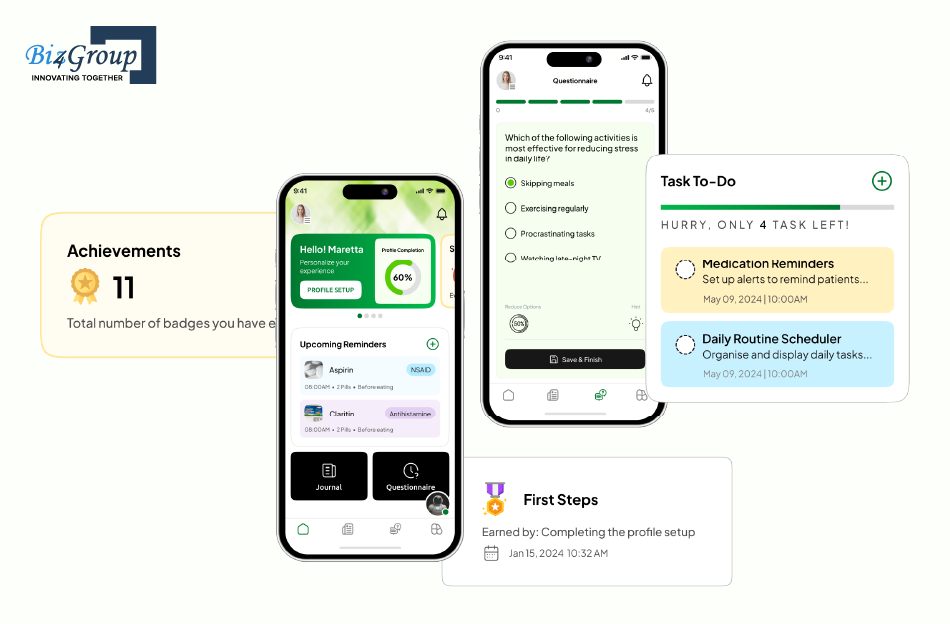
A practical example of how AI can assist in neurological care is CogniHelp, a solution developed by Biz4Group to support individuals living with early to mid-stage dementia. The application focuses on improving the quality of life for patients by helping them manage daily routines, memory-related challenges, and communication with caregivers.
Dementia often affects memory, cognitive processing, and the ability to perform everyday tasks independently. CogniHelp addresses these challenges by combining AI-powered features with intuitive mobile tools that help patients stay organized and connected with caregivers. The goal is to promote independence while giving caregivers better visibility into a patient’s cognitive well-being.
Key computer vision and AI highlights of the project include:
- Cognitive activity tracking to monitor memory performance and daily engagement patterns
- Interactive cognitive exercises and quizzes designed to support memory retention and mental stimulation
- Voice-to-text journaling and reminders that help patients record thoughts and maintain daily routines
- Personalized reminders and task assistance for medication, appointments, and daily activities
- Caregiver visibility tools that allow families to monitor patient engagement and well-being
These capabilities demonstrate how AI-driven digital health platforms can support neurological care beyond traditional clinical environments. Instead of relying only on hospital visits, solutions like CogniHelp enable continuous cognitive support through mobile technology.
For healthcare innovators, this highlights one of the most meaningful real world computer vision use cases in healthcare. AI systems can assist patients living with neurological conditions by supporting cognitive functions, tracking behavioral patterns, and enabling proactive care management.
9. Remote Patient Monitoring and Rehabilitation Tracking
Remote monitoring is an emerging area where computer vision helps clinicians track patient health and recovery without requiring constant in-person visits.
Healthcare providers are increasingly using camera-based systems to observe patient movement, posture, and behavior. Computer vision models analyze video feeds to detect patterns related to mobility, rehabilitation progress, or potential health risks.
For example, these systems can monitor patient movements during physical therapy exercises and provide feedback on posture or range of motion. Many healthcare providers are also building solutions such as AI remote patient monitoring platforms that use computer vision to track patient activity outside clinical settings.
Remote monitoring systems are commonly used for:
- tracking patient rehabilitation exercises
- monitoring mobility and posture during recovery
- detecting falls or movement abnormalities
- supporting chronic disease monitoring at home
Healthcare leaders prioritize this use case because:
- remote monitoring reduces hospital visits
- clinicians can track patient recovery in real time
- patients receive care from home environments
- healthcare systems can scale monitoring services
These benefits make remote monitoring one of the most practical ways computer vision AI is being implemented in healthcare to support long-term patient care.
10. Drug Discovery and Cellular Image Analysis
Drug discovery is another growing area where computer vision is accelerating medical research by analyzing cellular images and laboratory data.
Pharmaceutical researchers study thousands of cell samples during drug development. Traditionally, scientists manually examine microscope images to understand how cells respond to potential drug compounds.
Computer vision systems analyze these microscopic images to detect cellular changes, measure biological responses, and identify promising drug candidates. By automating image analysis, researchers can process significantly larger datasets.
This technology is commonly used for:
- analyzing cellular behavior during drug testing
- identifying molecular responses to treatments
- screening drug compounds through microscopy images
- studying disease progression at the cellular level
Healthcare leaders prioritize this use case because:
- drug discovery requires analyzing massive datasets
- automated image analysis accelerates research timelines
- AI helps researchers identify promising drug candidates
- pharmaceutical teams can scale research more efficiently
Because biomedical research relies heavily on microscopic imaging, this represents one of the most advanced computer vision technology use cases in modern healthcare innovation.
Seeing the Possibilities? Ready to Turn These Use Cases Into Real Solutions?
If these computer vision use cases in healthcare sparked ideas for your platform, it might be time to start building.
Contact UsIf the Potential Is So Big, Why Is Implementing Computer Vision in Healthcare Still Challenging?
While the use cases of computer vision in healthcare are expanding rapidly, implementing these systems in real clinical environments is not always simple. Hospitals operate within strict regulatory frameworks, complex IT systems, and highly sensitive patient data environments.
Healthcare leaders often recognize the value of computer vision use cases in healthcare, but turning the technology into a working clinical solution requires the right infrastructure, integration strategy, and expertise. Many organizations exploring ways computer vision AI is being implemented in healthcare quickly discover that technical and operational barriers must be addressed first.
Below are some of the most common challenges healthcare organizations face when adopting computer vision technology use cases, along with practical ways to overcome them.
|
Challenge |
Why It Happens |
How Healthcare Organizations Can Solve It |
|---|---|---|
|
Limited access to high-quality medical image data |
Computer vision models require large datasets of labeled medical images for training. Many healthcare systems store imaging data across disconnected systems, which makes dataset preparation difficult. |
Build structured and annotated datasets using advanced AI image recognition software to prepare medical imaging data for training and deployment of AI models. |
|
Integration with existing healthcare systems |
Hospitals already rely on systems such as EHR platforms, PACS imaging systems, and diagnostic tools. Integrating AI tools into these environments can be technically complex. |
Use reliable AI integration services to connect computer vision solutions with existing healthcare infrastructure and enable seamless data flow. |
|
Regulatory compliance and patient data privacy |
Healthcare technologies must comply with regulations such as HIPAA and clinical validation standards, which increases development complexity. |
Work with experienced healthcare technology teams that understand regulatory frameworks and build compliant AI solutions from the beginning. |
|
High development and infrastructure costs |
Training computer vision models requires computing resources, specialized AI expertise, and scalable infrastructure. |
Healthcare organizations can reduce risk by adopting scalable platforms and leveraging AI automation services to automate workflows and optimize operational efficiency. |
|
Limited in-house AI expertise |
Many healthcare organizations lack internal teams with experience in computer vision model development and deployment. |
Partner with an experienced AI development company capable of building scalable enterprise AI solutions tailored for healthcare environments. |
|
Adoption challenges among clinicians |
If AI tools disrupt existing workflows, clinicians may hesitate to adopt them. Ease of use becomes a critical factor. |
Focus on intuitive healthcare platforms supported by strong UI/UX design and custom software solutions that fit naturally into clinical workflows. |
Overcoming these challenges is essential for organizations that want to successfully deploy AI computer vision use cases in healthcare. With the right strategy, infrastructure, and technology partners, healthcare providers can unlock the full potential of real world computer vision use cases in healthcare, improving diagnostics, clinical efficiency, and patient outcomes.
How Can Healthcare Organizations Start Implementing Computer Vision Solutions with Biz4Group LLC?
Healthcare providers are increasingly exploring use cases of computer vision in healthcare to improve diagnostics, streamline workflows, and enhance patient care. However, turning these ideas into real clinical solutions requires the right strategy, technology, and expertise.
Biz4Group LLC helps healthcare organizations design and deploy scalable AI platforms that support practical computer vision use cases in healthcare. As an experienced AI healthcare software development company, Biz4Group works with hospitals, startups, and healthcare innovators to build intelligent medical solutions tailored to real-world clinical needs.
Organizations often begin by identifying high-impact opportunities such as radiology analysis, pathology diagnostics, or patient monitoring. From there, solutions can be developed and scaled using advanced enterprise AI solutions that integrate seamlessly with existing healthcare systems.
With the right technology partner, healthcare leaders can successfully implement AI computer vision use cases in healthcare and unlock new opportunities to improve clinical efficiency and patient outcomes.
Have a Healthcare AI Idea Worth Building?
Let's turn your concept into a scalable platform powered by real AI computer vision use cases in healthcare.
Start Your Project with Biz4GroupWrapping Up!
The growing adoption of visual AI is transforming how healthcare organizations diagnose diseases, monitor patients, and improve clinical workflows. From radiology imaging and digital pathology to neurological diagnostics and remote patient monitoring, the use cases of computer vision in healthcare continue to expand as medical institutions look for smarter ways to analyze visual data and support clinical decision-making.
What makes this technology especially valuable is its ability to assist clinicians rather than replace them. Computer vision systems help doctors detect patterns earlier, analyze large imaging datasets faster, and reduce the burden of manual image interpretation. As a result, many healthcare providers are actively investing in computer vision use cases in healthcare to improve patient outcomes and scale their services more efficiently.
However, successful implementation requires more than advanced algorithms. Healthcare organizations need scalable platforms, seamless system integration, and solutions designed specifically for medical environments.
This is where experienced partners such as Biz4Group LLC make a difference. With deep expertise in AI technologies and healthcare software development, Biz4Group helps organizations build intelligent platforms that bring real world computer vision use cases in healthcare to life. From early-stage prototypes to enterprise-level AI systems, their team focuses on delivering practical solutions that solve real clinical challenges.
The future of healthcare will rely heavily on intelligent technologies that can interpret medical data faster and more accurately. Computer vision is already proving to be one of the most powerful tools enabling this shift.
And if your organization is ready to turn innovative ideas into real healthcare solutions, Biz4Group LLC is ready to help you build what’s next.
FAQ
1. What are the most common use cases of computer vision in healthcare?
The most common use cases of computer vision in healthcare include radiology imaging analysis, digital pathology, ophthalmology diagnostics, dermatology detection, surgical assistance, cardiovascular imaging analysis, and remote patient monitoring. These systems analyze medical images such as X-rays, CT scans, and MRIs to detect abnormalities and support clinical decision making. Medical imaging remains one of the earliest and most impactful computer vision use cases in healthcare because healthcare diagnostics rely heavily on visual data.
2. How do hospitals use computer vision technology?
Hospitals use computer vision technology to analyze diagnostic images, monitor patients, and assist doctors during medical procedures. For example, AI systems can analyze radiology scans to detect tumors, monitor patient activity to reduce fall risks, and assist surgeons with real-time visual insights during operations. These applications demonstrate ways computer vision AI is being implemented in healthcare to improve both clinical efficiency and patient safety.
3. What are the benefits of computer vision in healthcare?
The main benefits of computer vision in healthcare include faster diagnostics, improved accuracy, and better patient monitoring. AI systems can analyze large volumes of medical images quickly and detect subtle patterns that may be missed during manual review. This helps clinicians diagnose diseases earlier, reduce diagnostic errors, and improve patient outcomes. In many cases, AI computer vision use cases in healthcare also reduce the workload for specialists such as radiologists and pathologists.
4. Will computer vision replace doctors or radiologists?
No. Computer vision systems are designed to assist clinicians, not replace them. These tools function as decision-support systems that highlight potential abnormalities in medical images. Doctors still make the final diagnosis and treatment decisions. In practice, combining human expertise with AI analysis often produces better results than either approach alone.
5. Which healthcare areas use computer vision technology the most?
Computer vision technology is widely used in radiology, pathology, ophthalmology, dermatology, cardiology, and neurology. These specialties rely heavily on medical imaging and visual diagnosis, making them ideal areas for real world computer vision use cases in healthcare. AI tools help clinicians analyze scans, detect disease patterns, and monitor patient conditions more efficiently.
6. What are the biggest challenges of implementing computer vision in healthcare?
Some of the biggest challenges include limited access to high-quality medical datasets, regulatory compliance requirements, integration with hospital systems, and the need for specialized AI expertise. Healthcare organizations also need secure systems to protect sensitive patient data. Overcoming these challenges is critical for successfully deploying computer vision technology use cases in clinical environments.
7. What are the future use cases of computer vision in healthcare technology?
Future use cases of computer vision in healthcare technology include AI-powered diagnostic assistants, automated surgical guidance systems, remote patient monitoring through smart cameras, and advanced disease prediction models. As healthcare data continues to grow, computer vision will play a key role in helping clinicians interpret complex medical images and deliver more personalized patient care.
