Location :
Orlando, FL, USA
Location :
Orlando, FL, USA +1 (407) 714-1616
 info@biz4group.com


















Imagine a digital system that doesn’t wait for instructions but instead, understands your business goals, learns from real-time feedback, and takes independent actions to get the job done.
Read More

Let us be honest for a moment. If AI is supposed to be transformative, why do so many initiatives quietly stall or get shut down?
Recent data makes this impossible to ignore. A report stated that more than 95 percent of enterprise AI initiatives fail to create measurable business value, largely because organizations are not operationally prepared for AI at scale.
Another eye-opening stat shows that 42 percent of companies scrapped most of their AI projects in 2025, compared with just 17 percent in the previous year.
So, what is really going wrong?
In our experience, AI project failure due to lack of AI readiness is the root issue most leaders overlook. Technology itself is rarely a problem. Instead, lack of AI readiness in organizations shows up in subtle but damaging ways, unclear strategy, fragile data pipelines, disconnected teams, and no clear path from pilot to production.
You may have already lived this. An AI use case that sounded promising but never scaled. Leadership asking for ROI while teams are still figuring out ownership. Confusion around how AI fits into everyday workflows. This is exactly why AI projects fail in companies, even when budgets and intent are strong.
Here is the question worth asking before you invest further. Is your organization actually prepared to support AI beyond experimentation?
Readiness is not just infrastructure or tools. It is alignment across strategy, data, people, governance, and execution. Without that alignment, AI implementation failure in companies becomes almost inevitable.
In this guide, we will break down why AI projects fail without AI readiness, what most enterprises miss early on, and how grounding execution through AI integration services can help you turn AI initiatives into real business outcomes instead of sunk cost.
Let us start by looking at how lack of readiness quietly derails AI projects before they ever have a chance to succeed.
Most AI failures do not begin with poor ideas. They begin with execution that outpaces preparation.
When you look closely at AI project failure due to lack of AI readiness, a pattern becomes obvious. Companies move fast on AI adoption without building the internal structure needed to support it. On paper, everything looks promising. In practice, friction shows up everywhere.
You may already recognize some of these signs inside your organization.
These gaps are classic indicators of lack of AI readiness in organizations, and they explain why AI projects fail in companies that otherwise have strong budgets and talent.
Another overlooked issue is misalignment. Strategy lives at the top, execution lives in silos, and AI ends up stuck in the middle. When that happens, teams cut corners under pressure. Over time, those shortcuts accumulate and lead directly to AI implementation failure in companies.
There is also confusion around scope. Is AI being treated as a short-term experiment, an efficiency play, or a long term capability? Without clarity, priorities shift, accountability fades, and progress stalls. This uncertainty is one of the most persistent AI adoption challenges for businesses today.
What makes this harder is that AI is less forgiving than traditional software. It depends on reliable data, strong governance, and continuous feedback. When even one of those pillars is missing, execution becomes fragile.
That is why leading organizations slow down before they scale. They create visibility into where they stand and where the risks lie. A structured AI readiness assessment helps surface these gaps early, while there is still room to course correct.
If these issues feel familiar, you are not alone. Many enterprises reach this realization only after pilots stall or costs climb.
The good news is that these failures follow recognizable patterns. Understanding those patterns sets the stage for identifying the most common reasons AI initiatives break down across enterprises.
Most AI failures start before development begins. A quick readiness check can save months of wasted effort and budget.
Let’s Talk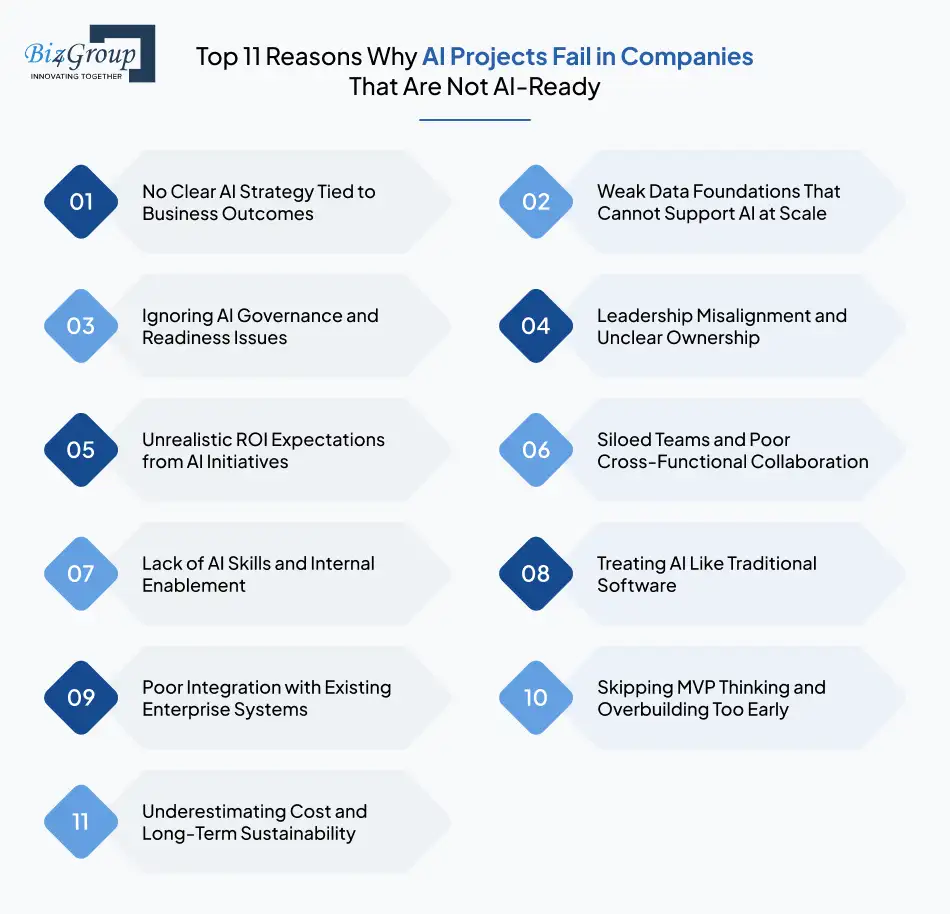
If you have seen AI initiatives stall, overrun budgets, or quietly disappear, it is rarely due to one big mistake. Failure usually builds up through small gaps that compound over time. Below are the most common and costly reasons why AI projects fail in companies, especially when AI readiness challenges in enterprises are ignored.
Many organizations start AI initiatives because competitors are doing it, not because a specific business problem needs solving.
When there is no clear outcome defined upfront, teams build models that look impressive but do not move the business forward. This creates AI strategy gaps in organizations, where effort is high but impact is low. Over time, leadership loses patience and funding dries up, leading directly to AI project failure due to lack of AI readiness.
AI depends on data, yet many enterprises overestimate how ready their data really is.
Data is often scattered across systems, inconsistent in quality, and poorly governed. Models trained on unreliable data produce unreliable outcomes, which quickly erodes trust. This is one of the most common AI execution challenges in enterprises, and it often surfaces only after development has already started.
Governance questions are usually postponed until something goes wrong.
When these answers are missing, AI initiatives slow down or stall completely. Compliance concerns escalate, decision-making becomes unclear, and teams hesitate to move forward. These AI governance and readiness issues are a major reason enterprise AI programs fail to scale.
AI initiatives cut across business, technology, and operations. When leadership alignment is weak, execution suffers.
Executives may expect quick returns while delivery teams are still addressing foundational gaps. Without a clear owner, decisions get delayed and priorities shift. This disconnect fuels AI transformation failures in companies, even when technical talent is available.
AI is often positioned as a fast path to efficiency or growth, but in reality, it is an iterative capability.
When leadership expects immediate ROI, teams rush deployment and skip readiness steps. That pressure leads to fragile systems and poor design decisions. Over time, these shortcuts turn into business mistakes that cause AI projects to fail.
AI cannot live in isolation inside one department.
When business teams, data teams, and IT work in silos, AI solutions fail to align with real workflows. Adoption suffers and AI becomes shelfware. This is one of the most underestimated AI adoption challenges for businesses, especially in large enterprises with complex structures.
Hiring a few data scientists is not enough to make AI work.
Business teams also need to understand how AI fits into decisions and daily operations. Without internal enablement, progress depends on a small group of specialists. When they are overloaded or leave, momentum stops. Many organizations realize too late that they should have planned to hire AI developers with both technical depth and domain understanding.
AI systems behave very differently from rule-based applications.
They learn from data, evolve over time, and require continuous monitoring. Organizations that approach AI with a traditional software mindset struggle in production. This often results in weak AI model development practices that break down once models face real-world conditions.
Misunderstanding the difference between systems is common. Many failures stem from confusion around AI agent vs. AI model vs. AI system and how each should be designed and governed.
Even the best AI model fails if it cannot fit into daily operations.
AI initiatives often struggle because they are built in isolation. When it is time to connect with ERP, CRM, or workflow tools, friction appears. This is where AI implementation failure in companies becomes visible. Successful teams plan for enterprises AI integration from the very beginning.
Some organizations try to build full-scale AI platforms before validating value.
This increases cost, complexity, and risk. When results disappoint, leadership pulls the plug. Starting with focused MVP development allows teams to test assumptions, gather feedback, and reduce exposure before scaling.
AI is not a one-time investment.
Models require monitoring, retraining, infrastructure, and governance. Organizations that fail to plan for this abandon projects halfway through. This is why AI cost reduction must be part of readiness planning, not a reaction to budget overruns.
When you step back, a clear picture forms. These are not technology failures. They are readiness failures.
Understanding these reasons explains how lack of AI readiness leads to AI project failure across industries. It also sets the foundation for doing things differently. The organizations that succeed approach AI with discipline, structure, and intent, which naturally leads to the question of what leading companies do differently when they get AI right.
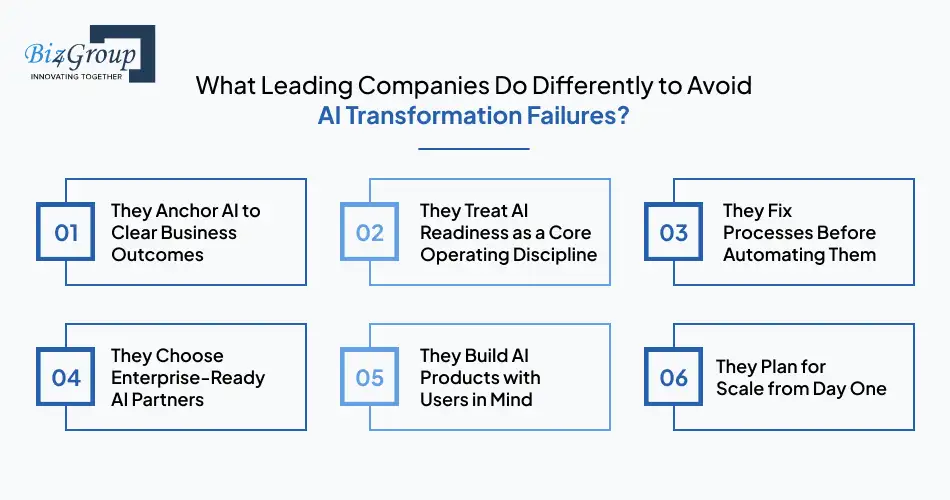
Organizations that succeed with AI are not doing anything magical. They are simply more deliberate. They treat AI readiness challenges in enterprises as a business problem first, not a technical one. Below is how they operate differently, explained clearly and applied consistently.
Leading companies do not start AI initiatives because technology is exciting. They start because a specific business problem needs solving. This approach prevents drifting priorities and closes AI strategy gaps in organizations early.
This clarity alone reduces AI project failure due to lack of AI readiness significantly.
Instead of reacting to issues later, successful organizations design readiness into daily operations. Data, governance, and decision-making are not left ambiguous.
This discipline minimizes AI execution challenges in enterprises once projects move beyond pilots.
High-performing companies are cautious with automation. They understand that automating broken workflows only magnifies problems. This is why they actively evaluate known AI automation pitfalls before scaling.
This approach prevents long-term AI implementation failure in companies.
Instead of stitching tools together internally, leading organizations work with partners who understand scale, governance, and integration realities. Collaborating with the right AI development company helps avoid fragmented execution.
This reduces risk while accelerating time to value.
When AI initiatives involve products, these companies do not treat them as experiments. They rely on experienced AI product development company teams to ensure solutions fit real-world usage.
This focus improves adoption and lowers AI transformation failures in companies.
Successful enterprises assume their AI systems will grow. Integration, monitoring, and cost control are part of the initial design, not an afterthought. This is why they invest in enterprise AI solutions rather than isolated tools.
This mindset turns AI into a sustainable capability rather than a recurring problem.
When you look at these patterns together, one thing becomes clear. Leading companies do not avoid failure by chance. They reduce risk by design.
That naturally leads to an important question. How do you objectively measure whether your organization is ready to support AI before committing serious investment?
Leading enterprises measure readiness before they scale. The same approach can work for your business too.
Discuss a Readiness AI StrategyOne of the biggest reasons for AI project failure due to lack of AI readiness keeps repeating is simple. Most companies assume they are ready without ever measuring it.
Leading organizations do not rely on instinct. They use structured frameworks to evaluate readiness before committing budget, timelines, and executive credibility. These frameworks surface hidden risks early and reduce AI implementation failure in companies later.
|
AI Readiness Framework |
What It Evaluates |
Why It Matters for Enterprises |
Failure Risk It Prevents |
|---|---|---|---|
|
Business & Strategy Readiness Framework |
Alignment between AI initiatives and business goals |
Ensures AI is driven by outcomes, not experimentation |
Prevents AI strategy gaps in organizations |
|
Data Readiness & Governance Framework |
Data quality, ownership, accessibility, and compliance |
AI fails without reliable and governed data |
Reduces AI implementation failure in companies |
|
Operating Model & Ownership Framework |
Decision rights, accountability, and collaboration |
Clarifies who owns AI outcomes |
Addresses AI execution challenges in enterprises |
|
Technology & Integration Readiness Framework |
Infrastructure compatibility and integration capability |
Confirms AI fits real enterprise workflows |
Avoids late-stage deployment breakdowns |
|
Talent & Capability Readiness Framework |
Availability of AI, data, and business expertise |
Prevents dependency on a few specialists |
Lowers AI project failure risks for enterprises without readiness |
|
Cost & Sustainability Readiness Framework |
Long-term financial and operational impact |
Stops AI from becoming a runaway cost center |
Supports AI adoption challenges for businesses |
|
Automation Readiness Framework |
Process maturity before automation |
Ensures workflows are stable before scaling |
Reduces operational risk when expanding AI automation services |
|
Innovation & Market Alignment Framework |
Ability to evolve with AI advancements |
Keeps AI investments future-proof |
Aligns initiatives with trends in AI product |
Most organizations still ask, “Can we build this?”
Prepared organizations ask, “Are we ready to support this six months from now?”
These frameworks shift AI conversations from excitement to execution. They give leaders a clear way to understand how to assess AI readiness before starting AI projects, instead of discovering gaps after budgets are spent.
This distinction is especially important as boardrooms continue discussing why businesses are investing in AI while execution teams struggle to translate that urgency into sustainable outcomes.
Most discussions around AI failure stay abstract. But enterprise leaders do not make decisions in theory. They learn from what actually happened inside real organizations with real budgets, real customers, and real pressure to deliver results.
The examples below show a clear pattern. When companies underestimate readiness, AI initiatives collapse even with strong technology. When readiness is built first, AI becomes a durable business capability. Each case is drawn from credible industry analysis so you can see exactly where things broke down or worked.
What went wrong
IBM Watson for Oncology was positioned as a breakthrough AI system for cancer treatment recommendations. On paper, the technology was powerful. In reality, hospitals struggled to use it effectively.
The core issue was not the AI itself. It was readiness.
Hospitals had inconsistent data formats, varying clinical workflows, and limited trust in AI generated recommendations. Doctors were expected to adapt their processes around the system, rather than the system fitting into real clinical environments. This led to poor adoption and eventually scaling back the initiative.
Why this failed
This is a classic case of AI project failure due to lack of AI readiness.
What went wrong
Zillow used AI to predict home prices and automate large scale home buying. The model worked well in controlled scenarios but failed when market conditions shifted.
The bigger issue was execution readiness. The AI system was treated as a decision maker rather than a decision support tool. Human oversight, market volatility handling, and governance controls were insufficient. Losses mounted quickly and the business line was shut down.
Why this failed
This illustrates how lack of AI readiness leads to AI project failure at scale.
What worked
UPS did not rush into AI. It spent years preparing data, processes, and teams before deploying AI-driven route optimization through its ORION system.
AI was embedded into existing workflows rather than replacing them. Drivers retained control. Feedback loops continuously improved the system. Governance and ownership were clearly defined.
Why this succeeded
This is what AI success looks like when readiness comes first.
What worked
JPMorgan introduced COiN, an AI system that reviews legal documents in seconds instead of hours. The difference here was preparation.
The bank had clean, structured data, clear governance, and strong collaboration between legal, technology, and compliance teams. AI was deployed with defined boundaries and accountability from day one.
Why this succeeded
This shows how readiness turns AI into a scalable business capability.
AI failure is rarely about weak algorithms. AI success is rarely accidental.
The difference between the two is almost always readiness. Strategy, data, governance, integration, and people either support AI or quietly sabotage it. These examples make one thing clear. You cannot fix readiness problems after AI is already live.
That realization naturally leads to the final question most leaders ask. If readiness matters this much, who helps you get it right before you scale?
You now know that readiness shapes whether AI succeeds or fails. The real question for leaders is simple. Who can help you get this foundation right before investment and execution begin?
Biz4Group LLC is a proven partner that approaches AI strategically, not just technically. Their projects show how thoughtful design, strong execution, and solid readiness planning lead to real results, not just technology demos.
Below are four real projects that illustrate this difference clearly.
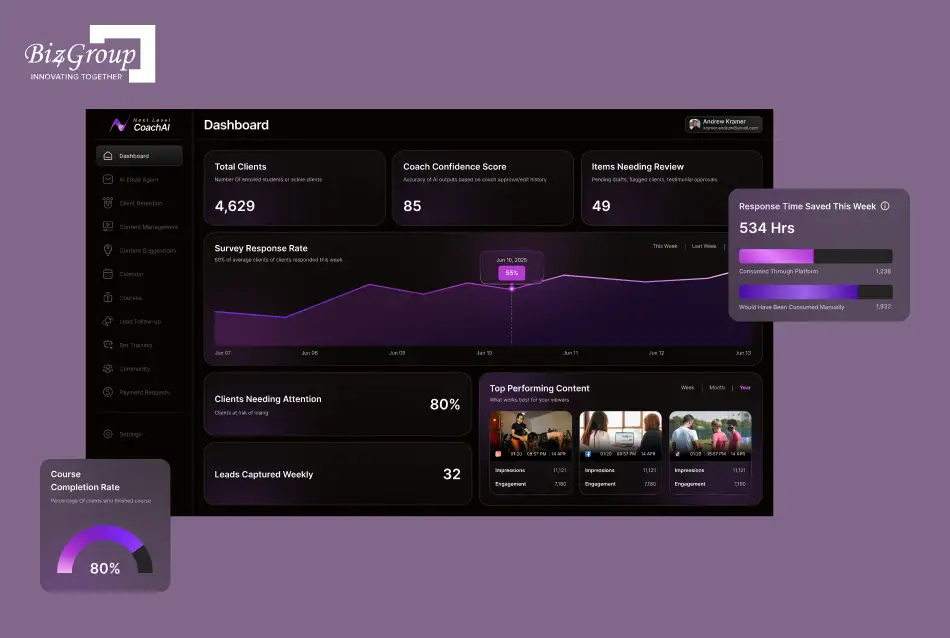
We developed an AI powered automation platform for coaches, educators, and content creators to handle repetitive tasks and streamline client engagement. The solution combines multiple AI agents that take over activities like email management, content suggestions, lead follow ups, and retention insights.
Key AI highlights
Instead of building a generic tool, Biz4Group aligned this platform with real workflows and pain points. This avoided common AI execution challenges by ensuring the AI fit naturally into how coaches and educators already work.

Quantum Fit is an AI powered mobile app designed to help users improve fitness, habits, and overall lifestyle through personalized guidance. The app adapts recommendations based on ongoing user behavior and progress.
Key AI highlights
This project reflects a readiness first mindset where data usability and user engagement were prioritized before scaling AI features. That focus helps overcome AI adoption challenges that often limit long term impact.
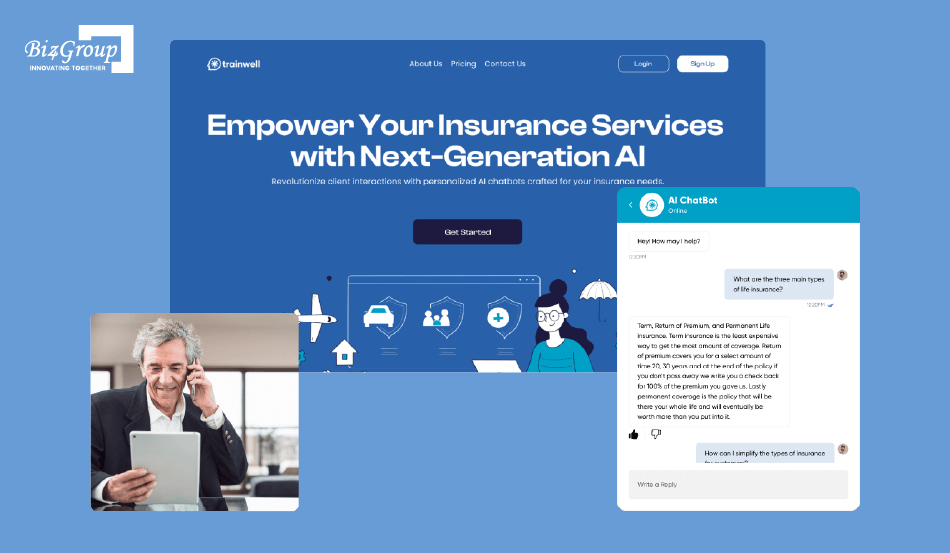
For a senior insurance organization, our team built an AI chatbot to support agent training and daily queries. The solution reduced reliance on manual sessions and improved access to information.
Key AI highlights
By grounding the chatbot in real business knowledge and agent workflows, Biz4Group helped reduce AI strategy gaps and ensured the solution was trusted and used consistently.
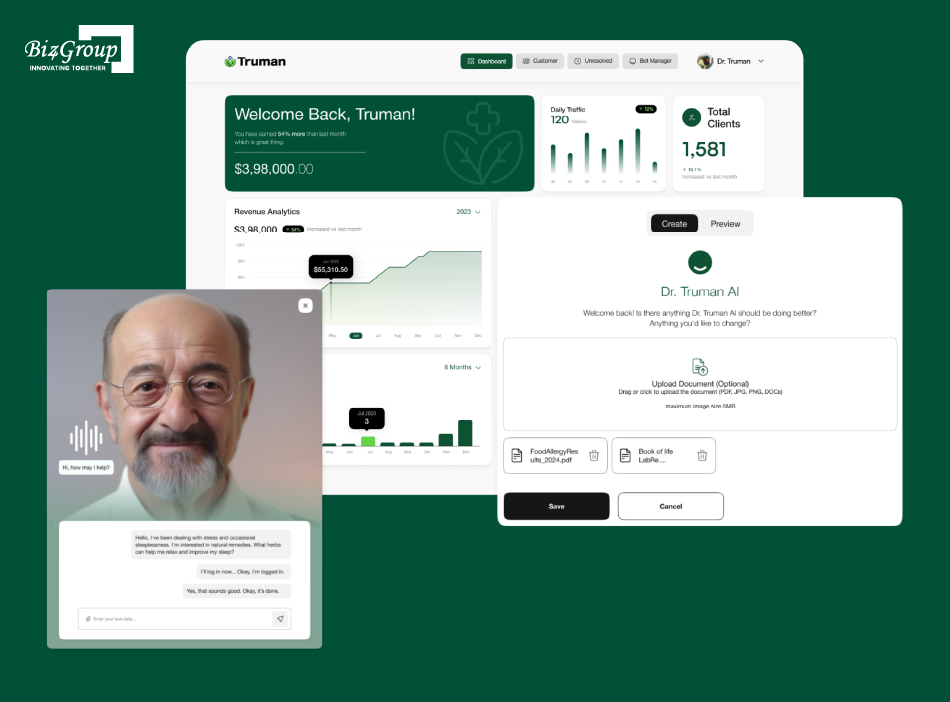
We created an interactive AI avatar for Dr. Truman that serves as a digital health and wellness companion. Users engage in conversations to receive personalized insights and track their progress over time.
Key AI highlights
This project highlights how personalization, usability, and ethical design must come together. Building meaningful AI experiences requires a deep understanding of user context, which is essential to preventing AI implementation failure.
If your organization wants to avoid costly AI failures and turn AI into measurable value, working with a partner that prioritizes readiness and execution can make all the difference.
Biz4Group helps enterprises move from AI ambition to execution with clarity, structure, and confidence.
Start Your AI Readiness Journey with UsMost organizations do not struggle with AI because technology falls short. They struggle because AI project failure due to lack of AI readiness quietly undermines execution long before results appear.
When strategy is unclear, data is fragile, and ownership is undefined, even well-funded AI initiatives break down. This is why AI projects fail in companies that move fast without preparing the business behind the build.
Biz4Group LLC brings clarity where most organizations feel stuck. With deep experience delivering enterprise AI across healthcare, insurance, and digital platforms, Biz4Group helps companies close AI readiness challenges in enterprises before they turn into costly failures. Their approach blends strategic thinking with execution discipline, ensuring AI solutions are designed to scale, integrate, and deliver measurable value.
AI success is not about launching faster. It is about building smarter.
Build readiness first. Build confidence next. Build AI that actually works with Biz4Group LLC.
AI readiness refers to how prepared your organization is across strategy, data, governance, talent, and execution. Without readiness, even well funded initiatives face AI project failure due to lack of AI readiness because the business cannot support AI beyond pilots. This is one of the most overlooked AI readiness challenges in enterprises today.
Most AI projects fail in companies not because of weak models, but because of unclear business goals, poor data foundations, and lack of ownership. These gaps create AI strategy gaps in organizations that surface after deployment, leading to stalled outcomes and wasted spend.
The top AI adoption challenges for businesses include low quality data, limited AI skills, weak governance, and unrealistic ROI expectations. These issues directly contribute to AI implementation failure in companies when AI is pushed into production without preparation.
Enterprises should conduct an enterprise AI readiness assessment that evaluates business alignment, data quality, governance maturity, integration readiness, and cost sustainability. This is the most effective way to reduce AI project failure risks for enterprises without readiness.
Rarely. Without a clear strategy, AI efforts drift into experimentation with no measurable impact. This is one of the most common business mistakes that cause AI projects to fail and a leading reason behind AI transformation failures in companies.
The most common cause of AI implementation failure in companies is organizational misalignment. When leadership expectations, data readiness, and execution teams are not aligned, AI initiatives break down regardless of technical capability.
Enterprises can reduce AI readiness challenges in enterprises by addressing governance early, aligning AI initiatives with business outcomes, strengthening data foundations, and planning integration upfront. These steps directly prevent how lack of AI readiness leads to AI project failure.

with Biz4Group today!
Our website require some cookies to function properly. Read our privacy policy to know more.