 Location :
Orlando, FL, USA
Location :
Orlando, FL, USA +1 (407) 714-1616
 info@biz4group.com

- The demand for the leading mental health apps is skyrocketing as users seek faster, more personal ways to manage stress, therapy, and mindfulness.
- The mental health app market is expected to reach around $17+ billion by 2030, with AI driving most of the innovation in digital wellness.
- AI-powered mental health apps are transforming care through emotion recognition, predictive support, and smart personalization.
- Building or scaling mental health applications requires balancing empathy, security, and regulatory compliance with technical excellence.
- Businesses using the top mental health apps are seeing better employee engagement, reduced burnout, and measurable ROI on wellness programs.
- The future belongs to innovators who integrate empathy with AI - creating apps that don’t just treat symptoms but build lasting emotional resilience.
You’ve just wrapped a strategy meeting with your clinical innovation team, and someone says, “We need to add digital mental health support to our patient or employee ecosystem this year.”
You pause. Because the question beneath that statement isn’t “should we?” BUT “which of the best mental health apps actually deliver measurable outcomes, not just mood-tracking stickers?” And, of course, the next one that follows: “Do we build one ourselves or find a reliable partner to do it right?”
Those are the conversations happening right now inside healthcare enterprises, telehealth firms, and wellness startups across the U.S. And for good reason:
The mental health app market is projected to grow to USD 17.52 billion by 2030, expanding at a steady 14.6% CAGR.
For decision-makers like you, whether you’re scaling a teletherapy network, integrating wellness into a corporate benefits suite, or investing in digital therapeutics, the takeaway is clear: the best mental health apps aren’t just consumer novelties anymore. They’re strategic assets for engagement, retention, and care delivery.
Forward-thinking organizations are already working with AI development companies that specialize in AI healthcare solutions or collaborating with experienced mental health app developers to build digital experiences that blend empathy, compliance, and intelligence.
So if you’re looking to understand which platforms lead the pack, what makes them effective, and how you can build or partner to match their impact, you’re in the right place.
Grab a seat (and maybe a grounding breath). Let’s explore the best mental health apps to watch in 2026 and what they mean for the future of digital care.
Why Are Mental Health Apps Important?
Not long ago, “mental health” sat quietly at the edge of healthcare strategy decks - something everyone agreed was important but rarely prioritized. Fast-forward to now, and it’s the centerpiece of boardroom discussions, investor calls, and care innovation roadmaps. The best mental health apps aren’t just digital mood trackers anymore; they’re reshaping how organizations think about wellness, therapy, and workforce resilience.
So, what flipped the switch?
Accessibility met intelligence. With the rise of AI in mental health, people can connect with support anytime, anywhere, while organizations can finally measure and scale emotional well-being. When built with thoughtful AI automation services, these platforms identify stress patterns, personalize user journeys, and help health providers or wellness teams step in before small issues become serious.
Here’s why decision-makers across healthcare, telehealth, and corporate wellness are doubling down on the best mental health apps:
- They make professional support available 24/7 without logistical headaches.
- They personalize experiences through real-time insights and smart recommendations.
- They integrate easily into telehealth systems and workplace wellness platforms.
- They keep users genuinely engaged through guided, conversational AI experiences, like the Quantum Fit app which helps users improve 6 key elements of personal development including physical, mental, spiritual, nutritional, social, and sleep.
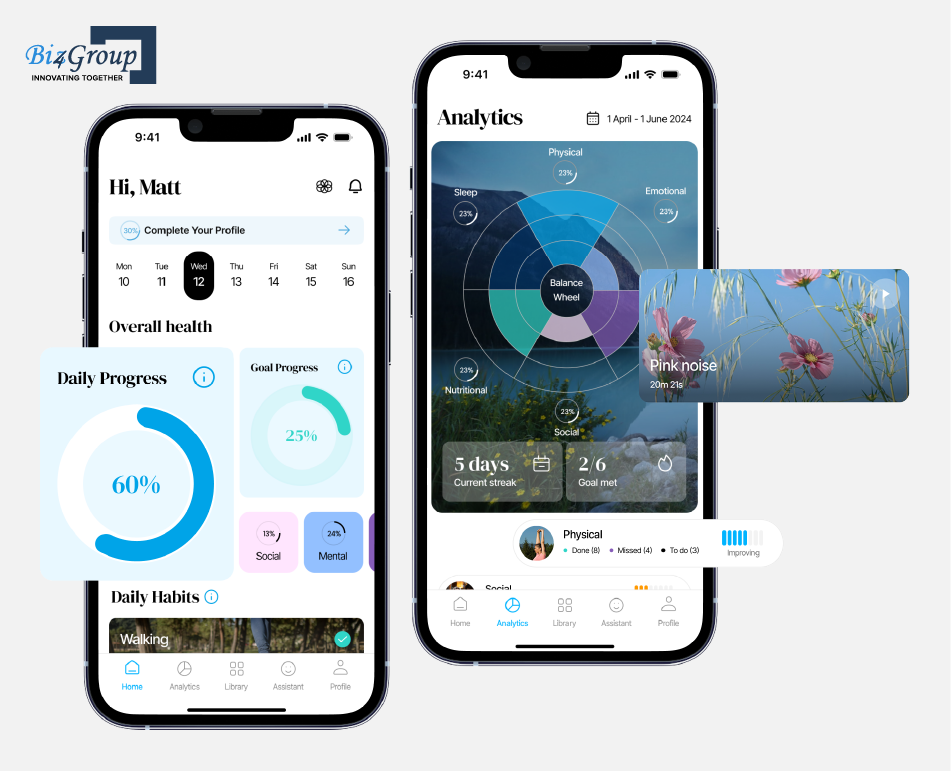
By collaborating with a custom software development company that understands user behavior and compliance, enterprises are building apps that feel human. Teams are also exploring new ways to integrate AI into an app, making therapy-on-demand and emotional analytics part of their long-term digital care strategies.
The best mental health apps in the world are no longer side projects or wellness perks. They’re essential tools for organizations that care about people, performance, and progress - all at the same time.
10 Best Mental Health Apps for Therapy, Mindfulness, and Support
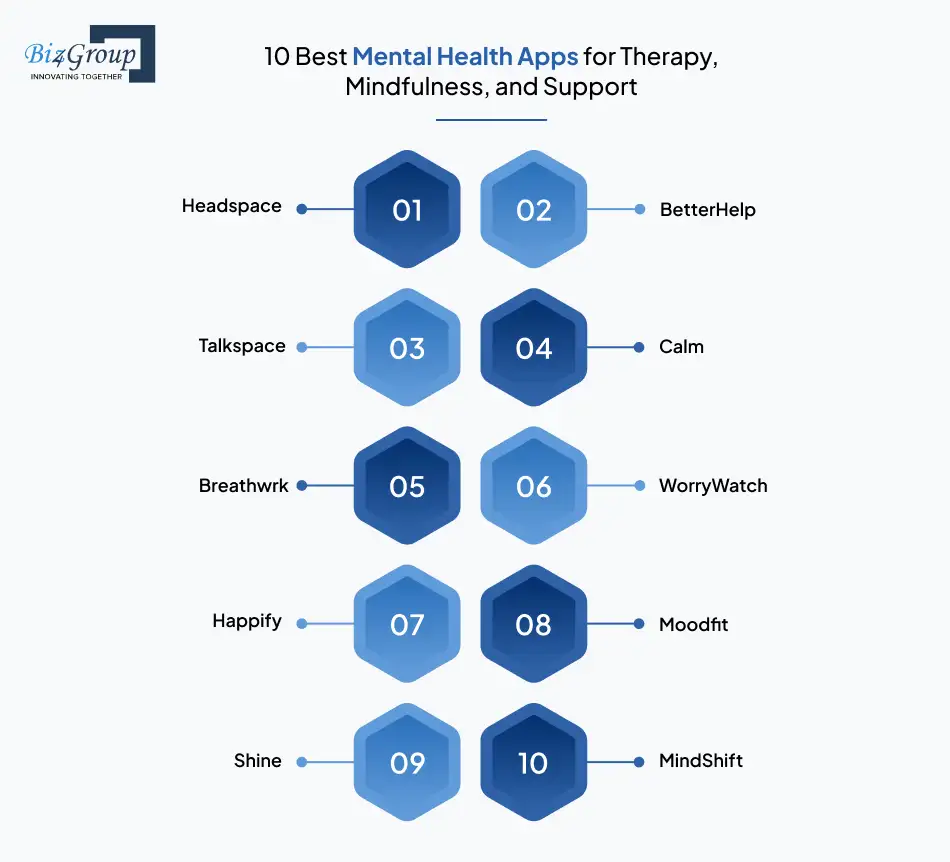
The world doesn’t need another “feel-good” app; it needs real results. These ten best mental health apps have earned their spot by blending empathy with evidence, and by proving that smart technology and mental well-being can evolve together:
|
App Name |
Why It Stands Out |
Best For |
|
Science-backed mindfulness and meditation programs with behavioral psychology and an intuitive UX. |
Healthcare providers and corporate wellness teams promoting scalable well-being. |
|
|
BetterHelp |
24/7 access to licensed therapists via chat, audio, or video with AI-driven therapist matching. |
Teletherapy providers and wellness startups offering hybrid care solutions. |
|
AI-powered triage connects users instantly to licensed therapists for continuous support. |
Hospitals, EAP providers, and counseling centers digitizing therapy access. |
|
|
Combines meditation, sleep, and relaxation tools with AI-based personalization. |
Healthtech companies and corporate wellness programs enhancing emotional health. |
|
|
Breathwrk |
Guided breathwork sessions with biometric tracking for stress management and focus. |
Corporate wellness firms blending physical performance with mental health. |
|
WorryWatch |
CBT-inspired journaling app that helps users log and reflect on worries and triggers. |
Wellness platforms and therapy extensions focused on behavioral insights. |
|
Happify |
Gamifies positive psychology through interactive activities and measurable mood improvement. |
Insurance companies and employee well-being initiatives seeking engagement. |
|
Moodfit |
Integrates physical activity, sleep, and mood tracking into one preventive care platform. |
Healthcare enterprises and digital health providers emphasizing holistic well-being. |
|
Shine |
Inclusive mindfulness app offering culturally aware self-care content and community support. |
Organizations promoting diversity, equity, and inclusion in wellness. |
|
CBT-based anxiety management app with structured exercises and progress tracking. |
Therapy centers and healthcare startups digitizing CBT programs. |
1. Headspace
Headspace is practically the household name in digital mindfulness. Its approach to meditation feels both personal and structured, offering easy pathways for busy professionals and enterprise wellness initiatives alike. Its blend of psychology and soothing design mirrors what great AI assistant app design can achieve - intuitive guidance without overwhelming the user.
- Why it stands out:Known for its science-backed meditation and stress-relief content, Headspace integrates behavioral psychology with guided mindfulness sessions.
- Best for:Healthcare providers and corporate wellness teams promoting mental well-being at scale.
- Pros: Engaging, user-friendly interface, Scientifically validated meditation programs.
- Cons: Subscription pricing can deter mass enterprise rollouts, Limited integration options for custom wellness platforms.
2. BetterHelp
BetterHelp took traditional therapy and made it borderless. Its 24/7 access to licensed therapists through chat or video has redefined convenience in mental health. The company’s data-driven matching engine is a smart use case for adaptive AI integration services that personalize therapeutic experiences.
- Why it stands out:Offers direct access to licensed therapists through text, audio, or video sessions.
- Best for:Teletherapy providers and wellness startups seeking hybrid human-AI solutions.
- Pros:Broad therapist network with flexible formats, Secure and HIPAA-compliant digital infrastructure.
- Cons:Therapist quality can vary across regions, Pricier than many app-based self-help solutions.
3. Talkspace
Talkspace made therapy accessible in the moments that matter most. Its AI-driven triage system ensures users are connected to the right therapist faster, a great illustration of scalable AI in mental health solutions used in clinical-grade products.
- Why it stands out:Uses AI-driven triage to route users to the right therapists and features 24/7 text-based therapy access.
- Best for:Hospitals, counseling centers, and EAP providers.
- Pros:Always-available chat therapy, Insurance coverage with major health plans.
- Cons:Text-based therapy can feel impersonal, Cost can increase for premium therapist tiers.
4. Calm
Calm turns self-care into a sensory experience. From celebrity-led meditations to evidence-based sleep tools, it’s equally beloved by users and enterprise wellness teams. Its data-driven personalization mimics how a refined AI conversation app tailors interactions for retention and trust.
- Why it stands out:A pioneer in guided meditation and sleep improvement. Combines mindfulness with AI-driven content recommendations.
- Best for:Healthtech firms enhancing user retention through emotional wellness features.
- Pros:Beautifully designed and clinically endorsed content, Offers enterprise packages for corporate programs.
- Cons:Premium pricing for team subscriptions, Limited live coaching functionality.
5. Breathwrk
Breathwrk proves that something as simple as controlled breathing can become an evidence-based wellness tool. It’s easy to deploy across corporate programs and integrates seamlessly with wearable data. Adding AI chatbot integration could enhance personalized breathing routines even further.
- Why it stands out:Simplifies breathwork therapy with real-time visual cues and guided exercises supported by biometric tracking.
- Best for:Corporate wellness firms integrating mental health with physical performance.
- Pros:Quick, measurable stress reduction, Integrates with Apple Health and Fitbit.
- Cons:Lacks deep therapeutic content, Limited customization for enterprise analytics.
Transform Wellness into Intelligent Design
Partner with Biz4Group to build secure, personalized, and scalable mental health applications that make a difference.
Let’s Build Together6. WorryWatch
WorryWatch is a quiet yet powerful CBT companion. It helps users log, track, and analyze recurring worries - turning emotional chaos into insight. Its structure could be further enhanced with predictive algorithms via robust AI model development.
- Why it stands out:Empowers users to log worries, track triggers, and identify patterns through data-driven reflection.
- Best for:Wellness platforms focused on cognitive behavioral therapy (CBT) extensions.
- Pros:Helps users identify emotional triggers early, Clean, private journaling interface.
- Cons:No therapist integration, Outdated UI compared to newer platforms.
7. Happify
Happify turns evidence-based psychology into an interactive game. Through short, engaging activities, it helps users boost happiness and resilience — all while generating data valuable for wellness analytics. Its dynamic personalization aligns with the logic behind business app development using AI.
- Why it stands out:Turns positive psychology into a gamified experience with measurable outcomes. Uses AI to adapt exercises based on user mood data.
- Best for:Insurance companies and employee well-being programs.
- Pros:Engaging and gamified UX that improves retention, Backed by positive psychology research.
- Cons:Limited in-depth therapy content, Free version lacks key features.
8. Moodfit
Moodfit merges data science with self-awareness. It syncs with fitness trackers and wearable devices, helping users and organizations see correlations between movement, sleep, and emotion. With support from scalable enterprise AI solutions, it could serve as a foundation for personalized digital care models.
- Why it stands out:Focuses on fitness-meets-psychology by integrating activity tracking with emotional insights.
- Best for:Healthcare enterprises focusing on preventive digital care.
- Pros:Syncs data across multiple health sources, Customizable goal-setting features.
- Cons:Overwhelming analytics for casual users, Some features locked behind premium paywall.
9. MindDoc
MindDoc is a German-origin app designed for emotional self-management and therapeutic support, with over 3 million users worldwide. It enables daily mood tracking, symptom checks, and guided self-care modules - making it a strong contender among the best mental health apps for both individuals and enterprises.
Why it stands out: Delivers clinically informed self-help programs and sentiment analysis tools to help users understand emotional patterns.
Best for: Therapy centers, healthtech startups and wellness programs seeking a self-help extension grounded in data.
Pros: High user ratings and robust mental-health tracking interface. Good scalability for enterprise wellness platforms.
Cons: Limited live-therapy access compared to full teletherapy apps. Primarily European content; localization may lag for global enterprises.
10. MindShift
MindShift digitizes CBT therapy into approachable steps. Designed for users with anxiety, it offers coping exercises, progress tracking, and group-based support. Its structure makes it ideal for health systems exploring AI mental health app development or those looking to create a mental health AI agent for guided CBT.
- Why it stands out:CBT-based app designed to reduce anxiety through structured challenges and progress tracking.
- Best for:Therapy centers and healthcare startups integrating CBT modules digitally.
- Pros:Clinically verified CBT framework, Free and open-access for users.
- Cons:Dated user interface, Limited analytics for enterprise integration.
The best mental health apps of 2026 prove how tech and empathy can merge to deliver measurable, scalable mental well-being. And that realization is sparking an important shift - one that’s beginning to reshape how businesses view emotional health altogether.
Turn Ideas into Digital Wellness Experiences
Build AI-powered mental health apps that inspire users and deliver measurable impact.
Start My AI Wellness AppKey Aspects to Consider When Developing Mental Health Apps

Building one of the best mental health apps isn’t just about code or clean design. It’s about creating an experience that feels human, helpful, and trustworthy, while staying compliant, secure, and scalable.
1. User-Centered Design
Empathy should drive every interface decision. The design needs to comfort, not confuse, and appeal to different demographics including patients, therapists, and corporate users. Accessibility and simplicity must be non-negotiable.
2. Personalization through AI
Intelligent personalization transforms static apps into adaptive care companions. Working with an expert AI consulting services partner can help you train algorithms that respond to mood shifts and behavior patterns effectively.
3. Data Security and Compliance
Mental health data is highly sensitive. HIPAA and GDPR compliance are essential from day one. Encrypt everything, audit regularly, and ensure transparent consent practices to build lasting user trust.
4. Conversational Support Systems
Users often prefer to open up to chat interfaces before real humans. Collaborating with an AI chatbot development company helps you design natural, responsive interactions that feel intuitive and emotionally aware.
5. Clinical Validation and Evidence-Based Content
Your app’s credibility depends on science. Every exercise, module, or coping tool should be reviewed by clinical professionals and backed by proven psychological frameworks to ensure therapeutic accuracy.
6. Scalability and System Architecture
The best mental health apps are built for growth. Think microservices, multi-region deployment, and modular backends that scale with usage surges, especially during peak wellness program rollouts.
7. Expert Development Teams
Partnering with teams who understand healthcare, not just tech, is critical. You can hire mental health AI app developers experienced in privacy, compliance, and machine learning integration to speed up innovation.
The best mental health apps balance care and capability, ensuring every tap brings real value. Next, let’s look at how organizations can identify the right development partners to bring these ideas to life.
Bring Empathy and AI Together
Work with experts who understand what it takes to build the best mental health apps for real-world use.
Build My AI Mental Health AppHow to Choose the Right Developers to Build the Best Mental Health Apps?
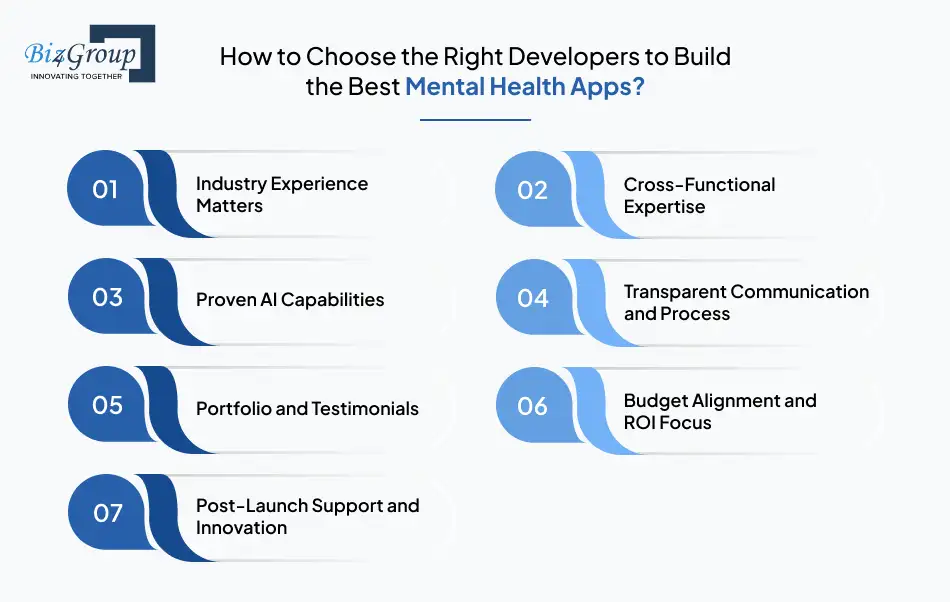
Choosing the right developers for your best mental health apps is like choosing a therapist for your product. The right fit will not only understand your goals but also anticipate what users need before they do.
1. Industry Experience Matters
Pick teams that know healthcare from the inside out. A deep understanding of patient data security, HIPAA compliance, and emotional UX sets real experts apart from general tech vendors.
2. Cross-Functional Expertise
The best partners unite data scientists, designers, and behavioral experts. Partnering with a proven software development company in Florida ensures your product balances empathy, performance, and regulatory depth.
3. Proven AI Capabilities
From predictive analytics to personalization, experience with advanced generative AI can elevate your app from reactive to proactive. It’s what separates functional tools from truly intuitive wellness platforms.
4. Transparent Communication and Process
Look for agile teams that collaborate openly and share real-time updates. Frequent demos, progress reports, and iteration cycles build alignment, trust, and faster time-to-market.
5. Portfolio and Testimonials
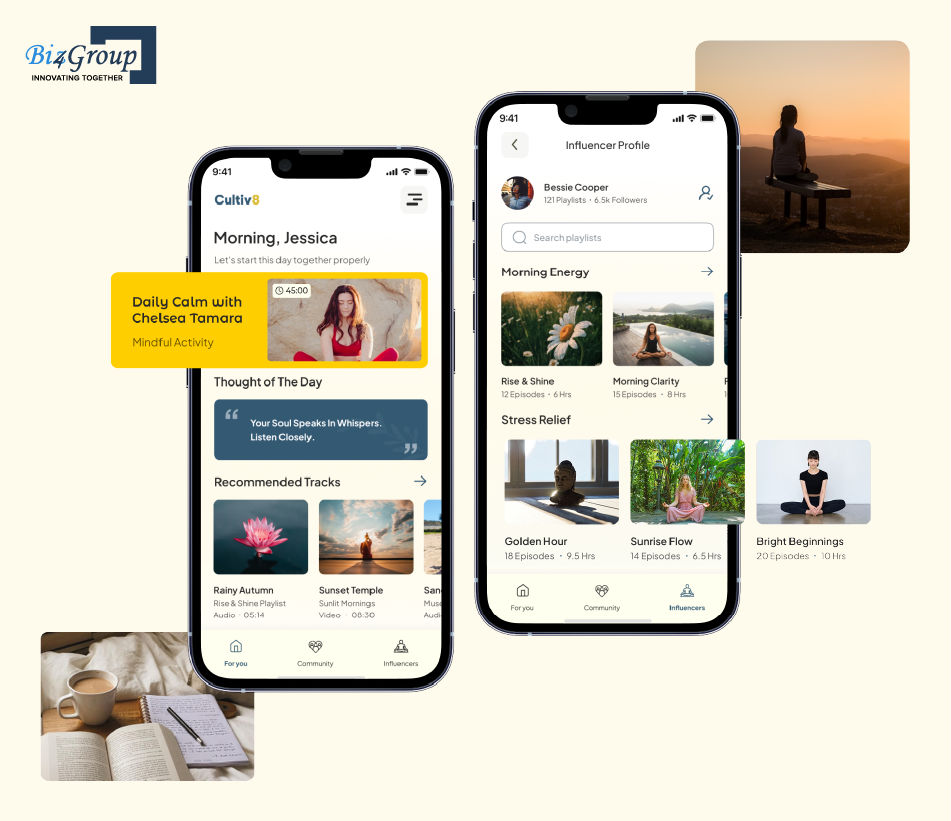
Always review prior work in telehealth, mental wellness, or fitness apps. It gives insight into problem-solving skills, scalability experience, and real-world client satisfaction. Cultiv8, a platform for engaging in spiritual practices, is a great example of how thoughtful design can turn wellness concepts into impactful, scalable digital products.
Cultiv8 offers a safe, inclusive environment for people to discover and engage with a wide range of spiritual practices and communities.
6. Budget Alignment and ROI Focus
Going cheap with healthcare tech is never a winning strategy. Understanding the mental health AI chatbot development cost helps you budget realistically while maintaining compliance and innovation.
7. Post-Launch Support and Innovation
Your product journey doesn’t stop at release. Choose partners who commit to analytics, updates, and new integrations that keep your app future-ready and competitive.
|
Factor |
Key Insight |
|
Industry Experience |
Work with developers who understand healthcare standards, compliance, and user trust. |
|
Cross-Functional Expertise |
Choose teams that combine psychology, design, and data to build balanced, human-centered apps. |
|
Proven AI Capabilities |
Look for real-world experience with AI to create smart, adaptive, and engaging user experiences. |
|
Transparent Communication |
Opt for partners who collaborate openly, share progress often, and adapt quickly to feedback. |
|
Portfolio and Testimonials |
Review past work to gauge creativity, scalability, and user impact — like Biz4Group’s Cultiv8 app. |
|
Budget and ROI Alignment |
Pick developers who align cost with long-term value, not just short-term delivery. |
|
Post-Launch Support |
Ensure your partner offers continuous updates, analytics, and innovation after launch. |
Finding developers who can translate empathy into code is a rare skill, but once you do, you’ll be ready to build solutions that actually make a difference. Let’s now look at where mental health tech is headed next and why 2026 might just be its biggest year yet.
Shape the Future of Mental Health Innovation
Collaborate with a trusted AI app development company to create scalable, intelligent, and human-centered solutions.
Start My AI ProjectWhat’s Next for AI-Powered Mental Health Apps in 2026 and Beyond?
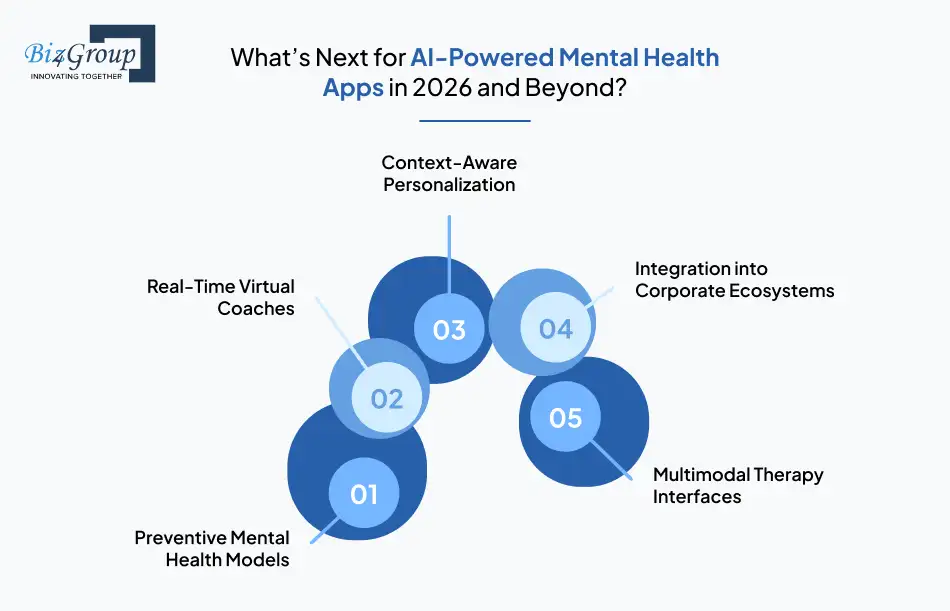
By 2026, AI-powered mental health apps will do more than offer mindfulness—they’ll act as intelligent partners in emotional resilience, capable of guiding, predicting, and adapting in ways we’re only beginning to imagine.
1. Preventive Mental Health Models
AI will help organizations move from treatment to prevention. Predictive analytics will detect stress and burnout patterns early, helping enterprises act before problems escalate.
2. Real-Time Virtual Coaches
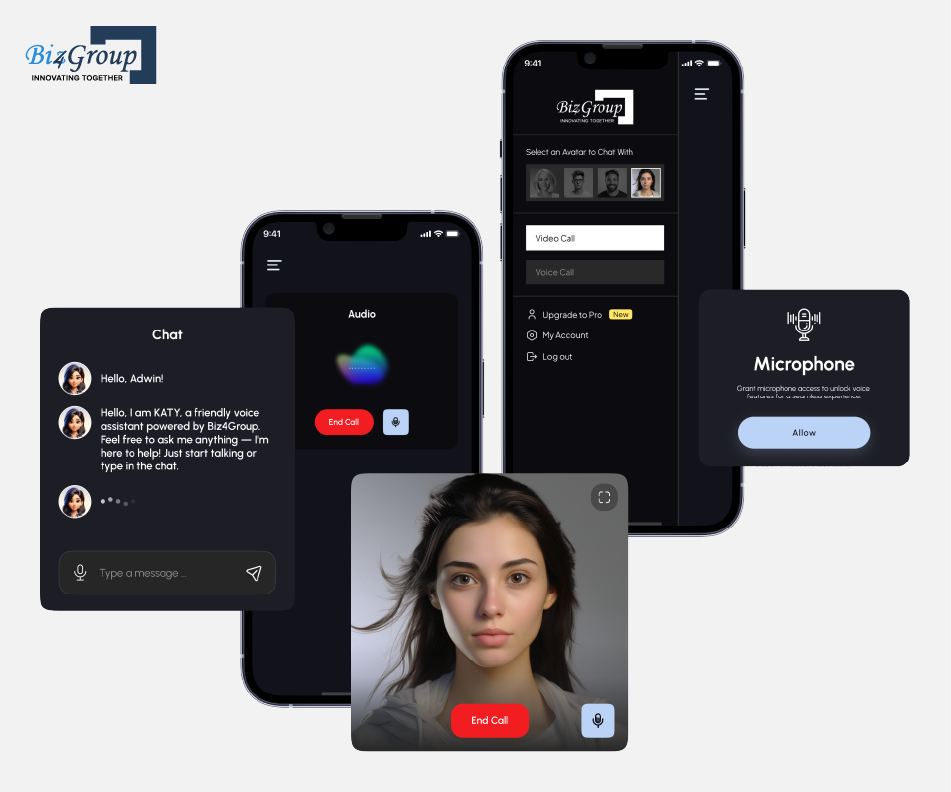
Enterprises are already exploring modern prototypes - AI companions like AI Wizard that provides guidance, and provides assistance to users via voice and video chat.
3. Context-Aware Personalization
Instead of generic suggestions, apps will learn from user routines, biometrics, and emotional cues to deliver recommendations that evolve with real-world behavior.
4. Integration into Corporate Ecosystems
Workplace wellness will get smarter. Mental health applications will integrate directly into HR and performance dashboards, turning data into meaningful action for teams and leadership.
5. Multimodal Therapy Interfaces
Expect richer, multi-sensory experiences where users interact through voice chatbots, gesture, and VR. These intuitive interfaces will redefine what “digital therapy” actually feels like.
The next generation of the best mental health apps will create experiences that redefine care itself. And that’s exactly where innovators are finding their edge in digital wellness today.
How Biz4Group Helps You Build the Best Mental Health Apps for 2026?
Biz4Group stands out for one reason: proven results. As a trusted AI app development company, our team has delivered healthcare and wellness applications that combine empathy, intelligence, and precision - similar to many of the best mental health apps defining the 2026 market.
From virtual mental health coaches to predictive analytics systems, we design platforms that balance seamless user experiences with strict regulatory compliance. Our developers build clinically validated, secure, and highly personalized digital solutions tailored to the needs of patients, providers, and enterprises alike.
With deep expertise in generative AI, data integration, and HIPAA-compliant architecture, Biz4Group helps organizations move from idea to innovation faster. Having built enterprise-grade platforms across healthcare, telemedicine, and wellness, we know how to merge emotional intelligence with technical excellence to create mental health apps that engage users, drive retention, and make a lasting impact.
Build What’s Next in Digital Care
From predictive wellness tools to AI companions, let’s craft the next generation of mental health innovation.
Launch My AI Solution
Final Thoughts: Why the Best Mental Health Apps Are Here to Stay
If there’s one thing the past few years have made crystal clear, it’s this: mental health isn’t a side conversation anymore. It’s front and center in boardrooms, employee programs, and product roadmaps. And the best mental health apps are the ones leading that cultural shift.
The real magic? They’ve made care feel personal, not procedural. AI now helps these apps pick up on subtle emotional cues, track real progress, and offer meaningful support when it’s needed most. That kind of innovation doesn’t happen by accident. It happens when you build AI software designed to understand humans, not just process data.
For forward-thinking organizations, working with an AI product development company that understands healthcare isn’t just smart, it’s strategic. Pair that with expert custom healthcare software development, and you’re not just building another app, you’re shaping the next evolution of digital empathy.
Mental wellness is getting smarter, kinder, and far more relevant to how people actually live and work. The best mental health apps are here to stay because they don’t just solve problems, they make people feel seen.
FAQs
1. What features make an app one of the best mental health apps?
The best mental health apps combine clinical credibility, personalized AI recommendations, user-friendly design, and data privacy. They don’t just track moods; they provide meaningful insights, adaptive support, and secure communication channels for long-term engagement.
2. How do AI-powered mental health apps improve therapy outcomes?
AI helps therapists and organizations by analyzing mood patterns, predicting emotional changes, and suggesting relevant interventions. This creates a continuous feedback loop that enhances therapy outcomes and helps users stay consistent with their mental health goals.
3. Are mental health apps effective for workplace wellness programs?
Absolutely. When integrated into employee wellness strategies, mental health applications can help detect burnout trends, promote mindfulness, and support hybrid work challenges. They also give HR leaders data-driven insights into team well-being.
4. What challenges should businesses expect when developing a mental health app?
Common hurdles include HIPAA compliance, ethical AI design, user trust, and clinical validation. Collaborating with experienced developers who understand both healthcare and technology can help navigate these challenges efficiently.
5. How does personalization make mental health apps more effective?
Personalization allows apps to adapt to each user’s emotional and behavioral patterns. Whether through chatbots, activity tracking, or AI-driven mood analysis, tailored content keeps users engaged and promotes measurable improvement over time.
6. What emerging technologies will shape mental health apps in the next few years?
Expect to see major advances in generative AI, emotion-recognition algorithms, VR therapy environments, and real-time analytics. These innovations will make digital therapy more interactive, immersive, and responsive than ever before.
