 Location :
Orlando, FL, USA
Location :
Orlando, FL, USA +1 (407) 714-1616
 info@biz4group.com

- AI agents are transforming workflows in every industry and the most successful businesses in 2026 will adopt focused, high impact AI agent ideas that solve real operational challenges.
- The top AI agent ideas for startups and enterprises include automation for sales, HR, finance, customer support, compliance, logistics, and product innovation.
- Choosing the right AI agent idea requires understanding your data, integration needs, user pain points, and long-term scalability.
- Narrow, specialized types of AI agents outperform generic tools because they deliver faster results and become more accurate as they learn from real interactions.
- Profitable AI agent business ideas in 2026 focus on repeatable tasks, high volume workflows, and industries with clear inefficiencies such as healthcare, legal, finance, education, and eCommerce.
- Validating your AI agent concept through a PoC or MVP remains the smartest way to test feasibility before investing in full scale AI development.
The race to build AI agents is no longer limited to Big Tech companies or AI-first startups. In 2026, businesses across healthcare, ecommerce, finance, logistics, SaaS, and customer service are actively investing in AI agents to automate workflows, reduce operational costs, improve decision-making, and scale business operations faster than traditional software allows. From AI SDRs and customer support agents to autonomous procurement systems and workflow orchestration tools, AI agents are quickly becoming the next major layer of enterprise software.
Unlike traditional chatbots or rule-based automation tools, modern AI agents can reason through tasks, interact with external tools, retain memory, analyze business data, and execute multi-step workflows with minimal human intervention. This shift toward agentic AI is changing how companies approach automation, productivity, customer engagement, and internal operations. As AI models become more capable and integrations become easier, businesses are now exploring practical AI agent ideas that can generate measurable ROI instead of experimental proof-of-concepts.
That said, identifying the right AI agent idea is where most businesses struggle. Some AI agent use cases deliver immediate operational value, while others require complex infrastructure, high-quality training data, and enterprise-grade governance to succeed. Choosing the right opportunity depends on your industry, workflows, scalability goals, and customer expectations.
In this guide, we’ll explore some of the most impactful AI agent ideas businesses are building in 2026, including industry-specific applications, automation opportunities, and intelligent agent use cases that are reshaping modern business operations. Whether you’re a startup validating an AI product idea, an enterprise exploring autonomous workflows, or a SaaS company planning AI-powered features, this list will help you identify where AI agents can create the highest business impact.
Who Should Explore These AI Agent Ideas and Business Use Cases?
These AI agent ideas are designed for businesses looking to automate decision-making, streamline operational workflows, reduce repetitive human intervention, and build scalable AI-powered systems in 2026. Whether you're planning an AI startup, modernizing enterprise operations, or adding intelligent automation to an existing software product, the right AI agent use case depends on where your business loses the most time, money, or operational efficiency today.
Unlike traditional automation tools, modern AI agents can analyze data, interact with APIs, manage workflows, retain contextual memory, and execute multi-step tasks with minimal supervision. That makes them valuable across industries where manual coordination, fragmented systems, and repetitive workflows slow down business growth.
1. AI Agent Ideas for Startups Building New AI Products
Startups exploring AI product opportunities can use these AI agent ideas to identify scalable SaaS concepts, niche automation gaps, and high-demand business workflows that are still underserved. Many of the fastest-growing AI startups in 2026 are focused on vertical AI agents designed for specific operational problems rather than general-purpose chatbots.
For example, startups are building:
- AI SDR agents for outbound sales
- AI onboarding assistants for HR teams
- AI procurement agents for vendor coordination
- AI finance assistants for invoice reconciliation
- AI legal intake agents for law firms
For founders, the biggest opportunity is no longer building another AI chatbot. It’s building AI agents that can execute business workflows end-to-end.
2. Enterprise AI Agent Use Cases for Internal Workflow Automation
Large enterprises are increasingly adopting AI agents to automate internal operations that previously required multiple teams, disconnected software tools, and manual approvals. Enterprise AI agents are now being deployed across finance, operations, compliance, procurement, HR, and customer support departments to reduce process bottlenecks and improve execution speed.
Some of the most common enterprise AI agent use cases include:
- automated employee onboarding workflows
- AI-powered report generation
- procurement coordination
- internal knowledge retrieval
- compliance documentation
- meeting summarization and action tracking
- workflow orchestration across ERP and CRM systems
Businesses adopting agentic AI early are gaining operational advantages by reducing workflow delays instead of simply reducing labor costs.
3. AI Agents for Ecommerce, Retail, and Customer Experience Automation
Ecommerce and retail businesses can use AI agents to automate customer interactions, inventory coordination, personalized shopping experiences, and post-purchase workflows at scale. Unlike traditional ecommerce automation systems, AI-powered retail agents can make contextual decisions based on customer behavior, order history, inventory availability, and support intent.
Popular AI agent ideas for ecommerce businesses include:
- AI shopping assistants
- abandoned cart recovery agents
- AI order tracking agents
- multilingual customer support agents
- product recommendation agents
- inventory forecasting systems
- AI loyalty and retention agents
As ecommerce competition increases, businesses are using customer-facing AI agents to improve conversion rates without continuously increasing support and marketing costs.
4. AI Customer Support Agents for High-Volume Service Teams
Customer support teams are among the biggest adopters of AI agents because support operations generate large volumes of repetitive queries, ticket escalations, and manual workflows. AI customer service agents can now handle ticket classification, response generation, escalation routing, refund workflows, appointment scheduling, and multilingual conversations across chat, email, voice, and CRM platforms.
Businesses implementing customer support AI agents are focusing on:
- reducing first-response times
- automating tier-1 support tickets
- improving ticket resolution speed
- maintaining 24/7 support availability
- lowering customer acquisition support costs
- improving customer satisfaction without scaling support headcount
This is especially relevant for SaaS platforms, healthcare providers, marketplaces, fintech apps, and ecommerce businesses managing high daily support volumes.
5. AI Agents for Healthcare, Finance, and Regulated Industries
Healthcare, finance, insurance, and legal businesses are adopting AI agents to automate documentation-heavy workflows while maintaining compliance and human oversight. In regulated industries, AI agents are increasingly used as operational assistants that improve workflow speed without removing approval controls.
Common AI agent applications in regulated sectors include:
- insurance claims processing
- patient intake automation
- underwriting support
- compliance monitoring
- financial document analysis
- audit preparation
- contract review assistance
- appointment coordination
- secure internal knowledge retrieval
As enterprise AI governance improves, regulated industries are shifting from experimental AI pilots to production-grade AI agent systems integrated into daily operations.
6. AI Workflow Automation for Operations and Supply Chain Teams
Operations and logistics teams can use AI agents to automate coordination-heavy workflows that traditionally require constant manual tracking across spreadsheets, emails, dashboards, and disconnected software systems. AI workflow automation agents are becoming increasingly valuable for businesses dealing with large-scale operational complexity.
Businesses are now deploying AI agents for:
- route optimization
- predictive maintenance
- warehouse coordination
- vendor communication
- procurement automation
- shipment tracking
- inventory planning
- workforce scheduling
- operational anomaly detection
Instead of functioning as passive dashboards, modern AI agents can actively execute workflows, trigger actions, escalate issues, and coordinate systems autonomously.
7. Businesses Preparing for Agentic AI Adoption in 2026
Companies exploring long-term AI transformation strategies can use these AI agent ideas to identify where autonomous systems will create the highest operational and commercial impact over the next few years. As AI models become more reliable, businesses are shifting from isolated AI tools toward interconnected multi-agent systems capable of handling entire business functions collaboratively.
This shift toward agentic AI is expected to influence:
- enterprise software architecture
- workflow automation platforms
- AI-powered SaaS products
- customer engagement systems
- internal business operations
- digital workforce management
Businesses that begin experimenting with practical AI agent implementation today will likely be in a stronger position to scale automation, reduce execution friction, and adapt to the next phase of AI-driven business operations.
What Is an AI Agent (And Why Is Everyone Building One?)
Before we jump into the ideas, let's quickly define what we're talking about-because not every chatbot or script counts as an "agent."
An AI agent is a goal-oriented software system that uses artificial intelligence to perform tasks on behalf of users. Unlike traditional automation tools, AI agents can perceive, reason, and act . They learn from interactions, adapt over time, and often make decisions with little or no human input.
In simpler terms? They're not just following rules-they're thinking (in machine terms) before acting.
✅ Key Capabilities of Modern AI Agents:
- Autonomy: Operate independently once trained
- Reasoning: Make decisions based on conditions or objectives
- Learning: Improve from data and feedback
- Interaction: Engage with users or systems (via chat, APIs, or apps)
- Memory: Retain useful information to improve performance over time
So why the surge in popularity?
Because businesses-from startups to enterprises-are realizing these agents can save time, cut costs, and improve accuracy across a wide range of functions. And thanks to LLMs and APIs, building one is more accessible than ever.
If you're planning to launch one soon and need a starting point, check out this practical guide on how to build an AI agent for step-by-step clarity.
From customer-facing support bots to internal assistants that manage workflows, AI agents are fast becoming a staple of smart, modern businesses.
Ready to Build Your Own AI Agent?
Turn your best AI agent idea into a working product with our expert development team.
Launch My AI Agent IdeaAI Agent Ideas by Industry and Business Function
AI agent ideas and AI agent use cases differ across industries because every business sector operates with unique workflows, operational bottlenecks, compliance requirements, customer interactions, and automation priorities.
Businesses should evaluate industry-specific AI agents based on processes that involve repetitive execution, high manual coordination, workflow delays, or large-scale data handling, as these operational areas typically generate the strongest ROI from AI workflow automation, enterprise AI adoption, and autonomous AI systems.
|
Industry / Business Function |
AI Agent Ideas |
Primary Business Goal |
|---|---|---|
|
Healthcare |
Patient intake AI agents, medical documentation assistants, appointment scheduling agents |
Reduce administrative workload and improve patient coordination |
|
Ecommerce & Retail |
AI shopping assistants, abandoned cart recovery agents, multilingual support agents |
Improve customer experience and increase conversions |
|
Finance & Accounting |
Invoice-processing agents, AI bookkeeping assistants, compliance monitoring agents |
Automate financial operations and reduce processing delays |
|
Customer Support |
AI ticket-routing agents, voice support agents, helpdesk automation systems |
Improve response times and support scalability |
|
Sales & Marketing |
AI SDR agents, lead qualification systems, outreach automation agents |
Increase sales efficiency and lead engagement |
|
HR & Recruitment |
Resume screening agents, employee onboarding assistants, interview coordination agents |
Accelerate hiring workflows and reduce manual HR tasks |
|
Logistics & Supply Chain |
Route optimization agents, shipment-tracking systems, procurement coordination agents |
Improve operational visibility and workflow execution |
|
SaaS & Technology |
AI copilots, workflow automation agents, internal knowledge assistants |
Improve productivity and automate software operations |
|
Legal & Compliance |
Contract review agents, compliance documentation assistants, legal intake systems |
Reduce document-processing time and operational risk |
|
Manufacturing |
Predictive maintenance agents, production monitoring systems, inventory-planning agents |
Improve operational efficiency and reduce downtime |
|
Real Estate |
Property recommendation agents, AI leasing assistants, lead follow-up systems |
Automate client engagement and sales coordination |
|
Insurance |
Claims-processing agents, underwriting assistants, policy-support AI agents |
Improve claims efficiency and reduce processing time |
As businesses continue investing in AI agent implementation and enterprise AI automation strategy, industry-specific AI agents are becoming more valuable than generic AI tools because they are designed around real operational workflows, software ecosystems, and measurable operational ROI.
15+ AI Agent Business Ideas in 2026
Looking for AI agent inspiration? We've got you. Whether you're launching a startup, refining a SaaS product, or automating internal workflows, here are 15+ of the best AI agent ideas to automate your business in 2026.
These are categorized to help you find what fits-whether you're into lean MVPs, enterprise-scale ops, or something totally unique.
A. AI Agent SaaS Ideas
Ideal for founders, solopreneurs, and product teams looking to build scalable AI-powered SaaS products.
1. AI Meeting Summarizer Agent
This AI agent joins live meetings or processes recordings to extract key discussion points, decisions made, action items, and even emotional sentiment.
- Perfect for remote teams, consultants, or project managers juggling multiple client calls and internal updates.
- It integrates with Zoom, Google Meet, Notion, and Slack-so meeting fatigue turns into trackable, actionable summaries.
- Over time, it can analyze meeting trends, highlight recurring blockers, and even suggest agenda improvements-making it more than just a notetaker.
2. AI CRM Follow-Up Agent
This agent lives inside your CRM and acts like your most proactive sales rep. It detects stale leads, predicts re-engagement windows, and drafts context-aware follow-up emails tailored to the lead's previous touchpoints.
- No more spreadsheets, sticky notes, or "Oops, I forgot to reply" moments.
- It learns from successful conversions and keeps evolving its outreach strategy based on what actually works.
- Pair it with your calendar, and it'll even book calls or suggest perfect follow-up times-turning outreach into a science, not guesswork.
3. AI Financial Forecasting Assistant
This agent connects to your accounting tools (QuickBooks, Xero, Stripe, etc.) and generates dynamic cash flow projections, expense forecasts, and real-time alerts.
- Designed for non-finance founders, early-stage CFOs, and agencies managing multiple client budgets.
- It can run what-if simulations (like "What happens if revenue drops 20% next quarter?") and even flag anomalies in vendor billing or payroll trends.
- Add-on features could include investor-ready financial snapshot generation-ideal for VC-backed SaaS startups.
4. AI Inbox Zero Agent
We all know the pain: 1,287 unread emails. This AI agent keeps your inbox sane by categorizing, prioritizing, responding to, and summarizing emails.
- It handles customer inquiries, meeting requests, follow-ups, and even calendar scheduling without ever saying, "I'll get back to you later."
- Over time, it learns your tone, patterns, and preferences-so its replies start sounding more like you and less like, well, a bot.
- Built-in analytics show email response time, sentiment breakdown, and missed opportunities-making it part productivity tool, part performance coach.
5. AI Client Onboarding Bot
Designed for SaaS platforms, service providers, or agency dashboards, this agent ensures every new user or client gets a smooth, personalized onboarding experience.
- From explaining product features to scheduling kickoff calls and collecting intake forms-it replaces the messy spreadsheet-and-email routine with seamless automation.
- It can adjust onboarding flows based on user role, industry, or goals-and escalate to human support if users show signs of confusion or churn.
- Integrate it with tools like Intercom, HubSpot, or Webflow, and you've got yourself an always-on, always-welcoming brand representative.
These aren't just AI Agent SaaS ideas-they're startup-ready concepts designed to tackle real-world challenges. Each one is a solid candidate for quick AI Agent PoC validation and can be efficiently brought to life through custom MVP software development.
Validate Your AI Agent Business Idea Today
Let’s help you build a quick PoC and test your concept before you scale.
Start AI Agent PoCB. AI Agent Startup Ideas 2026
Fast, lean, and ripe for disruption-these AI agent startup ideas are tailor-made for first-time founders, indie hackers, or anyone looking to solve real problems with smart automation.
6. AI Job Application Assistant
Job seekers spend hours customizing resumes and writing cover letters-and still hear crickets. This AI agent streamlines the process by analyzing job descriptions, tailoring resumes accordingly, and auto-generating personalized cover letters.
- It can track submitted applications, schedule follow-ups, and even simulate interview questions based on the role and company.
- A perfect tool for career platforms, staffing firms, or resume-builder startups that want to add real value and reduce job search burnout.
7. AI Legal Contract Reviewer
Legal help is expensive. This agent reads NDAs, freelance agreements, leases, or client contracts, flags risky clauses, explains legalese in plain English, and offers revision suggestions.
- It's not a lawyer replacement-but it is a powerful first line of review for freelancers, startups, and small businesses.
- Build it as a plug-in for Google Docs or a standalone SaaS, and you've got one of the most unique AI agent ideas in the startup space.
8. AI Investor Update Generator
Founders dread writing investor updates-but VCs love reading them. This agent connects to your KPIs, revenue dashboards, and product changelogs to generate polished, metrics-driven updates automatically.
- It adapts tone, prioritizes key highlights, and ensures founders stay consistent with monthly or quarterly reporting.
- An ideal value-add for startup incubators, accelerators, or tools focused on fundraising workflows.
9. AI Resume Screener for Recruiters
Hiring teams waste hours filtering resumes. This AI agent reads, ranks, and shortlists applicants based on predefined job criteria-skills, experience, keywords, or even tone of writing.
- It can also detect red flags, such as resume padding or vague experience.
- For HR tech startups, this is one of the most high-impact AI agent business ideas with clear, immediate ROI for growing teams.
10. AI Local Market Research Agent
Launching a coffee shop in Austin? A freelance design agency in Chicago? This agent scrapes local competitor data, trends, pricing, customer reviews, and demographics to build a research snapshot.
- It helps small business owners make informed decisions-without needing to pay for an overpriced market research report.
- It could also be white-labeled into city-planning tools, ecommerce launch platforms, or SMB marketing dashboards.
These are not just AI agent startup ideas 2025-they're real-world painkiller apps with MVP potential. Many can be tested within 30 days with help from AI agents development companies or no-code tools.
How to Choose the Right AI Agent Idea for Your Business?
Businesses should choose AI agent ideas based on workflow repetition, operational cost, integration readiness, data accessibility, and measurable ROI potential. The best AI agent use cases are typically tied to workflows that involve repetitive decision-making, manual coordination across systems, high execution delays, or resource-heavy operational tasks.
An AI agent should solve a clearly identifiable business bottleneck instead of functioning as a generic AI layer added without operational purpose. In most successful implementations, businesses deploy AI agents to automate customer support operations, sales coordination, internal reporting, procurement workflows, document processing, scheduling systems, or cross-platform workflow execution.
For example, a healthcare company processing large volumes of patient intake requests may benefit more from an AI workflow automation agent than from a general-purpose AI chatbot. Similarly, an ecommerce business struggling with support scalability may generate stronger ROI from AI customer service agents capable of ticket resolution, order tracking, and multilingual query handling.
Businesses evaluating AI agent ideas should also determine whether they need:
- an AI copilot that assists employees,
- an AI assistant that handles structured interactions,
- or an autonomous AI agent capable of executing workflows independently.
The right AI agent idea is ultimately the one that improves operational execution speed, reduces manual workload, and scales efficiently within existing business systems.
Prioritize AI Agent Ideas Around High-Frequency Operational Workflows
Businesses should prioritize AI agent ideas around workflows that employees execute repeatedly throughout the day across multiple systems and departments. High-frequency operational workflows usually create the strongest automation opportunities because they consume time consistently and scale poorly with manual intervention.
Common examples include:
- automated CRM enrichment and lead-status updates
- customer support ticket routing
- invoice reconciliation workflows
- procurement approval coordination
- employee onboarding management
- inventory synchronization
- operational reporting
- vendor communication tracking
- appointment scheduling and reminders
These workflows are strong candidates for AI workflow automation because they involve structured processes, predictable actions, and repetitive operational dependencies.
Match the AI Agent Type to the Business Objective
Businesses should match the AI agent architecture to the operational goal the system is expected to achieve. Different AI agent types are designed for different levels of workflow complexity, autonomy, and decision-making responsibility.
|
Business Objective |
Recommended AI Agent Type |
Operational Outcome |
|---|---|---|
|
Reduce repetitive support requests |
AI customer support agent |
Faster ticket resolution |
|
Automate outbound sales execution |
AI SDR agent |
Improved lead engagement |
|
Coordinate internal workflows |
Workflow automation agent |
Reduced execution delays |
|
Assist employees with operational tasks |
AI copilot |
Increased productivity |
|
Process reports and business documents |
AI analysis agent |
Faster decision support |
|
Manage interconnected systems autonomously |
Multi-agent system |
Enterprise workflow orchestration |
Businesses deploying the wrong AI agent architecture often create unnecessary implementation complexity without improving operational outcomes.
Evaluate Data Accessibility and System Integrations Before Implementation
Businesses should evaluate CRM accessibility, API availability, workflow visibility, internal documentation quality, and software integration readiness before implementing an AI agent. AI agents depend heavily on reliable operational data and connected business systems to function effectively in production environments.
For example:
- AI sales agents require CRM and outreach platform integrations
- AI procurement agents depend on ERP visibility and vendor systems
- AI support agents need structured knowledge bases and ticketing access
- AI operations agents require workflow visibility across multiple platforms
Businesses with fragmented systems, inconsistent documentation, or poor data structures typically face scalability challenges during AI agent deployment regardless of model quality.
Prioritize AI Agent Use Cases With Measurable ROI
Businesses should prioritize AI agent use cases where operational improvements can be measured through execution speed, cost reduction, workflow efficiency, or revenue impact. AI automation projects without measurable business outcomes often struggle to scale beyond experimentation phases.
High-ROI AI agent implementations commonly improve:
- customer support response times
- lead follow-up speed
- administrative workload reduction
- document-processing efficiency
- workflow completion rates
- employee productivity
- operational scalability
- customer retention
Businesses evaluating AI agent ideas should focus on operational metrics that can demonstrate business value within a realistic deployment timeframe.
Understand the Difference Between AI Copilots, AI Assistants, and Autonomous AI Agents
Businesses should understand the difference between AI copilots, AI assistants, autonomous AI agents, and multi-agent systems before selecting an implementation strategy. These AI systems operate differently in terms of autonomy, workflow execution, and human involvement.
|
AI System Type |
Human Involvement |
Primary Function |
Best Business Use |
|---|---|---|---|
|
AI Copilot |
High |
Assists employees with tasks |
Internal productivity |
|
AI Assistant |
Moderate |
Handles structured interactions |
Customer engagement |
|
Autonomous AI Agent |
Low |
Executes workflows independently |
Operations automation |
|
Multi-Agent System |
Variable |
Coordinates specialized AI agents |
Enterprise-scale orchestration |
Businesses early in their AI adoption journey often achieve faster implementation success with AI copilots and semi-autonomous systems before expanding into fully autonomous AI workflows.
Focus on Workflow Reliability Instead of Model Complexity
Businesses should focus on workflow reliability, integration quality, observability, and operational consistency instead of relying solely on advanced AI models. Many AI agent deployments fail because businesses over-prioritize model sophistication while underestimating real-world workflow complexity.
Reliable AI agents typically include:
- structured workflow logic
- integration stability
- contextual memory handling
- workflow exception management
- monitoring systems
- human approval layers
- operational accountability mechanisms
In production environments, a well-integrated AI workflow agent connected to clean business systems usually creates more measurable value than a highly advanced AI system operating inside fragmented workflows.
Choose AI Agent Ideas That Can Scale Across Departments and Systems
Businesses should choose AI agent ideas that can scale operationally across departments, workflows, software systems, and compliance environments. AI agents that function effectively during pilot testing may fail once workflow complexity, approval dependencies, and operational volume increase.
Before deployment, businesses should evaluate:
- scalability across operational teams
- workflow exception frequency
- approval dependency requirements
- infrastructure scalability
- compliance monitoring requirements
- cross-platform orchestration complexity
- long-term maintenance requirements
Scalable AI agent systems are typically designed around workflow resilience, operational consistency, and integration depth rather than short-term automation gains alone.
Not Sure Where to Start with AI Agent Projects?
We’ll help you plan, scope, and build the right solution from day one.
Get Free AI Agent ConsultationC. AI Agent Product Ideas for Enterprises
Designed for mid-to-large organizations that need scalable, secure, and deeply integrated automation across departments.
11. AI Compliance Checker Agent
Regulated industries like finance, healthcare, and insurance live in fear of compliance violations. This AI agent continuously scans documents, internal chats, customer data, and workflows for policy breaches, outdated language, or missing disclosures.
- It helps compliance teams act before auditors do-saving time, money, and reputation.
- You can train it on internal policies and industry regulations, and plug it into tools like SharePoint, Salesforce, or Jira.
12. AI IT Support/Incident Resolution Bot
Say goodbye to ticket overload. This agent triages IT support requests, suggests fixes, creates tickets, and escalates only when needed.
- It learns from past resolutions and improves with every interaction-reducing first-response time and ticket volume by up to 60%.
- Perfect for enterprises that want to enhance internal efficiency without overloading IT teams.
13. AI Customer Loyalty & Upsell Assistant
This AI agent monitors customer behavior, identifies drop-off points, and sends proactive messages, upsell offers, or loyalty rewards.
- Great for subscription platforms, eCommerce, and SaaS products.
- It uses data like product usage, purchase frequency, and support history to predict churn and act before it happens.
14. AI Logistics & Inventory Optimizer
Warehousing and logistics teams juggle stockouts, delays, and excess inventory. This agent forecasts demand, tracks shipment bottlenecks, and recommends inventory restocks in real time.
- It connects to supply chain data, POS systems, and ERP platforms to provide holistic insights.
- Ideal for manufacturing, retail, and D2C brands looking to cut waste and meet demand more accurately.
15. AI R&D Content Scanner
R&D departments swim in information-whitepapers, patents, journals, and product specs. This AI agent scans, summarizes, and extracts innovation opportunities from massive data sets.
- It can identify tech trends, competitor advancements, or IP gaps-and present them as digestible insights.
- Perfect for enterprise innovation teams, product leads, or corporate strategy units.
These are AI agent product ideas built for deep integration, smart automation, and serious ROI.
Let's wrap this idea-packed section with some creativity!
Here's the bonus round - 5 fresh, slightly unconventional, yet highly innovative AI Agent Ideas for 2025. These aren't just practical-they're conversation starters and potential category-creators.
Turn Your AI Agent Startup Idea into Reality
From concept to custom MVP—we’ve helped 100+ startups build smarter.
Build My AI Agent MVPD. Bonus: 5 Unique AI Agent Ideas You Haven't Seen Before
For innovators, creatives, and product teams looking to launch something totally fresh in 2026.
16. AI Micro-Influencer Outreach Agent
Manually scouting, emailing, and negotiating with dozens of niche influencers is exhausting. This AI agent handles it all-finding aligned influencers, generating personalized pitches, and managing responses.
- Perfect for eCommerce brands, D2C marketers, or agencies managing campaigns.
- Over time, it learns which influencer profiles deliver ROI and optimizes its outreach strategy.
17. AI Sales Call Roleplay Coach
This agent acts as a simulated customer or lead, helping SDRs practice objection handling, product pitches, and tone matching in real-time.
- It uses NLP to challenge reps and offer post-call feedback based on sentiment, clarity, and persuasion.
- Great for B2B sales teams, onboarding new hires, or coaching underperforming reps.
18. AI Wellness Check-In Agent (for Remote Teams)
Burnout is silent-and remote teams often miss the signs. This AI agent checks in with employees via Slack or Teams, runs short sentiment surveys, detects burnout signals, and surfaces insights to HR.
- It can escalate support resources, recommend time-off, or suggest light engagement activities.
- Ideal for people-first companies and culture-focused leadership.
19. AI Brand Voice Coach
This agent helps content teams maintain consistent tone, language, and style across blog posts, emails, and social media.
- It trains on brand guidelines, flags off-brand copy, and even suggests on-tone rewrites.
- Perfect for growing marketing teams, content agencies, and SaaS brands scaling globally.
20. AI Culture & Values Bot
For HR and internal comms teams-this agent promotes company values through daily nudges, interactive quizzes, peer recognitions, and bite-sized culture stories.
- It keeps values top-of-mind without sounding like a lecture.
- A fun way to boost alignment, especially across large or distributed teams.
These are the kind of innovative AI agent ideas 2026 is made for-lightweight, impactful, and packed with brand personality.
If any of these spark your next project, a quick AI Agent PoC could help test viability before diving into full development. And with the right AI Development Services, you're only weeks away from launch-ready.
Already Have an AI Agent PoC? Let’s Scale It.
Take your proof of concept to MVP and market-ready product with Biz4Group.
Scale My AI AgentTop Industries Ripe for AI Agent Disruption
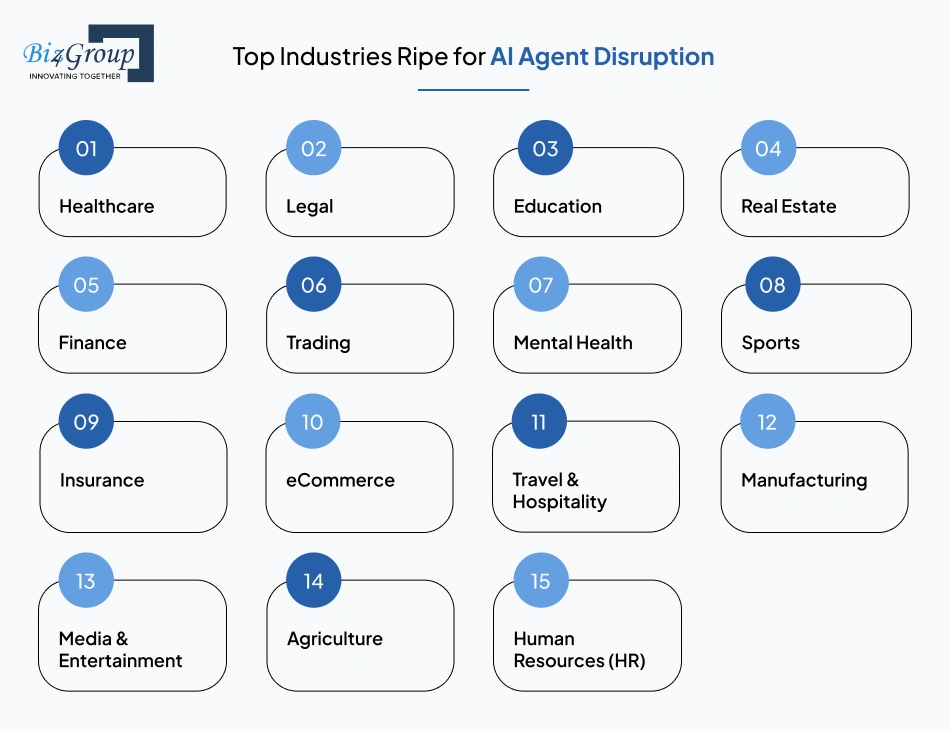
The real magic of AI agents isn’t just in their capabilities; it’s in how they can reshape entire industries. From healthcare to eCommerce, these AI agent ideas are opening doors for automation, efficiency, and new revenue models that were impossible just a few years ago.
If you’re exploring AI agent project ideas or brainstorming AI agent business ideas for 2025, here are the top industries where opportunities are exploding:
1. Healthcare
Healthcare is one of the most data-heavy industries, making it perfect for AI agent startup ideas. Agents can:
- Automate patient scheduling and reminders
- Analyze medical imaging or lab reports for early diagnosis support
- Serve as virtual care assistants to triage symptoms before doctor visits
- Monitor chronic patients remotely through IoT health devices
A compliance AI agent that scans medical records for HIPAA violations in real time.
2. Legal
Law firms and startups alike are looking for AI agent business ideas to cut down on costly, repetitive work. Agents can:
- Review contracts and flag risky clauses
- Summarize case files or legal precedents
- Draft NDAs, agreements, and standard documents
- Monitor regulation updates and compliance deadlines
A contract negotiation assistant that suggests edits to make terms more favorable.
Also Read: How to Build Legal AI Agent?
3. Education
The classroom is ripe for AI agent startup ideas that improve both learning and teaching:
- Personalized tutoring agents adapting to each student’s progress
- Automated grading and feedback for assignments
- Curriculum summarizers for teachers
- AI-driven career counseling agents for students
A study companion bot that quizzes students based on their weak areas.
4. Real Estate
The real estate industry thrives on data analysis—perfect for AI agent ideas that cut through noise:
- Property evaluation agents scanning listings for underpriced opportunities
- Virtual assistants for scheduling tours and handling client inquiries
- Lease management and automated tenant onboarding agents
- Predictive analytics for housing market trends
An AI investment agent that spots high-ROI rental properties in specific zip codes.
Also Read: Agentic AI Platform Development for Real Estate Businesses
5. Finance
Finance is already being transformed by AI agent project ideas—and the disruption is just beginning:
- Cash flow forecasting and expense tracking assistants
- Automated fraud detection agents
- Personal finance AI advisors for individuals and SMBs
- Regulatory compliance checkers for banks and fintech firms
An SME-focused AI CFO that runs “what if” scenarios to help businesses manage risk.
6. Trading
Markets move too fast for humans alone—AI agent ideas here focus on speed and precision:
- Real-time trading agents that analyze signals and execute orders
- Portfolio optimization bots balancing risk vs. reward
- Sentiment analysis agents scanning financial news and social media
- Post-trade analytics assistants for compliance reporting
An AI arbitrage agent scanning multiple exchanges for instant profit opportunities.
7. Mental Health
With rising demand for accessible care, AI agent startup ideas in this space can have a huge impact:
- Mood-tracking bots integrated with journaling or wellness apps
- CBT-based conversation agents providing emotional support
- Burnout and stress detection agents for remote teams
- Crisis triage assistants escalating to professionals when needed
A Slack-integrated wellness agent that checks in daily and recommends micro-breaks.
Also Read: How to Create an AI Mental Health Chatbot?
8. Sports
Sports organizations and fitness startups are exploring AI agent ideas that enhance both performance and fan engagement:
- Player performance analyzers using game footage
- Injury prevention and recovery tracking agents
- Fan engagement chatbots delivering personalized updates
- Ticket pricing and demand forecasting assistants
An AI training partner that designs personalized workout plans for amateur athletes.
9. Insurance
Insurance is full of repetitive workflows—perfect for AI agent business ideas:
- Claims processing agents validating documents automatically
- Risk assessment bots analyzing policy applications
- Fraud detection agents monitoring suspicious claims
- Customer onboarding assistants explaining policy details
A claims explainer agent that breaks down complex insurance language into plain English.
Also Read: Insurance AI Agent Development: A Complete Guide
10. eCommerce
Online retail thrives on personalization and efficiency, making it a hotspot for AI agent project ideas:
- Virtual shopping assistants guiding buyers with recommendations
- Inventory management bots predicting stock needs
- AI-driven upsell and loyalty agents
- Review and sentiment analysis assistants spotting customer pain points
An AI checkout assistant that predicts cart abandonment and sends personalized nudges.
Also Read: AI eCommerce Agent Development Explained: Automation for Modern Retail
11. Travel & Hospitality
Travel companies and hotels can unlock huge value with AI agent business ideas that enhance personalization and efficiency:
- Virtual travel planners building itineraries based on budget, time, and preferences
- Hotel booking assistants managing reservations and upsells
- Real-time translation and concierge bots for international guests
- Feedback analyzers scanning reviews to improve customer service
A travel disruption assistant that automatically rebooks flights and hotels during cancellations.
12. Manufacturing
Factories are shifting toward smart automation, making this space a goldmine for AI agent project ideas:
- Predictive maintenance bots that monitor equipment and prevent downtime
- Quality control agents analyzing product images in real-time
- Supply chain optimization assistants balancing production and demand
- Safety compliance agents checking workplace protocols
An AI scheduling bot that dynamically assigns workers and machines to maximize efficiency.
Also Read: Manufacturing Chatbot Development
13. Media & Entertainment
Content-heavy industries thrive on creativity and audience engagement—perfect for AI agent startup ideas:
- Automated video or podcast summarizers
- Audience sentiment trackers scanning social media feedback
- Script and idea generators for writers and producers
- Personalized content recommendation engines
A production research agent that compiles competitor shows, trending topics, and audience demands into pitch-ready briefs.
14. Agriculture
Farmers and agri-businesses can save costs and boost yields with AI agent ideas built around data:
- Crop health monitoring agents using drone or satellite imagery
- Weather prediction and irrigation optimization assistants
- Pest detection and prevention bots
- Market-price tracking agents suggesting the best selling time
A micro-farm agent for urban farmers that monitors soil, water, and plant growth 24/7.
15. Human Resources (HR)
Workforce management is full of repetitive tasks—perfect for AI agent ideas:
- Resume screening agents shortlisting candidates
- Onboarding assistants guiding new hires through policies and training
- Performance tracking bots providing analytics on KPIs
- Employee wellness check-in assistants
A bias-detection agent that audits job descriptions and hiring processes for inclusive language.
The list of industries ripe for disruption keeps growing. From healthcare and finance to agriculture and gaming, the most promising AI agent ideas share one thing in common: they solve real, repetitive, data-heavy problems.
If you’re looking for AI agent startup ideas or considering a new AI agent project idea in 2026, the best approach is to:
- Pick an industry with clear inefficiencies.
- Validate your concept with a PoC.
- Scale with integrations that match business needs.
The industries are ready. The data is available. The opportunity is massive.
Also Read: A Guide to AI HR Agent Development
How to Choose the Right AI Agent Idea for Your Business?
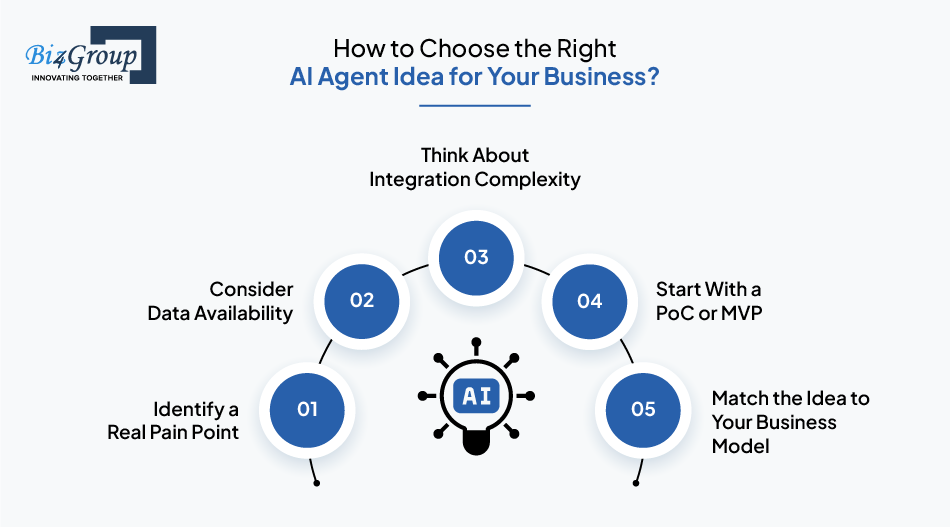
With so many exciting possibilities, how do you decide which AI agent idea actually makes sense for your business?
The answer: don't chase trends-chase fit. A smart idea isn't just innovative, it's relevant to your users, data, and goals.
Here's how to pick the best AI agent idea without falling into the "build it because it's cool" trap:
✅ 1. Identify a Real Pain Point
The most successful AI agents solve nagging, expensive, or repetitive problems. Ask:
- What do your teams spend the most time on?
- What are your customers complaining about?
- Which tasks are predictable and rule-based?
If it's eating up hours or delaying growth, it's worth automating.
✅ 2. Consider Data Availability
- AI agents are only as smart as the data they're trained on.
- Do you have access to clean, relevant, and usable data? If not, can it be collected easily?
- For early-stage projects, go with ideas that can start lean or use public datasets.
✅ 3. Think About Integration Complexity
Some agents (like email assistants or onboarding bots) are plug-and-play. Others (like compliance checkers or logistics optimizers) require deep integration.
Make sure your internal systems and APIs are agent-ready-or plan to work with a generative AI development company to connect the dots.
✅ 4. Start With a PoC or MVP
Don't overbuild. Test your agent idea with a PoC first to see if it works in the real world.
From there, partner with anAI agent development company to create a focused, scalable version you can ship fast.
✅ 5. Match the Idea to Your Business Model
- Are you a SaaS company? Look for agent-powered features.
- An enterprise? Consider internal process automation.
- A startup? Choose ideas with rapid time-to-value and lower complexity.
And if you're building a product from scratch, consider working with Hire AI Developers to help execute quickly and efficiently.
Choosing the right AI agent startup idea isn't about picking the flashiest concept-it's about choosing the one that fits your business goals, your users' needs, and your ability to execute.
What Makes an AI Agent Idea "Great" in 2026?
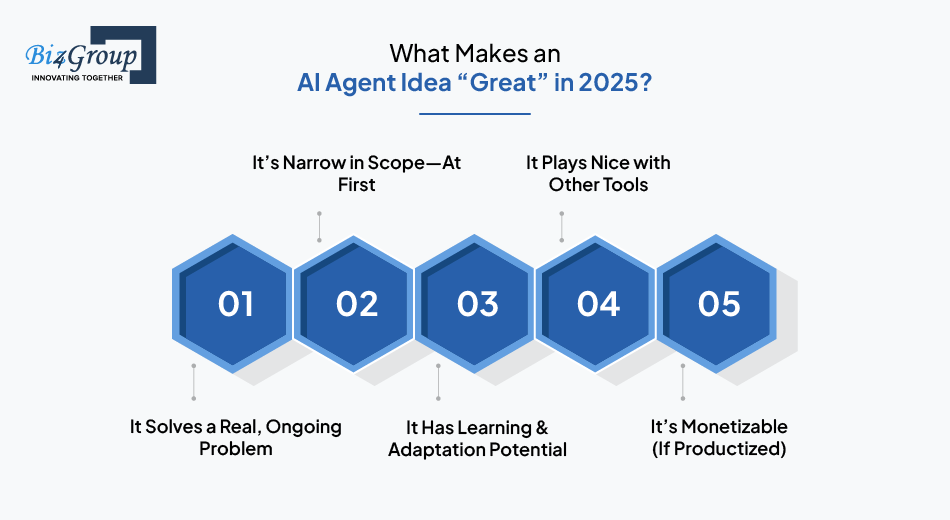
Not every AI agent idea is a winner-some fizzle out after a cool demo, others scale into game-changing products. So what separates the truly great AI agent ideas from the ones that just sound impressive?
Here's what to look for in 2026 and beyond:
✅ 1. It Solves a Real, Ongoing Problem
The best agents don't just automate-they liberate time, reduce errors, or unlock growth.
If your agent idea fixes a daily pain point (not just a once-in-a-while annoyance), it's got staying power.
✅ 2. It's Narrow in Scope-At First
A great AI agent does one job incredibly well. It doesn't try to be a virtual Swiss Army knife.
Start focused (e.g., summarizing meetings, screening resumes), then evolve as user needs grow.
✅ 3. It Has Learning & Adaptation Potential
Whether through user feedback, training data, or task repetition-an agent that gets smarter over time is far more valuable than one that stays static.
✅ 4. It Plays Nice with Other Tools
In 2025, nobody wants a siloed solution.
Great AI agent ideas integrate with calendars, CRMs, ERPs, and chat tools-either through APIs or plugins.
If you're unsure where to start, consider getting expert help via AI Consulting Services .
✅ 5. It's Monetizable (If Productized)
The best ideas have market fit. Could you sell this agent as a SaaS product?
Would it improve retention, reduce churn, or open up a new revenue stream?
If yes-you're sitting on one of the best AI agent ideas for a business in 2025.
Many winning ideas start out looking "too niche" or "too simple." But if they tick these boxes, they're often the ones that become breakout products or core operational tools.
Need Developers for Your AI Agent Idea?
Hire top AI developers to bring your agent to life—on time and on budget.
Hire AI Developers NowChallenges & Risks of Adopting AI Agent Ideas for Your Business
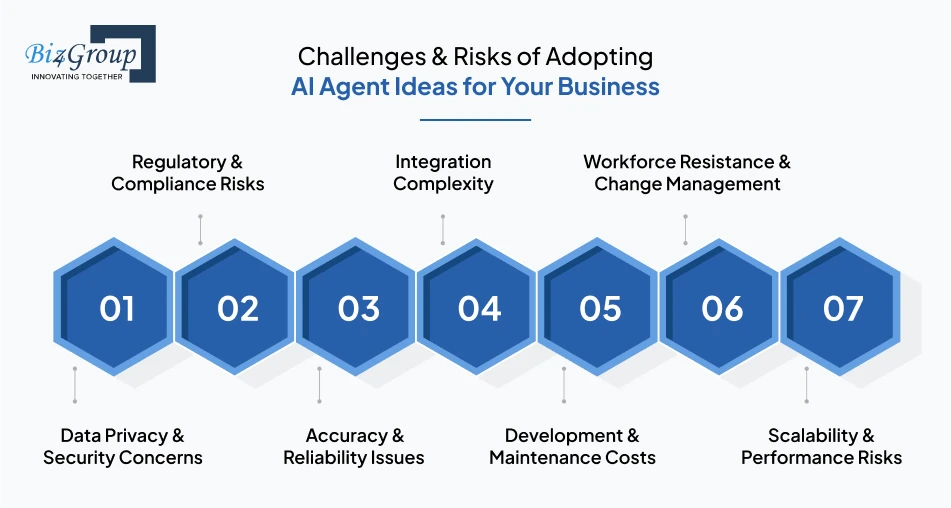
While AI agent ideas are exciting and full of potential, bringing them into real-world business environments isn’t without challenges. Many startups and enterprises rush into AI agent project ideas without fully considering the risks—leading to stalled pilots, wasted budgets, or compliance headaches.
To help you prepare, here are the main challenges businesses face when adopting AI agent business ideas or testing new AI agent startup ideas in 2025:
1. Data Privacy & Security Concerns
AI agents thrive on data—but sensitive customer, employee, or financial data can become a liability if not handled correctly.
- Risk of data breaches or unauthorized access
- Compliance requirements like GDPR, HIPAA, and SOC2
- Dependence on third-party APIs and cloud providers
Tip: Always design AI agents with data encryption, anonymization, and compliance-first principles.
2. Regulatory & Compliance Risks
In highly regulated industries (healthcare, finance, insurance), AI agent project ideas must align with evolving legal frameworks.
- Risk of non-compliance penalties
- Difficulty tracking ever-changing global regulations
- Lack of explainability in AI decision-making
Tip: Incorporate compliance checker agents or human-in-the-loop workflows to stay ahead of audits.
3. Accuracy & Reliability Issues
Not all AI outputs are correct—agents can misinterpret data, generate biased responses, or “hallucinate.”
- Risk of business decisions based on inaccurate insights
- Reduced trust from employees or customers
- Higher costs due to manual error correction
Tip: Start with narrowly scoped AI agent ideas and include validation steps before full automation.
4. Integration Complexity
Many AI agent business ideas sound great in theory but fail in practice because they can’t connect to existing CRMs, ERPs, or legacy systems.
- APIs may be limited or outdated
- Integration costs can exceed initial budgets
- Internal teams may lack technical expertise
Tip: Before scaling, build a Proof of Concept (PoC) to test integrations with your current tech stack.
5. Development & Maintenance Costs
Even lean AI agent startup ideas can become expensive if not scoped properly.
- MVPs often cost more than planned due to data, hosting, or licensing fees
- Ongoing maintenance is required to keep models updated
- Enterprises may face hidden costs from retraining models or scaling infrastructure
Tip: Budget not just for development, but also for long-term maintenance, updates, and retraining.
6. Workforce Resistance & Change Management
Employees may see AI agents as job replacements rather than productivity boosters.
- Resistance to adoption
- Fear of being replaced
- Difficulty in adapting to AI-augmented workflows
Tip: Position AI agents as assistants, not replacements, and train teams on how to leverage them effectively.
7. Scalability & Performance Risks
An AI agent that works in a small PoC may struggle at enterprise scale.
- Slow response times with larger datasets
- Increased infrastructure costs at scale
- Agents failing under high-demand workloads
Tip: Start lean, test with a pilot group, and scale gradually while monitoring performance.
By addressing these challenges early, you can transform AI agent business ideas into scalable, trustworthy, and high-ROI solutions that strengthen your operations rather than disrupt them.
Turning Your AI Agent Idea Into a Real Product
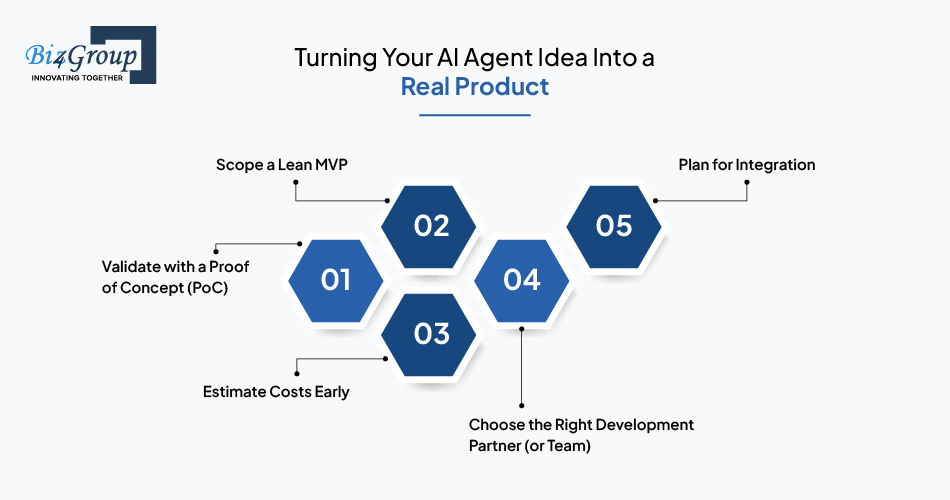
So you've picked your winner-now it's time to bring that AI agent idea to life.
Whether you're building a lean MVP, prototyping internally, or preparing for investor demos, turning your concept into something tangible doesn't have to be overwhelming. Here's how to do it step by step:
✅ 1. Validate with a Proof of Concept (PoC)
Start by building a simple, focused version that tests the core functionality of your agent. This could be as minimal as a workflow in Zapier or as complex as a custom-trained model.
The goal? Prove that your agent works, delivers value, and can be improved over time.
✅ 2. Scope a Lean MVP
Once the PoC shows promise, define the bare-minimum features needed for
launch.
This could be:
- A UI to configure the agent
- One or two key integrations
- A feedback loop to refine performance
Working with mvp development companies can help you go from test phase to real-world deployment without overbuilding.
✅ 3. Estimate Costs Early
A well-planned budget helps avoid costly surprises later.
Are you using open-source tools? Paid APIs? Hosting on AWS or Azure?
Don't forget development, testing, and post-launch support costs.
✅ 4. Choose the Right Development Partner (or Team)
Depending on your technical bandwidth, you can either:
- Build in-house
- Hire freelancers
- Or work with a full-service AI development company that brings strategy, speed, and scale together.
Need more flexibility? You can hire a company providing enterprise AI solutions to accelerate timelines without the long-term overhead.
✅ 5. Plan for Integration
Even the smartest agent won't help if it can't plug into your existing systems.
Think ahead: What tools does your agent need to talk to? CRMs, ERPs, helpdesk software?
This is where AI Integration Services become essential to making your product usable in the real world.
Launching a successful agent doesn't mean building the next Siri-it means solving one real problem in a smart, repeatable, and scalable way.
And it all starts with execution.
Common AI Agent Implementation Mistakes That Reduce Automation ROI
The most common AI agent implementation mistakes include automating inefficient workflows, deploying AI agents without reliable system integrations, using generic AI automation without operational context, and expecting autonomous AI agents to handle complex business processes without human oversight. Businesses also struggle when they implement AI agents before cleaning operational data, defining workflow boundaries, or establishing measurable success metrics for AI automation performance.
These issues become especially problematic in enterprise AI environments where AI agents interact with CRMs, ERPs, customer support systems, internal databases, and cross-functional operational workflows. Even advanced AI models can produce weak business outcomes if the underlying workflow logic, data quality, and execution infrastructure are poorly designed.
|
AI Agent Implementation Mistake |
Why It Fails |
Business Impact |
|---|---|---|
|
Automating broken workflows |
AI agents inherit inefficient processes instead of improving them |
Increased operational complexity |
|
Choosing generic AI agents without business context |
Lack of workflow specialization reduces execution accuracy |
Low adoption and weak ROI |
|
Ignoring system integrations |
AI agents cannot access business-critical operational data |
Incomplete automation workflows |
|
Deploying fully autonomous agents too early |
Businesses underestimate workflow exceptions and edge cases |
Operational instability |
|
Poor data quality and fragmented systems |
AI agents rely on inconsistent or outdated information |
Inaccurate outputs and workflow failures |
|
No human approval layers |
Sensitive workflows require operational oversight |
Compliance and decision-making risks |
|
Over-prioritizing advanced AI models |
Model sophistication cannot compensate for poor workflow logic |
Expensive but ineffective AI systems |
|
Lack of observability and monitoring |
Businesses cannot track workflow reliability or AI decisions |
Reduced operational accountability |
|
Treating AI agents like chatbots |
Workflow automation requires execution logic beyond conversation |
Limited operational value |
|
No measurable success metrics |
Businesses cannot evaluate operational ROI after deployment |
Difficulty scaling AI adoption |
Businesses implementing AI agents successfully usually start with operationally measurable workflows where execution patterns, approval logic, and business outcomes are already well understood. Instead of pursuing maximum autonomy immediately, successful enterprise AI automation strategies focus on workflow reliability, system integration depth, governance controls, and measurable operational ROI.
How Can Biz4Group Help with AI Agent to Automate Your Business?
At Biz4Group, we don’t just share AI agent ideas—we bring them to life. Our team has extensive experience in building custom AI solutions that are secure, scalable, and business-ready. Whether you’re a startup founder looking for a lean MVP or an enterprise in need of deep integration, we design AI agents tailored to your exact needs.
Here are two of our featured projects that showcase how we’ve helped businesses transform operations with AI:
1. Customer Enterprise AI Agent
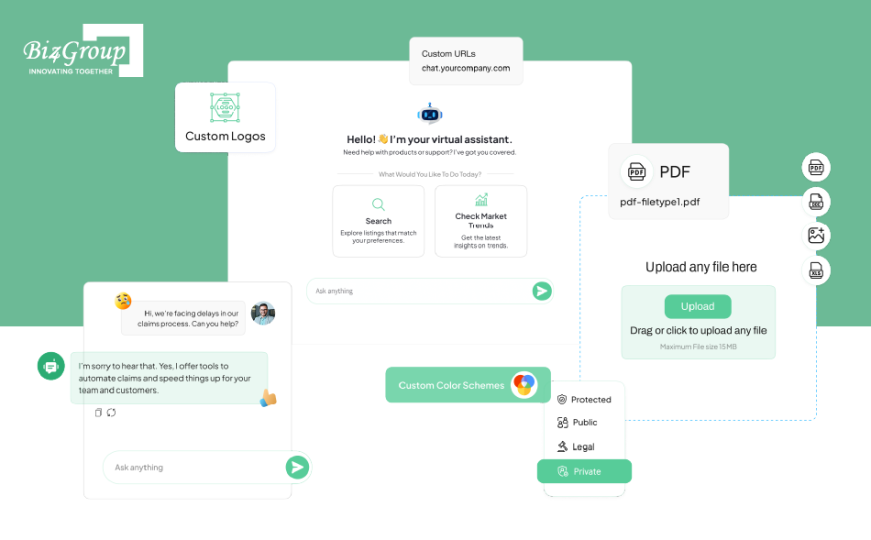
A fully customized enterprise AI agent designed with HIPAA and GDPR compliance at its core.
- Automates customer support and retrieves legal information.
- Provides personalized recommendations and streamlines HR inquiries.
- Enhances multilingual interactions to serve diverse audiences.
- Securely processes sensitive industry data without compromising privacy.
2. Customer Service AI Chatbot
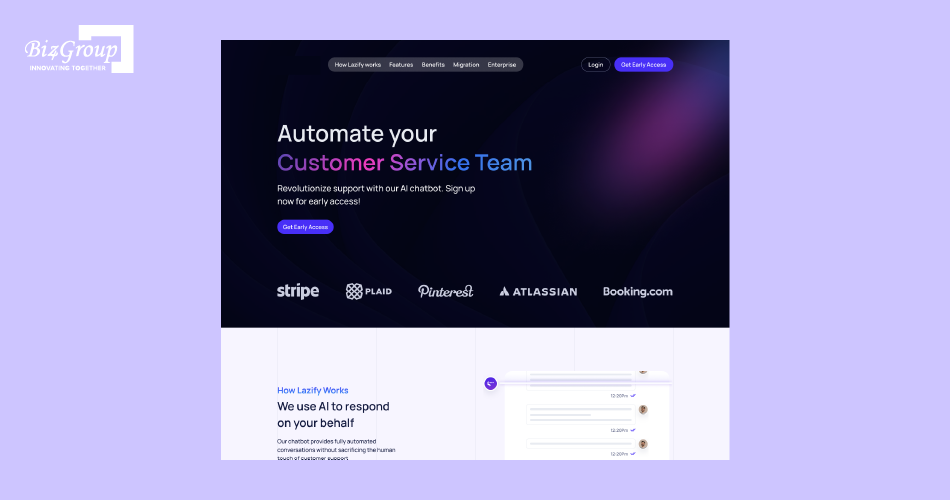
An advanced AI-powered chatbot pre-trained for customer support across industries.
- Automates routine inquiries while learning continuously from human-agent interactions.
- Handles high-stakes tasks like order and payment processing with precision.
- Reduces customer wait times, boosts satisfaction, and optimizes support team workload.
Whether you want to automate workflows, enhance customer experience, or integrate compliance-ready AI agents, Biz4Group is your trusted AI development partner. From proof of concept to full-scale deployment, we’ll help you launch agents that actually deliver business results.
Final Thoughts
AI agents are becoming a core part of modern business operations across ecommerce, healthcare, finance, logistics, SaaS, HR, and customer support. Business owners are using AI agents to automate repetitive workflows, improve operational efficiency, reduce response times, and scale processes more effectively.
Some of the most impactful AI agent ideas in 2026 are focused on customer support automation, sales workflows, onboarding systems, procurement coordination, document processing, workflow management, and operational reporting. Businesses investing in these AI agent use cases are building faster and more scalable operational systems across departments.
As agentic AI adoption grows, companies are increasingly moving toward industry-specific AI agents that integrate with existing business systems and support real operational workflows.
Whether you’re exploring AI agent ideas for startups, enterprise AI automation, or AI-powered SaaS products, the strongest results usually come from solving workflows that already create operational delays, repetitive manual effort, or scalability challenges.
If you’re planning to build a custom AI agent solution, Biz4Group LLC can help you design, develop, and scale AI agents aligned with your business workflows and automation goals.
Want a Custom Quote for Your AI Agent Idea?
Tell us your use case and get a personalized roadmap + estimate.
Request My AI Agent QuoteFAQ - AI Agent Ideas 2026
Q1. What's the difference between an AI agent and a chatbot?
A chatbot usually responds to simple queries using predefined scripts or flows. An AI agent, on the other hand, can reason, adapt, and act autonomously across systems to complete tasks, make decisions, or learn from data.
Q2. Can I build an AI agent without technical expertise?
Yes, to some extent. With no-code tools, pre-trained APIs, and access to AI consulting services, non-technical founders can launch a PoC or MVP. However, scaling a product typically requires technical support.
Q3. How do I protect my AI agent startup idea?
Use NDAs when working with external teams or freelancers. More importantly, focus on speed of execution and building brand trust. In most cases, execution > idea.
Q4. How long does it take to develop a simple AI agent MVP?
With a clear scope and a solid team, most MVPs can be built in 4-8 weeks . For leaner versions or PoCs, you can often go live even faster.
Q5. Where can I find data to train my AI agent?
If you don't have internal data, look for open datasets on platforms like Kaggle or Google Dataset Search. For more complex projects, data synthesis or collection pipelines may be needed.
Q6. Should I work with freelancers or an agency to build my AI agent?
Freelancers are great for tight budgets and isolated tasks. But if you're aiming for a product with long-term support, integrations, and scalability, AI agent development companies are best fit for it.
Q7. What's the cost of developing a custom AI agent?
It varies. A basic MVP could range from $10k to $30k, while enterprise-grade solutions may exceed $100k. Here's a complete breakdown of AI agent development cost to help you estimate based on features and complexity.
Q8. What are the most profitable AI agent ideas right now?
Agents focused on productivity (like meeting summarizers), sales (CRM follow-ups), HR (resume screeners), and compliance (contract reviewers) are showing fast adoption and high ROI. These are among the best AI agent business ideas to explore in 2026.
