Location :
Orlando, FL, USA
 +1 (407) 714-1616
 info@biz4group.com


 AI Powered Summary by Biz4AI
- AI healthcare products development in 2026 starts with one decision: classify your product under the FDA's SaMD and CDS rules before writing any code, since this determines your regulatory path, architecture, and budget.
- HIPAA compliant AI healthcare product development requires a signed BAA with every vendor touching patient data, encryption, audit trails, and role-based access built into the architecture from day one, not added before launch. Biz4Group built exactly this into Bill Matters, its own denial management platform, from the first screen.
- A realistic AI healthcare product development budget runs $40,000 to $300,000, with an MVP taking 2 to 4 weeks and a full enterprise build taking 6 to 8 weeks at Biz4Group when the compliance groundwork is already standardized.
- Validation doesn't stop at FDA clearance. Only 3 of 1,357 FDA-cleared AI devices have ever been tested on real patient outcomes, so bias testing, subgroup analysis, and post-launch drift monitoring all matter as much as the clearance itself.
- The products that survive real clinical use are built around actual workflows, not demos. Biz4Group, an AI healthcare product development company with over 20 years of experience and 100+ healthcare AI projects delivered, builds custom AI healthcare product development around compliance, architecture, and human review from the start.
You already know AI is changing healthcare. What you're probably still figuring out is how to build something with it that actually works, that clinicians trust, and that doesn't put you in regulatory trouble six months after launch.
Here's a number worth sitting with. As of March 2026, the FDA's own device list shows 1,524 AI-enabled medical devices authorized for the U.S. market, growing by roughly 30 new clearances a month. That tells you two things. AI healthcare products development is no longer a frontier bet, it's a working market with real precedent. But it also means you're not building in empty space. You're building into a field where the FDA, HIPAA regulators, and a growing list of competitors are all paying close attention.
We've built this exact tension into our own product. Bill Matters, our AI denial management platform for rejected medical claims, had to be HIPAA compliant with a signed Business Associate Agreement before a single healthcare client could touch it. Not after launch. Not as a patch. From the first screen. That's the real starting point for AI healthcare product development, not a clever use of AI for its own sake, but compliance treated as architecture, not an afterthought.
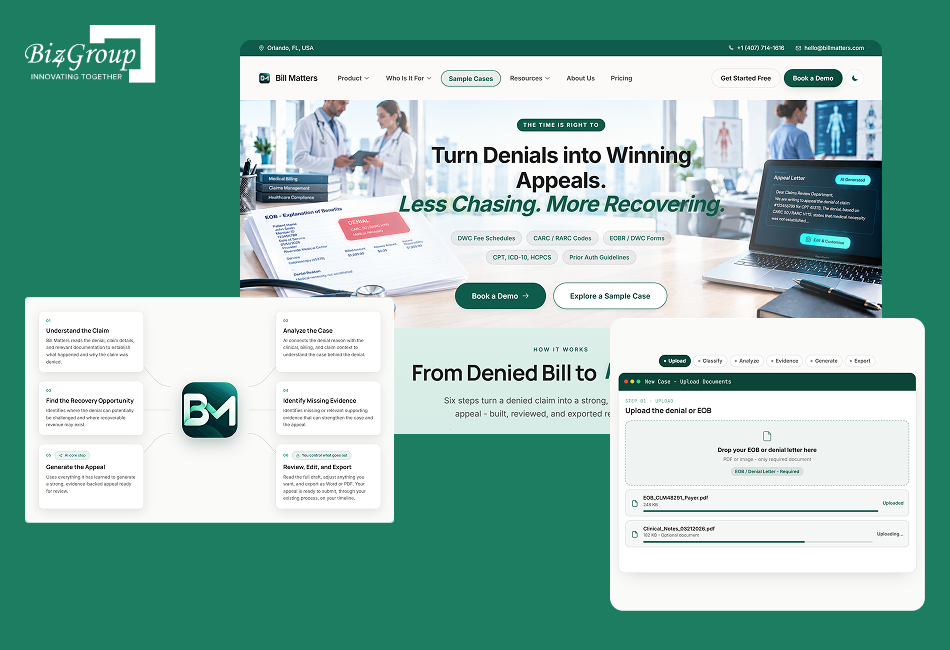
So, here's what you're probably dealing with right now. HIPAA requirements that shift depending on how patient data actually moves through your product. FDA rules that apply differently depending on what your product claims to do for a patient. A budget that looked reasonable on a spreadsheet until compliance and clinical validation costs showed up and changed the math.
This guide walks through the full process of building, validating, and launching an AI healthcare product in 2026, the actual sequence, not a simplified version of it. You'll see what we've learned building healthcare AI products, including our own, across different risk levels, from wellness tools that face almost no regulatory friction to clinical and financial tools that handle real patient data under real audit requirements.
By the end, you'll know what type of product you're building, what compliance genuinely requires, what it actually costs, and what separates a product that reaches patients from one that stalls in review. Let's get into it.
What Is an AI Healthcare Product, and Why Does the Definition Matter in 2026?
An AI healthcare product is any software that uses artificial intelligence to support a clinical, administrative, or patient-facing task inside a healthcare setting. That definition sounds simple.
The part that actually matters is what the product claims to do. That single detail decides which rules apply to your AI healthcare product development process, long before you write any code.
A symptom-tracking app and a diagnostic imaging tool can share the same tech stack, the same AI model family, even the same founder. One might need zero regulatory clearance. The other might need FDA authorization before it touches a single patient. The difference isn't the technology. It's the intended use.
Where the line actually gets drawn
The FDA regulates this through a concept called Software as a Medical Device (SaMD): software intended for a medical purpose that performs that purpose independently of hardware. On January 6, 2026, the FDA issued final guidance on Clinical Decision Support Software, later reissued on January 29, 2026. It sits right on the line that decides whether your product needs clearance at all:
|
Category |
What it covers |
Regulatory status |
|---|---|---|
|
General Wellness |
Apps encouraging a healthy lifestyle, unrelated to diagnosing or treating a condition |
Not a regulated device |
|
Non-Device CDS |
Software supporting a clinician's judgment, where the clinician can independently review the basis for the recommendation |
Excluded from device definition |
|
Device CDS |
Software that directs or replaces clinical judgment rather than supporting it |
Regulated as SaMD |
One detail from the 2026 update is worth knowing if you're building anything time-sensitive. The prior 2022 guidance treated software used in time-critical decisions as automatically regulated. The 2026 revision removed most of that automatic disqualifier, giving urgent-care and triage-adjacent tools more room to stay non-device, provided they still meet the other criteria.
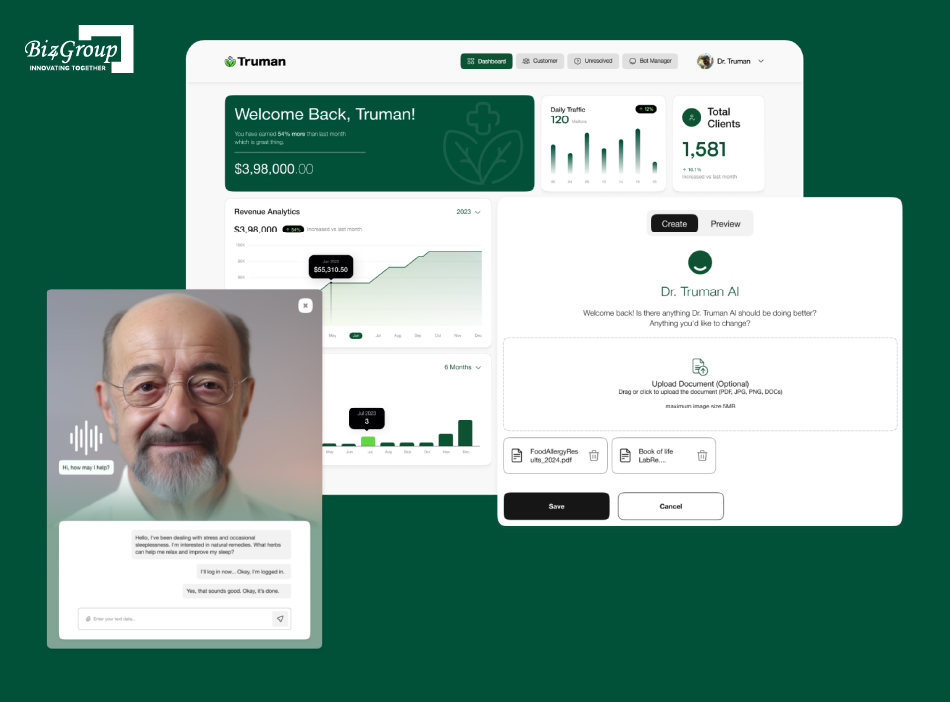
This distinction shaped our own build on Dr. Truman, an AI-enabled health companion platform with a generative AI avatar and personalized wellness guidance. Built around general wellness support rather than diagnosis or treatment, it sat in the first row of that table, not the third. That framing decision changed the entire development path: lighter regulatory load, different data handling, a different validation bar than a diagnostic tool would need.
The trap most founders fall into
Marketing language can quietly move a product from row one to row three. A few examples:
- Saying your app "tracks mood" stays general wellness
- Saying your app "detects depression" crosses into device territory
- Saying your app "suggests you discuss this with your doctor" often stays non-device CDS
- Saying your app "recommends a treatment plan" usually doesn't
The FDA doesn't just look at your code. It looks at what you say your product does, and increasingly, whether a clinician can independently check the reasoning behind it.
Why This Matters More in 2026 Than It Used To?
Teams that classify their product correctly from day one build the right architecture once. Teams that skip this step often rebuild it after the fact, once the real requirements surface. We've seen how much that early decision saves or costs, across different types of healthcare AI products we've built, from general wellness tools to products handling real patient data under audit requirements.
So, before anything else gets built, answer one question: what is this product actually claiming to do for the person using it? That answer decides your data pipeline, your budget, and your timeline.
Not sure where your product fits in all this yet?
A 20-minute call can tell you whether you're building a wellness app or a regulated medical device, before you spend a dollar on development.
Book a Free Strategy CallWhat Types of AI Healthcare Products Can You Build?
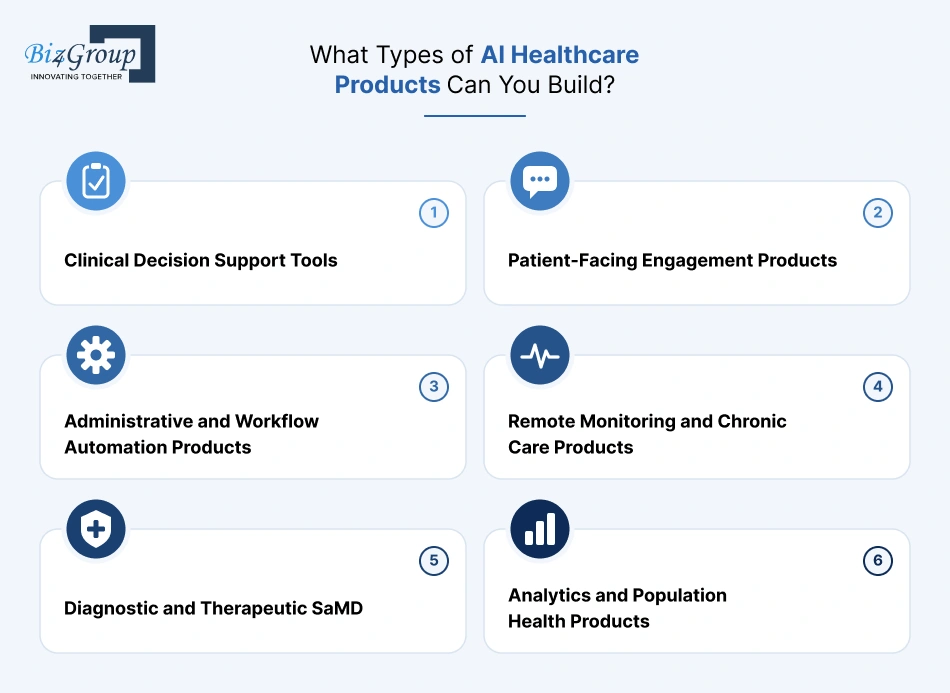
AI healthcare products fall into a handful of distinct categories, and the category you're building in determines your regulatory load, your data architecture, and your validation bar. This is one of the clearest ways to think through product development in healthcare before you commit to an idea.
1. Clinical Decision Support Tools
These support a clinician's diagnosis, treatment, or care-planning decisions without replacing their judgment. Under the FDA's January 2026 CDS guidance, whether this stays a non-device tool depends on whether the clinician can independently review the basis for the recommendation. Get that wrong and you've built a regulated device without meaning to. We work through this exact classification question when we help teams develop an AI clinical decision support system from the ground up.
Features:
- Risk flagging and early-warning systems
- Treatment recommendation engines reviewed by an HCP
- Drug interaction and dosage-check tools
- AI medical diagnosis support for imaging and lab review, a category we've built AI medical diagnosis tools for directly
2. Patient-Facing Engagement Products
These interact directly with patients rather than clinicians, handling scheduling, symptom intake, portal access, or general health guidance. We built this exact category through our healthcare AI agent, which handles multi-step patient conversations while keeping humans in control of anything clinical. A related, often-overlooked product in this category is the AI patient portal, the piece of software most patients actually touch day to day. Our own MBI Marketing project, a patient-facing healthcare appointment and enrollment platform, sits in this exact space.

Features:
- Appointment scheduling and intake automation
- Symptom checkers scoped as general wellness
- Medication reminders and adherence tracking
- Post-visit follow-up and check-in systems
3. Administrative and Workflow Automation Products
These never touch a clinical decision at all. They remove manual work from billing, documentation, staffing, and operations, which is often where custom AI healthcare product development delivers the fastest return with the least regulatory friction. Our own product, AI healthcare workflow automation, sits squarely in this category, handling claims and denial workflows without ever making a clinical call. Bill Matters, our denial management platform, is a live example of exactly this kind of build.
Features:
- Medical coding and claims processing
- Denial management and appeals generation
- Staff scheduling and resource allocation
- Documentation and charting support
4. Remote Monitoring and Chronic Care Products
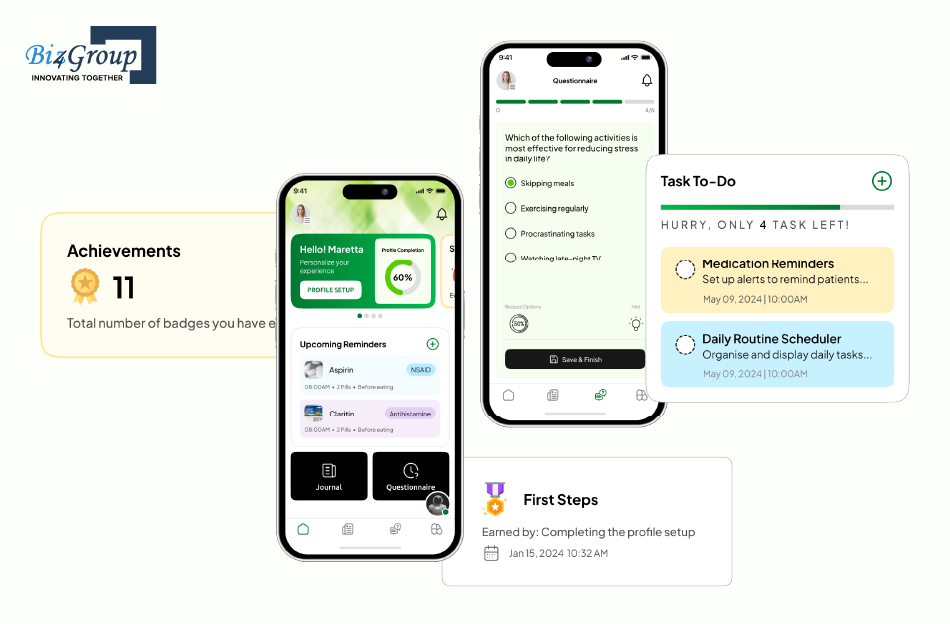
These track patient data over time, often from wearables or connected devices, and flag changes for review. This is one of the fastest-growing categories in 2026, driven directly by workforce shortages in long-term and chronic care. We've built in this space through an AI remote patient monitoring app, and separately through work on a chronic disease management system with AI. Our CogniHelp project, built for early-to-mid-stage dementia patients, is a real example of this category: it uses a machine learning model to track a patient's cognitive performance over time, turning daily quiz and journal data into a measurable trend rather than a one-time snapshot.
Features:
- Vital sign and activity tracking
- Chronic disease progression monitoring
- Fall detection and emergency alerting
- Caregiver and family notification systems
5. Diagnostic and Therapeutic SaMD
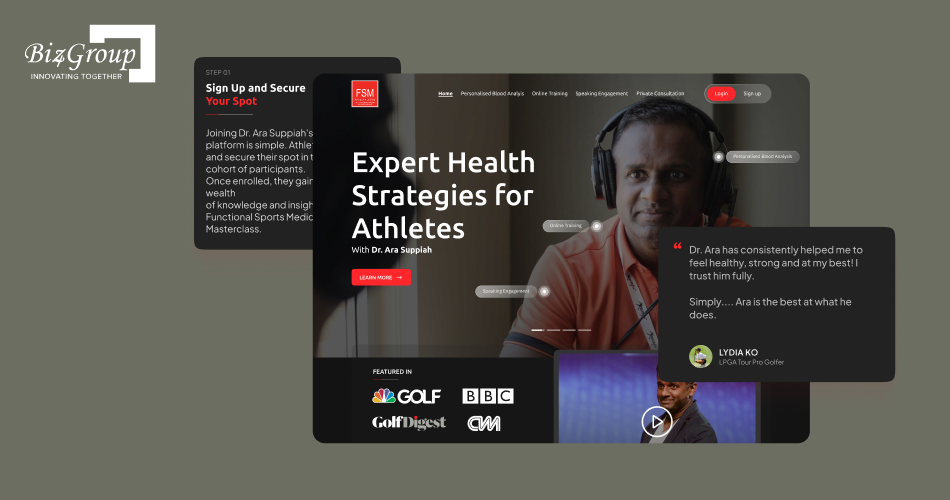
This is the highest-risk, highest-regulation category. These products make or materially inform a diagnosis or deliver a therapeutic intervention directly, and they almost always require FDA clearance through 510(k), De Novo, or PMA. Radiology currently dominates this space, accounting for the large majority of all FDA-cleared AI devices. Our work on Dr. Ara, an athletic health platform built around blood test analysis, sits close to this line, which is exactly why how to build AI healthcare product decisions in this category start with regulatory classification, not features.
Features:
- AI-assisted imaging diagnostics
- Pathology and lab result interpretation
- Digital therapeutics with treatment claims, including guided support tools like AI therapy recommendations
- Autonomous or semi-autonomous clinical algorithms
5. Analytics and Population Health Products
These work at the system level rather than the individual-patient level, surfacing patterns across populations, cohorts, or operational data. We've built this directly through AI healthcare analytics, which gives healthcare organizations pattern-level visibility without making any individual clinical call. This category depends entirely on clean, structured data pipelines, which is also why it's one of the categories most founders underestimate at the planning stage.
Features:
- Predictive readmission risk modeling
- Population health trend dashboards
- Resource utilization forecasting
- Outcomes and quality reporting
Most founders assume their idea fits neatly into one category. In practice, many products straddle two. A remote monitoring tool that also flags risk starts drifting into CDS territory the moment it stops displaying data and starts recommending action. Knowing which category you're actually in, and which one you might drift into, is what AI in healthcare product lifecycle planning in the next sections builds on.
What Does HIPAA and FDA Compliance Actually Require from Your AI Healthcare Product?
Compliance for HIPAA compliant AI healthcare product development isn't one rulebook. It's at least three separate systems (HIPAA, FDA, and increasingly state-level AI law) that apply differently depending on what your product does and what data it touches. Treating compliance as a single checklist is how most teams get this wrong.
1. What HIPAA Actually Requires
HIPAA governs any product that creates, stores, processes, or transmits Protected Health Information (PHI). If your AI healthcare product development touches PHI at any point, three things become mandatory, not optional:
- A signed Business Associate Agreement (BAA) with every vendor in your data path, including your AI model provider
- Technical safeguards covering encryption, access control, and audit logging under the HIPAA Security Rule
- A documented, legally valid method for any data you claim is de-identified
Here's something worth knowing before you budget for this work. The HIPAA Security Rule, last substantively updated in 2013, has had a major overhaul proposed since January 2025. HHS originally targeted May 2026 for a final rule. According to the 2026 Unified Agenda released by the Office of Management and Budget state that target has now slipped to July 2027, with the rulemaking moved to HHS's "long-term actions" list. The current Security Rule remains fully enforceable in the meantime. The proposed changes, mandatory encryption, multi-factor authentication, annual penetration testing, aren't yet law, but they signal exactly where enforcement is heading. Building toward them now, rather than waiting for the final text, is the safer bet for anyone starting AI healthcare software product development today.
2. The Business Associate Agreement Is Not Optional
If your product creates, stores, or transmits PHI on behalf of a healthcare provider, you need that signed BAA with every vendor in the data path. Not just your cloud host. Every AI model provider, every analytics tool, every logging service that touches that data.
We built this requirement directly into Bill Matters, our AI denial management platform, from the first screen rather than adding it before a client could use it. A signed BAA is available for every healthcare customer, and the platform never uses customer data to train shared models.
3. What a Non-Negotiable Compliance Architecture Actually Includes
|
Requirement |
What it means in practice |
|---|---|
|
Data encryption |
At rest and in transit, for every system touching PHI |
|
Access control |
Role-based, so each person sees only what their role requires |
|
Audit trail |
Every access, edit, and export logged and traceable |
|
De-identification |
Safe Harbor or Expert Determination method, applied correctly, not partially |
|
BAA coverage |
Signed with every vendor in the data path, including your AI model provider |
|
Human review |
A person signs off before any AI output reaches a payer, patient, or clinical record |
4. Where FDA Compliance Adds a Second Layer
HIPAA governs how you handle data. FDA governs what your product is allowed to claim and do, and only applies if your product crosses into SaMD, as covered earlier in this guide. If it does, you're also managing a Predetermined Change Control Plan for any AI model that updates after clearance, which means your compliance architecture and your regulatory submission have to be designed together, not handled by separate teams working from separate documents.
5. AI Governance Is Becoming Its Own Requirement
Beyond HIPAA and FDA, healthcare organizations are increasingly expected to show how they govern AI itself. Model bias testing, explainability documentation, and change logs are becoming standard asks from hospital procurement teams, even when no specific law mandates them yet. We help teams build this into their AI governance in healthcare framework from the start, rather than retrofitting it after a client asks for documentation you don't have. For teams building this compliance layer as its own product rather than folding it into a larger platform, we've also worked directly on AI compliance tooling built for exactly this purpose.
Compliance that's designed in from the architecture stage costs less and moves faster than compliance bolted on before launch. That single sequencing decision is often the difference between a product that ships on schedule and one that gets rebuilt six months in.
What Does the Right Architecture Look Like for an AI Healthcare Product?
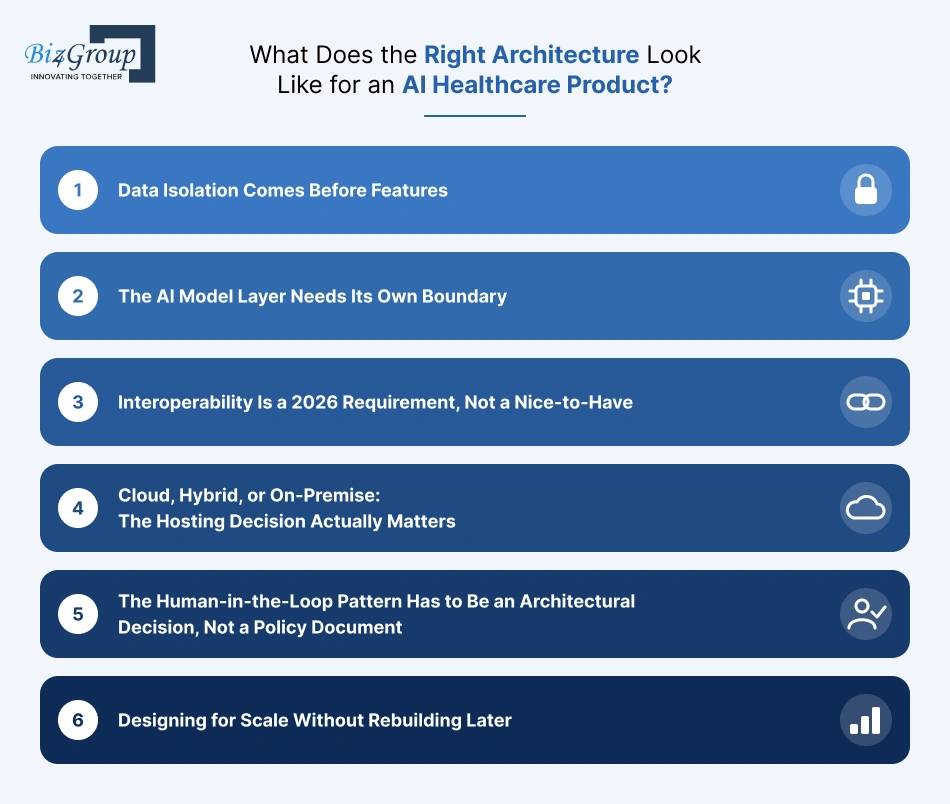
Architecture for AI healthcare product design and development isn't about picking a tech stack first. It's about designing around constraints consumer software never deals with: data that can't leak, systems that have to talk to EHRs nobody controls, AI outputs that need a human checkpoint, and audit trails that have to survive a regulator's review months later. Get this stage wrong, and building AI healthcare product features on top of it just means rebuilding later.
1. Data Isolation Comes Before Features
Every architectural decision should start with where PHI lives and who can reach it, not what the product does. We built this principle directly into our enterprise AI agent project, which uses AWS Virtual Private Cloud for isolated, private hosting and AES 256-bit encryption for data at rest and in transit. Role-based access control sits underneath that, so even internal team members only reach the data their role requires.
2. The AI Model Layer Needs Its Own Boundary
A common mistake is treating the AI model as just another service with database access. The model layer should sit behind the same access and encryption boundaries as everything else, not be trusted with more reach than a human employee would get. Our enterprise AI agent project handles this through a modular integration framework, where the AI connects to tools like Salesforce and HRMS systems through controlled APIs rather than direct data access.
This layer also needs its own operational discipline: model versioning, so you know exactly which version produced which output; logging of model inputs and outputs separately from general application logs; and a defined rollback path if a model update behaves unexpectedly after deployment.
3. Interoperability Is a 2026 Requirement, Not a Nice-to-Have
If your product needs to read or write data from an EHR, it needs to speak FHIR R4, the federal interoperability baseline under the 21st Century Cures Act. There's a specific, dated requirement worth knowing here. The Office of the National Coordinator for Health IT confirms that under TEFCA, Qualified Health Information Networks must adopt the HL7 FAST security implementation guide for all FHIR registration, authentication, and authorization starting January 1, 2026. If your product connects into the national interoperability network at any point, this isn't optional groundwork, it's a compliance gate. We work through exactly this challenge when we help teams integrate healthcare platforms with AI EHRs, where FHIR and legacy HL7 v2 support both have to coexist in the same system. Most production systems still need that HL7 v2 layer alongside FHIR, since many legacy EHR modules haven't fully migrated off it.
4. Cloud, Hybrid, or On-Premise: The Hosting Decision Actually Matters
This decision shapes your entire cost structure and compliance posture, not just your DevOps setup.
|
Hosting model |
Best fit |
Tradeoff |
|---|---|---|
|
Public cloud (HIPAA-eligible services) |
Most patient-facing and administrative products |
Fastest to build, but requires careful service-by-service BAA verification |
|
Private cloud / VPC |
Products handling high volumes of sensitive clinical data |
Stronger isolation, more infrastructure to manage |
|
Hybrid |
Products with latency-sensitive clinical workloads (imaging, real-time monitoring) |
Best performance, most complex to maintain |
|
On-premise |
Large health systems with existing data center investment |
Maximum control, slowest to iterate on |
Most AI healthcare products in 2026 land on a hybrid-by-default model: cloud for application logic and AI inference, with sensitive clinical workloads kept closer to where the data originates.
5. The Human-in-the-Loop Pattern Has to Be an Architectural Decision, Not a Policy Document
This is the piece most teams get wrong. "A human reviews AI output before it's acted on" can't just be a written policy. It has to be enforced in the architecture itself, through a review queue the AI output is routed into, a required sign-off step before anything reaches a patient record or a payer, and a clear state in the system that distinguishes "AI-generated, pending review" from "human-approved." Bill Matters, our denial management platform, is built this way: every generated appeal lands in a review-and-export step where a person reads, edits, and approves it before anything is submitted, and that review step exists in the product's actual workflow, not just in a compliance manual sitting next to it.
6. Designing for Scale Without Rebuilding Later
A product that works for a pilot with 50 patients needs a different load profile than one serving a hospital network. This is where developing AI healthcare product architecture diverges sharply from a standard MVP mindset. The architectural decisions that matter most for scale are the ones that are expensive to change later: your database schema's ability to handle structured FHIR resources at volume, whether your AI inference layer can handle concurrent requests without degrading response time, and whether your audit logging system can keep up with usage without becoming its own bottleneck.
Why This Order Matters
Teams that design data isolation, the model boundary, interoperability, hosting strategy, and human review into the architecture first build something that can pass a compliance review without being rebuilt. This is precisely the kind of groundwork an experienced AI healthcare product development company gets right from day one, because they've seen what happens when it's skipped. Teams that add these pieces after the product works usually end up retrofitting encryption, access control, and review workflows into code that was never designed to support them, which costs more and takes longer than building it right the first time.
Is your current architecture built to survive a compliance audit?
If encryption, access control, and audit logging weren't designed in from day one, retrofitting them later costs more than building them right the first time.
Talk to Our Healthcare AI ArchitectsHow Do You Build AI Healthcare Product, Step by Step?
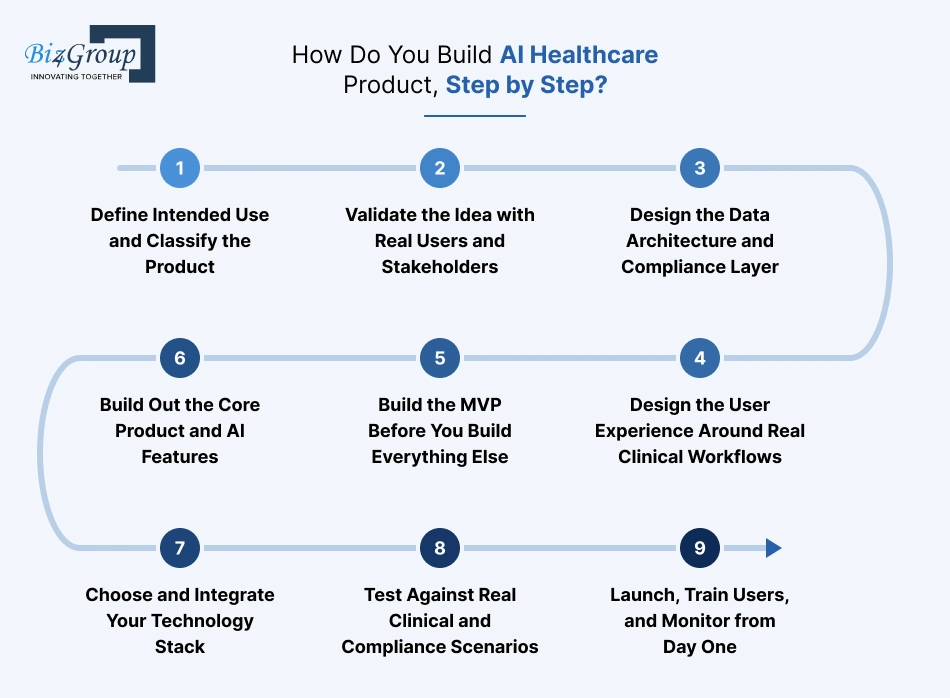
Building AI healthcare product work follows a different sequence than typical software development, because classification and compliance decisions have to happen before, not during, the build. At Biz4Group, a focused MVP for an AI healthcare product development engagement typically takes 2 to 4 weeks, while a full enterprise-grade build runs 6 to 8 weeks. That difference comes down to how much of the compliance and architecture groundwork is already standardized going in, rather than being figured out from scratch on every single project.
Step 1: Define Intended Use and Classify the Product
Before any design or code, pin down exactly what the product claims to do for the user. This single decision determines everything downstream, from your regulatory pathway to your data handling to your validation bar, so it has to happen first, not somewhere in the middle of development once assumptions are already baked into the code.
- Write the intended-use statement in plain language first
- Run it against the SaMD and CDS criteria covered earlier in this guide
- Decide now whether a PCCP will be needed later
Step 2: Validate the Idea with Real Users and Stakeholders
Healthcare products can't "fail fast" the way consumer apps do, so validation has to include the people who'll actually use or approve the product, not just prospective end users. A product that clinicians won't adopt, or that a hospital's procurement process rejects outright, fails long before any technical metric matters.
- Talk to clinicians or patients who'd use the product daily
- Identify who signs off on adoption inside a hospital or clinic
- Confirm the problem is worth solving before writing a single requirement doc
Step 3: Design the Data Architecture and Compliance Layer
This is where HIPAA requirements, encryption, and access control get built into the system's foundation rather than patched in right before launch. Skipping this step until later is the single most common reason developing AI healthcare product timelines blow past their original estimate, since retrofitting compliance into a finished codebase is slower and more expensive than designing for it from day one.
- Map exactly where PHI will live and who can reach it
- Set up BAAs with every vendor in the data path
- Build audit logging into the architecture from day one
Step 4: Design the User Experience Around Real Clinical Workflows
A product clinicians won't use because it disrupts their workflow fails regardless of how accurate the AI underneath it is. This is why UI/UX design for healthcare products has to be shaped around existing clinical routines, not built in isolation and handed over afterward.
- Map the actual workflow the product fits into, not an idealized version of it
- Design for low cognitive load, especially in time-pressured clinical settings
- Test early interface concepts with real users before full development begins
Step 5: Build the MVP Before You Build Everything Else
This is the step most founders underweight, and it's arguably the most important one in the entire sequence. An MVP isn't a stripped-down demo. It's a focused, working version of the product's core workflow, built to prove the idea holds up with real users before you commit full budget and timeline to the complete product. At Biz4Group, this stage typically runs 2 to 4 weeks for a healthcare product with the compliance foundation from Step 3 already in place.
- Scope the MVP to one core workflow, not every planned feature
- Keep the compliance and data architecture from Step 3 intact even at MVP scale, never strip it out to move faster
- Use the MVP to test real adoption, not just technical feasibility, before scaling
Skipping this step and building the full product in one pass is how teams end up with months of work built on an unvalidated assumption. MVP development exists specifically to catch that mistake while it's still cheap to fix.
Step 6: Build Out the Core Product and AI Features
Once the MVP has validated the core idea, development moves into the full build, with AI features tested against real scenarios rather than idealized demo data. Custom AI healthcare product development at this stage means expanding carefully on a foundation that's already proven to work, not building from scratch a second time.
- Build out remaining workflows on top of the validated MVP foundation
- Test AI outputs against edge cases, not just the happy path
- Keep a human review step in the loop for anything clinical or financial
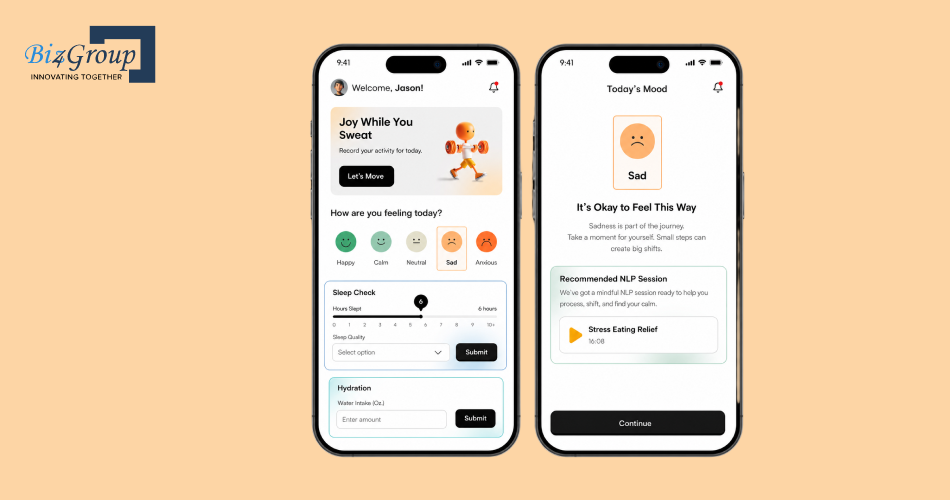
Our build on SweatJoy, a wellness tracking platform, shows what this looks like in practice outside a clinical context: structuring raw daily inputs like mood, sleep, and hydration into reliable behavioral insights required building a dedicated data processing layer specifically to keep analytics accurate as the user base grew, not something added afterward once performance problems showed up.
Step 7: Choose and Integrate Your Technology Stack
The stack decision should follow the architecture decisions made in Step 3, not the other way around. Choosing tools before knowing your compliance and data requirements is how teams end up migrating databases or re-architecting integrations midway through a build.
|
Layer |
Common Choices |
Why It's Used |
|---|---|---|
|
Frontend |
React, React Native, Flutter |
Cross-platform consistency, faster iteration |
|
Backend |
Node.js, Python (FastAPI, Django) |
Mature ecosystems, strong AI/ML library support |
|
Database |
PostgreSQL, MongoDB |
Structured health data vs. unstructured content |
|
AI/ML |
GPT-4 class models (under BAA), TensorFlow, PyTorch |
Natural language and predictive capabilities |
|
Interoperability |
FHIR R4, HL7 v2 |
Required for EHR and QHIN connectivity |
|
Cloud Hosting |
AWS, Azure, GCP (HIPAA-eligible services) |
Scalable, auditable, BAA-available infrastructure |
|
Security |
AES-256 encryption, OAuth 2.0, RBAC |
Baseline technical safeguards for PHI |
Step 8: Test Against Real Clinical and Compliance Scenarios
Standard QA isn't enough for a regulated healthcare product. Testing has to include compliance scenarios and, where relevant, clinical accuracy checks, which go well beyond confirming the app doesn't crash, covered in full in the next section on validation.
- Run security and penetration testing before launch, not after
- Test de-identification pipelines against edge cases in real data
- Validate AI outputs against known-correct results, not just system uptime
Step 9: Launch, Train Users, and Monitor from Day One
Launch isn't the finish line, even though it's often treated that way. The product needs monitoring, feedback loops, and a clear path for model updates from the moment it goes live, not three months later once something has already gone wrong.
- Roll out in controlled stages where possible, not an all-at-once launch
- Train the clinical or administrative staff who'll actually use it
- Set up monitoring for model drift and unexpected AI behavior immediately
These nine steps aren't strictly sequential; architecture, UX, and compliance decisions loop back into each other constantly throughout a real build. But teams that follow this rough order, classification first, architecture before stack, an MVP before the full product, consistently ship faster than teams that try to build everything at once. A HIPAA-compliant AI healthcare app development company that's run this sequence repeatedly turns what feels like a maze for a first-time founder into a predictable, weeks-long process rather than a months-long guessing game.
How Do You Validate an AI Healthcare Product, and What Happens After Launch?
Validation proves your product does what it claims on real patients, not just on a test dataset. FDA clearance alone doesn't prove this.
A systematic analysis published August 19, 2026, in PLOS Digital Health examined all 1,357 FDA-authorized AI medical devices through December 5, 2025. Only three, 0.2 percent, had been evaluated on patient-centered outcomes like mortality, hospitalization, or quality of life. Most clearances relied on "substantial equivalence" to an existing device, not proof the device actually improves patient outcomes. This matters directly for anyone doing AI in healthcare product lifecycle planning: clearing a regulatory bar and proving clinical value are two different things.
How Do You Validate an AI Healthcare Product?
Validation isn't one test you run before launch. It's a set of distinct checks, each answering a different question about whether your product is safe and reliable: does it hold up on data it hasn't seen, does it work consistently across different patient groups, and is the evidence proportional to the risk the product carries. Skipping any one of these doesn't make the product safer. It just means the gap gets discovered later, usually by a patient, a clinician, or a regulator instead of by you.
1. Retrospective vs. Prospective Validation
|
Type |
What It Tests |
Strength of Evidence |
|---|---|---|
|
Retrospective |
Historical data the model wasn't trained on |
Faster, cheaper, weaker evidence |
|
Prospective |
New, real-time data as it's generated |
Slower, costlier, the gold standard |
|
Multi-site |
Performance across different hospitals or patient populations |
Confirms results generalize beyond one setting |
Retrospective validation is the common starting point. Prospective validation is what regulators and serious enterprise buyers increasingly expect before trusting a product with real clinical decisions.
2. Bias and Subgroup Testing
A 2026 scoping review found that of 545 studies covering 252 radiology AI products, only 77 studies, covering 52 products, included demographic subgroup data at all. Where sex-subgroup analysis was reported, 67 percent of the underlying datasets were statistically underpowered to detect it reliably.
- Test performance separately across age, sex, and ethnicity where clinically relevant
- Check whether your training data reflects the population you'll actually serve
- Document subgroup results even when they're imperfect, since undocumented bias is worse than disclosed bias
3. Validation Bar by Risk Tier
A general wellness tool and a diagnostic SaMD don't need the same validation bar, which is why the product classification from earlier in this guide has to happen first.
- Non-device wellness tools: internal testing and user feedback are usually sufficient
- Non-device CDS tools: validation should confirm a clinician can independently verify the output
- Device CDS and diagnostic SaMD: retrospective validation at minimum, prospective validation increasingly expected
What Happens After Launch?
Launch is the point where most teams stop thinking about validation, and it's exactly where the PLOS Digital Health findings say the real gap lives. A product that worked in testing can still drift, fail silently, or produce output nobody is checking once it's live. What happens in the months after launch determines whether a product stays trustworthy or quietly stops being so.
1. Monitoring for Performance Drift
An AI model's performance can drift after deployment as real-world data shifts away from what it was trained on. Without active monitoring, that drift is invisible until something goes wrong downstream.
- Monitor live performance against the validated baseline on a defined schedule
- Set a clear threshold for when drift triggers a re-validation, not just a shrug
- If the product operates under a PCCP, make sure monitoring matches exactly what the plan committed to
3. Human Review as a Continuous Safeguard
Monitoring catches drift after the fact. A human review step catches problems in real time, before an AI-generated output ever reaches a patient or a payer. Bill Matters reflects this principle directly: every AI-generated appeal is reviewed and approved by a person before submission, which functions as a continuous, built-in check on model output rather than a one-time validation event that's assumed to hold forever.
Why This Stage Gets Skipped, and Shouldn't
Teams under pressure to launch often treat validation as a box to check once, right before release. The PLOS Digital Health findings show what that produces at scale: a market full of cleared AI devices with almost no evidence they help patients. Product development in healthcare that treats validation as a continuous discipline, not a pre-launch formality, is what actually earns trust from clinicians, hospital procurement teams, and regulators over time.
How Much Does It Cost to Build an AI Healthcare Product?
A realistic budget for AI healthcare products development in 2026 runs from $40,000 to $300,000, though your actual number depends heavily on what you're building, how much compliance work it needs, and how deep the AI functionality goes. A simple patient intake tool and a diagnostic decision-support platform sit at opposite ends of that range for good reason, and no two AI healthcare product development company quotes should look identical unless the scope is identical too.
Cost Breakdown by Feature
|
Feature |
Estimated Cost |
What Drives the Range |
|---|---|---|
|
User authentication & role-based access |
$3,000 – $8,000 |
Complexity of role hierarchy, MFA requirements |
|
HIPAA-compliant data architecture |
$10,000 – $35,000 |
Encryption, audit logging, BAA-covered infrastructure |
|
AI/ML model integration (chatbot, NLP, prediction) |
$15,000 – $50,000 |
Custom model vs. API-based, training data needs |
|
EHR/FHIR integration |
$10,000 – $40,000 |
Number of systems, HL7 v2 legacy support |
|
Patient portal / app UI |
$8,000 – $25,000 |
Platform count (web, iOS, Android), design depth |
|
Admin dashboard & reporting |
$5,000 – $20,000 |
Analytics depth, real-time vs. batch reporting |
|
Clinical decision support logic |
$15,000 – $60,000 |
Risk tier, validation requirements |
|
Telehealth / video integration |
$8,000 – $20,000 |
HIPAA-compliant SDK, recording, compliance logging |
This is where AI healthcare software product development budgets are actually built or broken. Founders often price the AI feature correctly and badly underestimate the compliance architecture sitting underneath it.
What Factors Actually Affect the Cost
- Your product's risk tier, since a general wellness tool and a Device CDS tool require entirely different validation and documentation work
- Whether you're building custom AI models or integrating existing ones under a BAA
- How many external systems you need to connect to (EHRs, labs, pharmacy systems, payers)
- Your team's location and experience specifically with regulated healthcare builds, not just general software
- Whether you're building for one platform or multiple (web, iOS, Android) from day one
- How much of the compliance architecture is standardized already versus built from scratch
Hidden Costs Most Budgets Miss
- Post-launch compliance monitoring and annual security audits, which aren't one-time costs
- Re-validation work triggered by model updates, especially under a PCCP
- BAA negotiation and vendor verification across every service touching PHI, not just your main cloud provider
- Staff training and change management once the product reaches real clinical users
- De-identification pipeline maintenance as your data sources and formats change over time
Cost Optimization Strategies That Actually Work
- Build the compliance architecture once, correctly, rather than retrofitting it after an MVP proves the idea
- Start with an MVP scoped to one core workflow instead of building every planned feature at once
- Use existing HIPAA-eligible cloud services and BAA-covered AI model providers instead of building custom infrastructure from scratch
- Prioritize FHIR-native integration over custom point-to-point connections, which pay off as you add more EHR partners later
- Work with a team that has built regulated healthcare products before, since fewer expensive mistakes often offsets a higher hourly rate
Buy vs. Build: Which Approach Costs Less in the Long Run
|
Factor |
Buy (Configurable Platform) |
Build (Custom Development) |
|---|---|---|
|
Upfront cost |
Lower, often subscription-based |
Higher, full development investment |
|
Time to launch |
Faster, weeks not months |
Slower, follows the full build timeline |
|
Fit to your exact workflow |
Limited, shaped by the platform's constraints |
Full control over every workflow detail |
|
Long-term cost at scale |
Can exceed custom build cost through per-user or per-feature fees |
More predictable, no recurring licensing |
|
Competitive differentiation |
Minimal, same platform available to competitors |
High, proprietary to your product |
|
Compliance ownership |
Shared with the vendor, verify their BAA carefully |
Fully in your control, and your responsibility |
Most founders considering custom AI healthcare product development start by evaluating an off-the-shelf platform first, specifically because switching from buy to build later is far more expensive than the reverse. If your product depends on a proprietary clinical workflow or a specific competitive edge, building custom from the start is usually the better long-term bet despite the higher upfront number.
Want a real number instead of a wide range?
Your actual cost depends on your product's risk tier, features, and integrations, not a generic estimate. Get a scoped quote based on what you're actually building.
Get Your Custom Cost EstimateWhat Challenges Should You Expect, and How Do You Solve Them?
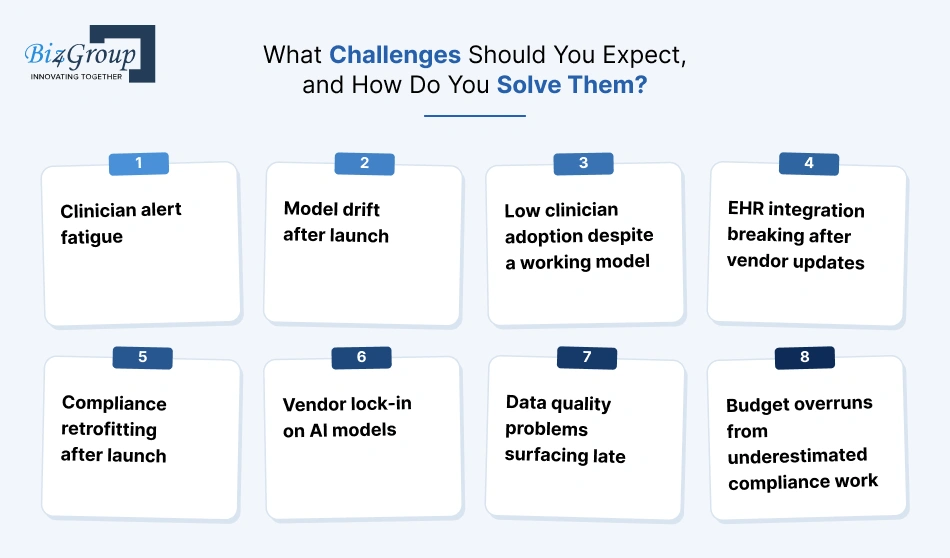
Every founder building an AI healthcare product development company's worth of experience eventually runs into the same handful of problems. None of them are secret. What separates products that survive contact with real clinical use from ones that quietly get abandoned is whether these challenges were planned for or discovered the hard way.
|
Challenge |
Why It Happens |
How to Solve It |
|---|---|---|
|
Clinician alert fatigue |
Clinicians see 100-200 alerts a day; research shows up to 90-96% get overridden or ignored, often including genuinely important ones |
Design tiered alerts, not binary on/off ones. Surface only high-confidence, high-relevance signals, and let clinicians see the reasoning behind each one |
|
Model drift after launch |
Real-world data shifts away from training data as patient populations, EHR schemas, and clinical protocols change over time |
Build drift monitoring into the architecture from day one, with a defined threshold that triggers re-validation, not just a dashboard nobody checks |
|
Low clinician adoption despite a working model |
A technically sound tool still gets ignored if it adds friction to an already overloaded workflow |
Design around the exact point in the workflow where the decision happens, not around what's easiest to build. Test with real clinicians before writing production code |
|
EHR integration breaking after vendor updates |
EHR vendors push schema and API changes that silently break point-to-point integrations |
Build on FHIR R4 rather than custom integrations wherever possible, since standards-based connections degrade more gracefully than proprietary ones |
|
Compliance retrofitting after launch |
Teams build fast, prove the idea works, then discover HIPAA or FDA requirements don't fit cleanly into the existing codebase |
Classify the product and design the compliance architecture before writing core features, exactly as covered earlier in this guide |
|
Vendor lock-in on AI models |
Building tightly around one model provider's API makes switching costly if pricing, performance, or BAA terms change later |
Build an abstraction layer between your product logic and the underlying model, so swapping providers doesn't mean rewriting the product |
|
Data quality problems surfacing late |
Incomplete, inconsistent, or unrepresentative training data often isn't caught until the product is already live |
Audit data quality and subgroup representation during validation, not after a clinician or patient flags a problem |
|
Budget overruns from underestimated compliance work |
Teams price the AI feature accurately and badly underestimate the compliance architecture underneath it |
Scope compliance as its own line item from the start, not a rounding error folded into "development," as covered in the cost breakdown above |
Why Most of These Challenges Are Predictable, Not Surprising
None of these problems are unique to any one product. They show up across nearly every AI healthcare products development effort because they stem from the same root cause: building the AI feature first and treating workflow fit, compliance, and monitoring as afterthoughts. We've built this lesson directly into how we approach product development in healthcare, including on Bill Matters, where the human review step wasn't added after launch because users complained. It was architected in from the first screen, specifically because we'd already seen what happens when AI output reaches a payer or a patient record without a checkpoint in front of it.
The products that hold up under real clinical and operational pressure are the ones built with these failure modes in mind from the start, not the ones that are fastest to a demo.
Why Build Your AI Healthcare Product with Biz4Group?
Everything in this guide, classification, compliance, architecture, validation, cost, reflects how we actually approach AI healthcare product development. Not theory borrowed from somewhere else.
Biz4Group has spent over 20 years building AI healthcare solutions, with more than 100 healthcare AI projects delivered and $500M+ in revenue generated through that work. We're ranked among the top healthcare AI firms on Clutch in 2025, and healthcare organizations across the U.S. work with us specifically as an AI healthcare product development company that understands compliance isn't optional.
What that track record actually looks like in practice: Bill Matters, our own HIPAA compliant AI healthcare product development, built with a signed BAA from the first screen, not added later. CogniHelp, an ML-driven cognitive monitoring app for dementia patients. An enterprise AI agent built on AWS VPC and AES-256 encryption for healthcare clients who can't afford a data leak.
"Healthcare teams are not looking for more tools, they are looking for systems that actually work within their constraints," says Dave Caplis, Technical Director at Biz4Group. That's the standard this entire guide was written against.
If you're classifying your product, scoping compliance, or just trying to figure out how much does it cost to build an AI healthcare product, book a strategy session and we'll walk through your specific build, not a generic pitch.
Ready to build an AI healthcare product that actually reaches patients?
Let's walk through your idea, your compliance requirements, and a realistic build plan, together.
Schedule a Strategy SessionConclusion
AI healthcare products development in 2026 isn't about picking the right model or the flashiest feature. It's about getting the sequence right: classify before you build, design HIPAA compliant AI healthcare product development into the architecture instead of bolting it on, validate continuously instead of once, and budget for what the product actually needs instead of a generic estimate.
The founders who get this right aren't necessarily the ones with the most funding. They're the ones who treat regulatory strategy and clinical validation as part of product development in healthcare itself, not a separate workstream handled after the fact. As the PLOS Digital Health findings covered earlier in this guide showed, only 3 of 1,357 FDA-cleared AI devices have ever been validated on whether patients actually got better. That gap is exactly what disciplined, sequence-first development is meant to close.
If you're ready to move from planning to building, Biz4Group has spent over 20 years turning exactly these decisions into working AI healthcare products that reach real patients and real clinicians, not just a demo. For founders thinking beyond this single build, it's also worth keeping an eye on top trends in AI product development shaping how these products get built going forward.
FAQ
1. How much does it cost to build an AI healthcare product?
A realistic budget for AI healthcare products development ranges from $40,000 to $300,000, depending on your product's risk tier, how much AI functionality it needs, and how deep your EHR and compliance requirements go. A focused MVP sits at the lower end. A full enterprise build with clinical decision support logic and multiple integrations sits closer to the upper end.
2. Do all AI healthcare products need FDA clearance?
No. FDA clearance only applies if your product qualifies as Software as a Medical Device, meaning it diagnoses, treats, or directly informs a clinical decision. A general wellness tool, an administrative workflow product, or a non-device clinical decision support tool can often launch without clearance, as long as the product's marketing language and intended use stay within those boundaries.
3. How long does AI healthcare product development take?
At Biz4Group, a focused MVP typically takes 2 to 4 weeks, and a full enterprise-grade build runs 6 to 8 weeks, assuming the compliance architecture is designed in from the start rather than added later. Products requiring FDA clearance take considerably longer once regulatory review timelines are factored in.
4. How do you make an AI healthcare product HIPAA compliant?
HIPAA compliant AI healthcare product development requires a signed Business Associate Agreement with every vendor touching patient data, including your AI model provider, along with encryption at rest and in transit, role-based access control, and a complete audit trail. De-identification alone does not satisfy HIPAA unless it follows the Safe Harbor or Expert Determination method correctly.
5. What's the difference between custom and off-the-shelf AI healthcare product development?
Custom AI healthcare product development gives you full control over clinical workflow fit, data architecture, and long-term differentiation, at a higher upfront cost. An off-the-shelf platform launches faster and costs less initially, but can become more expensive over time through per-user fees and offers limited ability to match your exact workflow or hold a competitive edge.
6. How do you validate an AI healthcare product before launch?
Validation starts with retrospective testing against historical data, then moves to prospective testing against real-time data where the risk tier justifies it. Bias and subgroup testing across age, sex, and ethnicity should happen before launch, not after, since FDA clearance alone does not confirm a product improves patient outcomes.
7. What happens to an AI healthcare product after launch?
Launch is not the finish line. The product needs ongoing monitoring for model drift, a defined threshold for when performance changes trigger re-validation, and a human review step for any AI output reaching a patient record or payer. If the product operates under a Predetermined Change Control Plan, monitoring has to match exactly what that plan committed to.