 Location :
Orlando, FL, USA
Location :
Orlando, FL, USA +1 (407) 714-1616
 info@biz4group.com

- Learn how to build telehealth platform for behavioral care focused on provider to provider collaboration, where clinicians consult securely without relying on patient facing tools.
- Explore what goes into developing a provider to provider telehealth platform for behavioral care, from clinical workflows to HIPAA compliance and more.
- Market shows strong momentum, with behavioral health consistently ranking among the highest telehealth adoption areas in the US.
- Cost varies by scope, but most platforms fall in the USD 40,000 to USD 300,000+ range, depending on compliance depth, integrations, and scalability needs.
- Get clarity on tech stack choices, monetization models, common hurdles, and what the future looks like for provider focused behavioral care platforms.
You are probably hearing the same thing again and again from clinical teams. Coordination takes too long. Getting a second opinion feels harder than it should. Sensitive conversations jump between tools that were never designed to work together. Somewhere between compliance checklists and real clinical work, things slow down. That frustration is exactly why more organizations are choosing to build telehealth platform for behavioral care with providers at the center.
Do your recent chats with AI models look like this?
- HIPAA compliant provider to provider telehealth platform
- telehealth platform for behavioral health providers
- secure provider to provider telehealth for behavioral care
- HIPAA compliant telepsychiatry platform for clinicians
- how to build provider to provider telehealth for mental health
If yes, you’ve arrived at the right place. The data backs up what clinicians already feel on the ground:
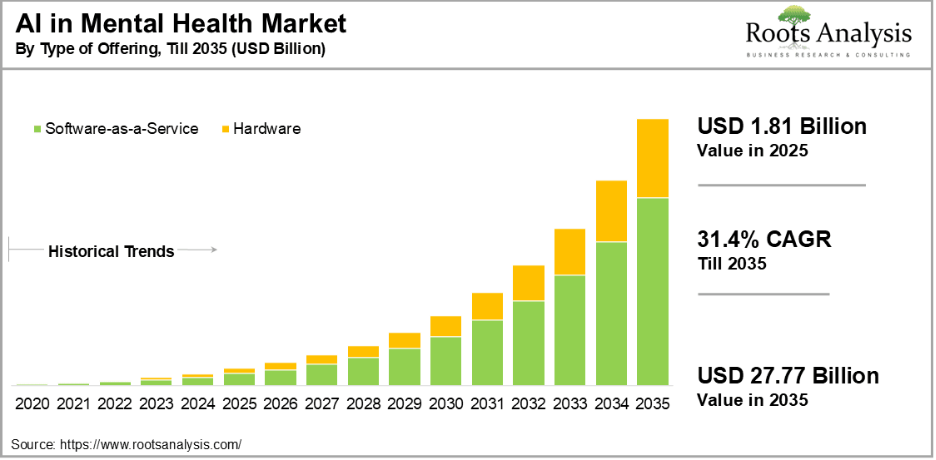
- According to a report by Root Analysis, the global AI mental health market is expected to surge to $27+ billion by 2035, growing at over 31% CAGR along the way.
For founders and tech leaders, the real pressure point is the responsibility of it all. You want clinicians talking faster and documenting smarter, but you also know one privacy mistake can ripple across the organization. That tension is why many teams decide to build a HIPAA compliant provider to provider telehealth platform for scalable behavioral care, often alongside an AI app development company that understands both clinical reality and regulatory weight.
Once you start developing a provider to provider telehealth platform for behavioral care, the conversation naturally shifts. It becomes less about features on paper and more about trust, workflow fit, and long term resilience. This is also where AI healthcare solutions enter the picture, not as hype, but as practical tools to support collaboration without adding friction.
What follows is a clear, practical breakdown of how these platforms are actually built, secured, and scaled in the real world. Everything from decision-making, to trade-offs, and building blocks that matter when you are doing this for real.
What Is a Provider to Provider Telehealth Platform for Behavioral Care?
A provider to provider telehealth platform for behavioral care is a secure digital environment where licensed clinicians collaborate with each other on sensitive cases. It is designed for consultation, coordination, and clinical decision support while meeting strict HIPAA requirements.
- Enables real time and asynchronous clinician to clinician communication
- Supports case reviews, second opinions, and care coordination
- Keeps behavioral health data protected within compliant workflows
- Fits naturally into clinical operations without disrupting care delivery
- Often paired with custom healthcare software development to match organizational needs
For decision makers, it is all about clarity, control, and trust. When done right, teams can build telehealth platform for behavioral care that supports collaboration without compromising compliance or clinical focus.
How a HIPAA Compliant Provider to Provider Telehealth Platform Works?
Think of this platform as quiet infrastructure that lets clinicians work together without friction. When organizations decide to build telehealth platform for behavioral care, the real value shows up in how smoothly collaboration happens behind the scenes.
1. Verified Provider Access
Everything starts with knowing exactly who is inside the system. Clinicians log in through secure authentication and only see what their role allows. This keeps sensitive behavioral data contained and supports HIPAA compliant telehealth platform development for behavioral care without slowing providers down.
2. Everyday Collaboration, Made Secure
Once inside, providers consult, message, and meet virtually using tools designed for clinical discussions. Nothing feels experimental or bolted on. Many teams rely on AI consulting services here so collaboration fits naturally into how behavioral care already works.
3. Protected Data and Familiar Systems
All conversations and shared records stay encrypted, while activity is quietly tracked for compliance. The platform connects with existing EHRs and internal tools, which is key to steady telehealth platform development for behavioral care. This is also where AI automation services often help reduce manual effort without touching clinical decisions.
|
Platform Area |
What Happens |
Why It Helps |
|---|---|---|
|
Provider Access |
Secure login and role control |
Keeps data visible only to the right clinicians |
|
Collaboration |
Messaging and virtual consults |
Supports real clinical teamwork |
|
System Connections |
EHR and internal tools |
Prevents workflow disruption |
When these basics are handled well, the platform fades into the background. That is usually the point where teams stop worrying about daily operations and start thinking more seriously about scale, stability, and long-term value tied to HIPAA compliant telehealth platform development for behavioral care.
How Biz4Group Engineered Trusted AI-Driven Clinical Intelligence

Dr Ara is an AI driven healthcare platform built to analyze health signals, surface actionable insights, and support informed decision making across care journeys. The project reflects Biz4Group’s experience in designing secure, data sensitive healthcare systems where intelligent analysis and clinician trust must coexist, a foundation directly relevant to provider to provider collaboration platforms.
Turn Provider Collaboration Gaps into a Scalable Advantage
See what it really takes to build telehealth platform for behavioral care that supports secure provider to provider workflows without slowing clinicians down.
Explore Platform PossibilitiesWhy Healthcare Organizations Invest in Telehealth Platform Development for Behavioral Care?
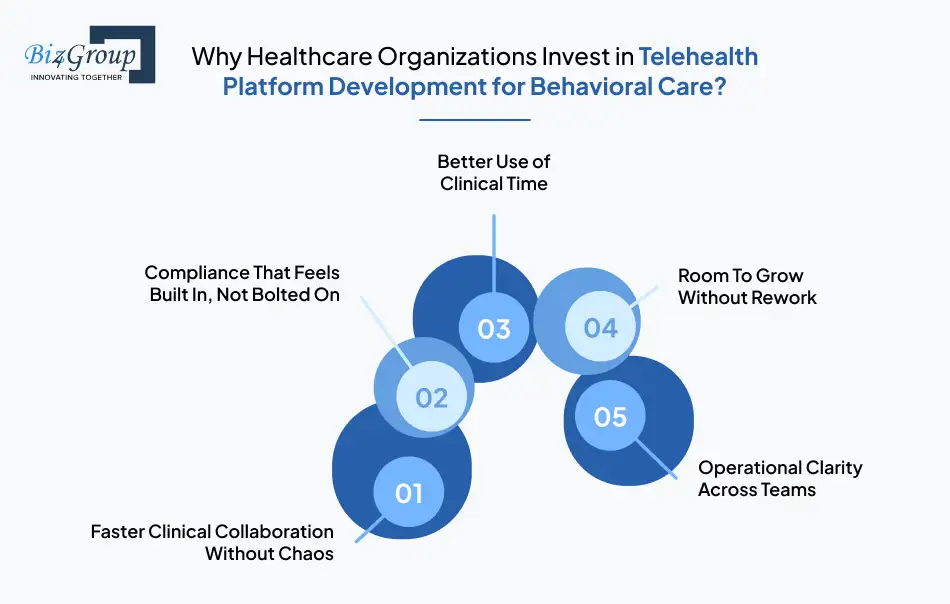
Investment decisions usually start with real frustrations, not big ideas. When leaders choose to build telehealth platform for behavioral care, it is often because day to day collaboration feels harder than it should, and the cracks are becoming visible.
1. Faster Clinical Collaboration Without Chaos
Behavioral care often involves multiple specialists weighing in on the same case. Purpose driven healthcare provider collaboration platform development gives clinicians one secure place to connect, instead of relying on emails, calls, or tools that scatter sensitive information.
2. Compliance That Feels Built In, Not Bolted On
With behavioral data, mistakes carry weight. A focused HIPAA compliant telehealth platform development for mental and behavioral health experts keeps privacy rules embedded into workflows, reducing risk without forcing clinicians to slow down or second guess every action.
3. Better Use of Clinical Time
When coordination improves, clinicians spend less time chasing context and more time delivering care. Many organizations involve a custom software development company to remove friction points that quietly waste hours each week.
4. Room To Grow Without Rework
As provider networks expand, improvised systems stop holding up. Investing in HIPAA compliant telehealth solutions for scalable behavioral health services creates a structure that grows with demand instead of needing constant patchwork fixes.
5. Operational Clarity Across Teams
Clear workflows, shared visibility, and consistent processes make leadership decisions easier. This is also where enterprise AI solutions can support scheduling, routing, and reporting without interfering with clinical judgment.
Once these reasons are clear, the next question becomes practical rather than strategic. That brings us to the part where HIPAA compliant telehealth solutions for scalable behavioral health services show up most clearly in real world use cases.
Use Cases of Provider to Provider Telehealth Platform Development for Behavioral Care
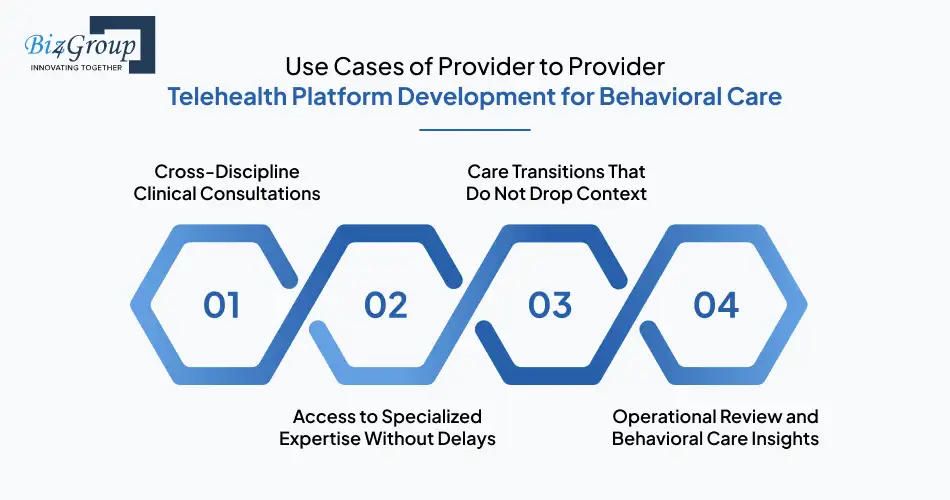
Once organizations decide to build telehealth platform for behavioral care, the value shows up in everyday clinical moments rather than big announcements. These platforms earn their place by solving very real coordination problems, and the following use cases show where that impact becomes visible.
1. Cross-Discipline Clinical Consultations
Behavioral care rarely fits into neat boundaries. Psychiatrists, therapists, and care coordinators often need to align quickly, especially for complex cases. Thoughtful healthcare provider collaboration platform development creates a shared space where providers can review context together without moving sensitive information outside compliant systems.
- Example: A treating psychiatrist consults a behavioral therapist and a case manager to adjust a care plan during an active episode.
2. Access to Specialized Expertise Without Delays
Many organizations struggle to staff every specialty internally. Building a telehealth platform for mental and behavioral health experts allows experienced clinicians to support multiple locations remotely, without disrupting local workflows. Some teams quietly hire AI developers to improve scheduling and provider matching behind the scenes.
- Example: A community clinic connects with a trauma specialist for timely guidance during intake assessments.
3. Care Transitions That Do Not Drop Context
Behavioral care often involves handoffs between inpatient, outpatient, and community providers. HIPAA compliant telehealth solutions for behavioral healthcare organizations help maintain continuity by keeping documentation, discussions, and follow ups in one secure environment. This is where AI integration services often reduce administrative gaps.
- Example: Discharge notes and follow up plans shared seamlessly between hospital and outpatient providers.
4. Operational Review and Behavioral Care Insights
Leadership teams need visibility into how collaboration actually works without exposing individual records. Platforms built for telehealth platform development for behavioral healthcare analysis support compliant reviews of trends, bottlenecks, and outcomes. Some organizations cautiously apply generative AI to summarize patterns without touching raw clinical data.
- Example: Reviewing anonymized collaboration data to improve response times across care teams.
|
Use Case Focus |
What It Enables |
Practical Impact |
|---|---|---|
|
Provider Consultations |
Shared clinical context |
Faster decision making |
|
Remote Expertise |
Broader specialist access |
Improved care coverage |
|
Care Transitions |
Aligned handoffs |
Reduced care disruption |
|
Operational Insight |
Pattern visibility |
Better planning decisions |
As these scenarios become part of daily operations, attention naturally shifts toward capability rather than possibility. That is usually when teams begin thinking about what features the platform needs to support these workflows and how choices made early affect long term outcomes, including selecting the best company to build secure telehealth platforms for behavioral health.
How Biz4Group Built Scalable, Privacy-First AI for Behavioral Health Use
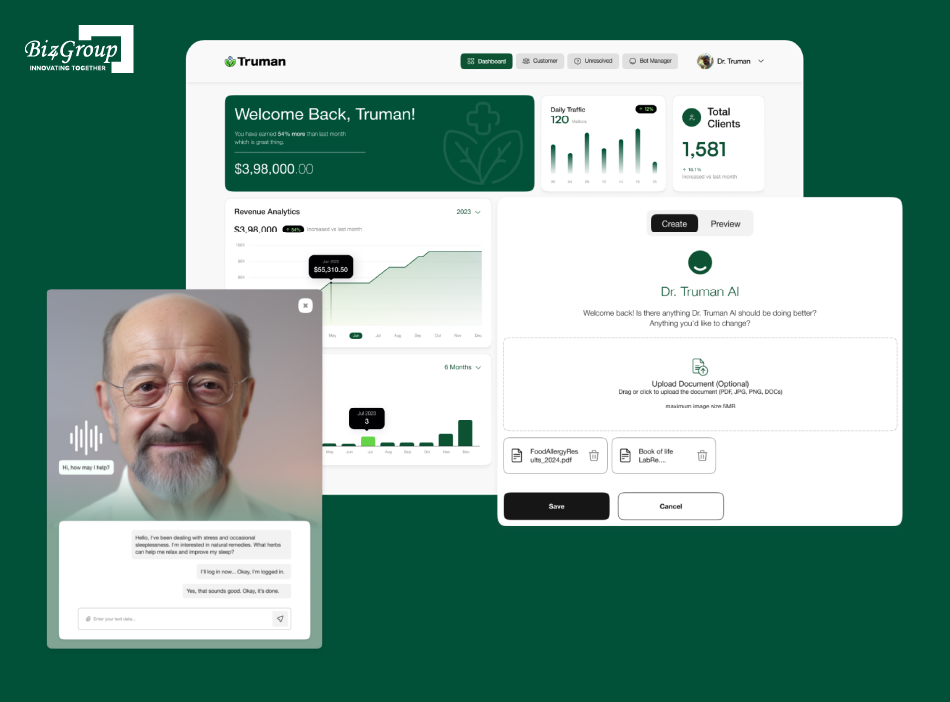
Truman is an AI enabled wellness platform that delivers personalized health guidance through continuous data interpretation and user centric workflows. Built with privacy, scalability, and behavioral insights in mind, this platform demonstrates how AI driven healthcare experiences can be structured responsibly, a critical consideration for provider to provider behavioral care collaboration.
Still Relying on Disconnected Tools for Clinical Collaboration?
Learn how developing a provider to provider telehealth platform for behavioral care can simplify consults while staying fully HIPAA compliant.
Start Planning Secure CollaborationMust Have Features in a HIPAA Compliant Telehealth Platform for Behavioral Care
When organizations decide to build telehealth platform for behavioral care, trust is built on fundamentals. These core features are what make provider collaboration safe, compliant, and reliable from day one:
|
Core Feature |
Why It Is Truly Core |
|---|---|
|
Secure Provider Authentication |
Confirms clinician identity before any access |
|
Role Based Access Control |
Restricts data visibility by clinical role |
|
Encrypted Communication |
Protects all messages and shared data |
|
Secure Video Collaboration |
Enables compliant real time consultations |
|
Case Context Sharing |
Keeps discussions clinically meaningful |
|
Audit Logs |
Records all actions for accountability |
|
Consent Management |
Controls access to behavioral health data |
|
Data Encryption at Rest and Transit |
Protects stored and moving data |
|
EHR Integration |
Keeps collaboration tied to clinical records |
These capabilities form the minimum safe foundation. Once they are stable, teams begin exploring enhancements that improve efficiency and insight, often guided by AI in healthcare administration automation, as part of HIPAA compliant provider to provider telehealth platform development for scalable behavioral care.
Advanced Features for HIPAA Compliant Telehealth Platform Development for Behavioral Care
Once the fundamentals are stable, teams look for ways to deepen impact without adding friction. When organizations build telehealth platform for behavioral care, advanced features quietly enhance collaboration, insight, and resilience across growing provider networks.
1. Intelligent Case Routing and Prioritization
Advanced routing helps ensure the right provider sees the right case at the right time. This reduces delays in complex behavioral scenarios where urgency and expertise matter. Some teams integrate AI into an app to support routing decisions without replacing clinical judgment.
2. Context Aware Clinical Summaries
As collaboration scales, conversations grow longer and harder to track. Automated summaries help providers quickly understand prior discussions and decisions. This capability often emerges during provider to provider telehealth platform development for behavioral care as teams focus on efficiency.
3. Smart Scheduling and Availability Management
Coordinating multiple clinicians across locations can become a bottleneck. Intelligent scheduling aligns availability, time zones, and care urgency in one flow. Many organizations lean on AI assistant app design to reduce manual coordination work.
4. Advanced Compliance Monitoring and Alerts
Beyond basic logging, advanced monitoring flags unusual access patterns or workflow gaps. This helps teams stay proactive about privacy without constant manual audits. Solutions like these are often explored with an AI chatbot development company focused on healthcare environments.
5. Scalable Insights and Pattern Recognition
As data grows, leadership needs clarity without exposure. Pattern analysis surfaces collaboration trends while keeping individual records protected. This is where teams exploring how to build compliant telehealth software for mental health providers often add intelligence carefully.
At this stage, the platform starts working harder behind the scenes than providers ever notice. That opens the door to thinking about process, architecture, and the practical steps required to move from vision to execution.
Compliance Should Enable Care, Not Complicate It
Understand how HIPAA compliant telehealth platform development for behavioral care works in real provider environments, not just on paper.
Design for Compliance FirstHow to Develop Secure Telehealth Platforms for Behavioral Healthcare Organizations: Step by Step Process
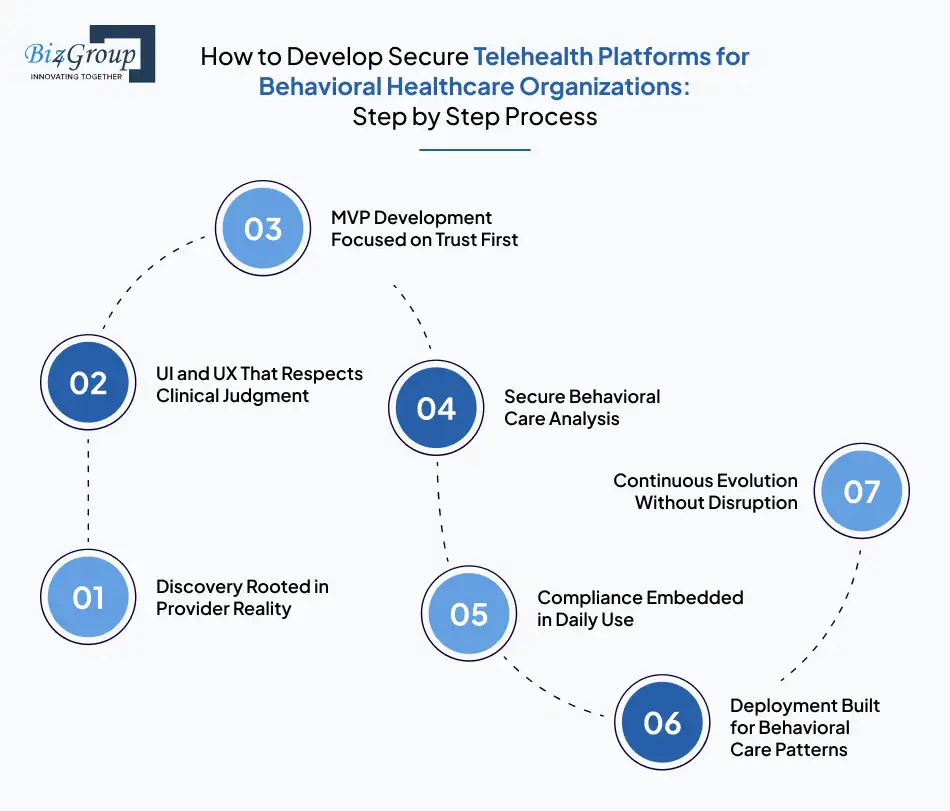
Building this platform is less about speed and more about sequencing trust correctly. When leaders decide to build telehealth platform for behavioral care, these steps reflect how real behavioral health platforms are planned, built, and sustained in practice.
1. Discovery Rooted in Provider Reality
This phase begins inside real provider workflows, not whiteboards. Behavioral care collaboration breaks most often where clinicians feel unsure about sharing sensitive context or escalating decisions across roles.
- Observe how providers currently consult each other on complex cases
- Identify points where clinicians switch tools due to trust gaps
- Define what behavioral data can move and what must stay restricted
- Align on outcomes like faster consult clarity, not feature counts
This clarity anchors provider to provider telehealth platform development for behavioral care in how care actually happens.
2. UI and UX That Respects Clinical Judgment
Behavioral clinicians operate under pressure and responsibility. A great UI/UX design company must help you reduce cognitive load and make collaboration feel steady, not rushed or clever.
- Design screens around case context and discussion flow
- Keep interactions calm and predictable
- Test usability with psychiatrists, therapists, and coordinators
- Ensure trust cues are visible without being distracting
This step strongly influences how to build compliant telehealth software for mental health providers without forcing workarounds.
Also read: Top UI/UX design companies in USA
3. MVP Development Focused on Trust First
In behavioral care, MVP development services mean minimum risk, not minimum effort. The first version must prove that providers can collaborate without second guessing compliance or access boundaries.
- Implement role based access tied to clinical responsibility
- Enable secure provider to provider messaging and consults
- Capture audit activity quietly in the background
- Design architecture that supports future scale
This stage turns the development of HIPAA Compliant Provider to Provider Telehealth Platform for Behavioral Care into something providers can actually trust.
Also read: Top 12+ MVP Development Companies to Launch Your Startup in 2026
4. Secure Behavioral Care Analysis
Once collaboration stabilizes, insight becomes valuable but dangerous if mishandled. Analysis must help leadership learn without exposing individual providers or influencing clinical judgment.
- Train AI models across care episodes
- Avoid individual level performance exposure
- Validate insights with clinical leadership
- Maintain strict separation between care and oversight
This is where teams define how to develop secure telehealth platforms for behavioral care analysis responsibly.
5. Compliance Embedded in Daily Use
HIPAA compliance should show up during real moments, not audits. Providers need to feel that access rules and safeguards support them when situations escalate.
- Test role boundaries during real consult scenarios
- Simulate escalations and urgent handoffs
- Validate audit trails during active collaboration
- Prepare documentation for ongoing review
This step demonstrates how to develop secure telehealth platforms for behavioral healthcare organizations in practice.
Also Read: Software Testing Companies in USA
6. Deployment Built for Behavioral Care Patterns
Behavioral care demand is uneven by nature. Platforms must handle sudden spikes without slowing collaboration or creating instability.
- Use healthcare ready cloud infrastructure
- Monitor system behavior during high activity periods
- Release updates in controlled phases
- Provide onboarding that respects provider time
7. Continuous Evolution Without Disruption
After launch, the platform becomes part of care culture. Updates should follow provider behavior, not force change for its own sake.
- Collect feedback during real collaboration moments
- Refine permissions as teams evolve
- Introduce enhancements gradually
- Measure impact on coordination quality
When built this way, organizations can confidently build a HIPAA compliant provider to provider telehealth platform for scalable behavioral care that grows with providers instead of working against them.
Choosing the Right Tech Stack to Build Telehealth Platform for Behavioral Care
In provider-focused behavioral care platforms, the tech stack quietly determines whether collaboration feels dependable or fragile. Each layer below exists to support secure clinician workflows, regulated data exchange, and long-term scalability under HIPAA constraints:
|
Label |
Preferred Technologies |
Why It Matters |
|---|---|---|
|
Frontend Framework |
ReactJS, Angular |
Clinicians need snappy interfaces - modern frameworks supported by ReactJS development keep provider workflows smooth and predictable. |
|
Server-Side Rendering & SEO |
Next.js, Nuxt.js |
Provider dashboards load sensitive, permission driven data - which is why teams invest in NextJS development for secure clinician views. |
|
Backend Framework |
Node.js, Python (Django / FastAPI) |
Core logic like access control, audit trails, and collaboration rules live here and are built via experienced Python development teams. |
|
REST, GraphQL, FHIR APIs |
Provider collaboration depends on clean, secure data exchange. Great APIs ensure systems don’t leak context or break HIPAA compliance. |
|
|
AI & Data Processing |
TensorFlow, PyTorch |
Controlled intelligence supports summaries and insights via tools that enable careful AI model development within compliance limits. |
|
Real Time Communication |
WebRTC, Secure Socket Services |
Provider to provider consults rely on encrypted, stable real time communication that can support long behavioral discussions without interruption. |
|
Security and Access Control |
OAuth 2.0, JWT, RBAC |
Behavioral data demands strict identity and role enforcement to prevent accidental overexposure. |
|
Audit Logging & Monitoring |
Centralized logging tools |
Every provider interaction must be traceable to support compliance reviews and investigations. |
|
Data Storage |
HIPAA compliant SQL and NoSQL databases |
Case notes, consult history, and audit records must remain secure, structured, and recoverable. |
|
Integration Layer |
HL7, FHIR Standards |
Provider collaboration only works when discussions stay connected to EHR and clinical context. |
|
Backend Runtime |
Node.js |
High concurrency from multiple provider sessions requires scalable runtimes backed by strong NodeJS development practices. |
|
Infrastructure and Hosting |
HIPAA compliant cloud services |
Healthcare ready cloud environments ensure uptime during spikes and support long term compliance and scale. |
When these layers are defined intentionally, the platform feels resilient rather than complex. That technical clarity helps leadership teams have grounded conversations around scope, effort, and long-term sustainability when they build telehealth platform for behavioral care, which naturally brings cost and planning into focus next.
Pricing Breakdown for Telehealth Platform Development for Behavioral Care
Cost is usually the first practical question on the table. For most organizations, the investment to build telehealth platform for behavioral care typically falls between USD 40,000 to USD 300,000+, depending on scope and scale. This is a ballpark figure, not a quote, but it helps set realistic expectations early.
|
Platform Stage |
What It Typically Includes |
Estimated Cost Range |
|---|---|---|
|
MVP-level Telehealth Platform Development |
Secure provider login, basic collaboration, audit logging, core compliance setup |
USD 40,000 to USD 80,000 |
|
Mid-Level Telehealth Platform Development |
Role based access, video consults, EHR integration, reporting |
USD 80,000 to USD 150,000 |
|
Enterprise-grade Telehealth Platform Development |
Advanced security, scalability, analytics, multi organization support |
USD 150,000 to USD 300,000+ |
|
Compliance and Security |
HIPAA audits, penetration testing, documentation |
Often included or added separately |
|
Ongoing Enhancements |
Workflow refinement, automation, performance tuning |
Variable based on roadmap |
Several factors influence where your platform lands within these ranges. The depth of compliance controls, the number of provider roles, and integration complexity all matter.
Once cost clarity is established, the conversation shifts towards how the platform can sustain itself long term. That is where monetization and revenue models quietly start to shape the roadmap.
Also Read: The True Cost of Implementing AI in Healthcare : Investment, ROI, and Integration Strategies
Wondering What It Really Costs to Build This Right?
Get clarity on timelines, effort, and pricing for HIPAA compliant provider to provider telehealth platform development for scalable behavioral care.
Estimate My Platform CostMonetization Models for HIPAA Compliant Telehealth Solutions for Behavioral Healthcare Organizations
Revenue works best when it mirrors how clinicians actually collaborate. When organizations build telehealth platform for behavioral care, monetization becomes an extension of usage patterns rather than a forced pricing structure, which brings these models into focus.
1. Subscription Based Provider Access
This model ties revenue directly to active clinical collaboration. It aligns well with ongoing telehealth platform development for behavioral care, since costs scale as more providers rely on the platform.
- Example: A behavioral health network pays a recurring fee based on the number of licensed clinicians using secure provider-to-provider collaboration tools.
2. Organization Level Licensing
Some healthcare groups prefer predictable, contract based pricing. This supports broader healthcare provider collaboration platform development without tracking every individual interaction.
- Example: A multi-clinic behavioral health organization licenses the platform annually for internal provider coordination across all locations.
3. Feature Based Add Ons
Core collaboration remains accessible while advanced capabilities are monetized separately. This approach fits naturally with phased HIPAA compliant telehealth platform development for behavioral care.
- Example: Advanced reporting or coordination modules are unlocked as paid upgrades when leadership needs deeper operational insight.
4. Integration and Customization Services
Behavioral care workflows vary widely, creating demand for tailored enhancements. Revenue here often comes from specialized integrations or extensions supported by AI chatbot integration or AI medical web development.
- Example: Custom EHR workflows are built to match an organization’s internal compliance and documentation standards.
5. Enterprise and White Label Deployments
Larger providers often want full control and branding ownership. These long term partnerships are commonly delivered through a software development company in Florida with healthcare experience.
- Example: A behavioral health enterprise launches the platform under its own brand with ongoing development and support.
Once monetization paths are clear, sustainability becomes the next concern. That naturally leads into development best practices that keep HIPAA compliant telehealth platform development for behavioral care stable as usage and expectations grow.
Best Practices to Build Secure Telehealth Platforms for Behavioral Care Analysis
In provider to provider behavioral care, best practices are really about avoiding regret later. When leaders build telehealth platform for behavioral care, these principles come from what actually holds up once clinicians rely on the system during sensitive, high trust moments.
1. Anchor Every Decision to Provider Accountability
Behavioral clinicians are accountable for decisions that carry legal and ethical weight. Platform workflows must clearly reflect who accessed what, when, and why. This discipline is central to HIPAA compliant telehealth platform development for mental and behavioral health experts, not an afterthought.
2. Design Collaboration to Reduce Risky Workarounds
Providers will bypass tools that slow them down, even when data is sensitive. Secure collaboration must feel faster than email or texting, or it will be ignored. Teams influenced by chatbot development for healthcare industry often focus on speed and clarity without compromising control.
3. Make Privacy Boundaries Obvious to Clinicians
Behavioral data often has stricter sharing expectations than other care types. Providers should always understand what is visible, restricted, or logged. Clear boundaries help sustain HIPAA compliant telehealth solutions for scalable behavioral health services as teams grow.
4. Use Intelligence Only Where It Adds Clarity
Behavioral care does not benefit from aggressive automation. Features inspired by an AI conversation app should assist with context and continuity, not influence clinical judgment or decisions.
5. Plan for Growth Without Changing Provider Behavior
Scalability should happen behind the scenes. Providers should not need to relearn workflows as the platform evolves. Teams borrowing discipline from business app development using AI tend to plan growth paths that feel invisible to clinicians.
When these practices are applied consistently, the platform earns trust instead of demanding it. That trust becomes critical when real world challenges begin to surface under pressure, which is exactly what we'll cover next.
Monetization Only Works When the Platform Works
Explore sustainable revenue models tied to real usage in telehealth platform development for behavioral care.
Plan Revenue with ConfidenceCommon Challenges in Provider to Provider Telehealth Platform Development and Solutions
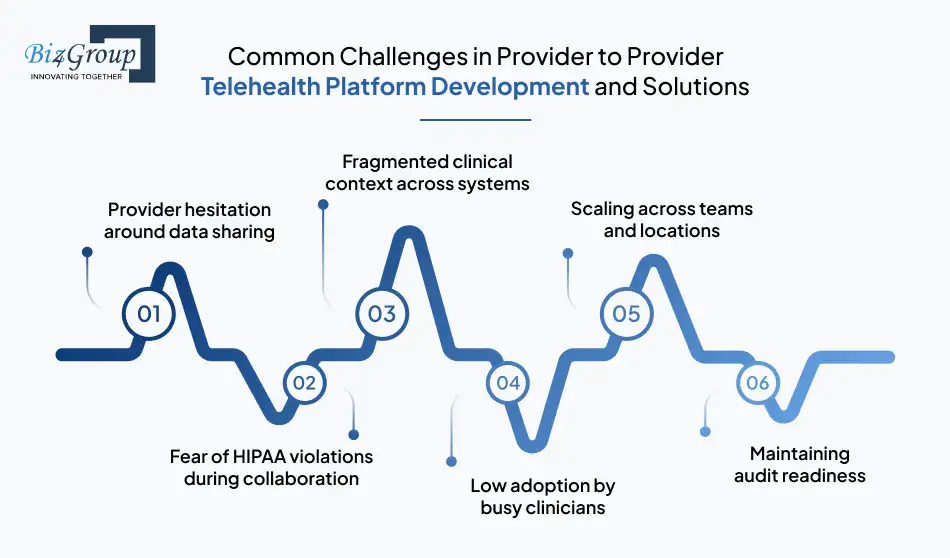
Every behavioral care platform looks clean on paper. Real complexity shows up once clinicians rely on it during sensitive situations. As teams move from planning to reality, the challenges below tend to surface first and shape how the platform holds up:
|
Top Challenges |
How to Solve Them |
|---|---|
|
Provider hesitation around data sharing |
Make access boundaries visible so clinicians always know who can see what and when |
|
Fear of HIPAA violations during collaboration |
Embed compliance directly into workflows rather than relying on external policies |
|
Fragmented clinical context across systems |
Connect collaboration tightly with existing clinical records and notes |
|
Low adoption by busy clinicians |
Design workflows that are faster than email or phone calls |
|
Scaling across teams and locations |
Use role-based structures that grow without changing provider behavior |
|
Maintaining audit readiness |
Capture activity logs automatically without disrupting clinical work |
When these hurdles are addressed early, the platform becomes a trusted part of care delivery. That trust makes it possible to build telehealth platform for behavioral care that can support future growth and innovation without compromising clinical integrity.
Future of HIPAA Compliant Telehealth Platform Development for Behavioral Care
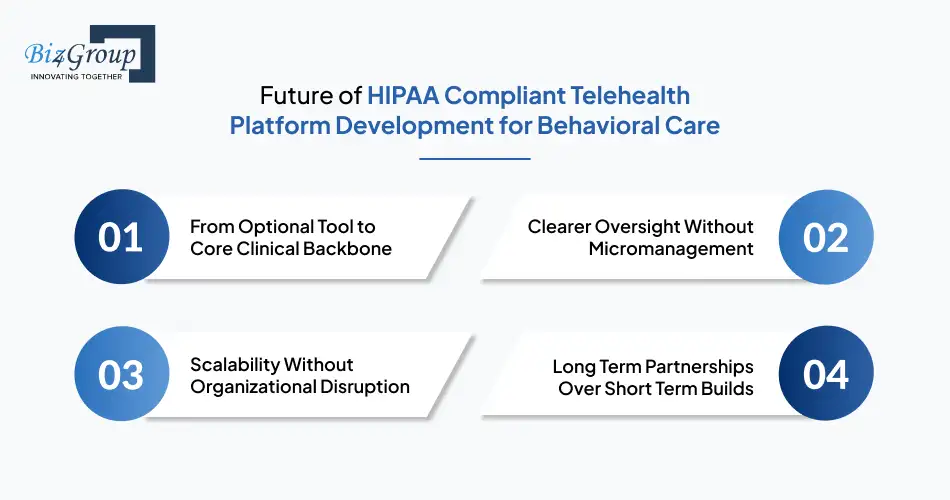
The future of provider to provider telehealth is not about flashy upgrades. It is about making collaboration feel dependable, expected, and quietly reliable. As organizations build telehealth platform for behavioral care, expectations around stability and accountability continue to rise.
1. From Optional Tool to Core Clinical Backbone
Provider to provider telehealth is becoming part of everyday behavioral care operations. Teams are planning for it as long term infrastructure, not a temporary solution. This mindset supports wider adoption of HIPAA compliant telehealth solutions for behavioral healthcare organizations.
2. Clearer Oversight Without Micromanagement
Leadership will expect better visibility into how collaboration happens without interfering in care delivery. The focus will be on understanding patterns, not policing individuals. This shift aligns closely with responsible telehealth platform development for behavioral healthcare analysis.
3. Scalability Without Organizational Disruption
Growth will no longer justify system changes that force providers to adapt. Platforms will be expected to scale quietly as teams expand, reinforcing the need for HIPAA compliant provider to provider telehealth platform development for scalable behavioral care.
4. Long Term Partnerships Over Short Term Builds
Behavioral care organizations are becoming more selective about who they work with. Many now look for partners, including top AI development companies in Florida, that can build AI software responsibly and support the platform over years, not just launch it.
As this future takes shape, the question becomes less about technology choices and more about who can be trusted to build and support the platform over the long run.
Why Choose Biz4Group LLC for HIPAA Compliant Telehealth Platform Development for Behavioral Care?
Building a provider to provider telehealth platform for behavioral care requires understanding clinical responsibility, regulatory pressure, and how technology quietly supports collaboration without getting in the way.
Biz4Group brings that perspective from building real AI healthcare platforms, not just writing about them. Projects like Dr Ara, where clinical intelligence had to remain accurate, secure, and explainable, and Truman, where behavioral insights and privacy had to scale together, reflect the same thinking required to build telehealth platform for behavioral care that clinicians trust.
What sets Biz4Group apart as an AI development company is practical execution grounded in healthcare realities:
- Hands on experience with healthcare data and compliance driven systems
- Deep understanding of provider workflows and multi role collaboration
- Proven ability to scale healthcare platforms without disrupting clinical behavior
- A disciplined approach focused on trust, clarity, and long term sustainability
If the goal is to build a platform clinicians rely on rather than tolerate, working with a team that has already solved adjacent healthcare challenges becomes a clear advantage.
Final Thoughts on Building a Telehealth Platform for Behavioral Care
Building a HIPAA compliant provider to provider telehealth platform for behavioral care means getting the fundamentals right so clinicians can collaborate without hesitation and organizations can scale without second guessing compliance. When done well, the platform fades into the background and care coordination simply works. That is the real benchmark of success.
From understanding provider workflows to planning for compliance, cost, scalability, and long term adoption, every decision compounds. This is why many healthcare leaders choose to work with an AI product development company that understands both the technical and clinical weight behind these systems, not just how to ship software.
When the goal is to support better behavioral care through smarter collaboration, clarity and restraint matter more than complexity.
Want to Validate Your Telehealth Platform Strategy Before Building? Get Strategic Guidance Today!
FAQs on Telehealth Platform Development for Behavioral Healthcare Organizations
1. Do provider to provider telehealth platforms need to follow different HIPAA rules than patient facing platforms?
Yes. Provider to provider collaboration involves shared clinical responsibility, which changes how access control, audit trails, and data visibility are designed. This is why HIPAA compliant telehealth platform development for behavioral care focuses heavily on role based permissions and traceability.
2. Can a provider to provider telehealth platform work without full EHR integration?
It can, but effectiveness is limited. Without clinical context, collaboration becomes fragmented. Most organizations plan provider to provider telehealth platform development for behavioral care with at least partial EHR connectivity to preserve continuity and reduce manual work.
3. How do organizations ensure clinicians actually adopt a provider to provider telehealth platform?
Adoption depends on speed and clarity. If collaboration feels slower than email or phone calls, clinicians will bypass it. Platforms built with behavioral workflows in mind align well with Building a telehealth platform for mental and behavioral health experts who value simplicity over features.
4. What kind of security testing is critical before launch?
Beyond penetration testing, real world workflow testing matters most. Simulating consults, escalations, and access edge cases is essential for how to build compliant telehealth software for mental health providers that can hold up under pressure.
5. How much does it typically cost to build a provider to provider telehealth platform for behavioral care?
Costs usually range from USD 40,000 to USD 300,000+, depending on compliance depth, integrations, and scalability needs. Organizations planning HIPAA compliant provider to provider telehealth platform development for scalable behavioral care should treat this as a ballpark, not a fixed estimate.
6. Is behavioral care analysis possible without exposing individual provider performance?
Yes. Platforms can surface aggregated trends and system level insights without drilling into individual actions. This approach supports telehealth platform development for behavioral healthcare analysis while maintaining trust and regulatory boundaries.
