Location :
Orlando, FL, USA
Location :
Orlando, FL, USA +1 (407) 714-1616
 info@biz4group.com


















Imagine a digital system that doesn’t wait for instructions but instead, understands your business goals, learns from real-time feedback, and takes independent actions to get the job done.
Read More
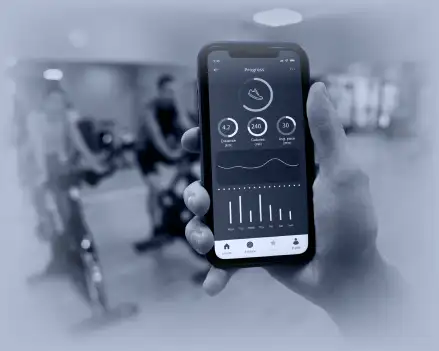
The biggest challenge in modern fitness isn’t awareness; it’s staying relevant in people’s daily routines. That realization is what pushes many decision-makers to explore building a workout app like Yoga-Go, where structured programs, progress tracking, and gentle guidance quietly help users stay consistent, even on busy days.
For enterprises, this shift creates a defensible digital channel with recurring revenue rather than one-time transactions. Startups see the opportunity to develop a workout app like Yoga-Go that can scale without heavy infrastructure. And fitness studios gain something they’ve never truly had before: a direct way to stay connected with members outside the studio, without depending solely on class attendance.
Before committing, leaders naturally want clarity. They begin asking questions that shape both strategy and investment:
These questions go far beyond technology and determine how a brand builds loyalty, protects revenue, and competes in a market that is becoming more digital every year.
In the sections ahead, we’ll walk through the answers on how platforms like Yoga Go work, the business model behind them, the features that truly impact engagement, and what it realistically takes to execute Yoga-Go-like workout app development with long-term confidence.
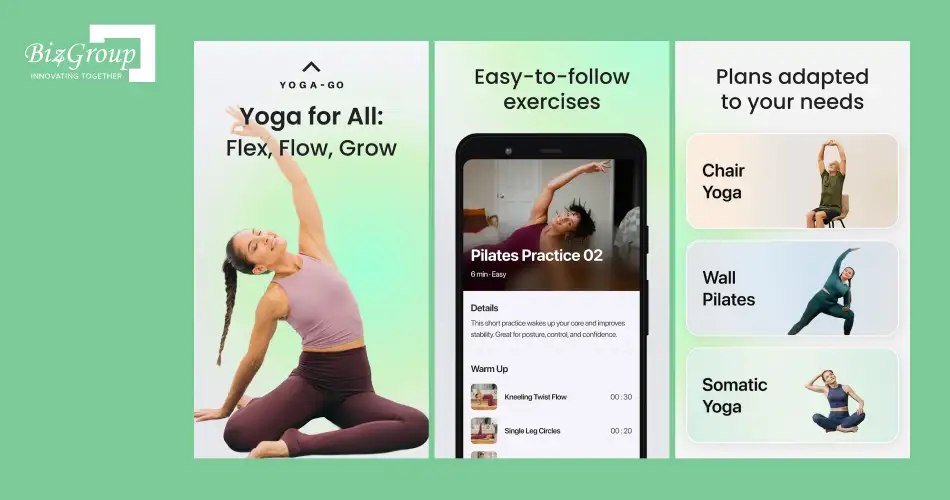
A workout app like Yoga-Go app works as a guided fitness companion, built to keep people consistent while giving businesses a scalable digital growth channel. When companies build a workout app like Yoga-Go, they create structured workout journeys that adjust to goals, habits, and available time.
Unlike generic fitness apps, workout app development like Yoga-Go focuses on programs that evolve. As users become more consistent, plans adjust and sessions flex around real schedules leading to guidance feel personal.
Biz4Group LLC has already applied this approach while building its AI Workout App, where workout plans adapt automatically based on progress, consistency, and user feedback. Therefore, how does Yoga-Go create value for the businesses:
The journey of the app begins with a simple fitness assessment that asks about goals, available time, preferred workout styles, and past activity levels. Instead of browsing endlessly, users see plans shaped specifically for them. This creates an immediate sense of relevance and removes early friction.
Companies that develop a workout app like Yoga-Go often work with trusted AI App Development Company in USA, teams to ensure onboarding data feeds directly into intelligent recommendations, without complicating the user experience.
The app then creates workout plans that progress at a realistic pace. Intensity builds gradually allowing workouts to fit naturally into busy schedules. This is why many brands choose to make a personalized workout app like Yoga-Go as users feel guided instead of pressured, and consistency turns into long-term subscription value.
Over time, enhancements can be introduced through thoughtful AI Product Development services without rebuilding the entire platform.
Users can access professionally designed sessions anytime, whether at home, in the gym, or while traveling. Each session becomes a reusable digital asset. Once created, it can help thousands of members without additional instructor time, serving as one of the biggest advantages of Yoga Go as a scalable business model.
The app has streaks, milestones, and visual progress dashboards which help users see improvement over time. Subtle reminder feature of the app encourages them to stay on track without feeling pushed. Over time, the app becomes part of their daily rhythm and habit-driven usage is what makes subscriptions sustainable.
Many teams rely on expert AI Consulting Services in USA to interpret user behaviour trends and fine-tune engagement logic.
Most platforms modelled after Yoga-Go follow a subscription-first approach. Users may begin with limited access or a free trial, then unlock full programs, deeper personalization, challenges, and premium plans as they advance.
This keeps the entry barrier low while giving businesses more predictable revenue as adoption grows, a major benefit of building a workout application like Yoga-Go.
Yoga go beyond the core subscription, often introduces specialized programs and expert-led series. These add-ons feel like natural progress upgrades rather than sales tactics, helping increase average revenue per user while still enhancing value.
When done right, this model benefits significantly from seamless AI Integration Services that automate personalization and delivery.
AI analyses engagement patterns and adapts recommendations proactively. It suggests sessions when motivation dips, adjusts intensity based on history, and helps prevent churn before it happens. The result is smarter personalization at scale, supporting workout mobile app development like Yoga-Go with real business impact.
Every workout completed, skipped, or repeated generates insight. Leadership teams can see which programs retain users, where drop-offs occur, and what drives upgrades. Instead of guessing, they refine strategy using real behaviours, improving both experience and profitability over time.
When organizations invest in building a workout application like Yoga-Go, they’re not just releasing another fitness app. They’re creating a digital ecosystem that adapts to people’s lives, scales without heavy infrastructure, and turns quality fitness content into long-term digital assets.
Also Read: How to Develop an AI Avatar Fitness Trainer App?
Digital fitness is no longer an add-on rather it has become one of the most reliable ways for brands to stay connected with customers while creating steady, repeatable revenue. When fitness moves into everyday life instead of staying inside a studio, loyalty deepens and growth becomes easier to sustain.
The shift is especially visible in the U.S. market. The U.S. fitness app industry is expected to grow from about $3.6 billion in 2024 to more than $10 billion by 2033 as reported by Grand View Research. It is driven by rising demand for convenient, personalized fitness experiences that fit busy lifestyles.
Market outlook data sourced from Grand View Research
When companies build a workout app like Yoga-Go, they aren’t just adding technology. They gain a scalable digital product that blends personalization, recurring subscriptions, and premium offerings, turning engagement into predictable business growth.
Traditional expansion of business requires new locations, more staff, and higher overhead but a Yoga-Go–style platform grows differently. Once the infrastructure is in place, the same app can serve thousands of users with minimal added cost. That means organizations can:
Subscriptions of the app convert unpredictable income into stable monthly and annual revenue. In the U.S., where subscription usage is already mainstream, this approach supports:
Companies that develop a workout app like Yoga-Go benefit from income that compounds instead of resetting every quarter.
A digital platform keeps users engaged through reminders, structured plans, and visible progress, creating habits that are hard to replace. Biz4Group LLC has seen this firsthand in Quantum Fit, a platform designed around structured plans and measurable progress. For businesses this means:
Digital platforms don’t just deliver workouts; they generate behavioural insight. Every session, pause, and completion pattern reveals how users engage, which allows businesses to move away from assumptions and toward evidence-based decision-making. Engagement data reveals:
A Yoga-Go–style product doesn’t rely on one revenue stream. It starts with subscriptions, then grows by layering additional value where users already see benefit, without breaking the experience. As the user base expands, businesses can introduce:
Also Read: From Idea to Income: How to Monetize AI Apps Effectively
Build a workout app like Yoga-Go with scalable subscriptions, personalization, and retention-focused design.
Build My Workout App Like Yoga-Go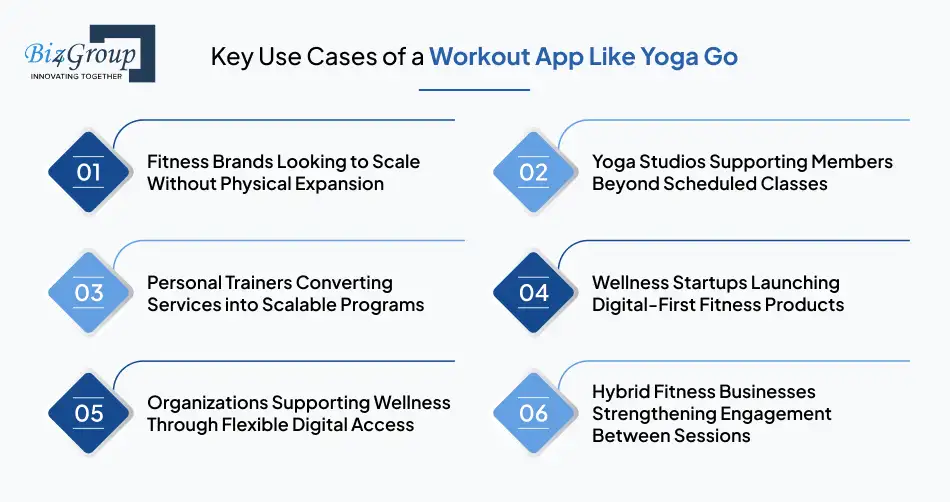
When companies look at building a workout app like Yoga-Go, the question isn’t just how the app works. It’s whether it fits into the way they run, grow, and serve their customers. A platform like this only creates value when it blends into real programs, revenue plans, and everyday user routines.
Today, many fitness brands, studios, trainers, and wellness organizations are using Yoga-Go–style apps to stay connected with people beyond the studio and turn structured workouts into scalable digital offerings. Below are some practical ways this model shows up in real-world scenarios.
Many fitness brands reach a point where opening new locations becomes expensive and operationally complex. What adds Real estate costs, staffing, and long setup cycles slow down growth.
In this scenario, a workout app like Yoga Go allows brands to extend their existing programs into a digital format. Instructor-led workouts are converted into structured; on-demand plans that customers can follow outside physical facilities. The app becomes an additional growth channel one that scales reach without increasing infrastructure.
Yoga studios often depend on fixed schedules and in-person attendance. When participants miss sessions due to travel or time constraints, consistency breaks down.
A workout app like Yoga Go enables studios to offer structured programs that complement live classes. Studio-designed routines can be accessed on demand, allowing members to continue their practice even when they cannot attend in person.
Personal trainers deliver high value but are limited by time. One-to-one sessions cap how many clients can be served, making growth difficult.
Using a workout app like Yoga Go, trainers can package their expertise into structured workout programs delivered digitally. Instead of selling time, they offer guided plans that many people can follow simultaneously.
Many wellness startups choose to launch without physical infrastructure. Their focus is on delivering value through a digital product from the start.
In this case, a workout app like Yoga Go becomes the core offering. Structured programs, guided sessions, and subscriptions form the foundation of the business model. The app allows startups to test demand, refine offerings, and scale without heavy operational overhead.
This approach is common among startups building focused, subscription-based wellness platforms.
Also Read: How to Build an MVP for AI Wellness Platform: From Concept to Clarity
Organizations increasingly look for wellness solutions that are easy to adopt and do not disrupt daily workflows. Fixed schedules and mandatory participation often limit engagement.
A workout app like Yoga Go fits this requirement by offering guided routines that can be accessed independently. Programs typically focus on mobility, flexibility, and stress relief, allowing participation at an individual pace.
Hybrid fitness models combine in-person services with digital engagement. A common challenge in these models is maintaining momentum between physical sessions.
A workout app like Yoga Go fills this gap by reinforcing routines and progress outside in-person interactions. Digital workouts keep users engaged, making the overall experience more continuous and valuable.
Whether you run a studio, startup, or wellness brand, we’ll map the right workout app development strategy for you
Talk to a Fitness App Development ExpertWhen planning to build a workout app like Yoga Go, it’s important to distinguish between features that are essential for the app to function effectively and those that can be added later for differentiation. The features outlined below represent the core capabilities required to deliver a structured, personalized workout experience while supporting consistent engagement and reliable monetization.
|
Feature |
What the feature does |
Business and Experience Impact |
|
User Onboarding & Fitness Assessment |
Guides first-time users through goal selection, fitness level identification, preferred workout types, and time availability |
Establishes relevance from the first interaction, reduces early drop-off, and enables personalized experiences instead of generic content |
|
Personalized Workout Plan Engine |
Automatically generates structured workout plans based on assessment inputs and adjusts plans as progress changes |
Drives long-term engagement by making workouts feel tailored and achievable rather than overwhelming |
|
Guided Yoga & Workout Sessions |
Delivers professionally designed, instructor-led sessions through video or audio formats |
Forms the core value proposition of the app and turns fitness expertise into reusable digital content |
|
Program & Routine Structuring |
Organizes workouts into logical sequences such as beginner, intermediate, or goal-based programs |
Helps users stay consistent by removing guesswork and providing a clear progression path |
|
Workout Scheduling & Calendar Integration |
Allows sessions to be scheduled, rescheduled, and tracked through a built-in calendar |
Encourages routine formation and increases completion rates by embedding workouts into daily schedules |
|
Progress Tracking & Performance History |
Tracks completed sessions, streaks, milestones, and overall activity trends |
Makes progress visible, reinforces motivation, and supports habit formation over time |
|
Subscription & Payment Management |
Manages paid plans, renewals, upgrades, and access control |
Enables predictable recurring revenue and simplifies billing operations |
|
Push Notifications & Engagement Reminders |
Sends reminders for upcoming workouts, inactivity nudges, and milestone achievements |
Maintains engagement without manual intervention and reduces churn |
|
User Profile & Preference Management |
Allows updates to goals, difficulty level, workout preferences, and personal settings |
Ensures the app adapts as needs change, improving long-term relevance |
|
Content Discovery & Categorization |
Organizes workouts by duration, intensity, focus area, or difficulty level |
Improves navigation and prevents users from feeling overwhelmed by content volume |
|
Offline Access to Saved Workouts |
Enables selected workouts to be accessed without an internet connection |
Increases usability and retention by supporting flexible usage scenarios |
|
Admin Dashboard & Content Control |
Provides backend tools to manage content, users, subscriptions, and performance metrics |
Supports scalable operations, faster updates, and data-driven decision-making |
Altogether, these features make the app easier to use and more dependable for users over time. The key is making sure each part works smoothly in real conditions, which is why many teams validate performance with experienced software testing companies before scaling further.
Advanced features allow a workout app to evolve from simple content delivery into a truly personalized training companion. When AI is added, workouts adapt to real user behaviour instead of staying static, which is why many businesses choose to Develop an AI Workout App as they plan for long-term growth.
|
Advanced Features |
What the feature Enables |
How AI is embedded |
Strategic Differentiation Value |
|
Adaptive Workout Personalization |
Refine workout plans continuously as per progress, consistency and preference change |
Learns from performance patterns and adjusts routines without manual input |
Delivers a truly personalized experience that improves retention |
|
Progress-Aware Difficulty Scaling |
Adjusts workout intensity based on real completion and fatigue signals |
Interprets historical workout behaviour to prevent overtraining or stagnation |
Keeps workouts challenging yet achievable over time |
|
Contextual Goal Adjustment |
Recalibrates fitness goals as activity levels and results evolve |
Evaluates long-term trends instead of relying on static goal settings |
Maintains relevance and prevents user drop-off due to unrealistic goals |
|
Smart Content Prioritization |
Surfaces the most relevant workouts from a growing content library |
Uses past engagement and usage behaviour to rank content dynamically |
Prevents content fatigue and improves discovery |
|
Wearable & Health Signal Interpretation |
Enhances workouts using activity, recovery, and biometric indicators |
Processes raw health data to inform recommendations |
Creates a data-informed fitness experience without manual tracking |
|
Virtual Fitness Assistant |
Provides in-app guidance, explanations, and next-step suggestions |
Understands natural language queries and responds contextually |
Scales coaching and support without increasing staff dependency |
|
Conversational Workout Guidance |
Allows questions and clarifications during workouts |
Interprets intent and context during interactions |
Creates a more interactive, coach-like experience |
|
Predictive Engagement Monitoring |
Identifies early signs of inactivity or disengagement |
Detects behavioural patterns associated with drop-off risk |
Enables proactive re-engagement instead of reactive recovery |
|
Advanced Performance Insights |
Presents deeper insights into progress and workout effectiveness |
Analyses trends across sessions rather than isolated metrics |
Builds trust through transparent, meaningful feedback |
|
Dynamic Challenges & Achievement Systems |
Creates evolving challenges aligned with progress |
Adjusts milestones based on participation and capability |
Keeps engagement fresh and competitive |
|
Scalable Multi-Region Experience |
Supports language and content adaptation as the app expands |
Adjusts recommendations and content relevance by region |
Enables smooth expansion without rebuilding the platform |
These capabilities move a workout app like Yoga Go beyond static content delivery. They enable the platform to respond intelligently to behaviour, adapt experiences over time, and scale personalization without operational complexity.
Also Read: How to Build an AI Fitness App Like Fitbod?
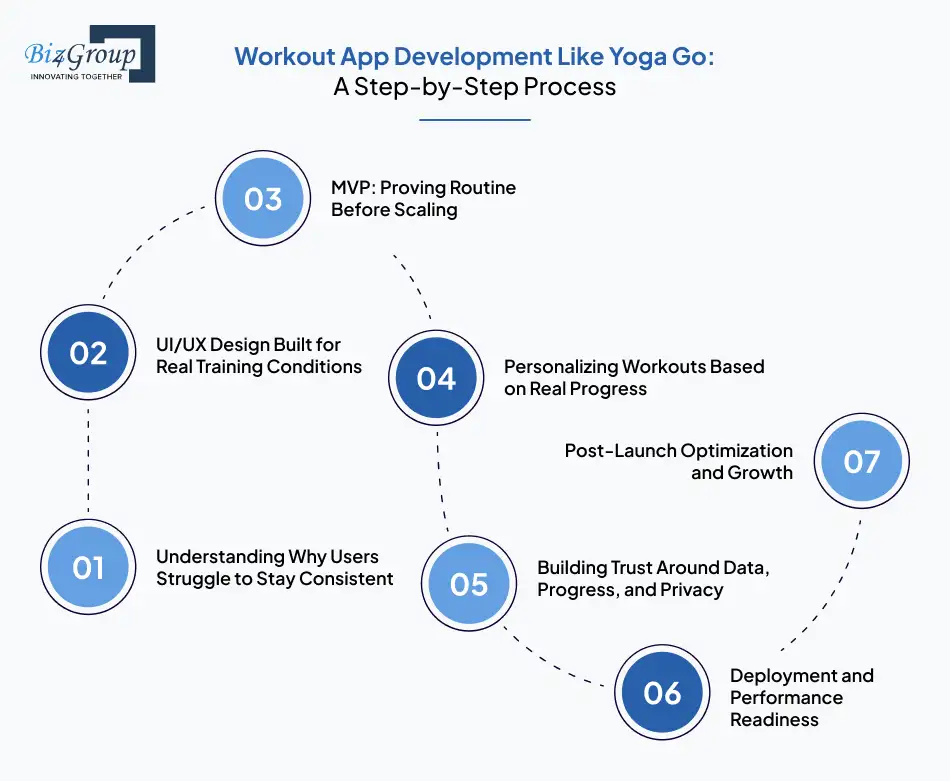
Building a Yoga Go–style workout app is not about uploading workouts. It’s about helping people follow structured routines and stay consistent over time. That requires a development process grounded in how people exercise, not assumptions.
Every fitness app claim to motivate users but most people quit because routines feel confusing, repetitive, or hard to follow. This step identifies the real blockers that prevent users from sticking with programs.
Clarity here prevents building features that don’t solve real problems. Many businesses involve experienced AI Consulting Services in USA providers here to ensure strategy and technology stay aligned.
Also Read: How to Build an AI Fitness Coaching App from Scratch?
Workout apps are often used when users are distracted, moving, or short on time. The interface should reduce cognitive load and make every action easier.
Design built around real workout conditions directly improves retention. That’s why many teams partner with a specialized UI/UX design company in the USA that understands how users behave while training.
Also Read: Top 15 UI/UX Design Companies in USA: 2026 Guide
At this stage, the priority is not features count its validation. The MVP should simply prove that users return to the app and complete workouts consistently, rather than expanding features without evidence. To support that outcome, the initial build should include:
When users start coming back on their own, the product is doing its job, and new features can be added with intention. At that point, many teams use focused MVP development services to guide decisions based on real usage instead of assumptions.
Also Read: Top 12+ MVP Development Companies to Launch Your Startup in 2026
Once users build habits, personalization begins to add value. It should guide people without overwhelming them.
At this point, the app shifts from being a content library to acting like a personal fitness guide, recommending sessions, pacing difficulty, and helping users stay on track without needing constant decisions.
Workout apps handle more than exercise logs as they store routines, preferences, and personal details that users expect to stay safe.
When privacy feels transparent and predictable, users relax and when users trust the platform, consistency naturally follows. The same principle guided the development of Dr. ARA, a healthcare platform built by Biz4Group LLC where secure handling of personal information was critical to user confidence. That experience translates directly to fitness platforms like Yoga-Go, where clarity about data usage and privacy plays a major role in long-term retention.
Workout behaviour is unpredictable because people train at different times, during challenges, holidays, and motivation spikes. Therefore, the platform must be ready for all of it
A deployment must be built for real usage not perfect lab conditions by creating confidence from day one.
Launch isn’t the finish line for the workout app like Yoga-Go rather real training behaviour finally starts to guide decisions.
With each iteration, the app becomes more aligned with how people truly train, evolving into a long-term fitness companion instead of another forgotten download.
From MVP validation to AI-driven personalization, our team guides each phase with measurable outcomes.
Get a Plan for Your Workout App DevelopmentThe cost to develop a workout app like Yoga Go varies based on the features included and the level of customization required. Instead of a single fixed figure, budgets generally fall within a clear range depending on how advanced the product needs to be.
The development cost for a workout app like Yoga Go typically ranges between $50,000 and $120,000. More advanced builds that rely on automation, analytics, and intelligence can extend beyond this range. This also aligns with broader insights into the AI app development cost for-workout app like Yoga Go, especially when AI-driven personalization becomes central to the experience.
During planning, leadership teams often benchmark their approach against insights from Top AI Development Companies in USA to make informed choices about features, technology, and timing, without overbuilding too early.
Below is a clear, business-focused breakdown that shows how investment typically aligns with product maturity and strategic goals:
|
App Level |
Estimated Investment |
What This Level Enables for the Business |
|
Basic Workout App (MVP) |
$20,000 – $50,000 |
Confirms whether the workout app concept resonates in the market, tests early adoption and subscription interest, and provides real usage data to support informed next-stage investment decisions |
|
Advanced Workout App |
$50,000 – $120,000 |
Strengthens user engagement through improved personalization and structured programs, supports consistent usage over time, and positions the app for predictable growth and revenue generation |
|
Enterprise-Level Workout App |
$120,000 – $200,000+ |
Establishes the app as a scalable digital platform capable of supporting large user volumes, complex operations, integrations, and long-term strategic growth |
The right budget for the workout app development depends on your product vision and how fast you plan to scale. A Yoga-Go–style app delivers real value when investment aligns with strategy. When the app is built thoughtfully, it becomes a growth engine, not just another development expense.
The technology stack behind a workout app does much more than power screens and features. It directly affects app speed, reliability, security, and how expensive it becomes to maintain or upgrade later. In the case of a workout app like Yoga Go, the stack should support everyday usage smoothly while still leaving room for future enhancements and integrations.
The technologies listed below are commonly used across successful fitness platforms because they're stable, scalable, and flexible enough to grow as the product matures, without forcing major rebuilds along the way.
|
App Component |
Technologies |
Business Benefits |
|
Mobile Frontend |
React Native / Flutter for cross-platform Swift for iOS Kotlin for Android |
Delivers fast, responsive user experiences on mobile devices with either single codebase or native performance (Swift/Kotlin). |
|
Backend and API development |
Node.js, Python (Django/Flask), Ruby on Rails |
Handles user management, content delivery, authentication, and business rules in a scalable and maintainable way |
|
Database Systems |
PostgreSQL, MongoDB, Firebase |
Stores structured (user profiles, subscriptions) and semi-structured data (workout logs, preferences) efficiently |
|
Cloud Hosting and Infrastructure |
AWS, Google Cloud, Microsoft Azure |
Provides scalable, globally available infrastructure for hosting app services, media streaming, and data processing |
|
AI & Intelligent Capabilities |
TensorFlow, PyTorch, MediaPipe Pose, TensorFlow Lite, Core ML |
Enables intelligent features like pose estimation, movement analysis, and behaviour-based insights as the product matures |
|
Real-Time Processing |
WebRTC, Socket.io, Firebase Realtime |
Supports real-time interactions and events such as live session signalling or instant feedback flows |
|
Video Delivery & Media |
AWS Elemental, Vimeo API, JW Player |
Ensures high-quality video streaming for on-demand workout and yoga sessions without buffering issues |
|
User Authentication |
OAuth 2.0, Firebase Auth |
Enables secure and scalable login, session management, and user identity controls |
|
Payment & Subscription handling |
Stripe, PayPal, Apple Pay, Google Pay |
Facilitates secure subscription billing and payment flows, supporting monetization from launch |
|
Analytical and Engagement Tracking |
Google Analytics, Mixpanel, Firebase Analytics |
Tracks key metrics on user behaviour, engagement, and retention for data-informed decisions |
|
Push Notifications & Alerts |
Firebase Cloud Messaging, OneSignal |
Drives engagement via reminders, new session alerts, and re-engagement prompts |
|
Content Management System |
Contentful, Strapi, Custom CMS |
Allows non-technical teams manage workouts, program libraries, and updates without developer involvement |
|
Automated Testing & QA Tools |
Jest, Detox, XCTest, Espresso |
Supports quality assurance across platforms to ensure reliability and performance |
Selecting the right technology stack is not only about tools, but how well they work together in real usage. Partnering with a reliable Mobile App Development Company helps ensure that the app performs smoothly across devices while remaining scalable for future enhancements.
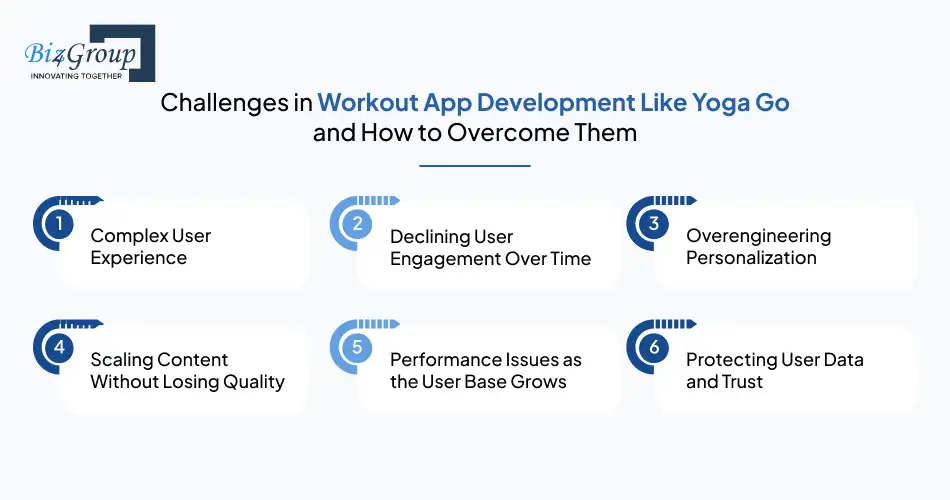
Even with strong market demand, building a successful workout app like Yoga-Go involves navigating several real-world challenges. These issues can impact user experience, adoption, retention, and long-term business success if not addressed strategically.
Below are the key challenges verified by multiple industry sources:
Workout apps often become difficult to navigate as features and content grow. Poor onboarding flows, cluttered screens, and unclear navigation can frustrate users early, leading to drop-offs before they experience real value.
Initial enthusiasm tends to fade when workouts feel repetitive or progress is not clearly visible. Without reinforcement, users struggle to maintain consistency, even if the content quality is high.
Deep personalization implemented too early can increase cost, complexity, and instability. Without sufficient usage data, personalization logic may fail to deliver meaningful value.
As workout libraries expand, maintaining consistency and organization becomes challenging. Poorly structured content reduces trust and makes discovery harder for users.
Increased traffic, video streaming, and data processing can impact app speed and reliability of the app. Performance issues directly affect user satisfaction and retention rate.
Workout apps handle sensitive personal and payment data. Any lapse in security can damage credibility and expose the business to long-term risk.
The real challenges in workout app development like Yoga Go are strategic rather than technical. Businesses that prioritize simplicity, phased growth, and user trust are better positioned to build scalable and sustainable platforms.
The success of a Yoga-Go–style workout app depends as much on the development partner as the product idea itself. When teams work with Biz4Group LLC, they aren’t starting from theory, they’re building on proven fitness, wellness, and AI-powered platforms already delivered in the market. As an experienced AI fitness software development company, we help organizations build solutions that are designed for personalization, retention, and long-term subscription value.
These real-world projects reflect the same challenges businesses face when they develop a workout app like Yoga-Go onboarding, engagement, monetization, and long-term scalability. What sets us apart is:
As a trusted technology partner, we approach workout app development like Yoga-Go with a balance of technical depth and product clarity. The objective is simple: help businesses launch platforms users return to consistently, subscribe to confidently, and trust over time.
Biz4Group LLC helps clients develop:
This isn’t trial-and-error development rather it is a structured delivery focused on outcomes, time-to-market, and long-term business performance.
We at our organisation support product teams beyond launch, helping refine features, scale infrastructure, and evolve the roadmap based on real user data. That partnership mindset is why many organizations trust Biz4Group when they plan to create a scalable workout app like Yoga-Go and want it to grow responsibly.
Your users don’t just need workouts; they need guidance and a platform that grows with them. We help businesses build workout app that retain users.
Build My Workout App with Biz4GroupGrow With a Smarter Fitness App
Your users don’t just need workouts; they need guidance and a platform that grows with them. We help businesses build workout app that retain users.
The fitness app market rewards platforms that are built with intent, not urgency. Businesses that succeed are those that treat their workout app as a long-term growth channel rather than a short-term digital add-on. A Yoga-Go–style platform works because it blends structured fitness experiences with consistency, trust, and measurable outcomes.
For decision-makers, the real opportunity lies in owning the digital relationship with users. A well-built workout app like Yoga-Go creates direct engagement, predictable revenue, and valuable behavioural insights that no third-party platform can offer. When executed correctly, it becomes a strategic asset that strengthens brand equity and customer loyalty over time.
If you’re considering this path and want a clearer picture of what it takes, schedule a meeting for discussion with Biz4Group LLC. We’ll simply walk through your idea, timeline, and the best way to approach it, without pressure.
The timeline depends on the scope and maturity level of the app. A well-defined MVP can typically be launched within 4–6 weeks, while more advanced or enterprise-grade platforms require additional time for scalability, integrations, and testing.
Yes, and this is often the most effective approach. Phased development of the app allows businesses to validate demand, gather real user insights, and invest incrementally. This reduces risk and ensures each phase is driven by actual performance rather than assumptions.
Not necessarily. Many successful workout apps begin with structured programs and solid user experience. AI can be introduced incrementally as user behavior data becomes available, making personalization smarter without overcomplicating the initial launch.
Subscriptions are popular, but they are not the only option. Many workout apps successfully combine subscriptions with premium programs, limited-time challenges, or bundled offerings. The right model depends on user behaviour and long-term revenue goals.
Workout apps handle personal and payment-related data, making security essential. Strong authentication, encrypted data storage, and transparent privacy practices help protect users and maintain trust. These measures also support compliance with platform and industry standards.
Yes. When the app is built with a flexible architecture, integrations such as wearables or external platforms can be added without rebuilding the core system. This allows businesses to expand functionality as demand grows.
Scalability comes from clear architecture, thoughtful technology choices, and a long-term roadmap. Apps designed with growth in mind can handle increasing users, content, and features without performance issues or costly redesigns.
Biz4Group brings a business-first mindset to development. The focus is on building workout platforms that validate early, scale reliably, and support long-term growth. This approach helps businesses launch with confidence and evolve into sustainable digital fitness brands.

with Biz4Group today!
Our website require some cookies to function properly. Read our privacy policy to know more.