 Location :
Orlando, FL, USA
Location :
Orlando, FL, USA +1 (407) 714-1616
 info@biz4group.com

- AI compliance software development helps regulated businesses move from manual checks to continuous monitoring while staying audit ready across operations.
- Companies use it to develop intelligent compliance management system logic that adapts to regulatory change without constant rework.
- Modern platforms focus on automation, reporting accuracy, and scalability, which is why many teams build AI powered compliance solutions.
- Market adoption is rising as regulated industries look to reduce compliance effort while improving governance and risk visibility.
- Cost typically falls between USD 35,000 to USD 200,000 plus, depending on scope, regulations covered, and enterprise scale.
Regulations rarely slow down, but most compliance processes still do. New rules appear, reporting requirements change, and audits demand answers faster than manual systems can respond. Teams do their best, yet the gap between regulatory expectations and operational reality keeps growing. This is where AI compliance software development starts to make sense and leads decision makers to ask some very practical questions:
- What is AI compliance software development?
- Can AI automate regulatory compliance checks?
- What are the best AI tools for compliance monitoring and reporting?
- How reliable is AI for compliance management?
- What is AI compliance software for enterprises?
The shift toward automation is already well underway:
- The global AI compliance SaaS market is expected to grow to nearly USD 39.54 billion by 2034, with regulated industries driving much of this growth.
- At the same time, Moody’s reports that more than 50 percent of risk and compliance teams are already using or piloting AI based systems as part of their daily workflows.
For leaders thinking about how to develop AI compliance management software, the goal is usually straightforward. Stay audit ready. Reduce manual effort. Catch issues early instead of explaining them later. This is often where discussions around AI consulting services begin, especially when internal teams need help translating regulatory requirements into working systems.
If you are exploring AI compliance software development services, the focus is not on replacing people or adding complexity. It is about building systems that quietly monitor, document, and support compliance across the business. Whether that work happens internally or with a custom software development company, understanding the fundamentals of AI compliance software development helps teams move forward with confidence and fewer surprises.
This guide is written for leaders who need clarity before committing budgets, timelines, or teams to compliance automation decisions. It walks through how AI compliance software is planned, built, and scaled so you can make informed choices without overengineering or underestimating risk.
AI Compliance Software Development Explained
AI compliance software helps regulated businesses manage regulatory obligations by continuously monitoring controls, data flows, and decision logic across systems. It reduces dependency on manual reviews while improving consistency and audit readiness.
- Tracks regulatory requirements and maps them to internal policies and controls
- Monitors transactions, workflows, and model outputs for compliance violations
- Generates time stamped audit logs aligned with regulatory reporting standards
- Detects anomalies, policy breaches, and risk patterns before audits begin
- Operates as part of broader enterprise AI solutions within regulated environments
At its core, AI compliance software development focuses on building systems that enforce rules consistently, surface risks early, and help leaders maintain regulatory confidence as operations scale.
How AI Compliance Management Software Works
AI compliance software does not replace judgments. It structures it. At the heart of AI compliance software development is a system that observes, learns, and validates compliance activity continuously, which brings us to how these platforms actually operate.
1. Regulatory Intelligence at the Foundation
The system ingests regulatory texts, internal policies, and control frameworks, then converts them into machine readable rules. This layer stays updated as regulations change, forming the reference point every compliance check relies on.
2. Continuous Monitoring Across Business Systems
To create AI compliance monitoring platform capabilities, the software connects to data sources such as transactions, workflows, logs, and model outputs. With support from AI integration services, compliance checks run quietly in the background without disrupting operations.
3. Automated Risk Detection with Explainability
Using AI model development, the platform evaluates patterns, flags anomalies, and documents why an event matters. This makes it possible to build AI powered compliance solutions that regulators and auditors can actually trust.
|
Layer |
What It Does |
Why It Matters |
|---|---|---|
|
Regulatory Mapping |
Converts regulations into enforceable rules |
Keeps controls aligned with current laws |
|
Continuous Monitoring |
Scans data and workflows in real time |
Reduces manual reviews and blind spots |
|
Risk Analysis |
Detects violations and unusual patterns |
Surfaces issues before audits |
|
Audit Readiness |
Generates logs and reports automatically |
Simplifies regulatory examinations |
Many teams start small through MVP software development to validate controls and reporting logic before expanding into broader compliance orchestration that supports growth and evolving regulatory demands.
Turn Compliance Pressure into Clarity
See how AI compliance software development can replace manual reviews with continuous, reliable monitoring.
Explore AI Compliance StrategyWhy Businesses Invest in AI Compliance Software Development?
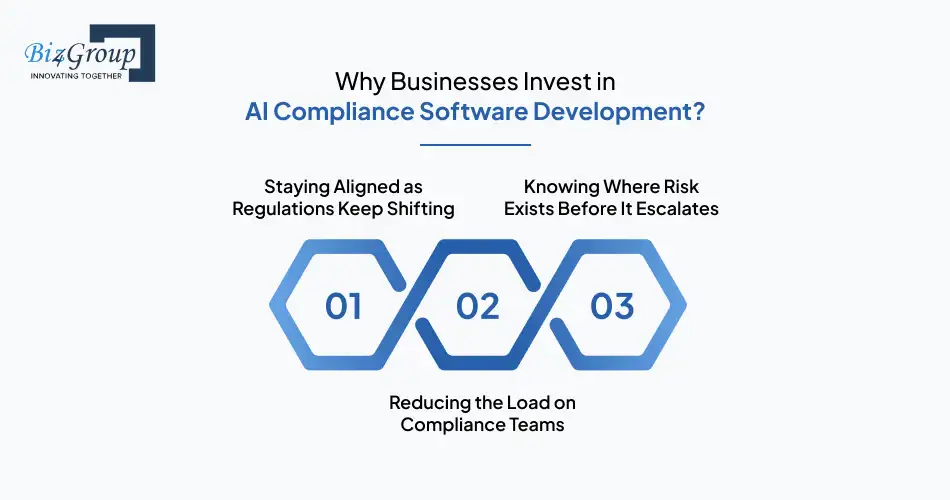
Most compliance investments are reactive. Something breaks, an audit hurts, or a risk shows up too late. That is usually when leaders start looking at AI compliance software development, not as innovation, but as a way to regain control.
1. Staying Aligned as Regulations Keep Shifting
Regulatory updates do not pause for internal reviews or quarterly planning. Many organizations turn to regulatory compliance software development with AI because it allows rules to stay mapped to controls without constant manual rewrites, which lowers stress during audits.
2. Reducing the Load on Compliance Teams
As operations scale, manual checks pile up fast. Teams invest to build AI driven compliance automation tool capabilities that quietly watch transactions and workflows, so people can focus on decisions instead of repetitive reviews. This often works best when paired with AI automation services.
3. Knowing Where Risk Exists Before It Escalates
Leadership wants early signals, not late explanations. AI based compliance systems help surface issues while there is still time to act. That visibility is often the point where organizations decide to hire AI developers who can align compliance logic with real systems.
Over time, these pressures make generic tools feel limiting, which is why many teams naturally move toward custom AI compliance software development as compliance needs become more specific and business processes more defined.
What Are the Top Use Cases of AI Compliance Software?
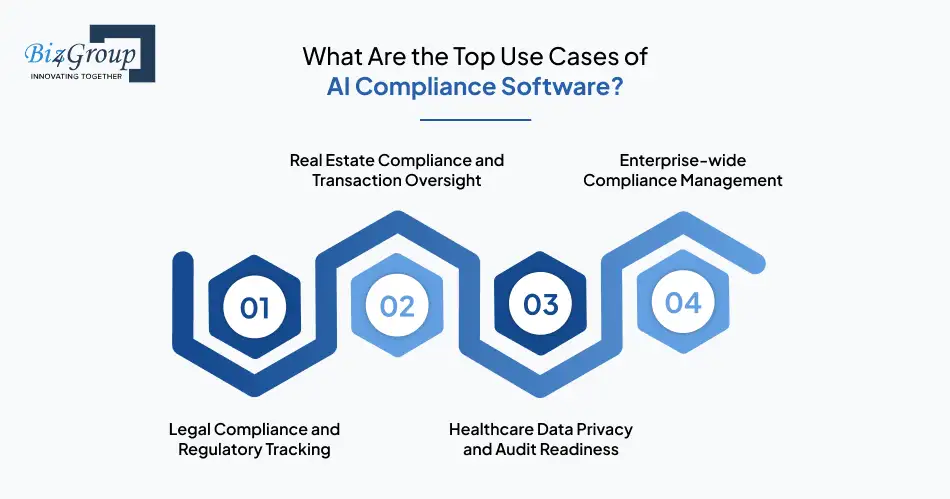
As compliance rules grow across industries, teams want solutions that work in real operations. AI compliance software development becomes valuable when it supports everyday decisions, reduces manual work, and fits naturally into how businesses already run, which leads to these common use cases.
1. Legal Compliance and Regulatory Tracking
Legal teams deal with changing laws, contract terms, and jurisdiction specific requirements. AI systems help develop intelligent compliance management system capabilities that monitor obligations, track changes, and highlight gaps early. This reduces missed updates and long review cycles.
- Example: A legal team using AI legal compliance software to track regulatory changes and contract compliance across multiple jurisdictions
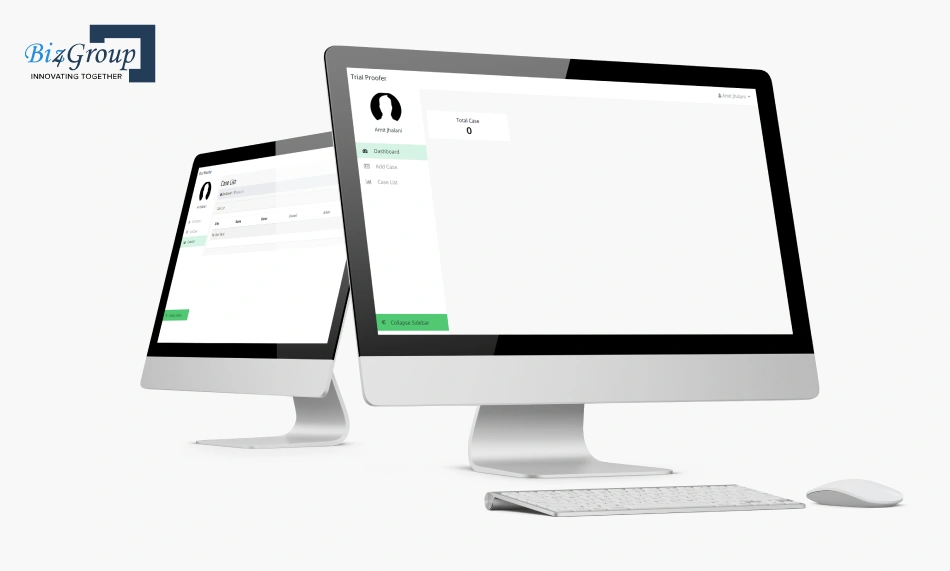
TrialProofer is a legal automation platform built by Biz4Group LLC to manage case timelines, deadlines, and client coordination digitally. Legal operations depend heavily on procedural compliance, accurate records, and traceable actions, making platforms like this closely aligned with the principles behind structured, rule driven AI systems.
2. Real Estate Compliance and Transaction Oversight
Real estate businesses manage disclosures, licensing rules, and regional regulations. With AI risk and compliance software development, teams can monitor transactions and documents without relying on manual checks. This helps maintain consistency across properties and locations.
- Example: A property firm using real estate compliance software to monitor leasing rules and disclosure timelines
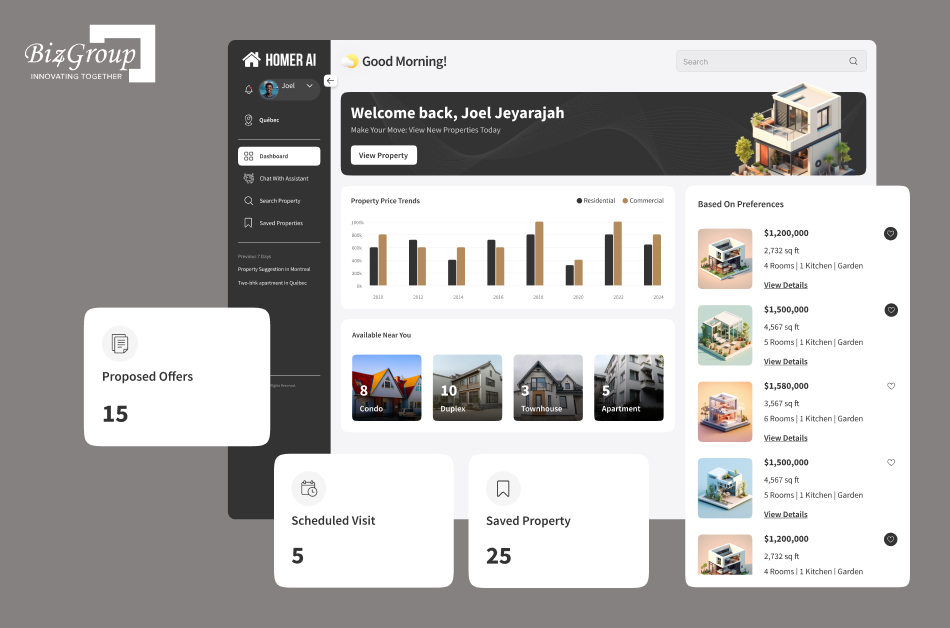
Homer AI is a conversational real estate platform that helps buyers and sellers navigate property interactions through guided AI driven flows. Real estate transactions involve disclosures, documentation, and regional rules, which places compliance at the center of how data, decisions, and user interactions are structured and monitored.
3. Healthcare Data Privacy and Audit Readiness
Healthcare organizations must protect sensitive data while meeting strict reporting rules. AI platforms help create AI based regulatory compliance software that tracks access, usage, and policy adherence continuously. This supports audits without disrupting daily operations.
- Example: A healthcare provider using HIPAA compliant AI app development to monitor patient data access and maintain audit logs

Dr Ara is an AI powered healthcare platform that supports athletes with injury analysis, recovery guidance, and performance insights. Managing sensitive medical data requires strong compliance with healthcare data standards, making it a clear example of how AI systems must embed privacy, access control, and audit readiness into everyday workflows.
4. Enterprise-wide Compliance Management
Large organizations need visibility across departments and systems. AI tools help develop scalable AI compliance management software solutions that centralize controls and reporting. These efforts often align with business app development using AI initiatives already in motion.
- Example: An enterprise compliance team working with an AI app development company to unify compliance reporting across business units
|
Industry |
Compliance Need |
AI Outcome |
|---|---|---|
|
Legal |
Regulatory updates |
Early risk detection |
|
Real Estate |
Transaction rules |
Consistent compliance |
|
Healthcare |
Data protection |
Audit readiness |
|
Enterprise |
Multi team oversight |
Centralized controls |
As these use cases take hold, teams naturally begin focusing on what capabilities matter most, which sets up the next discussion around features that make AI compliance software truly usable at scale.
Must Have Features in AI Compliance Software Development
Strong compliance software is not about flashy dashboards. It is about reliability, traceability, and trust. AI compliance software development works best when core features are designed to support real regulatory workflows, which brings us to what truly matters under the hood.
|
Core Feature |
Why It Matters for Compliance |
|---|---|
|
Regulatory Rule Mapping |
Translates laws & regulations into enforceable system rules |
|
Continuous Monitoring Engine |
Tracks transactions, data flows, and activities in real time |
|
Risk Scoring and Alerts |
Highlights potential violations before they escalate |
|
Audit Trail Generation |
Creates time stamped logs aligned with audit requirements |
|
Policy & Control Management |
Links internal policies directly to regulatory obligations |
|
Explainability and Traceability |
Shows why a decision or alert was generated |
|
Role Based Access Control |
Limits visibility and actions based on user responsibility |
|
Reporting and Documentation |
Produces regulator ready reports without manual effort |
|
System Integration Layer |
Helps integrate AI into an app without disrupting workflows |
These features form the baseline for systems that scale with complexity and regulation. As organizations look to build AI powered compliance platforms for enterprises, the conversation naturally shifts toward advanced capabilities that go beyond monitoring and into automation and intelligence.
Advanced Features in AI Driven Compliance Automation Tools
Basic features help teams stay compliant. Advanced features help them stay ahead. This is where AI compliance software development moves from tracking rules to supporting smarter compliance decisions as systems and regulations grow more complex.
1. Predictive Risk Forecasting
Advanced platforms can spot patterns via predictive analytics to point at future compliance issues. Instead of reacting late, teams see risk forming early and act sooner. This matters most for AI compliance solutions for financial services healthcare and enterprises where timing affects outcomes.
2. Adaptive Policy Updates
Regulations change and interpretations follow. With generative AI, compliance systems can adjust rule logic as regulatory language evolves. This reduces the gap between policy updates and real system enforcement.
3. Embedded Compliance Workflows
Advanced tools connect compliance checks directly to business processes. This approach is common in environments shaped by business app development using AI, where compliance runs quietly inside daily operations.
4. Clear and Explainable Decisions
Compliance alerts only help when people understand them. Advanced systems explain what triggered an issue and why it matters. This clarity is a key reason teams look for custom AI compliance software development services instead of generic tools.
5. Unified Compliance Intelligence
As systems multiply, compliance data spreads out. Advanced platforms bring everything together and may include conversational access through AI chatbot integration for faster internal reviews and responses.
As organizations grow more confident with these capabilities, they often start evaluating what truly defines the best company to develop AI compliance software, which naturally leads into how these systems are planned and built next.
Build Compliance That Scales With You
Design systems that help you develop intelligent compliance management system workflows without slowing teams down.
Plan My Compliance PlatformHow to Develop AI Compliance Software for Regulated Industries?
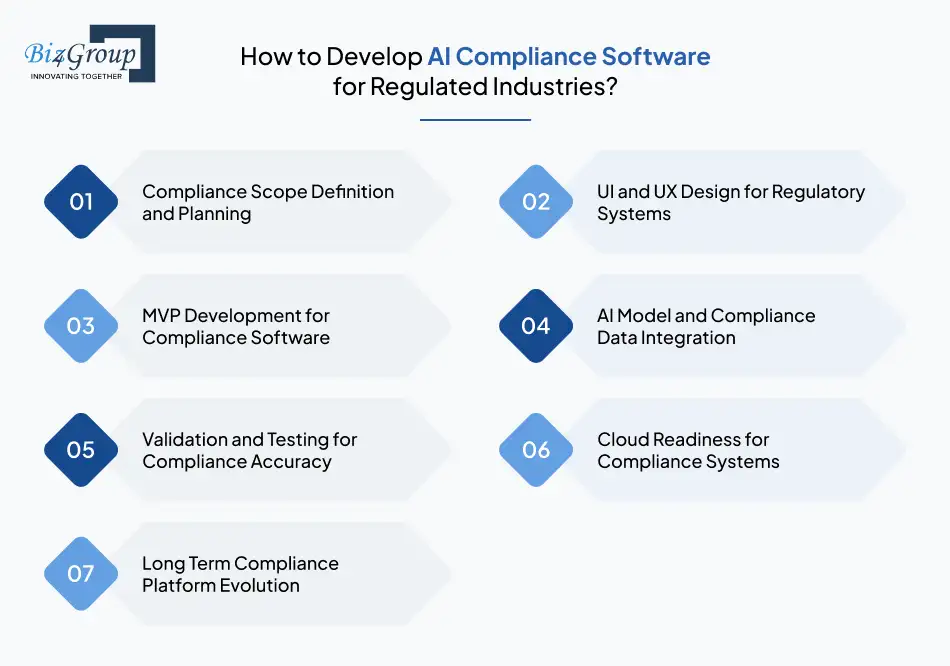
Building compliance software is a long term decision, not a quick build. AI compliance software development starts with understanding regulatory risk, internal controls, and audit expectations before any code is written. The steps below reflect how regulated teams actually build systems that last.
1. Compliance Scope Definition and Planning
This step focuses on defining compliance scope and risk. Teams identify which regulations apply, where failures occur, and what must be monitored continuously. Clear planning avoids unnecessary features and reduces rework later in the process.
- Identify applicable regulations by industry and region
- Map high risk compliance workflows and controls
- Prioritize areas with frequent audit findings
- Set outcomes like faster audits or fewer violations
2. UI and UX Design for Regulatory Systems
Compliance tools must be clear under pressure. Design here focuses on readability, workflow clarity, and fast access to evidence. This is critical when teams aim to develop AI compliance management software with a UI/UX design that auditors and executives can use confidently.
- Design role-based dashboards for compliance roles
- Make alerts easy to understand and act on
- Simplify access to reports and audit evidence
- Test flows using real compliance scenarios
Also read: Top UI/UX design companies in USA
3. MVP Development for Compliance Software
Most teams do not start big. They begin with a focused MVP development services that cover one regulation or workflow. This helps validate assumptions and answer early questions like how long does it take to build AI compliance software without committing to full scale development.
- Implement rule mapping for a limited regulation set
- Monitor one or two critical workflows
- Generate basic audit logs and reports
- Design architecture for future expansion
Also read: Top 12+ MVP Development Companies to Launch Your Startup in 2026
4. AI Model and Compliance Data Integration
This step turns rules into intelligence. Data from transactions, systems, and logs is connected and analyzed to support decisions. Teams focus on accuracy and explainability to build AI powered compliance solutions that regulators can trust.
- Connect internal data sources securely
- Train AI models on real compliance events
- Reduce false positives through feedback loops
- Combine rule-based logic with learning models
5. Validation and Testing for Compliance Accuracy
Compliance software must meet strict security and regulatory standards. Testing ensures the system behaves correctly during audits, investigations, and peak reporting periods.
- Apply encryption and access controls
- Test compliance logic against real regulations
- Validate alert accuracy and reporting output
- Maintain detailed audit logs
Also Read: Software Testing Companies in USA
6. Cloud Readiness for Compliance Systems
Compliance demand is not predictable. Systems must handle spikes during audits and reporting cycles. Deployment planning ensures stability, performance, and safe updates over time.
- Use scalable cloud infrastructure
- Monitor system health and compliance checks
- Enable controlled releases for updates
- Prepare internal usage documentation
7. Long Term Compliance Platform Evolution
After launch, systems must evolve with regulations. Teams refine models, rules, and workflows based on real usage. This stage often defines the success of AI compliance software development services over the long term.
- Review alert quality and response times
- Update rules as regulations change
- Retrain models with new compliance data
- Measure ROI through reduced risk and effort
Taken together, these steps explain how to develop AI compliance software for regulated industries in a way that balances accuracy, scalability, and real-world regulatory pressure.
Ideal Tech Stack for AI Compliance Software Development
A compliance platform is only as strong as the systems it connects to and the controls it enforces. The tech stack must support secure data flow, explainability, audit readiness, and scale without friction:
|
Label |
Preferred Technologies |
Why It Matters |
|---|---|---|
|
Frontend Framework |
ReactJS, TypeScript |
Compliance teams spend hours reviewing alerts and reports. Stable UI layers built with ReactJS development reduce errors and improve daily usability. |
|
Server Side Rendering and SEO |
NextJS, Server Side Rendering |
Secure rendering and role based access matter for compliance portals. NextJS development supports controlled access and consistent performance during audits. |
|
Backend Framework |
NodeJS, Python |
Core compliance logic lives here. NodeJS development handles event driven monitoring, while Python development supports rule evaluation and backend intelligence. |
|
API Development Layer |
REST APIs, GraphQL |
Compliance systems depend on clean data exchange. A dedicated API layer ensures secure communication between internal tools, regulators, and reporting systems. |
|
AI and Compliance Intelligence |
ML frameworks, Rule engines |
Compliance requires accuracy over creativity. These tools support risk detection, rule enforcement, and explainable outputs regulators expect. |
|
Data Storage and Audit Logs |
PostgreSQL, Immutable storage |
Structured storage ensures traceability. Immutable logs support audits, investigations, and long term regulatory record keeping. |
|
Integration Layer |
Secure connectors, Webhooks |
Compliance platforms rarely operate alone. This layer enables controlled integration with ERP, CRM, and transaction systems. |
|
Security and Identity Management |
OAuth, Role Based Access |
Limiting access protects sensitive compliance data and enforces separation of duties across teams. |
|
Monitoring and Observability |
Logging tools, Metrics dashboards |
Visibility into system behavior helps teams detect failures, missed checks, or performance issues early. |
|
Deployment and Infrastructure |
Cloud platforms, Monitoring tools |
Compliance workloads spike during audits. Scalable infrastructure ensures reliability when demand increases suddenly. |
A complete stack like this allows compliance software to operate reliably under regulatory pressure. When the right layers work together, teams can scale confidently, maintain audit readiness, and support long term growth through AI compliance software development.
Move From Alerts to Action
Go beyond reporting and build AI powered compliance solutions that support real decisions across regulated operations.
Start My AI Compliance BuildWhat’s the Cost of AI Compliance Software Development?
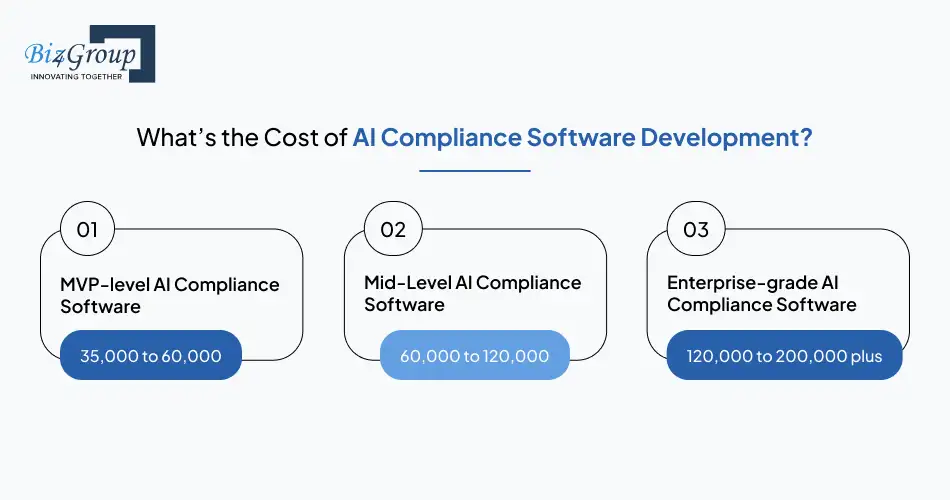
Cost is usually the first practical question leaders ask. For most organizations, AI compliance software development falls in the range of USD 35,000 to USD 200,000 plus. This is a ballpark figure, not a quote, and it varies based on scope, regulation depth, and scale.
|
Build Level |
Typical Cost Range (in USD) |
What This Usually Includes |
|---|---|---|
|
MVP-level AI Compliance Software |
35,000 to 60,000 |
Limited regulatory scope, basic rule mapping, monitoring for one workflow, simple audit logs, early dashboards |
|
Mid-Level AI Compliance Software |
60,000 to 120,000 |
Multiple regulations, continuous monitoring, risk scoring, reporting, integrations, role based access |
|
Enterprise-grade AI Compliance Software |
120,000 to 200,000 plus |
Cross region compliance, advanced risk intelligence, explainability, scalability, security hardening, audit readiness |
Several factors influence where a project lands in this range. The number of regulations covered, data sources involved, level of automation, and required integrations all affect effort. Teams often work with an experienced AI development company to phase delivery and control cost without compromising compliance quality.
Rather than focusing only on price, most leaders look for clarity. A clear AI compliance software development cost estimate helps align expectations before exploring revenue models and long term return, which is where the conversation naturally goes next.
Revenue Opportunities in AI Compliance Software Platforms
Revenue models work best when they match how compliance teams actually use the software. In AI compliance software development, pricing usually depends on usage, regulatory scope, and scale, which leads to a few practical models most teams rely on.
1. Subscription Based Licensing
Many platforms use monthly or annual subscriptions based on users, features, or regulations covered. This gives teams predictable costs while expanding compliance coverage through regulatory compliance software development with AI.
- Example: A fintech company pays a fixed monthly fee based on supported regulations and monitored workflows
2. Usage Based Pricing
Some teams prefer paying only when the system is actively used. Pricing grows with transactions, compliance checks, or monitored data. This model fits platforms that create AI compliance monitoring platform capabilities and is often chosen when teams build an AI app for internal compliance needs.
- Example: A healthcare provider pays per data access event and compliance report generated
3. Enterprise Licensing and Custom Contracts
Large organizations often need pricing that reflects regions, integrations, and complexity. These agreements support long term use cases where teams build AI driven compliance automation tool features tailored to internal controls.
- Example: A global enterprise signs a multi year contract covering multiple compliance frameworks
4. Compliance Add Ons and Feature Modules
Not every client needs advanced features on day one. Add ons allow teams to activate extra capabilities when needed. This approach is common when working with a software development company in Florida to roll out features in phases.
- Example: A legal firm adds a regulatory forecasting module before a major audit
5. Implementation and Ongoing Support Services
Many platforms also charge for setup, integrations, and ongoing support. This is useful when compliance workflows need customization or internal training, sometimes supported by an AI chatbot development company for internal compliance assistance.
- Example: An enterprise pays a one time setup fee and annual support for system maintenance
As these models take shape, teams usually start focusing on consistency, reliability, and governance, which naturally brings best practices into the conversation next.
Make Compliance an Asset, Not a Bottleneck
Modernize oversight with regulatory compliance software development with AI built for audits, growth, and change.
Design My AI Compliance SystemBest Practices for AI Compliance Software Development
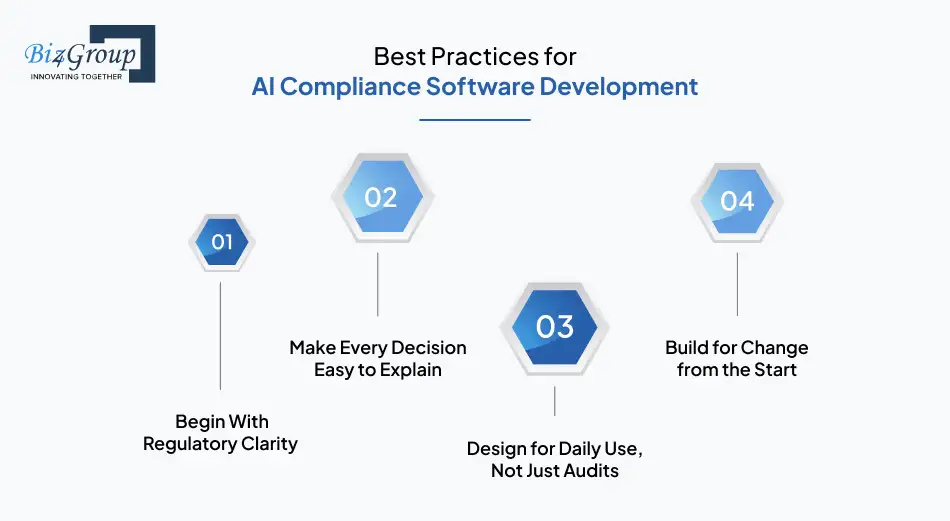
Good compliance software is built with care and clarity. AI compliance software development works best when teams focus on doing a few things right from the start, which leads to the practices below.
1. Begin With Regulatory Clarity
Start by clearly defining which regulations apply and where risk exists. Teams that develop intelligent compliance management system logic first reduce confusion later. This keeps compliance rules consistent across systems and workflows.
2. Make Every Decision Easy to Explain
Compliance alerts must make sense to people. Systems should clearly show what rule was triggered and why it matters. This is critical when teams create AI based regulatory compliance software that must stand up to audits and reviews.
3. Design for Daily Use, Not Just Audits
Compliance tools are used every day, often under time pressure. Simple layouts, clear alerts, and logical navigation help teams respond faster. These principles align closely with good AI assistant app design practices.
4. Build for Change from the Start
Regulations change often. Software should allow rules and workflows to be updated without rebuilding everything. This flexibility is key to custom AI compliance software development that stays useful as requirements evolve.
When these basics are handled well, teams are better equipped to face the challenges that show up during real world development, which naturally leads into the next discussion.
Challenges in AI Compliance Software Development and Solutions
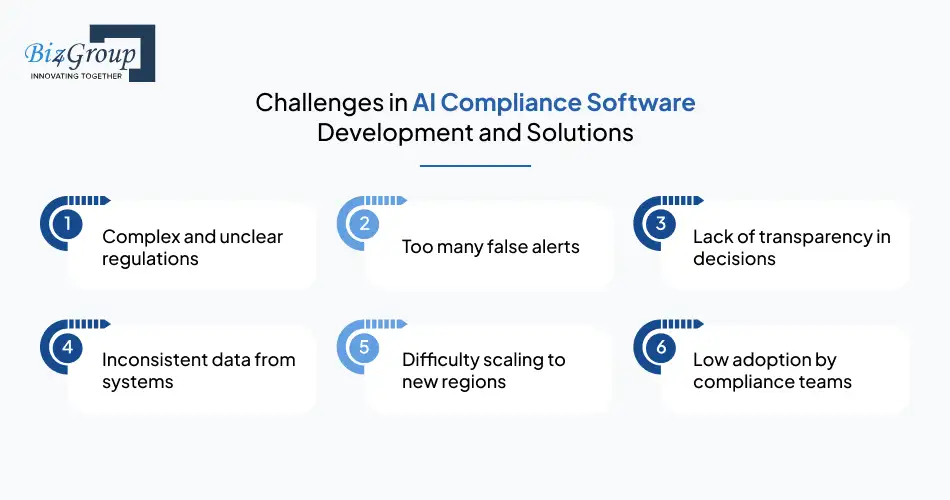
Building compliance software is rarely smooth once real rules and audits come into play. AI compliance software development works best when teams plan for common obstacles early, which makes the challenges below important to address:
|
Top Challenges |
How to Solve Them |
|---|---|
|
Complex and unclear regulations |
Translate regulations into simple, testable rules with compliance experts involved |
|
Too many false alerts |
Adjust models and rules regularly to reduce noise |
|
Lack of transparency in decisions |
Make every alert traceable to a rule or policy |
|
Inconsistent data from systems |
Clean and standardize data before applying compliance checks |
|
Difficulty scaling to new regions |
Use modular design so new regulations can be added easily |
|
Low adoption by compliance teams |
Align workflows with how teams already work |
These challenges often appear during AI risk and compliance software development when systems move from theory to real use. Solving them early builds confidence and keeps audits from turning into fire drills.
With these issues under control, teams are better positioned to think about where compliance technology is heading next and how it will continue to support growing regulatory demands.
Know the Cost Before You Commit
Get clarity on scope, timelines, and a realistic AI compliance software development cost estimate for your business.
Request Cost InsightsWhat's Next for AI Driven Compliance Platforms?
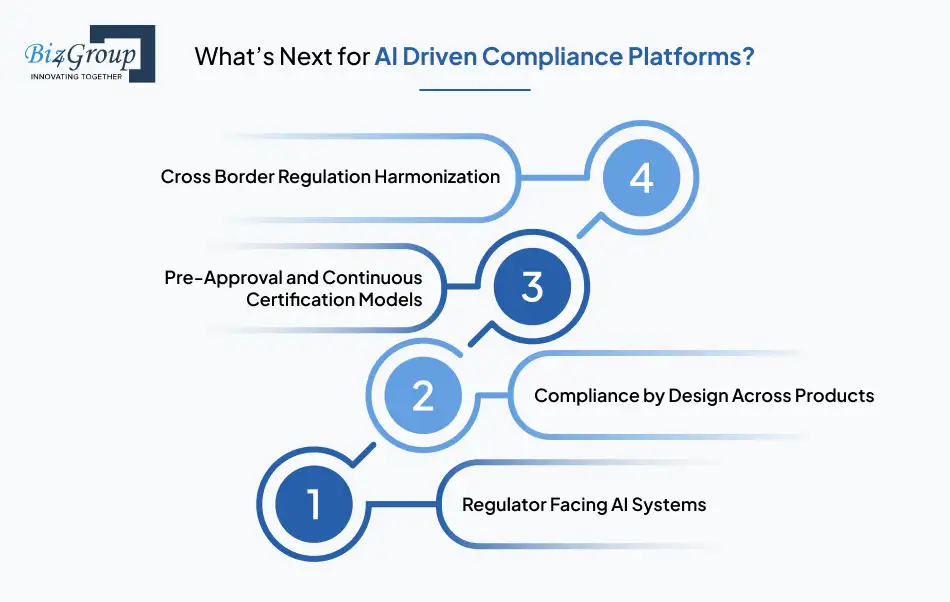
The next phase of compliance technology will not be defined by better tools alone. AI compliance software development is moving toward structural and regulatory shifts that most organizations are only beginning to prepare for, which sets the direction ahead.
1. Regulator Facing AI Systems
Future platforms will be built to interact directly with regulators, not just internal teams. Instead of preparing reports on demand, systems will support continuous regulatory visibility using shared formats and live access models that are still emerging.
2. Compliance by Design Across Products
Rather than adding controls after products are built, compliance logic will influence product architecture from the start. Organizations will build AI powered compliance platforms for enterprises that guide early technical decisions, sometimes supported through an AI conversation app for internal alignment.
3. Pre-Approval and Continuous Certification Models
Compliance will move upstream. AI systems will increasingly be evaluated before deployment and re certified on an ongoing basis. Platforms will need to generate proof continuously, not only during audits or investigations.
4. Cross Border Regulation Harmonization
As AI regulation matures, standards will slowly align across regions. This will increase demand to develop scalable AI compliance management software solutions that handle global consistency while allowing local variation, an area where experience from top AI development companies in Florida becomes relevant.
As these shifts take shape, organizations become more selective about long term partners, which is why choosing the best company to develop AI compliance software will matter more for governance than speed alone.
Why Choose Biz4Group LLC for AI Compliance Software Development?
Building compliance driven software requires an understanding of how regulated industries actually operate. AI compliance software development at Biz4Group is shaped by real experience building platforms where governance, data control, and accountability are part of the system from day one.
Across healthcare, real estate, and legal domains, Biz4Group LLC has delivered platforms like Dr Ara, Homer AI, and TrialProofer that handle sensitive data, structured workflows, and audit ready processes by design. That experience directly translates into building AI compliance systems that hold up in real world conditions.
What sets Biz4Group apart:
- Proven experience with regulated industries and complex data environments
- Strong focus on compliance aligned architecture, not just feature delivery
- Ability to translate regulatory requirements into practical system logic
- Scalable engineering approach that supports long term compliance evolution
Instead of treating compliance as a checklist, Biz4Group builds systems where governance, traceability, and control are baked into how the software works every day.
Prepare for What's Next in Regulation
Future ready platforms are built differently. Learn how to develop scalable AI compliance management software solutions that grow with regulation.
Build for the FutureFinal Thoughts on AI Compliance Software Development
Compliance does not have to feel like a constant fire drill. With the right approach, AI can turn regulatory pressure into a structured, predictable process. When businesses build AI software with compliance in mind from the start, they gain clarity, control, and confidence instead of more overhead.
The key is choosing the right mindset and the right AI product development company to make it work long term.
Want to explore how AI can simplify compliance for your industry? Talk to us!
FAQs on AI Compliance Software Development
1. How reliable is AI when regulations change frequently?
AI systems can stay reliable when they are designed to update rules and logic without rebuilding the platform. This is why many organizations focus on develop intelligent compliance management system approaches that separate regulatory logic from core workflows.
2. Can AI compliance software work across multiple industries at once?
Yes, but only when the platform is designed with modular compliance layers. Many enterprises invest in develop scalable AI compliance management software solutions so industry specific rules can be applied without affecting the entire system.
3. How long does it take to build AI compliance software?
Timelines vary based on scope and regulation depth, but most projects take several months from planning to launch. Early MVPs help answer questions like how long does it take to build AI compliance software before full scale investment.
4. What makes AI compliance software suitable for enterprise use?
Enterprise readiness depends on scalability, security, and audit traceability. Platforms that build AI powered compliance platforms for enterprises are designed to handle multiple users, regions, and regulatory frameworks at the same time.
5. How much does AI compliance software typically cost?
Most organizations should expect a range between USD 35,000 and USD 200,000 plus, depending on features and scale. A clear AI compliance software development cost estimate usually depends on regulation coverage, integrations, and automation depth.
6. Is AI compliance software mainly for monitoring or for decision making too?
Modern platforms support both. While monitoring is the foundation, many systems also guide actions and escalation paths. This shift is driving growth in AI risk and compliance software development across regulated industries.
