 Location :
Orlando, FL, USA
Location :
Orlando, FL, USA +1 (407) 714-1616
 info@biz4group.com

- AI diabetes management platform development helps healthcare innovators deliver personalized care, improve patient adherence, and reduce long-term treatment costs.
- Successful AI diabetes management software development depends on the right features, including real-time monitoring, predictive analytics, patient engagement tools, and clinician dashboards.
- A clear development strategy, strong tech stack, and early focus on compliance are critical to build AI diabetes care applications that scale.
- The cost of AI diabetes management platform development typically ranges from $35,000 to $200,000+, influenced by AI complexity, integrations, and security requirements.
- Partner with Biz4Group LLC, the best company to develop AI diabetes management platforms ensures faster execution, regulatory readiness, and long-term ROI.
You already know diabetes is a major health challenge. But here’s what might really get your attention if you are building or investing in digital health technologies right now. In the United States alone, around 38.4 million people of all ages have diabetes, including diagnosed and undiagnosed cases, affecting roughly 14.7 percent of adults and creating constant demand for advanced care tools.
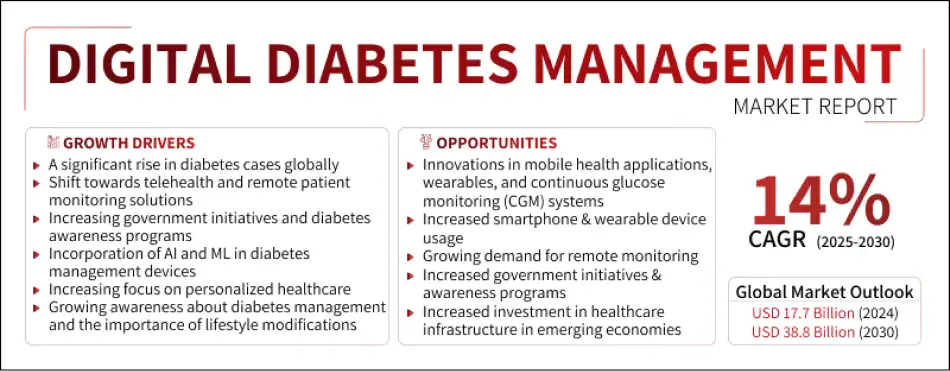
At the same time, the global digital diabetes management market is expected to be worth between USD 20.1 billion and USD 38.78 billion in 2025, pointing to a surge in adoption of data-driven care solutions that help patients and providers manage this complex disease.
So, ask yourself this: with such pressing patient needs and market opportunity, how do you turn AI diabetes management platform development into a real business advantage rather than just another wellness buzzword?
In this guide, we show you exactly how to frame this idea, build a robust platform, and align it with clinical outcomes and business value. You will also see how AI diabetes management solutions for startups and healthcare enterprises fit naturally into broader AI healthcare solutions strategies instead of operating as isolated tools.
When done right, diabetes management platform development with AI allows you to move beyond tracking numbers and toward delivering proactive, personalized, and scalable care.
What an AI Diabetes Management Platform Really Is and How It Works in the Real World?
Let’s clear up a common misconception first.
An AI diabetes management platform is not just a glucose tracking app with a dashboard. And it is definitely not a collection of disconnected tools stitched together. When you invest in AI diabetes management platform development, you are building an intelligent care ecosystem that actively supports patients, clinicians, and care teams every single day.
So how does it actually work in practice?
At its core, the platform follows a continuous care loop. Data comes in, intelligence is applied, and actions are triggered at the right moment.
How an AI Diabetes Management Platform Works Step by Step
1. Data collection from multiple touchpoints
The platform continuously gathers data from:
- Continuous glucose monitors and smart devices
- Wearables and activity trackers
- Patient-entered logs such as meals, symptoms, and medication
- Clinical systems like EHRs and lab records
This unified data layer is a key part of AI diabetes management software development, ensuring nothing important stays siloed.
2. Data processing and normalization
Raw data is cleaned, structured, and standardized so it can be analyzed reliably. This step is often overlooked but critical when you develop AI powered diabetes management platforms that need accuracy and consistency at scale.
3. AI driven analysis and predictions
Once data is structured, machine learning models step in to:
- Detect abnormal glucose patterns
- Predict potential hypo or hyperglycemic events
- Identify adherence issues or lifestyle triggers
- Surface trends clinicians might otherwise miss
This is where teams truly create AI-driven diabetes management systems instead of static reporting tools.
4. Intelligent actions and recommendations
Insights are translated into real-world actions:
- Patients receive timely alerts, nudges, or coaching prompts
- Clinicians see prioritized insights instead of raw data streams
- Care teams can intervene early, before complications arise
5. Continuous feedback and learning
The system learns from outcomes and user behavior, improving recommendations over time. This loop allows diabetes management platform development with AI to deliver ongoing value rather than one-time insights.
This entire workflow aligns closely with AI remote patient monitoring software, where continuous data and intelligent analysis support patients beyond clinic walls without adding burden to providers.
These platforms turn scattered health data into coordinated, proactive care. That shift from reacting late to acting early is what makes AI-powered diabetes management truly effective.
Thinking About AI Diabetes Management Platform Development but Not Sure Where to Start?
If you are exploring ideas and want clarity on feasibility, scope, and ROI, a short conversation can save months of guesswork.
Talk to Our AI Healthcare ExpertsWhy AI Diabetes Management Platform Development Delivers Real Value for Care and Business?
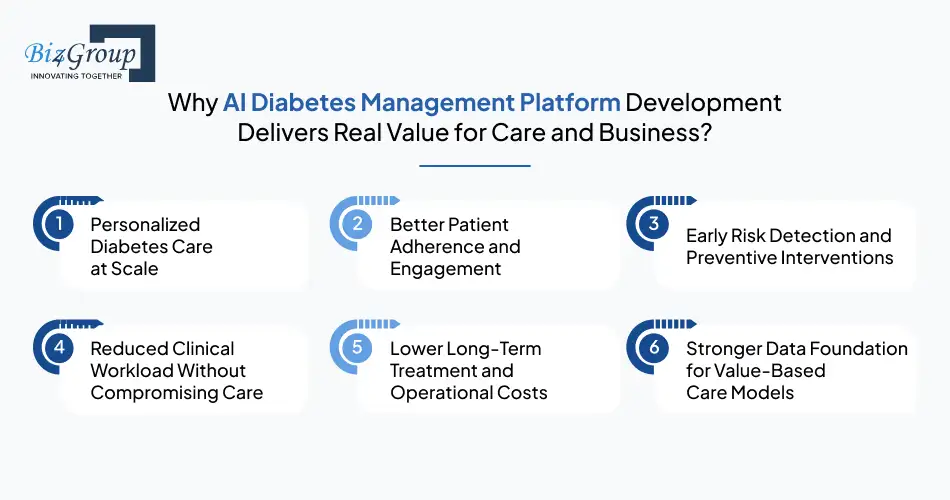
When you invest in AI diabetes management platform development, the real question is not whether AI sounds promising. It is whether it creates measurable value for patients, providers, and your business. The benefits below are what healthcare innovators consistently look for when they build AI diabetes care applications with long-term impact in mind.
1. Personalized Diabetes Care at Scale
AI helps you move beyond one-size-fits-all treatment plans by tailoring care to each patient’s data, habits, and risk profile. By analyzing glucose trends, lifestyle inputs, and historical behavior, platforms deliver recommendations that feel relevant and timely. This is exactly why AI diabetes management solutions for startups and healthcare enterprises can scale without losing human touch. Patients feel supported rather than micromanaged.
2. Better Patient Adherence and Engagement
Most diabetes programs fail because patients disengage over time. AI-driven reminders, nudges, and contextual feedback keep patients involved without overwhelming them. When you make AI diabetes management software for patient engagement, the platform works quietly in the background to encourage consistency. This steady engagement directly translates into better outcomes and fewer drop-offs.
3. Early Risk Detection and Preventive Interventions
Traditional care reacts after problems occur, which drives up costs and stress. AI models identify warning signs early by spotting abnormal glucose patterns or behavioral changes before they escalate. This proactive layer is central to developing intelligent diabetes care solutions that focus on prevention instead of crisis management. Early action means fewer emergency visits and better patient confidence.
4. Reduced Clinical Workload Without Compromising Care
Care teams often face data overload, not insight shortages. AI filters raw data and highlights what truly needs attention, allowing clinicians to focus on decisions instead of dashboards. This is where AI diabetes management software development supports sustainable workflows. Many of these capabilities overlap with modern AI patient management software, helping providers manage care more efficiently across large populations.
5. Lower Long-Term Treatment and Operational Costs
Preventive care reduces costs across the board, from hospital admissions to manual follow-ups. AI-powered platforms help limit complications by keeping patients stable and informed. When combined with broader enterprise AI solutions, these systems create efficiencies that directly impact operational budgets. The financial return becomes clear over time.
6. Stronger Data Foundation for Value-Based Care Models
Value-based care relies on accurate, continuous insights into patient outcomes. AI platforms provide real-time visibility into adherence, population trends, and care effectiveness. This makes diabetes management platform development with AI a strong foundation for performance-based reimbursement models. Better data supports smarter contracts and long-term partnerships.
These outcomes do not happen by accident. They depend on the features you choose the data you prioritize, and how intelligently the platform is designed. That is why the next step is critical.
Core Features You Must Include When You Build AI Diabetes Management Platforms That Scale
When teams struggle with AI diabetes management platform development, the issue is rarely AI capability alone. More often, the platform lacks essential features that support real-world care delivery, patient engagement, and clinical workflows.
If your goal is to build AI diabetes care applications that scale across providers and patient populations, the following features form the foundation.
|
Feature |
What It Does and Why It Is Essential |
|---|---|
|
Real-Time Glucose Monitoring |
Continuously captures glucose readings from CGMs to give patients and clinicians immediate visibility into fluctuations. This enables faster response and supports proactive diabetes management. |
|
Medical Device and Wearable Integration |
Connects CGMs, smart insulin pens, fitness trackers, and other devices into one platform. Without this, data stays fragmented and limits the effectiveness of AI diabetes management software development. |
|
AI-Powered Risk Prediction Models |
Uses historical and real-time data to predict potential hypo or hyperglycemic events before they occur. This allows care teams to intervene early instead of reacting after complications arise. |
|
Personalized Care Recommendations |
Delivers tailored guidance for nutrition, activity, medication timing, and lifestyle adjustments based on individual patient data. This is core to developing intelligent diabetes care solutions that actually feel personal. |
|
Medication Management and Alerts |
Tracks prescriptions, dosing schedules, and missed doses while sending reminders to patients. This directly improves adherence and reduces treatment gaps. |
|
Nutrition and Lifestyle Tracking |
Captures food intake, physical activity, sleep patterns, and stress levels. These inputs help AI understand what influences glucose changes beyond medication alone. |
|
Patient Engagement Workflows |
Includes nudges, progress feedback, and behavioral prompts that keep patients engaged over time. This is critical when you make AI diabetes management software for patient engagement. |
|
Clinician Dashboards and Insights |
Presents summarized trends, alerts, and risk scores instead of raw data. Clinicians can make faster, better decisions without digging through multiple systems. |
|
Population Health Analytics |
Allows healthcare organizations to monitor trends across groups of patients, identify high-risk cohorts, and optimize care strategies at scale. |
|
Offers instant, conversational assistance for patients through an intelligent assistant, similar to an AI chatbot for chronic disease management, reducing reliance on manual support teams. |
|
|
Remote Patient Monitoring Capabilities |
Enables continuous care outside clinics by monitoring patients in real-world settings without increasing provider workload. |
|
EHR and Clinical System Interoperability |
Ensures smooth data exchange with existing hospital systems so the platform fits into current clinical workflows instead of disrupting them. |
|
Security, Privacy, and Compliance Controls |
Implements HIPAA-compliant data handling, encryption, and role-based access to protect sensitive health data and meet regulatory requirements. |
|
Explainable AI and Decision Transparency |
Allows clinicians to understand why the AI made a recommendation, increasing trust and supporting clinical adoption. |
|
Cloud Scalability and Performance Management |
Ensures the platform can handle growing user volumes, data loads, and geographic expansion without performance issues. |
Each feature above plays a direct role in whether diabetes management platform development with AI succeeds beyond a pilot phase. Missing or poorly implemented features often lead to low adoption, clinician resistance, or limited business impact.
From Idea to Impact: A Practical Development Strategy for AI Diabetes Management Platform Development
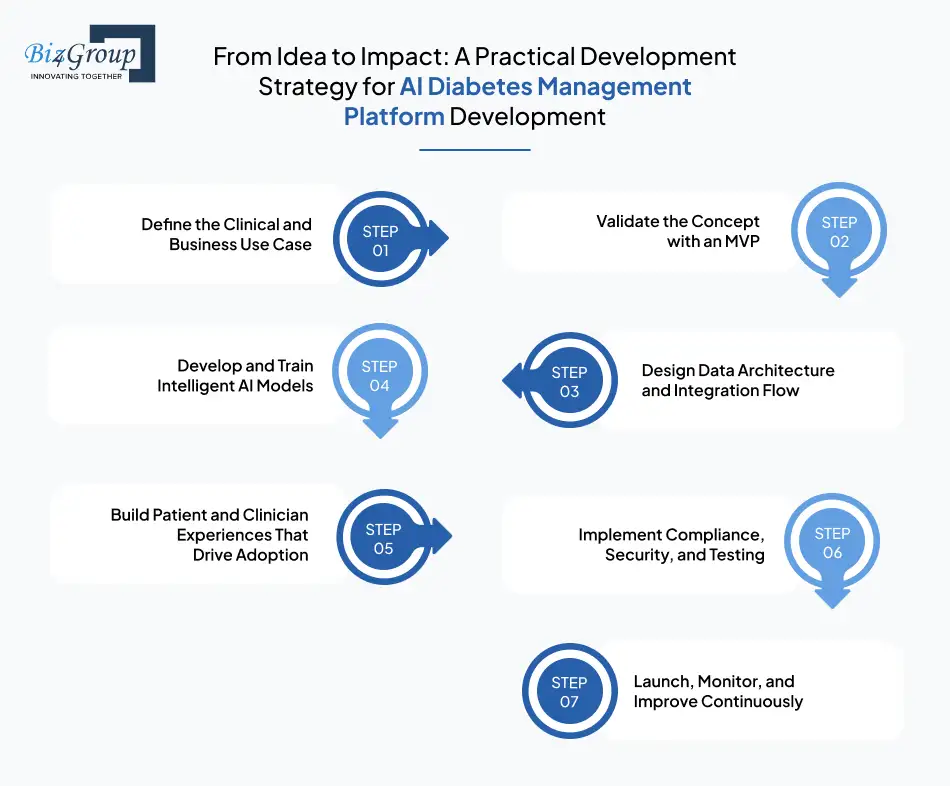
A strong idea alone does not guarantee success. What matters is how clearly you plan, build, and validate the platform at every stage. When done right, AI diabetes management platform development becomes predictable instead of risky and leads to solutions clinicians and patients actually trust.
This step-by-step approach is widely used to develop AI powered diabetes management platforms that scale across healthcare organizations.
Step 1: Define the Clinical and Business Use Case
Everything starts with clarity. You need to define who the platform serves and what problem it solves. This step ensures your AI diabetes management solutions for startups and healthcare enterprises stay focused on outcomes instead of features.
Key focus areas:
- Target users such as patients, clinicians, or care managers
- Core challenges like adherence, early risk detection, or care coordination
- Business goals tied to measurable ROI
Step 2: Validate the Concept with an MVP
Before committing to a full-scale build, early validation is essential. A focused MVP helps you test assumptions with real users and real workflows. This is often the first execution phase of AI diabetes management software development.
What this includes:
- A limited but high-impact feature set
- Feedback from patients and care teams
- Early clinical and operational validation
Many teams start this phase through structured MVP development to reduce risk and accelerate learning.
Step 3: Design Data Architecture and Integration Flow
AI depends on clean, connected data. You need a clear plan for how information flows from devices, patients, and clinical systems into one platform. This step is critical when you create AI driven diabetes management systems that rely on accurate insights.
Key considerations:
- Integration with CGMs, wearables, and monitoring devices
- Connectivity with EHR and clinical systems
- Data normalization and storage strategy
Step 4: Develop and Train Intelligent AI Models
This is where intelligence enters the platform. Models are trained to predict risks, identify patterns, and personalize recommendations. This capability defines developing intelligent diabetes care solutions rather than basic tracking tools.
Core activities:
- Model selection based on clinical relevance
- Continuous learning from new patient data
- Bias detection, validation, and performance tuning
Step 5: Build Patient and Clinician Experiences That Drive Adoption
Even the most advanced AI will fail if users struggle to interact with it. Patient journeys and clinician workflows must feel intuitive and supportive. This is where thoughtful UI/UX design becomes essential to adoption and long-term engagement.
What to prioritize:
- Simple, low-friction patient interfaces
- Insight-focused clinician dashboards
- Clear explanations behind AI-driven recommendations
Step 6: Implement Compliance, Security, and Testing
Healthcare platforms must meet strict regulatory and security requirements. Compliance should be part of the build process from day one, especially for healthcare AI diabetes software development.
Critical elements:
- HIPAA-compliant data handling and storage
- Role-based access controls
- Functional, security, and clinical testing
Step 7: Launch, Monitor, and Improve Continuously
Launching the platform is only the beginning. Continuous monitoring ensures the platform keeps delivering value as usage grows. This phase turns diabetes management platform development with AI into a long-term asset rather than a one-time release.
Ongoing actions:
- Performance and outcome tracking
- AI model refinement and feature optimization
- Scaling across care programs and populations
This structured approach reduces risk, speeds up time to value, and aligns technology with real healthcare needs. It helps you create AI enabled diabetes management platforms that evolve with patients, providers, and the healthcare system.
Have the Vision but Unsure How to Build It Step by Step?
Turning strategy into execution is where most products stall. We help you move from idea to launch with a proven development approach.
Plan My AI Diabetes PlatformChoosing the Right Tech Stack for AI Diabetes Management Platform Development
Your tech stack decides how fast you can launch, how well the platform scales, and how easily it fits into real healthcare workflows. When done right, it supports secure data flow, reliable AI performance, and smooth user experiences. When done poorly, it becomes a long-term bottleneck.
Below is a practical, healthcare-ready tech stack commonly used in AI diabetes management platform development.
|
Layer |
Technologies Used |
Why It Matters |
|---|---|---|
|
Patient Mobile App |
React Native, Flutter, Swift, Kotlin |
Enables fast, responsive apps for patients to track glucose, receive alerts, and stay engaged across iOS and Android. |
|
Clinician Web Dashboard |
React.js, Angular, Vue.js |
Supports data-rich dashboards that surface insights clearly without overwhelming clinicians. |
|
Backend Development |
Handles business logic, user management, and secure communication between systems. |
|
|
AI and Machine Learning |
Python, TensorFlow, PyTorch, Scikit-learn |
Powers predictive analytics, risk detection, and personalization in AI diabetes management software development. |
|
Data Processing Pipelines |
Apache Kafka, Apache Spark, Airflow |
Manages real-time and batch data processing from CGMs, wearables, and patient inputs. |
|
Database and Storage |
PostgreSQL, MongoDB, DynamoDB, Amazon S3 |
Stores structured patient data and unstructured health records securely and efficiently. |
|
Cloud Infrastructure |
AWS, Microsoft Azure, Google Cloud |
Provides scalability, compliance support, and reliability for diabetes management platform development with AI. |
|
Device and EHR Integration |
HL7, FHIR APIs, REST APIs |
Ensures interoperability with CGMs, wearables, and hospital systems for seamless data exchange. |
|
Security and Compliance |
HIPAA frameworks, OAuth 2.0, AES encryption |
Protects sensitive health data and meets regulatory requirements. |
|
AI Model Monitoring |
MLflow, Prometheus, custom dashboards |
Tracks model performance, bias, and accuracy over time in live environments. |
|
Notification and Messaging |
Firebase, Twilio, AWS SNS |
Delivers real-time alerts, reminders, and patient engagement messages. |
|
DevOps and Deployment |
Docker, Kubernetes, CI/CD pipelines |
Enables faster releases, automated testing, and reliable scaling. |
The best stack is not the newest or most complex one. It is the one that aligns with your compliance needs, data strategy, and long-term roadmap. Teams that build AI diabetes care applications successfully focus on reliability, explainability, and scalability from day one.
Working with an experienced AI app development company helps ensure your tech decisions support growth instead of limiting it later.
Also Read: Next JS Development Company
AI Diabetes Management Platform Development Cost Breakdown: What You Should Budget and Why It Varies
Let’s address the question every founder, CTO, and healthcare executive asks early.
How much does AI diabetes management platform development actually cost?
In most real-world scenarios, the estimated cost ranges from $35,000 to $200,000+. This range exists because the final cost depends heavily on feature depth, AI complexity, integrations, compliance scope, and scalability requirements. A focused MVP sits on the lower end, while enterprise-grade platforms with advanced AI and integrations push costs higher.
Below, we break this down clearly so you know exactly where the money goes when you invest in AI diabetes management software development.
Feature-Wise Cost Breakdown for AI Diabetes Management Platform Development
|
Feature Category |
What's Included |
Estimated Cost Range |
|---|---|---|
|
Patient Mobile App Development |
Glucose tracking, alerts, dashboards, engagement flows |
$8,000 to $25,000 |
|
Clinician Dashboard and Admin Panel |
Patient insights, risk alerts, population analytics |
$7,000 to $20,000 |
|
AI Model Development and Training |
Risk prediction, personalization, pattern detection |
$10,000 to $40,000 |
|
Device and Wearable Integration |
CGMs, smart pens, fitness trackers, APIs |
$5,000 to $20,000 |
|
Medication and Adherence Management |
Reminders, alerts, adherence tracking |
$3,000 to $10,000 |
|
Patient Engagement Features |
Nudges, notifications, coaching logic |
$4,000 to $12,000 |
|
Remote Monitoring Capabilities |
Continuous data flow and alerts |
$5,000 to $15,000 |
|
Security and Compliance Layer |
HIPAA controls, encryption, access roles |
$6,000 to $18,000 |
|
Cloud Infrastructure Setup |
Hosting, databases, storage, scalability |
$4,000 to $15,000 |
|
Testing and Quality Assurance |
Functional, security, and performance testing |
$3,000 to $10,000 |
This feature-level planning is essential when you build AI diabetes care applications that are meant to scale beyond pilots.
Key Factors That Affect AI Diabetes Management Platform Development Cost
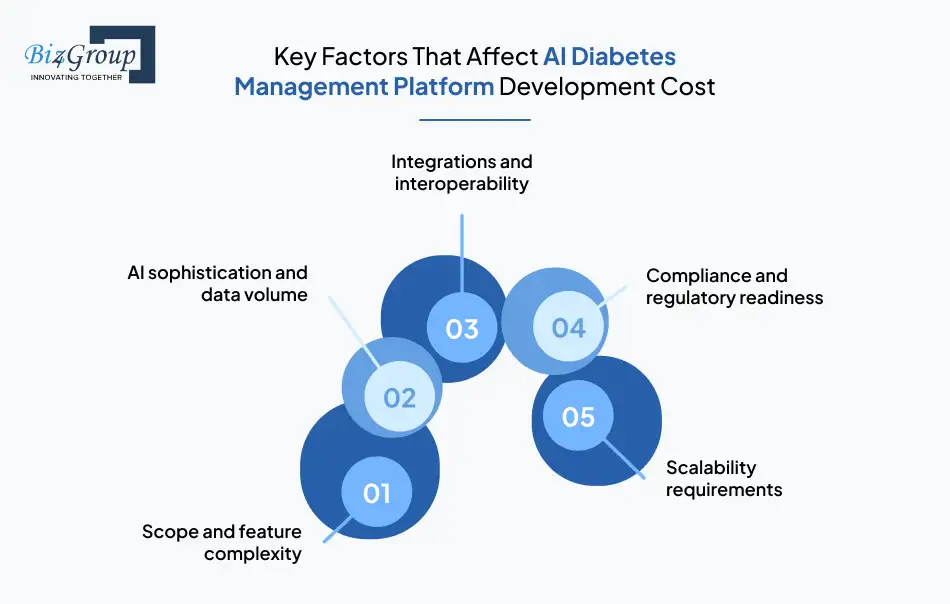
Several variables directly influence how close you land to $35,000 or cross the $200,000 mark.
1. Scope and feature complexity
A basic monitoring platform costs far less than one offering predictive analytics, personalization, and population health insights. The more advanced the AI logic, the higher the development effort.
2. AI sophistication and data volume
Training accurate models requires clean, large datasets and continuous tuning. This is a major cost driver in developing intelligent diabetes care solutions.
3. Integrations and interoperability
Connecting multiple devices, EHRs, and third-party systems increases both build time and testing effort.
4. Compliance and regulatory readiness
HIPAA compliance, audit trails, and secure data handling add necessary cost, especially for enterprise healthcare deployments.
5. Scalability requirements
Platforms built for startups differ greatly from those targeting hospitals or payers. AI diabetes management solutions for startups and healthcare enterprises have very different infrastructure needs.
Hidden Costs Most Teams Miss in AI Diabetes Management Software Development
Some costs do not show up in initial estimates but impact long-term budgets.
- Ongoing AI model retraining and monitoring
- Cloud usage growth as patient volume increases
- Compliance updates as regulations evolve
- Maintenance for device and API integrations
- Support and operational tooling
These are common blind spots in diabetes management platform development with AI if planning focuses only on launch.
Cost Optimization Strategies Without Cutting Corners
You can control costs without compromising quality if you plan smartly.
- Start with an MVP that validates high-impact features first
- Reuse modular components where possible
- Choose cloud services that scale gradually
- Prioritize explainable AI over overly complex models early
- Partner with an experienced AI development company to avoid rework
Teams that approach cost planning strategically often achieve better ROI than those who overbuild early.
For a deeper breakdown aligned with broader healthcare products, this guide on cost to develop AI healthcare app provides additional context that applies well to diabetes-focused platforms.
Clear cost visibility helps you align product decisions with business outcomes. When done right, AI diabetes management platform development becomes a growth investment rather than a financial risk.
Wondering Where Your Budget Will Actually Go?
Get a realistic breakdown for AI diabetes management platform development, tailored to your features, scale, and compliance needs.
Get a Cost EstimateChallenges in AI Diabetes Management Platform Development and How to Solve Them Effectively
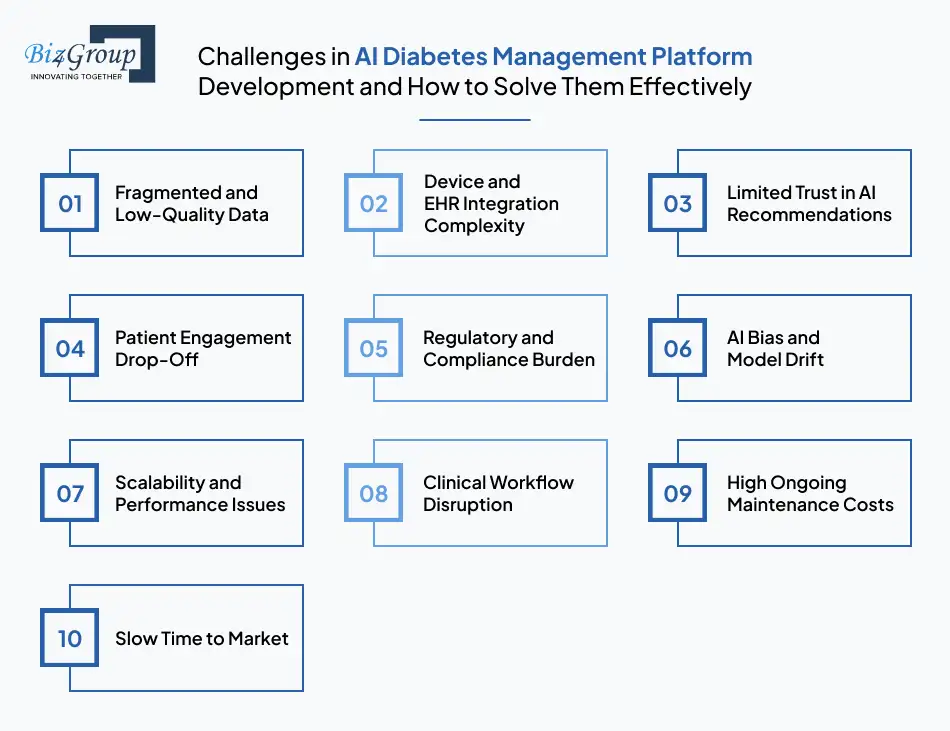
Even the best ideas face resistance once they hit real-world healthcare environments. AI diabetes management platform development comes with technical, clinical, and operational challenges that can slow adoption or inflate costs if they are not addressed early.
The table below breaks down the most common challenges, why they occur, and how healthcare innovators successfully solve them while building AI diabetes care applications at scale.
|
Challenge |
Why It Happens |
How to Solve It |
|---|---|---|
|
Fragmented and Low-Quality Data |
Diabetes data comes from multiple devices, apps, and clinical systems, often in inconsistent formats. |
Design a strong data normalization layer early and rely on structured AI integration services to unify data sources and improve reliability in AI diabetes management software development. |
|
Device and EHR Integration Complexity |
CGMs, wearables, and EHR systems follow different protocols and update cycles. |
Plan integrations upfront using FHIR standards and modular connectors to support long-term diabetes management platform development with AI. |
|
Limited Trust in AI Recommendations |
Clinicians hesitate to rely on predictions they cannot understand or validate. |
Implement explainable AI models that clearly show reasoning behind outputs to support developing intelligent diabetes care solutions. |
|
Patient Engagement Drop-Off |
Patients lose motivation when interactions feel generic or repetitive over time. |
Apply adaptive engagement flows and automated nudges powered by AI automation services when you make AI diabetes management software for patient engagement. |
|
Regulatory and Compliance Burden |
Healthcare regulations evolve and vary across regions and care settings. |
Embed HIPAA-compliant security controls into the platform architecture from day one rather than treating compliance as an afterthought. |
|
AI Bias and Model Drift |
Patient behavior and data patterns change, reducing model accuracy over time. |
Continuously monitor and retrain models to maintain accuracy in healthcare AI diabetes software development. |
|
Scalability and Performance Issues |
Early-stage platforms struggle when patient volume grows rapidly. |
Build cloud-native infrastructure designed for gradual scaling to support AI diabetes management solutions for startups and healthcare enterprises. |
|
Clinical Workflow Disruption |
New tools fail when they add friction to existing care routines. |
Design platforms that integrate seamlessly into clinician workflows using principles from AI patient management software systems. |
|
High Ongoing Maintenance Costs |
Continuous updates, integrations, and AI tuning increase long-term expenses. |
Modularize features and prioritize high-impact capabilities to control costs in AI diabetes management platform development. |
|
Slow Time to Market |
Overengineering early versions delays validation and adoption. |
Start with a focused MVP and iterate based on real-world feedback instead of assumptions. |
Most failures in AI diabetes management platform development are not caused by weak technology. They happen because teams underestimate integration, compliance, and adoption challenges. Addressing these risks early helps you launch faster, scale smarter, and protect long-term ROI.
Why Biz4Group LLC Is the Go-To Partner for AI Diabetes Management Platform Development?
When you set out to develop AI diabetes management platforms that deliver real value, you need a partner who understands both healthcare technology and real world user needs. Biz4Group stands out as a trusted AI development company with deep expertise in healthcare software and scalable solutions.
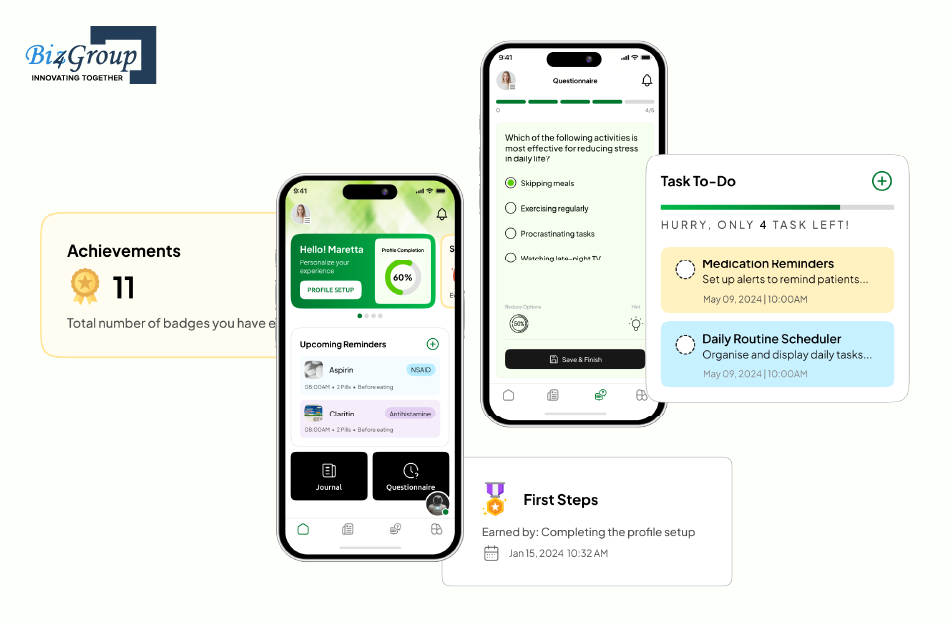
One of our standout healthcare projects is CogniHelp, a mobile application designed to support early-to-mid-stage dementia patients. This project demonstrates our ability to develop robust healthcare applications featuring remote monitoring, intelligent insights, patient engagement, and advanced algorithms. These same principles apply when building intelligent AI diabetes management solutions for healthcare innovators.
CogniHelp is a supportive digital companion for individuals with dementia to assist with memory, daily routines, journaling, reminders, and cognitive tracking.
Key Highlights of the Project
- Personalized Daily Engagement: The app guides users through interactive quizzes and journaling to reinforce memory and cognitive activity.
- Daily Reminders: It builds reliable routines by reminding users about quizzes, activities, and medication schedules.
- Voice-Enabled Journaling: Users can record journal entries using voice-to-text functionality, making the experience effortless and accessible.
- Cognitive Monitoring Analytics: A performance analyzer tracks and evaluates cognitive trends over time to deliver meaningful insights.
- Emotionally Aware Interaction: Integrated chatbot tools check on user emotional wellbeing and help caregivers tailor plans with real-time engagement data.
This project clearly reflects our strength in custom software solutions that combine data analysis, intelligent user interfaces, and meaningful patient outcomes. Building custom AI diabetes management software development services involves similar challenges around data accuracy, real-time alerts, clinical integration, and intuitive design. Biz4Group approaches every project with the same focus on quality, compliance, scalability, and real user impact.
Ready to Build an AI Diabetes Platform That Actually Gets Used?
If you are looking for the best company to develop AI diabetes management platforms, we are ready to build with you.
Build With Biz4GroupWhat To Take Away!
Building a successful diabetes platform is not about chasing trends. It is about solving real problems for patients, clinicians, and healthcare organizations in a way that scales and lasts.
As this guide shows, AI diabetes management platform development goes far beyond building an app. It requires a clear strategy, thoughtful feature planning, reliable data pipelines, and a deep understanding of how care is delivered in the real world. Whether you aim to build AI diabetes care applications for patients or develop intelligent diabetes care solutions for providers, every decision directly impacts adoption and outcomes.
This is where execution experience matters.
Biz4Group LLC brings proven expertise in AI diabetes management software development, healthcare AI diabetes software development, and building scalable platforms that support long-term care models. Our work across healthcare solutions, including platforms with remote monitoring, patient engagement, analytics, and intelligent workflows, demonstrates our ability to create AI enabled diabetes management platforms that deliver measurable value.
For startups and enterprises alike, AI diabetes management solutions for startups and healthcare enterprises must be secure, compliant, scalable, and easy to use. Biz4Group focuses on all four, ensuring your product is built not only to launch, but to grow.
If you are looking for the best company to develop AI diabetes management platforms, one that understands healthcare complexity and delivers with precision, we are ready when you are.
Let’s turn your idea into a platform patients trust and providers rely on.
FAQ
1. What exactly is AI diabetes management platform development and why should my healthcare organization care
AI diabetes management platform development involves building intelligent software that helps patients and care teams monitor, analyze, and manage diabetes more effectively using data-driven insights. These platforms combine glucose data, lifestyle inputs, and clinical information to support personalized and proactive care. Healthcare organizations care because this approach improves outcomes, reduces long-term costs, and supports scalable chronic care delivery.
2. What are the key benefits of AI diabetes management software development for patients and providers
AI diabetes management software development delivers measurable benefits such as personalized treatment guidance, early risk detection, and improved patient adherence. Providers gain better visibility into patient health trends, while patients receive timely support that fits into daily life. Together, this leads to better clinical outcomes and more efficient care workflows.
3. How long does it take to develop AI powered diabetes management platforms
The timeline to develop AI powered diabetes management platforms depends on scope and complexity. A focused MVP with core monitoring and engagement features typically takes 3 to 4 weeks. A full-scale enterprise platform with advanced AI, device integrations, and compliance requirements can take 6 to 8 weeks or longer. Early planning and phased development help keep timelines realistic.
4. What regulatory and privacy requirements apply when you create AI driven diabetes management systems
When you create AI driven diabetes management systems, compliance with healthcare regulations like HIPAA is mandatory. This includes secure data storage, encryption, audit trails, and strict access controls. Regulatory readiness builds trust with patients and clinicians while protecting your organization from legal and operational risk.
5. Can startups successfully build digital diabetes monitoring platforms without deep clinical expertise
Yes, startups can build digital diabetes monitoring platforms successfully if they combine strong technical execution with clinical collaboration. Working closely with healthcare professionals ensures that insights are clinically relevant and safe. Clear product focus and validated use cases are critical for adoption and credibility.
6. What is the cost of AI diabetes management platform development
The cost of AI diabetes management platform development typically ranges from $35,000 to $200,000+, depending on features, AI complexity, integrations, and compliance needs. A basic MVP with monitoring and engagement features sits on the lower end, while enterprise-grade solutions with predictive analytics, remote monitoring, and scalability requirements fall on the higher end. Costs also vary based on long-term maintenance, AI model training, and cloud infrastructure usage.
7. What kind of team is needed to develop intelligent diabetes care solutions at scale
To develop intelligent diabetes care solutions, you need a cross-functional team that includes healthcare product strategists, AI and data engineers, software developers, UX designers, and compliance specialists. This mix ensures the platform is clinically relevant, secure, easy to use, and scalable across patient populations.
