Location :
Orlando, FL, USA
Location :
Orlando, FL, USA +1 (407) 714-1616
 info@biz4group.com


















Imagine a digital system that doesn’t wait for instructions but instead, understands your business goals, learns from real-time feedback, and takes independent actions to get the job done.
Read More

Hospitals and healthcare organizations are generating more data than ever, yet many leadership teams still rely on delayed reports and fragmented dashboards to make critical decisions. Clinical outcomes, operational efficiency, and financial performance are now tightly linked to how well data is analyzed and acted upon. This shift has made AI healthcare analytics software development a priority for healthcare leaders who want clarity instead of guesswork.
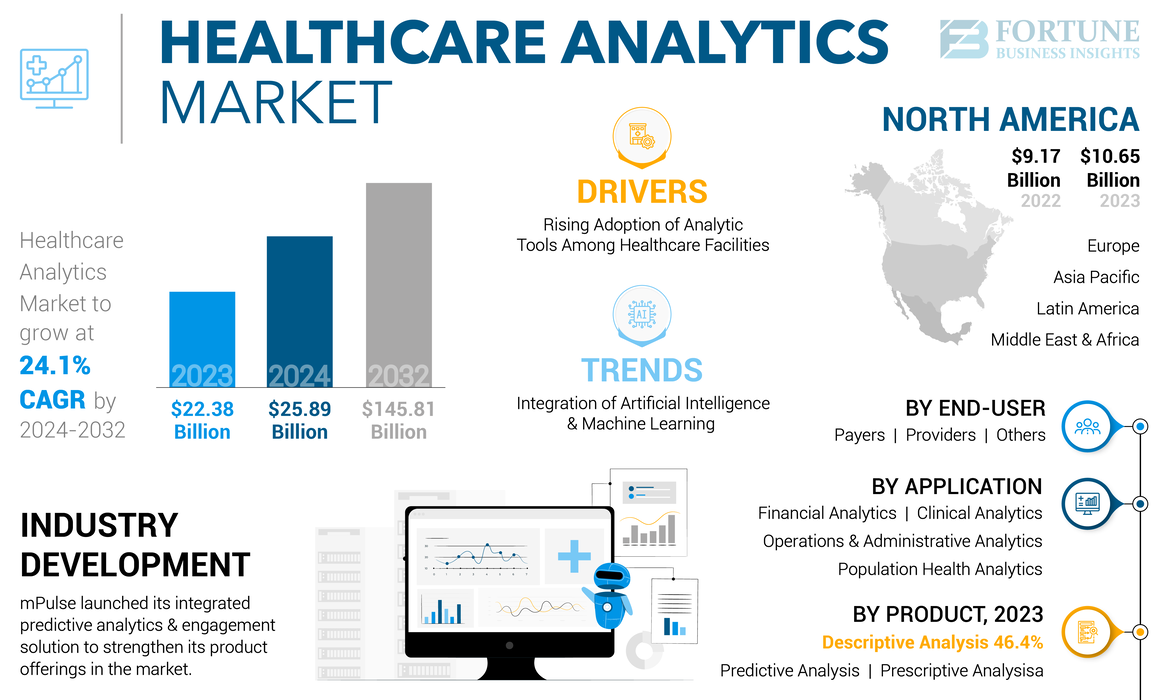
According to Fortune Business Insights, the global healthcare analytics market is expected to grow to USD 145.81 billion by 2032, driven largely by AI powered analytics adoption in healthcare systems.
Healthcare leaders today are under pressure to improve care quality, control costs, meet compliance requirements, and justify technology investments with clear outcomes. As organizations plan to develop AI healthcare analytics platforms, expectations have shifted toward reliable AI healthcare solutions that support faster decisions across clinical, operational, and financial teams.
For decision makers looking to build AI software that converts complex healthcare data into actionable insights, AI healthcare analytics software development services are becoming essential. The focus is now on building analytics platforms that scale with organizational growth, adapt to regulatory changes, and support long term planning without disrupting daily healthcare operations.
AI healthcare analytics software is a system that helps healthcare organizations understand their data and use it to make better decisions. It focuses on turning clinical, operational, and financial data into insights teams can act on every day.
At its core, AI healthcare analytics software development helps healthcare organizations move from basic reporting to smarter, faster decisions that improve care delivery and operational performance.
AI healthcare analytics software development turns healthcare data into insights teams can actually use. It follows a clear flow from data collection to decision support. This process helps leaders move from guessing to knowing.
Data is collected from clinical, operational, and financial healthcare systems. It is cleaned and organized so teams can trust what they see. This step creates a single and reliable data foundation.
AI models study data to find patterns and trends. This is where teams create healthcare analytics software using AI instead of relying on manual reports. Many organizations use enterprise AI solutions to support this step at scale.
Insights are shown through simple dashboards and alerts. Leaders can quickly see risks, gaps, and opportunities. Some teams use AI consulting services to align insights with daily workflows.
| Stage | What Happens | Result |
|---|---|---|
|
Data Setup |
Data is collected and cleaned |
Trusted information |
|
AI Analysis |
Patterns are identified |
Clear insights |
|
Decision Support |
Insights reach leaders |
Faster decisions |
As healthcare organizations build AI powered healthcare analytics solutions, this structured approach supports consistent and informed decision making. It naturally prepares teams to evaluate the business value behind these investments.
Build platforms that move beyond reports and support real clinical and operational choices through AI healthcare analytics software development.
Start Your Analytics Strategy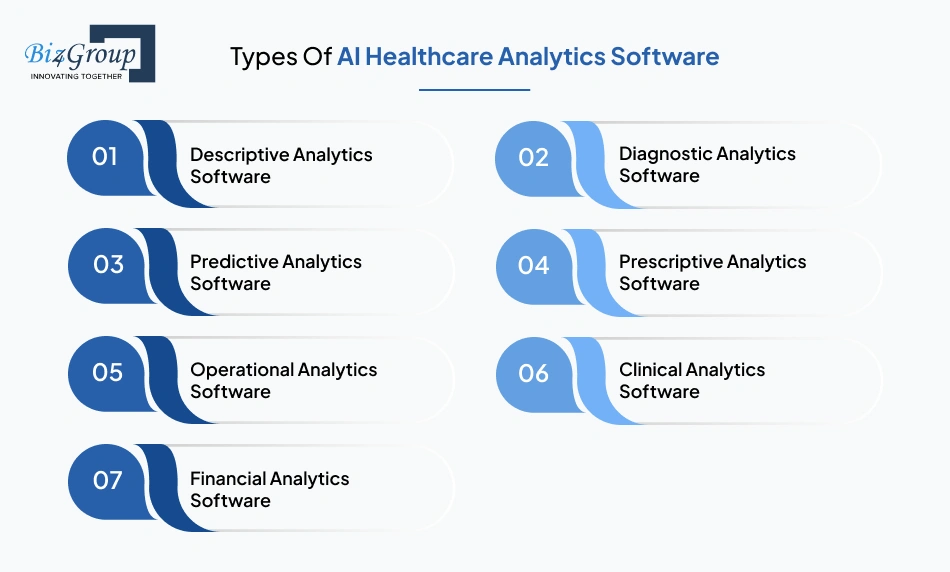
AI healthcare analytics software development supports different types of analytics, each designed to answer specific business and clinical questions. Understanding these types helps leaders choose the right focus areas. Each type plays a distinct role in decision making:
| Types | What It Focuses On | How It Helps Healthcare Organizations |
|---|---|---|
|
Descriptive Analytics Software |
Past and current data |
Shows what has happened across operations and care delivery |
|
Diagnostic Analytics Software |
Data relationships |
Explains why certain outcomes or trends occurred |
|
Predictive Analytics Software |
Future trends and risks |
Helps anticipate patient demand, readmissions, and resource needs |
|
Prescriptive Analytics Software |
Recommended actions |
Guides leaders on what steps to take next |
|
Operational Analytics Software |
Day to day performance |
Improves staffing, scheduling, and workflow efficiency |
|
Clinical Analytics Software |
Patient level data |
Supports better care planning and outcome tracking |
|
Financial Analytics Software |
Cost and revenue data |
Improves budgeting and financial planning |
These analytics types are often combined through healthcare data analytics software development with AI, supported by thoughtful AI integration services that connect insights across systems. Together, they create a strong foundation for understanding which analytics investments deliver the most value in practice.
Healthcare organizations are under pressure to justify every technology decision. Data alone does not solve problems, but the right analytics investment can change how decisions are made. This is why AI healthcare analytics software development is gaining investment priority among business across the globe:
Healthcare data is growing faster than teams can manage manually. Investing now helps organizations build AI clinical and operational analytics system foundations before complexity becomes unmanageable. Waiting increases cost and limits future flexibility.
Reporting delays and manual analysis slow down decisions. Analytics investments reduce dependency on spreadsheets and fragmented tools. Many leaders turn to AI in healthcare administration automation to control workload and operational strain.
Reactive cost management leads to missed savings opportunities. Investing in custom AI healthcare analytics development helps organizations identify risks earlier and plan better. Working with a custom software development company ensures the platform grows with the business.
As organizations plan to develop intelligent healthcare analytics application, the next step is understanding where these investments create the strongest impact. That naturally brings the focus to real world use cases across healthcare operations.
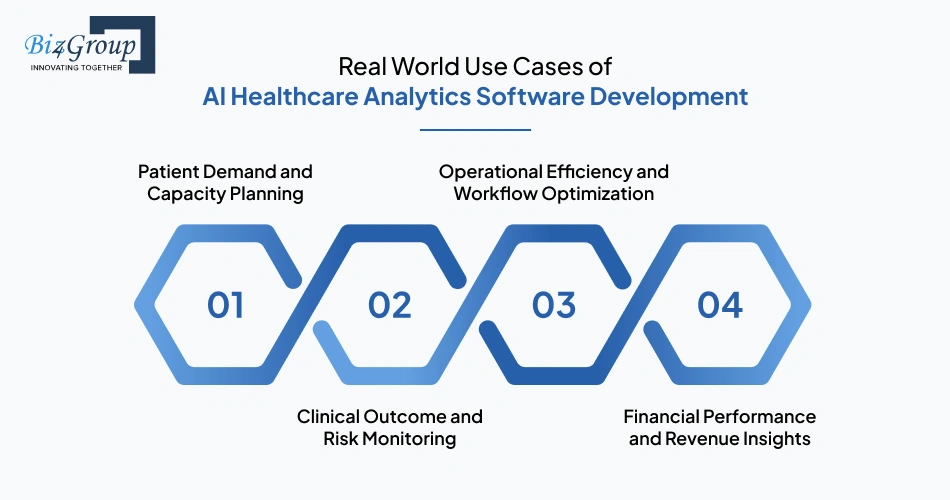
Healthcare organizations use AI healthcare analytics software development to make sense of growing data and support everyday decisions. These systems focus on practical areas where better insight leads to better outcomes. The most common use cases reflect real operational needs.
Hospitals need early signals to manage beds, staff, and resources. Analytics helps forecast demand using historical and real time data. This is often supported by AI automation services that reduce manual planning effort.
Clinical leaders need visibility into patient risk before issues escalate. Analytics surfaces patterns across diagnoses, treatment history, and outcomes. In some cases, generative AI helps review large volumes of clinical data faster.
Operations teams need to understand where delays and inefficiencies occur. Analytics highlights gaps across scheduling, throughput, and resource use. Some organizations rely on business app development using AI to deliver insights to managers.
Finance teams need a clear view of costs, billing, and revenue leakage. Analytics connects care activity with financial outcomes and supports teams that develop AI powered healthcare analytics platforms for enterprises. Insights are often delivered through secure dashboards instead of static reports.
| Use Case Area | Primary Focus | Business Impact |
|---|---|---|
|
Capacity Planning |
Demand forecasting |
Better resource readiness |
|
Clinical Monitoring |
Risk visibility |
Improved care decisions |
|
Operations |
Workflow clarity |
Reduced delays |
|
Financial Analytics |
Cost and revenue insight |
Stronger financial control |
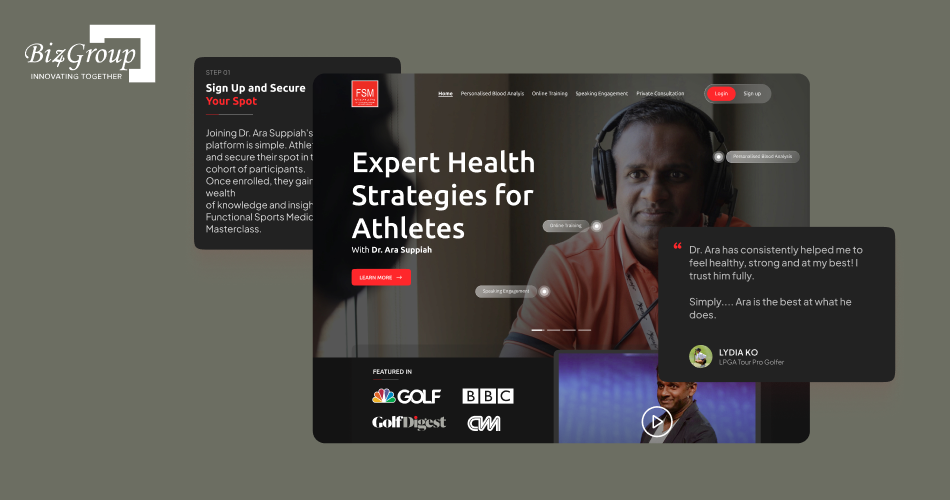
Dr Ara is an AI powered athletic health platform designed by Biz4Group to analyze performance, recovery, and health signals for sports focused users. Built with intelligent data interpretation at its core, it reflects how AI driven healthcare platforms turn continuous data into timely insights, a key foundation for scalable healthcare analytics systems.
Whether organizations build AI powered healthcare analytics platform for hospitals or broader systems, these use cases help clarify where analytics creates the most value. From here, the focus naturally shifts to the features required to support these outcomes reliably.
Design and develop AI healthcare analytics platforms that connect clinical, operational, and financial data into one decision view.
Explore Platform DevelopmentStrong analytics platforms are built on clear and reliable features. Healthcare leaders need tools that support daily decisions without adding complexity. This is the focus of AI healthcare analytics software development.
| Core Feature | What It Enables |
|---|---|
|
Unified Data Ingestion |
Combines clinical, operational, and financial data from multiple systems |
|
Data Quality Management |
Cleans, validates, and standardizes healthcare data |
|
Predictive Analytics Engine |
Identifies trends, risks, and future outcomes |
|
Real Time Dashboards |
Shows up to date insights for leadership teams |
|
Role Based Access Control |
Ensures users see only what they need |
|
Compliance And Security Controls |
Aligns with healthcare data privacy requirements |
|
Reporting And Visualization Tools |
Converts insights into easy-to-read views |
|
Alerts And Notifications |
Flags issues that need immediate attention |
|
Scalability And Performance Support |
Handles growing data and user volumes |
|
Integration Readiness |
Connects analytics with existing healthcare systems |
Many of these capabilities sit at the center of AI healthcare business intelligence software development, where insights are designed for executives and operators alike. Some organizations also integrate AI into an app to make analytics accessible across teams.
As platforms mature, attention naturally shifts from core stability to advanced capabilities. That progression leads into understanding which advanced features can further strengthen analytics outcomes.
After core features are in place, healthcare leaders start looking for depth. Advanced capabilities help organizations handle complexity without slowing decisions. This is where AI healthcare analytics software development begins to show its long term value.
Advanced platforms help leaders look ahead, not just review the past. They surface likely outcomes and possible next steps. This is central to mature AI healthcare analytics solutions for healthcare organizations managing risk and growth.
Decision makers need to trust what they see. Advanced analytics explains how conclusions are reached in plain terms. This matters when insights influence clinical or financial choices.
Some decisions cannot wait for weekly reports. Advanced analytics updates insights as conditions change. In practice, this often connects with AI assistant app design to keep leaders informed without friction.
Healthcare data keeps changing in volume and structure. Advanced systems adapt without needing full rebuilds. Many organizations rely on custom AI healthcare analytics development services to support this flexibility.
As platforms mature, interaction becomes simpler. Some teams explore conversational access instead of complex dashboards. This approach is sometimes shaped with support from an AI chatbot development company, used carefully and purposefully.
Advanced features often separate short term tools from long term platforms. They also influence how leaders evaluate the best company to develop AI healthcare analytics software, especially when planning for scale, cost, and future readiness.
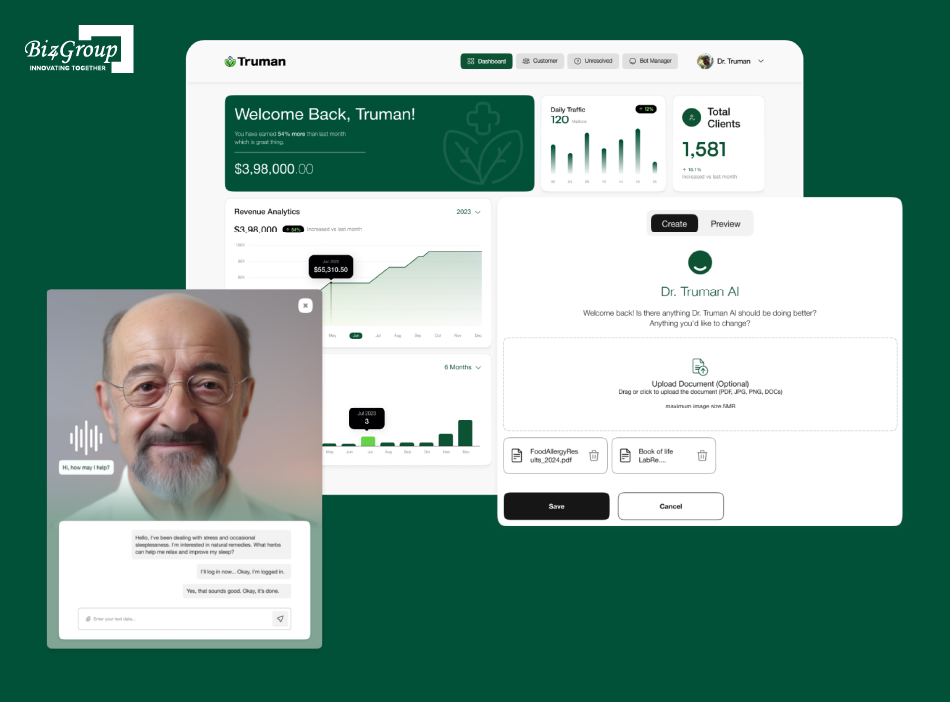
Truman is an AI enabled wellness platform that delivers personalized health guidance through data driven recommendations and ongoing user insights. Its focus on translating user health data into actionable outcomes mirrors how modern healthcare analytics platforms are built to support smarter, personalized decision making at scale.
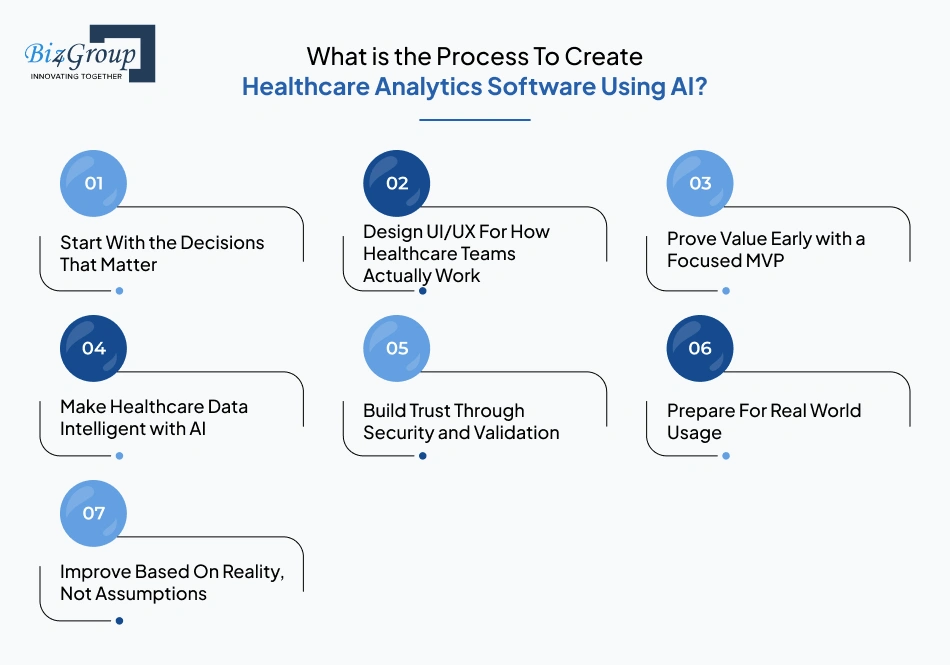
Healthcare organizations do not build analytics platforms overnight. The process requires clarity, discipline, and a strong understanding of how decisions are made on the ground. A well planned AI healthcare analytics software development journey focuses on solving real problems before scaling technology.
Here’s all you need to know:
Most healthcare analytics efforts fail because they start with data instead of decisions. Leadership teams first look at where uncertainty hurts the most, such as patient throughput, staffing levels, or cost control. This is where AI healthcare analytics software development earns its place.
Analytics adoption drops fast when tools feel foreign to daily routines. This step focuses on making insights easy to find and easy to understand for clinicians, administrators, and executives alike. Good UI/UX design removes friction instead of adding training overhead.
Also read: Top UI/UX design companies in USA
Healthcare organizations rarely need everything at once. They move faster by proving value in one area before expanding, hence opting for MVP development services is a great way to begin. This is how teams develop AI healthcare analytics platforms without disrupting operations.
Also read: Top 12+ MVP Development Companies to Launch Your Startup in 2026
Healthcare data is fragmented, inconsistent, and often incomplete. Before analytics can help, the data must make sense. Teams gradually create healthcare analytics software using AI only after data behavior is clearly understood.
If leaders do not trust the data, they will not trust the insights. This step focuses on protecting patient information and validating outputs. Trust is built through transparency, not promises.
Also Read: 15+ Software Testing Companies in USA in 2026
Analytics platforms must hold up during peak demand and unexpected events. Deployment planning ensures reliability when it matters most. Stability matters more than speed at this stage.
Once live, the platform starts teaching the organization how it should evolve. This is where teams build AI powered healthcare analytics solutions that stay relevant over time.
Over time, healthcare data analytics software development with AI becomes part of how decisions are made, not a separate tool. That naturally raises the question of which technologies can support this consistently at scale.
Create systems that support planning, staffing, and performance using AI healthcare analytics solutions for healthcare organizations.
Build Smarter AnalyticsThe technology stack behind a healthcare analytics platform determines how well it handles integrations, scale, and long term evolution. For AI healthcare analytics software development, the stack must support complex data flows, real time insights, and strict healthcare requirements.
| Label | Preferred Technologies | Why It Matters |
|---|---|---|
|
Frontend Framework |
ReactJS, Angular |
Analytics dashboards must be fast and intuitive, which is why many teams rely on ReactJS development to support daily decision making |
|
Server-Side Rendering & SEO |
NextJS, NuxtJS |
Server rendered dashboards improve performance and secure data handling, making NextJS development well suited for analytics heavy views |
|
Backend Framework |
NodeJS, Python |
Analytics platforms need scalable services and data handling, which is why NodeJS development and Python development work well together |
|
REST, GraphQL |
APIs connect analytics engines with EHRs and internal systems, forming the backbone of real time data exchange |
|
|
AI & Data Processing |
TensorFlow, PyTorch |
These tools power predictive and pattern based analytics used across healthcare use cases |
|
Data Engineering |
Pandas, Apache Spark |
Handles large volumes of clinical and operational data reliably |
|
Database Layer |
PostgreSQL, MongoDB, Data Warehouses |
Supports both transactional and analytical healthcare data |
|
Integration Standards |
HL7, FHIR |
Ensures interoperability with existing healthcare systems |
|
Cloud Infrastructure |
AWS, Azure, GCP |
Enables scalability, resilience, and compliance ready deployments |
|
Security & Compliance |
IAM, Encryption, Audit Logs |
Protects patient data and supports regulatory requirements |
|
Monitoring & Observability |
CloudWatch, Prometheus |
Helps teams track system health and analytics performance |
A complete tech stack ensures analytics platforms remain reliable, secure, and scalable as data and usage grow. When built thoughtfully, these components support long term performance without adding operational complexity. This foundation is critical to sustaining AI healthcare analytics software development initiatives across hospitals and healthcare organizations.
The cost of AI healthcare analytics software development typically ranges from $30,000 to $300,000+, depending on scope, complexity, and scale. This is a ballpark figure meant to help healthcare leaders plan budgets early. Actual costs vary based on data sources, AI depth, and long term goals.
| Development Level | Estimated Cost Range | What It Usually Covers |
|---|---|---|
|
MVP-level AI Healthcare Analytics Software |
$30,000 to $60,000 |
Core dashboards, limited data sources, basic analytics models, essential security built during MVP software development stage. |
|
Mid-Level AI Healthcare Analytics Software |
$60,000 to $150,000 |
Multiple data integrations, predictive analytics, role based access, stronger compliance |
|
Enterprise-grade AI Healthcare Analytics Software |
$150,000 to $300,000+ |
Advanced analytics, real time insights, large scale data processing, enterprise security and governance |
Costs increase when platforms need to handle large data volumes, complex integrations, or advanced intelligence. Teams often hire AI developers when custom models, ongoing optimization, or healthcare specific logic is required.
For healthcare organizations planning to build AI clinical and operational analytics system capabilities, cost decisions are closely tied to long term value rather than initial spend. This naturally leads to exploring monetization options and how analytics platforms can justify their investment over time.
Move faster with platforms designed to build AI powered healthcare analytics solutions that scale across hospitals and health systems.
Plan My Analytics Platform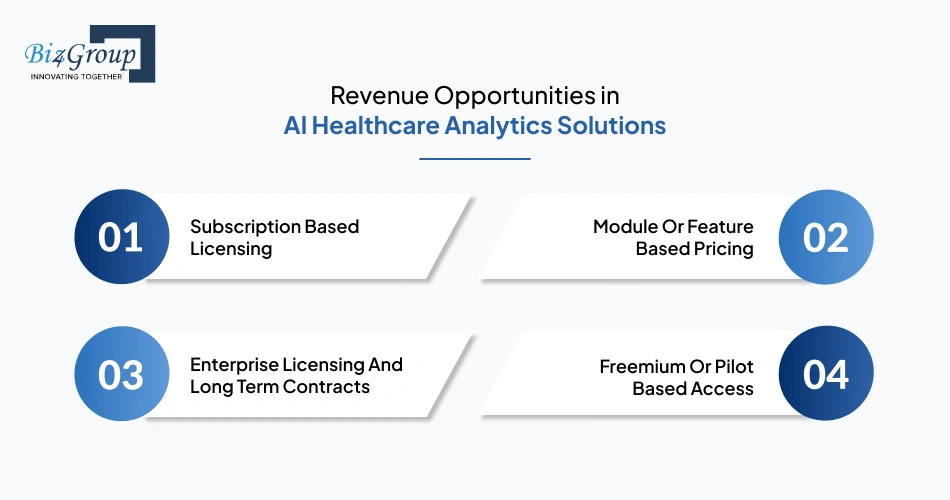
Revenue planning matters when analytics platforms are built for long term use. In AI healthcare analytics software development, pricing depends on who uses the platform, how often insights are needed, and how widely it is rolled out. The most common models are outlined below.
This model works when analytics is used every day. Costs are predictable and usually linked to users or facilities. It is often used for platforms built through custom AI healthcare analytics development.
Some organizations prefer to start small. Pricing is tied to specific analytics areas like operations or finance. This fits teams that develop intelligent healthcare analytics application features step by step.
Large organizations often choose one contract that covers scale and customization. Pricing reflects integrations, support, and long term use. This model supports initiatives that create AI driven healthcare analytics platform deployments.
Freemium works as a starting point, not a final solution. Limited access helps teams understand value before upgrading. It is best for basic insights, not advanced analytics.
As platforms mature, pricing models often change with usage and value. That being said, let’s check out the best practices that help keep analytics useful and trusted over time.
Strong analytics platforms are built through practical choices, not over engineering. In AI healthcare analytics software development, teams that focus on clarity and discipline see better adoption and outcomes. The following practices help keep efforts on track.
Analytics cannot fix poor data. Healthcare data should be cleaned, reviewed, and owned before insights are generated. This reduces errors and supports dependable AI healthcare business intelligence software development across departments.
Users should not need training to understand results. Dashboards must show answers clearly and quickly. Some teams take cues from chatbot development for healthcare industry work to simplify how insights are consumed.
Analytics often starts in one area and spreads fast. Systems should handle more users and data without redesign. This planning helps teams build AI powered healthcare analytics platform for hospitals that scale smoothly.
Leaders need to trust and communicate insights confidently. Clear explanations matter as much as accuracy. Practices inspired by a healthcare conversational AI guide help turn complex analytics into clear talking points.
As adoption increases, these practices become even more important when organizations develop AI powered healthcare analytics platforms for enterprises. This sets the stage for discussing the challenges that emerge at scale and how to address them.
Validate, design, and build AI clinical and operational analytics system capabilities with a clear roadmap and measurable outcomes.
Start With Discovery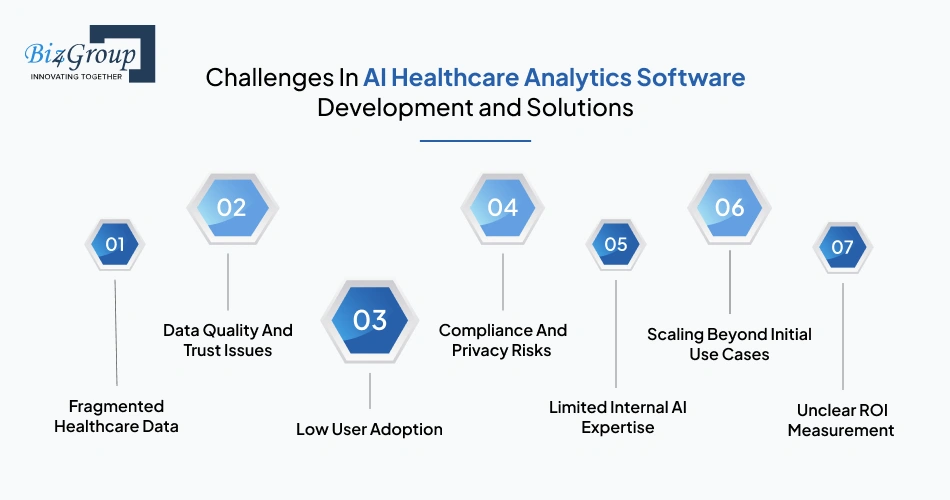
Even well planned analytics initiatives face roadblocks once execution begins. Healthcare data, workflows, and regulations add layers of complexity. Understanding common hurdles early helps teams move forward with fewer surprises and clearer expectations.
| Top Challenges | How To Solve Them |
|---|---|
|
Fragmented Healthcare Data |
Start with data mapping and standardization across EHRs, claims, and operational systems |
|
Data Quality And Trust Issues |
Establish data ownership, validation rules, and regular quality checks |
|
Low User Adoption |
Design simple dashboards that match daily workflows and decision needs |
|
Compliance And Privacy Risks |
Build security and access controls into the platform from the start |
|
Limited Internal AI Expertise |
Partner with experienced teams such as the top AI development companies in Florida, to reduce risk |
|
Scaling Beyond Initial Use Cases |
Design architecture that supports growth without rework |
|
Unclear ROI Measurement |
Tie analytics outputs directly to business and clinical outcomes |
When these hurdles are addressed early, teams move faster and with more confidence. Overcoming them lays the groundwork for sustainable growth and long term value in AI healthcare analytics software development initiatives.
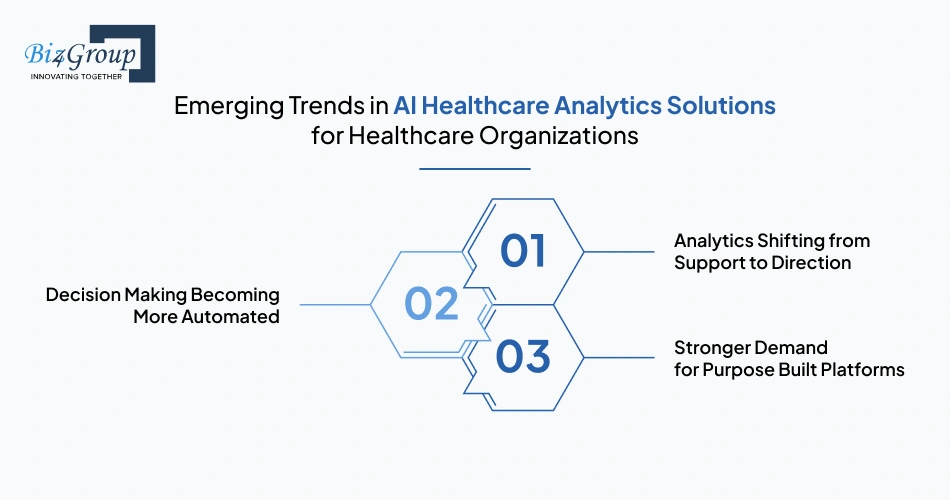
Healthcare analytics is entering a new phase where systems will shape decisions before problems surface. As expectations rise, AI healthcare analytics software development will increasingly focus on anticipation rather than reaction. Several future shifts will define how platforms evolve.
Future platforms will guide planning instead of just informing it. Leaders will rely on analytics to suggest priorities weeks or months ahead. This will redefine AI healthcare analytics solutions for healthcare organizations as strategic tools.
Manual review of reports will reduce over time. Analytics will trigger actions with limited human input for routine decisions. Some of this thinking already exists in areas like AI chatbot development for medical diagnosis, adapted carefully for analytics use.
Generic tools will struggle to meet growing complexity. Healthcare organizations will prefer systems designed around their structure and goals. This will increase reliance on custom AI healthcare analytics development services over standard products.
As these changes take shape, leaders will place more weight on long term capability than short term features. This brings is to the most important aspect - choosing the best company to develop AI healthcare analytics software for sustained growth.
Building healthcare analytics platforms requires a clear understanding of healthcare data, decision making, and long-term scalability. Biz4Group applies this approach across every AI healthcare analytics software development project.
Our experience includes delivering AI driven healthcare platforms like Dr Ara and Truman, where data intelligence plays a central role in how insights are generated and used. These platforms reflect the same fundamentals required for effective healthcare analytics systems.
As an AI development company, Biz4Group focuses on practical execution over experimentation. We help healthcare teams move from ideas to reliable platforms through clear processes and accountable delivery.
What Sets Biz4Group Apart
Biz4Group works with healthcare organizations that value clarity, reliability, and long term results in their analytics initiatives.
Launch with confidence using AI healthcare analytics software development services focused on adoption, scale, and long term value.
Talk To An AI Analytics ExpertHealthcare data is not the problem anymore. Turning it into timely, trusted decisions is. This guide walked through what it really takes to plan, build, scale, and sustain AI driven analytics platforms that healthcare teams actually use. When done right, analytics stops being a side tool and starts becoming part of everyday decision making.
That is where outcomes improve, costs stay visible, and planning gets smarter. Working with the right AI product development company simply makes that journey far less painful and far more predictable.
Discuss your analytics goals with our AI experts and see how they translate into a practical development roadmap.
Implementation timelines vary based on scope, data readiness, and integrations. Most organizations start seeing usable insights within a few months when working with structured roadmaps offered by AI healthcare analytics software development services rather than attempting everything at once.
AI analytics platforms can work with clinical, operational, and financial data from systems like EHRs, claims, and scheduling tools. The goal is to develop AI healthcare analytics platforms that unify these sources into a single decision view.
In most cases, they complement rather than replace existing tools. Many organizations build AI powered healthcare analytics solutions that sit on top of current systems to enhance prediction, speed, and insight depth without disrupting workflows.
Accuracy depends on data quality, model design, and ongoing training. Teams that create healthcare analytics software using AI with healthcare specific datasets and feedback loops see more reliable and explainable outcomes over time.
Costs typically range between $30,000 and $300,000+, depending on features, scale, and integrations. This range is common for projects focused on healthcare data analytics software development with AI, from MVPs to enterprise platforms.
Yes, modern platforms are designed to support both sides of healthcare operations. Organizations often build AI clinical and operational analytics system capabilities to connect care delivery insights with staffing, finance, and planning decisions.

with Biz4Group today!
Our website require some cookies to function properly. Read our privacy policy to know more.