 Location :
Orlando, FL, USA
Location :
Orlando, FL, USA +1 (407) 714-1616
 info@biz4group.com

- LIMS helps labs replace manual tracking with structured workflows for samples, data, and compliance across clinical, research, and diagnostic environments.
- Labs choose custom LIMS software development when off the shelf tools cannot support real workflows, audit readiness, or long-term scalability.
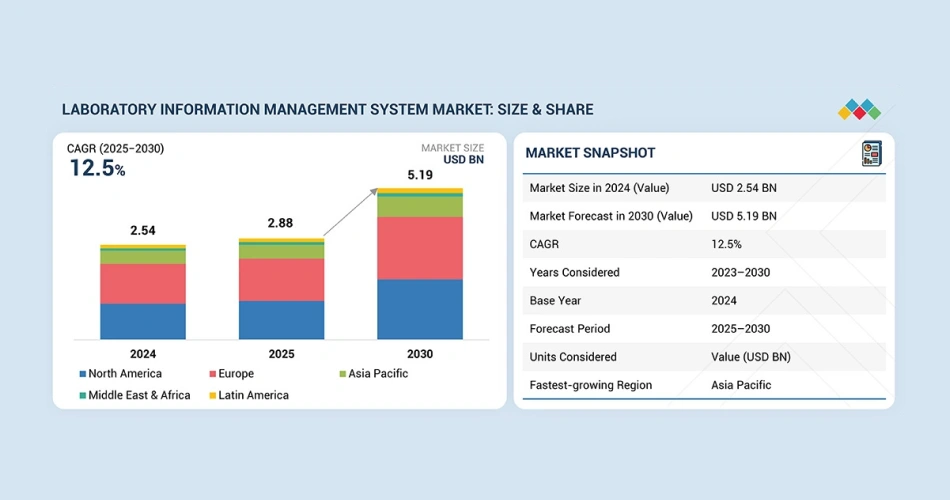
- Modern adoption is accelerating, with the global LIMS market projected to reach over USD 5+ billion by 2030.
- A realistic laboratory information management system development cost estimate typically ranges between USD 30,000 and USD 200,000+.
- Teams often build LIMS systems for laboratories in phases, starting with core sample tracking and expanding into advanced workflows as operations mature.
- The biggest success factor is alignment between lab processes, data ownership, and system design.
Labs do not usually struggle with science. They struggle when samples increase, data spreads across tools, and teams lose visibility into what is happening where. For founders, CTOs, and lab leaders, this often becomes a turning point where manual tracking starts to feel risky and inefficient. That is usually when the right questions begin to surface.
- What is laboratory information management system development?
- How labs manage samples using software?
- How to make LIMS software for clinical and research labs?
- What is custom LIMS development for laboratories?
- Is there a software to track lab samples and test results?
The growth around laboratory information management system development reflects this shift:
- According to MarketsandMarkets, the global LIMS market is expected to reach approximately USD 5.19 billion by 2030 as laboratories move toward structured digital data management.
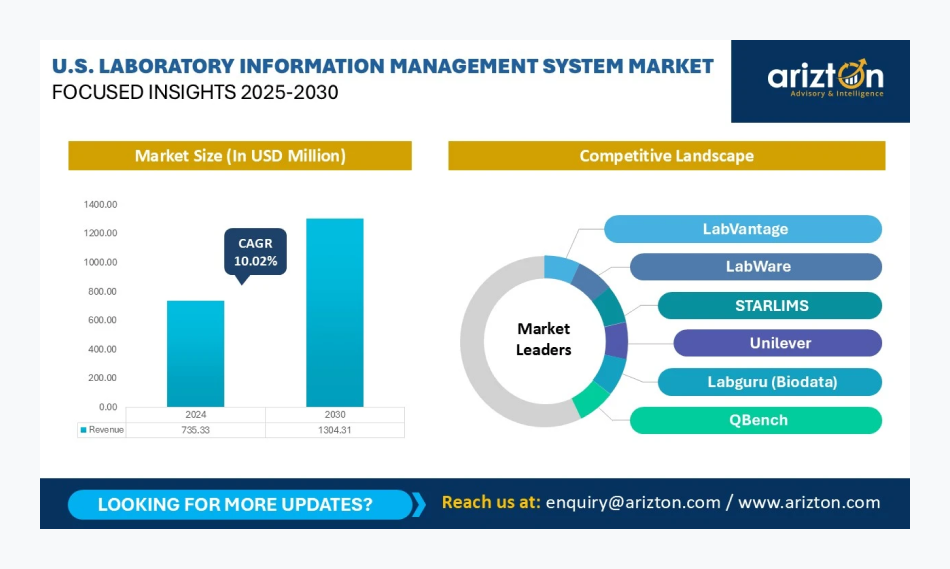
- In the United States, Arizton reports the LIMS market is projected to grow to nearly USD 1.30 billion by 2030, driven by increased adoption across clinical, diagnostic, and research labs
When operations expand, gaps in existing tools become harder to ignore. Many teams start evaluating LIMS software development services after realizing that generic platforms do not align well with lab specific workflows or compliance demands. In this phase, insights from an AI development company often help labs think more clearly about automation, data handling, and system structure.
At its core, the decision to develop laboratory information management system capabilities is about bringing order to lab operations. A well-planned system helps teams track samples reliably, maintain accurate records, and support consistent outcomes across clinical and research environments. This blog will walk you through how this development process works and what to consider at each stage.
What Is Laboratory Information Management System (LIMS)?
Laboratory Information Management System is a software that helps laboratories manage samples, test data, workflows, and records in a structured and reliable way.
- Tracks samples from intake through final results
- Organizes laboratory data in a centralized system
- Supports daily laboratory workflows and approvals
- Maintains traceability across tests, users, and actions
- Provides a stable base for future system expansion
Laboratory information management system development provides a dependable foundation for teams seeking accuracy, consistency, and long-term laboratory growth.
LIMS Software Development vs Electronic Laboratory Notebook Systems: Know the Difference
Laboratory information management system development is about running the lab smoothly day to day, while an ELN is mainly about writing things down. One manages operations, the other captures notes. That difference shows up quickly as labs grow.
|
Aspect |
LIMS Software Development |
Electronic Laboratory Notebook Systems |
|---|---|---|
|
What it handles |
Samples, data, and workflows |
Notes and experiment records |
|
Sample tracking |
Built in from start to finish |
Often manual or limited |
|
Daily workflows |
Clearly defined and repeatable |
Flexible but unstructured |
|
Compliance needs |
Designed with traceability in mind |
Basic documentation support |
|
Growth support |
Works well as labs scale |
Better for small teams |
When documentation tools stop keeping up, labs usually feel the impact and its intensity. Teams that build LIMS software solutions often turn to a custom software development company once structure, visibility, and reliability become non negotiable.
How LIMS Software Solutions for Healthcare and Research Operate?
At its core, laboratory information management system development turns lab activity into a connected digital flow, where samples, data, and users move through defined steps instead of guesswork. The working process becomes easier to understand when broken down step by step.
1. Sample Registration and Identification
Every process begins when samples enter the lab. They are logged, labeled, and assigned unique identifiers to maintain visibility. This is often the first stage when teams create laboratory information management platform structures that support traceability.
2. Workflow Execution and Control
Once registered, samples move through testing based on predefined workflows. Roles, permissions, and approvals guide each step. This is where custom LIMS software development reflects how real lab operations function daily.
3. Data Capture and Validation
Test results are recorded directly into the system and linked to samples and users. Validation steps help maintain accuracy. Some labs gradually introduce AI automation services to reduce manual checks while keeping oversight intact.
4. Reporting and Controlled Access
Results and operational data are made available to authorized users through reports and dashboards. Over time, systems may also support AI integration services as reporting and access needs evolve.
|
Step |
Core Outcome |
|---|---|
|
Sample registration |
Clear sample identification and tracking |
|
Workflow execution |
Structured testing and approvals |
|
Data capture |
Accurate and validated results |
|
Reporting |
Controlled visibility and traceability |
Together, these steps create a reliable operational loop. Once teams understand how the system works in practice, attention naturally turns toward the reasons labs choose to invest in building these systems.
Bring Structure to Lab Operations
Turn fragmented workflows into a connected system with laboratory information management system development built around real lab processes.
Explore LIMS Development OptionsWhy Invest in Laboratory Information Management System Development?
As labs grow, friction shows up in quiet ways. Results take longer to verify, teams spend time reconciling data, and compliance checks feel heavier than they should. Laboratory information management system development is often how labs regain control without adding complexity.
1. Data Stops Working Against You
When information lives in too many places, even good teams slow down. Bringing data into one system changes how decisions get made. With thoughtful laboratory data management software developmen, records stay connected, searchable, and dependable across daily work.
2. Growth Feels Predictable Instead of Stressful
Scaling a lab should not feel like firefighting. Clear workflows give teams confidence as volume increases. Some organizations later introduce enterprise AI solutions, but the real shift happens when operations run consistently without constant intervention.
3. Compliance Becomes Part of the Routine
Regulatory readiness works best when it fades into the background. Traceability and access controls simply become how work gets done. Planning with the right perspective, sometimes supported by AI consulting services, helps avoid expensive fixes later.
For many leaders, the choice to build LIMS systems for laboratories is less about new capability and more about protecting what already works. Once that stability is in place, it becomes easier to explore where these systems deliver the most impact across real lab use cases.
Use Cases for LIMS Software in Clinical, Research, and Diagnostic Labs
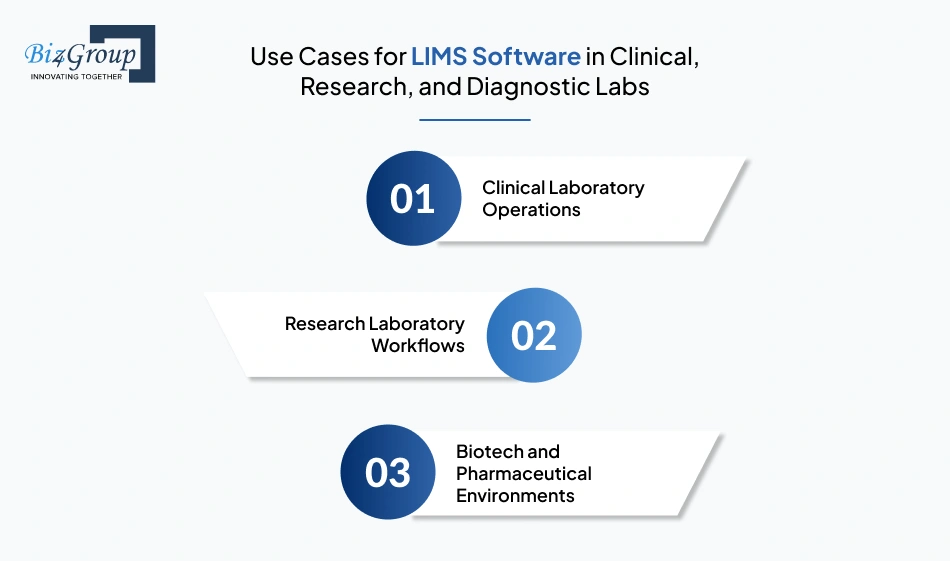
A lab’s priorities change depending on what it is trying to achieve on any given day. Accuracy, speed, compliance, and flexibility rarely carry the same weight at the same time. Laboratory information management system development adapts to these shifting needs, which is why its real value shows up in how it is used.
1. Clinical Laboratory Operations
Clinical labs depend on speed and consistency. Orders, samples, and results need to move without confusion while staying accurate. Many teams choose to develop cloud based LIMS software to support shared access and reliable reporting as volumes increase.
- Example: A diagnostic lab tracking patient samples from intake through validated test results
2. Research Laboratory Workflows
Research labs need flexibility without losing structure. Protocols change, but data must remain traceable. Teams often create LIMS applications for healthcare and research to support evolving studies. Some labs later explore generative AI or AI model development to assist with pattern analysis across datasets.
- Example: A research group managing long running studies with evolving test parameters
3. Biotech and Pharmaceutical Environments
Biotech and pharma labs balance high volume work with strict controls. Sample handling, approvals, and audits are part of daily operations. Laboratory management software development supports alignment across teams and makes it easier to integrate AI into an app as needs grow.
- Example: A biotech lab managing batch testing and quality checks across departments
|
Lab Environment |
Primary Need |
LIMS Role |
|---|---|---|
|
Clinical labs |
Accuracy and speed |
Structured workflows and reporting |
|
Research labs |
Flexibility with control |
Traceable and adaptable data handling |
|
Biotech labs |
Scale and compliance |
Consistent processes & audit readiness |
These examples show how LIMS adapts across environments. Now that the common use cases are clear, the next step is understanding which capabilities are essential from day one and which can evolve over time.
Must Have Features in Laboratory Information Management System Development
When teams first commit to a system, they are usually trying to fix basic visibility and control issues. Laboratory information management system development works best when core features solve everyday problems before anything complex is added. These are the essentials most labs rely on:
|
Core Feature |
What It Supports |
|---|---|
|
Sample Registration |
Logging and uniquely identifying samples |
|
Sample Tracking |
Monitoring sample status through each stage |
|
Test and Result Management |
Recording tests and associating results accurately |
|
Workflow Definition |
Setting clear steps and handoffs |
|
User Roles and Permissions |
Controlling who can view or change data |
|
Audit Logs |
Tracking actions and changes automatically |
|
Data Storage |
Centralized and structured record keeping |
|
Reporting |
Basic operational and result based reports |
|
System Configuration |
Adjusting workflows without rebuilding the system |
These features keep operations predictable and auditable, which is what most labs need first. Once this foundation is stable, teams can look toward enhancements that add intelligence and automation, often seen in LIMS software solutions for healthcare, biotech, and pharma labs, usually with input from a software development company in Florida.
Advanced Features in Cloud Based LIMS Software Development
Once a system is running smoothly, new expectations start to surface. Laboratory information management system development enters an advanced phase when labs want more foresight, better visibility, and stronger control as operations grow more complex.
1. Workflow Intelligence Over Time
As activity builds up, patterns start to matter. Advanced systems like predictive analytics learn from past runs and help teams spot slowdowns earlier. Some labs explore business app development using AI to support smarter planning without changing daily routines.
2. Meaningful Data Interpretation
Large volumes of results are only useful when they tell a story. Advanced analytics help teams notice trends and inconsistencies sooner. This often happens gradually as organizations decide to build AI software on top of stable systems.
3. Faster Access Without Friction
When labs are busy, searching through screens slows everyone down. Lightweight conversational access makes quick checks easier. In certain environments, an AI conversation app helps teams get answers without stepping away from work.
4. Scaling Across Locations
As labs expand, systems must stay consistent without becoming rigid. Advanced support for multiple sites keeps standards aligned while allowing local flexibility. This matters most when teams build LIMS software for clinical and diagnostic laboratories operating at scale.
5. Continuous Compliance Awareness
Regulatory oversight grows alongside operations. Advanced monitoring helps catch gaps early instead of during audits. Providers offering custom laboratory information management system development services often design these safeguards as part of long term planning.
At this stage, decisions become less about features and more about direction. Up next, is a deep dive into how these systems need to be developed.
Build What Your Lab Actually Needs
Skip rigid tools and design software that fits your workflows, audits, and scale goals through custom LIMS software development.
Discuss Your LIMS RequirementsHow to Develop a Laboratory Information Management System: Step by Step Process
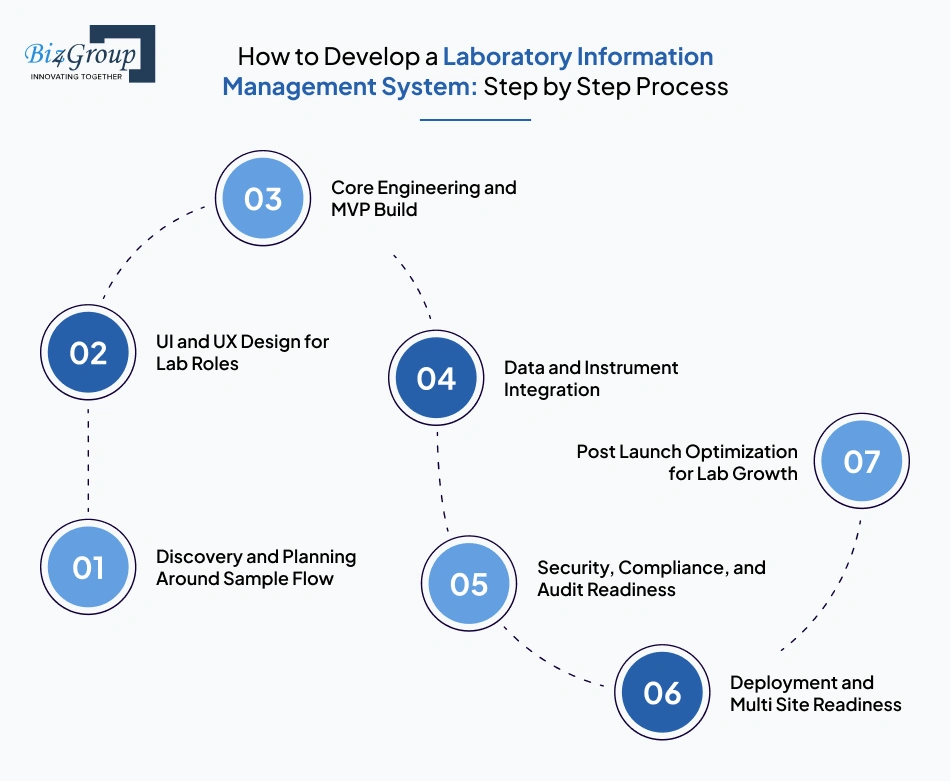
A LIMS touches every part of a lab, from the moment a sample arrives to the moment results are reviewed or audited months later. Laboratory information management system development works best when each step is grounded in how samples, tests, and approvals actually move through your lab.
1. Discovery and Planning Around Sample Flow
This phase maps how samples enter, move, and exit the lab today. Understanding how to develop a laboratory information management system starts with identifying where tracking breaks, handoffs happen, or manual logs still exist.
- Review sample intake and labeling methods
- Map test routing and approval points
- Identify audit and reporting gaps
- Define turnaround time benchmarks
2. UI and UX Design for Lab Roles
A LIMS is used by technicians, reviewers, and managers, often under time pressure. The UI/UX design shall focus on reducing clicks during sample handling and result review. This is where teams create custom LIMS platforms for laboratory operations that fit real lab routines.
- Design screens around sample and test actions
- Separate views for technicians and reviewers
- Minimize manual data entry
- Support quick status checks
Also read: Top UI/UX design companies in USA
3. Core Engineering and MVP Build
Early builds usually focus on sample registration, test assignment, and result capture. Opting for MVP development services helps teams develop scalable laboratory information management system foundations without overwhelming users or budgets.
- Implement sample IDs and status tracking
- Enable test result entry and validation
- Support basic reporting needs
- Prepare for future modules
Also read: Top 12+ MVP Development Companies to Launch Your Startup in 2026
4. Data and Instrument Integration
Instruments generate large volumes of results that must stay accurate. This step focuses on reliability and traceability, especially when teams build LIMS software with compliance and traceability features tied to instruments and users.
- Integrate lab instruments and analyzers
- Train AI models through incoming result data
- Maintain links between samples and tests
- Preserve full data histories
5. Security, Compliance, and Audit Readiness
Labs operate under constant oversight. This phase ensures the system supports audits without manual reconstruction. It is essential when teams create laboratory information management solutions for research labs that require long-term data integrity.
- Enforce role-based access
- Track every data change
- Support audit reviews
- Validate regulatory alignment
Also Read: Software Testing Companies in USA
6. Deployment and Multi Site Readiness
Many labs operate across locations or grow quickly. Deployment planning supports performance and access, especially when teams develop LIMS software for healthcare and biotech companies with distributed operations.
- Prepare scalable hosting
- Configure environment specific settings
- Support remote access securely
- Monitor system usage
7. Post Launch Optimization for Lab Growth
Once live, labs quickly discover what slows them down. Continuous improvements focus on sample flow, reporting clarity, and usability as volumes increase.
- Refine workflows based on usage
- Improve turnaround visibility
- Expand reporting capabilities
- Plan advanced feature rollout
This approach keeps LIMS grounded in lab reality. With the process clear, the next practical question becomes which technologies best support reliability, performance, and long term flexibility.
Technology Stack Used in Custom LIMS Software Development
A LIMS is built to run daily lab operations, not demos. It must support samples, instruments, audits, and users without slowing work down. The technology stack behind Laboratory Information Management System Development plays a direct role in reliability, security, and long-term usability.
|
Label |
Preferred Technologies |
Why It Matters |
|---|---|---|
|
Frontend Framework |
ReactJS, VueJS |
Frameworks like ReactJS are commonly chosen for complex workflows, which is why teams often rely on ReactJS development for LIMS interfaces. |
|
Server-Side Rendering & Performance |
NextJS, NuxtJS |
Faster page loads improve usability even for internal systems. NextJS development helps maintain performance as modules grow. |
|
Backend Framework |
NodeJS, Python |
Core logic for samples, tests, and rules lives here. NodeJS development supports real time workflows, while Python development handles data heavy lab processing reliably. |
|
REST, GraphQL |
APIs connect instruments, dashboards, and external systems. A strong API layer keeps integrations stable as lab systems expand and evolve. |
|
|
AI & Data Processing |
Pandas, NumPy |
As data volumes increase, processing tools help manage results, validations, and quality checks without manual effort. |
|
Database Management |
PostgreSQL, MySQL, MongoDB |
LIMS must store structured sample data alongside flexible metadata. Proper database design supports traceability and audits over time. |
|
Authentication & Access Control |
OAuth 2.0, RBAC |
Role based access ensures sensitive lab data is only available to authorized users and actions remain accountable. |
|
Cloud Infrastructure |
AWS, Azure, GCP |
Cloud platforms support scalability and uptime, especially for labs operating across locations or handling variable workloads. |
|
DevOps & CI/CD |
Docker, Kubernetes, GitHub Actions |
Automated deployments reduce downtime and make updates safer, which matters when systems support live lab operations. |
|
Testing & Quality Assurance |
Automated testing, Manual validation |
Rigorous testing helps prevent workflow failures, data issues, and compliance gaps before they reach production. |
|
Integration Layer |
HL7, FHIR, Instrument APIs |
Direct integrations reduce manual data entry and improve accuracy across clinical and research environments. |
This stack keeps the system dependable today while leaving room to grow tomorrow. With technology choices clear, the next practical discussion usually turns toward understanding the cost involved at different stages of LIMS development.
Plan Before You Build
Understand scope, priorities, and risk before you develop laboratory information management system capabilities that impact daily lab work.
Start with a LIMS Strategy SessionCost to Develop a Laboratory Information Management System
When planning a LIMS, cost is usually one of the first questions asked. Laboratory information management system development typically falls in the range of USD 30,000 to USD 200,000 and beyond. This is a ballpark figure, since scope, compliance needs, and integrations heavily influence the final number.
Here's everything that you need to know:
|
Cost Tier |
Typical Scope |
What Drives the Cost |
|---|---|---|
|
Entry-Level Laboratory Information Management System |
Core sample tracking, basic workflows, simple reporting, built during MVP software development |
Smaller teams, limited integrations, minimal compliance needs |
|
Mid-Level Laboratory Information Management System |
Advanced workflows, role based access, audit trails, reporting dashboards |
Custom logic, regulatory alignment, moderate integrations |
|
Enterprise-Level Laboratory Information Management System |
Multi site support, instrument integration, advanced security, scalability |
High data volume, complex compliance, long term scalability planning |
Several factors shape where a project lands within this range. Feature depth, number of users, compliance requirements, and system integrations all add complexity. Teams sometimes choose to hire AI developers later to extend analytics or automation, but those decisions usually come after the core system is stable.
A clear laboratory information management system development cost estimate comes from aligning technical scope with business priorities early. Once cost expectations are set, the next conversation is usually about how these systems can generate value and support long-term sustainability beyond operational efficiency.
Monetizing Custom LIMS Software Solutions for Laboratories
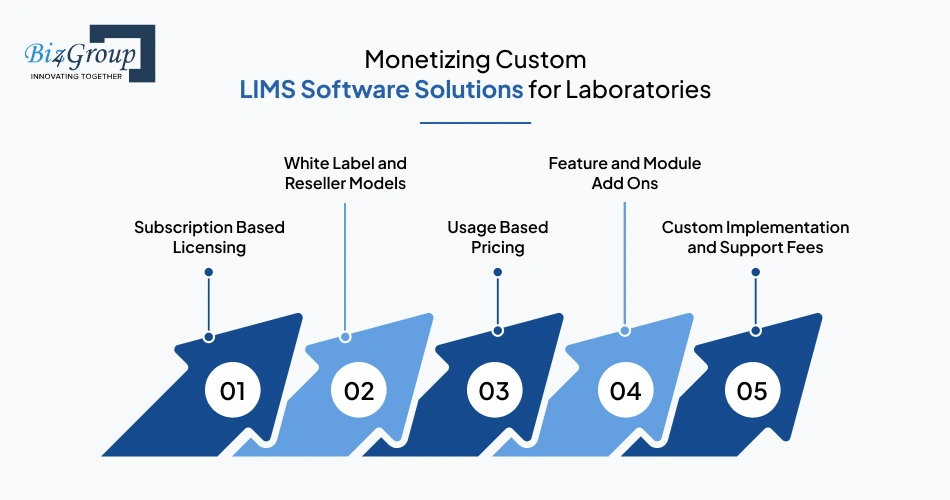
Once a system is stable and widely used, it often opens doors beyond internal efficiency. Laboratory information management system development can support revenue generation when designed with extensibility and ownership in mind. The most common models tend to follow how labs already operate.
1. Subscription Based Licensing
Organizations package access to the platform as recurring licenses for labs or departments. This model fits well when offering ongoing updates, support, and hosting. Teams providing LIMS software development services often structure pricing by user count or module access.
- Example: A diagnostics network paying monthly per active lab user and reporting module
2. White Label and Reseller Models
Some companies develop a core platform and offer it to partners under their own branding. This approach works when labs want ownership without building from scratch. In these cases, decisions to develop laboratory information management system capabilities align with long term product strategy.
- Example: A healthcare technology firm licensing a branded LIMS to regional labs
3. Usage Based Pricing
Revenue scales with activity such as samples processed or reports generated. This model suits high volume environments where usage varies by month. It also pairs well when systems later integrate features from an AI chatbot development company.
- Example: A research lab billed per sample processed through the platform
4. Feature and Module Add Ons
Core functionality is priced separately from advanced modules. Labs pay only for what they use, while vendors create expansion paths. This structure supports gradual growth when teams build LIMS software solutions over time.
- Example: A lab adding audit reporting or analytics modules as needs expand
5. Custom Implementation and Support Fees
Initial setup, configuration, and training are billed separately from software access. This model reflects the effort required to adapt systems to unique lab workflows. Some providers combine this with AI assistant app design or AI chatbot integration for specialized user interactions.
- Example: A clinical lab paying for custom workflow setup and onboarding
Revenue strategy often evolves as adoption grows. Once monetization paths are clear, the next focus typically shifts toward development practices that keep the system stable, scalable, and easy to maintain.
Design for Growth, Not Rework
Create systems that adapt as volume, teams, and regulations change with build LIMS systems for laboratories done the right way.
See How Scalable LIMS Are BuiltProven Practices to Develop Scalable LIMS Software
Good LIMS systems feel almost invisible to the lab teams using them. Laboratory information management system development works best when decisions are shaped by daily lab routines instead of abstract best practices. A few grounded habits consistently lead to better outcomes.
1. Follow the Life of a Sample
Everything in a lab starts and ends with samples. When systems reflect how samples are received, tested, reviewed, and closed, teams trust them more. Platforms built this way create laboratory information management platform flows that stay clear over time. Some labs later explore AI in healthcare administration automation once sample tracking is stable.
2. Treat Data Quality as Part of the Job
Accuracy should happen during the work, not after. Validations and traceability must be built into everyday actions. This approach matters in laboratory data management software development, where issues often surface during audits. Clear data also supports future AI medical web development without rework.
3. Protect the Core While Planning for Change
Labs change, but core workflows should stay dependable. Sample tracking and approvals must work the same way every day. This is why teams often choose custom LIMS software development, keeping systems flexible while preserving stability.
Some organizations build an AI app for reporting or insights, but those additions only succeed when the foundation is solid. With these practices in place, teams are better prepared to handle the challenges that tend to surface during LIMS projects.
Common Issues in LIMS Software Development and How to Address Them
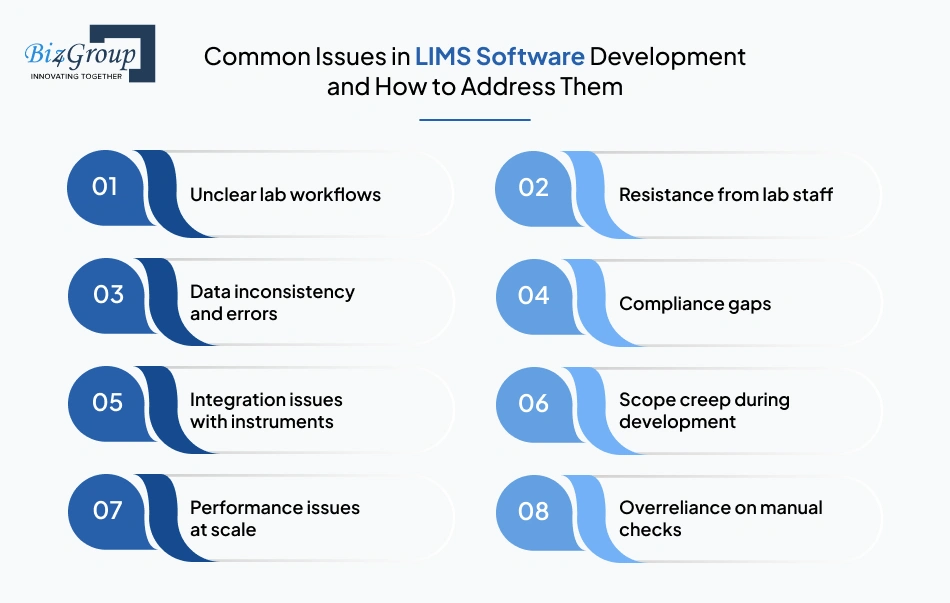
Most challenges do not come from technology alone. They appear when systems meet real lab pressure, regulations, and habits. Laboratory information management system development becomes smoother when teams recognize these hurdles early and plan for them instead of reacting later.
|
Top Challenges |
How to Solve Them |
|---|---|
|
Unclear lab workflows |
Spend time mapping how samples move today before writing requirements |
|
Resistance from lab staff |
Involve technicians and reviewers early so the system reflects real work |
|
Data inconsistency and errors |
Enforce validation rules and standardized data entry from day one |
|
Compliance gaps |
Design audit trails and access controls as core features, not add-ons |
|
Integration issues with instruments |
Use stable APIs and test integrations under real lab conditions |
|
Scope creep during development |
Lock priorities early and phase advanced features gradually |
|
Performance issues at scale |
Plan infrastructure for growth, not just initial usage |
|
Overreliance on manual checks |
Evaluate selective automation carefully, sometimes informed by a healthcare conversational AI guide |
Many of these problems surface when labs try to move too fast or skip planning steps. Teams that build LIMS systems for laboratories successfully usually treat these challenges as design inputs and not roadblocks. With hurdles addressed, it’s time to check out where’s LIMS headed next and how future trends will shape lab operations.
Get Clarity on Cost and Complexity
Align features and compliance needs early with a realistic laboratory information management system development cost estimate.
Request a Cost BreakdownWhat's Next for LIMS Software Solutions for Healthcare and Pharma Labs
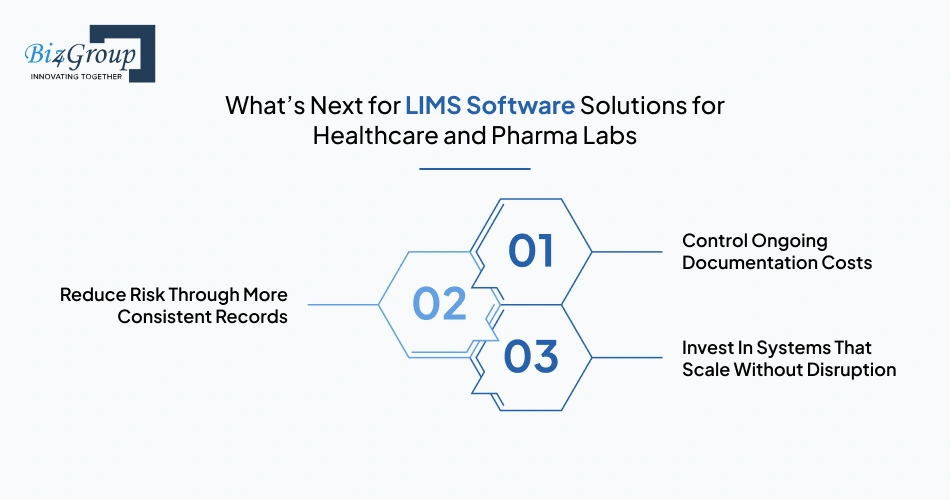
Labs are growing more connected, regulated, and distributed. Laboratory information management system development is shifting to support how labs work across teams and locations, not just how they manage data. A few clear directions are shaping what comes next.
1. LIMS as a Core Operational Layer
LIMS is becoming central to how labs coordinate work. More teams develop cloud based LIMS software so systems can support shared access and consistent processes across locations. This change affects governance and long-term planning.
2. Collaboration Beyond Single Labs
Future LIMS setups will support controlled data sharing between labs and partners. This matters as organizations create LIMS applications for healthcare and research that involve multiple stakeholders. Some teams look at patterns used by top AI development companies in Florida when planning shared environments.
3. Stronger Focus on Responsibility and Oversight
Expectations around accountability continue to rise. LIMS will increasingly reflect who approved what and when, especially under regulatory pressure. In specific cases, AI chatbot development for medical diagnosis may influence how reviews and escalations are handled.
These shifts point toward systems that define how labs operate day to day. With that direction in mind, the next step usually becomes choosing who should help design and build the system itself.
Why Choose Biz4Group LLC for Laboratory Information Management System Development?
LIMS is a software that touches samples, results, audits, instruments, and people who rely on accuracy every day. Biz4Group LLC approaches laboratory information management system development with a clear understanding of how labs actually operate under regulatory and operational pressure.
Our portfolios below show systems built around structured workflows, traceability, and scalability, which directly aligns with how effective LIMS platforms are designed and maintained:
Dr Ara is an AI powered health platform that analyzes uploaded blood reports to give personalized insights on hydration, sleep, nutrition, and performance goals. Its structured handling of complex health data shows how disciplined data modeling and real time processing can benefit labs tracking samples, results, and user insights in LIMS-style workflows.

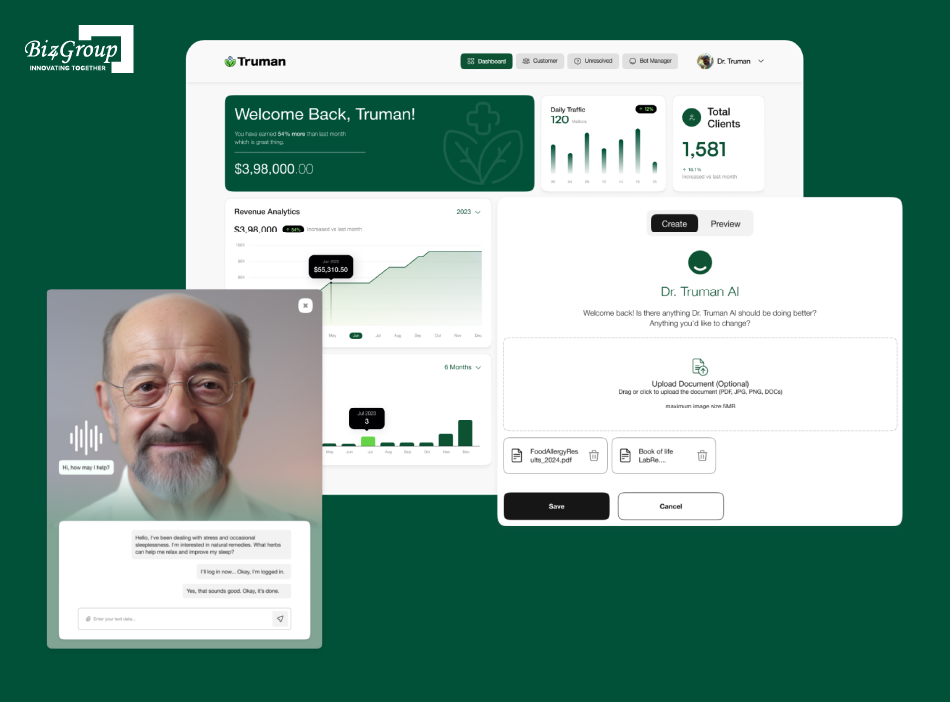
Truman is a wellness companion app with an AI avatar that offers tailored health guidance, tracks medical history, and delivers personalized supplement suggestions. The project’s emphasis on contextual recommendations and secure health record handling reflects the kind of data organization and user experience labs need when they create LIMS applications for healthcare and research.
Before development begins, we focus on how samples move, where reviews happen, and how audits are handled. This mindset, shaped through years of custom healthcare software development, helps bridge the gap between lab reality and software execution.
- Proven experience in regulated healthcare and laboratory environments
- Deep understanding of sample lifecycles and compliance driven workflows
- Engineering decisions focused on long term lab operations
- Delivery grounded in real world usage, not assumptions
For teams investing in a LIMS, confidence matters more than features. Confidence that the system will support daily lab work, scale responsibly, and stand up to scrutiny over time.
With the right partner established, the final step is stepping back and connecting everything into a clear, practical takeaway for your lab’s future.
Move from Idea to Execution
Transform lab operations with LIMS software development services designed for clinical, research, and diagnostic environments.
Talk to a LIMS ExpertFinal Thoughts on Laboratory Information Management System Development
This guide walked you through what really goes into laboratory information management system development, from sample flow and compliance realities to cost, scale, and long term ownership. A good LIMS quietly keeps samples moving, data clean, and audits boring.
As labs look ahead, this kind of foundation often intersects with broader digital efforts, whether that means working with an AI product development company or an AI app development company that understands how regulated, data heavy environments actually operate.
Get a practical assessment of what building or upgrading a LIMS would look like for your lab – Schedule a meeting with our AI experts.
FAQs on Laboratory Information Management System Development
1. How long does it usually take to build a LIMS from scratch?
Timelines vary based on scope, integrations, and compliance needs, but most projects range from three to nine months. Teams that develop laboratory information management system solutions iteratively tend to move faster without sacrificing stability.
2. Can a LIMS adapt if our lab workflows change over time?
Yes, flexibility is one of the main reasons labs invest in custom builds. With custom LIMS software development, workflows, roles, and data rules can evolve without forcing teams to change how they work.
3. Is a LIMS only useful for large laboratories?
Not at all. Smaller labs often benefit earlier because manual tracking breaks faster at lower scale. Many teams build LIMS systems for laboratories specifically to support growth before operational complexity becomes unmanageable.
4. How much does it cost to develop a LIMS?
A realistic laboratory information management system development cost estimate usually falls between USD 30,000 and USD 200,000 or more. The final cost depends on features, integrations, compliance requirements, and future scalability plans.
5. Can a LIMS work across clinical, biotech, and research environments?
Yes, but only when designed with flexibility in mind. Many organizations choose LIMS software solutions for healthcare, biotech, and pharma labs to support different data standards, approval flows, and reporting needs under one system.
6. What should we prioritize first when planning a LIMS project?
Start with clarity around sample flow and data ownership. Teams that focus early on laboratory management software development priorities like traceability and reporting avoid expensive redesigns later.
