Location :
Orlando, FL, USA
Location :
Orlando, FL, USA +1 (407) 714-1616
 info@biz4group.com


















Imagine a digital system that doesn’t wait for instructions but instead, understands your business goals, learns from real-time feedback, and takes independent actions to get the job done.
Read More
The moment a borrower hits “apply” for a loan, a complex journey begins one filled with forms, status checks, document reviews, and endless questions. That’s where loan processing AI chatbot development changes the game.
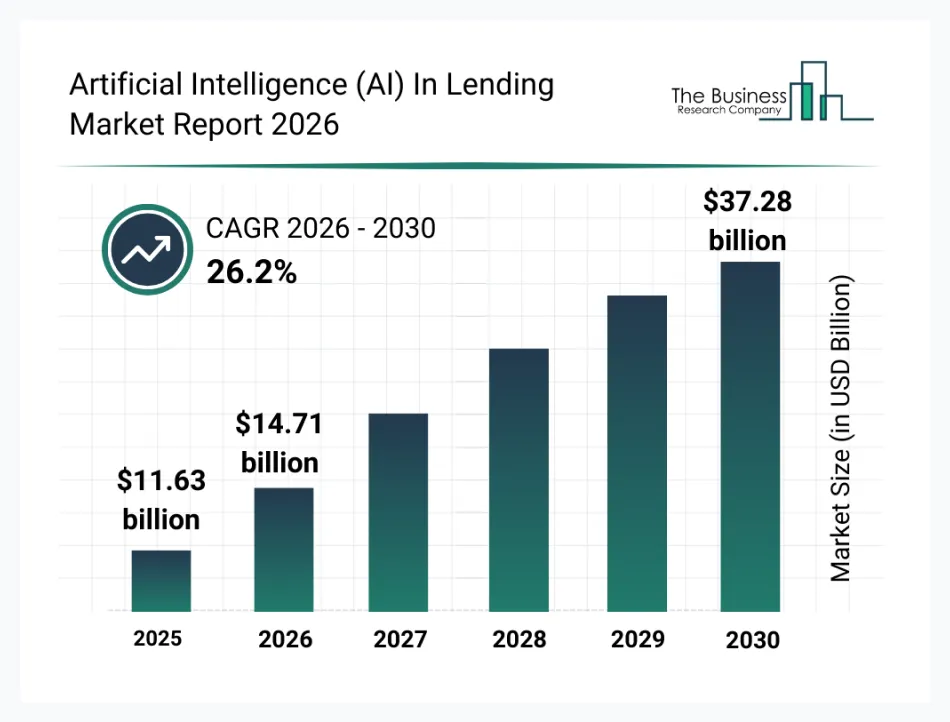
Today’s lending world is growing fast. The AI in lending market alone is expected to jump from about $11.6 billion in 2025 to more than $37 billion by 2030 driven by demand for speed, accuracy, and responsiveness in credit processing.
Think about what applicants really want:
That’s the practical value of AI chatbots built to streamline lending, not just shiny tech.
For financial institutions looking to develop AI chatbots for loan processing, it’s not about replacing teams. It’s about giving support teams tools that handle repetitive tasks and let staff focus on higher-value work.
Here’s what lenders often aim for with this development:
When lenders work with an AI chatbot development company in USA, the approach stays practical and grounded in real lending operations. This blog explores how a conversational AI chatbot for finance fit naturally into existing loan systems. It also shows how real-time borrower interactions improve speed, reduce delays, and keep risk, compliance, and final lending decisions firmly under human control.
An AI chatbot for loan processing is a focused digital assistant designed around real lending workflows. It supports borrowers and internal teams across everyday loan interactions without adding friction. In loan processing AI chatbot development, the goal stays practical. The chatbot handles routine conversations, data capture, and status updates while fitting into existing systems through smooth AI chatbot integration.
An AI chatbot for loan processing is designed to handle core loan-related conversations, including:
The AI chatbot acts as a consistent communication layer across the loan journey. It keeps conversations timely, structured, and easy to follow for both borrowers and lending teams.
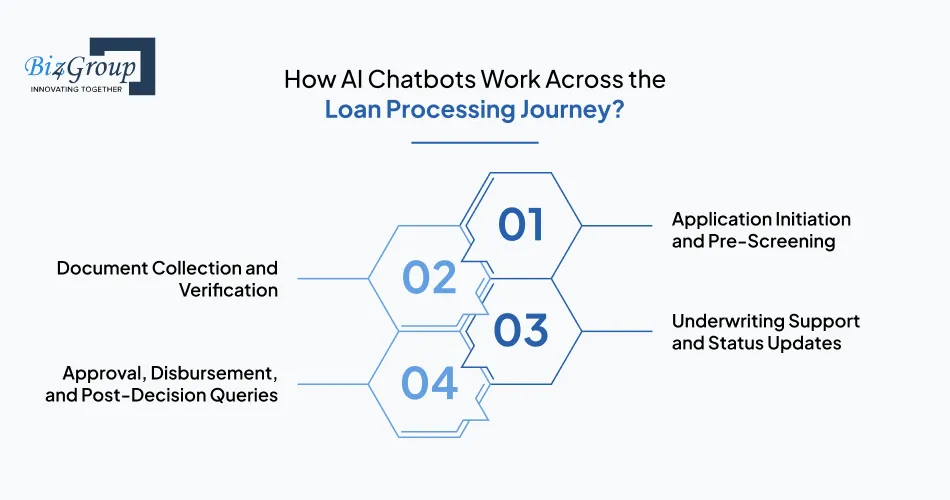
Across the lending journey, AI chatbots support borrowers and teams at different touchpoints. In loan processing AI chatbot development, the focus stays on how conversations move with the loan, not outside it.
At the start, AI chatbots guide applicants through initial questions and data capture. When teams build AI powered loan processing chatbots, early conversations stay structured while generative AI helps understand intent and incomplete inputs.
During documentation, the AI chatbot manages follow-ups and clarifications through simple conversations. It keeps requests clear and organized, reducing confusion while preparing information in formats lending systems can process reliably.
As applications move forward, the AI chatbot explains status changes and expected next step. As teams build an AI chatbot for finance, it keeps borrowers informed about progress and next steps, without interrupting underwriting workflows or decision-making.
After decisions, chatbots handle approval notifications, disbursement questions, and basic servicing conversations. This ensures borrowers receive timely responses while lending teams stay focused on reviews, compliance checks, and exception handling.
Across each stage, AI chatbots act as a steady communication layer. They support loan flow continuity while keeping human teams in control of judgment-driven lending decisions.
Create AI chatbots that guide borrowers, handle follow-ups in real time, and keep loan journeys moving beyond manual touchpoints.
Build My Loan Processing AI ChatbotAs loan volumes rise and borrower expectations shift, institutions are investing in loan processing AI chatbot development to maintain responsiveness, reduce operational strain, and keep lending journeys predictable without increasing manual workload.
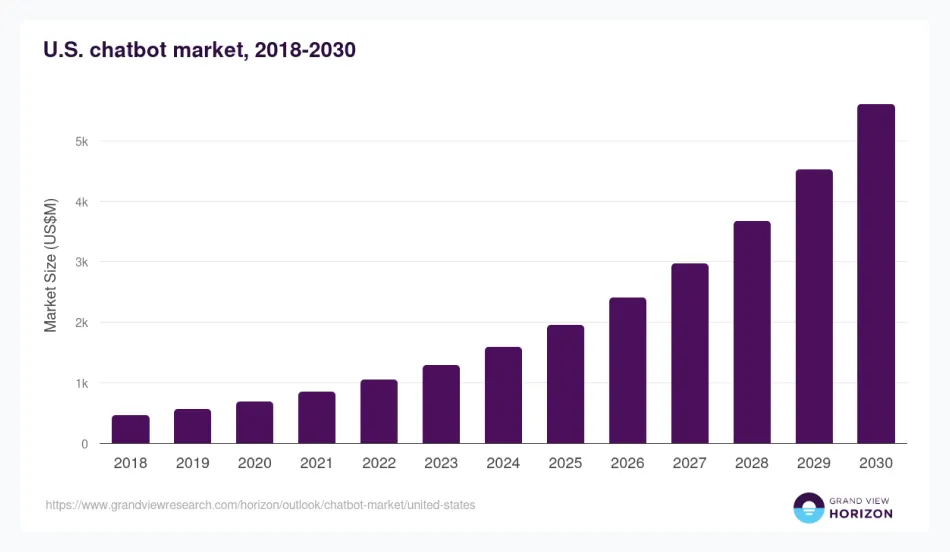
The U.S. chatbot market is projected to grow at over 23% CAGR through 2030, reaching nearly $5.6 billion, driven by increased adoption across banking, lending, and regulated customer-facing financial services.
AI chatbots address everyday lending challenges that directly affect speed, clarity, and operational control.
|
Lending Problem |
How AI Chatbots Address It |
|---|---|
|
High borrower inquiry volume |
Handle repetitive loan questions without adding pressure on support teams |
|
Delayed application responses |
Maintain continuous communication throughout the loan lifecycle |
|
Manual follow-ups |
Track borrower actions and prompt next steps automatically |
|
Process visibility gaps |
Provide clear, real-time loan status updates |
|
Inconsistent borrower communication |
Standardize conversations across channels and loan stages |
The value of this investment shows up across operations and borrower experience.
For financial institutions, chatbots are becoming a practical investment rather than an experiment. They help manage scale, protect service quality, and support sustainable lending operations as borrower expectations continue to rise.
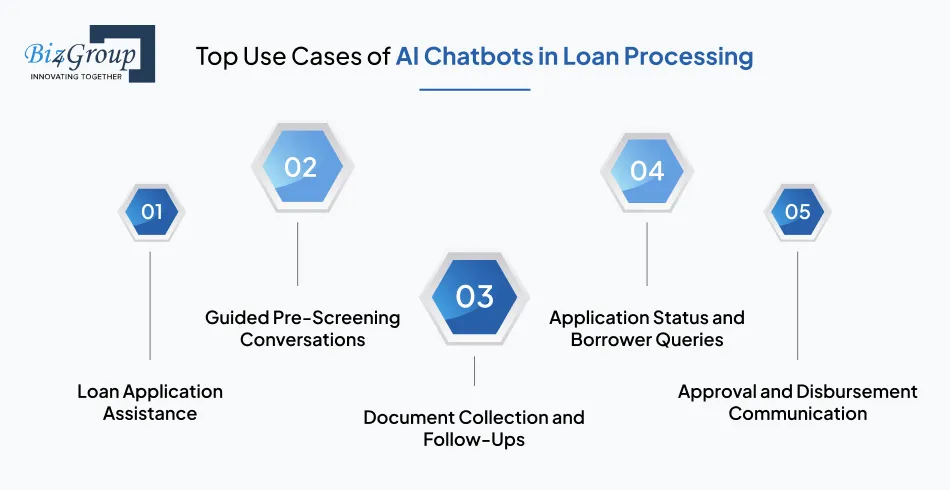
In lending operations, chatbots are applied at moments where processing delays usually occur. Within loan processing AI chatbot development, these use cases focus on managing borrower interactions that directly impact loan flow and turnaround time.
An AI virtual assistant supports borrowers while they fill out loan applications. It reduces confusion during form completion and ensures required information is captured correctly at the first interaction.
AI chatbots handle early-stage borrower conversations without making lending decisions. Teams that create loan processing chatbot solutions use this step to gather basic information before applications enter formal review.
Using AI automation services, chatbots manage document requests and reminders during processing. This keeps applications moving without repeated manual follow-ups from lending teams.
With proper AI chatbot integration, they connect to loan systems to answer status-related questions. Borrowers stay informed without calling or emailing support teams.
Before loans move into servicing, AI chatbots handle approval communication and disbursement expectations. A custom software development company often tailors these flows to specific lending products.
These use cases show how chatbots support loan processing without replacing judgment. They improve responsiveness, reduce operational friction, and help lending teams maintain control as application volumes scale.
Also Read: 7 Ways AI Chatbot Can Improve Banking and Financial Services
Design AI chatbots that support applications, document flow, and borrower queries across everyday lending workflows.
Create My Loan Processing AI ChatbotA loan processing chatbot only works when its features match real lending operations. In Loan Processing AI Chatbot Development, these must-have capabilities keep applications moving while protecting accuracy, compliance, and human control.
|
Must-Have Feature |
Why This Is Critical for Loan Processing |
|---|---|
|
Loan application context awareness |
Keeps conversations relevant to the borrower’s current loan stage |
|
Application and borrower ID linkage |
Ensures every interaction maps to the correct loan record |
|
Form and field-level guidance |
Helps borrowers correctly complete loan applications without errors |
|
Document request and status tracking |
Manages pending, submitted, and rejected documents in real time |
|
Loan stage–based conversation logic |
Changes responses based on intake, review, or approval phase |
|
Rule-bound response control |
Prevents non-compliant or speculative answers in regulated lending |
|
Structured data capture |
Converts conversations into system-ready loan processing inputs |
|
Human escalation with context transfer |
Hands over conversations with full loan history when needed |
|
Service continuity and tone control |
Delivers consistency expected from an AI powered chatbot for customer service, adapted for lending workflows |
|
Audit-friendly conversation logs |
Maintains traceable records for compliance and operational review |
These features define whether an AI chatbot truly supports lending operations. Without them, teams cannot develop AI chatbot software for lending workflows that remain accurate, compliant, and dependable under real loan volumes.
After core workflows mature, lenders expand chatbot value using advanced intelligence layers. In Loan Processing AI Chatbot Development, these capabilities deepen automation and borrower support without crossing into decision-making or compliance risk.
|
Advanced Capability |
How It Extends Loan Processing |
|---|---|
|
Context-aware generative responses |
Adjusts conversations based on borrower history and current application progress |
|
Predictive analytics driven guidance |
Anticipates delays and prompts next steps before applications stall |
|
Multilingual borrower conversations |
Supports diverse applicant groups without adding parallel support teams |
|
Omnichannel continuity |
Preserves conversation flow across platforms as an AI conversation app |
|
Voice-enabled loan interactions |
Delivers updates and responses through an AI chatbot voice assistant |
|
Intelligent exception detection |
Identifies stalled or incomplete applications needing timely intervention |
|
Scalable conversational architecture |
Supports future expansion through modular AI chatbot development practices |
These advanced capabilities help lenders build AI chatbot for automated loan processing that scales smoothly. They improve foresight, responsiveness, and borrower engagement while leaving credit decisions and approvals under human control.
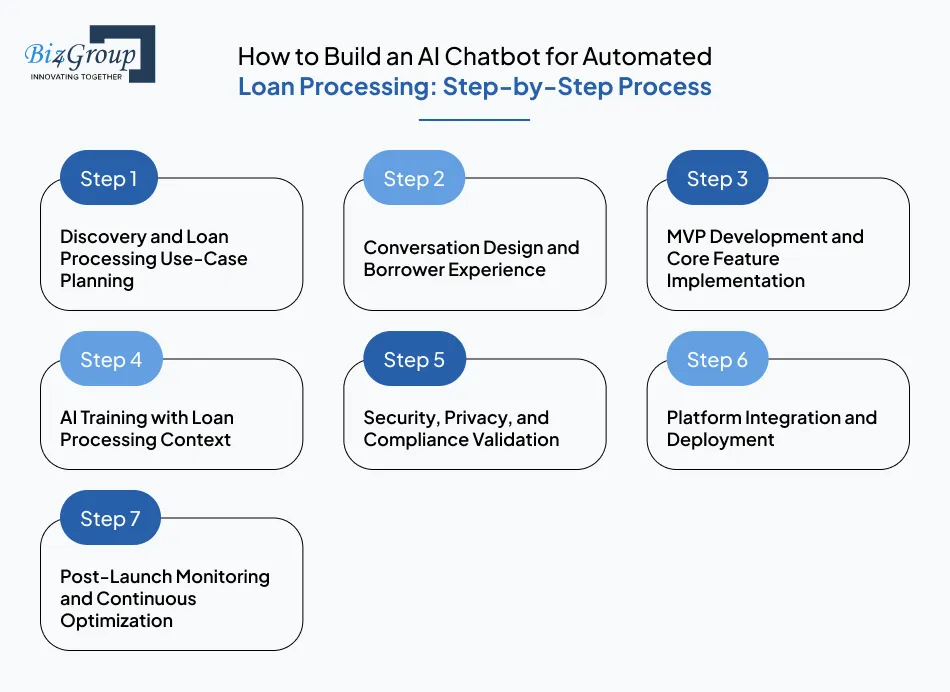
Building an AI chatbot for automated lending requires aligning loan workflows, compliance controls, and borrower experience into one connected system. Loan processing AI chatbot development works best when each phase is planned with clarity around scope, accuracy, and scalability.
The first step is identifying where an AI chatbot genuinely improves loan processing, instead of attempting to automate every interaction. Lending environments require clear boundaries from the beginning.
In lending, the chatbot often becomes the first interaction borrowers have with the institution. Well-designed conversations ensure clarity, trust, and ease throughout the loan journey.
Also read: Top UI/UX Design Companies in USA
Instead of launching a fully loaded system, begin with a focused version that proves value within live loan workflows. This approach reduces risk and speeds validation.
Also read: Top 12+ MVP Development Companies in USA
AI intelligence must reflect how borrowers communicate during loan applications. Training should focus on intent, clarity, and stage-specific understanding.
This phase focuses on protecting sensitive financial data and maintaining secure, auditable lending records throughout the chatbot lifecycle.
Also Read: 15+ Software Testing Companies in USA in 2026
A loan processing chatbot cannot operate in isolation. Integration ensures smooth flow between borrower conversations and backend loan systems.
Launch is only the starting point. Ongoing monitoring ensures the chatbot evolves alongside lending operations.
This step-by-step approach shows how teams move from concept to execution in custom loan processing AI chatbot development. Each phase reduces risk, improves adoption, and helps businesses create AI driven loan processing platform that fits naturally into real lending operations.
A loan processing chatbot depends heavily on the right technology choices. In loan processing AI chatbot development, the stack must support secure conversations, system connectivity, and scale without disrupting existing lending infrastructure.
|
Architecture Layer |
Technology Used |
Purpose |
|---|---|---|
|
Frontend Interface |
React.js, Next.js |
Build responsive borrower onboarding and conversational interfaces using ReactJS development and NextJS development |
|
Backend Application Layer |
Node.js, Express.js |
Handle chatbot workflows, session management, and business logic through NodeJS development |
|
AI and Conversation Engine |
Python, FastAPI, spaCy |
Process loan-specific intents and conversation flows using controlled Python development pipelines |
|
Integration Layer |
REST APIs, GraphQL |
Support secure system connectivity and API development with LOS, CRM, and document systems |
|
Data and Context Storage |
PostgreSQL, Redis |
Store loan context, conversation history, and session state reliably |
|
Security and Compliance Layer |
OAuth 2.0, JWT, AES encryption |
Enforce borrower authentication and protect sensitive lending data |
|
Deployment and Scalability |
AWS, Docker, Kubernetes |
Enable infrastructure scaling as teams develop scalable AI chatbot solutions for lending operations |
This stack supports reliable chatbot execution across loan workflows. With the right technologies, teams can make AI loan processing chatbot for customer onboarding that remain secure, responsive, and scalable under real application volumes.
Choose a technology stack that keeps your chatbot secure, scalable, and dependable as loan volumes grow.
Talk to an AI Expert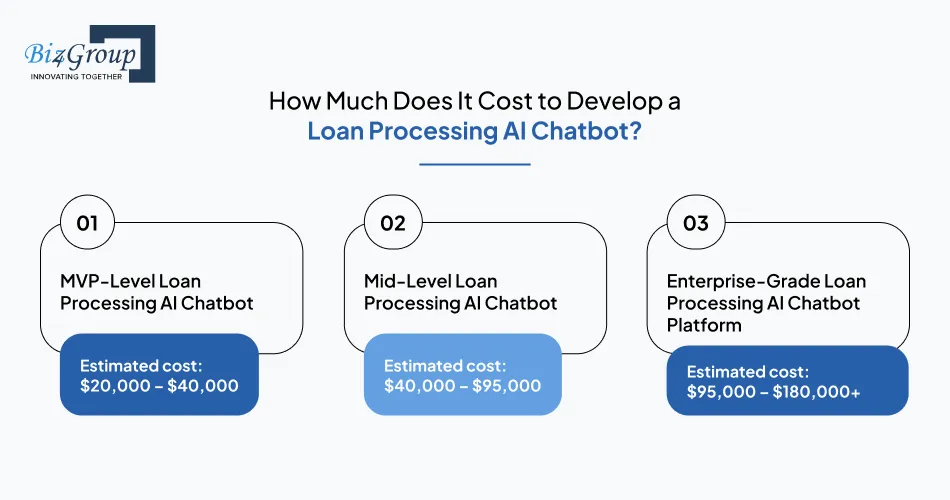
The cost of loan processing AI chatbot development typically ranges between $20,000 and $180,000+. The final investment depends on chatbot scope, compliance requirements, deployment of conversational AI agent, and system integrations across lending operations.
To help financial teams plan more realistically, costs can be viewed across three common implementation levels. Each level reflects a different stage of lending maturity, from early validation to enterprise-scale deployment, with complexity increasing accordingly.
|
Version |
Key Features |
Estimated Cost Range |
|---|---|---|
|
MVP-Level Loan Processing AI Chatbot |
Borrower chat for applications, FAQ handling, document prompts, and basic admin management |
$20,000 – $40,000 |
|
Mid-Level Loan Processing AI Chatbot |
NLP-based conversations, pre-screening flows, document tracking, LOS integration, and reporting dashboard |
$40,000 – $95,000 |
|
Enterprise-Grade Loan Processing AI Chatbot Platform |
Multilingual conversations, predictive workflow support, compliance-ready setup, deep integrations, and scalable cloud infrastructure |
$95,000 – $180,000+ |
Cost planning works best when scope decisions are defined early and aligned with long-term lending goals. With the right approach, developing AI loan processing chatbot solutions for financial institutions becomes predictable rather than risky, especially when feature growth and integrations are planned in phases.
Also Read: Enterprise AI Chatbot Development Cost
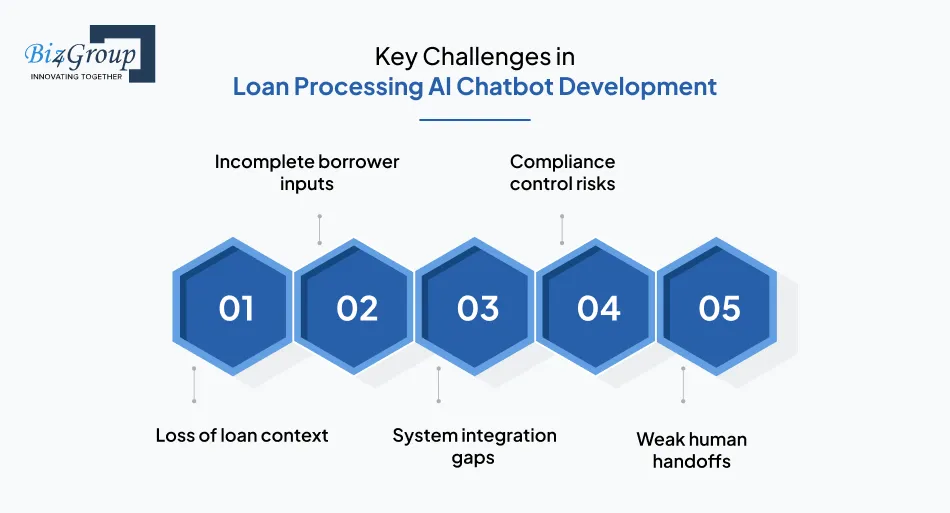
While chatbots improve efficiency, building them for lending brings real challenges. In loan processing AI chatbot development, teams must solve workflow, data, and compliance issues early to avoid disruption during loan processing.
Loan conversations often span multiple sessions and channels. Chatbots can lose track of loan stage, applicant intent, or earlier inputs, creating confusion and repeated questions during loan processing.
Solution: Strong context handling within AI assistant app design preserves loan stage, borrower identity, and previous responses, keeping conversations consistent even when applicants return later.
Applicants frequently submit partial or unclear information during loan applications. This slows processing and increases manual effort when chatbots cannot validate or interpret responses correctly.
Solution: Teams should build AI software with guided prompts and input validation capture cleaner data and reduce follow-ups before applications reach human review.
Many lenders rely on legacy loan systems with rigid workflows. Weak integration leads to delays, data mismatches, and unreliable chatbot responses during active processing stages.
Solution: Using well-defined APIs helps teams build AI chatbot for loan applications that stay aligned with existing systems and reflect real-time loan status accurately.
Loan chatbots operate in regulated environments. Unrestricted responses increase compliance risk when borrowers ask about eligibility, documents, or processing timelines.
Solution: Rule-based response frameworks keep conversations within approved lending boundaries while still supporting borrower guidance across processing stages.
Some borrower situations require human judgment. Poor escalation forces applicants to repeat information, increasing frustration, and delaying loan processing.
Solution: Clear escalation logic transfers conversations with full context, allowing teams to step in smoothly without breaking the loan journey.
These challenges are common in lending environments. Addressing them early ensures loan processing AI chatbot development deliver dependable automation that supports compliance, improves clarity, and scales with growing loan volumes.
Selecting the right partner for loan processing AI chatbot development means working with a team that understands real lending operations as well as AI execution. Biz4Group LLC as an experienced AI development company, builds loan-focused AI systems where borrower interaction, data security, and system reliability must work together seamlessly.
This approach does not stay theoretical. The example below shows how this thinking translates into real projects, where financial workflows, data handling, and system reliability are designed and executed in practical lending environments.
WorthAdvisor: It is a financial planning platform built to help users organize financial information and generate structured insights. Through guided inputs and rule-driven flows, the platform supports clearer financial decisions and manages complex inputs, rules, and workflows behind the scenes.
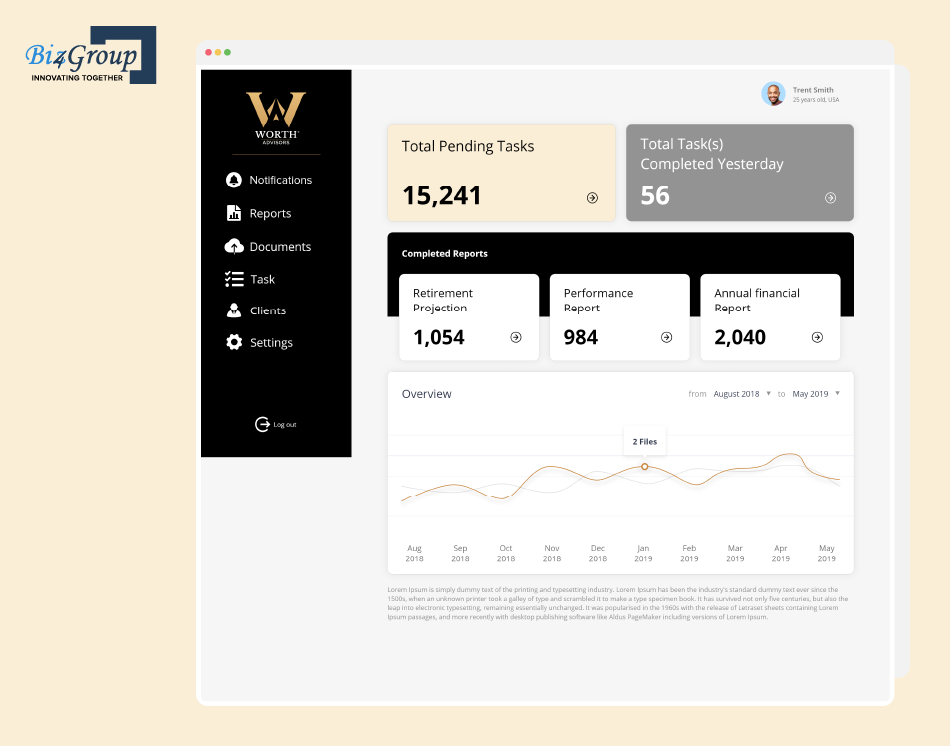
The experience stays simple and dependable, which is the same kind of foundation needed when designing loan processing AI chatbots that rely on accurate data and consistent workflows.
This foundation extends into AI conversational systems as well. The following example highlights our hands-on experience in building AI chatbots that manage real user interactions with clarity, accuracy, and reliability.
Customer Service AI Chatbot: It is built to handle ongoing user conversations, answer questions, and route requests without breaking context. It focuses on clarity, responsiveness, and smooth handoffs when needed. That same conversational control becomes important in loan processing, where chatbots must manage borrower queries reliably while staying aligned with underlying workflows and data systems.
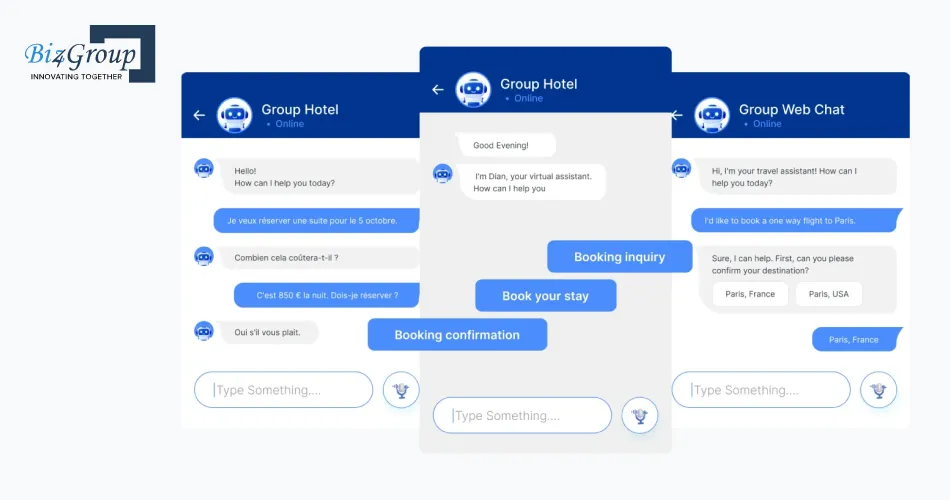
Together, these examples show how strong financial workflows and conversational systems come together in practice. This experience shapes our approach to fintech software development, where AI chatbots are built to support real lending operations with clarity, reliability, and long-term scalability.
Work with an AI team experienced in building secure, scalable, borrower-facing lending systems.
Develop my AI ChatbotLoan processing today is about staying responsive throughout the journey, answering questions at the right moment, and supporting lending teams without adding operational load. When done right, loan processing AI chatbot development becomes a practical layer that quietly improves clarity, continuity, and borrower confidence.
At Biz4Group LLC, we approach this work with a deep understanding of lending realities. As an AI product development company, we deliver loan-focused AI chatbot solutions that fit real workflows, respect data sensitivity, and scale alongside growing lending operations.
If you are exploring how AI chatbots can strengthen your loan processing strategy, a short conversation can help clarify the next steps. Choosing the right partner often begins with understanding the problem before building the solution.
Loan Processing AI Chatbot Development reduces delays by managing document requests and reminders automatically. Chatbots track pending submissions, guide borrowers clearly, and ensure applications reach review teams with complete and accurate information.
Institutions develop AI chatbots for loan processing by using rule-based responses and controlled escalation paths. This approach ensures borrower conversations stay within approved lending guidelines while supporting operational efficiency.
Teams see the most value when they build AI chatbot for loan applications during intake, document collection, and status updates. These stages generate high borrower interaction and manual workload for lending teams.
Custom loan processing AI chatbot development aligns chatbot behavior with loan origination systems and internal processes. This allows chatbots to reflect real application status while preparing structured data for human review.
Financial AI chatbot development for lending improves onboarding by guiding borrowers through forms and requirements. This reduces confusion early and helps institutions make AI loan processing chatbot for customer onboarding more predictable.
Before selecting the best company to develop loan processing AI chatbots, institutions should assess lending domain experience, system integration capability, and experience delivering scalable chatbot solutions for lending operations.

with Biz4Group today!
Our website require some cookies to function properly. Read our privacy policy to know more.