 Location :
Orlando, FL, USA
Location :
Orlando, FL, USA +1 (407) 714-1616
 info@biz4group.com

- The top AI EHR software development companies in USA differ mainly in how they handle data, integrations, and workflow complexity, not just features.
- AI EHR software development companies USA typically deliver systems in 3 to 12+ months depending on customization, integrations, and data readiness.
- Costs for AI EHR systems usually range between $50,000 to $300,000, based on scope, AI depth, and system complexity.
- Most best AI EHR development companies USA focus on solving documentation burden, improving decision support, and automating workflows.
- Biz4Group LLC stands out for building custom AI-driven healthcare platforms, with strong focus on workflow automation, patient data systems, and real-world EHR use cases.
- The right choice depends on your use case: custom build for flexibility, or faster deployment for standard workflows and quicker rollout.
Healthcare organizations are handling more patient data than before, while also facing pressure to reduce documentation time and improve clinical decisions. This is where the top AI EHR software development companies in USA are becoming important. These companies build systems that help manage, process, and use healthcare data more effectively within daily workflows.
An AI EHR system is a software system that uses machine learning to organize patient data, automate documentation, and support clinical decisions. Unlike traditional systems that mainly store information, AI-enabled systems can analyze patterns and assist during care delivery. Many AI EHR software development companies USA design these systems with AI built into the core system, not as an add-on.
As healthcare workflows become more complex, the role of an AI development company has expanded. These companies are expected to handle data integration, system design, and compliance while reducing manual work for clinicians. Another key requirement is interoperability, where systems connect with labs, pharmacies, and other providers. AI helps make this data consistent and usable across systems, which is why many of the best AI EHR development companies USA focus on building systems that work smoothly across different environments.
This article explains how these companies operate, what to evaluate when choosing one, and what to expect in terms of cost, timelines, and system design. It also helps readers understand how custom AI EHR software development companies in USA approach real-world implementation.
Understanding AI EHR Software Development Companies USA and Modern EHR Systems
Healthcare systems are handling more data, more connected tools, and more complex workflows than before. This is where the top AI EHR software development companies in USA become relevant. They build EHR systems that not only store patient records but also help process and use that data during day-to-day clinical and administrative work.
What an EHR System Does at Its Core
An Electronic Health Record system is designed to collect, store, and retrieve patient information across different stages of care. This includes medical history, diagnoses, medications, lab results, and clinical notes.
It acts as a central system that allows multiple providers to access and update patient data in a consistent format.
In traditional systems, most tasks are manual. Clinicians enter data, search records, and interpret information themselves. As data volume increases, this approach becomes harder to manage.
This is why many custom AI EHR software development companies in USA focus on improving how data is structured, accessed, and reused across workflows, not just stored.
Where AI Fits Inside an EHR Architecture
AI is typically added as a functional layer within the EHR system. It does not replace the system but works alongside core components like databases, interfaces, and integrations.
Its role is to process large volumes of structured and unstructured data and make it usable during workflows. This includes analyzing clinical notes, identifying patterns, and organizing inputs from multiple sources.
An AI consulting services provider often helps define how AI models are integrated so they support real workflows without disrupting how clinicians use the system.
Key AI Capabilities Used in Modern EHR Systems
AI in EHR systems is applied through specific capabilities that support clinical and operational tasks. These capabilities are usually embedded into the system and used continuously.
Many of the best AI EHR software development companies in USA focus on combining these capabilities so the system works as a whole rather than as separate features.
1. Clinical Documentation Automation
Clinical documentation automation reduces the time spent writing and updating patient records. AI can convert voice or structured input into formatted clinical notes and help standardize documentation.
This is often supported by AI model development, where models are trained to understand medical language and context.
2. Predictive Analytics
Predictive analytics uses historical patient data to identify patterns and estimate future outcomes. This includes risk scoring, early detection of conditions, and identifying patients who may require additional attention.
These insights help clinicians act earlier and make more informed decisions.
3. Decision Support Systems
Decision support systems provide alerts or suggestions during clinical workflows. For example, they can highlight potential drug interactions or suggest treatment options based on patient data. These systems are designed to assist clinicians in real time, not replace their judgment.
4. Workflow Automation
Workflow automation focuses on reducing repetitive administrative work such as scheduling, billing, and data entry. AI helps handle routine tasks based on predefined logic and system inputs. Many organizations use AI automation services to implement this, improving efficiency without adding extra complexity.
Modern EHR systems are evolving from static record systems into active platforms that support both care delivery and operations. Understanding how these systems work helps in evaluating options when working with AI EHR software development companies USA.
Problems Addressed by Leading AI EHR Development Companies in USA for Hospitals
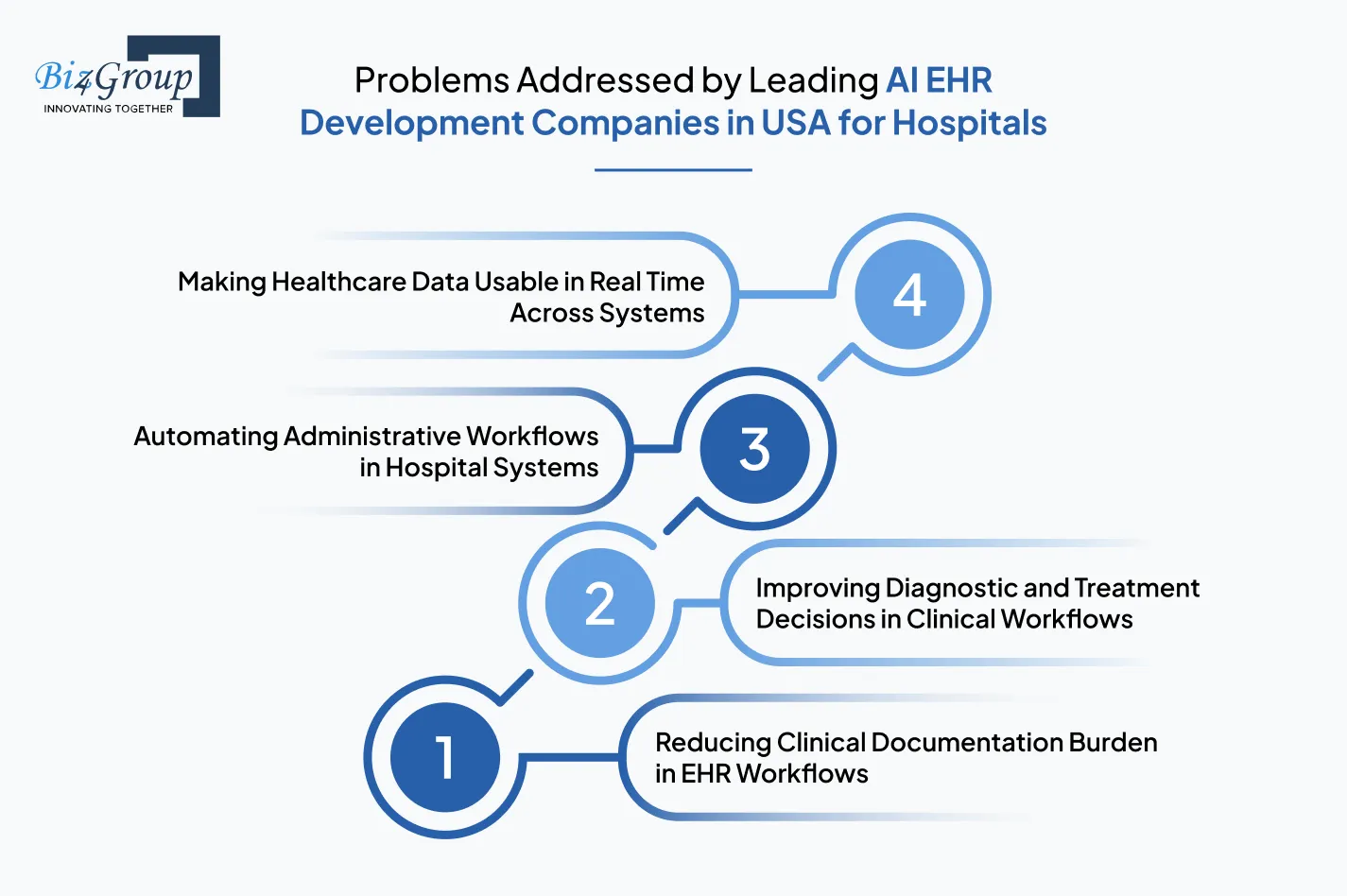
Hospitals deal with large amounts of patient data across different systems while trying to reduce documentation time and improve decision-making. This often creates gaps in workflows and delays in accessing the right information. This is where the top AI EHR software development companies in USA focus their work. They build systems that help manage data better and support everyday clinical and administrative tasks.
1. Reducing Clinical Documentation Burden in EHR Workflows
Clinical documentation takes a lot of time in daily workflows. Doctors and staff often spend hours entering and updating patient records.
AI helps by turning voice or structured inputs into organized clinical notes. It can also fill in repeated fields automatically. With the use of generative AI, systems can assist in drafting notes, which reduces manual work and improves consistency.
2. Improving Diagnostic and Treatment Decisions in Clinical Workflows
Healthcare providers rely on patient data to make decisions. However, reviewing large amounts of data can be time-consuming.
AI helps by analyzing patient history, lab results, and ongoing treatments. It can highlight risks, patterns, or possible next steps. Many top AI healthcare EHR software developers USA build these features directly into the system so clinicians can see useful insights while working.
3. Automating Administrative Workflows in Hospital Systems
Hospitals handle many routine tasks such as scheduling, billing, and updating records. These tasks are often repetitive and time-consuming.
AI helps automate these tasks by acting on system inputs like appointment updates or billing data. Through AI in healthcare administration automation, systems can complete routine actions with less manual effort, helping reduce errors and save time.
4. Making Healthcare Data Usable in Real Time Across Systems
Healthcare data is often spread across different systems like labs, pharmacies, and imaging tools. This makes it harder to use during active workflows.
AI helps organize and standardize this data so it can be accessed easily when needed. AI consulting services are often used to decide how data moves between systems, so information is available without delays.
These challenges explain why EHR systems are changing. They are moving from simple record systems to systems that actively support daily work. Understanding these problem areas helps in evaluating solutions offered by leading AI EHR development companies in USA for hospitals and choosing systems that fit real needs.
Build Smarter EHR Systems with the Right Partner
Work with the top AI EHR software development companies in USA to design systems that fit real clinical workflows.
Start Your AI EHR ProjectHow to Evaluate and Shortlist AI EHR Software Development Companies USA?
Choosing the right vendor is not just about features or pricing. It requires understanding how systems are built, how they handle data, and how they fit into real healthcare workflows. This is where the top AI EHR software development companies in USA can be evaluated more clearly. A structured approach helps separate strong technical partners from those making surface-level claims.
How to Verify Real AI Capability (Not Just Claims)
Many vendors mention AI, but not all systems use it in a meaningful way. Look for clear signs such as:
- Use of models for tasks like documentation or predictions
- Ability to process unstructured data like clinical notes
- Examples of real workflows where AI is applied
Teams that work on AI integration services can usually explain how models are trained, deployed, and used within the system.
What Healthcare Domain Expertise Looks Like
Healthcare systems have specific workflows, regulations, and data formats. A vendor must understand these before building solutions. This includes:
- Experience with clinical workflows
- Familiarity with healthcare data standards
- Ability to work with hospitals or care providers
Many AI EHR system development companies USA show this through past projects and healthcare-focused implementations.
How to Assess Interoperability Readiness?
EHR systems need to connect with labs, pharmacies, imaging systems, and external providers. A vendor should be able to:
- Integrate with existing systems
- Handle different data formats
- Ensure smooth data exchange across platforms
Many top US companies for building AI-driven EHR platforms focus on making systems work across multiple environments without adding complexity.
What Compliance and Security Standards Must Be Met
Healthcare data requires strict security and regulatory compliance. A vendor should:
- Follow HIPAA or similar standards
- Use secure data storage and access controls
- Maintain audit trails and data protection measures
Companies offering enterprise AI solutions often include compliance as part of their system design rather than as an afterthought.
How to Evaluate Technical Architecture Without Deep Technical Expertise
Even without a technical background, some aspects can be assessed clearly. Check if the system:
- Separates data, AI, and application layers
- Supports scaling as data grows
- Allows updates without disrupting workflows
An AI agent implementation approach can also indicate how automation and decision systems are structured within the platform.
Key Comparison Dimensions
When comparing vendors, focus on a few core dimensions that directly impact system performance, usability, and long-term scalability.
|
Dimension |
What It Means |
What to Look For |
|---|---|---|
|
AI Depth |
How deeply AI is integrated into the system |
AI used in real workflows such as documentation, predictions, and decision support, not just basic automation |
|
Healthcare Specialization |
Experience working with healthcare systems and workflows |
Past work with hospitals, knowledge of clinical processes, and familiarity with healthcare data standards |
|
Customization Capability |
Ability to adapt the system to specific needs |
Flexible system design that adjusts to workflows instead of forcing standard processes |
|
Integration Complexity |
Effort required to connect with existing systems |
Smooth integration with labs, pharmacies, and other tools without major system changes |
How to Narrow Down to 2 to 3 Vendors Based on Your Use Case
After evaluation, the goal is to reduce options to a small set of vendors. Focus on:
- Fit with your workflow and system requirements
- Ability to handle your data and integrations
- Clarity in approach, timelines, and communication
Shortlisting helps move from general comparison to deeper discussions and planning. This step is important when working with enterprise AI EHR software development services companies USA, where decisions involve long-term system impact.
Turn Healthcare Data into Actionable Insights
Collaborate with AI EHR software development companies USA to create systems that improve efficiency and decision-making.
Explore Your Use CaseBuild or Buy When Working with AI EHR Software Development Companies USA
Healthcare organizations often face a key decision early on: whether to build a custom system or use an existing platform. This decision affects cost, timelines, flexibility, and long-term scalability. The top AI EHR software development companies in USA usually support both approaches, but the right choice depends on how specific your requirements are and how much control you need over the system.
When Custom Development Makes Sense
Custom development is suitable when workflows are complex or highly specific. Hospitals with unique processes, multiple integrations, or specialized care models often require systems that match their exact needs.
In such cases, working with AI EHR software development companies USA allows organizations to design systems from the ground up. This includes defining how data flows, how AI models are applied, and how users interact with the system.
Custom systems also make it easier to integrate AI into an app in a way that aligns with internal workflows instead of adapting to pre-defined structures. This approach offers more flexibility but requires more time, planning, and resources.
When Pre-Built Systems Are More Practical
Pre-built systems are useful when standard workflows are sufficient and speed of implementation is a priority. These systems come with predefined features and require less development effort.
They are often used by smaller organizations or teams that want to get started quickly without building everything from scratch. Some platforms also include AI features such as documentation support or basic analytics.
In certain cases, generative AI features are already embedded in these systems, which reduces the need for additional development. However, customization options may be limited, especially when workflows differ from standard setups.
Trade-Offs Between Control Cost and Speed
The decision between build and buy comes down to balancing three factors: control, cost, and speed.
Custom development offers higher control and flexibility but comes with higher costs and longer timelines. Pre-built systems reduce upfront effort and cost but may limit how much the system can adapt over time.
Organizations need to evaluate how critical customization is compared to how quickly they need the system in place. Many of the best AI EHR development companies USA help assess these trade-offs by aligning technical decisions with business and operational priorities.
|
Company |
Headquarters |
Hourly Rate |
Core Strength |
|---|---|---|---|
|
Biz4Group LLC |
Orlando, Florida |
$50-$99/hr |
Custom AI healthcare platforms with workflow automation |
|
ScienceSoft |
McKinney, Texas |
$50–99/hr |
EHR modernization and enterprise healthcare systems |
|
LeewayHertz |
San Francisco, California |
$50–99/hr |
AI-first healthcare applications and analytics systems |
|
Azumo |
San Francisco, California |
$25–49/hr |
Data-intensive AI systems and scalable architectures |
|
Simform |
San Francisco, California |
$25–49/hr |
Cloud-based AI healthcare systems and integrations |
|
ThirdEye Data |
San Jose, California |
$25–49/hr |
Data engineering and large-scale healthcare analytics |
|
Trigent Software |
Southborough, Massachusetts |
$25–49/hr |
Custom enterprise healthcare platforms with AI |
|
Chetu Inc. |
Sunrise, Florida |
Undisclosed |
Dedicated teams for custom healthcare development |
|
InData Labs |
Miami, Florida |
$50–99/hr |
AI-driven healthcare analytics and decision systems |
|
HatchWorks AI |
Atlanta, Georgia |
$50–99/hr |
AI-native healthcare platforms and data systems |
Top AI EHR Software Development Companies in USA 2026
The companies listed below are headquartered in the United States and work across AI development and healthcare or EHR systems. Each has a verified presence on Clutch with publicly available data such as ratings, project size, and pricing benchmarks.
This list of the top AI EHR software development companies in USA focuses on firms that combine AI capabilities with real healthcare system development.
1. Biz4Group LLC
- Website: https://www.biz4group.com/
- Headquarters: Orlando, Florida, USA
- Hourly Rate: USD 25–49/hr
- Minimum Project Size: USD 10,000+
- Clutch Rating:9/5
Biz4Group LLC builds AI-driven healthcare platforms with a focus on automation and workflow systems. Its approach to tailored system design places it in the category of custom AI EHR software development companies in USA, especially for organizations that need solutions aligned with specific operational requirements.
- Core Focus: Custom AI solutions, and AI healthcare software development.
- AI Capabilities: Predictive analytics, NLP systems, and AI-driven automation integrated into applications.
- EHR Expertise: Experience in building healthcare platforms that manage patient data, support integrations, and align with clinical workflows. Works on systems designed for scalability and structured data handling.
Case Studies
Truman - AI Wellness & Preventive Care App
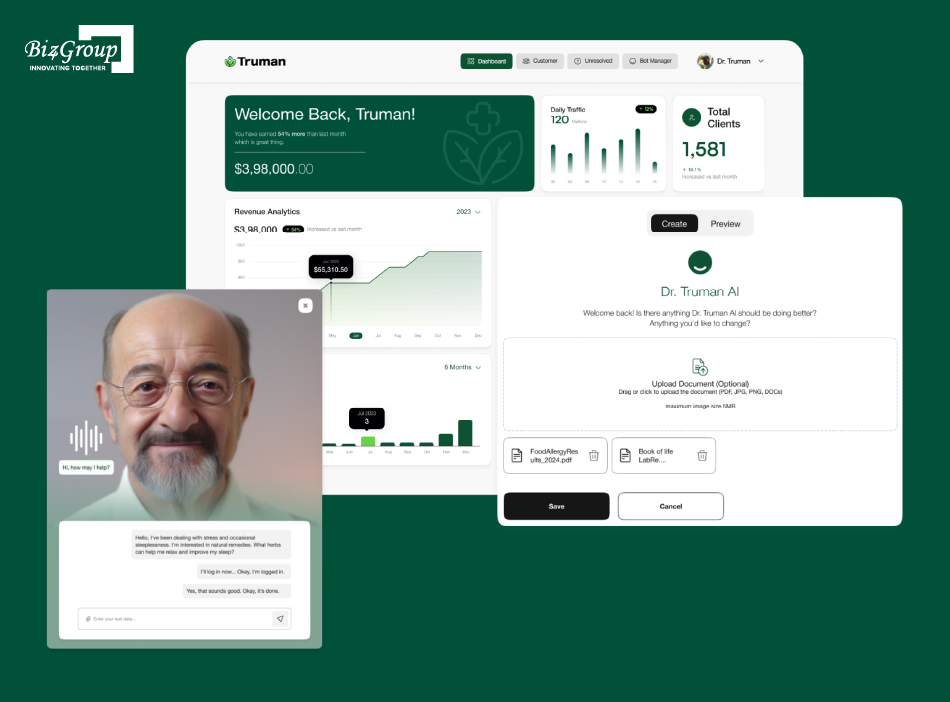
An AI-powered wellness app that helps users stay on top of their health. It offers personalized insights, suggests supplements, and tracks progress over time. Instead of waiting for problems to show up, the app focuses on helping users stay healthy from the start.
Dr. Ara - AI Solution for Athletic Health & Injury Prevention
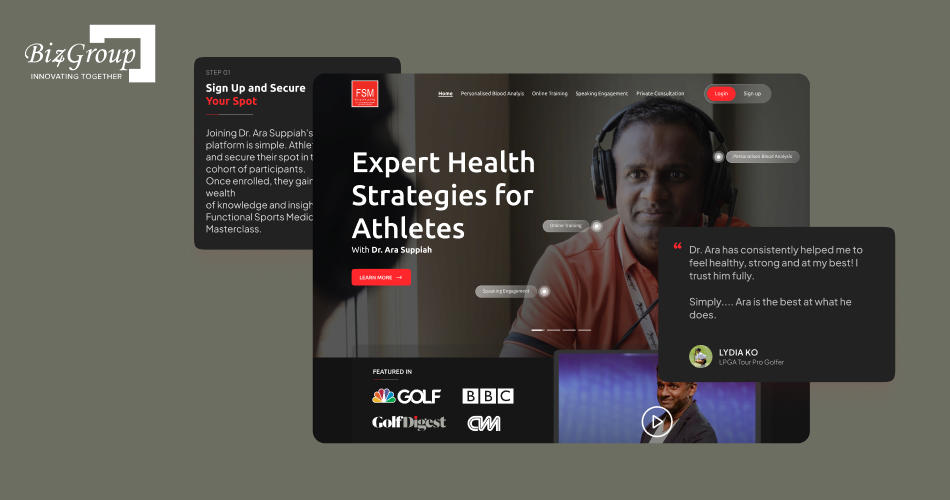
Built for athletes and fitness enthusiasts, this app uses AI to monitor health, reduce injury risks, and improve performance. It analyzes real-time data to give users timely, personalized recommendations.
CogniHelp – AI Support App for Dementia Patients
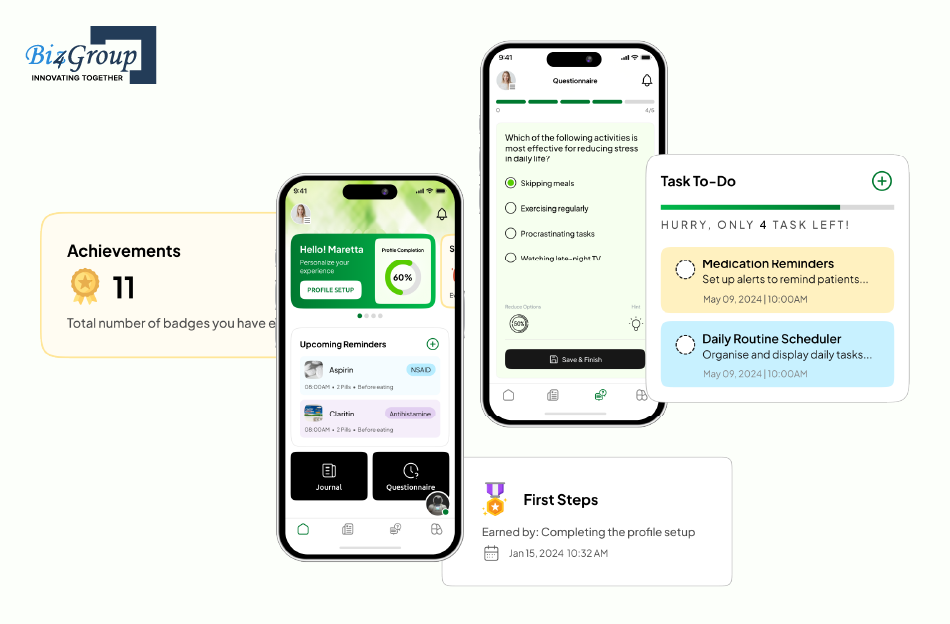
A mobile app designed for people in the early to mid stages of dementia. It includes simple cognitive exercises and daily support tools to help with memory and routine. It also gives caregivers useful updates on the patient’s progress.
Best Suited For: Organizations building custom AI-driven EHR systems with workflow automation.
2. ScienceSoft
- Headquarters: McKinney, Texas, USA
- Hourly Rate: $50–99/hr
- Minimum Project Size: $5,000+
- Clutch Rating:8/5
ScienceSoft works on modernizing healthcare systems by integrating AI into existing infrastructure. Its consistent track record in EHR transformation projects often places it among the best AI EHR software development companies in USA for organizations focused on upgrading legacy systems.
- Core Focus: IT consulting, healthcare software, and enterprise system development.
- AI Capabilities: Machine learning models, data analytics platforms, and automation systems for operational workflows.
- EHR Expertise: Extensive experience in EHR development, system integration, and modernization. Focuses on interoperability, compliance, and improving data flow across healthcare environments.
- Best Suited For: Enterprises upgrading or integrating AI into existing healthcare systems.
3. LeewayHertz
- Headquarters: San Francisco, California, USA
- Hourly Rate: $50–99/hr
- Minimum Project Size: $10,000+
- Clutch Rating:7/5
LeewayHertz develops AI-driven applications where data processing and automation are central to system design. Its work across healthcare platforms aligns with what is expected from top AI healthcare EHR software developers USA, particularly in AI-first implementations.
- Core Focus: AI development, blockchain solutions, and enterprise applications.
- AI Capabilities: NLP systems, predictive analytics, and AI-powered automation tools.
- EHR Expertise: Works on healthcare platforms involving patient data management and AI-based insights. Supports integration of AI into clinical workflows and data systems.
- Best Suited For: Organizations building AI-first healthcare platforms with advanced analytics.
Improve Clinical Efficiency by Up to 40%
Leverage solutions built by best AI EHR development companies USA to reduce documentation time and streamline workflows.
See How It Works4. Azumo
- Headquarters: San Francisco, California, USA
- Hourly Rate: $25–49/hr
- Minimum Project Size: $10,000+
- Clutch Rating:9/5
Azumo focuses on building AI-driven systems that handle large-scale healthcare data and integrations. Its work on scalable architectures and data pipelines reflects the capabilities expected from top US companies for building AI-driven EHR platforms.
- Core Focus: AI-driven software development and data platforms.
- AI Capabilities: Machine learning models, data pipelines, and AI-based automation systems.
- EHR Expertise: Experience in healthcare applications involving patient data management, system integrations, and workflow support aligned with EHR environments.
- Best Suited For: Organizations building data-driven healthcare platforms with AI integration.
5. Simform
- Headquarters: San Francisco, California, USA
- Hourly Rate: $25–49/hr
- Minimum Project Size: $25,000+
- Clutch Rating:8/5
Simform builds scalable AI-enabled healthcare systems with a strong focus on cloud and integration layers. Its ability to support complex hospital workflows places it among leading AI EHR development companies in USA for hospitals.
- Core Focus: Cloud engineering, AI development, and scalable applications.
- AI Capabilities: Predictive analytics, AI model integration, and workflow automation systems.
- EHR Expertise: Experience in healthcare system development, including backend systems, data integration, and interoperability with EHR platforms. Supports scalable system architecture.
- Best Suited For: Teams building scalable and cloud-based AI healthcare systems.
6. ThirdEye Data
- Headquarters: San Jose, California, USA
- Hourly Rate: $25–$49/hr
- Minimum Project Size: $10,000+
- Clutch Rating:9
ThirdEye Data works on AI and data engineering systems designed for high-volume processing and analytics. Its focus on large-scale implementations aligns with what is typically expected from enterprise AI EHR software development services companies USA.
- Core Focus: Data engineering, AI solutions, and analytics platforms.
- AI Capabilities: Machine learning, predictive modeling, and large-scale data processing systems.
- EHR Expertise: Works on healthcare data systems that support EHR environments, including integration layers and analytics platforms for clinical data usage.
- Best Suited For: Organizations focused on data-heavy healthcare platforms and analytics systems.
7. Trigent Software
- Headquarters: Southborough, Massachusetts, USA
- Hourly Rate: $25–$49/hr
- Minimum Project Size: $10,000+
- Clutch Rating: 5/5
Trigent Software develops custom healthcare platforms that combine AI with enterprise-grade system design. Its work in scalable and integrated healthcare applications reflects the broader capabilities seen across AI EHR software development companies USA.
- Core Focus: Custom software development, AI solutions, and enterprise applications.
- AI Capabilities: Machine learning models, data analytics, and AI-based automation systems.
- EHR Expertise: Experience in healthcare software involving patient data handling, interoperability, and workflow automation aligned with EHR systems. Supports modernization and new builds.
- Best Suited For: Organizations developing custom healthcare platforms with AI-driven workflows.
8. Chetu Inc.
Headquarters: Sunrise, Florida, USA
Hourly Rate: Undisclosed
Minimum Project Size: $10,000+
Clutch Rating: 4.3
Chetu Inc. builds custom healthcare systems with dedicated teams focused on flexibility and scalability. Its work in tailored platform development aligns with organizations seeking structured EHR systems without rigid product constraints.
- Core Focus: Custom software development and industry-specific solutions.
- AI Capabilities: AI model integration, automation systems, and data processing solutions.
- EHR Expertise: Experience in developing and integrating EHR systems, including patient data management, interoperability, and workflow automation in healthcare environments.
- Best Suited For: Healthcare organizations needing dedicated teams for custom EHR and AI systems.
9. InData Labs
- Headquarters: Miami, Florida, USA
- Hourly Rate: $50–$99/hr
- Minimum Project Size: $10,000+
- Clutch Rating: 9
InData Labs focuses on AI and data science solutions that support analytics-driven healthcare systems. Its work on decision-support platforms and clinical data processing reflects strong alignment with modern EHR environments.
- Core Focus: AI development and data science solutions.
- AI Capabilities: Machine learning, predictive analytics, and NLP-based systems.
- EHR Expertise: Works on healthcare data platforms that integrate with EHR systems and support clinical data analysis, reporting, and workflow improvements.
- Best Suited For: Organizations focused on AI-driven healthcare analytics and decision systems.
10. HatchWorks AI
- Headquarters: Atlanta, Georgia, USA
- Hourly Rate: $50–99/hr
- Minimum Project Size: $25,000+
- Clutch Rating:9/5
HatchWorks AI builds AI-native healthcare platforms where automation and data processing are central to system functionality. Its approach to designing systems from the ground up aligns with organizations working with custom AI EHR software development companies in USA for long-term scalability.
- Core Focus: AI-native product development and data-driven systems.
- AI Capabilities: Generative AI, machine learning, and data engineering solutions.
- EHR Expertise: Works on healthcare platforms involving data pipelines, integrations, and AI-driven insights that support EHR workflows and clinical operations.
- Best Suited For: Organizations building AI-first healthcare platforms from the ground up.
These companies differ in how they approach AI, system design, and healthcare workflows. Some focus on building custom platforms from the ground up, while others specialize in integrating AI into existing systems or handling large-scale data environments.
The right choice depends on how complex your workflows are, how much customization you need, and how your current systems are structured. Reviewing these factors alongside the capabilities listed above helps narrow down the options and move toward a more informed vendor selection.
From Idea to Implementation, Done Right
Partner with the top AI EHR software development companies in USA to plan, build, and scale your system effectively.
Talk to Our AI ExpertsWhat Is the Cost of Working with AI EHR Software Development Companies USA?
The cost of building or implementing an AI-enabled EHR system can vary widely based on scope and complexity. In most cases, the range falls between $50,000 to $300,000, which should be treated as a ballpark estimate. Smaller systems with limited features may stay closer to $50,000 to $100,000, while more complex platforms with advanced AI and multiple integrations can go beyond $200,000. The top AI EHR software development companies in USA usually define costs based on requirements, data readiness, and system scale.
Major Cost Drivers
Several factors directly influence the total cost of an AI EHR system. These include:
- Number of features and level of customization
- Complexity of AI models and data processing
- Number of integrations with external systems
- Data preparation and standardization efforts
- Compliance and security requirements
Many top US companies for building AI-driven EHR platforms adjust pricing based on how complex the workflows and integrations are, rather than just feature count.
Cost Differences Between Custom and Platform-Based Solutions
|
Factor |
Custom AI EHR System |
Platform-Based EHR System |
|---|---|---|
|
Initial Cost |
Higher due to full development from scratch |
Lower due to pre-built features |
|
Customization |
High flexibility based on workflows |
Limited to platform capabilities |
|
Implementation Time |
Longer (custom build and testing) |
Shorter (ready-to-use modules) |
|
Scalability |
Designed based on future needs |
May require upgrades or add-ons |
|
Integration Complexity |
Built for specific integrations |
May need workarounds for complex systems |
|
Long-Term Cost |
Higher upfront, flexible long-term |
Lower upfront, may increase over time |
Hidden Costs Most Teams Miss
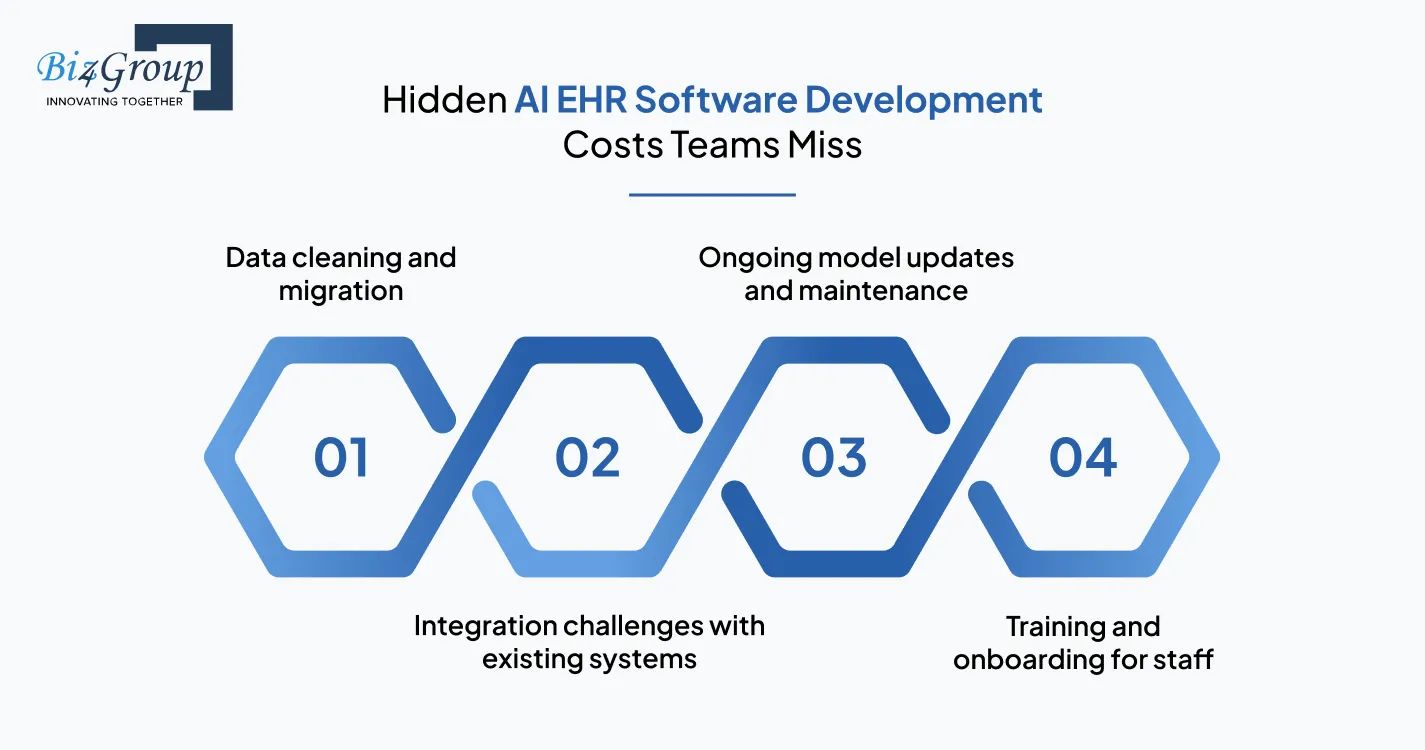
Some costs are not always visible at the start but can affect the total budget. Common hidden costs include:
- Data cleaning and migration
- Integration challenges with existing systems
- Ongoing model updates and maintenance
- Training and onboarding for staff
These factors can increase the overall cost if not planned early, especially in projects that involve multiple systems and long-term scaling.
Understanding cost structure helps set realistic expectations and avoid budget gaps. It also makes it easier to compare vendors and approaches when working with top US companies for building AI-driven EHR platforms.
Delivery Timelines Across AI EHR System Development Companies USA
Building an AI-enabled EHR system takes time, and the timeline depends on how complex the system is. The top AI EHR software development companies in USA usually follow a structured process, but the actual duration varies based on data, integrations, and project scope.
Typical Project Phases
Most projects follow a similar set of steps from planning to launch. These usually include:
- Defining requirements and workflows
- Designing system screens and user journeys
- Developing core features and AI components
- Integrating with external systems like labs or billing tools
- Testing and deploying the system
In projects involving business app development using AI, extra time is often needed to train and test models, especially when working with healthcare data.
Timeline Ranges by Complexity
Timelines vary based on how much needs to be built and how many systems are involved.
- Simple systems can take around 3 to 6 months
- Medium complexity systems may take 6 to 12 months
- Large systems with multiple integrations can take 12 months or more
Many AI EHR system development companies USA adjust timelines based on data readiness and the number of integrations. More customization usually means longer timelines.
Factors That Delay Implementation
Delays usually happen when there are gaps in planning or data. Common reasons include:
- Incomplete or unstructured data
- Delays in connecting external systems
- Changes in requirements during development
- Compliance and security approvals
Teams that hire AI developers early can reduce delays related to model building. Projects involving AI medical web development may also take longer because they require more testing and validation.
Timelines should be treated as estimates, not fixed deadlines. The more clearly the requirements and data are defined, the more predictable the timeline becomes. This is especially important when working with top-rated AI EHR software development companies with portfolio, where projects often involve multiple systems and long-term planning.
Design EHR Systems That Actually Fit Your Workflow
Work with top US companies for building AI-driven EHR platforms to create scalable and flexible healthcare systems.
Plan Your EHR StrategyTechnical Architecture Used by AI EHR Software Development Companies USA
Modern EHR systems are built in layers so that data, AI, and user workflows can work together smoothly. The top AI EHR software development companies in USA follow this approach to make systems easier to scale, update, and integrate with other healthcare tools.
1. Data Layer and Integration with Existing Systems
This layer stores all patient data and connects different systems. It brings together data from EHRs, labs, pharmacies, and other sources.
The main goal is to make sure data flows correctly between systems. Many AI EHR software development companies USA focus on cleaning and organizing this data so it can be used across workflows without errors.
2. AI Model Layer
This layer is where data is processed and analyzed. AI models are used to identify patterns, support decisions, and automate certain tasks.
These models are trained using healthcare data and then used inside the system. In some cases, features similar to those built by an AI chatbot development company are used to handle inputs or assist users during interactions.
3. Application and Workflow Layer
This is the layer that users interact with. It includes screens, dashboards, and tools used by doctors and staff.
The focus here is on making tasks simple and easy to complete. Systems may include features similar to an AI conversation app to help with tasks like documentation and data entry.
4. Security and Compliance Layer
This layer ensures that all data is protected and handled properly. It includes access controls, encryption, and tracking of system activity.
It also ensures that the system follows healthcare regulations. Many of the best AI EHR development companies USA build security into the system from the start instead of adding it later.
Understanding these layers makes it easier to see how modern EHR systems work. It also helps in comparing how different vendors design their systems when working with AI EHR software development companies USA.
Risks When Working with AI EHR Software Development Companies in USA
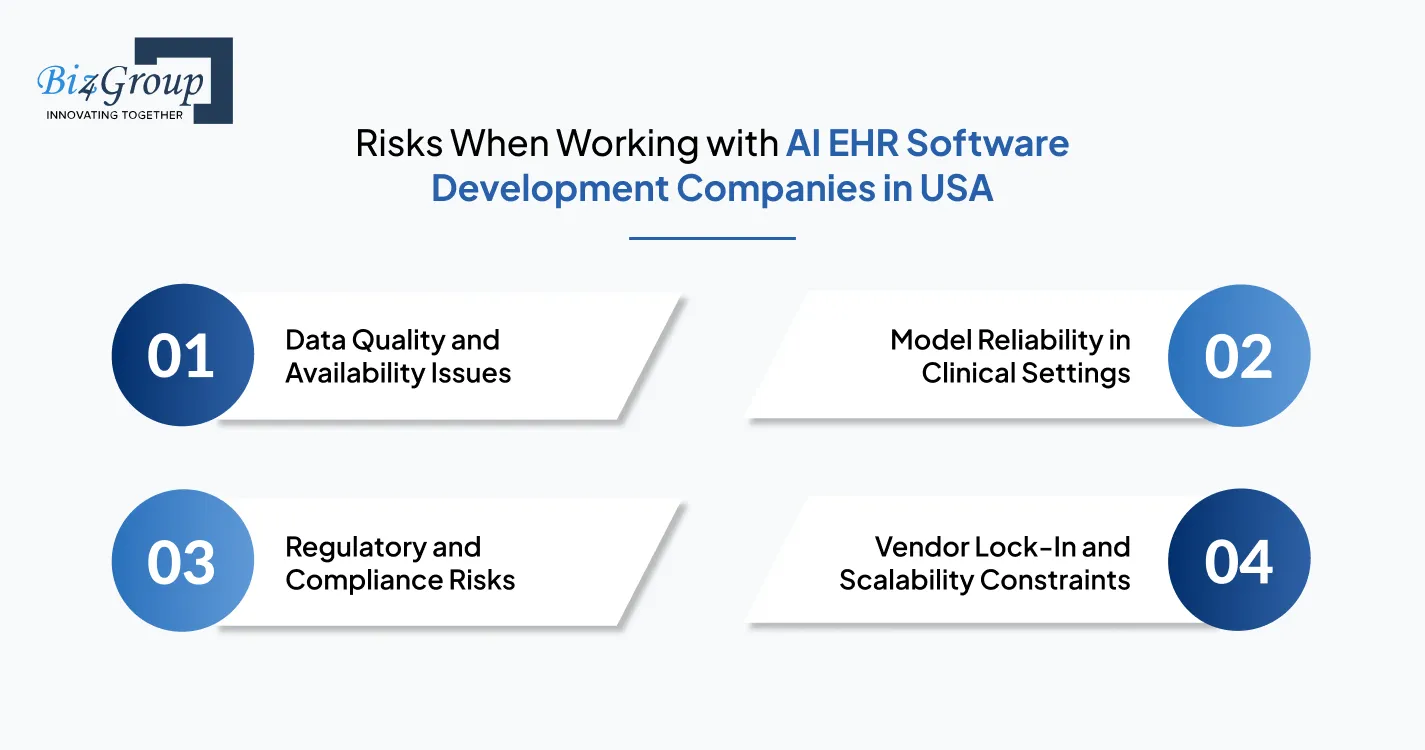
Building an AI-enabled EHR system comes with some common risks. These can affect how the system works, how long it takes to build, and how well it follows healthcare rules. The top AI EHR software development companies in USA usually plan for these risks, but it is still important to understand them early.
|
Risk Area |
What It Means |
What to Watch |
|---|---|---|
|
Data Quality and Availability Issues |
Healthcare data is often incomplete or not well structured |
Missing records, inconsistent formats, poor data quality |
|
Model Reliability in Clinical Settings |
AI models may not always give accurate results in real use |
Limited testing, unclear accuracy, too much reliance on AI outputs |
|
Regulatory and Compliance Risks |
Systems must follow strict healthcare rules |
Weak security, missing audit logs, unclear compliance steps |
|
Vendor Lock-In and Scalability Constraints |
Systems may depend too much on one vendor |
Hard to switch vendors, limited flexibility, scaling challenges |
Some risks depend on how the system is built. For example, projects involving chatbot development for healthcare industry need careful testing to make sure interactions are safe. Systems similar to those used in AI chatbot development for medical diagnosis may need even stricter checks before they are used.
Understanding these risks helps in planning better and avoiding problems later. This is especially important when working with custom AI EHR software development companies in USA, where early decisions can affect how flexible the system is in the future.
How to Make the Final Decision on AI EHR Software Development Companies in USA
Once you have shortlisted a few vendors, the focus shifts from comparison to final selection. At this stage, the goal is to choose a partner who can deliver reliably, not just one who looks strong on paper. This is where the top AI EHR software development companies in USA are evaluated based on execution, clarity, and long-term fit.
What Changes After You Shortlist Vendors
At this stage, you are no longer exploring options. You are validating whether a vendor can actually deliver. The focus shifts to:
- How they plan to execute the project
- How well they understand your workflows
- How clearly they explain timelines and dependencies
Step by Step Vendor Selection Process
A simple process helps avoid confusion during final selection. Typical steps include:
- Aligning internal requirements and priorities
- Reviewing detailed proposals from vendors
- Conducting technical and workflow discussions
- Validating assumptions around data and integrations
- Making a final decision based on fit and clarity
Many top AI healthcare EHR software developers USA follow structured proposal and validation steps, making this phase easier to manage.
Questions to Ask Before Signing a Contract
Before finalizing a vendor, ask questions that focus on execution. Key areas include:
- How will the system integrate with existing tools?
- What are the key risks in this project?
- What support is provided after deployment?
- How are delays or changes handled?
In some cases, referring to a healthcare conversational AI guide can help frame questions around system interactions and usability.
Red Flags to Watch For Before Finalizing a Vendor
Some warning signs are easy to miss but important to catch early. Common red flags include:
- Vague answers about timelines or architecture
- No clear explanation of data handling
- Overpromising results without technical detail
- Limited ownership of integration challenges
How to Compare Final Proposals from Shortlisted Vendors
At this stage, proposals should be compared based on practical factors. Focus on:
- Delivery approach and timelines
- Level of customization vs standardization
- Integration complexity
- Long-term scalability
Some vendors, including those similar to a software development company in Florida, may offer flexible engagement models, which can influence the final decision.
Decision Checklist for Different Organization Types
Different organizations have different priorities. For example:
- Hospitals: Focus on interoperability, compliance, and reliability
- Startups: Focus on speed, flexibility, and cost
- Enterprises: Focus on scalability, governance, and system integration
How to Make the Final Call with Confidence
The final decision should balance technical capability with execution clarity. Choose a vendor that:
- Clearly explains how the system will be built
- Aligns with your workflows and long-term goals
- Shows realistic timelines and scope
This approach helps in selecting from the best AI EHR software development companies in USA with more confidence and fewer surprises later.
Also Read: AI in Healthcare Explained: 130+ Questions Answered for Healthcare Providers and Innovators
Build, Integrate, and Scale Without Complexity
Choose from AI EHR software development companies USA that focus on seamless integrations and long-term scalability.
Get Started TodayFuture Trends in AI EHR Systems 2026 and Beyond
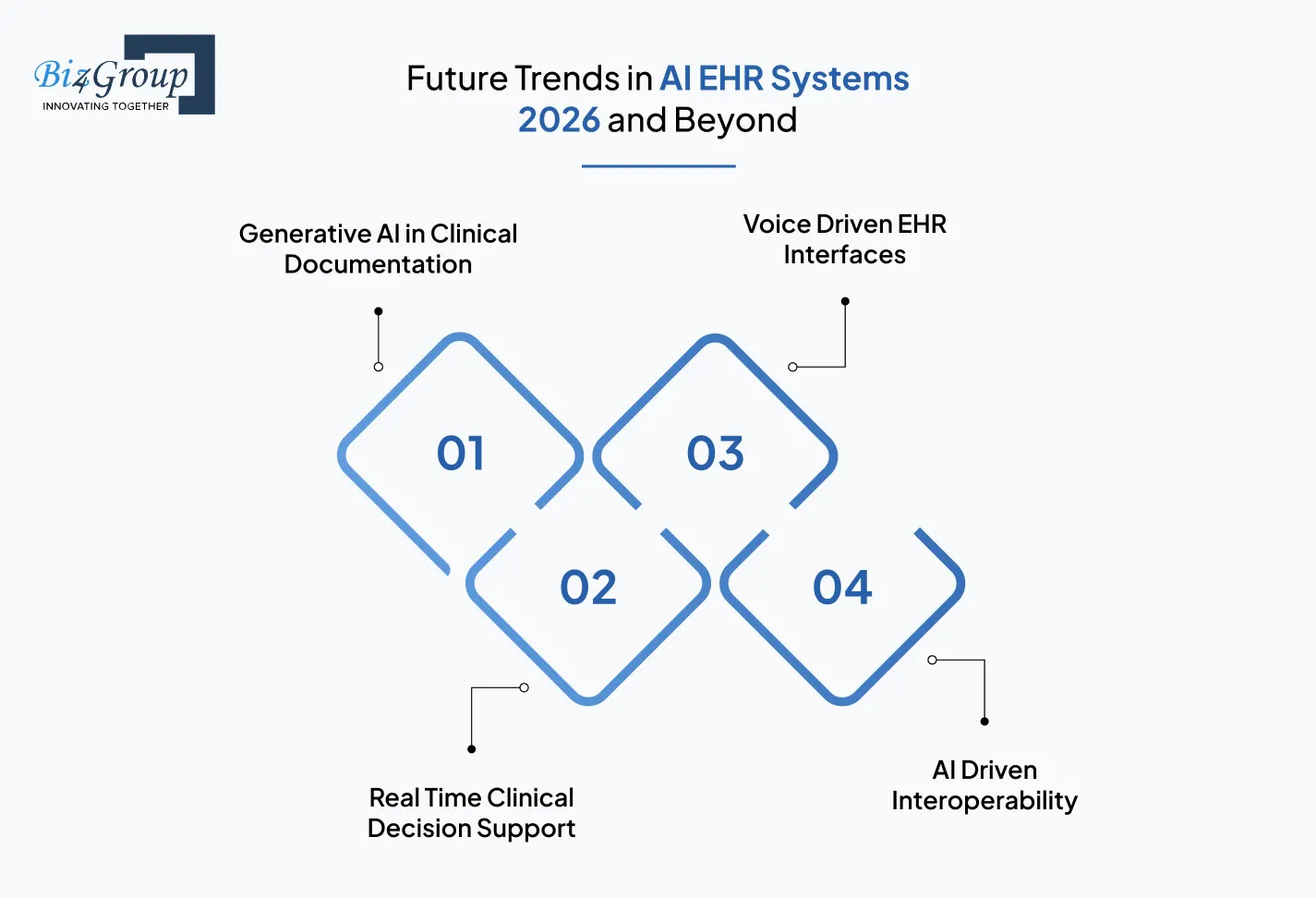
AI in EHR systems is moving beyond basic automation. Systems are now being built to support real-time work, handle large amounts of data, and reduce manual effort. The top AI EHR software development companies in USA are focusing on making EHR systems more useful during everyday clinical and operational tasks.
1. Generative AI in Clinical Documentation
Generative AI is helping reduce the time spent on writing clinical notes. It can turn conversations or inputs into structured records automatically. This makes documentation faster and more consistent. Many leading AI EHR development companies in USA for hospitals are adding this feature directly into EHR systems.
2. Real Time Clinical Decision Support
AI is being used to support decisions while care is being delivered. Instead of reviewing data later, clinicians can see alerts or insights during their workflow. This helps in faster decision-making and better use of available data.
3. Voice Driven EHR Interfaces
Voice input is becoming more common in EHR systems. Clinicians can speak instead of typing to enter or retrieve data. This makes the system easier to use and reduces time spent on manual input. Some systems are being designed with ideas similar to those used by top AI development companies in Florida, focusing on simple and natural interaction.
4. AI Driven Interoperability
AI is helping systems work better together. It can organize and standardize data coming from different sources so it can be used easily. Many enterprise AI EHR software development services companies USA are working on systems that can handle data across platforms without adding extra complexity.
These trends show that EHR systems are becoming more active and easier to use. Understanding these changes helps organizations plan better and choose systems that can adapt over time.
Conclusion
An EHR system rarely fails because of missing features. It fails when it does not fit how data moves, how teams work, and how decisions are made. That is where the choice between the top AI EHR software development companies in USA starts to matter in a practical way.
Some organizations need full control and will want to build AI software from scratch. Others may prefer faster implementation with fewer customizations. In many cases, the harder part is not development, but making the system work with existing tools, incomplete data, and real clinical workflows.
Early decisions have a direct impact on how the system performs later. Data handling, integration planning, and realistic scoping matter more than feature lists. A system that fits well into daily operations will always perform better than one that only looks good in demos.
A reliable partner is one that explains how the system will work in practice, not just what will be delivered. That clarity reduces risk and makes implementation more predictable.
Planning an AI healthcare project? Let’s define the scope and next steps clearly.
FAQs: AI EHR Software Development Companies USA
1. How long does it take to see ROI from an AI-enabled EHR system?
ROI timelines depend on how the system is used and what problems it solves. Most organizations start seeing measurable impact within 6 to 18 months, especially in areas like reduced documentation time, improved workflow efficiency, and better data usage.
2. Do AI EHR systems require complete data before implementation?
No, but better data improves results. Most systems can work with partial or unstructured data, but they may require data cleaning and standardization during implementation to ensure accuracy and consistency.
3. Can AI EHR systems work with existing hospital software?
Yes, but it depends on how the current systems are structured. Integration is possible in most cases, but it may require APIs, middleware, or custom connectors to ensure smooth data exchange between systems.
4. What internal team is needed to support an AI EHR implementation?
Organizations typically need a mix of clinical staff, IT support, and project managers. Some level of technical oversight is required, especially during integration and testing phases, even if development is handled externally.
5. How often do AI models in EHR systems need to be updated?
AI models need regular updates to stay accurate. This can range from periodic retraining based on new data to ongoing monitoring and fine-tuning, depending on how the system is used.
6. Is it possible to start small and scale an AI EHR system later?
Yes, many organizations begin with limited features such as documentation or analytics and expand over time. A modular approach allows systems to scale without requiring a full rebuild.
