Location :
Orlando, FL, USA
Location :
Orlando, FL, USA +1 (407) 714-1616
 info@biz4group.com

















Imagine a digital system that doesn’t wait for instructions but instead, understands your business goals, learns from real-time feedback, and takes independent actions to get the job done.
Read More

A late-night buyer opens a car app, tweaks the exterior color, switches trim levels, checks pricing, then pauses. Not because they are confused, but because they expect guidance. This pause is where automotive brands either lose momentum or quietly earn trust. AI car configurator mobile app development steps into this exact moment, shaping decisions while intent is still active and curiosity has not cooled.
The data backs up why these questions matter:
For founders, CTOs, and digital leaders, the pressure to modernize without disrupting sales teams is real. The gap between how cars are sold internally and how customers want to buy them keeps widening. Closing that gap is now a decision about architecture problems powered by intelligence.
Buyers now expect configurators that understand preferences, adjust options dynamically, and reflect pricing logic instantly. That expectation is pushing steady demand for AI car configurator app development services that connect intelligence, data, and mobile experience into a single flow. For many automotive teams, this initiative also aligns with broader programs to build AI software that supports personalization across digital retail systems.
At the execution level, leadership teams are thinking through how to develop AI powered car configurator app experiences that guide without overwhelming and assist without interrupting. This is often where choosing the right AI app development company matters most, not for speed, but for getting the decision logic right. The objective is not to sell harder. It is to help buyers feel confident moving forward, which is exactly what modern automotive digital journeys are missing today.
AI car configurator mobile app development is about creating mobile experiences that help buyers configure vehicles intelligently using data driven logic instead of static option lists. The focus is on guiding decisions, not overwhelming users with choices.
For many teams, this foundation is often where intelligence is validated before committing full-scale automotive configuration experiences.
At its core, AI car configurator mobile app development combines user intent, data logic, and automation. Its intelligence is tested early, refined continuously, and then scaled into real buying flows.
Here is how that intelligence actually operates:
The app starts by collecting inputs like budget range, usage needs, style choices, and feature priorities. These signals are structured instantly and passed into decision logic. This is where teams integrate AI into an app without disrupting the mobile experience.
Behind the scenes, rule engines and recommendation layers interpret compatibility, availability, and pricing constraints. This logic is built through deliberate AI model development so the configurator responds logically instead of mechanically. The system learns which options make sense together.
As users adjust configurations, the app recalculates pricing, trims, and feature availability in real time. This capability sits at the heart of AI car configurator app development services designed for mobile retail. Every interaction subtly refines the configuration path.
The configurator connects with inventory, pricing engines, and sales systems to stay accurate. Data flows remain invisible to the user but critical to trust. This orchestration allows teams to develop AI powered car configurator app experiences that feel responsive and dependable.
|
Stage |
What Happens |
Why It Matters |
|
Input Capture |
Preferences and constraints are collected |
Sets decision context |
|
AI Logic |
Rules and models evaluate options |
Prevents invalid builds |
|
Personalization |
Config updates happen instantly |
Maintains buying momentum |
|
System Sync |
Inventory and pricing stay aligned |
Builds buyer confidence |
Once this flow is in place, teams naturally begin thinking beyond functionality toward outcomes. That shift quietly opens the conversation around why brands are investing in these systems in the first place.
See how AI car configurator mobile app development turns hesitation into confident decisions inside mobile buying journeys.
Explore Smart Configurators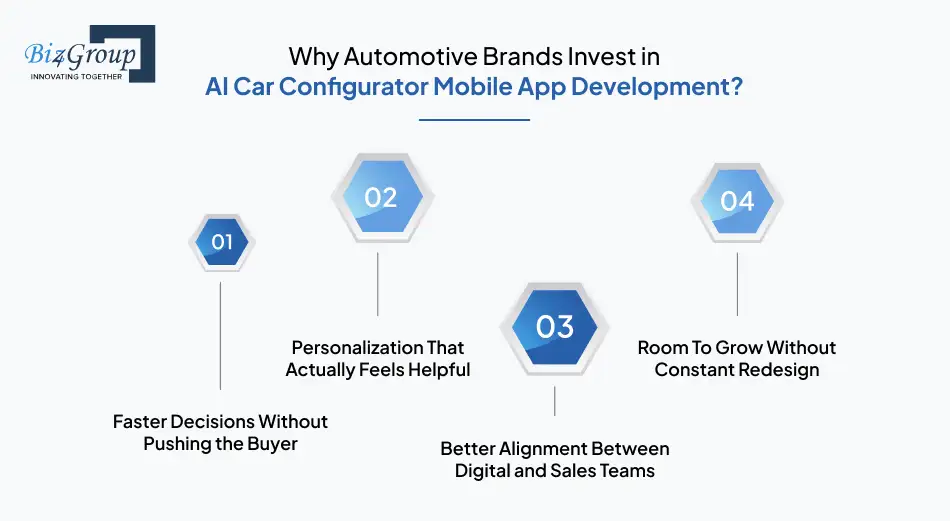
For many automotive leaders, the investment discussion starts the same way it does with proof of concept (PoC) development of an AI chatbot. You test intelligence early, validate impact, then decide whether it is worth scaling. Configurators now fall into that same category of strategic bets.
Car buyers do not want more options. They want better direction. This is why brands choose to build AI car configurator mobile application experiences that guide decisions naturally and reduce hesitation during the buying journey.
When teams create AI driven vehicle configurator app flows, the experience adapts quietly to user intent. Buyers feel understood instead of targeted. Many organizations reach this stage after engaging AI consulting services to rethink how digital journeys should work.
Intelligent configurators keep pricing, inventory, and offers consistent across channels. This reduces back and forth between teams and systems. For many brands, this aligns closely with ongoing AI automotive dealership management software development efforts.
As catalogs expand, static tools quickly become fragile. Automotive car configurator app development with AI allows logic to scale without rebuilding the experience every time. This scalability is often supported by structured AI automation services behind the scenes.
Once these benefits are clear, the focus naturally moves from why invest to where these configurators make the biggest difference. That is where real world use cases begin to stand out.
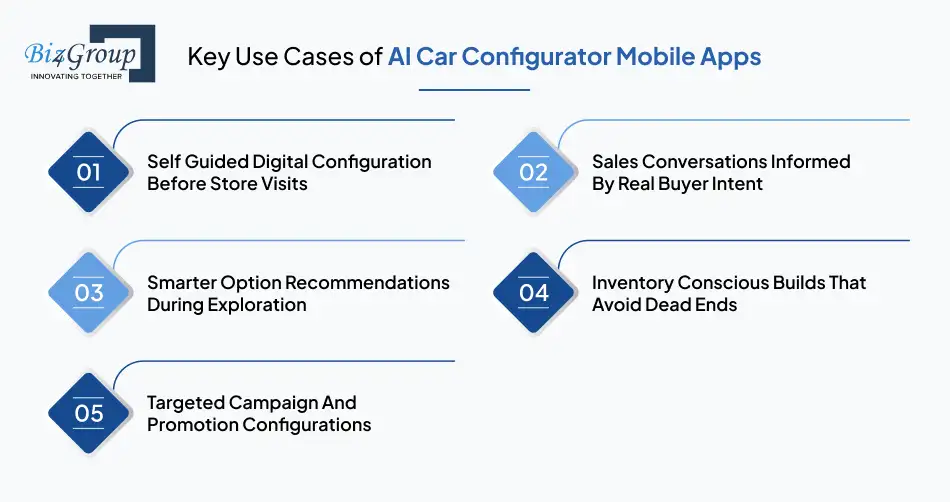
Mobile has become the starting point for most car buying journeys, and AI car configurator mobile app development now sits right at that entry point. These apps do more than display options. They influence how buyers think, compare, and commit, which opens up several practical use cases across automotive businesses.
Many buyers want clarity before they ever speak to sales. When brands build AI car customization mobile app experiences, customers explore trims, pricing, and features at their own pace. This reduces early friction and sets expectations clearly.
Configurators capture structured intent that sales teams can actually use. Through custom AI car configurator app development, dealerships see what matters to a buyer before the first call. This often complements existing AI automotive dealership management software development workflows.
Instead of endless choices, AI nudges buyers toward sensible combinations. Teams develop intelligent car configuration application logic that reduces confusion without removing control. This recommendation layer typically depends on reliable AI integration services behind the scenes.
Nothing breaks trust faster than configuring something that cannot be delivered. Intelligent configurators adapt builds based on availability and timelines. Many brands rely on teams that hire AI developers with automotive experience to get this right.
Marketing teams use configurators to guide buyers toward specific models or offers. When companies create AI enabled auto configurator App platform foundations, campaigns can be launched without rebuilding logic each time.
|
Use Case |
Primary User |
Value Delivered |
|
Pre Visit Configuration |
Buyers |
Better preparedness |
|
Intent Based Selling |
Dealerships |
Stronger conversations |
|
Intelligent Guidance |
OEMs |
Reduced drop offs |
|
Inventory Matching |
Operations |
Faster delivery |
|
Campaign Builds |
Marketing |
Higher engagement |
As these use cases stack up, one thing becomes clear. Success depends less on where the configurator is placed and more on what it can actually do. That naturally shifts attention toward the features that make these experiences work well.
Related AI Automotive Platforms by Biz4Group
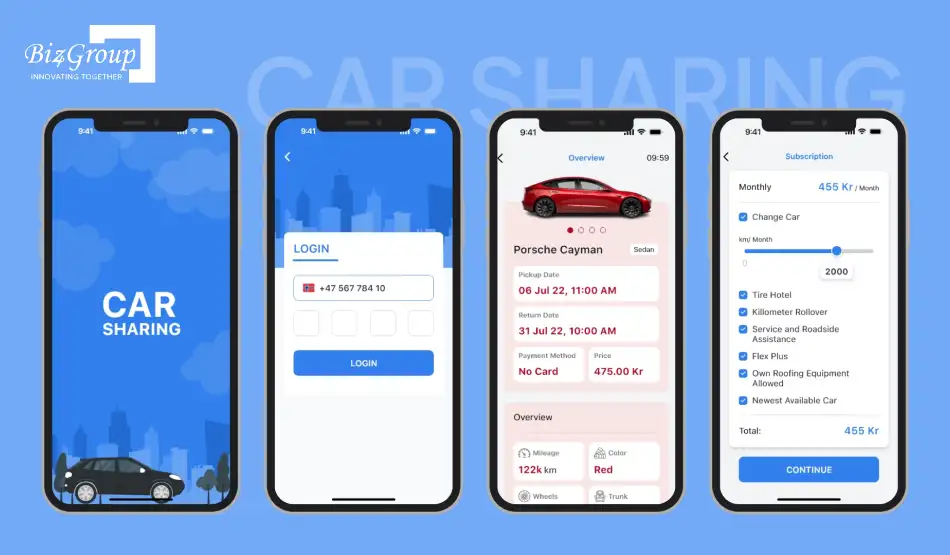
Biz4Group built an AI driven car sharing and parking platform that manages vehicle discovery, availability, booking, and access through a single intelligent system. The platform blends real time vehicle data, user behavior, and automation to simplify decision making at scale. The same architectural thinking applies when building AI driven configurators, where user intent, availability, and pricing must align instantly across mobile experiences.
The right AI car configurator solutions for dealerships and manufacturers focus on clarity, not complexity.
Review Real World Use CasesAt a foundational level, AI car configurator mobile app development succeeds or fails based on how well its core features support real buyer decisions. These features are not about flash. They are about clarity, accuracy, and momentum, which is where real work begins:
|
Core Feature |
What It Enables |
Why It Matters |
|
Preference Capture Engine |
Collects budget, usage, and style inputs |
Sets the context for every configuration |
|
Compatibility Rule Logic |
Prevents invalid option combinations |
Avoids buyer frustration and drop offs |
|
Real Time Pricing Updates |
Reflects price changes instantly |
Builds trust during decision making |
|
Visual Configuration Layer |
Shows changes as selections update |
Helps buyers visualize outcomes |
|
Inventory Awareness |
Aligns builds with available stock |
Reduces dead end configurations |
|
Recommendation Engine |
Suggests relevant options |
Guides without overwhelming |
|
Save And Resume Builds |
Lets users return to configurations |
Supports longer buying cycles |
|
Dealer Handoff Support |
Shares builds with sales teams |
Improves continuity across channels |
|
Analytics And Behavior Tracking |
Captures interaction patterns |
Informs optimization and strategy |
Behind these features sits intelligent orchestration that feels invisible to the buyer. Many teams support this layer using business app development using AI to keep configurator logic consistent across mobile experiences and backend systems.
Once these essentials are in place, it's time to explore what more can be layered on top. That is where advanced capabilities begin to separate standard configurators from truly intelligent ones, especially in AI vehicle configurator mobile app development initiatives that aim to scale.
Once the basics are in place, AI car configurator mobile app development starts to show its real potential through advanced capabilities. These features are less about showing options and more about shaping better decisions, which is where serious differentiation begins.
Instead of reacting to clicks, the configurator anticipates intent. Using predictive analytics and historical data, it suggests option bundles that make sense together. This is often powered by generative AI, helping buyers feel guided rather than sold to.
Some buyers prefer asking questions instead of tapping through menus. A conversational layer allows users to describe needs in plain language and receive configurations in response. This approach borrows heavily from patterns seen in an AI conversation app experience.
Advanced configurators go beyond static visuals by dynamically adjusting views based on selections. Teams that build visual AI agent capabilities help buyers understand tradeoffs instantly, especially when switching trims or feature packages.
AI adapts configurations based on location, season, and usage context. This allows teams to develop AI car configurator application for digital auto sales that feels relevant without asking more questions. The app quietly does the thinking in the background.
Advanced logic prepares configurations for downstream sales workflows automatically. When brands build AI powered car configurator app for dealerships, this intelligence ensures smoother transitions from mobile exploration to human assisted closing, often supported by a trusted AI chatbot development company.
As these advanced features come together, attention naturally shifts from what the app can do to how it should be built. That is where a clear, structured development process becomes essential, especially when teams aim to create AI powered car customization app for auto retail at scale.
Understanding how to build an AI car configurator mobile app early helps avoid expensive rework later.
Talk Through the Build Approach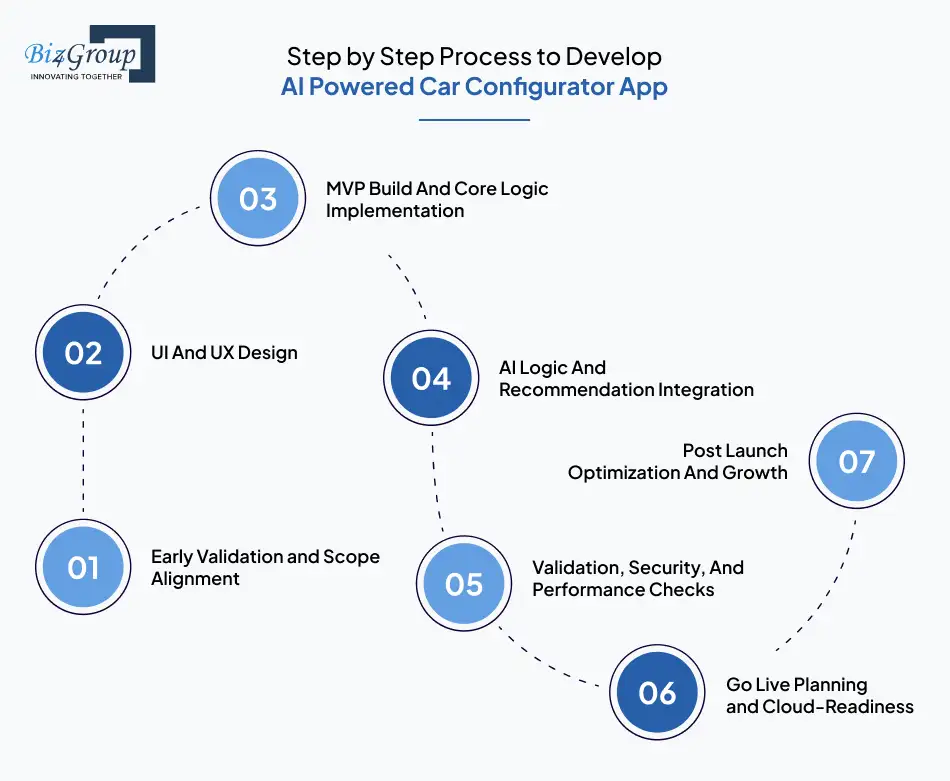
Building an AI driven car configurator is all about sequencing decisions correctly. For founders, CTOs, and product leaders, the process below reflects how real automotive buying behavior, data complexity, and scale expectations come together in practice:
Every successful build starts by understanding where buyers hesitate while configuring vehicles on mobile. In AI car configurator mobile app development, this phase focuses on real decision friction such as pricing confusion, incompatible options, and delivery uncertainty before any screens are designed.
A configurator interface must match how buyers think, not how vehicle catalogs are structured. This is where teams clarify how to build an AI car configurator mobile app that feels intuitive, usually with the help of an experienced UI/UX design company.
Also read: Top UI/UX design companies in USA
For configurators, MVP development services mean validating trust, not minimal features. Buyers must believe the configuration is accurate before moving forward. This stage is where teams make AI car configurator apps with real time pricing that users actually rely on.
This phase defines long term flexibility through custom AI car configurator app development services.
Also read: Top 12+ MVP Development Companies to Launch Your Startup in 2026
This is where intelligence becomes visible. Recommendation logic must reflect real automotive buying behavior rather than generic suggestion patterns.
Configurators handle sensitive pricing logic and personal preferences, so trust depends on accuracy and resilience. This phase often answers practical questions like how long does it take to build an AI car configurator app, since compliance checks, testing cycles, and approvals directly influence timelines.
Also Read: Software Testing Companies in USA
Configurators must absorb demand spikes tied to launches and promotions. This step focuses on ensuring performance does not degrade when attention peaks.
This stage supports teams looking to develop scalable AI car configurator mobile platform foundations.
Once live, the configurator becomes a learning system. Buyer behavior continuously reveals where logic improves confidence or creates hesitation.
Over time, these insights also clarify what separates average builds from platforms delivered by the best company to develop AI car configurator mobile app.
A realistic AI car configurator mobile app development cost estimate depends on scope, intelligence depth, and scale goals.
Discuss Cost And ScopeThe tech stack behind a car configurator determines whether real time pricing, visual updates, and AI driven logic feel seamless or frustrating. For AI car configurator mobile app development, each layer must handle constant interaction without slowing decision momentum.
Here's everything that you need to know:
|
Label |
Preferred Technologies |
Why It Matters |
|
Frontend Framework |
ReactJS, React Native, Flutter |
Handles frequent state changes during configuration, which is why teams lean on stable ReactJS development for complex UI logic |
|
Server-Side Rendering & SEO |
Next.js, Nuxt.js |
Improves first load speed and visibility for configuration heavy pages, a common reason teams adopt NextJS development |
|
Backend Framework |
Node.js, Python |
Orchestrates configuration logic, pricing rules, and workflows using scalable NodeJS development alongside reliable Python development |
|
API Development Layer |
REST, GraphQL |
Acts as the backbone connecting mobile apps with pricing, inventory, and dealer systems without tight coupling |
|
AI & Decision Logic |
TensorFlow, PyTorch, Scikit learn |
Powers recommendation engines and rule based intelligence that guide configuration choices |
|
3D & Visual Rendering |
Three.js, WebGL |
Enables instant visual updates when users change trims, colors, or packages |
|
Data Storage |
PostgreSQL, MongoDB |
Stores configuration rules, compatibility matrices, and session data reliably |
|
Identity & Access Control |
OAuth 2.0, JWT |
Secures dealer access, saved configurations, and user sessions |
|
Cloud Infrastructure |
AWS, GCP, Azure |
Scales automatically during launches, promotions, and peak buying periods |
|
CI/CD & Release Management |
GitHub Actions, Jenkins |
Allows frequent logic updates without disrupting live configuration flows |
|
Analytics & Monitoring |
GA4, Mixpanel, CloudWatch |
Reveals where buyers hesitate, adjust choices, or abandon builds |
This expanded stack reflects how configurators actually behave in production, not how demo apps are built. With the technology foundation clear, the next logical step is understanding what this stack costs at different levels of ambition and scale.
When teams evaluate AI car configurator mobile app development, cost usually becomes the first practical question. Most projects fall between USD 30,000 to 250,000+, depending on scope and scale. This is a ballpark figure, not a quote, but it helps anchor expectations before deeper planning begins:
|
Cost Tier |
Typical Investment Range (in USD) |
What's Included |
Best Fit For |
|
MVP-Level AI Car Configurator App |
30,000 to 60,000 |
Core configuration logic, basic visuals, rule-based compatibility, simple pricing |
Startups and pilots testing buyer response |
|
Mid-Level AI Car Configurator App |
60,000 to 120,000 |
Real time pricing, inventory sync, personalization, dealer handoff |
Dealership groups and growing auto retailers |
|
Advanced-level AI Car Configurator App |
120,000 to 180,000 |
AI recommendations, visual upgrades, analytics, scalable backend |
OEMs and digital first auto platforms |
|
Enterprise-grade AI Car Configurator App |
180,000 to 250,000+ |
Multi market support, advanced intelligence, security, integrations |
Large manufacturers and enterprise auto brands |
Several factors influence where a project lands within this range. Visual complexity, depth of AI logic, real time pricing requirements, and integration with dealership systems all play a role. Teams that introduce generative AI for recommendations or configuration guidance typically see higher upfront investment but stronger long-term engagement.
Rather than treating cost as a fixed number, most leaders use it as a planning lens. Understanding scope tradeoffs early makes it easier to shape a realistic AI car configurator mobile app development cost estimate and decide how the platform should generate returns once it is live.
Well planned AI car configurator app development services embed monetization into the buying flow itself.
Explore Revenue Strategies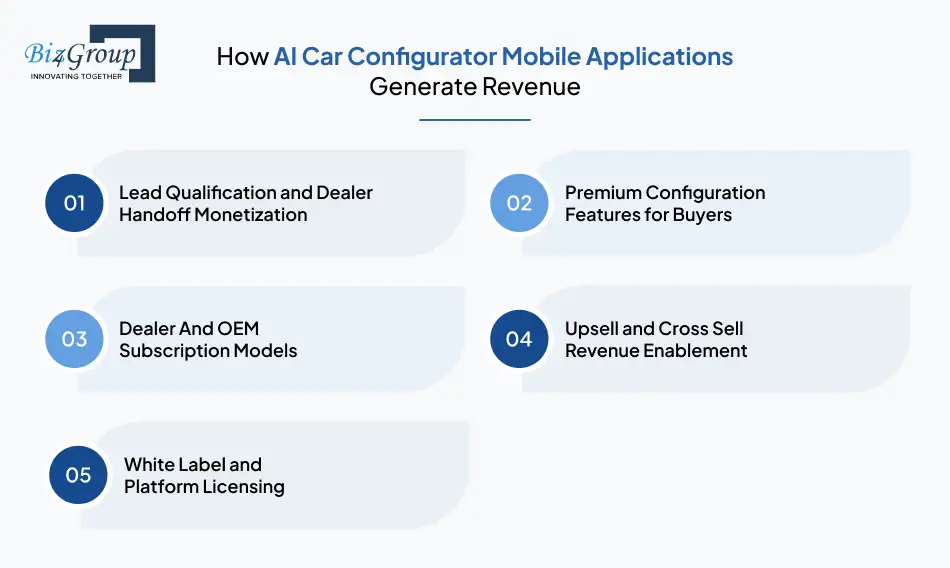
Revenue planning often starts after launch, but with AI car configurator mobile app development, monetization is shaped much earlier. The way configurators guide choices, surface options, and connect with sales workflows directly influences how money flows through the platform.
Configurators capture high intent data that dealerships value far more than generic leads. Many platforms monetize by charging for qualified handoffs where configurations are complete and buyer intent is clear. This model works especially well for AI car configurator solutions for dealerships and manufacturers focused on conversion quality over volume.
Some platforms unlock advanced visualization, comparison tools, or assisted guidance as paid upgrades. This keeps the base experience accessible while monetizing deeper engagement. Intelligent flows often include a conversational AI agent to justify premium value without feeling intrusive.
Dealership groups and manufacturers often subscribe to configurator platforms as ongoing sales infrastructure. Pricing scales with usage, locations, or supported models, aligning well with long-term digital retail strategies. This approach is common within AI car configurator app development services built for scale.
Configurators can actively influence higher order values by surfacing relevant upgrades at the right moment. When teams develop AI powered car configurator app experiences with intelligent bundling, revenue growth becomes embedded in the flow rather than forced.
Some businesses license the configurator as a platform that others brand and deploy. This model suits companies treating configurators as a product rather than a single sales tool and often relies on strong product development services to support customization.
As monetization strategies mature, teams often revisit how the experience itself can stay consistent, scalable, and reliable. That reflection naturally brings best practices into focus, especially for those planning to build AI car configurator mobile application platforms that grow over time with the help of generative AI agents.
Strong outcomes in AI car configurator mobile app development come from disciplined choices rather than flashy features. The practices below reflect what consistently works when teams balance buyer expectations, dealership realities, and long term scalability, which is where real value is created.
Configurators should reduce doubt, not showcase every possible option. When teams create AI driven vehicle configurator app experiences, clarity around pricing, compatibility, and availability matters more than visual excess. Buyers move forward faster when decisions feel safe and informed.
Configurators rarely stay small. Early architectural decisions should support new models, regions, and dealerships without rework. Many teams study delivery patterns used by top AI development companies in Florida to avoid rebuilding core logic later.
AI should assist quietly instead of interrupting the flow. In automotive car configurator app development with AI, recommendations work best when they appear only at natural decision points. This approach prevents choice fatigue and keeps trust intact across longer buying journeys.
Internal testing misses real hesitation points. Effective teams validate flows with actual buyers and dealership staff before scaling. This practice is common among experienced teams who have worked on complex platforms beyond AI vehicle damage detection software development and other isolated automotive tools.
Nothing damages credibility faster than unavailable builds. Teams that build AI car customization mobile app platforms must keep configuration rules tightly synced with inventory and delivery timelines. This discipline often separates production ready systems from experimental ones.
When these best practices are followed, many challenges resolve themselves early. The remaining ones are usually structural or operational, which is why it helps to understand the common issues teams face and how they are addressed in practice.
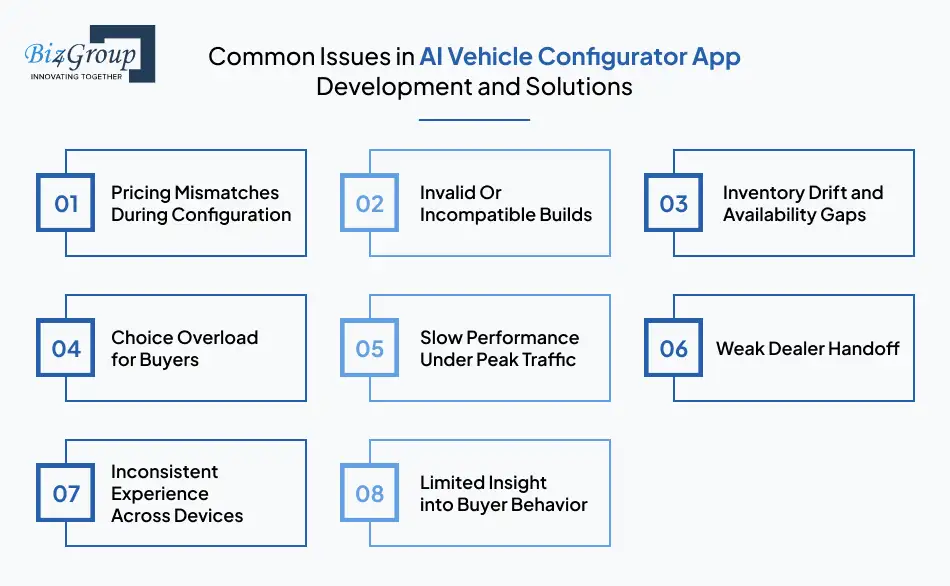
Every product team enters this space with ambition, but AI car configurator mobile app development introduces challenges that only surface at scale. These hurdles are about aligning intelligence, data, and real buying behavior, which is where execution gets tested.
|
Top Challenges |
How To Solve Them |
|
Pricing Mismatches During Configuration |
Centralize pricing logic and update it in real time across all configuration steps |
|
Invalid Or Incompatible Builds |
Enforce strict compatibility rules before options appear to users |
|
Inventory Drift and Availability Gaps |
Sync configurator logic directly with live inventory and delivery systems |
|
Choice Overload for Buyers |
Introduce guided recommendations only at key decision points |
|
Slow Performance Under Peak Traffic |
Design for concurrency and use scalable infrastructure from day one |
|
Weak Dealer Handoff |
Standardize how configurations are shared with sales teams |
|
Inconsistent Experience Across Devices |
Use a unified configuration logic layer across platforms |
|
Limited Insight into Buyer Behavior |
Track configuration depth and abandonment patterns consistently |
Teams that plan for these hurdles early avoid costly rework later. Addressing them upfront is a core advantage of custom AI car configurator app development, especially when the goal is to build systems that remain reliable as usage and complexity grow.
Now, let’s see where technology is headed next and how emerging trends will influence future configurator experiences.
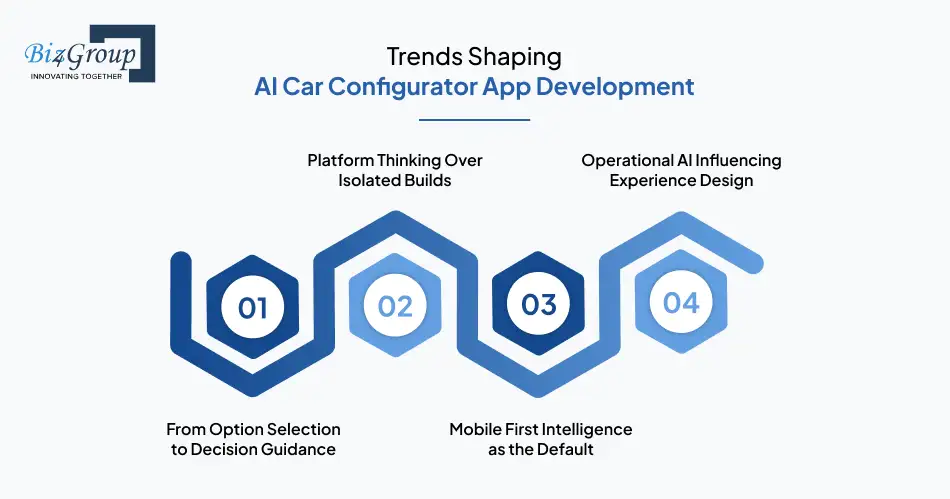
Buyer behavior is evolving faster than traditional auto retail systems can keep up. In AI car configurator mobile app development, the biggest shifts now center on decision intelligence, platform thinking, and mobile realism, which together define how modern configurators are expected to behave.
Configurators are moving beyond checklists of features. Teams now develop intelligent car configuration application logic that understands hesitation, compares tradeoffs, and surfaces clarity at the right moment. The goal is to help buyers decide, not browse endlessly.
One off configurators are giving way to shared platforms that support multiple models, brands, and regions. More teams aim to create AI enabled auto configurator App platform foundations that evolve over time instead of being rebuilt every launch cycle.
Buyers increasingly start and finish configuration on phones. This has pushed AI vehicle configurator mobile app development toward faster interactions, fewer steps, and smarter defaults that work well on smaller screens without sacrificing accuracy.
Automotive configurators are borrowing lessons from other operational AI products. Patterns seen in projects handled by a software development company in Florida often emphasize automation and speed. Even adjacent solutions like AI car wash app development reinforce expectations around instant feedback and minimal friction.
As these trends settle into the mainstream, the focus naturally shifts from what is possible to who can execute it well. That question sets up the final decision around choosing the right development partner.
Teams that develop scalable AI car configurator mobile platform foundations adapt faster as buyer behavior evolves.
Plan for Long Term ScaleChoosing the right partner matters as much as choosing the right features. AI configurators are decision systems, not just interfaces, and they need teams that understand how intelligence, data, and real automotive workflows come together in production.
Biz4Group brings hands-on experience from building AI powered automobile platforms, including large scale car sharing systems where real time availability, pricing logic, and user intent must stay perfectly aligned. That same execution mindset carries into AI configurator builds, where accuracy and trust define outcomes.
What sets Biz4Group apart in practice:
As an experienced AI app development company, Biz4Group focuses on building systems that stay reliable as complexity grows. The result is configurator platforms that support real buying behavior today and scale confidently as digital auto sales mature.
Car configurators used to be digital brochures with buttons. Today, they are where buyers pause, rethink, and finally decide. That pause is the moment that matters. AI does not change what people want to buy, but it changes how confident they feel while choosing it.
Teams that treat configurators as decision systems, are bound to see better outcomes. It has become all about knowing when and where to guide without interrupting. That is why the ability to build AI software with restraint matters as much as intelligence itself. With the right AI product development company, AI car configurator mobile app development stops being an experiment and starts becoming part of how cars are actually sold today.
If your configurator needs to guide decisions instead of just showing options, it may be time to rethink how it is built.
Talk to our AI Product Experts
Yes, when built correctly, an AI configurator actively shapes decisions by reducing confusion and guiding buyers at hesitation points. A well-designed build AI car customization mobile app uses behavior signals and logic to help users move forward with confidence instead of stalling.
Real-time pricing requires tight coordination between configuration rules, inventory systems, and pricing engines. Teams that make AI car configurator apps with real time pricing usually plan integrations early to avoid inconsistencies that can break buyer trust during configuration.
Yes, a single platform can serve both with the right architecture. Most scalable solutions develop scalable AI car configurator mobile platform foundations that adapt logic for dealer level inventory while maintaining manufacturer level configuration rules.
An effective configurator relies on option compatibility rules, pricing data, inventory availability, and user behavior signals. These inputs are essential to develop intelligent car configuration application logic that feels relevant instead of generic to buyers.
The cost usually falls between USD 30,000 to 250,000, depending on scope, intelligence depth, and integrations. A realistic AI car configurator mobile app development cost estimate should account for pricing logic, AI models, visuals, and scalability needs.
They act as decision support systems rather than static tools. Brands that develop AI car configurator application for digital auto sales use configurators to qualify leads earlier, shorten sales cycles, and improve handoffs between digital and physical channels.

with Biz4Group today!
Our website require some cookies to function properly. Read our privacy policy to know more.