 Location :
Orlando, FL, USA
Location :
Orlando, FL, USA +1 (407) 714-1616
 info@biz4group.com

- AI consulting helps small businesses use AI intentionally for improving efficiency, accuracy, and growth instead of chasing tools or hype.
- Unlike traditional IT consulting, AI consulting for small businesses focuses on measurable business outcomes and follows an iterative, data-driven approach tied directly to ROI.
- Success with AI adoption consulting for small businesses depends on readiness factors such as clear goals, stable processes, reliable data, leadership involvement, and realistic budgeting.
- Through AI strategy consulting for small companies, consultants guide organizations through discovery, prioritization, implementation, and continuous optimization, ensuring AI integrates smoothly into existing workflows.
- The highest returns come from targeted use cases such as automation, customer engagement, predictive insights, and scalable operations, demonstrating how AI consulting helps small businesses grow by starting small, proving value, and expanding gradually.
AI has moved from boardroom conversations to everyday business tools almost overnight. For small businesses, that creates a unique challenge: how to benefit from AI consulting without turning operations into an ongoing experiment?
When executed well and with a plan, AI integration removes friction but if used poorly, it introduces new ones. Industry forecasts show that the global AI consulting services market is projected to grow from USD 11.07 billion in 2025 to USD 90.99 billion by 2035 at a CAGR of 26.2%, highlighting strong demand for expert guidance on strategy and implementation. Not only this McKinsey’s State of AI survey further shows 88 % of organizations now report using AI in at least one business function, yet most are still in early stages of scaling beyond experimentation. This underlines a mismatch between broad interest and deep, enterprise-wide value capture.

Many owners, founders, and operations leaders adopt tools quickly, only to realize processes are still slow; errors continue, and teams feel stretched. This is where AI Consulting for Small Businesses becomes critical serving as the bridge between opportunity and risk.
Effective consulting doesn’t start with tools, rather it starts with clarity. That usually means answering questions like:
- Which processes consistently slow down teams?
- Where do mistakes, rework, or delays keep occurring?
- Which workflows are realistic candidates for AI consulting, and which are not?
With the right guidance, AI adoption becomes intentional rather than reactive. Instead of trial-and-error spending, small businesses follow a structured approach that aligns technology decisions with real operational needs.
In this guide, we’ll explain how AI consulting works for small businesses, where it delivers measurable value, and how a clear roadmap supports smarter growth—without unnecessary complexity
What Is AI Consulting and How It Differs from Traditional IT Consulting?
AI consulting is a business-focused approach to applying artificial intelligence to real operational challenges. Unlike traditional IT consulting, which concentrates on systems and infrastructure, AI consulting focuses on outcomes such as efficiency, accuracy, and scalability.
The table below highlights these differences to help clarify where AI consulting and traditional IT consulting diverge in practice.
|
Criteria |
Traditional IT Consulting |
AI Consulting |
|---|---|---|
|
Starting point |
Begins with a predefined technical request, such as installing software or upgrading systems |
Begins with understanding business goals, operational challenges, and decision gaps |
|
Primary focus |
Ensures technology systems are set up and functioning correctly |
Improves efficiency, accuracy, and scalability across business operations |
|
Problem Definition |
Problems are framed in technical terms like infrastructure or system limitations |
Problems are framed in business terms such as delays, manual effort, or missed opportunities |
|
Approach to solutions |
Delivers fixed solutions based on existing tools or platforms |
Designs adaptive solutions using data, automation, and intelligence aligned with workflows |
|
Linear execution with a clear end point after deployment |
Iterative execution that evolves as solutions interact with real operations |
|
|
Long-term business impact |
Provides stable technology with limited competitive advantage |
Builds a foundation for continuous improvement, smarter decisions, and sustainable growth |
AI Consulting for Small Businesses focuses on improving operations and decision-making, not just technology. By prioritizing outcomes over tools, it helps small companies adopt AI in a practical, scalable, and sustainable way.
Why Has AI Consulting Become a Business Priority for Small Businesses?
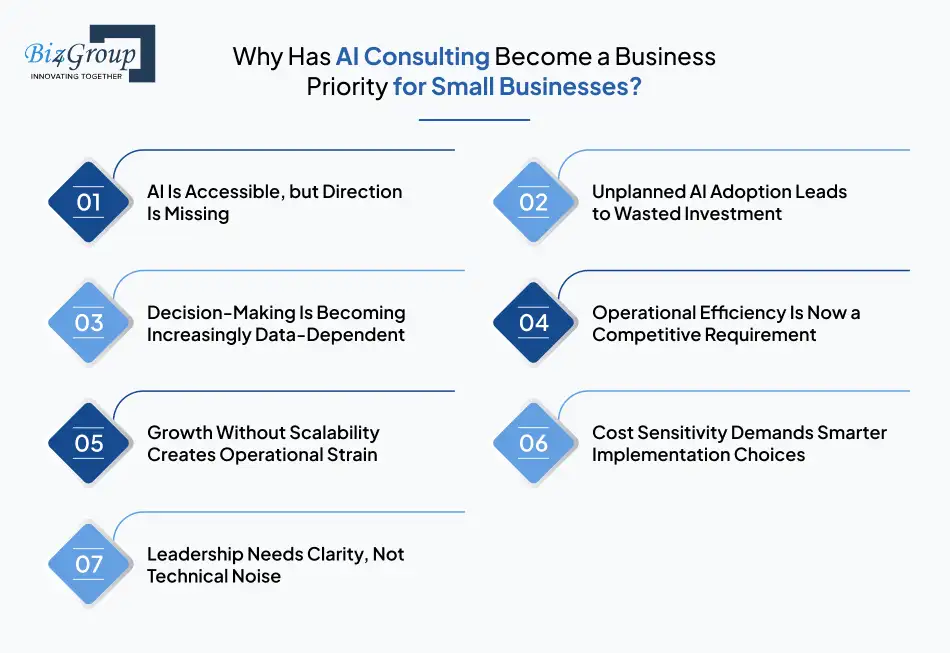
AI adoption among small businesses is no longer driven by curiosity or experimentation. It is driven by operational and leadership pressures that require more structured action.
Insights from AI Adoption Statistics further highlight how widespread AI adoption has become, reinforcing the need for guided and well-planned consulting approaches.
1. AI Is Accessible, but Direction Is Missing
AI tools are now widely available to small businesses, but access alone does not create an advantage. Leaders often face too many choices without a clear way to evaluate relevance or priority. AI Consulting for Small Businesses provides structured guidance that connects AI capabilities to specific operational goals, ensuring adoption starts with intent rather than curiosity.
2. Unplanned AI Adoption Leads to Wasted Investment
When AI tools are adopted independently by different teams, they often duplicate effort or remain underutilized. AI consulting services for small businesses introduce governance and prioritization, helping organizations invest in solutions that integrate well and deliver consistent value.
3. Decision-Making Is Becoming Increasingly Data-Dependent
Business decisions heavily rely on timely insights rather than just periodic reports. AI advisory services for small enterprises help leaders translate data into actionable intelligence that supports faster and more confident decision-making.
4. Operational Efficiency Is Now a Competitive Requirement
Efficiency gaps may go unnoticed in smaller operations, but they become costly as volume increases. Manual checks, rework, and delays accumulate over time, hampering productivity of the organization. Thus, AI automation services for small businesses focus on eliminating friction within workflows rather than automating tasks blindly, ensuring improvements are sustainable.
Also Read: AI Business Process Automation for Modern Enterprise
5. Growth Without Scalability Creates Operational Strain
Rapid growth often exposes weaknesses in processes that previously worked on a smaller scale. AI consulting strategies for small business scalability help redesign processes so systems can handle increased demand without proportional increases in cost or complexity.
6. Cost Sensitivity Demands Smarter Implementation Choices
Small businesses must balance innovation with financial discipline. Overengineered solutions often exceed both budget and actual need. An Affordable AI consulting service helps scope initiatives realistically, focusing on incremental gains that justify investment while keeping long-term flexibility intact.
7. Leadership Needs Clarity, Not Technical Noise
Executives are accountable for outcomes, not tools. Technical discussions that lack business context slow decision-making and increase hesitation. Business focused AI consulting services bridge this gap by framing AI initiatives in terms of impact, risk, and timelines, enabling leadership to act decisively.
Turn AI Adoption into a Clear, Actionable Roadmap
Avoid scattered tools and wasted investments. We help align AI initiatives with real business priorities.
Build My AI RoadmapIs Your Business Ready for AI Consulting? A Practical Readiness Framework
AI readiness determines whether consulting efforts deliver real value or stall after initial enthusiasm. It is defined by clarity, structure, and intent.
1. Well-Defined Business Problem
AI delivers value only when it addresses clearly defined business problems rather than vague improvement goals. Organizations that succeed with AI consulting services for small businesses typically know where inefficiencies exist, and which decisions need better support.
2. Process Stability and Maturity
AI performs best when applied to processes that are already consistent and repeatable. Businesses with unstable workflows often struggle to gain value from automation or predictive systems.
3. Data Availability and Quality
AI systems depend on usable data to function reliably and produce accurate insights. Many small businesses have data spread across systems without structure or ownership. AI implementation consulting for SMBs helps assess whether existing data is sufficient or requires improvement before advanced solutions are introduced.
4. Leadership Alignment and Ownership
Successful AI initiatives require leadership support beyond initial approval. AI advisory services for small enterprises emphasize accountability and ownership to prevent stalled initiatives.
5. Budget Readiness and ROI Expectations
AI adoption should align with realistic financial expectations rather than long-term speculation. Organizations that benefit most from affordable AI consulting service models focus on incremental returns and phased investment.
6. Internal Decision-Making Discipline
AI adoption requires consistent decision-making rather than reactive approvals. AI advisory services for small enterprises help establish decision discipline so that initiatives move forward without constant course correction.
7. Willingness to Act on AI Insights
AI consulting for small business automation and efficiency succeeds when leaders are prepared to act on recommendations rather than treat AI outputs as optional input. The table below brings these readiness factors together in a concise view for quick decision-making:
|
Readiness Area |
What you should know |
|---|---|
|
Well-Defined Business Problem |
AI initiatives are tied to clear business outcomes, not general experimentation. |
|
Process Stability and Maturity |
Existing operations are structured enough to benefit from automation and intelligence. |
|
Data Availability and Quality |
Data can be trusted to support decisions without extensive cleanup or rework. |
|
Leadership Alignment and Ownership |
Leadership remains accountable beyond approval and stays involved as outcomes evolve |
|
Budget Readiness and ROI Expectations |
Investment levels align with realistic returns and phase execution plans. |
|
Internal Decision-Making Discipline |
Strategic priorities remain consistent once AI initiatives are underway |
|
Willingness to Act on AI Insights |
The organization is prepared to act on insights rather than treat them as optional input. |
This framework in AI consulting for small businesses matter because readiness reduces risk before investment begins. It ensures AI initiatives start with purpose rather than assumption.
If you’re unsure where your business stands today, a AI Readiness Assessment for Startups and Small Businesses can help with your analysis for a more structured framework.
Know If AI Will Actually Work You
Understand whether your processes, data, and workflows are ready for AI, and what needs to be fixed before investing time or budget.
Check AI ReadinessHow AI Consulting Services Work for Small Businesses: Step-by-Step Process
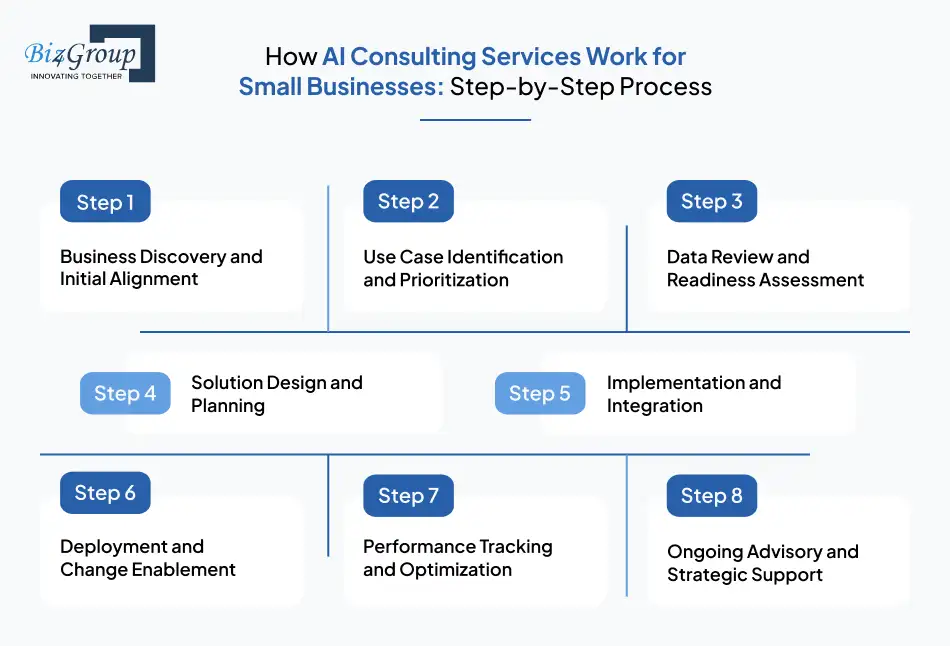
For small businesses, AI consulting is not a detached planning exercise followed by a long execution handoff. This is why AI Consulting for Small Businesses combines advisory guidance and hands-on implementation throughout the engagement rather than treating them as separate phases.
Many small business engagements combine advisory guidance with hands-on execution, which is why understanding AI consulting and development services together is critical for successful outcomes.
Step 1: Business Discovery and Initial Alignment
In small businesses, the first consulting conversations focus on how the business operates day to day. Leaders often know where problems exist but lack clarity on which issues AI can realistically address.
- Review workflows that consume time or create recurring delays.
- Identify decisions that rely heavily on manual judgment or incomplete information.
- Clarify leadership priorities around cost control, efficiency, or growth.
Step 2: Use Case Identification and Prioritization
Small businesses cannot afford to test multiple AI ideas at once. In real projects, consultants help narrow focus to use cases that deliver value quickly without increasing complexity. Strategy and feasibility are evaluated together at this stage.
- Identify areas where AI can reduce effort, improve accuracy, or speed decisions.
- Assess feasibility using existing systems and available data.
- Remove ideas that require long adoption cycles or heavy customization.
- Prioritize initiatives aligned with immediate business objectives.
Step 3: Data Review and Readiness Assessment
Most small businesses already have data, but it is rarely structured for AI to use. Consultants evaluate what data exists and whether it can support the selected use cases. Addressing this early prevents delays later.
- Review data by AI Chatbot Integration with CRM, accounting, and operations systems.
- Assess consistency, ownership, and gaps in critical datasets.
- Identify minimal preparation needed to support AI functionality.
- Avoid overbuilding data pipelines beyond business needs.
Step 4: Solution Design and Planning
Solution design focuses on usability rather than sophistication. In small business projects, AI must fit existing workflows instead of forcing operational change. Consulting and execution decisions are made together to keep adoption practical.
- Define how AI outputs will support specific actions or decisions.
- Design workflows that integrate naturally with current tools.
- Establish success metrics tied directly to business performance.
Step 5: Implementation and Integration
Implementation translates plans into working systems. In real small business projects, reliability matters more than speed. AI integration is introduced carefully to avoid disrupting ongoing operations.
- Build and configure AI models aligned with prioritized use cases.
- Integrate solutions with existing software and workflows.
- Test performance using real business data and scenarios.
- Resolve issues before wider deployment.
Also Read: The Complete Guide to AI Integration Costs
Step 6: Deployment and Change Enablement
Small teams cannot absorb large changes at once. Deployment focuses on helping employees understand how AI supports their work rather than replacing it. Adoption is guided through clarity and gradual rollout.
- Deploy solutions in manageable phases.
- Guide teams on how AI insights influence daily decisions.
- Adjust workflows to support consistent usage.
- Address resistance through practical examples and support.
Step 7: Performance Tracking and Optimization
For small businesses, success is measured through outcomes, not technical metrics. Consultants track whether AI improves speed, accuracy, or cost efficiency. Optimization ensures value continues after launch.
- Monitor performance against defined business outcomes.
- Identify opportunities to improve accuracy or efficiency.
- Refine AI models as usage patterns evolve.
Step 8: Ongoing Advisory and Strategic Support
AI consulting does not end after deployment. As small businesses grow, they need to change. Ongoing advisory support helps leaders decide when to expand, refine, or pause AI initiatives responsibly.
- Review outcomes periodically for continued relevance.
- Identify the next opportunities aligned with business maturity.
- Maintain alignment between AI initiatives and business direction.
This execution model reflects how AI consulting works in real small business projects, with strategy and execution aligned around measurable outcomes. As initiatives mature, some small businesses extend early successes into more structured enterprise AI solutions without disrupting existing foundations.
Also Read: How to Create Enterprise AI Strategy: Step-by-Step Guide
See How This Process Applies to Your Business
Compare your current workflows, data, and priorities against the AI consulting process to understand which steps matter for you and where effort is actually required.
Apply This ProcessKey Areas Where AI Consulting Delivers the Highest ROI
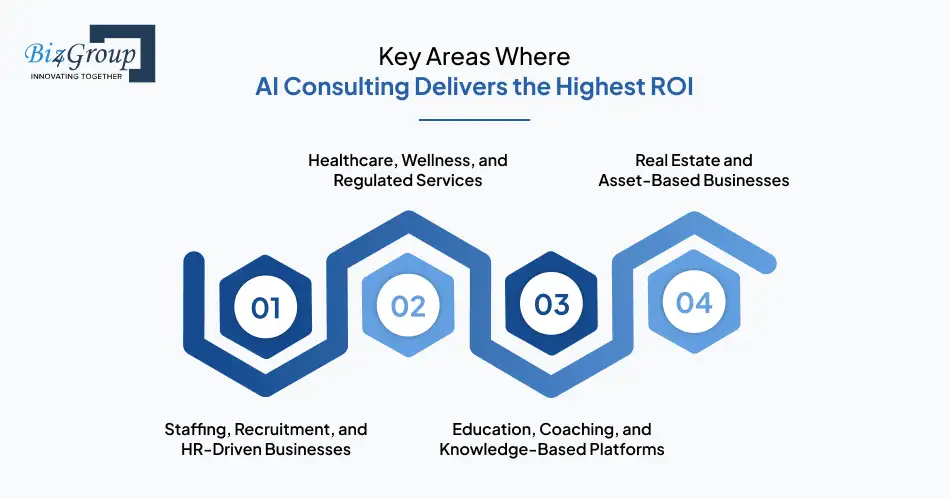
For small businesses, AI consulting delivers the strongest ROI when applied at the industry or domain level. The following domains consistently benefit from AI consulting, supported by real-world implementations delivered across different business environments.
1. Staffing, Recruitment, and HR-Driven Businesses
Staffing and HR-driven businesses operate under constant pressure to move fast without compromising decision quality. AI consulting supports this balance by improving how talent data flows across hiring and workforce processes.
- Reduces friction across candidate screening and shortlisting
- Improves consistency in hiring and placement decisions
- Streamlines repetitive administrative workflows
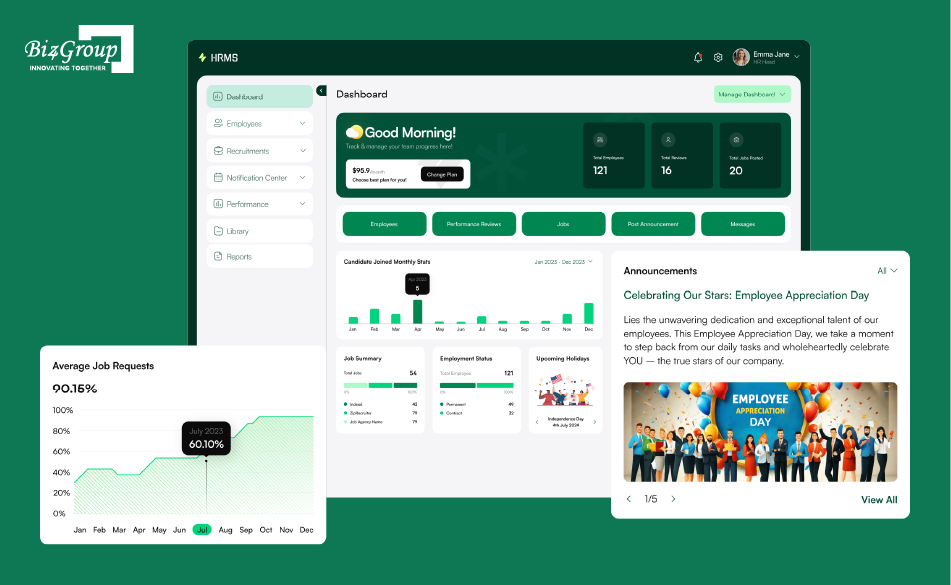
This alignment is reflected in an AI-powered HRMS platform for staffing operations, where intelligent workflow design supports smoother recruitment cycles and clearer workforce visibility across hiring teams.
Also Read: HRIS Software Development: A Complete Guide (with AI Trends)
2. Healthcare, Wellness, and Regulated Services
Healthcare and wellness businesses must personalize engagement while maintaining structure, trust, and oversight. AI consulting becomes valuable here only when innovation respects regulatory and operational boundaries.

An AI-enabled healthcare engagement platform illustrates how intelligent interaction and guided workflows can enhance engagement without disrupting governance or compliance expectations.
- Supports personalized yet controlled user experiences
- Improves coordination across service and engagement workflows
- Enhances operational efficiency in regulated environments
Also Read: AI Healthcare App Development: A Comprehensive Guide
3. Education, Coaching, and Knowledge-Based Platforms
Education and coaching platforms succeed when experiences feel relevant at a scale. AI consulting delivers ROI by enabling personalization without increasing delivery or operational costs.
- Supports tailored learning and engagement paths
- Improves interaction between users and content
- Enables scalable growth without operational strain
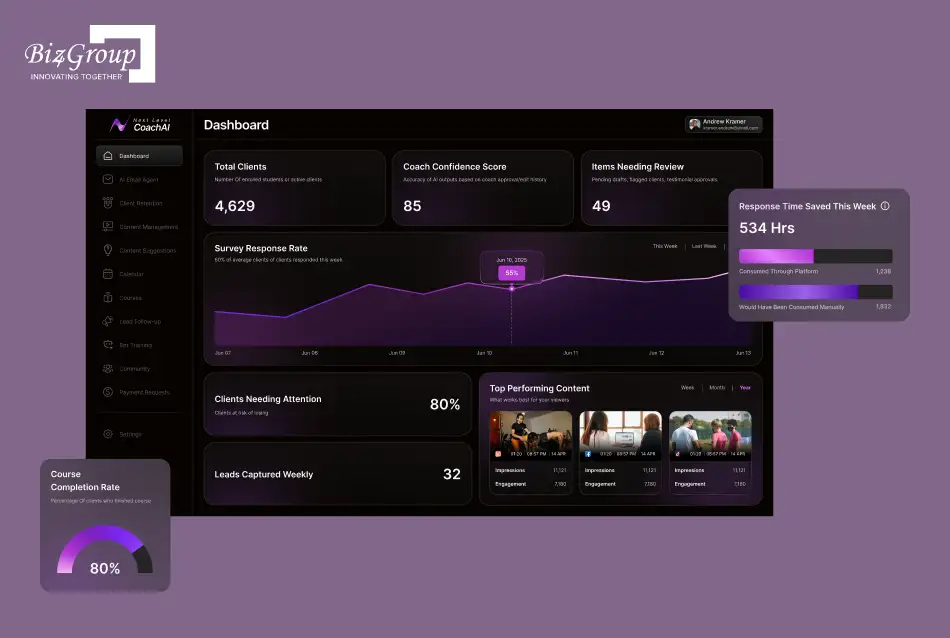
This approach is reflected in AI-powered coaching and education platforms, where intelligent guidance supports individualized learning experiences while keeping delivery efficient.
Also Read: The Ultimate Guide to Educational AI App Development
4. Real Estate and Asset-Based Businesses
Asset-based businesses work with many moving parts of properties, timelines, vendors, and market conditions that shift constantly. AI consulting adds value here by helping leaders see patterns sooner and make clearer decisions with less manual effort.
- Gives better visibility into what assets are doing and where opportunities exist
- Brings structure to property and operations workflows that often run in silos
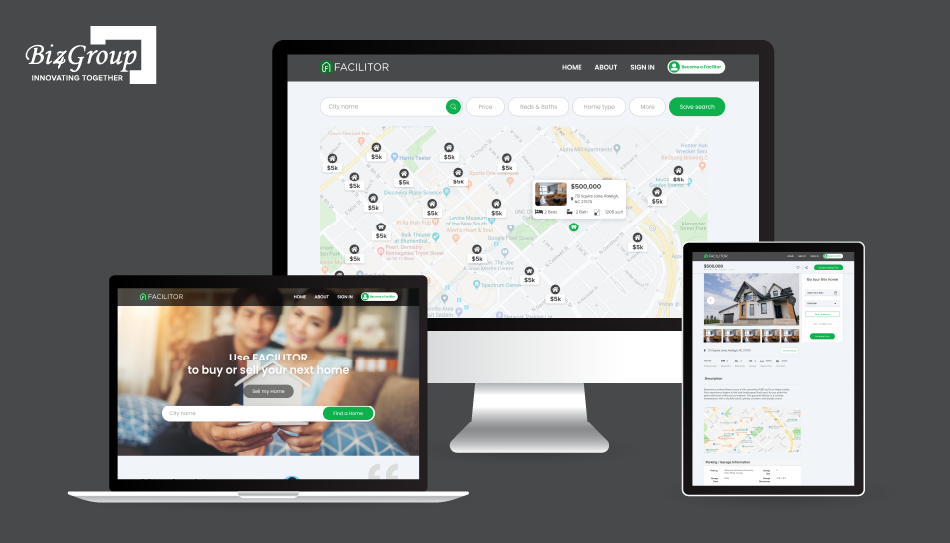
This approach is illustrated through an AI-driven real estate intelligence solution, where data is organized into meaningful insights that support smarter property decisions without increasing administrative load.
Also Read: AI in Real Estate Investment: Trends, Tools, and Tactics
The understanding of AI adoption comes from where AI genuinely belongs inside the business. Different industries benefit in different ways, which is why domain awareness becomes a critical part of AI consulting.
When small businesses align AI efforts with the areas that naturally influence revenue, operations, or customer experience, adoption becomes focused, manageable, and easier to justify. In that sense, choosing the right domains is not a technical step; it is a strategic decision that shapes every outcome that follows.
How AI Consulting Optimizes Business Operations at Scale
As small businesses grow, the real challenge isn’t adopting more tools; it’s keeping operations stable, predictable, and efficient. Instead of forcing change, consultants reshape how workflows, how decisions happen, and how systems scale over time.
The table below shows how AI consulting influences different parts of operations and what translates into real business impact.
|
Focus Area |
What AI Consultants Scale |
Business Impact |
|---|---|---|
|
Automation is designed around stable processes first, then expanded gradually. Systems are tested against higher workloads before full rollout. |
Teams avoid burnout because an increase in workload does not require new hiring or recruitment automation speeds up the process. |
|
|
Decision Making |
AI is built to convert recurring decisions into structured systems, not one-off dashboards. Insights are standardized, so every department works from the same source of truth. |
Leaders stop debating whose data is “right.” Decisions align faster, and strategy execution becomes more predictable across the organization. |
|
AI handles repetitive questions, while complex cases still route to people. Workflows evolve as support volume increases, rather than collapsing under pressure. |
Customers receive fast, consistent answers. Support teams are focused on meaningful issues instead of drowning in repetitive requests. |
|
|
Operations Planning |
Consultants create phased adoption plans. Each step proves value before the next layer is added. Systems are evaluated for flexibility, not just functionality. |
Expansion stops feeling risky. Growth becomes structured, measurable, and easier for leadership to manage without constant firefighting. |
|
Risk & Governance |
Ownership, monitoring, and control frameworks are implemented early. AI decisions remain auditable, explainable, and aligned with policies as usage expands. |
Growth does not introduce silent risks. Leaders maintain oversight and confidence while AI becomes part of critical operations. |
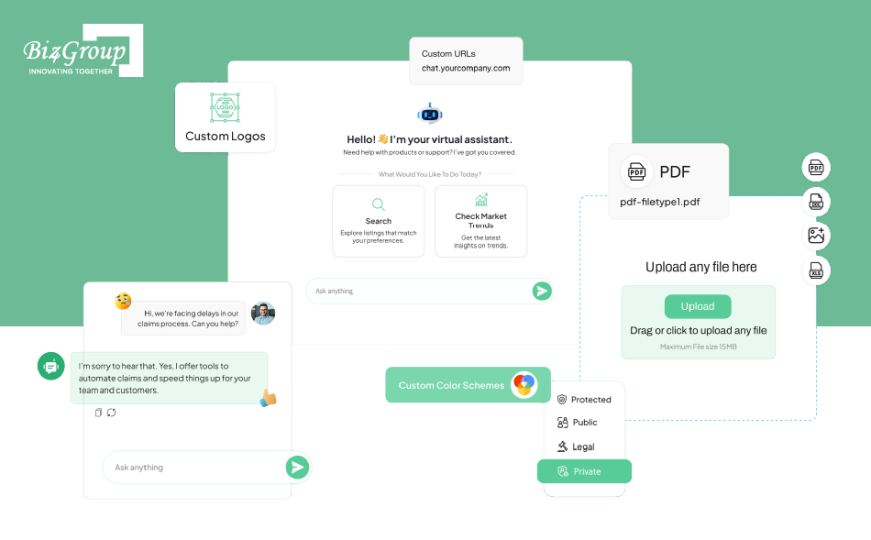
When AI is implemented with scalability in mind, it becomes part of the operating backbone rather than a single-use tool. A practical illustration comes from a custom enterprise AI agent solution built by Biz4Group LLC, to support internal operations.
Instead of automating everything immediately, the system was designed to grow with the organization. Over time, it began handling more employee queries, connecting with additional internal systems, and supporting new workflows; all without adding manual load or rebuilding processes.
Also Read: Building a Scalable Agentic AI Workflow Automation System for Business: A Complete Guide
Real-World AI Use Cases for Small Businesses
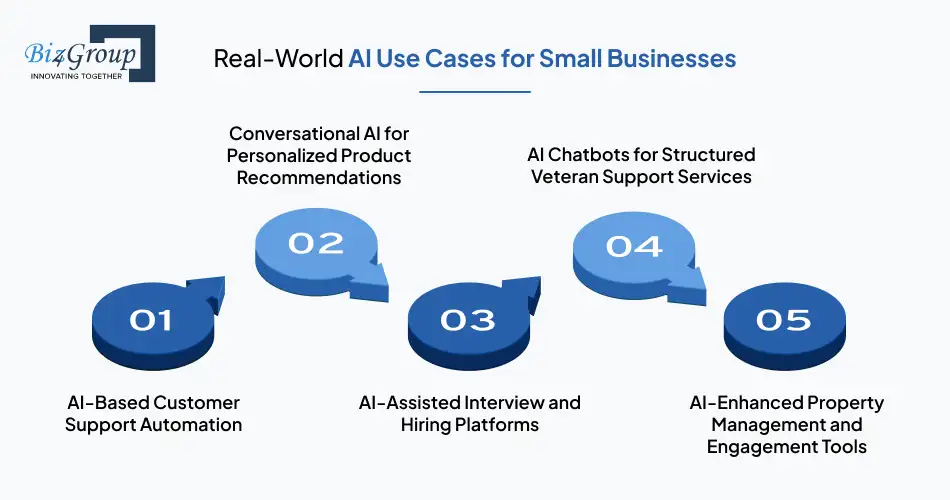
For small businesses and investors, the most meaningful impact of AI is seen in how it improves daily operations, decision-making, and scalability. Below are five practical AI use cases for small businesses, along with examples of how Biz4Group LLC projects helped turn these opportunities into measurable outcomes.
1. AI-Based Customer Support Automation
AI consulting helps small businesses introduce conversational AI to manage customer interactions that follow predictable patterns and repeat frequently.
- Designed and implemented an AI-driven chatbot capable of human-like conversation
- Enabled the chatbot to interpret user queries and respond contextually
- Structured conversational flows to support customer communication through chat
Example: AI-Driven Chatbot for Customer Communication
An AI chatbot was developed to interact with users through natural language. The system was designed to simulate human conversation and respond intelligently to customer queries, enabling automated customer communication through a conversational interface.
2. Conversational AI for Personalized Product Recommendations
AI consulting supports businesses that need to guide users through decision-making by replacing static product listings with interactive, AI-led conversations.
- Implemented a conversational AI chatbot to interact with users
- Designed logic to capture user inputs through guided questions
- Enabled AI-driven personalization within the chat experience
Example: Select Balance
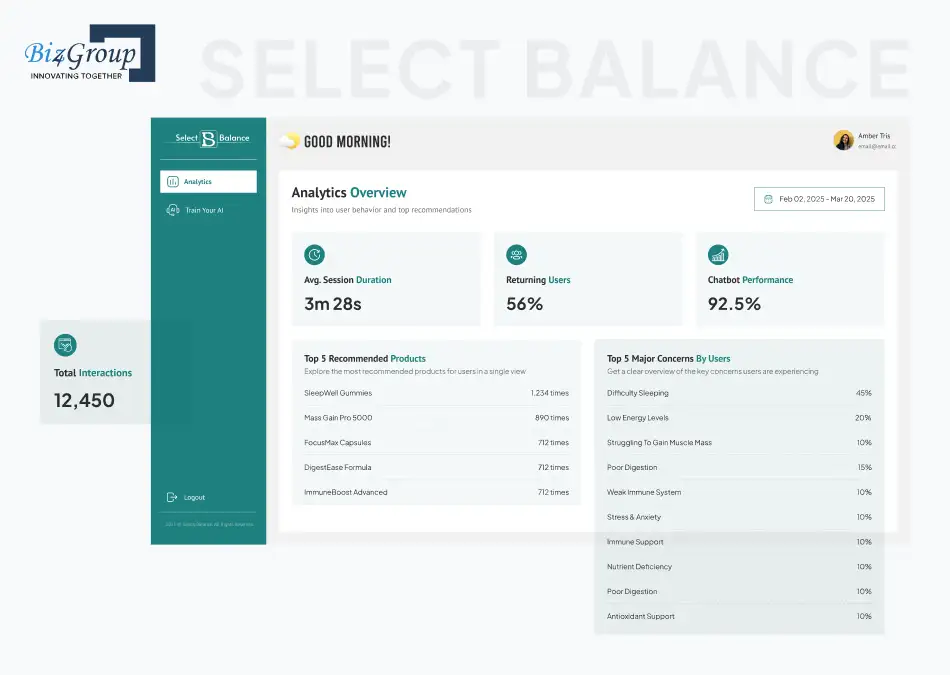
A conversational AI chatbot was built to engage users, collect health and preference-related inputs, and provide personalized supplement recommendations directly within the chat flow.
3. AI-Assisted Interview and Hiring Platforms
AI consulting helps hiring platforms integrate AI where resume screening and interview workflows require structure and consistency.
- Developed an AI-powered platform to support hiring and interviews
- Enabled AI-based resume screening functionality
- Integrated intelligent interview assistance features within the platform

Example: Stratum 9 InnerView
An AI-Powered Interview & Hiring Platform was built to support recruitment processes through AI. The platform includes AI-assisted resume screening and interview support, helping automate parts of the candidate evaluation workflow.
4. AI Chatbots for Structured Veteran Support Services
AI consulting supports organizations that need to deliver structured assistance and information at scale through conversational interfaces.
- Designed an AI chatbot focused on structured, rule-based assistance
- Enabled conversational handling of user queries within defined support flows
- Applied AI to deliver consistent responses aligned with service guidelines
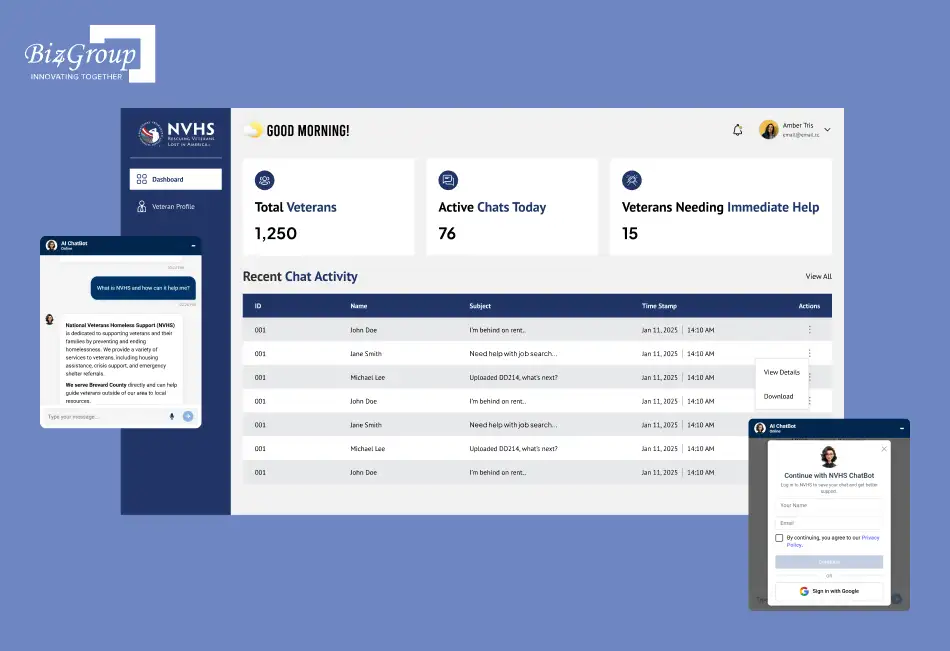
Example: NVHS – AI Chatbot for Veteran Support project
In this esteemed project, an AI chatbot was developed to assist veterans by responding to support-related queries through a conversational interface. The solution focuses on delivering structured information and guidance using AI-driven communication workflows.
5. AI-Enhanced Property Management and Engagement Tools
AI consulting helps small businesses in property-centric operations introduce AI capabilities that support buyer/seller interactions, property exploration, and management workflows.
- Developed an AI-based property management and engagement platform
- Enabled interactive property browsing, scheduling, and communication features
- Integrated AI logic across search, interaction, and operational workflows
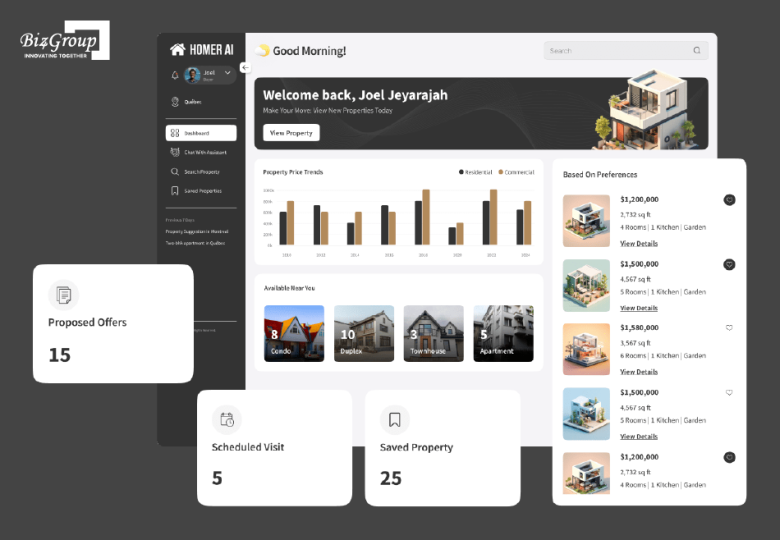
Example: Homer AI
An AI-driven property management platform was delivered, featuring Map View, property details, visit scheduling, chatbot interaction, and dashboard tools to facilitate buyer and seller engagement within the property ecosystem.
These use cases highlight how AI consulting for small businesses turns targeted AI adoption into dependable operating capabilities, enabling smarter execution, consistent decision support, and scalable systems without adding unnecessary complexity or risk.
Implement AI Without Breaking What Works
Introduce AI in phases that fit your existing systems, so teams adapt smoothly and results stay measurable from the start.
Start AI ImplementationCost of AI Consulting for Small Businesses: What to Expect
When small-business owners start looking at AI, they usually want clarity on what the investment might look like before they decide anything else. It changes based on the type of help needed, the experience level of the consultant, and how the work is structured.
Basic Pricing for AI Consulting for Small Business in the Market
Rates rise as the work becomes more strategic, technical, or business-critical. Most small businesses encounter pricing in these ranges:
- $25–$50 per hour- good for simple automation tasks, setup work, small fixes, and early guidance when you’re just figuring out direction.
- $100–$150 per hour- used when you need someone to assess readiness, recommend tools, or help shape a realistic plan.
- $150–$300 per hour- common when projects move into implementation, integration, and ongoing optimization.
- $300–$500+ per hour- reserved for complex initiatives that involve heavy risk, deep industry knowledge, or multi-system design.
The number isn’t only tied to skill of the AI consultant; it also reflects how much responsibility the consultant carries and how big an impact the work will have on the business.
How Different Pricing Models Affect the Final Budget
Consultants don’t always demand the same way; it depends on the structure you choose for your business. Below we have mentioned the common structure for the pricing model which are as follows:
- Hourly engagements- works best when things are still being figured out at the organization as this gives flexibility.
- Project pricing- fits situations where deliverables are clear. You agree on an outcome, and everyone knows the cost ahead of time.
- Retainers- make sense once AI becomes part of day-to-day operations. They ensure you always have someone to call when something needs tuning or review.
- Result-based models- show up when both AI consultant and business owners are confident about the expected value. Fees are linked to measurable outcomes such as savings or revenue improvements, so incentives stay aligned.
Why Pricing Differs from One Business to Another
Even when two companies request similar AI help, the real effort behind each project can be very different. The comparison below shows how a few practical realities inside the business can shift pricing up or down and why it happens.
|
Factor |
Low-Cost Scenario |
Higher-Cost Scenario |
Why it Matters |
|---|---|---|---|
|
Data Condition |
The data is already organized and easy to use. |
The data is messy, duplicated, or stored in many places. |
More time is spent cleaning and preparing data before anything can start. |
|
System Integration |
AI connects only one or two simple tools. |
AI must connect to many systems across the business. |
Each extra system adds development, testing, and troubleshooting work. |
|
Process Maturity |
The business has clear, repeatable workflows. |
Work happens manually and changes from case to case. |
AI is harder to design when the process itself is unstable. |
|
Industry Requirements |
There are few rules or compliance checks. |
The business operates in a regulated industry. |
Reviews, approvals, and documentation increase the amount of work. |
|
Support Expectations |
The consultant hands off the solution after setting up. |
The consultant is expected to stay involved long term. |
Ongoing monitoring, tuning, and advisory time add to the total cost. |
|
Business Risk |
AI is used for low-risk and internal tasks. |
AI influences revenue, safety, or legal exposure. |
Higher responsibility requires deeper testing and stronger safeguards. |
Also Read: AI App Development Cost – Know How Much Your App Will Cost
Challenges Small Businesses Face with AI Consulting and How to Overcome Them
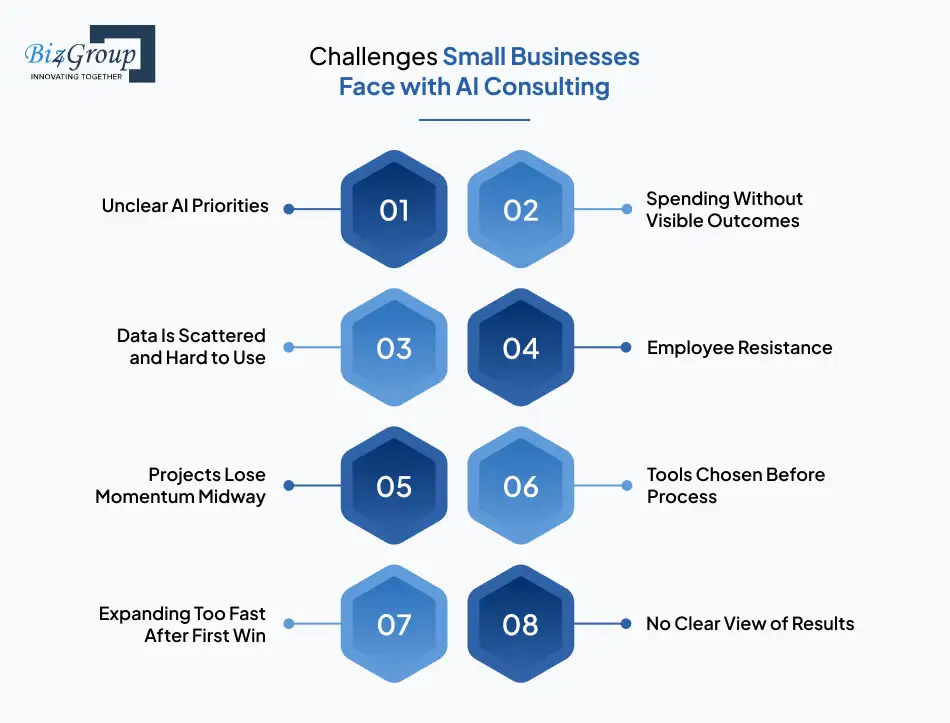
Small businesses often struggle to turn AI consulting into measurable results. These challenges highlight where execution breaks down and how practical, structured decisions help teams overcome obstacles and sustain momentum.
1. Unclear AI Priorities
Decisions stall because nobody agrees which problem deserves focus first causing projects to pause while conversations continue, and nothing meaningful moves forward.
Solution:
- Rank AI business ideas according to business impact instead of novelty or excitement.
- Select only two or three initiatives that clearly reduce cost or improve performance.
- Pause everything else until early results to provide clarity about future direction.
2. Spending Without Visible Outcomes
Budgets for AI consulting are approved, and meetings begin, but leadership still struggles to see real movement.
Solution:
- Break work into short phases that deliver visible outcomes at each stage.
- Require every phase to produce something concrete, such as insights or prototypes.
- Approve the next phase only after progress from the last phase becomes clear.
3. Data Is Scattered and Hard to Use
Data lives across spreadsheets, tools, and shared folders, so AI never sees a complete picture. Results appear inconsistent, and teams at the organizations question whether the technology can actually be trusted in daily work.
Solution:
- Create one reliable source of truth for essential business information.
- Remove duplicate records and organize formats, so systems interpret data consistently.
- Fix foundational data structures before attempting advanced automation or analytics.
4. Employee Resistance
Employees often worry that AI may replace roles or complicate routines. Adoption for AI slows, and useful tools remain underused because people do not feel safe participating fully.
Solution:
- Explain clearly which tasks AI support and which responsibilities remain human.
- Involve teams early in testing, so they experience benefits firsthand.
- Emphasize improvement of daily work rather than workforce reduction or replacement.
5. Projects Lose Momentum Midway
AI initiatives launch strongly, then stall once normal workload returns. Deadlines fade, priorities shift, and nobody feels clearly responsible for keeping progress on track consistently.
Solution:
- Assign one accountable owner rather than distributing responsibility loosely.
- Hold short progress check-ins with documented next actions each time.
- Keep communication simple so decisions move forward without unnecessary delay.
6. Tools Chosen Before Process
Some companies buy AI tools first and design processes afterward. Technology drives behavior instead of supporting operations, and frustration grows because every day work becomes harder instead of easier.
Solution:
- Map real workflows before any tool selection discussions begin.
- Identify where delays, rework, and bottlenecks genuinely occur inside processes.
- Choose technology only when it clearly supports an already defined workflow.
7. Expanding Too Fast After First Win
A successful pilot builds excitement, and leadership pushes expansion quickly. Teams feel rushed; training lags, and early benefits weaken because operations cannot absorb rapid change effectively.
Solution:
- Scale one department or process at a time rather than everywhere.
- Stabilize performance and support before adding more complexity or scope.
- Use feedback from each rollout to improve the next implementation phase.
8. No Clear View of Results
Leaders receive technical performance reports but cannot connect them to business outcomes. Without simple visibility, they cannot judge whether AI investments actually delivered real operational value.
Solution:
- Track business metrics such as accuracy, time savings, and reduced workload.
- Present results in simple dashboards that decision-makers understand immediately.
- Compare performance before and after implementation to confirm real impact.
Best Practices for Successful AI Consulting Services for Small Businesses
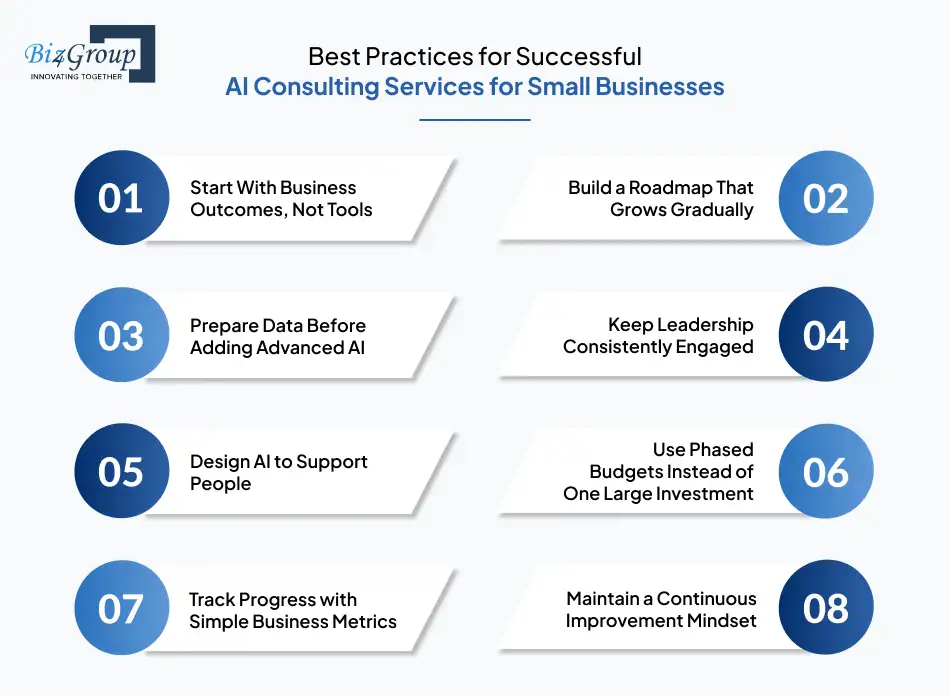
When projects follow clear discipline, AI turns into a reliable business capability instead of a risky experiment.
1. Start With Business Outcomes, Not Tools
AI delivers value when it solves problems leaders actually feel every day. The work begins with business clarity, not technology enthusiasm.
- define outcomes that matter to operations and customers
- select use cases that reduce cost or improve experience
- measure success using business metrics instead of technical scores
2. Build a Roadmap That Grows Gradually
Small businesses gain the most from AI when progress happens in controlled phases, often starting with an MVP development approach that proves value before full rollout.
- launch one focused pilot before expanding
- capture lessons and turn them into repeatable practice
- scale only when people, processes, and data are ready
Also Read: AI-based Custom MVP Software Development- The Complete Guide
3. Prepare Data Before Adding Advanced AI
AI delivers insight only when the information feeding is stable and trustworthy. Good data makes AI automation consulting for SMBs dependable.
- centralize essential records into one reliable source
- fix duplicates and inconsistencies early
- set simple ownership rules for updates
Clean data removes guesswork and reduces rework later.
4. Keep Leadership Consistently Engaged
AI projects move smoother when leadership remains involved beyond initial approval. Ongoing engagement keeps AI strategy consulting for small companies aligned with priorities.
- review milestones at predictable intervals
- resolve blockers instead of letting them linger
- revisit decisions when business conditions shift
5. Design AI to Support People
AI works best when it removes repetitive strain while people handle judgment and relationships. That principle drives adoption across AI advisory services for small enterprises.
- explain clearly how jobs improve, not disappear
- invite employees into testing and feedback
- adjust workflows so AI becomes assistance, not control
When organizations communicate AI’s role as support rather than replacement and involve teams early, resistance drops and adoption improves. This human-centered framing aligns with established conversational AI consulting guidance that emphasizes trust, usability, and collaboration in real-world deployments.
6. Use Phased Budgets Instead of One Large Investment
Phased budgeting lets leaders evaluate outcomes before committing further. It aligns well with affordable AI consulting service models.
- invest first in discovery and readiness
- move to implementation once value becomes visible
- scale funding only when measurable impact continues
This keeps spending proportional to benefit rather than speculation.
7. Track Progress with Simple Business Metrics
Clear metrics make success visible and credible. They strengthen the AI consulting roadmap for small businesses and guide future decisions.
- measure time saved and accuracy gained
- compare before-and-after performance
- share results so teams understand the impact
Simple reporting builds confidence without technical complexity.
8. Maintain a Continuous Improvement Mindset
AI evolves alongside the organization, treating it as ongoing capability supports AI transformation consulting for small businesses.
- schedule periodic reviews
- refine what already works before adding new features
- expand only when change supports strategy
This mindset prevents “one-and-done” projects and builds sustainable improvement.
Why can Biz4Group LLC be your Ideal AI Consulting Partner?
Small businesses need AI guidance that is practical, structured, and tied to real operations. We deliver AI consulting services for small businesses by focusing on readiness, integration, and measurable execution. Through AI strategy consulting for small companies, the approach emphasizes applying AI where it supports automation, efficiency, and scalability, without disrupting existing workflows or overcomplicating adoption.
- We don’t push AI until the business is ready for it
Before talking about models or tools, we look at how your processes actually run, where decisions slow down, and whether your data can support AI reliably. That upfront clarity prevents wasted effort and sets realistic expectations from day one.
- Strategy and execution are designed together, not in isolation
AI consulting often fails when strategy lives in slides, and execution happens elsewhere. We design AI roadmaps with implementation in mind, so recommendations translate directly into systems that can be built, integrated, and used by teams.
- Our consulting is informed by real AI systems already in production
The guidance we give comes from hands-on experience delivering conversational AI platforms, AI-assisted hiring systems, workflow automation, and domain-specific AI applications. That practical exposure keeps consulting grounded in what actually works.
- AI is planned to fit into your existing environment
Instead of proposing replacements, we focus on how AI can extend your current CRM, operational tools, and data sources. This approach reduces disruption and makes adoption easier for teams already managing day-to-day operations.
- We treat AI as a long-term capability, not a one-off project
AI consulting doesn’t stop only at deployment. We plan for iteration, optimization, and responsible expansion, so AI continues to support the business as needs to evolve and scale increases.
Thus, Biz4Group LLC enables small businesses to adopt AI with clarity and control, ensuring every AI initiative supports real operations, scales responsibly, and delivers long-term value without unnecessary complexity.
Work with an AI Consulting Partner Who Grows with You
We help small businesses adopt AI gradually, with strategy, clarity, and long-term support.
Talk to Our AI ExpertsConclusion
AI works best when it starts simply, proves its worth, and grows only when the business is ready. Leaders who take this approach avoid expensive detours. They get clearer insights, steadier operations, and technology that actually support their teams.
If you want to reassure that this approach actually works, you can see how similar journeys played across our real-world project portfolio, where small, focused initiatives gradually evolved into meaningful business improvements.
When you decide it’s time for guidance, partnering with an experienced AI development company in the USA can make those first steps clearer and less risky. We at Biz4Group LLC have helped many U.S. businesses move from ideas to results in measured, practical stages always aligned with real goals, not hype. Schedule a strategy call with us and get clarity for your business today!
Frequently Asked Questions (FAQ’s)
1. What is AI consulting for small businesses?
AI consulting helps small businesses identify where AI can improve operations, reduce costs, and support growth. Consultants analyze workflows, data, and goals, then design solutions that produce measurable business results.
2. Is AI consulting worth it for small businesses?
Yes, when done correctly. AI consulting prevents wasted tools, reduces manual work, and improves decision-making by providing a clear roadmap and phased execution that proves value before scaling.
3. How much does AI consulting cost?
Costs vary based on scope and readiness. Many small businesses start with discovery or pilot phases, with typical consulting rates ranging from $25 to $50 per hour. Investment usually increases gradually as results are validated.
4. What types of AI projects are best to start with?
High-impact starting areas include workflow automation, customer support automation, predictive insights, lead scoring, inventory optimization, and data-driven reporting. The best projects remove repetitive work or improve everyday decisions.
5. How long does it take to see results from AI consulting?
Most businesses begin seeing value within 8–12 weeks, especially when starting with targeted pilots. Larger implementations grow in phases, so results stay measurable, and risk stays controlled.
6. Do we need large amounts of data before adopting AI?
Not necessarily. Many solutions work using existing CRM, accounting, sales, and operations data. Consultants assess data readiness first and improve quality gradually — instead of delaying projects for “perfect” datasets.
7. How do I choose the right AI consulting partner?
Look for a partner who starts with business strategy, offers phased roadmaps, integrates with existing tools, communicates clearly, and measures success using business KPIs not just technical metrics.
