 Location :
Orlando, FL, USA
Location :
Orlando, FL, USA +1 (407) 714-1616
 info@biz4group.com

- AI eLearning website development helps businesses move beyond static LMS platforms by delivering adaptive, data-driven learning.
- Modern platforms leverage AI eLearning web development to personalize learning paths, track skill readiness, and align training outcomes with real business goals.
- Companies across industries use AI eLearning websites for onboarding, compliance, upskilling, and customer education.
- The cost of AI eLearning website development typically ranges from $25,000 to $150,000, depending on scope, personalization, integrations, and scalability needs.
- When planned strategically, businesses can create AI driven online learning website platforms that act as long-term learning infrastructure.
Training teams today feels like a constant race against time. Content gets outdated fast, employees disengage, and leadership still expects measurable outcomes. For founders, CTOs, and L and D leaders, learning is no longer just an HR function. It is a performance lever. That shift is why AI eLearning website development is moving from experimentation to execution, raising practical questions around
- AI eLearning website development
- how to build an AI powered eLearning platform
- AI features for online learning websites
- can AI personalize courses in eLearning apps
- cost to develop AI based eLearning website
The market signals are hard to ignore:
- The U.S. eLearning market is projected to reach a staggering $687 billion valuation by the end of 2030.
- According to a report by Upskillwise, Online learners are expected to reach 57 million by 2027.
These trends explain why businesses are actively evaluating AI eLearning website development services rather than upgrading legacy systems.
What decision makers feel daily rarely shows up in dashboards. New hires take too long to become productive, compliance training turns into a checkbox exercise, and upskilling programs struggle to prove impact. Leaders are under pressure to justify training spend, show ROI, and still keep teams engaged, all while operating in remote or hybrid environments that leave little room for one size fits all learning.
At its core, this shift is about applying AI in eLearning to solve real operational problems, not chasing buzzwords. Whether the goal is onboarding, compliance, or upskilling, companies want learning systems that adapt, measure, and improve over time. That is why more leaders are choosing to develop AI powered eLearning website platforms with the guidance of an experienced AI development company, ensuring training evolves at the same pace as the business itself.
Understanding AI Education Websites
AI eLearning website development is the process of building intelligent learning platforms that adapt content, pace, and assessments based on user behavior, performance, and goals, instead of delivering the same static experience to everyone.
- Uses data signals to personalize learning journeys at scale
- Adjusts difficulty, content flow, and assessments in real time
- Supports onboarding, compliance, and upskilling in one system
- Integrates analytics to track learning impact and outcomes
- Aligns training delivery with enterprise performance metrics
At a practical level, this approach focuses on building smarter learning web platforms with AI that support long term training goals while fitting seamlessly into existing enterprise AI solutions.
How AI Powered eLearning Website Systems Function
At a high level, AI eLearning website development combines learning content, user data, and intelligence layers to deliver training that adapts continuously. The real value becomes clear when you look at how each core component works together.
1. Learner data becomes the starting point
Every interaction feeds the system meaningful signals such as progress, engagement, and performance. These signals help teams build AI eLearning website for businesses that respond to real learning behavior, not assumptions. Over time, this data sharpens personalization and decision making.
2. AI engines drive real time adaptation
Machine learning models evaluate patterns across users and content. This enables organizations to create AI driven online learning website experiences that adjust pacing, assessments, and recommendations automatically. This layer often relies on structured AI model development to stay accurate at scale.
3. Automation connects learning with operations
Workflows like enrollment, reminders, assessments, and reporting run without manual intervention. With the support of AI automation services, training systems stay consistent while reducing admin overhead. This is where learning quietly becomes operationally efficient.
|
Layer |
What It Does |
Business Impact |
|---|---|---|
|
Data Layer |
Captures learner behavior and outcomes |
Improves personalization accuracy |
|
Intelligence Layer |
Applies AI logic to learning paths |
Scales adaptive training |
|
Automation Layer |
Runs workflows and reporting |
Reduces manual effort |
|
Experience Layer |
Delivers adaptive content |
Improves engagement |
When these layers work together, companies can build AI eLearning website for businesses that feel intuitive rather than complex. This naturally leads to a deeper question most leaders ask next, why traditional LMS platforms struggle to keep up.
Is Your Learning System Actually Working?
See how AI eLearning website development replaces static LMS tools with adaptive learning that fits how teams work today.
Explore AI Learning PossibilitiesWhy Traditional LMS Fails and How AI eLearning Website Development Fixes It
Traditional LMS platforms were built to distribute content, not to improve workforce capability. AI eLearning website development fixes this gap by transforming learning from static delivery into adaptive, insight driven training aligned with real business outcomes.
Where Traditional LMS Platforms Fall Short
- Learning paths are fixed and identical, regardless of role, experience, or performance gaps
- Content updates are slow and manual, making training lag behind business change
- Engagement declines because systems cannot react to learner behavior in real time
- Reporting focuses on completion rates, not skill progression or impact
As organizations grow, these limitations become unavoidable and restrict the value of training investments.
How AI driven eLearning Websites Solve These Problems
- Learning journeys adapt continuously based on real usage and performance signals
- Teams can build AI based training website experiences that adjust content depth and pacing automatically
- Intelligent content updates use generative AI to keep training material relevant without constant course rebuilds
- Learning environments are designed to integrate seamlessly as companies integrate AI into an app ecosystem
Why this Shift Matters for Modern Enterprises
- Training becomes measurable and outcome focused
- Skill gaps surface earlier and close faster
- Learning scales without increasing administrative overhead
For organizations modernizing learning strategies, corporate eLearning website development with AI represents a move away from rigid platforms toward systems designed for adaptability through custom AI eLearning website development.
What Businesses Need to Know Before Investing in AI eLearning Website Development
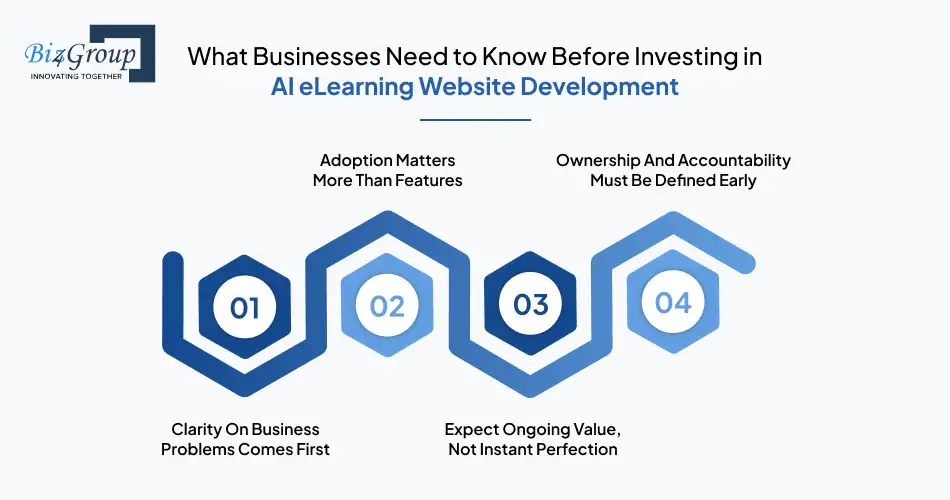
Before approving budgets or timelines, leaders need confidence that learning will actually move the needle. AI eLearning website development delivers value only when it aligns with business realities, workforce behavior, and measurable outcomes, which makes a few realities worth understanding upfront.
1. Clarity On Business Problems Comes First
AI does not fix unclear training goals. Organizations that develop intelligent eLearning website system strategies start with outcomes like faster onboarding or stronger compliance readiness. Many leadership teams benefit from early AI consulting services to avoid solving the wrong problem at scale.
2. Adoption Matters More Than Features
A platform only works if people actually use it. When businesses create AI enabled learning management websites, relevance and ease of use outweigh complexity. Learning should feel supportive in the flow of work, not like another system employees avoid.
3. Expect Ongoing Value, Not Instant Perfection
AI driven learning improves with time, usage, and feedback. Companies investing in AI education website development should expect progress in stages rather than overnight transformation. This is why many organizations choose to hire AI developers who can evolve learning experiences as needs change.
4. Ownership And Accountability Must Be Defined Early
Someone needs to own learning outcomes, not just the platform. Clear accountability ensures insights are acted on and improvements continue, instead of training becoming another unused tool.
When leaders approach investment decisions this way, they are better prepared to create AI enabled learning management websites that translate strategy into everyday learning experiences, naturally setting the stage for real business use cases.
Still Relying on a Traditional LMS?
Discover where AI eLearning web development delivers real business impact across onboarding, compliance, and upskilling.
Check Out Real Use CasesTop Business Use Cases of AI eLearning Website Solutions
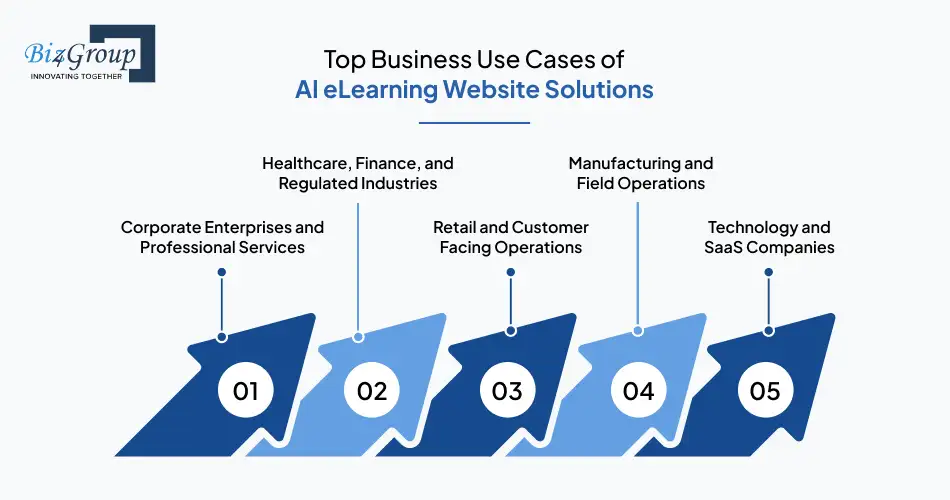
Every industry struggles with training in different ways, but the pressure is universal: get people productive faster and prove learning actually works. AI eLearning website development shows its value most clearly when applied to real industry problems, not generic learning goals.
1. Corporate Enterprises and Professional Services
Large teams struggle with uneven skill levels across roles, regions, and seniority. Modern AI eLearning web development helps standardize learning while still adapting paths for individuals. Training shifts from tracking completion to improving capability.
- Example: Leadership and sales programs shaped with support from an AI app development company
2. Healthcare, Finance, and Regulated Industries
Compliance training often becomes routine and forgettable. Organizations increasingly make AI eLearning website for onboarding and compliance so learning stays role specific and updates automatically as policies change.
- Example: Compliance assessments reinforced through structured AI chatbot integration
3. Retail and Customer Facing Operations
High attrition makes long training cycles impractical. Businesses create AI driven eLearning website for employee training to shorten onboarding time and reinforce learning in the flow of work.
- Example: Frontline learning journeys designed around conversational guidance similar to an AI conversation app
4. Manufacturing and Field Operations
Safety and process consistency demand practical learning. Teams build AI based eLearning website with personalization so training reflects experience level and job risk, not generic job titles.
- Example: Operational training aligned with workflows created through business app development using AI
5. Technology and SaaS Companies
Rapid product updates outpace static training. Companies create AI powered training website for businesses to keep employees and partners aligned as products evolve.
- Example: Continuous enablement platforms supported by a custom software development company
|
Industry |
Core Challenge |
AI eLearning Outcome |
|---|---|---|
|
Enterprise |
Skill inconsistency |
Adaptive capability building |
|
Regulated sectors |
Compliance fatigue |
Role aware training |
|
Retail |
High turnover |
Faster readiness |
|
Manufacturing |
Safety risks |
Experience based learning |
|
Technology |
Rapid change |
Continuous enablement |
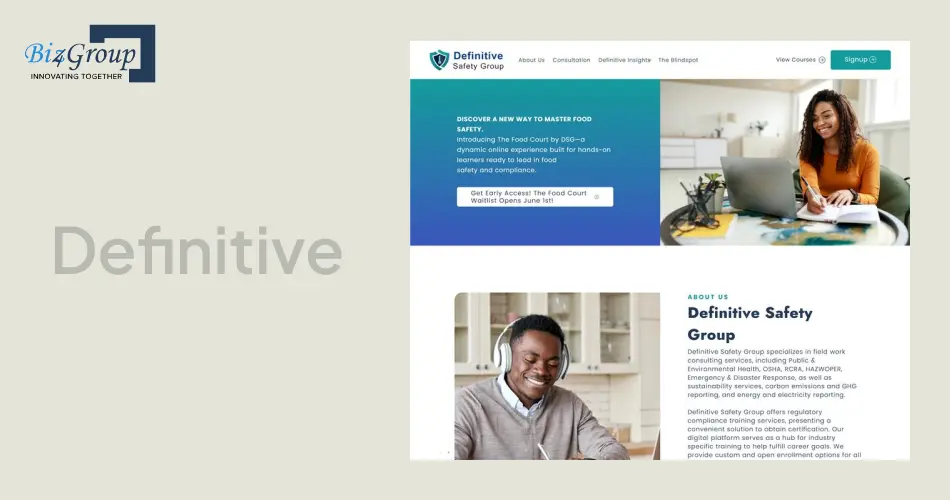
Definitive Safety is an AI-powered training platform designed to deliver structured, role-specific learning across safety and compliance programs. The platform supports self-paced modules, progress tracking, and scalable content delivery, showing how AI learning systems can standardize training while adapting to diverse workforce needs.
These use cases highlight where AI driven learning delivers the most impact. Once those scenarios are clear, the next logical step is understanding which features actually enable these outcomes at scale.
Must-Have Features in AI eLearning Website Development
At its foundation, AI eLearning website development is about replacing rigid learning systems with platforms that actually adapt to people and business needs. These core features form the non-negotiable base that makes an AI eLearning website functional, scalable, and worth investing in:
|
Core Feature |
What It Does |
Why It Is Fundamental |
|---|---|---|
|
Personalized Learning Paths |
Tailors courses based on role and progress |
Prevents one size fits all training |
|
Adaptive Assessments |
Adjusts difficulty using learner performance |
Measures real skill growth |
|
Learner Profile Management |
Stores skills, history, and progress |
Enables personalization at scale |
|
Content Management System |
Manages courses, modules, and updates |
Keeps learning structured and current |
|
Automated Onboarding Flows |
Guides users through required training |
Reduces manual coordination |
|
Compliance Tracking |
Tracks completions and certifications |
Supports regulatory requirements |
|
Learning Analytics and Reports |
Shows engagement and outcomes |
Makes training measurable |
|
Role Based Access Control |
Controls who sees what content |
Keeps learning relevant and secure |
|
Multi Device Accessibility |
Supports mobile and desktop access |
Fits modern work environments |
Together, these fundamentals create a stable learning backbone that organizations can trust. Once this foundation is in place, choosing the best company to develop AI eLearning website solutions becomes less about flashy promises and more about long term reliability, often supported by thoughtful planning around AI integration services as learning needs grow.
Advanced Features in Custom AI eLearning Website Development
Once the foundation is stable, advanced capabilities unlock deeper impact. AI eLearning website development moves beyond basic personalization into intelligence that anticipates needs, reduces friction, and scales learning maturity, which brings us to the features that elevate outcomes.
1. Predictive Learning Intelligence
Learning paths adjust based on future performance signals, not past behavior alone. This helps leaders address skill gaps before they affect outcomes via predictive analytics. It is especially valuable for AI eLearning website solutions for enterprises and startups managing rapid change.
2. Conversational Learning Assistance
Learners receive in context guidance while progressing through courses. This improves completion and confidence without adding trainers. Such experiences are often shaped by thoughtful AI assistant app design.
3. Dynamic Content Generation and Refresh
Training content updates automatically as policies, products, or roles change. This keeps learning current without rebuilding courses repeatedly. It also influences the overall AI eLearning website development cost estimate by reducing long term maintenance.
4. Advanced Analytics and Outcome Modeling
Beyond dashboards, systems connect learning activity to performance indicators. Leaders can see which training actually moves results. This insight helps plan roadmaps and understand how long does it take to build an AI eLearning website that delivers value.
5. Scalable Architecture for Growth
Platforms are designed to handle new users, regions, and programs without disruption. This flexibility matters when organizations evolve faster than training cycles. Many teams rely on a trusted software development company in Florida to plan for this scale.
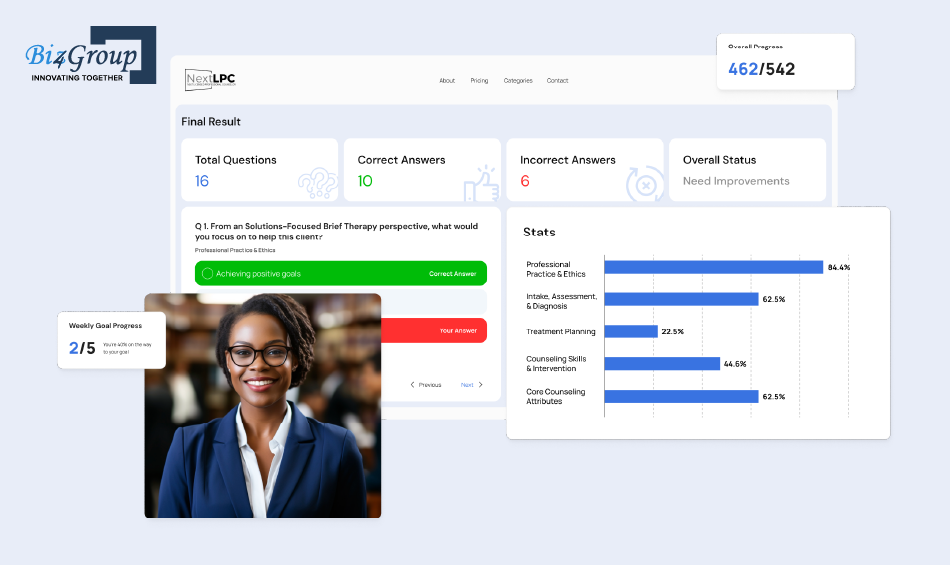
NextLPC demonstrates how AI-driven learning can move beyond static coursework. Built around interactive AI avatars, the platform guides learners through therapy case studies and exam preparation in a conversational format, illustrating how engagement and retention improve when learning feels guided rather than instructional.
These advanced features turn learning into a strategic capability rather than a support function. With this level of sophistication in mind, the next logical step is understanding how such platforms are planned and built from the ground up.
Planning to Build, But Unsure What Comes First?
Understand how to develop AI powered eLearning website platforms with the right features and a practical rollout strategy.
View the Development PathHow to Develop an AI eLearning Website: Step-by-Step Process
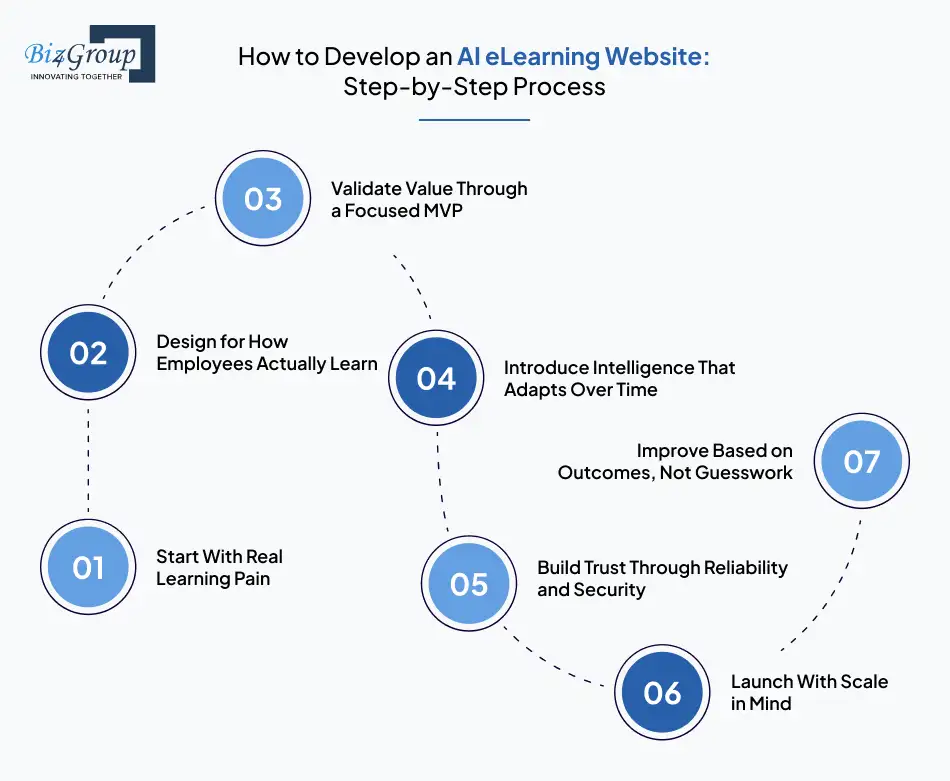
Building a learning platform with intelligence baked in is not a tech exercise, it is a business decision. AI eLearning website development succeeds when each step reflects how employees learn, how leaders measure impact, and how organizations evolve over time.
1. Start With Real Learning Pain
Most companies already have training, yet outcomes still fall short. The first step is understanding where learning quietly fails, such as slow onboarding, low compliance retention, or skills that never translate into performance.
- Identify where training delays productivity or increases risk
- Focus on problems that affect teams daily, not edge cases
- Align leadership on outcomes that matter to the business
This clarity anchors the direction of AI eLearning website development services.
2. Design for How Employees Actually Learn
People do not learn in long uninterrupted sessions. They learn between meetings, during tasks, and often under pressure. Design decisions must reflect this reality from the beginning. This can be done by collaborating with a seasoned UI/UX development company.
- Map learning journeys around real work scenarios
- Keep navigation intuitive and progress visible
- Make learning feel supportive, not intrusive
Also Read: Top 15 UI/UX Design Companies in USA: 2026 Guide
3. Validate Value Through a Focused MVP
Launching everything at once often creates noise instead of insight. Focused MVP development services tied to one clear use case builds confidence and momentum early.
- Start with one or two high impact training needs
- Measure engagement and usefulness, not just usage
- Keep the foundation flexible for future expansion
Many teams approach this phase through custom AI eLearning website development services to balance speed with long-term flexibility.
Also Read: Top 12+ MVP Development Companies to Launch Your Startup in 2026
4. Introduce Intelligence That Adapts Over Time
Once learners are active, intelligence begins to matter. You need to develop AI powered eLearning website that responds to behavior, progress, and gaps without constant manual intervention.
- Adjust learning paths based on performance patterns
- Recommend next steps that feel relevant, not generic
- Train AI models through continuous feedback
5. Build Trust Through Reliability and Security
Employees share progress, assessments, and sometimes struggles. If the platform feels unreliable or unsafe, adoption drops quietly and permanently.
- Apply role-based access and data protection
- Ensure consistency during peak learning periods
- Test complete learner journeys before full rollout
Also Read: Software Testing Companies in USA
6. Launch With Scale in Mind
Learning demand rises suddenly during onboarding waves, audits, or strategic shifts. Platforms must handle growth without disruption.
- Prepare infrastructure for fluctuating usage
- Monitor engagement and system health continuously
- Release improvements without interrupting learning
7. Improve Based on Outcomes, Not Guesswork
The real value of AI in learning comes after launch. Continuous refinement ensures the platform stays aligned with business needs.
- Track time to productivity and skill readiness
- Adjust learning paths based on real results
- Expand use cases as adoption grows
When approached this way, organizations move beyond experimentation and build lasting value through AI eLearning website development services, setting the stage for decisions around technology and investment that follow naturally.
Ideal Tech Stack for AI eLearning Website Development
An AI eLearning platform rarely lives in isolation. It has to talk to HR systems, content libraries, analytics tools, and sometimes customer or partner portals. That makes the tech stack all about dependable building blocks.
Here’s all that you need to know about the right technology stack:
|
Label |
Preferred Technologies |
Why It Matters |
|---|---|---|
|
Frontend Framework |
ReactJS, VueJS |
Modern learning interfaces built with ReactJS development keep navigation fast and intuitive, which matters when learners move between modules frequently |
|
Server-Side Rendering & SEO |
NextJS, NuxtJS |
Server rendered pages improve load time for content heavy learning portals, especially for onboarding and public training experiences via NextJS development. |
|
Backend Framework |
NodeJS, Python |
NodeJS development manages enrollments, progress, and assessments, while Python development supports data driven personalization logic for learning flows |
|
API Development & Integration |
REST APIs, GraphQL |
APIs connect the learning platform with HRMS, CRM, identity systems, and reporting tools, making learning data usable across the business |
|
AI & Data Processing |
TensorFlow, Scikit-learn |
These frameworks power learner behavior analysis, adaptive recommendations, and performance-based learning paths |
|
Learning Data Management |
PostgreSQL, MongoDB |
Structured and flexible storage ensures learner records, certifications, and content metadata remain consistent at scale |
|
Content Management Layer |
Headless CMS |
Enables training teams to update courses and compliance material without engineering dependency |
|
Analytics & Reporting |
BI dashboards, custom reports |
Gives L and D leaders visibility into engagement, completion, and readiness across teams |
|
Notifications & Engagement |
Email, in-app alerts |
Timely nudges help learners stay on track without manual follow ups |
|
Cloud Infrastructure |
AWS, Azure |
Supports spikes during onboarding waves, compliance cycles, and company-wide learning initiatives |
|
Security & Access Control |
OAuth, RBAC |
Protects learner data and ensures role-based content delivery across departments |
This techstack reflects how AI eLearning platforms actually operate inside modern organizations. With the technical foundation clearly defined, leaders can better evaluate tradeoffs around scalability, flexibility, and long-term ownership when planning AI eLearning website development, before moving into cost and investment considerations.
Wondering If the Investment Makes Sense?
Get clarity on tech choices, pricing, and ROI when you create AI driven online learning website solutions for scale.
Estimate My AI Learning PlatformCost of AI eLearning Website Development for Businesses
For most organizations, AI eLearning website development typically falls in the $25,000 to $150,000+ range. This is a ballpark figure, not a fixed quote, and it varies based on scope, intelligence depth, integrations, and how mature the learning experience needs to be.
|
Platform Level |
Typical Cost Range |
What's Included |
|---|---|---|
|
MVP-level AI eLearning Website |
$25,000 to $45,000 |
Core learning flows, basic personalization, essential analytics, limited integrations built during MVP software development phase. |
|
Mid-Level AI eLearning Website |
$50,000 to $85,000 |
Adaptive learning paths, role-based access, reporting dashboards, compliance support |
|
Enterprise-grade AI eLearning Website |
$90,000 to $150,000+ |
Deep personalization, advanced analytics, large user scale, multiple system integrations |
|
AI Intelligence Layer |
Included or Add-On |
Behavior analysis, recommendations, adaptive assessments |
|
Ongoing Optimization |
Variable |
Model tuning, feature expansion, performance improvements |
A few cost drivers tend to matter more than others. Personalization depth increases effort significantly. Integrations with compliance systems add more complexity. Long-term scalability planning often raises upfront investment but reduces future rework.
When leaders understand these cost layers early, it becomes easier to balance ambition with practicality. That clarity also sets the stage for evaluating how a platform can eventually create AI driven online learning website experiences that generate measurable returns through the right monetization approach.
Monetization Models for AI eLearning Website Solutions
How a learning platform earns money often determines how it evolves over time. AI eLearning website development supports multiple monetization paths because intelligent learning can scale, personalize, and prove value, which brings us to the most practical models in use today.
1. Subscription Based Enterprise Access
This model fits organizations where learning is continuous rather than event based. It is commonly used in corporate eLearning website development with AI, where training spans onboarding, compliance, and ongoing upskilling across teams.
- Example: Enterprises paying annual per user fees for structured learning programs that run year round and adapt as roles change, often supported by teams that build AI software for long term scalability.
3. Usage Based or Outcome Driven Pricing
When learning demand fluctuates, usage based pricing keeps costs aligned with value. Platforms created through custom AI eLearning website development can track activity accurately, making this model reliable and transparent.
- Example: Charging based on completed certifications or active learners during high volume onboarding periods.
3. Platform Licensing for Partners or Customers
Some businesses package learning platforms as repeatable products. This approach works well when teams build AI based training website solutions intended for franchises, resellers, or external stakeholders.
- Example: Licensing a branded training portal to partners so certifications and enablement remain consistent across regions, following proven approaches from how to build eLearning software
4. Internal ROI as the Primary Return Model
Not all monetization is external. Many organizations justify investment by savings and performance gains when they develop intelligent eLearning website system capabilities internally.
- Example: Reduced instructor led training costs and faster employee ramp up translating directly into operational savings.
5. Freemium as a Selective Adoption Strategy
Freemium works best when the goal is adoption and validation, not immediate revenue. It is effective in limited scenarios and should not be treated as a universal model.
- Example: Offering free access to basic onboarding or product education modules, while reserving analytics, certifications, and personalization depth for paid tiers.
When monetization aligns with how learning is actually consumed, platforms remain sustainable instead of reactive. This naturally leads into best practices that help learning systems grow without losing focus or effectiveness.
Thinking Long Term, Not Just Launch Day?
Learn how organizations build AI based eLearning website with personalization that evolves with teams, roles, and regulations.
Plan for the FutureBest Practices for Custom AI eLearning Website Development
Strong results come from discipline, not just technology. AI eLearning website development works best when teams focus on clarity, adoption, and continuous learning value, which sets the tone for a few proven practices worth following.
1. Design Learning Around Work, Not Courses
Employees engage when learning fits into real tasks and daily workflows. This approach helps teams create AI driven eLearning website for employee training that feels practical instead of theoretical. Relevance drives usage more than content volume.
2. Prioritize Adoption Before Optimization
A platform only delivers value if people return to it. Clear navigation, meaningful progress indicators, and quick wins matter early. Many teams study patterns used by top AI development companies in Florida to balance sophistication with usability.
3. Build With Data Responsibility From Day One
Learning systems collect performance and behavior data that employees care about. Transparent usage and access controls build trust quickly. This is foundational to responsible AI education website development.
4. Plan Evolution Into the Architecture
Learning needs change as roles and strategies evolve. Platforms should be flexible enough to grow without rebuilds. Teams that build an AI app mindset into architecture avoid costly rewrites later.
When these practices are applied consistently, organizations are better positioned to create AI enabled learning management websites that scale smoothly through thoughtful AI eLearning web development. Now, let’s talk about the most common challenges that teams face along the way.
Common AI eLearning Web Development Challenges and Fixes
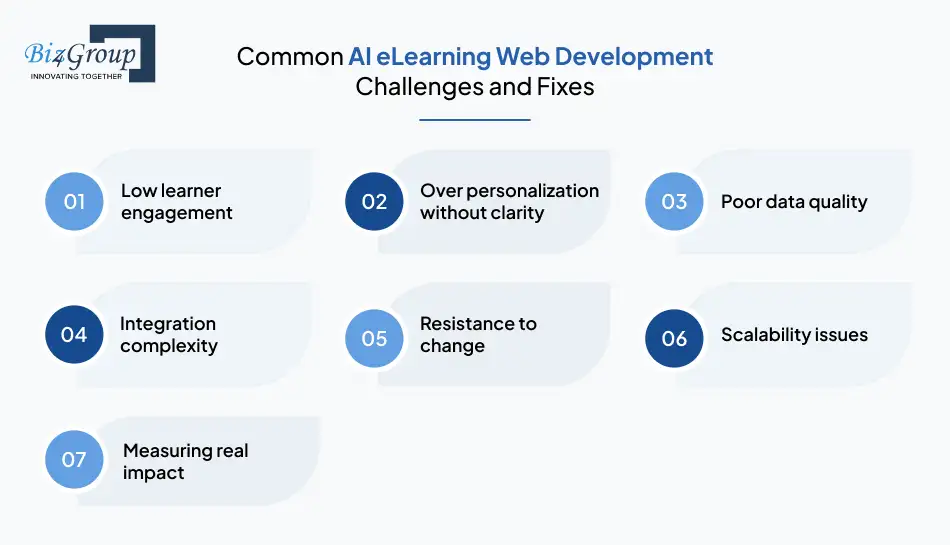
Even well planned initiatives face friction along the way. AI eLearning website development introduces new complexity around adoption, data, and scale, which makes it important to understand the most common hurdles before they slow progress.
|
Top Challenges |
How to Solve Them |
|---|---|
|
Low learner engagement |
Design learning around real work scenarios and short sessions that respect employee time |
|
Over personalization without clarity |
Start with defined learning outcomes before adding adaptive logic |
|
Poor data quality |
Clean and standardize learning data before applying intelligence layers |
|
Integration complexity |
Plan connections with HR and reporting systems early in the process |
|
Resistance to change |
Communicate learning benefits clearly and involve managers early |
|
Scalability issues |
Build infrastructure that supports growth and usage spikes |
|
Measuring real impact |
Track performance outcomes instead of completion rates |
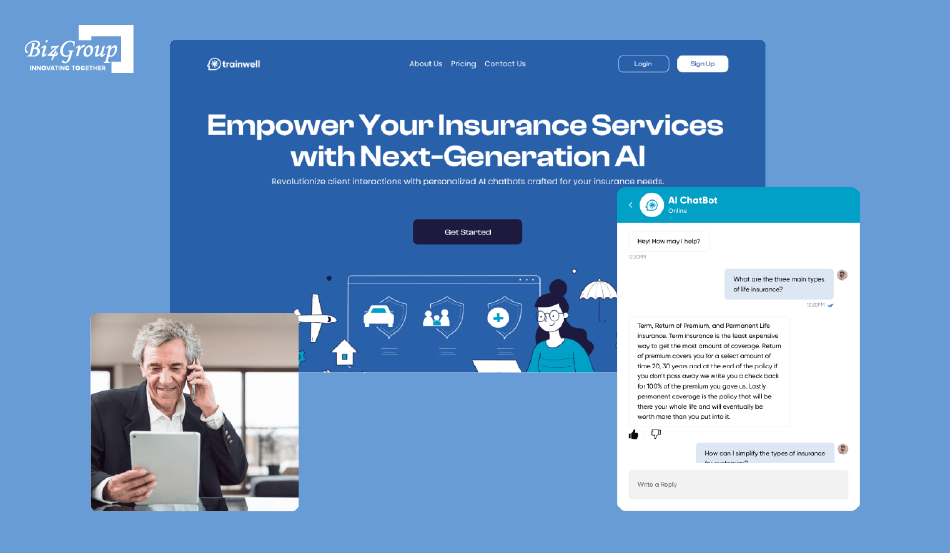
Insurance AI is a training-focused AI platform that helps insurance agents learn policies, processes, and decision logic through intelligent assistance. By combining learning content with real-time guidance, it reflects how AI eLearning platforms can support continuous skill readiness in highly regulated industries.
When teams address these challenges upfront, they avoid reactive fixes later. This prepares organizations to build AI based eLearning website with personalization that evolves confidently, opening the door to future trends shaping learning platforms next.
Future Trends in AI Education Website Development
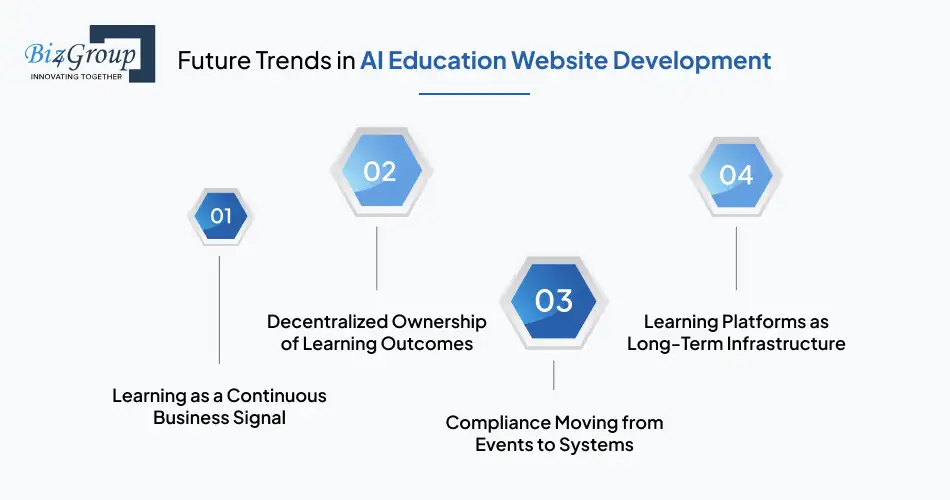
The next phase of learning is less about smarter features and more about smarter decisions. AI eLearning website development is evolving into a business capability that reshapes how organizations plan talent, manage risk, and sustain performance, which brings a few future-facing shifts into view.
1. Learning as a Continuous Business Signal
Training platforms will increasingly act as early indicators of workforce readiness. Leaders will rely on learning trends to anticipate capability gaps before they affect delivery. This changes how learning informs workforce planning.
2. Decentralized Ownership of Learning Outcomes
Learning will no longer sit only with HR or L and D teams. Managers and business units will take shared ownership of outcomes. Many organizations preparing to build an AI app for internal use are already moving in this direction.
3. Compliance Moving from Events to Systems
Regulatory training will shift from scheduled programs to always-on readiness. Businesses will make AI eLearning website for onboarding and compliance that supports continuous validation instead of periodic certification.
4. Learning Platforms as Long-Term Infrastructure
AI-driven learning will be treated like core enterprise infrastructure, not a tool that gets replaced every few years. This shift will push companies to think differently about vendors, ownership, and longevity, often involving guidance from an AI chatbot development company.
As learning becomes embedded into how organizations operate rather than how they train, the focus naturally moves toward selecting partners who can support that responsibility at scale.
Ready to Rethink How Learning Works in Your Business?
Turn training into infrastructure with AI eLearning website development services designed for real adoption and impact.
Start a Smart ConversationWhy Choose Biz4Group for AI eLearning Website Development
Building an AI learning platform is not just about shipping software. It is about understanding how people learn, how organizations measure progress, and how intelligence fits into real training workflows. Biz4Group approaches AI eLearning projects with that balance in mind.
Biz4Group is an AI product development company that has built learning platforms used in regulated, high-stakes environments. Projects like Definitive Safety, NextLPC, and Insurance AI show how AI learning systems can support compliance, professional training, and continuous knowledge readiness without overwhelming users.
What sets Biz4Group apart is how learning goals drive every technical decision.
- Experience in eLearning web app development across safety, healthcare, and insurance domains
- Platforms designed around real training scenarios, not generic course libraries
- Strong focus on usability, scalability, and long-term adaptability
- Ability to translate complex learning requirements into practical systems
Rather than treating learning as a feature set, Biz4Group builds platforms that grow with organizations, making AI eLearning websites reliable tools for onboarding, compliance, and ongoing skill development.
Key Takeaways on AI eLearning Website Development
Training today is no longer about finishing courses. It is about finishing stronger. AI eLearning website development helps organizations move away from static learning and toward systems that adapt, scale, and actually improve how people perform at work. When done right, learning stops being a cost center and starts behaving like infrastructure. Quietly powerful, always on, and built to evolve as teams, roles, and regulations change.
The real takeaway is simple. AI does not act as a substitute for learning strategy. It amplifies it. And organizations that treat AI-powered learning as a long-term capability, not a short-term experiment, are the ones that see lasting impact.
Thinking Beyond a Traditional LMS? See What’s Possible.
FAQs about AI eLearning Website Development
1. How is an AI eLearning website different from a traditional LMS?
An AI eLearning website continuously adapts to learner behavior instead of following fixed paths. With AI eLearning web development, training adjusts to roles, performance, and engagement levels, helping organizations move beyond static course completion toward measurable capability building.
2. Can AI eLearning platforms support both employees and external users?
Yes. Modern platforms are designed to handle internal teams, partners, and customers within the same ecosystem. Many organizations create AI enabled learning management websites to deliver onboarding, certifications, and education programs without maintaining separate systems.
3. How does personalization actually work in AI eLearning websites?
Personalization is driven by learner activity, progress, and outcomes over time. When businesses build AI based eLearning website with personalization, content depth, pacing, and assessments adapt automatically, helping learners focus on what they need rather than what is predefined.
4. Is AI eLearning suitable for compliance-heavy industries?
Absolutely. AI eLearning platforms work especially well in regulated environments by keeping training role-specific and continuously updated. Companies often make AI eLearning website for onboarding and compliance to maintain readiness without relying on periodic, high-pressure training cycles.
5. How long does it take to build an AI eLearning website?
Timelines depend on scope and maturity. Teams asking how long does it take to build an AI eLearning website typically see initial platforms launch within a few months, with intelligence and optimization improving continuously after real usage begins.
6. What does it cost to develop an AI eLearning website?
Costs vary based on features, integrations, and scale. Most projects fall between $25,000 and $150,000, depending on complexity. An accurate AI eLearning website development cost estimate is usually shaped by personalization depth, user volume, and long-term scalability needs.
