 Location :
Orlando, FL, USA
Location :
Orlando, FL, USA +1 (407) 714-1616
 info@biz4group.com

- AI real estate construction contractors finder application development helps real estate and construction firms automate contractor discovery using AI models.
- A well-planned AI real estate contractor finder app typically includes data normalization, scoring models, API integrations, and dashboards.
- Cost ranges between $25,000 and $150,000, depending on MVP scope, integrations, AI complexity, security layers, and enterprise scalability requirements.
- Businesses can build AI construction contractor matching application to reduce sourcing time, improve shortlist accuracy, and make vendor selection more transparent.
- Long term success depends on clean contractor data, continuous model retraining, integration with ERP systems, and measurable KPIs tied to project outcomes.
AI real estate construction contractors finder application development is the process of building a software system that helps real estate and construction companies identify and match with qualified contractors using structured data and automated scoring. Instead of relying on manual searches or static directories, the system evaluates project requirements against contractor profiles and generates a ranked list based on measurable factors such as skills, licenses, experience, location, and past performance. This guide explains what such a system includes and how organizations should approach it.
During implementation, contractor information is collected and organized into a consistent format. This may include certifications, trade categories, insurance status, pricing history, and delivery records. Project specifications are also standardized so they can be compared accurately. During AI construction contractor finder app development, this structured data becomes the foundation for the matching engine, which calculates compatibility scores and produces a prioritized shortlist. The goal is to support faster and more reliable contractor selection.
These platforms are often part of bigger real estate AI software development initiatives aimed at modernizing vendor management. The application generally includes a data processing layer, a ranking model, and a dashboard where teams can review and compare contractor options. Over time, feedback from completed projects is fed back into the system to refine scoring accuracy and improve outcomes.
When built by an experienced AI development company, the platform integrates with procurement tools and project management systems to maintain security and operational continuity. Organizations seeking AI real estate construction contractors finder app development typically want to reduce sourcing time, improve decision consistency, and establish a scalable contractor discovery framework.
Understanding AI Real Estate Construction Contractors Finder Application Development
AI real estate construction contractors finder application development is the process of building a software system that helps real estate and construction companies match projects with qualified contractors using structured data and automated ranking logic. Instead of manually searching through listings, the system compares project requirements with contractor profiles and produces a ranked shortlist based on clear and measurable criteria.
When companies develop AI real estate contractor finder app, the platform is usually built around the following core elements:
- Structured Contractor Profiles: Records that include licenses, certifications, trade specialization, insurance details, service areas, pricing history, and past performance.
- Project Requirement Inputs: Standardized project data such as scope, budget range, location, compliance needs, and timeline.
- Matching and Ranking Engine: A scoring system that evaluates how well each contractor fits the project requirements.
- Data Processing Layer: Tools that clean and organize raw data before it is used for matching.
- Performance Feedback Loop: A method for capturing project outcomes to improve future recommendations.
These systems are often part of broader AI in real estate development strategies that focus on improving procurement efficiency and contractor selection consistency.
AI Real Estate Construction Contractors Finder Application vs Traditional Contractor Directories
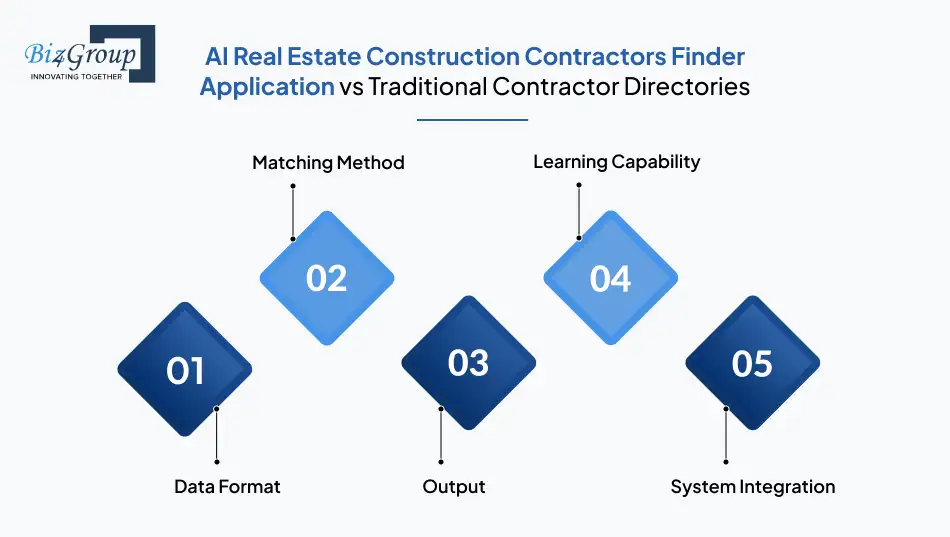
A traditional contractor directory is mainly a listing platform. It allows users to search or filter contractors but does not evaluate project compatibility on its own. An AI based contractor finder system actively analyzes data and ranks contractors based on defined matching criteria.
|
Feature |
AI Contractor Finder Application |
Traditional Contractor Directory |
|---|---|---|
|
Data Format |
Standardized and structured |
Often partially structured |
|
Matching Method |
Automated scoring and ranking |
Manual search and filtering |
|
Output |
Ranked shortlist |
List of contractor profiles |
|
Learning Capability |
Improves using past project data |
Static data |
|
System Integration |
Can connect with business tools |
Usually standalone |
The main difference between the two is how decisions are supported. A directory helps users browse information. An AI driven platform evaluates compatibility and presents prioritized options.
For organizations investing in AI real estate construction contractors finder application development, the goal is to build a structured and scalable contractor discovery system rather than maintain a static contractor listing database.
How AI Real Estate Construction Contractors Finder Application Works?
AI real estate construction contractors finder application development follows a clear step by step process. It collects contractor and project data, organizes it, applies scoring rules, and generates a ranked list of suitable contractors.
1. Data Collection and Normalization
The system collects contractor details such as licenses, certifications, service areas, pricing history, and past project results, along with project data like scope, budget, location, and timeline. All information is cleaned and standardized into the same format so it can be compared correctly. When companies create AI powered contractor finder for real estate, this step ensures the system works with reliable and consistent data.
2. Feature Engineering and Signal Extraction
Once the data is organized, the system converts it into measurable indicators that show how well a contractor fits a project. These indicators may include completion rate, cost consistency, trade relevance, and distance from the project site, created through structured AI model development. This step allows the system to evaluate contractors using clear and defined criteria.
3. Matching Logic and Ranking Engine
The system compares project needs with contractor indicators using scoring rules and required qualification checks. Organizations that build AI construction contractor matching application design this logic to assign compatibility scores based on measurable factors. The final output is a ranked shortlist of contractors best suited for the project.
Workflow Summary
|
Stage |
What It Does |
Result |
|---|---|---|
|
Data Collection |
Gathers and standardizes contractor and project data |
Clean structured dataset |
|
Signal Creation |
Converts data into measurable indicators |
Comparable evaluation factors |
|
Matching & Ranking |
Applies scoring rules to compare fit |
Ranked contractor list |
|
Feedback Update |
Records project outcomes |
Improved future matching |
Over time, completed project data is added back into the system to improve future rankings. Many organizations include this feedback mechanism as part of AI automation services to support consistent and data driven contractor selection.
Make Contractor Discovery Smarter
Plan your AI real estate construction contractors finder application development with clear data models and scalable AI logic.
Start My Contractor Finder ProjectWhy Invest in AI Construction Contractor Finder App Development?
AI real estate construction contractors finder application development helps real estate and construction companies replace manual contractor search with a structured and data based system. It improves consistency in vendor selection and reduces the time spent comparing contractors across projects.
Here’s why businesses across the globe are investing in it:
1. Reduce Manual Work
Contractor selection often requires reviewing licenses, certifications, pricing records, and past projects. A structured system organizes this data and compares it automatically using defined rules. This reduces manual effort and speeds up the evaluation process.
2. Improve Selection Accuracy
With custom AI contractor finder application development, companies can set clear scoring criteria based on their procurement standards. Contractors are evaluated using measurable factors such as experience, compliance, and performance history. This supports more consistent and transparent decisions.
3. Support Business Growth
As the number of projects increases, manual contractor management becomes harder to scale. When organizations build AI real estate contractor discovery platform, they create a centralized system that can handle more vendors without increasing operational workload. This makes expansion more manageable.
4. Reduce Project Risk
Structured evaluation helps identify warning signs such as repeated delays or cost overruns. The system highlights these indicators before final contractor selection. This improves oversight and supports more informed decisions.
5. Improve System Connectivity
Many firms include contractor discovery as part of broader enterprise AI solutions strategies. Through structured AI integration services, the platform can connect with procurement and project management systems. This ensures contractor data stays consistent across workflows.
Investing in contractor finder systems helps companies move from manual comparison to structured evaluation. Organizations adopting AI real estate construction contractors finder application development aim to improve efficiency, maintain consistency, and build a scalable contractor discovery process.
How AI Based Real Estate Contractor Matching System Improves Decisions
AI real estate construction contractors finder application development improves decisions by using structured data and scoring rules instead of manual comparison. The system evaluates contractors based on clear and measurable criteria so selection becomes more consistent and easier to justify.
1. Applies Clear Selection Criteria
The system checks licenses, certifications, trade relevance, and compliance records using the same standards for every project. This keeps contractor evaluation consistent across teams and locations.
2. Ranks Contractors by Fit
Each contractor is scored against project needs such as scope, location, and timeline. The highest scoring contractors appear first, making shortlisting faster and more organized.
3. Uses Past Performance Data
Information such as delivery history and cost patterns is included in the evaluation. This helps identify reliable contractors and flag possible risks before selection.
4. Handles Large Vendor Pools Efficiently
As the number of contractors grows, manual review becomes difficult to manage. Companies that develop AI construction vendor finder software use automated scoring to review larger vendor lists without adding extra workload.
By structuring contractor selection around defined rules and data signals, firms improve clarity and reduce guesswork. Many businesses choose to build AI software to ensure contractor matching remains consistent as operations scale.
Top Use Cases of AI Construction Contractor Finder App
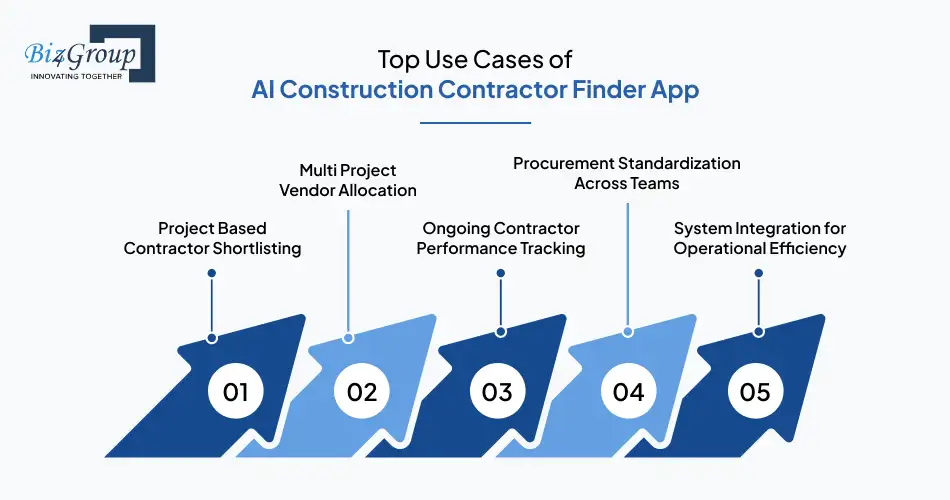
AI real estate construction contractors finder application development supports practical use cases across contractor sourcing, vendor management, and procurement. It helps organizations match projects with qualified contractors using structured data and defined scoring rules.
1. Project Based Contractor Shortlisting
The system matches contractors to a specific project based on scope, location, budget, and timeline. It checks licenses, trade fit, and past performance before generating a ranked list. This helps teams select contractors faster and with clearer evaluation standards.
- Example: A developer planning a retail project enters project details into the system. The app returns contractors with relevant retail construction experience in the required city.
2. Multi Project Vendor Allocation
Companies managing several projects at once can assign contractors based on availability and specialization. The system helps balance workload across projects and regions. Organizations that build AI contractor finder app for real estate developers use this to manage vendor distribution in a structured way.
- Example: A residential builder with projects in different states uses the app to assign electrical contractors based on proximity and current workload.
3. Ongoing Contractor Performance Tracking
The platform tracks project outcomes such as delivery timelines, cost variation, and compliance records. This data improves future rankings and supports long term vendor evaluation. Many firms choose to integrate AI into an app to ensure performance tracking remains consistent across departments.
- Example: If a contractor repeatedly delays projects, the system reflects this in future rankings for time sensitive builds.
4. Procurement Standardization Across Teams
Different teams often follow different evaluation methods. The app applies the same scoring logic across departments and locations. This is important for firms exploring how to develop AI real estate construction contractors finder app as part of process improvement initiatives.
- Example: A property management company uses one scoring framework for maintenance contractors across all managed properties.
5. System Integration for Operational Efficiency
As contractor lists grow, maintaining updated records becomes complex. The system centralizes contractor information and keeps qualification data organized and searchable. Some organizations build real estate AI software to ensure contractor discovery remains part of a structured internal system.
- Example: Once a contractor is selected, their details automatically sync with the project management platform for scheduling and tracking.
|
Use Case |
What It Does |
Why It Matters |
|---|---|---|
|
Project Shortlisting |
Matches contractors to specific project needs |
Saves time and improves selection clarity |
|
Vendor Allocation |
Assigns contractors across multiple projects |
Helps manage workload and availability |
|
Performance Monitoring |
Tracks timelines, costs, and compliance records |
Supports better future decisions |
|
Procurement Standardization |
Uses the same evaluation rules across teams |
Keeps contractor selection consistent |
|
Centralized Database |
Stores and updates contractor information in one place |
Makes vendor data easier to manage |
These use cases show how contractor finder systems support sourcing, evaluation, and governance needs. Companies investing in AI real estate construction contractors finder application development use these applications to improve efficiency, maintain consistency, and manage contractor networks at scale.
Upgrade How You Select Contractors
Move beyond static directories and build AI construction contractor matching application tailored to your project needs.
Talk to an AI Solution ExpertCore Features in AI Contractor Finder Application Development
AI real estate construction contractors finder application development requires a clear set of core capabilities that allow contractor data to be collected, evaluated, and ranked in a structured way. These features enable consistent and repeatable contractor selection.
|
Feature |
What It Does |
Why It Matters |
|---|---|---|
|
Contractor Profile Management |
Stores licenses, certifications, trade types, service areas, and project history |
Keeps contractor information organized and searchable |
|
Project Requirement Input |
Captures scope, budget, timeline, location, and compliance needs |
Ensures projects are defined in a consistent format |
|
Data Cleaning and Standardization |
Validates and organizes raw contractor and project data |
Makes matching accurate and reliable |
|
Matching and Ranking Engine |
Applies scoring rules to compare project needs with contractor data |
Produces a ranked shortlist |
|
Qualification Verification |
Checks required licenses and compliance records |
Filters out unqualified contractors early |
|
Search and Filter Controls |
Allows filtering by trade, region, or specialization |
Supports controlled contractor discovery |
|
Results Dashboard |
Displays rankings and scoring details clearly |
Helps teams review and compare options |
When organizations develop enterprise grade AI contractor finder app for construction businesses, these features form the minimum functional base. In early planning stages, some teams explore how to build AI real estate app MVP to validate matching logic before expanding feature depth.
Advanced Features in Enterprise Grade AI Contractor Finder App for Construction Businesses
AI real estate construction contractors finder application development can extend beyond basic matching to include predictive and control capabilities. As contractor networks grow and projects become more complex, these advanced features help teams manage risk, workload, and long term vendor performance.
1. Predictive Performance Scoring
Instead of only reviewing past data, the system can estimate how a contractor may perform on future projects. It analyzes trends in delivery timelines, cost variation, and compliance history to assign forward looking reliability indicators. This allows procurement teams to make decisions with more context, not just past outcomes.
2. Built In Risk Monitoring
The platform can continuously evaluate risk signals such as repeated delays, documentation gaps, or dispute frequency. When companies build secure AI construction contractor discovery app environments, they often include monitoring controls that protect both operational and compliance standards. This reduces surprises during project execution.
3. Contractor Capacity Intelligence
As projects increase, it becomes difficult to track contractor availability manually. Advanced systems monitor workload distribution across regions and project types to prevent over allocation. This ensures vendor performance does not decline due to scheduling overload.
4. Portfolio Level Allocation Optimization
Rather than assigning contractors one project at a time, the system can optimize distribution across multiple active builds. Some firms experiment with allocation simulations as they implement generative AI in real estate environments to test different vendor distribution scenarios. This supports more balanced portfolio management.
5. Multi Framework Scoring Models
Different business units may operate under different procurement standards. A platform can support separate scoring models for residential construction, commercial builds, or property maintenance. This becomes especially useful when teams make AI contractor finder application for property management firms that follow distinct compliance and cost structures.
Advanced capabilities shift the system from basic matching toward structured forecasting and governance. Organizations investing in AI real estate construction contractors finder application development often adopt these features as operations scale and vendor networks expand.
Step by Step Guide to Develop AI Real Estate Contractor Finder App
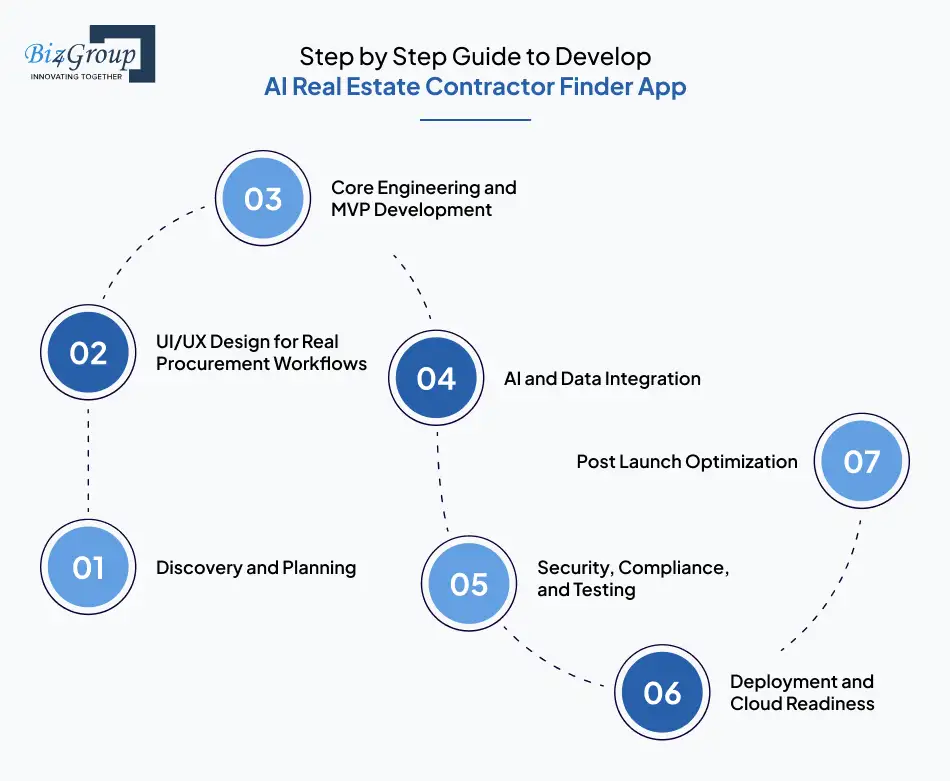
AI real estate construction contractors finder application development starts with understanding how contractor selection actually happens inside your organization. Before writing code, real estate and construction leaders must align procurement processes, compliance standards, and project delivery goals with a structured matching framework.
1. Discovery and Planning
Most contractor sourcing problems are not technical. They are workflow problems. Teams rely on spreadsheets, personal networks, and fragmented documentation.
Before beginning AI construction contractor finder app development, define what must change. Identify bottlenecks in contractor evaluation, gaps in performance tracking, and areas where compliance checks fail.
- Document the full contractor selection lifecycle
- Define measurable goals such as reduced sourcing time
- Identify risk exposure from inconsistent vendor review
- Validate regulatory and licensing requirements
Clear problem definition prevents building a system that automates inefficiency.
2. UI/UX Design for Real Procurement Workflows
Procurement teams work under time pressure. The system must allow fast project input and easy contractor comparison without adding complexity.
When teams develop AI real estate contractor finder app, usability directly affects adoption. If ranking logic is strong but UI/UX design is unclear, the system will not be trusted.
- Design simple project input forms
- Allow side by side contractor comparison
- Show transparent scoring breakdowns
- Test flows with real construction managers
Also Read: Top 15 UI/UX Design Companies in USA (2026 Edition)
3. Core Engineering and MVP Development
Launching with every advanced feature increases risk. Instead, validate the matching engine early with MVP development services.
During AI real estate construction contractors finder app development, focus first on contractor profiles, project inputs, and scoring logic. Confirm that rankings reflect real world performance before expanding scope.
- Build structured contractor databases
- Implement basic compatibility scoring
- Add qualification filters
- Prepare the architecture for scale
This approach ensures practical value before investment grows.
Also read: Top 12+ MVP Development Companies to Launch Your Startup in 2026
4. AI and Data Integration
Matching accuracy depends on clean data and realistic scoring criteria.
True smart real estate contractor recommendation app development using AI requires performance history, cost trends, compliance signals, and specialization data to be structured properly. Without disciplined data preparation, recommendations become unreliable.
- Normalize contractor and project datasets
- Define weighted scoring rules to train AI models
- Introduce feedback loops from completed projects
- Refine scoring over time
AI improves only when real outcomes inform the system.
5. Security, Compliance, and Testing
Contractor records include licenses, insurance certificates, and financial documentation. These must be protected and auditable.
Security design should not be treated as an afterthought. Access controls, encryption, and logging must be built into the system before launch.
- Apply role based permissions
- Encrypt sensitive documentation
- Stress test under heavy usage
- Validate compliance with regional construction regulations
Also Read: 15+ Software Testing Companies in USA in 2026
6. Deployment and Cloud Readiness
Construction activity fluctuates across seasons and regions. The platform must scale without performance drops.
Cloud infrastructure, automated deployment, and usage monitoring ensure that the system remains stable during peak project periods.
- Use scalable cloud environments
- Implement automated release pipelines
- Monitor contractor search activity
- Provide onboarding guidance for procurement teams
7. Post Launch Optimization
The system should evolve based on real project outcomes and procurement feedback. Contractor performance data must continuously refine scoring logic and improve future recommendations.
Organizations investing in AI real estate construction contractors finder application development treat optimization as an ongoing process rather than a one time deployment.
- Track sourcing time and shortlist accuracy
- Adjust scoring weights based on completed project results
- Expand contractor categories as operations grow
- Monitor long term vendor reliability trends
Continuous refinement ensures the platform remains aligned with changing project demands and contractor performance patterns.
Turn Vendor Data into Better Decisions
Design and develop AI real estate contractor finder app that ranks contractors based on real performance signals.
Get My Custom AI RoadmapTech Stack for AI Real Estate Construction Contractors Finder Application Development
A contractor finder system must manage structured contractor data, apply scoring logic, and connect with procurement tools. For AI real estate construction contractors finder application development, the tech stack must support fast ranking, secure data handling, and reliable system integration.
|
Label |
Preferred Technologies |
Why It Matters |
|---|---|---|
|
Frontend Framework |
ReactJS, Angular |
Interactive dashboards built through modern ReactJS development help teams compare contractors quickly. |
|
Server-Side Rendering & SEO |
NextJS, NuxtJS |
Optimized routing with scalable NextJS development improves performance when loading project and contractor pages. |
|
Backend Framework |
NodeJS, Python (FastAPI) |
Strong NodeJS development supports real time APIs, while structured Python development handles scoring logic and data processing. |
|
API Development |
REST, GraphQL |
Connects the contractor finder with ERP, procurement, and compliance systems. |
|
AI & Data Processing |
Scikit learn, TensorFlow |
Powers contractor matching, ranking models, and performance analysis. |
|
Data Pipeline & ETL |
Apache Airflow, Kafka |
Cleans and organizes contractor and project data before evaluation. |
|
Database Layer |
PostgreSQL, MongoDB |
Stores contractor profiles and project records in structured formats. |
|
Search & Indexing |
Elasticsearch |
Enables fast filtering by trade, region, and certification. |
|
Caching Layer |
Redis |
Improves response time during high search activity. |
|
Cloud Infrastructure |
AWS, Azure, GCP |
Supports scaling during peak construction cycles. |
|
Security & Access Control |
OAuth 2.0, JWT, RBAC |
Protects contractor licenses, insurance documents, and user permissions. |
|
DevOps & Model Management |
Docker, Kubernetes, MLflow |
Ensures stable deployment and controlled model updates. |
In contractor matching systems, the backend, APIs, and data processing layers are especially important. The chosen technologies must support accurate scoring, secure integrations, and consistent performance as contractor databases and project volume grow.
Cost of AI Real Estate Construction Contractors Finder Application Development
The cost of AI real estate construction contractors finder application development typically ranges between $25,000 and $150,000+. This is a ballpark estimate. The final cost depends on features, data complexity, integrations, and security requirements.
|
Level |
What’s Included |
Estimated Range |
|---|---|---|
|
MVP Level AI Real Estate Construction Contractors Finder App |
Contractor profiles, project input, basic matching engine, qualification checks, simple dashboard |
$25,000 – $45,000 |
|
Advanced Level AI Real Estate Construction Contractors Finder App |
Improved scoring logic, performance tracking, API integrations, stronger security controls |
$45,000 – $90,000 |
|
Enterprise Grade AI Real Estate Construction Contractors Finder App |
Predictive scoring, portfolio allocation, ERP integration, multi region compliance, scalable infrastructure |
$90,000 – $150,000+ |
Costs mainly increase when the system needs deeper scoring logic, multiple system integrations, or strict compliance controls. The size of the contractor database and the number of active projects also affect pricing.
Organizations planning to build AI construction contractor matching application for large scale operations should consider long term maintenance and updates as part of the budget. Some teams may also need to hire AI developers if advanced matching logic or custom integrations are required.
Choosing the right level depends on project volume, regulatory needs, and growth plans. A clearly defined scope helps control spending while ensuring the system meets operational goals.
Build a Data-Driven Contractor Network
Create a scalable system to build AI real estate contractor discovery platform aligned with construction workflows.
Schedule a Strategy SessionBest Practices for AI Contractor Finder Application Development
AI real estate construction contractors finder application development works best when the system is simple, structured, and regularly reviewed. Long term success depends on clear data standards, defined scoring rules, and strong system control.
1. Keep Contractor Data Clean and Organized
All contractor records should follow the same format for licenses, certifications, trade types, and past projects. Incomplete or inconsistent data can lead to incorrect rankings. When teams create AI powered contractor finder for real estate, clean data ensures matching results are accurate and reliable.
2. Use Clear and Measurable Scoring Rules
Scoring should be based on clear factors such as delivery history, cost performance, and compliance status. Avoid rules that are too complex or difficult to explain. Simple scoring logic keeps contractor selection transparent and easy to review.
3. Start with Core Features First
Do not launch advanced features before validating the basic matching system. Focus first on contractor profiles, project inputs, and qualification checks. This approach supports steady business app development using AI without creating unnecessary risk.
4. Review the System Regularly
Contractor performance and project needs change over time. Scoring models should be reviewed using real project results and updated when needed. Some teams use generative AI to test possible changes before applying them to the live system.
5. Protect Contractor Data
Contractor databases include licenses, insurance records, and financial details. Access controls and encryption should be built into the system from the start. Strong governance is important in custom AI contractor finder application development to maintain compliance and trust.
Following these practices helps maintain accuracy and consistency. Organizations investing in AI real estate construction contractors finder application development gain better long term results when data quality and system reviews remain ongoing priorities.
Common Pitfalls in AI Real Estate Construction Contractors Finder Application Development and Solutions
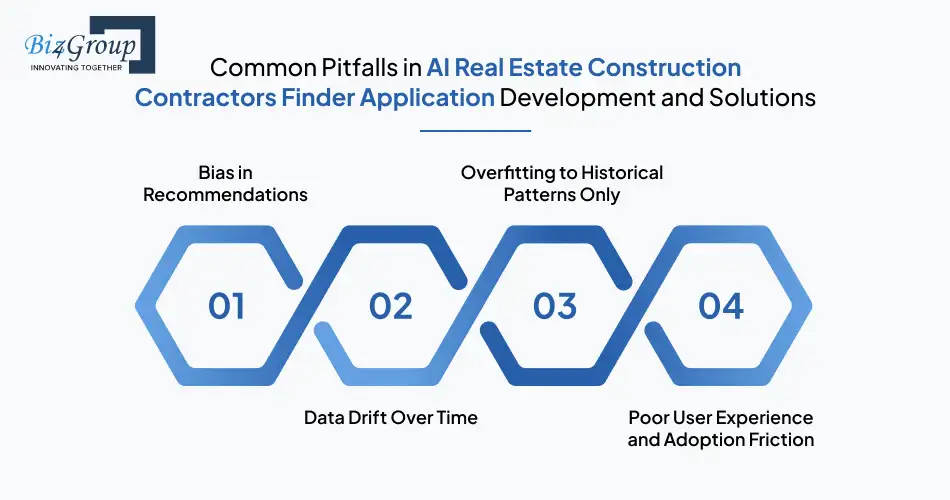
AI real estate construction contractors finder application development can face challenges if data quality, scoring logic, or usability are not managed properly. Most problems are preventable when systems are reviewed regularly and built with clear rules.
|
Pitfall |
What Happens |
How to Avoid It |
|---|---|---|
|
Bias in Recommendations |
Some contractors may be ranked higher due to incomplete or uneven historical data. New or smaller vendors may not appear in results. |
Review training data regularly, include diverse contractor records, and adjust scoring rules to maintain fairness. |
|
Data Drift Over Time |
Contractor performance changes over time, but the scoring system stays the same. Rankings slowly become less accurate. |
Update scoring models using recent project data and review performance trends at regular intervals. |
|
Overfitting to Historical Patterns Only |
The system relies too heavily on past results and does not adjust to new project types or market changes. |
Keep scoring flexible and allow adjustments based on new project requirements and updated contractor information. |
|
Poor User Experience and Adoption Friction |
Project teams avoid using the system because it feels complex or unclear. Manual contractor selection returns. |
Keep dashboards simple, show clear ranking reasons, and train teams about AI for real estate agents |
These risks often appear when organizations build AI real estate contractor discovery platform without ongoing monitoring and user feedback. Regular reviews, clean data practices, and simple workflows help maintain trust and system accuracy over time.
Addressing these issues prepares the system for long term growth and future improvements.
Simplify Complex Contractor Sourcing
Launch structured AI real estate construction contractors finder app development focused on accuracy and compliance.
Request a Technical ConsultationDecision Criteria for Choosing Development Approaches
Selecting the right approach for AI real estate construction contractors finder application development affects budget, speed, control, and long-term flexibility. Real estate and construction leaders should review internal skills, compliance needs, and growth plans before deciding.
1. Build In House Versus Outsource
Building in-house gives full control over system design, data handling, and security policies. It requires skilled developers and internal experience in procurement workflows. Outsourcing can reduce development time and provide technical expertise, especially when teams lack the capacity to develop AI construction vendor finder software internally.
2. Custom Development Versus Platform Extensions
Custom development allows full control over scoring rules, integrations, and compliance requirements. It works well when contractor evaluation standards are complex. Platform extensions may cost less at first, but they can limit flexibility when businesses need to create AI based real estate contractor matching system aligned with specific operational needs.
3. On Premise Versus Cloud Based
On premise deployment gives greater control over data storage and internal access policies. It may be chosen when contractor documentation is highly sensitive. Cloud based systems offer easier scaling, faster updates, and reduced infrastructure management for expanding contractor networks.
4. Cost, Time, and Risk Tradeoffs
Lower cost options may reduce customization and long-term scalability. Faster implementation can increase the risk of incomplete testing. Teams should evaluate budget, timeline, and operational readiness, and understand how to use AI for real estate within their procurement process before making a final decision.
A clear evaluation of these factors helps ensure the chosen approach supports long term contractor management goals and system stability.
What Is Next for AI Construction Contractor Matching Application?
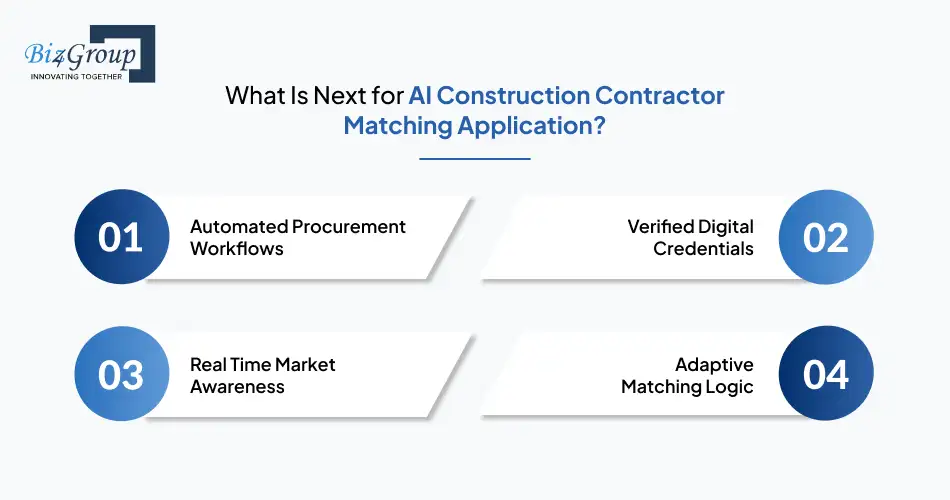
AI real estate construction contractors finder application development is expected to move beyond contractor ranking into smarter and more automated procurement support. Future systems will focus on reducing manual effort and improving decision speed at scale. The direction is toward systems that assist, verify, and adapt automatically.
1. Automated Procurement Workflows
Future platforms may not only suggest contractors but also prepare bid requests, comparison summaries, and evaluation reports automatically. An AI conversation app could allow managers to request shortlists and generate draft communications using simple queries. This would reduce manual coordination, shorten procurement cycles, and improve response time during active projects.
2. Verified Digital Credentials
Contractor licenses and certifications may be validated through connected digital verification networks instead of manual uploads. This will reduce the risk of outdated or forged documents entering the system. Organizations that build AI contractor finder app for real estate developers will rely on real-time credential verification instead of static file storage.
3. Real Time Market Awareness
Future systems may analyze permit activity, regional construction demand, and subcontractor workload signals. This allows firms to understand contractor capacity before launching new projects. Such insights will support broader real estate AI apps ideas focused on expansion planning and regional growth decisions.
4. Adaptive Matching Logic
Scoring models will adjust automatically when market conditions, compliance rules, or labor availability change. This will reduce the need for manual rule updates and frequent system redesign. Teams exploring how to develop AI real estate construction contractors finder app in the future may prioritize adaptive systems that learn from new project data continuously.
The future of contractor matching will focus on automation, verified data, and adaptive intelligence. As procurement processes become more data driven, systems will move closer to becoming operational decision support tools rather than static search platforms.
Future-Proof Your Vendor Selection Process
Create a smart system to create AI based real estate contractor matching system built for long term scalability.
Let's Plan the Build TogetherWhy Choose Biz4Group LLC for Your AI Contractor Finder Platform?
Successful AI real estate construction contractors finder application development depends on real industry understanding, not just AI models. As an AI app development company, Biz4Group LLC builds structured, scalable platforms that fit actual real estate and construction workflows.
Here is what makes the approach practical:
- Experience with real estate and construction focused systems
- Strong backend architecture for contractor data and compliance records
- Clear AI logic tied to measurable performance signals
- Scalable systems designed for growing vendor network
- Transparent development and post launch support
If you plan to build AI real estate contractor discovery platform, working with a team that understands contractor ecosystems reduces risk and improves outcomes.
Relevant Portfolio Experience
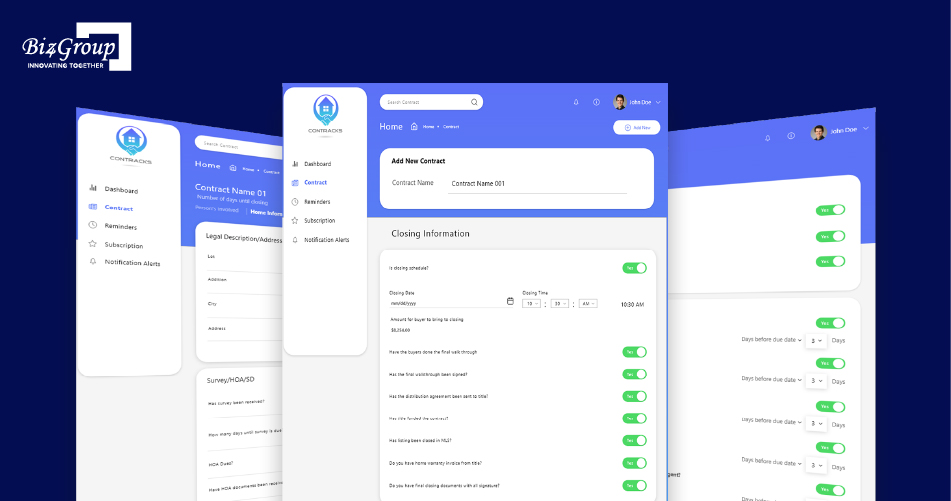
Contracks: A real estate contract management platform built by Biz4Group LLC that helps manage property transactions with event alerts, progress tracking, and centralized documentation. Its structured handling of compliance and milestones reflects the same level of data organization required for contractor evaluation systems.
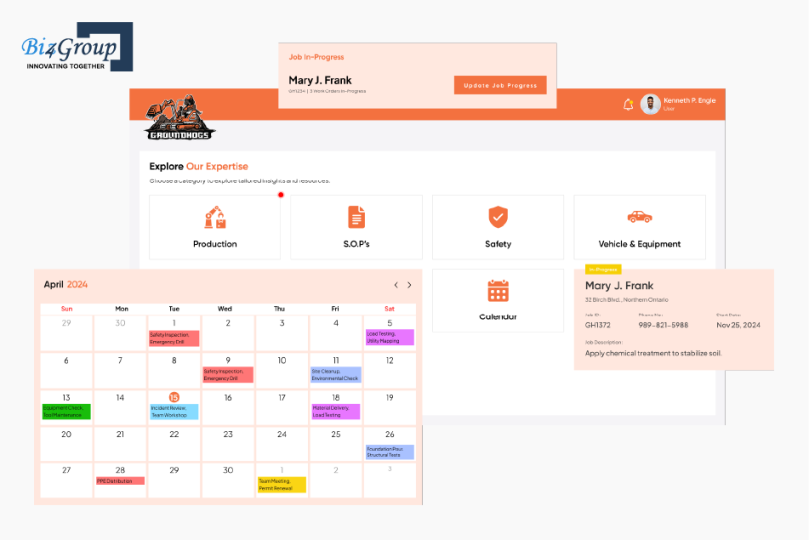
Groundhogs: A construction site management solution focused on real time job tracking, safety compliance, and documentation control. The way it captures site performance data connects directly to how contractor performance signals can be used in AI based matching systems.
As a custom software development company, Biz4GroupLLC applies this hands on industry experience to build reliable contractor discovery platforms that are practical, secure, and scalable.
Final Thoughts
Most real estate and construction firms do not struggle because they lack contractors. They struggle because they lack structured visibility into which contractor is the right one for a specific project, at a specific time, under specific constraints.
That is where AI real estate construction contractors finder application development changes the equation. It turns vendor selection from relationship driven guesswork into data backed decision making. Instead of asking, “Who have we worked with before?”, teams can ask, “Who is most likely to deliver this project successfully?”
The difference is subtle. The impact is not.
When contractor discovery becomes measurable, sourcing time drops, audit trails improve, and procurement decisions become defensible. That matters to CTOs thinking about architecture. It matters to operations leaders managing risk. And it matters to investors watching margins.
If you are serious about modernizing procurement, structured AI consulting services can help you move from idea to execution without overengineering the solution. Build what you need, measure what matters, and let the system improve with every completed project.
Talk to our experts to understand how structured AI contractor matching can reduce sourcing time and improve decision accuracy across projects.
FAQs
1. How long does it take to launch an AI contractor finder application?
The timeline depends on scope and data readiness. A focused MVP can take 8 to 12 weeks, while a more advanced system with integrations and compliance layers may take 4 to 6 months. Delays usually come from unstructured contractor data or unclear procurement workflows.
2. What kind of data is required to build an effective contractor matching system?
The system needs structured contractor data such as licenses, certifications, trade specialization, project history, cost patterns, and compliance records. It also requires clearly defined project inputs like scope, location, and timeline. Without structured data on both sides, matching accuracy drops significantly.
3. Can an AI contractor finder work with existing ERP or procurement software?
Yes, most systems are designed to connect with ERP, project management, or procurement tools through APIs. Integration planning should happen early in development to avoid workflow duplication. The goal is to support existing processes, not replace every operational system.
4. How do you ensure fairness and transparency in contractor rankings?
Fairness depends on clearly defined scoring rules and regular audits of training data. Ranking criteria should be measurable and explainable to procurement teams. Transparent scoring breakdowns help prevent hidden bias and improve internal trust.
5. What does it cost to develop an AI contractor finder application?
Development costs typically range between $25,000 and $150,000+, depending on features, integrations, data complexity, and security requirements. An MVP sits at the lower end of the range, while enterprise scale systems with predictive logic and multi system integration fall toward the higher end.
6. Is this type of system suitable for mid sized construction firms, or only large enterprises?
Mid sized firms can benefit significantly, especially if they manage multiple vendors across projects. The key factor is not company size, but procurement complexity. If contractor selection is time consuming or inconsistent, a structured matching system can deliver measurable improvements.
