 Location :
Orlando, FL, USA
Location :
Orlando, FL, USA +1 (407) 714-1616
 info@biz4group.com

- AI ROI is all about linking AI adoption to clear financial and operational outcomes that leadership can review and defend.
- Most companies fail because they lack focus, ownership, and discipline, which is why measuring AI ROI for businesses early is super important.
- The top 5 percent of businesses succeed by applying structured AI ROI strategies for enterprises that control scope, cost, and expectations as AI scales.
- ROI improves when leaders use clear AI ROI metrics and KPIs tied to decisions, not vanity usage numbers or technical performance alone.
- Companies that treat AI as a business discipline consistently increase the business value of AI investments over time.
You have probably been in this situation before. There’s a shiny AI project budget approved, teams are full of excitement, and the dashboards look fantastic. But somewhere between prototype and production, the board starts asking the tough questions, and the CFO squints at the numbers asking where the AI ROI actually is. Suddenly, confidence gives way to pressure, and leadership needs answers, not enthusiasm. That’s when the real questions start surfacing:
- What do you mean by AI ROI calculation?
- How to measure ROI from AI projects?
- Is AI investment worth the ROI?
- What are the top AI ROI examples for businesses?
- How long does it take to see AI ROI?
Enterprise leaders are not alone in this moment:
- In 2025, research by Deloitte revealed that hardly 10% of the organizations leveraging AI could fetch measurable returns from it. The report also speak about how the AI investment patterns will look like by August 2026:
- Only about 1 in 5 companies are real AI ROI leaders. They win by treating AI as a business shift, not a side project, and by betting early on gen AI and agents with clear revenue goals.


Most leaders are questioning accountability more than its usage. They want clarity on where budgets are going, what success actually looks like, and who owns outcomes once models leave presentations and enter real workflows. This is where conversations with AI consulting services often shift from experimentation to expectation, and from innovation theater to financial responsibility.
Before we dive into frameworks, formulas, and dashboards for measuring AI ROI for businesses, it helps to level set what AI ROI truly means in real operating environments. Especially for decision makers working with a custom software development company, the goal is now all about proving that AI pays - consistently and transparently.
What AI ROI Really Means for Business Leaders?
AI ROI means knowing whether your AI initiatives are producing measurable business results. For leaders, it is a practical way to evaluate if AI is improving efficiency, reducing costs, or driving outcomes that matter to the business.
- It focuses on outcomes, not algorithms or models
- It ties AI efforts to revenue, cost savings, or risk reduction
- It helps prioritize AI use cases that can scale
- It brings financial clarity to enterprise AI solutions
- It creates accountability for results, not just implementation
When leaders approach it with discipline and commit to measuring AI ROI for businesses consistently, it becomes the most important business metric instead of an open-ended discussion.
Why Most Companies Fail to Achieve AI ROI?
Most companies struggle with AI ROI because the basics are often missed. AI projects move forward, but clarity around outcomes and ownership is weak. The real problems usually surface once results are expected.
1. No Clear Definition of Success
AI initiatives often begin without agreement on what success actually means. Leaders approve projects without tying them to measurable financial or operational outcomes. As a result, AI ROI analysis for decision makers becomes unclear and reactive.
2. AI Is Not Part of Daily Operations
Teams experiment with generative AI, but the work stays separate from real business processes. Models may perform well in isolation, yet fail to influence everyday decisions. When AI is not embedded into workflows, results remain limited and difficult to measure.
3. Lack of an Enterprise Level Plan
Many organizations move forward without defined AI ROI strategies for enterprises. Projects expand in scope as enthusiasm grows, while costs quietly increase. Without structure, focus fades and expected returns slowly erode.
4. Too Many Owners, No Accountability
Responsibility is spread across business teams, IT, and partners offering AI integration services. Each group contributes, but no single owner is accountable for results. This makes performance tracking inconsistent and weakens confidence in outcomes.
Recognizing these gaps is a necessary step toward maximizing ROI from AI adoption, especially before addressing the operational mistakes that quietly reduce impact in later stages.
Common Mistakes That Reduce AI ROI in Enterprises
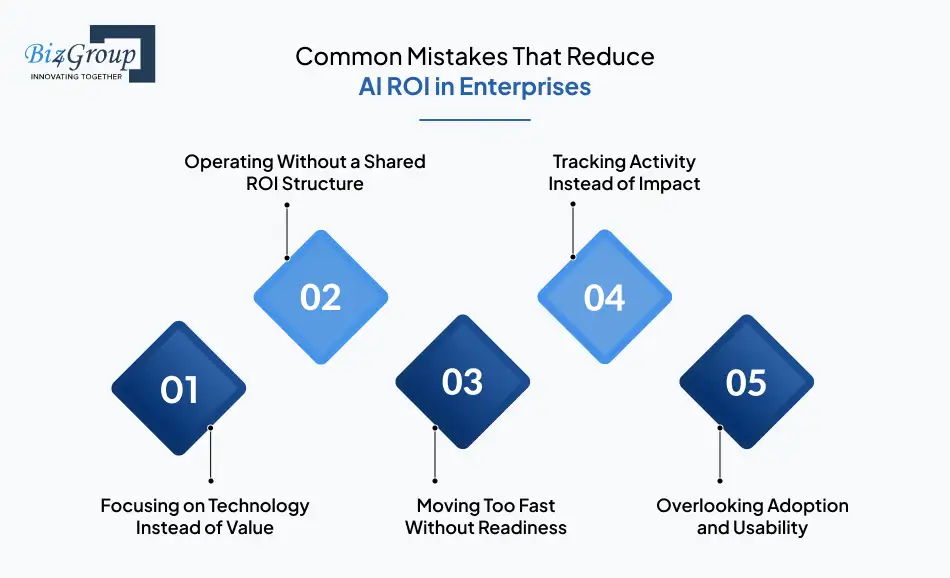
Many enterprises see AI ROI decline due to basic execution errors. These problems usually do not appear at the start. They surface once AI moves beyond pilots and leaders expect visible business results.
1. Focusing on Technology Instead of Value
Teams often start with what AI can do rather than what the business needs. Projects move forward without tying outcomes to the business value of AI investments. This makes results difficult to explain or defend later.
2. Operating Without a Shared ROI Structure
AI initiatives often run in silos across teams. Without an AI ROI framework for companies, each group defines success differently. This leads to confusion, misalignment, and weak decision making.
3. Moving Too Fast Without Readiness
Organizations rush to deploy solutions without checking internal readiness. Even with support from an AI app development company, gaps in data quality and ownership limit returns early on.
4. Tracking Activity Instead of Impact
Enterprises collect large amounts of data but miss what matters. Reports focus on usage or output instead of outcomes. This makes it hard to understand whether AI is actually improving performance.
5. Overlooking Adoption and Usability
AI systems are built, but people struggle to use them. Poor UI/UX design and weak workflow integration reduce trust and adoption. Low usage directly leads to lower ROI.
Common Mistakes and Their Impact on AI ROI
|
Mistake |
What Goes Wrong |
Impact on ROI |
|---|---|---|
|
Technology first focus |
Business needs are unclear |
Low measurable value |
|
No shared ROI structure |
Teams measure success differently |
Inconsistent results |
|
Weak impact tracking |
Outcomes are not visible |
Low leadership confidence |
|
Rushed execution |
Readiness issues surface late |
Higher costs |
|
Poor adoption design |
AI tools go unused |
Reduced returns |
Correcting these mistakes creates stability and clarity. Once enterprises align structure, execution, and measurement using clear AI ROI metrics and KPIs, they are better positioned to learn from organizations that consistently deliver strong returns.
Turn AI Experiments Into Measurable Outcomes
Move beyond pilots and start building initiatives that deliver real AI ROI aligned with business priorities.
Assess My AI ROI ReadinessHow Top Companies Achieve High AI ROI?
Top companies treat AI ROI as a business result, not an experiment. They focus on clear use cases, connect AI to daily operations, and track outcomes early. These real world examples show how that approach leads to consistent returns.
1. Amazon: Increasing Revenue with AI Recommendations
Amazon uses AI to suggest products and influence buying decisions across its platform. These recommendation systems are built directly into the shopping experience and impact sales at scale. This reflects strong AI investment ROI management supported by ongoing AI model development.
- Amazon’s AI recommendation systems anticipate customer needs using hybrid models refined over decades. Personalized recommendations drive 35% of revenue, boost AOV by 10–30%, and improve accuracy by up to 30%, making them a core driver of scalable AI ROI.
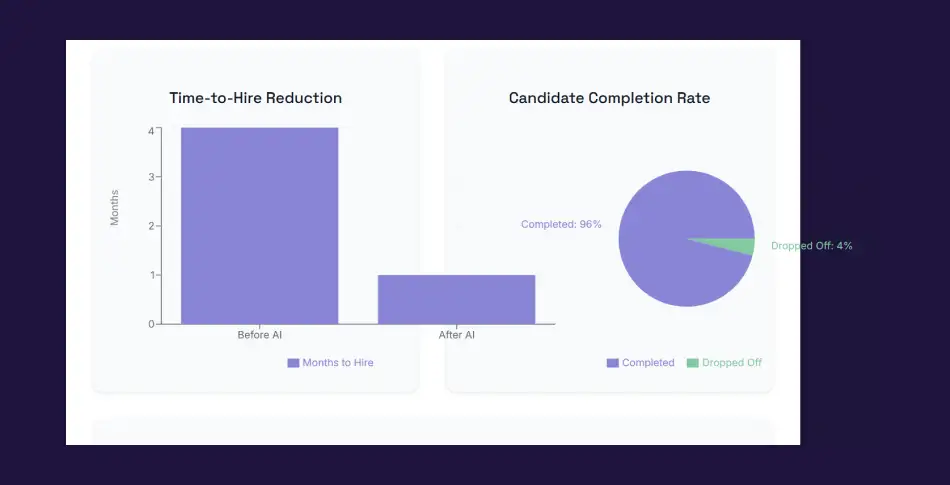
2. Unilever: Reducing Hiring Time and Costs With AI
Unilever uses AI to screen candidates and speed up hiring decisions. This reduced manual work and improved efficiency across global teams. The focus stayed on measurable savings through clear AI profitability strategies.
- Unilever uses AI to automate screening and interviews, slashing time-to-hire by 75–90%, saving around £1 million annually, and saving tens of thousands of recruiter hours while improving candidate diversity.
3. Walmart: Improving Inventory Decisions With AI
Walmart applies AI to forecast demand and manage inventory across stores. These insights help teams reduce stock issues and respond faster to changes. The work is supported by large scale AI automation services.
- By applying ML to route planning, Walmart eliminated 30 million wasted driving miles. They’ve also brought AI into supplier negotiations, where it now handles most discussions and delivers an average 3% cost saving.
4. Siemens: Improving Production Planning With AI
Siemens uses AI to improve production planning and spot issues before they affect output. This helps teams adjust schedules quickly and reduce delays. The systems are built through business app development using AI for manufacturing operations.
- Siemens used AI for 30% more production flexibility, a 20% productivity boost, and 40% better space efficiency. Predictive maintenance at Sachsenmilch prevented equipment failures, saving six figures, while Industrial Copilots boost productivity globally.
Summary of High AI ROI Use Cases
|
Company |
AI Use Case |
Measured Outcome |
|---|---|---|
|
Amazon |
AI product recommendations |
~35% revenue influenced |
|
Unilever |
AI hiring automation |
75% faster recruitment |
|
Walmart |
AI inventory planning |
Better efficiency |
|
Siemens |
AI production planning |
Up to 20% productivity gain |
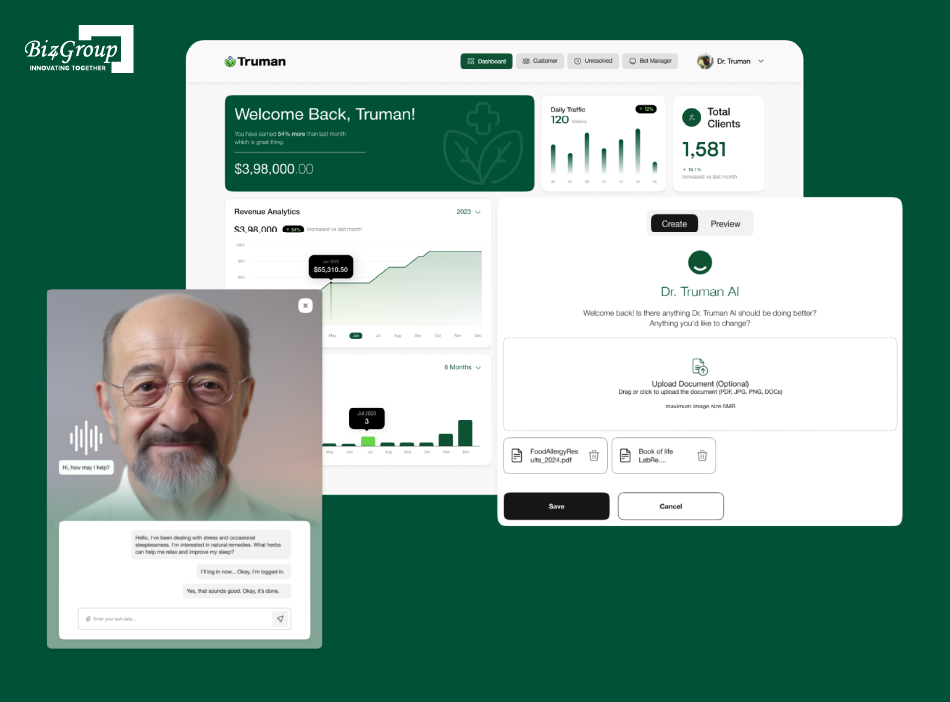
By developing Truman, Biz4Group helped a client turn AI into a direct revenue lever by embedding an AI avatar into consultations, memberships, and commerce. By aligning AI usage with engagement and conversion, the platform shifted AI from a support feature into a core driver of monetized user interaction and sustained ROI.
These examples answer the most asked question by leaders ever: How do you measure the ROI of AI in operations? and stay disciplined about execution. That naturally leads to the next question around what tools can measure the ROI of AI initiatives, which we will cover next.
Stop Guessing the Value of AI Investments
Get clarity on AI return on investment with structured evaluation and defensible measurement approaches.
Review My AI ROI StrategyA Practical AI ROI Framework for Decision Makers
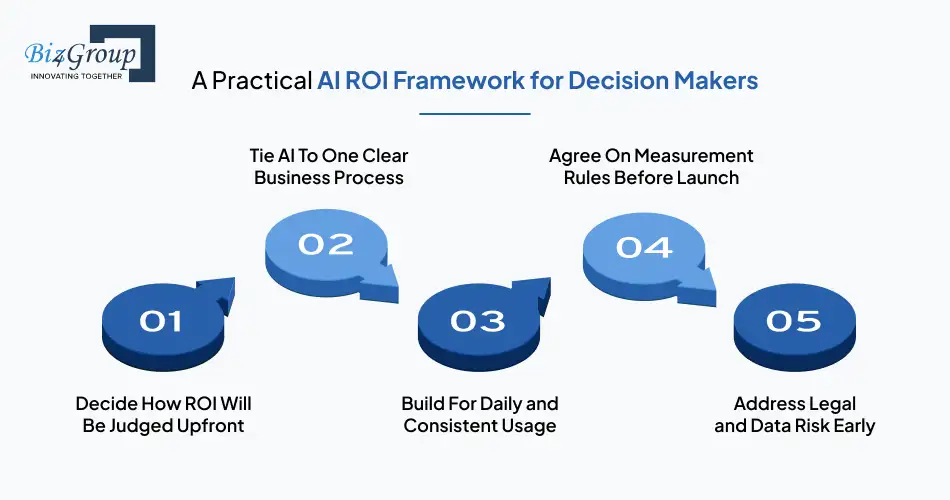
A practical framework helps leaders turn AI spend into results. AI ROI improves when outcomes are defined early, ownership is clear, and measurement is agreed on before work begins. The steps below reflect how serious teams approach ROI from day one:
1. Decide How ROI Will Be Judged Upfront
Before approving any AI project, leaders agree on what return actually means. One outcome is chosen and tracked closely. This discipline reflects how top companies achieve high AI ROI without chasing vague wins.
2. Tie AI To One Clear Business Process
High returns come from focus. Decision makers anchor AI to a single process with known costs or revenue impact. Whether teams hire AI developers or work with partners, this keeps ROI visible and controlled.
3. Build For Daily and Consistent Usage
AI only delivers value when people use it. Teams plan early to integrate AI into an app employees already rely on, with usability treated as part of ROI, not a separate concern.
4. Agree On Measurement Rules Before Launch
Leaders define baselines, review cycles, and success criteria upfront. This avoids debate later and keeps AI ROI calculation methods for businesses consistent across teams and leadership reviews.
5. Address Legal and Data Risk Early
Compliance issues slow returns more than most expect. Teams that plan early for governance, including tools like AI legal compliance software, avoid delays that quietly erode ROI.
This framework keeps AI efforts grounded in results. When leaders apply AI ROI strategies to turn adoption into profit, the next step is understanding how returns are calculated and validated in practice.
AI ROI Calculation Methods for Businesses
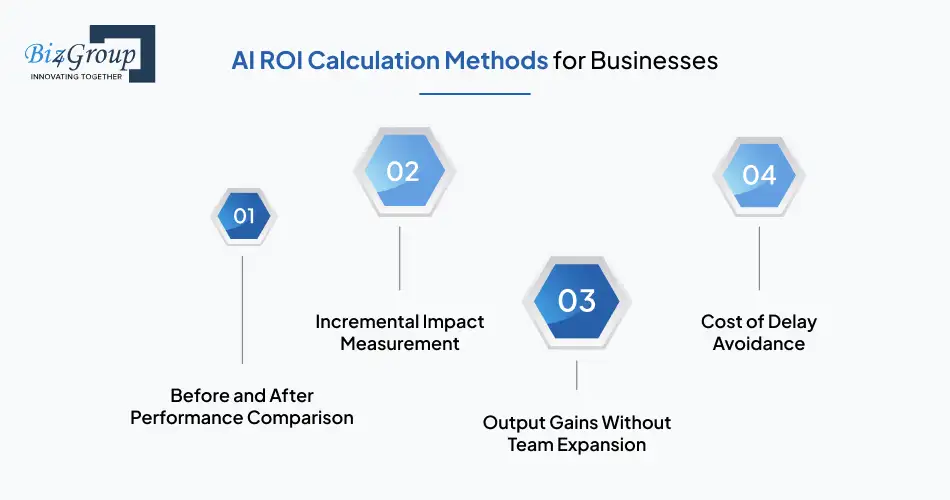
For leaders, calculating AI ROI means proving value in a way finance and operations teams accept. It is less about formulas and more about comparing real outcomes before and after AI is applied. The methods below show how serious teams do this in practice.
1. Before and After Performance Comparison
Top companies start by setting a clear baseline before AI goes live. They compare costs, speed, or output before and after AI is introduced into a real workflow. This approach helps avoid common mistakes that reduce AI ROI caused by guesswork.
- Example: A support team working with an AI chatbot development company compared ticket handling costs before and after AI chatbot integration.
2. Incremental Impact Measurement
Instead of measuring everything, leaders isolate what changed because of AI. Only the difference created by AI is counted. This keeps ROI discussions focused and defensible, as seen in many real world examples of AI ROI success.
- Example: A sales team measured conversion lift after launching an AI conversation app inside an existing customer journey.
3. Output Gains Without Team Expansion
Another method looks at how much more work teams complete without hiring more people. This connects ROI directly to efficiency and scale rather than headcount reduction.
- Example: During MVP software development, AI assisted testing allowed faster releases without adding engineers.
4. Cost of Delay Avoidance
Some ROI comes from acting sooner, not cheaper. Leaders calculate ROI by estimating losses avoided when AI shortens decision or delivery time. This supports long term planning tied to an AI ROI roadmap for scalable growth.
- Example: A healthcare product team avoided rework and delays by planning early for HIPAA compliant AI app development.
Summary of AI ROI Calculation Methods
|
Method |
What Is Compared |
Why It Matters |
|---|---|---|
|
Before vs after |
Performance change |
Removes assumptions |
|
Incremental impact |
AI driven difference |
Easy to defend |
|
Output gain |
Work done per team |
Shows scale value |
|
Delay avoidance |
Time related losses |
Protects long term ROI |
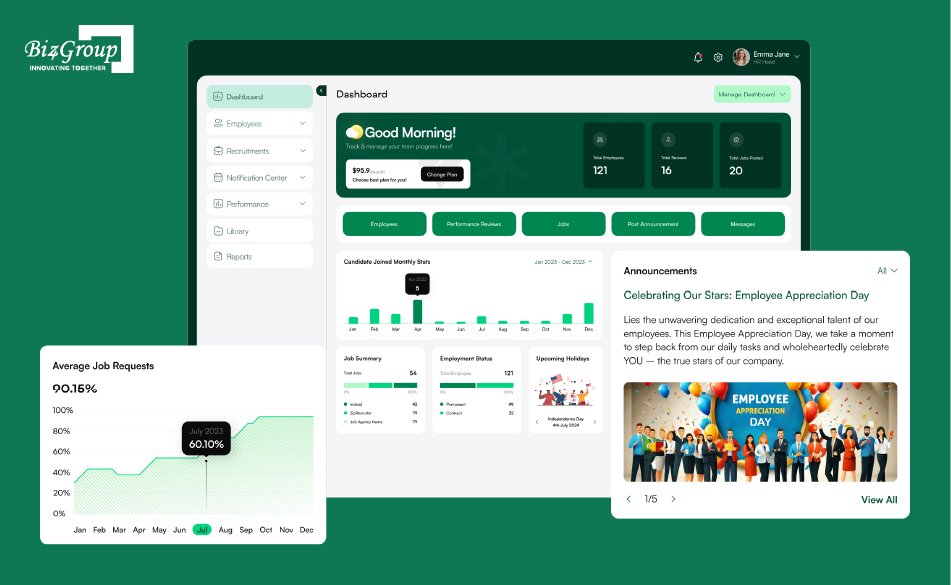
With DrHR, Biz4Group helped a client facing rising AI operating costs as adoption grew. By restructuring how AI workloads were handled and reducing unnecessary token usage, the team helped the client control spend while scaling usage, turning HR automation into a predictable and defensible ROI driver rather than a growing expense.
These methods keep ROI conversations grounded and credible. Once leaders are confident in how returns are calculated, attention naturally shifts to understanding which tools can track and validate those results over time.
Build AI That Scales Without Breaking ROI
Apply proven AI ROI strategies for enterprises to move from pilot success to sustainable growth.
Plan My AI ROI RoadmapWhat Tools Can Measure the ROI of AI Initiatives?
Measuring AI ROI means using tools that clearly show what changed after AI was introduced. Leaders need visibility into cost, performance, and usage without complex explanations. The tools below help connect AI activity to business results.
|
Tool Category |
What It Shows |
Why It Matters |
|---|---|---|
|
Business dashboards |
Revenue, cost savings, efficiency |
Uses metrics leaders already trust |
|
Process analytics tools |
Speed, errors, throughput |
Shows how AI affects daily work |
|
Testing and experimentation tools |
AI impact vs non-AI workflows |
Separates AI value from noise |
|
Product usage analytics |
Adoption and engagement |
Confirms AI is actually used |
|
Cost tracking systems |
Build and run costs |
Keeps AI spending visible |
These tools are easier to use when planning starts early. Teams that opt for MVP development services get clearer insights when tracking is built in from the start. This makes it easier to explain how to measure ROI from AI investments and prepares teams for ongoing performance review.
How to Track and Measure AI ROI Over Time?
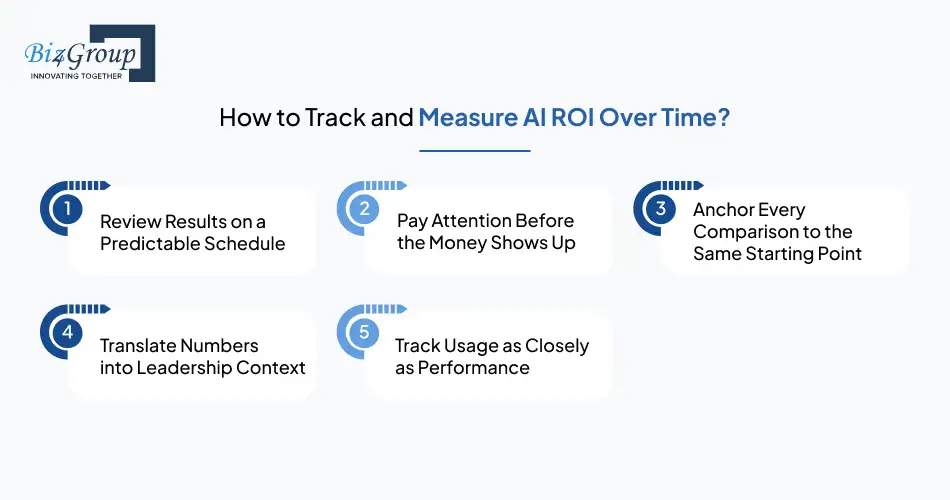
Tracking progress over time is where AI efforts either gain trust or lose it. AI ROI weakens when teams stop checking results after launch and rely on assumptions instead of evidence. The practices below show how experienced teams keep returns visible and credible:
1. Review Results on a Predictable Schedule
Teams that see results do not wait for annual reports. They review progress monthly or quarterly and course correct early. This habit explains why most companies fail to achieve AI ROI when reviews happen too late to matter.
2. Pay Attention Before the Money Shows Up
Usage patterns, adoption rates, and workflow changes often move before financial results do. Watching these signals helps teams understand when AI projects start delivering ROI without waiting for full quarter impacts.
3. Anchor Every Comparison to the Same Starting Point
ROI conversations fall apart when baselines keep changing. Strong teams lock their starting metrics early and keep them stable. That consistency keeps discussions focused and avoids unnecessary debates.
4. Translate Numbers into Leadership Context
Executives rarely want raw metrics. They want to know what changed and why it matters. Framing results around cost, growth, or risk makes it easier to explain how to justify AI investment to leadership.
5. Track Usage as Closely as Performance
AI only creates value when people keep using it. Teams monitor usage trends closely, especially after changes like AI chatbot integration. This helps surface early signs of AI automation pitfalls before ROI slips.
Over time, steady review builds confidence and momentum. With consistent AI ROI tracking and performance measurement, teams next need to consider how their AI initiatives can grow responsibly and predictably.
Make AI ROI a Leadership Metric, Not a Tech Metric
Learn how decision makers use AI ROI analysis for decision makers to guide smarter investments.
Evaluate My AI ROI FrameworkBuilding an AI ROI Roadmap from Pilot to Scale
Scaling AI is where AI ROI is tested. A pilot showing value is only the first step. What matters next is how leaders expand usage without losing control of cost, performance, or outcomes.
1. Start With One Proven Use Case
Strong teams scale only after one use case delivers results. They confirm AI return on investment in a stable workflow before moving further. This reduces noise and keeps ROI discussions focused on real outcomes.
2. Test Under Real Business Conditions
Before expanding, teams push AI into higher usage and real edge cases. This exposes gaps that pilots often hide and builds confidence in results. It also supports accurate measuring AI ROI for businesses over time.
3. Expand in Small, Planned Steps
Scaling happens gradually across related processes. Teams extend AI while closely tracking cost and impact at each step. Many partner with an AI development company here to manage complexity without slowing progress.
4. Adjust ROI Expectations as AI Spreads
As AI reaches more teams, the nature of returns changes. Early efficiency gains give way to broader business impact. Recognizing this shift is central to effective AI ROI strategies for enterprises.
5. Protect Adoption Over Time
ROI weakens when usage drops or trust fades. Teams actively monitor adoption and improve usability where needed. Investments in AI assistant app design often help sustain long term engagement.
|
Roadmap Stage |
What Leaders Focus On |
Why It Matters for ROI |
|---|---|---|
|
Prove one use case |
Validate results in a controlled workflow |
Keeps ROI clean and defensible |
|
Stress test AI |
Test performance under real conditions |
Exposes issues before scaling |
|
Scale in steps |
Expand into related processes gradually |
Prevents cost and outcome drift |
|
Reset ROI expectations |
Adjust targets as usage grows |
Aligns ROI with maturity |
|
Protect adoption |
Monitor usage and trust continuously |
Sustains long term returns |
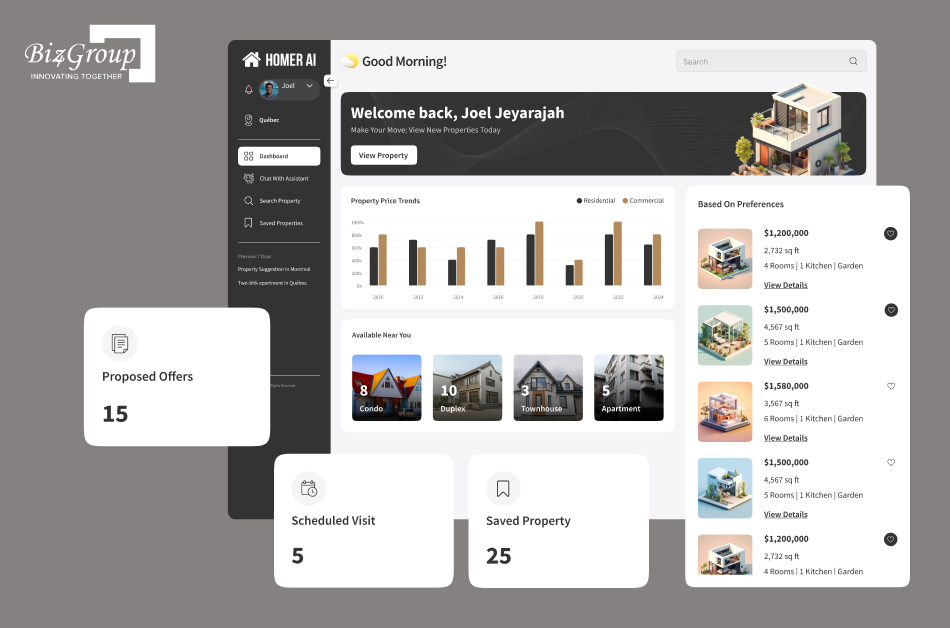
Biz4Group built Homer AI, an AI-powered real estate platform to support a client who wanted to scaling AI by embedding it into buyer discovery, scheduling, and listing workflows. By expanding AI in measured steps and tracking impact at each stage, the platform improved operational efficiency while maintaining control over cost and adoption as usage grew.
A clear roadmap treats scaling more like a financial decision than a technical one. With disciplined execution, maximizing ROI from AI adoption becomes repeatable in the long run.
How to Maximize ROI From AI Investments?
Once AI is in use, returns depend less on planning and more on everyday decisions. AI ROI improves when leaders focus on improving how AI is used, refined, and reinforced over time. The points below focus on increasing value from AI that already exists:
1. Double Down on What Already Works
High performing teams do not spread AI evenly across the business. They reinvest in use cases that consistently deliver results and pause low impact efforts. This sharpens the business value of AI investments instead of diluting it.
- Example: A retail team chose to build an AI app only around workflows that consistently reduced fulfillment costs, while shelving lower impact pilots.
2. Reduce Friction Between AI and People
ROI improves when AI fits naturally into daily work. Teams remove extra steps and simplify how insights are delivered. Many partner with top UI/UX design companies in USA to improve trust and everyday usage.
- Example: A service team simplified AI recommendations so agents could act without switching tools, leading to higher adoption.
3. Refresh AI Outputs as Conditions Change
AI value declines when models or rules stay static. Teams revisit outputs as data, demand, or behavior shifts. This keeps AI ROI analysis for decision makers tied to current business reality.
- Example: A pricing team reviewed AI driven thresholds quarterly as market conditions changed.
4. Make ROI Reviews Part of Normal Operations
Top teams stop treating AI as a special project. Using a shared AI ROI framework for companies, they review AI outcomes alongside other operational metrics.
- Example: An operations leader included AI performance reviews as part of how to develop an AI implementation roadmap for the business.
5. Measure Decisions, Not Just Activity
Strong teams focus on whether AI actually changes decisions, not just how often it runs. This keeps AI ROI metrics and KPIs tied to impact rather than activity.
- Example: A finance team tracked how often AI insights influenced approvals instead of counting generated reports.
Sustained returns come from steady improvement, not constant expansion. When leaders focus on refinement and usage, AI becomes a dependable business capability rather than an isolated initiative.
Know What's Working and What's Not in Your AI Stack
Use clear AI ROI metrics and KPIs to track performance, adoption, and business impact over time.
Measure My AI ROIWhy Choose Biz4Group to Manage AI ROI Efficiently for Your Business?
AI ROI becomes real when strategy, execution, and discipline move together. Biz4Group approaches AI with that mindset. Across platforms in HR, healthcare, and real estate, the focus stays consistent: define ROI early, protect it during execution, and scale only when value is proven.
The work highlighted in this blog reflects how Biz4Group helps teams build AI software that stays grounded in measurable outcomes, not experiments.
What sets Biz4Group apart:
- Experience delivering AI platforms where ROI was tied to cost control, monetization, and operational efficiency
- A proven ability to move AI from pilot to scale without losing financial clarity
- Practical decision making shaped by real enterprise constraints, not lab conditions
- A delivery approach aligned with how an AI product development company measures success in the real world
For leaders focused on outcomes, Biz4Group brings structure, accountability, and repeatability to AI initiatives that are expected to pay off.
Making AI ROI a Core Business Discipline
AI ROI is not something you check once and move on from. It is something you build, review, and protect over time. The companies that win are not chasing shiny models or fast pilots. They are making steady decisions, asking better questions, and holding teams accountable for real outcomes.
What separates leaders from the rest is consistency. They define ROI early, measure it honestly, and adapt when results change. They learn from data instead of defending assumptions. That mindset shows up clearly when you look at AI adoption statistics in 2026, where only a small group of companies consistently convert AI spend into measurable value.
Making AI ROI a discipline also means treating AI like any other core business capability. It gets the same attention as finance, operations, or product strategy. This is why many enterprises study how peers and even top AI development companies in Florida structure their AI programs around outcomes, not experiments.
In the end, AI does not fail companies. Loose decisions do. When ROI becomes part of how you plan, operate, and scale AI, returns stop being accidental and start becoming repeatable.
Turn AI into a repeatable business capability with clear ownership, tracking, and results.
FAQs
1. How long does it usually take to see ROI from AI initiatives?
Timelines vary by use case, but most organizations begin seeing early signals within three to six months. Clear goals, clean data, and focused scope accelerate outcomes. Without structure, even promising projects struggle to show results, which is why AI ROI tracking and performance measurement matters early.
2. Is AI ROI easier to achieve in certain industries?
Yes, industries with repeatable processes and measurable outcomes tend to see faster returns. Manufacturing, retail, logistics, and finance often benefit sooner. However, success depends less on industry and more on how well leaders manage business value of AI investments.
3. What is the biggest challenge in measuring AI ROI accurately?
The hardest part is isolating AI impact from other changes happening in the business. Without baselines and control comparisons, results can look better or worse than reality. This is where AI ROI calculation methods for businesses become critical for accuracy.
4. Can small or mid-sized enterprises realistically achieve AI ROI?
Yes, but only with focus. Smaller organizations often move faster and see ROI sooner when use cases are tightly defined. The challenge is avoiding overinvestment too early. Clear AI ROI strategies for enterprises help right size efforts based on scale.
5. How do leaders justify AI investment when ROI is not immediate?
Leaders often justify early AI investments by showing progress indicators before financial returns appear. Adoption, efficiency gains, and risk reduction help build confidence. This approach supports stronger AI ROI analysis for decision makers during early stages.
6. What causes AI ROI to decline after initial success?
ROI often drops when models are not updated, usage declines, or ownership becomes unclear. AI is not set and forget. Ongoing reviews and adjustments are essential to avoid common mistakes that reduce AI ROI over time.
