 Location :
Orlando, FL, USA
Location :
Orlando, FL, USA +1 (407) 714-1616
 info@biz4group.com

- AI self-care app development enables businesses to build intelligent wellness platforms that personalize user journeys, improve retention, and support long-term engagement.
- A clear AI self-care app development cost estimate typically falls in the range of $25,000-$150,000+, depending on MVP scope, advanced AI features, and scalability.
- Successful teams focus on AI self-care app development services that include a strong architecture and tech stack to support scalability, personalization, and future growth.
- Well-designed products rely on custom AI self-care app development with must-have features such as mood tracking, habit building, virtual coaching, and behavioral insights.
- Sustainable growth comes from smart monetization models that help AI self-care app solutions for startups and enterprises generate revenue without increasing operational risk.
- Biz4Group LLC is the best company to develop AI self-care app solutions, delivering USA-based expertise, scalable AI systems, and wellness-focused product strategy.
Feeling overwhelmed, burned out, or stuck in a cycle of stress has become far more common than most businesses realize. According to the World Health Organization, nearly 1 in 8 people globally live with a mental health condition, a figure that continues to rise as work, lifestyle, and digital overload collide.
This growing reality is pushing founders and healthcare leaders to rethink how wellness products are built, delivered, and scaled. AI self-care app development sits at the center of this shift. Not as a trend, but as a response to real human needs that generic wellness tools fail to address.
Many businesses are now exploring custom AI self-care app development services to close the engagement gap. Static meditation libraries and one-size-fits-all reminders no longer sustain retention. What works today are systems that listen, learn, and respond with relevance, while quietly supporting measurable outcomes for both users and businesses.
When you build AI-powered self-care app for wellness businesses, the goal extends past helping users feel better for a day. It becomes about creating a trusted digital companion that grows with them, drives long-term engagement, and opens clear paths to sustainable revenue.
This guide walks through how that happens, step by step, from product vision to monetization. So, without any further ado, let’s begin.
Understanding the Basics of AI Self Care App Development
AI self-care app development refers to building digital wellness platforms that adapt to users over time. These apps observe behavior patterns, learn preferences, and adjust recommendations as users evolve. That adaptability is what separates modern self-care platforms from earlier wellness tools.
At a high level, an AI self-care app works through a combination of data, intelligence, and feedback loops.
Core Components Behind AI Self Care App Development
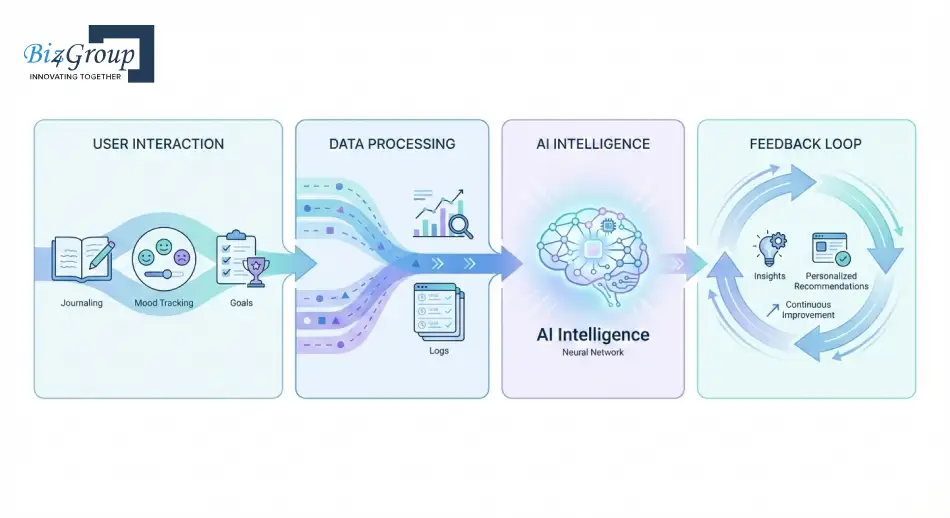
Most successful platforms are built on a few foundational layers.
- User Interaction Layer
Where users journal, track habits, log moods, set goals, or interact with chat-based guidance. - Data Processing Layer
Collects structured and unstructured inputs such as activity logs, text entries, engagement frequency, and usage history. - AI Intelligence Layer
This is where personalization happens. Models analyze patterns to recommend content, adjust routines, and flag behavior shifts. Teams often invest time to train AI models so outputs remain relevant as user needs change. - Feedback and Learning Loop
Every interaction improves future suggestions. Selecting and refining models matters here, which is why teams carefully select the best AI model before scaling.
The Role of AI in Self Care Apps
AI enables personalization without manual effort. Instead of forcing users into predefined flows, the app adapts quietly in the background.
Key roles AI plays include:
- Understanding emotional tone from text inputs
- Adjusting goals based on consistency, not assumptions
- Anticipating disengagement before churn happens
- Recommending actions based on patterns, not guesses
These capabilities rely heavily on strong AI model development practices and a clean data strategy from day one.
AI Self Care Apps vs Traditional Wellness Apps
The difference becomes clear when you compare outcomes, not features.
|
Aspect |
Traditional Wellness App |
AI Self Care App |
|---|---|---|
|
Personalization |
Manual or fixed paths |
Adaptive and behavior-based |
|
Engagement |
Content consumption |
Continuous interaction |
|
Recommendations |
Same for all users |
Unique per individual |
|
Scalability |
Limited by rules |
Scales through learning |
|
Business Insight |
Basic analytics |
Predictive user insights |
Traditional apps often struggle with retention because they stop evolving once downloaded. AI self-care apps grow with users, making them better suited for long-term wellness journeys.
Also, many founders ask how self-care apps differ from personal development platforms. The distinction lies in intent.
- Self-care apps focus on emotional balance, stress reduction, mental clarity, and daily well-being.
- Personal development apps emphasize skill building, productivity, habits, and performance improvement.
In practice, modern products often blend both. If you are planning to build AI self-care application that supports growth alongside wellness, frameworks from guides on how to build an AI personal development app can be adapted thoughtfully.
Thinking of Building an AI Self Care App?
Most wellness apps fail because they start with features, not strategy. See how your idea stacks up before writing code.
Book a Strategy CallWhy AI Self Care App Development Is a Smart Move for Businesses Today?
The demand for digital self-care has shifted from optional to expected. Stress, burnout, and lifestyle-related health concerns are no longer limited to specific age groups or professions. This shift shows up clearly in market data. According to reports, the global mental health apps market is expected to reach USD 17.5 billion by 2030, growing at a steady pace as users look for accessible, personalized support.
This growth is not driven by app downloads alone. It is driven by engagement. Users abandon generic wellness apps quickly when they feel repetitive or disconnected from real needs.
AI self-care app development addresses this gap by helping platforms respond to behavior, mood, and progress in real time. That responsiveness directly improves retention, session length, and long-term value.
Pain Points AI Self Care Apps Solve for Users and Businesses
Traditional wellness platforms struggle with scale and relevance. AI changes that balance.
Common challenges businesses face today include:
- Low user retention after initial onboarding
- One-size-fits-all content that feels impersonal
- Limited insight into why users disengage
- High operational effort to personalize experiences manually
When companies develop scalable AI self-care app solutions for startups, these problems are handled through AI automation services and intelligence rather than human intervention alone.
Strategic Benefits of Building Now
Timing matters in wellness markets. Early movers that invest in intelligence-led platforms build defensibility faster.
Key business benefits include:
- Higher engagement through adaptive journeys
- Reduced churn using behavior-based nudges
- Better product decisions powered by data insights
- Faster iteration without constant redesign
Many healthcare and wellness brands already moving toward AI mental health app development are finding that personalization is no longer a premium feature. It is a baseline expectation.
Where AI Self-Care Fits into Broader Health Ecosystems
Self-care platforms rarely exist in isolation. They often integrate with broader health and wellness systems.
AI self-care apps increasingly connect with:
- Preventive health programs
- Lifestyle and habit management tools
- Corporate wellness initiatives
- Consumer health platforms inspired by models like AI health management app development like Noom
As regulations and user expectations evolve, businesses that align self-care platforms with compliant, scalable frameworks from AI healthcare app development gain trust faster and scale with fewer roadblocks.
This momentum explains why use cases for AI self care app development now extend far beyond meditation or journaling. In the next section, we explore where these platforms are delivering real impact across wellness and personal growth.
AI Self-Care App Development Use Cases Across Wellness and Personal Growth
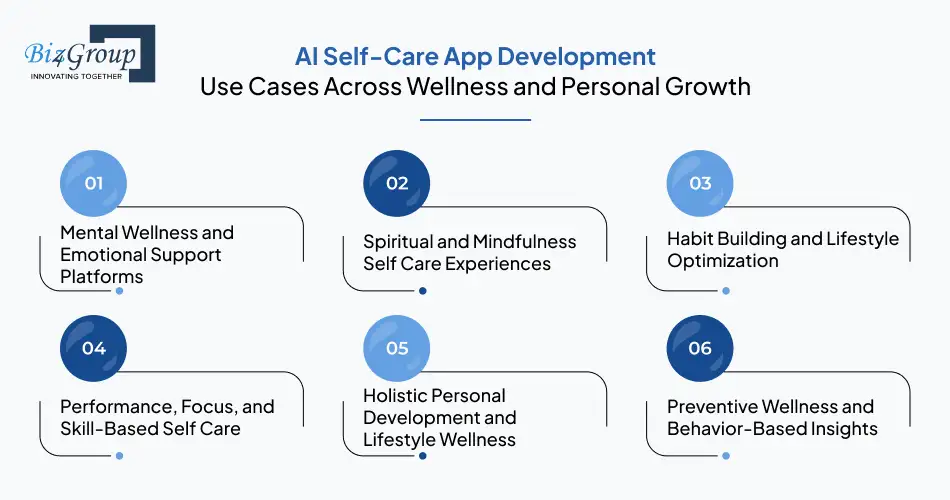
AI self-care app development delivers real value when it aligns with how people actually live, feel, and grow. These use cases show where intelligent self-care platforms are solving everyday problems while helping businesses build scalable and revenue-ready products.
1. Mental Wellness and Emotional Support Platforms
Mental wellness remains one of the strongest drivers behind AI self-care app adoption. Users want support that feels responsive, not repetitive. AI makes that possible by recognizing emotional patterns and adjusting guidance over time.
Common capabilities in this use case include:
- Mood tracking that adapts to emotional trends
- Reflection prompts based on recent behavior
- Coping suggestions aligned with engagement patterns
Many platforms start by enabling users to record emotions, where emotional signals guide what the app delivers next.
2. Spiritual and Mindfulness Self Care Experiences
Spiritual self-care is deeply personal. Users expect respect, inclusivity, and content that aligns with their inner journey. AI helps curate these experiences without forcing rigid structures.
Typical elements include:
- Meditation guidance tailored to daily intent
- Reflective journaling tied to personal themes
- Discovery of practices aligned with beliefs
Project Spotlight: A Spiritual Meditation and Community Platform
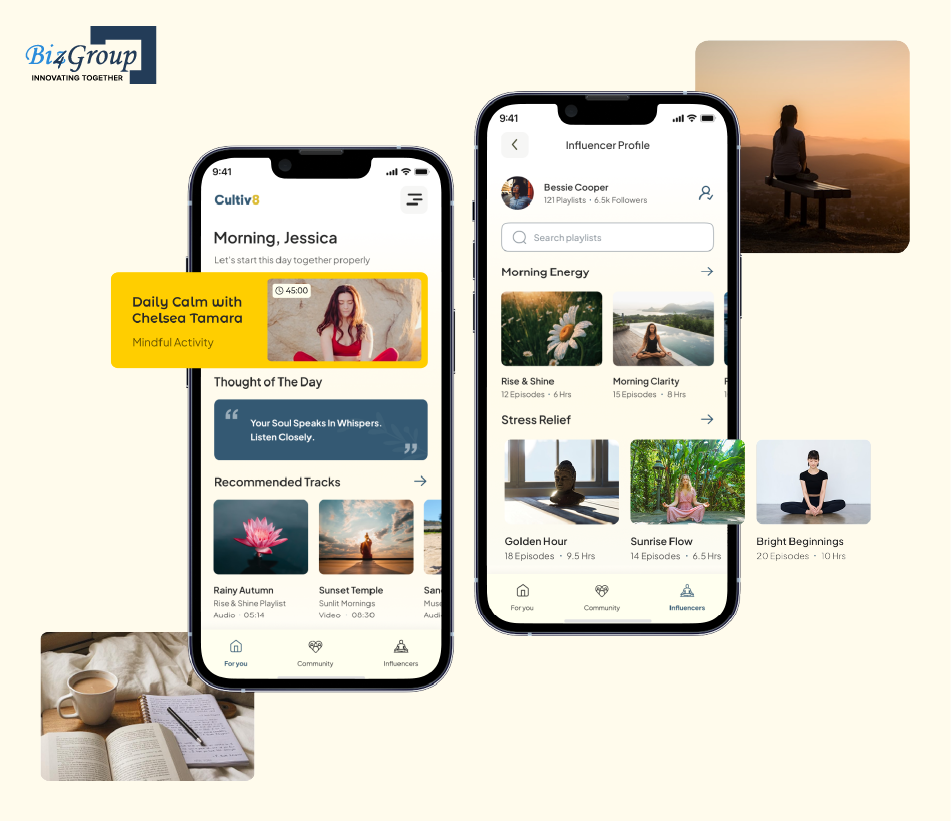
This spiritual meditation app was designed to support spiritual exploration in a way that feels open and personal. Biz4Group LLC delivered a platform that enables:
- Personalized meditation and inspirational content suggestions
- Private journaling for emotional and spiritual reflection
- Community spaces that encourage shared growth without judgment
This project reflects Biz4Group LLC’s strength in custom AI self-care app development, where personalization enhances meaning instead of replacing it.
3. Habit Building and Lifestyle Optimization
Self-care often fails at the consistency stage. Users start strong, then lose momentum. AI helps by understanding routines and intervening at the right moments. Key capabilities in this category include:
- Habit tracking with context-aware reminders
- Progress summaries that reinforce accountability
- Insights tied to behavior, not assumptions
Project Spotlight: AI-Powered Habit and Goal Tracking Platform
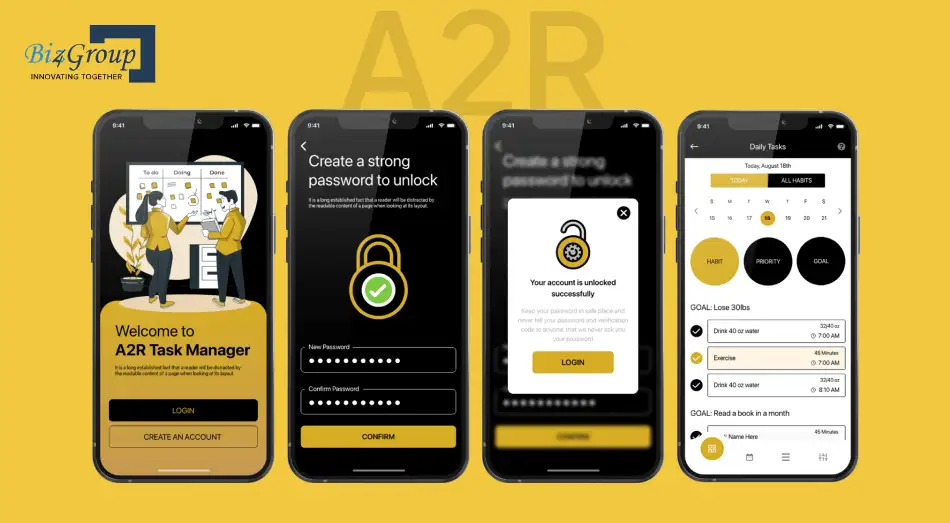
This activity tracking app for personal growth was built to help users stay consistent across personal, professional, and relationship goals.
Biz4Group LLC created a solution that offers:
- Intelligent reminders based on habit priorities
- Activity tracking connected to emotional awareness
- Automated reports that help users reflect and recalibrate
This project demonstrates how businesses can develop AI powered self-care app solutions that support long-term habit formation.
4. Performance, Focus, and Skill-Based Self Care
Self-care and performance are no longer separate. Professionals want to grow without burning out. AI supports this balance by tailoring routines that protect mental well-being while encouraging progress. Platforms in this space often include:
- Self-assessments tied to personal strengths
- Gamified progress indicators
- Social motivation through community benchmarks
Project Spotlight: Performance Improvement Through Intelligent Design
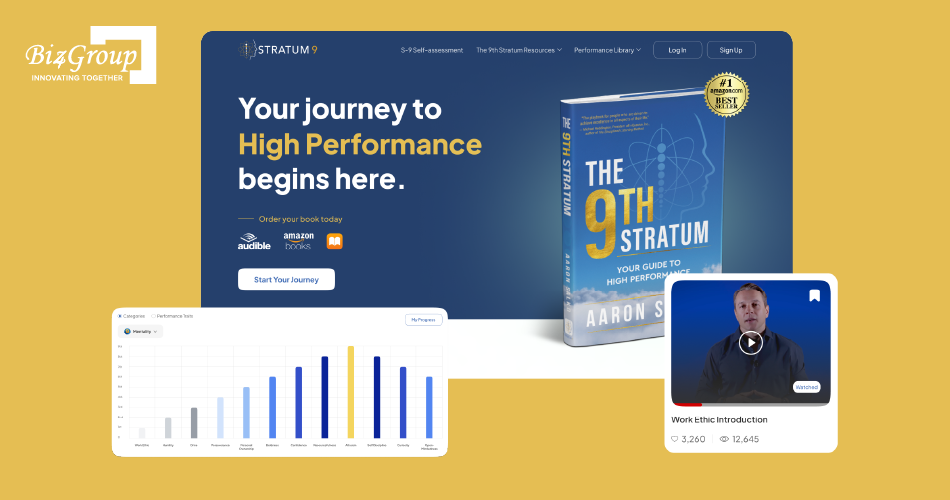
This performance improvement platform translates personal growth principles into a structured digital experience. Biz4Group LLC delivered:
- Personalized assessments across key interpersonal skills
- Gamified learning through badges and leaderboards
- Expert-led content paired with actionable insights
This platform shows how thoughtful engagement design supports sustainable self-care. It reflects broader product thinking discussed in why mental health gamification is the future of self-care apps, where motivation and well-being coexist naturally.
5. Holistic Personal Development and Lifestyle Wellness
Some users prefer a single platform that connects mental, physical, spiritual, nutritional, and social wellness. AI makes this complexity manageable by linking insights across domains. Typical features include:
- Unified goal setting across life areas
- Cross-domain habit recommendations
- Visual progress insights that reveal patterns
Project Spotlight: AI-Powered Holistic Self Care Platform
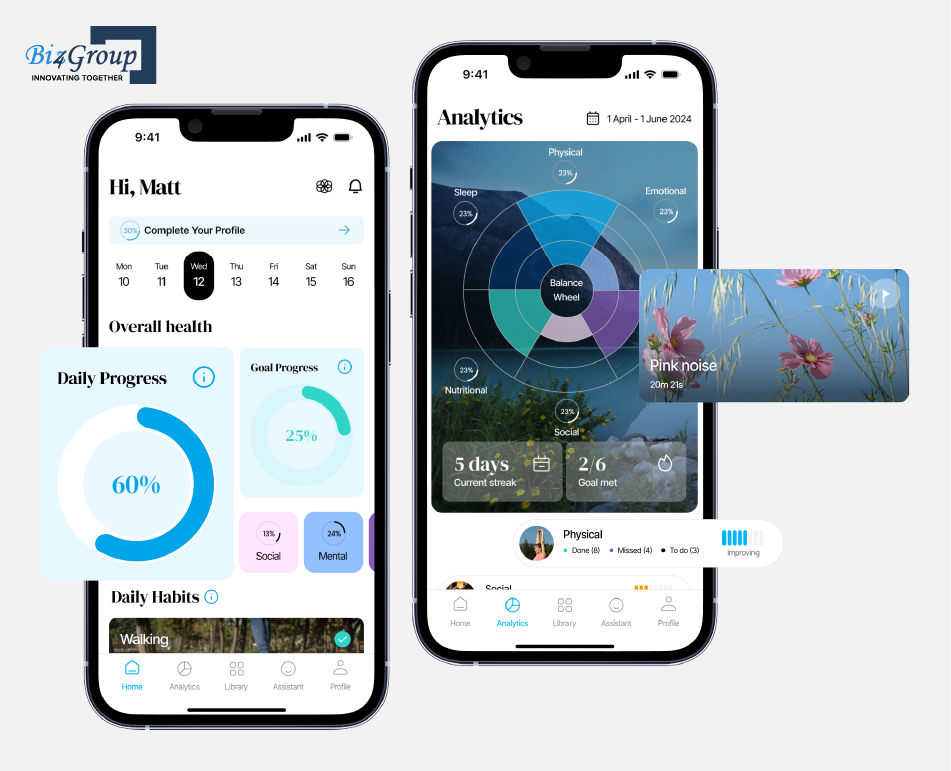
This AI-powered personal development mobile app was built to support multiple dimensions of personal development within one cohesive experience. Biz4Group LLC delivered:
- Personalized improvement plans across six wellness areas
- Adaptive habit suggestions that evolve with progress
- An interactive AI chatbot supported by real-time analytics
This project highlights Biz4Group LLC’s ability to build AI chatbots and AI self-care application architectures that scale responsibly. The product direction aligns closely with platforms emerging from AI lifestyle fitness app development, where personalization connects wellness domains instead of isolating them.
6. Preventive Wellness and Behavior-Based Insights
Preventive self-care focuses on early signals rather than reactive fixes. AI identifies trends that users might overlook on their own. This use case supports:
- Early detection of disengagement or stress patterns
- Proactive recommendations to prevent burnout
- Data-backed insights for long-term wellness planning
Businesses that create AI-driven self-care platform solutions often combine these insights with broader health strategies, especially when targeting enterprise wellness programs.
These use cases show why AI self-care app development is no longer limited to a single audience or function. It spans emotional well-being, performance, spirituality, and lifestyle, all supported by intelligent systems designed to grow alongside users.
Which Use Case Can Actually Make You Money?
Not every self-care idea scales. Some use cases drive retention, others drain budgets. Find out where your idea fits.
Talk to Biz4Group's ExpertsMust-Have Features in AI Self Care App Development for Scalable Wellness Platforms
Every successful self-care product starts with features that users actually return to. In AI self-care app development, features are about relevance, timing, and continuity. The table below outlines the foundational capabilities businesses need when they plan to build AI self-care application that scales across users, use cases, and revenue models.
Before locking features, many product teams benchmark against evolving expectations outlined in resources like top mental health app features in 2025, which reflect how quickly user standards are rising.
|
Feature |
What It Is |
What It Does |
|---|---|---|
|
Intelligent User Onboarding |
A dynamic onboarding flow that adapts based on goals, habits, and initial inputs |
Sets a personalized baseline so users feel understood from day one, improving early retention |
|
Mood and Emotion Tracking |
A structured way for users to record emotional states through prompts or quick inputs |
Enables deeper personalization and supports adaptive journeys |
|
Personalized Self Care Plans |
AI-curated routines tailored to user behavior, preferences, and consistency |
Keeps users engaged by adjusting plans instead of repeating static content |
|
AI-Powered Chat Interface |
Conversational support layer that responds to user questions and reflections |
Acts as a first-touch support system |
|
Virtual Coaching Experience |
A guided interaction model that offers suggestions, motivation, and reflection prompts |
Creates continuity through a virtual mental health coach with AI approach that feels supportive, not scripted |
|
Content Recommendation Engine |
System that suggests meditations, exercises, or reflections based on engagement history |
Reduces overwhelm by surfacing only relevant content at the right moment |
|
Behavioral Insights Dashboard |
Visual summaries of habits, moods, and progress over time |
Helps users see patterns clearly while giving businesses actionable data |
|
Predictive Engagement Signals |
AI models that anticipate disengagement or burnout risks |
Uses predictive analytics to trigger timely nudges before users drop off |
|
Sentiment-Aware Journaling |
Text-based reflection analyzed for emotional tone and shifts |
Enhances personalization by applying sentiment analysis to user-written inputs |
|
Smart Notifications and Nudges |
Context-aware reminders based on time, behavior, and progress |
Improves consistency without overwhelming users |
|
Wellness Recommendation Logic |
Decision layer that suggests actions based on user needs |
Supports adaptive flows |
|
Nutrition and Activity Integration |
Optional modules for food logging and physical activity |
Expands self-care coverage using ideas common in an AI nutrition app |
|
Privacy and Consent Controls |
User-managed data visibility and consent settings |
Builds trust while meeting regulatory and ethical expectations |
These features form the foundation of custom AI self-care app development services that aim to balance user well-being with business scalability. Once these basics are in place, advanced AI capabilities can further differentiate the product and unlock deeper engagement, which we explore next.
Advanced Capabilities in AI Self Care App Development That Drive Long-Term Engagement
Advanced features in AI self-care app development exist to reduce friction, anticipate needs, and support users before problems surface. These capabilities sit on top of core features and quietly improve outcomes for both users and businesses.
1. Context-Aware Health and Behavior Correlation
Advanced platforms connect emotional patterns with lifestyle signals such as activity, sleep, or consistency. Instead of viewing data in isolation, the system understands how behaviors influence well-being over time.
2. Adaptive Therapy and Wellness Pathways
Rather than locking users into predefined programs, advanced systems adjust pathways dynamically. When engagement drops or emotional signals shift, recommendations evolve.
3. Predictive Burnout and Drop-Off Detection
AI models analyze engagement velocity, skipped actions, and emotional trends to identify early warning signs. These signals allow platforms to intervene gently with timely suggestions or simplified routines. For businesses aiming to develop scalable AI self-care app solutions for startups, this capability protects retention while reducing manual oversight.
4. Multi-Domain Wellness Intelligence
Advanced self-care platforms often span mental, physical, and lifestyle wellness. AI connects these domains to avoid fragmented experiences. For example, changes in physical activity may influence emotional recommendations.
5. Personalization That Evolves Over Time
Advanced AI systems remember long-term preferences, past struggles, and successful routines. As users grow, the platform grows with them. This continuity is critical when businesses build AI powered self-care app for wellness businesses that aim to support users for years, not days.
6. Cost-Aware Intelligence Optimization
Advanced platforms also monitor how intelligence is used. Not every interaction requires the same level of computation. Systems prioritize deeper AI processing for high-impact moments and simplify low-value interactions. This balance supports AI self-care app solutions for startups and enterprises that want intelligence without runaway operational costs.
7. Explainable and Trust-Centered AI Responses
As AI becomes more present in self-care, transparency matters. Advanced platforms provide clear reasoning behind recommendations in simple language. Users feel guided, not controlled. This trust-first design strengthens adoption and positions custom AI self-care app development as a responsible long-term investment.
These advanced capabilities move self-care platforms from reactive tools to proactive companions. Up next, we break down the architecture and technology stack required to support this level of intelligence without compromising performance, privacy, or scalability.
Advanced AI Sounds Great. But Do You Really Need All of It?
Overbuilt AI kills margins faster than poor engagement. Learn which advanced features deliver actual results.
Get in TouchAI Self Care App Development Architecture and Technology Stack Explained
Strong AI self-care app development starts with architecture that supports growth, personalization, and compliance from day one. Architecture decisions directly impact scalability, performance, AI costs, and long-term flexibility.
High-Level Architecture Overview
|
Architecture Layer |
What It Includes |
Why It Matters for Business |
|---|---|---|
|
User Experience Layer |
Mobile apps, web development, wearable integrations |
Directly affects engagement, retention, and daily usage |
|
Data Collection Layer |
Mood inputs, habit logs, activity data, journaling |
Feeds personalization and long-term intelligence |
|
AI and Intelligence Layer |
ML models, NLP engines, recommendation logic |
Powers adaptive self-care journeys |
|
Backend and API Layer |
Business logic, integrations, orchestration |
Ensures stability and scalability |
|
Cloud and Infrastructure Layer |
Hosting, storage, compute resources |
Controls performance, uptime, and cost |
|
Security and Compliance Layer |
Encryption, access control, audit logs |
Builds trust and meets regulatory needs |
1. Frontend and Experience Layer
This layer defines how human the platform feels.
|
Component |
Purpose |
Key Considerations |
|---|---|---|
|
Mobile Applications |
Primary interaction point for users |
Smooth UX, fast load times, accessibility |
|
Web Dashboards |
Admin and analytics access |
Clear insights, role-based access |
|
Wearable Integrations |
Optional data enrichment |
Selective syncing to avoid noise |
When businesses build AI powered self-care app for wellness businesses, the experience must feel supportive rather than clinical.
2. Data Collection and Management Layer
Clean data design is critical here.
|
Data Type |
Source |
Usage |
|---|---|---|
|
Emotional Inputs |
User reflections, mood entries |
Personalization and trend analysis |
|
Behavioral Data |
Habits, activity frequency |
Predictive engagement insights |
|
Lifestyle Signals |
Sleep, movement, nutrition |
Cross-domain wellness intelligence |
|
Engagement Metrics |
Clicks, session time |
Retention optimization |
Poor data quality limits how effectively teams can develop scalable AI self-care app solutions for startups.
3. AI and Intelligence Layer
This layer is where custom AI self-care app development services create differentiation rather than feature overload.
|
AI Component |
Function |
Business Impact |
|---|---|---|
|
Personalization Models |
Tailor routines and content |
Higher engagement and retention |
|
NLP Engines |
Analyze text and conversations |
Emotional understanding at scale |
|
Recommendation Systems |
Suggest actions and content |
Reduces user overwhelm |
|
Learning Loops |
Improve outputs over time |
Continuous product improvement |
Backend and Cloud Infrastructure
A modular backend helps teams build AI self-care application architectures that evolve without major rebuilds.
|
Component |
Role |
Scaling Benefit |
|---|---|---|
|
APIs and Microservices |
Modular system design |
Faster iteration and updates |
|
Databases |
Structured and unstructured storage |
Supports growth without rework |
|
Cloud Services |
Compute and storage |
Pay-as-you-scale flexibility |
|
Monitoring Tools |
Performance and usage tracking |
Early issue detection |
Security, Privacy, and Compliance Layer
Security is not an add-on. It is foundational when delivering AI self-care app solutions for startups and enterprises, especially in regulated wellness markets.
|
Security Element |
Purpose |
Risk Mitigated |
|---|---|---|
|
Data Encryption |
Protect sensitive information |
Breach prevention |
|
Access Controls |
Role-based permissions |
Unauthorized access |
|
Consent Management |
User-controlled data usage |
Regulatory compliance |
|
Audit Trails |
Activity tracking |
Transparency and trust |
Why Architecture Choices Matter
The right architecture:
- Reduces long-term development costs
- Supports personalization without performance loss
- Enables compliance without slowing innovation
- Makes future expansion predictable
This technical foundation sets the stage for the next critical question founders ask. How do you actually move from idea to launch in a structured, low-risk way. That step-by-step process comes next.
Step-by-Step AI Self Care App Development Process for Founders and Businesses
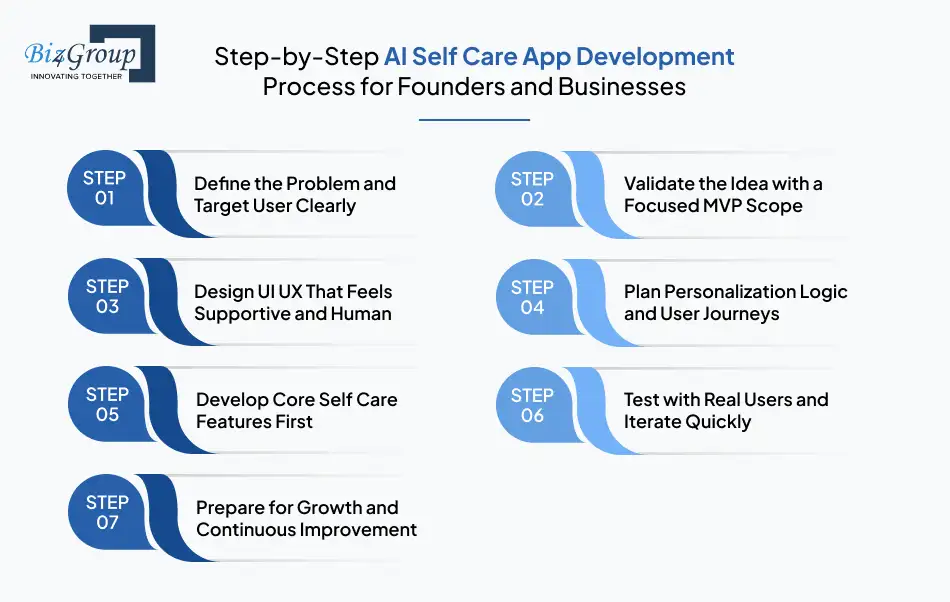
AI self-care app development works best when it follows a clear, staged process. Skipping steps often leads to poor adoption, unclear value, or wasted investment.
Below is a seven-step roadmap that businesses use to reduce risk while building products users trust and return to.
Step 1. Define the Problem and Target User Clearly
Every strong self-care product starts with clarity. This step focuses on identifying who the app is for and what problem it solves. Key actions at this stage include:
- Defining the primary user persona
- Identifying emotional, behavioral, or lifestyle challenges
- Aligning business goals with user outcomes
Step 2. Validate the Idea with a Focused MVP Scope
Developing an MVP helps test assumptions before committing to full-scale development. It prioritizes learning over perfection. A well-defined MVP typically includes:
- One core use case
- Limited but high-impact features
- Clear success metrics
Also read: Top 12+ MVP development companies in USA
Step 3. Design UI UX That Feels Supportive and Human
UI UX design plays a critical role in self-care adoption. Users should feel guided, not overwhelmed. Strong UI UX design company focuses on:
- Simple navigation and calming visuals
- Clear progress indicators
- Frictionless daily interactions
Also read: Top 15 UI/UX design companies in USA
Step 4. Plan Personalization Logic and User Journeys
Before intelligence is introduced, teams must define how personalization should behave. This step involves:
- Mapping user journeys across different emotional states
- Defining when and how recommendations adapt
- Establishing boundaries to avoid over-intervention
Clear journey planning helps custom AI self-care app development stay intentional rather than reactive.
Step 5. Develop Core Self Care Features First
Instead of launching with everything, teams focus on features that deliver immediate value. Typical priorities include:
- Mood or habit input flows
- Personalized routines
- Reflective prompts and insights
This phased build supports businesses that want to build AI powered self-care app for wellness businesses without feature overload.
Step 6. Test with Real Users and Iterate Quickly
Self-care behavior varies widely. Real feedback is essential. At this stage, teams:
- Run controlled beta releases
- Monitor engagement and drop-off points
- Refine flows based on usage, not assumptions
Iteration at this stage strengthens AI self-care app solutions for startups and enterprises preparing for wider adoption.
Step 7. Prepare for Growth and Continuous Improvement
Launch is the beginning, not the finish line. Post-launch focus areas include:
- Tracking engagement trends
- Refining personalization based on usage
- Introducing new capabilities gradually
This structured process keeps AI self-care app development grounded in real user behavior and business priorities. Next, we examine the security and regulatory considerations that protect both users and organizations as these platforms scale.
What If You Could Avoid the Costliest Build Mistakes?
Most founders realize what they should have done only after launch. Get a clear roadmap before you commit time and budget.
Get a Custom QuoteSecurity and Regulatory Considerations in AI Self Care App Development
Security and compliance play a decisive role in whether users trust a platform and whether enterprises are willing to adopt it. In AI self-care app development, protecting emotional, behavioral, and lifestyle data is not optional. It is foundational to credibility and long-term success.
Below are the core security and regulatory considerations businesses must address when they build AI self-care application for wellness markets.
- User Data Privacy by Design
Platforms should collect only what is necessary and clearly explain how data is used. Transparent privacy practices build confidence and reduce abandonment during onboarding. - Explicit User Consent Management
Users must control what data is collected, stored, and analyzed. Consent settings should be easy to access and update at any time, especially for sensitive emotional inputs. - Secure Data Storage and Transmission
All personal and wellness data must be protected during storage and transfer. This reduces exposure risks and reinforces trust in custom AI self-care app development services. - Role-Based Access Control
Internal access to user data should be strictly limited. Teams should only view what is required for operations, analytics, or support. - Audit Trails and Activity Logs
Maintaining detailed logs of system activity helps identify misuse, supports investigations, and demonstrates accountability to enterprise partners. - Regulatory Readiness for Health-Adjacent Data
Even when not classified as medical software, many self-care apps handle health-related data. Preparing for regulations commonly associated with wellness and healthcare platforms reduces future compliance friction. - Ethical AI Usage and Bias Awareness
AI recommendations should avoid harmful assumptions. Regular evaluation helps ensure that personalization supports users rather than labeling or profiling them unfairly. - User Trust and Emotional Safety
Tone, frequency, and clarity of AI interactions matter. Overly intrusive nudges can damage trust, especially in mental and emotional wellness contexts. - Scalability Without Compromising Security
As platforms grow, security practices must scale with them. Shortcuts taken early often lead to costly fixes later.
Addressing these areas early helps organizations create AI driven self-care platform solutions that users feel safe returning to daily. In the next section, we break down development costs, and highlight where budgets often expand unexpectedly.
Understanding AI Self Care App Development Cost for Startups and Businesses
When founders ask about AI self-care app development cost, the short answer is that it depends on scope, intelligence depth, and scale. In practice, most products fall within an average range of $25,000-$150,000+, depending on how advanced and extensible the platform needs to be.
Before diving into cost drivers, it helps to look at how budgets typically evolve as products mature.
MVP to Full-Scale Cost Overview
|
Product Stage |
What It Typically Includes |
Average Cost Range |
|---|---|---|
|
MVP Level |
Core self-care flow, basic personalization, limited AI logic |
$25,000-$45,000 |
|
Advanced Level |
Adaptive journeys, analytics, predictive insights, richer UX |
$45,000-$90,000 |
|
Enterprise Level |
Multi-domain wellness, deep AI, integrations, scalability |
$90,000-$150,000+ |
Key Cost Drivers in AI Self Care App Development
Every feature and decision influences the final investment. Below are the most common cost drivers, with realistic budget ranges businesses should plan for when they build AI self-care application platforms.
|
Cost Driver |
What Influences It |
Typical Cost Impact |
|---|---|---|
|
Feature Scope |
Number of self-care flows, personalization depth |
$8,000-$25,000 |
|
AI Intelligence Level |
Rule-based logic vs adaptive learning |
$10,000-$40,000 |
|
Personalization Complexity |
Static plans vs behavior-based adaptation |
$7,000-$20,000 |
|
UX Design Depth |
Basic layouts vs guided emotional journeys |
$5,000-$15,000 |
|
Analytics and Insights |
Basic metrics vs predictive insights |
$6,000-$18,000 |
|
Health and Lifestyle Modules |
Activity, wellness, or routine tracking |
$5,000-$20,000 |
Platforms that extend into areas like health tracking or adaptive wellness planning naturally sit toward the higher end of these ranges due to added logic and data handling.
Hidden Costs Many Teams Overlook
Hidden costs rarely appear in initial estimates, yet they influence long-term profitability. Planning for them early prevents budget surprises later.
- AI Iteration and Optimization Costs
AI does not remain static. Models require tuning as user behavior changes. Teams should plan $5,000-$15,000 annually for refinement and optimization. - Content and Experience Evolution
Self-care content ages quickly. Updating routines, prompts, and journeys can cost $3,000-$10,000 per update cycle, depending on scope. - User Growth and Infrastructure Scaling
As active users grow, backend and AI usage costs increase. Monthly scaling expenses often add $1,000-$4,000 as engagement rises. - Compliance and Trust Enhancements
As platforms gain traction, additional audits, policy updates, and trust-building measures may require $5,000-$12,000 over time.
These costs are especially relevant for teams offering custom AI self-care app development services that aim for long-term engagement rather than short-term launches.
Budgeting Smartly from Day One
A realistic budget balances ambition with sustainability.
- Start with a tightly scoped MVP
- Validate engagement before expanding intelligence
- Invest in features that directly affect retention
- Plan for evolution, not perfection
When businesses create AI-driven self-care platform solutions with this mindset, cost becomes a growth enabler rather than a constraint.
Understanding cost clearly sets the stage for the next question founders often ask. How do you monetize AI self-care apps while keeping operational expenses under control? That is exactly what we explore next.
Also read: How much does it cost to develop an AI wellness app?
Monetization Models in AI Self Care App Development
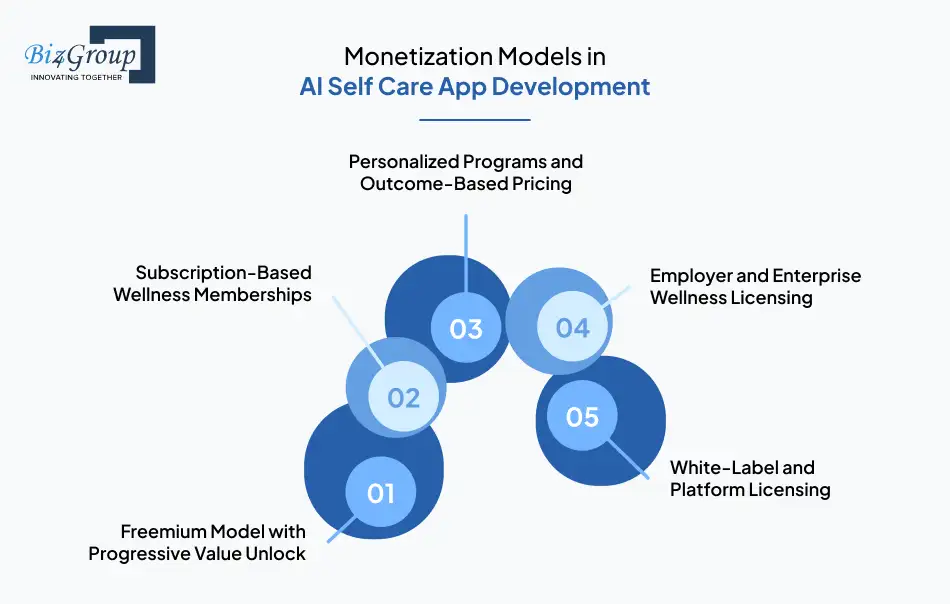
Monetization in AI self-care app development works best when it feels like a natural extension of value, not a barrier to well-being. Users pay when they trust the platform and see progress. Businesses succeed when revenue grows without driving operational costs out of control.
This section breaks down proven monetization models and explains how to keep them sustainable.
1. Freemium Model with Progressive Value Unlock
In AI self-care app development, freemium works when:
- Free users experience genuine value early
- Paid tiers clearly enhance outcomes, not access
- Upgrades align with moments of progress or reflection
Typical pricing ranges from $5-$15 per month per user. Cost optimization comes from limiting high-compute AI interactions to premium tiers, ensuring free usage does not erode margins.
2. Subscription-Based Wellness Memberships
Subscription models provide predictable revenue and align well with long-term self-care journeys. These plans often bundle personalization, insights, and guided experiences into a single offering.
|
Subscription Type |
What Users Get |
Revenue Stability |
|---|---|---|
|
Monthly Plans |
Flexible access with lower commitment |
Moderate |
|
Annual Plans |
Discounted long-term access |
High |
|
Tiered Subscriptions |
Increasing personalization depth |
Very High |
3. Personalized Programs and Outcome-Based Pricing
Some users prefer structured programs over ongoing subscriptions. These programs focus on specific goals such as stress reduction, habit formation, or lifestyle balance.
Pricing typically ranges from $30-$150 per program, depending on duration and personalization depth. AI reduces delivery costs by automating guidance and insights, making outcome-based pricing more scalable than traditional coaching.
4. Employer and Enterprise Wellness Licensing
B2B monetization offers high-value contracts and long-term stability. Employers increasingly invest in digital self-care platforms to support productivity and retention.
|
Buyer Type |
Pricing Structure |
Typical Contract Size |
|---|---|---|
|
Small Teams |
Per-user monthly license |
$10-$25 per user |
|
Mid-Size Enterprises |
Annual platform license |
$25,000-$75,000 |
|
Large Enterprises |
Custom enterprise agreements |
$75,000-$150,000+ |
For businesses delivering AI self-care app solutions for startups and enterprises, enterprise licensing often becomes the primary revenue driver after product maturity.
5. White-Label and Platform Licensing
White-label models allow other brands to launch self-care platforms without building from scratch. This approach works well for healthcare providers, wellness brands, and coaching organizations.
One-time licensing fees typically range from $20,000-$80,000, with ongoing maintenance fees added separately. Cost efficiency improves because the same core platform serves multiple clients with minimal customization.
Strong monetization respects the user journey while supporting business sustainability. The most successful platforms treat pricing as part of the experience, not an afterthought. With the right model and cost controls, AI self-care app development becomes a repeatable and profitable growth engine.
Is Your Monetization Model Strong Enough to Survive Scale?
Great engagement means nothing without sustainable revenue. Let's design pricing that grows with users, not against them.
Contact Biz4Group NowChallenges, Risks, and Mitigation Strategies in AI Self Care App Development
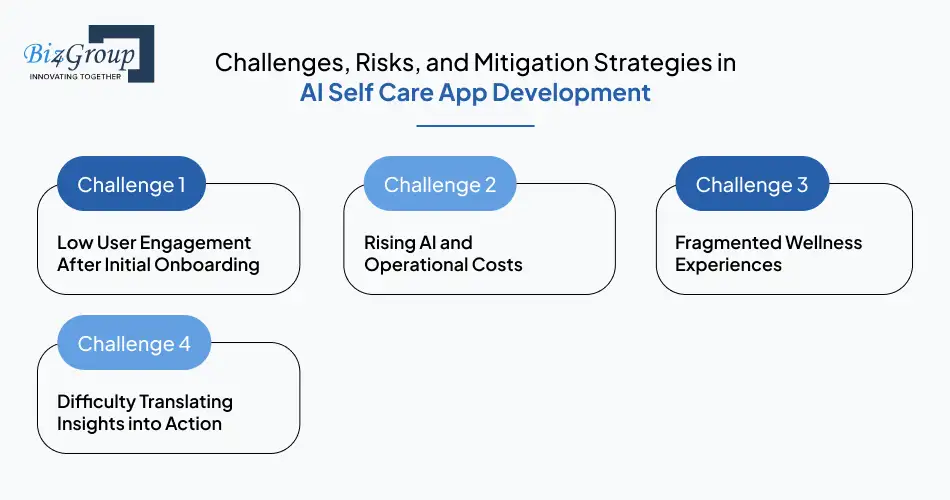
AI self-care app development offers strong upside, but only when teams understand the risks early. Many platforms fail not because of weak ideas, but due to avoidable execution gaps.
Below are the most common challenges businesses face when they build AI self-care application platforms, along with practical ways to mitigate them.
Challenge 1: Low User Engagement After Initial Onboarding
Many self-care apps see strong downloads but weak long-term usage. Users disengage when experiences feel repetitive or disconnected from daily life.
Mitigation strategies
- Design adaptive journeys that evolve with user behavior
- Introduce small, meaningful interactions instead of long sessions
- Tie recommendations to real patterns rather than fixed schedules
Platforms inspired by adaptive flows in an AI therapy recommendations app often perform better because guidance adjusts as users progress.
Challenge 2: Rising AI and Operational Costs
AI costs can grow faster than expected as user engagement increases. Many startups underestimate how usage patterns affect long-term expenses.
Mitigation strategies
- Reserve advanced AI processing for high-impact moments
- Cache repeated insights instead of regenerating them
- Align pricing tiers with AI usage intensity
Teams that develop scalable AI self-care app solutions for startups plan cost controls from the first release, not after growth begins.
Challenge 3: Fragmented Wellness Experiences
When mental, physical, and lifestyle features operate in isolation, users struggle to see progress. This fragmentation reduces perceived value.
Mitigation strategies
- Connect insights across wellness domains
- Present progress as a unified journey
- Introduce features gradually instead of all at once
Platforms inspired by holistic ecosystems like a fitness app like MyfitnessPal show how integrated data improves long-term engagement.
Challenge 4: Difficulty Translating Insights into Action
Data alone does not improve well-being. Users often understand insights but fail to act on them.
Mitigation strategies
- Convert insights into small, achievable steps
- Focus on guidance that fits daily routines
- Reinforce progress through positive feedback loops
This approach strengthens outcomes when businesses build AI powered self-care app for wellness businesses focused on sustained behavior change.
Challenges in AI self-care app development are rarely technical alone. Most stem from misaligned expectations between users, intelligence, and experience. When businesses anticipate these risks and design with intention, they create platforms that feel supportive, trustworthy, and sustainable.
Future Trends Shaping AI Self Care App Solutions for Startups and Enterprises
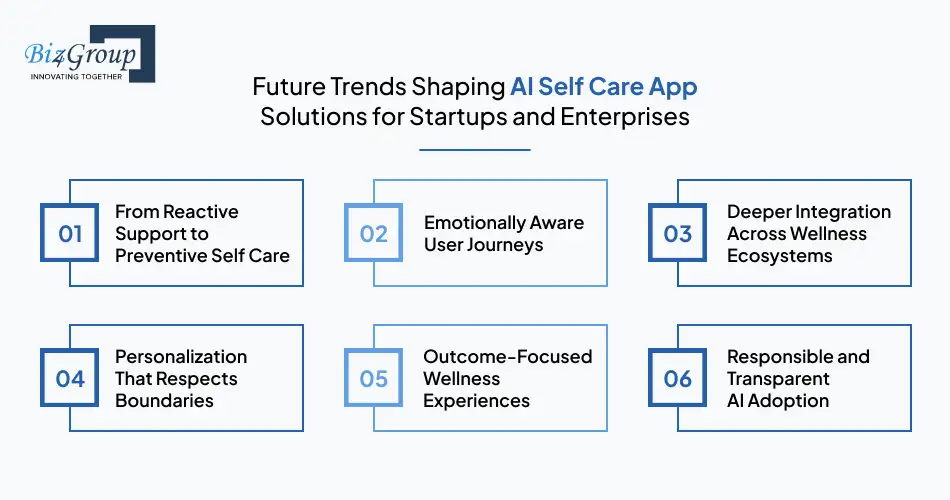
AI self-care app development continues to evolve as user expectations mature and wellness ecosystems expand. The next phase is less about adding features and more about refining how intelligence supports real human behavior.
Below are the trends that will define how businesses create AI-driven self-care platform experiences over the coming years.
1. From Reactive Support to Preventive Self Care
Future self-care platforms will focus on prevention rather than response. Instead of reacting after users feel overwhelmed, AI systems will identify early signals such as inconsistency, emotional drift, or disengagement.
2. Emotionally Aware User Journeys
AI will increasingly recognize emotional context, not only actions. Platforms will adapt tone, frequency, and content delivery based on how users feel in the moment. This emotional sensitivity strengthens trust and helps companies build AI self-care app with mental and physical wellness features that feel supportive rather than mechanical.
3. Deeper Integration Across Wellness Ecosystems
Self-care apps will no longer operate as isolated tools. With powerful AI integration services, these platforms seamlessly connect with broader lifestyle, productivity, and wellness ecosystems. This shift enables a more holistic view of well-being and supports long-term engagement.
4. Personalization That Respects Boundaries
Future platforms will allow users to shape how much guidance they receive and when. This balance between autonomy and support will become a key differentiator for custom AI self-care app development efforts targeting trust-conscious audiences.
5. Outcome-Focused Wellness Experiences
The next generation of AI self-care apps will measure success through outcomes, not usage alone. Platforms will track improvements in consistency, stress management, and self-awareness rather than screen time. This outcome-first mindset helps businesses demonstrate value to users, partners, and enterprise buyers alike.
6. Responsible and Transparent AI Adoption
Transparency will shape adoption decisions. Users will expect clear explanations for recommendations and visible control over data usage. Companies that embed responsibility into AI self-care app solutions for startups and enterprises will earn long-term credibility and reduce adoption friction.
These trends signal a clear direction. AI self-care app development is moving toward experiences that feel intuitive, preventive, and respectful.
Why Businesses Across the USA Trust Biz4Group LLC for AI Self Care App Development
Biz4Group LLC is a USA-based software development company built around one core belief. Technology should solve real problems, scale responsibly, and deliver measurable business value. That philosophy guides how we approach AI self-care app development for founders, wellness brands, healthcare leaders, and fast-growing startups.
We specialize in building AI apps that balance personalization with performance. Our work spans AI-powered wellness platforms, habit and lifestyle applications, mental health AI solutions, and holistic self-care ecosystems. What sets us apart is not only our technical depth, but how deeply we understand user behavior, engagement psychology, and long-term product scalability.
Businesses come to Biz4Group LLC when they want a product partner that understands how self-care apps grow in the real world. From shaping early MVPs to scaling enterprise AI solutions, we focus on building systems that users trust and return to.
We have successfully delivered multiple AI-driven self-care and personal growth platforms that handle complex user journeys, adaptive intelligence, and multi-domain wellness without overwhelming users.
Why Businesses Choose Biz4Group LLC
- Strong portfolio in AI self-care app development across wellness, lifestyle, and personal growth domains
- Strong product thinking that connects user needs with business outcomes
- Expertise in building scalable AI systems without runaway operational costs
- USA-based delivery standards with global execution capabilities
- End-to-end ownership from strategy and design to launch and optimization
- Clear communication, transparent timelines, and accountable delivery
Choosing the right AI development company determines whether an AI self-care app becomes a trusted daily companion or fades after initial adoption. Biz4Group LLC focuses on building products that endure. We understand how emotional engagement, personalization logic, and cost control intersect in real-world wellness platforms. That understanding shows in the products we ship and the long-term relationships we maintain.
If your goal is to build an AI self-care app that stands out in crowded markets, earns user trust, and scales with clarity, Biz4Group LLC brings the experience and execution discipline to make that happen.
Final Thoughts
AI self-care app development has moved far beyond basic wellness tools. Today, it represents a meaningful opportunity for businesses to build products that support mental balance, lifestyle consistency, and long-term personal growth. When done right, these platforms adapt to users, respect emotional context, and evolve with real human behavior. That combination is what drives engagement, trust, and sustainable revenue in an increasingly crowded wellness market.
Founders and decision makers who approach this space with intention are better positioned to reduce go-to-market risk, control costs, and create experiences users actually return to. The difference lies in treating self-care as a long-term journey, not a short-term feature set.
This is where Biz4Group LLC consistently delivers value. As a software development company, we help entrepreneurs, wellness brands, and enterprises translate self-care ideas into scalable AI-powered products. Our experience across intelligent personalization, behavioral insights, and cost-aware AI healthcare solutions enables us to build platforms that balance empathy with performance and growth.
If you are serious about launching or scaling an AI self-care app that users trust and investors respect, the next step should be just as intentional as your product vision.
Let’s build a self-care platform that delivers impact, not noise. Contact Biz4Group LLC today.
FAQs
Can AI self-care apps work without large amounts of historical user data?
Yes. Many platforms start with rule-based personalization and lightweight intelligence that evolves over time. Early-stage products rely on user inputs, onboarding signals, and short-term behavior patterns. As usage grows, AI models gradually improve accuracy without requiring massive datasets upfront.
How do AI self-care apps handle sensitive emotional data responsibly?
Responsible platforms limit data collection to what is necessary, anonymize insights where possible, and allow users to control personalization depth. Emotional data is used to guide experiences, not label users. Transparency and user control are critical to long-term adoption.
Is AI self-care app development suitable for non-healthcare businesses?
Absolutely. Many consumer brands, productivity platforms, and lifestyle companies use AI self-care features to improve engagement, retention, and user well-being. Self-care is no longer limited to healthcare. It is becoming a core digital experience across industries.
What makes users trust an AI self-care app over time?
Trust is built through consistency, relevance, and restraint. Users stay when recommendations feel helpful rather than intrusive, when progress is visible, and when the app adapts without overwhelming them. Clear communication and predictable behavior matter more than advanced features.
Can AI self-care apps be integrated into existing products or platforms?
Yes. Many businesses embed AI self-care capabilities into existing apps rather than launching standalone products. Modular development allows self-care features to integrate with productivity tools, wellness portals, or consumer platforms without disrupting current user flows.
How do AI self-care apps avoid becoming overwhelming for users?
Successful platforms prioritize simplicity. They limit daily actions, surface only relevant insights, and avoid excessive notifications. AI helps reduce noise by deciding what not to show, which is often more valuable than adding more content.
